

- Industry Size (2025)
- USD 11.3 Bn
- Forecast (2035)
- USD 18.4 Bn
- CAGR (2025 to 2035)
- 4.9%
Demand for Interventional Radiology in USA Forecast and Outlook 2025 to 2035
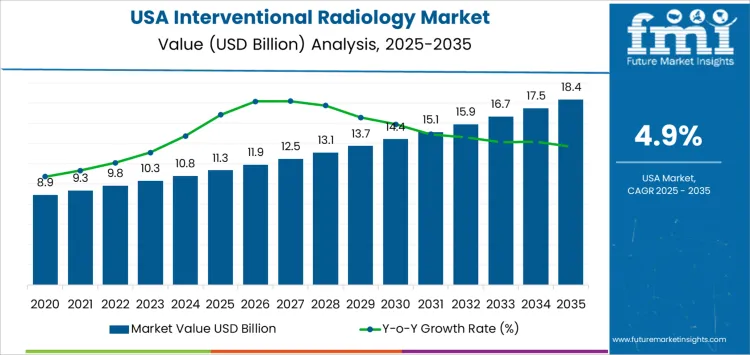
Demand for interventional radiology in the USA is expected to grow from USD 11.3 billion in 2025 to USD 18.4 billion by 2035, reflecting a compound annual growth rate (CAGR) of 4.9%. This growth is driven by the increasing number of minimally invasive procedures performed using advanced imaging techniques, such as angioplasty, stenting, and biopsy. Interventional radiology is an essential part of modern healthcare, offering alternatives to traditional surgery and reducing recovery times, making it a preferred choice for many patients. The growing focus on non-invasive treatment options and advancements in imaging technology are expected to support the continued expansion of the market.
The interventional radiology market is also supported by the rising prevalence of chronic diseases, including cardiovascular conditions, cancer, and neurological disorders, all of which benefit from interventional radiology procedures. As healthcare systems place greater emphasis on cost-effective, minimally invasive therapies, the demand for interventional radiology is expected to rise, providing patients with access to advanced treatments that require less invasive techniques, shorter hospital stays, and quicker recoveries.
Quick Stats of the Demand for Interventional Radiology in USA
- Demand for Interventional Radiology in USA Value (2025): USD 11.3 billion
- Demand for Interventional Radiology in USA Forecast Value (2035): USD 18.4 billion
- Demand for Interventional Radiology in USA Forecast CAGR (2025-2035): 4.9%
- Demand for Interventional Radiology in USA Leading Product: MRI Systems (39%)
- Demand for Interventional Radiology in USA Key Growth Regions: West USA, South USA, Northeast USA, Midwest USA
- Demand for Interventional Radiology in USA Key Players: Siemens Healthineers, GE Healthcare, Philips Healthcare, Canon Medical Systems, Hitachi Medical Corporation
What is the Growth Forecast for the Interventional Radiology Market through 2035?
The half-decade weighted growth analysis for the interventional radiology market in the USA shows consistent and gradual growth, with a more substantial contribution in the early years of the forecast period. Starting at USD 11.3 billion in 2025, the market grows to USD 11.9 billion in 2026 and USD 12.5 billion in 2027. These early years reflect steady demand for interventional radiology procedures, as more patients opt for minimally invasive treatment options.
From 2027 to 2030, the market continues to expand steadily, reaching USD 13.1 billion in 2028, USD 13.7 billion in 2029, and USD 14.4 billion in 2030. The steady growth in these years highlights the growing acceptance of interventional radiology in treating a wide range of medical conditions. However, by 2031, the market experiences a more pronounced increase, reaching USD 15.1 billion, with further expansion to USD 15.9 billion in 2032 and USD 16.7 billion in 2033, as technological advancements and improvements in treatment outcomes fuel demand.
By 2035, the market is expected to reach USD 18.4 billion, with the later years seeing a larger contribution from advancements in imaging technologies, broader adoption of interventional radiology procedures across various specialties, and the expansion of healthcare infrastructure. The half-decade weighted growth analysis indicates a steady progression in market demand, with an increasing contribution from technological innovations, improved patient outcomes, and the growing popularity of minimally invasive procedures.
USA Interventional Radiology Industry Key Takeaways
| Metric | Value |
|---|---|
| Industry Sales Value (2025) | USD 11.3 billion |
| Industry Forecast Value (2035) | USD 18.4 billion |
| Industry Forecast CAGR (2025-2035) | 4.9% |
Why is the Demand for Interventional Radiology Growing in the USA?
Demand for interventional radiology (IR) in the USA is rising because patients and healthcare providers increasingly prefer minimally invasive, image-guided procedures over traditional open surgeries. IR offers a broad range of diagnostic and therapeutic services - from biopsies, vascular access, angioplasty and stenting to cancer-related interventions and pain management - with lower risk, shorter hospital stays, and faster recovery times than conventional surgery. As chronic diseases like cardiovascular disease, cancer, and vascular disorders become more prevalent in the aging and general population, the need for IR procedures increases accordingly.
At the same time, ongoing advances in imaging technologies, devices, and pain-management protocols are fueling broader adoption of IR across hospitals, outpatient centers, and specialty clinics. Improvements in real-time imaging, catheter and stent technologies, and procedural safety have expanded what IR can treat. Many interventions that once required open or high-risk surgery can now be done with IR - reducing recovery time, minimizing complications, and lowering overall healthcare costs. As awareness among physicians and patients grows about the benefits of IR, demand for interventional radiology services in the USA is expected to grow steadily in the coming years.
What Are the Key Segments in Interventional Radiology Market in the USA?
The interventional radiology market in the USA is segmented by product type and procedure. MRI systems lead the product segment, accounting for 39% of the market share. In terms of procedures, angioplasty is the most common, representing 25% of the market. The growing demand for minimally invasive diagnostic and therapeutic procedures in the USA is driving the adoption of interventional radiology systems, particularly for conditions that require precise imaging guidance and targeted treatment.
Which Product Drives Interventional Radiology Demand in the USA?
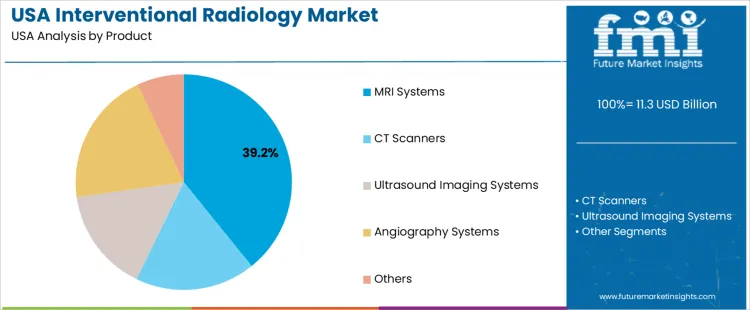
MRI systems are the dominant product in the interventional radiology market in the USA, holding 39% of the market share. MRI systems are preferred in interventional radiology due to their high-resolution imaging capabilities and non-invasive nature, providing detailed views of soft tissues, blood vessels, and organs. MRI is critical for a range of procedures, including angioplasty, biopsies, and interventional oncology, where precise imaging is essential for accurate targeting and navigation.
The growing demand for non-invasive diagnostic tools and the need for improved patient outcomes are driving the adoption of MRI systems in interventional radiology. While CT scanners, ultrasound imaging systems, and angiography systems are also used, MRI systems remain the preferred choice due to their superior imaging capabilities and versatility across various interventional radiology procedures.
Which Procedure Drives Interventional Radiology Demand in the USA?
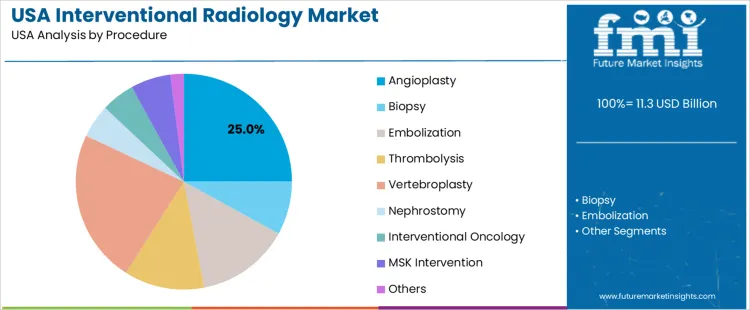
Angioplasty is the leading procedure in the interventional radiology market, representing 25% of the market share. Angioplasty, which involves the use of balloon catheters to open blocked or narrowed blood vessels, is one of the most common and effective treatments for cardiovascular diseases. The growing prevalence of coronary artery disease, peripheral artery disease, and other vascular conditions is driving the demand for angioplasty procedures.
Additionally, advancements in minimally invasive techniques and imaging technology, such as MRI and CT-guided angioplasty, have contributed to the procedure's success and widespread adoption. Other procedures, such as biopsy, embolization, thrombolysis, vertebroplasty, and interventional oncology, also contribute significantly to the market, but angioplasty remains the most frequently performed procedure in the field of interventional radiology due to its high success rate and ability to treat critical vascular conditions.
What is the Demand for Interventional Radiology in USA?
The demand for interventional radiology in the USA is increasing as the field continues to advance in minimally invasive procedures used for diagnosis and treatment. Interventional radiology (IR) provides a less invasive alternative to traditional surgeries, utilizing imaging techniques to guide procedures. These procedures are often used for conditions such as cancer, cardiovascular disease, and chronic pain management. As patient preference shifts toward minimally invasive treatments, the demand for interventional radiology services is expected to continue growing. The increasing awareness of its benefits, such as shorter recovery times, fewer complications, and lower costs, further supports the expansion of this field.
What are the Drivers of Demand for Interventional Radiology in USA?
Several factors are driving the growing demand for interventional radiology in the USA. First, the rising prevalence of chronic diseases, such as cancer, cardiovascular disorders, and liver diseases, is contributing to a greater need for effective and minimally invasive treatment options. Second, the aging population, which requires more healthcare services, is driving the demand for less invasive procedures with faster recovery times. Third, advancements in imaging technologies, such as CT scans, MRIs, and fluoroscopy, have enhanced the accuracy and effectiveness of IR procedures, making them more appealing to healthcare providers and patients. Additionally, the increasing preference for outpatient procedures and reduced hospital stays is encouraging the use of interventional radiology in a variety of medical treatments.
What are the Restraints on Demand for Interventional Radiology in USA?
Despite the growing demand, several factors may limit the widespread adoption of interventional radiology in the USA. One challenge is the high cost of equipment and the specialized training required for radiologists to perform these procedures, which may be a financial barrier for smaller medical facilities. Additionally, while IR procedures are minimally invasive, they still carry some risks, such as bleeding or infection, which may deter some patients or healthcare providers from choosing these treatments over traditional surgical methods.
Another restraint is the relatively slow adoption of interventional radiology in some regions or smaller healthcare settings, where access to the latest imaging technologies or specialists may be limited. Finally, reimbursement issues related to insurance coverage for certain IR procedures can affect the widespread use of these services, particularly in cases where coverage is limited or uncertain.
What are the Key Trends Influencing Demand for Interventional Radiology in USA?
Several key trends are influencing the demand for interventional radiology in the USA. One major trend is the ongoing advancement of imaging technologies, which improve the precision and success of IR procedures. This includes the development of more advanced, real-time imaging tools that enable radiologists to conduct procedures with greater accuracy. Another trend is the increasing use of IR in cancer treatment, including tumor ablation and targeted drug delivery, which enhances the role of interventional radiology in oncology.
Additionally, the rise in outpatient care and ambulatory surgery centers is promoting the growth of IR procedures, as they are well-suited for settings where quick recovery times and reduced hospital stays are priorities. The expansion of IR in non-cancer treatments, such as the management of chronic pain and vascular interventions, is also driving demand. Finally, the shift toward personalized medicine and the use of minimally invasive therapies as part of individualized treatment plans is further boosting the adoption of interventional radiology.
What is the Regional Demand Outlook for the Interventional Radiology Market in the USA?
The Interventional Radiology market in the USA is expected to grow steadily, with the West USA leading the way at a projected CAGR of 5.7%. South USA follows with a growth rate of 5.1%, while the Northeast USA is expected to grow at 4.5%. The Midwest USA shows moderate growth with a CAGR of 4.0%. Interventional radiology, a medical specialty that uses imaging techniques to guide minimally invasive surgical procedures, is in high demand due to its ability to treat a wide range of conditions with less risk and recovery time compared to traditional surgery. As healthcare systems continue to prioritize patient safety and efficient treatment options, the market for interventional radiology is expected to rise across the United States.
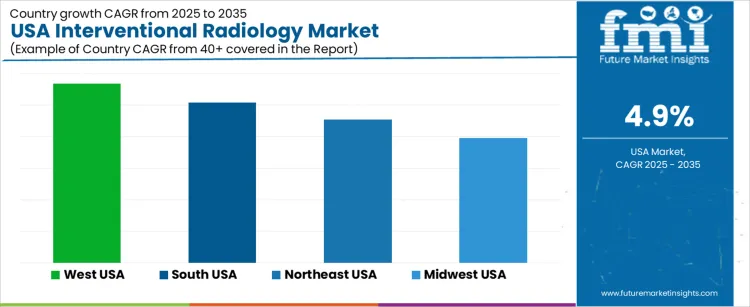
| Region | CAGR (2025-2035) |
|---|---|
| West USA | 5.7% |
| South USA | 5.1% |
| Northeast USA | 4.5% |
| Midwest USA | 4% |
What is Driving the Growth of Interventional Radiology in the West USA?
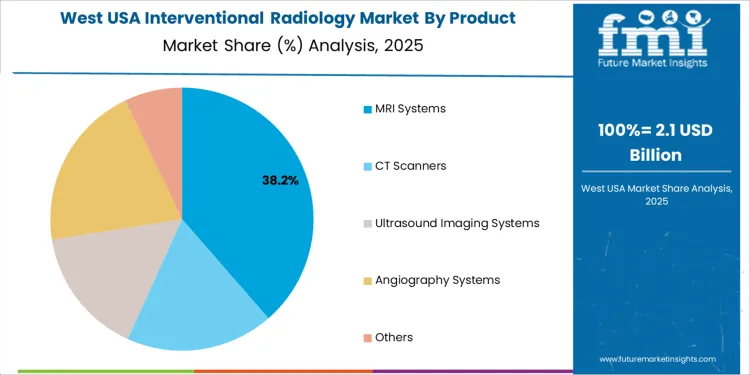
The West USA is projected to experience the highest growth in the Interventional Radiology market, with a projected CAGR of 5.7%. The region’s strong healthcare infrastructure, coupled with a high rate of healthcare innovation and technological adoption, is a significant driver of this growth. States like California, Washington, and Oregon are at the forefront of adopting minimally invasive procedures, including interventional radiology, due to their ability to treat a wide range of conditions with fewer risks and faster recovery times.
The growing preference for outpatient treatments and the rise in the aging population, which requires procedures such as angioplasty and biopsy, are further contributing to the demand for interventional radiology. Additionally, the region’s emphasis on research and development in healthcare technology is driving advancements in imaging techniques and interventional radiology procedures, further accelerating market growth.
Why is the Interventional Radiology Market Expanding in South USA?
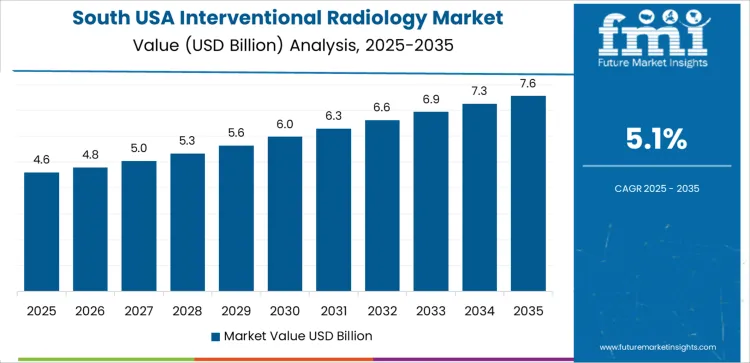
In South USA, the demand for interventional radiology is projected to grow at a CAGR of 5.1%. The region’s growing healthcare infrastructure, particularly in states like Texas, Florida, and Georgia, is contributing to the rise of minimally invasive treatments such as interventional radiology. With an increasing prevalence of conditions that require interventional procedures, such as peripheral artery disease, cancer, and liver disease, the demand for interventional radiology services is growing.
Additionally, the South’s focus on providing accessible healthcare and reducing healthcare costs is driving the adoption of interventional radiology, which offers efficient and effective treatment with fewer complications and faster recovery. The increasing awareness of the benefits of minimally invasive procedures, coupled with advancements in imaging technologies, is further accelerating the growth of the market in the South USA.
How is the Interventional Radiology Market Growing in Northeast USA?
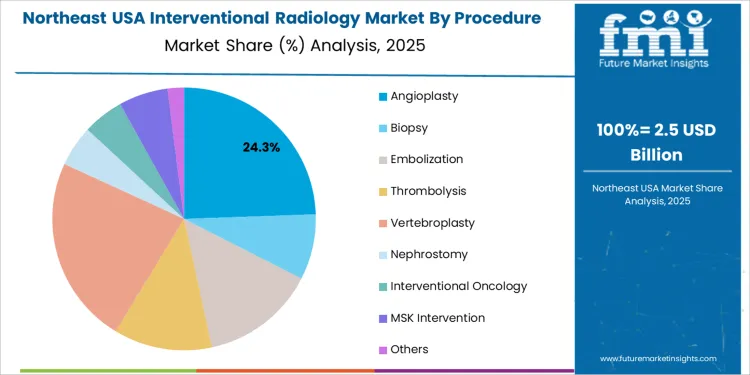
In Northeast USA, the Interventional Radiology market is projected to grow at a CAGR of 4.5%. The region’s well-established healthcare systems, particularly in cities like New York, Boston, and Philadelphia, are driving the adoption of advanced medical technologies, including interventional radiology. As healthcare providers in the Northeast seek to improve patient outcomes and reduce recovery times, the demand for minimally invasive procedures continues to rise.
The Northeast’s aging population, which is at higher risk for conditions like heart disease and cancer, is also contributing to the growth of the market. Furthermore, the region’s strong focus on research and clinical trials is driving innovations in interventional radiology procedures, enhancing their effectiveness and safety. As awareness of the benefits of interventional radiology increases, the market in the Northeast is expected to expand steadily.
What is Contributing to the Growth of Interventional Radiology in Midwest USA?
In Midwest USA, the Interventional Radiology market is expected to grow at a more moderate rate of 4.0%. The region’s healthcare infrastructure, particularly in states like Illinois, Michigan, and Ohio, is increasingly adopting advanced medical technologies to improve patient care and reduce treatment costs. Interventional radiology is becoming a more common treatment option in the Midwest, driven by its ability to offer minimally invasive alternatives to traditional surgeries, especially for conditions such as stroke, cancer, and vascular diseases.
Although the growth rate in the Midwest is slower compared to other regions, the demand for interventional radiology is expected to rise as healthcare providers in the region continue to embrace more efficient, cost-effective treatments. As patient awareness of interventional radiology’s benefits grows, the market is expected to see steady expansion.
What is the Competitive Landscape for Demand for Interventional Radiology in the USA?
Demand for interventional radiology (IR) in the USA continues to rise as more patients and healthcare providers choose minimally invasive, image-guided alternatives to traditional surgery. IR procedures, which are guided by advanced imaging technologies like CT, ultrasound, fluoroscopy, and MRI, offer targeted treatment with smaller incisions, less pain, quicker recovery times, and often outpatient procedures.
As the prevalence of chronic conditions such as cardiovascular diseases, cancer, and vascular disorders increases, the demand for IR solutions grows. Additionally, technological advances in imaging systems, catheter designs, and AI integration in diagnostic processes are expanding the capabilities of IR. These advancements allow for more complex procedures to be performed with increased accuracy and safety, making IR a preferred option in many clinical settings.
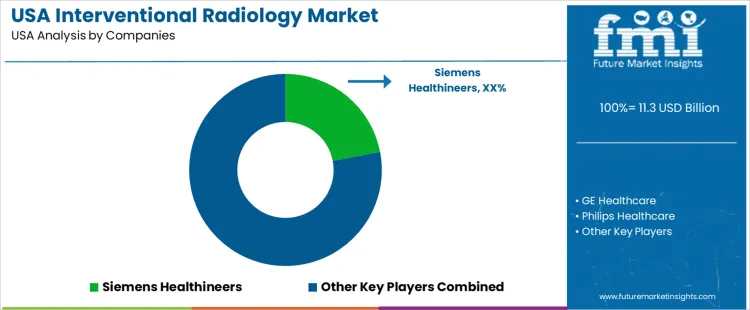
On the supply side, the market is dominated by several key players, including Siemens Healthineers, GE Healthcare, Philips Healthcare, Canon Medical Systems, and Hitachi Medical Corporation. These companies offer a range of imaging systems, angiography suites, fluoroscopy equipment, and specialized catheters and consumables designed for IR procedures. Competition among these suppliers is based on factors such as imaging quality, device reliability, the range of treatable conditions, and software integration.
Suppliers that provide comprehensive, high-performance imaging solutions with strong customer support, regulatory compliance, and broad clinical applications are positioned to capture the increasing demand in the USA market. As interventional radiology becomes more widely adopted across multiple medical specialties, firms that continue to innovate and expand their product offerings will likely lead the market.
Key Players of the Interventional Radiology Industry in USA
- Siemens Healthineers
- GE Healthcare
- Philips Healthcare
- Canon Medical Systems
- Hitachi Medical Corporation
Scope of the Report
| Items | Details |
|---|---|
| Quantitative Units | USD Billion |
| Regions Covered | USA |
| Product | MRI Systems, CT Scanners, Ultrasound Imaging Systems, Angiography Systems, Others (C-arm, imaging-catheter guidewires, contrast injectors, support devices) |
| Procedure | Angioplasty, Biopsy, Embolization, Thrombolysis, Vertebroplasty, Nephrostomy, Interventional Oncology, MSK Intervention, Others |
| Application | Cardiology, Oncology, Urology, Gastroenterology, Obstetrics, Gynecology, Others |
| End User | Hospitals, Clinics, Ambulatory Surgical Centres (ASCs), Others (diagnostic & imaging centers) |
| Key Companies Profiled | Siemens Healthineers, GE Healthcare, Philips Healthcare, Canon Medical Systems, Hitachi Medical Corporation |
| Additional Attributes | Dollar sales by product type and procedure show growing demand driven by rising chronic disease, increasing preference for minimally invasive procedures, and advances in imaging & interventional technology. Use of MRI, CT, ultrasound and angiography systems for interventional procedures is rising. |
Key Segments in the Demand for Interventional Radiology in USA
Product
- MRI Systems
- CT Scanners
- Ultrasound Imaging Systems
- Angiography Systems
- Others
Procedure
- Angioplasty
- Biopsy
- Embolization
- Thrombolysis
- Vertebroplasty
- Nephrostomy
- Interventional Oncology
- MSK Intervention
- Others
Application
- Cardiology
- Oncology
- Urology
- Gastroenterology
- Obstetrics
- Gynecology
- Others
End User
- Hospitals
- Clinics
- Ambulatory Surgical Centres
- Others
Region
- Northeast USA
- West USA
- Midwest USA
- South USA
Frequently Asked Questions
How big is the demand for interventional radiology in USA in 2025?
The demand for interventional radiology in USA is estimated to be valued at USD 11.3 billion in 2025.
What will be the size of interventional radiology in USA in 2035?
The market size for the interventional radiology in USA is projected to reach USD 18.4 billion by 2035.
How much will be the demand for interventional radiology in USA growth between 2025 and 2035?
The demand for interventional radiology in USA is expected to grow at a 4.9% CAGR between 2025 and 2035.
What are the key product types in the interventional radiology in USA?
The key product types in interventional radiology in USA are mri systems, ct scanners, ultrasound imaging systems, angiography systems and others.
Which procedure segment is expected to contribute significant share in the interventional radiology in USA in 2025?
In terms of procedure, angioplasty segment is expected to command 25.0% share in the interventional radiology in USA in 2025.
Preview the report firsthand - request a free sample
Get SampleGet the brochure for pricing and purchase details.
Get PDFTable of Content
- Executive Summary
- USA Market Outlook
- Demand-side Trends
- Supply-side Trends
- Technology Roadmap Analysis
- Analysis and Recommendations
- Market Overview
- Market Coverage / Taxonomy
- Market Definition / Scope / Limitations
- Market Background
- Market Dynamics
- Drivers
- Restraints
- Opportunity
- Trends
- Scenario Forecast
- Demand in Optimistic Scenario
- Demand in Likely Scenario
- Demand in Conservative Scenario
- Opportunity Map Analysis
- Product Life Cycle Analysis
- Supply Chain Analysis
- Investment Feasibility Matrix
- Value Chain Analysis
- PESTLE and Porter’s Analysis
- Regulatory Landscape
- Regional Parent Market Outlook
- Production and Consumption Statistics
- Import and Export Statistics
- Market Dynamics
- USA Market Analysis 2020 to 2024 and Forecast, 2025 to 2035
- Historical Market Size Value (USD Million) Analysis, 2020 to 2024
- Current and Future Market Size Value (USD Million) Projections, 2025 to 2035
- Y-o-Y Growth Trend Analysis
- Absolute $ Opportunity Analysis
- USA Market Pricing Analysis 2020 to 2024 and Forecast 2025 to 2035
- USA Market Analysis 2020 to 2024 and Forecast 2025 to 2035, By Product
- Introduction / Key Findings
- Historical Market Size Value (USD Million) Analysis By Product , 2020 to 2024
- Current and Future Market Size Value (USD Million) Analysis and Forecast By Product , 2025 to 2035
- MRI Systems
- CT Scanners
- Ultrasound Imaging Systems
- Angiography Systems
- Others
- Y-o-Y Growth Trend Analysis By Product , 2020 to 2024
- Absolute $ Opportunity Analysis By Product , 2025 to 2035
- USA Market Analysis 2020 to 2024 and Forecast 2025 to 2035, By Procedure
- Introduction / Key Findings
- Historical Market Size Value (USD Million) Analysis By Procedure, 2020 to 2024
- Current and Future Market Size Value (USD Million) Analysis and Forecast By Procedure, 2025 to 2035
- Angioplasty
- Biopsy
- Embolization
- Thrombolysis
- Vertebroplasty
- Nephrostomy
- Interventional Oncology
- MSK Intervention
- Others
- Y-o-Y Growth Trend Analysis By Procedure, 2020 to 2024
- Absolute $ Opportunity Analysis By Procedure, 2025 to 2035
- USA Market Analysis 2020 to 2024 and Forecast 2025 to 2035, By Application
- Introduction / Key Findings
- Historical Market Size Value (USD Million) Analysis By Application, 2020 to 2024
- Current and Future Market Size Value (USD Million) Analysis and Forecast By Application, 2025 to 2035
- Cardiology
- Oncology
- Urology
- Gastroenterology
- Obstetrics
- Gynecology
- Others
- Y-o-Y Growth Trend Analysis By Application, 2020 to 2024
- Absolute $ Opportunity Analysis By Application, 2025 to 2035
- USA Market Analysis 2020 to 2024 and Forecast 2025 to 2035, By End User
- Introduction / Key Findings
- Historical Market Size Value (USD Million) Analysis By End User, 2020 to 2024
- Current and Future Market Size Value (USD Million) Analysis and Forecast By End User, 2025 to 2035
- Hospitals
- Clinics
- Ambulatory Surgical Centres
- Others
- Y-o-Y Growth Trend Analysis By End User, 2020 to 2024
- Absolute $ Opportunity Analysis By End User, 2025 to 2035
- Market Structure Analysis
- Competition Dashboard
- Competition Benchmarking
- Market Share Analysis of Top Players
- By Regional
- By Product
- By Procedure
- By Application
- By End User
- Competition Analysis
- Competition Deep Dive
- Siemens Healthineers
- Overview
- Product Portfolio
- Profitability by Market Segments (Product/Age /Sales Channel/Region)
- Sales Footprint
- Strategy Overview
- Marketing Strategy
- Product Strategy
- Channel Strategy
- GE Healthcare
- Philips Healthcare
- Canon Medical Systems
- Hitachi Medical Corporation
- Siemens Healthineers
- Competition Deep Dive
- Assumptions & Acronyms Used
- Research Methodology


