

- Industry Size (2025)
- USD 280.3 Mn
- Forecast (2035)
- USD 403.3 Mn
- CAGR (2025 to 2035)
- 3.7%
Demand for Muscle Stimulation Devices in USA 2025 to 2035
The USA muscle stimulation devices demand is valued at USD 280.3 million in 2025 and is expected to reach USD 403.3 million by 2035, reflecting a CAGR of 3.7%. Growth is supported by wider use of electrical stimulation therapies in outpatient rehabilitation, musculoskeletal injury recovery, chronic pain management, and at-home physical therapy. Increased participation in sports and fitness, along with higher incidence of age-related joint and muscle conditions, also contributes to adoption. Reimbursement eligibility in select therapeutic applications ensures steady utilization in clinical environments.
Transcutaneous electrical nerve stimulation (TENS) systems represent the leading category. These devices are used for non-invasive pain relief, functioning by interrupting pain-receptor signaling pathways and stimulating nerve fibres. Portable TENS devices are increasingly used in home-care programmes, supporting patient adherence to long-term pain-management routines. Integration of smartphone connectivity, adjustable intensity profiles, and compact designs enhances convenience for consumer users.
Demand is highest in the West USA, South USA, and Northeast USA, where there is a dense presence of physiotherapy centers, orthopaedic clinics, and sports-medicine facilities. Expansion of home-based recovery solutions further strengthens uptake across urban and suburban populations. Key suppliers include Zynex, Inc., DJO Global, Inc., Omron Healthcare, Inc., NeuroMetrix, Inc., and BioMedical Life Systems. Their portfolios include TENS, neuromuscular electrical stimulation, and multifunctional stimulation platforms designed for pain relief, muscle strengthening, and neuromotor rehabilitation.
Quick Stats for USA Muscle Stimulation Devices Demand
- USA Muscle Stimulation Devices Sales Value (2025): USD 280.3 million
- USA Muscle Stimulation Devices Forecast Value (2035): USD 403.3 million
- USA Muscle Stimulation Devices Forecast CAGR (2025–2035): 3.7%
- Leading Category in USA Muscle Stimulation Devices Demand: TENS Systems
- Key Growth Regions in USA Muscle Stimulation Devices Demand: West USA, South USA, Northeast USA
- Top Players in USA Muscle Stimulation Devices Demand: Zynex, Inc.; DJO Global, Inc.; Omron Healthcare, Inc.; NeuroMetrix, Inc.; BioMedical Life Systems
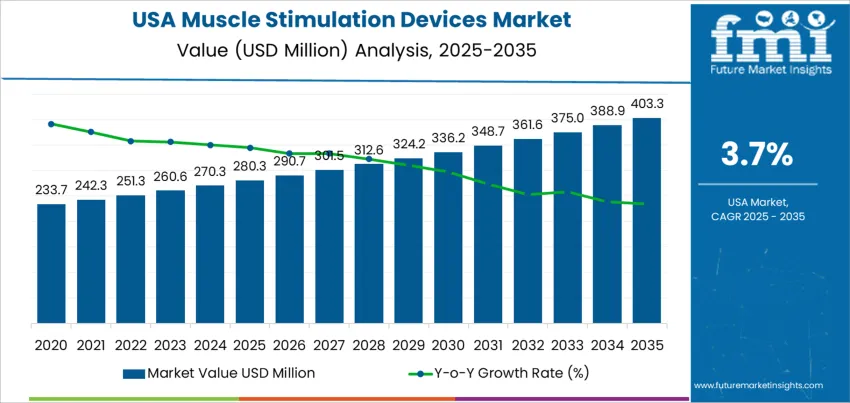
What is the Growth Forecast for Muscle Stimulation Devices Industry in USA through 2035?
Growth Contribution Index analysis for demand for muscle stimulation devices in the United States focuses on how incremental annual revenue additions shape overall expansion. The United States consistently generates strong healthcare technology spending which lifts absolute volume gains from device adoption in physical therapy centers, sports medicine facilities, and home rehabilitation settings. An aging population with rising musculoskeletal disorders ensures a steady contribution to yearly growth. Fitness consumers add seasonal and discretionary spending which improves contribution during high-activity periods.
Broader reimbursement support for neuromuscular stimulation in post-surgical recovery increases the share of hospital-driven contribution compared with previous years. Innovation in wearable muscle stimulators expands revenue from retail channels. Competitive pricing and increased device commoditization moderate the size of annual uplifts. Growth distribution remains more evenly spread across product categories including professional clinical devices and consumer-grade EMS units.
Regulatory approval of advanced stimulation features such as app-connected therapy and personalized intensity mapping strengthens relative growth contribution from premium segments. Chronic pain management applications increase the long-term sustainability of annual revenue additions. Steady absolute dollar expansion across clinical rehabilitation, sports performance, and home treatment demand indicates a balanced Growth Contribution Index for the United States muscle stimulation device industry.
USA Muscle Stimulation Devices Key Takeaways
| Metric | Value |
|---|---|
| USA Muscle Stimulation Devices Sales Value (2025) | USD 280.3 million |
| USA Muscle Stimulation Devices Forecast Value (2035) | USD 403.3 million |
| USA Muscle Stimulation Devices Forecast CAGR (2025-2035) | 3.7% |
Why is the Demand for Muscle Stimulation Devices in the USA Growing?
Demand for muscle stimulation devices in the USA is increasing because consumers look for convenient methods to support recovery, fitness and pain management at home. Physical therapists and chiropractic clinics recommend neuromuscular electrical stimulation to help improve muscle strength after injury or surgery, which expands clinical purchase volumes. Growing participation in gym workouts, endurance sports and home exercise routines strengthens retail demand for portable devices that reduce muscle fatigue and aid faster recovery between sessions.
Ageing populations and rising cases of chronic musculoskeletal discomfort encourage adoption for pain relief, especially among adults who prefer non pharmaceutical options. Athletes and fitness focused individuals use targeted stimulation to maintain muscle conditioning during rest periods. Online platforms improve accessibility by offering various intensity levels and body specific attachments suitable for personal use. Constraints include cost sensitivity for advanced units and variability in results depending on user technique. Some consumers may postpone purchase if they already use alternative recovery tools such as massage guns or topical therapies. Professional guidance is necessary for individuals with implanted medical devices or underlying health concerns, which can influence purchasing decisions.
Which Product Types and Applications Lead Demand for Muscle Stimulation Devices in the USA?
Demand for muscle stimulation devices in the United States is driven by increased rehabilitation needs, sports recovery routines, and adoption of home-use pain relief technologies. Consumers seek non-invasive solutions to manage chronic discomfort while restoring mobility. Healthcare providers integrate these devices into physiotherapy, neuromuscular therapy, and orthopedic recovery programs. Adoption is supported by availability through retail channels, insurance-backed treatment USAge, and rising awareness of at-home therapeutic care systems.
By Product Type, TENS Systems Hold the Largest Share
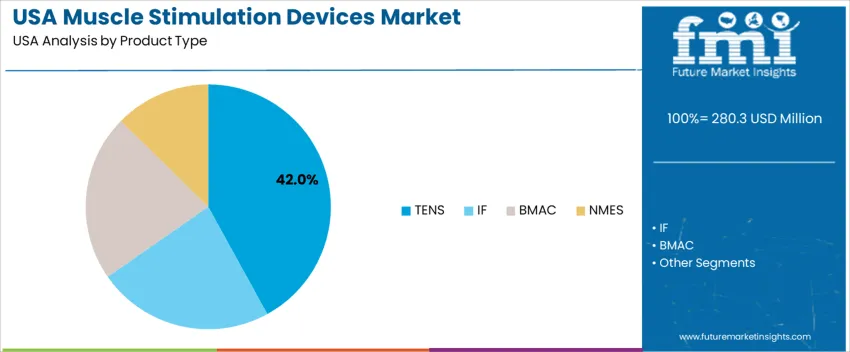
Transcutaneous Electrical Nerve Stimulation (TENS) systems represent 42.0%, reflecting widespread use for non-opioid pain relief and personal therapeutic management in the United States. TENS devices support acute and chronic pain conditions, including arthritis, nerve irritation, and postoperative recovery, contributing to broad consumer and clinical acceptance. Neuromuscular Electrical Stimulation (NMES), Interferential Current Therapy (IF), and Bone Marrow Aspirate Concentrate-related modalities (BMAC) account for the remaining share, applied in specialized rehabilitation environments requiring targeted muscle activation. Device selection aligns with ease of use, regulatory compliance, and portability for home-based therapy. Growth relates to the prevalence of joint pain, sports injuries, and musculoskeletal decline among aging adults. Healthcare integration also reinforces standardized application in physical therapy clinics and outpatient recovery programs.
Key Points:
- TENS devices lead due to non-pharmacological pain relief demand
- Adoption strengthened by home-based therapy and physiotherapy integration
- Other modalities serve targeted neuromuscular recovery requirements
By Application, Pain Management Represents the Largest Share
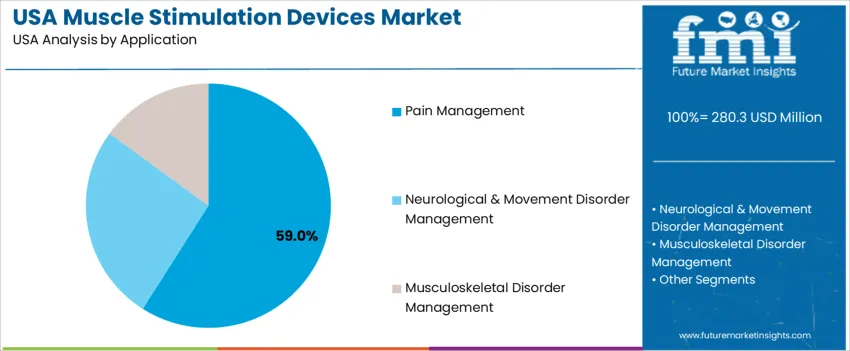
Pain management accounts for 59.0%, driven by high incidence of chronic musculoskeletal pain and expanded preference for non-drug relief modalities in the USA. These devices support lower back pain, neck strain, joint discomfort, and sports-related injuries. Neurological and movement disorder management, along with musculoskeletal disorder rehabilitation, comprises the remaining segment share, serving patients recovering from stroke, neuropathy, and mobility impairment. Applications align with reduced reliance on opioids, outpatient physical therapy demand, and growing tele-rehabilitation adoption. Hospitals, sports medicine networks, and home users increasingly rely on standardized stimulation protocols to speed recovery while limiting complications. Expansion is reinforced by insurance reimbursement in select clinical contexts and increased practitioner recommendations for daily at-home therapeutic use.
Key Points:
- Pain relief drives the primary USAge across clinical and home environments
- Adoption aligns with opioid-reduction strategies and chronic condition prevalence
- Rehabilitation settings prioritize consistent neuromuscular recovery outcomes
What are the Drivers, Restraints, and Key Trends of the Demand for Muscle Stimulation Devices in the USA?
Growth of home-based physical therapy, expansion of fitness recovery routines and increased clinical use in rehabilitation centers are driving demand.
In the United States, muscle stimulation devices gain steady adoption as insurance coverage and telehealth programs encourage at-home rehabilitation for patients recovering from orthopedic injuries, strokes and post-surgery procedures. Physical therapists prescribe neuromuscular electrical stimulation to support muscle re-education and pain reduction, which increases recurring procurement in outpatient clinics. Fitness enthusiasts and athletes use recovery-focused electrical muscle stimulation to reduce soreness after high-intensity training, supporting retail demand through sporting goods stores and online marketplaces. Aging adults managing mobility issues purchase muscle stimulators to maintain muscle activity during reduced physical movement. These clinical and wellness use-cases strengthen domestic consumption across medical and consumer channels.
Limited reimbursement for consumer-grade devices, risk of improper self-use and slower adoption among older patients unfamiliar with connected devices restrain demand.
Insurance programs may reimburse clinical-grade stimulators but rarely cover personal models, which increases out-of-pocket cost for households. Users who lack professional guidance may not achieve expected outcomes, lowering repeat purchases. Older adults unfamiliar with mobile app controls or electrode pad replacement may prefer traditional therapy sessions rather than bring-home devices. Professional sports and medical providers require strict device-performance validation, creating procurement delays for newer brands. These economic and educational challenges moderate rapid expansion across all user groups.
Shift toward wearable wireless stimulators, increased integration into physical therapy software platforms and rising alignment with sports-performance analytics define key trends.
Manufacturers are introducing compact wireless stimulators that support daily activity without cables, appealing to recovery routines used during work and travel. Rehabilitation networks connect muscle stimulation data with digital patient-monitoring dashboards to track adherence and progress outside clinics. Professional and collegiate sports organizations adopt analytics-linked devices to guide personalized recovery plans and muscle activation training. Retail channels emphasize FDA-cleared models with simplified controls and skin-friendly pads to support broader consumer trust. These developments indicate sustained, technology-aligned demand for muscle stimulation devices across active lifestyles, home care and clinical rehabilitation in the United States.
Analysis of the Demand for Muscle Stimulation Devices in the USA by Region
Demand for muscle stimulation devices in the United States is increasing as rehabilitation centers, sports medicine clinics, and home-therapy users adopt electrical muscle stimulation (EMS) and neuromuscular electrical stimulation (NMES) technologies to assist physical recovery and performance maintenance. Growth reflects broader insurance acceptance for post-injury therapy, rising orthopedic cases, and interest in home-based recovery tools supporting aging consumers. West USA leads at 4.3% CAGR, followed by South USA at 3.8%, Northeast USA at 3.4%, and Midwest USA at 3.0%. Expansion remains linked to clinical utilization rates, consumer wellness spending, digital-health distribution channels, and supply chain availability within regional healthcare networks.
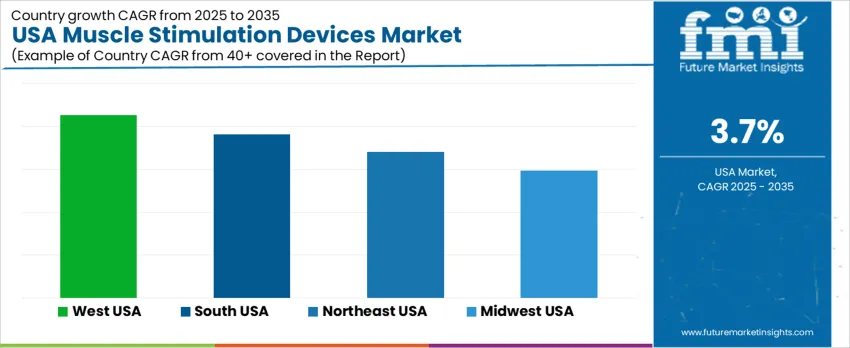
| Region | CAGR (2025-2035) |
|---|---|
| West USA | 4.3% |
| South USA | 3.8% |
| Northeast USA | 3.4% |
| Midwest USA | 3.0% |
How is the West USA driving demand for muscle stimulation devices?
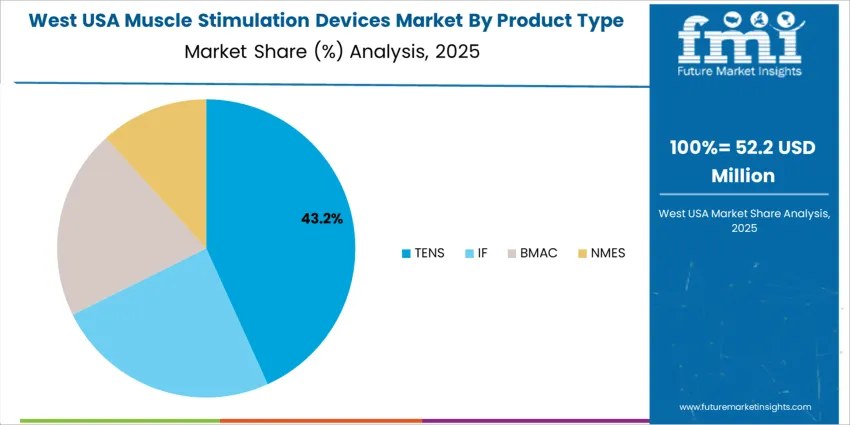
West USA reports a 4.3% CAGR, driven by strong concentration of sports-medicine institutions, physical-therapy practices, and wellness retail programs across California, Washington, and Colorado. Athletes and fitness users purchase portable stimulators for recovery after intense training cycles, creating consistent procurement for direct-to-consumer channels. Healthcare providers integrate NMES into rehabilitation pathways for orthopedic procedures and chronic pain management, especially in outpatient settings prioritizing efficient recovery timelines. Device vendors align distribution with e-commerce subscriptions serving home-care consumers. Large hospital networks evaluate connected EMS platforms integrated into telehealth follow-ups for musculoskeletal conditions. High insurance-coverage variability increases emphasis on affordable retail options. Procurement teams consider device-life durability and electrode compatibility with existing clinical supplies.
- Sports-therapy USAge prompting recurring device demand
- Outpatient rehabilitation integrating NMES support
- Home-care product adoption growing through retail channels
- Telehealth compatibility influencing model selection
How is the South USA shaping demand for muscle stimulation devices?
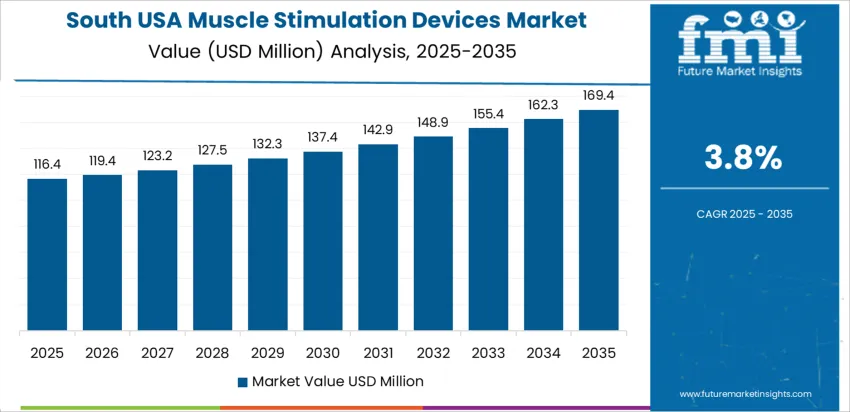
South USA expands at 3.8% CAGR, supported by high musculoskeletal-injury volumes across Texas and Florida, where physical-therapy providers emphasize cost-efficient rehabilitation cycles. Hospitals deploy EMS equipment in acute-postoperative care for improving mobility outcomes. Home-health service organizations include muscle stimulation devices in durable medical-equipment procurement to aid seniors with limited mobility. Warmer climate regions sustain ongoing recreational sports participation, reinforcing retail device sales. Supply-chain links through Gulf Coast hubs maintain stable product distribution to expanding suburban facilities. Buyers review device safety certifications with attention to patient-comfort modes and intensity-adjustment capabilities.
- Post-injury rehab sustaining clinical EMS utilization
- Home-health programs supporting elderly patient mobility
- Recreational sports increasing consumer adoption
- Distribution through regional logistics hubs supporting supply continuity
How is the Northeast USA influencing procurement patterns?
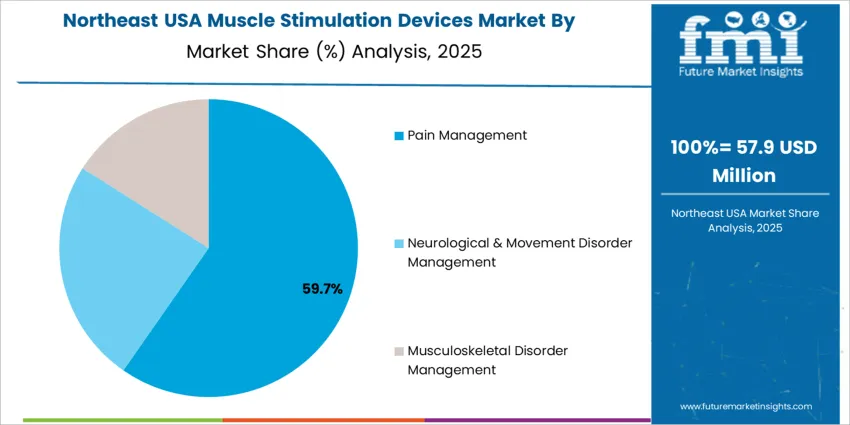
Northeast USA demonstrates 3.4% CAGR, influenced by dense hospital systems and research-linked rehabilitation centers in New York, New Jersey, and Massachusetts. Clinics adopt specialized NMES equipment to enhance muscle activation after neurological conditions. Public and private insurers recognize therapeutic value where evidence supports recovery outcomes, helping drive recurring utilization in care plans. Consumer demand reflects urban wellness programs promoting recovery solutions for physically active commuters. Compact household environments prioritize small-format EMS devices suitable for limited storage. Procurement requires verification of clinically validated stimulation parameters and software stability.
- Neuro-rehabilitation driving specialized device USAge
- Insurance-supported prescriptions improving adoption rates
- Urban fitness culture encouraging portable equipment
- Quality and clinical validation shaping purchase decisions
How is the Midwest USA contributing to demand growth?
Midwest USA grows at 3.0% CAGR, reflecting steady utilization in physical-therapy networks and hospital-affiliated rehabilitation facilities across Illinois, Michigan, and Ohio. EMS devices support recovery for workers in physically demanding manufacturing industries where repetitive-motion injuries require structured therapy. Home-care adoption expands in senior-care communities focused on preserving strength and reducing fall-risk injuries. Buyers emphasize product value with robust lifecycles and long-wear electrode-pad USAbility. Regional distributors maintain inventory aligned with predictable clinical consumption rather than rapid expansion scenarios.
- Occupational injury rehab supporting consistent demand
- Senior-care facilities integrating muscle-activation therapy
- Cost-focused purchasing guiding equipment selection
- Stable distribution supporting durable supply availability
What does the competitive landscape for muscle stimulation device demand in the United States look like?
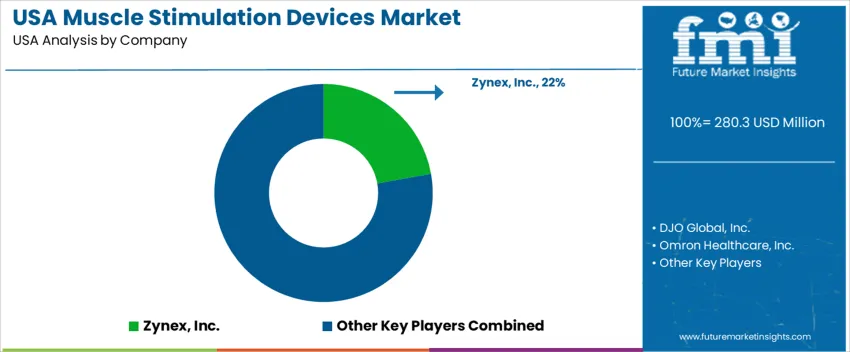
Muscle stimulation devices in the United States are adopted in rehabilitation therapy, sports recovery, and chronic pain management. Hospitals, outpatient therapy centers, and home-use customers influence product selection. Demand aligns with broader adoption of non-pharmacological treatment for musculoskeletal discomfort, electrical neuromodulation for nerve conditions, and device-based recovery in athletic programs. Procurement priorities include patient safety, preset clinical programs, durability, and insurance reimbursement acceptance. Consumer products focus on comfort, portability, and clear compliance with FDA regulations for over-the-counter use.
Zynex, Inc. holds an estimated 22.2% share. The company offers prescription neuromuscular stimulation equipment used in orthopedic recovery and pain therapy, supported by established reimbursement processes. DJO Global, Inc. supplies electrotherapy systems through professional clinical channels, benefiting from its distribution in physical therapy and sports medicine. Omron Healthcare, Inc. participates in home-use electrical stimulation devices that support consumer wellness and pain relief. NeuroMetrix, Inc. focuses on advanced neuro-stimulation technologies for nerve-related symptoms, reinforcing presence in specialized treatment pathways. BioMedical Life Systems provides devices for therapeutic environments, particularly in modalities used to support recovery from work-related injuries. Competitive positioning depends on clinical evidence supporting treatment protocols, supply continuity to large therapy providers, and educational support for clinicians guiding patients through home-based recovery.
Key Players in USA Muscle Stimulation Devices Demand
- Zynex, Inc.
- DJO Global, Inc.
- Omron Healthcare, Inc.
- NeuroMetrix, Inc.
- BioMedical Life Systems
Scope of the Report
| Items | Values |
|---|---|
| Quantitative Units | USD million |
| Product Type | TENS, IF, BMAC, NMES |
| Application | Pain Management, Neurological & Movement Disorder Management, Musculoskeletal Disorder Management |
| Regions Covered | West USA, South USA, Northeast USA, Midwest USA |
| Key Companies Profiled | Zynex, Inc., DJO Global, Inc., Omron Healthcare, Inc., NeuroMetrix, Inc., BioMedical Life Systems |
| Additional Attributes | Dollar sales by device category and clinical application; adoption trends driven by chronic pain therapy, rehabilitation programs, and sports performance recovery; distribution via prescription and OTC channels; interoperability with digital therapy monitoring platforms; reimbursement landscape influencing patient access; growth in neuromuscular re-education, home-based management, and non-opioid pain-relief alternatives across US regions. |
USA Muscle Stimulation Devices Demand by Segments
Product Type:
- TENS
- IF
- BMAC
- NMES
Application:
- Pain Management
- Neurological & Movement Disorder Management
- Musculoskeletal Disorder Management
Region:
- West USA
- South USA
- Northeast USA
- Midwest USA
Frequently Asked Questions
How big is the demand for muscle stimulation devices in USA in 2025?
The demand for muscle stimulation devices in USA is estimated to be valued at USD 280.3 million in 2025.
What will be the size of muscle stimulation devices in USA in 2035?
The market size for the muscle stimulation devices in USA is projected to reach USD 403.3 million by 2035.
How much will be the demand for muscle stimulation devices in USA growth between 2025 and 2035?
The demand for muscle stimulation devices in USA is expected to grow at a 3.7% CAGR between 2025 and 2035.
What are the key product types in the muscle stimulation devices in USA?
The key product types in muscle stimulation devices in USA are tens, if, bmac and nmes.
Which application segment is expected to contribute significant share in the muscle stimulation devices in USA in 2025?
In terms of application, pain management segment is expected to command 59.0% share in the muscle stimulation devices in USA in 2025.
Preview the report firsthand - request a free sample
Get SampleGet the brochure for pricing and purchase details.
Get PDFTable of Content
- Executive Summary
- USA Market Outlook
- Demand-side Trends
- Supply-side Trends
- Technology Roadmap Analysis
- Analysis and Recommendations
- Market Overview
- Market Coverage / Taxonomy
- Market Definition / Scope / Limitations
- Market Background
- Market Dynamics
- Drivers
- Restraints
- Opportunity
- Trends
- Scenario Forecast
- Demand in Optimistic Scenario
- Demand in Likely Scenario
- Demand in Conservative Scenario
- Opportunity Map Analysis
- Product Life Cycle Analysis
- Supply Chain Analysis
- Investment Feasibility Matrix
- Value Chain Analysis
- PESTLE and Porter’s Analysis
- Regulatory Landscape
- Regional Parent Market Outlook
- Production and Consumption Statistics
- Import and Export Statistics
- Market Dynamics
- USA Market Analysis 2020 to 2024 and Forecast, 2025 to 2035
- Historical Market Size Value (USD Million) Analysis, 2020 to 2024
- Current and Future Market Size Value (USD Million) Projections, 2025 to 2035
- Y-o-Y Growth Trend Analysis
- Absolute $ Opportunity Analysis
- USA Market Pricing Analysis 2020 to 2024 and Forecast 2025 to 2035
- USA Market Analysis 2020 to 2024 and Forecast 2025 to 2035, By Product Type
- Introduction / Key Findings
- Historical Market Size Value (USD Million) Analysis By Product Type , 2020 to 2024
- Current and Future Market Size Value (USD Million) Analysis and Forecast By Product Type , 2025 to 2035
- TENS
- IF
- BMAC
- NMES
- Y-o-Y Growth Trend Analysis By Product Type , 2020 to 2024
- Absolute $ Opportunity Analysis By Product Type , 2025 to 2035
- USA Market Analysis 2020 to 2024 and Forecast 2025 to 2035, By Application
- Introduction / Key Findings
- Historical Market Size Value (USD Million) Analysis By Application, 2020 to 2024
- Current and Future Market Size Value (USD Million) Analysis and Forecast By Application, 2025 to 2035
- Pain Management
- Neurological & Movement Disorder Management
- Musculoskeletal Disorder Management
- Y-o-Y Growth Trend Analysis By Application, 2020 to 2024
- Absolute $ Opportunity Analysis By Application, 2025 to 2035
- Market Structure Analysis
- Competition Dashboard
- Competition Benchmarking
- Market Share Analysis of Top Players
- By Regional
- By Product Type
- By Application
- Competition Analysis
- Competition Deep Dive
- Zynex, Inc.
- Overview
- Product Portfolio
- Profitability by Market Segments (Product/Age /Sales Channel/Region)
- Sales Footprint
- Strategy Overview
- Marketing Strategy
- Product Strategy
- Channel Strategy
- DJO Global, Inc.
- Omron Healthcare, Inc.
- NeuroMetrix, Inc.
- BioMedical Life Systems
- Zynex, Inc.
- Competition Deep Dive
- Assumptions & Acronyms Used
- Research Methodology


