

- Industry Size (2026)
- USD 4.2 Bn
- Forecast (2036)
- USD 11.7 Bn
- CAGR (2026 to 2036)
- 10.8%
Automotive AI Agents Market Size, Market Forecast and Outlook By FMI
Vehicle architecture teams replacing distributed electronic control units with centralized computing layers pushed the automotive AI agents market to USD 3.8 billion in 2025, confirming commitments to software-defined mobility. Advanced driver assistance milestones convert pilot programs into binding serial production contracts, advancing the market size to USD 4.2 billion in 2026. Compound expansion at 10.8% through 2036 targets USD 11.7 billion as regulatory mandates for collision avoidance compel continuous algorithm upgrades across all new passenger platforms.
Automotive system designers deploying artificial intelligence in automotive frameworks must coordinate perception networks capable of interpreting complex urban geometries under strict latency constraints. Original equipment manufacturers increasingly reject isolated microcontrollers in favor of unified intelligence architectures that process radar, lidar, and optical data simultaneously. Integrating these centralized logic engines reduces hardware redundancy while enabling continuous over-the-air functional enhancements. Engineers engineering the ai defined vehicle prioritize scalable computational foundations that allow machine learning models to evolve from basic lane-keeping assistance toward full autonomous navigation without requiring physical sensor replacements during the vehicle lifecycle.
Summary of Automotive AI Agents Market
- Automotive AI Agents Market Definition
- Automotive AI agents represent intelligent decision-making software platforms embedded within vehicle architectures to process real-time sensor telemetry, manage automated driving functions, and coordinate predictive vehicle maintenance without human intervention.
- Demand Drivers in the Market
- Autonomous mobility project expansions stimulate immediate procurement of intelligent software for advanced driver assistance deployment across major automotive production hubs.
- Regulatory safety frameworks encourage vehicle manufacturers to implement platforms featuring predictive collision monitoring functions ahead of mandatory compliance deadlines.
- Advancements in sensor fusion architectures minimize computational delay while preserving precise operational decision performance under dynamic road conditions.
- Key Segments Analyzed in the FMI Report
- Autonomous Driving Agents: 45.0% share in 2026, driven by original equipment manufacturers prioritizing real-time perception capabilities to clear regulatory safety hurdles.
- Cloud-Based Systems: 41.0% share in 2026, as centralized data aggregation becomes necessary to train complex machine learning models across massive connected vehicle fleets.
- China: 12.5% compound growth driven by intensive government investment in intelligent connected vehicle pilot zones and localized electric vehicle platform scaling.
- Analyst Opinion at FMI
- Nikhil Kaitwade, Principal Consultant for Automotive, opines: "Automotive software architects attempting to validate perception algorithms across diverse global environments face severe edge-case processing limitations using legacy heuristic logic. Cross-environment validation standards now require artificial intelligence platforms with certified reliability across varied road geometries and erratic traffic patterns. FMI analysts observe that algorithm auditability rules directly influence development timelines, creating a dynamic where compliance certification procedures cap market entry opportunities for software developers targeting price-sensitive fleet operators who lack robust testing infrastructure."
- Strategic Implications / Executive Takeaways
- Mobility network architects must shift development priorities from standalone functional features toward integrated full-scale autonomous driving platforms.
- Tier-1 software suppliers need to establish direct original equipment manufacturer partnerships as the primary commercialization route rather than relying on aftermarket distribution channels.
- Validation engineering leads must expand algorithm update frameworks to shorten certification timelines and maintain sustained vehicle system compatibility.
- Methodology
- Primary Research: FMI conducted detailed technical interviews with automotive software developers, autonomous vehicle technology leads, and tier-1 supplier executives across major markets.
- Desk Research: Analysts aggregated vehicle production data from automotive industry platforms, autonomous driving deployment rates, and regulatory approval statistics from transportation authorities.
- Market-Sizing and Forecasting: The model applies a hybrid top-down and bottom-up methodology starting with OEM licensing agreements and validating against software development investment levels.
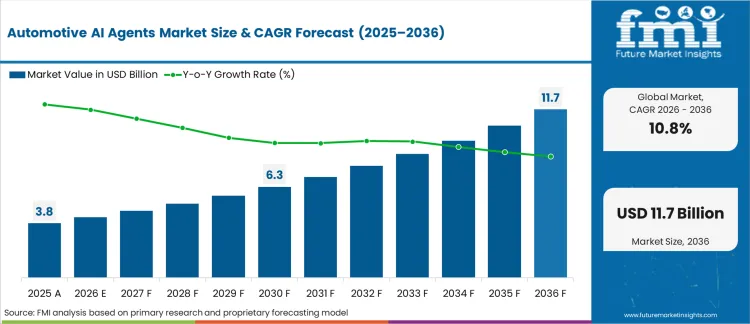
Automotive AI Agents Market Key Takeaways
| Metric | Details |
| Industry Size (2026) | USD 4.2 billion |
| Industry Value (2036) | USD 11.7 billion |
| CAGR (2026-2036) | 10.8% |
Original equipment manufacturers transitioning toward centralized domain controllers recognize that disjointed software components cannot satisfy sub-millisecond perception requirements. This architectural realization forces a structural realignment of automotive supply chains, favoring vendors capable of delivering pre-validated, certifiable algorithmic intelligence.
Global regional markets navigate this software transition at distinct velocities dictated by domestic regulatory aggressiveness; China and the United States accelerate adoption through expansive autonomous testing frameworks, while European automakers balance innovation goals against stringent type‑approval safety mandates. Reflecting this divergence, the 2026-2036 CAGR outlooks are China at 12.5%, the United States at 11.2%, India at 10.9%, Germany at 9.8%, and the United Kingdom at 9.5%. Market expansion ultimately depends on closing the gap between prototype algorithm capabilities and verifiable public road safety.
Automotive AI Agents Market Definition
The automotive AI agents market represents the ecosystem of autonomous, goal-oriented software entities integrated into vehicular computing platforms. These agents continuously perceive sensor data, reason probabilistically, and execute localized decisions without human intervention. The market boundaries encompass the algorithmic frameworks and embedded processing nodes required to support real-time reasoning for vehicle control, diagnostics, and passenger interaction.
Automotive AI Agents Market Inclusions
The market scope includes embedded large language models tailored for vehicular environments, multi-agent reinforcement learning frameworks for autonomous navigation, and specialized edge inference processors natively supporting agentic workflows. Offerings targeting automotive artificial intelligence capabilities, including in-cabin intelligent virtual assistants and software-defined vehicle integration stacks, fall entirely within these analytical boundaries. Solutions facilitating decentralized agent communication protocols are explicitly incorporated into the valuation.
Automotive AI Agents Market Exclusions
Basic voice recognition systems lacking generative reasoning capabilities and traditional rule-based advanced driver assistance systems are excluded. Standalone automotive software applications that require constant cloud connectivity for basic decision-making fall outside the defined parameters. Standard enterprise AI tools deployed exclusively in back-office automotive manufacturing, rather than inside the vehicle architecture, are explicitly omitted.
Automotive AI Agents Market Research Methodology
- Primary Research: Analysts engaged with chief technology officers at Tier-1 automotive suppliers, heads of software-defined vehicle architectures, and principal engineers at autonomous driving startups to map the specific adoption timelines for edge-deployed agents.
- Desk Research: The data collection phase aggregated compliance roadmaps from global automotive safety consortiums, patent filings for vehicular neural processors, and baseline projections from FMI's advanced driver assistance systems intelligence series.
- Market-Sizing and Forecasting: The baseline value derives from a bottom-up aggregation of edge AI chip shipments to automotive OEMs, applying region-specific software transition curves to project the future adoption velocity.
- Data Validation and Update Cycle: Projections are rigorously tested against publicly reported capital expenditure guidance from the leading discrete electric vehicle manufacturing conglomerates and semiconductor foundries.
Segmental Analysis
Automotive AI Agents Market Analysis by Agent Type
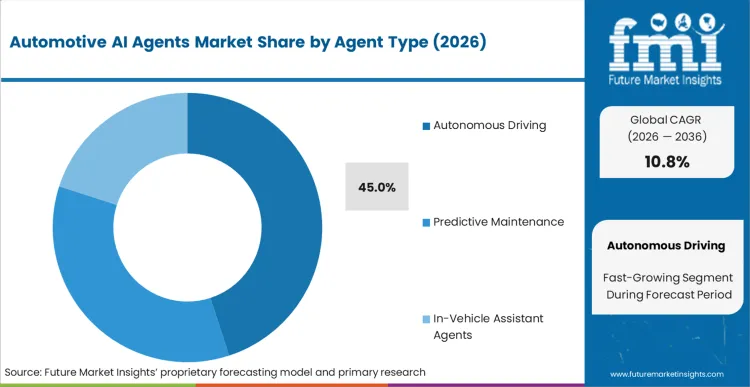
With legacy heuristic programming proving inadequate for complex urban environments, tier-1 software integrators execute full-scale algorithmic transitions. Autonomous driving agents capture a dominant 45.0% share in 2026, reflecting the absolute requirement for sophisticated perception logic before higher-level vehicle automation can secure regulatory approval. According to FMI's estimates, vehicle engineering leads specifying these core agents drastically streamline their perception validation processes. Engineering teams integrating an ai powered in car assistant prioritize contextual voice recognition that minimizes driver distraction. Algorithm developers failing to supply certified, auditable decision engines lose priority status in critical vehicle platform upgrade cycles.
- Sensor fusion synchronization: Centralized agents process heterogeneous inputs from optical, radar, and lidar hardware simultaneously to construct reliable spatial models under degraded environmental conditions.
- Real-time path planning: Dynamic optimization engines evaluate thousands of potential trajectory variations per second, enabling collision avoidance maneuvers that exceed human reaction capabilities.
- Diagnostic data aggregation: Software architectures engineered for ai driven predictive maintenance analyze micro-vibrations and thermal shifts to schedule component replacements before catastrophic mechanical failures occur on the road.
Automotive AI Agents Market Analysis by Deployment Model
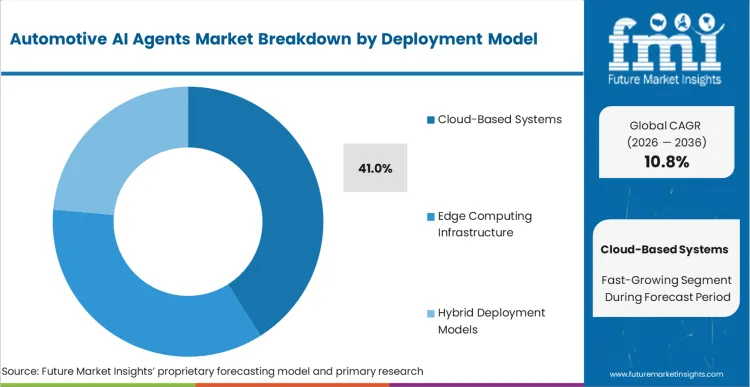
Cloud-based systems emerge as the dominant deployment architecture, expected to represent 41.0% of total market share in 2026, as original equipment manufacturers build the massive computational infrastructure necessary to train complex neural networks using fleet-wide telemetry. FMI analysts opine that centralized data aggregation directly enables the rapid iteration of edge algorithms deployed to individual vehicles. System architects must construct robust data pipelines linking moving vehicles to hyperscale server environments to authorize continuous learning loops. Developing frameworks for automotive adas autonomy mlops and model lifecycle management allows engineering teams to track algorithm performance degradation across distinct geographic zones. Software providers unable to guarantee secure, high-bandwidth vehicle software operations forfeit access to the next generation of connected fleet management contracts.
- Model training environments: Hyperscale computing clusters ingest petabytes of unstructured video data daily to refine object detection precision for rare corner-case traffic scenarios.
- Over-the-air deployment: Secure cryptographic pipelines deliver optimized neural network weights directly to vehicle domain controllers without requiring physical dealer service appointments.
- Edge synchronization: Localized processing units execute critical safety decisions instantaneously while asynchronously uploading ambiguous sensor data to the cloud for secondary analysis.
Automotive AI Agents Market Analysis by Application
Every product strategy director bidding on next-generation mobility platforms now faces strict adherence criteria for automated safety interventions. Passenger vehicles represent the leading application segment as safety rating agencies worldwide elevate active collision avoidance from a premium option to a baseline prerequisite for top-tier scores. As per FMI's projection, the convergence of electrification and intelligence amplifies the demand for sophisticated automotive software capable of managing both battery chemistry and complex passenger vehicle adas tasks. Automakers lacking verified algorithmic competence surrender negotiating leverage to specialized technology suppliers during critical architecture definition phases.
- Active safety intervention: Sub-millisecond decision engines execute emergency braking protocols independently when human drivers fail to recognize stationary obstacles in high-speed traffic.
- Driver state monitoring: Cabin-facing optical algorithms assess pilot cognitive load and physical engagement, triggering hierarchical alert sequences before initiating safe-stop procedures during medical emergencies.
- Route optimization: Logistics coordination software analyzes historical traffic density and localized energy consumption patterns to maximize electric commercial fleet utilization rates.
Automotive AI Agents Market Drivers, Restraints, and Opportunities
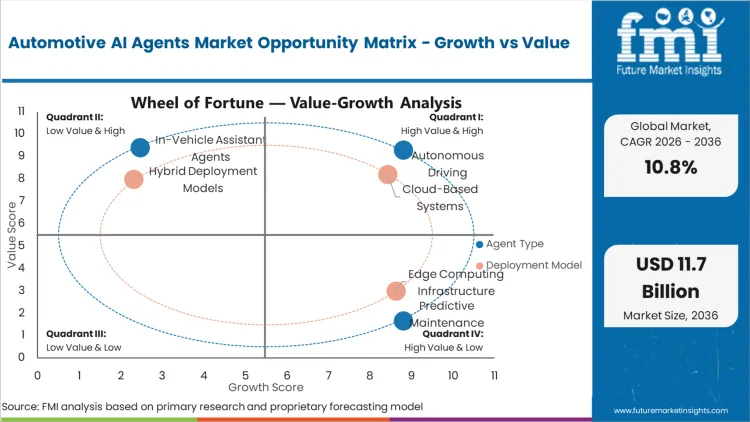
Original equipment manufacturers transitioning toward centralized architectures face strict directives to unify disparate electronic control units under scalable intelligence platforms. Integrating an ai based driving systems l2 to l5 framework enables manufacturers to extract actionable behavioral data directly from the driver seat. FMI's analysis indicates that establishing a robust algorithmic foundation simplifies feature deployment and enables continuous revenue streams through digital capability unlocks. Automotive brands that fail to modernize their core software layers risk operational blind spots and diminished market relevance against digitally native competitors.
The immense computational processing burden required to interpret raw optical data restricts deployment velocity across entry-level vehicle segments. Validating advanced driver assistance systems demands specialized simulation expertise that most traditional automotive engineering teams lack internally. To mitigate this capability gap, vehicle program directors increasingly rely on high-performance automotive ai chipset architectures that compress neural network execution times without draining electric vehicle battery reserves.
- Automated valet infrastructure: Algorithm specialists developing localized mapping intelligence allow fleet operators to execute driverless vehicle retrieval within structured parking environments.
- Predictive battery thermal management: Intelligent software monitoring individual cell degradation allows engineering leads to extend warranty periods by preventing catastrophic thermal runaway events.
- Dynamic insurance telemetry: Actuarial teams utilizing granular vehicle behavioral data offer precision-priced coverage models that reward verified safe driving patterns over demographic generalizations.
Regional Analysis
Based on the regional analysis, the Automotive AI Agents market is segmented into North America, Latin America, Europe, East Asia, South Asia, Oceania and Middle East & Africa across 40 plus countries. The full report also offers market attractiveness analysis based on regional trends.
.webp "Top Country Growth Comparison Automotive Ai Agents Market Cagr (2026 2036)")
| Country | CAGR (2026 to 2036) |
|---|---|
| China | 12.5% |
| United States | 11.2% |
| India | 10.9% |
| Germany | 9.8% |
| United Kingdom | 9.5% |
Source: Future Market Insights (FMI) analysis, based on proprietary forecasting model and primary research
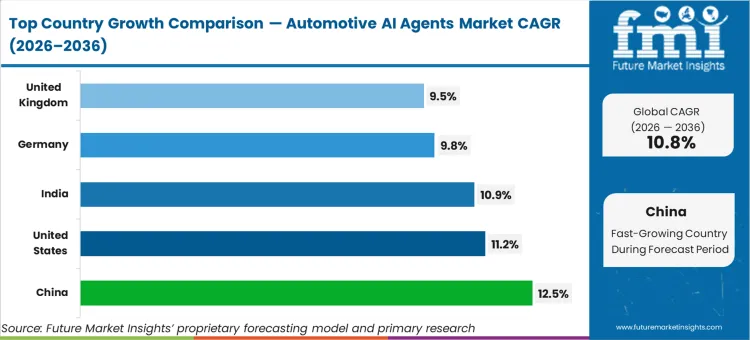
North America Automotive AI Agents Market Analysis
Industrial modernization mandates across North America target the systematic integration of intelligent safety systems into all new passenger and commercial vehicle platforms. Autonomous vehicle validation engineers leading testing operations face strict federal directives to document disengagement metrics and edge-case failures under real-world conditions. According to FMI's estimates, the localized concentration of leading semiconductor developers and venture-backed mobility startups actively drives algorithm maturation speeds. Implementing a standardized intelligence backbone enables highway authorities to deploy connected infrastructure that communicates directly with approaching vehicles.
- United States: The National Highway Traffic Safety Administration's AV TEST Initiative establishes a centralized tracking framework for autonomous testing, forcing developers to formalize their public road validation procedures. This regulatory visibility mechanism exposes algorithm reliability gaps before commercial deployment, dictating the hardware specifications required from the united states automotive ai chipset sector. Mobility startups securing operational permits in California and Arizona demonstrate high-speed highway merging capabilities using multi-modal perception models. The United States advances at an 11.2% compound rate across the forecast decade as commercial fleet operators transition toward automated middle-mile logistics. Fleet management directors failing to invest in verified united states advanced driver assistance system adas testing equipment face exclusion from major carrier contracts demanding certified safety metrics.
FMI's report includes comprehensive evaluation of the North American automotive intelligence sector. It features specific analysis of the Canadian and Mexican commercial transportation markets. A defining dynamic across these borders involves the harmonization of cross-border trucking safety standards, forcing logistics providers to specify unified perception software that maintains compliance across distinct jurisdictional boundaries.
Europe Automotive AI Agents Market Analysis
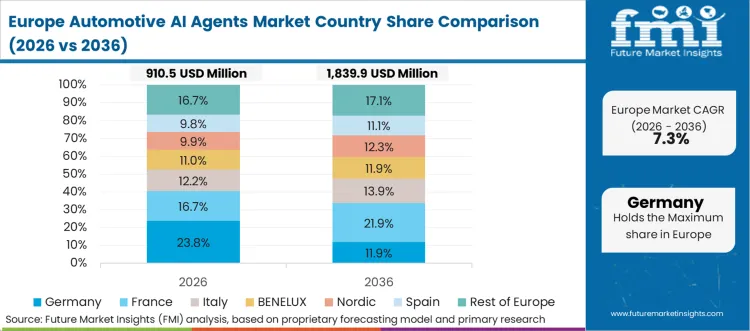
European transportation policy actively penalizes the continued deployment of vehicles lacking baseline automated emergency intervention systems. Safety rating architects updating the Euro NCAP evaluation protocols must integrate stringent vulnerability assessments for pedestrians and cyclists alongside traditional occupant protection scores. This expanded safety requirement forces the rapid adoption of sophisticated optical processing algorithms to guarantee hazard identification in complex urban intersections. Upgrading the core vehicle intelligence provides the necessary cognitive precision to support advanced collision avoidance maneuvers.
- Germany: Germany enforces stringent Level 3 automated driving type-approval processes through the UNECE regulatory framework, requiring developers to mathematically prove system safety boundaries. This homologation mechanism forces automakers to establish redundant perception architectures, driving the specification of secondary fallback agents. Domestic luxury automotive brands deploy highly conditional automated highway piloting systems under these approved parameters. This systemic qualification pressure drives a 9.8% annual expansion rate for certified automotive AI agents as the standard proliferates across premium vehicle segments. Automotive original equipment manufacturers targeting domestic vehicle assembly plant retooling projects must guarantee sub-millisecond object classification performance prior to final production sign-off.
- United Kingdom: The government in UK assigns clear legal liability structures for self-driving features, establishing the Authorised Self-Driving Entity as the responsible party during system operation. This legislative clarity shifts the operational risk burden directly onto the software developers, forcing a complete overhaul of validation methodologies prior to public deployment. Specialized autonomous test facilities in the Midlands utilize digital twin environments to simulate thousands of adverse weather scenarios. This critical regulatory transition sustains a 9.5% compound rate for the UK's automotive AI sector to 2036 as technology providers systematically validate their core algorithms. Software vendors unable to demonstrate absolute deterministic performance under severe weather conditions forfeit qualification for national trial expansion programs.
FMI's report includes thorough investigation of the European intelligent mobility framework. The analysis encompasses France, Italy, Spain, and the Scandinavian region. A prevailing structural condition across these nations is the mandatory compliance with strict general safety regulations, forcing fleet owners to specify integrated agents that reliably interpret dynamic speed limit indicators alongside standard lane discipline functions.
Asia Pacific Automotive AI Agents Market Analysis
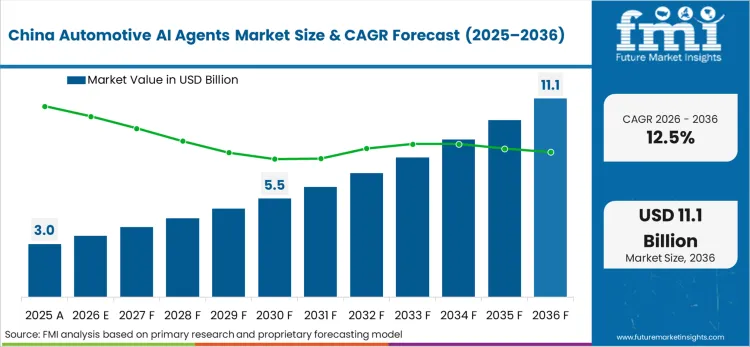
Aggressive electric vehicle manufacturing expansion across the Asia Pacific region accelerates the bypass of legacy internal combustion engine architectures. Platform engineering directors constructing new electric vehicle architectures specify unified computational networks in their initial design blueprints. FMI's research confirms that this clean-slate approach entirely eliminates the costly software integration barriers that plague traditional fragmented electronic control unit layouts. By building native data-gathering capabilities into the vehicle foundation, regional automakers establish highly flexible product lines capable of continuous feature monetization.
- China: China designates specific intelligent connected vehicle pilot zones, effectively creating massive real-world laboratories for automated driving algorithm maturation. This state-sponsored testing infrastructure allows domestic developers to rapidly iterate perception models based on localized driving behaviors, bypassing the simulation bottlenecks experienced in other regions. Domestic electric vehicle manufacturers aggressively deploy advanced highway navigation pilots to differentiate their product offerings in a hyper-competitive domestic market. This aggressive modernization strategy anchors China's 12.5% compound trajectory for automotive AI software through 2036. Algorithm vendors unable to demonstrate verified high-bandwidth processing capabilities lose access to the most lucrative greenfield electric vehicle projects in the eastern industrial corridor.
- India: India prioritizes the deployment of advanced driver assistance systems to mitigate exceptionally high fatality rates on unstructured national logistics corridors. System architects must deploy perception networks capable of accurately classifying highly irregular vehicle types and erratic pedestrian movement patterns without structured lane markings. The domestic push toward software localization triggers a wave of data annotation investments prioritizing distinct regional traffic dynamics. The localized engineering push positions India's market at a 10.9% compound growth rate to 2036. Global technology suppliers failing to train models specifically on South Asian road edge-cases face disqualification from major domestic auto manufacturer tenders.
FMI's report includes extensive coverage of the Asia Pacific automotive intelligence landscape. It incorporates detailed analysis of Japan, South Korea, Australia, and the broader ASEAN region. A primary trend shaping these nations involves the rapid integration of Japan automotive ai chipset technologies to support high-fidelity sensor processing, forcing automakers to deploy specialized japan advanced driver assistance system adas testing equipment to satisfy stringent global brand reliability requirements.
Competitive Aligners for Market Players
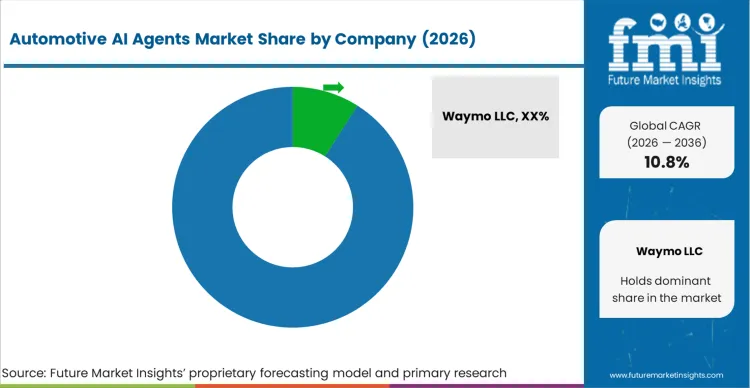
The introduction of unified vehicle operating systems fundamentally alters how automotive buyers evaluate intelligent software procurement. Original equipment manufacturers no longer accept isolated black-box algorithms, demanding instead fully transparent models that integrate natively with centralized compute hardware. Based on FMI's assessment, software suppliers failing to deliver modular, hardware-agnostic perception engines risk total exclusion from impending multi-year serial production contracts. Validation engineering teams unable to adapt their pipelines to these open-architecture standards lose priority status during initial vendor shortlisting phases.
Legacy embedded software models rely on static, rule-based coding designed for singular hardware components, ignoring the necessity for continuous post-sale improvement. Next-generation adas architectures function entirely differently, utilizing dynamic neural networks that refine their accuracy by ingesting real-world fleet data. Original equipment manufacturers establishing these closed-loop data ecosystems drastically accelerate their algorithm training cycles while simultaneously reducing physical road-testing expenditures. Semiconductor developers unable to provide integrated toolchains that support this iterative training model face systematic lock-out from tier-1 design wins.
Regulatory bodies globally transition from evaluating passive crash structures toward mandating active collision avoidance capabilities across all vehicle weight classes. This regulatory escalation enables safety engineers to demand rigorous simulation validation prior to any physical prototype testing. Specialized optical processing vendors prove sub-millisecond adas sensors synchronization, elevating baseline performance expectations across the entire supply chain. Component manufacturers slow to adopt these deterministic testing methodologies forfeit qualification for critical government-backed intelligent transportation infrastructure grants.
Key Players in Automotive AI Agents Market
- Waymo LLC
- Tesla Inc.
- NVIDIA Corporation
- Mobileye (Intel Corporation)
- Baidu Inc.
- Cruise LLC
- Aurora Innovation Inc.
- Latitude AI
- Aptiv PLC
- Continental AG
Scope of the Report
| Metric | Value |
|---|---|
| Quantitative Units | USD 4.2 billion to USD 11.7 billion, at a CAGR of 10.8% |
| Market Definition | The automotive AI agents market comprises the global development, deployment, and licensing of machine learning-based vehicle control systems. |
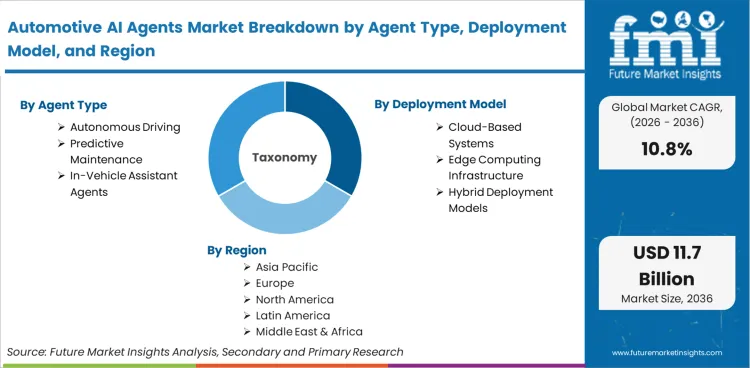
| Agent Type Segmentation | Autonomous Driving Agents, Predictive Maintenance Agents, In-Vehicle Assistant Agents, Fleet Management Agents |
| Deployment Model Coverage | Cloud-Based Systems, Edge Computing Infrastructure, Hybrid Deployment Models, On-Premise Solutions, Others |
| Application Segmentation | Passenger Vehicles, Commercial Fleet Operations, Public Transportation Systems, Logistics Vehicles |
| Regions Covered | North America, Latin America, Europe, East Asia, South Asia, Oceania, Middle East and Africa |
| Countries Covered | United States, Canada, United Kingdom, Germany, France, China, Japan, India, Brazil, UAE and 40 countries |
| Key Companies Profiled | Waymo LLC, Tesla Inc., NVIDIA Corporation, Mobileye, Baidu Inc., Cruise LLC, Aurora Innovation Inc., Latitude AI, Aptiv PLC, Continental AG |
| Forecast Period | 2026 to 2036 |
| Approach | Hybrid top down and bottom up market modeling validated through OEM licensing tracking and autonomous vehicle deployment surveys |
Automotive AI Agents Market Analysis by Segments
Agent Type:
- Autonomous Driving Agents
- Predictive Maintenance Agents
- In-Vehicle Assistant Agents
- Fleet Management Agents
Deployment Model:
- Cloud-Based Systems
- Edge Computing Infrastructure
- Hybrid Deployment Models
- On-Premise Solutions
- Others (vehicle-integrated processing, distributed computing networks)
Application:
- Passenger Vehicles
- Commercial Fleet Operations
- Public Transportation Systems
- Logistics Vehicles
Region:
- Asia Pacific
- China
- Japan
- South Korea
- India
- Australia
- Singapore
- Thailand
- Rest of Asia Pacific
- Europe
- United Kingdom
- Germany
- France
- Italy
- Spain
- Netherlands
- Scandinavia
- Switzerland
- Rest of Europe
- North America
- United States
- Canada
- Latin America
- Brazil
- Mexico
- Argentina
- Rest of Latin America
- Middle East & Africa
- United Arab Emirates
- Saudi Arabia
- South Africa
- Israel
- Rest of Middle East & Africa
Bibliography
- National Highway Traffic Safety Administration. (2024, December 19). ADS-equipped vehicle safety, transparency, and evaluation program. USA Department of Transportation.
- United Nations Economic Commission for Europe. (2024). Working Party on Automated/Autonomous and Connected Vehicles (GRVA): Artificial intelligence in vehicles. UNECE.
- Department for Transport, Centre for Connected and Autonomous Vehicles. (2024, May 20). Self-driving vehicles set to be on roads by 2026 as Automated Vehicles Act becomes law. GOV.UK.
- Shenzhen Government Online. (2024, July 5). SZ to pilot “vehicle-road-cloud integration” for smart cars.
- Euro NCAP. (2024, February). Assessment protocol: Safety assist, safe driving (Version 10.4).
- Land Transport Authority. (2025, January 14). Application for trial of autonomous motor vehicles (AVs) on public roads. Government of Singapore.
- Kraftfahrt-Bundesamt. (2025). Automated / fully automated driving. Federal Motor Transport Authority, Germany.
- Transport Canada. (2025, February 11). Canada’s safety framework for connected and automated vehicles 2.0. Government of Canada.
This bibliography is provided for reader reference. The full FMI report contains the complete reference list with primary research documentation.
This Report Addresses
- Market sizing parameters mapping the exact capital expenditure dedicated to automotive AI algorithms across major passenger and commercial sectors through 2036.
- Segmentation intelligence analyzing the adoption velocity of autonomous driving versus predictive maintenance software formats.
- Regional deployment evaluation comparing aggressive testing environments in North America against strict homologation frameworks in European markets.
- Regulatory compliance assessment tracking how safety standards dictate mandatory collision avoidance architectures across vehicle tiers.
- Competitive posture analysis evaluating the transition from isolated electronic control units toward centralized software-defined vehicle operations.
- Technological integration guidance defining the processing constraints impacting advanced sensor fusion and real-time path planning capabilities.
- Supply chain vulnerability mapping identifying the exact algorithm certification bottlenecks extending vehicle production timelines.
- Custom data delivery formats encompassing interactive dashboards, raw Excel datasets, and comprehensive PDF narrative reports.
Frequently Asked Questions
How large is the demand for Automotive AI Agents in the global market in 2026?
Demand for Automotive AI Agents in the global market is estimated to be valued at USD 4.2 billion in 2026.
What will be the market size of Automotive AI Agents in the global market by 2036?
Market size for Automotive AI Agents is projected to reach USD 11.7 billion by 2036.
What is the expected demand growth for Automotive AI Agents in the global market between 2026 and 2036?
Demand for Automotive AI Agents is expected to grow at a CAGR of 10.8% between 2026 and 2036.
Which Agent Type is poised to lead global sales by 2026?
Autonomous Driving Agents commands 45.0% in 2026 as tier-1 software integrators execute full-scale algorithmic transitions for complex urban environments.
How significant is the role of Cloud-Based Systems in driving Automotive AI Agents adoption in 2026?
Cloud-based systems represents 41.0% of segment share as original equipment manufacturers build massive computational infrastructure to train complex neural networks.
What is driving demand in China?
Intensive government investment in intelligent connected vehicle pilot zones and localized electric vehicle platform scaling drive regional demand.
What compliance standards or regulations are referenced for Germany?
The Federal Motor Transport Authority enforces stringent Level 3 automated driving type-approval processes through the UNECE regulatory framework.
What is the China growth outlook in this report?
China is projected to grow at a CAGR of 12.5% during 2026 to 2036.
Why is North America described as a priority region in this report?
Industrial modernization mandates systematically integrate intelligent safety systems into all new passenger and commercial vehicle platforms across the region.
What type of demand dominates in North America?
Demand centers on verifying algorithm reliability gaps before commercial deployment using centralized tracking frameworks.
What is the United States's growth outlook in this report?
The United States is projected to expand at a CAGR of 11.2% during 2026 to 2036.
Does the report cover India in its regional analysis?
Yes, India is included within Asia Pacific under the regional scope of analysis.
What are the sources referred to for analyzing India?
Deployment statistics regarding localized traffic data training and domestic auto manufacturer tenders form the analytical basis.
What is the main demand theme linked to India in its region coverage?
The deployment of advanced driver assistance systems to mitigate fatalities on unstructured national logistics corridors shapes localized software priorities.
Does the report cover Germany in its regional analysis?
Yes, Germany is included within Europe under the regional coverage framework.
What is the main Germany related demand theme in its region coverage?
Strict homologation mechanisms force automakers to establish redundant perception architectures across premium vehicle segments.
Which product formats or configurations are strategically important for Asia Pacific supply chains?
Unified computational networks embedded into clean-slate electric vehicle architectures eliminate integration barriers.
What is Automotive AI Agents and what is it mainly used for?
Automotive AI agents are intelligent decision-making software platforms. They manage automated driving functions and coordinate predictive vehicle maintenance.
What does Automotive AI Agents mean in this report?
The scope encompasses advanced vehicle control technologies enabling autonomous functionality within passenger vehicles, commercial fleets, and public transport systems.
What is included in the scope of this Automotive AI Agents report?
The market covers autonomous driving logic, predictive maintenance algorithms, in-vehicle digital assistants, and cloud-based training infrastructure specific to vehicle models.
What is excluded from the scope of this report?
Standalone commercial navigation applications, basic non-intelligent driver assistance technologies, and industrial automation robotics are explicitly excluded.
What does market forecast mean on this page?
The market forecast represents a model-based projection built on defined technological and adoption assumptions for strategic planning purposes.
How does FMI build and validate the Automotive AI Agents forecast?
The model applies a hybrid top-down and bottom-up methodology validating segment forecasts against publicly reported software development investments.
What does zero reliance on speculative third-party market research mean here?
Primary interviews, verified autonomous driving deployment rates, and official regulatory approval frameworks are used exclusively instead of unverified syndicated estimates.
Preview the report firsthand - request a free sample
Get SampleGet the brochure for pricing and purchase details.
Get PDFTable of Content
- Key Takeaways
- Market Size and CAGR
- Top Growth Driver
- Fastest Growing Segment
- Leading Region
- Key Companies
- Emerging Opportunities
- Executive Summary
- Global Market Outlook
- Demand-side Trends
- Supply-side Trends
- Technology Roadmap Analysis
- Analysis and Recommendations
- Analyst Perspective (What is happening? Why now? What should investors know?)
- Key Questions Answered
- How large is the market?
- What is the CAGR?
- What are key trends?
- Which region dominates?
- Who are the leaders?
- Market Overview
- Market Coverage / Taxonomy
- Market Definition / Scope / Limitations
- Research Methodology
- Chapter Orientation
- Analytical Lens and Working Hypotheses
- Market Structure, Signals, and Trend Drivers
- Benchmarking and Cross-market Comparability
- Market Sizing, Forecasting, and Opportunity Mapping
- Research Design and Evidence Framework
- Desk Research Programme (Secondary Evidence)
- Expert Input and Fieldwork (Primary Evidence)
- Tooling, Models, and Reference Databases
- Data Engineering and Model Build
- Quality Assurance and Audit Trail
- Market Background
- Market Dynamics (Drivers, Restraints, Opportunity, Trends)
- Scenario Forecast (Optimistic, Likely, Conservative)
- Impact Analysis
- AI Impact
- Sustainability Impact
- Regulatory Impact
- Technology Impact
- Consumer / Buyer Analysis
- Purchase Drivers
- Adoption Barriers
- Buyer Journey
- Opportunity Map Analysis
- Product Life Cycle Analysis
- Supply Chain Analysis
- Investment Feasibility Matrix
- Value Chain Analysis
- PESTLE and Porter's Analysis
- Regulatory Landscape
- Regional Parent Market Outlook
- Production and Consumption Statistics
- Import and Export Statistics
- Global Market Analysis and Forecast, 2021 to 2036
- Historical Market Size Value (USD Billion) & Volume (Unit) Analysis, 2021 to 2025
- Current and Future Market Size Value (USD Billion) & Volume (Unit) Projections, 2026 to 2036
- Y-o-Y Growth Trend Analysis
- Absolute $ Opportunity Analysis
- Global Market Pricing Analysis, 2021 to 2036
- Global Market Analysis and Forecast, By Agent Type, 2021 to 2036
- Introduction / Key Findings
- Historical Market Size Value (USD Billion) & Volume (Unit) Analysis By Agent Type, 2021 to 2025
- Current and Future Market Size Value (USD Billion) & Volume (Unit) Analysis and Forecast By Agent Type, 2026 to 2036
- Autonomous Driving Agents
- Predictive Maintenance Agents
- In-Vehicle Assistant Agents
- Fleet Management Agents
- Autonomous Driving Agents
- Y-o-Y Growth Trend Analysis By Agent Type, 2021 to 2025
- Absolute $ Opportunity Analysis By Agent Type, 2026 to 2036
- Global Market Analysis and Forecast, By Deployment Model, 2021 to 2036
- Introduction / Key Findings
- Historical Market Size Value (USD Billion) & Volume (Unit) Analysis By Deployment Model, 2021 to 2025
- Current and Future Market Size Value (USD Billion) & Volume (Unit) Analysis and Forecast By Deployment Model, 2026 to 2036
- Cloud-Based Systems
- Edge Computing Infrastructure
- Hybrid Deployment Models
- On-Premise Solutions
- Others (vehicle-integrated processing, distributed computing networks)
- Cloud-Based Systems
- Y-o-Y Growth Trend Analysis By Deployment Model, 2021 to 2025
- Absolute $ Opportunity Analysis By Deployment Model, 2026 to 2036
- Global Market Analysis and Forecast, By Application, 2021 to 2036
- Introduction / Key Findings
- Historical Market Size Value (USD Billion) & Volume (Unit) Analysis By Application, 2021 to 2025
- Current and Future Market Size Value (USD Billion) & Volume (Unit) Analysis and Forecast By Application, 2026 to 2036
- Passenger Vehicles
- Commercial Fleet Operations
- Public Transportation Systems
- Logistics Vehicles
- Passenger Vehicles
- Y-o-Y Growth Trend Analysis By Application, 2021 to 2025
- Absolute $ Opportunity Analysis By Application, 2026 to 2036
- Global Market Analysis and Forecast, By Region, 2021 to 2036
- Introduction
- Historical Market Size Value (USD Billion) & Volume (Unit) Analysis By Region, 2021 to 2025
- Current Market Size Value (USD Billion) & Volume (Unit) Analysis and Forecast By Region, 2026 to 2036
- North America
- Latin America
- Western Europe
- Eastern Europe
- East Asia
- South Asia and Pacific
- Middle East & Africa
- Market Attractiveness Analysis By Region
- North America Market Analysis and Forecast, By Country, 2021 to 2036
- Historical Market Size Value (USD Billion) & Volume (Unit) Trend Analysis By Market Taxonomy, 2021 to 2025
- Market Size Value (USD Billion) & Volume (Unit) Forecast By Market Taxonomy, 2026 to 2036
- By Country
- USA
- Canada
- Mexico
- By Agent Type
- By Deployment Model
- By Application
- By Country
- Market Attractiveness Analysis
- By Country
- By Agent Type
- By Deployment Model
- By Application
- Key Takeaways
- Latin America Market Analysis and Forecast, By Country
- Historical Market Size Value (USD Billion) & Volume (Unit) Trend Analysis By Market Taxonomy, 2021 to 2025
- Market Size Value (USD Billion) & Volume (Unit) Forecast By Market Taxonomy, 2026 to 2036
- By Country
- Brazil
- Chile
- Rest of Latin America
- By Agent Type
- By Deployment Model
- By Application
- By Country
- Market Attractiveness Analysis
- By Country
- By Agent Type
- By Deployment Model
- By Application
- Key Takeaways
- Western Europe Market Analysis and Forecast, By Country
- Historical Market Size Value (USD Billion) & Volume (Unit) Trend Analysis By Market Taxonomy, 2021 to 2025
- Market Size Value (USD Billion) & Volume (Unit) Forecast By Market Taxonomy, 2026 to 2036
- By Country
- Germany
- UK
- Italy
- Spain
- France
- Nordic
- BENELUX
- Rest of Western Europe
- By Agent Type
- By Deployment Model
- By Application
- By Country
- Market Attractiveness Analysis
- By Country
- By Agent Type
- By Deployment Model
- By Application
- Key Takeaways
- Eastern Europe Market Analysis and Forecast, By Country
- Historical Market Size Value (USD Billion) & Volume (Unit) Trend Analysis By Market Taxonomy, 2021 to 2025
- Market Size Value (USD Billion) & Volume (Unit) Forecast By Market Taxonomy, 2026 to 2036
- By Country
- Russia
- Poland
- Hungary
- Balkan & Baltic
- Rest of Eastern Europe
- By Agent Type
- By Deployment Model
- By Application
- By Country
- Market Attractiveness Analysis
- By Country
- By Agent Type
- By Deployment Model
- By Application
- Key Takeaways
- East Asia Market Analysis and Forecast, By Country
- Historical Market Size Value (USD Billion) & Volume (Unit) Trend Analysis By Market Taxonomy, 2021 to 2025
- Market Size Value (USD Billion) & Volume (Unit) Forecast By Market Taxonomy, 2026 to 2036
- By Country
- China
- Japan
- South Korea
- By Agent Type
- By Deployment Model
- By Application
- By Country
- Market Attractiveness Analysis
- By Country
- By Agent Type
- By Deployment Model
- By Application
- Key Takeaways
- South Asia and Pacific Market Analysis and Forecast, By Country
- Historical Market Size Value (USD Billion) & Volume (Unit) Trend Analysis By Market Taxonomy, 2021 to 2025
- Market Size Value (USD Billion) & Volume (Unit) Forecast By Market Taxonomy, 2026 to 2036
- By Country
- India
- ASEAN
- Australia & New Zealand
- Rest of South Asia and Pacific
- By Agent Type
- By Deployment Model
- By Application
- By Country
- Market Attractiveness Analysis
- By Country
- By Agent Type
- By Deployment Model
- By Application
- Key Takeaways
- Middle East & Africa Market Analysis and Forecast, By Country
- Historical Market Size Value (USD Billion) & Volume (Unit) Trend Analysis By Market Taxonomy, 2021 to 2025
- Market Size Value (USD Billion) & Volume (Unit) Forecast By Market Taxonomy, 2026 to 2036
- By Country
- Kingdom of Saudi Arabia
- Other GCC Countries
- Türkiye
- South Africa
- Other African Union
- Rest of Middle East & Africa
- By Agent Type
- By Deployment Model
- By Application
- By Country
- Market Attractiveness Analysis
- By Country
- By Agent Type
- By Deployment Model
- By Application
- Key Takeaways
- Key Countries Market Analysis
- USA
- Pricing Analysis
- Market Share Analysis, 2025
- By Agent Type
- By Deployment Model
- By Application
- Canada
- Pricing Analysis
- Market Share Analysis, 2025
- By Agent Type
- By Deployment Model
- By Application
- Mexico
- Pricing Analysis
- Market Share Analysis, 2025
- By Agent Type
- By Deployment Model
- By Application
- Brazil
- Pricing Analysis
- Market Share Analysis, 2025
- By Agent Type
- By Deployment Model
- By Application
- Chile
- Pricing Analysis
- Market Share Analysis, 2025
- By Agent Type
- By Deployment Model
- By Application
- Germany
- Pricing Analysis
- Market Share Analysis, 2025
- By Agent Type
- By Deployment Model
- By Application
- UK
- Pricing Analysis
- Market Share Analysis, 2025
- By Agent Type
- By Deployment Model
- By Application
- Italy
- Pricing Analysis
- Market Share Analysis, 2025
- By Agent Type
- By Deployment Model
- By Application
- Spain
- Pricing Analysis
- Market Share Analysis, 2025
- By Agent Type
- By Deployment Model
- By Application
- France
- Pricing Analysis
- Market Share Analysis, 2025
- By Agent Type
- By Deployment Model
- By Application
- India
- Pricing Analysis
- Market Share Analysis, 2025
- By Agent Type
- By Deployment Model
- By Application
- ASEAN
- Pricing Analysis
- Market Share Analysis, 2025
- By Agent Type
- By Deployment Model
- By Application
- Australia & New Zealand
- Pricing Analysis
- Market Share Analysis, 2025
- By Agent Type
- By Deployment Model
- By Application
- China
- Pricing Analysis
- Market Share Analysis, 2025
- By Agent Type
- By Deployment Model
- By Application
- Japan
- Pricing Analysis
- Market Share Analysis, 2025
- By Agent Type
- By Deployment Model
- By Application
- South Korea
- Pricing Analysis
- Market Share Analysis, 2025
- By Agent Type
- By Deployment Model
- By Application
- Russia
- Pricing Analysis
- Market Share Analysis, 2025
- By Agent Type
- By Deployment Model
- By Application
- Poland
- Pricing Analysis
- Market Share Analysis, 2025
- By Agent Type
- By Deployment Model
- By Application
- Hungary
- Pricing Analysis
- Market Share Analysis, 2025
- By Agent Type
- By Deployment Model
- By Application
- Kingdom of Saudi Arabia
- Pricing Analysis
- Market Share Analysis, 2025
- By Agent Type
- By Deployment Model
- By Application
- Türkiye
- Pricing Analysis
- Market Share Analysis, 2025
- By Agent Type
- By Deployment Model
- By Application
- South Africa
- Pricing Analysis
- Market Share Analysis, 2025
- By Agent Type
- By Deployment Model
- By Application
- USA
- Market Structure Analysis
- Competition Dashboard
- Competition Benchmarking
- Market Share Analysis of Top Players
- By Regional
- By Agent Type
- By Deployment Model
- By Application
- Emerging Startups
- Innovation Benchmarking
- Competition Analysis
- Competition Deep Dive
- Waymo LLC
- Overview
- Product Portfolio
- Profitability by Market Segments (Product/Region/Sales Channel)
- Sales Footprint
- Strategy Overview
- Marketing Strategy
- Product Strategy
- Channel Strategy
- Tesla Inc.
- NVIDIA Corporation
- Mobileye (Intel Corporation)
- Baidu Inc.
- Cruise LLC
- Aurora Innovation Inc.
- Latitude AI
- Aptiv PLC
- Continental AG
- Waymo LLC
- Case Studies
- Success Stories
- Recent Developments
- Competition Deep Dive
- Assumptions & Acronyms Used


