

- Industry Size (2026)
- USD 860.0 Mn
- Forecast (2036)
- USD 2131.3 Mn
- CAGR (2026 to 2036)
- 9.5%
Busbar Potting Compounds Market Forecast and Outlook 2026 to 2036
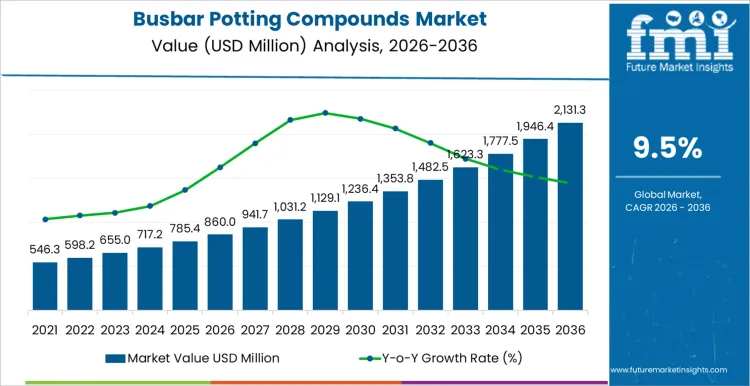
The busbar potting compounds market is forecast to expand from USD 860.0 million in 2026 to USD 2,131.3 million by 2036, reflecting a 9.5% CAGR across the forecast period. Growth reflects how electric vehicle powertrains and renewable energy systems are demanding enhanced protection for high-current busbar assemblies. Potting compounds are designed for complete encapsulation, thermal management, and electrical isolation in compact power electronics where traditional air cooling and mechanical barriers cannot adequately protect against moisture ingress, thermal cycling stress, and electromagnetic interference. This elevates potting from a protective coating into a structural engineering material, where viscosity control, pot life management, and cured properties influence assembly yields, thermal dissipation efficiency, and long-term electrical reliability.
High-volume manufacturing operations are adopting automated dispensing and vacuum degassing systems because they eliminate air entrapment and ensure consistent fill patterns around complex busbar geometries. Compounds that can flow around tight clearances, bond to multiple substrate materials, and cure without excessive exotherm or dimensional shrinkage are being integrated earlier in design validation phases. As multi-layer busbar constructions and integrated power modules expand, engineers evaluate potting materials not only on dielectric strength but also on thermal interface performance, coefficient of thermal expansion matching, and chemical compatibility with adjacent polymers and sealants used in complete assemblies. Validation work often aligns encapsulation choices with battery pack sealants used to manage moisture ingress and vibration pathways in complete packs.
Quick Stats for Busbar Potting Compounds Market
- Busbar Potting Compounds Market Value (2026): USD 860.0 million
- Busbar Potting Compounds Market Forecast Value (2036): USD 2,131.3 million
- Busbar Potting Compounds Market Forecast CAGR: 9.5%
- Leading Application in Busbar Potting Compounds Market: EV Power/Battery Busbars (56%)
- Key Growth Countries in Busbar Potting Compounds Market: China, Germany, South Korea, USA, Japan, UK
- Key Players in Busbar Potting Compounds Market: Henkel, Dow, 3M, Sika, Wacker Chemie
Epoxy systems lead where structural integrity and chemical resistance are critical for outdoor installations and industrial environments. Polyurethane formulations dominate applications requiring flexibility and vibration dampening in automotive assemblies. Silicone systems serve high-temperature applications where thermal stability and wide service temperature ranges are priorities. Thermally conductive grades are gaining market share because they enable passive heat removal from power electronics while maintaining electrical isolation, reducing the need for separate thermal interface materials and simplifying assembly processes. EV power and battery busbars remain the largest application segment, followed by industrial power electronics, while specialized electrical busbar applications provide steady demand.
Busbar Potting Compounds Market Key Takeaways
| Metric | Value |
|---|---|
| Market Value (2026) | USD 860.0 million |
| Market Forecast Value (2036) | USD 2,131.3 million |
| Forecast CAGR 2026 to 2036 | 9.5% |
How Are Environmental Protection Requirements Transforming Busbar Potting Specifications?
Environmental sealing requirements for outdoor power infrastructure are driving fundamental changes in busbar potting compound formulations as utilities and renewable energy developers face increasingly severe weather conditions and extended service life expectations. Modern installations must withstand temperature cycling from arctic conditions to desert heat while maintaining electrical integrity against moisture penetration, salt spray corrosion, and UV radiation exposure that can degrade conventional protective systems. This operational reality is pushing compound manufacturers toward cross-linked polymer networks that demonstrate superior hydrolytic stability and maintain elastic properties across extreme temperature ranges without becoming brittle or losing adhesion to metallic substrates.
The integration of coastal wind farms and solar installations exposes busbar assemblies to salt-laden environments that accelerate corrosion of inadequately protected connections. Renewable energy infrastructure demands potting solutions that provide long-term barrier properties against chloride penetration while accommodating thermal expansion differences between copper conductors, aluminum housings, and polymer encapsulation materials. This multi-material compatibility challenge requires sophisticated adhesion promoter chemistry and stress-relief mechanisms built into the compound formulation to prevent delamination during service.
How Is the Market Structured Across Thermal Performance Categories?
The busbar potting compounds market exhibits distinct segmentation based on thermal management capabilities and heat dissipation requirements that directly impact power electronics efficiency and reliability. Thermally conductive grades capture 44.0% market share, reflecting the growing emphasis on thermal interface performance in compact power electronics where conventional air cooling cannot adequately remove heat generated in high-current switching operations. These formulations incorporate ceramic fillers, metal particles, or carbon-based additives that create conductive pathways while maintaining electrical isolation properties essential for safe operation.
Standard potting compounds maintain 40.0% adoption where basic environmental protection is the primary requirement and thermal management is addressed through separate cooling systems. High-thermal specialty grades represent 16.0% of the market, serving applications where extreme heat dissipation is required, such as fast-charging infrastructure and industrial motor drives operating at maximum rated capacity. Thermal management systems in modern power electronics increasingly rely on potting compounds to serve dual functions as both protective encapsulation and thermal interface materials.
Which Chemistry Type Generates the Highest Market Adoption?
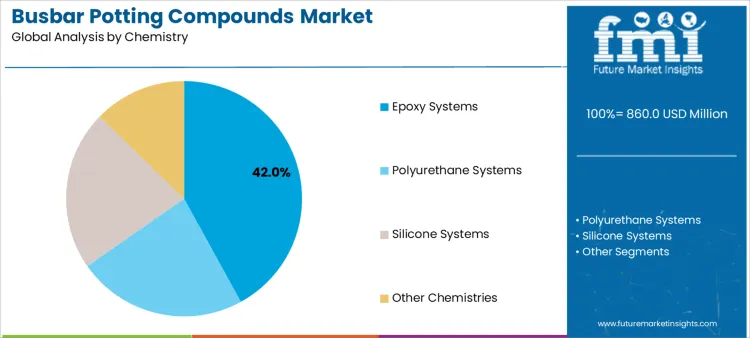
Epoxy systems maintain 42.0% market share, establishing their position as the preferred solution for applications requiring maximum chemical resistance, dimensional stability, and long-term durability in harsh industrial environments. These thermoset polymers offer exceptional adhesion to metallic surfaces while providing superior mechanical properties after cure that resist cracking under thermal cycling and vibration stress. The cross-linked molecular structure of epoxy resins delivers outstanding electrical insulation properties with low moisture absorption that prevents degradation of dielectric strength during extended service periods.
Which Cure Mechanism Leads Processing Preferences?
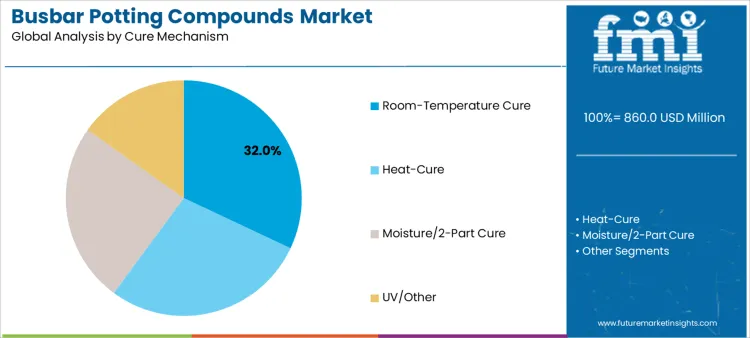
Room-temperature cure systems command 32.0% of processing preferences, reflecting their compatibility with heat-sensitive components and field installation requirements where oven curing is impractical. These formulations enable encapsulation of assemblies containing plastic connectors, elastomeric seals, and temperature-sensitive electronics without risking thermal damage during processing. The ambient cure capability proves particularly valuable for large busbar assemblies where uniform heating would be difficult to achieve and thermal expansion differences could create internal stress during elevated temperature processing.
Which End-Use Segment Drives Market Growth?
EV power and battery busbars represent 56.0% of market applications, reflecting the massive scale-up of electric vehicle production and the demanding reliability requirements for high-voltage power distribution systems. These applications operate in confined spaces where potting compounds must provide complete environmental isolation while accommodating significant thermal cycling from battery charging, discharging, and climate control operations. Performance requirements extend beyond basic insulation to include flame retardancy, low smoke generation, and chemical compatibility with battery electrolytes and cooling fluids that could contact the encapsulation during service.
Which Thermal Performance Class Dominates Specifications?
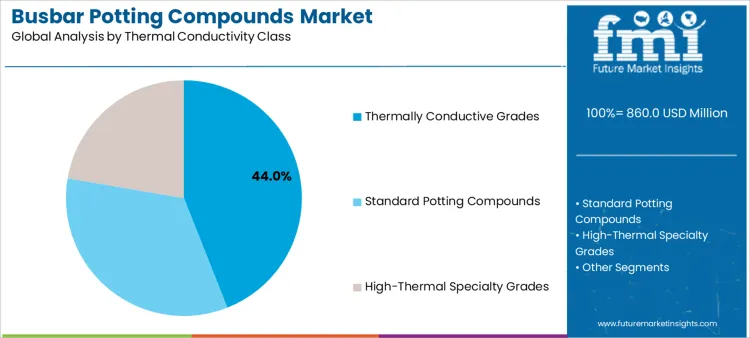
Thermally conductive grades achieve 44.0% market preference, establishing their role as essential components in modern power electronics thermal management strategies. These formulations incorporate carefully selected filler materials that create heat transfer pathways while preserving the electrical insulation properties required for safe high-voltage operation. The thermal conductivity enhancement allows power electronics designers to reduce heat sink requirements and enable more compact packaging while maintaining junction temperatures within acceptable limits for reliable semiconductor operation.
How Is Power Electronics Miniaturization Driving Innovation?
The relentless trend toward higher power density in electronic systems is creating unprecedented demands for busbar potting compounds that can provide effective protection in increasingly confined spaces while managing elevated heat flux densities. Modern power modules operate at switching frequencies and current levels that generate significant thermal stress within small enclosures, requiring potting materials with enhanced thermal conductivity and thermal cycling durability. The integration of wide-bandgap semiconductors operating at higher temperatures further intensifies these requirements while demanding chemical compatibility with advanced substrate materials and metallization systems.
Automotive powertrains exemplify this miniaturization trend as manufacturers seek to reduce weight and package volume while increasing power output to meet performance expectations and range requirements. Automotive power electronics assemblies must fit within space constraints originally designed for mechanical systems while providing enhanced functionality and reliability that exceeds traditional automotive component standards. This evolution requires potting compounds that can flow into complex geometries and provide uniform protection around densely packed components.
What Processing Challenges Limit Market Expansion?
The primary constraint affecting busbar potting compounds adoption centers on the complexity of achieving void-free encapsulation around intricate busbar geometries while maintaining production throughput requirements in high-volume manufacturing operations. Air entrapment during potting can create electrical stress concentration points that lead to premature failure, requiring sophisticated vacuum processing equipment and process control systems that increase manufacturing complexity and capital investment requirements.
Material handling and mixing challenges also constrain adoption in applications requiring precise pot life control and consistent material properties across production batches. Multi-component systems require accurate ratio control and thorough mixing to achieve specified performance characteristics, creating potential failure modes related to improper preparation or application. These processing sensitivities drive demand for simplified formulations and improved application equipment while potentially limiting adoption among manufacturers with limited process control capabilities.
How Do Regulatory Standards Create Market Opportunities?
Evolving electrical safety standards for high-voltage systems are creating substantial growth opportunities as equipment manufacturers seek certified materials that meet increasingly comprehensive protection requirements. New standards for electric vehicle safety establish minimum performance criteria for encapsulation materials used in high-voltage applications, effectively mandating the use of qualified potting compounds in critical safety systems. This regulatory environment benefits compound manufacturers who invest in testing and certification capabilities while creating barriers for suppliers unable to demonstrate compliance with relevant safety standards.
Environmental regulations targeting volatile organic compound emissions and worker safety are also driving opportunities for manufacturers offering low-emission formulations that maintain necessary performance characteristics. Industrial safety regulations increasingly emphasize workplace air quality and environmental impact assessment, creating preference for potting compounds with reduced solvent content and improved handling safety characteristics during application and cure processes.
How Is the Busbar Potting Compounds Market Expected to Evolve Across Major Nations?
The global landscape for busbar potting compounds reflects regional variations in power electronics manufacturing capacity, environmental regulations, and infrastructure investment patterns that influence market development across different economic zones. Leading industrial regions are investing in advanced manufacturing capabilities while emerging markets focus on building domestic supply chains to serve growing electrification demands and export opportunities.
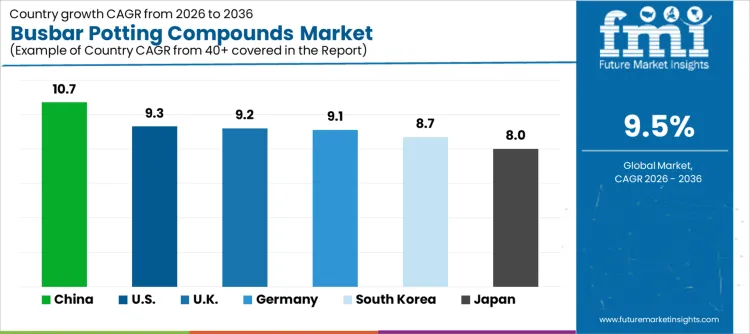
| Country | CAGR (%) |
|---|---|
| China | 10.7% |
| Germany | 9.1% |
| USA | 9.3% |
| Japan | 8.0% |
| South Korea | 8.7% |
| UK | 9.2% |
What Drives China's Market Leadership?
Demand for busbar potting compounds in China is poised to garner a CAGR of 10.7%, driven primarily by the country's massive electric vehicle production capacity and aggressive renewable energy deployment targets. The concentration of battery manufacturing and power electronics assembly creates enormous demand for specialized potting solutions while fostering rapid innovation in application processes and quality control systems. Chinese manufacturers are developing cost-effective formulations that meet international quality standards while leveraging domestic raw material supply chains to achieve competitive pricing advantages in global markets.
The government's support for new energy vehicle development through substantial subsidies and infrastructure investment accelerates adoption of advanced potting technologies while encouraging domestic suppliers to expand production capabilities. Chinese electric vehicle market growth creates favorable conditions for both established international suppliers and emerging domestic manufacturers seeking to capture market share in the world's largest automotive production ecosystem.
How Is Germany Advancing Manufacturing Excellence?
Sales of busbar potting compounds in Germany are set to achieve a CAGR of 9.1% growth reflects the country's leadership in automotive engineering and industrial automation technologies that demand the highest quality potting solutions for precision power electronics applications. German automotive manufacturers implement rigorous qualification processes that favor suppliers capable of demonstrating exceptional consistency and reliability while meeting stringent automotive safety and environmental standards. The emphasis on premium vehicle segments creates opportunities for high-performance potting formulations that justify premium pricing through superior long-term durability and thermal management capabilities.
The country's strong renewable energy sector drives adoption of specialized potting compounds designed for outdoor power electronics that must operate reliably in challenging environmental conditions. German automotive industry standards typically exceed international requirements, creating demand for advanced materials that demonstrate superior performance under accelerated testing conditions while supporting automated manufacturing processes.
Why Is the USA Market Emphasizing Domestic Manufacturing?
The United States market experiences 9.3% CAGR growth supported by federal investments in domestic power electronics manufacturing and supply chain localization initiatives aimed at reducing dependence on foreign suppliers for critical materials. Government incentives promoting domestic production create opportunities for potting compound manufacturers to establish local operations while serving the growing demands of electric vehicles, grid infrastructure, and defense applications that prioritize supply chain security.
The expansion of renewable energy installations with integrated energy storage creates additional demand for potting solutions designed for outdoor power electronics operating in diverse climatic conditions across different geographic regions. USA renewable energy market development emphasizes long-term reliability and domestic content requirements that influence compound selection criteria and supplier qualification processes.
How Is Japanese Innovation Driving Technology Leadership?
The industry for busbar potting compounds in Japan is likely to rise at a CAGR of 8.0% growth is supported by the country's leadership in advanced materials science and precision manufacturing technologies that enable development of next-generation potting solutions with enhanced performance characteristics. Japanese manufacturers focus on developing specialized formulations that address specific challenges in hybrid vehicle power electronics and industrial automation systems where reliability and precision are paramount considerations.
The country's expertise in semiconductor manufacturing and electronic component production creates demand for potting compounds optimized for protecting sensitive electronic assemblies while supporting automated production processes that emphasize quality consistency and defect prevention. Japanese automotive technology development typically emphasizes long-term reliability validation and comprehensive environmental testing that influences potting compound specification requirements.
What Opportunities Exist in South Korea's Industrial Ecosystem?
Demand for busbar potting compounds in South Korea is estimated to expand at a CAGR of 8.7% growth is driven by the country's prominence in consumer electronics manufacturing and increasing investment in electric vehicle battery production. Korean manufacturers require potting solutions that support high-density electronic assemblies while maintaining exceptional quality consistency required for consumer applications where reliability directly impacts brand reputation and market acceptance.
The country's leadership in display technology and semiconductor manufacturing creates demand for specialized potting formulations that provide effective protection without interfering with high-frequency electronic signals or creating electromagnetic interference. Korean electronics manufacturing emphasizes miniaturization and performance optimization that drives development of low-viscosity potting compounds capable of complete encapsulation in confined spaces.
What Strategies Help Suppliers Defend Position in Busbar Potting Compounds?
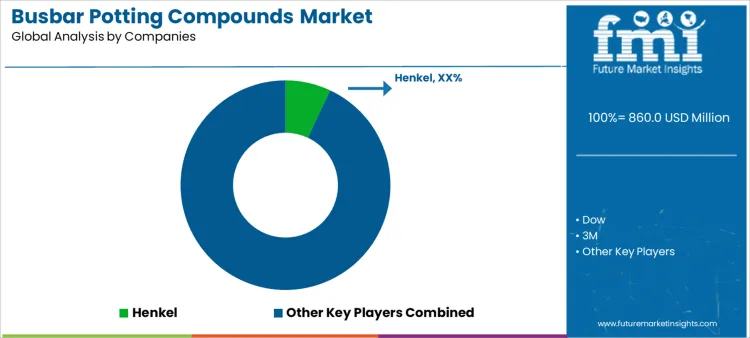
Suppliers maintain competitive position in busbar potting compounds through demonstrated application expertise and proven performance in demanding production environments rather than relying solely on material property specifications. Customers prioritize suppliers who can provide comprehensive technical support including application engineering, process optimization, and troubleshooting assistance that helps achieve consistent manufacturing results while minimizing quality control complications and rework requirements.
Market leaders establish competitive advantages through early collaboration with power electronics designers during product development phases, enabling potting specifications to be optimized for specific thermal management requirements and manufacturing processes before production tooling investments are finalized. This collaborative approach creates switching barriers while ensuring optimal integration between compound properties and assembly processes that benefit both suppliers and customers through improved efficiency and reliability outcomes.
Successful suppliers invest in specialized testing capabilities that can validate potting compound performance under customer-specific environmental conditions and electrical stress levels that simulate actual service requirements. Advanced materials testing capabilities enable suppliers to provide data-driven recommendations for compound selection while demonstrating long-term reliability characteristics that support customer warranty requirements and safety certifications.
Key Players in the Busbar Potting Compounds Market
- Henkel
- Dow
- 3M
- Sika
- Wacker Chemie
- Momentive
- H.B. Fuller
- Elkem Silicones
- BASF
- Lord Corporation (Parker Hannifin)
Scope of Report
| Items | Values |
|---|---|
| Quantitative Units | USD Million |
| Chemistry Segments | Epoxy Systems; Polyurethane Systems; Silicone Systems; Other Chemistries |
| Thermal Conductivity Types | Standard Potting Compounds; Thermally Conductive Grades; High-Thermal Specialty Grades |
| End Use Types | EV Power/Battery Busbars; Industrial Power Electronics; Other Electrical Busbars |
| Cure Mechanism Types | Room-Temperature Cure; Heat-Cure; Moisture/2-Part Cure; UV/Other |
| Regions Covered | North America, Europe, Asia Pacific, Latin America, Middle East & Africa |
| Key Countries | USA, Germany, China, Japan, South Korea, UK |
| Key Companies Profiled | Henkel, Dow, 3M, Sika, Wacker Chemie, and others |
| Additional Attributes | Dollar sales measured for busbar potting compounds used in power electronics applications, specified by thermal conductivity, dielectric strength, chemical resistance, cure characteristics, processing viscosity, thermal cycling durability, and regulatory compliance documentation. |
Busbar Potting Compounds Market by Segment
By Chemistry
- Epoxy Systems
- Polyurethane Systems
- Silicone Systems
- Other Chemistries
By Thermal Conductivity Class
- Standard Potting Compounds
- Thermally Conductive Grades
- High-Thermal Specialty Grades
By End Use
- EV Power/Battery Busbars
- Industrial Power Electronics
- Other Electrical Busbars
By Cure Mechanism
- Room-Temperature Cure
- Heat-Cure
- Moisture/2-Part Cure
- UV/Other
Bibliography
- International Electrotechnical Commission. (2023). IEC 60664‑1: Insulation coordination for equipment within low‑voltage systems-Principles, requirements and tests (4th ed.). International Electrotechnical Commission.
- International Organization for Standardization. (2024). ISO 16750‑4: Road vehicles-Environmental conditions and testing for electrical and electronic equipment-Part 4: Climatic loads (3rd ed.). International Organization for Standardization.
- National Renewable Energy Laboratory. (2024). Encapsulation and environmental protection of power electronics for electric vehicles and grid systems. National Renewable Energy Laboratory.
Frequently Asked Questions
How big is the busbar potting compounds market in 2026?
The global busbar potting compounds market is estimated to be valued at USD 860.0 million in 2026.
What will be the size of busbar potting compounds market in 2036?
The market size for the busbar potting compounds market is projected to reach USD 2,131.3 million by 2036.
How much will be the busbar potting compounds market growth between 2026 and 2036?
The busbar potting compounds market is expected to grow at a 9.5% CAGR between 2026 and 2036.
What are the key product types in the busbar potting compounds market?
The key product types in busbar potting compounds market are epoxy systems, polyurethane systems, silicone systems and other chemistries.
Which thermal conductivity class segment to contribute significant share in the busbar potting compounds market in 2026?
In terms of thermal conductivity class, thermally conductive grades segment to command 44.0% share in the busbar potting compounds market in 2026.
Preview the report firsthand - request a free sample
Get SampleGet the brochure for pricing and purchase details.
Get PDFTable of Content
- Executive Summary
- Global Market Outlook
- Demand-side Trends
- Supply-side Trends
- Technology Roadmap Analysis
- Analysis and Recommendations
- Market Overview
- Market Coverage / Taxonomy
- Market Definition / Scope / Limitations
- Market Background
- Market Dynamics
- Drivers
- Restraints
- Opportunity
- Trends
- Scenario Forecast
- Demand in Optimistic Scenario
- Demand in Likely Scenario
- Demand in Conservative Scenario
- Opportunity Map Analysis
- Product Life Cycle Analysis
- Supply Chain Analysis
- Investment Feasibility Matrix
- Value Chain Analysis
- PESTLE and Porter’s Analysis
- Regulatory Landscape
- Regional Parent Market Outlook
- Production and Consumption Statistics
- Import and Export Statistics
- Market Dynamics
- Global Market Analysis 2021 to 2025 and Forecast, 2026 to 2036
- Historical Market Size Value (USD Million) Analysis, 2021 to 2025
- Current and Future Market Size Value (USD Million) Projections, 2026 to 2036
- Y-o-Y Growth Trend Analysis
- Absolute $ Opportunity Analysis
- Global Market Pricing Analysis 2021 to 2025 and Forecast 2026 to 2036
- Global Market Analysis 2021 to 2025 and Forecast 2026 to 2036, By Chemistry
- Introduction / Key Findings
- Historical Market Size Value (USD Million) Analysis By Chemistry , 2021 to 2025
- Current and Future Market Size Value (USD Million) Analysis and Forecast By Chemistry , 2026 to 2036
- Epoxy Systems
- Polyurethane Systems
- Silicone Systems
- Other Chemistries
- Epoxy Systems
- Y-o-Y Growth Trend Analysis By Chemistry , 2021 to 2025
- Absolute $ Opportunity Analysis By Chemistry , 2026 to 2036
- Global Market Analysis 2021 to 2025 and Forecast 2026 to 2036, By Thermal Conductivity Class
- Introduction / Key Findings
- Historical Market Size Value (USD Million) Analysis By Thermal Conductivity Class, 2021 to 2025
- Current and Future Market Size Value (USD Million) Analysis and Forecast By Thermal Conductivity Class, 2026 to 2036
- Thermally Conductive Grades
- Standard Potting Compounds
- High-Thermal Specialty Grades
- Thermally Conductive Grades
- Y-o-Y Growth Trend Analysis By Thermal Conductivity Class, 2021 to 2025
- Absolute $ Opportunity Analysis By Thermal Conductivity Class, 2026 to 2036
- Global Market Analysis 2021 to 2025 and Forecast 2026 to 2036, By End Use
- Introduction / Key Findings
- Historical Market Size Value (USD Million) Analysis By End Use, 2021 to 2025
- Current and Future Market Size Value (USD Million) Analysis and Forecast By End Use, 2026 to 2036
- EV Power/Battery Busbars
- Industrial Power Electronics
- Other Electrical Busbars
- EV Power/Battery Busbars
- Y-o-Y Growth Trend Analysis By End Use, 2021 to 2025
- Absolute $ Opportunity Analysis By End Use, 2026 to 2036
- Global Market Analysis 2021 to 2025 and Forecast 2026 to 2036, By Cure Mechanism
- Introduction / Key Findings
- Historical Market Size Value (USD Million) Analysis By Cure Mechanism, 2021 to 2025
- Current and Future Market Size Value (USD Million) Analysis and Forecast By Cure Mechanism, 2026 to 2036
- Room-Temperature Cure
- Heat-Cure
- Moisture/2-Part Cure
- UV/Other
- Room-Temperature Cure
- Y-o-Y Growth Trend Analysis By Cure Mechanism, 2021 to 2025
- Absolute $ Opportunity Analysis By Cure Mechanism, 2026 to 2036
- Global Market Analysis 2021 to 2025 and Forecast 2026 to 2036, By Region
- Introduction
- Historical Market Size Value (USD Million) Analysis By Region, 2021 to 2025
- Current Market Size Value (USD Million) Analysis and Forecast By Region, 2026 to 2036
- North America
- Latin America
- Western Europe
- Eastern Europe
- East Asia
- South Asia and Pacific
- Middle East & Africa
- Market Attractiveness Analysis By Region
- North America Market Analysis 2021 to 2025 and Forecast 2026 to 2036, By Country
- Historical Market Size Value (USD Million) Trend Analysis By Market Taxonomy, 2021 to 2025
- Market Size Value (USD Million) Forecast By Market Taxonomy, 2026 to 2036
- By Country
- USA
- Canada
- Mexico
- By Chemistry
- By Thermal Conductivity Class
- By End Use
- By Cure Mechanism
- By Country
- Market Attractiveness Analysis
- By Country
- By Chemistry
- By Thermal Conductivity Class
- By End Use
- By Cure Mechanism
- Key Takeaways
- Latin America Market Analysis 2021 to 2025 and Forecast 2026 to 2036, By Country
- Historical Market Size Value (USD Million) Trend Analysis By Market Taxonomy, 2021 to 2025
- Market Size Value (USD Million) Forecast By Market Taxonomy, 2026 to 2036
- By Country
- Brazil
- Chile
- Rest of Latin America
- By Chemistry
- By Thermal Conductivity Class
- By End Use
- By Cure Mechanism
- By Country
- Market Attractiveness Analysis
- By Country
- By Chemistry
- By Thermal Conductivity Class
- By End Use
- By Cure Mechanism
- Key Takeaways
- Western Europe Market Analysis 2021 to 2025 and Forecast 2026 to 2036, By Country
- Historical Market Size Value (USD Million) Trend Analysis By Market Taxonomy, 2021 to 2025
- Market Size Value (USD Million) Forecast By Market Taxonomy, 2026 to 2036
- By Country
- Germany
- UK
- Italy
- Spain
- France
- Nordic
- BENELUX
- Rest of Western Europe
- By Chemistry
- By Thermal Conductivity Class
- By End Use
- By Cure Mechanism
- By Country
- Market Attractiveness Analysis
- By Country
- By Chemistry
- By Thermal Conductivity Class
- By End Use
- By Cure Mechanism
- Key Takeaways
- Eastern Europe Market Analysis 2021 to 2025 and Forecast 2026 to 2036, By Country
- Historical Market Size Value (USD Million) Trend Analysis By Market Taxonomy, 2021 to 2025
- Market Size Value (USD Million) Forecast By Market Taxonomy, 2026 to 2036
- By Country
- Russia
- Poland
- Hungary
- Balkan & Baltic
- Rest of Eastern Europe
- By Chemistry
- By Thermal Conductivity Class
- By End Use
- By Cure Mechanism
- By Country
- Market Attractiveness Analysis
- By Country
- By Chemistry
- By Thermal Conductivity Class
- By End Use
- By Cure Mechanism
- Key Takeaways
- East Asia Market Analysis 2021 to 2025 and Forecast 2026 to 2036, By Country
- Historical Market Size Value (USD Million) Trend Analysis By Market Taxonomy, 2021 to 2025
- Market Size Value (USD Million) Forecast By Market Taxonomy, 2026 to 2036
- By Country
- China
- Japan
- South Korea
- By Chemistry
- By Thermal Conductivity Class
- By End Use
- By Cure Mechanism
- By Country
- Market Attractiveness Analysis
- By Country
- By Chemistry
- By Thermal Conductivity Class
- By End Use
- By Cure Mechanism
- Key Takeaways
- South Asia and Pacific Market Analysis 2021 to 2025 and Forecast 2026 to 2036, By Country
- Historical Market Size Value (USD Million) Trend Analysis By Market Taxonomy, 2021 to 2025
- Market Size Value (USD Million) Forecast By Market Taxonomy, 2026 to 2036
- By Country
- India
- ASEAN
- Australia & New Zealand
- Rest of South Asia and Pacific
- By Chemistry
- By Thermal Conductivity Class
- By End Use
- By Cure Mechanism
- By Country
- Market Attractiveness Analysis
- By Country
- By Chemistry
- By Thermal Conductivity Class
- By End Use
- By Cure Mechanism
- Key Takeaways
- Middle East & Africa Market Analysis 2021 to 2025 and Forecast 2026 to 2036, By Country
- Historical Market Size Value (USD Million) Trend Analysis By Market Taxonomy, 2021 to 2025
- Market Size Value (USD Million) Forecast By Market Taxonomy, 2026 to 2036
- By Country
- Kingdom of Saudi Arabia
- Other GCC Countries
- Turkiye
- South Africa
- Other African Union
- Rest of Middle East & Africa
- By Chemistry
- By Thermal Conductivity Class
- By End Use
- By Cure Mechanism
- By Country
- Market Attractiveness Analysis
- By Country
- By Chemistry
- By Thermal Conductivity Class
- By End Use
- By Cure Mechanism
- Key Takeaways
- Key Countries Market Analysis
- USA
- Pricing Analysis
- Market Share Analysis, 2025
- By Chemistry
- By Thermal Conductivity Class
- By End Use
- By Cure Mechanism
- Canada
- Pricing Analysis
- Market Share Analysis, 2025
- By Chemistry
- By Thermal Conductivity Class
- By End Use
- By Cure Mechanism
- Mexico
- Pricing Analysis
- Market Share Analysis, 2025
- By Chemistry
- By Thermal Conductivity Class
- By End Use
- By Cure Mechanism
- Brazil
- Pricing Analysis
- Market Share Analysis, 2025
- By Chemistry
- By Thermal Conductivity Class
- By End Use
- By Cure Mechanism
- Chile
- Pricing Analysis
- Market Share Analysis, 2025
- By Chemistry
- By Thermal Conductivity Class
- By End Use
- By Cure Mechanism
- Germany
- Pricing Analysis
- Market Share Analysis, 2025
- By Chemistry
- By Thermal Conductivity Class
- By End Use
- By Cure Mechanism
- UK
- Pricing Analysis
- Market Share Analysis, 2025
- By Chemistry
- By Thermal Conductivity Class
- By End Use
- By Cure Mechanism
- Italy
- Pricing Analysis
- Market Share Analysis, 2025
- By Chemistry
- By Thermal Conductivity Class
- By End Use
- By Cure Mechanism
- Spain
- Pricing Analysis
- Market Share Analysis, 2025
- By Chemistry
- By Thermal Conductivity Class
- By End Use
- By Cure Mechanism
- France
- Pricing Analysis
- Market Share Analysis, 2025
- By Chemistry
- By Thermal Conductivity Class
- By End Use
- By Cure Mechanism
- India
- Pricing Analysis
- Market Share Analysis, 2025
- By Chemistry
- By Thermal Conductivity Class
- By End Use
- By Cure Mechanism
- ASEAN
- Pricing Analysis
- Market Share Analysis, 2025
- By Chemistry
- By Thermal Conductivity Class
- By End Use
- By Cure Mechanism
- Australia & New Zealand
- Pricing Analysis
- Market Share Analysis, 2025
- By Chemistry
- By Thermal Conductivity Class
- By End Use
- By Cure Mechanism
- China
- Pricing Analysis
- Market Share Analysis, 2025
- By Chemistry
- By Thermal Conductivity Class
- By End Use
- By Cure Mechanism
- Japan
- Pricing Analysis
- Market Share Analysis, 2025
- By Chemistry
- By Thermal Conductivity Class
- By End Use
- By Cure Mechanism
- South Korea
- Pricing Analysis
- Market Share Analysis, 2025
- By Chemistry
- By Thermal Conductivity Class
- By End Use
- By Cure Mechanism
- Russia
- Pricing Analysis
- Market Share Analysis, 2025
- By Chemistry
- By Thermal Conductivity Class
- By End Use
- By Cure Mechanism
- Poland
- Pricing Analysis
- Market Share Analysis, 2025
- By Chemistry
- By Thermal Conductivity Class
- By End Use
- By Cure Mechanism
- Hungary
- Pricing Analysis
- Market Share Analysis, 2025
- By Chemistry
- By Thermal Conductivity Class
- By End Use
- By Cure Mechanism
- Kingdom of Saudi Arabia
- Pricing Analysis
- Market Share Analysis, 2025
- By Chemistry
- By Thermal Conductivity Class
- By End Use
- By Cure Mechanism
- Turkiye
- Pricing Analysis
- Market Share Analysis, 2025
- By Chemistry
- By Thermal Conductivity Class
- By End Use
- By Cure Mechanism
- South Africa
- Pricing Analysis
- Market Share Analysis, 2025
- By Chemistry
- By Thermal Conductivity Class
- By End Use
- By Cure Mechanism
- USA
- Market Structure Analysis
- Competition Dashboard
- Competition Benchmarking
- Market Share Analysis of Top Players
- By Regional
- By Chemistry
- By Thermal Conductivity Class
- By End Use
- By Cure Mechanism
- Competition Analysis
- Competition Deep Dive
- Henkel
- Overview
- Product Portfolio
- Profitability by Market Segments (Product/Age /Sales Channel/Region)
- Sales Footprint
- Strategy Overview
- Marketing Strategy
- Product Strategy
- Channel Strategy
- Dow
- 3M
- Sika
- Wacker Chemie
- Momentive
- H.B. Fuller
- Elkem Silicones
- BASF
- Lord Corporation (Parker Hannifin)
- Henkel
- Competition Deep Dive
- Assumptions & Acronyms Used
- Research Methodology


