

- Industry Size (2026)
- USD 5.2 Bn
- Forecast (2036)
- USD 11.4 Bn
- CAGR (2026 to 2036)
- 8.2%
Carbon-neutral Beauty Formats Market Forecast and Outlook 2026 to 2036
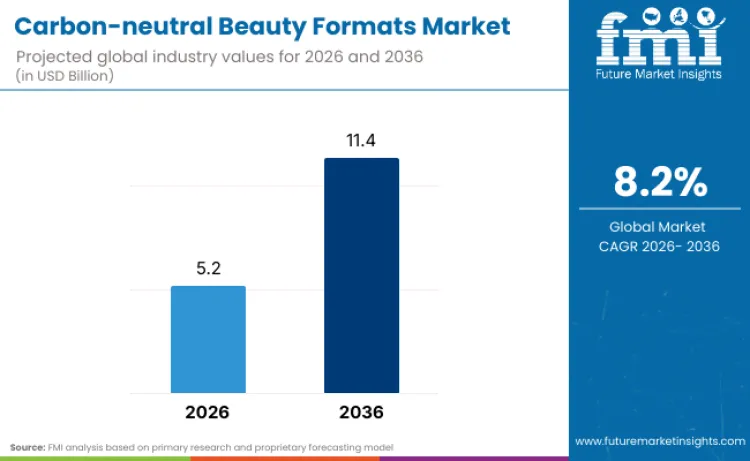
Carbon neutral beauty formats market value is projected to reach USD 5.2 billion in 2026, supported by stronger consumer preference for sustainable cosmetics and wider corporate commitments to reduce product level emissions. Revenue is expected to expand at a CAGR of 8.2% from 2026 to 2036, taking the market to USD 11.4 billion by the end of the forecast period. Growth is being reinforced by higher climate awareness, greater transparency expectations, and brand level strategies that position carbon neutral claims as a competitive requirement in premium and mass segments.
Manufacturers are investing in sustainability focused packaging and supply chain upgrades to reduce scope 1, scope 2, and relevant scope 3 emissions linked to product production and distribution. Third party verification and certification are becoming more common as brands seek stronger credibility for carbon neutrality claims, especially in developed markets with stricter disclosure norms. Product development is also shifting toward lower impact formulations, including higher use of renewable inputs and natural ingredient sourcing, alongside production powered by renewable energy and improved process efficiency.
Quick Stats for Carbon-neutral Beauty Formats Market
- Carbon-neutral Beauty Formats Industry Value (2026): USD 5.2 Billion
- Carbon-neutral Beauty Formats Industry Forecast Value (2036): USD 11.4 Billion
- Carbon-neutral Beauty Formats Industry Forecast CAGR: 8.2%
- Carbon-neutral Beauty Formats Industry Leading Ingredient Source: Natural (52.7%)
- Carbon-neutral Beauty Formats Industry Key Growth Regions: United States, Germany, United Kingdom
- Carbon-neutral Beauty Formats Industry Key Players: L'Oréal, Unilever, The Estée Lauder Companies, Procter & Gamble (P&G), Shiseido Company
Lifecycle assessment is increasingly shaping how companies quantify and communicate environmental performance. Brands are using LCA methods to identify hotspots across ingredients, packaging, and logistics, then combining reductions with carbon offset programs where needed to reach carbon neutral positioning. Growing use of bio based and recyclable materials is supporting packaging innovation, while suppliers are responding with standardized documentation to support compliance and marketing claims. Government carbon reduction initiatives and consumer activism are further influencing demand by increasing preference for transparent, traceable sustainability actions. FMI estimates that developed economies will continue to lead adoption as regulation, retailer standards, and educated consumers increase purchases of carbon neutral beauty formats across skincare, haircare, and color cosmetics.
Carbon-neutral Beauty Formats Market Key Takeaways
| Metric | Value |
|---|---|
| Industry Size (2026) | USD 5.2 Billion |
| Industry Value (2036) | USD 11.4 Billion |
| CAGR (2026-2036) | 8.2% |
Source: FMI analysis based on primary research and proprietary forecasting model
What Factors Are Driving Faster Adoption of Natural Ingredients in Carbon Neutral Beauty Products?
Natural ingredient adoption is rising as sustainable beauty preferences push both consumers and brands toward plant derived inputs that support lower impact product positioning. Advances in extraction and processing are helping formulators retain bioactive compounds more effectively while reducing dependence on synthetic modification, which improves ingredient integrity and strengthens clean label claims. This direction is resonating with buyers who prioritize verified sustainability and ingredient transparency, particularly in skincare where sourcing narratives influence brand selection. Premium product lines are also expanding organic ingredient use to improve differentiation and broaden suitability across diverse skin needs.
FMI is of the opinion that professional education programs linking natural compounds with sustainability outcomes are reinforcing recommendations from dermatology aligned and beauty advisory channels. In response, companies are launching more certified organic variants and tightening supplier qualification to ensure traceable sourcing. Integrating renewable ingredient sourcing into carbon neutral protocols is becoming more common as brands aim to reduce lifecycle emissions while maintaining formulation stability, sensory performance, and efficacy expectations.
How Is the Carbon-neutral Beauty Formats Market Segmented Across Key Categories?
Global landscape is intricately segmented to address diverse requirements of the sustainable beauty industry, categorizing sector by product type, ingredient source, distribution channel, and end-user demographics. Structural division allows stakeholders to identify specific environmental targets, such as rising demand for natural formulations in premium skincare or preference for refillable packaging in mass market applications. By analyzing these segments, manufacturers can tailor production lines to meet distinct needs of sustainability-focused practitioners versus conventional beauty brands. Segmentation also highlights shift from traditional cosmetic approaches to carbon-neutral beauty interventions. As industry matures, granular segmentation becomes essential for understanding environmental pathways and certification compliance, ensuring product development aligns with evolving sustainability guidelines.
What Is Keeping Skincare as the Largest Carbon Neutral Beauty Segment?
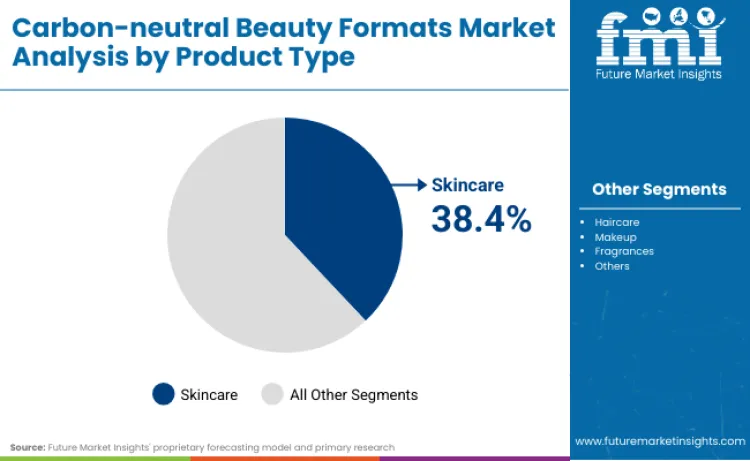
Skincare is expected to hold a 38.4% share in 2026 because it is the most frequently purchased beauty category and is closely linked to daily routines where carbon neutral claims influence repeat buying. Adoption is supported by wider acceptance of verified environmental claims in developed markets and higher consumer scrutiny around ingredient and packaging impact. Formulation progress, including waterless formats, is also helping reduce packaging intensity and improve product level environmental performance. FMI projects that ongoing innovation around natural ingredient stability and low impact formulation design will keep skincare as a core demand driver as brands expand carbon neutral portfolios.
- High repeat purchase supports volume leadership
- Strong fit with routine based low impact habits
- Waterless formats reduce packaging intensity
- Stability focused R and D supports premium uptake
Why Is Natural Ingredient Sourcing the Main Input Strategy?
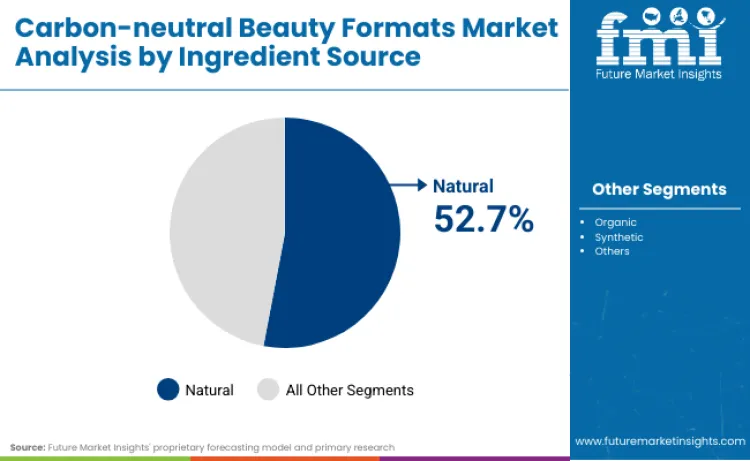
Natural ingredient sourcing is projected to account for 52.7% share in 2026 as consumers increasingly prefer plant based inputs that align with renewable sourcing and lower environmental impact positioning. Brands use natural sourcing to support biodegradability narratives and cleaner formulation claims compared to many synthetic alternatives. Supply reliability depends on structured sourcing programs, including certified organic agriculture and traceable harvesting practices that support environmental safeguards. Strong consumer demand is pushing manufacturers to expand renewable sourcing and strengthen supplier qualification, supporting continued growth for organic ingredient supply chains.
- Consumer preference supports plant based sourcing
- Supports biodegradability and clean label positioning
- Traceable supply programs improve sourcing credibility
- Higher demand expands organic supplier capacity
Why Are Online Stores Leading Carbon Neutral Beauty Sales?
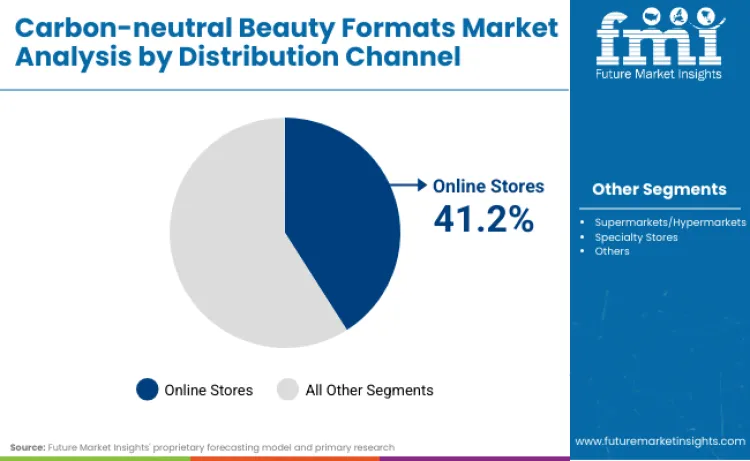
Online channels are expected to capture 41.2% share in 2026 because digital platforms make it easier for shoppers to compare carbon neutral credentials and evaluate environmental claims before purchase. E commerce also provides direct access to product details such as sourcing disclosures, certification badges, and carbon footprint information that influence eco focused buyers. Digital education and content marketing are increasing conversion by helping consumers understand environmental impact and disposal practices. Brands that invest in transparent communication and low impact digital campaigns are likely to build stronger loyalty among consumers who prioritize verified environmental performance.
- Easier access to certifications and impact data
- Comparison shopping strengthens low impact product selection
- Digital education improves adoption and repeat buying
Transparency builds loyalty among eco focused consumers
How Will Stricter Environmental Rules Influence Carbon Neutral Beauty Sales?
Tighter environmental standards are expected to reshape demand by increasing the need for verified carbon neutral formulations and clearer product claims. As disclosure requirements expand, brands will face higher pressure to document emissions across ingredients, manufacturing, and packaging, which will favor products backed by third party certification. Companies that do not align with compliance expectations and claim verification risk losing placement with retailers that screen products for environmental credibility. Wider availability of certified carbon neutral options is also likely to increase repeat purchases among consumers who actively compare impact credentials, pushing brands to compete on verified claims rather than marketing language.
How Will Digital Environmental Tracking Change Distribution Channels?
Digital platforms that track carbon footprint data are expected to strengthen online distribution by enabling subscription models, automated reordering, and product recommendations tied to user preferences and impact targets. Integration with environmental tracking apps can increase engagement by linking product selection with measurable metrics, encouraging consumers to stay within a single digital ecosystem. E commerce growth is also supported by richer product information, including certification details and lifecycle disclosures, which is harder to communicate in store. Mobile tools that support carbon tracking and impact monitoring can further increase retention by keeping consumers connected to routine based beauty programs.
How Will Consumer Activism Shape Market Growth for Carbon Neutral Beauty?
Rising consumer pressure is likely to increase demand for proof based claims, pushing brands to invest more in certification, documentation, and lifecycle assessment studies. Stronger evidence requirements can raise compliance costs, but they also improve buyer confidence and reduce skepticism around carbon neutral positioning. Alignment of environmental rules across regions can support international expansion for brands that meet common verification standards. FMI expects the need for credible lifecycle data to grow, making validated carbon neutrality claims a key driver of competitive differentiation.
How Will the Carbon-neutral Beauty Formats Industry Evolve in Major Nations?
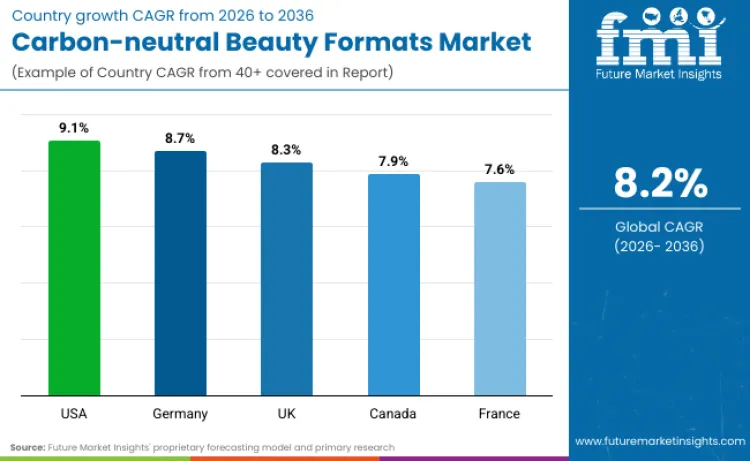
Global landscape for carbon-neutral beauty formats is characterized by diverse environmental frameworks, influenced by climate policies and sustainability practice standards. Established markets prioritize scientifically verified formulations and carbon-neutral manufacturing, whereas emerging economies focus on accessible pricing and basic environmental protection. North America is emerging as rapid growth hub due to increasing environmental awareness and expanding sustainability regulations. Conversely, European sectors pivot towards comprehensive environmental accountability and certified sustainable beauty protocols. Government initiatives in developed nations supporting climate action ensure sustained demand for carbon-neutral beauty products across all consumer segments.
| Country | CAGR (2026 to 2036) |
|---|---|
| USA | 9.1% |
| Germany | 8.7% |
| UK | 8.3% |
| Canada | 7.9% |
| France | 7.6% |
Source: Future Market Insights analysis, supported by a proprietary forecasting model and primary research
What Is Driving Carbon Neutral Beauty Formats Growth in the USA?
Sales of carbon-neutral beauty formats in USA are set to grow at 9.1% CAGR through 2036. Expansion is underpinned by comprehensive environmental regulations and increasing carbon neutrality requirements among beauty companies. Growth is fueled by state-level climate initiatives emphasizing sustainable consumption and environmental accountability. Rising environmental consciousness drives premium sustainable beauty adoption per capita among eco-aware consumers. As per FMI's projection, presence of major environmental certification bodies establishing rigorous standards streamlines validation processes and reduces compliance costs. Emphasis on corporate sustainability reporting integration with consumer beauty choices continues to be primary driver, maintaining USA position as critical growth engine for carbon-neutral beauty products.
What Factors Are Accelerating Carbon Neutral Beauty Formats Expansion in Germany?
Demand for carbon-neutral beauty formats in Germany is projected to rise at 8.7% CAGR during assessment period. Initiatives emphasizing circular economy and waste reduction foster favorable environment for carbon-neutral beauty adoption. Increasing investment in renewable energy infrastructure creates massive sustainability opportunities for specialized environmental beauty products. Rising eco-conscious population requiring verified carbon-neutral options prompts domestic brands to develop certified sustainable formulations. Shift is supported by EU policies encouraging local environmental manufacturing, accelerating uptake of German sustainable beauty brands across European markets and fueling sector expansion through improved regulatory compliance.
What Is Supporting Carbon Neutral Beauty Formats Growth Potential in the UK?
Carbon-neutral beauty formats industry in UK is poised to expand at 8.3% CAGR. Growth is largely attributed to increasing awareness of climate impact among urban populations. Government focus on net-zero initiatives addressing environmental responsibility encourages consumers to adopt sustainable beauty measures. FMI is of the opinion that increasing partnerships between local manufacturers and environmental certification suppliers ensure availability of high-quality sustainable ingredients. Economic stability combined with growing environmental insurance coverage attracts significant investment in climate-conscious beauty products. Strong regulatory framework ensuring environmental authenticity and carbon neutrality further drives consumer confidence in sustainable beauty protocols.
What Is Fueling Carbon Neutral Beauty Formats Market Growth in Canada?
Sales of carbon-neutral beauty formats in Canada are set to grow at 7.9% CAGR. Expansion is underpinned by comprehensive environmental policy framework recognizing carbon-neutral beauty benefits. Growth is fueled by increasing climate awareness costs driving consumers toward sustainable measures. Widespread adoption of environmental monitoring and carbon tracking creates steady demand for at-home sustainable beauty management. High standards of environmental research and regulatory oversight prompt brands to invest in verified carbon-neutral formulations. As per FMI's estimates, emphasis on Indigenous sustainability practices and natural ingredient sourcing continues to be primary driver, maintaining Canada position as innovation leader in environmental beauty solutions.
What Is Enabling Carbon Neutral Beauty Formats Sector Expansion in France?
Revenue from carbon-neutral beauty formats in France is set to grow at 7.6% CAGR. Expansion is underpinned by European Union environmental directive recognition of sustainable beauty benefits. Growth is fueled by increasing awareness of luxury sustainability integration. Moderate adoption of organic beauty products and environmental certifications drives revenue generation in premium sustainable beauty segments. Presence of established luxury companies ensures high-quality environmental standards and sustainability validation. Emphasis on artisanal sustainability and regulatory compliance continues to be primary driver, maintaining France position as quality-focused market for certified sustainable beauty products.
How Competitive Is the Carbon Neutral Beauty Formats Market and What Strategies Are Shaping Brand Leadership?
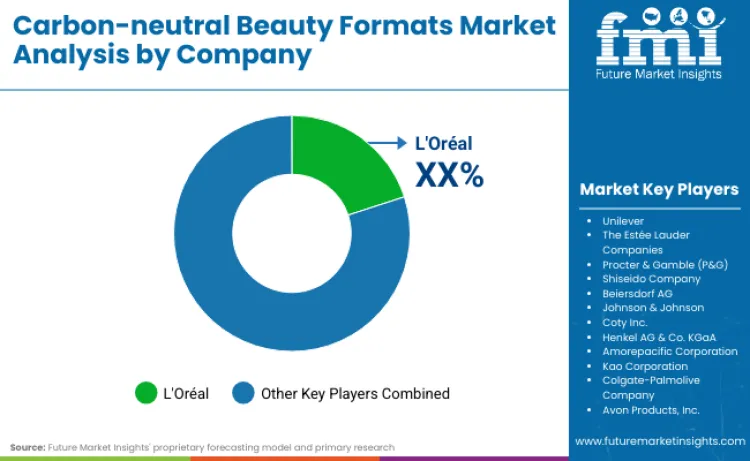
Competition in carbon neutral beauty formats is increasingly driven by the strength of claim verification, transparency in emissions reporting, and the ability to scale lower impact product lines without sacrificing performance. Many brands are prioritizing environmental validation as a key differentiator, since third party verification reduces claim risk and strengthens retailer and consumer trust. Companies such as L'Oréal and Unilever are investing in partnerships with environmental and research institutions to improve carbon accounting methods, validate neutrality pathways, and standardize reporting across portfolios. A notable strategy is the development of personalized digital beauty platforms that recommend routines based on user preferences and impact profiles, which can increase repeat purchase and strengthen direct to consumer engagement.
Partnerships with environmental organizations are also becoming more common as brands align products with responsible consumption programs and verified labeling frameworks. Innovation is shifting toward improved carbon offset structures and stronger traceability, with companies refining how reductions and offsets are documented and communicated. Consolidation remains moderate, with acquisitions often focused on certification and validation capabilities that help brands control standards, reduce compliance cost, and speed verification across large product ranges. FMI expects L'Oréal to remain a leading participant, supported by broad research investment, established verification networks, and scale across multiple beauty categories.
Key Players in Carbon-neutral Beauty Formats Market
- L'Oréal
- Unilever
- The Estée Lauder Companies
- Procter & Gamble (P&G)
- Shiseido Company
- Beiersdorf AG
- Johnson & Johnson
- Coty Inc.
- Henkel AG & Co. KGaA
- Amorepacific Corporation
- Kao Corporation
- Colgate-Palmolive Company
- Avon Products, Inc.
- Lush Cosmetics
- The Body Shop
- Aveda Corporation
- Burt's Bees
- Weleda AG
- Oriflame Cosmetics
- REN Clean Skincare
Scope of Report
| Items | Values |
|---|---|
| Quantitative Units | USD Billion |
| Product Type Segments | Skincare; Haircare; Makeup; Fragrances; Others |
| Ingredient Source Categories | Natural; Organic; Synthetic; Others |
| Distribution Channel Types | Online Stores; Supermarkets/Hypermarkets; Specialty Stores; Others |
| End-User Categories | Women; Men; Unisex |
| Regions Covered | North America, Europe, East Asia, South Asia, Latin America, Middle East & Africa |
| Key Countries | USA, Germany, UK, Canada, France |
| Key Companies Profiled | L'Oréal; Unilever; The Estée Lauder Companies; Procter & Gamble (P&G); Shiseido Company; Beiersdorf AG; Johnson & Johnson; Coty Inc.; Henkel AG & Co. KGaA; Amorepacific Corporation; Kao Corporation; Colgate-Palmolive Company; Avon Products, Inc.; Lush Cosmetics; The Body Shop; Aveda Corporation; Burt's Bees; Weleda AG; Oriflame Cosmetics; REN Clean Skincare |
| Additional Attributes | Dollar sales measured for carbon-neutral beauty formats used in sustainable cosmetics and environmental beauty applications, specified by environmental certification type (carbon offset programs, renewable energy, sustainable sourcing, biodegradable packaging), product category, sustainability delivery preference, application focus (skincare, makeup, haircare and fragrances), retail model (online vs. offline), and compliance alignment with evolving environmental standards and carbon neutrality regulations. |
Carbon-neutral Beauty Formats Market by Segments
Product Type
- Skincare
- Haircare
- Makeup
- Fragrances
- Others
Ingredient Source
- Natural
- Organic
- Synthetic
- Others
Distribution Channel
- Online Stores
- Supermarkets/Hypermarkets
- Specialty Stores
- Others
End-User
- Women
- Men
- Unisex
Bibliography
- International Organization for Standardization. (2023). ISO 14067: Greenhouse gases-Carbon footprint of products-Requirements and guidelines for quantification. ISO.
- Greenhouse Gas Protocol. (2024). Corporate value chain (Scope 3) accounting and reporting standard. World Resources Institute & World Business Council for Sustainable Development.
- European Commission. (2024). Proposal for substantiating green claims and environmental footprint methods (PEF/OEF). European Commission.
Frequently Asked Questions
How big is the global carbon-neutral beauty formats market?
The global carbon-neutral beauty formats market is valued at USD 5.2 billion in 2026.
What is the growth outlook for the carbon-neutral beauty formats market over the next 10 years?
The market is projected to expand at a CAGR of 8.2% from 2026 to 2036, reaching USD 11.4 billion by 2036.
Which applications or end uses drive demand for carbon-neutral beauty formats?
Demand is primarily driven by skincare applications, supported by high usage frequency and strong consumer preference for sustainable daily beauty routines.
What are the main risks and constraints affecting this market?
Key constraints include higher compliance and certification costs, complexity of lifecycle carbon accounting, reliance on credible offset programs, and risk of greenwashing scrutiny.
Who are the leading suppliers, and how is market leadership defined?
Market leadership is defined by scale, verified carbon-neutral claims, and sustainability investment, with companies such as L'Oréal, Unilever, Estée Lauder, P&G, and Shiseido leading the market.
Preview the report firsthand - request a free sample
Get SampleGet the brochure for pricing and purchase details.
Get PDFTable of Content
- Executive Summary
- Global Market Outlook
- Demand Side Trends
- Supply Side Trends
- Technology Roadmap Analysis
- Analysis and Recommendations
- Market Overview
- Market Coverage / Taxonomy
- Market Definition / Scope / Limitations
- Research Methodology
- Chapter Orientation
- Analytical Lens and Working Hypotheses
- Market Structure, Signals, and Trend Drivers
- Benchmarking and Cross-market Comparability
- Market Sizing, Forecasting, and Opportunity Mapping
- Research Design and Evidence Framework
- Desk Research Programme (Secondary Evidence)
- Company Annual and Sustainability Reports
- Peer-reviewed Journals and Academic Literature
- Corporate Websites, Product Literature, and Technical Notes
- Earnings Decks and Investor Briefings
- Statutory Filings and Regulatory Disclosures
- Technical White Papers and Standards Notes
- Trade Journals, Industry Magazines, and Analyst Briefs
- Conference Proceedings, Webinars, and Seminar Materials
- Government Statistics Portals and Public Data Releases
- Press Releases and Reputable Media Coverage
- Specialist Newsletters and Curated Briefings
- Sector Databases and Reference Repositories
- FMI Internal Knowledge Base and Historical Datasets
- Subscription Datasets and Paid Sources
- Social Channels, Communities, and Digital Listening Inputs
- Additional Desk Sources
- Expert Input and Fieldwork (Primary Evidence)
- Primary Modes
- Qualitative Interviews and Expert Elicitation
- Quantitative Surveys and Structured Data Capture
- Blended Approach
- Why Primary Evidence is Used
- Field Techniques
- Interviews
- Surveys
- Focus Groups
- Observational and In-context Research
- Social and Community Interactions
- Stakeholder Universe Engaged
- C-suite Leaders
- Board Members
- Presidents and Vice Presidents
- R&D and Innovation Heads
- Technical Specialists
- Domain Subject-matter Experts
- Scientists
- Physicians and Other Healthcare Professionals
- Governance, Ethics, and Data Stewardship
- Research Ethics
- Data Integrity and Handling
- Primary Modes
- Tooling, Models, and Reference Databases
- Desk Research Programme (Secondary Evidence)
- Data Engineering and Model Build
- Data Acquisition and Ingestion
- Cleaning, Normalisation, and Verification
- Synthesis, Triangulation, and Analysis
- Quality Assurance and Audit Trail
- Market Background
- Market Dynamics
- Drivers
- Restraints
- Opportunity
- Trends
- Scenario Forecast
- Demand in Optimistic Scenario
- Demand in Likely Scenario
- Demand in Conservative Scenario
- Opportunity Map Analysis
- Product Life Cycle Analysis
- Supply Chain Analysis
- Investment Feasibility Matrix
- Value Chain Analysis
- PESTLE and Porter's Analysis
- Regulatory Landscape
- Regional Parent Market Outlook
- Production and Consumption Statistics
- Import and Export Statistics
- Market Dynamics
- Global Market Analysis 2021 to 2025 and Forecast, 2026 to 2036
- Historical Market Size Value (USD Billion) Analysis, 2021 to 2025
- Current and Future Market Size Value (USD Billion) Projections, 2026 to 2036
- Y-o-Y Growth Trend Analysis
- Absolute $ Opportunity Analysis
- Global Market Pricing Analysis 2021 to 2025 and Forecast 2026 to 2036
- Y-o-Y Growth Trend Analysis 2021 to 2025
- Absolute $ Opportunity Analysis 2026 to 2036
- Global Market Analysis 2021 to 2025 and Forecast 2026 to 2036, By Product Type
- Introduction / Key Findings
- Historical Market Size Value (USD Billion) Analysis By Product Type, 2021 to 2025
- Current and Future Market Size Value (USD Billion) Analysis and Forecast By Product Type, 2026 to 2036
- Skincare
- Haircare
- Makeup
- Fragrances
- Others
- Y-o-Y Growth Trend Analysis By Product Type, 2021 to 2025
- Absolute $ Opportunity Analysis By Product Type, 2026 to 2036
- Global Market Analysis 2021 to 2025 and Forecast 2026 to 2036, By Ingredient Source
- Introduction / Key Findings
- Historical Market Size Value (USD Billion) Analysis By Ingredient Source, 2021 to 2025
- Current and Future Market Size Value (USD Billion) Analysis and Forecast By Ingredient Source, 2026 to 2036
- Natural
- Organic
- Synthetic
- Others
- Y-o-Y Growth Trend Analysis By Ingredient Source, 2021 to 2025
- Absolute $ Opportunity Analysis By Ingredient Source, 2026 to 2036
- Global Market Analysis 2021 to 2025 and Forecast 2026 to 2036, By Distribution Channel
- Introduction / Key Findings
- Historical Market Size Value (USD Billion) Analysis By Distribution Channel, 2021 to 2025
- Current and Future Market Size Value (USD Billion) Analysis and Forecast By Distribution Channel, 2026 to 2036
- Online Stores
- Supermarkets/Hypermarkets
- Specialty Stores
- Others
- Y-o-Y Growth Trend Analysis By Distribution Channel, 2021 to 2025
- Absolute $ Opportunity Analysis By Distribution Channel, 2026 to 2036
- Global Market Analysis 2021 to 2025 and Forecast 2026 to 2036, By End-User
- Introduction / Key Findings
- Historical Market Size Value (USD Billion) Analysis By End-User, 2021 to 2025
- Current and Future Market Size Value (USD Billion) Analysis and Forecast By End-User, 2026 to 2036
- Women
- Men
- Unisex
- Y-o-Y Growth Trend Analysis By End-User, 2021 to 2025
- Absolute $ Opportunity Analysis By End-User, 2026 to 2036
- Global Market Analysis 2021 to 2025 and Forecast 2026 to 2036, By Region
- Introduction
- Historical Market Size Value (USD Billion) Analysis By Region, 2021 to 2025
- Current Market Size Value (USD Billion) Analysis and Forecast By Region, 2026 to 2036
- North America
- Latin America
- Western Europe
- Eastern Europe
- East Asia
- South Asia and Pacific
- Middle East & Africa
- Market Attractiveness Analysis By Region
- North America Market Analysis 2021 to 2025 and Forecast 2026 to 2036, By Country
- Historical Market Size Value (USD Billion) Trend Analysis By Market Taxonomy, 2021 to 2025
- Market Size Value (USD Billion) Forecast By Market Taxonomy, 2026 to 2036
- By Country
- USA
- Canada
- Mexico
- By Product Type
- By Ingredient Source
- By Distribution Channel
- By End-User
- By Country
- Market Attractiveness Analysis
- By Country
- By Product Type
- By Ingredient Source
- By Distribution Channel
- By End-User
- Key Takeaways
- Latin America Market Analysis 2021 to 2025 and Forecast 2026 to 2036, By Country
- Historical Market Size Value (USD Billion) Trend Analysis By Market Taxonomy, 2021 to 2025
- Market Size Value (USD Billion) Forecast By Market Taxonomy, 2026 to 2036
- By Country
- Brazil
- Chile
- Rest of Latin America
- By Product Type
- By Ingredient Source
- By Distribution Channel
- By End-User
- By Country
- Market Attractiveness Analysis
- By Country
- By Product Type
- By Ingredient Source
- By Distribution Channel
- By End-User
- Key Takeaways
- Western Europe Market Analysis 2021 to 2025 and Forecast 2026 to 2036, By Country
- Historical Market Size Value (USD Billion) Trend Analysis By Market Taxonomy, 2021 to 2025
- Market Size Value (USD Billion) Forecast By Market Taxonomy, 2026 to 2036
- By Country
- Germany
- UK
- Italy
- Spain
- France
- Nordic
- BENELUX
- Rest of Western Europe
- By Product Type
- By Ingredient Source
- By Distribution Channel
- By End-User
- By Country
- Market Attractiveness Analysis
- By Country
- By Product Type
- By Ingredient Source
- By Distribution Channel
- By End-User
- Key Takeaways
- Eastern Europe Market Analysis 2021 to 2025 and Forecast 2026 to 2036, By Country
- Historical Market Size Value (USD Billion) Trend Analysis By Market Taxonomy, 2021 to 2025
- Market Size Value (USD Billion) Forecast By Market Taxonomy, 2026 to 2036
- By Country
- Russia
- Poland
- Hungary
- Balkan & Baltic
- Rest of Eastern Europe
- By Product Type
- By Ingredient Source
- By Distribution Channel
- By End-User
- By Country
- Market Attractiveness Analysis
- By Country
- By Product Type
- By Ingredient Source
- By Distribution Channel
- By End-User
- Key Takeaways
- East Asia Market Analysis 2021 to 2025 and Forecast 2026 to 2036, By Country
- Historical Market Size Value (USD Billion) Trend Analysis By Market Taxonomy, 2021 to 2025
- Market Size Value (USD Billion) Forecast By Market Taxonomy, 2026 to 2036
- By Country
- China
- Japan
- South Korea
- By Product Type
- By Ingredient Source
- By Distribution Channel
- By End-User
- By Country
- Market Attractiveness Analysis
- By Country
- By Product Type
- By Ingredient Source
- By Distribution Channel
- By End-User
- Key Takeaways
- South Asia and Pacific Market Analysis 2021 to 2025 and Forecast 2026 to 2036, By Country
- Historical Market Size Value (USD Billion) Trend Analysis By Market Taxonomy, 2021 to 2025
- Market Size Value (USD Billion) Forecast By Market Taxonomy, 2026 to 2036
- By Country
- India
- ASEAN
- Australia & New Zealand
- Rest of South Asia and Pacific
- By Product Type
- By Ingredient Source
- By Distribution Channel
- By End-User
- By Country
- Market Attractiveness Analysis
- By Country
- By Product Type
- By Ingredient Source
- By Distribution Channel
- By End-User
- Key Takeaways
- Middle East & Africa Market Analysis 2021 to 2025 and Forecast 2026 to 2036, By Country
- Historical Market Size Value (USD Billion) Trend Analysis By Market Taxonomy, 2021 to 2025
- Market Size Value (USD Billion) Forecast By Market Taxonomy, 2026 to 2036
- By Country
- Kingdom of Saudi Arabia
- Other GCC Countries
- Turkiye
- South Africa
- Other African Union
- Rest of Middle East & Africa
- By Product Type
- By Ingredient Source
- By Distribution Channel
- By End-User
- By Country
- Market Attractiveness Analysis
- By Country
- By Product Type
- By Ingredient Source
- By Distribution Channel
- By End-User
- Key Takeaways
- Key Countries Market Analysis
- USA
- Pricing Analysis
- Market Share Analysis, 2025
- By Product Type
- By Ingredient Source
- By Distribution Channel
- By End-User
- Canada
- Pricing Analysis
- Market Share Analysis, 2025
- By Product Type
- By Ingredient Source
- By Distribution Channel
- By End-User
- Mexico
- Pricing Analysis
- Market Share Analysis, 2025
- By Product Type
- By Ingredient Source
- By Distribution Channel
- By End-User
- Brazil
- Pricing Analysis
- Market Share Analysis, 2025
- By Product Type
- By Ingredient Source
- By Distribution Channel
- By End-User
- Chile
- Pricing Analysis
- Market Share Analysis, 2025
- By Product Type
- By Ingredient Source
- By Distribution Channel
- By End-User
- Germany
- Pricing Analysis
- Market Share Analysis, 2025
- By Product Type
- By Ingredient Source
- By Distribution Channel
- By End-User
- UK
- Pricing Analysis
- Market Share Analysis, 2025
- By Product Type
- By Ingredient Source
- By Distribution Channel
- By End-User
- Italy
- Pricing Analysis
- Market Share Analysis, 2025
- By Product Type
- By Ingredient Source
- By Distribution Channel
- By End-User
- Spain
- Pricing Analysis
- Market Share Analysis, 2025
- By Product Type
- By Ingredient Source
- By Distribution Channel
- By End-User
- France
- Pricing Analysis
- Market Share Analysis, 2025
- By Product Type
- By Ingredient Source
- By Distribution Channel
- By End-User
- India
- Pricing Analysis
- Market Share Analysis, 2025
- By Product Type
- By Ingredient Source
- By Distribution Channel
- By End-User
- ASEAN
- Pricing Analysis
- Market Share Analysis, 2025
- By Product Type
- By Ingredient Source
- By Distribution Channel
- By End-User
- Australia & New Zealand
- Pricing Analysis
- Market Share Analysis, 2025
- By Product Type
- By Ingredient Source
- By Distribution Channel
- By End-User
- China
- Pricing Analysis
- Market Share Analysis, 2025
- By Product Type
- By Ingredient Source
- By Distribution Channel
- By End-User
- Japan
- Pricing Analysis
- Market Share Analysis, 2025
- By Product Type
- By Ingredient Source
- By Distribution Channel
- By End-User
- South Korea
- Pricing Analysis
- Market Share Analysis, 2025
- By Product Type
- By Ingredient Source
- By Distribution Channel
- By End-User
- Russia
- Pricing Analysis
- Market Share Analysis, 2025
- By Product Type
- By Ingredient Source
- By Distribution Channel
- By End-User
- Poland
- Pricing Analysis
- Market Share Analysis, 2025
- By Product Type
- By Ingredient Source
- By Distribution Channel
- By End-User
- Hungary
- Pricing Analysis
- Market Share Analysis, 2025
- By Product Type
- By Ingredient Source
- By Distribution Channel
- By End-User
- Kingdom of Saudi Arabia
- Pricing Analysis
- Market Share Analysis, 2025
- By Product Type
- By Ingredient Source
- By Distribution Channel
- By End-User
- Turkiye
- Pricing Analysis
- Market Share Analysis, 2025
- By Product Type
- By Ingredient Source
- By Distribution Channel
- By End-User
- South Africa
- Pricing Analysis
- Market Share Analysis, 2025
- By Product Type
- By Ingredient Source
- By Distribution Channel
- By End-User
- USA
- Market Structure Analysis
- Competition Dashboard
- Competition Benchmarking
- Market Share Analysis of Top Players
- By Regional
- By Product Type
- By Ingredient Source
- By Distribution Channel
- By End-User
- Competition Analysis
- Competition Deep Dive
- L'Oréal
- Unilever
- The Estée Lauder Companies
- Procter & Gamble (P&G)
- Shiseido Company
- Beiersdorf AG
- Johnson & Johnson
- Coty Inc.
- Henkel AG & Co. KGaA
- Amorepacific Corporation
- Competition Deep Dive
- Assumptions & Acronyms Used


