

- Industry Size (2026)
- USD 1.28 Bn
- Forecast (2036)
- USD 2.48 Bn
- CAGR (2026 to 2036)
- 6.8%
Cold Water Soluble Creamer Market Size, Market Forecast and Outlook By FMI
In 2025, the Cold Water Soluble Creamer market was valued at USD 1.13 billion. Based on Future Market Insights' analysis, demand for Cold Water Soluble Creamer is estimated to grow to USD 1.28 billion in 2026 and USD 2.48 billion by 2036. FMI projects a CAGR of 6.8% during the forecast period.
The absolute dollar expansion from 2026 to 2036 amounts to approximately USD 1.20 billion. Growth is driven by the cold brew coffee and cold beverage sector expansion requiring powder creamer ingredients that dissolve completely at low temperatures without visible clumping or oil separation, and by the growing non-dairy creamer segment driven by lactose intolerance prevalence and plant-based diet adoption. Growth is moderated by dairy commodity price volatility affecting dairy-base creamer production costs, and by the formulation complexity of achieving equivalent cold-dissolution performance in non-dairy fat systems compared to dairy fat-based creamer preparations.
Summary of Cold Water Soluble Creamer Market
- Cold Water Soluble Creamer Market Definition
- Strategic innovations such as ones employed by players in the beverage enhancement business are helping them maintain their footing. Companies such as Coffee mate are introducing new product categories, for example, Cold Foam coffee creamers designed to meet the growing taste for cold coffee drinks.
- Demand Drivers in the Market
- Rising demand for cold water soluble creamer across food processing and industrial applications accelerates procurement volumes among large-scale manufacturers targeting cost efficiency.
- Expanding dairy adoption within United States and adjacent high-growth economies drives volume commitments that justify dedicated supply chain investments.
- Regulatory and sustainability mandates compel formulation teams to source certified cold water soluble creamer inputs, shifting purchasing decisions toward verified, compliant suppliers.
- Key Segments Analyzed in the FMI Report
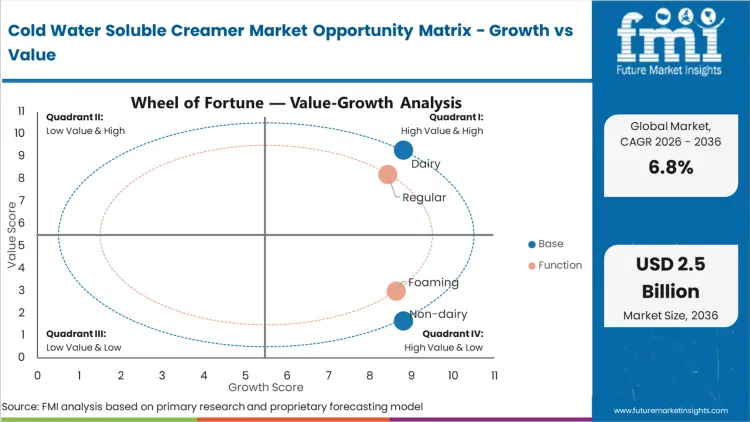
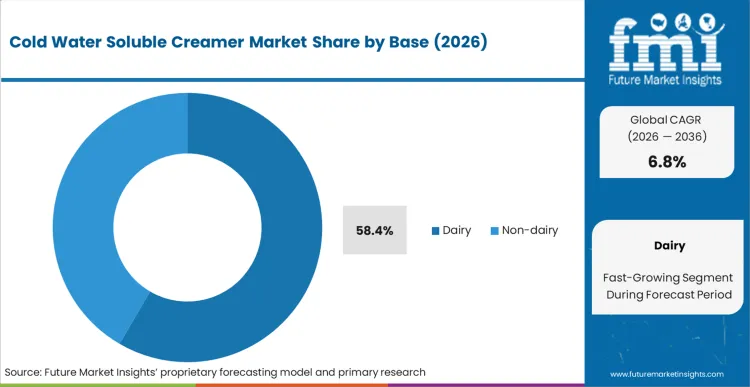
- Dairy: 58.4% share in 2026, representing the dominant category as buyers prioritize established dairy configurations that align with existing processing and formulation infrastructure.
- Regular: 63.7% share in 2026, driven by end-use applications where regular characteristics deliver measurable performance advantages over alternative product forms.
- United States: 4.3% compound growth anchored by expanding manufacturing capacity and government-supported industrial development programs targeting cold water soluble creamer production and processing.
- Analyst Opinion at FMI
- Nandini Roy Choudhury, Principal Consultant for Food & Beverage opines: 'In my analysis of the Cold Water Soluble Creamer Market, I observe that the central procurement challenge is not product availability but supplier qualification and traceability. Buyers consolidating volumes around dairy face concentration risk when Tier-1 suppliers cannot demonstrate regulatory compliance documentation at scale. United States and comparable high-growth markets at 4.3% CAGR signal structural demand expansion, yet the absence of standardized procurement frameworks creates margin compression for distributors operating without certified channel agreements. Executives who delay formalizing supplier diversification strategies will find their cost structures exposed once regulatory enforcement cycles intensify across major importing economies.'
- Strategic Implications / Executive Takeaways
- Suppliers must establish verified certification pathways for cold water soluble creamer to qualify for procurement tenders issued by large food, health, and industrial buyers.
- Investment priorities should target capacity expansion in high-CAGR geographies to capture incremental demand before supply concentration shifts pricing power.
- Product development teams should align cold water soluble creamer formulations with evolving regulatory thresholds in the European Union, United States, and Asia Pacific to maintain market access.
- Methodology
- Primary Research: FMI conducted detailed technical interviews with procurement directors, formulation specialists, and supply chain engineers across 40 countries to validate adoption timelines and demand assumptions.
- Desk Research: Analysts aggregated public regulatory filings, trade association publications, government statistical releases, and company annual reports to establish verifiable baseline data.
- Market-Sizing and Forecasting: Forecasting models apply a bottom-up methodology starting with verified production capacity and consumption volume data, applying region-specific growth assumptions to project adoption trajectories.
- Data Validation and Update Cycle: Segment forecasts undergo cross-validation against publicly reported revenue volumes from leading industry participants and are updated on a rolling quarterly basis.
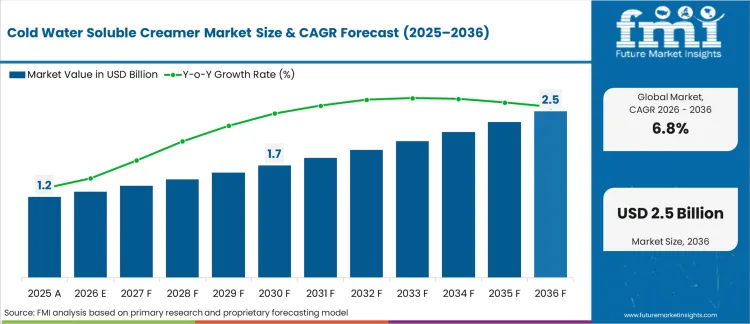
Cold Water Soluble Creamer Market Key Takeaways
| Metric | Details |
|---|---|
| Industry Size (2026) | USD 1.28 billion |
| Industry Value (2036) | USD 2.48 billion |
| CAGR (2026 to 2036) | 6.8% |
| Source | Future Market Insights (FMI) |
As per FMI, the global cold brew coffee and iced beverage category expansion requiring cold-soluble creamer ingredients, combined with the non-dairy and plant-based creamer trend across North America, Western Europe, and Asia Pacific, creates consistent procurement growth across beverage mix manufacturing, food service, and ready-to-drink beverage production channels. China leads country-level growth at 6.7% CAGR, with Fujian Jumbo Grand Food Co.
Ltd. and PT Sumber Super Group supplying cold water soluble creamers to growing domestic instant beverage and ready-to-drink cold coffee manufacturers, driven by rapid urban café culture expansion, growing cold brew and iced coffee consumption, and e-commerce distribution of instant beverage mix products. Japan follows at 5.3%, with a well-established canned coffee and cold beverage culture sustaining industrial procurement of cold-soluble creamer by beverage manufacturers, and growing consumer demand for foaming creamer variants in premium home cold coffee preparation formats.
The United States expands at 4.3% CAGR, with Ingredion Group and Bay Valley Foods LLC supplying cold water soluble creamer to large-scale instant beverage mix manufacturers, ready-to-drink cold coffee producers, and food service operators, with demand supported by the well-established American cold coffee and iced beverage market. For full country-level data and segment forecasts, refer to FMI's Cold Water Soluble Creamer Market report.
Cold Water Soluble Creamer Market Definition
Cold Water Soluble Creamer is a spray-dried or agglomerated powder ingredient formulated from dairy or non-dairy fat sources with emulsifiers, stabilisers, and carriers to dissolve uniformly in cold water, cold brew coffee, iced tea, and cold beverage applications without requiring heat activation. It serves as a whitening, texturising, and mouthfeel-enhancing ingredient in instant beverage mixes, ready-to-drink cold beverages, sauces and dressings, and food service applications, available in regular and foaming functional variants.
Cold Water Soluble Creamer Market Inclusions
The report covers global and regional market sizes for cold water soluble creamer across all base categories, functional types, and end use application segments, forecast data from 2026 to 2036, and country-level CAGR analysis for the United States, China, and Japan, with additional regional coverage across more than 40 countries.
Cold Water Soluble Creamer Market Exclusions
The scope excludes standard hot-soluble coffee creamers and whiteners not formulated for cold water dissolution, liquid cream and half-and-half dairy products, and plant milk beverages sold as finished ready-to-drink products rather than as dry powder creamer ingredients. Protein-isolate-only powder blends without creaming or whitening functional positioning are also outside the analytical boundary.
Cold Water Soluble Creamer Market Research Methodology
- Primary Research: Analysts conducted structured interviews with procurement leads, formulation specialists, and regulatory affairs professionals across key producing and consuming countries to validate adoption timelines and commercial driver assessments.
- Desk Research: Data aggregation covered trade body publications, government statistical releases, multilateral agency reports, peer-reviewed research, and primary company disclosures relevant to the Cold Water Soluble Creamer market.
- Market-Sizing and Forecasting: Baseline values derive from a bottom-up aggregation model applying region-specific adoption curves and segment penetration rates, cross-referenced against observable trade and production benchmarks from primary and public sources.
- Data Validation and Update Cycle: Segment forecasts are cross-validated against publicly reported financial results from leading market participants and reviewed on a rolling 12-month basis to incorporate material regulatory or commercial developments.
Cold Water Soluble Creamer Market Drivers, Restraints, and Opportunities
Future Market Insights analysis of the Cold Water Soluble Creamer market shows that demand is structured around specific procurement requirements across commercial, industrial, and regulated product categories. FMI analysts observe that growth performance varies across application and regional segments, with premium and specialty demand tiers delivering above-average revenue per unit relative to standard commodity supply.
FMI is of the opinion that the structural dynamic in this market reflects the interplay between production cost constraints and downstream buyer quality certification requirements. Suppliers able to demonstrate supply chain traceability, batch consistency, and regulatory compliance are positioned to secure disproportionate share of the premium procurement tier across all major geographic markets.
- Cold Brew Coffee and Iced Beverage Category Growth Driving Solubility Requirements: The rapid global expansion of cold brew coffee and iced beverage categories has created a specific procurement requirement for creamers that dissolve completely and uniformly in cold water at temperatures between 4 and 15 degrees Celsius, without the heat activation required by conventional spray-dried creamers. Ingredion Group and Royal FrieslandCampina have developed agglomerated and re-crystallised powder creamer formulations with optimised particle wettability and dispersibility in cold aqueous systems, with performance validated against dissolution time, turbidity, and absence of oil ring specifications required by beverage manufacturers producing ambient-stable instant cold beverage mixes and ready-to-drink cold coffee products.
- Non-Dairy Cold Creamer Demand for Lactose-Free and Plant-Based Formulations: Growing lactose intolerance prevalence and plant-based diet adoption are shifting cold water soluble creamer procurement toward non-dairy fat-based formulations using coconut oil, palm kernel oil, and partially fractionated vegetable fat systems combined with plant-based protein carriers, enabling food service operators and beverage manufacturers to offer dairy-free cold beverage options without compromising creaming and whitening performance. ALMER MALAYSIA SDN BHD and Mokate S.A. supply non-dairy cold water soluble creamers to food service operators and instant beverage manufacturers in Southeast Asia and Eastern Europe, with halal certification and allergen-free formulation positioning supporting procurement across Middle Eastern and Southeast Asian food service supply chains.
- Foaming Creamer Segment Growth in Premium Cold Coffee Applications: Foaming-functional cold water soluble creamers, which generate stable cold foam when dissolved and agitated in cold milk or cold water, are the fastest-growing functional segment within the cold water soluble creamer market, driven by consumer demand for café-style cold foam toppings on cold brew coffee, iced lattes, and specialty cold beverages in retail, food service, and home preparation contexts. Custom Food Group and Viceroy Holland B.V. supply foaming-grade cold water soluble creamers to coffee chains, premium home brewing product brands, and food service distributors, with foaming performance specifications requiring defined bubble stability, foam density, and cold dissolution speed consistent with barista-quality cold foam preparation.
Key Industry Highlights
Increasing Popularity of Dairy-free Products
A greater number of persons are acknowledging the inclusion of plant-based ingredients into their products and also such lactose-free and non-dairy products are on the rise. There is a notable shift in dietary habits specially to plant products like this, soy, oat and almond products due to their health benefits and lower costs compared to dairy based options.
Such changes in consumer preferences towards dairy-free products, can also be attributed to the growing concern about lactose intolerance, as well as some tight ethical issues. The increased concern for plant-based products has led many companies to bring new plant-based products and increase their speed to meet investors’ demands.
Governments also encourage sustainable food products making the trend more achievable. Many plant-based ingredient suppliers and companies have formed strategic alliances to secure the supply chain and ensure that only quality products are produced.
Increased Range of Flavors Introduced to the Market
The modern-day consumer is more sophisticated and thus requires some diversity in the kind of food products that they consume which are not limited in taste and texture. Some producers of non-dairy creamers for instance have taken advantage of this by coming up with flavors such as vanilla, caramel, hazelnut and even seasonal flavors such as pumpkin spice. So where there is a wider range of flavor profiles, the more unrefined the target business landscape of that company is likely to be.
Past recipes or merely seasonal plant-based creamers help to capture consumers’ attention and lure them into making trial purchase, which culminates to brand loyalty. In this way, by means of consolidating the focus on the jet innovation, creamers are seen as much more than flavouring agents; they are panel; they are individual delights that make the overall beverage experience much richer.
Focus on Health and Wellness Features
Today's health-aware consumers are looking for products that fit in with their health and wellness aspirations. Functionalized creamers added with vitamins, probiotics, and low sugar levels are getting more popularity. Producers are highlighting clean-label formulates, ones that do not contain artificial ingredients and hydrogenated oils, which are desirable to targeted consumers. Ketogenic and protein-based creamers serve the specific needs of two different dietary populations, thus targeting specific consumer segments and providing an expanded target audience. This tendency also fits with changes in the regulatory environment that are encouraging clear labelling and reformulations of healthy food products. Companies who contribute R&D to functional and fortified creamers are well positioned to be able to satisfy that demand such that their offerings satisfy both taste and health desires. Through focus on health, consumer trust is built and brands presented as industry leaders in the areas of innovation.
Growth of E-Commerce Platforms
The evolution of e-commerce is changing the landscape of how consumers purchase creamers. Internet services offer ease of use and availability in areas where physical retail stores are unavailable. Companies are using these platforms to offer a range of products, maximizing their visibility. By means of digital tools (e.g., targeted advertising, reviews, subscription-based services), brands increase the customer engagement and retention.
The pandemic accelerated the adoption of online grocery shopping, and this shift continues as consumers appreciate the ease of doorstep delivery. Brands are also applying e-commerce data analytics to learn the buying behaviour so that they can provide more bespoke products. The reach of e-commerce transcends geographical boundaries, making premium products accessible to global audiences.
Increasing Coffee Consumption
Coffee culture continues to develop to include increasing consumption rates among different age groups. Specialty coffee drinks such as lattes and iced coffee are increasingly commonplace as daily indulgences, which drives demand for companion ingredients such as creamers. With the advent of the expanding café culture, and with readily available home-brewing technologies this has made the niche of creamer brands fulfil a success.
Companies that sell products that add flavors and richness to coffee drinks target this growing market. Especially, the increase of social media trends focusing on coffee's aesthetics leads to the demand of high-quality, flexible creamers for consumer use to try to replicate the coffee-shop experience at home. This trend relationship between coffee and creamer consumption guarantees continued usage of this market.
Introduction of Cold Foam Creamers
The trend in chilled coffee is helping the industry to advance new creamer products, that is cold foam creamers. These are products which serve a niche but a busy sector that seeks to enhance its pleasure in consuming cool products. Cold foam creamers are designed to make a thick, rich layer when prepared to lift the flavor and appearance. Café latte, cold brews, iced drinks have become the order of the day, this formulated product meets the need of high quality and individual servings.
The competition is appearing in this sector by putting money into product differentiation; based on this, milk foam creamers come in flavored products and there are even non-dairy ones. Apart from the ability to apply it to numerous types of drinks, its expanded number of possibilities for different consumers is another factor in achieving the goal.
2021 to 2025 Global Cold Water Soluble Creamer Sales Analysis Compared to Demand Forecasts for 2026 to 2036
This staying on the cold water soluble creamer market has been rising within the past five years and reached USD 1,203.8 million in 2024 according to the data. This growth has been experienced through new product development such as cold brew coffee and tea and the need for convenient dairy based creamers that can be used in other cold drinks.
With regard to the future trends, there are expectations that the consumption of cold water soluble creamers will begin to rise steadily, and the market for this product will increase at a rate of 6.8% per annum between 2026 and 2036 inclusive. Steady growth will occur in the cold brew segment and the iced coffee/tea segment and improved creamer products will be developed to fit new consumer trends in clean label, plant based, and functional.
However, some threats include the threat of new entrants and changing political operations concerning aqueous solutions of dairy based products. All in all, the global cold water soluble creamer market is expected a positive long term growth.
Market Concentration
Tier 1 companies comprise industry leaders with revenue of above USD 10 million capturing a significant share of 50% to 60% in the global business landscape. High production capacity and a wide product portfolio characterize these leaders. These leaders are distinguished by their extensive expertise in manufacturing and reconditioning across multiple packaging formats and a broad geographical reach, underpinned by a robust consumer base.
They provide a wide range of series including reconditioning, recycling, and manufacturing utilizing the latest technology and meeting the regulatory standards providing the highest quality. Prominent companies within tier 1 include Ingredion Group of Companies, Royal Friesland Campina, Bay Valley Foods, LLC, Custom Food Group, Fujian Jumbo Grand Food Co., Ltd.. and few others.
Tier 2 companies include mid-size players with revenue of USD 1 to 10 million having a presence in specific regions and highly influencing the local commerce. These are characterized by a strong presence overseas and strong business knowledge.
These players in the arena have good technology and ensure regulatory compliance but may not have advanced technology and wide global reach. Prominent companies in tier 2 include Mokate S.A., Viceroy Holland B.V., PT Sumber, Super Group Ltd. and few others.
Tier 3 includes the majority of small-scale companies operating at the local presence and serving niche economies having revenue below USD 1 million. These companies are notably oriented towards fulfilling local demands and are consequently classified within the tier 3 share segment.
They are small-scale players and have limited geographical reach. Tier 3, within this context, is recognized as an unorganized ecosystem, denoting a sector characterized by a lack of extensive structure and formalization when compared to organized competitors.
Country wise Insights
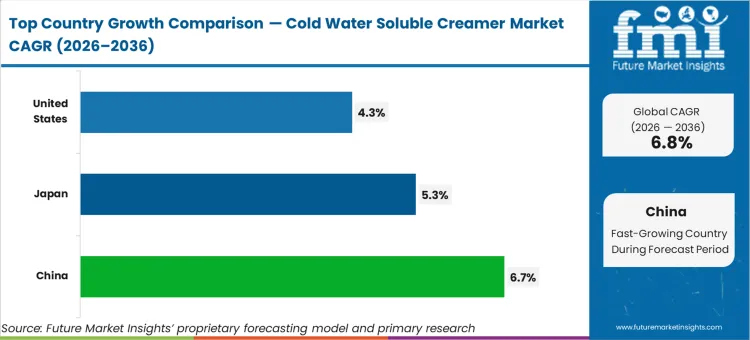
The following table shows the estimated growth rates of the top three countries. USA, China, and Japan are set to exhibit high consumption, and CAGRs of 4.3%, 6.7%, and 5.3% respectively, through 2034.
.webp "Top Country Growth Comparison Cold Water Soluble Creamer Market Cagr (2026 2036)")
| Countries | CAGR 2026 to 2036 |
|---|---|
| United States | 4.3% |
| China | 6.7% |
| Japan | 5.3% |
USA: Convenience-Driven Innovation in Beverages
In the United States, the demand for innovative beverage solutions is reshaping consumer preferences for coffee and related products. Cold water-soluble creamers have gained a market among time-starved Americans who are in need of convenient, easy-to-add options to upgrade their drinks.
Expansion in the use of the single-serve packaging formats and ready-to-drink formats meets the convenience demands of the latest lifestyle offering consumers the possibility of enjoy a quality drink on-the-go without losing the taste of the beverage. Moreover, brands now have functional ingredients like collagen, adaptogens or plant-based proteins in these products to attract health product buyers.
This tendency is a part of the larger trend that towards premium and customizable beverage experiences that fit with consumer demand for efficiency and health/wellness. The popularity of residential coffee systems and chilled drinks has as well driven the demand for these creamers, which has rendered them a product of convenience and changing taste expectations.
Emphasis on Lactose-Free Alternatives in China
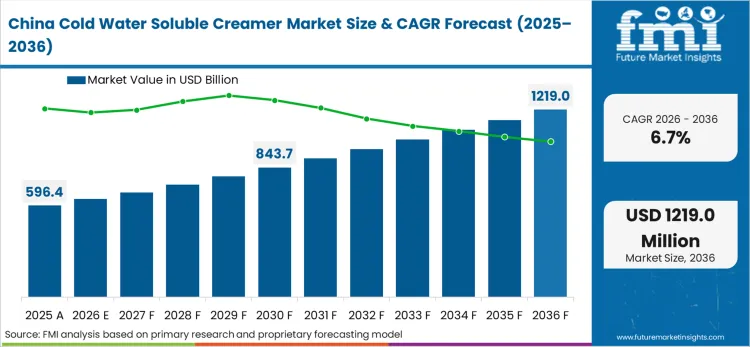
Cold water soluble creamers are gaining traction in the China due to lactose intolerance issues as well as the improving tea and coffee market. People prefer non-dairy and lactose-free creamers these days, and these creamers can best mix into beverages like milk tea, iced latte, and specialty drinks. Such growth can be attributed to increased café culture and consumers search for specialization in their beverages.
To meet the local demand, local companies have launched new flavored creamers that include the taste of local products such as matcha and red bean. As consumers prioritize health-conscious choices, lactose-free cold water-soluble creamers are carving out a significant share in China’s rapidly growing beverage industry.
Premiumization of Beverage Additives in Japan
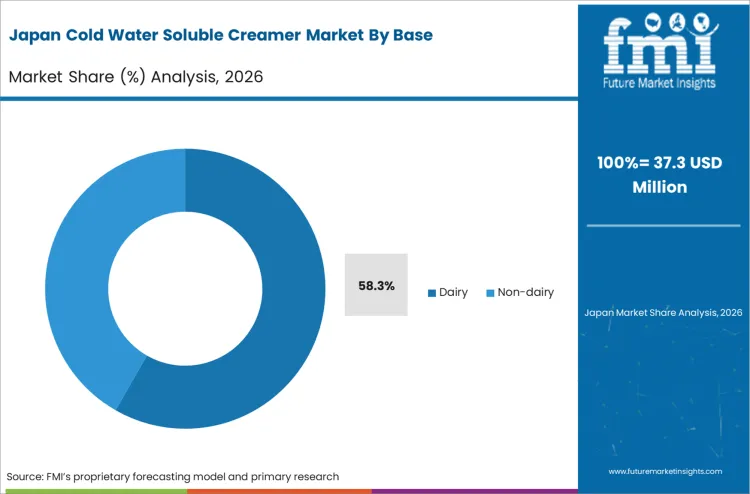
The cold water-soluble creamer market in Japan highly appreciates the quality and the design of the products. This means that the country has a long and venerable tradition for food preparation and presentation, and thus the quality and the aesthetics of the offered products tend to play a significant role in the sphere. Apart from their usability, these creamers have the potential to increase drink appeal, serving iced coffee or iced tea, meeting the growing cool brewery demand, and making drinks look beautiful just like café-style coffees.
Notably, the design of the packages is considered crucial since consumers want fashionable and environmentally sound solutions. In total, cold water-soluble creamers in Japan represent the worldwide ‘everyday luxury’ concept and offer customers enjoyable products without compromising on their quality and environmental friendliness.
Category-wise Insights
The Rise of Non-Dairy Creamers: Catering to Modern Lifestyles
Non-dairy creamers are growing at a fast rate, thanks to its ability to meet changing consumer demand and dietary requirement. One of the main pushers is the growing number of encounters with lactose intolerance and dairy allergies, which invites manufacturers to think in terms of lactose-free alternatives. Furthermore, the number of plant-based diets all over the world has increased to a large extent due to ethical, environmental and health reasons, leading to an increased need on plant-based plant milks made with oat, almond and soy.
They provide greater shelf life and are many times enriched with beneficial effects and are therefore attractive to health-conscious consumers. Due to the ability to be used in both hot and cold drinks, the wide-ranging use of non-dairy creamers also increases the appeal. By using innovative flavors and formulations, non-dairy creamers are increasingly an attractive, versatile product for contemporary consumers globally.
Cold Water-Soluble Creamers: Revolutionizing Beverage Mixes
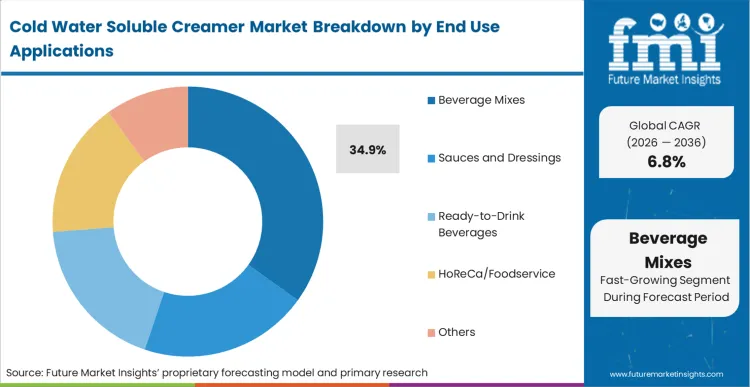
Cold water-soluble creamers have become very popular in drinks mix because of their unique advantages, convenience, special function, etc. Different from the conventional stricter ones, they are easy to dissolve in cold liquids, thus very applicable for ready-to-drink drinks, iced coffee, milk tea, and protein tea drinks. This feature matches up with the increasing need for easy, seamless solutions in the modern hectic life style.
These creamers are used to improve the drink-texture, drink-flavor and drink-creamy-ness absent the addition of external heat or labour, and are an integral part of powdered drink mixes and take-able products. In the same respect, their solid and stable structure makes them ideal for manufacturers who would want their products to have a longer shelf life while at the same time possessing stable composition. Cold water soluble creamer is important as more people continue to develop preferences for iced and specialty drinks.
Competition Outlook
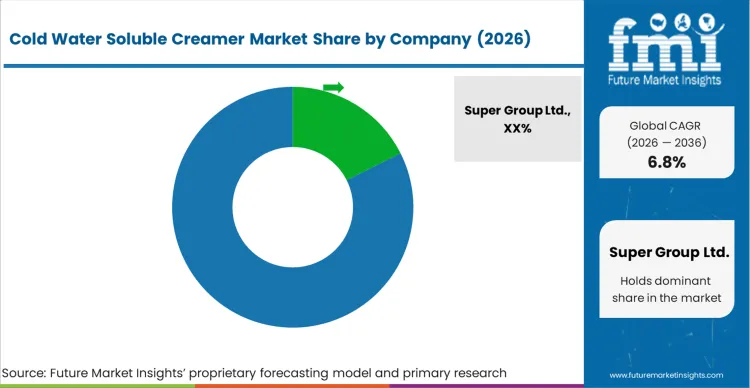
Strategic innovations such as ones employed by players in the beverage enhancement business are helping them maintain their footing. Companies such as Coffee mate are introducing new product categories, for example, Cold Foam coffee creamers designed to meet the growing taste for cold coffee drinks. These items replicate café-like contexts in the same spirit as the current consumer trends.
As an additional example, the so-called major companies, Royal Friesland Campina, are positioned towards an expansion of their portfolio through formulations optimised for regional preferences and dietary restrictions, including lactose-free and plant-based alternatives. Ingredion invests in R&D to improve solubility and flavor profiles, targeting both retail consumers and industrial clients.
Companies are also using e-commerce platforms to improve accessibility and cooperating with coffee shops and beverage influencers to increase footprint. Through the innovation and evolution in response to emerging global trends, those businesses retain a competitive advantage.
Leading Manufacturers
- ALMER MALAYSIA SDN BHD
- Ingredion Group of Companies
- Royal Friesland Campina
- Bay Valley Foods, LLC
- Food Ingredient Indonesia
- Custom Food Group
- Fujian Jumbo Grand Food Co., Ltd.
- Mokate S.A.
- Viceroy Holland B.V.
- PT Sumber
- Super Group Ltd.
Scope of the Report
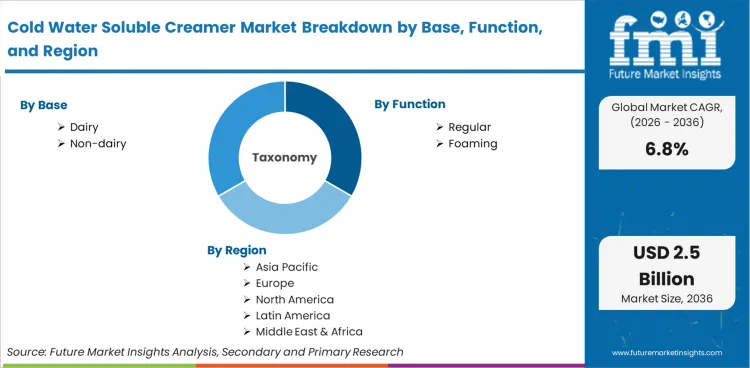
| Metric | Value |
|---|---|
| Quantitative Units | USD 1.28 billion to USD 2.48 billion, at a CAGR of 6.8% |
| Market Definition | Cold Water Soluble Creamer is a spray-dried or agglomerated powder ingredient formulated from dairy or non-dairy fat sources with emulsifiers, stabilisers, and carriers to dissolve uniformly in cold water, cold brew coffee, iced tea, and cold beverage applications without requiring heat activation. It serves as a whitening, texturising, and mouthfeel-enhancing ingredient in instant beverage mixes, ready-to-drink cold beverages, sauces and dressings, and food service applications, available in regular and foaming functional variants. |
| Base Segmentation | Dairy, Non-dairy |
| Function Segmentation | Regular, Foaming |
| End Use Application Segmentation | Beverage Mixes, Sauces and Dressings, Ready-to-Drink Beverages, HoReCa and Foodservice, Others |
| Regions Covered | North America, Latin America, Europe, East Asia, South Asia, Oceania, Middle East and Africa |
| Countries Covered | United States, China, Japan, and 40 plus countries |
| Forecast Period | 2026 to 2036 |
| Key Companies Profiled | ALMER MALAYSIA SDN BHD, Ingredion Group of Companies, Royal FrieslandCampina, Bay Valley Foods LLC, Food Ingredient Indonesia, Custom Food Group, Fujian Jumbo Grand Food Co. Ltd., Mokate S.A., Viceroy Holland B.V., PT Sumber Super Group Ltd. |
| Approach | Hybrid bottom-up and top-down forecasting model, cross-validated against primary interview findings and public benchmark data |
Key Segments of the Report
By Base:
By base industry has been categorised into Dairy and Non-dairy
By Function:
Two functionalities like Regular and Foaming are included in the report.
By End Use Applications:
Key applications like Beverage Mixes, Sauces and Dressings, Ready-to-Drink Beverages, HoReCa/Foodservice and Others are considered after exhaustive research.
By Region:
Industry analysis has been carried out in key countries of North America, Latin America, Europe, Middle East and Africa, East Asia, South Asia, and Oceania
Bibliography
- 1. Food and Agriculture Organization of the United Nations (FAO). (2024, February). Dairy market review: Global dairy supply and demand 2023. FAO.
- 2. European Commission, Directorate-General for Agriculture and Rural Development. (2024, January). EU dairy market outlook 2024: Powder products and derivatives. European Commission.
- 3. United States Department of Agriculture (USDA), Agricultural Marketing Service. (2024, March). Dairy products: Grade and quality standards for non-dairy creamer and coffee whitener. USDA AMS.
- 4. India Food Safety and Standards Authority (FSSAI). (2024, March). Food safety and standards regulations: Non-dairy creamer and coffee whitener product standards. FSSAI.
- 5. Codex Alimentarius Commission, FAO and WHO. (2023, July). Codex standard for cream and prepared creams (CXS 288-1976, revised 2010): Application to powder creamer formulations. FAO and WHO.
- 6. USDA Foreign Agricultural Service. (2024, February). Southeast Asia dairy and non-dairy creamer market report 2024. USDA FAS.
This Report Addresses
- Market sizing and quantitative forecast metrics detailing the precise enterprise software expenditure dedicated to packaging void-fill reduction across major retail sectors through 2036.
- Segmentation analysis mapping the adoption velocity of specific cartonization algorithms and evaluating the technical limitations driving cloud platform migrations.
- Regional deployment intelligence comparing the aggressive greenfield fulfillment strategies in Asia Pacific against the complex brownfield software integration requirements prevalent in European logistics hubs.
- Regulatory compliance assessment analyzing how stringent secondary packaging waste directives and Extended Producer Responsibility mandates force the adoption of precision volumetric software.
- Competitive posture evaluation tracking the mandatory shift toward hardware-agnostic API integration and the resulting commoditization of standalone dimensional calculators.
- Capital project strategic guidance defining the exact procurement specifications and processing latencies required to support next-generation automated right-sizing machinery.
- Supply chain vulnerability analysis identifying the specific data synchronization bottlenecks that extend warehouse execution system commissioning timelines.
- Custom data delivery formats encompassing interactive dashboards, raw Excel datasets, and comprehensive PDF narrative reports.
Frequently Asked Questions
How large is the demand for Cold Water Soluble Creamer in the global market in 2026?
Demand for Cold Water Soluble Creamer in the global market is estimated to be valued at USD 1.28 billion in 2026.
What will the market size of the Cold Water Soluble Creamer market be by 2036?
The Cold Water Soluble Creamer market is projected to reach USD 2.48 billion by 2036.
What is the expected CAGR for the Cold Water Soluble Creamer market between 2026 and 2036?
Demand for Cold Water Soluble Creamer is expected to grow at a CAGR of 6.8% between 2026 and 2036.
Which base leads the Cold Water Soluble Creamer market in 2026?
Dairy base accounts for approximately 58.4% share in 2026, reflecting the established dairy fat-based creamer formulation technology with superior cold dissolution performance, mouthfeel, and flavour delivery compared to non-dairy alternatives in the majority of commercial beverage mix and food service applications.
Which function leads the Cold Water Soluble Creamer market in 2026?
Regular function accounts for approximately 63.7% share in 2026, representing standard cold-soluble creamer formulations procured by beverage mix manufacturers and food service operators for whitening and texturising cold beverage applications without foam generation requirements.
Which end use application leads the Cold Water Soluble Creamer market in 2026?
Beverage Mixes holds approximately 34.9% end use share in 2026, driven by instant cold beverage mix manufacturer procurement of cold water soluble creamer as a functional whitening and mouthfeel ingredient in instant cold coffee, iced tea, and specialty beverage mix products.
What is driving Cold Water Soluble Creamer demand in China?
Rapid urban café culture expansion, growing cold brew and iced coffee consumption, and e-commerce distribution of instant beverage mix products drive China to the fastest country-level growth at 6.7% CAGR through 2036, with domestic manufacturers including Fujian Jumbo Grand Food Co. Ltd. scaling cold-soluble creamer production capacity.
Preview the report firsthand - request a free sample
Get SampleGet the brochure for pricing and purchase details.
Get PDFTable of Content
- Executive Summary
- Global Market Outlook
- Demand-side Trends
- Analysis and Recommendations
- Market Overview
- Market Coverage / Taxonomy
- Market Definition / Scope / Limitations
- Research Methodology
- Chapter Orientation
- Analytical Lens and Working Hypotheses
- Market Structure, Signals, and Trend Drivers
- Benchmarking and Cross-market Comparability
- Market Sizing, Forecasting, and Opportunity Mapping
- Research Design and Evidence Framework
- Desk Research Programme (Secondary Evidence)
- Company Annual and Sustainability Reports
- Press Releases and Reputable Media Coverage
- Specialist Newsletters and Curated Briefings
- Sector Databases and Reference Repositories
- FMI Internal Proprietary Databases and Historical Market Datasets
- Subscription Datasets and Paid Sources
- Social Channels, Communities, and Digital Listening Inputs
- Additional Desk Sources
- Expert Input and Fieldwork (Primary Evidence)
- Primary Modes
- Qualitative Interviews and Expert Elicitation
- Quantitative Surveys and Structured Data Capture
- Blended Approach
- Why Primary Evidence is Used
- Field Techniques
- Interviews
- Surveys
- Focus Groups
- Observational and In-context Research
- Social and Community Interactions
- Stakeholder Universe Engaged
- C-suite Leaders
- Trends
- Scenario Forecast
- Demand in Optimistic Scenario
- Demand in Likely Scenario
- Demand in Conservative Scenario
- Opportunity Map Analysis
- Product Life Cycle Analysis
- Supply Chain Analysis
- Investment Feasibility Matrix
- Value Chain Analysis
- PESTLE and Porter’s Analysis
- Regulatory Landscape
- Regional Parent Market Outlook
- Production and Consumption Statistics
- Import and Export Statistics
- Primary Modes
- Global Market Analysis 2021 to 2025 and Forecast, 2026 to 2036
- Historical Market Size Value (USD Million) Analysis, 2021 to 2025
- Current and Future Market Size Value (USD Million) Projections, 2026 to 2036
- Y-o-Y Growth Trend Analysis
- Absolute $ Opportunity Analysis
- Global Market Pricing Analysis 2021 to 2025 and Forecast 2026 to 2036
- Global Market Analysis 2021 to 2025 and Forecast 2026 to 2036, By Base
- Introduction / Key Findings
- Historical Market Size Value (USD Million) Analysis By Base , 2021 to 2025
- Current and Future Market Size Value (USD Million) Analysis and Forecast By Base , 2026 to 2036
- Dairy
- Non-dairy
- Dairy
- Y-o-Y Growth Trend Analysis By Base , 2021 to 2025
- Absolute $ Opportunity Analysis By Base , 2026 to 2036
- Global Market Analysis 2021 to 2025 and Forecast 2026 to 2036, By Function
- Introduction / Key Findings
- Historical Market Size Value (USD Million) Analysis By Function, 2021 to 2025
- Current and Future Market Size Value (USD Million) Analysis and Forecast By Function, 2026 to 2036
- Regular
- Foaming
- Regular
- Y-o-Y Growth Trend Analysis By Function, 2021 to 2025
- Absolute $ Opportunity Analysis By Function, 2026 to 2036
- Global Market Analysis 2021 to 2025 and Forecast 2026 to 2036, By End Use Applications
- Introduction / Key Findings
- Historical Market Size Value (USD Million) Analysis By End Use Applications, 2021 to 2025
- Current and Future Market Size Value (USD Million) Analysis and Forecast By End Use Applications, 2026 to 2036
- Beverage Mixes
- Sauces and Dressings
- Ready-to-Drink Beverages
- HoReCa/Foodservice
- Others
- Beverage Mixes
- Y-o-Y Growth Trend Analysis By End Use Applications, 2021 to 2025
- Absolute $ Opportunity Analysis By End Use Applications, 2026 to 2036
- Global Market Analysis 2021 to 2025 and Forecast 2026 to 2036, By Region
- Introduction
- Historical Market Size Value (USD Million) Analysis By Region, 2021 to 2025
- Current Market Size Value (USD Million) Analysis and Forecast By Region, 2026 to 2036
- North America
- Latin America
- Western Europe
- Eastern Europe
- East Asia
- South Asia and Pacific
- Middle East & Africa
- Market Attractiveness Analysis By Region
- North America Market Analysis 2021 to 2025 and Forecast 2026 to 2036, By Country
- Historical Market Size Value (USD Million) Trend Analysis By Market Taxonomy, 2021 to 2025
- Market Size Value (USD Million) Forecast By Market Taxonomy, 2026 to 2036
- By Country
- USA
- Canada
- Mexico
- By Base
- By Function
- By End Use Applications
- By Country
- Market Attractiveness Analysis
- By Country
- By Base
- By Function
- By End Use Applications
- Key Takeaways
- Latin America Market Analysis 2021 to 2025 and Forecast 2026 to 2036, By Country
- Historical Market Size Value (USD Million) Trend Analysis By Market Taxonomy, 2021 to 2025
- Market Size Value (USD Million) Forecast By Market Taxonomy, 2026 to 2036
- By Country
- Brazil
- Chile
- Rest of Latin America
- By Base
- By Function
- By End Use Applications
- By Country
- Market Attractiveness Analysis
- By Country
- By Base
- By Function
- By End Use Applications
- Key Takeaways
- Western Europe Market Analysis 2021 to 2025 and Forecast 2026 to 2036, By Country
- Historical Market Size Value (USD Million) Trend Analysis By Market Taxonomy, 2021 to 2025
- Market Size Value (USD Million) Forecast By Market Taxonomy, 2026 to 2036
- By Country
- Germany
- UK
- Italy
- Spain
- France
- Nordic
- BENELUX
- Rest of Western Europe
- By Base
- By Function
- By End Use Applications
- By Country
- Market Attractiveness Analysis
- By Country
- By Base
- By Function
- By End Use Applications
- Key Takeaways
- Eastern Europe Market Analysis 2021 to 2025 and Forecast 2026 to 2036, By Country
- Historical Market Size Value (USD Million) Trend Analysis By Market Taxonomy, 2021 to 2025
- Market Size Value (USD Million) Forecast By Market Taxonomy, 2026 to 2036
- By Country
- Russia
- Poland
- Hungary
- Balkan & Baltic
- Rest of Eastern Europe
- By Base
- By Function
- By End Use Applications
- By Country
- Market Attractiveness Analysis
- By Country
- By Base
- By Function
- By End Use Applications
- Key Takeaways
- East Asia Market Analysis 2021 to 2025 and Forecast 2026 to 2036, By Country
- Historical Market Size Value (USD Million) Trend Analysis By Market Taxonomy, 2021 to 2025
- Market Size Value (USD Million) Forecast By Market Taxonomy, 2026 to 2036
- By Country
- China
- Japan
- South Korea
- By Base
- By Function
- By End Use Applications
- By Country
- Market Attractiveness Analysis
- By Country
- By Base
- By Function
- By End Use Applications
- Key Takeaways
- South Asia and Pacific Market Analysis 2021 to 2025 and Forecast 2026 to 2036, By Country
- Historical Market Size Value (USD Million) Trend Analysis By Market Taxonomy, 2021 to 2025
- Market Size Value (USD Million) Forecast By Market Taxonomy, 2026 to 2036
- By Country
- India
- ASEAN
- Australia & New Zealand
- Rest of South Asia and Pacific
- By Base
- By Function
- By End Use Applications
- By Country
- Market Attractiveness Analysis
- By Country
- By Base
- By Function
- By End Use Applications
- Key Takeaways
- Middle East & Africa Market Analysis 2021 to 2025 and Forecast 2026 to 2036, By Country
- Historical Market Size Value (USD Million) Trend Analysis By Market Taxonomy, 2021 to 2025
- Market Size Value (USD Million) Forecast By Market Taxonomy, 2026 to 2036
- By Country
- Kingdom of Saudi Arabia
- Other GCC Countries
- Turkiye
- South Africa
- Other African Union
- Rest of Middle East & Africa
- By Base
- By Function
- By End Use Applications
- By Country
- Market Attractiveness Analysis
- By Country
- By Base
- By Function
- By End Use Applications
- Key Takeaways
- Key Countries Market Analysis
- USA
- Pricing Analysis
- Market Share Analysis, 2025
- By Base
- By Function
- By End Use Applications
- Canada
- Pricing Analysis
- Market Share Analysis, 2025
- By Base
- By Function
- By End Use Applications
- Mexico
- Pricing Analysis
- Market Share Analysis, 2025
- By Base
- By Function
- By End Use Applications
- Brazil
- Pricing Analysis
- Market Share Analysis, 2025
- By Base
- By Function
- By End Use Applications
- Chile
- Pricing Analysis
- Market Share Analysis, 2025
- By Base
- By Function
- By End Use Applications
- Germany
- Pricing Analysis
- Market Share Analysis, 2025
- By Base
- By Function
- By End Use Applications
- UK
- Pricing Analysis
- Market Share Analysis, 2025
- By Base
- By Function
- By End Use Applications
- Italy
- Pricing Analysis
- Market Share Analysis, 2025
- By Base
- By Function
- By End Use Applications
- Spain
- Pricing Analysis
- Market Share Analysis, 2025
- By Base
- By Function
- By End Use Applications
- France
- Pricing Analysis
- Market Share Analysis, 2025
- By Base
- By Function
- By End Use Applications
- India
- Pricing Analysis
- Market Share Analysis, 2025
- By Base
- By Function
- By End Use Applications
- ASEAN
- Pricing Analysis
- Market Share Analysis, 2025
- By Base
- By Function
- By End Use Applications
- Australia & New Zealand
- Pricing Analysis
- Market Share Analysis, 2025
- By Base
- By Function
- By End Use Applications
- China
- Pricing Analysis
- Market Share Analysis, 2025
- By Base
- By Function
- By End Use Applications
- Japan
- Pricing Analysis
- Market Share Analysis, 2025
- By Base
- By Function
- By End Use Applications
- South Korea
- Pricing Analysis
- Market Share Analysis, 2025
- By Base
- By Function
- By End Use Applications
- Russia
- Pricing Analysis
- Market Share Analysis, 2025
- By Base
- By Function
- By End Use Applications
- Poland
- Pricing Analysis
- Market Share Analysis, 2025
- By Base
- By Function
- By End Use Applications
- Hungary
- Pricing Analysis
- Market Share Analysis, 2025
- By Base
- By Function
- By End Use Applications
- Kingdom of Saudi Arabia
- Pricing Analysis
- Market Share Analysis, 2025
- By Base
- By Function
- By End Use Applications
- Turkiye
- Pricing Analysis
- Market Share Analysis, 2025
- By Base
- By Function
- By End Use Applications
- South Africa
- Pricing Analysis
- Market Share Analysis, 2025
- By Base
- By Function
- By End Use Applications
- USA
- Market Structure Analysis
- Competition Dashboard
- Competition Benchmarking
- Market Share Analysis of Top Players
- By Regional
- By Base
- By Function
- By End Use Applications
- Competition Analysis
- Competition Deep Dive
- Super Group Ltd.
- Overview
- Product Portfolio
- Profitability by Market Segments (Product/Age /Sales Channel/Region)
- Sales Footprint
- Strategy Overview
- Marketing Strategy
- Product Strategy
- Channel Strategy
- ALMER MALAYSIA SDN BHD
- Ingredion Group of Companies
- Royal Friesland Campina
- Bay Valley Foods, LLC
- Food Ingredient Indonesia
- Custom Food Group
- Fujian Jumbo Grand Food Co., Ltd.
- Mokate S.A.
- Viceroy Holland B.V.
- PT Sumber
- Super Group Ltd.
- Competition Deep Dive
- Desk Research Programme (Secondary Evidence)
- Assumptions & Acronyms Used


