

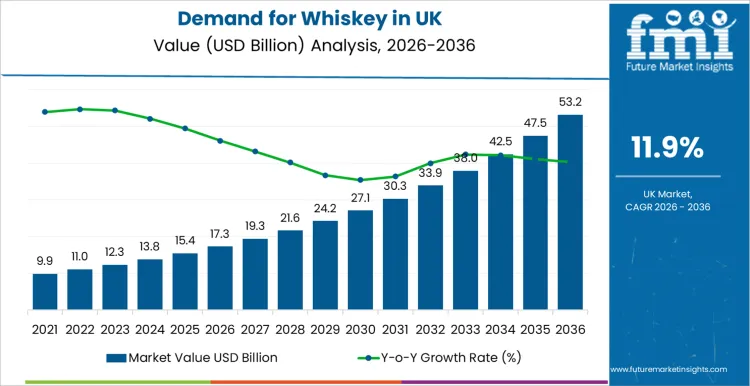
- Industry Size (2026)
- USD 17.3 Bn
- Forecast (2036)
- USD 53.2 Bn
- CAGR (2026 to 2036)
- 11.9%
Whiskey Industry Forecast and Outlook in the UK 2026 to 2036
The demand for whiskey in the UK is projected to reach a valuation of USD 17.3 billion in 2026. This sector is anticipated to experience exceptional growth, achieving a size of USD 53.2 billion by 2036, advancing at a robust compound annual growth rate of 11.9%.
This remarkable expansion is supported in the UK's dual role as a historic global epicenter for whiskey production, notably Scotch, and as a sophisticated, high-consumption market characterized by evolving consumer tastes. Growth is driven by the relentless premiumization trend, the cultural renaissance of cocktail culture, and the increasing perception of premium whiskey as a luxury asset and experiential product.
The critical demand spans both volume and value, fueled by a deep-seated domestic consumption culture, a thriving tourism and hospitality sector, and the global prestige of UK-produced spirits. This creates a dynamic, two-tiered market catering to everyday enjoyment and ultra-premium collection, with innovation in flavors, formats, and non-alcoholic alternatives broadening the category's appeal.
Quick Stats for Whiskey Demand in the UK
- Whiskey Sales Valuation in the UK (2026): USD 17.3 billion
- Whiskey Sales Forecast Valuation in the UK (2036): USD 53.2 billion
- Whiskey Industry in the UK Forecast CAGR (2026-2036): 11.9%
- Leading Regional Growth: England (CAGR 13.1%)
- Leading Beverage Type: Alcoholic Whiskey (82.0%)
- Leading Product Type: Bourbon Whiskey (28.5%)
- Leading Flavor: Unflavored (65.0%)
- Leading End User: HoReCa (Hotels, Restaurants, Cafés) (55.0%)
- Leading Sales Channel: Business-to-Business (B2B) (52.0%)
- Key Companies Profiled: Diageo, Chivas Brothers, William Grant & Sons, Bacardi, La Martiniquaise
Why is the UK a Premier Global Hub for Whiskey Demand?
The UK's demand for whiskey stems from its unparalleled heritage as the home of Scotch whisky and its status as one of the world's most mature and discerning spirit markets. Scotland's iconic distilleries are not only production sites but major tourist attractions, embedding whiskey deep within national culture and driving both domestic pride and international interest. London, in particular, functions as a global tasting room and luxury retail hub, where trends are set and premium brands are launched.
Beyond tradition, the UK's vibrant and innovative hospitality sector, with its world-leading cocktail bars and pubs, serves as a critical engine for consumption and experimentation. The growing consumer interest in provenance, craftsmanship, and storytelling directly benefits the whiskey category, where age statements, cask finishes, and distillery histories command premium prices. Furthermore, the rise of the non-alcoholic segment caters to the health-conscious consumer, ensuring the category's relevance expands alongside moderating trends.
How is the Whiskey Landscape Segmented by Type, Flavor, End User, and Channel?
This sector is categorized by alcohol content, style of whiskey, taste profile, consumption setting, and route to market. This multi-dimensional segmentation reveals a complex market where traditional luxury and modern innovation coexist, catering to consumption occasions ranging from casual pub visits to exclusive collector's item acquisitions.
Which Beverage Type Maintains Category Dominance?
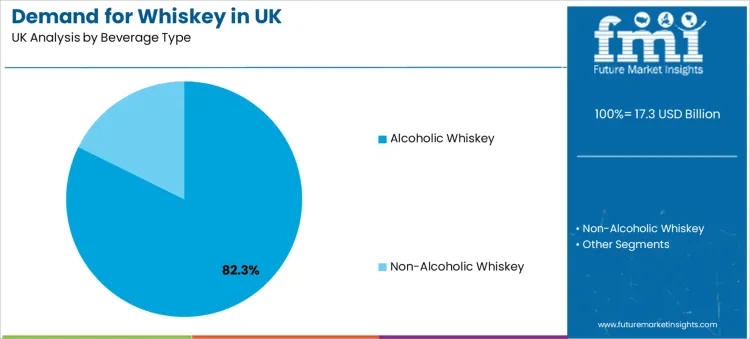
Alcoholic Whiskey holds a commanding 82.0% share, defining the core of the market. The entrenched social and cultural rituals associated with whiskey consumption, its role in mixology, and its strong position as a gift and luxury item drive its dominance. The non-alcoholic whiskey segment, while smaller, represents a vital and fast-growing avenue for category expansion, appealing to sober-curious consumers and those seeking sophisticated alcohol-free alternatives in social settings.
Which Product Type is Leading Market Preferences?
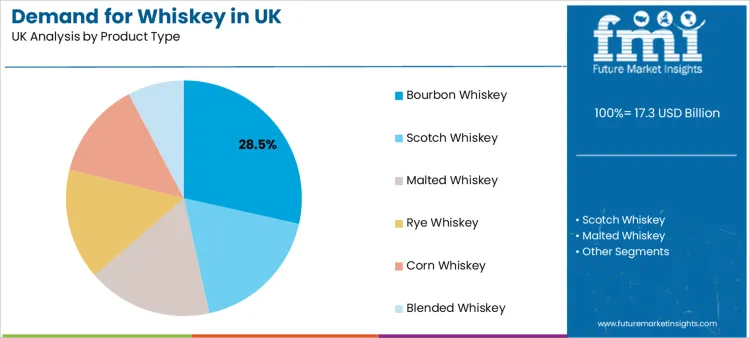
Bourbon Whiskey leads among product types with a 28.5% share. This prominence is fueled by its sweeter, more accessible profile for new entrants to the category, its iconic status in classic cocktails like the Old Fashioned, and strong marketing investments from major global brands. Scotch Whiskey remains the bedrock of the UK's heritage and export identity, while blended, malted, and rye whiskies cater to specific enthusiast segments and mixing demands.
Which Flavor Profile Defines the Traditional Core?
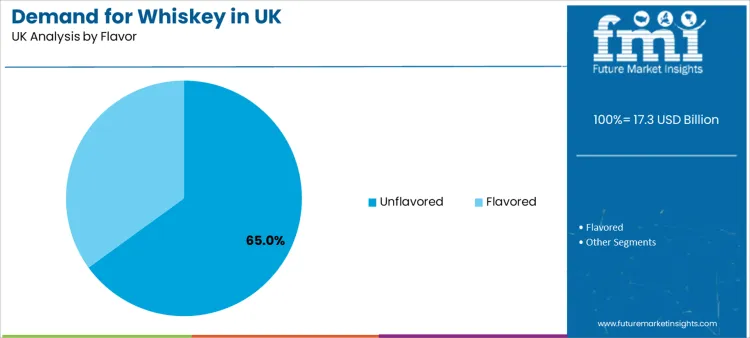
Unflavored whiskey commands a leading 65.0% share. This underscores the enduring consumer and connoisseur appreciation for the inherent, complex flavors derived from grains, yeast, water, and wood aging.
The dominance of unflavored varieties highlights the market's sophistication and the value placed on traditional production craftsmanship. The flavored segment, including honey, cinnamon, or other infusions, attracts a different demographic seeking approachable and versatile spirits for casual drinking or cocktail creation.
Which End-User Setting Drives Premium Consumption?
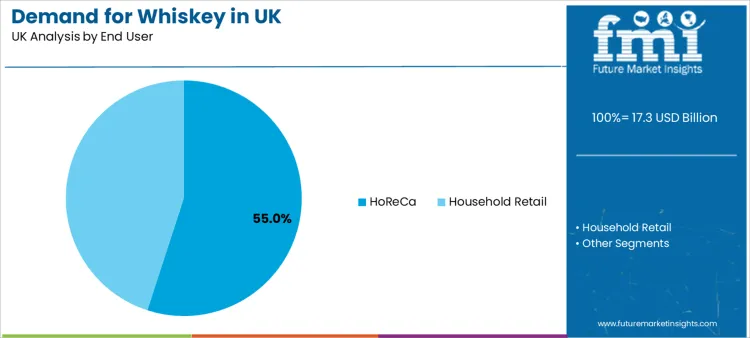
The HoReCa sector stands as the largest end-user, with a 55.0% share. This is a direct result of whiskey's centrality to the UK's pub and bar culture, its use by expert mixologists in high-end cocktails, and its prevalence in restaurant dining as a premium digestif. The Household Retail segment is substantial, driven by at-home consumption, gifting, and collection.
Which Sales Channel Facilitates Commercial Scale?
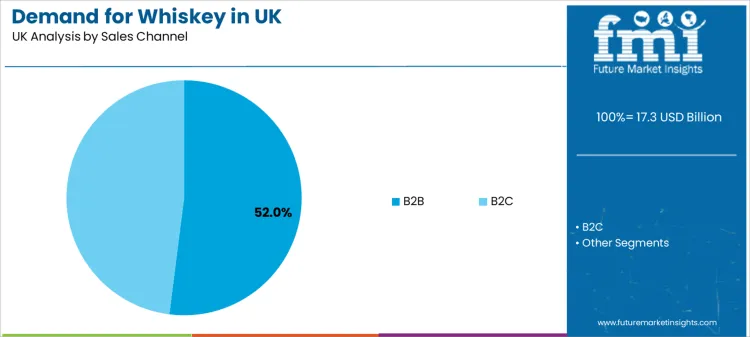
The B2B channel leads with a 52.0% share. This reflects the wholesale supply chain that stocks the extensive HoReCa network, major retail chains, and duty-free outlets. The strength of this channel highlights the commercial scale of the industry. The B2C channel, including direct online sales from distilleries and specialist retailers, is growing rapidly, particularly for limited editions and premium products aimed at collectors.
What are the Dynamics, Restraints, Opportunities, and Threats Shaping this Sector?
How are Premiumization and Experience Economies Driving Meteoric Demand?
The primary growth driver is the global trend of premiumization, where consumers trade up to higher-quality, older, and more distinctive expressions. This directly increases the average value per bottle sold.
The experience economy, encompassing distillery tourism, whiskey tasting events, and masterclasses, builds brand loyalty and drives direct sales. The resurgence of classic cocktails has also reintroduced whiskey to a younger demographic in an accessible, social format.
Do Regulatory Burdens and Taxation Restrain Market Potential?
A significant restraint is the high level of excise duty and VAT applied to alcoholic spirits in the UK, which increases the final retail price and can dampen volume growth. Stringent regulations on marketing, advertising, and labeling present compliance challenges.
Economic downturns and cost-of-living pressures can shift consumer spending from premium brands to value offerings, impacting value growth. Supply chain constraints for key inputs like oak casks and glass bottles also pose operational challenges.
How are Innovation and Diversification creating New Potential?
Substantial opportunities are emerging from the innovation in cask finishing, using barrels that previously held wine, sherry, or rum to create unique flavor profiles. The rapid growth of the non-alcoholic and low-alcohol segment presents a major new consumer base.
Direct-to-consumer e-commerce and subscription clubs offer brands higher margins and deeper customer relationships. Furthermore, leveraging sustainability and traceability in production can attract environmentally conscious consumers.
What External Factors Could Challenge Sector Growth?
The sector faces threats from increasing public health advocacy and potential regulatory measures aimed at reducing alcohol consumption. Competition from other spirit categories, such as premium gin, tequila, and rum, which are also benefiting from premiumization, is intense. Global economic volatility can impact the luxury goods segment and export markets. Counterfeiting of high-value bottles remains a persistent issue that damages brand integrity and consumer trust.
How is Whiskey Demand Evolving across Key Regions in the UK?
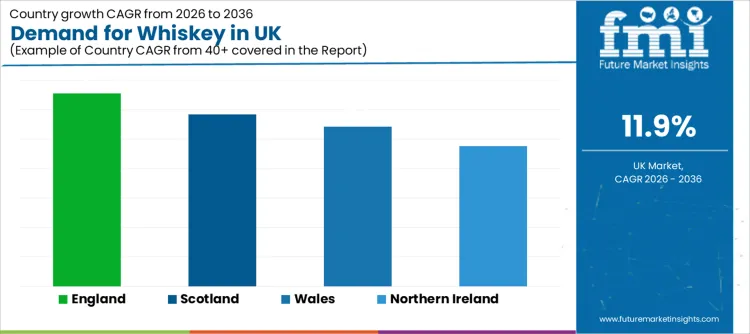
Growth is influenced by regional production heritage, tourism intensity, urban density, and local consumption culture. The projected compound annual growth rates from 2026 to 2036 illustrate these geographic distinctions.
| Region | CAGR (2026-2036) |
|---|---|
| England | 13.1% |
| Scotland | 11.7% |
| Wales | 10.8% |
| Northern Ireland | 9.5% |
What is Fuelling Premier Growth in England?
England leads with a projected CAGR of 13.1%. This dominance is driven by the vast consumer market of London and other major cities, which are hubs for luxury retail, high-end hospitality, and corporate gifting.
England's concentration of wealth, diverse population, and status as an international travel gateway create unparalleled demand across all price segments, from everyday blends to ultra-rare single malts. It is the central nexus for brand marketing, distribution, and premium on-trade consumption.
Why is Scotland the Heartland of Production and Tourism-Led Demand?
Scotland exhibits a very strong CAGR of 11.7%, powered by its global reputation as the home of Scotch whisky. Demand is fueled not only by domestic consumption but massively by tourism, with distillery visits driving direct sales and brand loyalty. The region's economy is intrinsically linked to whiskey production, supporting demand for both mature premium expressions and new innovative brands emerging from its distilling regions like Speyside and Islay.
What Factors Underpin Strong Demand in Wales?
Wales shows robust growth with a CAGR of 10.8%. This is fueled by a burgeoning craft distilling scene that is building a distinct Welsh whiskey identity, attracting both local support and tourist interest.
Growing national pride and the promotion of Welsh food and drink contribute to rising domestic consumption. The presence of vibrant urban centers like Cardiff with strong hospitality sectors further supports on-trade demand.
What Factors Underpin Growth in Northern Ireland?
Northern Ireland, with a projected CAGR of 9.5%, reflects solid growth anchored in its own distilling heritage, most notably associated with Irish whiskey styles. The growth of tourism, particularly along the Causeway Coastal Route, which includes distillery visits, stimulates demand. The region's pubs and hospitality sector provide a stable base for consumption, supported by a resilient local economy and cultural affinity for whiskey.
What Defines the Competitive Landscape of the Whiskey Industry?
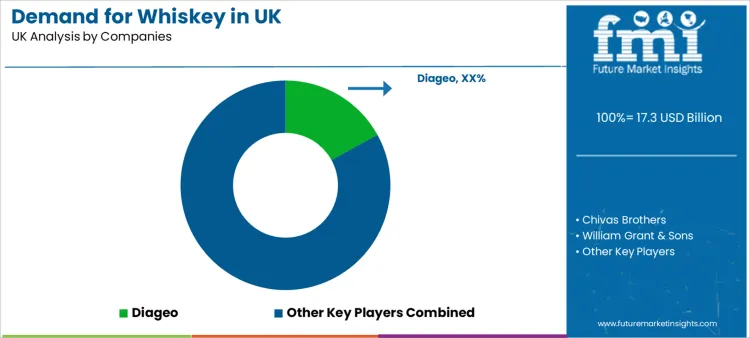
The competitive environment is bifurcated and intense, characterized by rivalry between a few global beverage conglomerates that own vast portfolios of brands and smaller, independent distilleries competing on authenticity and craft. Competition is based on brand heritage, product quality and consistency, marketing prowess, distribution strength, and innovation pipeline.
Success for large players depends on managing iconic legacy brands while successfully launching innovative new expressions to capture trends. For craft distilleries, success hinges on storytelling, local provenance, direct consumer engagement, and creating unique, small-batch products.
Strategic competition occurs through securing key endorsements from bar chefs, dominating shelf space in major retailers, and creating exclusive travel retail offerings. The acquisition of promising craft brands by large conglomerates is a persistent feature of the competitive dynamic.
Key Industry Participants
- Diageo
- Chivas Brothers
- William Grant & Sons
- Bacardi
- La Martiniquaise
Scope of Report
| Items | Values |
|---|---|
| Quantitative Units | USD Billion |
| Beverage Type | Alcoholic Whiskey, Non-Alcoholic Whiskey |
| Product Type | Bourbon Whiskey, Scotch Whiskey, Malted Whiskey, Rye Whiskey, Corn Whiskey, Blended Whiskey |
| Flavor | Unflavored, Flavored |
| End User | HoReCa (Hotels, Restaurants, Cafés), Household Retail |
| Sales Channel | Business-to-Business (B2B), Business-to-Consumer (B2C) |
| Regions Covered | England, Scotland, Wales, Northern Ireland |
| Key Companies Profiled | Diageo, Chivas Brothers, William Grant & Sons, Bacardi, La Martiniquaise |
Whiskey Demand in the UK by Segment
By Beverage Type:
- Alcoholic Whiskey
- Non-Alcoholic Whiskey
By Product Type:
- Bourbon Whiskey
- Scotch Whiskey
- Malted Whiskey
- Rye Whiskey
- Corn Whiskey
- Blended Whiskey
By Flavor:
- Unflavored
- Flavored
By End User:
- HoReCa
- Household Retail
By Sales Channel:
- B2B
- B2C
By Region:
- England
- Scotland
- Wales
- Northern Ireland
Bibliography
- Scotch Whisky Association (SWA). (2023). Annual Industry Report and Export Statistics.
- Wine and Spirit Trade Association (WSTA). (2024). UK Market Report and Duty Analysis.
- The UK Spirits Alliance. (2023). Economic Impact of the Spirits Sector.
- Office for National Statistics (ONS). (2024). Consumer Trends and Alcohol Duty Receipts.
- The Institute of Brewing & Distilling (IBD). (2023). Technical and Market Innovations in Distilling.
Preview the report firsthand - request a free sample
Get SampleGet the brochure for pricing and purchase details.
Get PDFTable of Content
- Executive Summary
- UK Market Outlook
- Demand-side Trends
- Supply-side Trends
- Technology Roadmap Analysis
- Analysis and Recommendations
- Market Overview
- Market Coverage / Taxonomy
- Market Definition / Scope / Limitations
- Market Background
- Market Dynamics
- Drivers
- Restraints
- Opportunity
- Trends
- Scenario Forecast
- Demand in Optimistic Scenario
- Demand in Likely Scenario
- Demand in Conservative Scenario
- Opportunity Map Analysis
- Product Life Cycle Analysis
- Supply Chain Analysis
- Investment Feasibility Matrix
- Value Chain Analysis
- PESTLE and Porter’s Analysis
- Regulatory Landscape
- Regional Parent Market Outlook
- Production and Consumption Statistics
- Import and Export Statistics
- Market Dynamics
- UK Market Analysis 2021 to 2025 and Forecast, 2026 to 2036
- Historical Market Size Value (USD Million) Analysis, 2021 to 2025
- Current and Future Market Size Value (USD Million) Projections, 2026 to 2036
- Y-o-Y Growth Trend Analysis
- Absolute $ Opportunity Analysis
- UK Market Pricing Analysis 2021 to 2025 and Forecast 2026 to 2036
- UK Market Analysis 2021 to 2025 and Forecast 2026 to 2036, By Beverage Type
- Introduction / Key Findings
- Historical Market Size Value (USD Million) Analysis By Beverage Type , 2021 to 2025
- Current and Future Market Size Value (USD Million) Analysis and Forecast By Beverage Type , 2026 to 2036
- Alcoholic Whiskey
- Non-Alcoholic Whiskey
- Alcoholic Whiskey
- Y-o-Y Growth Trend Analysis By Beverage Type , 2021 to 2025
- Absolute $ Opportunity Analysis By Beverage Type , 2026 to 2036
- UK Market Analysis 2021 to 2025 and Forecast 2026 to 2036, By Product Type
- Introduction / Key Findings
- Historical Market Size Value (USD Million) Analysis By Product Type, 2021 to 2025
- Current and Future Market Size Value (USD Million) Analysis and Forecast By Product Type, 2026 to 2036
- Bourbon Whiskey
- Scotch Whiskey
- Malted Whiskey
- Rye Whiskey
- Corn Whiskey
- Blended Whiskey
- Bourbon Whiskey
- Y-o-Y Growth Trend Analysis By Product Type, 2021 to 2025
- Absolute $ Opportunity Analysis By Product Type, 2026 to 2036
- UK Market Analysis 2021 to 2025 and Forecast 2026 to 2036, By Flavor
- Introduction / Key Findings
- Historical Market Size Value (USD Million) Analysis By Flavor, 2021 to 2025
- Current and Future Market Size Value (USD Million) Analysis and Forecast By Flavor, 2026 to 2036
- Unflavored
- Flavored
- Unflavored
- Y-o-Y Growth Trend Analysis By Flavor, 2021 to 2025
- Absolute $ Opportunity Analysis By Flavor, 2026 to 2036
- UK Market Analysis 2021 to 2025 and Forecast 2026 to 2036, By End User
- Introduction / Key Findings
- Historical Market Size Value (USD Million) Analysis By End User, 2021 to 2025
- Current and Future Market Size Value (USD Million) Analysis and Forecast By End User, 2026 to 2036
- HoReCa
- Household Retail
- HoReCa
- Y-o-Y Growth Trend Analysis By End User, 2021 to 2025
- Absolute $ Opportunity Analysis By End User, 2026 to 2036
- UK Market Analysis 2021 to 2025 and Forecast 2026 to 2036, By Sales Channel
- Introduction / Key Findings
- Historical Market Size Value (USD Million) Analysis By Sales Channel, 2021 to 2025
- Current and Future Market Size Value (USD Million) Analysis and Forecast By Sales Channel, 2026 to 2036
- B2B
- B2C
- B2B
- Y-o-Y Growth Trend Analysis By Sales Channel, 2021 to 2025
- Absolute $ Opportunity Analysis By Sales Channel, 2026 to 2036
- Market Structure Analysis
- Competition Dashboard
- Competition Benchmarking
- Market Share Analysis of Top Players
- By Regional
- By Beverage Type
- By Product Type
- By Flavor
- By End User
- By Sales Channel
- Competition Analysis
- Competition Deep Dive
- Diageo
- Overview
- Product Portfolio
- Profitability by Market Segments (Product/Age /Sales Channel/Region)
- Sales Footprint
- Strategy Overview
- Marketing Strategy
- Product Strategy
- Channel Strategy
- Chivas Brothers
- William Grant & Sons
- Bacardi
- La Martiniquaise
- Diageo
- Competition Deep Dive
- Assumptions & Acronyms Used
- Research Methodology


