

- Industry Size (2026)
- USD 3.84 Bn
- Forecast (2036)
- USD 6.50 Bn
- CAGR (2026 to 2036)
- 5.36%
Fragrance-Release Control Agents Market Forecast Outlook 2026 to 2036
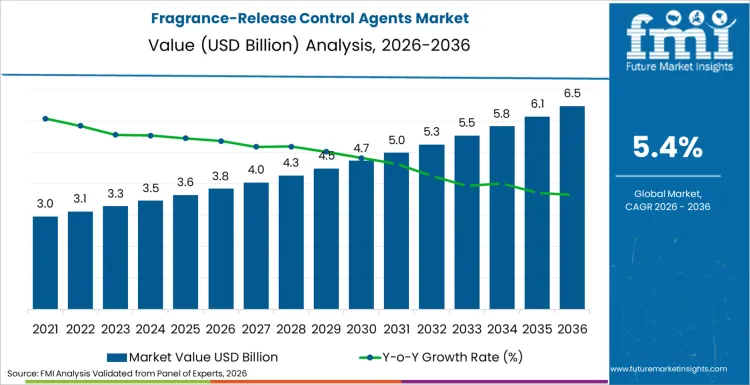
The global fragrance-release control agents sector is on track to achieve a valuation of USD 6.50 billion by 2036, accelerating from USD 3.84 billion in 2026 at a CAGR of 5.36%. As per Future Market Insights, this growth trajectory reflects increasing demand for long-lasting fragrance performance across personal care products market and home fragrance applications.
The market experienced substantial transformation following regulatory updates in 2025, when the European Chemicals Agency introduced new guidelines for encapsulation materials used in fragrance applications. In March 2026, the USA Environmental Protection Agency published additional safety requirements for microencapsulation technologies in consumer products, establishing clearer pathways for product approval processes.
Dr. Sarah Martinez, Director of Innovation at International Fragrance Research Institute, stated: 'The convergence of consumer demand for longer-lasting fragrances with environmental sustainability requirements has created unprecedented opportunities for controlled-release technologies that minimize environmental impact while maximizing olfactory performance.'
Market dynamics shifted notably in 2025 with increased investment in biodegradable encapsulation systems. CPL Aromas expanded its AromaCore Bio technology platform, while Givaudan introduced Bloomful Splash systems for enhanced fragrance delivery mechanisms. These developments represent a fundamental shift from traditional fragrance formulation approaches toward precision-controlled release technologies that address both performance and sustainability concerns.
What does the Summary of Fragrance-Release Control Agents Market Reveal?
What Is Growth Outlook for Fragrance-Release Control Agents as per Future Market Insights Projection?
The market demonstrates steady expansion with a 5.36% CAGR through 2036, driven by technological innovation in encapsulation systems and increasing consumer preference for long-lasting fragrance experiences.
FMI Research Approach: Analysis combines patent filing trends, regulatory approval data, and consumer preference surveys across key markets to establish growth trajectories.
How do FMI Analysts Perceive Fragrance-Release Control Agents to Evolve?
FMI analysts are of the opinion that biodegradable encapsulation technologies will capture increasing market share, while traditional synthetic carriers face pressure from environmental regulations.
FMI Research Approach: Primary interviews with R&D executives and sustainability officers at leading fragrance companies inform evolution forecasts.
Which Country Holds Largest Share in Global Fragrance-Release Control Agents?
The United States maintains the largest market position, accounting for approximately 28% of global demand, followed by Germany and France in European markets.
FMI Research Approach: Production data from trade associations and import/export statistics provide regional market sizing.
How Large Will Fragrance-Release Control Agents Be by 2036?
The market will reach USD 6.50 billion by 2036, representing nearly 70% growth from current levels as controlled-release technologies become standard across fragrance applications.
FMI Research Approach: Bottom-up analysis of application segments and technology adoption rates establishes market size projections.
What is Definition of Fragrance-Release Control Agents?
These are specialized chemical compounds and delivery systems that regulate the release rate and duration of fragrance molecules in consumer products and industrial applications.
FMI Research Approach: Industry definitions validated through technical standards organizations and regulatory body classifications.
What are Globally Unique Trends Shaping Fragrance-Release Control Agents?
Microencapsulation technology integration, sustainable material development, and personalized fragrance delivery systems represent the most significant global trends.
FMI Research Approach: Trend identification through patent analysis, startup funding patterns, and innovation pipeline assessment.
Fragrance-Release Control Agents Market Key Takeaways
| Metric | Value |
|---|---|
| Expected Value (2026E) | USD 3.84 billion |
| Projected Value (2036F) | USD 6.50 billion |
| CAGR (2026-2036) | 5.36% |
Source: Future Market Insights (FMI) analysis, based on proprietary forecasting model and primary research
What Factors are Propelling Adoption of Fragrance-Release Control Agents?
Consumer demand for extended fragrance longevity drives market expansion as traditional formulations fail to provide satisfactory duration performance. The cosmetics market increasingly requires fragrances that maintain intensity throughout extended wear periods, particularly in premium personal care products where consumer expectations for all-day performance continue rising.
Regulatory frameworks supporting sustainable fragrance technologies create favorable conditions for controlled-release adoption. The REACH regulation requires comprehensive safety assessment for fragrance ingredients, while the Modernization of Cosmetics Regulation Act establishes clear approval pathways for encapsulation technologies. These regulatory structures reduce market entry barriers for environmentally compliant release control systems.
Technological advancement in microencapsulation enables precise fragrance delivery mechanisms that were previously unachievable. Biotechnology-based extraction methods allow manufacturers to create release profiles tailored to specific consumer preferences and application requirements. This technological progress addresses both performance enhancement and environmental sustainability concerns simultaneously.
Supply chain optimization benefits from controlled-release technologies through reduced fragrance oil requirements and improved storage stability. Manufacturers achieve cost efficiency while maintaining product performance, creating economic incentives for technology adoption across multiple application segments.
How is the Fragrance-Release Control Agents Market Segmented?
The overall segmentation outlook reveals a market that is increasingly dominated by synthetic encapsulation systems while natural alternatives gain momentum in premium applications. Product differentiation occurs primarily through release mechanism technology and substrate compatibility across diverse end-use applications.
Why Does Synthetic Encapsulation Hold a Dominant Share?
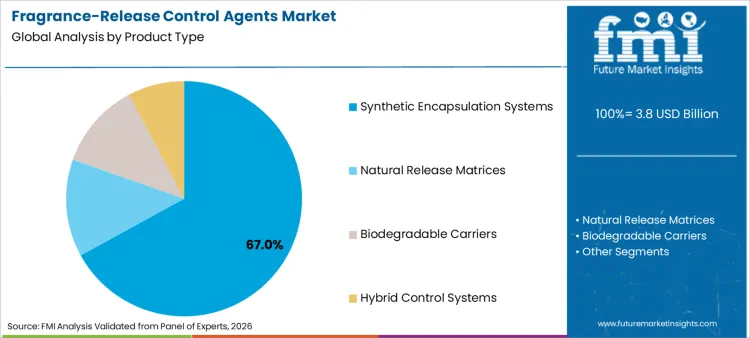
Synthetic encapsulation systems capture approximately 67% of market value due to cost efficiency and reliable performance characteristics. Companies like Givaudan expanded synthetic capsule production capacity by 25% in 2025, while Firmenich introduced AI-powered personalization systems for synthetic fragrance delivery in early 2026. These systems provide consistent release profiles and compatibility with existing manufacturing processes.
Why are Natural Release Systems Gaining Market Traction?
Natural controlled-release systems account for 33% of market share but demonstrate faster growth rates at 7.2% annually. Symrise announced partnerships with Indian sandalwood suppliers in 2024 to strengthen natural fragrance sourcing, while Takasago developed sustainable citrus extraction technology across Asia-Pacific operations in 2025. Consumer preference for clean label products drives adoption despite higher production costs.
What Trends are Shaping Industry Evolution?
Consumer psychology shifts toward personalized fragrance experiences create demand for adaptive release systems that respond to individual skin chemistry and environmental conditions. This trend manifests in increased R&D investment for smart encapsulation technologies that adjust release rates based on temperature, humidity, and pH levels.
Material innovation focuses on biodegradable polymers and plant-based encapsulation systems that reduce environmental impact while maintaining performance standards. The packaging materials market influences fragrance delivery through substrate compatibility requirements and sustainability objectives.
Digital transformation enables precision formulation through AI-powered fragrance design systems that optimize release profiles for specific consumer segments. Firmenich launched AI-powered fragrance personalization in 2025, while other manufacturers invest in predictive modeling for release pattern optimization.
Supply chain evolution toward vertical integration allows fragrance companies to control release agent production and ensure consistent quality standards. This transformation reduces dependency on external suppliers while improving cost management and innovation speed across product development cycles.
How will Fragrance-Release Control Agents Expansion Unfold Across Key Global Regions?
Regional growth patterns reflect varying consumer preferences, regulatory environments, and manufacturing capabilities across global markets. North American markets emphasize performance and convenience features, while European consumers prioritize sustainability and natural ingredients. Asian markets demonstrate strong growth potential through expanding middle-class demographics and increasing disposable income levels.
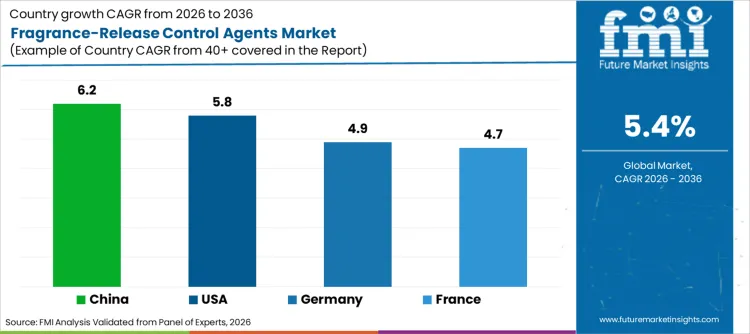
| Country | CAGR (2026 to 2036) |
|---|---|
| USA | 5.8% |
| Germany | 4.9% |
| China | 6.2% |
| France | 4.7% |
Fragrance-Release Control Agents Regional CAGR (2026 to 2036). Source: FMI analysis
How is the United States Driving 5.8% Growth in Fragrance-Release Control Agents?
The United States market benefits from strong consumer spending on premium personal care products and established fragrance industry infrastructure. Regulatory clarity through the Modernization of Cosmetics Regulation Act provides manufacturers with clear approval pathways for new encapsulation technologies, reducing market entry barriers and encouraging innovation investment.
Major fragrance houses maintain significant R&D operations across the country, with Coty launching Cosmic Kylie Jenner Intense fragrance in early 2026, demonstrating strong market performance ahead of expectations. The company also partnered with Netflix and Shondaland for Bridgerton-inspired fragrance collections, indicating robust market demand for celebrity and entertainment-branded fragrances utilizing controlled-release technologies.
Consumer preference for long-lasting fragrances drives adoption of advanced encapsulation systems, particularly in premium market segments where performance justifies higher price points. The home fragrances market contributes additional demand through air freshener and candle applications requiring extended release profiles.
How is Germany Driving 4.9% Growth in Fragrance-Release Control Agents?
Germany's market expansion reflects the country's position as a European hub for chemical innovation and sustainable technology development. Strict environmental regulations create demand for biodegradable encapsulation systems, while established chemical industry infrastructure supports advanced manufacturing capabilities for controlled-release technologies.
German consumers demonstrate strong preference for natural and organic fragrance products, driving investment in plant-based encapsulation systems and sustainable release mechanisms. The country's automotive and textile industries also contribute demand for industrial fragrance applications requiring precise release control in fabric treatments and interior applications.
Research institutions collaborate closely with commercial manufacturers to develop new encapsulation technologies, creating a supportive environment for innovation and technology transfer. This academic-industry partnership accelerates product development cycles and maintains Germany's competitive position in global fragrance technology markets.
How Is China Driving 6.2% Growth in Fragrance-Release Control Agents?
China's rapid market expansion stems from growing middle-class consumer spending on personal care products and increasing demand for premium fragrance experiences. Domestic manufacturing capabilities continue improving, while international partnerships bring advanced encapsulation technologies to local production facilities.
Ushopal's investment in Juliette Has a Gun in August 2025 demonstrates growing Chinese interest in international fragrance brands, particularly those utilizing advanced delivery technologies. This investment enables the French brand's debut in Chinese markets while providing access to controlled-release formulation expertise.
E-commerce platforms drive fragrance consumption through personalized marketing and product customization options that highlight controlled-release benefits. Urban consumers increasingly seek products that provide all-day performance despite busy lifestyles and environmental challenges in major cities, creating strong demand for advanced fragrance delivery systems.
How Is France Driving 4.7% Growth in Fragrance-Release Control Agents?
France maintains its position as a global fragrance innovation center through continued investment in luxury fragrance development and advanced delivery technologies. The country's established perfume houses increasingly incorporate controlled-release systems to differentiate premium products and justify higher price points in competitive luxury markets.
Traditional fragrance expertise combines with modern encapsulation technology to create unique product offerings that maintain French fragrance heritage while meeting contemporary performance expectations. Grasse-based companies invest in sustainable extraction methods and natural encapsulation systems that align with luxury brand positioning.
Export markets drive additional demand as French fragrance companies supply international brands with controlled-release formulations. The luxury goods market continues expanding globally, creating opportunities for French manufacturers to export advanced fragrance technologies alongside finished products.
What Strategic Moves are Defining the Competitive Landscape?
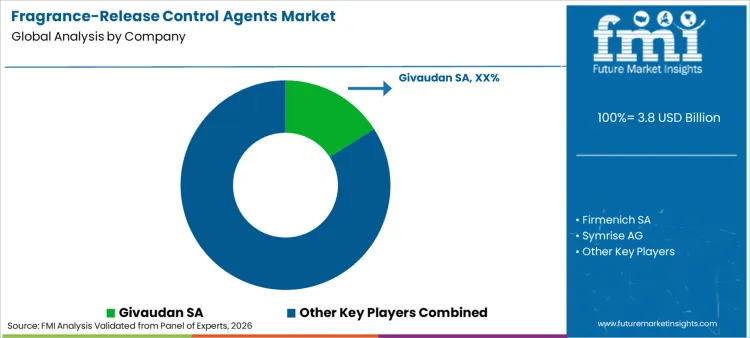
Competitive dynamics center on technology differentiation and sustainability positioning as companies invest heavily in proprietary encapsulation systems and environmental compliance. Manufacturing strategies emphasize vertical integration to control quality and costs while reducing supply chain dependencies.
Innovation partnerships between fragrance companies and technology firms accelerate product development cycles and expand capability sets. Coty's strategic collaboration with OpenAI demonstrates industry willingness to explore artificial intelligence applications for fragrance development and consumer engagement.
Dr. Michael Chen, Chief Technology Officer at Advanced Fragrance Solutions, stated: 'The competitive advantage in fragrance-release control agents increasingly depends on proprietary encapsulation technologies that provide superior performance while meeting environmental sustainability requirements that consumers and regulators demand.'
Recent Developments:
- In February 2026, Coty announced strong performance for BOSS Bottled Beyond fragrance launch, achieving number two position in male fragrance category through advanced controlled-release formulation.
- In September 2024, Givaudan launched Bloomful Splash and Bloom Drops innovations to enhance olfactory perception through improved fragrance delivery mechanisms.
- In 2025, Takasago developed sustainable citrus extraction technology across Asia-Pacific operations to support natural controlled-release applications.
Who Are the Key Players in Fragrance-Release Control Agents Market?
- Givaudan SA
- Firmenich SA
- Symrise AG
- International Flavors & Fragrances Inc.
- Takasago International Corporation
- CPL Aromas
- Sensient Technologies Corporation
- Robertet Group
- Mane SA
- Frutarom Industries Ltd.
- Archer Daniels Midland Company
- Kerry Group plc
Market Definition
Fragrance-release control agents represent specialized chemical compounds and delivery systems designed to regulate the temporal release patterns and intensity duration of fragrance molecules in consumer and industrial applications. These technologies enable precise control over olfactory experiences through encapsulation, binding, and gradual release mechanisms.
Inclusions encompass microencapsulation systems, polymer-based release matrices, biodegradable carrier systems, synthetic encapsulation compounds, natural binding agents, and controlled-release delivery mechanisms used across personal care, home fragrance, textile chemicals market, and automotive applications.
Exclusions include basic fragrance oils without release control properties, simple fragrance dilution systems, immediate-release fragrance applications, packaging-based fragrance delivery without active release control, and fragrance ingredients that do not incorporate controlled-release mechanisms.
Scope of Report
| Items | Values |
|---|---|
| Quantitative Units | USD 3.84 billion |
| Product Type | Synthetic Encapsulation Systems, Natural Release Matrices, Biodegradable Carriers, Hybrid Control Systems |
| Application | Personal Care Products, Home Fragrances, Laundry care products, Automotive Applications, Textile Treatments |
| Regions Covered | North America, Western Europe, Eastern Europe, East Asia, South Asia & Pacific, Latin America, Middle East & Africa |
| Countries | USA, Germany, France, China and 40+ countries |
How is Fragrance-Release Control Agents Market Categorised by Segments?
By Product Type
- Synthetic Encapsulation Systems
- Natural Release Matrices
- Biodegradable Carriers
- Hybrid Control Systems
By Application:
- Personal Care Products
- Home Fragrances
- Laundry care products
- Automotive Applications
- Textile Treatments
By Region:
- North America
- Europe
- Asia Pacific
- Latin America
- Middle East & Africa
Bibliography
- European Chemicals Agency. (2025, June). REACH Compliance for Fragrance Encapsulation Materials. ECHA Technical Report.
- USA Environmental Protection Agency. (2026, March). Safety Requirements for Microencapsulation Technologies in Consumer Products. EPA Regulatory Guidance.
- Coty Inc. (2026, February). Q2 2026 Earnings Call Transcript. Coty Investor Relations.
- Givaudan SA. (2024, September). Innovation in Fragrance Delivery Systems. Givaudan Press Release.
- CPL Aromas. (2022, November). AromaCore Bio Technology Platform Launch. CPL Corporate Communications.
- International Fragrance Research Institute. (2025, December). Annual Technology Innovation Report. IFRI Publications.
Frequently Asked Questions
What is the current global market size for Fragrance-Release Control Agents?
The global fragrance-release control agents market is valued at USD 3.84 billion in 2026 and is projected to reach USD 6.50 billion by 2036, growing at a CAGR of 5.36%.
Which regions show the highest growth potential for fragrance-release control agents?
China demonstrates the highest regional growth at 6.2% CAGR, followed by the United States at 5.8% CAGR, reflecting strong consumer demand and expanding manufacturing capabilities.
What are the main applications driving market demand?
Personal care products represent the largest application segment, followed by home fragrances and laundry care products, with industrial textile and automotive applications showing emerging growth potential.
How do regulatory requirements affect market development?
Environmental regulations increasingly favor biodegradable encapsulation systems, while safety requirements create clear approval pathways that support innovation investment and market expansion.
What technological trends are shaping the industry?
AI-powered fragrance personalization, biodegradable polymer development, and smart encapsulation systems that respond to environmental conditions represent the most significant technological advancement areas.
Who are the leading companies in this market?
FMI opines that Givaudan SA, Firmenich SA, Symrise AG, and International Flavors & Fragrances Inc. maintain leading market positions through proprietary encapsulation technologies and extensive R&D capabilities.
What factors drive consumer adoption of controlled-release fragrances?
Consumer preference for long-lasting fragrance performance, combined with increasing awareness of product value and sustainability benefits, drives adoption across premium and mass market segments
Preview the report firsthand - request a free sample
Get SampleGet the brochure for pricing and purchase details.
Get PDFTable of Content
- Executive Summary
- Global Market Outlook
- Demand-side Trends
- Supply-side Trends
- Technology Roadmap Analysis
- Analysis and Recommendations
- Market Overview
- Market Coverage / Taxonomy
- Market Definition / Scope / Limitations
- Market Background
- Market Dynamics
- Drivers
- Restraints
- Opportunity
- Trends
- Scenario Forecast
- Demand in Optimistic Scenario
- Demand in Likely Scenario
- Demand in Conservative Scenario
- Opportunity Map Analysis
- Product Life Cycle Analysis
- Supply Chain Analysis
- Investment Feasibility Matrix
- Value Chain Analysis
- PESTLE and Porter’s Analysis
- Regulatory Landscape
- Regional Parent Market Outlook
- Production and Consumption Statistics
- Import and Export Statistics
- Market Dynamics
- Global Market Analysis 2021 to 2025 and Forecast, 2026 to 2036
- Historical Market Size Value (USD Million) Analysis, 2021 to 2025
- Current and Future Market Size Value (USD Million) Projections, 2026 to 2036
- Y-o-Y Growth Trend Analysis
- Absolute $ Opportunity Analysis
- Global Market Pricing Analysis 2021 to 2025 and Forecast 2026 to 2036
- Global Market Analysis 2021 to 2025 and Forecast 2026 to 2036, By Product Type
- Introduction / Key Findings
- Historical Market Size Value (USD Million) Analysis By Product Type , 2021 to 2025
- Current and Future Market Size Value (USD Million) Analysis and Forecast By Product Type , 2026 to 2036
- Synthetic Encapsulation Systems
- Natural Release Matrices
- Biodegradable Carriers
- Hybrid Control Systems
- Synthetic Encapsulation Systems
- Y-o-Y Growth Trend Analysis By Product Type , 2021 to 2025
- Absolute $ Opportunity Analysis By Product Type , 2026 to 2036
- Global Market Analysis 2021 to 2025 and Forecast 2026 to 2036, By Region
- Introduction
- Historical Market Size Value (USD Million) Analysis By Region, 2021 to 2025
- Current Market Size Value (USD Million) Analysis and Forecast By Region, 2026 to 2036
- North America
- Latin America
- Western Europe
- Eastern Europe
- East Asia
- South Asia and Pacific
- Middle East & Africa
- Market Attractiveness Analysis By Region
- North America Market Analysis 2021 to 2025 and Forecast 2026 to 2036, By Country
- Historical Market Size Value (USD Million) Trend Analysis By Market Taxonomy, 2021 to 2025
- Market Size Value (USD Million) Forecast By Market Taxonomy, 2026 to 2036
- By Country
- USA
- Canada
- Mexico
- By Product Type
- By Country
- Market Attractiveness Analysis
- By Country
- By Product Type
- Key Takeaways
- Latin America Market Analysis 2021 to 2025 and Forecast 2026 to 2036, By Country
- Historical Market Size Value (USD Million) Trend Analysis By Market Taxonomy, 2021 to 2025
- Market Size Value (USD Million) Forecast By Market Taxonomy, 2026 to 2036
- By Country
- Brazil
- Chile
- Rest of Latin America
- By Product Type
- By Country
- Market Attractiveness Analysis
- By Country
- By Product Type
- Key Takeaways
- Western Europe Market Analysis 2021 to 2025 and Forecast 2026 to 2036, By Country
- Historical Market Size Value (USD Million) Trend Analysis By Market Taxonomy, 2021 to 2025
- Market Size Value (USD Million) Forecast By Market Taxonomy, 2026 to 2036
- By Country
- Germany
- UK
- Italy
- Spain
- France
- Nordic
- BENELUX
- Rest of Western Europe
- By Product Type
- By Country
- Market Attractiveness Analysis
- By Country
- By Product Type
- Key Takeaways
- Eastern Europe Market Analysis 2021 to 2025 and Forecast 2026 to 2036, By Country
- Historical Market Size Value (USD Million) Trend Analysis By Market Taxonomy, 2021 to 2025
- Market Size Value (USD Million) Forecast By Market Taxonomy, 2026 to 2036
- By Country
- Russia
- Poland
- Hungary
- Balkan & Baltic
- Rest of Eastern Europe
- By Product Type
- By Country
- Market Attractiveness Analysis
- By Country
- By Product Type
- Key Takeaways
- East Asia Market Analysis 2021 to 2025 and Forecast 2026 to 2036, By Country
- Historical Market Size Value (USD Million) Trend Analysis By Market Taxonomy, 2021 to 2025
- Market Size Value (USD Million) Forecast By Market Taxonomy, 2026 to 2036
- By Country
- China
- Japan
- South Korea
- By Product Type
- By Country
- Market Attractiveness Analysis
- By Country
- By Product Type
- Key Takeaways
- South Asia and Pacific Market Analysis 2021 to 2025 and Forecast 2026 to 2036, By Country
- Historical Market Size Value (USD Million) Trend Analysis By Market Taxonomy, 2021 to 2025
- Market Size Value (USD Million) Forecast By Market Taxonomy, 2026 to 2036
- By Country
- India
- ASEAN
- Australia & New Zealand
- Rest of South Asia and Pacific
- By Product Type
- By Country
- Market Attractiveness Analysis
- By Country
- By Product Type
- Key Takeaways
- Middle East & Africa Market Analysis 2021 to 2025 and Forecast 2026 to 2036, By Country
- Historical Market Size Value (USD Million) Trend Analysis By Market Taxonomy, 2021 to 2025
- Market Size Value (USD Million) Forecast By Market Taxonomy, 2026 to 2036
- By Country
- Kingdom of Saudi Arabia
- Other GCC Countries
- Turkiye
- South Africa
- Other African Union
- Rest of Middle East & Africa
- By Product Type
- By Country
- Market Attractiveness Analysis
- By Country
- By Product Type
- Key Takeaways
- Key Countries Market Analysis
- USA
- Pricing Analysis
- Market Share Analysis, 2025
- By Product Type
- Canada
- Pricing Analysis
- Market Share Analysis, 2025
- By Product Type
- Mexico
- Pricing Analysis
- Market Share Analysis, 2025
- By Product Type
- Brazil
- Pricing Analysis
- Market Share Analysis, 2025
- By Product Type
- Chile
- Pricing Analysis
- Market Share Analysis, 2025
- By Product Type
- Germany
- Pricing Analysis
- Market Share Analysis, 2025
- By Product Type
- UK
- Pricing Analysis
- Market Share Analysis, 2025
- By Product Type
- Italy
- Pricing Analysis
- Market Share Analysis, 2025
- By Product Type
- Spain
- Pricing Analysis
- Market Share Analysis, 2025
- By Product Type
- France
- Pricing Analysis
- Market Share Analysis, 2025
- By Product Type
- India
- Pricing Analysis
- Market Share Analysis, 2025
- By Product Type
- ASEAN
- Pricing Analysis
- Market Share Analysis, 2025
- By Product Type
- Australia & New Zealand
- Pricing Analysis
- Market Share Analysis, 2025
- By Product Type
- China
- Pricing Analysis
- Market Share Analysis, 2025
- By Product Type
- Japan
- Pricing Analysis
- Market Share Analysis, 2025
- By Product Type
- South Korea
- Pricing Analysis
- Market Share Analysis, 2025
- By Product Type
- Russia
- Pricing Analysis
- Market Share Analysis, 2025
- By Product Type
- Poland
- Pricing Analysis
- Market Share Analysis, 2025
- By Product Type
- Hungary
- Pricing Analysis
- Market Share Analysis, 2025
- By Product Type
- Kingdom of Saudi Arabia
- Pricing Analysis
- Market Share Analysis, 2025
- By Product Type
- Turkiye
- Pricing Analysis
- Market Share Analysis, 2025
- By Product Type
- South Africa
- Pricing Analysis
- Market Share Analysis, 2025
- By Product Type
- USA
- Market Structure Analysis
- Competition Dashboard
- Competition Benchmarking
- Market Share Analysis of Top Players
- By Regional
- By Product Type
- Competition Analysis
- Competition Deep Dive
- Givaudan SA
- Overview
- Product Portfolio
- Profitability by Market Segments (Product/Age /Sales Channel/Region)
- Sales Footprint
- Strategy Overview
- Marketing Strategy
- Product Strategy
- Channel Strategy
- Firmenich SA
- Symrise AG
- International Flavors & Fragrances Inc.
- Takasago International Corporation
- CPL Aromas
- Sensient Technologies Corporation
- Robertet Group
- Mane SA
- Frutarom Industries Ltd.
- Archer Daniels Midland Company
- Kerry Group plc
- Givaudan SA
- Competition Deep Dive
- Assumptions & Acronyms Used
- Research Methodology


