

- Industry Size (2025)
- USD 1.8 Bn
- Forecast (2035)
- USD 10.0 Bn
- CAGR (2025 to 2035)
- 18.6%
Demand for Alternative Retailing Technologies in Japan Forecast and Outlook 2025 to 2035
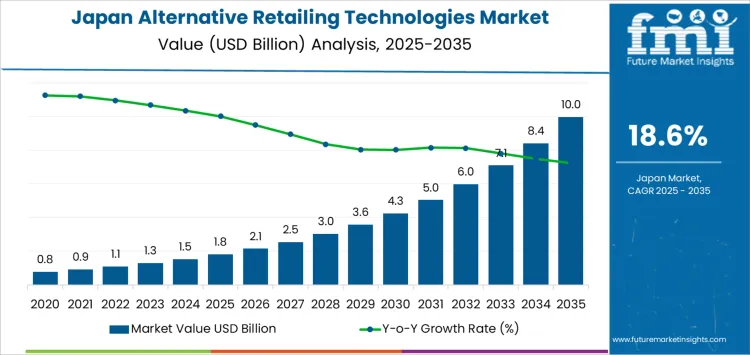
Demand for alternative retailing technologies in Japan is valued at USD 1.8 billion in 2025 and is projected to reach USD 10.0 billion by 2035, reflecting a CAGR of 18.6%. The historical rise from USD 0.8 billion in 2020 to USD 1.8 billion in 2025 reflects early commercial trials and controlled rollout across urban retail formats. Online shopping platforms account for the largest early share as retailers expand direct digital storefronts alongside physical outlets. Interactive in-store printing and wireless voice systems lead adoption on the physical floor due to ease of retrofit. In-store kiosks support product search and order placement in space-constrained stores. Early demand reflects operational testing and consumer acceptance validation rather than full-scale chain-wide conversion.
From 2026 onward, demand advances from USD 2.1 billion to USD 5.0 billion by 2031, then accelerates to USD 10.0 billion by 2035, driven by rapidly widening annual additions. Online three-dimensional virtual stores gain traction as category depth and visualization tools improve. Handheld shopping assistants expand in high-traffic locations to support guided purchasing. Tablet-based retail systems grow within specialty outlets for assisted sales and mobile checkout. Guest internet access remains a supporting layer rather than a primary spend category. After 2030, spending shifts from pilot installations to network-wide rollouts across national retail chains. Value growth reflects rising system density per store and higher software service intensity, rather than outlet-count expansion alone.
Quick Stats of the Demand for Alternative Retailing Technologies in Japan:
- Demand for Alternative Retailing Technologies in Japan Value (2025): USD 1.8 billion
- Demand for Alternative Retailing Technologies in Japan Forecast Value (2035): USD 10.0 billion
- Demand for Alternative Retailing Technologies in Japan Forecast CAGR (2025-2035): 18.6%
- Demand for Alternative Retailing Technologies in Japan Leading Online Technology: Online Shopping Site (32%)
- Demand for Alternative Retailing Technologies in Japan Key Growth Regions: Kyushu & Okinawa, Kanto, Kansai
- Demand for Alternative Retailing Technologies in Japan Top Players: Amazon (Just Walk Out), Alibaba Group, NCR Corporation, Toshiba Global Commerce, Standard AI
What is the Growth Forecast for Alternative Retailing Technologies in Japan through 2035?
Between 2025 and 2030, demand for alternative retailing technologies in Japan increases from USD 1.8 billion to USD 4.3 billion, reflecting an absolute expansion of USD 2.5 billion within five years. Average annual value addition during this phase approaches USD 0.5 billion, indicating rapid early adoption momentum. Cashierless store pilots, smart vending networks, and automated checkout systems across urban retail formats shape growth. Earlier demand was limited to experimental deployments. Near-term expansion reflects retailer pressure to manage labor shortages, extend operating hours, and improve transaction throughput across convenience, transit, and specialty retail environments.
From 2030 to 2035, demand rises from USD 4.3 billion to USD 10.0 billion, adding USD 5.7 billion during the latter phase of the forecast. Average annual value addition exceeds USD 1.1 billion, indicating a clear acceleration in scale. Growth is driven by national rollouts of unmanned store formats, wider use of computer vision checkout, and integration with real-time inventory management platforms. Earlier growth depended on pilot commercialization, while later expansion reflects network-level standardization, franchise adoption, and full integration of automated retail systems across food service, apparel, and consumer electronics distribution channels.
Alternative Retailing Technologies Industry in Japan Key Takeaways
| Metric | Value |
|---|---|
| Industry Value (2025) | USD 1.8 billion |
| Forecast Value (2035) | USD 10.0 billion |
| Forecast CAGR (2025 to 2035) | 18.6% |
What Is Driving the Demand for Alternative Retailing Technologies in Japan Across Historical and Future Growth Cycles?
Demand for alternative retailing technologies in Japan developed as retailers responded to long standing labor shortages, dense urban foot traffic, and pressure to maintain operating hours with limited staff. Early adoption centered on vending machine expansion, electronic point of sale systems, and basic self-service ticketing in transport hubs and food outlets. Convenience store chains introduced partial self-checkout to reduce cashier workload during peak hours. Historical growth relied on hardware led automation rather than data driven platforms. Equipment selection emphasized reliability, compact footprints, and compliance with strict electrical and safety codes. Deployment followed store refurbishment cycles and pilot testing within controlled urban districts. Public familiarity with automated retail formats supported steady acceptance without major behavioral resistance across daily retail interactions.
Future demand for alternative retailing technologies in Japan is expected to depend on full process automation, cashless transaction coverage, and real time inventory control. Unmanned store formats, smart shelving, and computer vision based checkout expand in response to workforce constraints and rising urban operating costs. Retail data integration supports dynamic pricing, loss prevention, and demand forecasting. Historical growth relied on mechanical and transactional automation. Future growth centers on software platforms, system interoperability, and continuous data capture at store level. Transport hubs, mixed use developments, and aging residential zones shape deployment priorities. Capital investment decisions reflect energy efficiency, cybersecurity compliance, and long term maintenance costs across distributed retail networks in metropolitan and regional markets.
What Is the Demand for Alternative Retailing Technologies in Japan by Online and In Store Technologies?
The demand for alternative retailing technologies in Japan is shaped by high urban store density, strong mobile commerce usage, and pressure on retailers to blend physical and digital shopping. Online shopping sites lead within online technologies due to routine use for daily goods, fashion, and electronics. Interactive printing leads within in store technologies as retailers focus on experiential engagement at the point of sale. Procurement is driven by large retail chains, specialty brand operators, and shopping mall developers. Import reliance remains present for display hardware, scanners, and interface controllers. Substitution pressure exists from conventional checkout based retail formats. Demand stability is supported by omnichannel retail strategy adoption across urban and suburban markets.
Why do online shopping sites account for 32% of the demand for alternative retailing technologies in Japan by online technologies?
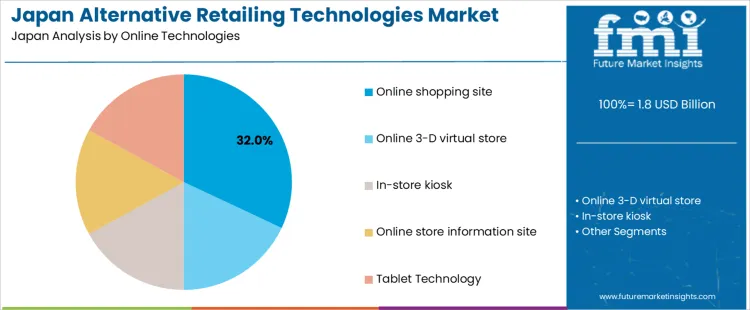
Online shopping sites account for 32% of the demand for alternative retailing technologies in Japan by online technologies, reflecting routine consumer reliance on browser and app based purchasing. Consumption intensity is driven by repeat household ordering, fashion cycles, and electronics replenishment. Usage remains stable because these platforms integrate payment, logistics tracking, and loyalty functions within a single interface. Procurement is led by retailers investing in proprietary platforms and by marketplace operators serving small merchants. Price sensitivity remains moderate because shipping cost and delivery speed shape purchase decisions. Specification control emphasizes platform uptime, checkout security, mobile interface speed, and integration with inventory systems.
Online shopping sites also generate steady repeat demand through daily traffic volumes and continuous feature updates. Repeat utilization remains predictable due to habitual ordering behavior across food, apparel, and lifestyle products. Buyers favor platforms that support same day delivery visibility and flexible payment options. Margin structure remains controlled under competition among large marketplaces. Regulatory exposure centers on consumer data protection, electronic payment compliance, and transaction transparency. Import reliance persists for cloud hosting infrastructure and security modules. Substitution pressure from social commerce platforms remains present within younger consumer groups.
Why does interactive printing represent 44.0% of the demand for alternative retailing technologies in Japan by in store technologies?
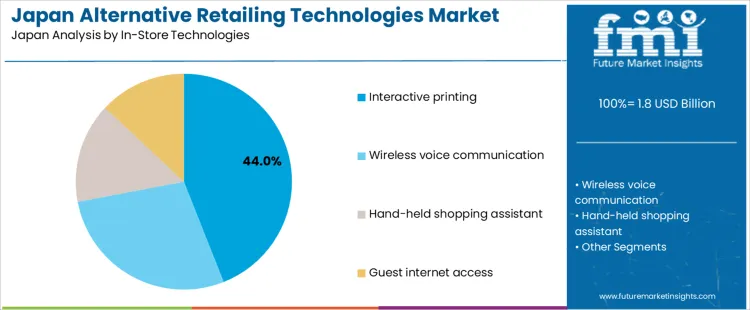
Interactive printing represents 44.0% of the demand for alternative retailing technologies in Japan by in store technologies, reflecting retailer focus on visual engagement and product customization at the point of sale. Consumption intensity is driven by apparel, electronics, cosmetics, and promotional merchandise where real time information display supports impulse buying. Usage remains stable because interactive surfaces serve both advertising and self-service information roles. Procurement is dominated by flagship retail chains, department stores, and shopping center operators. Price sensitivity remains moderate because display durability and content flexibility affect long term value. Specification control emphasizes touch responsiveness, print resolution stability, panel lifespan, and content update speed.
Interactive printing installations also generate consistent repeat demand through store refurbishment programs and seasonal campaign changes. Repeat utilization remains predictable as retailers rotate branding themes and promotional layouts several times each year. Buyers favor modular screen systems that allow quick content replacement without full hardware change. Margin structure remains controlled under bundled hardware and content software contracts. Regulatory exposure centers on electrical safety and public display standards. Import reliance persists for display panels and control processors. Substitution pressure from handheld shopping assistants remains limited to guided selling environments rather than open floor retail layouts.
What Is Driving the Demand for Alternative Retailing Technologies in Japan Under Labor Pressure and Urban Commerce Speed?
Demand for alternative retailing technologies in Japan reflects labor shortage, dense urban commerce, and customer preference for speed over interaction. Unstaffed stores, cashierless checkout, mobile ordering, and automated pickup lockers appear across transport hubs and residential towers. Retailers seek continuous operation without proportional staffing cost growth. High cashless payment penetration supports frictionless transaction flow. Shrinking shop footprints favor space efficient vending, smart shelves, and robotic restocking systems. Earthquake resilience planning also values stores that can operate with minimal onsite staff. Demand aligns with workforce substitution, rent optimization, and service continuity under mobility disruption rather than novelty driven experimentation during crises.
How Are Rail Stations and Mixed Use Complexes Structuring Deployment in Japan?
Urban rail stations and mixed use complexes act as primary launch zones for alternative retailing technologies in Japan. High foot traffic combined with short dwell time supports vending upgrades, automated cafes, and grab and go food points. Commuters accept app based entry and exit since speed outweighs social interaction in these spaces. Late night operation benefits workers with irregular schedules. Property owners use automated formats to activate dead floor areas where staffing proves difficult. This transit anchored deployment builds predictable daily transaction volume. Technology demand follows station redevelopment budgets and concession renewal cycles rather than discretionary neighborhood retail investment patterns.
Why Are Convenience Stores and Supermarkets Driving Chain Wide Adoption in Japan?
Convenience stores and supermarkets in Japan adopt alternative retailing technologies to stabilize operations under shrinking staff pools. Self checkout lanes, shelf scanning cameras, and automated inventory rooms lower repetitive labor demand. Fresh food sections use smart labeling and dynamic pricing to manage waste under short shelf lives. Late shift staffing remains difficult in suburban zones, which raises reliance on unattended payment and remote monitoring. Headquarters monitor store performance through live dashboards rather than manager reports alone. Demand grows through chain wide standardization and bulk rollout contracts. Technology refresh follows franchise remodeling schedules and regional distribution center upgrades for cost control.
What Factors Limit the Expansion Pace of Alternative Retailing Technologies in Japan?
Alternative retailing technologies in Japan face limits tied to privacy expectations, system reliability, and capital recovery timing. Camera driven checkout raises concern around continuous image capture in public shopping areas. Rural districts show weaker acceptance due to lower transaction density and stronger preference for familiar service formats. Power disruption risk during storms highlights need for backup operation design. Small retailers struggle to justify upfront system cost without franchise scale. Maintenance skill gaps slow response during faults. These boundaries slow uncontrolled spread beyond major chains and transport nodes. Adoption remains strongest where volume, security, and automation tolerance align within operating economics.
What is the Demand for Alternative Retailing Technologies in Japan by Region?
| Region | CAGR (%) |
|---|---|
| Kyushu & Okinawa | 23.3% |
| Kanto | 21.4% |
| Kansai | 18.8% |
| Chubu | 16.6% |
| Tohoku | 14.5% |
| Rest of Japan | 13.8% |
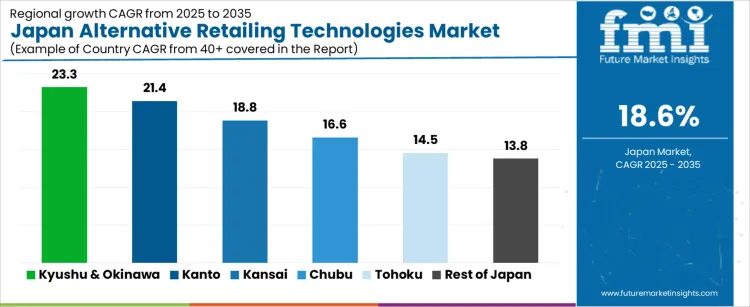
The demand for alternative retailing technologies in Japan is accelerating rapidly across all regions, led by Kyushu and Okinawa at a 23.3% CAGR. Growth in this region is supported by high tourism footfall, rapid deployment of unmanned stores, smart vending formats, and mobile based checkout systems. Kanto follows at 21.4%, driven by dense urban retail networks, strong investment in cashierless stores, and rapid adoption of AI-based demand tracking. Kansai records 18.8% growth, reflecting steady rollouts across shopping arcades, transit hubs, and quick service chains. Chubu at 16.6% shows strong uptake linked to logistics integrated retail formats and factory outlet automation. Tohoku and the Rest of Japan, at 14.5% and 13.8%, reflect expanding adoption shaped by regional retail digitization programs, labor shortages, and rising cost optimization priorities.
How Is Tourism Driven Cashless Adoption Accelerating Alternative Retailing Technologies in Kyushu and Okinawa?
Demand for alternative retailing technologies in Kyushu and Okinawa is advancing at a CAGR of 23.3% through 2035, supported by high tourist footfall, rapid cashless payment adoption, and growing use of self service retail formats. Hotels, transport hubs, and resort linked retail outlets deploy smart vending, mobile checkout, and automated kiosks to manage peak visitor volumes. Convenience focused retail layouts dominate deployment decisions. Growth reflects strong inbound travel recovery, labor availability constraints in island economies, and rising preference for frictionless retail experiences among both visitors and local consumers.
- Smart vending supports high traffic retail zones
- Cashless checkout systems dominate tourist areas
- Labor constraints accelerate automation adoption
- Mobile purchasing platforms expand visitor spend capture
Why Is Dense Urban Retail Infrastructure Sustaining Strong Growth in Kanto?
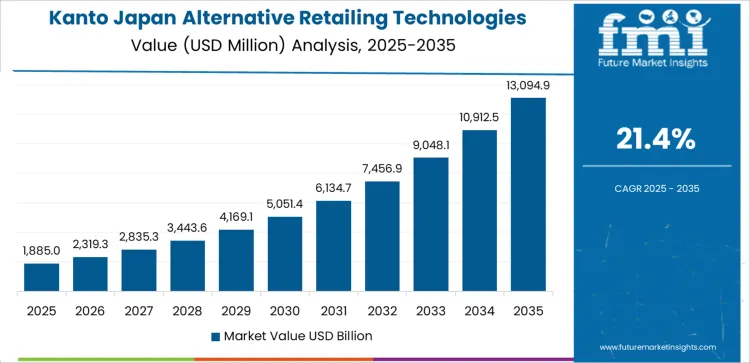
Demand for alternative retailing technologies in Kanto is rising at a CAGR of 21.4% through 2035, driven by high store density, intense competition among retailers, and strong consumer preference for speed focused shopping. Retail chains deploy unmanned stores, AI supported checkout, and digital shelf systems to improve store productivity. Corporate retailers invest heavily in omnichannel store integration. Growth reflects high consumer digital readiness, frequent technology refresh cycles, and sustained capital spending by national retail chains seeking operational efficiency and data driven customer engagement.
- Unmanned stores expand across business districts
- AI checkout systems reduce transaction times
- Omnichannel integration strengthens consumer engagement
- National chains sustain high capital deployment rates
What Is Driving Structured Alternative Retail Technology Expansion Across Kansai?
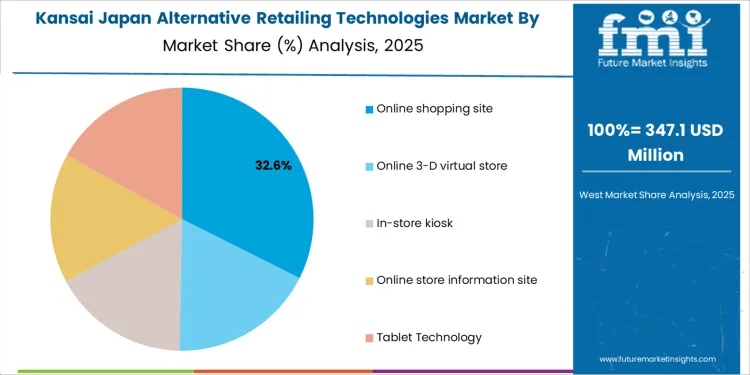
Demand for alternative retailing technologies in Kansai is progressing at a CAGR of 18.8% through 2035, supported by steady mall traffic, rising adoption of smart inventory systems, and growing installation of self checkout counters in food and specialty stores. Kansai retailers focus on balanced deployment across automation and digital merchandising tools. Consumer acceptance remains high across urban and suburban districts. Growth reflects stable consumer spending, controlled retail expansion, and gradual shift from labor intensive store formats toward technology assisted retail operations.
- Self checkout counters support grocery retail adoption
- Smart inventory systems improve stock management
- Suburban deployment expands technology reach
- Consumer acceptance remains consistently high
How Is Industrial Workforce Digitization Influencing Retail Technology Demand in Chubu?
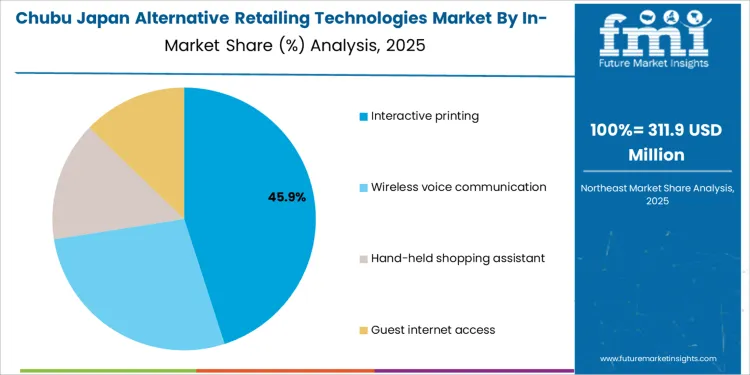
Demand for alternative retailing technologies in Chubu is advancing at a CAGR of 16.6% through 2035, supported by industrial workforce concentration, factory adjacent retail formats, and rising use of contactless purchasing in employee focused stores. Automated vending micro markets and mobile order pickup systems gain traction in manufacturing zones. Retail technology serves time sensitive shift based consumption patterns. Growth reflects steady factory employment, expansion of cashless payroll linked purchasing, and rising use of compact automated retail systems near industrial campuses.
- Micro market vending supports shift based consumption
- Contactless payroll linked purchases increase automation use
- Factory adjacent stores anchor deployment locations
- Time efficient retail formats guide technology choices
Why Is Regional Commercial Scale Moderating Growth in Tohoku?
Demand for alternative retailing technologies in Tohoku is advancing at a CAGR of 14.5% through 2035, supported by selective automation in supermarkets, pharmacy chains, and transport stations. Retailers prioritize essential checkout automation rather than full unmanned store concepts. Consumer demand remains steady across daily necessity segments. Growth reflects modest commercial density, structured public infrastructure upgrades, and gradual acceptance of digital retail tools within regional shopping environments serving aging population groups.
- Supermarket checkout automation anchors deployment
- Transport station kiosks support daily commuter demand
- Aging population influences digital adoption pace
- Essential retail segments guide steady system usage
How Is Small City Retail Modernization Shaping Technology Adoption in Rest of Japan?
Demand for alternative retailing technologies in Rest of Japan is advancing at a CAGR of 13.8% through 2035, supported by small store modernization, rising use of digital price labeling, and gradual adoption of mobile payment enabled checkout terminals. Independent retailers deploy compact automation tools suited for limited floor space. Full scale unmanned format deployment remains limited. Growth remains steady and guided by local retail digitization programs, improvement in broadband coverage, and gradual consumer transition toward technology assisted daily shopping.
- Digital price labeling modernizes small store operations
- Mobile payment terminals expand cashless access
- Compact automation suits limited floor space
- Broadband upgrades support retail digitization
What Is Driving the Demand for Alternative Retailing Technologies in Japan and Which Companies Shape Store Automation?
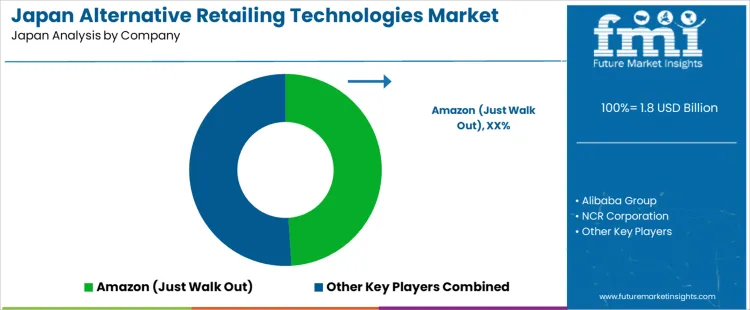
The demand for alternative retailing technologies in Japan is shaped by labor shortages in convenience retail, high urban foot traffic, and demand for faster checkout experiences. Toshiba Global Commerce holds a central domestic position through self-checkout systems, smart POS platforms, and store automation software used across major supermarket and convenience store chains. NCR Corporation supports demand through self-service terminals, payment processing integration, and unattended retail infrastructure deployed in high volume retail locations. Amazon Just Walk Out influences selected pilot stores through computer vision based cashierless retail used in office campuses and limited urban trials. These suppliers shape early adoption through system reliability, shrink control, and integration with Japanese payment networks.
Alibaba Group participates through cloud based retail analytics and unmanned store reference models used mainly for concept testing and cross border retail technology exchange. Standard AI supports demand through computer vision platforms used in selected experimental stores and innovation labs rather than mass deployment. System selection in Japan is governed by transaction accuracy, face recognition control rules, compatibility with IC card and QR payments, and customer flow under narrow store layouts. Buyer preference favors suppliers with domestic system maintenance, rapid fault resolution, and clear data handling policies under Japanese privacy regulations. Demand visibility tracks convenience store automation spending, unmanned store pilots in transport hubs, and steady expansion of hybrid staffed and self-service retail formats.
Key Players in the Alternative Retailing Technologies Industry in Japan
- Amazon (Just Walk Out)
- Alibaba Group
- NCR Corporation
- Toshiba Global Commerce
- Standard AI
Scope of the Report
| Items | Values |
|---|---|
| Quantitative Units (2025) | USD billion |
| Type | Online Shopping Site, Online 3-D Virtual Store, In-store Kiosk, Online Store Information Site, Tablet Technology, Interactive Printing, Wireless Voice Communication, Hand-held Shopping Assistant, Guest Internet Access |
| Application | Cashierless Stores, Smart Vending, Mobile Checkout, Automated Pickup Lockers, Digital Merchandising, Inventory Automation |
| End User | Convenience Stores, Supermarkets, Specialty Retail Chains, Shopping Malls, Transport Hub Retailers, Independent Retailers |
| Regions Covered | Kyushu and Okinawa, Kanto, Kansai, Chubu, Tohoku, Rest of Japan |
| Countries Covered | Japan |
| Key Companies Profiled | Amazon (Just Walk Out), Alibaba Group, NCR Corporation, Toshiba Global Commerce, Standard AI |
| Additional Attributes | Dollar sales by online and in store technology categories, chain wide rollout spending versus pilot installations, labor substitution driven automation demand, cashierless checkout and unmanned store deployment intensity, integration with cashless payment platforms and real time inventory systems, privacy and cybersecurity compliance requirements, regional adoption linked to tourism density, urban retail concentration, and convenience store network expansion |
Alternative Retailing Technologies Industry in Japan Segmentation
Online Technologies:
- Online shopping site
- Online 3-D virtual store
- In-store kiosk
- Online store information site
- Tablet Technology
In-Store Technologies:
- Interactive printing
- Wireless voice communication
- Hand-held shopping assistant
- Guest internet access
Region
- Kyushu & Okinawa
- Kanto
- Kansai
- Chubu
- Tohoku
- Rest of Japan
Frequently Asked Questions
How big is the demand for alternative retailing technologies in Japan in 2025?
The demand for alternative retailing technologies in Japan is estimated to be valued at USD 1.8 billion in 2025.
What will be the size of alternative retailing technologies in Japan in 2035?
The market size for the alternative retailing technologies in Japan is projected to reach USD 10.0 billion by 2035.
How much will be the demand for alternative retailing technologies in Japan growth between 2025 and 2035?
The demand for alternative retailing technologies in Japan is expected to grow at a 18.6% CAGR between 2025 and 2035.
What are the key product types in the alternative retailing technologies in Japan?
The key product types in alternative retailing technologies in Japan are online shopping site, online 3-d virtual store, in-store kiosk, online store information site and tablet technology.
Which in-store technologies segment is expected to contribute significant share in the alternative retailing technologies in Japan in 2025?
In terms of in-store technologies, interactive printing segment is expected to command 44.0% share in the alternative retailing technologies in Japan in 2025.
Preview the report firsthand - request a free sample
Get SampleGet the brochure for pricing and purchase details.
Get PDFTable of Content
- Executive Summary
- Japan Market Outlook
- Demand-side Trends
- Supply-side Trends
- Technology Roadmap Analysis
- Analysis and Recommendations
- Market Overview
- Market Coverage / Taxonomy
- Market Definition / Scope / Limitations
- Market Background
- Market Dynamics
- Drivers
- Restraints
- Opportunity
- Trends
- Scenario Forecast
- Demand in Optimistic Scenario
- Demand in Likely Scenario
- Demand in Conservative Scenario
- Opportunity Map Analysis
- Product Life Cycle Analysis
- Supply Chain Analysis
- Investment Feasibility Matrix
- Value Chain Analysis
- PESTLE and Porter’s Analysis
- Regulatory Landscape
- Regional Parent Market Outlook
- Production and Consumption Statistics
- Import and Export Statistics
- Market Dynamics
- Japan Market Analysis 2020 to 2024 and Forecast, 2025 to 2035
- Historical Market Size Value (USD Million) Analysis, 2020 to 2024
- Current and Future Market Size Value (USD Million) Projections, 2025 to 2035
- Y-o-Y Growth Trend Analysis
- Absolute $ Opportunity Analysis
- Japan Market Pricing Analysis 2020 to 2024 and Forecast 2025 to 2035
- Japan Market Analysis 2020 to 2024 and Forecast 2025 to 2035, By Online Technologies
- Introduction / Key Findings
- Historical Market Size Value (USD Million) Analysis By Online Technologies , 2020 to 2024
- Current and Future Market Size Value (USD Million) Analysis and Forecast By Online Technologies , 2025 to 2035
- Online shopping site
- Online 3-D virtual store
- In-store kiosk
- Online store information site
- Tablet Technology
- Y-o-Y Growth Trend Analysis By Online Technologies , 2020 to 2024
- Absolute $ Opportunity Analysis By Online Technologies , 2025 to 2035
- Japan Market Analysis 2020 to 2024 and Forecast 2025 to 2035, By In-Store Technologies
- Introduction / Key Findings
- Historical Market Size Value (USD Million) Analysis By In-Store Technologies, 2020 to 2024
- Current and Future Market Size Value (USD Million) Analysis and Forecast By In-Store Technologies, 2025 to 2035
- Interactive printing
- Wireless voice communication
- Hand-held shopping assistant
- Guest internet access
- Y-o-Y Growth Trend Analysis By In-Store Technologies, 2020 to 2024
- Absolute $ Opportunity Analysis By In-Store Technologies, 2025 to 2035
- Market Structure Analysis
- Competition Dashboard
- Competition Benchmarking
- Market Share Analysis of Top Players
- By Regional
- By Online Technologies
- By In-Store Technologies
- Competition Analysis
- Competition Deep Dive
- Amazon (Just Walk Out)
- Overview
- Product Portfolio
- Profitability by Market Segments (Product/Age /Sales Channel/Region)
- Sales Footprint
- Strategy Overview
- Marketing Strategy
- Product Strategy
- Channel Strategy
- Alibaba Group
- NCR Corporation
- Toshiba Global Commerce
- Standard AI
- Amazon (Just Walk Out)
- Competition Deep Dive
- Assumptions & Acronyms Used
- Research Methodology


