

- Industry Size (2026)
- USD 221.6 Mn
- Forecast (2036)
- USD 437.7 Mn
- CAGR (2026 to 2036)
- 7.1%
Demand for RTD Cocktail Shots in Japan 2026 to 2036
Demand for RTD cocktail shots in Japan is valued at USD 221.6 million in 2026 and is forecasted to reach USD 437.7 million by 2036, reflecting a CAGR of 7.1%. Demand expands as consumers seek convenient, portion-controlled alcoholic formats suited for social gatherings, home consumption, and on-the-go occasions. Shifts toward premium ready-to-drink offerings and diversified flavor profiles support steady adoption across younger and urban demographics.
Malt-based RTD cocktail shots lead type usage because this formulation supports stable taste consistency, favorable taxation structures, and efficient large-scale production. Producers use malt bases to replicate familiar cocktail profiles while maintaining shelf stability and controlled alcohol content. Compact packaging and ease of distribution further strengthen acceptance within retail and convenience channels.
Kyushu & Okinawa, Kanto, Kansai, Chubu, and Tohoku represent key growth regions driven by dense urban populations, strong convenience store networks, and evolving drinking habits. Suntory Spirits Ltd., Kirin Beverage Company, Asahi Breweries, Sapporo Holdings, and Takara Shuzo Co., Ltd. anchor competitive activity through portfolio diversification, flavor innovation, and extensive distribution networks aligned with Japanese consumer preferences and regulatory frameworks.
Quick Stats for Demand for RTD Cocktail Shots in Japan
- Japan RTD Cocktail Shots Sales Value (2026): USD 221.6 million
- Japan RTD Cocktail Shots Forecast Value (2036): USD 437.7 million
- Japan RTD Cocktail Shots Forecast CAGR (2026 to 2036): 7.1%
- Leading Type in Japan: Malt-Based RTD Cocktail Shots
- Key Growth Regions in Japan: Kyushu & Okinawa, Kanto, Kansai, Chubu, Tohoku
- Top Players in Japan: Suntory Spirits Ltd., Kirin Beverage Company, Asahi Breweries, Sapporo Holdings, Takara Shuzo Co., Ltd.
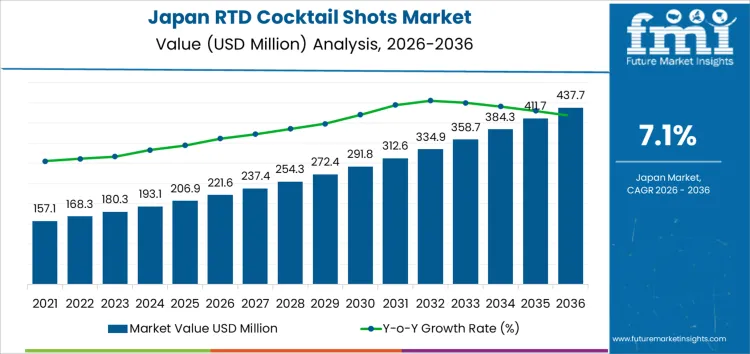
Japan RTD Cocktail Shots Key Takeaways
| Metric | Value |
|---|---|
| Japan RTD Cocktail Shots Sales Value (2026) | USD 221.6 million |
| Japan RTD Cocktail Shots Forecast Value (2036) | USD 437.7 million |
| Japan RTD Cocktail Shots Forecast CAGR (2026 to 2036) | 7.1% |
Why is the Demand for RTD Cocktail Shots in Japan Growing?
Demand for RTD cocktail shots in Japan grows due to shifts in alcohol consumption patterns, urban lifestyles, and controlled portion preferences. Consumers show interest in compact formats that support moderation, convenience, and predictable alcohol intake. Busy work schedules and smaller living spaces increase preference for ready to consume beverages that require no preparation or storage complexity. Convenience stores play a central role in distribution, supporting frequent purchase of single serve alcoholic products during commuting and evening hours. Younger adult demographics engage with simplified drinking occasions that align with shorter social gatherings and home based consumption.
Product formats suit occasions where variety is preferred over large volume consumption, which supports trial across multiple flavor profiles. Packaging design emphasizes portability and reseal avoidance, which aligns with public consumption norms and waste reduction practices. Seasonal product rotation sustains repeat purchasing aligned with limited edition offerings. Alcohol manufacturers respond to regulatory clarity on labeling and alcohol content by introducing standardized shot formats. Growth in tourism and hospitality recovery supports demand in travel retail and accommodation settings where compact alcoholic options meet space and service efficiency requirements.
How Are the Segments Classified in the Demand for RTD Cocktail Shots in Japan?
Demand for RTD cocktail shots in Japan is shaped by convenience-oriented alcohol consumption, portion control preferences, and strong presence of ready-to-drink formats in retail channels. Buyers assess alcohol base consistency, flavor balance, shelf stability, and portability. Adoption patterns reflect usage across convenience stores, vending-adjacent retail, and urban consumption occasions, where compact packaging and predictable taste profiles align with Japan’s regulated alcohol distribution environment.
By Type, Do Malt-Based RTD Cocktail Shots Account for the Largest Share of Demand in Japan?
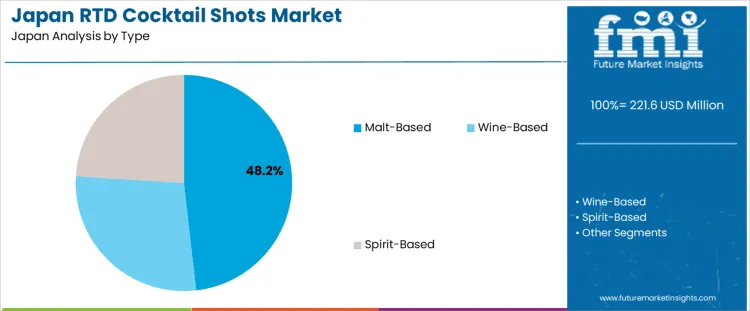
Malt-based RTD cocktail shots hold 48.2%, making them the leading type segment in Japan. Malt-based formulations support cost efficiency, stable flavor blending, and regulatory alignment with existing RTD alcohol categories. These attributes enable broad distribution across convenience retail and on-the-go consumption formats. Wine-based shots hold 27.8%, offering smoother taste profiles and alignment with wine-oriented consumption preferences. Spirit-based shots hold 24.0%, positioned for higher alcohol authenticity and controlled retail environments. Type distribution reflects preference for malt-based products due to scalability, pricing control, and compatibility with Japan’s RTD beverage culture.
Key Points:
- Malt-based shots lead due to cost efficiency and category familiarity.
- Wine-based formats support smoother flavor positioning.
- Spirit-based shots serve controlled and premium-oriented channels.
By Packaging Type, Do Cans Represent the Largest Share of Demand in Japan?
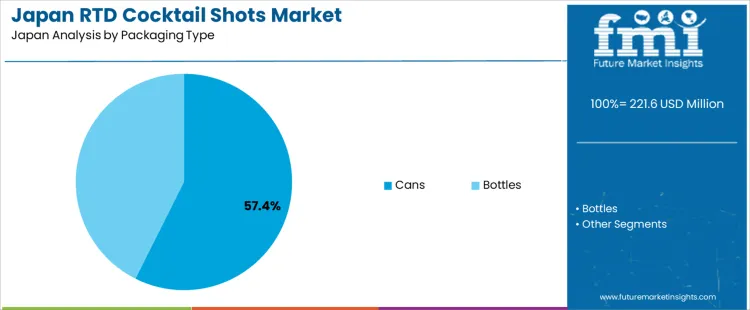
Cans hold 57.4%, making them the leading packaging-type segment in Japan. Cans support lightweight handling, rapid chilling, and efficient storage within compact retail spaces. This format aligns with single-serve consumption and recycling systems widely adopted in Japan. Bottles hold 42.6%, offering resealability and perceived quality for selective consumption occasions. Packaging-type distribution reflects stronger reliance on cans due to logistical efficiency, portability, and compatibility with Japan’s convenience-driven beverage purchasing behavior.
Key Points:
- Cans dominate due to portability and space efficiency.
- Rapid chilling supports immediate consumption patterns.
- Bottles serve resalable and selective-use preferences.
What are the Key Dynamics in the RTD Cocktail Shots Industry in Japan?
Demand remains niche but gradually emerging as Japan’s alcoholic beverage sector experiments with compact, convenient formats. RTD cocktail shots appeal to controlled consumption preferences, novelty-driven purchases, and limited-occasion drinking. Adoption concentrates in urban convenience retail, seasonal promotions, and entertainment districts. Market behavior reflects strict alcohol regulation, strong canned RTD culture, and consumer emphasis on moderation and quality over volume.
How do convenience retail dominance and controlled drinking habits drive demand in Japan?
Japan’s extensive convenience store network acts as a primary channel for RTD alcoholic innovation. Small-format alcohol aligns with consumer preference for portion control and lower intoxication risk. RTD cocktail shots attract trial purchases during seasonal launches, limited editions, and collaboration campaigns. Urban consumers favor compact formats suitable for short social occasions or at-home sampling. Domestic beverage companies leverage familiar cocktail flavors adapted to local taste profiles, emphasizing balance and smoothness. Vending machine regulations limit distribution scope, reinforcing reliance on convenience stores and liquor shops. Demand remains linked to novelty appeal rather than habitual consumption patterns.
How do regulatory controls, cultural norms, and competition affect demand stability?
Japan enforces strict rules on alcohol labeling, alcohol-by-volume thresholds, and retail placement, shaping product design. Cultural norms favor moderate drinking, limiting repeat high-frequency use of shot formats. Strong competition from canned chu-hai, highballs, and low-alcohol RTDs constrains shelf space. Pricing sensitivity affects acceptance of small-volume products perceived as low value. Marketing restrictions reduce visibility outside retail environments. Recycling and packaging expectations add cost pressure. Demand remains limited and episodic, shaped by regulatory discipline, entrenched RTD preferences, and cautious consumer adoption within Japan’s mature alcohol beverage landscape.
How Is Demand for RTD Cocktail Shots in Japan Evolving by Region?
Demand for RTD cocktail shots in Japan is increasing due to convenience-led alcohol consumption, premium RTD innovation, and growth of single-serve formats aligned with controlled drinking occasions. Kyushu and Okinawa lead with an 8.9% CAGR, supported by tourism activity and leisure consumption. Kanto follows at 8.2%, driven by urban nightlife, convenience retail penetration, and product experimentation. Kansai records a 7.2% CAGR, shaped by social drinking culture and foodservice-linked demand. Chubu posts 6.3%, reflecting steady retail uptake. Tohoku shows 5.6%, supported by regional consumption. Rest of Japan records 5.3%, reflecting replacement-driven growth. Regional variation reflects lifestyle patterns, retail access, and format acceptance across Japan.
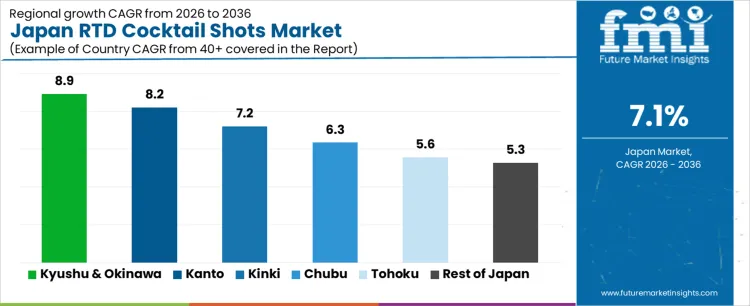
| Region | CAGR (2026 to 2036) |
|---|---|
| Kyushu & Okinawa | 8.9% |
| Kanto | 8.2% |
| Kansai | 7.2% |
| Chubu | 6.3% |
| Tohoku | 5.6% |
| Rest of Japan | 5.3% |
How is Kyushu and Okinawa driving demand for RTD Cocktail Shots in Japan?
Kyushu and Okinawa drive demand through tourism intensity, leisure-oriented consumption, and hospitality-linked retail channels. Region’s CAGR of 8.9% reflects strong uptake of RTD cocktail shots in resort areas, travel hubs, and convenience stores serving transient consumers. Single-serve formats align with short-duration social occasions and controlled alcohol intake preferences. Beverage producers emphasize spirit-based formulations with familiar flavor profiles and premium cues. Port and airport retail presence supports impulse purchasing. Demand favors compact packaging, portability, and consistent alcohol strength. Growth remains occasion-led, supported by steady tourism flows and year-round leisure activity.
- Tourism and hospitality-driven consumption
- Convenience and travel retail penetration
- Preference for compact single-serve formats
- Occasion-led and impulse purchasing behavior
How is Kanto driving demand for RTD Cocktail Shots in Japan?
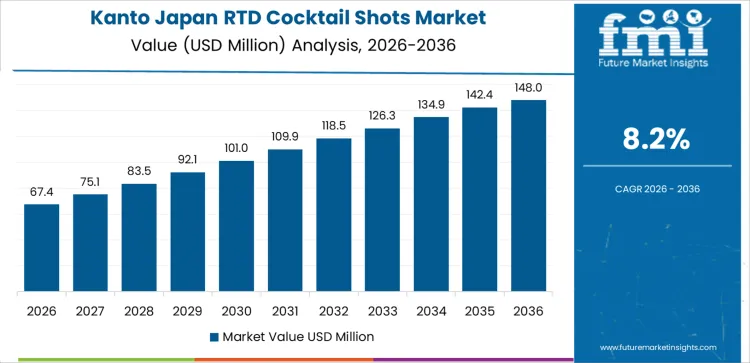
Kanto demand is shaped by dense urban nightlife, convenience store dominance, and rapid product rotation. Region’s CAGR of 8.2% reflects strong adoption of RTD cocktail shots among urban consumers seeking portability and portion control. Convenience stores and licensed retailers support frequent trial and repeat purchases. Brands introduce limited editions and premium variants to attract novelty-oriented buyers. Consumers prioritize brand credibility, alcohol balance, and clean taste profiles. Demand aligns with after-work socialization and home consumption rather than large gatherings. Growth remains innovation-led and retail-driven.
- Urban nightlife and after-work consumption
- Strong convenience store distribution
- Limited-edition and premium product uptake
- Portion-controlled home consumption
How is Kansai driving demand for RTD Cocktail Shots in Japan?
Kansai demand reflects social dining culture, regional brand loyalty, and balanced alcohol consumption patterns. Region’s CAGR of 7.2% is supported by use of RTD cocktail shots alongside meals and small group gatherings. Consumers favor familiar spirits and traditional flavor combinations. Retailers emphasize trusted brands and consistent pricing. Foodservice-linked off-premise sales support steady volumes. Demand growth remains moderate, aligned with routine social occasions rather than impulse-driven experimentation.
- Social dining and small group consumption
- Preference for familiar spirit profiles
- Strong regional brand loyalty
- Stable foodservice-linked retail demand
How is Chubu driving demand for RTD Cocktail Shots in Japan?
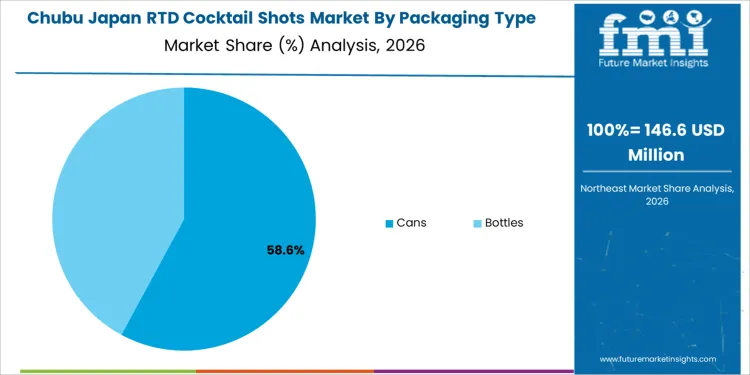
Chubu demand is anchored in household consumption and regional retail networks. Region’s CAGR of 6.3% reflects gradual adoption of RTD cocktail shots as convenient alternatives to traditional alcoholic beverages. Consumers prioritize affordability, predictable taste, and availability. Large retail chains support steady shelf presence. Demand remains conservative, driven by replacement purchasing and seasonal occasions. Growth aligns with broader RTD category acceptance rather than rapid format shifts.
- Household-oriented consumption patterns
- Price and taste predictability focus
- Strong regional retail distribution
- Seasonal and occasion-based demand
How is Tohoku driving demand for RTD Cocktail Shots in Japan?
Tohoku demand is influenced by conservative consumption habits and regional retail accessibility. Region’s CAGR of 5.6% reflects limited but steady uptake of RTD cocktail shots for home consumption and small gatherings. Shelf-stable products and familiar flavors dominate purchasing decisions. Consumers value moderation and reliability over novelty. Demand growth remains cautious and necessity-driven, aligned with gradual acceptance of single-serve RTD formats.
- Home-based and small gathering consumption
- Shelf-stable and familiar product preference
- Moderation-oriented purchasing behavior
- Gradual format acceptance
How is Rest of Japan driving demand for RTD Cocktail Shots in Japan?
Rest of Japan shows steady demand driven by routine retail availability and replacement consumption. Region’s CAGR of 5.3% reflects continued use of RTD cocktail shots as convenient alcoholic options for controlled occasions. Buyers prioritize cost efficiency, availability, and trusted brands. Demand remains maintenance-oriented, with limited exposure to premium experimentation. Growth aligns with steady RTD category expansion rather than rapid behavioral change.
- Routine retail-driven consumption
- Cost-sensitive purchasing priorities
- Trusted brand preference
- Replacement-driven demand stability
What is the competitive landscape of demand for RTD cocktail shots in Japan?
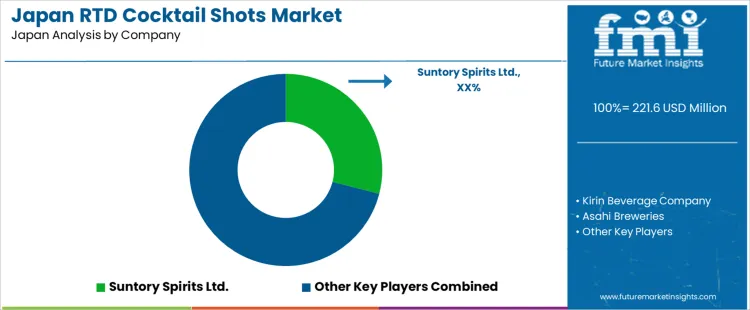
Demand for RTD cocktail shots in Japan is driven by convenience-oriented consumption, popularity of canned highball and chu-hai formats, and broader acceptance of ready-to-drink alcoholic beverages among younger adults. Usage spans single-serve occasions, social gatherings, vending machine channels, and convenience store retailing. Buyers evaluate flavor authenticity, alcohol balance, packaging convenience, and compatibility with local taste preferences influenced by traditional spirits such as shochu and whisky. Procurement teams prioritize suppliers with licensed production, distribution across konbini and liquor retail channels, and compliance with Japan’s liquor taxation and labeling regulations. Trend in the Japan market reflects innovation in fruit and botanical flavor variants, limited-edition seasonal offerings, and brand collaborations with entertainment and lifestyle themes.
Suntory Spirits Ltd. holds a leading position in Japan with RTD cocktail shots and compact canned formats aligned to domestic taste profiles and extensive distribution through convenience and supermarket channels. Kirin Beverage Company supports demand with RTD products that blend traditional whisky, citrus, and hybrid cocktail formulations crafted for Japanese consumers. Asahi Breweries participates through RTD innovations, including shochu- and sour-style cocktail products distributed nationwide. Sapporo Holdings contributes RTD options incorporating local flavor trends and collaboration releases with lifestyle brands. Takara Shuzo Co., Ltd. maintains visibility through chu-hai and cocktail-style beverages leveraging long heritage in shochu-based products adapted to RTD formats. Competitive positioning in Japan reflects flavor localization, distribution reach, regulatory compliance, and responsiveness to shifting consumption patterns.
Key Players in Japan RTD Cocktail Shots Demand
- Suntory Spirits Ltd.
- Kirin Beverage Company
- Asahi Breweries
- Sapporo Holdings
- Takara Shuzo Co., Ltd.
Scope of the Report
| Items | Values |
|---|---|
| Quantitative Units | USD million |
| Type | Malt-Based; Wine-Based; Spirit-Based |
| Packaging Type | Cans; Bottles |
| Regions Covered | Kyushu & Okinawa; Kanto; Kansai; Chubu; Tohoku; Rest of Japan |
| Key Companies Profiled | Suntory Spirits Ltd.; Kirin Beverage Company; Asahi Breweries; Sapporo Holdings; Takara Shuzo Co., Ltd. |
| Additional Attributes | Dollar sales by type and packaging format; regional CAGR differences driven by urban consumption trends; higher penetration in Kanto and Kansai; convenience-store dominance in distribution; premiumization of spirit-based shots; packaging innovation focusing on portability, portion control, and compliance with alcohol regulations. |
Japan RTD Cocktail Shots Demand by Segments
By Type:
- Malt-Based
- Wine-Based
- Spirit-Based
By Packaging Type:
- Cans
- Bottles
By Region:
- Kyushu & Okinawa
- Kanto
- Kansai
- Chubu
- Tohoku
- Rest of Japan
Frequently Asked Questions
How big is the demand for RTD cocktail shots in Japan in 2026?
The demand for RTD cocktail shots in Japan is estimated to be valued at USD 221.6 million in 2026.
What will be the size of RTD cocktail shots in Japan in 2036?
The market size for the RTD cocktail shots in Japan is projected to reach USD 437.7 million by 2036.
How much will be the demand for RTD cocktail shots in Japan growth between 2026 and 2036?
The demand for RTD cocktail shots in Japan is expected to grow at a 7.1% CAGR between 2026 and 2036.
What are the key product types in the RTD cocktail shots in Japan?
The key product types in RTD cocktail shots in Japan are malt-based, wine-based and spirit-based.
Which packaging type segment is expected to contribute significant share in the RTD cocktail shots in Japan in 2026?
In terms of packaging type, cans segment is expected to command 57.4% share in the RTD cocktail shots in Japan in 2026.
Preview the report firsthand - request a free sample
Get SampleGet the brochure for pricing and purchase details.
Get PDFTable of Content
- Executive Summary
- Japan Market Outlook
- Demand-side Trends
- Supply-side Trends
- Technology Roadmap Analysis
- Analysis and Recommendations
- Market Overview
- Market Coverage / Taxonomy
- Market Definition / Scope / Limitations
- Market Background
- Market Dynamics
- Drivers
- Restraints
- Opportunity
- Trends
- Scenario Forecast
- Demand in Optimistic Scenario
- Demand in Likely Scenario
- Demand in Conservative Scenario
- Opportunity Map Analysis
- Product Life Cycle Analysis
- Supply Chain Analysis
- Investment Feasibility Matrix
- Value Chain Analysis
- PESTLE and Porter’s Analysis
- Regulatory Landscape
- Regional Parent Market Outlook
- Production and Consumption Statistics
- Import and Export Statistics
- Market Dynamics
- Japan Market Analysis 2021 to 2025 and Forecast, 2026 to 2036
- Historical Market Size Value (USD Million) Analysis, 2021 to 2025
- Current and Future Market Size Value (USD Million) Projections, 2026 to 2036
- Y-o-Y Growth Trend Analysis
- Absolute $ Opportunity Analysis
- Japan Market Pricing Analysis 2021 to 2025 and Forecast 2026 to 2036
- Japan Market Analysis 2021 to 2025 and Forecast 2026 to 2036, By Type
- Introduction / Key Findings
- Historical Market Size Value (USD Million) Analysis By Type , 2021 to 2025
- Current and Future Market Size Value (USD Million) Analysis and Forecast By Type , 2026 to 2036
- Malt-Based
- Wine-Based
- Spirit-Based
- Malt-Based
- Y-o-Y Growth Trend Analysis By Type , 2021 to 2025
- Absolute $ Opportunity Analysis By Type , 2026 to 2036
- Japan Market Analysis 2021 to 2025 and Forecast 2026 to 2036, By Packaging Type
- Introduction / Key Findings
- Historical Market Size Value (USD Million) Analysis By Packaging Type, 2021 to 2025
- Current and Future Market Size Value (USD Million) Analysis and Forecast By Packaging Type, 2026 to 2036
- Cans
- Bottles
- Cans
- Y-o-Y Growth Trend Analysis By Packaging Type, 2021 to 2025
- Absolute $ Opportunity Analysis By Packaging Type, 2026 to 2036
- Market Structure Analysis
- Competition Dashboard
- Competition Benchmarking
- Market Share Analysis of Top Players
- By Regional
- By Type
- By Packaging Type
- Competition Analysis
- Competition Deep Dive
- Suntory Spirits Ltd.
- Overview
- Product Portfolio
- Profitability by Market Segments (Product/Age /Sales Channel/Region)
- Sales Footprint
- Strategy Overview
- Marketing Strategy
- Product Strategy
- Channel Strategy
- Kirin Beverage Company
- Asahi Breweries
- Sapporo Holdings
- Takara Shuzo Co., Ltd.
- Suntory Spirits Ltd.
- Competition Deep Dive
- Assumptions & Acronyms Used
- Research Methodology


