

- Industry Size (2026)
- USD 1.7 Bn
- Forecast (2036)
- USD 4.0 Bn
- CAGR (2026 to 2036)
- 9.0%
Demand for RTD Cocktail Shots in USA 2026 to 2036
Demand for RTD Cocktail Shots in USA is valued at USD 1.7 billion in 2026 and is projected to reach USD 4.0 billion by 2036, reflecting a CAGR of 9.0%. Demand expands as consumers favor convenient, portion-controlled alcoholic beverages suited for social occasions, travel, and on-the-go consumption. Growth is reinforced by premiumization trends, flavor experimentation, and rising acceptance of ready-to-consume formats across younger demographics.
Malt-based RTD cocktail shots lead type usage because this formulation enables favorable taxation, broader distribution, and stable flavor consistency at small serving sizes. Producers leverage malt bases to replicate classic cocktail profiles while maintaining shelf stability and scalable production. High alcohol uniformity, extended shelf life, and packaging flexibility support strong adoption across retail and convenience channels.
West USA, South USA, Northeast USA, and Midwest USA represent key growth regions driven by dense nightlife hubs, event-driven consumption, and strong off-premise alcohol sales. BuzzBallz LLC, On The Rocks Cocktails, Sazerac Company, Cutwater Spirits, and Anheuser-Busch InBev anchor competitive activity through portfolio expansion, limited-edition flavors, and distribution scale aligned with evolving consumer preferences for compact RTD alcoholic formats.
Quick Stats for Demand for RTD Cocktail Shots in USA
- USA RTD Cocktail Shots Sales Value (2026): USD 1.7 billion
- USA RTD Cocktail Shots Forecast Value (2036): USD 4.0 billion
- USA RTD Cocktail Shots Forecast CAGR (2026 to 2036): 9.0%
- Leading Type in USA Demand: Malt-Based RTD Cocktail Shots
- Key Growth Regions in USA Demand: West USA, South USA, Northeast USA, Midwest USA
- Top Players in USA Demand: BuzzBallz LLC, On The Rocks Cocktails, Sazerac Company, Cutwater Spirits, Anheuser-Busch InBev
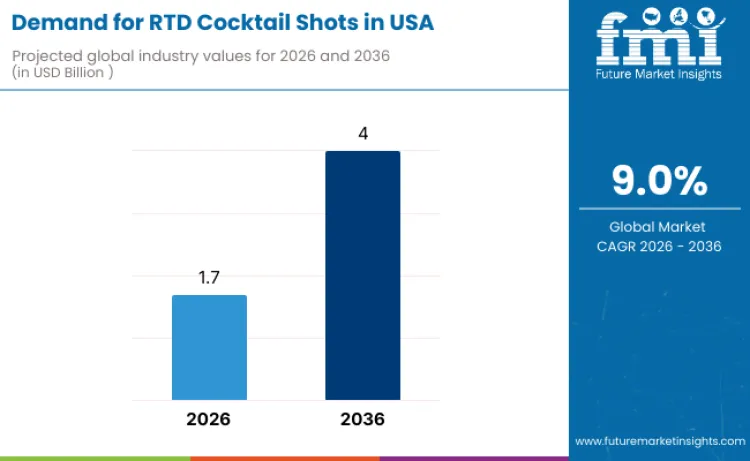
USA RTD Cocktail Shots Key Takeaways
| Metric | Value |
|---|---|
| USA RTD Cocktail Shots Sales Value (2026) | USD 1.7 billion |
| USA RTD Cocktail Shots Forecast Value (2036) | USD 4.0 billion |
| USA RTD Cocktail Shots Forecast CAGR (2026 to 2036) | 9.0% |
How Are the Segments Classified in the Demand for RTD Cocktail Shots in the USA?
Demand for ready-to-drink cocktail shots in the USA is shaped by convenience-led alcohol consumption, portion-controlled formats, and retail compliance requirements. Buyers evaluate alcohol base consistency, flavor stability, shelf life, and packaging portability. Adoption patterns reflect usage across convenience retail, event-driven consumption, and on-the-go occasions, with formats designed to meet state-level distribution rules and consumer preference for compact, single-serve alcoholic beverages.
Which Type Accounts for the Largest Share of Demand in the USA?
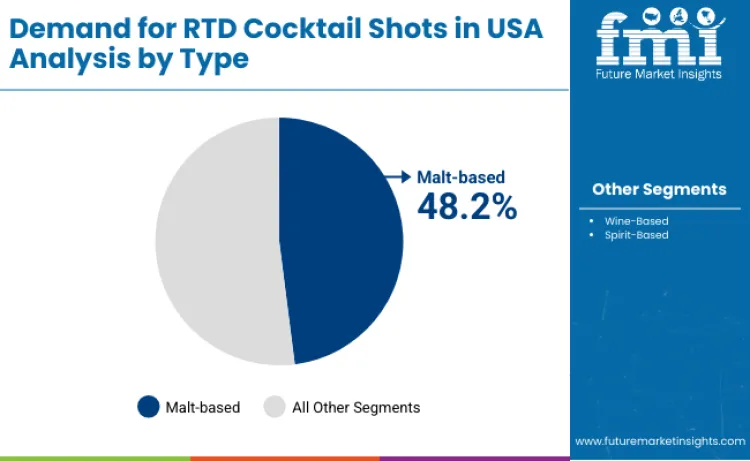
Malt-based RTD cocktail shots hold 48.2%, making them the leading type segment in the USA. Malt bases enable cost-efficient production, broad flavor formulation flexibility, and favorable distribution treatment across multiple states. Wine-based shots hold 27.8%, supporting smoother taste profiles and alignment with wine-category regulations in selected channels. Spirit-based shots account for 24.0%, offering higher alcohol authenticity and premium positioning within controlled retail environments. Type distribution reflects stronger penetration of malt-based formats due to regulatory flexibility, scalable manufacturing, and compatibility with convenience-focused retail placement.
Key Points:
- Malt-based shots lead due to regulatory and cost advantages.
- Wine-based formats support smoother flavor positioning.
- Spirit-based shots serve premium and controlled channels.
Which Packaging Type Accounts for the Largest Share of Demand in the USA?
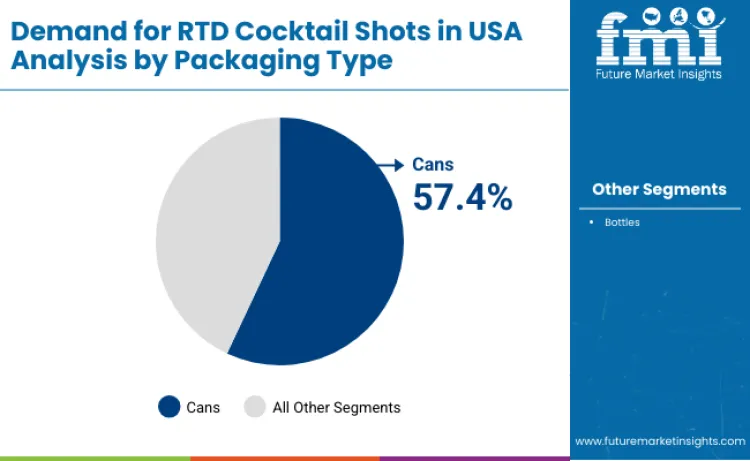
Cans hold 57.4%, making them the leading packaging-type segment in the USA. Cans provide lightweight transport, rapid chilling, and strong protection against light exposure, supporting flavor stability. This format aligns with single-serve consumption, outdoor use, and convenience retail stocking efficiency. Bottles hold 42.6%, offering resealable options, perceived premium appeal, and compatibility with spirit-forward positioning. Packaging-type distribution reflects preference for cans due to logistics efficiency, recyclability advantages, and suitability for impulse purchase behavior across U.S. retail environments.
Key Points:
- Cans dominate due to portability and chill efficiency.
- Light protection supports flavor stability.
- Bottles serve premium and resealable use cases.
What are the Key Dynamics in the RTD Cocktail Shots Industry in USA?
Demand increases as consumers seek convenient, portion-controlled alcoholic beverages suited to social occasions, travel retail, and on-the-go consumption. RTD cocktail shots occupy a niche between full-size RTD cans and spirits, offering flavor variety and predictable alcohol content. Growth concentrates in urban markets, convenience retail, and event-driven consumption. Regulatory compliance, flavor innovation, and brand experimentation shape market participation across USA alcoholic beverage channels.
How do convenience consumption patterns and changing drinking occasions drive demand in USA?
USA consumers increasingly favor ready-to-consume alcohol formats that reduce preparation time and simplify serving. RTD cocktail shots align with short-duration social settings, pre-event consumption, and controlled intake preferences. Convenience stores and liquor chains stock shots to support impulse purchases and trial of new flavors. Event venues and travel retail adopt compact formats that simplify inventory handling. Younger adult consumers show interest in novelty formats with familiar cocktail profiles. Brands leverage shots to extend spirit portfolios into lower-commitment offerings. Growth in single-serve alcohol formats supports demand where portability and portion clarity matter across diverse consumption occasions.
How do regulatory constraints, pricing sensitivity, and competition influence demand stability?
Alcohol regulations vary by state, affecting distribution, packaging size allowances, and retail channel access. Excise taxes and compliance costs influence pricing for small-volume formats. Competition from full-size RTDs, flavored spirits, and hard seltzers limits shelf space expansion. Consumer perception of value per ounce affects repeat purchases. Packaging sustainability concerns add cost and scrutiny. Responsible drinking initiatives shape marketing restrictions. Demand remains strongest in novelty-driven and convenience-led channels, while long-term expansion depends on regulatory alignment, pricing balance, and sustained consumer interest within USA alcohol beverage industries.
How Is Demand for RTD Cocktail Shots in USA Evolving by Region?
Demand for RTD cocktail shots in the USA is expanding due to convenience-led alcohol consumption, premiumization of ready-to-drink formats, and growth of single-serve occasions. West USA leads with a 10.4% CAGR, supported by innovation-driven beverage launches, on-the-go consumption, and strong retail experimentation. South USA follows at 9.3%, driven by social consumption occasions, nightlife density, and value-oriented multi-pack sales. Northeast USA records an 8.3% CAGR, shaped by urban consumption patterns, regulated retail formats, and premium spirit preferences. Midwest USA posts a 7.2% CAGR, reflecting steady adoption through mainstream retail, seasonal demand, and price-sensitive purchasing. Regional variation reflects lifestyle trends, retail access, and consumption occasions across the USA.
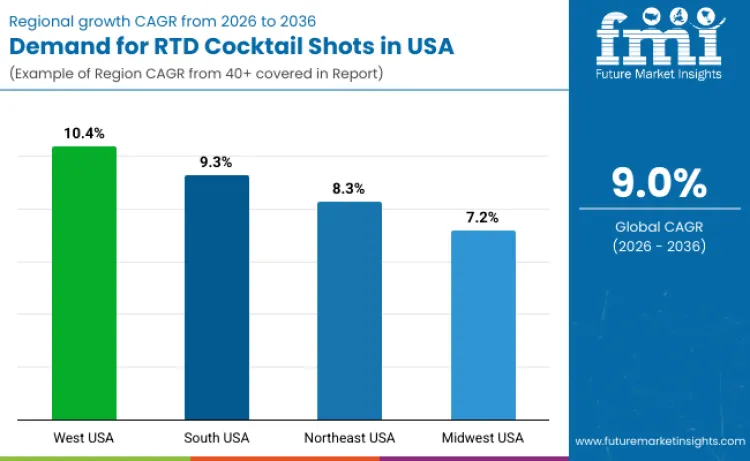
| Region | CAGR (2026 to 2036) |
|---|---|
| West USA | 10.4% |
| South USA | 9.3% |
| Northeast USA | 8.3% |
| Midwest USA | 7.2% |
How is West USA driving demand for RTD Cocktail Shots?
West USA demand is driven by product innovation, premium positioning, and lifestyle-oriented consumption. The region’s CAGR of 10.4% reflects strong uptake of RTD cocktail shots in convenience stores, specialty liquor outlets, and event-driven retail channels. Consumers show preference for craft-inspired flavors, tequila-based and vodka-based formulations, and clean-label ingredient profiles. Beverage companies use West USA as a testbed for limited editions and premium SKUs. Portability and portion control support usage in festivals, travel retail, and casual social settings. Demand favors visually differentiated packaging and higher alcohol content per serving within regulatory limits.
- Premium and craft-style RTD shot formulations
- Strong presence in convenience and specialty retail
- High adoption in events and lifestyle consumption
- Preference for differentiated flavors and packaging
How is South USA driving demand for RTD Cocktail Shots?
South USA demand is volume-oriented and occasion-driven, reflecting social drinking culture and warm-climate consumption patterns. The region’s CAGR of 9.3% reflects strong sales through liquor chains, gas stations, and party-focused retail formats. RTD cocktail shots are popular for pre-mixed convenience in gatherings, nightlife pre-events, and outdoor occasions. Consumers prioritize familiar flavors, spirit-forward profiles, and competitive pricing. Multi-pack formats support higher throughput and repeat purchases. Demand growth is reinforced by broad distribution access and high frequency of social consumption occasions.
- Party and social gathering-driven consumption
- High sales through liquor and convenience chains
- Preference for familiar, spirit-forward flavors
- Strong demand for multi-pack value formats
How is Northeast USA driving demand for RTD Cocktail Shots?
Northeast USA demand reflects urban lifestyles, premium spirit consumption, and regulated retail environments. The region’s CAGR of 8.3% is supported by uptake in metropolitan areas through licensed liquor stores and urban convenience outlets. Consumers favor higher-quality spirit bases, classic cocktail profiles, and lower-sugar formulations. Portion-controlled shots align with moderation trends and regulated consumption norms. Brands focus on compliance, labeling clarity, and premium cues to gain shelf placement. Demand remains steady, driven by nightlife density and controlled experimentation with new formats.
- Urban consumption and nightlife-driven demand
- Preference for premium spirit bases
- Focus on classic cocktail flavor profiles
- Regulated retail supporting controlled growth
How is Midwest USA driving demand for RTD Cocktail Shots?
Midwest USA demand is steady and mainstream-oriented, reflecting gradual adoption and price sensitivity. The region’s CAGR of 7.2% reflects growing shelf presence in liquor stores, grocery-linked alcohol retail, and regional chains. Consumers view RTD cocktail shots as convenience products for occasions rather than everyday consumption. Flavor familiarity, brand recognition, and affordability influence purchasing decisions. Seasonal spikes occur around holidays and local events. Demand growth remains incremental, supported by broader acceptance of RTD alcohol formats and expanded retail availability.
- Mainstream retail-driven adoption
- Occasion-based and seasonal consumption
- Price sensitivity influencing brand choice
- Gradual acceptance of RTD shot formats
What is the competitive landscape of demand for RTD cocktail shots in the USA?
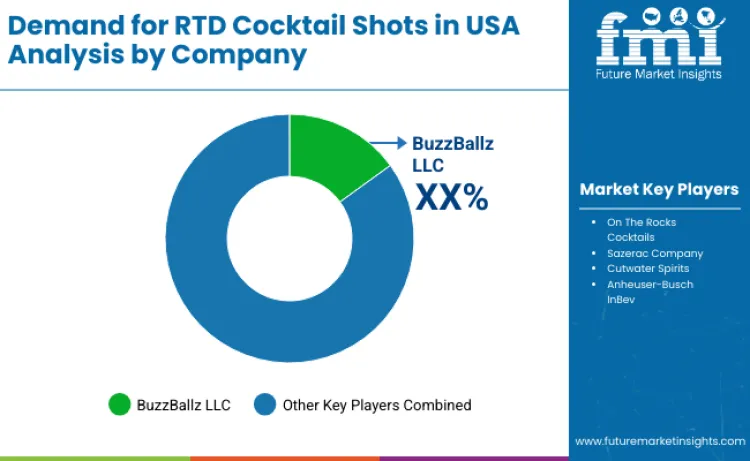
Demand for RTD cocktail shots in the USA is driven by convenience-led alcohol consumption, on-the-go social occasions, and growth of single-serve premium spirits formats. Usage concentrates on compact, high-ABV servings positioned for travel retail, events, and impulse purchases within regulated channels. Buyers evaluate flavor authenticity, alcohol consistency, shelf stability, and compliance with federal and state alcohol regulations. Procurement teams prioritize suppliers with licensed production, scalable bottling capability, and established distribution across convenience, liquor, and e-commerce channels. Trend in the USA market reflects preference for portion-controlled formats, rapid flavor rotation, and alignment with cocktail culture without preparation complexity.
BuzzBallz LLC operates large-scale USA production supplying widely distributed RTD cocktail shots with strong convenience-store penetration. On The Rocks Cocktails supports demand through premium spirit-based RTD formats adapted into shot-sized offerings for controlled consumption occasions. Sazerac Company participates through diversified spirits portfolios and RTD innovations leveraging established cocktail brands. Cutwater Spirits maintains visibility with high-proof RTD products produced in the USA and distributed through national alcohol networks. Anheuser-Busch InBev supports category development through RTD extensions and distribution infrastructure serving licensed retailers. Competitive positioning in the USA reflects regulatory compliance, distribution reach, flavor development capability, and production scalability supporting high-turnover single-serve alcohol formats.
Key Players in USA RTD Cocktail Shots Demand
- BuzzBallz LLC
- On The Rocks Cocktails
- Sazerac Company
- Cutwater Spirits
- Anheuser-Busch InBev
Scope of the Report
| Items | Values |
|---|---|
| Quantitative Units | USD billion |
| Type | Malt-Based; Wine-Based; Spirit-Based |
| Packaging Type | Cans; Bottles |
| Regions Covered | West USA; South USA; Northeast USA; Midwest USA |
| Key Companies Profiled | BuzzBallz LLC; On The Rocks Cocktails; Sazerac Company; Cutwater Spirits; Anheuser-Busch InBev |
| Additional Attributes | Dollar sales by base type and packaging; regional consumption trends across USA states; demand driven by convenience, portability, and premiumization of ready-to-drink alcohol; growth supported by retail expansion and on-the-go occasions; competitive differentiation based on flavor innovation, alcohol content, and brand positioning. |
USA RTD Cocktail Shots Demand by Segments
By Type:
- Malt-Based
- Wine-Based
- Spirit-Based
By Packaging Type:
- Cans
- Bottles
By Region:
- West USA
- South USA
- Northeast USA
- Midwest USA
Frequently Asked Questions
How big is the demand for RTD cocktail shots in USA in 2026?
The demand for RTD cocktail shots in USA is estimated to be valued at USD 1.7 billion in 2026.
What will be the size of RTD cocktail shots demand in USA in 2036?
The demand size for RTD cocktail shots in USA is projected to reach USD 4.0 billion by 2036.
How much will the demand for RTD cocktail shots in USA grow between 2026 and 2036?
The demand for RTD cocktail shots in USA is expected to grow at a 9.0% CAGR between 2026 and 2036.
What are the key types in the RTD cocktail shots demand in USA?
The key types in RTD cocktail shots demand in USA include malt-based and spirit-based RTD cocktail shots.
Which packaging type is expected to contribute a significant share in the RTD cocktail shots demand in USA in 2026?
In terms of packaging type, cans are expected to command 57.4% share in the RTD cocktail shots demand in USA in 2026.
Preview the report firsthand - request a free sample
Get SampleGet the brochure for pricing and purchase details.
Get PDFTable of Content
- Executive Summary
- USA Market Outlook
- Demand Side Trends
- Supply Side Trends
- Alcohol Regulation and Distribution Landscape
- Analysis and Recommendations
- Market Overview
- Market Coverage and Taxonomy
- Market Definition, Scope, and Limitations
- Market Background
- Market Dynamics
- Drivers
- Restraints
- Opportunities
- Trends
- Scenario Forecast
- Demand in Optimistic Scenario
- Demand in Likely Scenario
- Demand in Conservative Scenario
- Opportunity Map Analysis
- Product Life Cycle Analysis
- Supply Chain Analysis
- Investment Feasibility Matrix
- Value Chain Analysis
- PESTLE and Porter Analysis
- Federal and State Alcohol Regulatory Framework
- Regional Parent Market Outlook
- Production and Consumption Statistics
- Import and Export Statistics
- USA RTD Cocktail Shots Demand Analysis 2020 to 2024 and Forecast 2025 to 2035
- Historical Market Size Value (USD Billion) Analysis 2020 to 2024
- Current and Future Market Size Value (USD Billion) Projections 2025 to 2035
- Year-on-Year Growth Trend Analysis
- Absolute Dollar Opportunity Analysis
- USA RTD Cocktail Shots Pricing Analysis 2020 to 2024 and Forecast 2025 to 2035
- USA RTD Cocktail Shots Demand Analysis 2020 to 2024 and Forecast 2025 to 2035, By Type
- Introduction and Key Findings
- Historical Market Size Value (USD Billion) Analysis by Type 2020 to 2024
- Current and Future Market Size Value (USD Billion) Analysis and Forecast by Type 2025 to 2035
- Malt-Based RTD Cocktail Shots
- Wine-Based RTD Cocktail Shots
- Spirit-Based RTD Cocktail Shots
- Year-on-Year Growth Trend Analysis by Type
- Absolute Dollar Opportunity Analysis by Type
- USA RTD Cocktail Shots Demand Analysis 2020 to 2024 and Forecast 2025 to 2035, By Packaging Type
- Introduction and Key Findings
- Historical Market Size Value (USD Billion) Analysis by Packaging Type 2020 to 2024
- Current and Future Market Size Value (USD Billion) Analysis and Forecast by Packaging Type 2025 to 2035
- Cans
- Bottles
- Year-on-Year Growth Trend Analysis by Packaging Type
- Absolute Dollar Opportunity Analysis by Packaging Type
- USA RTD Cocktail Shots Demand Analysis 2020 to 2024 and Forecast 2025 to 2035, By Region
- West USA
- South USA
- Northeast USA
- Midwest USA
- Market Structure Analysis
- Competition Dashboard
- Competition Benchmarking
- Market Share Analysis of Key Players
- By Type
- By Packaging Type
- By Region
- Competition Analysis
- Competition Deep Dive
- BuzzBallz LLC
- On The Rocks Cocktails
- Sazerac Company
- Cutwater Spirits
- Anheuser-Busch InBev
- Assumptions and Acronyms Used
- Research Methodology


