

- Industry Size (2026)
- USD 134.57 Mn
- Forecast (2036)
- USD 358.67 Mn
- CAGR (2026 to 2036)
- 10.3%
Ready To Drink Cocktails Market Size, Market Forecast and Outlook By FMI
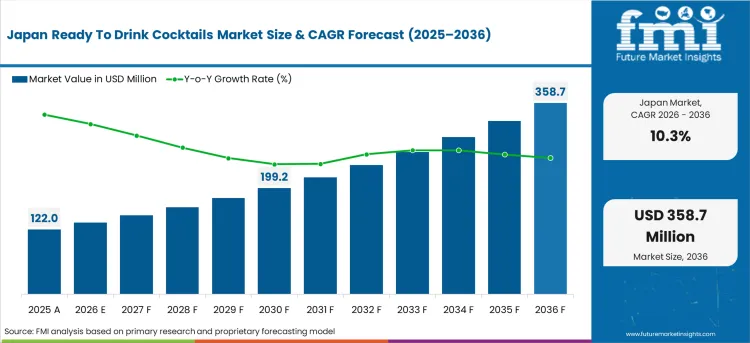
Demand for ready to drink cocktails in Japan was valued at USD 122.00 Million in 2025. Based on Future Market Insights' analysis, demand for ready to drink cocktails is estimated to grow to USD 134.57 Million in 2026 and USD 358.67 Million by 2036. FMI projects a CAGR of 10.3% during the forecast period from 2026 to 2036. This translates to an incremental opportunity worth USD 224.10 Million over the ten-year assessment window.
Summary of Ready To Drink Cocktails Market in Japan
- Market Snapshot
- Demand for ready to drink cocktails in Japan is valued at USD Million 122.00 in 2025 and is projected to reach USD Million 358.67 by 2036.
- The market is expected to grow at a 10.3% CAGR from 2026 to 2036, creating an incremental opportunity of USD Million 224.10.
- The market is a format-driven, convenience-retail-dependent alcoholic beverage category where shelf access, excise optimization, and seasonal innovation velocity define competitive positioning.
- Demand and Growth Drivers
- Convenience store cold-shelf allocation strategies are rotating RTD cocktail listings on short seasonal cycles, favoring suppliers with fast product innovation pipelines.
- Favorable excise treatment for malt-based RTD products under the National Tax Agency framework supports retail price competitiveness against single-serve beer.
- At-home consumption occasions continue to sustain off-trade RTD demand, as consumers prioritize convenience and variety in single-serve alcoholic beverage formats.
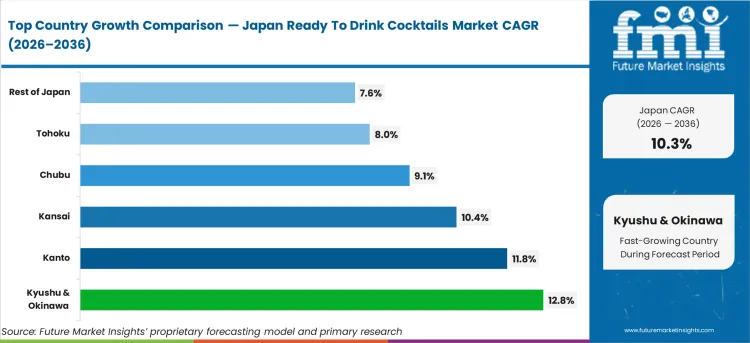
- Among key regions, Kyushu & Okinawa leads at 12.8% CAGR, followed by Kanto at 11.8%, Kansai at 10.4%, Chubu at 9.1%, Tohoku at 8%, and Rest of Japan at 7.6%.
- Product and Segment View
- RTD cocktails in Japan include malt-based, spirit-based, and wine-based pre-mixed alcoholic beverages sold in single-serve bottle and can formats.
- Distribution channels span off-trade retail stores (convenience stores and supermarkets), online platforms, and licensed liquor stores.
- Malt-based leads by Type with 60% share in 2026, benefiting from favorable excise treatment and established consumer familiarity with chuhai and highball formats.
- Bottles leads by Packaging with 72% share in 2026, preferred for premium presentation and resealable convenience in at-home consumption occasions.
- Scope includes pre-mixed RTD cocktails. Excluded are on-premise draft cocktails, cocktail mixers sold separately, and non-alcoholic cocktail alternatives.
- Geography and Competitive Outlook
- Kyushu & Okinawa and Kanto are the fastest-growing regional clusters, driven by concentrated processing, distribution, and consumption infrastructure.
- Demand in Tohoku and Rest of Japan follows steadier, replacement-driven procurement cycles in established networks.
- Competition is defined by convenience store listing access, product innovation speed, excise category optimization, and the ability to deliver seasonal variety at price points aligned with off-trade consumer expectations.
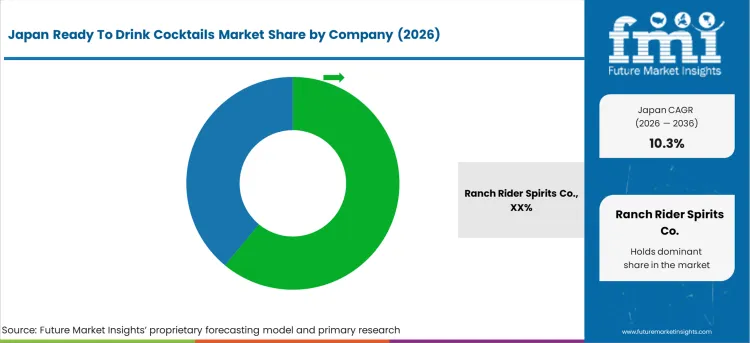
- Key players include Ranch Rider Spirits Co., House of Delola, LLC, Diageo plc, Brown-Forman, Bacardi Limited.
- Analyst Opinion at FMI
- Nandini Roy Choudhury, Principal Consultant for Food & Beverage analysts observe that: 'In my analysis, I have observed that the RTD cocktail segment in Japan is the fastest-moving category in the alcoholic beverage space, and its growth is being driven less by brand preference than by format convenience and retail access. Convenience store operators are allocating cold-shelf space to RTD cocktails at the expense of single-serve beer and chuhai products, creating a distribution-access bottleneck that favors suppliers with established konbini listing agreements. New entrants without existing convenience store distribution infrastructure face a structural barrier that brand investment alone cannot overcome.'
- Strategic Implications / Executive Takeaways
- RTD suppliers should build rapid product innovation pipelines aligned with convenience store seasonal listing rotation cycles to maintain cold-shelf presence.
- Brand managers should optimize excise category positioning to leverage favorable malt-based tax treatment while developing spirit-based and wine-based extensions for premium occasions.
- Distribution teams should secure konbini listing agreements as the primary market access channel, recognizing that retail shelf presence determines consumer trial rates more than advertising spend.
Ready To Drink Cocktails Market Key Takeaways
| Metric | Details |
|---|---|
| Industry Size (2026) | USD 134.57 Million |
| Industry Value (2036) | USD 358.67 Million |
| CAGR (2026 to 2036) | 10.3% |
Source: Future Market Insights, 2026
Japan's RTD cocktail market is one of the most developed globally, benefiting from a regulatory and retail environment that supports single-serve alcoholic beverage distribution through convenience stores and vending machine channels. The National Tax Agency's classification framework treats RTD cocktails under separate excise categories depending on base spirit, malt, or wine content, creating pricing differentiation across product types. FMI analysts observe that the malt-based sub-segment dominates due to favorable tax treatment and established consumer familiarity with chuhai and highball formats. The convenience store cold-shelf allocation model is the primary battleground for market share, as konbini operators rotate RTD listings on short seasonal cycles that reward suppliers with fast innovation pipelines.
Across Japanese prefectural clusters, growth trajectories vary based on industrial concentration and end-use demand density. Kyushu & Okinawa is projected to expand at 12.8% CAGR. Kanto is projected to expand at 11.8% CAGR. Kansai is projected to expand at 10.4% CAGR. Chubu is projected to expand at 9.1% CAGR. Tohoku is projected to expand at 8% CAGR. Rest of Japan is projected to expand at 7.6% CAGR. Kyushu & Okinawa leads the growth ranking, supported by concentrated processing and distribution infrastructure. Kanto, anchoring the Tokyo metropolitan consumption base, follows closely. Mature clusters such as Tohoku and Rest of Japan register steadier, replacement-driven demand patterns.
Ready To Drink Cocktails Market Definition
Ready-to-drink cocktails are pre-mixed alcoholic beverages sold in sealed, single-serve or multi-serve packaging formats, ready for immediate consumption without additional preparation. In the Japanese market, this category includes malt-based, spirit-based, and wine-based RTD products distributed through off-trade retail stores, online channels, and liquor stores. Packaging formats include bottles and cans designed for convenience store and at-home consumption occasions.
Ready To Drink Cocktails Market Inclusions
Market scope includes malt-based, spirit-based, and wine-based RTD cocktail products in bottle and can packaging formats sold through off-trade retail, online, and liquor store channels in Japan. The assessment covers market sizes by type, packaging, distribution channel, and Japanese prefectural region for 2026 to 2036.
Ready To Drink Cocktails Market Exclusions
The scope excludes draft cocktails served on-premise, cocktail mixers and ingredients sold separately, and non-alcoholic cocktail alternatives. It also omits spirits, wine, and beer sold in standard formats not pre-mixed as cocktails.
Ready To Drink Cocktails Market Research Methodology
- Primary Research: Analysts engaged with procurement managers, brand directors, and distribution leads at ready to drink cocktails manufacturing and distribution operations across Japan to map decision triggers and specification requirements.
- Desk Research: Data collection aggregated regulatory filings from the Ministry of Health, Labour and Welfare, trade statistics from Japan Customs, and published industry standards relevant to ready to drink cocktails production and distribution in Japan.
- Market-Sizing and Forecasting: Baseline values derive from a bottom-up aggregation of manufacturer shipments and import volumes, applying region-specific consumption curves to project demand velocity through 2036.
- Data Validation and Update Cycle: Projections are cross-checked against publicly reported production volumes, trade data, and downstream procurement disclosures from major producers and distributors operating in Japan.
Why is the Demand for Ready To Drink Cocktails in Japan Growing?
Demand for ready to drink (RTD) cocktails in Japan is growing as consumers seek convenient and high-quality alcoholic beverages that align with modern lifestyles. RTD cocktails offer the benefit of quick and easy consumption, eliminating the need for preparation or mixing. This convenience appeals to busy consumers who prefer hassle-free, yet premium, drinking experiences. With a rising trend in home consumption and social gatherings, RTD cocktails provide an ideal solution for consumers looking for variety, taste, and convenience in one package. Furthermore, these products are gaining popularity in convenience stores and supermarkets, making them readily available for consumers across Japan.
The growth in demand is also supported by the increasing interest in premium and craft beverages, with many RTD cocktails offering complex flavors and high-quality ingredients. As consumers seek new and exciting experiences, the variety of available cocktail options has expanded, catering to diverse preferences. The appeal of innovative flavors, along with the rise in cocktail culture, has contributed to the surge in RTD cocktail consumption, particularly among younger generations and professionals. Moreover, advancements in packaging and product design have helped position RTD cocktails as stylish and trendy choices, further driving their popularity.
Japan’s strong drinking culture, combined with a shift towards convenience and innovation, has created an ideal environment for the growth of the RTD cocktail sector. As disposable incomes increase and the demand for premium products rises, the ready to drink cocktail category is expected to continue expanding rapidly through 2035.
What is the Segment-Wise Analysis of Demand for Ready To Drink Cocktails in Japan?
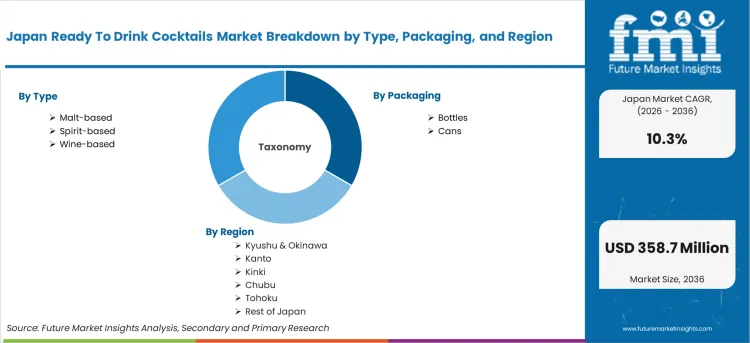
Demand for ready to drink cocktails in Japan is segmented by type, packaging, distribution channel, and region. By type, malt-based drinks lead at 60%, followed by spirit-based and wine-based cocktails. In terms of packaging, bottles dominate the demand, accounting for 72%, while cans make up the remainder. Distribution channels include off-trade/retail stores, online platforms, and liquor stores. Regionally, demand spans across Kyushu & Okinawa, Kanto, Kansai, Chubu, Tohoku, and the rest of Japan, with varying levels of preference depending on local consumption habits.
How Do Malt-Based Cocktails Lead the Demand for Ready To Drink Cocktails in Japan?
Malt-based ready-to-drink cocktails account for 60% of the demand in Japan, driven by their widespread popularity within the country's alcohol consumption culture. These cocktails are favored for their refreshing and smooth taste, providing a convenient and accessible alcoholic option for a variety of occasions, including casual social gatherings and outdoor activities. Malt-based drinks have broad appeal, particularly among young adults and consumers seeking convenient, ready-to-drink beverages.
As Japan experiences a growing demand for convenient alcoholic options, malt-based cocktails have gained significant traction, especially in regions like Kanto and Kansai, where their popularity continues to rise. Their availability across retail stores and their strong brand presence in the industry further contribute to their industry leadership. The ease of consumption, along with the association of malt-based cocktails with casual enjoyment, positions them as the dominant segment in the ready-to-drink cocktail category in Japan.
Why Does Bottle Packaging Lead the Demand for Ready To Drink Cocktails in Japan?
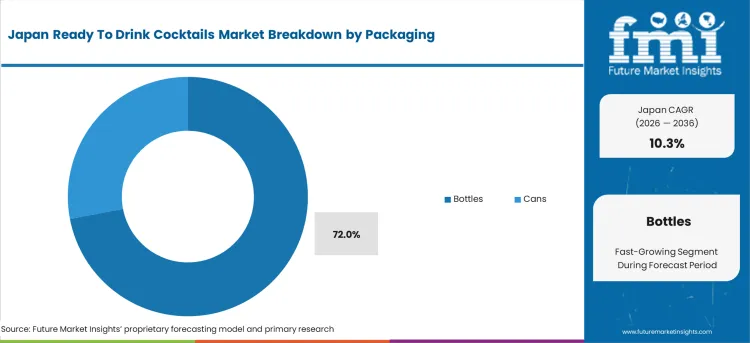
Bottles account for 72% of the demand for ready-to-drink cocktails in Japan, driven by their appeal due to convenience, portability, and the perception of quality. Bottled cocktails provide a premium feel, which is particularly attractive to consumers looking for high-quality, ready-to-drink options. The sturdy and secure design of bottles makes them easy to transport, and their larger volume compared to cans makes them more suitable for group settings, enhancing their appeal for both casual gatherings and formal events.
Bottles also offer a longer shelf life, which is an important factor for both consumers and retailers, contributing to their popularity. Retailers and distributors cater to the demand for bottled drinks by offering a variety of cocktail options, reinforcing their industry dominance. The combination of convenience, quality perception, and longer shelf stability makes bottles the preferred packaging choice for ready-to-drink cocktails in Japan, driving their continued growth in the industry.
What are the Key Trends, Drivers, and Restraints in Demand for Ready To Drink Cocktails in Japan?
Demand for ready to drink (RTD) cocktails in Japan is rising as consumers prioritize convenience, portability, and variety in their drinking experiences. With busy urban lifestyles and the growing trend of at-home socializing, RTD cocktails offer the ease of a pre-mixed, ready-to-serve beverage without the need for mixing or bar visits. The growing popularity of low-alcohol or lighter drinks is also contributing to the RTD cocktail industry's growth. However, challenges such as a rising health-conscious consumer base, the increasing demand for non-alcoholic beverages, and a shift toward more sustainable, eco-friendly packaging may limit long-term growth. Traditional drink preferences and competition from other alcoholic beverages could also impact demand.
Why is Demand for Ready To Drink Cocktails Growing in Japan?
Several factors are contributing to the increasing demand for ready to drink (RTD) cocktails in Japan. Busy lifestyles and the growing trend of home-based drinking have made convenience a priority for many consumers. RTD cocktails meet this need by providing an easy, no-fuss solution for at-home or on-the-go drinking. The variety of flavors available, ranging from traditional cocktails to innovative, fruit-based options, is another driver behind this demand. The growing popularity of low-alcohol, light versions of RTD cocktails is attracting health-conscious consumers. These products' availability in convenience stores, supermarkets, and online platforms further boosts their accessibility, making RTD cocktails an appealing choice for consumers who seek both quality and convenience.
How are Technological & Industry Innovations Driving Ready-to-Drink Cocktail Demand in Japan?
Technological innovations in product development and distribution are helping drive the demand for ready to drink (RTD) cocktails in Japan. Advances in flavor formulations have allowed manufacturers to offer a wide range of options, from classic cocktails to lighter, low-alcohol versions that cater to evolving consumer preferences. Improved packaging, including portable cans and bottles, enhances the convenience of RTD cocktails, making them easy to consume on the go. The expansion of distribution channels, such as convenience stores, supermarkets, and e-commerce platforms, has made these products more accessible to a broader consumer base. These innovations are making RTD cocktails a popular choice for consumers looking for an enjoyable and hassle-free drinking experience.
What are the Key Challenges and Risks That Could Limit Ready To Drink Cocktail Demand in Japan?
Despite the growth of ready to drink (RTD) cocktails, several challenges could limit their adoption in Japan. As younger consumers become more health-conscious, there is increasing demand for non-alcoholic or low-calorie beverages, which could impact the popularity of traditional alcoholic drinks like RTD cocktails. Regulatory and taxation pressures could affect pricing, making RTD cocktails less affordable or desirable for some consumers. The increasing number of brands and flavors entering the industry may lead to consumer fatigue, limiting brand loyalty. Finally, competition from other alcoholic beverages such as beer, sake, and home-mixed cocktails could keep the industry share of RTD cocktails from expanding significantly.
What is the Regional Demand Outlook for Ready To Drink Cocktails in Japan?
Demand for ready-to-drink (RTD) cocktails in Japan is growing rapidly, with Kyushu & Okinawa leading at a 12.8% CAGR, driven by the region’s growing interest in convenience and premium alcohol products. Kanto follows with an 11.8% CAGR, supported by its large urban population and high demand for convenience-oriented alcoholic beverages. Kansai shows a 10.4% CAGR, reflecting the region's vibrant food and drink culture, with growing consumer interest in ready-made cocktails. Chubu experiences a 9.1% CAGR, driven by an expanding consumer base for new and innovative drink options. Tohoku and the Rest of Japan see more moderate growth at 8.0% and 7.6%, respectively, as the demand for RTD cocktails expands beyond urban centers to smaller regions.
.webp "Top Country Growth Comparison Japan Ready To Drink Cocktails Market Cagr (2026 2036)")
| Region | CAGR (%) |
|---|---|
| Kyushu & Okinawa | 12.8% |
| Kanto | 11.8% |
| Kansai | 10.4% |
| Chubu | 9.1% |
| Tohoku | 8.0% |
| Rest of Japan | 7.6% |
How is Demand for Ready to Drink Cocktails Growing in Kyushu & Okinawa?
Kyushu & Okinawa leads the demand for ready-to-drink (RTD) cocktails, growing at a 12.8% CAGR. The region’s rising tourism and hospitality sectors are key drivers, as visitors and local consumers increasingly seek convenient and premium alcohol products. The popularity of RTD cocktails in bars, restaurants, resorts, and hotels is expanding rapidly, driven by the demand for easy-to-consume, high-quality beverages.
Okinawa, with its unique drink culture and thriving tourism industry, has seen a rise in the consumption of RTD cocktails, which offer both novelty and convenience. The warm climate in the region makes refreshing cocktails especially appealing. As the region continues to focus on enhancing its tourism infrastructure and attracting both domestic and international visitors, the demand for RTD cocktails is expected to grow steadily, solidifying Kyushu & Okinawa as a leading industry in Japan.
Why is Demand for Ready to Drink Cocktails Rising in Kanto?
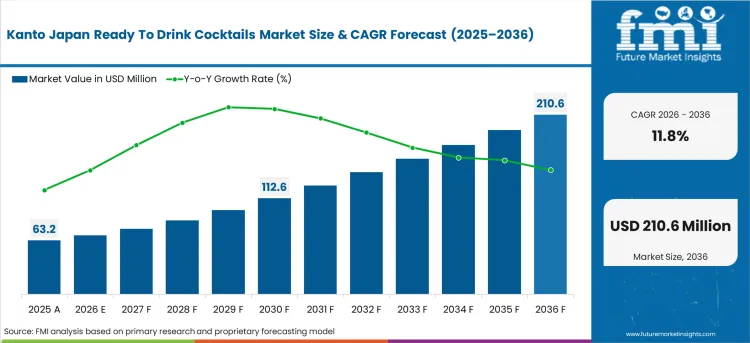
In Kanto, demand for ready-to-drink (RTD) cocktails is rising at an 11.8% CAGR. Kanto, home to Japan’s largest metropolitan area, Tokyo, has a strong consumer base that values convenience and innovation. With busy lifestyles and a growing preference for easy-to-consume, high-quality beverages, RTD cocktails are increasingly popular in urban settings. Tokyo’s vibrant nightlife, bars, cafés, and restaurants serve as key outlets for RTD cocktails, further fueling demand.
As the trend for premium and craft cocktails continues to rise, the RTD category has experienced significant growth, with consumers seeking ready-made options that offer unique and sophisticated flavor profiles. The increasing demand for healthier, low-alcohol, or functional RTD cocktails supports the category’s expansion. With Kanto’s large, trend-sensitive population, demand for RTD cocktails is expected to continue rising, driven by innovation, convenience, and a growing preference for quality beverages.
How is Demand for Ready to Drink Cocktails Expanding in Kansai?
Kansai shows steady demand for ready-to-drink (RTD) cocktails, growing at a 10.4% CAGR. The region’s vibrant food and beverage culture, particularly in cities like Osaka and Kyoto, drives interest in innovative drink offerings. RTD cocktails are increasingly being seen as a convenient and premium alternative to traditional cocktails, especially in urban and suburban areas where consumers are looking for easy-to-consume, high-quality drinks.
As Kansai’s nightlife scene and café culture continue to evolve, the demand for RTD cocktails is growing, particularly among younger consumers and those seeking a quick and sophisticated drinking experience. Kansai’s food festivals and seasonal events provide the perfect environment for RTD cocktails to thrive, further boosting demand. As consumer preferences shift towards convenience and premium products, Kansai’s industry for RTD cocktails is expected to continue expanding, making it a significant driver of overall industry growth in Japan.
Why is Demand for Ready to Drink Cocktails Growing in Chubu?
Chubu is experiencing steady demand for ready-to-drink (RTD) cocktails, growing at a 9.1% CAGR. The region’s expanding population and increasing focus on convenience in the food and beverage sector contribute to this trend. Cities like Nagoya, with their vibrant nightlife and growing consumer base, are seeing rising demand for RTD cocktails, particularly in bars, restaurants, and convenience stores. The appeal of RTD cocktails lies in their easy accessibility, premium quality, and variety of flavors, making them a popular choice among consumers seeking convenient, high-end drinking experiences.
Chubu’s evolving foodservice industry, which caters to both local consumers and visitors, is increasingly offering RTD cocktails as part of its menu options. As demand for ready-made alcoholic beverages continues to rise, Chubu’s industry for RTD cocktails is expected to grow steadily, supported by shifting consumer preferences and the increasing availability of innovative products.
How is Demand for Ready to Drink Cocktails Expanding in Tohoku?
Tohoku is seeing moderate growth in ready-to-drink (RTD) cocktail demand, with an 8.0% CAGR. While the region’s demand for RTD cocktails is smaller compared to major urban centers, there is a growing interest in convenient and premium drinking experiences. As Tohoku’s food and beverage scene modernizes and consumers become more accustomed to convenient options, the demand for RTD cocktails is steadily increasing.
The region’s increasing focus on sustainability and healthy lifestyles is also influencing consumption patterns, with consumers seeking low-alcohol or functional RTD cocktails. Tohoku’s growing tourism sector, particularly in rural and scenic areas, is introducing new opportunities for RTD cocktails to capture the attention of visitors. As the region’s industry continues to develop, the demand for RTD cocktails will grow gradually, especially among younger generations and consumers looking for premium, ready-to-serve alcoholic beverages.
Why is Demand for Ready to Drink Cocktails Steady in the Rest of Japan?
The Rest of Japan is experiencing steady demand for ready-to-drink (RTD) cocktails, with a 7.6% CAGR. While the demand is slower compared to major urban regions, smaller cities and rural areas are increasingly adopting RTD cocktails as part of their growing food and beverage culture. The convenience and affordability of RTD cocktails make them particularly appealing in these areas, where consumers are looking for simple, high-quality drink options for social occasions and gatherings.
As awareness of premium and craft cocktails rises, even smaller regions are beginning to embrace the category. The growing focus on local food tourism and cultural events provides new opportunities for RTD cocktails to be featured in festivals and local celebrations, further driving demand. Although adoption is slower compared to urban centers, the Rest of Japan’s steady demand for RTD cocktails reflects an evolving shift towards convenience and quality in drinking habits.
What is Driving the Demand for Aquaculture Vaccines in Japan and Who Are the Key Providers?
Demand for aquaculture vaccines in Japan is growing because disease outbreaks among farmed fish have caused significant economic losses. Infectious diseases affecting marine and freshwater species continue to challenge fish farms. Vaccination offers a reliable method to prevent bacterial and viral infections, helping maintain fish health, reduce mortality, and ensure a stable seafood supply. As Japan’s aquaculture industry shifts toward more intensive and modern practices, fish farmers are increasingly adopting vaccines to meet stricter biosecurity standards and reduce dependence on antimicrobials.
Leading providers of aquaculture vaccines in Japan include Zoetis, Merck Animal Health, Elanco, Centrovet, and PHARMAQ. Zoetis holds a significant share and offers a range of vaccines formulated for key farmed species, including salmon and marine fish. These companies supply both inactivated and other vaccine types tailored to combat prevalent pathogens, helping Japan’s aquaculture farms maintain fish health and production consistency.
Advances in vaccine development and growing emphasis on sustainable fish production are fueling further uptake. With stricter regulations on antimicrobial use and increasing awareness of antibiotic resistance risks in aquaculture, vaccination is seen as a safer, preventative approach. Improved hatchery practices, better water-management systems, and enhanced veterinary support amplify the effectiveness of immunization strategies. As fish farms expand and intensify operations, demand for reliable vaccines is expected to continue rising, ensuring both animal welfare and food safety in Japan’s seafood industry.
Key Players in Japan Ready To Drink Cocktails Demand
- Ranch Rider Spirits Co.
- House of Delola, LLC
- Diageo plc
- Brown-Forman
- Bacardi Limited
Scope of the Report
| Metric | Value |
|---|---|
| Quantitative Units | USD Million 134.57 to USD Million 358.67, at a CAGR of 10.3% |
| Market Definition | Ready-to-drink cocktails are pre-mixed alcoholic beverages sold in sealed, single-serve or multi-serve packaging formats, ready for immediate consumption without additional preparation. In the Japanese market, this category includes malt-based, spirit-based, and wine-based RTD products distributed through off-trade retail stores, online channels, and liquor stores. |
| Segmentation | Type: Malt-based, Spirit-based, Wine-based; Packaging: Bottles, Cans; Distribution Channel: Off-trade/Retail Stores, Online, Liquor Stores |
| Regions Covered | Kyushu & Okinawa, Kanto, Kansai, Chubu, Tohoku, Rest of Japan |
| Key Companies Profiled | Ranch Rider Spirits Co., House of Delola, LLC, Diageo plc, Brown-Forman, Bacardi Limited |
| Forecast Period | 2026 to 2036 |
| Approach | Forecasting models apply a bottom-up methodology starting with manufacturer shipment metrics and import volume data, cross-validated against downstream consumption patterns and regulatory compliance filings. |
Japan Ready To Drink Cocktails Demand by Key Segments
Type:
- Malt-based
- Spirit-based
- Wine-based
Packaging:
- Bottles
- Cans
Distribution Channel:
- Off-trade/Retail Stores
- Online
- Liquor Stores
Region:
- Kyushu & Okinawa
- Kanto
- Kansai
- Chubu
- Tohoku
- Rest of Japan
Bibliography
- 1. National Tax Agency, Japan. (2025). Liquor Tax Statistical Report: RTD and Low-Alcohol Beverage Category Data. NTA.
- 2. Japan External Trade Organization. (2025). Alcoholic Beverage Distribution and Retail Trends. JETRO.
- 3. Ministry of Finance, Japan. (2025). Customs Trade Statistics: Pre-Mixed Alcoholic Beverage Imports. MOF.
- 4. Japan Franchise Association. (2024). Convenience Store Beverage Category Performance Report. JFA.
- 5. World Health Organization. (2024). Global Alcohol Policy Database: Japan. WHO.
This bibliography is provided for reader reference. The full Future Market Insights report contains the complete reference list with primary research documentation.
Frequently Asked Questions
How large is the demand for Ready To Drink Cocktails in Japan in 2026?
Demand for ready to drink cocktails in Japan is estimated to be valued at USD Million 134.57 in 2026.
What will be the market size of Ready To Drink Cocktails in Japan by 2036?
Market size for ready to drink cocktails in Japan is projected to reach USD Million 358.67 by 2036.
What is the expected demand growth for Ready To Drink Cocktails in Japan between 2026 and 2036?
Demand for ready to drink cocktails in Japan is expected to grow at a CAGR of 10.3% between 2026 and 2036.
Which Type is poised to lead sales in 2026?
Malt-based accounts for 60% share in 2026, driven by established procurement preferences and compatibility across primary end-use applications.
Which region is growing fastest for Ready To Drink Cocktails in Japan?
Kyushu & Okinawa is projected to grow at a CAGR of 12.8% during 2026 to 2036, leading all regional clusters in Japan.
What is included in the scope of this Ready To Drink Cocktails report?
Market scope includes malt-based, spirit-based, and wine-based RTD cocktail products in bottle and can packaging formats sold through off-trade retail, online, and liquor store channels in Japan. The assessment covers market sizes by type, packaging, distribution channel, and Japanese prefectural region for 2026 to 2036.
What is excluded from the scope of this report?
The scope excludes draft cocktails served on-premise, cocktail mixers and ingredients sold separately, and non-alcoholic cocktail alternatives. It also omits spirits, wine, and beer sold in standard formats not pre-mixed as cocktails.
How does FMI build and validate the Ready To Drink Cocktails forecast?
Forecasting models apply a bottom-up methodology starting with manufacturer shipment data and import volumes, cross-validated against downstream consumption patterns and regulatory compliance filings.
Preview the report firsthand - request a free sample
Get SampleGet the brochure for pricing and purchase details.
Get PDFTable of Content
- Executive Summary
- Japan Market Outlook
- Demand-side Trends
- Supply-side Trends
- Technology Roadmap Analysis
- Analysis and Recommendations
- Market Overview
- Market Coverage / Taxonomy
- Market Definition / Scope / Limitations
- Research Methodology
- Chapter Orientation
- Analytical Lens and Working Hypotheses
- Market Structure, Signals, and Trend Drivers
- Benchmarking and Cross-market Comparability
- Market Sizing, Forecasting, and Opportunity Mapping
- Research Design and Evidence Framework
- Desk Research Programme (Secondary Evidence)
- Company Annual and Sustainability Reports
- Peer-reviewed Journals and Academic Literature
- Corporate Websites, Product Literature, and Technical Notes
- Earnings Decks and Investor Briefings
- Statutory Filings and Regulatory Disclosures
- Technical White Papers and Standards Notes
- Trade Journals, Industry Magazines, and Analyst Briefs
- Conference Proceedings, Webinars, and Seminar Materials
- Government Statistics Portals and Public Data Releases
- Press Releases and Reputable Media Coverage
- Specialist Newsletters and Curated Briefings
- Sector Databases and Reference Repositories
- FMI Internal Proprietary Databases and Historical Market Datasets
- Subscription Datasets and Paid Sources
- Social Channels, Communities, and Digital Listening Inputs
- Additional Desk Sources
- Expert Input and Fieldwork (Primary Evidence)
- Primary Modes
- Qualitative Interviews and Expert Elicitation
- Quantitative Surveys and Structured Data Capture
- Blended Approach
- Why Primary Evidence is Used
- Field Techniques
- Interviews
- Surveys
- Focus Groups
- Observational and In-context Research
- Social and Community Interactions
- Stakeholder Universe Engaged
- C-suite Leaders
- Board Members
- Presidents and Vice Presidents
- R&D and Innovation Heads
- Technical Specialists
- Domain Subject-matter Experts
- Scientists
- Physicians and Other Healthcare Professionals
- Governance, Ethics, and Data Stewardship
- Research Ethics
- Data Integrity and Handling
- Primary Modes
- Tooling, Models, and Reference Databases
- Desk Research Programme (Secondary Evidence)
- Data Engineering and Model Build
- Data Acquisition and Ingestion
- Cleaning, Normalisation, and Verification
- Synthesis, Triangulation, and Analysis
- Quality Assurance and Audit Trail
- Market Background
- Market Dynamics
- Drivers
- Restraints
- Opportunity
- Trends
- Scenario Forecast
- Demand in Optimistic Scenario
- Demand in Likely Scenario
- Demand in Conservative Scenario
- Opportunity Map Analysis
- Product Life Cycle Analysis
- Supply Chain Analysis
- Investment Feasibility Matrix
- Value Chain Analysis
- PESTLE and Porter’s Analysis
- Regulatory Landscape
- Regional Parent Market Outlook
- Production and Consumption Statistics
- Import and Export Statistics
- Market Dynamics
- Japan Market Analysis 2021 to 2025 and Forecast, 2026 to 2036
- Historical Market Size Value (USD Million) Analysis, 2021 to 2025
- Current and Future Market Size Value (USD Million) Projections, 2026 to 2036
- Y-o-Y Growth Trend Analysis
- Absolute $ Opportunity Analysis
- Japan Market Pricing Analysis 2021 to 2025 and Forecast 2026 to 2036
- Japan Market Analysis 2021 to 2025 and Forecast 2026 to 2036, By Type
- Introduction / Key Findings
- Historical Market Size Value (USD Million) Analysis By Type , 2021 to 2025
- Current and Future Market Size Value (USD Million) Analysis and Forecast By Type , 2026 to 2036
- Malt-based
- Spirit-based
- Wine-based
- Malt-based
- Y-o-Y Growth Trend Analysis By Type , 2021 to 2025
- Absolute $ Opportunity Analysis By Type , 2026 to 2036
- Japan Market Analysis 2021 to 2025 and Forecast 2026 to 2036, By Packaging
- Introduction / Key Findings
- Historical Market Size Value (USD Million) Analysis By Packaging, 2021 to 2025
- Current and Future Market Size Value (USD Million) Analysis and Forecast By Packaging, 2026 to 2036
- Bottles
- Cans
- Bottles
- Y-o-Y Growth Trend Analysis By Packaging, 2021 to 2025
- Absolute $ Opportunity Analysis By Packaging, 2026 to 2036
- Japan Market Analysis 2021 to 2025 and Forecast 2026 to 2036, By Distribution Channel
- Introduction / Key Findings
- Historical Market Size Value (USD Million) Analysis By Distribution Channel, 2021 to 2025
- Current and Future Market Size Value (USD Million) Analysis and Forecast By Distribution Channel, 2026 to 2036
- Off-trade/Retail Stores
- Online
- Liquor Stores
- Off-trade/Retail Stores
- Y-o-Y Growth Trend Analysis By Distribution Channel, 2021 to 2025
- Absolute $ Opportunity Analysis By Distribution Channel, 2026 to 2036
- Japan Market Analysis 2021 to 2025 and Forecast 2026 to 2036, By Region
- Introduction
- Historical Market Size Value (USD Million) Analysis By Region, 2021 to 2025
- Current Market Size Value (USD Million) Analysis and Forecast By Region, 2026 to 2036
- Kyushu & Okinawa
- Kanto
- Kinki
- Chubu
- Tohoku
- Rest of Japan
- Market Attractiveness Analysis By Region
- Kyushu & Okinawa Market Analysis 2021 to 2025 and Forecast 2026 to 2036, By Country
- Historical Market Size Value (USD Million) Trend Analysis By Market Taxonomy, 2021 to 2025
- Market Size Value (USD Million) Forecast By Market Taxonomy, 2026 to 2036
- By Country
- By Type
- By Packaging
- By Distribution Channel
- By Country
- Market Attractiveness Analysis
- By Country
- By Type
- By Packaging
- By Distribution Channel
- Key Takeaways
- Kanto Market Analysis 2021 to 2025 and Forecast 2026 to 2036, By Country
- Historical Market Size Value (USD Million) Trend Analysis By Market Taxonomy, 2021 to 2025
- Market Size Value (USD Million) Forecast By Market Taxonomy, 2026 to 2036
- By Country
- By Type
- By Packaging
- By Distribution Channel
- By Country
- Market Attractiveness Analysis
- By Country
- By Type
- By Packaging
- By Distribution Channel
- Key Takeaways
- Kinki Market Analysis 2021 to 2025 and Forecast 2026 to 2036, By Country
- Historical Market Size Value (USD Million) Trend Analysis By Market Taxonomy, 2021 to 2025
- Market Size Value (USD Million) Forecast By Market Taxonomy, 2026 to 2036
- By Country
- By Type
- By Packaging
- By Distribution Channel
- By Country
- Market Attractiveness Analysis
- By Country
- By Type
- By Packaging
- By Distribution Channel
- Key Takeaways
- Chubu Market Analysis 2021 to 2025 and Forecast 2026 to 2036, By Country
- Historical Market Size Value (USD Million) Trend Analysis By Market Taxonomy, 2021 to 2025
- Market Size Value (USD Million) Forecast By Market Taxonomy, 2026 to 2036
- By Country
- By Type
- By Packaging
- By Distribution Channel
- By Country
- Market Attractiveness Analysis
- By Country
- By Type
- By Packaging
- By Distribution Channel
- Key Takeaways
- Tohoku Market Analysis 2021 to 2025 and Forecast 2026 to 2036, By Country
- Historical Market Size Value (USD Million) Trend Analysis By Market Taxonomy, 2021 to 2025
- Market Size Value (USD Million) Forecast By Market Taxonomy, 2026 to 2036
- By Country
- By Type
- By Packaging
- By Distribution Channel
- By Country
- Market Attractiveness Analysis
- By Country
- By Type
- By Packaging
- By Distribution Channel
- Key Takeaways
- Rest of Japan Market Analysis 2021 to 2025 and Forecast 2026 to 2036, By Country
- Historical Market Size Value (USD Million) Trend Analysis By Market Taxonomy, 2021 to 2025
- Market Size Value (USD Million) Forecast By Market Taxonomy, 2026 to 2036
- By Country
- By Type
- By Packaging
- By Distribution Channel
- By Country
- Market Attractiveness Analysis
- By Country
- By Type
- By Packaging
- By Distribution Channel
- Key Takeaways
- Key Countries Market Analysis
- Kyushu & Okinawa
- Pricing Analysis
- Market Share Analysis, 2025
- By Type
- By Packaging
- By Distribution Channel
- Kanto
- Pricing Analysis
- Market Share Analysis, 2025
- By Type
- By Packaging
- By Distribution Channel
- Kinki
- Pricing Analysis
- Market Share Analysis, 2025
- By Type
- By Packaging
- By Distribution Channel
- Chubu
- Pricing Analysis
- Market Share Analysis, 2025
- By Type
- By Packaging
- By Distribution Channel
- Tohoku
- Pricing Analysis
- Market Share Analysis, 2025
- By Type
- By Packaging
- By Distribution Channel
- Rest of Japan
- Pricing Analysis
- Market Share Analysis, 2025
- By Type
- By Packaging
- By Distribution Channel
- Kyushu & Okinawa
- Market Structure Analysis
- Competition Dashboard
- Competition Benchmarking
- Market Share Analysis of Top Players
- By Regional
- By Type
- By Packaging
- By Distribution Channel
- Competition Analysis
- Competition Deep Dive
- Ranch Rider Spirits Co.
- Overview
- Product Portfolio
- Profitability by Market Segments (Product/Age /Sales Channel/Region)
- Sales Footprint
- Strategy Overview
- Marketing Strategy
- Product Strategy
- Channel Strategy
- House of Delola, LLC
- Diageo plc
- Brown-Forman
- Bacardi Limited
- Ranch Rider Spirits Co.
- Competition Deep Dive
- Assumptions & Acronyms Used


