

- Industry Size (2026)
- USD 870.0 Mn
- Forecast (2036)
- USD 2345.0 Mn
- CAGR (2026 to 2036)
- 10.4%
L-Carnitine Feed Additive Market Size, Market Forecast and Outlook By FMI
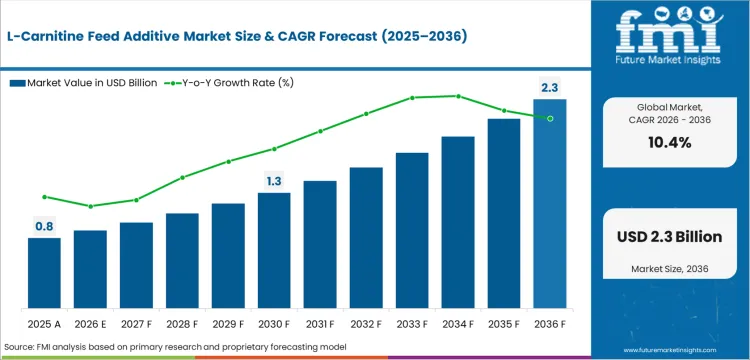
In 2025, the L-carnitine feed additive market surpassed a valuation of USD 812.0 million and is projected to reach USD 870.0 million in 2026 and USD 2,345.0 million by 2036, reflecting a CAGR of 10.4%, with momentum tied to procurement committees authorizing advanced metabolic modifiers for high-density farming operations. According to FMI's estimates, nutritionists revise baseline inclusion rates to counteract raw grain price inflation and protect farm margins.
Energy intensity and conversion economics shape modern formulation criteria. Procurement teams shift specifications toward verifiably efficient compounds that demonstrate clear physiological payback during brief rearing periods. In July 2025, OECD-FAO agricultural data confirmed emerging economies drive over 70% of global growth in animal-source food production, compelling operators to secure high-yield inputs [4]. FMI analysts opine that buyers calculate return on investment by measuring reduced caloric intake per kilogram of meat produced.
Summary of L-Carnitine Feed Additive Market
- L-Carnitine Feed Additive Market Definition
- Formulation and distribution of metabolic energy regulators utilized to optimize animal growth and feed conversion ratios form core market activities.
- Demand Drivers in the Market
- Escalating grain costs compel operators to invest in metabolic enhancers that maximize nutrient extraction.
- Stringent meat quality standards push integrators to adopt compounds reducing cellular drip loss.
- Intensified aquaculture practices require specialized inputs to manage stress and accelerate weight gain.
- Key Segments Analyzed in the FMI Report
- Formulation Type: Powdered carnitine (61%) versus liquid formulations and premix/blended additives.
- Animal Type: Poultry feed (38% of total volume) versus swine, aquaculture, ruminant, and pet feed.
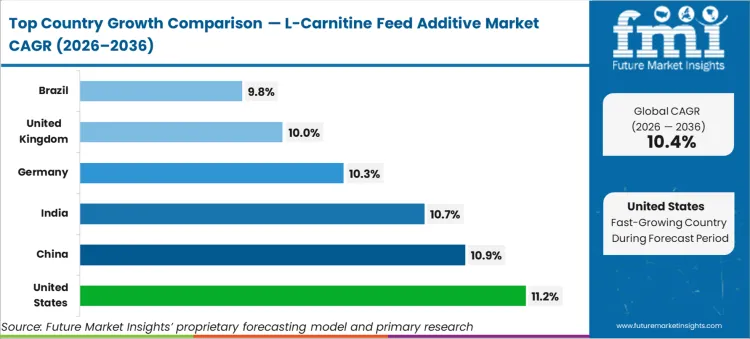
- Geography: High-growth Asia-Pacific and North America (United States 11.2%, China 10.9%, India 10.7%) versus quality-driven Europe and Latin America (Germany 10.3%, United Kingdom 10.0%, Brazil 9.8%).
- Analyst Opinion at FMI
- Nandini Roy Choudhury, Principal Consultant for Food & Beverage at Future Market Insights, opines, “In our updated L-Carnitine Feed Additive Market analysis, my team and I have identified protein efficiency and lean meat optimization as the core demand drivers. As consumers increasingly prefer high-protein, low-fat animal products, feed strategies are evolving toward metabolic enhancers rather than volume-based growth inputs. L-carnitine supports improved lipid utilization and carcass quality, but its success depends on dosage precision and measurable performance outcomes. Producers that demonstrate clear improvements in feed conversion and meat composition will secure long-term integration into modern livestock nutrition programs.”
- Strategic Implications/Executive Takeaways
- Prioritize stabilized powder formulations to overcome hygroscopic challenges in tropical climates.
- Target integrated poultry operations to capture high-volume, continuous-cycle demand.
- Develop localized distribution networks to mitigate supply chain disruptions and stabilize pricing.
- Methodology
- Validated through first-hand corporate production and capacity data.
- Zero reliance on speculative third-party market research reports.
- Based on verifiable industrial benchmarks and verified sources.
As noted by Kevin Owen, Ph.D., Global Business Development Head for Animal Nutrition at Lonza, "The results of the research are particularly significant when we consider the benefits of Carniking premix supplementation for highly active dogs, where maximizing energy expenditure and maintaining lean muscle mass is essential to animal performance and health" [12].
Country dispersion concentrates across high-density agricultural corridors, spanning United States, China, India, Germany, United Kingdom, and Brazil. Across these nations, growth concentrates where stringent meat quality mandates align with continuous procurement cycles. As per FMI's projection, feed mills cluster purchases around established vendors holding documented safety profiles, ensuring uninterrupted production flows.
L-Carnitine Feed Additive Market Key Takeaways
| Metric | Details |
|---|---|
| Industry Size (2026) | USD 870.0 million |
| Industry Value (2036) | USD 2,345.0 million |
| CAGR (2026-2036) | 10.4% |
L-Carnitine Feed Additive Market Definition
The L-Carnitine Feed Additive market represents the industrial-scale production and commercial distribution of synthetic carnitine compounds formulated specifically for livestock nutrition. It covers bulk metabolic additives incorporated into feed to enhance fatty acid transport into mitochondria and improve energy utilization efficiency. Market measurement captures ingredient-level sales of carnitine inputs procured by feed mills, premix manufacturers, and commercial livestock integrators to optimize feed conversion performance.
L-Carnitine Feed Additive Market Inclusions
The scope includes pure synthetic L-carnitine base supplied for commercial livestock feed formulations, as well as L-carnitine L-tartrate and stabilized crystalline salts engineered for processing stability and moisture resistance. It also accounts for premix blends in which carnitine functions as the primary bioactive metabolic regulator and is separately valued within feed additive procurement contracts.
L-Carnitine Feed Additive Market Exclusions
The scope excludes human-grade L-carnitine supplements marketed for sports nutrition or therapeutic use. Generic multivitamin feed blends where carnitine appears only as a minor, non-priced component are not included. Revenue from downstream meat, poultry, dairy, or aquaculture products derived from supplemented animals falls outside the defined additive-level valuation.
L-Carnitine Feed Additive Market Research Methodology
- Primary Research: Analysts conducted interviews with feed mill operators and biochemical manufacturers to determine baseline inclusion rates.
- Desk Research: Investigators compiled production data from agricultural bodies and reviewed regulatory safety dossiers.
- Market-Sizing and Forecasting: A hybrid bottom-up and top-down model reconstructed demand from global livestock populations.
- Data Validation and Update Cycle: Outputs undergo variance checks against corporate financial disclosures and continuous calibration with recent approvals.
Segmental Analysis
L-Carnitine Feed Additive Market Analysis by Animal Type
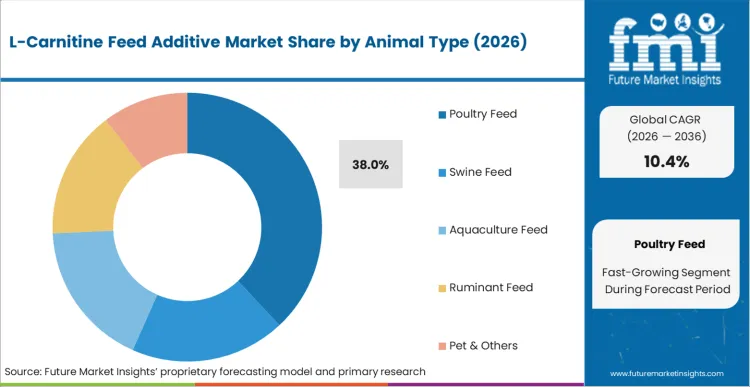
Modern broiler production relies on precise nutritional strategies to maximize energy efficiency in high-density diets. Fast growth cycles place pressure on metabolic function, increasing the need for targeted supplementation to reduce the risk of fatty liver complications and support overall flock performance. Feed mill operators carefully adjust inclusion rates to maintain optimal feed conversion, particularly during periods of grain price volatility. In 2025, the American Feed Industry Association reported continued expansion in commercial feed output, underscoring the industry’s emphasis on performance-enhancing additives to protect farm margins [9]. Integrators increasingly use metabolic support solutions to reach target slaughter weights sooner and lower housing and climate control expenses, positioning poultry feed to command 38% of volume in 2026.
- Metabolic pressure: Fast-growing broiler genetics require enhanced lipid transport mechanisms to support rapid muscle accretion without excessive fat deposition. Integrators deploy specific dosages at critical growth stages to manipulate carcass composition, supported by 2025 AAFCO nutritional definitions permitting regulated inclusion [2]. Resulting meat profiles meet stringent retail specifications for lean cuts.
- Performance economics: Elevated grain costs trigger procurement shifts toward bio-active molecules that extract maximum caloric value from standard rations. Formulators recalibrate recipes using precise software to justify additive expenses against projected feed savings, aligned with 2025 IFEEDER figures citing massive domestic consumption volumes [3]. Return on investment materializes through reduced total feed intake per flock.
- Quality preservation: Processors demand specific physiological traits to extend shelf life and maintain visual appeal after slaughter. Supplementation reduces oxidative stress during transport, validated by a 2025 Animals journal study demonstrating increased muscle pH and reduced drip loss [8]. Premium poultry brands leverage these functional metrics to justify higher retail pricing.
L-Carnitine Feed Additive Market Analysis by Formulation Type
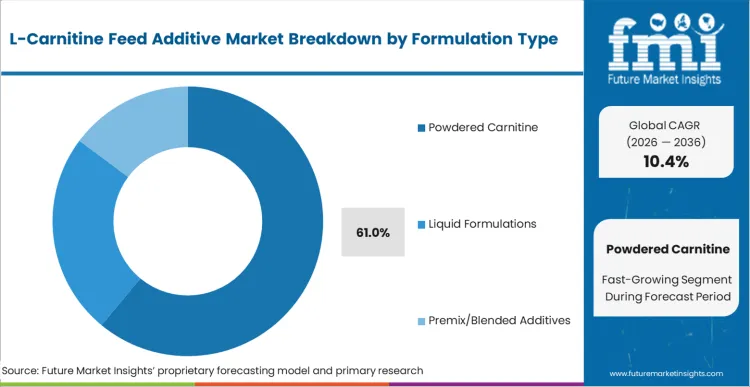
Powdered carnitine holds a dominant 61% share in 2026, functioning as standard physical formats for large-scale industrial blending. Feed mills require free-flowing, stable ingredients that integrate uniformly into complex dry rations without clumping under extreme pelleting temperatures. Raw molecules exhibit strong hygroscopic properties, absorbing ambient moisture rapidly, which complicates storage in humid agricultural zones. Chemical producers mitigate constraints by synthesizing stabilized salts, preserving active compound integrity through severe manufacturing conditions. An EFSA dossier in 2025 issued renewal of authorization for specific tartrate salts, validating safety and continued application across all animal species [1]. FMI analysts opine that procurement managers favor dry formats for extended shelf life and lower transportation logistics compared to liquid alternatives.
- Processing resilience: High-temperature pelleting processes degrade unstable vitamins, forcing manufacturers to source heat-resistant crystalline salts. Formulators specify exact thermal tolerance thresholds to guarantee final feed pellets deliver promised nutritional payloads, meeting standards outlined in 2026 FDA Center for Veterinary Medicine guidance [13]. Mills reduce costly overages by utilizing dependable, assay-verified powders.
- Logistics optimization: Dry ingredients present lower freight expenses and simplified inventory management compared to heavy, temperature-sensitive liquid totes. Distributors aggregate large powder consignments to buffer against supply chain shocks, particularly relevant following a December 2024 BASF divestiture of performance ingredients [11]. Stable formats decouple production timing from immediate farm usage requirements.
- Precision mixing: Modern automated batching systems require ingredients with specific flowability characteristics to achieve micro-ingredient uniformity in massive batches. Plant managers calibrate equipment to handle standardized particle sizes, preventing localized nutrient deficiencies within runs, addressing dairy metabolic demands noted in a 2025 Frontiers in Immunology study [7]. Consistent physical properties prevent costly mechanical blockages and formulation errors.
L-Carnitine Feed Additive Market Drivers, Restraints, and Opportunities
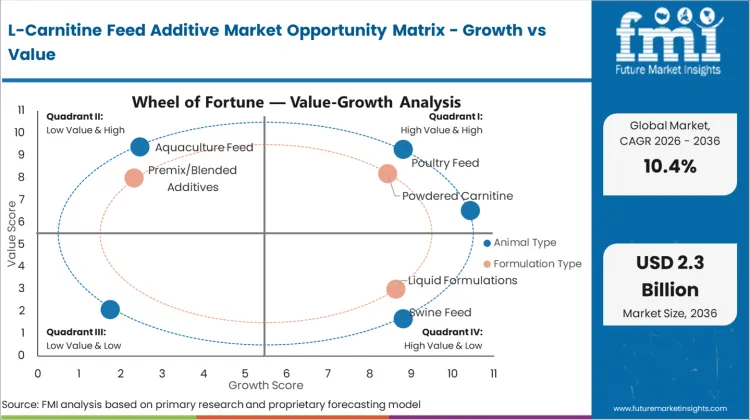
Escalating feed grain prices mandate interventions that maximize metabolic efficiency, serving as primary growth drivers for specialized nutritional ingredients in animal feed. Livestock producers face volatile commodity markets where standard corn and soy inputs dictate majority rearing costs, compelling shifts toward nutritional science to extract every available calorie. Molecules facilitate beta-oxidation of long-chain fatty acids, turning stored lipids into accessible cellular energy and improving feed conversion ratios. Accelerating metabolic pathways allows animals to reach target weights with lower total feed consumption, directly improving farm profitability. Large-scale integrators mandate inclusion of these metabolic regulators as non-negotiable components of standard operating procedures.
High costs of synthetic extraction and purification create substantial barriers to entry, restricting application primarily to premium or highly specialized feed lines. Producing industrial-scale volumes requires complex, multi-stage chemical synthesis or advanced biological fermentation, demanding intense capital investment and precise quality control. Cost structures result in high price per kilogram compared to basic vitamins, forcing nutritionists to justify inclusion through rigorous cost-benefit analyses. Inclusion is limited to critical life stages, such as weaning piglets or high-yield dairy cows, where metabolic returns are immediate. Buyers mitigate financial exposure by requesting customized premixes blending active compounds with less expensive carriers, optimizing economic dosages.
- Formulation shift: Transitioning toward liquid suspensions offers aquaculture operations better dispersion in waterborne feed applications. Liquid formulations integrate smoothly onto extruded pellets post-pelleting, preserving active ingredients from heat damage while accelerating weight gain in dense aquatic environments.
- Regulatory alignment: Navigating strict European Union authorization protocols establishes global standards for additive safety and efficacy. Companies achieving compliance utilize certifications to penetrate emerging markets lacking advanced testing infrastructure, standardizing global trade flows.
- Companion animal expansion: Integrating metabolic enhancers into specialized pet formulations targets affluent consumer bases willing to pay for perceived health longevity. Formulators design a therapeutic diet for pet that leverages carnitine for weight management and cardiac support, creating high-margin revenue streams.
Regional Analysis
Based on the regional analysis, the L-Carnitine Feed Additive market is segmented into North America, Latin America, Europe, East Asia, South Asia, Oceania and Middle East & Africa across 40+ countries. The full report also offers market attractiveness analysis based on regional trends.
.webp "Top Country Growth Comparison L Carnitine Feed Additive Market Cagr (2026 2036)")
| Country | CAGR (2026 to 2036) |
|---|---|
| United States | 11.2% |
| China | 10.9% |
| India | 10.7% |
| Germany | 10.3% |
| United Kingdom | 10.0% |
| Brazil | 9.8% |
Source: Future Market Insights (FMI) analysis, based on proprietary forecasting model and primary research
North America L-Carnitine Feed Additive Market Analysis
North America prioritizes intense production efficiency and advanced meat quality metrics, accelerating adoption of specialized metabolic modifiers in commercial livestock. Integrated poultry and swine operations utilize sophisticated nutritional modeling to counteract fluctuating domestic grain prices and maintain global export competitiveness. Producers calculate precise return on investment for micro-ingredients, favoring compounds with documented physiological impacts. A USDA ERS report in February 2026 projected specific feed cost variables, prompting operators to explore efficiency interventions to protect margins [6]. As per FMI's projection, feed mills secure long-term procurement contracts with verified domestic distributors to guarantee uninterrupted access to crucial components.
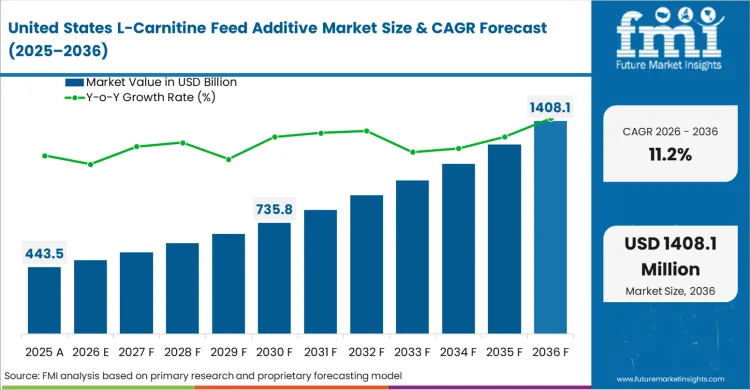
- United States: Demand for l-carnitine feed additive in United States is expected to grow at 11.2% CAGR through 2036, supported by intensified feed efficiency requirements before procurement and budgeting cycles translate into higher deployment volumes. Integrators seek methods to reduce total feed volume per animal to combat margin compression, relying on feed amino acids to balance nutrient profiles. Buyers lock in supply agreements for stabilized powder formats to insulate operations against potential import volatility.
FMI's report includes detailed intelligence regarding North American sectors. Operators in Canada and Mexico actively monitor shifting nutritional paradigms, exploring medicated feed additives to enhance herd immunity. Cross-border agricultural trade requires harmonized ingredient specifications to prevent supply chain bottlenecks.
East Asia L-Carnitine Feed Additive Market Analysis
East Asia dominates global feed volume consumption, driven by rapid urbanization and corresponding surges in demand for animal protein. Regional integrators modernize farming infrastructure, transitioning from backyard operations to massive commercial facilities requiring standardized, high-performance nutritional inputs. Grain imports face geopolitical and logistical constraints, forcing governments and private enterprises to prioritize feed conversion efficiency to ensure national food security. Feed manufacturers upgrade milling technology to handle precise micro-ingredient dosing, ensuring uniform nutrient distribution. According to FMI's estimates, regional authorities implement strict safety guidelines to modernize local agricultural outputs.
- China: Sales of L-carnitine feed additive in China are projected to rise at 10.9% CAGR from 2026 to 2036 as government directives mandate improved feed conversion ratios, creating a clearer pathway from policy or spending intent to purchase orders. State-backed initiatives aim to reduce reliance on imported soybeans and corn by maximizing extraction of available calories, aligning with national feed standard updates. Domestic chemical producers expand synthetic capacity to supply local mills and reduce exposure to international freight costs.
FMI's report includes comprehensive data on East Asian sectors. Markets in Japan and South Korea demonstrate increasing appetites for premium animal feed probiotics and advanced metabolic regulators to address stringent domestic food safety standards. Procurement teams verify purity profiles before authorizing large-scale purchases.
South Asia L-Carnitine Feed Additive Market Analysis
South Asia exhibits rapid commercialization of poultry and aquaculture sectors, transitioning toward scientifically formulated feeds to reduce mortality rates and accelerate growth. Expanding middle-class demographics drive higher per capita meat consumption, incentivizing farmers to adopt intensive rearing methods. Rising ambient temperatures and humidity levels challenge animal metabolism, making stress-mitigating additives highly valuable for maintaining production metrics. Feed mills invest in upgraded storage facilities to protect hygroscopic ingredients from severe monsoon conditions. Global feed production reached 1.3 billion tons in 2025 according to International Feed Industry Federation statistics, highlighting vast logistical networks required to service expanding Asian demands [10].
- India: The India l-carnitine feed additive sector is expected to grow at 10.7% CAGR during 2026 to 2036 because expanding commercial poultry integrators mandate efficiency metrics, which lifts utilization rates and justifies technology refresh decisions. Rising feed material costs force operators to seek biochemical methods to improve nutrient absorption, maintaining output targets. Distributors secure volume commitments to stabilize pricing in price-sensitive agricultural economies.
FMI's report includes extensive mapping of South Asian agricultural vectors. Operators in Bangladesh and Sri Lanka face similar climatic challenges, driving interest in stabilized formulations resisting heat degradation. Suppliers navigate complex import regulations to establish reliable distribution footholds.
Europe L-Carnitine Feed Additive Market Analysis
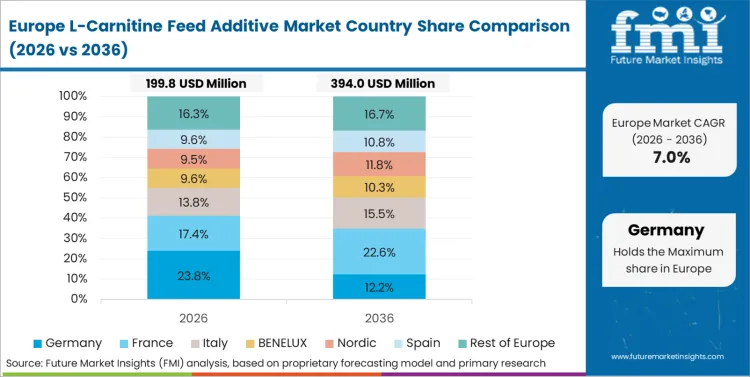
Europe operates under stringent agricultural regulatory frameworks, where animal welfare, environmental impact, and consumer safety dictate feed formulations. Prohibition of antibiotic growth promoters compels nutritionists to explore alternative biochemical pathways, including metabolic regulators, to sustain animal health and productivity. Feed mills demand exhaustive documentation regarding product origin, purity, and environmental footprints before authorizing procurement. FMI analysts opine that suppliers invest heavily in quality assurance protocols to maintain access to high-value, compliance-driven markets.
- Germany: Germany is expected to rise 10.3% CAGR in l-carnitine feed additive demand over 2026 to 2036 as stringent quality and environmental mandates increase, tightening the link between operational constraints and adoption-led investment. Precision farming techniques require precise nutritional inputs to minimize nitrogen and phosphorus excretion, meeting advanced sustainability goals. Buyers specify stable tartrate salts to ensure compound survival during advanced extrusion processes.
- United Kingdom: In United Kingdom, l-carnitine feed additive revenues are forecast to grow at 10.0% CAGR over 2026 to 2036, as post-Brexit agricultural policies prioritize domestic production efficiency and buyers prioritise systems that reduce avoidable risk. Farmers seek to maximize yields from limited arable land by optimizing livestock conversion rates, demanding reliable feed supplements. Mills rely on specialized premix blenders to deliver precise dosages tailored to local genetics.
FMI's report includes a deep dive into European nutritional strategies. Facilities in France and Spain leverage specific additives to combat heat stress during summer rearing cycles. Regulatory alignment ensures uninterrupted cross-border movement of verified feed ingredients.
Latin America L-Carnitine Feed Additive Market Analysis
Latin America functions as dominant global exporters of poultry, beef, and pork, requiring immense volumes of commercial feed to sustain agricultural output. Integrators operate on massive scales, leveraging local grain production while importing specialized micro-ingredients to optimize animal performance. Export markets impose strict quality and safety standards, forcing Latin American producers to adopt internationally recognized nutritional protocols. Feed manufacturers prioritize cost-effective bulk formats to manage logistics of supplying sprawling agricultural regions. As per FMI's projection, large cooperatives reassess sourcing strategies to secure essential additives against global supply chain volatility.
- Brazil: In Brazil, demand for L-carnitine feed additives is rising as large export-focused poultry integrators prioritize consistent growth performance and standardized production outcomes. Maintaining uniform meat quality is critical for sustaining high-value international trade relationships. To control input costs and ensure reliable supply, procurement teams increasingly negotiate bulk powder agreements directly with global chemical manufacturers, supporting growth at a 9.8% CAGR over the forecast period.
FMI's report includes granular data regarding Latin American feed networks. Agricultural sectors in Argentina and Chile explore specific amino acids to improve aquaculture yields and livestock resilience. Distributors establish specialized warehousing to protect sensitive ingredients from diverse climatic conditions.
Competitive Aligners for Market Players
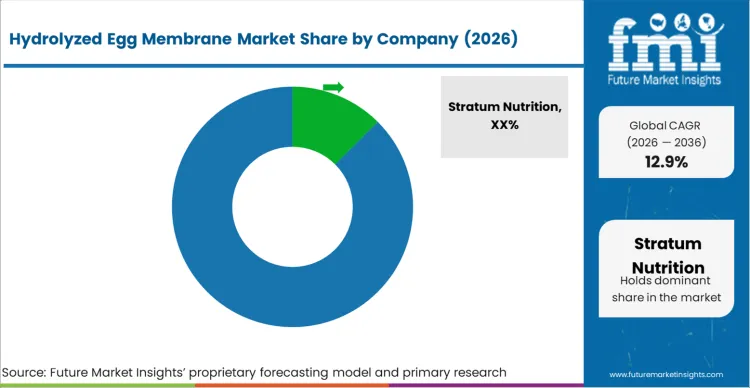
Corporate restructuring reshapes competitive environments as major chemical conglomerates divest specialized animal nutrition units to focus on core competencies. Structural shifts allow agile, specialized additive manufacturers to capture market share by offering dedicated technical support and customized formulation services. Competitors differentiate themselves by guaranteeing uninterrupted supply chains and stable pricing models for pet cardiovascular health supplement manufacturers.
Regulatory compliance serves as formidable barriers to entry, dictating which entities operate across profitable multinational borders. Companies investing in comprehensive toxicological and metabolic studies required to maintain certifications secure preferential status with massive international feed integrators. Procurement committees authorize bulk contracts primarily with organizations demonstrating consistent quality assurance protocols.
Format innovation dictates procurement preferences, particularly in regions with challenging climatic conditions or advanced processing requirements. Manufacturers develop stabilized crystalline salts to withstand aggressive heat and moisture associated with modern feed pelleting. Suppliers demonstrating superior product stability command premium pricing and secure contracts with technically advanced feed mills seeking reliable nutrient delivery.
Recent Developments
The report includes full coverage of key trends from competitive benchmarking. Some of the recent developments covered in the reports:
- In December 2025, FAOSTAT released updated agricultural production data through 2024, covering crops, livestock, harvested areas, slaughtering rates, and selected processed products through 2023. [5]
Key Players in L-Carnitine Feed Additive Market
- Lonza Group AG
- Kaesler Nutrition GmbH
- Kemin Industries
- Biosint S.p.A.
- Ceva Santé Animale S.A.
- Fengchen Group Co., Ltd.
Scope of the Report
| Metric | Value |
|---|---|
| Quantitative Units | 870.0 USD Million (2026) to 2,345.0 USD Million (2036), at a CAGR of 10.4% |
| Market Definition | The L-carnitine feed additive market comprises industrial production, commercial trade, and nutritional application of L-carnitine and its stabilized salts intended for animal consumption. |
| Animal Type Segmentation | Poultry Feed, Swine Feed, Aquaculture Feed, Ruminant Feed, Pet & Others |
| Formulation Type Segmentation | Powdered Carnitine, Liquid Formulations, Premix/Blended Additives |
| Application Coverage | Energy Metabolism, Meat Quality Enhancement, Growth Promotion |
| Regions Covered | North America, Latin America, Europe, East Asia, South Asia, Oceania, Middle East and Africa |
| Countries Covered | United States, China, India, Germany, United Kingdom, Brazil and 40 plus countries |
| Key Companies Profiled | Lonza Group AG, Kaesler Nutrition GmbH, Kemin Industries, Biosint S.p.A., Ceva Santé Animale S.A., Fengchen Group Co., Ltd. |
| Forecast Period | 2026 to 2036 |
| Approach | Hybrid top-down and bottom-up market modeling validated through primary interviews with premix manufacturers and feed formulators, supported by production capacity audits, trade data benchmarking for amino acid additives, and cross-verification against regional feed additive regulatory approvals |
L-Carnitine Feed Additive Market Analysis by Segments
Animal Type
- Poultry Feed
- Swine Feed
- Aquaculture Feed
- Ruminant Feed
- Pet & Others
Formulation Type
- Powdered Carnitine
- Liquid Formulations
- Premix/Blended Additives
Region
- Asia Pacific
- India
- China
- Japan
- South Korea
- Indonesia
- Australia & New Zealand
- ASEAN
- Rest of Asia Pacific
- Europe
- Germany
- Italy
- France
- United Kingdom
- Spain
- Benelux
- Nordics
- Central & Eastern Europe
- Rest of Europe
- North America
- United States
- Canada
- Mexico
- Latin America
- Brazil
- Argentina
- Chile
- Rest of Latin America
- Middle East & Africa
- Kingdom of Saudi Arabia
- United Arab Emirates
- South Africa
- Turkey
- Rest of Middle East & Africa
Bibliography
- [1] EFSA FEEDAP Panel. (2025). Renewal of authorisation for l-carnitine (3a910) & l-carnitine L-tartrate (3a911) as feed additives. EFSA Journal.
- [2] AAFCO. (2025). Official Publication Chapter 6 ingredient definition & use limitations. Association of American Feed Control Officials.
- [3] IFEEDER. (2025). Feed Ingredient Consumption Report. Institute for Feed Education and Research.
- [4] OECD-FAO. (2025). Agricultural Outlook 2025-2034. Organisation for Economic Co-operation and Development.
- [5] Food and Agriculture Organization of the United Nations. (2025). Agricultural production statistics 2010–2024.
- [6] USDA ERS. (2026). Livestock, Dairy & Poultry Outlook (Feb 2026). United States Department of Agriculture.
- [7] Frontiers in Immunology. (2025). L-Carnitine supplementation elevates intracellular carnitine in PBMC of dairy cows. Frontiers.
- [8] Animals. (2025). L-Carnitine supplementation in hybrid sheep. MDPI.
- [9] AFIA. (2025). Feed Facts: US commercial feed production & additive trends. American Feed Industry Association.
- [10] IFIF. (2025). Global Feed Statistics. International Feed Industry Federation.
- [11] Reanin. (2025). BASF divested Food & Health Performance Ingredients business to Louis Dreyfus Company (Dec 2024). Reanin Reports.
- [12] Lonza. (2025). L-Carnitine and Carniking premix supplementation research. Capsugel/Lonza Press Release.
- [13] FDA CVM. (2026). Guidance for Industry: Animal Food Additive Petitions. Food and Drug Administration.
- This bibliography is provided for reader reference and is not exhaustive. The full report contains the complete reference list and detailed citations.
This Report Addresses
- Market intelligence to enable structured strategic decision making across mature and emerging agricultural economies
- Market size estimation and 10 year revenue forecasts from 2026 to 2036, supported by validated capacity and trade benchmarks
- Growth opportunity mapping across powder, liquid, and premix forms with emphasis on stabilized salt transitions
- Segment and regional revenue forecasts covering poultry, swine, aquaculture, and ruminant applications
- Competition strategy assessment including integration models, cost survivability positioning, and compliance capability benchmarking
- Product reformulation and emission compliance tracking including EFSA and AAFCO aligned grades
- Regulatory impact analysis covering metabolic additive mandates, food safety thresholds, and export driven specification upgrades
- Market report delivery in PDF, Excel, PPT, and interactive dashboard formats for executive and operational use
Frequently Asked Questions
How large is the demand for l-carnitine feed additive in the global market in 2026?
Demand for l-carnitine feed additive in the global market is estimated to be valued at USD 870.0 million in 2026.
What will be the market size of l-carnitine feed additive in the global market by 2036?
Market size for l-carnitine feed additive is projected to reach USD 2,345.0 million by 2036.
What is the expected demand growth for l-carnitine feed additive in the global market between 2026 and 2036?
Demand for l-carnitine feed additive in the global market is expected to grow at a CAGR of 10.4% between 2026 and 2036.
Which Formulation Type is poised to lead global sales by 2026?
Powdered carnitine is expected to be the dominant form, capturing 61% of global market share in 2026 due to extended shelf life and thermal stability during feed pelleting.
How significant is the role of Poultry Feed in driving l-carnitine feed additive adoption in 2026?
Poultry feed represents a critical segment, projected to hold a substantial 38% share in 2026 as intense broiler genetics require metabolic enhancers to optimize energy conversion.
What is driving demand in United States?
Demand is driven by intense feed efficiency requirements and the need to offset fluctuating grain costs through optimized nutrient extraction.
What compliance standards or regulations are referenced for United States?
AAFCO official publication guidelines for ingredient definitions and use limitations are referenced as key compliance benchmarks.
What is the United States growth outlook in this report?
United States is projected to grow at a CAGR of 11.2% during 2026 to 2036.
Why is East Asia described as a priority region in this report?
Growth is driven by rapid urbanization and large-scale commercial farming investments requiring standardized nutritional inputs for national food security.
What type of demand dominates in East Asia?
Volume-driven demand for performance-enhancing additives to maximize caloric yield from imported grains dominates regional consumption.
What is China growth outlook in this report?
China is projected to expand at a CAGR of 10.9% during 2026 to 2036.
Does the report cover India in its regional analysis?
India is included within South Asia under the regional scope of analysis.
What are the sources referred to for analyzing India?
Global feed production statistics published by International Feed Industry Federation and corporate divestiture data are cited as primary reference sources.
What is the main demand theme linked to India in its region coverage?
Rapid commercialization of the poultry sector driving adoption of heat-stable metabolic regulators forms the central theme.
Does the report cover Germany in its regional analysis?
Germany is included within Europe under the regional coverage framework.
What is the main Germany related demand theme in its region coverage?
Stringent environmental mandates requiring precise nutritional inputs to minimize agricultural excretion remain emphasized.
What is United Kingdom growth outlook in this report?
United Kingdom is projected to expand at a CAGR of 10.0% during 2026 to 2036.
Does the report cover Brazil in its regional analysis?
Brazil is included within Latin America under the regional scope of analysis.
What is the main Brazil related demand theme in its region coverage?
Massive export-oriented poultry integrators mandating uniform growth metrics shape the primary demand theme.
Which product formats or configurations are strategically important for North America supply chains?
Stabilized powder formulations are prioritized due to resilience during advanced high-temperature extrusion and pelleting processes.
What is l-carnitine feed additive and what is it mainly used for?
It is a vitamin-like compound used as an agricultural nutritional supplement to optimize lipid metabolism and energy expenditure in livestock and companion animals.
What does l-carnitine feed additive mean in this report?
The market refers to global production and commercial trade of synthetic carnitine salts utilized by feed mills and farming integrators.
What is included in the scope of this l-carnitine feed additive report?
The scope covers synthetic active ingredients, liquid suspensions, and concentrated premixes applied in poultry, swine, aquaculture, and ruminant nutrition.
What is excluded from the scope of this report?
Human-grade sports nutrition supplements, generic amino acid blends without specific carnitine pricing, and laboratory reagents are excluded.
Preview the report firsthand - request a free sample
Get SampleGet the brochure for pricing and purchase details.
Get PDFTable of Content
- Executive Summary
- Global Market Outlook
- Demand-side Trends
- Supply-side Trends
- Technology Roadmap Analysis
- Analysis and Recommendations
- Market Overview
- Market Coverage / Taxonomy
- Market Definition / Scope / Limitations
- Research Methodology
- Chapter Orientation
- Analytical Lens and Working Hypotheses
- Market Structure, Signals, and Trend Drivers
- Benchmarking and Cross-market Comparability
- Market Sizing, Forecasting, and Opportunity Mapping
- Research Design and Evidence Framework
- Desk Research Programme (Secondary Evidence)
- Company Annual and Sustainability Reports
- Peer-reviewed Journals and Academic Literature
- Corporate Websites, Product Literature, and Technical Notes
- Earnings Decks and Investor Briefings
- Statutory Filings and Regulatory Disclosures
- Technical White Papers and Standards Notes
- Trade Journals, Industry Magazines, and Analyst Briefs
- Conference Proceedings, Webinars, and Seminar Materials
- Government Statistics Portals and Public Data Releases
- Press Releases and Reputable Media Coverage
- Specialist Newsletters and Curated Briefings
- Sector Databases and Reference Repositories
- FMI Internal Proprietary Databases and Historical Market Datasets
- Subscription Datasets and Paid Sources
- Social Channels, Communities, and Digital Listening Inputs
- Additional Desk Sources
- Expert Input and Fieldwork (Primary Evidence)
- Primary Modes
- Qualitative Interviews and Expert Elicitation
- Quantitative Surveys and Structured Data Capture
- Blended Approach
- Why Primary Evidence is Used
- Field Techniques
- Interviews
- Surveys
- Focus Groups
- Observational and In-context Research
- Social and Community Interactions
- Stakeholder Universe Engaged
- C-suite Leaders
- Board Members
- Presidents and Vice Presidents
- R&D and Innovation Heads
- Technical Specialists
- Domain Subject-matter Experts
- Scientists
- Physicians and Other Healthcare Professionals
- Governance, Ethics, and Data Stewardship
- Research Ethics
- Data Integrity and Handling
- Primary Modes
- Tooling, Models, and Reference Databases
- Desk Research Programme (Secondary Evidence)
- Data Engineering and Model Build
- Data Acquisition and Ingestion
- Cleaning, Normalisation, and Verification
- Synthesis, Triangulation, and Analysis
- Quality Assurance and Audit Trail
- Market Background
- Market Dynamics
- Drivers
- Restraints
- Opportunity
- Trends
- Scenario Forecast
- Demand in Optimistic Scenario
- Demand in Likely Scenario
- Demand in Conservative Scenario
- Opportunity Map Analysis
- Product Life Cycle Analysis
- Supply Chain Analysis
- Investment Feasibility Matrix
- Value Chain Analysis
- PESTLE and Porter’s Analysis
- Regulatory Landscape
- Regional Parent Market Outlook
- Production and Consumption Statistics
- Import and Export Statistics
- Market Dynamics
- Global Market Analysis 2021 to 2025 and Forecast, 2026 to 2036
- Historical Market Size Value (USD Million) Analysis, 2021 to 2025
- Current and Future Market Size Value (USD Million) Projections, 2026 to 2036
- Y-o-Y Growth Trend Analysis
- Absolute $ Opportunity Analysis
- Global Market Pricing Analysis 2021 to 2025 and Forecast 2026 to 2036
- Global Market Analysis 2021 to 2025 and Forecast 2026 to 2036, By Animal Type
- Introduction / Key Findings
- Historical Market Size Value (USD Million) Analysis By Animal Type , 2021 to 2025
- Current and Future Market Size Value (USD Million) Analysis and Forecast By Animal Type , 2026 to 2036
- Poultry Feed
- Swine Feed
- Aquaculture Feed
- Ruminant Feed
- Pet & Others
- Poultry Feed
- Y-o-Y Growth Trend Analysis By Animal Type , 2021 to 2025
- Absolute $ Opportunity Analysis By Animal Type , 2026 to 2036
- Global Market Analysis 2021 to 2025 and Forecast 2026 to 2036, By Formulation Type
- Introduction / Key Findings
- Historical Market Size Value (USD Million) Analysis By Formulation Type, 2021 to 2025
- Current and Future Market Size Value (USD Million) Analysis and Forecast By Formulation Type, 2026 to 2036
- Powdered Carnitine
- Liquid Formulations
- Premix/Blended Additives
- Powdered Carnitine
- Y-o-Y Growth Trend Analysis By Formulation Type, 2021 to 2025
- Absolute $ Opportunity Analysis By Formulation Type, 2026 to 2036
- Global Market Analysis 2021 to 2025 and Forecast 2026 to 2036, By Region
- Introduction
- Historical Market Size Value (USD Million) Analysis By Region, 2021 to 2025
- Current Market Size Value (USD Million) Analysis and Forecast By Region, 2026 to 2036
- North America
- Latin America
- Western Europe
- Eastern Europe
- East Asia
- South Asia and Pacific
- Middle East & Africa
- Market Attractiveness Analysis By Region
- North America Market Analysis 2021 to 2025 and Forecast 2026 to 2036, By Country
- Historical Market Size Value (USD Million) Trend Analysis By Market Taxonomy, 2021 to 2025
- Market Size Value (USD Million) Forecast By Market Taxonomy, 2026 to 2036
- By Country
- USA
- Canada
- Mexico
- By Animal Type
- By Formulation Type
- By Country
- Market Attractiveness Analysis
- By Country
- By Animal Type
- By Formulation Type
- Key Takeaways
- Latin America Market Analysis 2021 to 2025 and Forecast 2026 to 2036, By Country
- Historical Market Size Value (USD Million) Trend Analysis By Market Taxonomy, 2021 to 2025
- Market Size Value (USD Million) Forecast By Market Taxonomy, 2026 to 2036
- By Country
- Brazil
- Chile
- Rest of Latin America
- By Animal Type
- By Formulation Type
- By Country
- Market Attractiveness Analysis
- By Country
- By Animal Type
- By Formulation Type
- Key Takeaways
- Western Europe Market Analysis 2021 to 2025 and Forecast 2026 to 2036, By Country
- Historical Market Size Value (USD Million) Trend Analysis By Market Taxonomy, 2021 to 2025
- Market Size Value (USD Million) Forecast By Market Taxonomy, 2026 to 2036
- By Country
- Germany
- UK
- Italy
- Spain
- France
- Nordic
- BENELUX
- Rest of Western Europe
- By Animal Type
- By Formulation Type
- By Country
- Market Attractiveness Analysis
- By Country
- By Animal Type
- By Formulation Type
- Key Takeaways
- Eastern Europe Market Analysis 2021 to 2025 and Forecast 2026 to 2036, By Country
- Historical Market Size Value (USD Million) Trend Analysis By Market Taxonomy, 2021 to 2025
- Market Size Value (USD Million) Forecast By Market Taxonomy, 2026 to 2036
- By Country
- Russia
- Poland
- Hungary
- Balkan & Baltic
- Rest of Eastern Europe
- By Animal Type
- By Formulation Type
- By Country
- Market Attractiveness Analysis
- By Country
- By Animal Type
- By Formulation Type
- Key Takeaways
- East Asia Market Analysis 2021 to 2025 and Forecast 2026 to 2036, By Country
- Historical Market Size Value (USD Million) Trend Analysis By Market Taxonomy, 2021 to 2025
- Market Size Value (USD Million) Forecast By Market Taxonomy, 2026 to 2036
- By Country
- China
- Japan
- South Korea
- By Animal Type
- By Formulation Type
- By Country
- Market Attractiveness Analysis
- By Country
- By Animal Type
- By Formulation Type
- Key Takeaways
- South Asia and Pacific Market Analysis 2021 to 2025 and Forecast 2026 to 2036, By Country
- Historical Market Size Value (USD Million) Trend Analysis By Market Taxonomy, 2021 to 2025
- Market Size Value (USD Million) Forecast By Market Taxonomy, 2026 to 2036
- By Country
- India
- ASEAN
- Australia & New Zealand
- Rest of South Asia and Pacific
- By Animal Type
- By Formulation Type
- By Country
- Market Attractiveness Analysis
- By Country
- By Animal Type
- By Formulation Type
- Key Takeaways
- Middle East & Africa Market Analysis 2021 to 2025 and Forecast 2026 to 2036, By Country
- Historical Market Size Value (USD Million) Trend Analysis By Market Taxonomy, 2021 to 2025
- Market Size Value (USD Million) Forecast By Market Taxonomy, 2026 to 2036
- By Country
- Kingdom of Saudi Arabia
- Other GCC Countries
- Turkiye
- South Africa
- Other African Union
- Rest of Middle East & Africa
- By Animal Type
- By Formulation Type
- By Country
- Market Attractiveness Analysis
- By Country
- By Animal Type
- By Formulation Type
- Key Takeaways
- Key Countries Market Analysis
- USA
- Pricing Analysis
- Market Share Analysis, 2025
- By Animal Type
- By Formulation Type
- Canada
- Pricing Analysis
- Market Share Analysis, 2025
- By Animal Type
- By Formulation Type
- Mexico
- Pricing Analysis
- Market Share Analysis, 2025
- By Animal Type
- By Formulation Type
- Brazil
- Pricing Analysis
- Market Share Analysis, 2025
- By Animal Type
- By Formulation Type
- Chile
- Pricing Analysis
- Market Share Analysis, 2025
- By Animal Type
- By Formulation Type
- Germany
- Pricing Analysis
- Market Share Analysis, 2025
- By Animal Type
- By Formulation Type
- UK
- Pricing Analysis
- Market Share Analysis, 2025
- By Animal Type
- By Formulation Type
- Italy
- Pricing Analysis
- Market Share Analysis, 2025
- By Animal Type
- By Formulation Type
- Spain
- Pricing Analysis
- Market Share Analysis, 2025
- By Animal Type
- By Formulation Type
- France
- Pricing Analysis
- Market Share Analysis, 2025
- By Animal Type
- By Formulation Type
- India
- Pricing Analysis
- Market Share Analysis, 2025
- By Animal Type
- By Formulation Type
- ASEAN
- Pricing Analysis
- Market Share Analysis, 2025
- By Animal Type
- By Formulation Type
- Australia & New Zealand
- Pricing Analysis
- Market Share Analysis, 2025
- By Animal Type
- By Formulation Type
- China
- Pricing Analysis
- Market Share Analysis, 2025
- By Animal Type
- By Formulation Type
- Japan
- Pricing Analysis
- Market Share Analysis, 2025
- By Animal Type
- By Formulation Type
- South Korea
- Pricing Analysis
- Market Share Analysis, 2025
- By Animal Type
- By Formulation Type
- Russia
- Pricing Analysis
- Market Share Analysis, 2025
- By Animal Type
- By Formulation Type
- Poland
- Pricing Analysis
- Market Share Analysis, 2025
- By Animal Type
- By Formulation Type
- Hungary
- Pricing Analysis
- Market Share Analysis, 2025
- By Animal Type
- By Formulation Type
- Kingdom of Saudi Arabia
- Pricing Analysis
- Market Share Analysis, 2025
- By Animal Type
- By Formulation Type
- Turkiye
- Pricing Analysis
- Market Share Analysis, 2025
- By Animal Type
- By Formulation Type
- South Africa
- Pricing Analysis
- Market Share Analysis, 2025
- By Animal Type
- By Formulation Type
- USA
- Market Structure Analysis
- Competition Dashboard
- Competition Benchmarking
- Market Share Analysis of Top Players
- By Regional
- By Animal Type
- By Formulation Type
- Competition Analysis
- Competition Deep Dive
- Lonza Group AG
- Overview
- Product Portfolio
- Profitability by Market Segments (Product/Age /Sales Channel/Region)
- Sales Footprint
- Strategy Overview
- Marketing Strategy
- Product Strategy
- Channel Strategy
- Kaesler Nutrition GmbH
- Kemin Industries
- Biosint S.p.A.
- Ceva Santé Animale S.A.
- Fengchen Group Co., Ltd.
- Lonza Group AG
- Competition Deep Dive
- Assumptions & Acronyms Used


