

- Industry Size (2026)
- USD 45.9 Bn
- Forecast (2036)
- USD 154.5 Bn
- CAGR (2026 to 2036)
- 12.90%
Premium Electric SUV Market Size, Forecast and Outlook By FMI
The premium electric SUV market was valued at USD 40.7 billion in 2025. The sector is set to reach USD 45.9 billion in 2026 at a CAGR of 12.90% during the forecast period. Revenue expansion propels the total opportunity to USD 154.5 billion through 2036 as localized premium charging infrastructure expands beyond megacities and aspirational electrification targets high-income tier-2 households.
Automotive purchasing journeys in high-growth regions are shifting from basic performance comparisons to deep ecosystem compatibility evaluations. Buyers are no longer satisfied with a high-end badge; they now prioritize the integration of home charging automation, real-time app connectivity, and the reliability of roadside technical support. This transformation forces manufacturers to move beyond hardware, emphasizing a seamless luxury electric vehicle experience where the software layer determines brand loyalty. Delaying this digital integration results in immediate exclusion from the selection pool of younger, tech-native high-net-worth individuals who view the vehicle as a mobile extension of their digital environment.
Summary of Premium Electric SUV Market
- Premium Electric SUV Market Definition
- A functional category of high-performance electric SUVs characterized by luxury appointments and advanced ADAS, serving the high-net-worth buyer class in emerging economies. The segment is structurally defined by its reliance on high-speed charging ecosystems and premium brand positioning.
- Demand Drivers in the Market
- Localized manufacturing mandates for premium electronics force global OEMs to establish domestic production hubs to avoid import duties.
- The expansion of high-end urban real estate developments requires developers to integrate private fast-charging infrastructure into residential projects.
- Aspirational lifestyle shifts among tier-2 city entrepreneurs compel a move toward sustainable luxury as a primary indicator of commercial success.
- Key Segments Analyzed in the FMI Report
- Mid-size e-SUVs: Mid-size e-SUVs is expected to hold 42.7% share in 2026, driven by the structural requirement for family-centric utility combined with urban maneuverability.
- BEVs: Battery electric vehicles (BEVs) is poised to lead through 2026, as buyers prioritize future-proofed technology over bridge solutions like hybrids.
- AWD: All-wheel drive (AWD) is predicted to account for 58.0% share in 2026, reflecting the buyer preference for performance and safety in diverse road conditions.
- China: 15.9% compound growth, sustained by the world's most mature domestic cars electrification supply chain and aggressive policy support.
- Analyst Opinion at FMI
- Nikhil Kaitwade, Principal Consultant, Automotive, at FMI, points, "Practitioners often focus on the 2030 or 2035 bans on combustion engines as the primary driver, but the structural clock is running much faster in the premium segment. High-end buyers in regions like India and Brazil are not waiting for legislation; they are responding to a timing disconnect where the availability of ultra-fast charging on specific highway corridors is making their legacy luxury sedans feel obsolete for weekend travel. We see the inflection point occurring when charging convenience surpasses refueling convenience for the first time in gated communities and elite clubs."
- Strategic Implications / Executive Takeaways
- Fleet managers at high-end hospitality brands must accelerate the transition to premium electric shuttles to meet global corporate sustainability audits.
- Regional dealership groups should invest in specialized high-voltage service bays to avoid losing high-margin maintenance contracts to third-party boutique shops.
- OEMs face a structural requirement to secure long-term power purchase agreements with local utilities to guarantee stable charging costs for their branded networks.
- Methodology
- The research identifies decision-making patterns through direct interviews with high-end automotive procurement directors and leverages baseline registration data to model 10-year trajectories. Validation is achieved by mapping regional power grid upgrades against forecasted vehicle-to-grid integration demands.
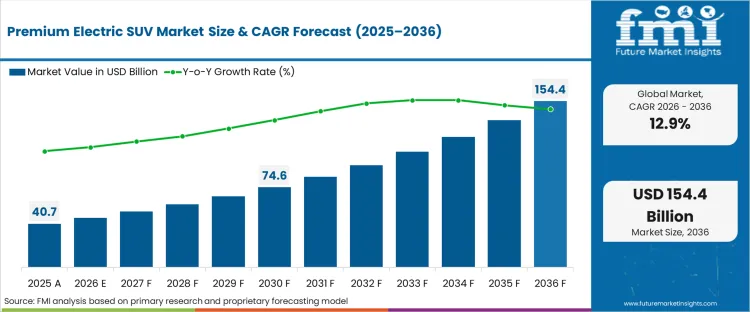
Premium Electric SUV Market Key Takeaways
| Metric | Details |
|---|---|
| Industry Size (2026) | USD 45.9 Billion |
| Industry Value (2036) | USD 154.5 Billion |
| CAGR (2026-2036) | 12.90% |
Source: Future Market Insights (FMI) analysis, based on proprietary forecasting model and primary research
A critical inflection condition for self-reinforcing growth in this segment is the standardization of battery health certification for secondary trades. The current lack of a universal diagnostic standard for used luxury battery units creates a residual value risk that slows the trade-in cycle for new models. Once financial institutions and manufacturers establish a transparent, cross-brand health auditing system, the perceived risk of depreciation will plummet. This shift will be triggered by insurance providers and will allow the next wave of premium SUV buyers to commit with the same financial confidence they currently hold in internal combustion counterparts.
In FMI's view, the growth trajectory across major emerging markets shows significant divergence based on localized supply chain maturity. China is anticipated to post a CAGR of 15.9%, followed by India at 14.8% and Brazil at 13.2% through 2036. Mexico is predicted to record 12.8% growth, while Thailand is set to follow with 12.4%. Indonesia and South Africa are expected to garner CAGRs of 12.1% and 10.9% respectively over the same period. This range reflects a structural shift where domestic manufacturing incentives and infrastructure readiness determine the pace of premium adoption rather than general consumer sentiment.
Premium Electric SUV Market Definition
The premium electric SUV segment encompasses high-specification sport utility vehicles powered by electric drivetrains within developing and transition economies. These vehicles are functionally distinguished by superior performance metrics, advanced driver assistance systems, and high-quality interior finishes that exceed standard market offerings. This segment specifically targets high-income demographics where the vehicle serves as both a primary family transport solution and a symbol of technological advancement.
Premium Electric SUV Market Inclusions
This market includes battery-electric, plug-in hybrid, and hydrogen fuel cell SUVs designed for premium positioning. It covers mid-size, full-size, and compact variants featuring advanced electronics, high-capacity battery packs, and intelligent drivetrain configurations like a luxury suv. Included services involve manufacturer-branded charging networks and specialized maintenance programs for high-voltage systems.
Premium Electric SUV Market Exclusions
Exclusions are strictly defined as standard or economy-grade electric vehicles, commercial electric SUVs intended for fleet/cargo use, and aftermarket electrification kits for legacy internal combustion vehicles. Functional exclusions extend to micro-mobility solutions and two-wheelers, as these do not meet the structural or safety qualification standards of the premium SUV category. This ensures the analysis remains focused on the high-cap-ex consumer vehicle market.
Premium Electric SUV Market Research Methodology
- Primary Research: FMI conducted interviews with product planning directors at global automotive OEMs, regional dealership principals in tier-1 cities, and infrastructure development leads at private charging network operators.
- Desk Research: Data was aggregated from national automotive manufacturing association registries, ministry-level electrification white papers, and procurement specifications for premium public-sector vehicle transitions.
- Market-Sizing and Forecasting: The baseline anchors to verified vehicle registration data for premium-priced electric SUVs, triangulated with regional household income distribution and high-end automotive finance volume.
- Data Validation and Update Cycle: Forecasts were cross-validated against regional battery supply chain capacity and government-sanctioned charging station rollout schedules to ensure growth projections align with physical infrastructure constraints.
Segmental Analysis
Premium Electric SUV Market Analysis by Type
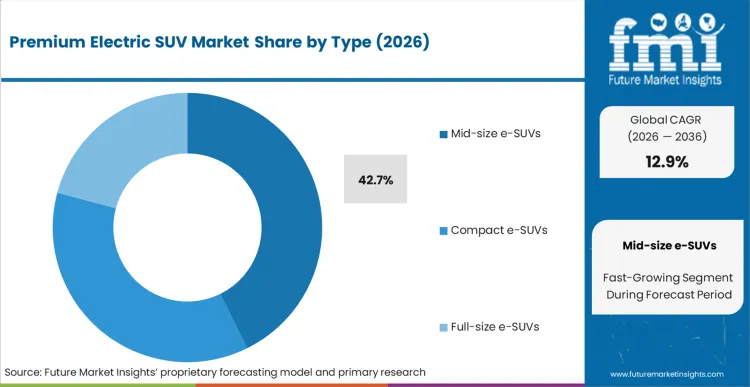
The architectural logic mid-size e-SUVs hold 42.7% of this market comes down to the operational requirement for multi-generational utility. In emerging economies, premium vehicles often transport extended family members, necessitating a cabin volume that compact variants cannot provide, while full-size models remain too cumbersome for dense urban centers. According to FMI's assessment, this e-suvs configuration is not chosen purely for its size, but because it delivers the only commercially viable balance of battery weight and range efficiency. Manufacturers that prioritize rear-seat amenities and climate control efficiency in this sub-segment capture the highest loyalty from chauffeur-driven households. Buyers who opt for smaller footprints often find their operational flexibility limited during holiday travel, leading to a rapid secondary-market turnover toward mid-size alternatives.
- Status-utility convergence: The mid-size format exceeds buyer expectations for road presence while fitting within existing high-end residential parking constraints.
- Efficiency-gradient mapping: Performance gaps appear in full-size models during high-speed highway cruising, making the mid-size variant the structurally superior choice for long-distance reliability.
- Qualification benchmarks: Regional safety bodies increasingly use mid-size dimensions to set the acceptability standards for side-impact protection in electric platforms.
Premium Electric SUV Market Analysis by Propulsion
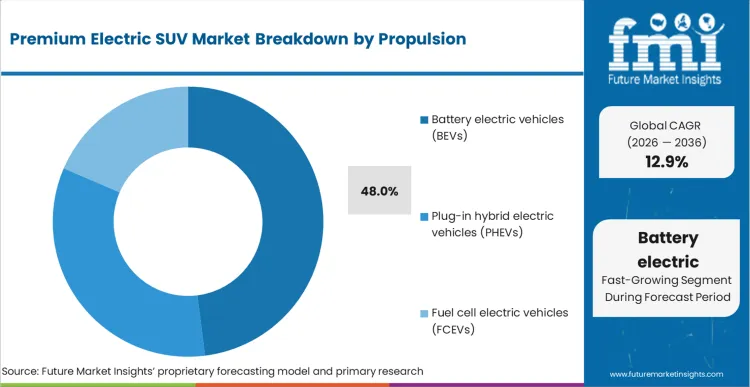
The replacement of plug-in hybrids by battery-electric vehicles is accelerating as the performance gap in charging speed closes. High-net-worth buyers are increasingly viewing bridge technologies as a compromise that carries the maintenance burdens of both systems without the full incentives of pure electrification. Based on FMI's projection, the move toward battery electric vehicle systems is a structural decision to future-proof the investment against tightening urban emission zones. This propulsion shift is validated during the qualification phase when buyers realize that pure BEVs offer significantly lower long-term complexity. The consequence for manufacturers remaining focused on hybrid systems is a loss of premium brand equity as the "fully electric" badge becomes the primary signifier of modern luxury.
- Infrastructure validation: The availability of ultra-fast DC chargers triggers the initial purchase decision by removing the perceived need for a backup combustion engine.
- Service-interval transparency: Reduced mechanical complexity validates the choice during the first two years of ownership, lowering the total friction of premium maintenance.
- Residual value protection: Buyers renew or expand their pure-electric fleets because the secondary market for complex hybrid powertrains is declining structurally.
Premium Electric SUV Market Analysis by Drivetrain
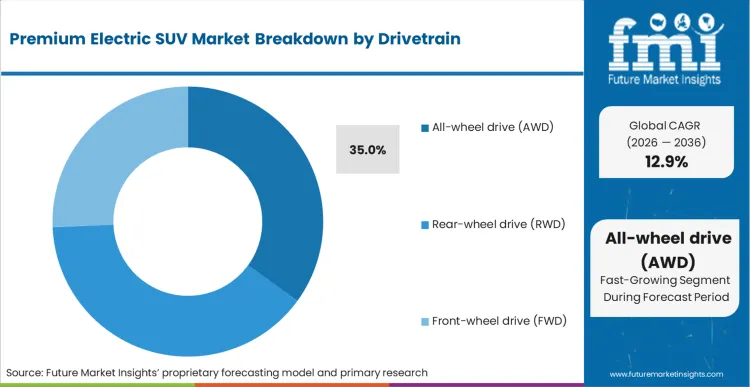
The operational outcome of selecting all-wheel drive is a categorical improvement in active safety that premium buyers in emerging markets view as non-negotiable. Many of these regions feature variable road quality and seasonal extreme weather, where dual-motor AWD systems provide the traction control necessary to maintain high-speed stability. FMI analysts opine that the dominance of electronic awd coupling modules is a direct consequence of the higher torque delivery inherent in electric motors, which can overwhelm single-axle configurations. Buyers who attempt to save on the initial purchase price by selecting rear-wheel drive often face higher tire wear and reduced resale interest. The cost-economics of AWD are justified when considering the vehicle's role as a primary, all-weather family transport solution that must perform reliably under edge conditions.
- Inbound-cost optimization: Where cost savings originate in the drivetrain is the simplified mechanical linkage, as twin-motor setups eliminate the need for traditional driveshafts.
- Torque-management overhead: Hidden costs emerge operationally in single-motor setups through accelerated rear-axle component fatigue under heavy SUV loads.
- Performance-lifecycle comparison: AWD configurations reveal a superior total lifecycle value due to more even tire distribution and higher consumer demand in the used market.
Premium Electric SUV Market Analysis by Range
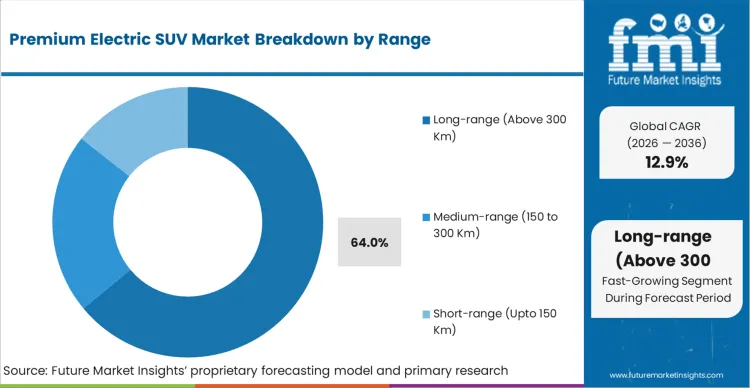
A significant tension exists between the desire for long-range capabilities and the increased vehicle weight that larger batteries impose. While 64.0% of buyers select long-range variants to alleviate anxiety, this choice forces a compromise in handling and braking performance due to the 500-plus kilogram mass of the battery pack. According to FMI's views, the focus on ev sensors for range optimization is a structural response to the infrastructure gaps that still exist between major cities. This sub-segment prevents the failure of the vehicle during interstate travel, which is a primary use case for luxury SUVs in large geographies like Brazil or India. Buyers who delay moving to long-range options often find themselves restricted to urban environments, effectively halving the vehicle's utility.
- Thermal-runaway prevention: High-capacity range packs prevent catastrophic failure by spreading thermal loads across a larger surface area during high-speed charging.
- Degradation-buffer requirements: Residual risk remains even with long-range choices if the buyer frequently discharges the pack below 10%, necessitating intelligent battery management systems.
- Operational-capture protocols: The buyer must implement scheduled cooling and moderate charging practices to capture the full 10-year range benefit promised by the OEM.
Premium Electric SUV Market Drivers, Restraints, and Opportunities
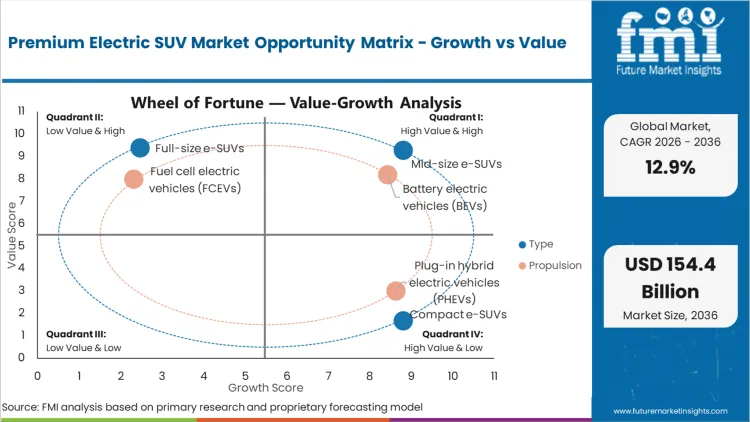
The structural forcing condition for this segment is the rapid integration of vehicle electrification into national industrial policies. Governments in emerging economies are mandating that luxury OEMs achieve a specific percentage of electric sales to maintain their licenses for high-volume combustion models. This forces procurement directors at regional distributors to prioritize premium electric inventory over traditional luxury. The commercial stakes are high: dealers that act now secure the first-mover advantage in establishing branded charging corridors, while those that delay face restricted allocations and diminishing relevance in the high-income buyer chain.
The fundamental structural friction slowing adoption is not the cost of the vehicle, but the internal qualification cycles for residential charging in high-density elite housing. Many premium apartment complexes and gated communities in emerging markets lack the electrical backbone to support simultaneous 22kW charging for multiple SUVs. This organizational obstacle is structural because it requires multi-department sign-offs and utility-level upgrades that are beyond the vehicle buyer's control. While private charging network operators are emerging as a solution, their reach is currently limited by the pace of urban grid modernization, creating a bottleneck that affects even the most eager buyers.
Opportunities in the Premium Electric SUV Market
- Fleet-electrification partnerships: High-end travel and tourism operators are seeking luxury car replacements for their premium fleets to align with international ESG reporting standards.
- Bi-directional residential energy: Structural instability in regional power grids enables a significant opportunity for SUVs to serve as home backup power units using V2H technology.
- Secondary-market certification hubs: Establishing authorized battery health auditing centers creates a high-margin service opportunity to stabilize used EV residual values.
Regional Analysis
Based on the regional analysis, the Premium Electric SUV Market market is segmented into Asia Pacific, Latin America, Middle East & Africa, and others across 40 plus countries.
.webp "Top Country Growth Comparison Premium Electric Suv Market Cagr (2026 2036)")
| Country | CAGR (2026 to 2036) |
|---|---|
| China | 15.9% |
| India | 14.8% |
| Brazil | 13.2% |
| Mexico | 12.8% |
| Thailand | 12.4% |
| Indonesia | 12.1% |
| South Africa | 10.9% |
Source: Future Market Insights (FMI) analysis, based on proprietary forecasting model and primary research
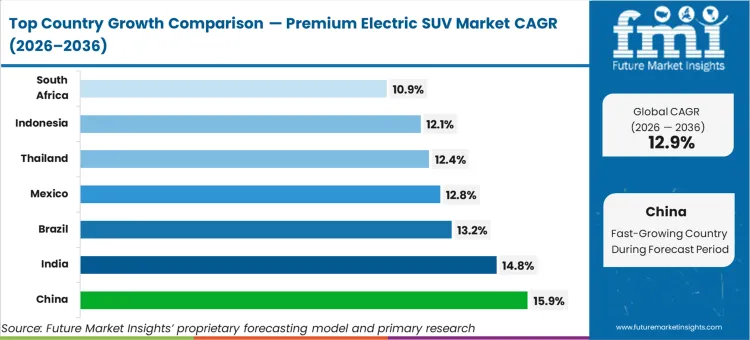
Asia Pacific Premium Electric SUV Market Analysis
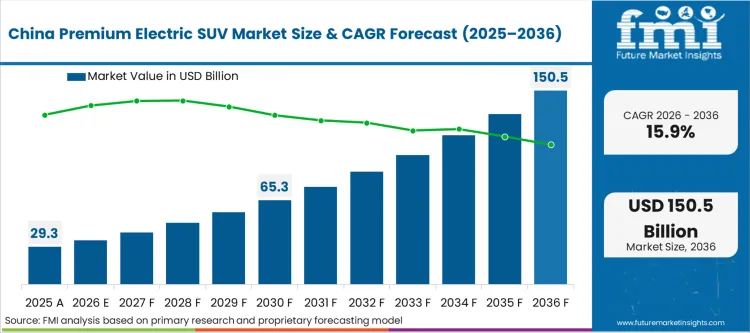
The structural trajectory of the Asia Pacific market is defined by policy-led integration where government mandates for new energy vehicle electric drive systems have moved from incentives to requirements. According to FMI's view, the region’s lead is sustained by a supply chain that has achieved the scale necessary to make premium electrification a standard rather than an exception.
- China: A CAGR of 15.9% is expected for the premium e-SUV segment in China over the forecast period. China's advanced domestic battery manufacturing ecosystem forces global luxury brands to enter deep partnerships with local tech firms to remain competitive. Chauffeur-driven buyers in Shanghai and Beijing now require autonomous features that match domestic challengers. This trajectory signals a shift where China no longer adopts Western luxury standards but instead defines the global technological benchmark for the premium SUV category.
- India: The aggressive production-linked incentive schemes of India enable luxury OEMs to localize assembly, effectively lowering the entry barrier for high-end electric models. The market for premium electric SUVs in India is forecast to register a CAGR of 14.8%. Premium car sales in India are projected to rise as high-net-worth entrepreneurs in tech hubs adopt electric mobility as a badge of corporate modernization. What opens up for the buyer who acts now is the capture of priority access to private charging networks being developed exclusively for elite residential complexes.
- Thailand: Procurement directors at major domestic firms are increasingly shifting executive fleets to electric vehicles to mirror the sustainability targets of their international partners. Thailand's position as a regional automotive export hub requires its domestic market to align with global zero-emission standards to protect its manufacturing relevance. A compound annual growth rate of 12.4% is expected for the premium electric SUV landscape in Thailand. This figure reflects a rate of compliance-led capital refresh that tracks the brand sourcing review calendar, not just a regulatory deadline.
FMI's report includes Vietnam, Malaysia, and the Philippines. This geographic expansion indicates a structural shift where domestic manufacturing incentives across ASEAN are beginning to mirror the aggressive electrification policies of larger neighboring economies.
Latin America Premium Electric SUV Market Analysis
Infrastructure-led dynamics define the adoption curve in Latin America, where the creation of private charging corridors is the primary driver of buyer confidence. Based on FMI's assessment, the region's trajectory depends on the availability of a electric vehicle drive motor that can handle the rugged terrain and high-altitude requirements of premium SUV owners.
- Brazil: At a compound annual growth rate of 13.2%, Brazil's premium e-SUV sector is poised for expansion. Brazil's updated import tax structures on electric vehicles create a structural advantage for OEMs that commit to local assembly of premium platforms. Brazilian buyers in the agribusiness and finance sectors are driving demand for high-performance SUVs that can bridge the gap between rural operations and urban centres. This growth positions Brazilian buyers as the regional leaders in the transition away from ethanol-based luxury toward high-voltage systems.
- Mexico: The México luxury vehicle landscape is set to achieve a CAGR of 12.8% as infrastructure development in northern industrial corridors accelerates. Mexico's proximity to North American supply chains enables a rapid technology transfer that allows local premium buyers to access the latest SUV iterations simultaneously with global launches. What changes inside the operation for a Mexican fleet buyer is the clearance of a major logistical bottleneck as they move toward in-house high-speed charging solutions.
FMI's report includes Argentina, Chile, and Colombia. These markets exhibit a structural pattern where premium adoption is highly concentrated in capital cities, creating "islands" of electrification that rely on private-sector charging investments.
Middle East & Africa Premium Electric SUV Market Analysis
Economics-led transitions characterize the Middle East and Africa, where the high total cost of ownership for legacy luxury vehicles in extreme climates is driving interest in simpler electric platforms. According to FMI's projection, the deployment of a ev powertrain optimized for high thermal loads is essential for segment growth in this region.
- Indonesia: The control Indonesia maintains over critical battery minerals creates a unique structural condition where the government is leveraging its natural resources to force the development of a domestic luxury electric ecosystem. High-income buyers in Jakarta are responding to these shifts by moving toward premium SUVs that are increasingly seen as the patriotic choice for the nation's elite. Demand for premium e-SUVs in Indonesia is set to grow at 12.1%, presenting a contract-winning opportunity for charging infrastructure providers who can align with the government's "New Capital" city electrification goals.
- South Africa: The load-shedding challenges South Africa faces define its premium SUV trajectory, where buyers are seeking vehicles with bi-directional charging to serve as home energy buffers during power cuts. FMI estimates the premium electric SUV market in South Africa to expand at an annual growth rate of 10.9%. This practical requirement for energy security is a non-obvious driver that makes premium electric SUVs more desirable than their combustion counterparts for high-end residential owners. This dynamic establishes a structural trajectory toward decentralized, vehicle-centric energy networks for the nation's wealthiest households.
FMI's report includes Saudi Arabia, UAE, and Egypt. The analysis identifies a pattern where sovereign wealth fund investments into domestic EV brands are artificially accelerating the infrastructure rollout, creating a unique high-speed adoption environment in the Gulf.
Competitive Aligners for Market Players
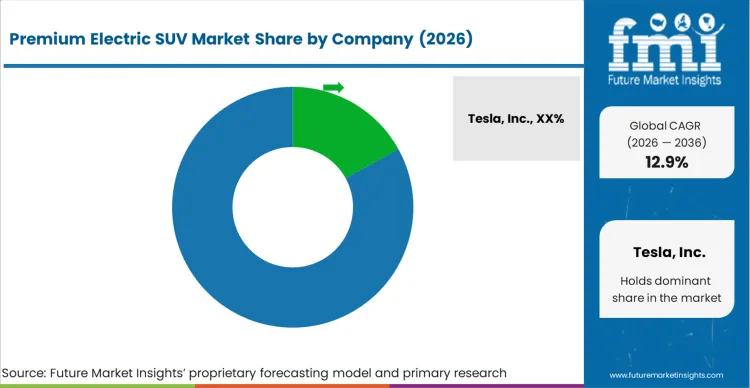
The rivalry framework of the premium electric SUV segment in emerging economies is moderately concentrated, shaped by the high capital requirements and the technical complexity of high-voltage platforms. Established global leaders like BMW and Mercedes-Benz leverage their legacy brand equity to maintain a dominant position, yet they are increasingly challenged by Chinese entrants such as BYD and NIO. Buyers in these regions use "technological theater," which is the combination of massive infotainment displays, advanced ADAS, and seamless app integration, as the primary variable to distinguish qualified vendors. Brands that fail to deliver a superior digital experience are quickly categorized as legacy, regardless of their mechanical pedigree.
Global incumbents possess a structural advantage in their established regional dealership and service networks, which provide a "trust safety net" for buyers concerned about long-term maintenance. Challengers must build not just a product, but a category of capability that includes mobile service fleets and proprietary charging lounges to replicate this presence. It has been opined that the integration of an electric vehicle e-axle with proprietary torque-vectoring software is becoming a critical differentiator for brands seeking to justify a premium price point. This mechanical-digital hybrid capability is difficult for lower-tier entrants to replicate, reinforcing the segment's moderate concentration through 2036.
Large buying groups and high-net-worth individuals are increasingly resisting brand lock-in by demanding interoperable charging standards and transparent battery health data. There is a structural tension between the desire of OEMs to maintain a "walled garden" charging experience and the buyer's preference for regional network flexibility. As we head toward 2036, the market is expected to become more competitive as the electric drive unit becomes a commoditized high-performance component, shifting the competitive battleground entirely to the software and service layer. FMI projects that the brands that successfully transition into lifestyle energy partners will displace those that remain focused purely on the vehicle as a standalone hardware product.
Key Players in Premium Electric SUV Market
- Tesla, Inc.
- BYD Co., Ltd.
- BMW Group
- Mercedes-Benz Group AG
- Audi AG
- Volvo Cars
- NIO Inc.
- Hyundai Motor Group
- Rivian Automotive, Inc.
- Porsche AG
- Jaguar Land Rover Automotive PLC
- XPeng Inc.
Scope of the Report
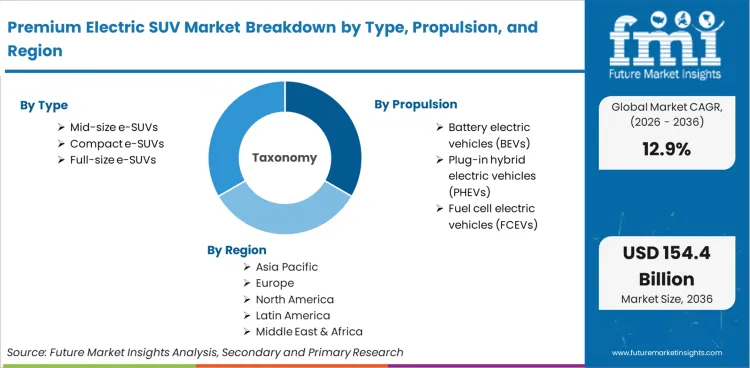
| Metric | Value |
|---|---|
| Quantitative Units | USD 45.9 Billion to USD 154.5 Billion, at a CAGR of 12.90% |
| Market Definition | High-performance electric SUVs with luxury specifications targeting high-income demographics in developing and transition economies. |
| Type Segmentation | Mid-size e-SUVs, Compact e-SUVs, Full-size e-SUVs |
| Propulsion Segmentation | BEVs, PHEVs, FCEVs |
| Drivetrain Segmentation | All-wheel drive (AWD), Rear-wheel drive (RWD), Front-wheel drive (FWD) |
| Range Segmentation | Long-range, Medium-range, Short-range |
| Regions Covered | Asia Pacific, Latin America, Middle East & Africa |
| Countries Covered | China, India, Brazil, Mexico, Thailand, Indonesia, South Africa, and 40 plus countries |
| Key Companies Profiled | Tesla, BYD, BMW, Mercedes-Benz, Audi, Volvo, NIO, and others |
| Forecast Period | 2026 to 2036 |
| Approach | FMI interviewed product planning leads and dealership principals while anchoring the baseline to verified registration data. Forecasts were validated against regional battery supply chain capacity and charging infrastructure rollout cycles. |
Source: Future Market Insights (FMI) analysis, based on proprietary forecasting model and primary research
Premium Electric SUV Market Analysis by Segments
Type:
- Mid-size e-SUVs
- Compact e-SUVs
- Full-size e-SUVs
Propulsion:
- Battery electric vehicles (BEVs)
- Plug-in hybrid electric vehicles (PHEVs)
- Fuel cell electric vehicles (FCEVs)
Drivetrain:
- All-wheel drive (AWD)
- Rear-wheel drive (RWD)
- Front-wheel drive (FWD)
Range:
- Long-range (Above 300 Km)
- Medium-range (150 to 300 Km)
- Short-range (Upto 150 Km)
Battery Capacity:
- 50-100 kWh
- Above 100 kWh
- Below 50 kWh
Region:
- North America
- United States
- Canada
- Europe
- Germany
- United Kingdom
- France
- Italy
- Spain
- Asia Pacific
- China
- Japan
- South Korea
- Taiwan
- Singapore
- Latin America
- Brazil
- Mexico
- Argentina
- Middle East & Africa
- GCC Countries
- South Africa
Bibliography
- International Council on Clean Transportation. (2025, December). Electric vehicle market in Indonesia. ICCT Research.
- Asociación Mexicana de la Industria Automotriz. (2025, August). Reporte de Venta de Vehículos Híbridos y Eléctricos a Julio 2025. AMIA Reports.
- Department of Trade, Industry and Competition. (2024, November). Electric Vehicle (EV) White Paper. DTIC South Africa.
- Gabungan Industri Kendaraan Bermotor Indonesia. (2025, December). Monthly Battery Electric Vehicle Whole Sales Volume. GAIKINDO Statistics.
- Martínez-Gómez, J. (2024, December). Challenges and Opportunities for Electric Vehicle Charging Stations in Latin America. World Electric Vehicle Journal.
This bibliography is provided for reader reference. The full FMI report contains the complete reference list with primary source documentation.
This Report Addresses
- Market intelligence to support strategic decision making across mid-size e-SUVs, BEVs, and AWD drivetrain configurations
- Market size estimation and 10-year revenue forecasts from 2026 to 2036, supported by high-voltage vehicle registration analysis
- Growth opportunity mapping across emerging geographies with emphasis on the second-life battery certification gate
- Segment and regional revenue forecasts covering long-range battery packs across diverse regulatory environments in India and Brazil
- Competition strategy assessment including technological theater, digital ecosystem compatibility, and high-voltage maintenance capability
- Technology development tracking including V2H bi-directional charging, electronic AWD coupling, and advanced ADAS integration
- Market access analysis covering national manufacturing mandates, import duty structures, and localized charging standards
- Market report delivery in PDF, Excel, PPT, and interactive dashboard formats for executive strategy, urban grid planning, and operational benchmarking use
Frequently Asked Questions
How large is the Premium Electric SUV Market in 2026?
The segment is valued at USD 45.9 billion in 2026. This figure signals that the market has moved beyond early enthusiasts and into the mainstream high-income demographic where electric SUVs are becoming the default choice for premium family transport.
What will it be valued at by 2036?
It is projected to surpass USD 154.5 billion by the end of the forecast period. This valuation reflects a structural shift where electrification becomes the dominant architecture for all premium automotive sales in high-growth regions like Asia and Latin America.
What CAGR is projected for the forecast period?
The market expects a CAGR of 12.90% between 2026 and 2036. This rate is driven by the simultaneous maturation of domestic charging infrastructure and the implementation of manufacturing incentives that lower the total cost of ownership for premium models.
Which Type segment leads the market?
Mid-size e-SUVs lead because they offer the precise cabin volume required for multi-generational households without the urban maneuverability penalties of full-size models. This balance of status and utility makes them the most versatile asset for premium buyers in emerging economies.
Which Propulsion segment holds the dominant share?
Battery electric vehicles (BEVs) dominate as high-net-worth buyers increasingly view plug-in hybrids as a temporary bridge technology with higher long-term complexity. Pure electric platforms are prioritized for their future-proof status and lower mechanical maintenance friction.
Which Drivetrain configuration is preferred by buyers?
All-wheel drive (AWD) is the leader because it provides the active safety and traction control necessary for diverse road conditions in regions with variable infrastructure. Dual-motor setups also deliver the high-performance torque that premium buyers expect as a standard feature.
What drives rapid growth in this specific segment?
The primary driver is the integration of high-end urban charging infrastructure into elite residential developments and high-speed highway corridors. When charging convenience matches the existing refueling experience for the top income decile, the adoption curve moves from linear to accelerating.
What is the primary restraint facing the market?
Growth is constrained by the "grid readiness" of high-end residential complexes, where legacy electrical systems cannot support multiple high-power fast chargers. This structural bottleneck requires utility-level intervention that often lags behind the consumer's desire to purchase.
Which country grows the fastest in the premium SUV segment?
China is the fastest-growing market at 15.9% CAGR, significantly outpacing India's 14.8%. This difference is due to China's more mature domestic supply chain, which allows for rapid technology iteration and higher localized cost-efficiency that India is still scaling to match.
How does bi-directional charging impact the South African market?
In South Africa, bidirectional ev charging is a critical selling point because it allows the vehicle to act as a primary energy backup during power outages. This functional utility makes the premium SUV an essential part of the home energy ecosystem rather than just a transport tool.
Why is the second-life battery certification so important for India?
India's used car market is a vital component of the automotive cycle; without a standardized health check for used ev batteries, the residual value risk remains too high for many buyers. Certification stabilizes this value, making new vehicle finance more attractive for the next wave of adopters.
What role does automotive finance play in Thailand's premium adoption?
Sophisticated electric vehicle finance packages that include battery-leasing options or guaranteed buy-back prices are lowering the psychological barrier to entry for Thai buyers. These financial structures are essential for scaling the market beyond the initial cash-buyer segment.
How are digital ecosystems redefining premium status in Brazil?
Brazilian buyers are prioritizing "technological theater" where the vehicle's ability to integrate with their existing high-end digital life, from home automation to seamless voice control, is a primary signifier of luxury. Brands that offer superior software layers are displacing traditional luxury manufacturers who remain hardware-focused.
What distinguishes premium electric SUVs from standard EVs?
The distinction lies in the integration of high-performance electric sports cars technology, such as active air suspension and multi-chamber thermal management, which standard EVs omit to save cost. These features provide the refined ride quality and performance consistency that the premium buyer demands.
How does Mexico's proximity to the U.S. affect its e-SUV market?
Mexico benefits from a rapid technology transfer and a shared charging standard with North America, allowing its premium buyers to access the latest global models without the lag seen in other emerging regions. This alignment makes Mexico a key early-adopter hub for the newest high-voltage technologies.
Is hydrogen fuel cell technology a viable competitor in this segment?
While FCEVs are included in the scope, they remain a niche opportunity compared to BEVs due to the lack of specialized premium refueling networks. FCEVs are currently restricted to specific industrial corridors where hydrogen infrastructure is already being developed for heavy logistics.
How do manufacturing mandates in Indonesia influence buyer choice?
Indonesia's mandates for local content in electric vehicles are forcing global brands to build domestic factories, leading to vehicles that are specifically tuned for the region's climate and road conditions. This makes the electric choice feel more "tailored" to the domestic market than imported combustion models.
What is the impact of ADAS on premium SUV pricing?
Advanced driver assistance systems are a structural requirement for the premium segment, often accounting for a significant portion of the vehicle's value proposition. In emerging economies, ADAS is marketed as a critical safety buffer for high-speed highway travel, justifying the price premium over standard SUVs.
Does the report include used premium electric vehicles?
The report primarily forecasts new vehicle sales but identifies the stabilization of the used market as a critical structural condition for new market growth. The used market's health is tracked as a secondary indicator of the overall segment's financial maturity.
What methodology anchors the charging infrastructure forecasts?
FMI maps regional grid capacity and private sector investment commitments against the projected vehicle density. This ensures that the automotive market forecasts do not exceed the physical ability of the region to power the new fleet.
How do premium buyers in these regions perceive long-range batteries?
Range is perceived as "freedom of operation"; premium buyers in large geographies like Brazil or India view the long-range variant as the only one capable of replacing their combustion vehicle for interstate travel. It is a utility requirement that overrides the weight-penalty concerns of more focused performance drivers.
Will the market consolidate or fragment by 2036?
The market is expected to moderately consolidate as the high-cap-ex requirements for battery R&D and digital ecosystem maintenance favor large-scale global incumbents and well-funded regional challengers. Smaller boutique brands will likely struggle to maintain the software pace required by tech-native premium buyers.
Preview the report firsthand - request a free sample
Get SampleGet the brochure for pricing and purchase details.
Get PDFTable of Content
- Executive Summary
- Global Market Outlook
- Demand-side Trends
- Supply-side Trends
- Technology Roadmap Analysis
- Analysis and Recommendations
- Market Overview
- Market Coverage / Taxonomy
- Market Definition / Scope / Limitations
- Research Methodology
- Chapter Orientation
- Analytical Lens and Working Hypotheses
- Market Structure, Signals, and Trend Drivers
- Benchmarking and Cross-market Comparability
- Market Sizing, Forecasting, and Opportunity Mapping
- Research Design and Evidence Framework
- Desk Research Programme (Secondary Evidence)
- Company Annual and Sustainability Reports
- Peer-reviewed Journals and Academic Literature
- Corporate Websites, Product Literature, and Technical Notes
- Earnings Decks and Investor Briefings
- Statutory Filings and Regulatory Disclosures
- Technical White Papers and Standards Notes
- Trade Journals, Industry Magazines, and Analyst Briefs
- Conference Proceedings, Webinars, and Seminar Materials
- Government Statistics Portals and Public Data Releases
- Press Releases and Reputable Media Coverage
- Specialist Newsletters and Curated Briefings
- Sector Databases and Reference Repositories
- FMI Internal Proprietary Databases and Historical Market Datasets
- Subscription Datasets and Paid Sources
- Social Channels, Communities, and Digital Listening Inputs
- Additional Desk Sources
- Expert Input and Fieldwork (Primary Evidence)
- Primary Modes
- Qualitative Interviews and Expert Elicitation
- Quantitative Surveys and Structured Data Capture
- Blended Approach
- Why Primary Evidence is Used
- Field Techniques
- Interviews
- Surveys
- Focus Groups
- Observational and In-context Research
- Social and Community Interactions
- Stakeholder Universe Engaged
- C-suite Leaders
- Board Members
- Presidents and Vice Presidents
- R&D and Innovation Heads
- Technical Specialists
- Domain Subject-matter Experts
- Scientists
- Physicians and Other Healthcare Professionals
- Governance, Ethics, and Data Stewardship
- Research Ethics
- Data Integrity and Handling
- Primary Modes
- Tooling, Models, and Reference Databases
- Desk Research Programme (Secondary Evidence)
- Data Engineering and Model Build
- Data Acquisition and Ingestion
- Cleaning, Normalisation, and Verification
- Synthesis, Triangulation, and Analysis
- Quality Assurance and Audit Trail
- Market Background
- Market Dynamics
- Drivers
- Restraints
- Opportunity
- Trends
- Scenario Forecast
- Demand in Optimistic Scenario
- Demand in Likely Scenario
- Demand in Conservative Scenario
- Opportunity Map Analysis
- Product Life Cycle Analysis
- Supply Chain Analysis
- Investment Feasibility Matrix
- Value Chain Analysis
- PESTLE and Porter’s Analysis
- Regulatory Landscape
- Regional Parent Market Outlook
- Production and Consumption Statistics
- Import and Export Statistics
- Market Dynamics
- Global Market Analysis 2021 to 2025 and Forecast, 2026 to 2036
- Historical Market Size Value (USD Million) Analysis, 2021 to 2025
- Current and Future Market Size Value (USD Million) Projections, 2026 to 2036
- Y-o-Y Growth Trend Analysis
- Absolute $ Opportunity Analysis
- Global Market Pricing Analysis 2021 to 2025 and Forecast 2026 to 2036
- Global Market Analysis 2021 to 2025 and Forecast 2026 to 2036, By Type
- Introduction / Key Findings
- Historical Market Size Value (USD Million) Analysis By Type , 2021 to 2025
- Current and Future Market Size Value (USD Million) Analysis and Forecast By Type , 2026 to 2036
- Mid-size e-SUVs
- Compact e-SUVs
- Full-size e-SUVs
- Mid-size e-SUVs
- Y-o-Y Growth Trend Analysis By Type , 2021 to 2025
- Absolute $ Opportunity Analysis By Type , 2026 to 2036
- Global Market Analysis 2021 to 2025 and Forecast 2026 to 2036, By Propulsion
- Introduction / Key Findings
- Historical Market Size Value (USD Million) Analysis By Propulsion, 2021 to 2025
- Current and Future Market Size Value (USD Million) Analysis and Forecast By Propulsion, 2026 to 2036
- Battery electric vehicles (BEVs)
- Plug-in hybrid electric vehicles (PHEVs)
- Fuel cell electric vehicles (FCEVs)
- Battery electric vehicles (BEVs)
- Y-o-Y Growth Trend Analysis By Propulsion, 2021 to 2025
- Absolute $ Opportunity Analysis By Propulsion, 2026 to 2036
- Global Market Analysis 2021 to 2025 and Forecast 2026 to 2036, By Drivetrain
- Introduction / Key Findings
- Historical Market Size Value (USD Million) Analysis By Drivetrain, 2021 to 2025
- Current and Future Market Size Value (USD Million) Analysis and Forecast By Drivetrain, 2026 to 2036
- All-wheel drive (AWD)
- Rear-wheel drive (RWD)
- Front-wheel drive (FWD)
- All-wheel drive (AWD)
- Y-o-Y Growth Trend Analysis By Drivetrain, 2021 to 2025
- Absolute $ Opportunity Analysis By Drivetrain, 2026 to 2036
- Global Market Analysis 2021 to 2025 and Forecast 2026 to 2036, By Range
- Introduction / Key Findings
- Historical Market Size Value (USD Million) Analysis By Range, 2021 to 2025
- Current and Future Market Size Value (USD Million) Analysis and Forecast By Range, 2026 to 2036
- Long-range (Above 300 Km)
- Medium-range (150 to 300 Km)
- Short-range (Upto 150 Km)
- Long-range (Above 300 Km)
- Y-o-Y Growth Trend Analysis By Range, 2021 to 2025
- Absolute $ Opportunity Analysis By Range, 2026 to 2036
- Global Market Analysis 2021 to 2025 and Forecast 2026 to 2036, By Region
- Introduction
- Historical Market Size Value (USD Million) Analysis By Region, 2021 to 2025
- Current Market Size Value (USD Million) Analysis and Forecast By Region, 2026 to 2036
- North America
- Latin America
- Western Europe
- Eastern Europe
- East Asia
- South Asia and Pacific
- Middle East & Africa
- Market Attractiveness Analysis By Region
- North America Market Analysis 2021 to 2025 and Forecast 2026 to 2036, By Country
- Historical Market Size Value (USD Million) Trend Analysis By Market Taxonomy, 2021 to 2025
- Market Size Value (USD Million) Forecast By Market Taxonomy, 2026 to 2036
- By Country
- USA
- Canada
- Mexico
- By Type
- By Propulsion
- By Drivetrain
- By Range
- By Country
- Market Attractiveness Analysis
- By Country
- By Type
- By Propulsion
- By Drivetrain
- By Range
- Key Takeaways
- Latin America Market Analysis 2021 to 2025 and Forecast 2026 to 2036, By Country
- Historical Market Size Value (USD Million) Trend Analysis By Market Taxonomy, 2021 to 2025
- Market Size Value (USD Million) Forecast By Market Taxonomy, 2026 to 2036
- By Country
- Brazil
- Chile
- Rest of Latin America
- By Type
- By Propulsion
- By Drivetrain
- By Range
- By Country
- Market Attractiveness Analysis
- By Country
- By Type
- By Propulsion
- By Drivetrain
- By Range
- Key Takeaways
- Western Europe Market Analysis 2021 to 2025 and Forecast 2026 to 2036, By Country
- Historical Market Size Value (USD Million) Trend Analysis By Market Taxonomy, 2021 to 2025
- Market Size Value (USD Million) Forecast By Market Taxonomy, 2026 to 2036
- By Country
- Germany
- UK
- Italy
- Spain
- France
- Nordic
- BENELUX
- Rest of Western Europe
- By Type
- By Propulsion
- By Drivetrain
- By Range
- By Country
- Market Attractiveness Analysis
- By Country
- By Type
- By Propulsion
- By Drivetrain
- By Range
- Key Takeaways
- Eastern Europe Market Analysis 2021 to 2025 and Forecast 2026 to 2036, By Country
- Historical Market Size Value (USD Million) Trend Analysis By Market Taxonomy, 2021 to 2025
- Market Size Value (USD Million) Forecast By Market Taxonomy, 2026 to 2036
- By Country
- Russia
- Poland
- Hungary
- Balkan & Baltic
- Rest of Eastern Europe
- By Type
- By Propulsion
- By Drivetrain
- By Range
- By Country
- Market Attractiveness Analysis
- By Country
- By Type
- By Propulsion
- By Drivetrain
- By Range
- Key Takeaways
- East Asia Market Analysis 2021 to 2025 and Forecast 2026 to 2036, By Country
- Historical Market Size Value (USD Million) Trend Analysis By Market Taxonomy, 2021 to 2025
- Market Size Value (USD Million) Forecast By Market Taxonomy, 2026 to 2036
- By Country
- China
- Japan
- South Korea
- By Type
- By Propulsion
- By Drivetrain
- By Range
- By Country
- Market Attractiveness Analysis
- By Country
- By Type
- By Propulsion
- By Drivetrain
- By Range
- Key Takeaways
- South Asia and Pacific Market Analysis 2021 to 2025 and Forecast 2026 to 2036, By Country
- Historical Market Size Value (USD Million) Trend Analysis By Market Taxonomy, 2021 to 2025
- Market Size Value (USD Million) Forecast By Market Taxonomy, 2026 to 2036
- By Country
- India
- ASEAN
- Australia & New Zealand
- Rest of South Asia and Pacific
- By Type
- By Propulsion
- By Drivetrain
- By Range
- By Country
- Market Attractiveness Analysis
- By Country
- By Type
- By Propulsion
- By Drivetrain
- By Range
- Key Takeaways
- Middle East & Africa Market Analysis 2021 to 2025 and Forecast 2026 to 2036, By Country
- Historical Market Size Value (USD Million) Trend Analysis By Market Taxonomy, 2021 to 2025
- Market Size Value (USD Million) Forecast By Market Taxonomy, 2026 to 2036
- By Country
- Kingdom of Saudi Arabia
- Other GCC Countries
- Turkiye
- South Africa
- Other African Union
- Rest of Middle East & Africa
- By Type
- By Propulsion
- By Drivetrain
- By Range
- By Country
- Market Attractiveness Analysis
- By Country
- By Type
- By Propulsion
- By Drivetrain
- By Range
- Key Takeaways
- Key Countries Market Analysis
- USA
- Pricing Analysis
- Market Share Analysis, 2025
- By Type
- By Propulsion
- By Drivetrain
- By Range
- Canada
- Pricing Analysis
- Market Share Analysis, 2025
- By Type
- By Propulsion
- By Drivetrain
- By Range
- Mexico
- Pricing Analysis
- Market Share Analysis, 2025
- By Type
- By Propulsion
- By Drivetrain
- By Range
- Brazil
- Pricing Analysis
- Market Share Analysis, 2025
- By Type
- By Propulsion
- By Drivetrain
- By Range
- Chile
- Pricing Analysis
- Market Share Analysis, 2025
- By Type
- By Propulsion
- By Drivetrain
- By Range
- Germany
- Pricing Analysis
- Market Share Analysis, 2025
- By Type
- By Propulsion
- By Drivetrain
- By Range
- UK
- Pricing Analysis
- Market Share Analysis, 2025
- By Type
- By Propulsion
- By Drivetrain
- By Range
- Italy
- Pricing Analysis
- Market Share Analysis, 2025
- By Type
- By Propulsion
- By Drivetrain
- By Range
- Spain
- Pricing Analysis
- Market Share Analysis, 2025
- By Type
- By Propulsion
- By Drivetrain
- By Range
- France
- Pricing Analysis
- Market Share Analysis, 2025
- By Type
- By Propulsion
- By Drivetrain
- By Range
- India
- Pricing Analysis
- Market Share Analysis, 2025
- By Type
- By Propulsion
- By Drivetrain
- By Range
- ASEAN
- Pricing Analysis
- Market Share Analysis, 2025
- By Type
- By Propulsion
- By Drivetrain
- By Range
- Australia & New Zealand
- Pricing Analysis
- Market Share Analysis, 2025
- By Type
- By Propulsion
- By Drivetrain
- By Range
- China
- Pricing Analysis
- Market Share Analysis, 2025
- By Type
- By Propulsion
- By Drivetrain
- By Range
- Japan
- Pricing Analysis
- Market Share Analysis, 2025
- By Type
- By Propulsion
- By Drivetrain
- By Range
- South Korea
- Pricing Analysis
- Market Share Analysis, 2025
- By Type
- By Propulsion
- By Drivetrain
- By Range
- Russia
- Pricing Analysis
- Market Share Analysis, 2025
- By Type
- By Propulsion
- By Drivetrain
- By Range
- Poland
- Pricing Analysis
- Market Share Analysis, 2025
- By Type
- By Propulsion
- By Drivetrain
- By Range
- Hungary
- Pricing Analysis
- Market Share Analysis, 2025
- By Type
- By Propulsion
- By Drivetrain
- By Range
- Kingdom of Saudi Arabia
- Pricing Analysis
- Market Share Analysis, 2025
- By Type
- By Propulsion
- By Drivetrain
- By Range
- Turkiye
- Pricing Analysis
- Market Share Analysis, 2025
- By Type
- By Propulsion
- By Drivetrain
- By Range
- South Africa
- Pricing Analysis
- Market Share Analysis, 2025
- By Type
- By Propulsion
- By Drivetrain
- By Range
- USA
- Market Structure Analysis
- Competition Dashboard
- Competition Benchmarking
- Market Share Analysis of Top Players
- By Regional
- By Type
- By Propulsion
- By Drivetrain
- By Range
- Competition Analysis
- Competition Deep Dive
- Tesla, Inc.
- Overview
- Product Portfolio
- Profitability by Market Segments (Product/Age /Sales Channel/Region)
- Sales Footprint
- Strategy Overview
- Marketing Strategy
- Product Strategy
- Channel Strategy
- BYD Co., Ltd.
- BMW Group
- Mercedes-Benz Group AG
- Audi AG
- Volvo Cars
- NIO Inc.
- Hyundai Motor Group
- Rivian Automotive, Inc.
- Porsche AG
- Jaguar Land Rover Automotive PLC
- XPeng Inc.
- Tesla, Inc.
- Competition Deep Dive
- Assumptions & Acronyms Used


