

- Industry Size (2026)
- USD 199.9 Bn
- Forecast (2036)
- USD 454.1 Bn
- CAGR (2026 to 2036)
- 8.6%
Quiet Commerce Market Size, Market Forecast and Outlook By FMI
The quiet commerce market was valued at USD 184.6 billion in 2025. Industry is expected to reach valuation of USD 199.9 billion in 2026 at a CAGR of 8.6% during the forecast period. Demand outlook lifts overall size to USD 454.1 billion through 2036 as operators scale micro-fulfillment density to make rapid household drops profitable.
Summary of Quiet Commerce Market
- Market Snapshot
- The quiet commerce market is valued at USD 184.6 billion in 2025 and is projected to reach USD 454.1 billion by 2036.
- The industry is expected to grow at an 8.6% CAGR from 2026 to 2036, creating an incremental opportunity of USD 254.2 billion between 2026 and 2036.
- The sector remains a fulfillment-and-orchestration category generating value through low-friction ordering, dense urban fulfillment, delivery-speed management, and software-led operational coordination.
- The structure fits between mature last-mile delivery and faster-growth e-commerce logistics or dark-store platforms, supporting the mid-range growth profile used here.
- Demand and Growth Drivers
- Demand is rising due to expanding digital retail order volumes, featuring United States e-commerce sales and China’s online retail sales expansion back in 2025.
- Automation is becoming more central to commerce execution as logistics operators invest in AI, robotics, and digital warehouse systems raising pick speed, route efficiency, and labor productivity.
- Growth is also supported by fast-delivery expectations in grocery and local commerce, linking adjacent FMI coverage to dark stores, route optimization, and micro-fulfillment.
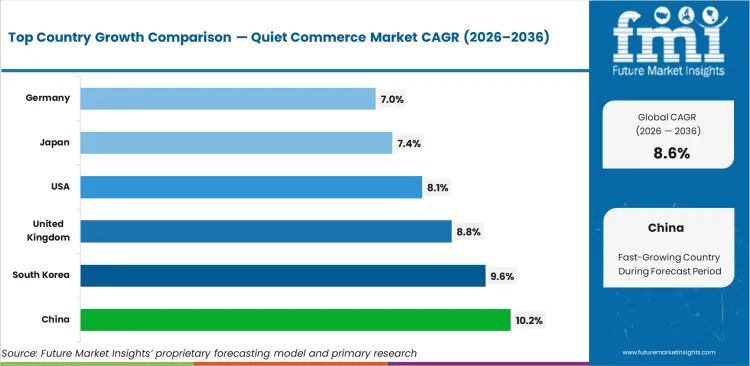
- Among key countries, India leads at 11.4% CAGR, followed by China at 10.2%, South Korea at 9.6%, the United Kingdom at 8.8%, the United States at 8.1%, Japan at 7.4%, and Germany at 7.0%.
- Margin pressure in instant-delivery models, urban labor costs, and the operational difficulty of scaling short delivery windows profitably moderate overall growth.
- Product and Segment View
- The industry covers dark-store and micro-fulfillment operations, order and routing software, inventory systems, and rapid-delivery execution built for digitally placed, low-friction consumer orders.
- Operators utilize these capabilities across grocery, pharmacy, convenience, and general merchandise use cases, especially in dense urban catchments.
- Dark stores segment leads the fulfillment model segment with 31.4% share, supported by shortening pick paths and accommodating higher order frequency.
- Grocery segment leads the commerce mode segment with 34.8% share, reflecting the heavy role of repeat household purchases across quick and quiet commerce models.
- Order platforms segment leads the technology layer segment with 29.6% share, representing orchestration software sitting at the center of merchant, inventory, and delivery coordination. Adjacent FMI order-management coverage also points to software leadership.
- Same-day segment leads the delivery window segment with 37.2% share capturing the broadest demand pool between ultra-fast urgency and lower-cost scheduled fulfillment.
- Urban households segment leads the end user segment with 41.5% share due to repeat household demand creating the necessary order density establishing workable quiet-commerce economics.
- The scope includes digital ordering, fulfillment orchestration, local inventory positioning, and last-mile execution, excluding broad retail GMV, long-haul freight, and generic enterprise software lacking direct ties to commerce fulfillment.
- Geography and Competitive Outlook
- India, China, and South Korea represent the fastest-growing national sectors within this model, whereas the United States remains the largest stable demand base due to massive e-commerce spending scale.
- Platform scale, local merchant density, quick-commerce expansion, and automation investment shape competition, featuring companies such as DoorDash, Uber, Instacart, Delivery Hero, Meituan, Ocado Group, and UPS among the key participants.
- The industry is not fully consolidated; the largest platforms dominate consumer traffic across certain geographies, yet infrastructure, fulfillment, and delivery execution remain shared among many regional and category specialists.
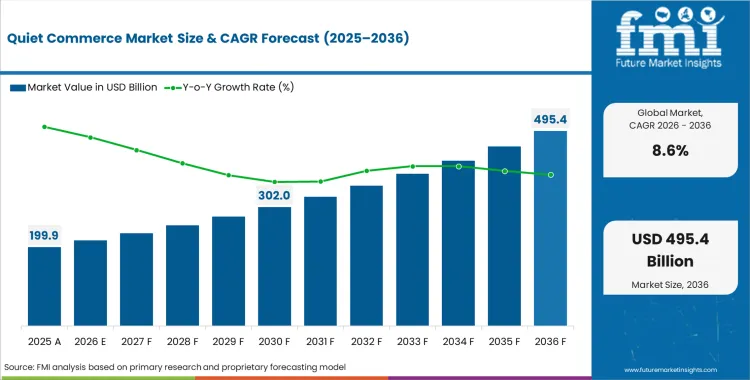
Evaluating the quiet commerce market size presents immediate pressure for supply chain management to decouple digital fulfillment from physical store operations. Executing rapid-delivery commitments from active retail aisles generates significant labor challenges. Separating these streams requires operators to assess isolated live commerce capabilities against localized dark-store investments. Postponing this architectural separation results in brands incurring high cost-to-serve metrics while competitors secure prime urban real estate for automated micro-nodes. Establishing a reliable quiet commerce market forecast depends on this operational necessity, redirecting capital from customer-facing environments toward invisible, high-throughput neighborhood centers. Analysis of current quiet commerce market trends indicates physical store picking erodes margin irrespective of delivery speed. Furthermore, aggressive investment patterns suggest a permanent structural change in urban retail distribution architectures globally. Executives optimizing these networks prioritize proximity over pure storage capacity, fundamentally altering commercial real estate valuations across major metropolitan areas.
Upon major grocery chains converting stable percentage of their urban space into dedicated dark nodes, order density achieves a crucial profitability level. Concentrating volume into specialized quiet commerce dark stores facilitate efficient routing software for batching local deliveries. Last-mile economics stabilize once dispatch algorithms group multiple nearby addresses, ensuring sustainable quiet commerce market expansion instead of subsidized loss leaders. Integrating advanced robotics further increases throughput rates inside these constrained spaces, enabling facility managers to double output without enlarging the physical area.
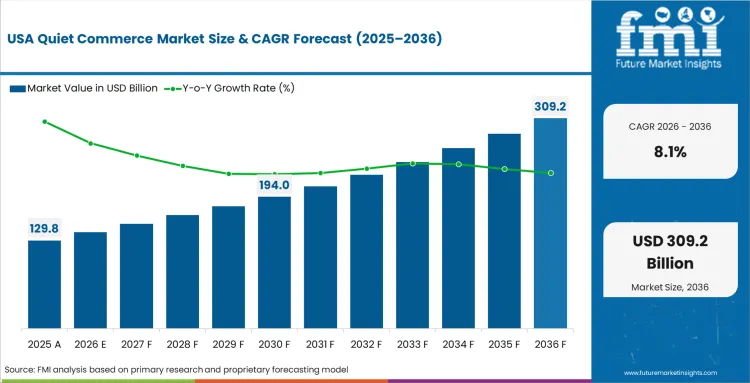
China is forecast to be the fastest‑growing quiet commerce market, with an estimated CAGR of 10.2% through 2036, supported by rapid scaling of hyper‑local fulfillment networks across dense urban centers. South Korea is projected to follow at a 9.6% CAGR, driven by sustained mobile‑commerce intensity and platform‑led delivery orchestration. The United Kingdom is expected to expand at an 8.8% CAGR over the forecast period, reflecting continued separation of online grocery fulfillment from store‑based operations. United States market is projected to grow at an 8.1% CAGR through 2036, supported by the gradual stabilization of last‑mile economics through scaled third‑party delivery platforms. Japan’s expansion is forecast to moderate to a 7.4% CAGR, influenced by a preference for scheduled, reliability‑focused delivery models, while Germany is estimated to register a 7.0% CAGR, constrained by strict cost discipline and operational profitability requirements. Overall CAGR variation reflects differences in market maturity, urban density, and the pace of localized fulfillment adoption.
| Metric | Details |
|---|---|
| Industry Size (2026) | USD 199.9 billion |
| Industry Value (2036) | USD 454.1 billion |
| CAGR (2026 to 2036) | 8.6% |
Source: Future Market Insights (FMI) analysis, based on proprietary forecasting model and primary research
Segmental Analysis
Quiet Commerce Market Analysis by Fulfillment Model
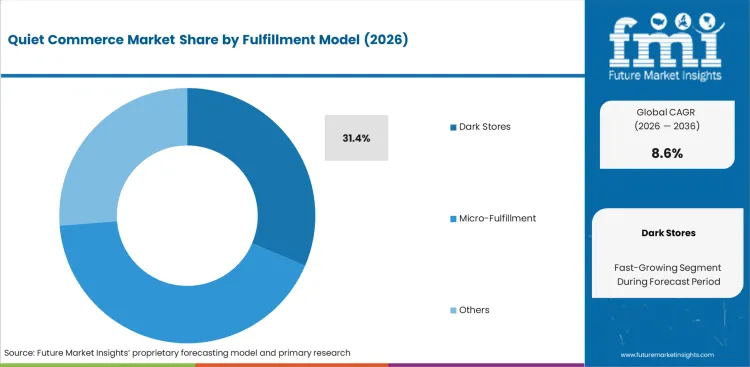
Store-pick operations become completely unsustainable as digital order volumes exceed roughly 10.0% of total revenue. Removing online order pickers from customer-facing aisles is a mandatory operational directive for grocery vice presidents. FMI's analysis confirms this fulfillment format resolves space constraints by treating inventory solely as algorithmic data points. Fulfillment center managers attain pick rates three times faster inside closed facilities compared to active retail locations. A supply chain mechanism rarely publicized involves the way dark stores fundamentally reshape product assortment strategy; operators stock items purely based on local API demand signals, separate from traditional visual merchandising principles. The dark stores segment commands a 31.4% market share in 2026, driven by localized API-based demand synchronization, advanced automated sorting capabilities, and the absence of physical shopper interference, resulting in accelerated compound growth. Integrating social commerce order streams directly into localized dark fulfillment hubs enables brands to manage sudden, viral product demand surges without disrupting standard physical retail flow. Retailers employing hybrid picking strategies experience persistent out-of-stock issues and elevated labor expenditure. Analysis of the dark store sector confirms a sharp divergence in profitability between inventory-led models and quick commerce marketplace models. The ongoing shift toward fully automated micro-fulfillment centers further secures this segment's dominance across dense urban areas.
- First-wave pure plays: Grocery delivery startup companies immediately adopt dark stores, avoiding costly retail property. Operations management achieves unit profitability through optimizing dense urban picking layouts.
- Legacy grocer conversion: Traditional supermarket operators subsequently transform underperforming stores into closed fulfillment nodes. Supply chain leadership isolates digital inventory to safeguard the physical shopper experience.
- Specialty retail adoption: Pharmacy and convenience sector brands are the last to embrace this model, eventually moving high-velocity products into dark hubs. Logistics coordinators finally recognize localized inventory staging prevents expensive stockouts.
Quiet Commerce Market Analysis by Commerce Mode
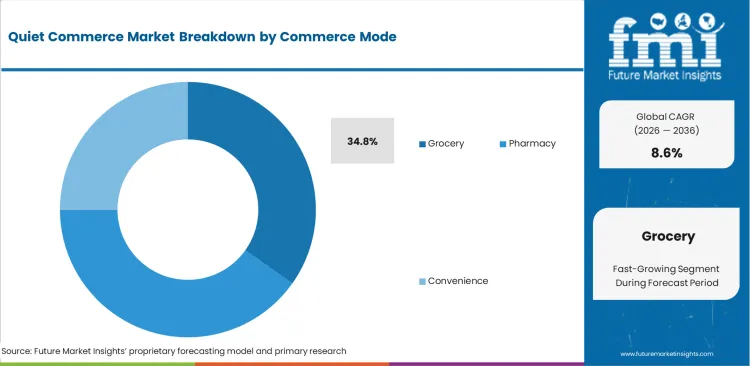
Managers face intense pressure figuring out profitable delivery models for heavy, low-margin items. Inventory managers build rapid delivery networks around perishable goods demanding strict temperature controls and rapid turnaround. Implementing a modular e-commerce system allows food retailers to connect localized stock data directly with consumer applications. FMI observes high order frequency masks terrible unit economics if batching fails. The grocery segment accounts for 34.8% revenue share in 2026, supported by high-frequency household replenishment requirements and heavy perishables demand. The practitioner reality reveals quiet commerce market grocery delivery acts merely as a loss-leading anchor; operators achieve actual profit only upon consumers adding high-margin pharmacy or convenience items to weekly food orders. Supermarkets failing to cross-sell non-food items through their rapid delivery platforms burn capital continuously. Expanding basket sizes remains the single most critical variable determining facility survival across highly competitive metropolitan districts.
- Initial procurement savings: Category buyers negotiate bulk pricing for centralized micro-fulfillment delivery rather than fragmented store stocking. Centralized urban receiving lowers inbound freight expenses.
- Hidden operational bleed: Fulfillment directors discover high cooling costs for perishable staging inside small urban footprints. Maintaining multiple temperature zones degrades anticipated facility margins.
- Lifecycle comparison reality: Finance officers realize standalone rapid grocery delivery rarely breaks even on its own. Profitability requires attaching general merchandise impulse buys to every order.
Quiet Commerce Market Analysis by Technology Layer
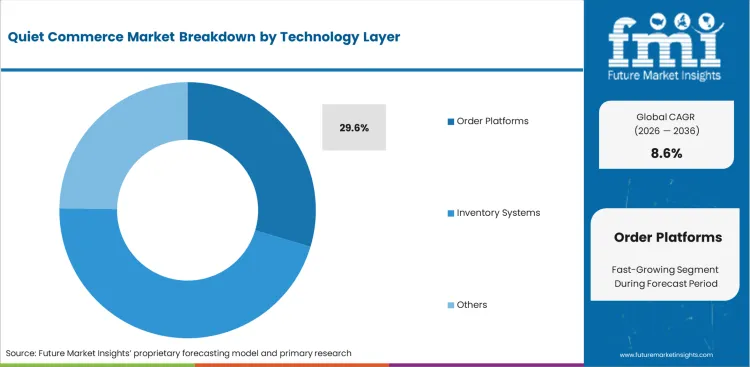
Disparate inventory data consistently conflicts with aggressive delivery commitments. Technology executives mandate these middleware solutions to ensure items exiting a warehouse five minutes ago are not sold. Deployment of accurate e-commerce software and platform tools prevents significant customer service failures. FMI's estimates suggest platform value lies not in processing transactions, but in rejecting orders when predictive algorithms calculate missed delivery windows. The order platforms segment accounts for 29.6% market share in 2026, supported by the critical need for middleware solutions that translate localized stock information for external courier networks, fostering sustained compound expansion. A seldom-acknowledged fact among dispatch engineers is that basic order software manages steady states effectively; system failures occur solely during localized weather events characterized by simultaneous demand surges and reduced courier availability. Brands dependent on outdated batch-processing systems permanently lose customers after repeated canceled orders. System latency directly correlates with customer churn rates across all tracked geographies.
- Inventory synchronization failure: Real-time platforms are essential; otherwise, warehouse managers sell stock not physically present. Shoppers consequently experience canceled orders when pickers locate empty physical shelves.
- Residual batching risk: Even with sophisticated routing, dispatch coordinators encounter difficulty during severe local weather. Algorithm efficiency decreases as physical courier density evaporates.
- Required predictive integration: IT leaders must directly connect order platforms to localized traffic data. Anticipating delays maintains customer trust during intricate neighborhood routing.
Quiet Commerce Market Analysis by Delivery Window
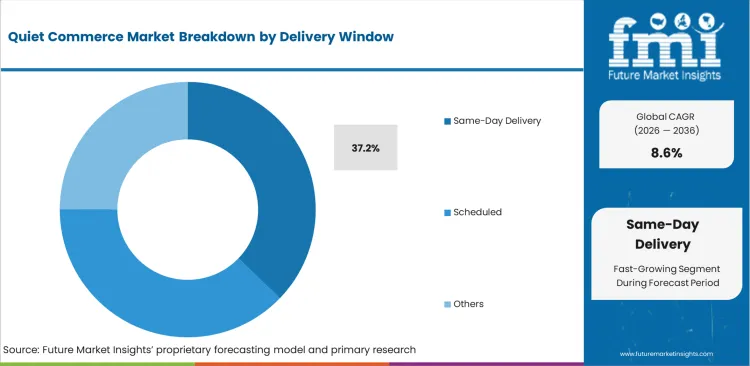
The same-day delivery segment accounts for a 37.2% market share in 2026, sustained by a key factor such as flexible eight-hour dispatch windows. These windows enable highly profitable neighborhood route batching, fostering stable Compound Annual Growth Rate (CAGR) performance. Batching algorithms influence logistics profitability to a significantly greater extent than vehicle speed. Operations management favors this scheduling over immediate delivery because it substantially lowers cost-per-drop metrics. Employing flexible e-commerce platform APIs allows dispatch personnel to dynamically adjust delivery commitments according to the active courier density. FMI's perspective is that consumer survey results indicating a preference for ten-minute delivery contradict actual purchasing behavior; shoppers demonstrate a readiness to accept later evening arrivals to avoid surge pricing. Models offering delivery in under 30 minutes attract media attention but compel couriers into inefficient single-order journeys, resulting in margin erosion. Businesses that persistently promise instant delivery without achieving extreme localized density deplete venture funding rapidly. Attaining operational scale necessitates balancing customer expectations with fundamental routing physics.
- Baseline efficiency zones: Dispatch coordinators achieve peak profitability arranging scheduled neighborhood clusters. Grouping five packages per hour fulfills basic margin requirements.
- Edge condition breakdowns: Operations personnel observe a collapse in route efficiency during unexpected urban traffic incidents. Strict same-day delivery commitments fail when unforeseen bottlenecks disrupt planned sequences.
- Strict qualification standards: Logistics management mandates minimum basket sizes for expedited service options. Low-value orders automatically route to next-day queues for overall margin protection.
Quiet Commerce Market Analysis by End User
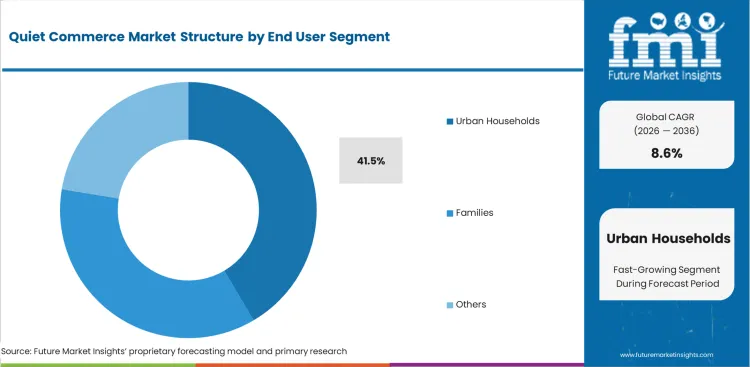
Predictable repeat purchasing patterns allow algorithms to pre-position inventory locally. Marketing directors target high-density apartment complexes because serving fifty doors in one building subsidizes entire delivery runs. Designing appropriate retail e-commerce packaging ensures couriers can stack multiple household orders efficiently in small vehicles. Based on FMI's assessment, suburban expansion destroys local delivery economics not because of distance, but because lower drop density prevents route batching. Dispatch software operators know true profitability happens only upon couriers completing three deliveries within a single city block. Platforms expanding too quickly into low-density zip codes face severe unit-cost penalties. Strategic operators actively geofence their service areas to protect baseline unit economics. Urban households segment accounts for 41.5% share supported by massive geographic density across apartment complexes generating the precise order volume required for profitable compound growth.
- Primary capability builders: Real estate developers secure localized basement properties to serve high-rise residents. Facility managers optimize vertical storage for maximum urban output.
- Geographic expansion constraints: Operations directors face hard limits moving into suburban territory. Lack of centralized drop zones ruins previously calculated transit times.
- Future landscape trajectory: Logistics executives anticipate shared neighborhood receiving lockers dominating future infrastructure. Centralized drop points eliminate failed delivery attempts entirely.
Quiet Commerce Market Drivers, Restraints, and Opportunities
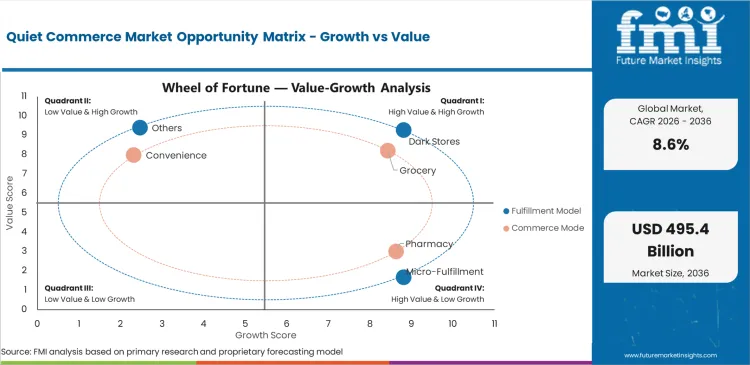
Rising real estate costs force retail chief operating officers to shrink customer-facing footprints and shift volume into cheaper industrial locations. Delaying this transition leaves brands paying premium retail rent for space used primarily for digital staging. Operations directors realize customer aisles make terrible fulfillment centers; physical shoppers obstruct pickers, destroying required item-per-minute metrics. Transitioning to dedicated dark facilities increases worker productivity threefold within the instant retail sector. Advanced customer analytics in e-commerce applications allow inventory planners to map localized neighborhood demand accurately, enabling precise stock placement before orders occur. Rapid delivery expectations compel executives to position high-velocity goods within two miles of target households, making centralized regional distribution models obsolete for daily necessities.
Zoning regulations restrict industrial micro-warehouses operating within dense residential neighborhoods. Compliance officers struggle securing permits for facilities generating high commercial traffic near housing clusters. Municipalities frequently classify dark stores as retail, yet reject applications due to missing storefronts and heavy delivery-vehicle congestion. This bureaucratic friction delays facility launches significantly. Courier staging creates community pushback; local councils block operations upon dozens of delivery scooters blocking sidewalks. Real estate teams attempt mitigating these issues by leasing subterranean parking structures, but poor ventilation and lacking commercial loading docks complicate deployment.
To leverage global market opportunities, retail companies must strategically shift away from using high-cost retail spaces for digital fulfillment. The key is to rapidly transition volume into specialized, cheaper facilities, optimally micro-warehouses situated within two miles of high-demand areas, guided by advanced customer analytics. This localized, dark-facility model, while facing zoning and community resistance, is essential for meeting rapid delivery expectations and achieving the threefold productivity increase needed to compete in the instant retail sector. Successfully navigating bureaucratic friction and securing non-traditional staging areas (like appropriately modified subterranean spaces) are expected to be the competitive differentiator for maximizing global market penetration and profitability.
Opportunities in the Quiet Commerce Market
- Cold-chain micro-storage integration: Facility directors installing modular refrigeration inside basic dark stores capture highly profitable perishable grocery orders. General merchandise competitors lose out on weekly household replenishment budgets. Upgrading standard dry-goods nodes into multi-temperature zones unlocks immediate revenue expansion.
- Predictive neighborhood staging: Inventory managers using localized purchasing data can pre-stock high-probability items. Pre-picking anticipated orders reduces dispatch times during peak evening rushes. Advanced forecasting algorithms transform reactive fulfillment centers into proactive staging environments, significantly lowering overall courier wait times.
- Shared infrastructure networks: Supply chain vice presidents partnering with non-competing brands for shared urban delivery hubs slash real estate overhead. Joint operations lower final-mile costs significantly. Consolidating multiple brand inventories under one automated roof creates unprecedented economies of scale across dense metropolitan districts.
Regional Analysis
Based on regional analysis, the quiet commerce market is segmented into North America, Europe, Asia Pacific, Latin America, and Middle East & Africa.
.webp "Top Country Growth Comparison Quiet Commerce Market Cagr (2026 2036)")
| Country | CAGR (2026 to 2036) |
|---|---|
| China | 10.2% |
| South Korea | 9.6% |
| United Kingdom | 8.8% |
| United States | 8.1% |
| Japan | 7.4% |
| Germany | 7.0% |
Source: Future Market Insights (FMI) analysis, based on proprietary forecasting model and primary research
North America Quiet Commerce Market Analysis
Extensive suburban regions inherently conflict with the requirements for rapid-fulfillment density. Operations management teams generally restrict genuinely invisible infrastructure development to major coastal metropolitan areas. These specific areas possess apartment density sufficient to justify substantial micro-warehouse investments. FMI's comprehensive market analysis consistently indicates that third-party platforms maintain market dominance. This dominance exists because individual brands typically cannot generate enough localized order volume independently to support dedicated courier staff and associated logistics. Consequently, localized fulfillment remains a premium service offering, rarely available outside of extremely dense urban cores. Strategic capital investments are heavily concentrated on advanced automation technologies. This focus aims to effectively offset the continuously increasing expenditures related to labor and workforce management.
- United States: Large-scale third-party delivery networks enable both restaurant and grocery chain executives to entirely externalize the complexity associated with dispatching and delivery logistics. The sector in the United States is projected to advance at a compound annual growth rate 8.1%, robustly supported by massive infusions of venture capital funding and the strategic consolidation of high order volume into fewer operational nodes. This approach, in turn, successfully reduces inventory carrying costs for national retail chains operating across the country.
Europe Quiet Commerce Market Analysis
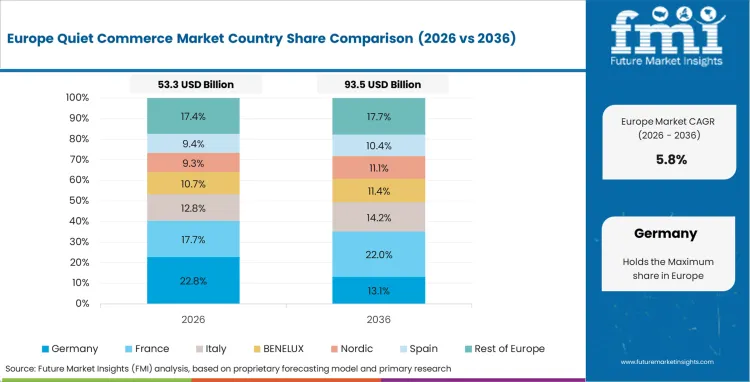
Strict labor regulations force fulfillment directors to invest heavily in automated picking robotics rather than throwing manual labor at volume spikes. Municipal policies aggressively restrict internal combustion delivery vehicles in city centers. FMI observes operations managers pivoting toward electric cargo bikes and localized neighborhood staging to maintain compliance. Profitability requires high average order values to offset expensive courier wages. Europe operators prioritize sustainable packaging and zero-emission transit solutions to secure operating permits.
- Germany: Operational profitability mandates strict routing efficiency over speculative instant-delivery promises. Germany is set to register 7.0% CAGR through 2036 supported by strong union protections forcing companies to abandon independent-contractor courier models in favor of stable, scheduled consolidated drops.
- United Kingdom: Grocery pure-play dark formats dominate as supply chain officers separate online volume from physical supermarket aisles. United Kingdom is set to rise at 8.8% CAGR during the forecast period, propelled by dense London-centric infrastructure and facilities employing robotic picking arrays capturing high-margin weekly shops significantly faster than manual-picking competitors.
Asia Pacific Quiet Commerce Market Analysis
A high volume of mobile transactions coupled with extreme density within cities provides ideal circumstances for implementing algorithmic rapid delivery models. Supply chain leaders must embrace vertical micro-fulfillment solutions instead of developing expansive, horizontal warehouse complexes, due to significant real estate limitations in primary urban centers. Analysts at FMI observe that local consumer expectations currently necessitate arrival times under 30 minutes for essential daily purchases. The incorporation of advanced e-commerce logistics frameworks enables regional service providers to efficiently manage and coordinate intricate networks of scooter delivery personnel, optimizing urban distribution. Conventional supermarkets are rapidly losing market share to technology-focused delivery platforms that operate through inconspicuous neighborhood distribution points.
- China: Substantial capital investments in quick-commerce infrastructure facilitate the capability of operations management teams to process millions of customer orders daily at a local level. China revenue demonstrates growth at a Compound Annual Growth Rate (CAGR) of 10.2% by 2036, supported by an extensive concentration of delivery couriers, guaranteeing high levels of algorithmic route efficiency and immense spontaneous demand captured effectively via sophisticated, integrated social platforms. This market structure is driving rapid innovation.
- Japan: Industry in Japan is set to expand at a 7.4% CAGR through 2036, sustained by an aging demographic that favors reliable and predictable arrival windows, consequently redirecting the operational emphasis toward flawless consistency rather than pure velocity. Established benchmarks for operational efficiency mandate that logistics coordinators prioritize precise, scheduled evening deliveries, moving away from erratic, instant fulfillment methods. Reliability is the key metric in this mature market.
- South Korea: Significantly high rates of mobile shopping platform adoption necessitate that inventory planners pre-position high-demand items, such as beauty and grocery products, within very close proximity to major apartment complexes. South Korea industry is estimated to continue rising at a 9.6% CAGR over the forecast period. Dominant delivery applications support this growth through aggressive financial subsidies for local courier pools, successfully deterring the entry of new market competitors and solidifying their operational advantage.
Competitive Aligners for Market Players
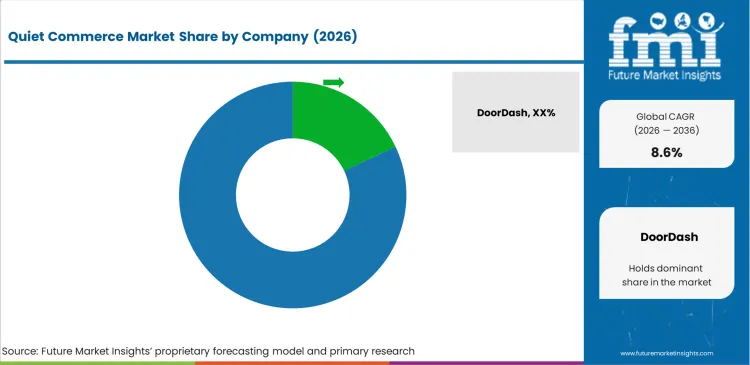
Extreme localized order density separates profitable platforms from failed ventures. Platform directors at DoorDash and Uber optimize algorithms to ensure couriers never travel empty. Delivering a single order loses capital; true margin emerges exclusively upon dispatch systems grouping three different orders along one linear path. Employing optimized e-commerce packaging helps couriers stack multiple orders safely. Pure technology players struggle because algorithmic brilliance fails without physical neighborhood real estate. Reviewing quiet commerce market platform vendors confirms physical scale remains the ultimate defensive moat.
Incumbents possess massive historical traffic data detailing exactly timing patterns regarding specific neighborhoods ordering certain items. Ocado Group and Instacart utilize this specific intelligence to pre-position stock before demand materializes. Challengers cannot replicate this predictive capability quickly, forcing them to hold excessive inventory across all nodes. Accessing historical transaction logs grants dark store software providers the ability to staff micro-warehouses perfectly, eliminating idle labor costs.
Restaurant and grocery partners actively resist platform lock-in by routing orders across multiple delivery networks simultaneously. Delivery Hero and Meituan face constant pressure from merchants deploying middleware assigning orders to whichever courier arrives fastest. Future logistics officers may prioritize owning physical dark-store assets over pure software orchestration, realizing micro fulfillment solution vendors providing physical local inventory tools possess higher leverage than pure routing applications.
Key Players in Quiet Commerce Market
- DoorDash
- Uber
- Instacart
- Delivery Hero
- Meituan
- Ocado Group
- UPS
Scope of the Report
| Metric | Value |
|---|---|
| Quantitative Units | USD 199.9 billion to USD 454.1 billion, at a CAGR of 8.6% |
| Market Definition | Operations comprising invisible, localized fulfillment infrastructure designed strictly for high-speed digital order processing. |
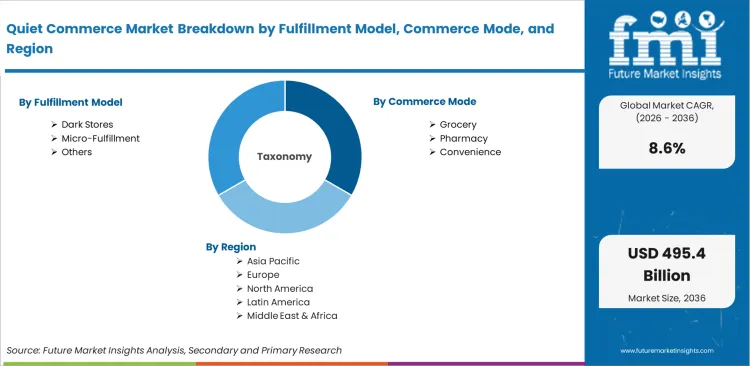
| Segmentation | Fulfillment Model, Commerce Mode, Technology Layer, Delivery Window, End User, and Region |
| Regions Covered | North America, Europe, Asia Pacific, Latin America, Middle East & Africa |
| Countries Covered | United States, Canada, Germany, United Kingdom, France, Italy, Spain, China, Japan, South Korea, Taiwan, Singapore, Brazil, Mexico, Argentina, GCC Countries, South Africa, Israel, Rest of Middle East & Africa |
| Key Companies Profiled | DoorDash, Uber, Instacart, Delivery Hero, Meituan, Ocado Group, UPS |
| Forecast Period | 2026 to 2036 |
| Approach | Urban micro-warehouse square footage combined with local delivery order volumes established baseline valuation parameters. |
Source: Future Market Insights (FMI) analysis, based on proprietary forecasting model and primary research
Quiet Commerce Market Analysis by Segments
Fulfillment Model
- Dark stores
- Micro-fulfillment
- Store-pick
- Hub-and-spoke
Commerce Mode
- Grocery
- Pharmacy
- Convenience
- General merchandise
Technology Layer
- Order platforms
- Routing software
- Picking automation
- Inventory systems
Delivery Window
- Same-day
- Sub-30-minute
- Scheduled
- Subscription replenishment
End User
- Urban households
- Working professionals
- Families
- SMEs
Region
- North America
- United States
- Canada
- Europe
- Germany
- United Kingdom
- France
- Italy
- Spain
- Asia Pacific
- China
- Japan
- South Korea
- Taiwan
- Singapore
- Latin America
- Brazil
- Mexico
- Argentina
- Middle East & Africa
- GCC Countries
- South Africa
- Israel
- Rest of Middle East & Africa
Bibliography
- World Economic Forum. (2025, October). Evolving practices for urban logistics
- REDA, A. K. (2025). State of the practice on e-commerce last mile logistics.
- ShipNetwork. (2025). Peak season 2025 eCommerce fulfillment report.
- DHL. (2025). The challenging logistics of last-mile delivery.
- Smart Robotics. (2025, January). The top 5 e-commerce fulfillment trends in 2025.
- Locus. (2025, September) Sustainable last-mile delivery: 2026 enterprise guide.
This bibliography is provided for reader reference. The full FMI report contains the complete reference list with primary source documentation.
This Report Addresses
- Margin compression forcing grocery supply chain directors to remove digital pickers from aisles.
- Peak-hour congestion compelling logistics dispatchers to adopt predictive routing software.
- Real estate constraints pushing officers toward high-density automated micro-warehouses.
- Grocery category dominating high-frequency household replenishment requirements.
- Order platforms acting as translation engines between localized stock and external couriers.
- Same-day service providing logistics directors windows to group overlapping neighborhood routes.
- China infrastructure investments allowing managers to fulfill millions of daily orders locally.
- Urban populations enabling instant delivery models despite chaotic traffic frameworks.
Frequently Asked Questions
What is the quiet commerce market?
Operations constituting localized, invisible infrastructure enable fast, low-friction digital retail fulfillment. Facilities optimize exclusively for picker efficiency and dispatch density rather than consumer foot traffic.
How is quiet commerce different from quick commerce?
Quiet commerce vs quick commerce debates center on infrastructure versus speed. Quick commerce emphasizes the 10-minute consumer promise. Quiet operations focus entirely on the backend dark store networks and predictive inventory systems that make that speed mathematically viable.
Why are dark stores central to quiet commerce?
Fulfillment center managers achieve pick rates three times faster inside closed environments compared to active retail spaces. Removing physical shoppers from aisles eliminates operational friction entirely.
What is the current size of the quiet commerce sector?
The valuation reached USD 184.6 billion in 2025. This baseline reflects massive transaction volumes flowing through existing local delivery networks across major global cities.
Which companies are leading quiet commerce globally?
DoorDash, Uber, Instacart, Delivery Hero, Meituan, Ocado Group, and UPS dominate the competitive landscape. Platform scale and local merchant density separate these leaders from smaller regional operators.
Which countries are growing fastest in quiet commerce?
China leads global expansion at a 10.2% CAGR, followed closely by South Korea at 9.6%. Hyper-dense urban populations in these regions force rapid adoption of localized fulfillment hubs.
Is quiet commerce profitable at scale?
Standalone rapid grocery delivery rarely breaks even on its own. Profitability requires attaching general merchandise impulse buys to every order and achieving extreme drop density within tight neighborhood clusters.
How do micro-fulfillment nodes improve delivery speed?
Positioning high-velocity goods within two miles of target households removes cross-city transit from the logistics equation. Order platforms instantly route tasks to the nearest automated picking facility.
What products dominate quiet commerce order baskets?
Grocery commands 34.8% share precisely because high-frequency household purchasing creates necessary route density. Pharmacy and convenience items follow closely, supplying higher margins to offset delivery costs.
How does quiet commerce affect retail logistics strategy?
Retail chief operating officers must shrink customer-facing footprints and shift volume into cheaper industrial locations. Centralized regional distribution models become obsolete for daily necessities.
How do you compare quiet commerce and traditional e-commerce logistics?
Traditional e-commerce relies on massive centralized warehouses and regional sortation centers. Localized infrastructure completely bypasses sortation, moving goods directly from neighborhood dark stores to consumer doorsteps.
How does quiet commerce for grocery function?
High-frequency household purchasing creates enough order volume to justify local infrastructure. Inventory directors build rapid delivery networks around perishable goods demanding strict temperature controls.
What function do order platforms serve in this ecosystem?
Order platforms act as translation engines between localized stock and external courier networks. Chief technology officers mandate these middleware solutions to prevent selling out-of-stock items.
Why does same-day delivery capture the largest window share?
It provides logistics directors an eight-hour window to group overlapping neighborhood routes. Operations managers favor this cadence over immediate delivery since it reduces cost-per-drop.
What drives urban household dominance in end users?
Predictable repeat purchasing patterns allow algorithms to pre-position inventory locally. Generating geographic density across apartment complexes makes micro-fulfillment centers financially viable.
Why does China grow faster than Japan?
Massive quick-commerce infrastructure investments allow China operations managers to fulfill millions of daily orders locally. Japan relies on mature, predictable scheduled delivery frameworks rather than chaotic hyper-growth.
How do Europe operations differ from North America models?
Strict labor regulations force Europe directors to invest heavily in automated picking robotics. Profitability requires high average order values to offset expensive courier wages across cities in Europe.
What prevents immediate profitability in new geographies?
Fragmented inventory data constantly conflicts with aggressive delivery promises. Supermarkets failing to cross-sell high-margin non-food items through their rapid delivery platforms burn capital continuously.
How do real estate constraints shape deployment?
Zoning regulations restrict industrial micro-warehouses operating within dense residential neighborhoods. Compliance officers struggle securing permits for facilities generating high commercial traffic near housing clusters.
What role does predictive analytics play?
Inventory managers using localized purchasing data pre-stock high-probability items. Pre-picking anticipated orders reduces dispatch times during peak evening rushes.
Why do legacy retailers struggle with rapid delivery?
Retailers attempting hybrid picking models suffer chronic out-of-stock complaints. Operations directors realize customer aisles make terrible fulfillment centers due to shopper interference.
How do companies handle edge condition breakdowns?
Operations managers see route efficiency collapse during unplanned urban traffic incidents. IT directors must link order platforms directly to localized traffic data to mitigate severe delays.
What causes suburban expansion failures?
Suburban expansion destroys quiet commerce economics because lower drop density prevents route batching. Dispatch software operators know true profitability happens only within dense blocks.
How do incumbents maintain their advantage?
Incumbents possess massive historical traffic data detailing exactly timing patterns regarding specific neighborhoods ordering certain items. Challengers cannot replicate this predictive capability quickly.
Preview the report firsthand - request a free sample
Get SampleGet the brochure for pricing and purchase details.
Get PDFTable of Content
- Executive Summary
- Global Market Outlook
- Demand-side Trends
- Supply-side Trends
- Technology Roadmap Analysis
- Analysis and Recommendations
- Market Overview
- Market Coverage / Taxonomy
- Market Definition / Scope / Limitations
- Research Methodology
- Chapter Orientation
- Analytical Lens and Working Hypotheses
- Market Structure, Signals, and Trend Drivers
- Benchmarking and Cross-market Comparability
- Market Sizing, Forecasting, and Opportunity Mapping
- Research Design and Evidence Framework
- Desk Research Programme (Secondary Evidence)
- Company Annual and Sustainability Reports
- Peer-reviewed Journals and Academic Literature
- Corporate Websites, Product Literature, and Technical Notes
- Earnings Decks and Investor Briefings
- Statutory Filings and Regulatory Disclosures
- Technical White Papers and Standards Notes
- Trade Journals, Industry Magazines, and Analyst Briefs
- Conference Proceedings, Webinars, and Seminar Materials
- Government Statistics Portals and Public Data Releases
- Press Releases and Reputable Media Coverage
- Specialist Newsletters and Curated Briefings
- Sector Databases and Reference Repositories
- FMI Internal Proprietary Databases and Historical Market Datasets
- Subscription Datasets and Paid Sources
- Social Channels, Communities, and Digital Listening Inputs
- Additional Desk Sources
- Expert Input and Fieldwork (Primary Evidence)
- Primary Modes
- Qualitative Interviews and Expert Elicitation
- Quantitative Surveys and Structured Data Capture
- Blended Approach
- Why Primary Evidence is Used
- Field Techniques
- Interviews
- Surveys
- Focus Groups
- Observational and In-context Research
- Social and Community Interactions
- Stakeholder Universe Engaged
- C-suite Leaders
- Board Members
- Presidents and Vice Presidents
- R&D and Innovation Heads
- Technical Specialists
- Domain Subject-matter Experts
- Scientists
- Physicians and Other Healthcare Professionals
- Governance, Ethics, and Data Stewardship
- Research Ethics
- Data Integrity and Handling
- Primary Modes
- Tooling, Models, and Reference Databases
- Desk Research Programme (Secondary Evidence)
- Data Engineering and Model Build
- Data Acquisition and Ingestion
- Cleaning, Normalisation, and Verification
- Synthesis, Triangulation, and Analysis
- Quality Assurance and Audit Trail
- Market Background
- Market Dynamics
- Drivers
- Restraints
- Opportunity
- Trends
- Scenario Forecast
- Demand in Optimistic Scenario
- Demand in Likely Scenario
- Demand in Conservative Scenario
- Opportunity Map Analysis
- Product Life Cycle Analysis
- Supply Chain Analysis
- Investment Feasibility Matrix
- Value Chain Analysis
- PESTLE and Porter’s Analysis
- Regulatory Landscape
- Regional Parent Market Outlook
- Production and Consumption Statistics
- Import and Export Statistics
- Market Dynamics
- Global Market Analysis 2021 to 2025 and Forecast, 2026 to 2036
- Historical Market Size Value (USD Million) Analysis, 2021 to 2025
- Current and Future Market Size Value (USD Million) Projections, 2026 to 2036
- Y-o-Y Growth Trend Analysis
- Absolute $ Opportunity Analysis
- Global Market Pricing Analysis 2021 to 2025 and Forecast 2026 to 2036
- Global Market Analysis 2021 to 2025 and Forecast 2026 to 2036, By Fulfillment Model
- Introduction / Key Findings
- Historical Market Size Value (USD Million) Analysis By Fulfillment Model , 2021 to 2025
- Current and Future Market Size Value (USD Million) Analysis and Forecast By Fulfillment Model , 2026 to 2036
- Dark Stores
- Micro-Fulfillment
- Others
- Dark Stores
- Y-o-Y Growth Trend Analysis By Fulfillment Model , 2021 to 2025
- Absolute $ Opportunity Analysis By Fulfillment Model , 2026 to 2036
- Global Market Analysis 2021 to 2025 and Forecast 2026 to 2036, By Commerce Mode
- Introduction / Key Findings
- Historical Market Size Value (USD Million) Analysis By Commerce Mode, 2021 to 2025
- Current and Future Market Size Value (USD Million) Analysis and Forecast By Commerce Mode, 2026 to 2036
- Grocery
- Pharmacy
- Convenience
- Grocery
- Y-o-Y Growth Trend Analysis By Commerce Mode, 2021 to 2025
- Absolute $ Opportunity Analysis By Commerce Mode, 2026 to 2036
- Global Market Analysis 2021 to 2025 and Forecast 2026 to 2036, By Technology Layer
- Introduction / Key Findings
- Historical Market Size Value (USD Million) Analysis By Technology Layer, 2021 to 2025
- Current and Future Market Size Value (USD Million) Analysis and Forecast By Technology Layer, 2026 to 2036
- Order Platforms
- Inventory Systems
- Others
- Order Platforms
- Y-o-Y Growth Trend Analysis By Technology Layer, 2021 to 2025
- Absolute $ Opportunity Analysis By Technology Layer, 2026 to 2036
- Global Market Analysis 2021 to 2025 and Forecast 2026 to 2036, By Delivery Window
- Introduction / Key Findings
- Historical Market Size Value (USD Million) Analysis By Delivery Window, 2021 to 2025
- Current and Future Market Size Value (USD Million) Analysis and Forecast By Delivery Window, 2026 to 2036
- Same-Day Delivery
- Scheduled
- Others
- Same-Day Delivery
- Y-o-Y Growth Trend Analysis By Delivery Window, 2021 to 2025
- Absolute $ Opportunity Analysis By Delivery Window, 2026 to 2036
- Global Market Analysis 2021 to 2025 and Forecast 2026 to 2036, By End User
- Introduction / Key Findings
- Historical Market Size Value (USD Million) Analysis By End User, 2021 to 2025
- Current and Future Market Size Value (USD Million) Analysis and Forecast By End User, 2026 to 2036
- Urban Households
- Families
- Others
- Urban Households
- Y-o-Y Growth Trend Analysis By End User, 2021 to 2025
- Absolute $ Opportunity Analysis By End User, 2026 to 2036
- Global Market Analysis 2021 to 2025 and Forecast 2026 to 2036, By Region
- Introduction
- Historical Market Size Value (USD Million) Analysis By Region, 2021 to 2025
- Current Market Size Value (USD Million) Analysis and Forecast By Region, 2026 to 2036
- North America
- Latin America
- Western Europe
- Eastern Europe
- East Asia
- South Asia and Pacific
- Middle East & Africa
- Market Attractiveness Analysis By Region
- North America Market Analysis 2021 to 2025 and Forecast 2026 to 2036, By Country
- Historical Market Size Value (USD Million) Trend Analysis By Market Taxonomy, 2021 to 2025
- Market Size Value (USD Million) Forecast By Market Taxonomy, 2026 to 2036
- By Country
- USA
- Canada
- Mexico
- By Fulfillment Model
- By Commerce Mode
- By Technology Layer
- By Delivery Window
- By End User
- By Country
- Market Attractiveness Analysis
- By Country
- By Fulfillment Model
- By Commerce Mode
- By Technology Layer
- By Delivery Window
- By End User
- Key Takeaways
- Latin America Market Analysis 2021 to 2025 and Forecast 2026 to 2036, By Country
- Historical Market Size Value (USD Million) Trend Analysis By Market Taxonomy, 2021 to 2025
- Market Size Value (USD Million) Forecast By Market Taxonomy, 2026 to 2036
- By Country
- Brazil
- Chile
- Rest of Latin America
- By Fulfillment Model
- By Commerce Mode
- By Technology Layer
- By Delivery Window
- By End User
- By Country
- Market Attractiveness Analysis
- By Country
- By Fulfillment Model
- By Commerce Mode
- By Technology Layer
- By Delivery Window
- By End User
- Key Takeaways
- Western Europe Market Analysis 2021 to 2025 and Forecast 2026 to 2036, By Country
- Historical Market Size Value (USD Million) Trend Analysis By Market Taxonomy, 2021 to 2025
- Market Size Value (USD Million) Forecast By Market Taxonomy, 2026 to 2036
- By Country
- Germany
- UK
- Italy
- Spain
- France
- Nordic
- BENELUX
- Rest of Western Europe
- By Fulfillment Model
- By Commerce Mode
- By Technology Layer
- By Delivery Window
- By End User
- By Country
- Market Attractiveness Analysis
- By Country
- By Fulfillment Model
- By Commerce Mode
- By Technology Layer
- By Delivery Window
- By End User
- Key Takeaways
- Eastern Europe Market Analysis 2021 to 2025 and Forecast 2026 to 2036, By Country
- Historical Market Size Value (USD Million) Trend Analysis By Market Taxonomy, 2021 to 2025
- Market Size Value (USD Million) Forecast By Market Taxonomy, 2026 to 2036
- By Country
- Russia
- Poland
- Hungary
- Balkan & Baltic
- Rest of Eastern Europe
- By Fulfillment Model
- By Commerce Mode
- By Technology Layer
- By Delivery Window
- By End User
- By Country
- Market Attractiveness Analysis
- By Country
- By Fulfillment Model
- By Commerce Mode
- By Technology Layer
- By Delivery Window
- By End User
- Key Takeaways
- East Asia Market Analysis 2021 to 2025 and Forecast 2026 to 2036, By Country
- Historical Market Size Value (USD Million) Trend Analysis By Market Taxonomy, 2021 to 2025
- Market Size Value (USD Million) Forecast By Market Taxonomy, 2026 to 2036
- By Country
- China
- Japan
- South Korea
- By Fulfillment Model
- By Commerce Mode
- By Technology Layer
- By Delivery Window
- By End User
- By Country
- Market Attractiveness Analysis
- By Country
- By Fulfillment Model
- By Commerce Mode
- By Technology Layer
- By Delivery Window
- By End User
- Key Takeaways
- South Asia and Pacific Market Analysis 2021 to 2025 and Forecast 2026 to 2036, By Country
- Historical Market Size Value (USD Million) Trend Analysis By Market Taxonomy, 2021 to 2025
- Market Size Value (USD Million) Forecast By Market Taxonomy, 2026 to 2036
- By Country
- India
- ASEAN
- Australia & New Zealand
- Rest of South Asia and Pacific
- By Fulfillment Model
- By Commerce Mode
- By Technology Layer
- By Delivery Window
- By End User
- By Country
- Market Attractiveness Analysis
- By Country
- By Fulfillment Model
- By Commerce Mode
- By Technology Layer
- By Delivery Window
- By End User
- Key Takeaways
- Middle East & Africa Market Analysis 2021 to 2025 and Forecast 2026 to 2036, By Country
- Historical Market Size Value (USD Million) Trend Analysis By Market Taxonomy, 2021 to 2025
- Market Size Value (USD Million) Forecast By Market Taxonomy, 2026 to 2036
- By Country
- Kingdom of Saudi Arabia
- Other GCC Countries
- Turkiye
- South Africa
- Other African Union
- Rest of Middle East & Africa
- By Fulfillment Model
- By Commerce Mode
- By Technology Layer
- By Delivery Window
- By End User
- By Country
- Market Attractiveness Analysis
- By Country
- By Fulfillment Model
- By Commerce Mode
- By Technology Layer
- By Delivery Window
- By End User
- Key Takeaways
- Key Countries Market Analysis
- USA
- Pricing Analysis
- Market Share Analysis, 2025
- By Fulfillment Model
- By Commerce Mode
- By Technology Layer
- By Delivery Window
- By End User
- Canada
- Pricing Analysis
- Market Share Analysis, 2025
- By Fulfillment Model
- By Commerce Mode
- By Technology Layer
- By Delivery Window
- By End User
- Mexico
- Pricing Analysis
- Market Share Analysis, 2025
- By Fulfillment Model
- By Commerce Mode
- By Technology Layer
- By Delivery Window
- By End User
- Brazil
- Pricing Analysis
- Market Share Analysis, 2025
- By Fulfillment Model
- By Commerce Mode
- By Technology Layer
- By Delivery Window
- By End User
- Chile
- Pricing Analysis
- Market Share Analysis, 2025
- By Fulfillment Model
- By Commerce Mode
- By Technology Layer
- By Delivery Window
- By End User
- Germany
- Pricing Analysis
- Market Share Analysis, 2025
- By Fulfillment Model
- By Commerce Mode
- By Technology Layer
- By Delivery Window
- By End User
- UK
- Pricing Analysis
- Market Share Analysis, 2025
- By Fulfillment Model
- By Commerce Mode
- By Technology Layer
- By Delivery Window
- By End User
- Italy
- Pricing Analysis
- Market Share Analysis, 2025
- By Fulfillment Model
- By Commerce Mode
- By Technology Layer
- By Delivery Window
- By End User
- Spain
- Pricing Analysis
- Market Share Analysis, 2025
- By Fulfillment Model
- By Commerce Mode
- By Technology Layer
- By Delivery Window
- By End User
- France
- Pricing Analysis
- Market Share Analysis, 2025
- By Fulfillment Model
- By Commerce Mode
- By Technology Layer
- By Delivery Window
- By End User
- India
- Pricing Analysis
- Market Share Analysis, 2025
- By Fulfillment Model
- By Commerce Mode
- By Technology Layer
- By Delivery Window
- By End User
- ASEAN
- Pricing Analysis
- Market Share Analysis, 2025
- By Fulfillment Model
- By Commerce Mode
- By Technology Layer
- By Delivery Window
- By End User
- Australia & New Zealand
- Pricing Analysis
- Market Share Analysis, 2025
- By Fulfillment Model
- By Commerce Mode
- By Technology Layer
- By Delivery Window
- By End User
- China
- Pricing Analysis
- Market Share Analysis, 2025
- By Fulfillment Model
- By Commerce Mode
- By Technology Layer
- By Delivery Window
- By End User
- Japan
- Pricing Analysis
- Market Share Analysis, 2025
- By Fulfillment Model
- By Commerce Mode
- By Technology Layer
- By Delivery Window
- By End User
- South Korea
- Pricing Analysis
- Market Share Analysis, 2025
- By Fulfillment Model
- By Commerce Mode
- By Technology Layer
- By Delivery Window
- By End User
- Russia
- Pricing Analysis
- Market Share Analysis, 2025
- By Fulfillment Model
- By Commerce Mode
- By Technology Layer
- By Delivery Window
- By End User
- Poland
- Pricing Analysis
- Market Share Analysis, 2025
- By Fulfillment Model
- By Commerce Mode
- By Technology Layer
- By Delivery Window
- By End User
- Hungary
- Pricing Analysis
- Market Share Analysis, 2025
- By Fulfillment Model
- By Commerce Mode
- By Technology Layer
- By Delivery Window
- By End User
- Kingdom of Saudi Arabia
- Pricing Analysis
- Market Share Analysis, 2025
- By Fulfillment Model
- By Commerce Mode
- By Technology Layer
- By Delivery Window
- By End User
- Turkiye
- Pricing Analysis
- Market Share Analysis, 2025
- By Fulfillment Model
- By Commerce Mode
- By Technology Layer
- By Delivery Window
- By End User
- South Africa
- Pricing Analysis
- Market Share Analysis, 2025
- By Fulfillment Model
- By Commerce Mode
- By Technology Layer
- By Delivery Window
- By End User
- USA
- Market Structure Analysis
- Competition Dashboard
- Competition Benchmarking
- Market Share Analysis of Top Players
- By Regional
- By Fulfillment Model
- By Commerce Mode
- By Technology Layer
- By Delivery Window
- By End User
- Competition Analysis
- Competition Deep Dive
- DoorDash
- Overview
- Product Portfolio
- Profitability by Market Segments (Product/Age /Sales Channel/Region)
- Sales Footprint
- Strategy Overview
- Marketing Strategy
- Product Strategy
- Channel Strategy
- Uber
- Instacart
- Delivery Hero
- Meituan
- Ocado Group
- UPS
- DoorDash
- Competition Deep Dive
- Assumptions & Acronyms Used


