

- Industry Size (2026)
- USD 115.2 Mn
- Forecast (2036)
- USD 181.6 Mn
- CAGR (2026 to 2036)
- 4.7%
Demand for Aortic Endograft in South Korea Forecast and Outlook 2026 to 2036
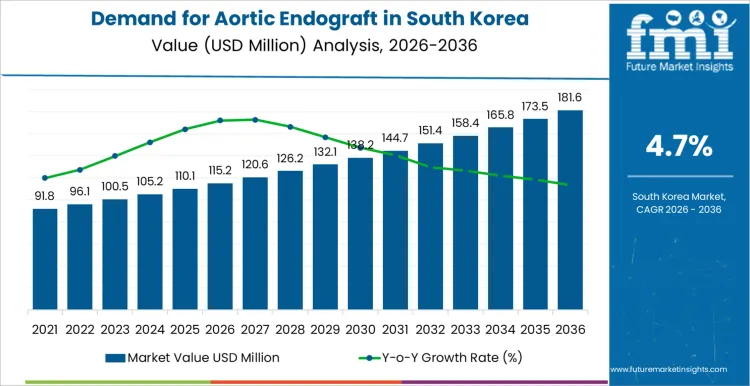
Demand for aortic endograft devices in South Korea is anticipated to reach USD 115.2 million by 2026. The sector is poised to ascend to USD 181.6 million by 2036, progressing at a compound annual growth rate of 4.7%. Rapid demographic aging in South Korea is significantly increasing the incidence of abdominal and thoracic aortic aneurysms among the elderly population. Physicians are witnessing a surge in patient admissions requiring urgent or elective repair of these life-threatening conditions, necessitating robust supplies of advanced stent-grafts.
Preference for minimally invasive endovascular techniques over traditional open surgery is reshaping clinical workflows, driving hospitals to procure next-generation devices that offer shorter recovery times and reduced perioperative complications. Reimbursement coverage for endovascular aneurysm repair (EVAR) and thoracic endovascular aortic repair (TEVAR) has expanded, reducing the out-of-pocket burden for patients significantly.
Government initiatives aimed at early detection of cardiovascular diseases are leading to higher diagnosis rates through state-sponsored screening programs for seniors. Consequently, medical institutions are upgrading their catheterization labs and hybrid operating rooms to handle the increasing procedural volume. This supportive regulatory and infrastructural environment ensures a steady adoption of premium endograft technologies across both metropolitan and provincial healthcare centers.
Quick Stats for Demand for Aortic Endograft in South Korea
- Demand for Aortic Endograft in South Korea Value (2026): USD 115.2 million
- Demand for Aortic Endograft in South Korea Forecast Value (2036): USD 181.6 million
- Demand for Aortic Endograft in South Korea Forecast CAGR: 4.7%
- Leading Product Segment for Aortic Endograft Industry in South Korea: Abdominal Aortic Graft (59.0%)
- Leading Procedure Segment for Aortic Endograft Industry in South Korea: Endovascular Aneurysm Repair (EVAR) (67.9%)
- Leading End User Segment for Aortic Endograft Industry in South Korea: Hospitals (68.0%)
- Key Growth Regions for Aortic Endograft Industry in South Korea: Jeju, South Gyeongsang, South Jeolla, North Jeolla
- Aortic Endograft Industry in South Korea Key Players: Medtronic plc, Cook Medical, W. L. Gore & Associates, Terumo Corporation, Endologix LLC
Technological innovation is addressing complex anatomical challenges that previously precluded endovascular options. Manufacturers are introducing branched stent graft systems that allow for the preservation of blood flow to vital side branches, expanding the eligibility criteria for EVAR. Integration of lower-profile delivery systems enables surgeons to navigate tortuous iliac arteries common in Asian patient populations.
Usage of diagnostic x ray system platforms with advanced fusion imaging capabilities is improving deployment accuracy, reducing the risk of endoleaks. Advancements in percutaneous vessel closure devices also facilitate fully percutaneous procedures, minimizing groin incisions and accelerating patient discharge.
Demand for Aortic Endograft in South Korea Key Takeaways
| Metric | Value |
|---|---|
| Industry Size (2026) | USD 115.2 million |
| Industry Value (2036) | USD 181.6 million |
| CAGR (2026 to 2036) | 4.7% |
What Specific Industrial Factors Are Fueling Aortic Endograft Adoption?
Prevalence of lifestyle-related risk factors such as hypertension and smoking is a foundational driver for abdominal aortic aneurysm treatment demand. As westernized diets and high-stress urban lifestyles persist, the burden of vascular disease continues to rise. Adoption of endovascular therapy devices is further catalyzed by the availability of sophisticated imaging infrastructure in Korean hospitals. Screening programs using ultrasound for men over 65 are identifying asymptomatic aneurysms earlier, converting potential emergencies into elective procedures. This proactive approach to vascular health creates a consistent pipeline of patients eligible for endograft implantation, sustaining long-term industrial growth.
How is the Sector Structured Across Key Segments?
Structure of this domain is categorized by anatomical location of the aneurysm, the procedural technique employed, material composition, and the end-user facility. Product segmentation distinguishes between abdominal and thoracic grafts, reflecting the different prevalence and treatment complexities of these conditions. Procedure classification highlights the overwhelming shift from open surgery to minimally invasive repair. Material segmentation focuses on the structural components of the graft, while end-user data underscores the central role of tertiary medical centers. Understanding this segmentation helps manufacturers target their R&D efforts towards the high-volume abdominal segment while developing niche solutions for complex thoracic cases.
Why Does the Abdominal Aortic Graft Category Maintain Dominance?
Abdominal Aortic Grafts command a 59.0% share of the industry. High prevalence of AAAs relative to thoracic aneurysms drives this segment's leadership. Screening protocols are most effective at detecting abdominal dilation, leading to a higher volume of diagnosed cases eligible for intervention. Surgeons extensively utilize aortic stents grafts designed for the infrarenal aorta, which is the most common site of aneurysm formation. Established long-term clinical data supporting the durability of abdominal endografts builds physician confidence. Consequently, procurement budgets in vascular departments are heavily weighted towards maintaining inventory of abdominal devices to meet daily procedural demands.
How is Endovascular Aneurysm Repair (EVAR) Contributing to Sector Growth?
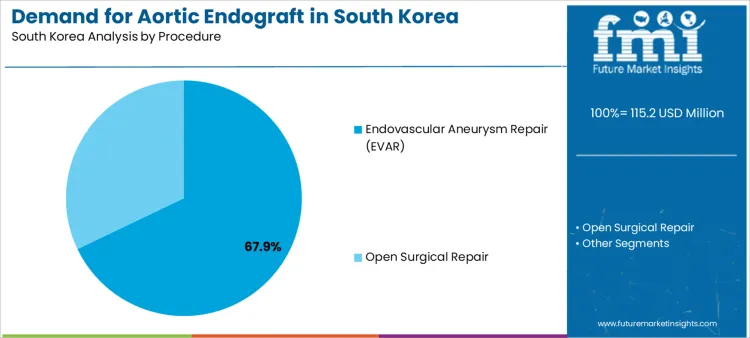
Endovascular Aneurysm Repair (EVAR) leads the procedure category with a 67.9% share. This dominance stems from the significant reduction in morbidity and mortality compared to open surgical repair. Patients undergoing EVAR experience less blood loss, reduced pain, and shorter hospital stays, which is highly attractive to the value-based Korean healthcare system. Endovascular aneurysm repair evar techniques have become the standard of care for anatomically suitable candidates. Training programs for vascular fellows focus heavily on mastering these catheter-based skills. As a result, the clinical preference for EVAR continues to erode the volume of open surgeries, cementing its status as the primary revenue generator.
Why Do Hospitals Lead Consumption?
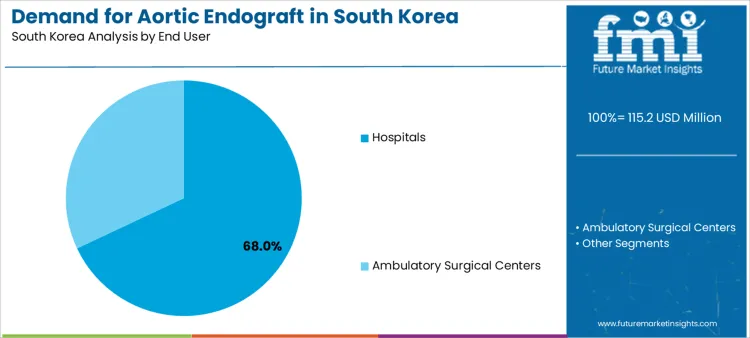
Hospitals account for 68.0% of the usage share. Complex aortic procedures require the multidisciplinary support available only in large medical centers, including vascular surgery, interventional radiology, and anesthesiology. These institutions possess the specialized catheter labs and intensive care units necessary for postoperative monitoring. Emergency cases of ruptured aneurysms are almost exclusively routed to major hospitals with 24/7 trauma capabilities. Furthermore, high-cost capital equipment like C-arms and fusion imaging systems utilized during graft deployment are concentrated in hospital settings. This infrastructure advantage ensures that hospitals remain the central hub for aortic endograft utilization.
Will the Expansion of Hybrid Procedures Redefine Future Sales?
Usage of hybrid grafts is gaining traction for treating complex arch aneurysms and thoracoabdominal pathologies. These procedures combine open surgical de-branching with endovascular stenting, offering a solution for patients who are unfit for total open repair but have anatomy unsuitable for standard endografts. Collaboration between cardiac and vascular surgeons in hybrid operating rooms is facilitating this trend. As the population ages, patients present with more comorbidities, making hybrid approaches a safer alternative. This evolution drives demand for specialized grafts designed to interface seamlessly with surgical anastomoses, opening new revenue streams for manufacturers.
How Do Material Innovations Impact Design?
Metallic endografts, typically utilizing Nitinol or stainless steel skeletons, hold a 65.1% share due to their superior radial force and conformability. However, innovation in graft fabrics is continuous. Manufacturers are developing lower-porosity polymers to prevent type IV endoleaks. Research into bio-mimetic coatings aims to promote faster endothelialization, reducing the risk of thrombosis. The interplay between the metallic stent and the fabric covering is critical for long-term durability. Advancements in thoracic vascular stent grafts materials that can withstand the high pulsatile forces of the aortic arch without fracturing are a key focus area, ensuring device longevity in younger patients.
How is the Structural Heart Domain Influencing Aortic Repair?
There is growing synergy between aortic repair and structural heart devices. Patients with aortic aneurysms often have concomitant valvular disease, such as aortic stenosis. Procedural techniques used in transcatheter heart valve replacement tavi share similarities with EVAR, including large-bore access management. Experiences gained in TAVI are improving vascular closure techniques and access planning for aortic cases. This cross-pollination of skills and technologies allows interventionalists to treat complex combined pathologies more effectively. It also encourages manufacturers to develop comprehensive structural heart and aortic portfolios, offering bundled solutions to hospital purchasing departments.
How is the Landscape Evolving Across South Korea's Regions?
Regional consumption patterns are dictated by the distribution of elderly demographics and the location of specialized vascular centers. While Seoul serves as the national referral hub, provinces with rapidly aging populations are witnessing localized growth in procedural volumes. Government efforts to establish regional cardio-cerebrovascular centers are improving access to EVAR outside the capital.
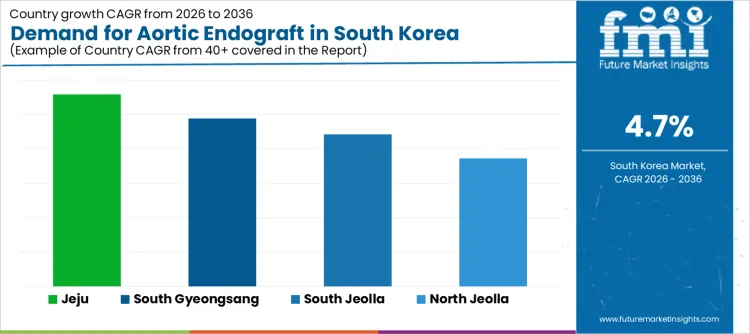
| Region | CAGR (2026 to 2036) |
|---|---|
| Jeju | 5.6% |
| South Gyeongsang | 4.9% |
| South Jeolla | 4.4% |
| North Jeolla | 3.7% |
Why is the Healthcare Infrastructure in Jeju Driving Rapid Growth?
Adoption of aortic interventions in Jeju is projected to expand at a CAGR of 5.6%. Jeju's aging population, combined with its isolation from the mainland, drives the local healthcare system to become self-sufficient in treating vascular emergencies. Regional hospitals are investing in advanced angio-suites to manage acute aortic syndromes without the need for risky patient transfers. Medical tourism also plays a role, with facilities offering comprehensive health screenings that include vascular checks. This focus on local capacity building and premium service delivery underpins the high growth rate in endograft utilization on the island.
How is Industrial Demographics in South Gyeongsang Influencing Sales?
Sales of endografts in South Gyeongsang are likely to reach a CAGR of 4.9%. This region hosts major industrial cities with a large workforce that is now transitioning into retirement age. Occupational health programs and corporate insurance plans often cover extensive medical screenings, leading to early detection of aneurysms. Presence of university hospitals in Busan and surrounding areas ensures access to high-level vascular care. The combination of a large, aging industrial population and robust medical infrastructure creates a steady demand for elective EVAR procedures.
What Specific Factors Drive Demand in South Jeolla?
Expansion in South Jeolla is anticipated to rise at a CAGR of 4.4%. This province has one of the highest proportions of elderly residents in South Korea. The sheer demographic weight of the at-risk population necessitates frequent vascular interventions. Public health centers are collaborating with regional hospitals to monitor hypertensive patients, a key risk group for aneurysm formation. Government subsidies for senior healthcare are particularly impactful here, enabling access to expensive endograft technologies for low-income elderly patients, thereby sustaining procedural volumes.
Why is North Jeolla Modernizing its Vascular Services?
Deployment of endovascular devices in North Jeolla is expected to increase at a CAGR of 3.7%. Healthcare institutions in this region are actively recruiting vascular specialists to reduce patient outflow to larger metropolitan areas. Investment in hybrid operating rooms is becoming a priority for regional medical centers seeking to retain patients. While growth is more moderate compared to other regions, the trend represents a fundamental modernization of local surgical capabilities. Efforts to provide timely care for thoracic aortic aneurysm cases locally are driving the procurement of thoracic devices.
What Strategic Initiatives Define Market Leadership?
Medtronic plc commands a dominant position with a 28.0% share, leveraging the strong clinical legacy of its Endurant system. Its strategy focuses on providing a wide range of sizes and configurations to treat a broad spectrum of anatomies. Medtronic invests heavily in physician proctoring and education, ensuring that new users are proficient with their delivery systems. Competitors like Cook Medical and W. L. Gore differentiate themselves through specialized solutions for complex anatomy, such as fenestrated and branched grafts. Terumo Corporation utilizes its regional proximity and understanding of Asian anatomical characteristics to tailor its product offerings.
How Are Global Competitors Challenging Dominance?
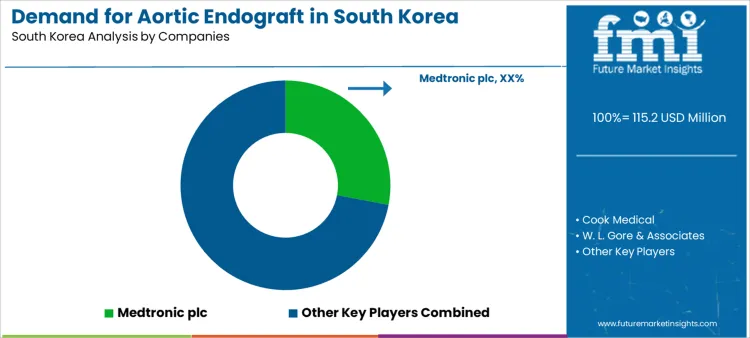
Companies are increasingly competing on the basis of long-term evidence and lower re-intervention rates. Endologix, for instance, promotes its polymer sealing technology as a solution to prevent endoleaks. Global players are also introducing low-profile devices compatible with smaller access vessels, which is particularly relevant for female patients and the Asian demographic. Strategic partnerships with local distribution firms help these international manufacturers navigate the complex NHIS reimbursement landscape. Continuous innovation in delivery systems to improve ease of use remains a primary battleground for gaining share in high-volume hospitals.
Key Companies
- Medtronic plc
- Cook Medical
- W. L. Gore & Associates
- Terumo Corporation
- Endologix LLC
Scope of Report
| Items | Values |
|---|---|
| Quantitative Units | USD Million |
| Product | Abdominal Aortic Graft, Thoracic Aortic Graft |
| Procedure | Endovascular Aneurysm Repair (EVAR), Open Surgical Repair |
| Material | Metallic Endograft, Polymeric Endograft |
| End User | Hospitals, Ambulatory Surgical Centers |
| Regions Covered | Jeju, South Gyeongsang, South Jeolla, North Jeolla |
| Key Companies Profiled | Medtronic, Cook Medical, W. L. Gore, Terumo, Endologix |
Demand for Aortic Endograft in South Korea by Segments
By Product
- Abdominal Aortic Graft
- Thoracic Aortic Graft
By Procedure
- Endovascular Aneurysm Repair (EVAR)
- Open Surgical Repair
By Material
- Metallic Endograft
- Polymeric Endograft
By End User
- Hospitals
- Ambulatory Surgical Centers
Bibliography
- Statistics Korea. (2024, September 25). 2024 statistics on the aged. Statistics Korea, Republic of Korea.
- Health Insurance Review and Assessment Service. (2025, June 25). 2024 reimbursed medical materials claims status. Health Insurance Review and Assessment Service, Republic of Korea.
- Korean Society for Vascular Surgery. (2025). Clinical practice guidelines of the Korean Society for Vascular Surgery for abdominal aortic aneurysms (AAAs). Vascular Specialist International.
- Korea Health Industry Development Institute. (2024, December 10). Domestic medical device market size status (statistical tables and trend summary). Korea Health Industry Development Institute, Republic of Korea.
Frequently Asked Questions
How big is the demand for Aortic Endograft in South Korea in 2026?
The demand for Aortic Endograft in South Korea is estimated to be valued at USD 115.2 million in 2026.
What will be the size of Aortic Endograft in South Korea in 2036?
The industry size for the Aortic Endograft in South Korea is projected to reach USD 181.6 million by 2036.
How much will be the demand for Aortic Endograft in South Korea growth between 2026 and 2036?
The demand for Aortic Endograft in South Korea is expected to grow at a 4.7% CAGR between 2026 and 2036.
What are the key product types in the Aortic Endograft in South Korea?
The key product types in Aortic Endograft in South Korea are Abdominal Aortic Graft and Thoracic Aortic Graft.
Which end user segment is expected to contribute significant share in the Aortic Endograft in South Korea in 2026?
By end user, Hospitals segment is expected to command 68.0% share in the Aortic Endograft in South Korea in 2026.
Preview the report firsthand - request a free sample
Get SampleGet the brochure for pricing and purchase details.
Get PDFTable of Content
- Executive Summary
- South Korea Market Outlook
- Demand-side Trends
- Supply-side Trends
- Technology Roadmap Analysis
- Analysis and Recommendations
- Market Overview
- Market Coverage / Taxonomy
- Market Definition / Scope / Limitations
- Market Background
- Market Dynamics
- Drivers
- Restraints
- Opportunity
- Trends
- Scenario Forecast
- Demand in Optimistic Scenario
- Demand in Likely Scenario
- Demand in Conservative Scenario
- Opportunity Map Analysis
- Product Life Cycle Analysis
- Supply Chain Analysis
- Investment Feasibility Matrix
- Value Chain Analysis
- PESTLE and Porter’s Analysis
- Regulatory Landscape
- Regional Parent Market Outlook
- Production and Consumption Statistics
- Import and Export Statistics
- Market Dynamics
- South Korea Market Analysis 2021 to 2025 and Forecast, 2026 to 2036
- Historical Market Size Value (USD Million) Analysis, 2021 to 2025
- Current and Future Market Size Value (USD Million) Projections, 2026 to 2036
- Y-o-Y Growth Trend Analysis
- Absolute $ Opportunity Analysis
- South Korea Market Pricing Analysis 2021 to 2025 and Forecast 2026 to 2036
- South Korea Market Analysis 2021 to 2025 and Forecast 2026 to 2036, By Product
- Introduction / Key Findings
- Historical Market Size Value (USD Million) Analysis By Product , 2021 to 2025
- Current and Future Market Size Value (USD Million) Analysis and Forecast By Product , 2026 to 2036
- Abdominal Aortic Graft
- Thoracic Aortic Graft
- Abdominal Aortic Graft
- Y-o-Y Growth Trend Analysis By Product , 2021 to 2025
- Absolute $ Opportunity Analysis By Product , 2026 to 2036
- South Korea Market Analysis 2021 to 2025 and Forecast 2026 to 2036, By Procedure
- Introduction / Key Findings
- Historical Market Size Value (USD Million) Analysis By Procedure, 2021 to 2025
- Current and Future Market Size Value (USD Million) Analysis and Forecast By Procedure, 2026 to 2036
- Endovascular Aneurysm Repair (EVAR)
- Open Surgical Repair
- Endovascular Aneurysm Repair (EVAR)
- Y-o-Y Growth Trend Analysis By Procedure, 2021 to 2025
- Absolute $ Opportunity Analysis By Procedure, 2026 to 2036
- South Korea Market Analysis 2021 to 2025 and Forecast 2026 to 2036, By Material
- Introduction / Key Findings
- Historical Market Size Value (USD Million) Analysis By Material, 2021 to 2025
- Current and Future Market Size Value (USD Million) Analysis and Forecast By Material, 2026 to 2036
- Metallic Endograft
- Polymeric Endograft
- Metallic Endograft
- Y-o-Y Growth Trend Analysis By Material, 2021 to 2025
- Absolute $ Opportunity Analysis By Material, 2026 to 2036
- South Korea Market Analysis 2021 to 2025 and Forecast 2026 to 2036, By End User
- Introduction / Key Findings
- Historical Market Size Value (USD Million) Analysis By End User, 2021 to 2025
- Current and Future Market Size Value (USD Million) Analysis and Forecast By End User, 2026 to 2036
- Hospitals
- Ambulatory Surgical Centers
- Hospitals
- Y-o-Y Growth Trend Analysis By End User, 2021 to 2025
- Absolute $ Opportunity Analysis By End User, 2026 to 2036
- Market Structure Analysis
- Competition Dashboard
- Competition Benchmarking
- Market Share Analysis of Top Players
- By Regional
- By Product
- By Procedure
- By Material
- By End User
- Competition Analysis
- Competition Deep Dive
- Medtronic plc
- Overview
- Product Portfolio
- Profitability by Market Segments (Product/Age /Sales Channel/Region)
- Sales Footprint
- Strategy Overview
- Marketing Strategy
- Product Strategy
- Channel Strategy
- Cook Medical
- W. L. Gore & Associates
- Terumo Corporation
- Endologix LLC
- Medtronic plc
- Competition Deep Dive
- Assumptions & Acronyms Used
- Research Methodology


