

- Industry Size (2026)
- USD 5.6 Bn
- Forecast (2036)
- USD 9.5 Bn
- CAGR (2026 to 2036)
- 5.4%
Tablets and Capsules Packaging Market Forecast and Outlook 2026 to 2036
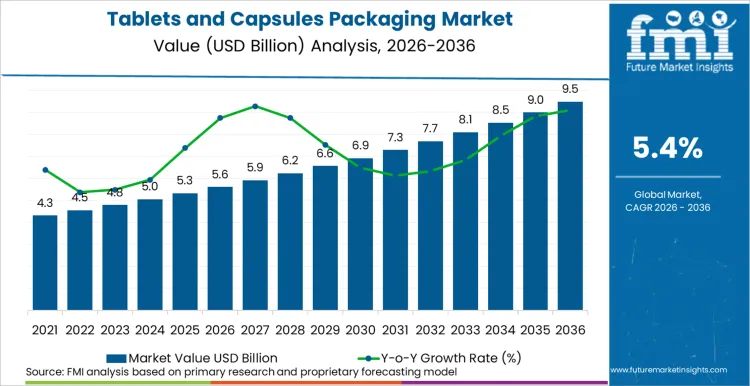
Tablets and capsules packaging industry valuation is poised to reach USD 5.6 billion in 2026, driven by a relentless focus on patient adherence and medication safety globally. Revenue generation is projected to expand at a steady CAGR of 5.4% through 2036, pushing total sector worth beyond USD 9.5 billion by the conclusion of this assessment period. Escalating chronic disease prevalence, necessitating long-term medication regimens, acts as a primary catalyst for this financial trajectory as per FMI's projection.
Brands are shifting focus from bulk containers to unit-dose formats, redefining procurement habits in major healthcare economies. Such behavioral changes encourage converters to introduce comprehensive child-resistant and senior-friendly portfolios utilizing advanced material science. Regulatory stringency and changing distribution models are significantly influencing industry expansion. Packaging engineers emphasize barrier integrity, utilizing multi-layer films to ensure stability against moisture and oxygen as per FMI's estimates.
Clinical trials investigating the efficacy of smart adherence packaging are creating needs for integrated electronic features, instilling confidence among healthcare providers regarding future product pipelines. Growing awareness regarding counterfeit drugs continues to fuel demand for tamper-evident solutions, creating sustained opportunities for security printing enterprises. Government health initiatives targeting medication errors are facilitating wider adoption of clear, informative labeling in retail pharmacy settings. Companies are witnessing robust growth potential in developing nations, where improving healthcare infrastructure aligns perfectly with increased consumption of generic medications.
Quick Stats for Tablets and Capsules Packaging Market
- Tablets and Capsules Packaging Industry Value (2026): USD 5.6 Billion
- Tablets and Capsules Packaging Industry Forecast Value (2036): USD 9.5 Billion
- Tablets and Capsules Packaging Industry Forecast CAGR: 5.4%
- Tablets and Capsules Packaging Industry Leading Form: Blister packs (45.8%)
- Tablets and Capsules Packaging Industry Leading End Use: Pharmaceutical (64%)
- Tablets and Capsules Packaging Industry Leading Functionality: Plastic (43.6%)
- Tablets and Capsules Packaging Industry Key Growth Regions: India, China, USA
- Tablets and Capsules Packaging Industry Key Players: Gerresheimer AG, Klockner Pentaplast Group, Amcor plc, Berry Global Group, Inc., Constantia Flexibles GmbH
Does Gross Margin % Reflect Operational Efficiency?
In the pharmaceutical packaging sector, gross margins typically range between 20% and 25%, reflecting the specialized nature of barrier films and compliance-driven designs. Manufacturers utilizing advanced thermoforming technologies to minimize material waste often achieve the higher end of this range. Maintaining this margin requires rigorous quality control to prevent batch rejections, a critical differentiator in this highly regulated market.
Why is Inventory Turnover Ratio Critical for Pharma Supply Chains?
High inventory turnover ratios, averaging 5.0x to 6.0x annually, are essential to align with the stringent shelf-life requirements of pharmaceutical products. Efficient stock management ensures packaging materials are available for Just-In-Time (JIT) manufacturing without risking contamination or degradation. Optimizing supply chains for pharmaceutical bottles distribution is key to maintaining these healthy ratios and reducing working capital lock-up.
Can Automation Sustain EBITDA Margins?
Healthy EBITDA margins, generally settling within the 15% to 20% range for automated players, indicate robust operational efficiency against fluctuating raw material costs (aluminum, PVC). Stakeholders monitor this metric closely to gauge resilience against supply chain disruptions and the ability to fund capital-intensive cleanroom upgrades according to FMI analyst opinion. Innovations in barrier technology are transforming how oral solid dosages are protected. Researchers are combining caps and closure designs with desiccant-integrated features to enhance stability. Development of pharmaceutical sachets solutions with high-barrier laminates is gaining traction, addressing portability challenges for lifestyle medications. This efficiency is particularly crucial for maintaining profitability in the high-volume blister packaging segment.
Leading players are actively reshaping their portfolios to secure market dominance. Recent moves include heavy investment in hinged dispensing caps to optimize production footprints for nutraceutical clients. Focus is shifting toward comprehensive child resistant packaging formats that remain accessible to seniors. Advancements in dispensing caps manufacturing enable producers to create precise dosing systems, enhancing patient safety while maintaining compliance. There is a notable trend towards acquiring bottle cap technologies to expand into the generic drug segment. Manufacturers are also refining flat valve caps and closures to improve the user experience for liquid-fill capsules. This strategic pivot towards value-added flip top caps and closures ensures long-term relevance in a competitive landscape.
Tablets and Capsules Packaging Market Key Takeaways
| Metric | Value |
|---|---|
| Industry Size (2026) | USD 5.6 Billion |
| Industry Value (2036) | USD 9.5 Billion |
| CAGR (2026 to 2036) | 5.4% |
Source: Future Market Insights (FMI) analysis, based on proprietary forecasting model and primary research
What Drivers Are Accelerating Unit-Dose Adoption?
Shift toward unit-dose formats is serving as a significant catalyst for broader acceptance of blister packaging. Recent breakthroughs in hinged dispensing caps market share analysis have complemented bottle applications, but blisters offer superior individual protection. This holistic approach appeals to hospitals seeking to reduce medication errors and improve inventory control. Clinical success of pp closure integration in bulk bottles has expanded application possibilities for maintenance drugs. Education programs highlighting the stability benefits of individual cavities are driving procurement proactivity as per FMI's estimates. Converters are capitalizing on these trends by introducing snap lock closure variants for travel-friendly packs. Integrating calendar features into blister designs is becoming considered standard, ensuring patient adherence protocols are met without complicating the user experience.
How Is the Tablets and Capsules Packaging Market Segmented Across Key Categories?
Global landscape is intricately segmented to address diverse requirements of pharmaceutical and nutraceutical sectors, categorizing sector by packaging type, material, and end-use application. Structural division allows stakeholders to identify specific growth pockets, such as rising demand for strip packs in emerging markets or preference for child-resistant bottles in North America. By analyzing these segments, manufacturers can tailor production lines to meet distinct needs of high-speed generic lines versus specialized clinical trial packaging. Segmentation also highlights shift from standard PVC blisters to advanced high-barrier laminates like Aclar and cold-form foil. As industry matures, granular segmentation becomes essential for understanding flow of capital and innovation, ensuring product development aligns perfectly with evolving therapeutic mandates of global health organizations.
Why Do Blister Packs Maintain Dominance?
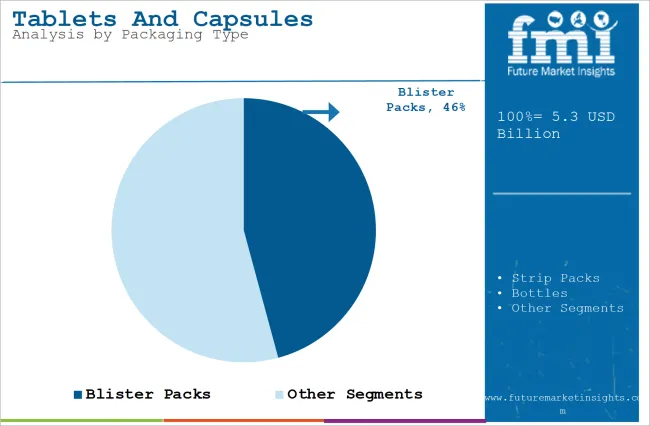
Blister packs account for 45.8% of share in 2026, driven by their exceptional product protection and patient compliance features. Leadership position is underpinned by widespread adoption in both prescription and over-the-counter markets, where individual dose integrity is paramount. Segment benefits from continuous material improvements, allowing for better moisture barriers without compromising visual inspection capabilities. Research focused on gable top cap and closures suggests alternative formats are niche compared to the universality of blisters. Critical role in managing dosage schedules further solidifies standing, as these packs provide clear visual evidence of medication intake. As supply chains prioritize anti-counterfeiting, demand for tamper-evident blister formats is expected to remain robust.
Why Is Pharmaceutical the Primary Revenue Stream?
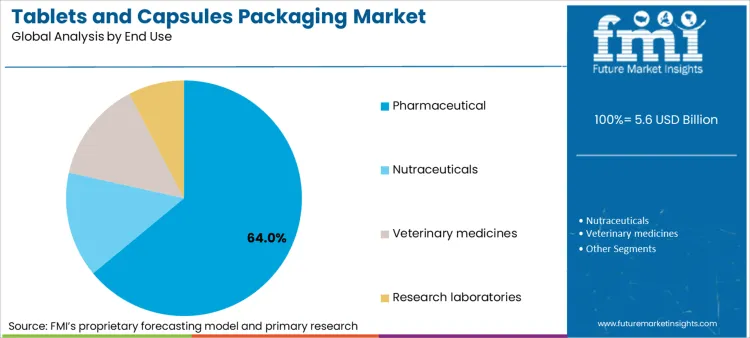
Pharmaceutical applications command 64% share of sector in 2026, reflecting global reliance on medication for disease management. Dominance is inextricably linked to the massive volume of oral solid dosages prescribed daily across the globe. Manufacturers rely on specialized sport caps and closures adaptations to manage nutraceuticals, but pharma remains the volume driver as per FMI's projection. These settings are essential for handling sensitive active pharmaceutical ingredients (APIs), driving priority status in procurement budgets. Relentless pursuit of patient safety ensures packaging designed with strict regulatory compliance remains top priority. High prescription volume necessitates dynamic material supply, bolstering sustained revenue streams for packaging manufacturers.
How Will Sustainability Trends Redefine Sales?
Eco-friendly material adoption is set to reshape sales landscapes by altering demand for traditional PVC/Alu blisters. As legislative frameworks evolve, brands access packaging with higher percentages of recyclable materials to meet sustainability targets. Shift toward PVC-free solutions creates demand for premium polypropylene-based blisters that maintain barrier properties. Manufacturers failing to upgrade sourcing strategies risk losing visibility among eco-conscious pharma giants. Availability of paper-based blister alternatives drives complimentary consumption in the OTC sector. Rise of design-for-recycling initiatives stimulates innovation, with companies differentiating offerings by ensuring complete package recyclability without compromising drug stability.
What Role Does Smart Packaging Play in Future Growth?
Smart packaging integration is emerging as a niche yet powerful growth driver. As healthcare systems seek better adherence data, packaging embedded with NFC tags or conductive inks offers real-time monitoring. This trend is particularly relevant in clinical trials and high-value chronic therapies, where compliance data is critical. Development of bottles with digital caps that record opening times is gaining traction. Shift toward intelligent packaging creates demand for solutions that do more than just protect. Manufacturers investing in smart integration technologies risk gaining a competitive edge in high-value segments.
How Are Anti-Counterfeiting Needs Influencing Design?
Anti-counterfeiting adoption is set to reshape manufacturing priorities by demanding overt and covert security features. As illicit trade mounts, brands demand packaging that validates authenticity instantly. Shift toward serialization-ready packs creates demand for materials compatible with high-resolution printing and coding. Manufacturers failing to optimize designs for track-and-trace risk losing visibility among security-conscious markets. Availability of holographic foils and tamper-evident seals drives complimentary consumption of secure packaging. Rise of blockchain-enabled supply chains stimulates innovation, with companies differentiating offerings by providing end-to-end traceability credentials through packaging design.
How Will the Tablets and Capsules Packaging Industry Evolve in Major Nations?
Global landscape for pharmaceutical packaging is characterized by diverse growth patterns, influenced by healthcare access and regulatory infrastructure. Established markets prioritize child-resistance and smart features, whereas emerging economies rely on production capacity expansion to support rising generic drug consumption. Asia-Pacific is emerging as rapid growth hub due to manufacturing dominance and expanding patient populations. Conversely, North American sectors pivot towards high-value adherence packaging solutions. Government initiatives in developing nations supporting generic drug access ensure sustained demand for cost-effective packaging solutions across all geographies.
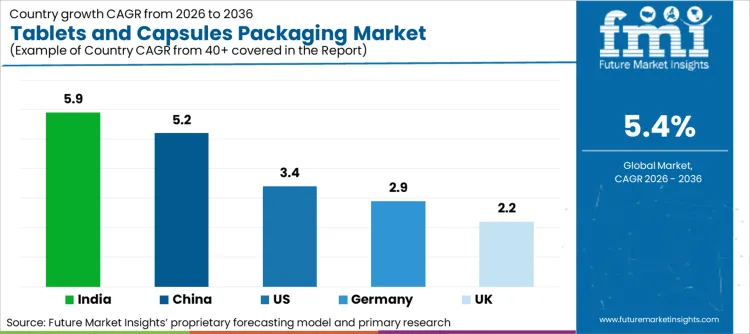
| Country | CAGR (2026 to 2036) |
|---|---|
| India | 5.9% |
| China | 5.2% |
| USA | 3.4% |
| Germany | 2.9% |
| UK | 2.2% |
Source: Future Market Insights’ proprietary forecasting model and primary research
Why is the Tablets and Capsules Packaging Sector in India Expanding?
Demand for pharmaceutical packaging in India is projected to rise at 5.9% CAGR during assessment period. Initiatives emphasizing "Pharmacy of the World" status foster favorable environment for domestic and international vendors. Increasing investment in export-oriented pharma zones creates massive supply channel for standardized packaging. Rising generic drug production requiring cost-effective yet compliant solutions prompts local brands to seek scalable providers. Shift is supported by government policies incentivizing pharmaceutical manufacturing, accelerating uptake of reliable packaging solutions across country and fueling sector expansion.
Why is the Tablets and Capsules Packaging Industry in China Growing?
Tablets and capsules packaging industry in China is poised to expand at 5.2% CAGR. Surge is largely attributed to massive domestic healthcare market and aging population. Government focus on modernizing drug quality standards encourages facilities to opt for high-barrier, efficient packaging. Increasing partnerships between regional converters and global resin suppliers necessitate availability of advanced polymer grades. High volume of traditional Chinese medicine combined with western drugs attract significant investment in diverse packaging formats. Strict adherence to NMPA regulations further drives adoption of quality-assured materials.
Why is the Tablets and Capsules Packaging Industry in the USA Showing Potential?
Sales of packaging in USA are set to grow at 3.4% CAGR through 2036. Expansion is underpinned by stringent FDA directives regarding child-resistant and senior-friendly packaging. Growth is fueled by widespread shift towards adherence-enhancing designs. Rapid adoption of smart packaging for specialty drugs drives revenue generation per unit. Presence of major pharmaceutical HQs within country streamlines supply chains. Emphasis on patient safety and liability reduction continues to be primary driver, maintaining USA's position as critical innovation generator as per FMI analyst opinion.
Why is the Tablets and Capsules Packaging Industry in Germany Showing Stability?
Tablets and capsules packaging industry in Germany is poised to expand at 2.9% CAGR. Surge is largely attributed to strong engineering heritage and focus on sustainable machinery and materials. Government focus on circular economy encourages facilities to opt for recyclable blister solutions. Increasing partnerships between machinery firms and material producers necessitate availability of high-precision films. High environmental standards combined with export-oriented manufacturing attract significant investment. Strict adherence to EU falsified medicines directive further drives adoption of tamper-evident features.
Why is the Tablets and Capsules Packaging Sector in the UK Expanding?
Demand for medical packaging in UK is projected to rise at 2.2% CAGR during assessment period. Initiatives emphasizing NHS sustainability goals foster favorable environment for eco-friendly vendors. Increasing investment in biotech and specialty pharma creates steady supply channel for high-value packaging. Rising awareness regarding medication adherence prompts local administrators to seek smart solutions. Shift is supported by government policies encouraging plastic reduction, accelerating uptake of paper-based and recyclable designs across country and fueling sector expansion.
What is the Competitive Outlook for the Tablets and Capsules Packaging Market?
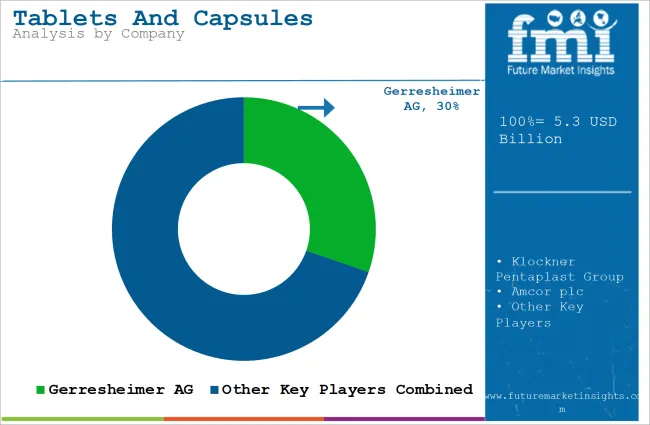
Market participants are increasingly focusing on vertical integration to capture value from regional growth pockets. Leading players like Gerresheimer AG and Klockner Pentaplast are directing investment toward acquiring regional converters to shorten supply chains as per FMI's estimates. Significant trend involves developing proprietary barrier films that reduce material usage without failure. Companies actively engage in strategic collaborations with pharmaceutical giants to co-develop sustainable solutions ahead of regulatory deadlines. Gerresheimer AG holds a significant 23.5% share, leveraging its comprehensive global production network. Sustainability emerges as competitive frontier, with providers exploring bio-based polymers. Consolidation activities remain high as large packaging conglomerates acquire specialized healthcare firms to broaden their value-added offerings against regional competitors.
Key Players in Tablets and Capsules Packaging Market
- Gerresheimer AG
- Klockner Pentaplast Group
- Amcor plc
- Berry Global Group, Inc.
- Constantia Flexibles GmbH
- Tekni-Plex, Inc.
- Sonoco Products Company
- Uflex Limited
- Huhtamaki Oyj
- Catalent, Inc
- Winpak, Ltd.
Scope of Report
| Items | Values |
|---|---|
| Quantitative Units | USD Billion |
| Packaging Type | Blister packs, Strip packs, Bottles, Sachets, Stick packs, Others |
| Material | Plastic, Glass, Aluminum foil, Paper & paperboard, Others |
| End Use | Pharmaceutical, Nutraceuticals, Veterinary medicines, Research laboratories |
| Regions | North America, Europe, East Asia, South Asia, Latin America, MEA |
Tablets and Capsules Packaging Market by Segments
Packaging Type:
- Blister packs
- Strip packs
- Bottles
- Sachets
- Stick packs
- Others
Material:
- Plastic
- Glass
- Aluminum foil
- Paper & paperboard
- Others
End Use:
- Pharmaceutical
- Nutraceuticals
- Veterinary medicines
- Research laboratories
Bibliography
- USA Consumer Product Safety Commission. (2024). Poison Prevention Packaging Act (PPPA): Updated business guidance on child-resistant and senior-friendly special packaging requirements under 16 CFR Parts 1700-1702. USA Consumer Product Safety Commission, United States.
- European Medicines Agency. (2024). Guideline on plastic immediate packaging materials for medicinal products and active substances (current scientific and regulatory requirements). European Medicines Agency, European Union.
- World Health Organization. (2024). WHO good manufacturing practices: Pharmaceutical packaging materials, labeling, and container closure systems. World Health Organization.
- USA Food and Drug Administration. (2024). Container closure systems for packaging human drugs and biologics: Chemistry, manufacturing, and controls documentation (current guidance). USA Food and Drug Administration, United States.
- European Commission. (2024). Guidance on medicinal product packaging, labeling, and patient safety features under EU pharmaceutical legislation. European Commission, European Union.
Frequently Asked Questions
How large is the demand for Tablets and Capsules Packaging in the global market in 2026?
Demand for Tablets and Capsules Packaging in global market is estimated to be valued at USD 5.6 billion in 2026 as per FMI's estimates.
What will be the market size of Tablets and Capsules Packaging in the global market by 2036?
Market size for Tablets and Capsules Packaging in global market is projected to reach USD 9.5 billion by 2036.
What is the expected demand growth for Tablets and Capsules Packaging in the global market between 2026 and 2036?
Demand for Tablets and Capsules Packaging in global market is expected to grow at CAGR of 5.4% between 2026 and 2036.
Which Packaging Type is poised to lead global sales by 2026?
Blister packs are expected to be dominant packaging type, capturing approximately 45.8% of global market share in 2026 due to protection and compliance benefits.
How significant is the role of Pharmaceutical End Use in driving Tablets and Capsules Packaging adoption in 2026?
Pharmaceutical End Use represents critical application, projected to hold substantial 64% share of total market in 2026 as global medication volumes rise.
Preview the report firsthand - request a free sample
Get SampleGet the brochure for pricing and purchase details.
Get PDFTable of Content
- Executive Summary
- Global Market Outlook
- Demand-side Trends
- Supply-side Trends
- Technology Roadmap Analysis
- Analysis and Recommendations
- Market Overview
- Market Coverage / Taxonomy
- Market Definition / Scope / Limitations
- Research Methodology
- Chapter Orientation
- Analytical Lens and Working Hypotheses
- Market Structure, Signals, and Trend Drivers
- Benchmarking and Cross-market Comparability
- Market Sizing, Forecasting, and Opportunity Mapping
- Research Design and Evidence Framework
- Desk Research Programme (Secondary Evidence)
- Company Annual and Sustainability Reports
- Peer-reviewed Journals and Academic Literature
- Corporate Websites, Product Literature, and Technical Notes
- Earnings Decks and Investor Briefings
- Statutory Filings and Regulatory Disclosures
- Technical White Papers and Standards Notes
- Trade Journals, Industry Magazines, and Analyst Briefs
- Conference Proceedings, Webinars, and Seminar Materials
- Government Statistics Portals and Public Data Releases
- Press Releases and Reputable Media Coverage
- Specialist Newsletters and Curated Briefings
- Sector Databases and Reference Repositories
- Roots Internal Knowledge Base and Historical Datasets
- Subscription Datasets and Paid Sources
- Social Channels, Communities, and Digital Listening Inputs
- Additional Desk Sources
- Expert Input and Fieldwork (Primary Evidence)
- Primary Modes
- Qualitative Interviews and Expert Elicitation
- Quantitative Surveys and Structured Data Capture
- Blended A8oach
- Why Primary Evidence is Used
- Field Techniques
- Interviews
- Surveys
- Focus Groups
- Observational and In-context Research
- Social and Community Interactions
- Stakeholder Universe Engaged
- C-suite Leaders
- Board Members
- Presidents and Vice Presidents
- R&D and Innovation Heads
- Technical Specialists
- Domain Subject-matter Experts
- Scientists
- Physicians and Other Healthcare Professionals
- Governance, Ethics, and Data Stewardship
- Research Ethics
- Data Integrity and Handling
- Primary Modes
- Tooling, Models, and Reference Databases
- Desk Research Programme (Secondary Evidence)
- Data Engineering and Model Build
- Data Acquisition and Ingestion
- Cleaning, Normalisation, and Verification
- Synthesis, Triangulation, and Analysis
- Quality Assurance and Audit Trail
- Market Background
- Market Dynamics
- Drivers
- Restraints
- Opportunity
- Trends
- Scenario Forecast
- Demand in Optimistic Scenario
- Demand in Likely Scenario
- Demand in Conservative Scenario
- Opportunity Map Analysis
- Product Life Cycle Analysis
- Supply Chain Analysis
- Investment Feasibility Matrix
- Value Chain Analysis
- PESTLE and Porter’s Analysis
- Regulatory Landscape
- Regional Parent Market Outlook
- Production and Consumption Statistics
- Import and Export Statistics
- Market Dynamics
- Global Market Analysis 2021 to 2025 and Forecast, 2026 to 2036
- Historical Market Size Value (USD Million) Analysis, 2021 to 2025
- Current and Future Market Size Value (USD Million) Projections, 2026 to 2036
- Y-o-Y Growth Trend Analysis
- Absolute $ Opportunity Analysis
- Global Market Pricing Analysis 2021 to 2025 and Forecast 2026 to 2036
- Global Market Analysis 2021 to 2025 and Forecast 2026 to 2036, By Packaging Type
- Introduction / Key Findings
- Historical Market Size Value (USD Million) Analysis By Packaging Type , 2021 to 2025
- Current and Future Market Size Value (USD Million) Analysis and Forecast By Packaging Type , 2026 to 2036
- Blister packs
- Strip packs
- Bottles
- Sachets
- Stick packs
- Others
- Blister packs
- Y-o-Y Growth Trend Analysis By Packaging Type , 2021 to 2025
- Absolute $ Opportunity Analysis By Packaging Type , 2026 to 2036
- Global Market Analysis 2021 to 2025 and Forecast 2026 to 2036, By Material
- Introduction / Key Findings
- Historical Market Size Value (USD Million) Analysis By Material, 2021 to 2025
- Current and Future Market Size Value (USD Million) Analysis and Forecast By Material, 2026 to 2036
- Plastic
- Glass
- Aluminum foil
- Paper & paperboard
- Others
- Plastic
- Y-o-Y Growth Trend Analysis By Material, 2021 to 2025
- Absolute $ Opportunity Analysis By Material, 2026 to 2036
- Global Market Analysis 2021 to 2025 and Forecast 2026 to 2036, By End Use
- Introduction / Key Findings
- Historical Market Size Value (USD Million) Analysis By End Use, 2021 to 2025
- Current and Future Market Size Value (USD Million) Analysis and Forecast By End Use, 2026 to 2036
- Pharmaceutical
- Nutraceuticals
- Veterinary medicines
- Research laboratories
- Pharmaceutical
- Y-o-Y Growth Trend Analysis By End Use, 2021 to 2025
- Absolute $ Opportunity Analysis By End Use, 2026 to 2036
- Global Market Analysis 2021 to 2025 and Forecast 2026 to 2036, By Region
- Introduction
- Historical Market Size Value (USD Million) Analysis By Region, 2021 to 2025
- Current Market Size Value (USD Million) Analysis and Forecast By Region, 2026 to 2036
- North America
- Latin America
- Western Europe
- Eastern Europe
- East Asia
- South Asia and Pacific
- Middle East & Africa
- Market Attractiveness Analysis By Region
- North America Market Analysis 2021 to 2025 and Forecast 2026 to 2036, By Country
- Historical Market Size Value (USD Million) Trend Analysis By Market Taxonomy, 2021 to 2025
- Market Size Value (USD Million) Forecast By Market Taxonomy, 2026 to 2036
- By Country
- USA
- Canada
- Mexico
- By Packaging Type
- By Material
- By End Use
- By Country
- Market Attractiveness Analysis
- By Country
- By Packaging Type
- By Material
- By End Use
- Key Takeaways
- Latin America Market Analysis 2021 to 2025 and Forecast 2026 to 2036, By Country
- Historical Market Size Value (USD Million) Trend Analysis By Market Taxonomy, 2021 to 2025
- Market Size Value (USD Million) Forecast By Market Taxonomy, 2026 to 2036
- By Country
- Brazil
- Chile
- Rest of Latin America
- By Packaging Type
- By Material
- By End Use
- By Country
- Market Attractiveness Analysis
- By Country
- By Packaging Type
- By Material
- By End Use
- Key Takeaways
- Western Europe Market Analysis 2021 to 2025 and Forecast 2026 to 2036, By Country
- Historical Market Size Value (USD Million) Trend Analysis By Market Taxonomy, 2021 to 2025
- Market Size Value (USD Million) Forecast By Market Taxonomy, 2026 to 2036
- By Country
- Germany
- UK
- Italy
- Spain
- France
- Nordic
- BENELUX
- Rest of Western Europe
- By Packaging Type
- By Material
- By End Use
- By Country
- Market Attractiveness Analysis
- By Country
- By Packaging Type
- By Material
- By End Use
- Key Takeaways
- Eastern Europe Market Analysis 2021 to 2025 and Forecast 2026 to 2036, By Country
- Historical Market Size Value (USD Million) Trend Analysis By Market Taxonomy, 2021 to 2025
- Market Size Value (USD Million) Forecast By Market Taxonomy, 2026 to 2036
- By Country
- Russia
- Poland
- Hungary
- Balkan & Baltic
- Rest of Eastern Europe
- By Packaging Type
- By Material
- By End Use
- By Country
- Market Attractiveness Analysis
- By Country
- By Packaging Type
- By Material
- By End Use
- Key Takeaways
- East Asia Market Analysis 2021 to 2025 and Forecast 2026 to 2036, By Country
- Historical Market Size Value (USD Million) Trend Analysis By Market Taxonomy, 2021 to 2025
- Market Size Value (USD Million) Forecast By Market Taxonomy, 2026 to 2036
- By Country
- China
- Japan
- South Korea
- By Packaging Type
- By Material
- By End Use
- By Country
- Market Attractiveness Analysis
- By Country
- By Packaging Type
- By Material
- By End Use
- Key Takeaways
- South Asia and Pacific Market Analysis 2021 to 2025 and Forecast 2026 to 2036, By Country
- Historical Market Size Value (USD Million) Trend Analysis By Market Taxonomy, 2021 to 2025
- Market Size Value (USD Million) Forecast By Market Taxonomy, 2026 to 2036
- By Country
- India
- ASEAN
- Australia & New Zealand
- Rest of South Asia and Pacific
- By Packaging Type
- By Material
- By End Use
- By Country
- Market Attractiveness Analysis
- By Country
- By Packaging Type
- By Material
- By End Use
- Key Takeaways
- Middle East & Africa Market Analysis 2021 to 2025 and Forecast 2026 to 2036, By Country
- Historical Market Size Value (USD Million) Trend Analysis By Market Taxonomy, 2021 to 2025
- Market Size Value (USD Million) Forecast By Market Taxonomy, 2026 to 2036
- By Country
- Kingdom of Saudi Arabia
- Other GCC Countries
- Turkiye
- South Africa
- Other African Union
- Rest of Middle East & Africa
- By Packaging Type
- By Material
- By End Use
- By Country
- Market Attractiveness Analysis
- By Country
- By Packaging Type
- By Material
- By End Use
- Key Takeaways
- Key Countries Market Analysis
- USA
- Pricing Analysis
- Market Share Analysis, 2025
- By Packaging Type
- By Material
- By End Use
- Canada
- Pricing Analysis
- Market Share Analysis, 2025
- By Packaging Type
- By Material
- By End Use
- Mexico
- Pricing Analysis
- Market Share Analysis, 2025
- By Packaging Type
- By Material
- By End Use
- Brazil
- Pricing Analysis
- Market Share Analysis, 2025
- By Packaging Type
- By Material
- By End Use
- Chile
- Pricing Analysis
- Market Share Analysis, 2025
- By Packaging Type
- By Material
- By End Use
- Germany
- Pricing Analysis
- Market Share Analysis, 2025
- By Packaging Type
- By Material
- By End Use
- UK
- Pricing Analysis
- Market Share Analysis, 2025
- By Packaging Type
- By Material
- By End Use
- Italy
- Pricing Analysis
- Market Share Analysis, 2025
- By Packaging Type
- By Material
- By End Use
- Spain
- Pricing Analysis
- Market Share Analysis, 2025
- By Packaging Type
- By Material
- By End Use
- France
- Pricing Analysis
- Market Share Analysis, 2025
- By Packaging Type
- By Material
- By End Use
- India
- Pricing Analysis
- Market Share Analysis, 2025
- By Packaging Type
- By Material
- By End Use
- ASEAN
- Pricing Analysis
- Market Share Analysis, 2025
- By Packaging Type
- By Material
- By End Use
- Australia & New Zealand
- Pricing Analysis
- Market Share Analysis, 2025
- By Packaging Type
- By Material
- By End Use
- China
- Pricing Analysis
- Market Share Analysis, 2025
- By Packaging Type
- By Material
- By End Use
- Japan
- Pricing Analysis
- Market Share Analysis, 2025
- By Packaging Type
- By Material
- By End Use
- South Korea
- Pricing Analysis
- Market Share Analysis, 2025
- By Packaging Type
- By Material
- By End Use
- Russia
- Pricing Analysis
- Market Share Analysis, 2025
- By Packaging Type
- By Material
- By End Use
- Poland
- Pricing Analysis
- Market Share Analysis, 2025
- By Packaging Type
- By Material
- By End Use
- Hungary
- Pricing Analysis
- Market Share Analysis, 2025
- By Packaging Type
- By Material
- By End Use
- Kingdom of Saudi Arabia
- Pricing Analysis
- Market Share Analysis, 2025
- By Packaging Type
- By Material
- By End Use
- Turkiye
- Pricing Analysis
- Market Share Analysis, 2025
- By Packaging Type
- By Material
- By End Use
- South Africa
- Pricing Analysis
- Market Share Analysis, 2025
- By Packaging Type
- By Material
- By End Use
- USA
- Market Structure Analysis
- Competition Dashboard
- Competition Benchmarking
- Market Share Analysis of Top Players
- By Regional
- By Packaging Type
- By Material
- By End Use
- Competition Analysis
- Competition Deep Dive
- Gerresheimer AG
- Overview
- Product Portfolio
- Profitability by Market Segments (Product/Age /Sales Channel/Region)
- Sales Footprint
- Strategy Overview
- Marketing Strategy
- Product Strategy
- Channel Strategy
- Klockner Pentaplast Group
- Amcor plc
- Berry Global Group, Inc.
- Constantia Flexibles GmbH
- Tekni-Plex, Inc.
- Sonoco Products Company
- Gerresheimer AG
- Competition Deep Dive
- Assumptions & Acronyms Used


