

- Industry Size (2026)
- USD 4.1 Bn
- Forecast (2036)
- USD 8.1 Bn
- CAGR (2026 to 2036)
- 6.9%
Gemstone Industry Forecast and Outlook in the UK 2026 to 2036
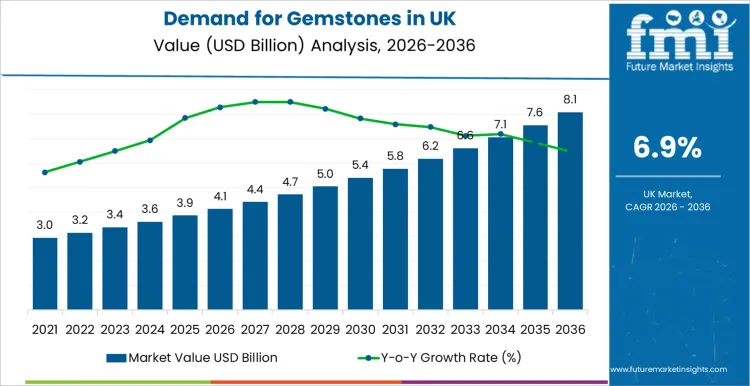
The demand for gemstones in the UK is projected to achieve a valuation of USD 4.1 billion in 2026. This sector is anticipated to grow significantly, reaching an estimated USD 8.1 billion by 2036, advancing at a compound annual growth rate of 6.9% across the forecast period. This robust expansion is anchored in the UK's enduring status as a global nexus for luxury goods, bespoke craftsmanship, and high-net-worth consumption, coupled with a dynamic shift in consumer values towards provenance, symbolism, and sustainable investment.
The critical demand for both rough and polished gemstones is being driven by a complex interplay of cultural heritage, evolving luxury consumer demographics, and the increasing financialization of rare stones as alternative assets. This creates a multifaceted market that ranges from traditional bridal and fine jewelry to contemporary luxury art and store-of-value investments. Growth is supported by the UK's concentration of world-renowned auction houses, prestigious jewelry houses, and a sophisticated financial services sector capable of structuring investments around high-value gemstones.
Quick Stats for Gemstone Demand in the UK
- Gemstone Sales Valuation in the UK (2026) USD 4.1 billion
- Gemstone Sales Forecast Valuation in the UK (2036) USD 8.1 billion
- Gemstone Industry in the UK Forecast CAGR (2026 to 2036) 6.9%
- Leading Regional Growth England (CAGR 7.6%)
- Leading Product Type Emerald (30.0% share)
- Leading Application Jewelry & Ornaments (55.0% share)
- Key Companies Profiled Gem Diamonds Limited, Kiran Gems Private Limited, Gemfields Group Limited, PJSC ALROSA, Anglo American plc
Why is the UK a Sophisticated Hub for Gemstone Demand?
The UK's demand for gemstones stems from its deep-rooted historical role in global gem trading and its contemporary position as a leading luxury market. London, in particular, remains a critical global clearinghouse for high-value diamonds and colored gemstones, home to institutions like the London Diamond Bourse and a calendar of exclusive jewelry auctions that set global trends and price benchmarks. The nation's affluent consumer base, with a high concentration of ultra-high-net-worth individuals, demonstrates a sustained appetite for exclusive, high-value jewelry and collectibles.
Beyond traditional retail, the UK's world-class auction house and luxury art ecosystem depends on a steady supply of exceptional gemstones for unique pieces that command record prices.
A growing segment of investors views certified high-quality gemstones, particularly rare colored stones like rubies and emeralds, as a tangible hedge against inflation and market volatility, integrating them into diversified investment portfolios. This financial dimension adds a layer of sophisticated demand distinct from purely decorative consumption.
How is the Gemstone Landscape Segmented by Type and Application?
The type of gemstone and its primary application, revealing a market where timeless decorative appeal and modern investment rationale are intrinsically linked, categorizes this sector.
This segmentation highlights how different stones carry varying cultural weight, rarity premiums, and end-use functions, from the centrality of diamonds in engagement jewelry to the use of opals in artistic creations. The distribution underscores the permeation of gemstones across industries where beauty, rarity, and value retention are paramount.
Which Product Type Commands the Greatest Market Share?
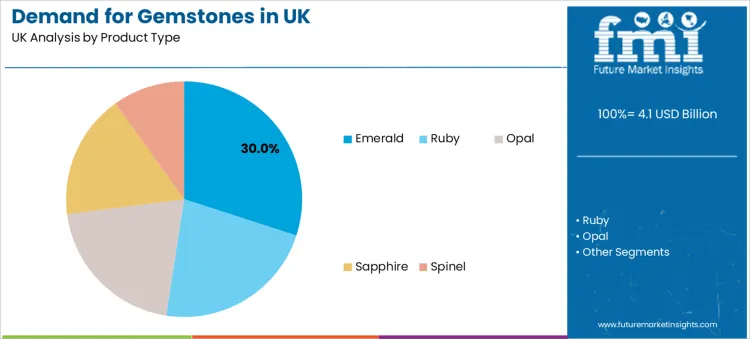
Emeralds hold a significant lead among product types with a 30.0% share. Their prominence is driven by an intense consumer fascination with their rich color, which is associated with luxury, renewal, and prestige. The high value per carat for top-quality emeralds, especially those with provenance from esteemed mines like those in Colombia, makes them a cornerstone of high jewelry collections and a sought-after asset. Their relative rarity compared to other colored stones further intensifies demand among collectors and connoisseurs.
Which Application is the Foremost Driver of Demand?
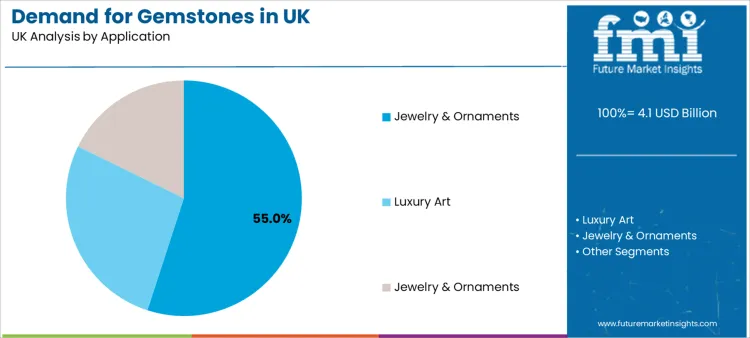
The Jewelry & Ornaments application stands as the largest end-use, commanding an estimated 55.0% share. This is a direct result of continuous demand for fine jewelry for bridal, celebratory, and self-purchase occasions, with gemstones being the central decorative and value element.
The sector encompasses everything from mass-market accessible pieces featuring smaller stones to bespoke haute joaillerie creations from iconic houses. The enduring cultural significance of gem-set jewelry as a marker of status, love, and milestone achievements ensures this segment's dominance.
How do Other Applications Contribute to Market Growth?
While Jewelry & Ornaments leads, the Luxury Art segment represents a critical high-value niche. This includes the incorporation of gemstones into objets d'art, sculptural pieces, and high-fashion accessories that transcend traditional jewelry. This application caters to an ultra-discerning clientele for whom gemstones are a medium for artistic expression and exclusive ownership. Furthermore, a small but growing segment involves the use of gemstones in technology and spirituality, though these remain niche compared to the core luxury-driven applications.
What are the Dynamics, Restraints, Opportunities, and Threats Shaping this Sector?
How are Shifting Consumer Values and Investment Trends Driving Consistent Demand?
The primary growth driver is the evolving luxury consumer, who increasingly values uniqueness, storytelling, and ethical provenance alongside intrinsic beauty. This shift favors colored gemstones and diamonds with exceptional narratives or certified ethical origins.
The financialization of gemstones, facilitated by dedicated funds and asset management services in London, creates a parallel demand stream divorced from immediate ornamental use. The rise of digital platforms for secure gemstone trading and certification verification is also lowering barriers for new investor entrants.
Do Ethical Concerns and High Costs Restrain Wider Engagement?
A significant restraint is the heightened scrutiny on ethical and sustainable sourcing across the entire gemstone supply chain. Consumers and regulators demand greater transparency regarding environmental impact, labor practices, and conflict-free origins, increasing compliance costs and complexity for traders and retailers.
The extremely high capital cost of acquiring premium rough stones or exceptional polished pieces can limit market liquidity and restrict high-end market participation to established players. Furthermore, economic downturns can quickly dampen discretionary spending on high-value luxury items, making the market susceptible to macroeconomic sentiment.
How are Emerging Technologies and Service Models Creating New Potential?
Substantial opportunities are emerging from the advancement and standardization of gemstone certification. Laboratories offering digital, tamper-proof certificates with detailed provenance tracking enhance consumer confidence and facilitate secure trading. The growth of blockchain-based provenance platforms presents a frontier for transparent supply chains.
The expansion of virtual try-on and high-definition 3D viewing technologies in e-commerce lowers the barrier for high-value online purchases, potentially reaching a global clientele through UK-based platforms. The growth of rental models for high-value jewelry for special occasions also presents a supplementary market channel.
What External Factors Could Challenge Sector Growth?
The sector faces threats from geopolitical instability in key gemstone-producing regions, which can disrupt supply and inflate prices for specific stones like rubies or sapphires. Economic austerity or significant wealth tax introductions in the UK could directly impact the spending power of the core luxury consumer base.
The potential for synthetic or lab-grown gemstones to achieve greater cultural acceptance in certain high-end segments poses a long-term disruptive threat to the natural stone market. Additionally, fluctuating currency exchange rates can significantly affect the UK's import costs and final consumer pricing.
How is Gemstone Demand Evolving across Key Regions in the UK?
Growth is influenced by regional economic prosperity, the concentration of luxury retail, auction activity, and wealth distribution. The projected compound annual growth rates from 2026 to 2036 illustrate these geographic distinctions.
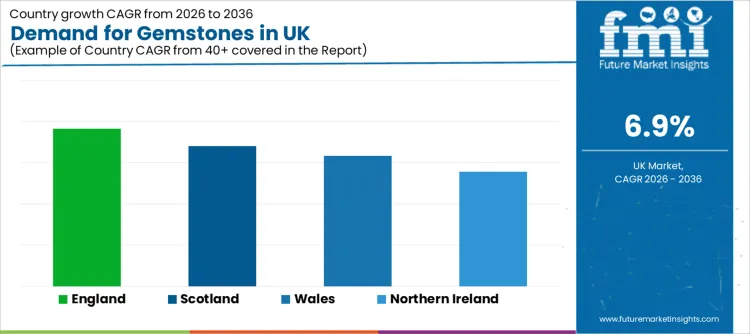
| Region | CAGR (2026-2036) |
|---|---|
| England | 7.6% |
| Scotland | 6.8% |
| Wales | 6.3% |
| Northern Ireland | 5.6% |
What is Fuelling Premier Growth in England?
England leads with a projected CAGR of 7.6%. This dominance is driven overwhelmingly by London's global role as a luxury capital, wealth management hub, and centre for auction activity. The concentration of global jewelry brand flagships, bespoke workshops in Mayfair, and the headquarters of major mining and trading companies in the capital creates an unparalleled ecosystem.
Wealth clusters in the Home Counties and the South East further drive demand for high-value purchases, solidifying England's position as the central nexus for the UK's gemstone trade and consumption.
Why is Scotland a Key Centre for Niche and Heritage Demand?
Scotland exhibits a strong CAGR of 6.8%, powered by its distinct cultural heritage and affluent urban centres like Edinburgh and Glasgow. Demand is fueled by a preference for gemstones set in traditional Scottish jewelry designs, such as pebble jewelry and Celtic motifs, often incorporating locally relevant stones like sapphires or garnets. Edinburgh's own financial services sector and its festival-driven influx of an international luxury clientele contribute to a stable high-end market.
What Factors Underpin Steady Demand in Wales and Northern Ireland?
Wales and Northern Ireland show stable, positive growth. Wales, with a CAGR of 6.3%, benefits from growing affluence in Cardiff and a renewed interest in Welsh gold, often paired with diamonds or colored gemstones in commemorative and celebratory jewelry. Northern Ireland, with a projected CAGR of 5.6%, reflects growth supported by a robust local jewelry manufacturing tradition in Belfast and steady demand linked to wedding and ceremonial markets. Both regions benefit from broader UK-wide trends while expressing local consumer preferences.
What Defines the Competitive Landscape of the Gemstone Industry?
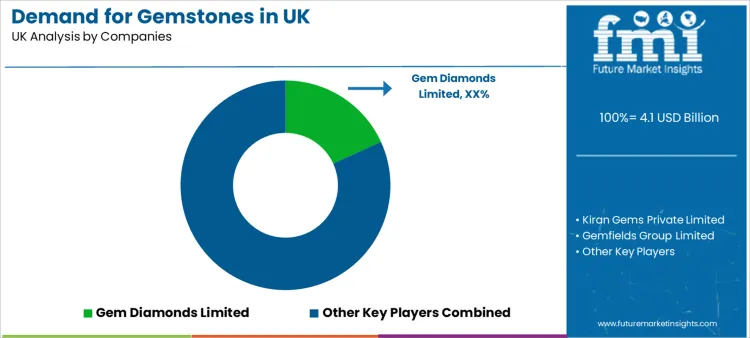
The competitive environment is stratified and complex, characterized by intense rivalry based on access to premium rough material, cutting and polishing expertise, brand heritage, and certification authority. Established mining giants and large-scale dealers compete with niche specialists and renowned jewelry houses that possess their own sourcing networks. Differentiation is achieved through exclusive access to specific mine outputs, mastery in cutting rare and difficult materials, or a storied brand legacy that adds significant premium to the final product.
Success depends not only on the quality of the stone but on the ability to guarantee ethical provenance, provide impeccable certification, and connect the gemstone to a compelling narrative or design. Forming strategic partnerships with elite jewelry brands, top auction houses, and influential designers is a critical tactic for securing demand and influencing market trends. The after-sales ecosystem, including insurance, secure storage, and resale brokerage, also forms a key part of the service-led competition among high-end players.
Key Industry Participants
- Gem Diamonds Limited
- Kiran Gems Private Limited
- Gemfields Group Limited
- PJSC ALROSA
- Anglo American plc
Scope of Report
| Items | Values |
|---|---|
| Quantitative Units | USD Billion |
| Product Type | Emerald, Ruby, Opal, Sapphire, Spinel, Others |
| Application | Jewelry & Ornaments, Luxury Art, Others |
| Regions Covered | England, Scotland, Wales, Northern Ireland |
| Key Companies Profiled | Gem Diamonds Limited, Kiran Gems Private Limited, Gemfields Group Limited, PJSC ALROSA, Anglo American plc |
Gemstone Industry in the UK by Segment
By Product Type:
- Emerald
- Ruby
- Opal
- Sapphire
- Spinel
- Others
By Application:
- Jewellery & Ornaments
- Luxury Art
- Others
By Region:
- England
- Scotland
- Wales
- Northern Ireland
Bibliography
- The National Association of Goldsmiths. (2023). UK Fine Jewellery Market Report.
- The Gemological Institute of America (GIA). (2024). Global Gemstone Market Insights.
- UK Finance. (2023). Wealth Management and Alternative Assets Report.
- The British Hallmarking Council. (2024). Precious Metals and Gemstones Yearbook.
- Office for National Statistics (ONS). (2023). UK Luxury Consumer Spending Analysis.
Frequently Asked Questions
How big is the demand for gemstones in uk in 2026?
The demand for gemstones in uk is estimated to be valued at USD 4.1 billion in 2026.
What will be the size of gemstones in uk in 2036?
The market size for the gemstones in uk is projected to reach USD 8.1 billion by 2036.
How much will be the demand for gemstones in uk growth between 2026 and 2036?
The demand for gemstones in uk is expected to grow at a 6.9% CAGR between 2026 and 2036.
What are the key product types in the gemstones in uk ?
The key product types in gemstones in uk are emerald, ruby, opal, sapphire and spinel.
Which application segment is expected to contribute significant share in the gemstones in uk in 2026?
In terms of application, jewelry & ornaments segment is expected to command 55.0% share in the gemstones in uk in 2026.
Preview the report firsthand - request a free sample
Get SampleGet the brochure for pricing and purchase details.
Get PDFTable of Content
- Executive Summary
- UK Market Outlook
- Demand-side Trends
- Supply-side Trends
- Technology Roadmap Analysis
- Analysis and Recommendations
- Market Overview
- Market Coverage / Taxonomy
- Market Definition / Scope / Limitations
- Market Background
- Market Dynamics
- Drivers
- Restraints
- Opportunity
- Trends
- Scenario Forecast
- Demand in Optimistic Scenario
- Demand in Likely Scenario
- Demand in Conservative Scenario
- Opportunity Map Analysis
- Product Life Cycle Analysis
- Supply Chain Analysis
- Investment Feasibility Matrix
- Value Chain Analysis
- PESTLE and Porter’s Analysis
- Regulatory Landscape
- Regional Parent Market Outlook
- Production and Consumption Statistics
- Import and Export Statistics
- Market Dynamics
- UK Market Analysis 2021 to 2025 and Forecast, 2026 to 2036
- Historical Market Size Value (USD Million) Analysis, 2021 to 2025
- Current and Future Market Size Value (USD Million) Projections, 2026 to 2036
- Y-o-Y Growth Trend Analysis
- Absolute $ Opportunity Analysis
- UK Market Pricing Analysis 2021 to 2025 and Forecast 2026 to 2036
- UK Market Analysis 2021 to 2025 and Forecast 2026 to 2036, By Product Type
- Introduction / Key Findings
- Historical Market Size Value (USD Million) Analysis By Product Type , 2021 to 2025
- Current and Future Market Size Value (USD Million) Analysis and Forecast By Product Type , 2026 to 2036
- Emerald
- Ruby
- Opal
- Sapphire
- Spinel
- Emerald
- Y-o-Y Growth Trend Analysis By Product Type , 2021 to 2025
- Absolute $ Opportunity Analysis By Product Type , 2026 to 2036
- UK Market Analysis 2021 to 2025 and Forecast 2026 to 2036, By Application
- Introduction / Key Findings
- Historical Market Size Value (USD Million) Analysis By Application, 2021 to 2025
- Current and Future Market Size Value (USD Million) Analysis and Forecast By Application, 2026 to 2036
- Jewelry & Ornaments
- Luxury Art
- Jewelry & Ornaments
- Jewelry & Ornaments
- Y-o-Y Growth Trend Analysis By Application, 2021 to 2025
- Absolute $ Opportunity Analysis By Application, 2026 to 2036
- Market Structure Analysis
- Competition Dashboard
- Competition Benchmarking
- Market Share Analysis of Top Players
- By Regional
- By Product Type
- By Application
- Competition Analysis
- Competition Deep Dive
- Gem Diamonds Limited
- Overview
- Product Portfolio
- Profitability by Market Segments (Product/Age /Sales Channel/Region)
- Sales Footprint
- Strategy Overview
- Marketing Strategy
- Product Strategy
- Channel Strategy
- Kiran Gems Private Limited
- Gemfields Group Limited
- PJSC ALROSA
- Anglo American plc
- Gem Diamonds Limited
- Competition Deep Dive
- Assumptions & Acronyms Used
- Research Methodology


