

- Industry Size (2025)
- USD 1.1 Bn
- Forecast (2035)
- USD 2.4 Bn
- CAGR (2025 to 2035)
- 7.8%
Demand for Bike Saddles in USA Forecast and Outlook 2025 to 2035
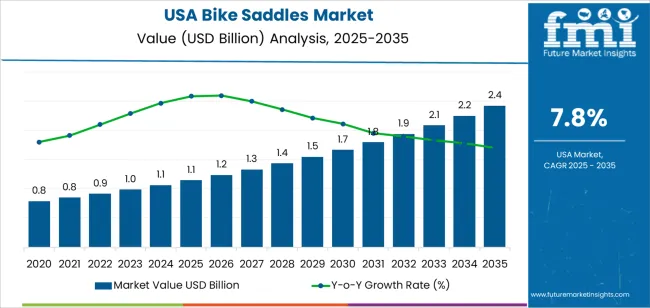
In 2025, demand for bike saddles in the USA is valued at USD 1.1 billion and is projected to reach USD 2.4 billion by 2035 at a CAGR of 7.8%. Growth in the early forecast years reflects sustained cycling participation across urban commuting, fitness riding, and trail use. Gravel bikes, electric bicycles, and endurance road bikes raise saddle replacement rates due to longer ride times and higher comfort expectations. Specialty retail and direct to consumer brands play a central role in driving premium saddle adoption through ergonomic design and fit customization. Medical awareness of saddle related pressure points and posture correction also supports higher value product uptake across recreational and performance segments.
After 2030, demand expansion in the USA becomes more usage intensity driven than new rider driven. Market value rises as rider’s upgrade saddles for long distance touring, indoor training platforms, and rapidly growing e bike usage among older age groups. Women specific and anatomically engineered saddles gain wider acceptance as female cycling participation expands. Materials shift toward lightweight composite bases, memory foam padding, and pressure mapping based design. Key demand centers remain California, the Pacific Northwest, Colorado, and the Northeast where cycling infrastructure density is highest. Competitive focus rests on comfort benchmarking, durability under high mileage use, and digital fitting tools linked to online purchasing behavior.
Quick Stats for Demand for Bike Saddles in USA:
- Demand for Bike Saddles in USA Value (2025): USD 1.1 billion
- Demand for Bike Saddles in USA Forecast Value (2035): USD 2.4 billion
- Demand for Bike Saddles in USA Forecast CAGR (2025–2035): 7.8%
- Leading Product Type in Bike Saddles in USA: Plastic (42%)
- Key Growth Regions for Bike Saddles in USA: West, South, Northeast, Midwest
- Top Players in Bike Saddles Industry in USA: Selle Royal Group, Brooks England, WTB, Prologo, Fizik
What is the Demand Forecast for Bike Saddles in USA through 2035?
The overall demand for bike saddles in USA increases from USD 1.1 billion in 2025 to USD 1.2 billion by 2030, adding USD 0.1 billion in absolute value. This phase reflects steady expansion anchored in regular bicycle replacement cycles, consistent participation in recreational cycling, and stable commuter bike usage across urban areas. Demand is supported by incremental upgrades toward ergonomic designs, gel padding, pressure-mapping geometry, and lightweight rail materials rather than large shifts in rider base. Growth during this period remains structurally controlled, with value largely driven by mid-range and performance replacement demand across road, hybrid, and mountain bike categories.
From 2030 to 2035, the market expands more sharply from USD 1.2 billion to USD 2.4 billion, adding a substantially larger USD 1.2 billion in the second half of the decade. This back weighted acceleration reflects structural changes in mobility behavior, including higher sustained adoption of cycling for daily transport, growth in electric bicycle ownership, and rising demand for premium comfort saddles tailored to long-distance and urban commuting use. As saddle designs integrate advanced foams, vibration-damping rails, and rider-specific fit technologies, value per unit increases alongside volume. Demand shifts from routine replacement toward performance and comfort-driven spending expansion.
Bike Saddles Industry in USA Key Takeaways
| Metric | Value |
|---|---|
| Industry Value (2025) | USD 1.1 billion |
| Forecast Value (2035) | USD 2.4 billion |
| Forecast CAGR (2025–2035) | 7.8% |
What Is Driving the Demand for Bike Saddles in the USA
Demand for bike saddles in the USA has grown over decades in response to rising interest in cycling for commuting, fitness, recreation, and sport. Urbanisation and growing road congestion pushed many to adopt bicycles and e-bikes for efficient transportation or last-mile mobility. Increasing health awareness and cycling as exercise encouraged a wave of recreational riding and long-distance cycling, driving demand for comfortable, ergonomic saddles. Women’s cycling and youth cycling trends added demographic depth to demand. Manufacturers responded with a variety of saddle shapes, padding densities, and materials to suit different use cases commuting, mountain biking, road cycling, leisure riding or e-bike commuting broadening the product base and widening appeal beyond traditional cycling communities.
Future demand for bike saddles in the USA will reflect evolving mobility, active-lifestyle preferences, and urban design. Growth in e-bike adoption and micromobility solutions will sustain aftermarket saddle demand as users seek comfort upgrades for longer rides or daily commutes. As cycling expands into suburban and urban commuting zones, demand will shift toward durable, weather-resistant, and low-maintenance saddle designs. Customisation and comfort trends may push innovation in saddle ergonomics, gels, adaptive padding, and gender-specific designs. At the same time, competition from ride-sharing, public transport, and changing city infrastructure may influence overall cycling uptake. Demand patterns will depend on infrastructure investments, fuel prices, lifestyle choices, and mobility policy direction.
How Are Product Type and Price Range Structuring the Demand for Bike Saddles in USA?
The demand for bike saddles in the USA is structured by product type and price related USAge category. Plastic saddles account for 42% of total demand, followed by leather and other material types used in niche comfort and specialty riding segments. By USAge based price range, road bikes represent 36.0% of total consumption, followed by mountain bikes, hybrid bikes, and other cycles. Demand behavior is shaped by rider comfort expectations, weight considerations, durability needs, and performance requirements. These segments reflect how riding style, terrain exposure, and cost sensitivity define saddle selection across recreational, commuting, and performance cycling in the USA.
Why Do Plastic Saddles Lead the Bike Saddle Product Type Demand in USA?
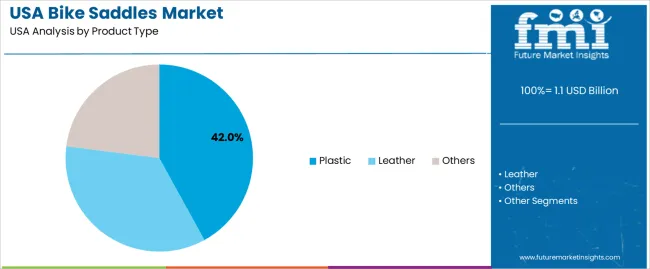
Plastic saddles account for 42% of total bike saddle demand in the USA. Their dominance reflects low manufacturing cost, light weight, and high resistance to moisture and weather exposure. Plastic saddle shells perform reliably across commuting, fitness cycling, and entry level recreational use where durability and affordability are prioritized over premium finishing. Their compatibility with gel and foam padding also supports comfort enhancement at accessible price points.
Plastic saddles are widely adopted across mass market bicycles sold through sporting goods stores and online retail platforms. Injection molding scalability allows consistent output across multiple size and shape variants. Replacement demand remains high due to wear from daily use and exposure to UV radiation. These production efficiency, affordability, and durability advantages sustain plastic as the leading bike saddle material across the USA.
Why Do Road Bikes Dominate the Demand for Bike Saddles in USA?
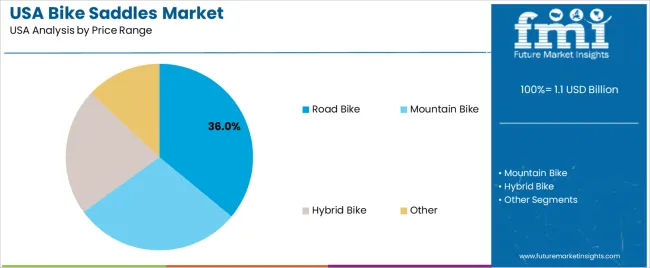
Road bikes account for 36.0% of total bike saddle demand in the USA. This leadership reflects the strong presence of road cycling for fitness, competitive racing, and long distance recreational riding. Road bike saddles are selected based on low weight, narrow profile, and pressure distribution to support high cadence riding and aerodynamic posture.
Growth in endurance cycling events, triathlons, and organized road racing continues to support saddle replacement and upgrade activity. Riders frequently adjust saddle types to improve performance positioning and reduce fatigue. Road bike owners also demonstrate higher accessory spending compared with casual riders. These performance intensity, sport participation, and upgrade driven factors position road bikes as the leading usage segment for saddle demand across the USA.
What Forces Are Driving the Demand for Bike Saddles in the USA?
Demand for bike saddles in the USA is driven by rising participation in cycling for fitness, recreation, commuting, and competitive sports. Urban bike lanes, trail development, and community cycling programs support steady growth in ridership. Road cycling, gravel riding, mountain biking, and indoor training each require different saddle designs, which expands overall product variety and replacement frequency. Growth in electric bicycles also increases saddle demand due to new rider entry and higher daily usage rates. These participation and usage patterns make saddles a recurring-fit and comfort-driven replacement component.
How Do Riding Styles and usage Patterns Shape Saddle Demand in the USA?
Cycling in the USA spans endurance road riding, trail-based mountain biking, bikepacking, commuting, and indoor trainer workouts. Each category places different pressure points on rider posture, creating demand for saddles tailored to riding angle, vibration exposure, and distance duration. Performance riders seek narrow, stiff saddles that support aggressive positioning. Commuters prioritize cushioning and upright comfort. E-bike users generate higher saddle wear due to increased mileage and heavier rider load. Gender-specific and pressure-relief channel designs address long-ride comfort concerns. These usage differences diversify saddle demand across multiple performance tiers.
What Cost, Fit, and Consumer Behavior Constraints Limit Saddle Market Expansion in the USA?
Bike saddle demand in the USA faces limits tied to fit complexity, price sensitivity, and trial uncertainty. Comfort is highly individual, leading to high return rates for online purchases. Premium saddles using carbon rails and advanced padding carry high prices that restrict access to performance-focused riders. Entry-level riders often remain on stock saddles despite discomfort due to low replacement awareness. Retail saddle fitting services remain uneven across regions. These behavioral, pricing, and fit challenges slow conversion from factory-installed saddles to aftermarket upgrades.
How Are Material Innovation, Fit Technology, and Riding Trends Reshaping Saddle Demand in the USA?
Bike saddles in the USA are shifting toward 3D-printed lattice padding, lightweight composite shells, and vibration-damping rail systems. Pressure-mapping and saddle-width measurement systems influence buying decisions at specialty retailers. Wider adoption of cut-out channels improves blood-flow comfort for long-distance riders. Sustainability-driven materials such as recycled foams and bio-based covers are entering premium lines. Gravel cycling and endurance events increase demand for hybrid saddles that balance stiffness and cushioning. These trends show saddles evolving from simple contact surfaces into precision-engineered rider interface components.
What is the Demand for Bike Saddles in USA by Region?
| Region | CAGR (%) |
|---|---|
| West | 9.0% |
| South | 8.0% |
| Northeast | 7.2% |
| Midwest | 6.2% |
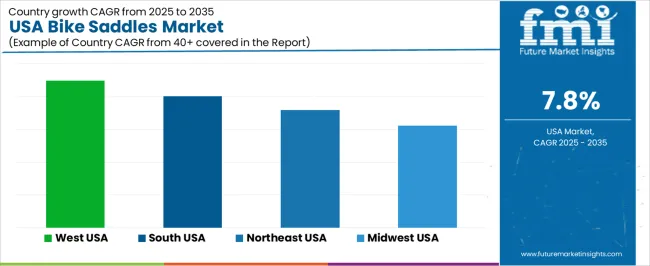
The demand for bike saddles in the USA is growing across regions with the West leading at 9.0% CAGR. Growth in that region is driven by rising popularity of cycling for commuting and recreation, increased bicycle sales, and demand for comfort and performance upgrades. The South at 8.0% benefits from favorable climate conditions and growth in outdoor and cycling activities. The Northeast at 7.2% shows steady demand, supported by urban cycling infrastructure and recreational cycling interest. The Midwest at 6.2% exhibits moderate growth, reflecting gradual adoption of cycling and replacement of components in existing bicycles.
What is Driving Bike Saddle Demand in the West Region of USA?
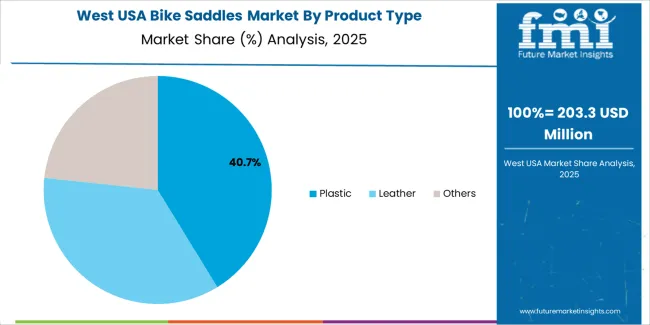
Growth in the West reflects a CAGR of 9.0% through 2035 for bike saddle demand, supported by strong cycling participation, outdoor recreation culture, and high adoption of performance bicycles across urban and trail networks. Mountain biking, road cycling, and commuter use sustain continuous replacement demand for saddles optimized for comfort and endurance. Electric bicycle adoption further increases saddle upgrade frequency due to higher ride duration. Specialty bike retailers and direct to consumer brands dominate distribution. Demand remains performance driven, with riders prioritizing ergonomic design, lightweight materials, and pressure relief features.
- Mountain and road cycling drive high USAge intensity
- Electric bicycles increase long ride comfort requirements
- Specialty retailers dominate premium saddle distribution
- Ergonomic design preference shapes product selection
How is the South Supporting Bike Saddle Demand in USA?
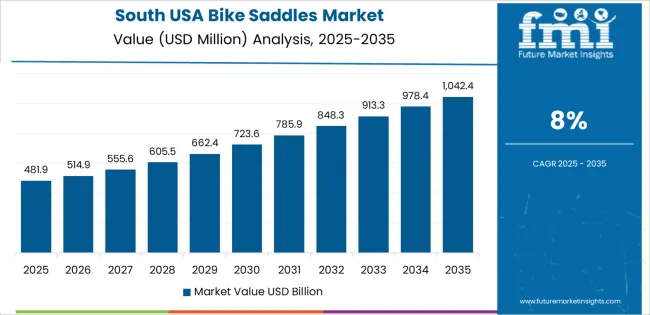
The South advances at a CAGR of 8.0% through 2035 for bike saddle demand, driven by expanding urban cycling infrastructure, recreational riding, and growing health focused mobility adoption. Warm climate conditions allow near year round cycling activity, supporting steady wear and replacement cycles. Entry level and mid range bicycles dominate volumes, with comfort focused saddles preferred for casual riders. Sporting goods chains and online platforms serve as key sales channels. Demand growth remains volume driven, supported by suburban trail development and fitness oriented riding participation.
- Warm climate supports extended annual riding seasons
- Comfort focused saddles dominate casual rider purchases
- Suburban trail expansion increases bicycle USAge
- Online retail strengthens regional product access
Why is Bike Saddle Demand Rising Steadily in the Northeast Region of USA?
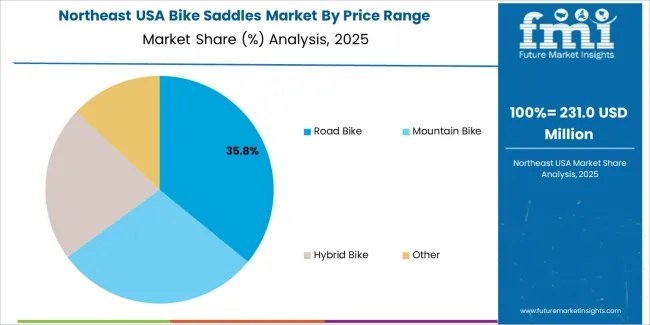
The Northeast records a CAGR of 7.2% through 2035 for bike saddle demand, shaped by dense urban commuting, fitness cycling, and rising investment in protected bike lane infrastructure. City based riders prioritize saddles designed for daily commuting comfort and durability. Seasonal cycling patterns influence replacement timing, with peak demand concentrated in spring and summer. Premium hybrid and commuter bicycles contribute a growing share of installed saddle volume. Demand remains functionality driven, with urban mobility needs shaping consistent purchasing behavior across metropolitan cycling communities.
- Urban commuting sustains daily saddle wear
- Protected bike lanes support cycling adoption
- Seasonal demand peaks influence replacement timing
- Hybrid bicycles contribute rising saddle installations
What is Influencing Bike Saddle Demand in the Midwest Region of USA?
The Midwest expands at a CAGR of 6.2% through 2035 for bike saddle demand, supported by recreational cycling, family oriented trail use, and steady participation in fitness riding across suburban communities. Long distance trail systems and park pathways sustain replacement demand for durable, comfort oriented saddles. Cost sensitivity remains higher than in coastal regions, influencing preference for mid-priced products. Independent bike shops and sporting goods retailers anchor distribution. Demand remains stable and activity driven, supported by predictable seasonal cycling participation and community level fitness programs.
- Recreational trail use supports steady saddle replacement
- Mid-priced products dominate cost sensitive purchasing
- Independent bike shops anchor local distribution
- Seasonal fitness participation shapes annual demand cycles
What Is Driving the Demand for Bike Saddles in USA and Who Are the Key Players Shaping the Market?
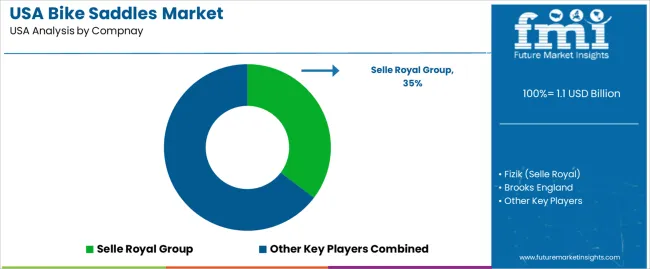
Demand for bike saddles in the USA is strengthening as cycling gains popularity for commuting, fitness, recreation, and e bike use. Riders value comfort, ergonomics, and performance. The rise of road cycling, mountain biking, gravel cycling, and urban commuting drives demand for specialized saddles. Advances in materials and seat design, including lighter frames, improved padding, anatomical shaping, pressure relief features, and durability, encourage upgrades from basic saddles. Growth of e bikes also adds momentum as users seek more comfortable, long-ride compatible seats. Trends in health awareness, outdoor activity, and sustainable mobility support steady growth in saddle demand across commuter, recreational, and performance riding segments.
Leading suppliers active in the USA saddle market include Selle Royal Group (owner of Fizik), Brooks England, WTB (Wilderness Trail Bikes), Prologo, and other specialist brands. Selle Royal and Brooks England lead in comfort and commuter/touring segments. WTB and Prologo target mountain bike, road bike, and performance oriented riders seeking durability and ergonomic design. These firms shape demand by offering a diverse range of saddles from classic leather to modern performance models ensuring supply meets varied rider preferences across commuter, recreational, and performance segments.
Key Players in the Bike Saddles Industry in USA
- Selle Royal Group
- Fizik (Selle Royal)
- Brooks England
- WTB (Wilderness Trail Bikes)
- Prologo
Scope of the Report
| Items | Values |
|---|---|
| Quantitative Units (2025) | USD billion |
| Product Type | Plastic, Leather, Others |
| Price Range / Usage | Road Bike, Mountain Bike, Hybrid Bike, Other |
| Sales Channel | Online Stores, Departmental Store, Direct Sales, Other Sales Channel |
| Region | West USA, South USA, Northeast USA, Midwest USA |
| Countries Covered | USA |
| Key Companies Profiled | Selle Royal Group, Fizik (Selle Royal), Brooks England, WTB (Wilderness Trail Bikes), Prologo |
| Additional Attributes | Dollar value distribution by product type and price range; regional CAGR projections; plastic leads with 42% share due to light weight, affordability, and durability; road bikes lead 36% of consumption reflecting endurance and commuter cycling; growth from 2030–2035 is back-weighted driven by e-bike adoption, long distance riding, and premium ergonomic saddle upgrades; materials include lightweight composite rails, memory foam padding, and pressure-mapping designs; distribution includes specialty bike retailers, online stores, and direct to consumer; demand influenced by urban cycling infrastructure, commuter adoption, and recreational cycling culture. |
Bike Saddles Industry in USA Segmentation
Product Type:
- Plastic
- Leather
- Others
Price Range:
- Road Bike
- Mountain Bike
- Hybrid Bike
- Other
Sales Channel:
- Online Stores
- Departmental Store
- Direct Sales
- Other Sales Channel
Region:
- Northeast USA
- West USA
- Midwest USA
- South USA
Frequently Asked Questions
How big is the demand for bike saddles in USA in 2025?
The demand for bike saddles in USA is estimated to be valued at USD 1.1 billion in 2025.
What will be the size of bike saddles in USA in 2035?
The market size for the bike saddles in USA is projected to reach USD 2.4 billion by 2035.
How much will be the demand for bike saddles in USA growth between 2025 and 2035?
The demand for bike saddles in USA is expected to grow at a 7.8% CAGR between 2025 and 2035.
What are the key product types in the bike saddles in USA?
The key product types in bike saddles in USA are plastic, leather and others.
Which price range segment is expected to contribute significant share in the bike saddles in USA in 2025?
In terms of price range, road bike segment is expected to command 36.0% share in the bike saddles in USA in 2025.
Preview the report firsthand - request a free sample
Get SampleGet the brochure for pricing and purchase details.
Get PDFTable of Content
- Executive Summary
- USA Market Outlook
- Demand-side Trends
- Supply-side Trends
- Technology Roadmap Analysis
- Analysis and Recommendations
- Market Overview
- Market Coverage / Taxonomy
- Market Definition / Scope / Limitations
- Market Background
- Market Dynamics
- Drivers
- Restraints
- Opportunity
- Trends
- Scenario Forecast
- Demand in Optimistic Scenario
- Demand in Likely Scenario
- Demand in Conservative Scenario
- Opportunity Map Analysis
- Product Life Cycle Analysis
- Supply Chain Analysis
- Investment Feasibility Matrix
- Value Chain Analysis
- PESTLE and Porter’s Analysis
- Regulatory Landscape
- Regional Parent Market Outlook
- Production and Consumption Statistics
- Import and Export Statistics
- Market Dynamics
- USA Market Analysis 2020 to 2024 and Forecast, 2025 to 2035
- Historical Market Size Value (USD Million) Analysis, 2020 to 2024
- Current and Future Market Size Value (USD Million) Projections, 2025 to 2035
- Y-o-Y Growth Trend Analysis
- Absolute $ Opportunity Analysis
- USA Market Pricing Analysis 2020 to 2024 and Forecast 2025 to 2035
- USA Market Analysis 2020 to 2024 and Forecast 2025 to 2035, By Product Type
- Introduction / Key Findings
- Historical Market Size Value (USD Million) Analysis By Product Type , 2020 to 2024
- Current and Future Market Size Value (USD Million) Analysis and Forecast By Product Type , 2025 to 2035
- Plastic
- Leather
- Others
- Y-o-Y Growth Trend Analysis By Product Type , 2020 to 2024
- Absolute $ Opportunity Analysis By Product Type , 2025 to 2035
- USA Market Analysis 2020 to 2024 and Forecast 2025 to 2035, By Price Range
- Introduction / Key Findings
- Historical Market Size Value (USD Million) Analysis By Price Range, 2020 to 2024
- Current and Future Market Size Value (USD Million) Analysis and Forecast By Price Range, 2025 to 2035
- Road Bike
- Mountain Bike
- Hybrid Bike
- Other
- Y-o-Y Growth Trend Analysis By Price Range, 2020 to 2024
- Absolute $ Opportunity Analysis By Price Range, 2025 to 2035
- USA Market Analysis 2020 to 2024 and Forecast 2025 to 2035, By Sales Channel
- Introduction / Key Findings
- Historical Market Size Value (USD Million) Analysis By Sales Channel, 2020 to 2024
- Current and Future Market Size Value (USD Million) Analysis and Forecast By Sales Channel, 2025 to 2035
- Online Stores
- Departmental Store
- Direct Sales
- Other Sales Channel
- Y-o-Y Growth Trend Analysis By Sales Channel, 2020 to 2024
- Absolute $ Opportunity Analysis By Sales Channel, 2025 to 2035
- Market Structure Analysis
- Competition Dashboard
- Competition Benchmarking
- Market Share Analysis of Top Players
- By Regional
- By Product Type
- By Price Range
- By Sales Channel
- Competition Analysis
- Competition Deep Dive
- Selle Royal Group
- Overview
- Product Portfolio
- Profitability by Market Segments (Product/Age /Sales Channel/Region)
- Sales Footprint
- Strategy Overview
- Marketing Strategy
- Product Strategy
- Channel Strategy
- Fizik (Selle Royal)
- Brooks England
- WTB (Wilderness Trail Bikes)
- Prologo
- Selle Royal Group
- Competition Deep Dive
- Assumptions & Acronyms Used
- Research Methodology


