

- Industry Size (2025)
- USD 0.5 Bn
- Forecast (2035)
- USD 1.0 Bn
- CAGR (2025 to 2035)
- 6.2%
Demand for Bio-Magnetic Ear Stickers in USA Forecast and Outlook 2025 to 2035
Bio-magnetic ear sticker demand in the USA is valued at USD 0.5 billion in 2025 and is projected to reach USD 1.0 billion by 2035 at a CAGR of 6.2%. Early growth is shaped by consumer interest in non-invasive wellness aids used for stress relief, sleep support, appetite control, and pain management. Sales are concentrated in over-the-counter wellness retail, chiropractic clinics, and acupuncture-linked therapy centers. Adhesive comfort, magnetic strength consistency, and skin compatibility drive repeat purchase behavior. Online channels account for a large share of early adoption as direct-to-consumer brands rely on educational content and bundled subscription models to sustain usage frequency across wellness-oriented consumers.
After 2030, demand expansion becomes more distribution-led than novelty-driven. Market value rises from about USD 0.7 billion in 2030 toward USD 1.0 billion by 2035 as bio-magnetic stickers gain wider placement in pharmacies, mass retail wellness aisles, and sports recovery programs. Workplace wellness initiatives and physical therapy networks add steady institutional volume. Product differentiation shifts toward hypoallergenic materials, longer wear cycles, and targeted point placement guides aligned with traditional pressure mapping systems. Supplier competition centers on adhesive durability, magnetic field stability, and packaging standardization for regulated retail environments. Growth in the later phase reflects broader normalization of bio-magnetic accessories within mainstream personal wellness spending rather than experimental consumer uptake.
Quick Stats of the Demand for Bio-Magnetic Ear Stickers in USA
- Demand for Bio-Magnetic Ear Stickers in USA Value (2025): USD 0.5 billion
- Demand for Bio-Magnetic Ear Stickers in USA Forecast Value (2035): USD 1.0 billion
- Demand for Bio-Magnetic Ear Stickers in USA Forecast CAGR (2025–2035): 6.2%
- Demand for Bio-Magnetic Ear Stickers in USA Leading Type: Classic Ear Stickers (58%)
- Demand for Bio-Magnetic Ear Stickers in USA Key Growth Regions: West, South, Northeast, Midwest
- Demand for Bio-Magnetic Ear Stickers in USA Top Players: Aculife Healthcare, AcuMed Magnetic Therapy, EarSeeds, Stimul8, BioMagnetic Products

What is the Demand Forecast for Bio-Magnetic Ear Stickers in USA through 2035?
Bio-magnetic ear stickers occupy a niche at the intersection of alternative wellness, self-care accessories, and non-invasive relaxation aids, which gives their demand curve a consumer-driven rather than clinically driven structure. Demand in USA increases from USD 0.5 billion in 2025 to USD 0.6 billion by 2030, adding USD 0.1 billion in absolute value. This phase reflects steady uptake through online wellness platforms, gift-oriented retail, and stress-relief product assortments rather than mass medical distribution. Growth is supported by repeat purchase behavior, impulse wellness spending, and rising visibility across social commerce channels. Product differentiation during this period remains focused on materials, aesthetics, and packaging rather than functional performance innovation.
From 2030 to 2035, the market expands from USD 0.6 billion to USD 1.0 billion, adding USD 0.4 billion in the second half of the decade. This back weighted acceleration reflects deeper penetration into lifestyle wellness routines, expansion across sleep support, anxiety management, and acupressure-inspired accessories, and wider international brand entry into the USA market. As branding sophistication improves and subscription-based wellness kits gain traction, unit volumes and average selling prices both rise. The category gradually shifts from novelty-oriented spending toward routine personal wellness consumption, strengthening long-term demand momentum.
Bio Magnetic Ear Stickers Industry in USA Key Takeaways
| Metric | Value |
|---|---|
| Industry Value (2025) | USD 0.5 billion |
| Forecast Value (2035) | USD 1.0 billion |
| Forecast CAGR (2025–2035) | 6.2% |
How Is the Market for Bio-Magnetic Ear Stickers Evolving in the USA and What Are the Key Dynamics?
The USA market for bio-magnetic ear stickers has emerged out of growing public interest in alternative wellness approaches, non-invasive therapies, and stress or pain management solutions that do not rely on traditional pharmaceuticals. Consumers concerned about chronic conditions such as headaches, joint pain, stress, or insomnia have increasingly looked toward drug-free interventions. Bio-magnetic ear stickers small magnetized patches applied to ear acupressure points gained traction as affordable, easy-to-use products. Early demand was driven by wellness-oriented individuals, users of holistic or complementary medicine, and buyers seeking at-home remedies. E-commerce platforms helped spread awareness and lowered access barriers, allowing niche products to reach a broader audience across the country.
Going forward, growth could accelerate if bio-magnetic ear stickers move beyond niche wellness circles into mainstream self-care and preventive health use. Trends such as rising healthcare costs, increased consumer skepticism toward long-term use of painkillers, and growing interest in holistic wellness may favor adoption. Manufacturers refining materials (hypoallergenic adhesives, durable magnets), improving user comfort, and offering subscription or recurring-use packs may broaden appeal. Demand may further climb if clinics or wellness centers integrate ear-stickers into complementary therapy offerings. Barriers remain significant: limited rigorous clinical evidence supporting efficacy, regulatory scrutiny over health claims, and consumer skepticism. Long-term market expansion will depend on transparent communication of benefits, product safety, and realistic positioning of stickers as adjunct wellness tools rather than cures.
How Are Type and Sales Channel Structuring the Demand for Bio Magnetic Ear Stickers in USA?
The demand for bio magnetic ear stickers in the USA is structured by product type and sales channel. Classic ear stickers account for 58% of total demand, followed by fancy ear stickers that serve style focused and gift-oriented segments. By sales channel, online retailers represent 34.0% of total consumption, followed by specialty stores, direct sales, and other distribution formats. Demand behavior is shaped by ease of use, price accessibility, perceived wellness benefits, and convenience of purchase. These segments reflect how functional design preferences and evolving retail access models influence product adoption across personal wellness consumers in the USA.
Why Do Classic Ear Stickers Lead the Bio Magnetic Ear Sticker Type Demand in USA?
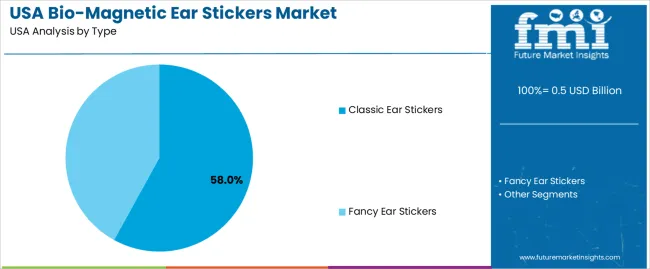
Classic ear stickers account for 58% of total bio magnetic ear sticker demand in the USA due to their simple design, consistent USAbility, and suitability for daily wellness routines. These products are commonly used for acupressure based applications associated with stress management, sleep support, appetite control, and general relaxation. Consumers prefer classic formats because they offer discreet appearance and predictable placement on standard auricular pressure points. The absence of decorative elements improves acceptance among older users and wellness focused buyers who prioritize function over visual design.
Classic ear stickers are also favored due to lower unit pricing compared with decorative variants, which supports repeat purchasing behavior. Bulk packs marketed through wellness platforms and online marketplaces further reinforce their dominance. Instructional content and self care programs frequently reference classic designs, which sustains steady demand. These USAbility, pricing, and routine integration factors collectively sustain classic ear stickers as the leading type segment in the USA bio magnetic ear sticker demand structure.
Why Do Online Retailers Dominate the Bio Magnetic Ear Sticker Sales Channel in USA?
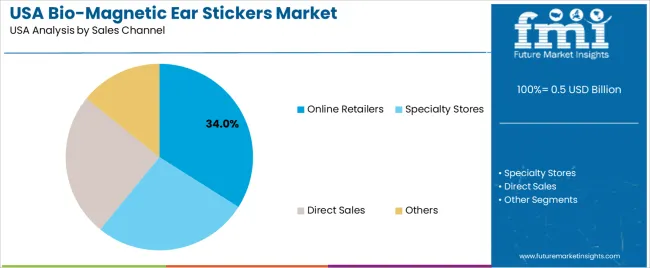
Online retailers account for 34.0% of total bio magnetic ear sticker demand in the USA due to the convenience of home delivery, wide product selection, and easy access to user reviews and instructional content. Consumers rely on e commerce platforms to compare magnetic strength, adhesive types, and package sizes before purchase. Subscription options and bundled wellness kits also support recurring purchases through digital channels. These features align well with wellness consumers who prefer privacy and convenience when purchasing self-care products.
Online platforms also enable direct access to imported products and small brand offerings that may not be stocked through physical retail outlets. Social media marketing and influencer driven product discovery play a role in driving traffic to online sales pages. Competitive pricing and frequent discount campaigns further support channel preference. These accessibility, assortment diversity, and digital marketing factors position online retailers as the dominant sales channel for bio magnetic ear stickers across the USA.
Why Have Bio-Magnetic Ear Stickers Found a Consumer Base Outside Conventional Medical Channels in the USA?
Demand for bio-magnetic ear stickers in the USA is driven less by clinical endorsement and more by consumer-led experimentation in wellness routines. These products circulate mainly through alternative therapy stores, online wellness platforms, and influencer-driven health content rather than hospitals or pharmacies. Users adopt them for appetite control, stress relief, sleep support, and pain management based on personal trial outcomes. The low price point and non-invasive nature reduce adoption risk for first-time users. This retail and self-care orientation allows demand to expand without dependence on formal diagnosis or medical prescription systems.
How Do Weight Management Culture and Self-Directed Wellness Shape usage Patterns?
USA weight management behavior strongly influences bio-magnetic ear sticker demand. Consumers seeking non-diet, non-pharmaceutical aids use ear acupoint stimulation as a behavioral control tool for appetite regulation and snacking reduction. Stress-driven eating patterns and irregular sleep schedules reinforce interest in passive wellness aids that do not require daily planning. Fitness and detox communities treat these stickers as adjunct tools alongside fasting, supplements, and wearable trackers. This integration into self-directed wellness stacks explains why repeat purchases depend more on perceived habit control than on clinical outcome measurement.
What Scientific Ambiguity and Regulatory Placement Limit Market Expansion?
Bio-magnetic ear stickers in the USA operate inside a gray zone between wellness accessories and medical devices. Lack of standardized clinical validation limits institutional adoption by hospitals, insurers, and licensed clinics. Marketing claims face regulatory scrutiny when they imply disease treatment rather than general wellness support. Product performance varies with magnet strength, adhesive quality, and point placement accuracy. Consumer skepticism also limits repeat use among outcome-driven buyers. These scientific and regulatory uncertainties prevent the category from scaling into mainstream medical retail despite steady niche consumer interest.
How Are E-Commerce, Aesthetic Design, and Subscription Sales Changing Demand Structure?
Demand for bio-magnetic ear stickers in the USA is increasingly shaped by digital storefronts rather than physical therapy clinics. Subscription bundles for monthly wellness use encourage repeat ordering without strong brand loyalty. Skin-tone neutral designs, transparent adhesives, and minimalist packaging reduce visual stigma during daily wear. Mobile apps and digital charts now guide point placement, replacing practitioner dependence. This shift transforms ear stickers into consumer-managed wellness products rather than therapist-controlled treatment tools. The demand structure now follows digital discovery and habit economics more than professional referral systems.
What is the Demand for Bio Magnetic Ear Stickers in USA by Region?
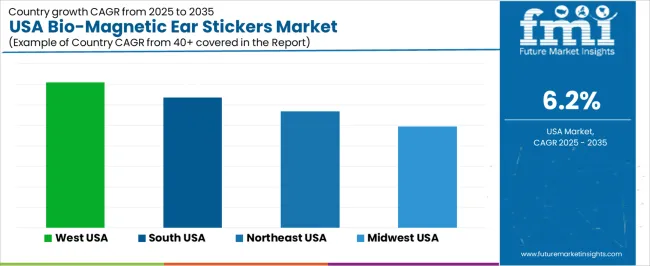
| Region | CAGR (%) |
|---|---|
| West | 7.1% |
| South | 6.4% |
| Northeast | 5.7% |
| Midwest | 4.9% |
The demand for bio magnetic ear stickers in the USA is increasing steadily across all regions, with the West leading at a 7.1% CAGR. Growth in this region is supported by strong consumer interest in alternative wellness products, high penetration of health and lifestyle trends, and widespread availability through online and specialty wellness retail channels. The South follows at 6.4%, driven by rising awareness of noninvasive pain relief and stress management products among a broad consumer base. The Northeast records 5.7% growth, supported by urban wellness adoption, therapy clinics, and specialty health stores. The Midwest shows comparatively moderate growth at 4.9%, reflecting slower adoption of alternative wellness accessories and more cautious consumer spending patterns.
What Is Driving Bio Magnetic Ear Sticker Demand in the West Region of USA?
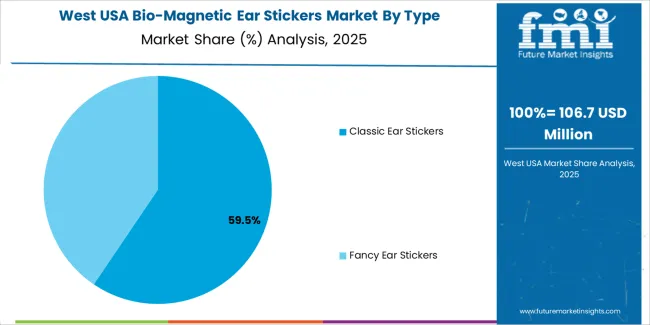
Consumer adoption in the West is advancing at a CAGR of 7.1% through 2035 for bio magnetic ear sticker demand, supported by strong interest in alternative wellness products, high participation in fitness and yoga communities, and broad access to holistic health retailers. Urban consumers use these products for stress management, sleep support, and weight management routines. Online wellness platforms and social commerce channels contribute to product visibility and repeat purchasing. Demand remains discretionary and lifestyle oriented, with purchasing influenced by peer usage, digital promotion, and availability through specialty wellness and personal care distribution networks.
- Holistic wellness culture sustains steady consumer uptake
- Online platforms strengthen product visibility and access
- Fitness and yoga participation supports routine usage
- Specialty health retailers anchor local distribution
How Is the South Supporting Bio Magnetic Ear Sticker Demand in USA?
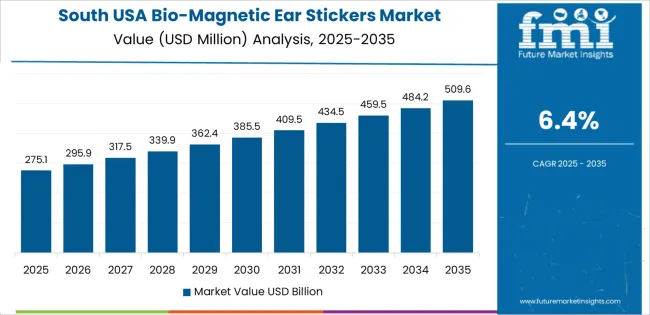
Retail expansion in the South is supporting growth at a CAGR of 6.4% through 2035 for bio magnetic ear sticker demand, driven by rising demand for affordable wellness accessories, pharmacy based retail outreach, and growing participation in weight management programs. Warm climate encourages outdoor fitness activity that aligns with performance and recovery oriented wellness products. Drugstores and mass merchandisers play a central role in product diffusion. Demand remains price sensitive and volume driven, with steady sales tied to impulse buying and promotional bundling rather than structured clinical wellness programs.
- Pharmacy retail drives high product turnover
- Weight management interest supports repeat purchases
- Mass merchandisers dominate value oriented sales
- Outdoor fitness activity aligns with usage patterns
Why Is Bio Magnetic Ear Sticker Demand Rising Steadily in the Northeast Region of USA?

Urban wellness adoption in the Northeast is sustaining a CAGR of 5.7% through 2035 for bio magnetic ear sticker demand, shaped by dense metropolitan populations, boutique wellness studios, and strong use of complementary health practices. Stress relief and sleep related applications remain the most common use cases among professionals and students. Distribution remains concentrated in specialty health stores and ecommerce platforms. Demand is replacement led rather than trial driven, supported by routine use among repeat consumers. Growth remains controlled and stability driven within structured urban wellness ecosystems.
- Stress and sleep management anchor consistent usage
- Boutique wellness studios support niche retail sales
- Ecommerce platforms expand regional product reach
- Repeat consumer base drives predictable replacement demand
What Is Influencing Bio Magnetic Ear Sticker Demand in the Midwest Region of USA?
Consumer uptake in the Midwest is expanding at a CAGR of 4.9% through 2035 for bio magnetic ear sticker demand, supported by gradual acceptance of complementary wellness products, community level fitness programs, and steady pharmacy based retail access. Adoption remains lower than coastal regions due to conservative purchasing behavior and limited exposure to alternative wellness marketing. Local health stores and regional drugstore chains remain the primary sales channels. Demand stays necessity adjacent rather than lifestyle driven, with growth tied to slow expansion of wellness awareness and selective consumer experimentation.
- Community fitness programs support limited adoption
- Drugstore chains anchor primary retail distribution
- Conservative buying behavior moderates demand growth
- Wellness awareness expands gradually across households
What Is Driving the Demand for Bio Magnetic Ear Stickers in USA and Who Are the Key Players Shaping the Industry?

Demand for bio magnetic ear stickers in the USA is growing as more consumers explore non invasive, wellness oriented alternatives for pain management, stress relief, sleep support, and holistic therapy. Interest in complementary medicine, such as ear acupressure and auriculotherapy, aligns with rising demand for drug free health solutions. Many users view ear stickers as an accessible way to stimulate ear points associated with relaxation, circulation, and general wellness. The growth of online retail and e commerce platforms allows wide distribution and easy access. Rising health awareness and demand for easily adoptable wellness items (without prescription) further strengthen market uptake among adults seeking convenient self care options.
Key companies supplying bio magnetic ear stickers in the USA include Aculife Healthcare, AcuMed Magnetic Therapy, EarSeeds, Stimul8, and BioMagnetic Products. Aculife, AcuMed and EarSeeds lead with a broad product portfolio covering pain relief, sleep support, and acupressure based wellness. Stimul8 and BioMagnetic Products serve niche segments for stress management, circulation improvement, and lifestyle oriented wellness. These firms influence supply availability, pricing, and consumer awareness through direct to consumer sales channels, wellness store partnerships, and digital marketing. Their presence sustains a diversified vendor base and supports growing demand across home users and alternative therapy aware consumers.
Key Players in Bio Magnetic Ear Stickers Industry in USA
- Aculife Healthcare
- AcuMed Magnetic Therapy
- EarSeeds
- Stimul8
- BioMagnetic Products
Scope of the Report
| Items | Values |
|---|---|
| Quantitative Units (2025) | USD billion |
| Type | Classic Ear Stickers, Fancy Ear Stickers |
| Sales Channel | Online Retailers, Specialty Stores, Direct Sales, Others |
| End-use Application | Personal Wellness, Stress Relief, Sleep Support, Appetite Control, Pain Management |
| Region | Northeast USA, West USA, Midwest USA, South USA |
| Countries Covered | USA |
| Key Companies Profiled | Aculife Healthcare, AcuMed Magnetic Therapy, EarSeeds, Stimul8, BioMagnetic Products |
| Additional Attributes | Dollar by sales by type, Dollar by sales by sales channel, Dollar by sales by region, Regional CAGR, Wellness-oriented distribution, Subscription-based sales models, Online direct-to-consumer penetration, Adhesive and magnetic quality performance |
Bio Magnetic Ear Stickers Industry in USA Segmentation
Type:
- Classic Ear Stickers
- Fancy Ear Stickers
Sales Channel:
- Online Retailers
- Specialty Stores
- Direct Sales
- Others
Region:
- Northeast USA
- West USA
- Midwest USA
- South USA
Frequently Asked Questions
How big is the demand for bio-magnetic ear stickers in USA in 2025?
The demand for bio-magnetic ear stickers in USA is estimated to be valued at USD 0.5 billion in 2025.
What will be the size of bio-magnetic ear stickers in USA in 2035?
The market size for the bio-magnetic ear stickers in USA is projected to reach USD 1.0 billion by 2035.
How much will be the demand for bio-magnetic ear stickers in USA growth between 2025 and 2035?
The demand for bio-magnetic ear stickers in USA is expected to grow at a 6.2% CAGR between 2025 and 2035.
What are the key product types in the bio-magnetic ear stickers in USA?
The key product types in bio-magnetic ear stickers in USA are classic ear stickers and fancy ear stickers.
Which sales channel segment is expected to contribute significant share in the bio-magnetic ear stickers in USA in 2025?
In terms of sales channel, online retailers segment is expected to command 34.0% share in the bio-magnetic ear stickers in USA in 2025.
Preview the report firsthand - request a free sample
Get SampleGet the brochure for pricing and purchase details.
Get PDFTable of Content
- Executive Summary
- USA Market Outlook
- Demand-side Trends
- Supply-side Trends
- Technology Roadmap Analysis
- Analysis and Recommendations
- Market Overview
- Market Coverage / Taxonomy
- Market Definition / Scope / Limitations
- Market Background
- Market Dynamics
- Drivers
- Restraints
- Opportunity
- Trends
- Scenario Forecast
- Demand in Optimistic Scenario
- Demand in Likely Scenario
- Demand in Conservative Scenario
- Opportunity Map Analysis
- Product Life Cycle Analysis
- Supply Chain Analysis
- Investment Feasibility Matrix
- Value Chain Analysis
- PESTLE and Porter’s Analysis
- Regulatory Landscape
- Regional Parent Market Outlook
- Production and Consumption Statistics
- Import and Export Statistics
- Market Dynamics
- USA Market Analysis 2020 to 2024 and Forecast, 2025 to 2035
- Historical Market Size Value (USD Million) Analysis, 2020 to 2024
- Current and Future Market Size Value (USD Million) Projections, 2025 to 2035
- Y-o-Y Growth Trend Analysis
- Absolute $ Opportunity Analysis
- USA Market Pricing Analysis 2020 to 2024 and Forecast 2025 to 2035
- USA Market Analysis 2020 to 2024 and Forecast 2025 to 2035, By Type
- Introduction / Key Findings
- Historical Market Size Value (USD Million) Analysis By Type , 2020 to 2024
- Current and Future Market Size Value (USD Million) Analysis and Forecast By Type , 2025 to 2035
- Classic Ear Stickers
- Fancy Ear Stickers
- Y-o-Y Growth Trend Analysis By Type , 2020 to 2024
- Absolute $ Opportunity Analysis By Type , 2025 to 2035
- USA Market Analysis 2020 to 2024 and Forecast 2025 to 2035, By Sales Channel
- Introduction / Key Findings
- Historical Market Size Value (USD Million) Analysis By Sales Channel, 2020 to 2024
- Current and Future Market Size Value (USD Million) Analysis and Forecast By Sales Channel, 2025 to 2035
- Online Retailers
- Specialty Stores
- Direct Sales
- Others
- Y-o-Y Growth Trend Analysis By Sales Channel, 2020 to 2024
- Absolute $ Opportunity Analysis By Sales Channel, 2025 to 2035
- Market Structure Analysis
- Competition Dashboard
- Competition Benchmarking
- Market Share Analysis of Top Players
- By Regional
- By Type
- By Sales Channel
- Competition Analysis
- Competition Deep Dive
- Aculife Healthcare
- Overview
- Product Portfolio
- Profitability by Market Segments (Product/Age /Sales Channel/Region)
- Sales Footprint
- Strategy Overview
- Marketing Strategy
- Product Strategy
- Channel Strategy
- AcuMed Magnetic Therapy
- EarSeeds
- Stimul8
- BioMagnetic Products
- Aculife Healthcare
- Competition Deep Dive
- Assumptions & Acronyms Used
- Research Methodology


