

- Industry Size (2026)
- USD 3.6 Bn
- Forecast (2036)
- USD 6.1 Bn
- CAGR (2026 to 2036)
- 5.5%
Demand for Diabetic Retinopathy in USA 2026 to 2036
The USA diabetic retinopathy demand is valued at USD 3.6 billion in 2026 and is projected to reach USD 6.1 billion by 2036, reflecting a CAGR of 5.5%. Growth is driven by rising diabetes prevalence, increased screening initiatives, and earlier clinical detection supported by advanced retinal imaging technologies. Higher treatment adoption, including anti-VEGF therapies and laser interventions, continues to support sustained demand.
Proliferative diabetic retinopathy leads the type segment because it represents the most advanced and vision-threatening form, requiring intensive management and frequent clinical monitoring. Therapeutic strategies center on inhibiting abnormal blood vessel formation, stabilizing retinal damage, and reducing the risk of severe vision loss. Advancements in long-acting biologics and imaging-guided treatment planning improve patient outcomes.
The West, South, and Northeast regions exhibit strong demand driven by large diabetic populations and well-developed ophthalmology networks. Key suppliers include Glycadia Pharmaceuticals, Roche, Novartis, Bayer AG, and Regeneron Pharmaceuticals. Their strategies focus on next-generation anti-VEGF candidates, extended-duration delivery systems, and combination therapies that address disease progression while reducing treatment burdens for patients and providers.
Quick Stats for USA Diabetic Retinopathy Demand
- USA Diabetic Retinopathy Sales Value (2026): USD 3.6 billion
- USA Diabetic Retinopathy Forecast Value (2036): USD 6.1 billion
- USA Diabetic Retinopathy Forecast CAGR (2026-2036): 5.5%
- Leading Type in USA Diabetic Retinopathy Demand: Proliferative Diabetic Retinopathy
- Key Growth Regions in USA Diabetic Retinopathy Demand: West USA, South USA, Northeast USA
- Top Players in USA Diabetic Retinopathy Demand: Glycadia Pharmaceuticals, Roche, Novartis, Bayer AG, Regeneron Pharmaceuticals
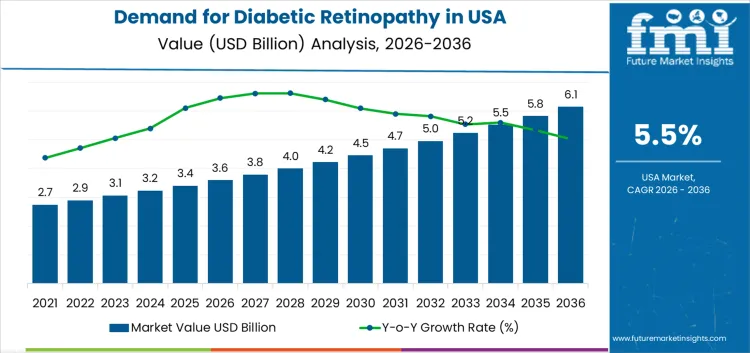
What is the Growth Forecast for Diabetic Retinopathy Industry in USA through 2036?
The growth contribution index for diabetic retinopathy demand in the United States reflects inputs from screening activity, disease prevalence, and diagnostic technology adoption. Baseline contribution comes from the rising number of individuals with diabetes who require periodic retinal evaluation to monitor microvascular changes. This factor maintains steady influence because clinical guidelines recommend routine imaging across primary care and ophthalmology settings. Screening program expansion contributes an additional share as health systems integrate structured pathways that increase examination frequency and coverage.
Imaging technology adoption contributes a rising portion of growth because optical coherence tomography and fundus photography systems support earlier detection and more detailed evaluation. These tools increase diagnostic throughput, which strengthens their contribution to overall demand. Teleophthalmology services contribute another measurable share by extending access to underserved settings and enabling remote image interpretation. This component elevates the index through higher screening penetration.
Awareness initiatives within endocrine and primary care environments contribute a smaller yet consistent share by improving referral rates for at-risk patients. Treatment monitoring needs add further contribution because patients receiving intravitreal therapy require repeated imaging to assess response. The index reflects distributed contributions shaped by disease burden, screening infrastructure, and diagnostic capability across domestic care settings.
USA Diabetic Retinopathy Key Takeaways
| Metric | Value |
|---|---|
| USA Diabetic Retinopathy Sales Value (2026) | USD 3.6 billion |
| USA Diabetic Retinopathy Forecast Value (2036) | USD 6.1 billion |
| USA Diabetic Retinopathy Forecast CAGR (2026-2036) | 5.5% |
Why is the Demand for Diabetic Retinopathy Care in USA Growing?
Demand for diabetic retinopathy care in the United States rises due to increasing diabetes prevalence, earlier onset of type 2 diabetes, and higher rates of chronic disease complications. A growing population of adults living with longstanding diabetes increases the number of individuals requiring routine retinal examinations, diagnostic imaging, and treatment. Primary care networks expand screening referrals as clinical guidelines emphasize early detection to prevent vision loss. Aging demographics contribute to a larger pool of patients with cumulative vascular damage that affects retinal health.
Hospitals and ophthalmology practices report higher utilization of optical coherence tomography and fundus imaging due to broader insurance coverage and standardized screening protocols. Endocrinology centers incorporate eye health monitoring into disease management programs that track complications across multiple organ systems. Teleophthalmology platforms extend screening access to rural and underserved regions, which increases overall diagnostic volumes. Therapeutic advances in anti VEGF injections and laser procedures create sustained follow up requirements. Public health outreach campaigns promote awareness of visual complications linked to uncontrolled glucose levels, leading to higher participation in preventive eye examinations across diverse patient groups.
Which Type and Management Segments Lead Demand for Diabetic Retinopathy Care in USA?
Demand for diabetic retinopathy care in the USA is shaped by disease prevalence, screening frequency, and the need for timely intervention to prevent vision loss. Providers rely on diagnostic imaging, therapeutic injections, and surgical procedures to manage disease progression. Adoption patterns reflect severity distribution, treatment effectiveness, and clinical protocols across ophthalmology practices and hospital-based retinal services.
By Type, Proliferative Diabetic Retinopathy Accounts for the Largest Share of Demand
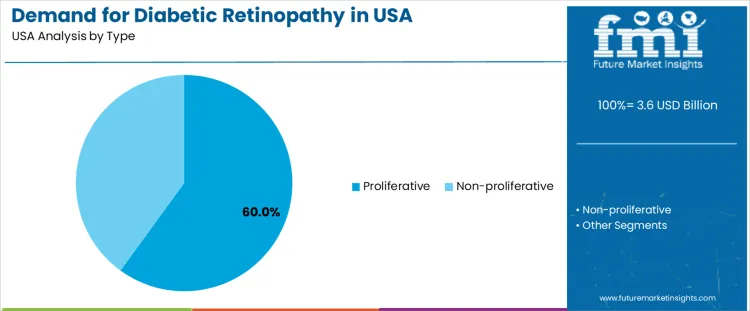
Proliferative diabetic retinopathy holds 60.0%, making it the leading type segment in USA demand. This stage involves abnormal vascular growth that significantly increases the risk of hemorrhage and retinal detachment, driving higher treatment intensity and frequent monitoring. Non-proliferative diabetic retinopathy holds 40.0%, representing earlier-stage disease that still requires structured surveillance and targeted intervention to prevent progression. Type distribution reflects disease burden, severity patterns across diabetic populations, and clinical requirements for advanced retinal-care management.
Key Points:
- Proliferative disease drives higher treatment intensity.
- Non-proliferative forms require ongoing monitoring to prevent progression.
- Distribution aligns with severity-related intervention needs.
- Resource use increases with advanced retinal damage.
By Management, Anti-VEGF Therapy Represents the Largest Segment
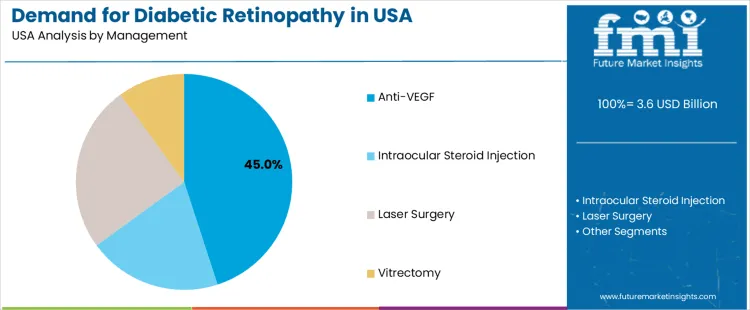
Anti-VEGF therapy holds 45.0%, making it the leading management approach in USA diabetic retinopathy care. These injections reduce neovascularization, stabilize retinal swelling, and support vision preservation across proliferative and advanced non-proliferative cases. Laser surgery holds 25.0%, used to seal leaking vessels and prevent further retinal damage. Intraocular steroid injections hold 20.0%, supporting inflammation control and edema reduction where VEGF-driven pathways are less dominant. Vitrectomy holds 10.0%, reserved for severe complications such as vitreous hemorrhage or tractional detachment. Management distribution reflects treatment effectiveness, clinical guidelines, and disease-stage requirements.
Key Points:
- Anti-VEGF therapy is central to managing neovascular growth.
- Laser surgery supports vessel stabilization and edema control.
- Steroid injections address inflammation-driven complications.
- Vitrectomy is used for advanced structural damage.
What are the Key Dynamics in the Diabetic Retinopathy Industry?
Rising diabetes prevalence, expanded screening activity, and improved clinical management pathways are driving demand.
Demand increases as the USA reports growing incidence of type 2 diabetes across adult and ageing populations, which elevates the volume of patients requiring routine retinal evaluation. Primary care networks refer more individuals for dilated eye exams as part of chronic disease management protocols. Endocrinology practices integrate retinal screening into annual care plans to support early-stage detection. Ophthalmology centres manage higher caseloads of non-proliferative and proliferative conditions that require structured monitoring. Public health programs emphasize early identification to reduce vision-loss risk. Insurers promote preventive screenings that align with quality-of-care metrics. Tele-screening initiatives extend diagnostic access across underserved regions.
Screening gaps, treatment costs, and capacity constraints restrain timely utilization.
Several communities experience limited access to retinal specialists, which delays diagnostic confirmation and follow-up. Patients with limited insurance coverage encounter out-of-pocket costs for imaging and anti-VEGF injections. Clinics face workflow strain when managing growing demand for optical coherence tomography imaging and laser sessions. Rural areas report logistical challenges for regular monitoring visits. Health systems with constrained staffing reduce appointment availability for chronic eye conditions. Transportation barriers affect patients requiring repeated treatment cycles. Variability in diabetes control across populations influences progression rates, which increases burden on clinical services in high-risk areas.
Tele-ophthalmology adoption, advanced imaging, and injectable therapy evolution shape current trends.
US health systems expand deployment of tele-retinal screening programs that capture fundus images in primary care and community clinics. Ophthalmology centres invest in higher-resolution OCT devices that improve detection of microaneurysms and macular oedema. Anti-VEGF treatment schedules evolve with longer-acting formulations that reduce visit frequency. AI-assisted image interpretation supports rapid triage and consistent grading. Public health initiatives encourage integration of retinal screening into diabetes care pathways. Pharmacy-based screening pilots gain attention for improving outreach. Clinical trials explore adjunctive therapies that may change long-term management patterns across diabetic eye care networks.
Analysis of the Demand for Diabetic Retinopathy Care in the USA by Region
Demand for diabetic retinopathy care in the USA is rising due to expanding diabetic populations, increased screening participation, and broader adoption of diagnostic imaging for early detection. West USA records a CAGR of 6.3% supported by strong outpatient networks and high screening frequency. South USA shows a 5.7% CAGR driven by rising diabetes prevalence and expanding access to eye-care services. Northeast USA posts a 5.1% CAGR due to dense specialty-care infrastructure and structured screening programs. Midwest USA holds a 4.4% CAGR supported by stable clinical capacity and routine management of diabetes-linked eye conditions.
| Region | CAGR (2026-2036) |
|---|---|
| West USA | 6.3% |
| South USA | 5.7% |
| Northeast USA | 5.1% |
| Midwest USA | 4.4% |
How is the West USA driving demand for Diabetic Retinopathy Care?
West USA drives demand through its extensive outpatient and specialty-care networks that provide regular retinal examinations, imaging, and treatment services. The region’s CAGR of 6.3% reflects strong participation in screening programs supported by community clinics and integrated health systems. Advanced diagnostic imaging, including OCT and fundus photography, is widely used for early detection of retinal changes. Large diabetic populations across urban centers support continuous monitoring requirements. Research-driven eye-care facilities contribute to ongoing adoption of updated diagnostic protocols. Preventive-care initiatives maintain steady patient flow for routine retinal assessments.
- Strong outpatient and specialty-care availability
- Widespread use of advanced retinal imaging
- High screening participation across urban centers
- Preventive programs supporting routine evaluation
How is the South USA driving demand for Diabetic Retinopathy Care?
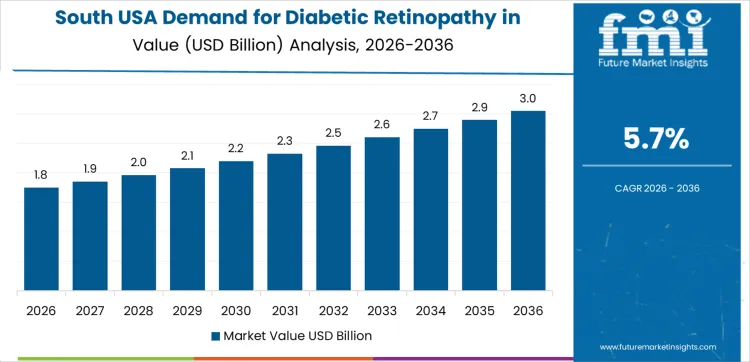
South USA supports rising demand due to higher diabetes prevalence and expanding access to ophthalmology and optometry services. The region’s CAGR of 5.7% reflects routine screening efforts within primary-care and community-health networks. Outpatient clinics perform consistent diagnostic imaging for early identification of retinal damage. Large patient volumes in chronic-disease programs contribute to steady monitoring and follow-up visits. Health systems integrate diabetic retinopathy evaluations into broader diabetes-management pathways. Regional demand stays strong due to a growing population requiring regular eye-care assessments.
- Higher diabetes prevalence driving frequent screenings
- Routine imaging across outpatient and community clinics
- Stable follow-up volumes in chronic-care programs
- Integration of retinal assessments into diabetes management
How is the Northeast USA driving demand for Diabetic Retinopathy Care?
Northeast USA drives demand due to its dense clinical ecosystem with strong specialty-care capacity and structured population-health programs. The region’s CAGR of 5.1% reflects continuous use of retinal imaging, diagnostic evaluations, and specialist oversight. Academic medical centers maintain high procedure volumes for early and moderate disease stages. Screening protocols in primary-care networks support consistent referral activity. Institutional programs emphasize monitoring for at-risk groups, sustaining steady diagnostic throughput. Community-health campaigns encourage routine screening among diabetic populations.
- Dense specialty-care and academic medical networks
- Strong referral pathways supporting imaging demand
- Institutional focus on early detection programs
- Consistent screening activity across metropolitan areas
How is the Midwest USA driving demand for Diabetic Retinopathy Care?
Midwest USA maintains stable demand due to its broad hospital and clinic network managing large diabetic populations. The region’s CAGR of 4.4% reflects ongoing use of retinal assessments, diagnostic imaging, and treatment follow-up. Community clinics conduct routine screenings to identify early-stage retinal changes. Regional health systems integrate diabetic retinopathy management into primary diabetes care. Outpatient services maintain predictable volumes of imaging and monitoring appointments. Engagement with chronic-disease programs supports long-term evaluation needs.
- Broad access to clinics and hospital-based eye care
- Routine monitoring across chronic-disease programs
- Ongoing use of advanced imaging for diagnostic screening
- Stable follow-up volumes across outpatient services
What is the competitive landscape of the demand for diabetic retinopathy treatments in the USA?
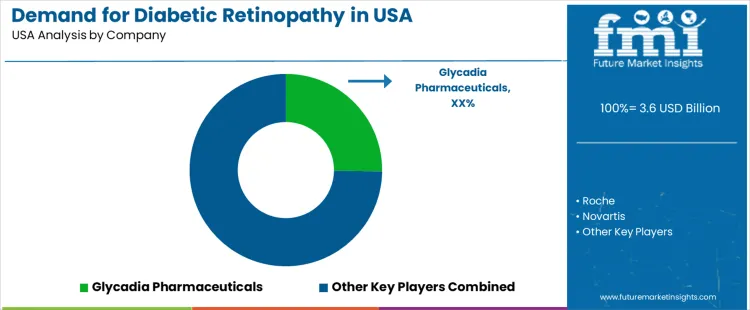
Demand for diabetic retinopathy treatments in the USA is shaped by rising diabetes prevalence, increasing screening rates, and broader adoption of pharmaceutical and biologic therapies designed to manage retinal vascular damage. Providers evaluate therapeutic durability, dosing frequency, safety profiles, and compatibility with established ophthalmic treatment pathways. Procurement teams consider clinical evidence, formulation stability, distribution reliability, and support programs that assist retinal specialists managing chronic disease progression. Adoption patterns reflect sustained use of anti-VEGF agents, emerging metabolic therapies, and continued reliance on validated ophthalmic protocols.
Glycadia Pharmaceuticals holds a leading position driven by development efforts focused on metabolic pathways associated with diabetic microvascular complications and growing interest from clinics seeking adjunctive treatment approaches. Roche participates through ophthalmic biologics widely used to manage macular edema linked to diabetic retinopathy. Novartis maintains strong visibility with anti-VEGF therapies backed by long-standing clinical adoption across retinal practices. Bayer AG contributes via biologics integrated into routine ophthalmology workflows requiring reliable vascular stabilization. Regeneron Pharmaceuticals supports demand with established monoclonal antibody therapies known for reducing retinal edema and improving visual outcomes. Competitive positioning in the United States reflects clinical efficacy, dosing convenience, safety oversight, and distribution reach supporting chronic retinal disease management.
Key Players in USA Diabetic Retinopathy Demand
- Glycadia Pharmaceuticals
- Roche
- Novartis
- Bayer AG
- Regeneron Pharmaceuticals
Scope of the Report
| Items | Values |
|---|---|
| Quantitative Units | USD billion |
| Type | Proliferative, Non-proliferative |
| Management | Anti-VEGF, Intraocular Steroid Injection, Laser Surgery, Vitrectomy |
| Regions Covered | West USA, South USA, Northeast USA, Midwest USA |
| Key Companies Profiled | Glycadia Pharmaceuticals, Roche, Novartis, Bayer AG, Regeneron Pharmaceuticals |
| Additional Attributes | Dollar sales by type and management approach; regional treatment adoption patterns across West, South, Northeast, and Midwest USA; increasing utilization of anti-VEGF therapies and minimally invasive vitrectomy; technological developments in retinal imaging, laser photocoagulation, and injectable biologics; competitive landscape shaped by biologic drug manufacturers and emerging ophthalmic therapy developers; integration of AI-supported diagnostics and tele-ophthalmology programs for early detection and monitoring. |
USA Diabetic Retinopathy Demand by Segments
Type:
- Proliferative
- Non-proliferative
Management:
- Anti-VEGF
- Intraocular Steroid Injection
- Laser Surgery
- Vitrectomy
Region:
- West USA
- South USA
- Northeast USA
- Midwest USA
Frequently Asked Questions
How big is the demand for diabetic retinopathy in USA in 2026?
The demand for diabetic retinopathy in USA is estimated to be valued at USD 3.6 billion in 2026.
What will be the size of diabetic retinopathy in USA in 2036?
The market size for the diabetic retinopathy in USA is projected to reach USD 6.1 billion by 2036.
How much will be the demand for diabetic retinopathy in USA growth between 2026 and 2036?
The demand for diabetic retinopathy in USA is expected to grow at a 5.5% CAGR between 2026 and 2036.
What are the key product types in the diabetic retinopathy in USA?
The key product types in diabetic retinopathy in USA are proliferative and non-proliferative.
Which management segment is expected to contribute significant share in the diabetic retinopathy in USA in 2026?
In terms of management, anti-vegf segment is expected to command 45.0% share in the diabetic retinopathy in USA in 2026.
Preview the report firsthand - request a free sample
Get SampleGet the brochure for pricing and purchase details.
Get PDFTable of Content
- Executive Summary
- USA Market Outlook
- Demand-side Trends
- Supply-side Trends
- Technology Roadmap Analysis
- Analysis and Recommendations
- Market Overview
- Market Coverage / Taxonomy
- Market Definition / Scope / Limitations
- Market Background
- Market Dynamics
- Drivers
- Restraints
- Opportunity
- Trends
- Scenario Forecast
- Demand in Optimistic Scenario
- Demand in Likely Scenario
- Demand in Conservative Scenario
- Opportunity Map Analysis
- Product Life Cycle Analysis
- Supply Chain Analysis
- Investment Feasibility Matrix
- Value Chain Analysis
- PESTLE and Porter’s Analysis
- Regulatory Landscape
- Regional Parent Market Outlook
- Production and Consumption Statistics
- Import and Export Statistics
- Market Dynamics
- USA Market Analysis 2020 to 2024 and Forecast, 2025 to 2035
- Historical Market Size Value (USD Million) Analysis, 2020 to 2024
- Current and Future Market Size Value (USD Million) Projections, 2025 to 2035
- Y-o-Y Growth Trend Analysis
- Absolute $ Opportunity Analysis
- USA Market Pricing Analysis 2020 to 2024 and Forecast 2025 to 2035
- USA Market Analysis 2020 to 2024 and Forecast 2025 to 2035, By Type
- Introduction / Key Findings
- Historical Market Size Value (USD Million) Analysis By Type , 2020 to 2024
- Current and Future Market Size Value (USD Million) Analysis and Forecast By Type , 2025 to 2035
- Proliferative
- Non-proliferative
- Y-o-Y Growth Trend Analysis By Type , 2020 to 2024
- Absolute $ Opportunity Analysis By Type , 2025 to 2035
- USA Market Analysis 2020 to 2024 and Forecast 2025 to 2035, By Management
- Introduction / Key Findings
- Historical Market Size Value (USD Million) Analysis By Management, 2020 to 2024
- Current and Future Market Size Value (USD Million) Analysis and Forecast By Management, 2025 to 2035
- Anti-VEGF
- Intraocular Steroid Injection
- Laser Surgery
- Vitrectomy
- Y-o-Y Growth Trend Analysis By Management, 2020 to 2024
- Absolute $ Opportunity Analysis By Management, 2025 to 2035
- Market Structure Analysis
- Competition Dashboard
- Competition Benchmarking
- Market Share Analysis of Top Players
- By Regional
- By Type
- By Management
- Competition Analysis
- Competition Deep Dive
- Glycadia Pharmaceuticals
- Overview
- Product Portfolio
- Profitability by Market Segments (Product/Age /Sales Channel/Region)
- Sales Footprint
- Strategy Overview
- Marketing Strategy
- Product Strategy
- Channel Strategy
- Roche
- Novartis
- Bayer AG
- Regeneron Pharmaceuticals
- Glycadia Pharmaceuticals
- Competition Deep Dive
- Assumptions & Acronyms Used
- Research Methodology


