

- Industry Size (2025)
- USD 2.3 Bn
- Forecast (2035)
- USD 6.5 Bn
- CAGR (2025 to 2035)
- 10.8%
Demand for Digital Journal Apps in USA 2025 to 2035
Demand for digital journal apps in the USA is valued at USD 2.3 billion in 2025 and is projected to reach USD 6.5 billion by 2035, reflecting a CAGR of 10.8%. Growth is driven by rising adoption of self-care habits, seamless digital documentation, and mental wellness tracking. Cloud synchronization, mood analytics, and secure storage enhance user engagement across personal productivity and wellness routines.
Android leads platform adoption due to a broad device ecosystem and accessibility across cost-effective smartphones. Enhanced personalization features, offline editing, and cross-platform backup increase platform stickiness. Monetization models center on premium content, advanced analytics, and subscription-based customization tools that support long-term user retention.
Quick Stats for USA Digital Journal Apps Demand
- USA Digital Journal Apps Sales Value (2025): USD 2.3 billion
- USA Digital Journal Apps Forecast Value (2035): USD 6.5 billion
- USA Digital Journal Apps Forecast CAGR (2025 to 2035): 10.8%
- Leading Platform in USA Digital Journal Apps Demand: Android
- Key Growth Regions in USA Digital Journal Apps Demand: West USA, South USA, Northeast USA
- Top Players in USA Digital Journal Apps Demand: Day One, Penzu, Journey, Reflectly, Daylio
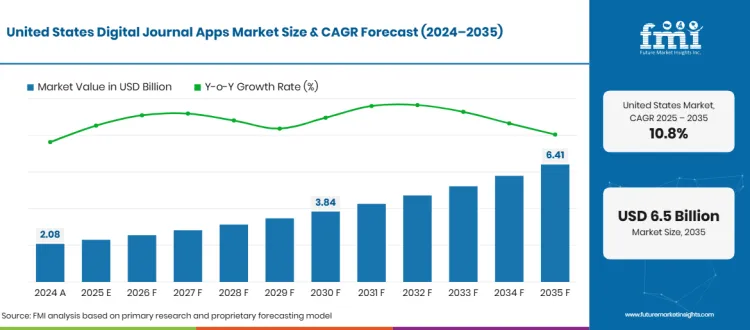
What is the Growth Forecast for Digital Journal Apps Industry in USA through 2035?
The West, South, and Northeast regions show higher uptake driven by strong smartphone penetration and tech-enabled lifestyle preferences. Key players include Day One, Penzu, Journey, Reflectly, and Daylio. Their strategies focus on privacy-focused design, AI-enabled journaling prompts, and integration with wearable health ecosystems to support mental wellness and continuous lifestyle documentation.
Demand for digital journal apps in the United States is driven primarily by adoption of mental wellness, continuous upgrades to mobile operating systems, and the integration of secure cloud storage. Journaling serves as a self-care habit tied to stress management and behavioral health, providing the category with a stable psychological utility. The influence of productivity platforms, smartphone penetration, and AI-enabled personalization increases incremental user value and encourages paid subscriptions.
Secondary contributors include educational, creative writing, and data-driven habit-tracking applications. Enterprise-level purchases remain limited, keeping expansion consumer-focused. Marketing spend targets younger demographics who prefer digital expression over paper-based notebooks. Privacy compliance and end-to-end encryption strengthen trust, sustaining retention. Challenges arise when free basic versions satisfy casual users, lowering conversion to premium tiers.
Growth stems from a combination of health-oriented and productivity-driven motivations, not from rapid hardware cycles. Developers enhance mood tracking, multimedia input, and cross-device sync, which supports continuous but controlled expansion.
USA Digital Journal Apps Key Takeaways
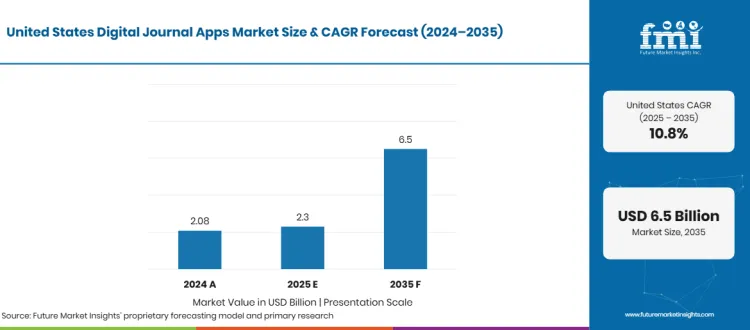
| Metric | Value |
|---|---|
| USA Digital Journal Apps Sales Value (2025) | USD 2.3 billion |
| USA Digital Journal Apps Forecast Value (2035) | USD 6.5 billion |
| USA Digital Journal Apps Forecast CAGR (2025-2035) | 10.8% |
Why is the Demand for Digital Journal Apps in the USA Growing?
Demand for digital journal apps in the USA is increasing because many individuals seek convenient, private and portable tools for tracking daily thoughts, mental health, goals and productivity. Smartphones and tablets make app-based journaling accessible anytime, which replaces the need for traditional paper notebooks that are bulky or easy to misplace. Mental wellness awareness and growing interest in self-care encourage more people, including students, working adults and caregivers, to adopt journaling as a tool for reflection and emotional regulation. Individuals recovering from stress or managing anxiety use apps that support reminders, mood tracking and secure data storage.
Remote work, travel, and busy lifestyles also drive demand. People value digital journals for the flexibility to quickly type, record voice notes, or add images instead of penning long entries. Syncing across devices and auto-backup features provide added security for personal records. Productivity and self-improvement communities encourage journaling for habit tracking, goal setting and performance monitoring, which supports steady use and application retention over time. Constraints include privacy concerns related to data storage, subscription cost for advanced features and app fatigue when users feel overwhelmed by digital tools. Some individuals prefer traditional writing methods or resist digital commitment.
Which Platforms and Applications Lead Demand for Digital Journal Apps in the USA?
Demand for digital journal apps in the United States is driven by personal well-being priorities, productivity enhancement, and secure memory-keeping habits. Users value synchronization, privacy controls, multi-device access, and customizable templates. Growth aligns with lifestyle tracking, mental wellness support, and creative self-expression through structured or free-form digital entries. Subscription models and cloud backup availability influence platform preferences among students, working professionals, and therapeutic users seeking routine organization and reflection.
By Platform, Android Holds the Largest Share
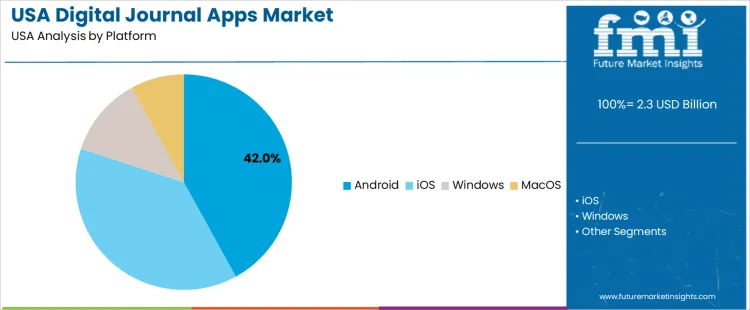
Android represents 42.0%. The adoption reflects device penetration across diverse income groups and strong availability of both free and premium journaling apps. Customization flexibility within Android’s open ecosystem supports writing extensions, widget shortcuts, and stylus interaction. iOS holds 38.0%, connected to loyal adoption within productivity-focused and wellness-driven consumers seeking seamless continuity across Apple devices. Windows accounts for 12.0%, used within school and office environments requiring structured journaling and archive organization. MacOS holds 8.0%, specialized in creative and academic use where writing software integration supports long-form reflection. Platform selection relates to device ecosystems, affordability, accessibility, and cross-platform storage needs in the United States.
Key Points:
- Android leads due to broad device penetration and app variety
- iOS aligns with secure and integrated personal workflow usage
- Computer operating systems meet structured writing requirements
By Application, Mobile Phones Represent the Largest Share
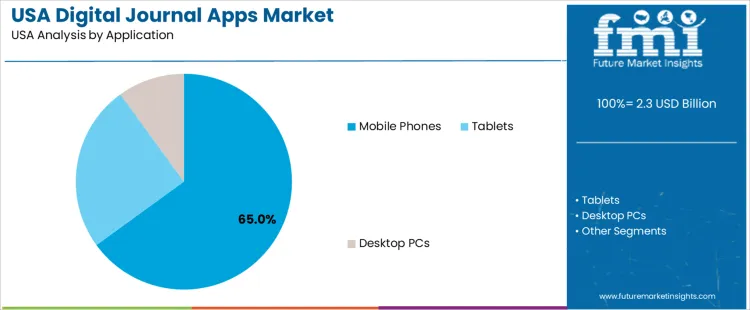
Mobile phones hold 65.0%. This reflects everyday journaling habits centered on portability, quick entry logging, and instant prompts for mood or milestone tracking. Tablets account for 25.0%, preferred for handwriting recognition and larger displays that support creative journaling, vision boards, and therapeutic reflection sessions. Desktop PCs represent 10.0%, applied in organized documentation and professional note-keeping. Application choices align with convenience, interaction interface preferences, and responsiveness to emotional or experiential entries that occur during everyday mobility.
Key Points:
- Mobile phones support frequent, convenience-focused journaling
- Tablets assist expressive layouts and stylus-based writing
- Desktop systems serve structured and archival documentation needs
What are the Key Dynamics in the Digital Journal Apps Industry?
Growth of mental wellness engagement, rising smartphone usage among young adults and expanding productivity routines drive demand.
In the United States, many individuals use journaling as part of daily mental health management, goal setting and emotional organization. Digital journal apps provide structured prompts and privacy features that appeal to users seeking personal development without traditional notebooks. College students and early-career professionals adopt journaling tools that integrate with calendars and reminder systems to support time management and study habits. Therapists and wellness coaches encourage reflective writing practices during remote sessions, strengthening subscription participation. App stores highlight journaling within categories related to mindfulness and self-care, creating steady visibility for new users exploring digital wellness tools. These factors support consistent growth of journaling apps across a range of age groups.
Subscription fatigue, data privacy concerns and limited long-term engagement restrain demand.
Consumers evaluate recurring app costs carefully, especially when multiple wellness and productivity platforms compete for monthly spending. Some users question data handling practices that involve personal emotional entries stored on cloud-based systems. Engagement may decline after initial enthusiasm, reducing retention rates and slowing premium upgrade revenue. Corporate productivity policies do not always integrate external personal apps into daily workflow, limiting cross-use in workplace settings. These considerations reduce the pace of expansion among cost-sensitive and privacy-focused users.
Shift toward guided therapeutic features, increased integration with wearable devices and rising adoption of AI-assisted writing support define key trends.
Developers add mood tracking, sleep insights and reflective prompts that align journaling with measurable wellness outcomes. Wearable device connectivity enables automated capture of activity, heart rate and stress indicators that appear in daily journal entries. AI writing support assists users who struggle to begin entries by offering topic suggestions, tone options and pattern insights over time. Encrypted local storage and optional offline modes gain importance as a response to privacy expectations. Educational institutions and employee wellness programs introduce journaling app access as part of mental health initiatives. These developments indicate continued demand for digital journal apps in the United States supported by self-care practices, productivity habits and expanding app-based wellness ecosystems.
Analysis of the Demand for Digital Journal Apps in the USA by Region
Demand for digital journal apps in the United States rises as consumers adopt structured self-tracking habits that support productivity, mental wellness, and memory organization. Subscription-based journaling platforms integrate cloud storage, mood-tracking dashboards, and AI-generated prompts tailored to individual routines. Interest grows among students, remote workers, therapy participants, and personal-development users.
West USA leads with 12.5% CAGR, South USA maintains 11.2%, Northeast USA shows 10.0%, and Midwest USA holds 8.7%. Usage patterns connect to smartphone penetration, digital-health participation, privacy expectations, and access to connected wellness ecosystems. App publishers prioritize end-to-end encryption, cross-device syncing, and accessibility features to match user expectations in regional digital-adoption environments.
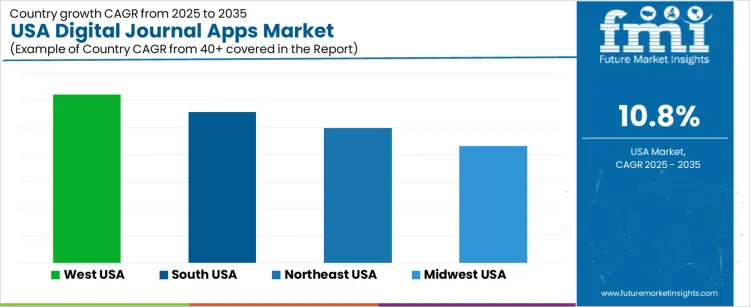
| Region | CAGR (2025-2035) |
|---|---|
| West USA | 12.5% |
| South USA | 11.2% |
| Northeast USA | 10.0% |
| Midwest USA | 8.7% |
How is the West USA driving demand for digital journal apps?
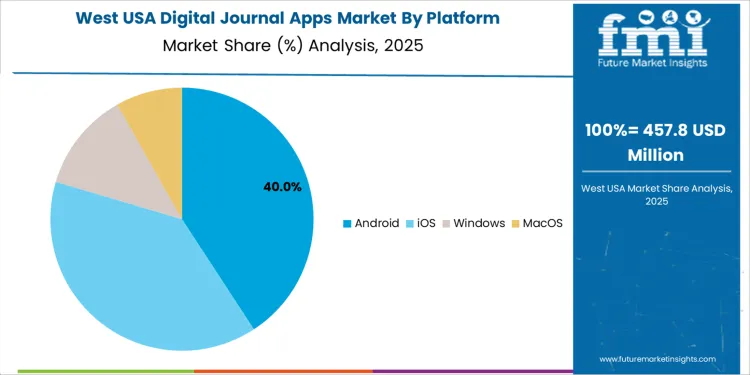
West USA records 12.5% CAGR, shaped by strong adoption of mobile wellness technologies in California and Washington. Digital-first users integrate journaling apps into productivity planning, sleep regulation, and mindfulness routines. Tech-savvy consumers expect AI-based behavior insights tied to mood, activity, and reflection patterns. Creative workers use journaling archives for idea development and content organization without paper clutter.
University communities maintain demand for structured note practices supporting academic organization. Regional data-protection awareness encourages selection of apps with robust privacy controls and local storage options. Investors and startups maintain focus on user-centric journaling innovations through immersive interfaces that include voice dictation, handwriting recognition, and multimedia capture. Subscription renewals remain strong due to continuous goal-tracking needs.
- AI-supported reflection tools improving user engagement
- University ecosystems influencing app adoption cycles
- Privacy-focused features guiding product preference
- Voice and media capture strengthening daily usage
How is the South USA shaping digital journaling behavior?
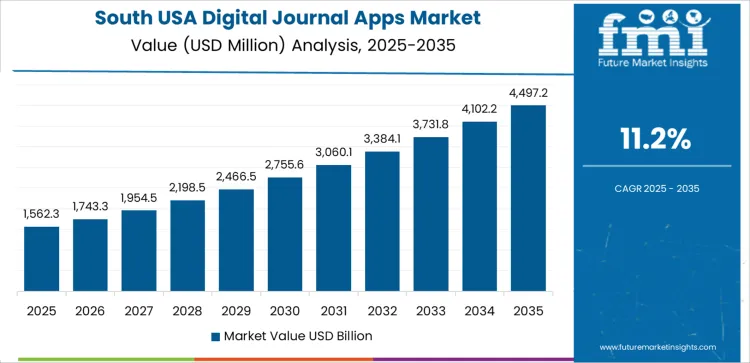
South USA achieves 11.2% CAGR, influenced by rising wellness-app adoption across Texas, Florida, and Georgia. Users track habit-formation progress within lifestyle-enhancement programs tied to fitness, nutrition, or therapy guidance. Families and young professionals maintain interest in journaling tools supporting emotional check-ins and goal reminders. Health practitioners suggest journaling for stress management, resulting in increased app familiarity among first-time users. Regional app purchases align with cost-efficient subscriptions and device-agnostic design for Android and iOS ecosystems. Tech distribution hubs in Dallas and Atlanta facilitate fast developer support across retail channels. Customer feedback highlights the significance of guided content templates for maintaining consistent writing routines.
- Habit-tracking features shaping recurring subscriptions
- Health-related usage promoting emotional documentation
- Cost-efficient pricing motivating conversion rates
- Android-friendly access aiding wider reach across device types
How is the Northeast USA influencing demand?
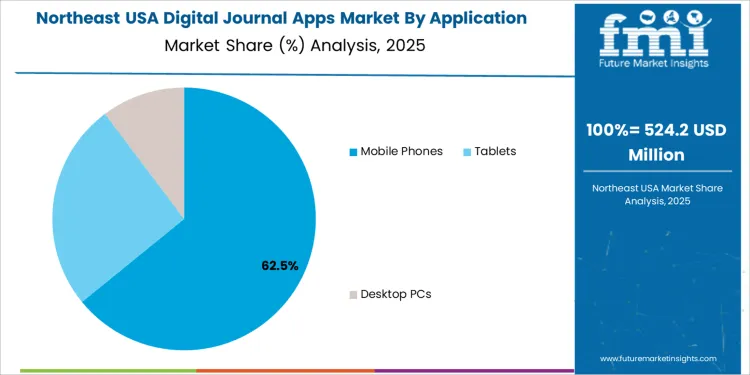
Northeast USA grows at 10.0% CAGR, driven by dense clusters of students, urban professionals, and therapy-focused digital-health users across New York, New Jersey, and Massachusetts. Reflective writing remains popular for managing workload pressure and documenting personal achievements. Consumers show preference for apps providing offline writing modes in commuter environments. Corporate wellbeing programs include journaling availability inside employee mental-health portals, generating enterprise licensing demand. Designers and writers rely on searchable archival functions that preserve creative content for future development. Procurement evaluation highlights brand transparency on data handling and encryption. Journaling streak gamification supports ongoing participation in high-stress metropolitan lifestyles.
- Workforce wellbeing programs contributing to uptake
- Creative sectors requiring searchable content storage
- Data transparency influencing platform selection
- Offline access supporting journaling during commutes
How is the Midwest USA maintaining app-adoption growth?
Midwest USA posts 8.7% CAGR, supported by mental-wellness initiatives and personal-productivity improvement across Illinois, Ohio, and Michigan. Public libraries and community centers promote journaling practices during digital-education programs. App users value customizable reminders that reinforce planning habits throughout workdays. Home-focused routines strengthen app usage among caregivers and individuals managing multigenerational responsibilities. Regional pricing sensitivity favors free-to-use tiers that allow gradual feature upgrades. Developers enhance onboarding guidance to support users new to wellness-tracking interfaces. Distribution relies on word-of-mouth channels, school communities, and social-wellbeing campaigns encouraging self-expression and routine building.
- Reminder tools strengthening accountability habits
- Entry-level pricing enabling wider adoption
- Digital-education efforts introducing wellness journaling
- Household organization influencing consistent use
What is the competitive landscape of the demand for digital journal apps in the United States?
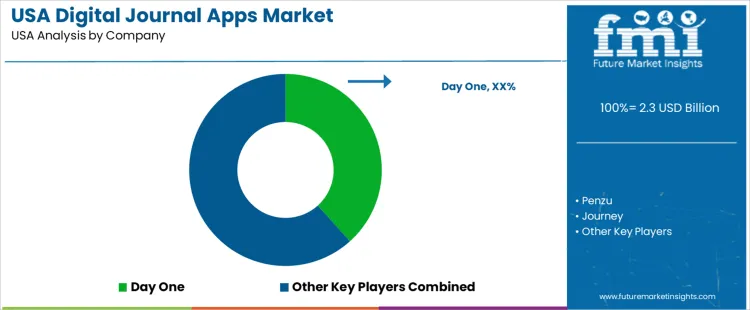
Demand for digital journal apps in the United States aligns with personal wellness, therapy support, productivity routines, and data-tracking habits. Users expect privacy controls, cross-device sync, offline access, and secure cloud storage that prevents unauthorized exposure of personal entries. Subscription pricing, data export options, and user interface clarity influence adoption among both iOS and Android audiences.
Day One holds an estimated 38.3% share based on strong integration across Apple platforms, encryption features, and long-term credibility among journaling users who value secure documentation of personal memories. Penzu targets individuals requiring password protection, simple browser access, and minimal design that resembles traditional diary formats used for private writing. Journey supplies structured templates and multimedia support suited to users documenting fitness, travel, and guided reflection routines.
Reflectly focuses on mood-tracking functionality powered by guided prompts that serve mental-wellness goals. Adoption comes from younger demographics that prefer conversational inputs. Daylio centers on icons and quick logging without keyboard use, appealing to users who monitor emotional trends rather than writing extended entries. These functional differences reduce direct overlap among user bases and shape retention. Key competitive levers involve privacy architecture, multi-year data continuity, voice-to-text capability, and friction-free daily capture. Providers offering secure synchronization, flexible layouts, and habit-support tools maintain stronger positioning within USA demand for digital journaling solutions.
Key Players in USA Digital Journal Apps Demand
- Day One
- Penzu
- Journey
- Reflectly
- Daylio
Scope of the Report
| Items | Values |
|---|---|
| Quantitative Units | USD billion |
| Platform | Android, iOS, Windows, MacOS |
| Application | Mobile Phones, Tablets, Desktop PCs |
| Services | Freemium Services, Premium Services |
| Regions Covered | West USA, South USA, Northeast USA, Midwest USA |
| Key Companies Profiled | Day One, Penzu, Journey, Reflectly, Daylio |
| Additional Attributes | Dollar sales by service tier, platform, and device category; regional subscription behavior across West, South, Northeast, and Midwest USA; user engagement trends in wellness-driven journaling, mental health tracking, and productivity enhancements; competitive differentiation through encryption, AI-driven reflection prompts, and cloud syncing; monetization mix shifting from one-time upgrades to subscription-based retention models. |
USA Digital Journal Apps Demand by Segments
Platform:
- Android
- iOS
- Windows
- MacOS
Application:
- Mobile Phones
- Tablets
- Desktop PCs
Services:
- Freemium Services
- Premium Services
Region:
- West USA
- South USA
- Northeast USA
- Midwest USA
Frequently Asked Questions
How big is the demand for digital journal apps in USA in 2025?
The demand for digital journal apps in USA is estimated to be valued at USD 2.3 billion in 2025.
What will be the size of digital journal apps in USA in 2035?
The market size for the digital journal apps in USA is projected to reach USD 6.5 billion by 2035.
How much will be the demand for digital journal apps in USA growth between 2025 and 2035?
The demand for digital journal apps in USA is expected to grow at a 10.8% CAGR between 2025 and 2035.
What are the key product types in the digital journal apps in USA?
The key product types in digital journal apps in USA are android, ios, windows and macos.
Which application segment is expected to contribute significant share in the digital journal apps in USA in 2025?
In terms of application, mobile phones segment is expected to command 65.0% share in the digital journal apps in USA in 2025.
Preview the report firsthand - request a free sample
Get SampleGet the brochure for pricing and purchase details.
Get PDFTable of Content
- Executive Summary
- USA Market Outlook
- Demand-side Trends
- Supply-side Trends
- Technology Roadmap Analysis
- Analysis and Recommendations
- Market Overview
- Market Coverage / Taxonomy
- Market Definition / Scope / Limitations
- Market Background
- Market Dynamics
- Drivers
- Restraints
- Opportunity
- Trends
- Scenario Forecast
- Demand in Optimistic Scenario
- Demand in Likely Scenario
- Demand in Conservative Scenario
- Opportunity Map Analysis
- Product Life Cycle Analysis
- Supply Chain Analysis
- Investment Feasibility Matrix
- Value Chain Analysis
- PESTLE and Porter’s Analysis
- Regulatory Landscape
- Regional Parent Market Outlook
- Production and Consumption Statistics
- Import and Export Statistics
- Market Dynamics
- USA Market Analysis 2020 to 2024 and Forecast, 2025 to 2035
- Historical Market Size Value (USD Billion) Analysis, 2020 to 2024
- Current and Future Market Size Value (USD Billion) Projections, 2025 to 2035
- Y-o-Y Growth Trend Analysis
- Absolute $ Opportunity Analysis
- USA Market Pricing Analysis 2020 to 2024 and Forecast 2025 to 2035
- USA Market Analysis 2020 to 2024 and Forecast 2025 to 2035, By Platform
- Introduction / Key Findings
- Historical Market Size Value (USD Billion) Analysis By Platform , 2020 to 2024
- Current and Future Market Size Value (USD Billion) Analysis and Forecast By Platform , 2025 to 2035
- Android
- iOS
- Windows
- MacOS
- Y-o-Y Growth Trend Analysis By Platform , 2020 to 2024
- Absolute $ Opportunity Analysis By Platform , 2025 to 2035
- USA Market Analysis 2020 to 2024 and Forecast 2025 to 2035, By Application
- Introduction / Key Findings
- Historical Market Size Value (USD Billion) Analysis By Application, 2020 to 2024
- Current and Future Market Size Value (USD Billion) Analysis and Forecast By Application, 2025 to 2035
- Mobile Phones
- Tablets
- Desktop PCs
- Y-o-Y Growth Trend Analysis By Application, 2020 to 2024
- Absolute $ Opportunity Analysis By Application, 2025 to 2035
- USA Market Analysis 2020 to 2024 and Forecast 2025 to 2035, By Services
- Introduction / Key Findings
- Historical Market Size Value (USD Billion) Analysis By Services, 2020 to 2024
- Current and Future Market Size Value (USD Billion) Analysis and Forecast By Services, 2025 to 2035
- Freemium Services
- Premium Services
- Y-o-Y Growth Trend Analysis By Services, 2020 to 2024
- Absolute $ Opportunity Analysis By Services, 2025 to 2035
- Market Structure Analysis
- Competition Dashboard
- Competition Benchmarking
- Market Share Analysis of Top Players
- By Regional
- By Platform
- By Application
- By Services
- Competition Analysis
- Competition Deep Dive
- Day One
- Overview
- Product Portfolio
- Profitability by Market Segments (Product/Age /Sales Channel/Region)
- Sales Footprint
- Strategy Overview
- Marketing Strategy
- Product Strategy
- Channel Strategy
- Penzu
- Journey
- Reflectly
- Daylio
- Day One
- Competition Deep Dive
- Assumptions & Acronyms Used
- Research Methodology


