

- Industry Size (2026)
- USD 45.9 Bn
- Forecast (2036)
- USD 77.7 Bn
- CAGR (2026 to 2036)
- 5.40%
Urban Logistic Services Market Forecast and Outlook 2026 to 2036
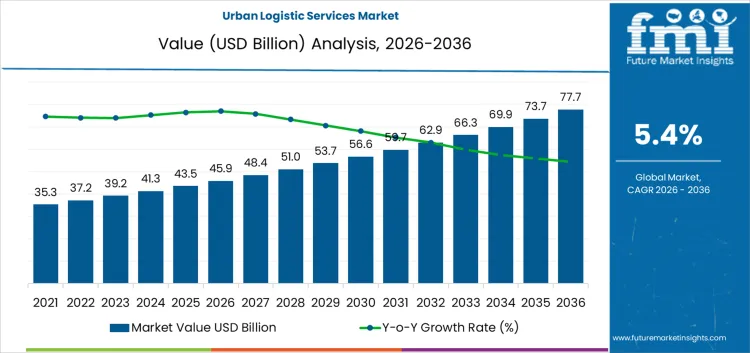
The global urban logistic services market is projected to reach USD 45.9 billion in 2026 and USD 77.7 billion by 2036, expanding at a CAGR of 5.40% between 2026 and 2036. The market is defined by a mix of service types and delivery models, all influenced by the dynamics of urbanization, technological advancements, and rising demand for e-commerce solutions. Cost structures in this sector are shaped by a combination of operational efficiency, technology investments, and infrastructure costs, with logistics providers focusing on optimizing delivery processes to reduce costs and improve service reliability.
Value capture in this space largely depends on the ability to control pricing through innovative, scalable delivery solutions that cater to growing urban demands. Companies with advanced route optimization technologies, flexible delivery models, and integrated urban logistics networks are best positioned to capture value. The margin concentration will be determined by how effectively players balance investment in technology against operational costs while meeting the increasing consumer demand for faster, more reliable deliveries.
Quick Stats for Urban Logistics Services Market
- Urban Logistics Services Market Value (2026): USD 45.9 Billion
- Urban Logistics Services Market Forecast Value (2036): USD 77.7 Billion
- Urban Logistics Services Market Forecast CAGR 2026 to 2036: 5.40%
- Leading Service Type in Urban Logistics Services: Last-Mile Parcel Delivery
- Key Growth Regions in Urban Logistics Services: Asia Pacific, Europe, North America
- Top Key Players in Urban Logistics Services Market: DHL, UPS, FedEx, DPDgroup, Amazon Logistics
Urban Logistic Services Market Key Takeaways
| Metric | Value |
|---|---|
| Industry Value (2026) | USD 45.9 Billion |
| Forecast Value (2036) | USD 77.7 Billion |
| Forecast CAGR 2026 to 2036 | 5.40% |
How is the Global Urban Logistic Services Market Advancing?
The global urban logistics services market is witnessing steady growth, driven by the increasing demand for efficient and reliable transportation solutions within densely populated urban areas. As e-commerce continues to expand, the need for reliable and faster last-mile delivery services has grown significantly. Urban logistics services, which encompass transportation, warehousing, and distribution solutions tailored to the unique challenges of urban environments, are crucial for optimizing the flow of goods in cities while minimizing congestion and environmental impact.
A key driver of this market is the rapid growth of e-commerce, which has led to a surge in demand for timely and efficient delivery services. Urban logistics services are increasingly being relied upon to ensure that goods can be delivered to consumers in cities within shorter time frames. As consumers demand faster and more flexible delivery options, logistics providers are turning to innovative solutions such as micro-distribution hubs, electric vehicles (EVs), and even drones to streamline the last-mile delivery process and reduce traffic congestion.
Environmental concerns and regulations are also influencing the growth of the urban logistics market. As cities around the world introduce stricter regulations on emissions and traffic congestion, there is a growing focus on adopting advanced logistics solutions. This includes the use of electric vehicles, cargo bikes, and smart technologies to optimize delivery routes and reduce carbon footprints. The integration of advanced technologies such as IoT, artificial intelligence, and machine learning is further enhancing the efficiency of urban logistics services by improving route planning, inventory management, and real-time tracking. With urban areas becoming more congested and the demand for efficient logistics services increasing, the urban logistics services market is expected to grow significantly over the next decade.
What is the Segment-Wise Analysis for the Urban Logistic Services Market?
The urban logistic services market is segmented by service type and delivery model. Last-mile parcel delivery leads the service type segment with a 42% share, followed by same-day or express, urban freight consolidation, returns or reverse logistics, and other services. These services are essential for efficient delivery in urban areas, ensuring that products reach customers quickly and reliably. In terms of delivery model, dedicated fleet holds a 34% share, with crowdsourced or gig, micro-fulfillment networks, and hybrid models also contributing to the market's growth.
Why Does Last-Mile Parcel Delivery Lead the Urban Logistic Services Market?
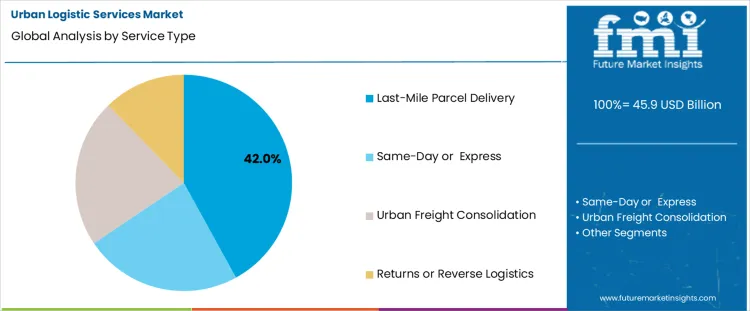
Last-mile parcel delivery leads the urban logistic services market with a 42% share due to its vital role in the final stage of the delivery process, where packages are brought directly to consumers' doorsteps. This service has become increasingly important as e-commerce continues to grow, and customers expect faster, more reliable delivery options. Last-mile delivery services are focused on optimizing delivery routes, reducing delivery times, and enhancing customer satisfaction. With the growing demand for quicker shipping and improved service, particularly in the retail sector, last-mile parcel delivery is essential for meeting consumer expectations. This has led to its dominance in the urban logistics market, as businesses strive to offer efficient and seamless deliveries in urban environments.
How Does the Dedicated Fleet Model Contribute to the Urban Logistic Services Market?
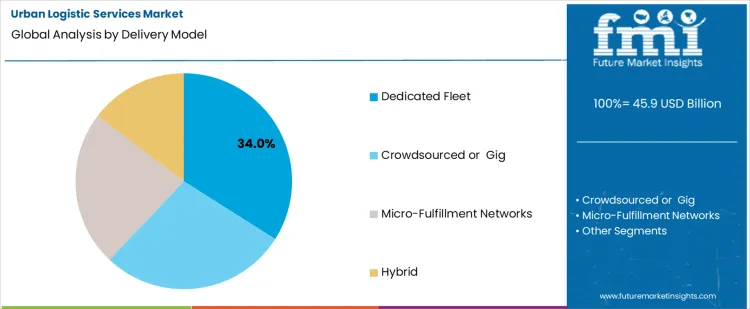
The dedicated fleet model holds a 34% share of the delivery model segment in the urban logistic services market. This model involves the use of a fleet of vehicles specifically assigned to certain logistics operations, which ensures more efficient and reliable deliveries. Dedicated fleets are particularly beneficial for businesses requiring high-volume, regular deliveries in urban areas. They help optimize delivery routes, reduce operational costs, and improve the consistency of service. As demand for timely deliveries increases, especially in e-commerce and retail sectors, dedicated fleets are becoming more essential. Their ability to offer predictable and streamlined logistics solutions continues to shape the urban logistics landscape, catering to the growing need for fast, reliable delivery services.
What Are the Key Dynamics for Urban Logistic Services?
Urban Logistic Services are increasingly driven by the rapid growth of urbanization, the rise of e-commerce, and the need for efficient last-mile delivery solutions in densely populated areas. The shift towards on-demand deliveries, driven by e-commerce giants and consumer preferences for faster, more convenient shipping options, is significantly shaping the urban logistics sector. Advancements in technology, such as real-time tracking, automation, and the use of electric vehicles (EVs) for delivery, are improving the efficiency and sustainability of urban logistics operations.
How Are the Key Drivers Shaping Urban Logistic Services?
The rising consumer expectation for faster delivery times is pushing logistics providers to innovate and streamline their services. The expansion of urban areas and the need for more sustainable transportation options are driving the adoption of electric vehicles, drones, and other alternative delivery methods, improving the environmental footprint of urban logistics. The development of smart cities, which integrate digital infrastructure with urban planning, is also facilitating the optimization of logistics services, including better traffic management, real-time data exchange, and improved fleet management.
What Are the Restraints Impacting Urban Logistic Services?
Traffic congestion in metropolitan areas remains a significant obstacle, leading to delays and higher operational costs. Regulatory restrictions, such as congestion charges, emission standards, and limited access to certain areas, can complicate last-mile delivery, especially with traditional diesel-powered vehicles. The high cost of adopting new technologies, including electric vehicles, autonomous delivery systems, and drones, can be a barrier for small and medium-sized logistics companies. Urban logistics companies must deal with issues related to the scalability of their operations and the ability to handle increasing volumes of deliveries without compromising service quality.
What is the Growth Outlook for the Urban Logistic Services Market by Country?
| Country | CAGR (%) |
|---|---|
| China | 6.8% |
| Brazil | 6.5% |
| USA | 5.2% |
| South Korea | 5.0% |
| Japan | 4.2% |
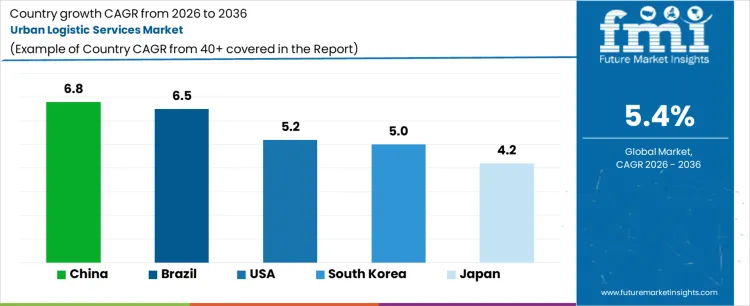
The urban logistics services market is growing steadily across key regions, with China leading at 6.8%, driven by rapid urbanization, e-commerce growth, and advancements in smart city infrastructure. Brazil follows closely at 6.5%, fueled by rising demand for efficient delivery services and improved transportation networks. The USA grows at 5.2%, supported by the expansion of e-commerce and the need for faster, cost-effective last-mile delivery. South Korea’s market grows at 5.0%, driven by technological innovations and infrastructure investments. Japan’s market, growing at 4.2%, is supported by urbanization, consumer demand for quick deliveries, and the adoption of advanced logistics technologies.
What is Driving the Growth of the Urban Logistic Services Market in China?
China’s urban logistics services market is growing at 6.8%, driven by the rapid expansion of urban areas, e-commerce, and digital transformation in logistics. As China’s cities continue to grow, the demand for efficient urban logistics solutions, including last-mile delivery, is increasing. The rise of e-commerce giants and online shopping platforms is further boosting the need for faster and more cost-effective delivery services. The Chinese government’s investments in smart cities and transportation infrastructure also support market growth by enabling more efficient logistics operations. The adoption of advanced technologies, such as AI and IoT, to improve logistics efficiency is contributing to China’s market expansion. As the urban population increases, the demand for innovative logistics solutions is expected to continue rising.
How is the Urban Logistic Services Market Expanding in Brazil?
Brazil’s urban logistics services market is growing at 6.5%, supported by the expansion of urbanization, a growing middle class, and an increasing e-commerce sector. With more people living in cities and the rise of online shopping, the demand for efficient, timely, and cost-effective delivery services is surging. Brazil’s focus on improving transportation infrastructure, including roadways, ports, and air cargo, is also contributing to the growth of urban logistics services. The rise of technology-driven solutions in logistics, such as route optimization software and tracking systems, is improving efficiency and further boosting the market. As Brazil continues to urbanize, the need for advanced urban logistics solutions will continue to rise, ensuring steady market growth.
How is the Urban Logistic Services Market Expanding in the USA?
The urban logistics services market in the USA is growing at 5.2%, driven by the increasing adoption of e-commerce and the rising demand for fast, reliable last-mile delivery services. As consumer expectations for quick and efficient deliveries rise, logistics companies are investing in technology and infrastructure to meet these needs. The growing popularity of same-day and next-day deliveries is also contributing to the expansion of urban logistics services. The USA’s advanced transportation infrastructure, coupled with innovations in smart logistics, such as autonomous delivery vehicles and AI-driven route planning, is further accelerating market growth. As urban areas continue to expand and e-commerce continues to thrive, the urban logistics services market in the USA is expected to keep growing.
What is Driving the Growth of the Urban Logistic Services Market in South Korea?
South Korea’s urban logistics services market is growing at 5.0%, supported by a rapidly urbanizing population and the increasing demand for e-commerce and quick delivery services. The rise of online shopping platforms and consumer expectations for fast deliveries is pushing the demand for efficient urban logistics solutions. South Korea’s government investments in smart city infrastructure and digital technologies are also enhancing logistics capabilities, helping reduce delivery times and costs. The use of advanced technologies, such as drones and autonomous vehicles, is helping streamline urban logistics services. As the country continues to focus on technological innovation and infrastructure improvement, the urban logistics market is expected to continue growing steadily.
How is the Urban Logistic Services Market Expanding in Japan?
Japan’s urban logistics services market is growing at 4.2%, driven by the increasing demand for efficient delivery solutions due to urbanization and the rise of e-commerce. As consumer expectations for fast and reliable deliveries continue to grow, there is a rising need for advanced urban logistics systems. Japan’s well-developed infrastructure, coupled with innovations in robotics, AI, and automation, is helping companies improve efficiency in last-mile deliveries. The country’s focus on reducing environmental impact in logistics, including the adoption of electric vehicles for deliveries, is also contributing to market growth. Despite slower growth compared to other countries, Japan’s commitment to innovation and improving logistics operations ensures steady growth in the urban logistics market.
How Are Companies Competing in the Urban Logistic Services Market?
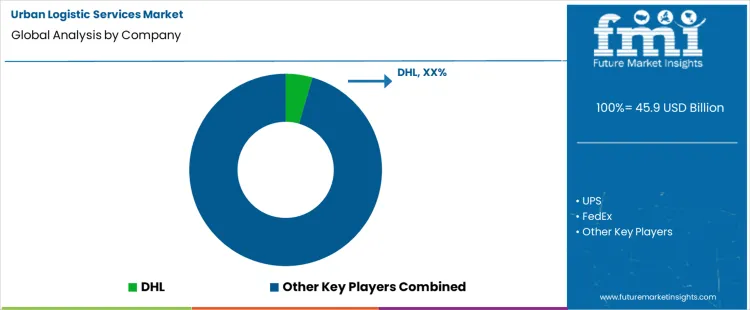
Competition in the urban logistics services market is shaped by speed of last mile delivery, network density, real time tracking capabilities, cost efficiency, and service flexibility. DHL positions itself as a global leader with expansive urban coverage and technology enhanced delivery solutions that optimize routes and improve delivery predictability. Its service materials emphasize digital tracking and integrated urban networks that help retailers meet same day and next day expectations.
UPS and FedEx compete through robust end to end logistics ecosystems that combine regional hubs with dense urban delivery fleets. UPS highlights advanced route optimization and customer centric delivery options, while FedEx stresses speed and reliability backed by strong IT infrastructure. DPDgroup focuses on integrated European urban networks with flexible parcel pickup and drop off solutions, marketed for efficiency and urban reach.
SF Express and JD Logistics differentiate with tech driven urban fulfillment platforms in Asia, with materials that showcase automated sorting, real time tracking, and same day delivery options. Amazon Logistics competes aggressively with its technology enabled last mile network, emphasizing seamless integration with e commerce platforms, rapid delivery windows, and extensive driver partner programs that scale with urban demand.
Other players such as XPO, GEODIS, and Kuehne+Nagel bring flexible urban distribution solutions tailored to specific industries and high volume retail clients, with collateral highlighting scalable delivery models, multimodal integration, and data driven performance insights. Across all vendors, product materials underscore delivery speed, real time visibility, flexible delivery options, and network efficiency as key differentiators that help retailers and shippers meet evolving urban consumer expectations.
Key Players in Urban Logistic Services Market
- DHL
- UPS
- FedEx
- DPDgroup
- SF Express
- JD Logistics
- Amazon Logistics
- XPO
- GEODIS
- Kuehne+Nagel
Scope of Report
| Attributes | Description |
|---|---|
| Quantitative Unit (2026) | USD Billion |
| Service Type | Last-Mile Parcel Delivery, Same-Day or Express, Urban Freight Consolidation, Returns or Reverse Logistics |
| Delivery Model | Dedicated Fleet, Crowdsourced or Gig, Micro-Fulfillment Networks, Hybrid |
| Vehicle | Vans or Light Trucks, 2W or 3W, Cargo Bikes, Other |
| Regions Covered | Asia Pacific, Europe, North America, Latin America, Middle East & Africa |
| Countries Covered | China, Japan, South Korea, India, Australia & New Zealand, ASEAN, Germany, United Kingdom, France, Italy, Spain, Nordic, BENELUX, United States, Canada, Mexico, Brazil, Chile, Turkey, South Africa, Other GCC Countries |
| Key Companies Profiled | DHL, UPS, FedEx, DPDgroup, SF Express, JD Logistics, Amazon Logistics, XPO, GEODIS, Kuehne+Nagel |
| Additional Attributes | Dollar sales by service type, delivery model, and vehicle; regional CAGR and growth outlook for urban logistic services market. |
Urban Logistic Services Market by Key Segments
Service Type
- Last-Mile Parcel Delivery
- Same-Day or Express
- Urban Freight Consolidation
- Returns or Reverse Logistics
Delivery Model
- Dedicated Fleet
- Crowdsourced or Gig
- Micro-Fulfillment Networks
- Hybrid
Vehicle
- Vans or Light Trucks
- 2W or 3W
- Cargo Bikes
- Other
Region
- Asia Pacific
- China
- Japan
- South Korea
- India
- Australia & New Zealand
- ASEAN
- Rest of Asia Pacific
- Europe
- Germany
- United Kingdom
- France
- Italy
- Spain
- Nordic
- BENELUX
- Rest of Europe
- North America
- United States
- Canada
- Mexico
- Latin America
- Brazil
- Chile
- Rest of Latin America
- Middle East & Africa
- Kingdom of Saudi Arabia
- Other GCC Countries
- Turkey
- South Africa
- Other African Union
- Rest of Middle East & Africa
Bibliography
- GracoInc. (2023). Convertible and Infant Seats: Crash Test Performanceand Safety Features.GracoInc.
- Britax(2023). Impact Protection Technologies and Robust Side Impact Performance.Britax.
- Diono(2023). Compact and Travel-Ready Designs for Families on the Go.Diono.
Frequently Asked Questions
How big is the urban logistic services market in 2026?
The global urban logistic services market is estimated to be valued at USD 45.9 billion in 2026.
What will be the size of urban logistic services market in 2036?
The market size for the urban logistic services market is projected to reach USD 77.7 billion by 2036.
How much will be the urban logistic services market growth between 2026 and 2036?
The urban logistic services market is expected to grow at a 5.4% CAGR between 2026 and 2036.
What are the key product types in the urban logistic services market?
The key product types in urban logistic services market are last-mile parcel delivery, same-day or express, urban freight consolidation and returns or reverse logistics.
Which delivery model segment to contribute significant share in the urban logistic services market in 2026?
In terms of delivery model, dedicated fleet segment to command 34.0% share in the urban logistic services market in 2026.
Preview the report firsthand - request a free sample
Get SampleGet the brochure for pricing and purchase details.
Get PDFTable of Content
- Executive Summary
- Global Market Outlook
- Demand-side Trends
- Supply-side Trends
- Technology Roadmap Analysis
- Analysis and Recommendations
- Market Overview
- Market Coverage / Taxonomy
- Market Definition / Scope / Limitations
- Market Background
- Market Dynamics
- Drivers
- Restraints
- Opportunity
- Trends
- Scenario Forecast
- Demand in Optimistic Scenario
- Demand in Likely Scenario
- Demand in Conservative Scenario
- Opportunity Map Analysis
- Product Life Cycle Analysis
- Supply Chain Analysis
- Investment Feasibility Matrix
- Value Chain Analysis
- PESTLE and Porter’s Analysis
- Regulatory Landscape
- Regional Parent Market Outlook
- Production and Consumption Statistics
- Import and Export Statistics
- Market Dynamics
- Global Market Analysis 2021 to 2025 and Forecast, 2026 to 2036
- Historical Market Size Value (USD Million) Analysis, 2021 to 2025
- Current and Future Market Size Value (USD Million) Projections, 2026 to 2036
- Y-o-Y Growth Trend Analysis
- Absolute $ Opportunity Analysis
- Global Market Pricing Analysis 2021 to 2025 and Forecast 2026 to 2036
- Global Market Analysis 2021 to 2025 and Forecast 2026 to 2036, By Service Type
- Introduction / Key Findings
- Historical Market Size Value (USD Million) Analysis By Service Type , 2021 to 2025
- Current and Future Market Size Value (USD Million) Analysis and Forecast By Service Type , 2026 to 2036
- Last-Mile Parcel Delivery
- Same-Day or Express
- Urban Freight Consolidation
- Returns or Reverse Logistics
- Last-Mile Parcel Delivery
- Y-o-Y Growth Trend Analysis By Service Type , 2021 to 2025
- Absolute $ Opportunity Analysis By Service Type , 2026 to 2036
- Global Market Analysis 2021 to 2025 and Forecast 2026 to 2036, By Delivery Model
- Introduction / Key Findings
- Historical Market Size Value (USD Million) Analysis By Delivery Model, 2021 to 2025
- Current and Future Market Size Value (USD Million) Analysis and Forecast By Delivery Model, 2026 to 2036
- Dedicated Fleet
- Crowdsourced or Gig
- Micro-Fulfillment Networks
- Hybrid
- Dedicated Fleet
- Y-o-Y Growth Trend Analysis By Delivery Model, 2021 to 2025
- Absolute $ Opportunity Analysis By Delivery Model, 2026 to 2036
- Global Market Analysis 2021 to 2025 and Forecast 2026 to 2036, By Vehicle
- Introduction / Key Findings
- Historical Market Size Value (USD Million) Analysis By Vehicle, 2021 to 2025
- Current and Future Market Size Value (USD Million) Analysis and Forecast By Vehicle, 2026 to 2036
- Vans or Light Trucks
- 2W or 3W
- Cargo Bikes
- Other
- Vans or Light Trucks
- Y-o-Y Growth Trend Analysis By Vehicle, 2021 to 2025
- Absolute $ Opportunity Analysis By Vehicle, 2026 to 2036
- Global Market Analysis 2021 to 2025 and Forecast 2026 to 2036, By Region
- Introduction
- Historical Market Size Value (USD Million) Analysis By Region, 2021 to 2025
- Current Market Size Value (USD Million) Analysis and Forecast By Region, 2026 to 2036
- North America
- Latin America
- Western Europe
- Eastern Europe
- East Asia
- South Asia and Pacific
- Middle East & Africa
- Market Attractiveness Analysis By Region
- North America Market Analysis 2021 to 2025 and Forecast 2026 to 2036, By Country
- Historical Market Size Value (USD Million) Trend Analysis By Market Taxonomy, 2021 to 2025
- Market Size Value (USD Million) Forecast By Market Taxonomy, 2026 to 2036
- By Country
- USA
- Canada
- Mexico
- By Service Type
- By Delivery Model
- By Vehicle
- By Country
- Market Attractiveness Analysis
- By Country
- By Service Type
- By Delivery Model
- By Vehicle
- Key Takeaways
- Latin America Market Analysis 2021 to 2025 and Forecast 2026 to 2036, By Country
- Historical Market Size Value (USD Million) Trend Analysis By Market Taxonomy, 2021 to 2025
- Market Size Value (USD Million) Forecast By Market Taxonomy, 2026 to 2036
- By Country
- Brazil
- Chile
- Rest of Latin America
- By Service Type
- By Delivery Model
- By Vehicle
- By Country
- Market Attractiveness Analysis
- By Country
- By Service Type
- By Delivery Model
- By Vehicle
- Key Takeaways
- Western Europe Market Analysis 2021 to 2025 and Forecast 2026 to 2036, By Country
- Historical Market Size Value (USD Million) Trend Analysis By Market Taxonomy, 2021 to 2025
- Market Size Value (USD Million) Forecast By Market Taxonomy, 2026 to 2036
- By Country
- Germany
- UK
- Italy
- Spain
- France
- Nordic
- BENELUX
- Rest of Western Europe
- By Service Type
- By Delivery Model
- By Vehicle
- By Country
- Market Attractiveness Analysis
- By Country
- By Service Type
- By Delivery Model
- By Vehicle
- Key Takeaways
- Eastern Europe Market Analysis 2021 to 2025 and Forecast 2026 to 2036, By Country
- Historical Market Size Value (USD Million) Trend Analysis By Market Taxonomy, 2021 to 2025
- Market Size Value (USD Million) Forecast By Market Taxonomy, 2026 to 2036
- By Country
- Russia
- Poland
- Hungary
- Balkan & Baltic
- Rest of Eastern Europe
- By Service Type
- By Delivery Model
- By Vehicle
- By Country
- Market Attractiveness Analysis
- By Country
- By Service Type
- By Delivery Model
- By Vehicle
- Key Takeaways
- East Asia Market Analysis 2021 to 2025 and Forecast 2026 to 2036, By Country
- Historical Market Size Value (USD Million) Trend Analysis By Market Taxonomy, 2021 to 2025
- Market Size Value (USD Million) Forecast By Market Taxonomy, 2026 to 2036
- By Country
- China
- Japan
- South Korea
- By Service Type
- By Delivery Model
- By Vehicle
- By Country
- Market Attractiveness Analysis
- By Country
- By Service Type
- By Delivery Model
- By Vehicle
- Key Takeaways
- South Asia and Pacific Market Analysis 2021 to 2025 and Forecast 2026 to 2036, By Country
- Historical Market Size Value (USD Million) Trend Analysis By Market Taxonomy, 2021 to 2025
- Market Size Value (USD Million) Forecast By Market Taxonomy, 2026 to 2036
- By Country
- India
- ASEAN
- Australia & New Zealand
- Rest of South Asia and Pacific
- By Service Type
- By Delivery Model
- By Vehicle
- By Country
- Market Attractiveness Analysis
- By Country
- By Service Type
- By Delivery Model
- By Vehicle
- Key Takeaways
- Middle East & Africa Market Analysis 2021 to 2025 and Forecast 2026 to 2036, By Country
- Historical Market Size Value (USD Million) Trend Analysis By Market Taxonomy, 2021 to 2025
- Market Size Value (USD Million) Forecast By Market Taxonomy, 2026 to 2036
- By Country
- Kingdom of Saudi Arabia
- Other GCC Countries
- Turkiye
- South Africa
- Other African Union
- Rest of Middle East & Africa
- By Service Type
- By Delivery Model
- By Vehicle
- By Country
- Market Attractiveness Analysis
- By Country
- By Service Type
- By Delivery Model
- By Vehicle
- Key Takeaways
- Key Countries Market Analysis
- USA
- Pricing Analysis
- Market Share Analysis, 2025
- By Service Type
- By Delivery Model
- By Vehicle
- Canada
- Pricing Analysis
- Market Share Analysis, 2025
- By Service Type
- By Delivery Model
- By Vehicle
- Mexico
- Pricing Analysis
- Market Share Analysis, 2025
- By Service Type
- By Delivery Model
- By Vehicle
- Brazil
- Pricing Analysis
- Market Share Analysis, 2025
- By Service Type
- By Delivery Model
- By Vehicle
- Chile
- Pricing Analysis
- Market Share Analysis, 2025
- By Service Type
- By Delivery Model
- By Vehicle
- Germany
- Pricing Analysis
- Market Share Analysis, 2025
- By Service Type
- By Delivery Model
- By Vehicle
- UK
- Pricing Analysis
- Market Share Analysis, 2025
- By Service Type
- By Delivery Model
- By Vehicle
- Italy
- Pricing Analysis
- Market Share Analysis, 2025
- By Service Type
- By Delivery Model
- By Vehicle
- Spain
- Pricing Analysis
- Market Share Analysis, 2025
- By Service Type
- By Delivery Model
- By Vehicle
- France
- Pricing Analysis
- Market Share Analysis, 2025
- By Service Type
- By Delivery Model
- By Vehicle
- India
- Pricing Analysis
- Market Share Analysis, 2025
- By Service Type
- By Delivery Model
- By Vehicle
- ASEAN
- Pricing Analysis
- Market Share Analysis, 2025
- By Service Type
- By Delivery Model
- By Vehicle
- Australia & New Zealand
- Pricing Analysis
- Market Share Analysis, 2025
- By Service Type
- By Delivery Model
- By Vehicle
- China
- Pricing Analysis
- Market Share Analysis, 2025
- By Service Type
- By Delivery Model
- By Vehicle
- Japan
- Pricing Analysis
- Market Share Analysis, 2025
- By Service Type
- By Delivery Model
- By Vehicle
- South Korea
- Pricing Analysis
- Market Share Analysis, 2025
- By Service Type
- By Delivery Model
- By Vehicle
- Russia
- Pricing Analysis
- Market Share Analysis, 2025
- By Service Type
- By Delivery Model
- By Vehicle
- Poland
- Pricing Analysis
- Market Share Analysis, 2025
- By Service Type
- By Delivery Model
- By Vehicle
- Hungary
- Pricing Analysis
- Market Share Analysis, 2025
- By Service Type
- By Delivery Model
- By Vehicle
- Kingdom of Saudi Arabia
- Pricing Analysis
- Market Share Analysis, 2025
- By Service Type
- By Delivery Model
- By Vehicle
- Turkiye
- Pricing Analysis
- Market Share Analysis, 2025
- By Service Type
- By Delivery Model
- By Vehicle
- South Africa
- Pricing Analysis
- Market Share Analysis, 2025
- By Service Type
- By Delivery Model
- By Vehicle
- USA
- Market Structure Analysis
- Competition Dashboard
- Competition Benchmarking
- Market Share Analysis of Top Players
- By Regional
- By Service Type
- By Delivery Model
- By Vehicle
- Competition Analysis
- Competition Deep Dive
- DHL
- Overview
- Product Portfolio
- Profitability by Market Segments (Product/Age /Sales Channel/Region)
- Sales Footprint
- Strategy Overview
- Marketing Strategy
- Product Strategy
- Channel Strategy
- UPS
- FedEx
- DPDgroup
- SF Express
- JD Logistics
- Amazon Logistics
- XPO
- GEODIS
- Kuehne+Nagel
- DHL
- Competition Deep Dive
- Assumptions & Acronyms Used
- Research Methodology


