

- Industry Size (2026)
- USD 1120.0 Mn
- Forecast (2036)
- USD 3637.0 Mn
- CAGR (2026 to 2036)
- 12.5%
UV-Stable PCR Polycarbonate Solutions Market Forecast and Outlook 2026 to 2036
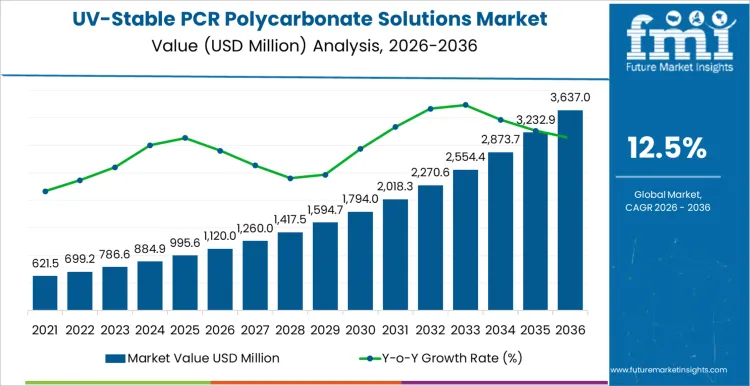
The UV-Stable PCR polycarbonate solutions market is likely to be valued at USD 1,120.0 million in 2026 and is projected to reach USD 3,637.0 million by 2036, at a CAGR of 12.5% as manufacturers integrate recycled content into applications exposed to sustained ultraviolet radiation. Outdoor lighting components, electrical enclosures, automotive exterior parts, and architectural elements increasingly require PCR polycarbonate that resists yellowing, surface embrittlement, and loss of impact strength. Advanced UV-stable formulations incorporating optimized UV absorbers and light stabilizers enable recycled polycarbonate to retain optical clarity and mechanical performance comparable to virgin grades across long service lifecycles.
Adoption is shaped by qualification requirements tied to weathering performance, feedstock consistency, and stabilization efficiency. Compounders invest in enhanced sorting, purification, and additive dispersion to control color shift and maintain toughness under prolonged UV exposure. Accelerated aging and outdoor exposure testing guide material approval, particularly in regulated automotive, lighting, and electrical segments. Cost sensitivity limits use in lower-performance applications, but durability-driven sectors prioritize UV-stable PCR polycarbonate where long-term aesthetics and functional reliability justify premium formulations.
Quick Stats for UV-Stable PCR Polycarbonate Solutions Market
- UV-Stable PCR Polycarbonate Solutions Market Value (2026): USD 1,120.0 million
- UV-Stable PCR Polycarbonate Solutions Market Forecast Value (2036): USD 3,637.0 million
- UV-Stable PCR Polycarbonate Solutions Market Forecast CAGR (2026-2036): 12.5%
- Leading Product Type by Demand Share: UV-stabilised PC compounds
- Fastest-Growing Countries: China, USA, Germany, Japan, South Korea
- Top Players in Global Demand: Covestro, Lanxess, SABIC, Avient, Mitsubishi Chemical
UV-Stable PCR Polycarbonate Solutions Market Key Takeaways
| Metric | Value |
|---|---|
| Market Value (2026) | USD 1,120.0 million |
| Market Forecast Value (2036) | USD 3,637.0 million |
| Forecast CAGR (2026-2036) | 12.5% |
Why is the Demand for UV-Stable PCR Polycarbonate Solutions Growing?
Demand for UV-stable post-consumer recycled (PCR) polycarbonate is rising as manufacturers in outdoor, electrical, and lighting applications seek recycled materials that withstand prolonged ultraviolet exposure without rapid degradation. Traditional PCR polycarbonate often exhibits vulnerability to yellowing, loss of impact strength, and surface embrittlement when exposed to solar radiation, especially in outdoor enclosures, signage, and architectural glazing. UV-stable PCR grades are compounded with tailored UV absorbers and hindered amine light stabilizers that help preserve optical clarity and mechanical integrity over extended service life. Producers of outdoor LED luminaires, electrical junction boxes, and protective housings rely on these solutions to maintain performance under cyclic weather conditions, supporting durability expectations identical to virgin polycarbonate.
Procurement of UV-stable PCR polycarbonate is also influenced by sustainability policies integrated into corporate purchasing requirements and regulatory recycled content targets in several jurisdictions. OEMs in automotive and mass transit sectors use these materials in external trim, interior sun-exposed components, and transparent overlays where resistance to ultraviolet radiation affects long-term aesthetics and functionality. Material development teams focus on optimizing recyclate quality through contaminant control, compatibilization, and UV additive dispersion to achieve consistent thermal and mechanical performance. Accelerated weathering and outdoor exposure testing are integral to qualification protocols, enabling designers to specify UV-stable PCR polycarbonate that meets industry standards for UV resistance and recycled content compliance.
How Is the UV-Stable PCR Polycarbonate Solutions Industry Structured by Product Type, Material Grade, and End Use?
UV-stable PCR polycarbonate solutions are developed to address outdoor exposure, optical stability, and long-term mechanical retention in recycled PC applications. Demand is shaped by electronics enclosures, display components, and exterior parts requiring resistance to yellowing, embrittlement, and loss of impact strength under prolonged UV exposure. Segmentation by product type, material grade, and end use clarifies how compounders and OEMs align stabilisation strategies with performance expectations and regulatory sustainability targets.
Which Product Type Accounts for the Largest Share in UV-Stable PCR Polycarbonate Solutions?
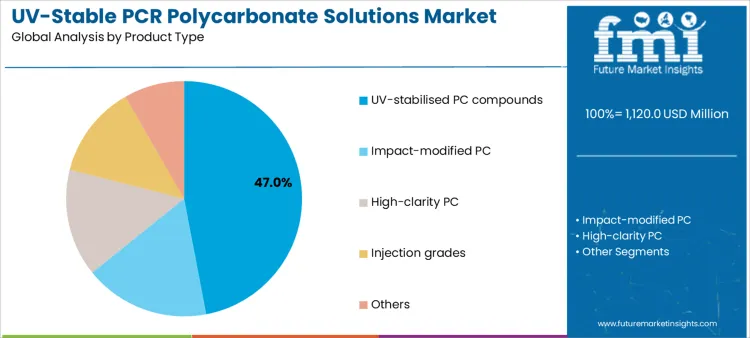
UV-stabilised PC compounds hold 47.0%, reflecting their central role in applications exposed to sunlight and artificial UV sources. These compounds integrate UV absorbers and stabiliser systems to preserve transparency, color, and mechanical properties over time. Adoption is strongest where recycled PC must match virgin-grade outdoor durability. Impact-modified PC, high-clarity PC, injection grades, and other product types address niche requirements related to toughness, aesthetics, or processing flexibility, without disclosed share values.
Key Points
- UV-stabilised compounds mitigate yellowing and surface degradation.
- Stabiliser packages enable outdoor and semi-outdoor use of PCR PC.
- Other product types support application-specific processing needs.
How Do Material Grades Influence Adoption of UV-Stable PCR Polycarbonate?
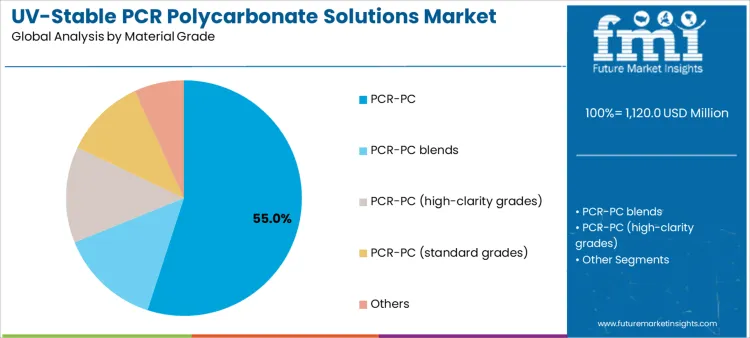
PCR-PC represents 55.0%, indicating strong preference for direct recycled polycarbonate solutions capable of meeting UV and mechanical performance thresholds. These grades are increasingly specified in electronics and appliance components seeking recycled content compliance without compromising durability. PCR-PC blends, high-clarity grades, standard grades, and other formulations serve differentiated objectives such as cost optimisation, optical performance, or tailored processing behavior. Material-grade segmentation highlights concentration around core PCR-PC solutions with added UV stability.
Key Points
- PCR-PC dominates due to balance of recyclate content and performance.
- Blends enable tuning of cost and mechanical properties.
- High-clarity grades support optical and display-related applications.
Which End-Use Segments Drive Demand for UV-Stable PCR Polycarbonate Solutions?
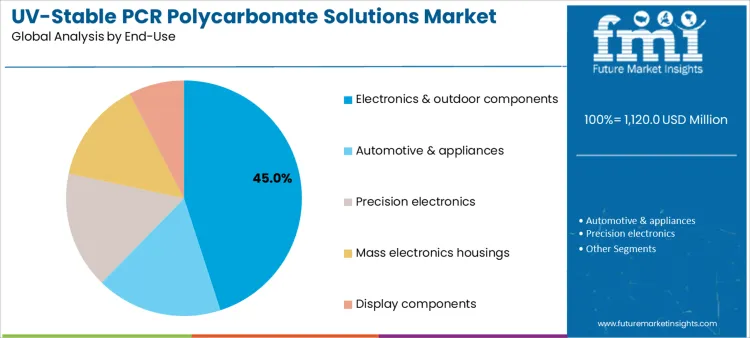
Electronics and outdoor components account for 45.0%, driven by requirements for UV resistance in housings, covers, and exposed structural parts. These applications demand long service life under variable lighting and temperature conditions. Automotive and appliances, precision electronics, mass electronics housings, and display components contribute additional demand, reflecting broader adoption of UV-stable PCR PC across consumer and industrial electronics ecosystems. End-use segmentation underscores the role of UV stability in enabling recycled polycarbonate use beyond strictly indoor environments.
Key Points
- Outdoor-exposed electronics require UV-stable recycled materials.
- Electronics housings prioritize color and impact retention.
- Broader adoption supports sustainability targets across OEM portfolios.
What are the Key Dynamics in the UV Stable PCR Polycarbonate Solutions Market?
Demand in the UV‑stable post‑consumer recycled (PCR) polycarbonate solutions market is shaped by end users requiring transparent, high‑performance materials that resist yellowing, surface degradation, and loss of mechanical integrity under prolonged ultraviolet exposure. Sectors such as lighting lenses, outdoor signage, protective screens, and consumer electronics housings look for recycled PC grades that maintain optical clarity and toughness while supporting sustainability commitments. Procurement decisions center on UV stability performance, impact resistance, and dimensional precision under thermal cycling relevant to end‑use environments.
How do outdoor performance requirements and clarity expectations influence adoption?
Applications that are continuously exposed to sunlight or high‑intensity artificial light demand PCR polycarbonate that delivers long‑term optical and mechanical stability. In architectural glazing and outdoor signage, material must withstand sustained UV exposure without significant increase in yellowness index, surface chalking, or gloss loss over expected service life. Protective face shields and equipment covers for industrial and sporting use require consistent impact strength combined with UV stability to avoid embrittlement in outdoor work zones. Consumer electronics products such as portable devices, wearables, and transparent housings benefit from recycled PC grades engineered to sustain clarity while resisting color shift and surface hazing under repeated sun exposure. Manufacturers of LED lighting diffusers select UV‑stable PCR PC to maintain light transmission properties without rapid degradation from high flux levels.
How do feedstock quality constraints and stabilization technology affect market growth?
Growth of the UV‑stable PCR polycarbonate market is influenced by the availability of high‑quality PCR feedstock and by the effectiveness of stabilization technologies used during compounding. Recycled PC streams must be carefully sorted and decontaminated to minimize residual contaminants, additives, and degradation products that accelerate UV‑induced embrittlement or color change. Compounding with optimized UV absorbers, hindered amine light stabilizers (HALS), and antioxidant systems enhances long‑term performance but increases formulation complexity and cost relative to standard recycled polymers. Processing conditions such as melt temperature, residence time, and shear impact how well stabilizers are dispersed and bonded within the polymer matrix, influencing final optical and mechanical properties. Qualification and testing against regional standards for weathering and outdoor exposure add lead time before new grades can be adopted by OEMs, particularly where reliability is mission critical. Price sensitivity in mainstream applications limits adoption to segments where UV performance and sustainability credentials justify premium materials.
How Is Demand for the UV-Stable PCR Polycarbonate Solutions Market Evolving Globally?
Global demand for UV-stable PCR polycarbonate solutions is rising as industries integrate recycled content into applications exposed to outdoor and high-UV environments. Growth reflects wider use of PCR polycarbonate in lighting covers, automotive exterior parts, electronics housings, and architectural components requiring optical clarity and weather resistance. Material qualification focuses on UV stability, color retention, and mechanical strength over extended service life. China records 14.6% CAGR, USA records 12.0% CAGR, Germany records 11.6% CAGR, Japan records 10.4% CAGR, and Korea records 10.2% CAGR. Adoption is driven by performance validation cycles and regulatory pressure rather than volume-driven material substitution.
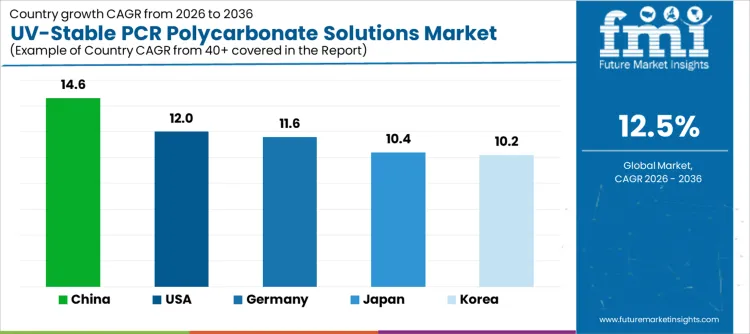
| Country | CAGR (%) |
|---|---|
| China | 14.6% |
| USA | 12.0% |
| Germany | 11.6% |
| Japan | 10.4% |
| Korea | 10.2% |
What is driving growth of UV-stable PCR polycarbonate solutions demand in China?
Demand for UV-stable PCR polycarbonate solutions in China is expanding as manufacturers scale recycled materials across outdoor and electronic applications. Growth at 14.6% CAGR reflects rising production of LED lighting components, automotive exterior trims, and consumer electronics housings exposed to prolonged UV radiation. Regulatory mandates on recycled plastic usage accelerate material qualification. Domestic recyclers invest in advanced purification, UV stabilizer packages, and color control technologies. Export-oriented manufacturers require PCR grades meeting international durability and optical standards. Demand remains concentrated within centralized production hubs supplying global electronics, automotive, and lighting supply chains.
- Expansion of LED and lighting component manufacturing
- Regulatory mandates on recycled engineering plastics
- Investment in UV stabilization and purification
- Export compliance driven material qualification
Why is the USA seeing expansion in UV-stable PCR polycarbonate adoption?
UV-stable PCR polycarbonate demand in the USA is rising as OEMs integrate recycled content into durable outdoor and electrical applications. Growth at 12.0% CAGR reflects adoption in lighting lenses, electrical enclosures, EV exterior components, and signage products. Long-term UV exposure performance and impact resistance drive material selection. Brand sustainability targets influence procurement decisions. Qualification programs emphasize weathering data, optical stability, and mechanical retention. Demand is driven by portfolio-wide material transitions across regulated applications rather than rapid new product launches.
- OEM sustainability commitments
- Growth of outdoor electrical enclosures
- Emphasis on long-term UV performance
- Conservative material qualification timelines
What factors are shaping UV-stable PCR polycarbonate solutions sales in Germany?
Sales of UV-stable PCR polycarbonate solutions in Germany are increasing as automotive and industrial manufacturers align with circular economy frameworks. Growth at 11.6% CAGR reflects use in automotive exterior parts, industrial housings, and architectural glazing elements. EU regulations on recycled content intensify substitution pressure for virgin polycarbonate. German compounders prioritize traceability, emission control, and certified UV performance. Engineering standards require consistent optical clarity and weather resistance. Demand remains anchored in regulated automotive and industrial sectors rather than consumer-driven applications.
- EU circular economy compliance pressure
- Automotive exterior material substitution
- High standards for UV and emission performance
- Focus on certified material traceability
How is Japan supporting growth of UV-stable PCR polycarbonate demand?
UV-stable PCR polycarbonate demand in Japan is advancing as manufacturers cautiously integrate recycled materials into precision applications. Growth at 10.4% CAGR reflects usage in electronics housings, automotive lighting, and outdoor equipment requiring surface quality and dimensional stability. Conservative approval processes extend qualification timelines. Emphasis on low yellowing, odor control, and long-term reliability shapes material selection. Domestic recyclers focus on high-purity feedstocks and controlled stabilization systems. Demand remains concentrated within premium electronics and automotive suppliers prioritizing gradual recycled content integration.
- High precision manufacturing requirements
- Conservative material approval processes
- Focus on optical clarity and low yellowing
- Gradual recycled content adoption strategies
What is driving expansion of UV-stable PCR polycarbonate demand in Korea?
Demand for UV-stable PCR polycarbonate solutions in Korea is rising as electronics and automotive suppliers adopt recycled engineering plastics. Growth at 10.2% CAGR reflects increasing use in display components, lighting parts, and exterior electronic housings exposed to UV stress. OEM sustainability targets influence supplier material specifications. Performance validation centers on UV resistance, impact strength, and color stability. Domestic compounders invest in stabilization additives and feedstock refinement. Demand remains strongest within export-focused electronics and automotive manufacturing clusters.
- Expansion of electronics and display manufacturing
- OEM recycled content specifications
- Focus on UV and impact resistance
- Export-oriented material qualification requirements
What is the competitive landscape of demand for the UV-stable PCR polycarbonate solutions market globally?
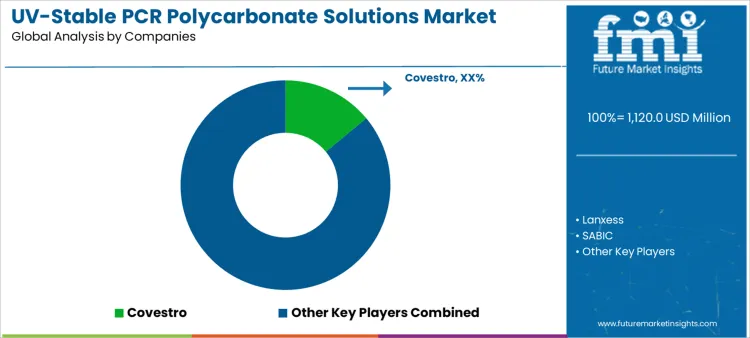
Outdoor electronics, automotive glazing, and lighting components are driving demand for UV-stable PCR polycarbonate that resists yellowing and embrittlement. OEMs and compounders focus on UV stabilization efficiency, optical clarity retention, impact strength, and long-term weathering performance under recycled content inclusion. Buyer assessment extends to consistency across recyclate batches, compatibility with flame retardant packages, processing window stability, and compliance with automotive and electrical standards. Procurement behavior favors suppliers offering qualified formulations, documented aging data, and reliable feedstock control. Trend in the UV-stable PCR polycarbonate solutions market reflects expansion into exterior and semi-structural applications where durability expectations remain high.
Covestro leads competitive positioning through advanced stabilization technologies enabling high-transparency PCR polycarbonate for demanding outdoor uses. LANXESS competes by supplying engineered compounds balancing UV resistance with mechanical robustness for automotive and industrial parts. SABIC supports demand through circular polycarbonate programs aligned with OEM sustainability targets and performance specifications. Avient maintains relevance via customized PCR polycarbonate formulations emphasizing color stability and processing consistency. Mitsubishi Chemical participates with specialty polycarbonate solutions designed for long-term UV exposure and surface quality preservation. Competitive differentiation centers on UV aging performance, optical stability, qualification depth, and ability to support OEM validation requirements.
Key Players in the UV-Stable PCR Polycarbonate Solutions Market
- Covestro
- Lanxess
- SABIC
- Avient
- Mitsubishi Chemical
- Teijin
- Kingfa
- Wanhua
- Others
Scope of the Report
| Items | Values |
|---|---|
| Quantitative Units | USD million |
| Product Type | UV-stabilised PC compounds; Impact-modified PC; High-clarity PC; Injection grades; Others |
| Material Grade | PCR-PC; PCR-PC blends; PCR-PC (high-clarity grades); PCR-PC (standard grades); Others |
| End-Use | Electronics & outdoor components; Automotive & appliances; Precision electronics; Mass electronics housings; Display components |
| Regions Covered | Asia Pacific, Europe, North America, Latin America, Middle East & Africa |
| Countries Covered | China, USA, Germany, Japan, South Korea, and 40+ countries |
| Key Companies Profiled | Covestro; Lanxess; SABIC; Avient; Mitsubishi Chemical; Teijin; Kingfa; Wanhua; Others |
| Additional Attributes | UV-stability requirements for outdoor and automotive electronics housings; adoption of PCR-PC blends to balance clarity and weather resistance; performance trade-offs between impact modification and UV ageing; demand for high-clarity PCR-PC in display and optical-grade applications; OEM qualification trends driven by durability, colour retention, and recycled content mandates. |
UV-Stable PCR Polycarbonate Solutions Market by Segment
Product Type:
- UV-stabilised PC compounds
- Impact-modified PC
- High-clarity PC
- Injection grades
- Others
Material Grade:
- PCR-PC
- PCR-PC blends
- PCR-PC (high-clarity grades)
- PCR-PC (standard grades)
- Others
End-Use:
- Electronics & outdoor components
- Automotive & appliances
- Precision electronics
- Mass electronics housings
- Display components
Region:
- Asia Pacific
- China
- Japan
- South Korea
- India
- Australia & New Zealand
- ASEAN
- Rest of Asia Pacific
- Europe
- Germany
- United Kingdom
- France
- Italy
- Spain
- Nordic
- BENELUX
- Rest of Europe
- North America
- United States
- Canada
- Mexico
- Latin America
- Brazil
- Chile
- Rest of Latin America
- Middle East & Africa
- Kingdom of Saudi Arabia
- Other GCC Countries
- Turkey
- South Africa
- Other African Union
- Rest of Middle East & Africa
Bibliography
- European Commission. (2023). Proposal for a regulation on packaging and packaging waste: Recyclability, recycled content, and performance requirements for plastic materials. Publications Office of the European Union.
- International Electrotechnical Commission. (2023). Plastics for electrical and electronic equipment—Resistance to ultraviolet radiation and environmental ageing (IEC TR 62788:2023). International Electrotechnical Commission.
- International Organization for Standardization. (2023). Plastics—Recycled plastics—Characterization and quality assessment of recycled polycarbonate (ISO 15270:2023). International Organization for Standardization.
Frequently Asked Questions
How big is the UV-stable PCR polycarbonate solutions market in 2026?
The global UV-stable PCR polycarbonate solutions market is estimated to be valued at USD 1,120.0 million in 2026.
What will be the size of UV-stable PCR polycarbonate solutions market in 2036?
The market size for the UV-stable PCR polycarbonate solutions market is projected to reach USD 3,637.0 million by 2036.
How much will be the UV-stable PCR polycarbonate solutions market growth between 2026 and 2036?
The UV-stable PCR polycarbonate solutions market is expected to grow at a 12.5% CAGR between 2026 and 2036.
What are the key product types in the UV-stable PCR polycarbonate solutions market?
The key product types in the UV-stable PCR polycarbonate solutions market are UV-stabilized PC compounds, impact-modified PC, high-clarity PC, injection grades, and others.
Which material grade segment to contribute significant share in the UV-stable PCR polycarbonate solutions market in 2026?
In terms of material grade, the PCR-PC segment is expected to command 55.0% share in the UV-stable PCR polycarbonate solutions market in 2026.
Preview the report firsthand - request a free sample
Get SampleGet the brochure for pricing and purchase details.
Get PDFTable of Content
- Executive Summary
- Global Market Outlook
- Demand-side Trends
- Supply-side Trends
- Technology Roadmap Analysis
- Analysis and Recommendations
- Market Overview
- Market Coverage / Taxonomy
- Market Definition / Scope / Limitations
- Market Background
- Market Dynamics
- Drivers
- Restraints
- Opportunity
- Trends
- Scenario Forecast
- Demand in Optimistic Scenario
- Demand in Likely Scenario
- Demand in Conservative Scenario
- Opportunity Map Analysis
- Product Life Cycle Analysis
- Supply Chain Analysis
- Investment Feasibility Matrix
- Value Chain Analysis
- PESTLE and Porter’s Analysis
- Regulatory Landscape
- Regional Parent Market Outlook
- Production and Consumption Statistics
- Import and Export Statistics
- Market Dynamics
- Global Market Analysis 2021 to 2025 and Forecast, 2026 to 2036
- Historical Market Size Value (USD Million) Analysis, 2021 to 2025
- Current and Future Market Size Value (USD Million) Projections, 2026 to 2036
- Y-o-Y Growth Trend Analysis
- Absolute $ Opportunity Analysis
- Global Market Pricing Analysis 2021 to 2025 and Forecast 2026 to 2036
- Global Market Analysis 2021 to 2025 and Forecast 2026 to 2036, By Product Type
- Introduction / Key Findings
- Historical Market Size Value (USD Million) Analysis By Product Type , 2021 to 2025
- Current and Future Market Size Value (USD Million) Analysis and Forecast By Product Type , 2026 to 2036
- UV-stabilised PC compounds
- Impact-modified PC
- High-clarity PC
- Injection grades
- Others
- UV-stabilised PC compounds
- Y-o-Y Growth Trend Analysis By Product Type , 2021 to 2025
- Absolute $ Opportunity Analysis By Product Type , 2026 to 2036
- Global Market Analysis 2021 to 2025 and Forecast 2026 to 2036, By Material Grade
- Introduction / Key Findings
- Historical Market Size Value (USD Million) Analysis By Material Grade, 2021 to 2025
- Current and Future Market Size Value (USD Million) Analysis and Forecast By Material Grade, 2026 to 2036
- PCR-PC
- PCR-PC blends
- PCR-PC (high-clarity grades)
- PCR-PC (standard grades)
- Others
- PCR-PC
- Y-o-Y Growth Trend Analysis By Material Grade, 2021 to 2025
- Absolute $ Opportunity Analysis By Material Grade, 2026 to 2036
- Global Market Analysis 2021 to 2025 and Forecast 2026 to 2036, By End-Use
- Introduction / Key Findings
- Historical Market Size Value (USD Million) Analysis By End-Use, 2021 to 2025
- Current and Future Market Size Value (USD Million) Analysis and Forecast By End-Use, 2026 to 2036
- Electronics & outdoor components
- Automotive & appliances
- Precision electronics
- Mass electronics housings
- Display components
- Electronics & outdoor components
- Y-o-Y Growth Trend Analysis By End-Use, 2021 to 2025
- Absolute $ Opportunity Analysis By End-Use, 2026 to 2036
- Global Market Analysis 2021 to 2025 and Forecast 2026 to 2036, By Region
- Introduction
- Historical Market Size Value (USD Million) Analysis By Region, 2021 to 2025
- Current Market Size Value (USD Million) Analysis and Forecast By Region, 2026 to 2036
- North America
- Latin America
- Western Europe
- Eastern Europe
- East Asia
- South Asia and Pacific
- Middle East & Africa
- Market Attractiveness Analysis By Region
- North America Market Analysis 2021 to 2025 and Forecast 2026 to 2036, By Country
- Historical Market Size Value (USD Million) Trend Analysis By Market Taxonomy, 2021 to 2025
- Market Size Value (USD Million) Forecast By Market Taxonomy, 2026 to 2036
- By Country
- USA
- Canada
- Mexico
- By Product Type
- By Material Grade
- By End-Use
- By Country
- Market Attractiveness Analysis
- By Country
- By Product Type
- By Material Grade
- By End-Use
- Key Takeaways
- Latin America Market Analysis 2021 to 2025 and Forecast 2026 to 2036, By Country
- Historical Market Size Value (USD Million) Trend Analysis By Market Taxonomy, 2021 to 2025
- Market Size Value (USD Million) Forecast By Market Taxonomy, 2026 to 2036
- By Country
- Brazil
- Chile
- Rest of Latin America
- By Product Type
- By Material Grade
- By End-Use
- By Country
- Market Attractiveness Analysis
- By Country
- By Product Type
- By Material Grade
- By End-Use
- Key Takeaways
- Western Europe Market Analysis 2021 to 2025 and Forecast 2026 to 2036, By Country
- Historical Market Size Value (USD Million) Trend Analysis By Market Taxonomy, 2021 to 2025
- Market Size Value (USD Million) Forecast By Market Taxonomy, 2026 to 2036
- By Country
- Germany
- UK
- Italy
- Spain
- France
- Nordic
- BENELUX
- Rest of Western Europe
- By Product Type
- By Material Grade
- By End-Use
- By Country
- Market Attractiveness Analysis
- By Country
- By Product Type
- By Material Grade
- By End-Use
- Key Takeaways
- Eastern Europe Market Analysis 2021 to 2025 and Forecast 2026 to 2036, By Country
- Historical Market Size Value (USD Million) Trend Analysis By Market Taxonomy, 2021 to 2025
- Market Size Value (USD Million) Forecast By Market Taxonomy, 2026 to 2036
- By Country
- Russia
- Poland
- Hungary
- Balkan & Baltic
- Rest of Eastern Europe
- By Product Type
- By Material Grade
- By End-Use
- By Country
- Market Attractiveness Analysis
- By Country
- By Product Type
- By Material Grade
- By End-Use
- Key Takeaways
- East Asia Market Analysis 2021 to 2025 and Forecast 2026 to 2036, By Country
- Historical Market Size Value (USD Million) Trend Analysis By Market Taxonomy, 2021 to 2025
- Market Size Value (USD Million) Forecast By Market Taxonomy, 2026 to 2036
- By Country
- China
- Japan
- South Korea
- By Product Type
- By Material Grade
- By End-Use
- By Country
- Market Attractiveness Analysis
- By Country
- By Product Type
- By Material Grade
- By End-Use
- Key Takeaways
- South Asia and Pacific Market Analysis 2021 to 2025 and Forecast 2026 to 2036, By Country
- Historical Market Size Value (USD Million) Trend Analysis By Market Taxonomy, 2021 to 2025
- Market Size Value (USD Million) Forecast By Market Taxonomy, 2026 to 2036
- By Country
- India
- ASEAN
- Australia & New Zealand
- Rest of South Asia and Pacific
- By Product Type
- By Material Grade
- By End-Use
- By Country
- Market Attractiveness Analysis
- By Country
- By Product Type
- By Material Grade
- By End-Use
- Key Takeaways
- Middle East & Africa Market Analysis 2021 to 2025 and Forecast 2026 to 2036, By Country
- Historical Market Size Value (USD Million) Trend Analysis By Market Taxonomy, 2021 to 2025
- Market Size Value (USD Million) Forecast By Market Taxonomy, 2026 to 2036
- By Country
- Kingdom of Saudi Arabia
- Other GCC Countries
- Turkiye
- South Africa
- Other African Union
- Rest of Middle East & Africa
- By Product Type
- By Material Grade
- By End-Use
- By Country
- Market Attractiveness Analysis
- By Country
- By Product Type
- By Material Grade
- By End-Use
- Key Takeaways
- Key Countries Market Analysis
- USA
- Pricing Analysis
- Market Share Analysis, 2025
- By Product Type
- By Material Grade
- By End-Use
- Canada
- Pricing Analysis
- Market Share Analysis, 2025
- By Product Type
- By Material Grade
- By End-Use
- Mexico
- Pricing Analysis
- Market Share Analysis, 2025
- By Product Type
- By Material Grade
- By End-Use
- Brazil
- Pricing Analysis
- Market Share Analysis, 2025
- By Product Type
- By Material Grade
- By End-Use
- Chile
- Pricing Analysis
- Market Share Analysis, 2025
- By Product Type
- By Material Grade
- By End-Use
- Germany
- Pricing Analysis
- Market Share Analysis, 2025
- By Product Type
- By Material Grade
- By End-Use
- UK
- Pricing Analysis
- Market Share Analysis, 2025
- By Product Type
- By Material Grade
- By End-Use
- Italy
- Pricing Analysis
- Market Share Analysis, 2025
- By Product Type
- By Material Grade
- By End-Use
- Spain
- Pricing Analysis
- Market Share Analysis, 2025
- By Product Type
- By Material Grade
- By End-Use
- France
- Pricing Analysis
- Market Share Analysis, 2025
- By Product Type
- By Material Grade
- By End-Use
- India
- Pricing Analysis
- Market Share Analysis, 2025
- By Product Type
- By Material Grade
- By End-Use
- ASEAN
- Pricing Analysis
- Market Share Analysis, 2025
- By Product Type
- By Material Grade
- By End-Use
- Australia & New Zealand
- Pricing Analysis
- Market Share Analysis, 2025
- By Product Type
- By Material Grade
- By End-Use
- China
- Pricing Analysis
- Market Share Analysis, 2025
- By Product Type
- By Material Grade
- By End-Use
- Japan
- Pricing Analysis
- Market Share Analysis, 2025
- By Product Type
- By Material Grade
- By End-Use
- South Korea
- Pricing Analysis
- Market Share Analysis, 2025
- By Product Type
- By Material Grade
- By End-Use
- Russia
- Pricing Analysis
- Market Share Analysis, 2025
- By Product Type
- By Material Grade
- By End-Use
- Poland
- Pricing Analysis
- Market Share Analysis, 2025
- By Product Type
- By Material Grade
- By End-Use
- Hungary
- Pricing Analysis
- Market Share Analysis, 2025
- By Product Type
- By Material Grade
- By End-Use
- Kingdom of Saudi Arabia
- Pricing Analysis
- Market Share Analysis, 2025
- By Product Type
- By Material Grade
- By End-Use
- Turkiye
- Pricing Analysis
- Market Share Analysis, 2025
- By Product Type
- By Material Grade
- By End-Use
- South Africa
- Pricing Analysis
- Market Share Analysis, 2025
- By Product Type
- By Material Grade
- By End-Use
- USA
- Market Structure Analysis
- Competition Dashboard
- Competition Benchmarking
- Market Share Analysis of Top Players
- By Regional
- By Product Type
- By Material Grade
- By End-Use
- Competition Analysis
- Competition Deep Dive
- Covestro
- Overview
- Product Portfolio
- Profitability by Market Segments (Product/Age /Sales Channel/Region)
- Sales Footprint
- Strategy Overview
- Marketing Strategy
- Product Strategy
- Channel Strategy
- Lanxess
- SABIC
- Avient
- Mitsubishi Chemical
- Teijin
- Kingfa
- Wanhua
- Others
- Covestro
- Competition Deep Dive
- Assumptions & Acronyms Used
- Research Methodology


