


Polyurethane Coating Market : Global Industry Analysis and Opportunity Assessment, 2036
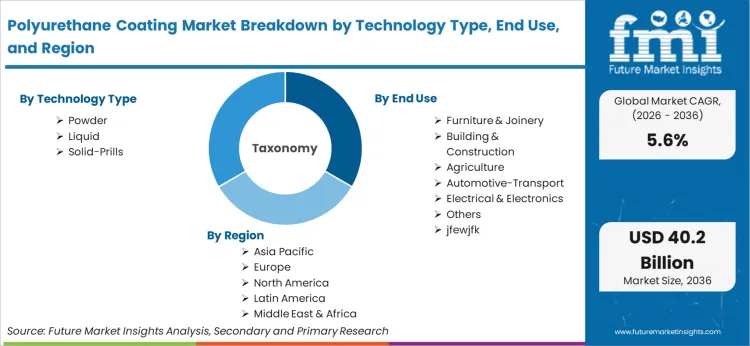
The Polyurethane Coating Market is segmented by Technology Type (Water-borne and Solvent-borne), End User (Automotive, Aerospace, Household, Construction, and Electronics), and Region, with a forecast period from 2026 to 2036.
- Industry Size (2026): USD 23.3 Bn
- Forecast (2036): USD 40.2 Bn
- CAGR (2026 to 2036): 5.6%
Polyurethane Coating Market Size, Market Forecast and Outlook By FMI
In 2025, the polyurethane coating market was valued at USD 22.1 billion. Based on Future Market Insights' analysis, demand for polyurethane coatings is estimated to reach USD 23.3 billion in 2026, and to USD 40.2 billion by 2036. This trajectory reflects a CAGR of 5.6% during the forecast period.
Absolute dollar growth of more than USD 16.9 billion between 2026 and 2036 signals a market expanding at a steady pace, underpinned by sustained demand from automotive manufacturing and construction activity. This value uplift also reflects a structural mix shift toward water-borne formulations, which now constitute the majority of market value as regulatory pressure on VOC emissions and user preference for low-odor coatings drive technology transition.
Summary of Polyurethane Coating Market
- Demand Drivers in the Market:
- Global automotive production and refinish activity, where polyurethane coatings provide scratch resistance, gloss retention, and weather durability for vehicle exteriors, protecting against mechanical wear and corrosion [1].
- Construction sector demand for architectural coatings with superior durability on wood, metal, and concrete surfaces, including flooring, exterior cladding, and protective applications [2].
- Furniture manufacturing requirements for abrasion-resistant finishes that maintain appearance on high-use surfaces in residential and commercial settings.
- Key Segments Analyzed in the FMI Report:
- Technology Type: Water-borne coatings, which account for 53.4% of market value in 2026 due to regulatory pressure limiting VOC emissions and performance improvements matching solvent-borne systems in key applications.
- End User: Automotive, which captures 32.7% of market value as the largest consuming sector, driven by OEM production coatings and aftermarket refinish applications.
- Analyst Opinion at FMI:
- Nikhil Kaitwade, principal consultant for Chemicals & Materials at Future Market Insights states, "In the updated Polyurethane Coating Market Report, formulators and procurement teams will observe how the technology transition from solvent-borne to water-borne systems has reached critical mass, with water-borne now representing the majority of value. Performance parity in drying time, hardness development, and appearance has been achieved through formulation advances, making regulatory compliance compatible with application requirements. Suppliers that document this performance equivalence while maintaining cost competitiveness gain specification advantages."
- Strategic Implications/Executive Takeaways:
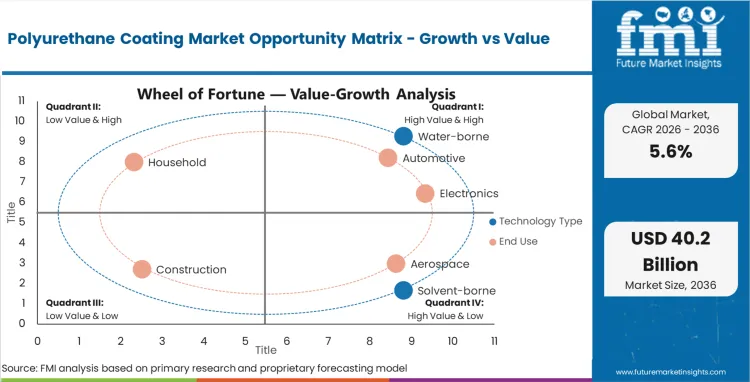
- Prioritize water-borne technology platforms with demonstrated performance in automotive and construction applications where solvent-borne systems historically dominated, capturing value from regulatory-driven transition.
- Align product development with automotive sector requirements for coatings compatible with lightweight substrates including plastics and composites used in vehicle lightweighting.
- Build regional technical support capabilities that help applicators navigate the transition to water-borne systems, addressing application parameter adjustments and quality control requirements.
- Methodology:
- The market view is grounded in primary input from automotive coating engineers, construction specifiers, and furniture manufacturers, and in technical and policy sources focused on coating technology and VOC regulations, avoiding reliance on secondary market research reports from competing providers.
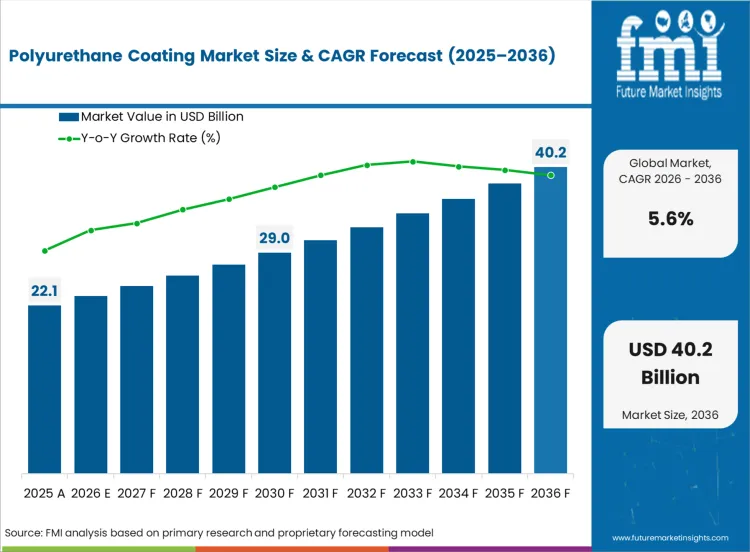
North America, Europe, and Asia-Pacific account for the bulk of incremental revenues through 2036, but the underlying demand logic is distinct in each region. In North America, construction sector demand for durable architectural coatings and automotive refinish applications drive steady consumption.
In Europe, stringent environmental regulations and automotive OEM specifications favor water-borne technology adoption. Across Asia-Pacific, rapid industrialization, expanding automotive production, and infrastructure investment generate the highest growth rates, with China, Japan, and South Korea as primary consumption centers.
Polyurethane Coating Market Definition
Polyurethane coatings are liquid surface finishes that form durable films through chemical reaction between polyols and isocyanates, providing abrasion resistance, chemical stability, and aesthetic properties. For this report, the market covers water-borne and solvent-borne polyurethane coatings applied in automotive OEM and refinish, aerospace, household furniture, construction, and electronics applications, where their performance characteristics deliver quantifiable protection and appearance benefits.
Polyurethane Coating Market Inclusions
The report provides a comprehensive analysis of the polyurethane coating market, covering global and regional market sizes in value terms and a 10-year forecast from 2026 to 2036. It includes segmental breakdowns by technology type and end user, across core regions including North America, Latin America, Western Europe, Eastern Europe, East Asia, South Asia & Pacific, and the Middle East & Africa.
Polyurethane Coating Market Exclusions
The scope excludes two-component polyurethane systems used in casting elastomers and foams where the primary function is not surface coating. It also omits polyurethane dispersions used in textile finishing and paper coatings where the application falls outside traditional paint and coating categories. Very low-volume, custom-formulated coatings for specialized restoration or conservation projects that do not contribute meaningfully to global revenue pools are likewise outside the quantified scope.
Polyurethane Coating Market Research Methodology
- Primary research: Structured interviews were conducted with coatings specifiers in automotive OEM and refinish shops, architectural coating contractors, furniture manufacturers, and procurement professionals in construction and industrial maintenance, alongside discussions with coating formulators and raw material suppliers on technology trends, pricing dynamics, and regional specification patterns.
- Desk research: Technical documentation and application guides from major polyurethane coating manufacturers, together with industry publications on coating technology and end-use sector trends, were assessed to benchmark performance, formulation directions, and to align market modeling with the latest data on automotive production and construction activity.
- Market-sizing and forecasting: A hybrid top-down and bottom-up modeling framework was applied, reconstructing polyurethane coating demand from automotive production volumes, construction spending, furniture manufacturing output, and per-unit coating consumption patterns, then validating outputs against publicly available commentary from leading manufacturers on sales trends and regional market dynamics.
- Data validation and update cycle: Model outputs undergo consistency checks across regions, technology types, and end-user sectors, with iterative calibration using new regulatory guidance, manufacturer portfolio updates, and emerging data on end-use industry activity to ensure that the forecast reflects the latest structural drivers.
Segment Analysis
Polyurethane Coating Market Analysis by Technology Type
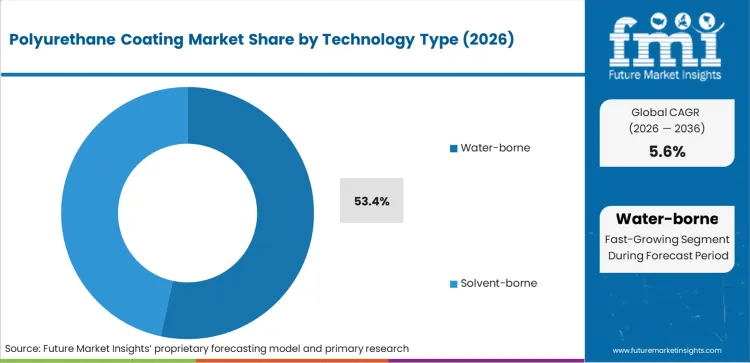
Based on FMI's polyurethane coating market assessment, Water-borne coatings constitute 53.4% of global market value in 2025, establishing their position as the leading technology platform. Their dominance reflects tightening regulations on VOC emissions across North America and Europe, coupled with continuous formulation improvements that have closed historical performance gaps with solvent-borne systems in drying time, hardness, and appearance [3].
This leadership is expected to persist through 2036 as regulatory pressure intensifies and manufacturer R&D investment continues to enhance water-borne performance. Solvent-borne coatings maintain their position in applications requiring maximum chemical resistance, rapid cure in low-temperature environments, or where application equipment is not configured for water-borne materials. However, their share gradually declines as end users transition to compliant technologies.
Polyurethane Coating Market Analysis by End User
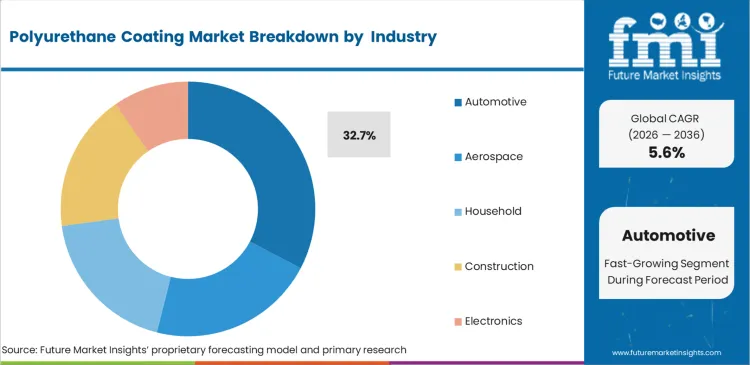
Automotive represents the largest end-user segment for polyurethane coatings, capturing 32.7% of market value in 2025. OEM production consumes coatings for vehicle bodies, plastic components, and trim, requiring scratch resistance, gloss retention, and weatherability. Refinish applications generate additional demand for repair coatings that match original appearance and performance [4].
The segment's leadership reflects both the scale of global automotive production, exceeding 90 million vehicles annually, and the high coating intensity per vehicle. Construction follows as a significant end-user segment, with polyurethane coatings applied to flooring, exterior cladding, and structural steel for corrosion protection. Household applications include furniture, cabinetry, and decorative finishes. Aerospace requires coatings with extreme durability and chemical resistance. Electronics applications include protective coatings for circuit boards and device housings.
Polyurethane Coating Market Drivers, Restraints, Opportunities and Trends
Drivers
Automotive production and refinish activity
Global vehicle production volumes generate base demand for polyurethane coatings in OEM assembly plants, where coatings are applied to bodies, plastic components, and trim. The vehicle parc in operation creates ongoing refinish demand for collision repair and appearance maintenance. Shift toward electric vehicles, with different coating requirements for battery enclosures and lightweight substrates, adds new application areas [5].
Construction sector demand for durable finishes
Building construction consumes polyurethane coatings for flooring systems requiring abrasion resistance, exterior cladding needing weatherability, and structural steel requiring corrosion protection. Renovation activity in mature markets generates repeat demand for high-performance architectural coatings. Industrial facility construction adds demand for coatings with chemical resistance and cleanability [6].
Regulatory pressure on VOC emissions
Enforcement of VOC limits under regulations such as the EU Solvent Emissions Directive and USA EPA Architectural Coatings rules drives transition from solvent-borne to water-borne systems. This regulatory push accelerates replacement cycles for existing coating lines and drives R&D investment in compliant technologies, with early adopters gaining specification advantages in regulated markets [7].
Restraints
Raw material price volatility
Polyurethane coatings depend on petrochemical-derived polyols and isocyanates, making production costs sensitive to crude oil price fluctuations. Isocyanate supply can also face constraints from production disruptions or regulatory actions affecting manufacturing facilities. Volatility challenges manufacturer pricing strategies and can compress margins when raw material costs rise faster than selling prices [8].
Application complexity for water-borne systems
Achieving consistent film quality with water-borne polyurethane coatings requires careful control of application conditions including temperature, humidity, and surface preparation. In shops not configured for water-borne materials, transition may require equipment upgrades and operator retraining, creating adoption barriers particularly for smaller applicators.
Opportunities
Coatings for electric vehicle components
Electric vehicle production creates new coating requirements for battery enclosures requiring thermal management and electrical insulation, electric motor components needing specific dielectric properties, and lightweight composite body panels demanding flexible coatings compatible with substrate movement. These applications represent growth vectors as EV production scales [9].
High-durability coatings for infrastructure
Infrastructure investment in bridges, water treatment facilities, and transportation assets creates demand for polyurethane coatings with extended service life and reduced maintenance requirements. Formulations with enhanced UV stability, corrosion resistance, and abrasion tolerance can capture value in project specifications where lifecycle cost outweighs initial price.
Regional Analysis
.webp "Top Country Growth Comparison Polyurethane Coating Market Cagr (2026 2036)")
| Countries | Value CAGR (2026 to 2036) |
|---|---|
| South Korea | 8.0% |
| Japan | 7.2% |
| United Kingdom | 6.6% |
| China | 6.3% |
| United States | 5.9% |
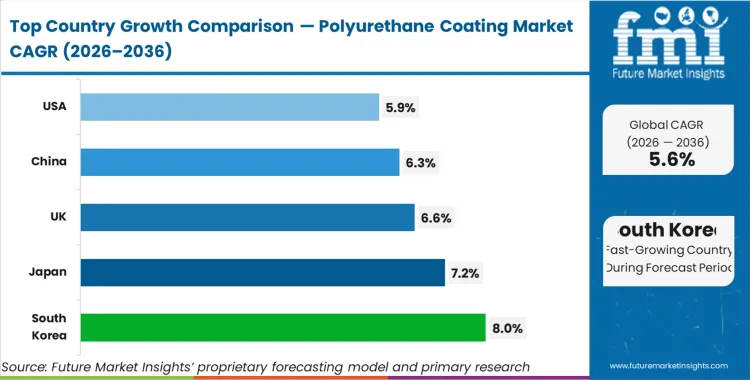
Source: Future Market Insights analysis, supported by a proprietary forecasting model and primary research
South Korea
South Korea's polyurethane coating market is projected to grow at an 8.0% CAGR from 2026 to 2036, the highest among key countries. Growth is driven by the country's advanced automotive and electronics industries, which consume high-performance coatings for vehicle production and device manufacturing. Shipbuilding, another major industry, requires protective coatings for marine applications. Government support for green technology adoption encourages transition to water-borne systems in industrial coating applications [10].
Japan
Japan's polyurethane coating market is expected to grow at a 7.2% CAGR from 2026 to 2036. The country's automotive manufacturing leadership generates substantial OEM coating demand, with emphasis on high-quality finishes. Electronics industry requirements for precision coatings in device production add premium applications. Government infrastructure investment and construction activity support architectural coating demand. Aging workforce and skill retention challenges drive interest in coatings with simplified application requirements [11].
United Kingdom
The United Kingdom's polyurethane coating market is forecast to grow at a 6.6% CAGR from 2026 to 2036. Construction and infrastructure projects, including building renovations and transportation infrastructure development, generate demand for protective and decorative coatings. Rising preference for eco-friendly materials drives water-borne adoption. Regulatory alignment with EU VOC limits, even post-Brexit, maintains pressure for compliant technologies. Aerospace and marine industries add specialized coating requirements [12].
China
China's polyurethane coating market is projected to grow at a 6.3% CAGR from 2026 to 2036. The world's largest automotive producer and construction market generates massive coating consumption. Furniture manufacturing for domestic consumption and export adds substantial demand. Environmental enforcement tightening in industrial provinces accelerates transition from solvent-borne to water-borne systems, particularly in coastal manufacturing centers. Domestic coating manufacturers expand capabilities to serve growing requirements [13].
United States
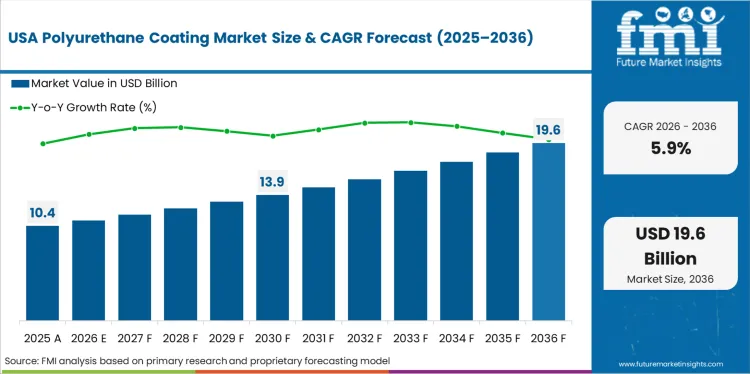
The United States polyurethane coating market is projected to grow at a 5.9% CAGR from 2026 to 2036. Growth is supported by steady automotive production and a large vehicle parc generating refinish demand. Construction activity, including commercial building and residential renovation, drives architectural coating consumption. Industrial maintenance coating requirements for infrastructure and manufacturing facilities add demand. State-level VOC regulations, particularly California's stringent rules, continue to drive technology transition [14].
Competitive Aligners for Market Players
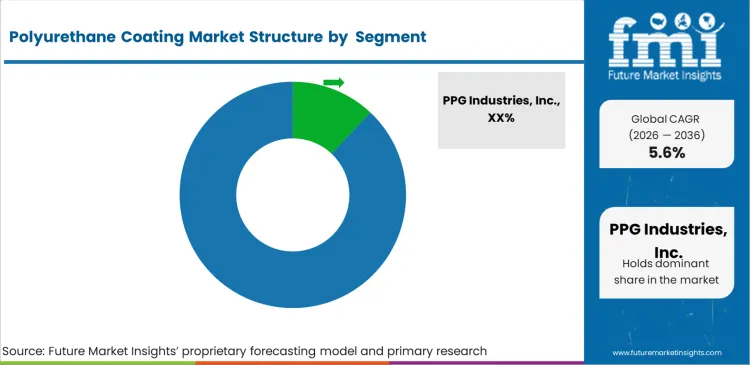
The polyurethane coating market features a mix of global diversified coatings manufacturers and specialized regional players with deep application expertise. Competitive positioning hinges on formulation performance across end-user segments, regulatory compliance, brand recognition among specifiers, and distribution reach to industrial and professional applicators.
Leading players such as PPG Industries, AkzoNobel, Sherwin-Williams, and BASF leverage their global R&D capabilities and extensive distribution networks to serve multinational automotive and construction customers. Their portfolios include both water-borne and solvent-borne systems with proprietary resin technology protected by patents.
Specialty players including Axalta Coating Systems focus on automotive OEM and refinish with deep application engineering support. Regional manufacturers maintain positions through relationships with local industrial customers and understanding of climate-specific requirements.
From a strategic perspective, differentiation is moving beyond basic coating performance toward demonstrable capability in three areas. These include water-borne formulation expertise that matches solvent-borne application properties; application engineering support that helps customers transition to compliant technologies; and documented performance in emerging applications such as electric vehicle components and infrastructure protective coatings.
Key Developments:
- PPG Industries has expanded its water-borne polyurethane coating portfolio for automotive and industrial applications, with new formulations offering improved appearance and durability while meeting tightening VOC regulations. The company's technical service includes application optimization support for customers transitioning from solvent-borne systems.
- AkzoNobel has focused on developing coatings for electric vehicle components, including battery enclosure coatings with thermal management properties and dielectric performance. These formulations address emerging requirements as automotive electrification scales, positioning the company in growth segments.
- BASF has advanced its polyurethane resin technology for water-borne architectural coatings, enabling formulations with enhanced block resistance and early water resistance that expand application windows for contractors. The company's raw material portfolio supports coating manufacturers in meeting performance and regulatory requirements.
Key Players Profiled
- PPG Industries, Inc.
- Akzo Nobel N.V.
- The Sherwin-Williams Company
- BASF SE
- Axalta Coating Systems, LLC
- Jotun A/S
- Hempel A/S
- Sika AG
- RPM International Inc.
- The Valspar Corporation
Scope of the Report
| Metric | Value |
|---|---|
| Quantitative Units | USD 23.3 billion (2026) to approximately USD 40.2 billion (2036), at a CAGR of 5.6%, with 2025 historic value of USD 22.1 billion |
| Market Definition | The polyurethane coating market comprises liquid surface finishes that form durable films through reaction between polyols and isocyanates, providing abrasion resistance, chemical stability, and aesthetic properties, applied in automotive, aerospace, household, construction, and electronics applications. |
| Technology Type Segmentation | Water-borne (53.4% in 2025); Solvent-borne |
| End User Coverage | Automotive (32.7% in 2025); Aerospace; Household; Construction; Electronics |
| Regions Covered | North America, Latin America, Western Europe, Eastern Europe, East Asia, South Asia & Pacific, Middle East & Africa |
| Countries Covered | South Korea, Japan, United Kingdom, China, United States |
| Key Companies Profiled | PPG Industries, Inc.; Akzo Nobel N.V.; The Sherwin-Williams Company; BASF SE; Axalta Coating Systems, LLC; Jotun A/S; Hempel A/S; Sika AG; RPM International Inc.; The Valspar Corporation |
| Forecast Period | 2026 to 2036 |
| Approach | Hybrid top-down and bottom-up market modeling validated through primary interviews with automotive coating engineers, construction specifiers, and furniture manufacturers, supported by benchmarking against automotive production data, construction spending statistics, and regulatory documents on VOC emission limits. |
Polyurethane Coating Market Analysis by Segments
Technology Type:
- Water-borne
- Solvent-borne
End User:
- Automotive
- Aerospace
- Household
- Construction
- Electronics
Region:
- North America
- Latin America
- Western Europe
- Eastern Europe
- East Asia
- South Asia & Pacific
- Middle East & Africa
Bibliography
- International Organization of Motor Vehicle Manufacturers. (2025). World motor vehicle production statistics. OICA.
- Global Construction Perspectives. (2025). Global construction 2035: A forecast for the construction industry. GCP.
- European Commission. (2024). Study on the potential for reducing emissions from the use of solvents in decorative paints and varnishes. Publications Office of the European Union.
- Axalta Coating Systems. (2024). Global automotive color popularity report. Axalta.
- International Energy Agency. (2025). Global EV Outlook 2025: Trends in electric vehicle adoption. IEA Publications.
- American Institute of Architects. (2024). Architectural specification guidelines for high-performance coatings. AIA.
- California Air Resources Board. (2025). Suggested control measure for architectural coatings. CARB.
- USA Energy Information Administration. (2025). Petroleum & other liquids: Spot prices. EIA.
- SAE International. (2024). Coating requirements for electric vehicle battery enclosures. SAE Technical Paper.
- Korea International Trade Association. (2025). Korea's chemical industry export trends. KITA.
- Japan Paint Manufacturers Association. (2025). Paint and coatings production statistics. JPMA.
- UK Construction Products Association. (2025). Construction industry forecast. CPA.
- National Bureau of Statistics of China. (2025). China statistical yearbook on construction. China Statistics Press.
- American Coatings Association. (2024). Coatings industry market analysis. ACA.
This Report Addresses
- Market intelligence to enable structured strategic decision-making across coating manufacturers, automotive OEMs, construction specifiers, and industry investors.
- Market size estimation and 10-year revenue forecasts from 2026 to 2036, including validated CAGR and absolute dollar opportunity sizing.
- Growth opportunity mapping across Technology Type, End User, and regional demand pockets, with emphasis on water-borne adoption and automotive-driven consumption patterns.
- Segment and regional forecasting covering water-borne and solvent-borne systems, alongside end-user-specific demand trajectories across automotive, construction, and household applications.
- Competition strategy assessment, including formulation R&D investment, regulatory compliance capabilities, and buyer leverage dynamics shaping sourcing decisions.
- Product and technology tracking focused on water-borne resin development, application parameter optimization, and performance in emerging electric vehicle applications.
- Regional production analysis covering automotive manufacturing concentrations, construction spending trends, and regulatory timelines influencing coating technology transition.
- Report delivery in PDF, Excel, and presentation-ready formats to support executive planning, capacity investment decisions, and competitive benchmarking.
Frequently Asked Questions
What is the size of the global polyurethane coating market in 2025 and how fast is it expected to grow through 2036?
The global polyurethane coating market is valued at USD 22.1 billion in 2025 and is projected to grow at a 5.6% CAGR, reaching about USD 23.3 billion in 2026 and approximately USD 40.2 billion by 2036.
Why do Water-borne coatings hold 53.4% of the market in 2026?
Water-borne coatings account for 53.4% of market value due to tightening VOC regulations across North America and Europe, combined with formulation improvements that have closed performance gaps with solvent-borne systems in drying time, hardness, and appearance.
What drives Automotive as the largest end-user segment at 32.7%?
Automotive represents the largest segment due to OEM production coating requirements for vehicle bodies and components, plus ongoing refinish demand for collision repair, with global production volumes exceeding 90 million vehicles annually generating substantial coating consumption.
How do VOC regulations influence coating technology transition?
Regulations such as the EU Solvent Emissions Directive and USA EPA Architectural Coatings rules set maximum VOC limits that solvent-borne systems increasingly cannot meet, driving specification of water-borne alternatives and accelerating replacement cycles for existing coating lines.
What role does automotive production play in market growth?
Global vehicle production volumes generate base OEM coating demand, while the vehicle parc in operation creates ongoing refinish requirements. Electric vehicle transition adds new coating applications for battery enclosures and lightweight substrates.
Why is South Korea's polyurethane coating market projected to grow at an 8.0% CAGR?
South Korea's 8.0% CAGR reflects advanced automotive and electronics industries consuming high-performance coatings, shipbuilding requiring marine protective coatings, and government support for green technology adoption encouraging water-borne system transition.
What drives Japan's 7.2% CAGR between 2026 and 2036?
Japan's 7.2% CAGR is driven by automotive manufacturing leadership generating substantial OEM coating demand, electronics industry requirements for precision coatings, infrastructure investment supporting architectural demand, and interest in simplified application coatings addressing workforce challenges.
How does the United Kingdom achieve 6.6% growth?
The United Kingdom's 6.6% CAGR reflects construction and infrastructure project demand for protective and decorative coatings, rising preference for eco-friendly materials driving water-borne adoption, and aerospace and marine industries adding specialized coating requirements.
What factors contribute to China's 6.3% growth forecast?
China's 6.3% CAGR reflects its position as the world's largest automotive producer and construction market generating massive coating consumption, furniture manufacturing demand, and environmental enforcement tightening accelerating transition from solvent-borne to water-borne systems.
Why does the United States grow at a more moderate 5.9% CAGR?
The United States' 5.9% CAGR reflects steady automotive production and refinish demand, construction activity driving architectural coatings, industrial maintenance requirements, and state-level VOC regulations continuing to drive technology transition in a mature market.
How are leading manufacturers like PPG Industries positioning?
PPG Industries expands water-borne polyurethane portfolios for automotive and industrial applications with improved appearance and durability, providing application optimization support for customers transitioning from solvent-borne systems.
What is AkzoNobel's strategic focus?
AkzoNobel develops coatings for electric vehicle components including battery enclosure coatings with thermal management and dielectric properties, addressing emerging requirements as automotive electrification scales.
How does BASF support coating manufacturers?
BASF advances polyurethane resin technology for water-borne architectural coatings, enabling formulations with enhanced block resistance and early water resistance that expand application windows for contractors.
What are the main technical barriers in water-borne coating adoption?
Key barriers include achieving consistent film quality requiring careful control of application conditions including temperature, humidity, and surface preparation, plus potential equipment upgrade and operator retraining requirements for shops not configured for water-borne materials.
How does raw material price volatility affect the market?
Dependence on petrochemical-derived polyols and isocyanates makes production costs sensitive to crude oil price fluctuations. Isocyanate supply can face constraints from production disruptions, challenging manufacturer pricing strategies and margin management.
What opportunities exist in electric vehicle coatings?
EV production creates new coating requirements for battery enclosures requiring thermal management and electrical insulation, electric motor components needing specific dielectric properties, and lightweight composite body panels demanding flexible coatings.
How do infrastructure investments create coating demand?
Infrastructure projects in bridges, water treatment facilities, and transportation assets require polyurethane coatings with extended service life and reduced maintenance, where lifecycle cost considerations outweigh initial price in specifications.
What risks does the regulatory environment create?
Stringent VOC regulations create R&D costs and compliance burdens but also present opportunities for suppliers with water-borne expertise. Non-compliance can exclude suppliers from tenders in regulated regions, while transition support capabilities become competitive differentiators.
Table of Content
- Executive Summary
- Global Market Outlook
- Demand-side Trends
- Supply-side Trends
- Technology Roadmap Analysis
- Analysis and Recommendations
- Market Overview
- Market Coverage / Taxonomy
- Market Definition / Scope / Limitations
- Research Methodology
- Chapter Orientation
- Analytical Lens and Working Hypotheses
- Market Structure, Signals, and Trend Drivers
- Benchmarking and Cross-market Comparability
- Market Sizing, Forecasting, and Opportunity Mapping
- Research Design and Evidence Framework
- Desk Research Programme (Secondary Evidence)
- Company Annual and Sustainability Reports
- Peer-reviewed Journals and Academic Literature
- Corporate Websites, Product Literature, and Technical Notes
- Earnings Decks and Investor Briefings
- Statutory Filings and Regulatory Disclosures
- Technical White Papers and Standards Notes
- Trade Journals, Industry Magazines, and Analyst Briefs
- Conference Proceedings, Webinars, and Seminar Materials
- Government Statistics Portals and Public Data Releases
- Press Releases and Reputable Media Coverage
- Specialist Newsletters and Curated Briefings
- Sector Databases and Reference Repositories
- FMI Internal Proprietary Databases and Historical Market Datasets
- Subscription Datasets and Paid Sources
- Social Channels, Communities, and Digital Listening Inputs
- Additional Desk Sources
- Expert Input and Fieldwork (Primary Evidence)
- Primary Modes
- Qualitative Interviews and Expert Elicitation
- Quantitative Surveys and Structured Data Capture
- Blended Approach
- Why Primary Evidence is Used
- Field Techniques
- Interviews
- Surveys
- Focus Groups
- Observational and In-context Research
- Social and Community Interactions
- Stakeholder Universe Engaged
- C-suite Leaders
- Board Members
- Presidents and Vice Presidents
- R&D and Innovation Heads
- Technical Specialists
- Domain Subject-matter Experts
- Scientists
- Physicians and Other Healthcare Professionals
- Governance, Ethics, and Data Stewardship
- Research Ethics
- Data Integrity and Handling
- Primary Modes
- Tooling, Models, and Reference Databases
- Desk Research Programme (Secondary Evidence)
- Data Engineering and Model Build
- Data Acquisition and Ingestion
- Cleaning, Normalisation, and Verification
- Synthesis, Triangulation, and Analysis
- Quality Assurance and Audit Trail
- Market Background
- Market Dynamics
- Drivers
- Restraints
- Opportunity
- Trends
- Scenario Forecast
- Demand in Optimistic Scenario
- Demand in Likely Scenario
- Demand in Conservative Scenario
- Opportunity Map Analysis
- Product Life Cycle Analysis
- Supply Chain Analysis
- Investment Feasibility Matrix
- Value Chain Analysis
- PESTLE and Porter’s Analysis
- Regulatory Landscape
- Regional Parent Market Outlook
- Production and Consumption Statistics
- Import and Export Statistics
- Market Dynamics
- Global Market Analysis 2021 to 2025 and Forecast, 2026 to 2036
- Historical Market Size Value (USD Million) Analysis, 2021 to 2025
- Current and Future Market Size Value (USD Million) Projections, 2026 to 2036
- Y-o-Y Growth Trend Analysis
- Absolute $ Opportunity Analysis
- Global Market Pricing Analysis 2021 to 2025 and Forecast 2026 to 2036
- Global Market Analysis 2021 to 2025 and Forecast 2026 to 2036, By Technology Type
- Introduction / Key Findings
- Historical Market Size Value (USD Million) Analysis By Technology Type , 2021 to 2025
- Current and Future Market Size Value (USD Million) Analysis and Forecast By Technology Type , 2026 to 2036
- Water-borne
- Solvent-borne
- Water-borne
- Y-o-Y Growth Trend Analysis By Technology Type , 2021 to 2025
- Absolute $ Opportunity Analysis By Technology Type , 2026 to 2036
- Global Market Analysis 2021 to 2025 and Forecast 2026 to 2036, By End Use
- Introduction / Key Findings
- Historical Market Size Value (USD Million) Analysis By End Use, 2021 to 2025
- Current and Future Market Size Value (USD Million) Analysis and Forecast By End Use, 2026 to 2036
- Automotive
- Aerospace
- Household
- Construction
- Electronics
- Automotive
- Y-o-Y Growth Trend Analysis By End Use, 2021 to 2025
- Absolute $ Opportunity Analysis By End Use, 2026 to 2036
- Global Market Analysis 2021 to 2025 and Forecast 2026 to 2036, By Region
- Introduction
- Historical Market Size Value (USD Million) Analysis By Region, 2021 to 2025
- Current Market Size Value (USD Million) Analysis and Forecast By Region, 2026 to 2036
- North America
- Latin America
- Western Europe
- Eastern Europe
- East Asia
- South Asia and Pacific
- Middle East & Africa
- Market Attractiveness Analysis By Region
- North America Market Analysis 2021 to 2025 and Forecast 2026 to 2036, By Country
- Historical Market Size Value (USD Million) Trend Analysis By Market Taxonomy, 2021 to 2025
- Market Size Value (USD Million) Forecast By Market Taxonomy, 2026 to 2036
- By Country
- USA
- Canada
- Mexico
- By Technology Type
- By End Use
- By Country
- Market Attractiveness Analysis
- By Country
- By Technology Type
- By End Use
- Key Takeaways
- Latin America Market Analysis 2021 to 2025 and Forecast 2026 to 2036, By Country
- Historical Market Size Value (USD Million) Trend Analysis By Market Taxonomy, 2021 to 2025
- Market Size Value (USD Million) Forecast By Market Taxonomy, 2026 to 2036
- By Country
- Brazil
- Chile
- Rest of Latin America
- By Technology Type
- By End Use
- By Country
- Market Attractiveness Analysis
- By Country
- By Technology Type
- By End Use
- Key Takeaways
- Western Europe Market Analysis 2021 to 2025 and Forecast 2026 to 2036, By Country
- Historical Market Size Value (USD Million) Trend Analysis By Market Taxonomy, 2021 to 2025
- Market Size Value (USD Million) Forecast By Market Taxonomy, 2026 to 2036
- By Country
- Germany
- UK
- Italy
- Spain
- France
- Nordic
- BENELUX
- Rest of Western Europe
- By Technology Type
- By End Use
- By Country
- Market Attractiveness Analysis
- By Country
- By Technology Type
- By End Use
- Key Takeaways
- Eastern Europe Market Analysis 2021 to 2025 and Forecast 2026 to 2036, By Country
- Historical Market Size Value (USD Million) Trend Analysis By Market Taxonomy, 2021 to 2025
- Market Size Value (USD Million) Forecast By Market Taxonomy, 2026 to 2036
- By Country
- Russia
- Poland
- Hungary
- Balkan & Baltic
- Rest of Eastern Europe
- By Technology Type
- By End Use
- By Country
- Market Attractiveness Analysis
- By Country
- By Technology Type
- By End Use
- Key Takeaways
- East Asia Market Analysis 2021 to 2025 and Forecast 2026 to 2036, By Country
- Historical Market Size Value (USD Million) Trend Analysis By Market Taxonomy, 2021 to 2025
- Market Size Value (USD Million) Forecast By Market Taxonomy, 2026 to 2036
- By Country
- China
- Japan
- South Korea
- By Technology Type
- By End Use
- By Country
- Market Attractiveness Analysis
- By Country
- By Technology Type
- By End Use
- Key Takeaways
- South Asia and Pacific Market Analysis 2021 to 2025 and Forecast 2026 to 2036, By Country
- Historical Market Size Value (USD Million) Trend Analysis By Market Taxonomy, 2021 to 2025
- Market Size Value (USD Million) Forecast By Market Taxonomy, 2026 to 2036
- By Country
- India
- ASEAN
- Australia & New Zealand
- Rest of South Asia and Pacific
- By Technology Type
- By End Use
- By Country
- Market Attractiveness Analysis
- By Country
- By Technology Type
- By End Use
- Key Takeaways
- Middle East & Africa Market Analysis 2021 to 2025 and Forecast 2026 to 2036, By Country
- Historical Market Size Value (USD Million) Trend Analysis By Market Taxonomy, 2021 to 2025
- Market Size Value (USD Million) Forecast By Market Taxonomy, 2026 to 2036
- By Country
- Kingdom of Saudi Arabia
- Other GCC Countries
- Turkiye
- South Africa
- Other African Union
- Rest of Middle East & Africa
- By Technology Type
- By End Use
- By Country
- Market Attractiveness Analysis
- By Country
- By Technology Type
- By End Use
- Key Takeaways
- Key Countries Market Analysis
- USA
- Pricing Analysis
- Market Share Analysis, 2025
- By Technology Type
- By End Use
- Canada
- Pricing Analysis
- Market Share Analysis, 2025
- By Technology Type
- By End Use
- Mexico
- Pricing Analysis
- Market Share Analysis, 2025
- By Technology Type
- By End Use
- Brazil
- Pricing Analysis
- Market Share Analysis, 2025
- By Technology Type
- By End Use
- Chile
- Pricing Analysis
- Market Share Analysis, 2025
- By Technology Type
- By End Use
- Germany
- Pricing Analysis
- Market Share Analysis, 2025
- By Technology Type
- By End Use
- UK
- Pricing Analysis
- Market Share Analysis, 2025
- By Technology Type
- By End Use
- Italy
- Pricing Analysis
- Market Share Analysis, 2025
- By Technology Type
- By End Use
- Spain
- Pricing Analysis
- Market Share Analysis, 2025
- By Technology Type
- By End Use
- France
- Pricing Analysis
- Market Share Analysis, 2025
- By Technology Type
- By End Use
- India
- Pricing Analysis
- Market Share Analysis, 2025
- By Technology Type
- By End Use
- ASEAN
- Pricing Analysis
- Market Share Analysis, 2025
- By Technology Type
- By End Use
- Australia & New Zealand
- Pricing Analysis
- Market Share Analysis, 2025
- By Technology Type
- By End Use
- China
- Pricing Analysis
- Market Share Analysis, 2025
- By Technology Type
- By End Use
- Japan
- Pricing Analysis
- Market Share Analysis, 2025
- By Technology Type
- By End Use
- South Korea
- Pricing Analysis
- Market Share Analysis, 2025
- By Technology Type
- By End Use
- Russia
- Pricing Analysis
- Market Share Analysis, 2025
- By Technology Type
- By End Use
- Poland
- Pricing Analysis
- Market Share Analysis, 2025
- By Technology Type
- By End Use
- Hungary
- Pricing Analysis
- Market Share Analysis, 2025
- By Technology Type
- By End Use
- Kingdom of Saudi Arabia
- Pricing Analysis
- Market Share Analysis, 2025
- By Technology Type
- By End Use
- Turkiye
- Pricing Analysis
- Market Share Analysis, 2025
- By Technology Type
- By End Use
- South Africa
- Pricing Analysis
- Market Share Analysis, 2025
- By Technology Type
- By End Use
- USA
- Market Structure Analysis
- Competition Dashboard
- Competition Benchmarking
- Market Share Analysis of Top Players
- By Regional
- By Technology Type
- By End Use
- Competition Analysis
- Competition Deep Dive
- PPG Industries, Inc.
- Overview
- Product Portfolio
- Profitability by Market Segments (Product/Age /Sales Channel/Region)
- Sales Footprint
- Strategy Overview
- Marketing Strategy
- Product Strategy
- Channel Strategy
- Akzo Nobel N.V.
- The Sherwin-Williams Company
- BASF SE
- Axalta Coating Systems, LLC
- Jotun A/S
- Hempel A/S
- Sika AG
- PPG Industries, Inc.
- Competition Deep Dive
- Assumptions & Acronyms Used
List of Tables
- Table 1: Global Market Value (USD Million) Forecast by Region, 2021 to 2036
- Table 2: Global Market Value (USD Million) Forecast by Technology Type , 2021 to 2036
- Table 3: Global Market Value (USD Million) Forecast by End Use, 2021 to 2036
- Table 4: North America Market Value (USD Million) Forecast by Country, 2021 to 2036
- Table 5: North America Market Value (USD Million) Forecast by Technology Type , 2021 to 2036
- Table 6: North America Market Value (USD Million) Forecast by End Use, 2021 to 2036
- Table 7: Latin America Market Value (USD Million) Forecast by Country, 2021 to 2036
- Table 8: Latin America Market Value (USD Million) Forecast by Technology Type , 2021 to 2036
- Table 9: Latin America Market Value (USD Million) Forecast by End Use, 2021 to 2036
- Table 10: Western Europe Market Value (USD Million) Forecast by Country, 2021 to 2036
- Table 11: Western Europe Market Value (USD Million) Forecast by Technology Type , 2021 to 2036
- Table 12: Western Europe Market Value (USD Million) Forecast by End Use, 2021 to 2036
- Table 13: Eastern Europe Market Value (USD Million) Forecast by Country, 2021 to 2036
- Table 14: Eastern Europe Market Value (USD Million) Forecast by Technology Type , 2021 to 2036
- Table 15: Eastern Europe Market Value (USD Million) Forecast by End Use, 2021 to 2036
- Table 16: East Asia Market Value (USD Million) Forecast by Country, 2021 to 2036
- Table 17: East Asia Market Value (USD Million) Forecast by Technology Type , 2021 to 2036
- Table 18: East Asia Market Value (USD Million) Forecast by End Use, 2021 to 2036
- Table 19: South Asia and Pacific Market Value (USD Million) Forecast by Country, 2021 to 2036
- Table 20: South Asia and Pacific Market Value (USD Million) Forecast by Technology Type , 2021 to 2036
- Table 21: South Asia and Pacific Market Value (USD Million) Forecast by End Use, 2021 to 2036
- Table 22: Middle East & Africa Market Value (USD Million) Forecast by Country, 2021 to 2036
- Table 23: Middle East & Africa Market Value (USD Million) Forecast by Technology Type , 2021 to 2036
- Table 24: Middle East & Africa Market Value (USD Million) Forecast by End Use, 2021 to 2036
List of Figures
- Figure 1: Global Market Pricing Analysis
- Figure 2: Global Market Value (USD Million) Forecast 2021-2036
- Figure 3: Global Market Value Share and BPS Analysis by Technology Type , 2026 and 2036
- Figure 4: Global Market Y-o-Y Growth Comparison by Technology Type , 2026-2036
- Figure 5: Global Market Attractiveness Analysis by Technology Type
- Figure 6: Global Market Value Share and BPS Analysis by End Use, 2026 and 2036
- Figure 7: Global Market Y-o-Y Growth Comparison by End Use, 2026-2036
- Figure 8: Global Market Attractiveness Analysis by End Use
- Figure 9: Global Market Value (USD Million) Share and BPS Analysis by Region, 2026 and 2036
- Figure 10: Global Market Y-o-Y Growth Comparison by Region, 2026-2036
- Figure 11: Global Market Attractiveness Analysis by Region
- Figure 12: North America Market Incremental Dollar Opportunity, 2026-2036
- Figure 13: Latin America Market Incremental Dollar Opportunity, 2026-2036
- Figure 14: Western Europe Market Incremental Dollar Opportunity, 2026-2036
- Figure 15: Eastern Europe Market Incremental Dollar Opportunity, 2026-2036
- Figure 16: East Asia Market Incremental Dollar Opportunity, 2026-2036
- Figure 17: South Asia and Pacific Market Incremental Dollar Opportunity, 2026-2036
- Figure 18: Middle East & Africa Market Incremental Dollar Opportunity, 2026-2036
- Figure 19: North America Market Value Share and BPS Analysis by Country, 2026 and 2036
- Figure 20: North America Market Value Share and BPS Analysis by Technology Type , 2026 and 2036
- Figure 21: North America Market Y-o-Y Growth Comparison by Technology Type , 2026-2036
- Figure 22: North America Market Attractiveness Analysis by Technology Type
- Figure 23: North America Market Value Share and BPS Analysis by End Use, 2026 and 2036
- Figure 24: North America Market Y-o-Y Growth Comparison by End Use, 2026-2036
- Figure 25: North America Market Attractiveness Analysis by End Use
- Figure 26: Latin America Market Value Share and BPS Analysis by Country, 2026 and 2036
- Figure 27: Latin America Market Value Share and BPS Analysis by Technology Type , 2026 and 2036
- Figure 28: Latin America Market Y-o-Y Growth Comparison by Technology Type , 2026-2036
- Figure 29: Latin America Market Attractiveness Analysis by Technology Type
- Figure 30: Latin America Market Value Share and BPS Analysis by End Use, 2026 and 2036
- Figure 31: Latin America Market Y-o-Y Growth Comparison by End Use, 2026-2036
- Figure 32: Latin America Market Attractiveness Analysis by End Use
- Figure 33: Western Europe Market Value Share and BPS Analysis by Country, 2026 and 2036
- Figure 34: Western Europe Market Value Share and BPS Analysis by Technology Type , 2026 and 2036
- Figure 35: Western Europe Market Y-o-Y Growth Comparison by Technology Type , 2026-2036
- Figure 36: Western Europe Market Attractiveness Analysis by Technology Type
- Figure 37: Western Europe Market Value Share and BPS Analysis by End Use, 2026 and 2036
- Figure 38: Western Europe Market Y-o-Y Growth Comparison by End Use, 2026-2036
- Figure 39: Western Europe Market Attractiveness Analysis by End Use
- Figure 40: Eastern Europe Market Value Share and BPS Analysis by Country, 2026 and 2036
- Figure 41: Eastern Europe Market Value Share and BPS Analysis by Technology Type , 2026 and 2036
- Figure 42: Eastern Europe Market Y-o-Y Growth Comparison by Technology Type , 2026-2036
- Figure 43: Eastern Europe Market Attractiveness Analysis by Technology Type
- Figure 44: Eastern Europe Market Value Share and BPS Analysis by End Use, 2026 and 2036
- Figure 45: Eastern Europe Market Y-o-Y Growth Comparison by End Use, 2026-2036
- Figure 46: Eastern Europe Market Attractiveness Analysis by End Use
- Figure 47: East Asia Market Value Share and BPS Analysis by Country, 2026 and 2036
- Figure 48: East Asia Market Value Share and BPS Analysis by Technology Type , 2026 and 2036
- Figure 49: East Asia Market Y-o-Y Growth Comparison by Technology Type , 2026-2036
- Figure 50: East Asia Market Attractiveness Analysis by Technology Type
- Figure 51: East Asia Market Value Share and BPS Analysis by End Use, 2026 and 2036
- Figure 52: East Asia Market Y-o-Y Growth Comparison by End Use, 2026-2036
- Figure 53: East Asia Market Attractiveness Analysis by End Use
- Figure 54: South Asia and Pacific Market Value Share and BPS Analysis by Country, 2026 and 2036
- Figure 55: South Asia and Pacific Market Value Share and BPS Analysis by Technology Type , 2026 and 2036
- Figure 56: South Asia and Pacific Market Y-o-Y Growth Comparison by Technology Type , 2026-2036
- Figure 57: South Asia and Pacific Market Attractiveness Analysis by Technology Type
- Figure 58: South Asia and Pacific Market Value Share and BPS Analysis by End Use, 2026 and 2036
- Figure 59: South Asia and Pacific Market Y-o-Y Growth Comparison by End Use, 2026-2036
- Figure 60: South Asia and Pacific Market Attractiveness Analysis by End Use
- Figure 61: Middle East & Africa Market Value Share and BPS Analysis by Country, 2026 and 2036
- Figure 62: Middle East & Africa Market Value Share and BPS Analysis by Technology Type , 2026 and 2036
- Figure 63: Middle East & Africa Market Y-o-Y Growth Comparison by Technology Type , 2026-2036
- Figure 64: Middle East & Africa Market Attractiveness Analysis by Technology Type
- Figure 65: Middle East & Africa Market Value Share and BPS Analysis by End Use, 2026 and 2036
- Figure 66: Middle East & Africa Market Y-o-Y Growth Comparison by End Use, 2026-2036
- Figure 67: Middle East & Africa Market Attractiveness Analysis by End Use
- Figure 68: Global Market - Tier Structure Analysis
- Figure 69: Global Market - Company Share Analysis


