

- Market Size (2026)
- USD 12.1 Bn
- Forecast (2036)
- USD 17.4 Bn
- CAGR (2026 to 2036)
- 3.7%
Stretch Films Market Size, Market Forecast and Outlook By FMI
The stretch films market crossed a valuation of USD 11.6 billion in 2025. The market is set to reach USD 12.1 billion by 2026-end and USD 17.4 billion by 2036, expanding at a projected CAGR of 3.7%. Polyethylene is expected to dominate with an 81.6% material share, and machine stretch film is projected to lead product type with 65.6% share.
Summary of the Stretch Films Market
- Demand and Growth Drivers
- Palletized logistics increases use of stretch films as manufacturers need stable load containment during shipment.
- E-commerce warehousing lifts machine wrap demand as fulfillment sites need faster and repeatable pallet handling.
- Downgauging programs raise interest in thinner films as converters try to cut resin use per pallet.
- Export cargo protection increases pallet wrap use across food and industrial goods, with stretch and shrink films industry analysis guiding adjacent packaging assessment.
- Product and Segment View
- Polyethylene is projected to hold 81.6% of the material segment in 2026 as buyers favor films with stretch recovery and puncture strength.
- Automated wrapping lines keep machine stretch film ahead, with the segment forecast to capture 65.6% of product type share in 2026.
- Cast stretch film holds high-volume process appeal as converters need film clarity and consistent gauge for large wrapping runs.
- Logistics & supply chain is forecast to account for 29.6% of end-use share in 2026 through steady pallet movement across storage and shipment operations.
- Geography and Competitive Outlook
- India is expected to record a CAGR of 5.3% through 2036 as manufacturing and organized retail logistics expand.
- China is projected to expand at 3.6% CAGR by 2036 as export packaging and industrial warehousing use films.
- Companies combining multilayer extrusion depth and machine-grade validation strengthen their market position during the forecast period.
- Analyst Opinion
- Nandini Roy Choudhury, Principal Consultant for Packaging at FMI says, “Stretch films are becoming load containment products for manufacturers seeking lower film weight per pallet. Packaging teams need holding force proof with machine run consistency. LLDPE formulation skill and machine-grade testing reduce wrap failures while automated warehouses drive validation-led demand.”
- Stretch Films Market Value Analysis
- Stretch films are shifting from basic pallet covering toward tested films designed for stronger load containment.
- Warehouse automation and film-weight reduction programs are increasing the need for better-performing industrial stretch films.
- The market is benefiting from heavy-load wrapping demand, with blown stretch packaging films market outlook pointing to rough-load packaging needs.
- Demand is reinforced by load security needs across packaged foods and industrial shipments.
- Resin cost pressure keeps buyers focused on roll yield and damage reduction during supplier trials.
Stretch film buyers are no longer judging films only by roll price. They need films to hold pallet loads, run well on wrapping machines, and meet packaging rules. Berry Global’s Bontite Sustane stretch film includes 30% certified PCR while still being positioned for holding force and puncture resistance. This makes recycled-content stretch film useful only when it performs reliably on existing wrapping lines. EU packaging rules add pressure because all packaging must be recyclable by 2030. This means suppliers selling into Europe need PE film structures with stronger recyclability documentation. ASTM D4649-20 helps buyers define stretch film selection and proper use for unitizing and palletizing. Cortec Eco Wrap provides another option because it is a patented compostable stretch film. It is available in 1 mil and 1.5 mil formats for various specific applications.
Stretch Films Market Definition
The stretch films market includes plastic films used to secure products on pallets during storage and transport. Scope includes hand films and machine films across cast and blown formats. Products serve load containment and shipment stabilization across industrial packaging. Shrink films and household cling films are outside the scope.
Stretch Films Market Inclusions
Market scope covers all commercially traded stretch films categorized by material type, including polyethylene, polypropylene, polyvinyl chloride, and other plastics, manufacturing process, including cast stretch film and blown stretch film, thickness, including below 12 microns, 12-15 microns, 16-20 microns, and above 20 microns, product type, including hand stretch film, machine stretch film, and pre-stretched stretch film, and end use, including construction, food and beverage, pharmaceuticals, consumer product, logistics and supply chain, textile, chemicals and fertilizers, and other industrial applications. Revenue scope covers 2026 to 2036, with demand for packaging films used to assess adjacent flexible film consumption and polyethylene films industry analysis used to track resin-led film demand across packaging conversion. The key stakeholders include stretch film manufacturers, resin suppliers, extrusion line providers, packaging distributors, logistics operators, food and beverage companies, pharmaceutical packers, construction material suppliers, industrial goods producers, warehouse automation vendors, retailers, exporters, recyclers, and regulatory bodies.
Stretch Films Market Exclusions
Scope does not include household cling films, shrink sleeves, pallet strapping, adhesive tapes, or finished transported goods.
Stretch Films Market Research Methodology
- Primary Research: FMI analysts spoke to stretch film converters, resin suppliers, packaging distributors, logistics operators, and industrial packaging buyers in important markets.
- Desk Research: Combined data from resin references, packaging rules, company product portfolios, and industrial packaging requirements.
- Market sizing and forecasting: Added material use across film types and application groups from the bottom up.
- Data validation: Cross-checked every three months against resin use patterns and company film coverage.
Why is the Stretch Films Market Growing?
- Logistics operators are using machine films as automated wrappers need consistent roll geometry and stretch recovery.
- Manufacturers are lowering film gauge to reduce resin use per pallet without accepting cargo damage.
- Recycled-content films are gaining trial volume as buyers seek lower virgin resin exposure.
- Export shippers use stretch films to reduce load movement during multimodal transit.
Industrial shippers need stronger film discipline as packaging waste records expose the cost of material loss. Eurostat reported in October 2025 EU residents generated 35.3 kg of plastic packaging waste per person in 2023 and recycled 14.8 kg. This gap makes downgauged polyethylene films easier to justify during packaging reviews. Film suppliers able to prove lower film use per pallet can protect load safety and reduce resin exposure. Buyers will favor films backed by line trials and damage records.
Warehouse automation changes film buying from roll price comparison to line performance review. PMMI’s September 2024 State of the Industry study used over 30 supplier interviews and covered end-of-line machinery demand. This evidence points to stronger attention on wrapping equipment and palletizing systems. Machine film producers gain advantage only if roll breaks and uneven unwind events fall during use. Supplier trials around demand for stretch wrapper equipment guide repeat orders for machine film.
Market Segmentation Analysis
- Polyethylene is forecast to hold 81.6% of the material segment in 2026, driven by LLDPE use in pallet films requiring stretch recovery and puncture strength.
- Cast stretch film is expected to represent 64.0% of the manufacturing process segment in 2026 as converters prioritize gauge control for high-volume wrapping lines.
- The 16-20 Microns thickness range is forecast to capture 39.0% share in 2026, reflecting buyer preference for strength without excess roll weight.
- Automated pallet wrapping keeps machine stretch film in the lead, with the segment projected to account for 65.6% of product type sales in 2026.
- Logistics & supply chain is predicted to generate 29.6% end-use share in 2026 as palletized freight needs reliable load containment during storage and shipment.
The market for stretch films is divided into groups based on material type, manufacturing process, thickness, product type, end use, and region. By material type the market includes polyethylene, polypropylene, polyvinyl chloride, and other plastics. By manufacturing process the market includes cast stretch film and blown stretch film. Based on thickness the market covers below 12 microns, 12-15 microns, 16-20 microns, and above 20 microns. By product type the market includes hand stretch film, machine stretch film, and pre-stretched stretch film. End-use coverage includes construction, food and beverage, pharmaceuticals, consumer product, logistics and supply chain, textile, chemicals and fertilizers, and other industrial applications. Adjacent pallet protection trends are assessed through demand for pallet wraps, and load protection needs are compared with flexible protective packaging industry analysis across warehouse and transport applications.
Insights into Polyethylene Stretch Films Market by Material
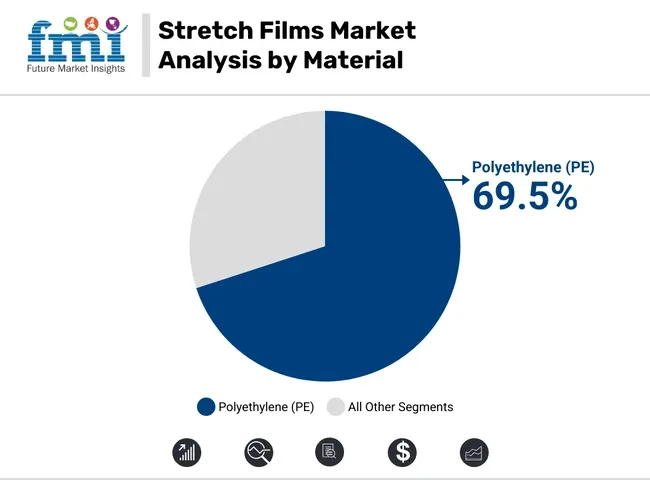
- Polyethylene is predicted to account for 81.6% of the material segment in 2026. LLDPE flexibility and puncture resistance make it the preferred resin base for pallet wrap.
- Polypropylene and PVC films serve selected packaging jobs requiring different stiffness or cling behavior. Their use is narrower as polyethylene offers stronger stretch recovery for standard load containment.
Insights into Cast Stretch Film Stretch Films Market by Manufacturing Process
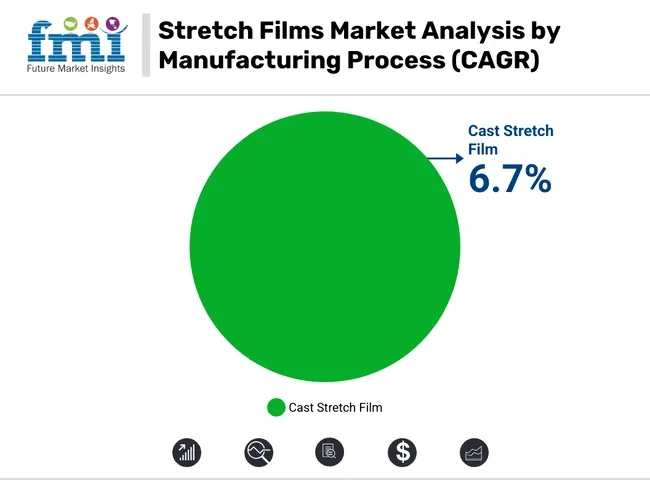
- Cast stretch film is expected to hold 64.0% of the manufacturing process segment in 2026. Converters prefer cast lines for steady gauge control and high-volume output.
- Blown stretch film serves rougher pallet loads requiring stronger puncture resistance during handling. Its value is higher in industrial shipments carrying uneven edges or heavier products.
Insights into 16-20 Microns Stretch Films Market by Thickness
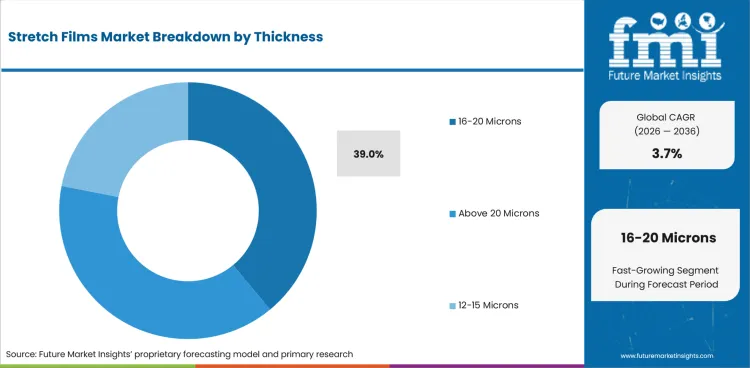
- The 16-20 Microns range is forecast to hold 39.0% of the thickness segment in 2026. This range gives buyers workable strength without adding extra roll weight.
- Thinner films serve downgauging programs in warehouses using controlled wrapping equipment. Heavier films serve tougher loads requiring extra puncture strength during transport.
Insights into Machine Stretch Film Stretch Films Market by Product Type
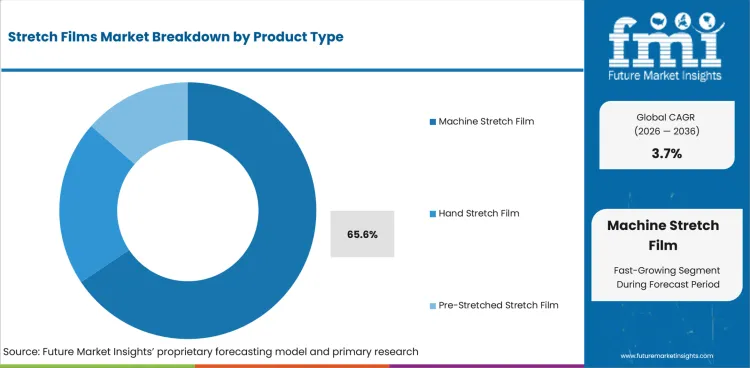
- Machine stretch film is projected to account for 65.6% of the product type segment in 2026. Automated wrappers use this format to improve film use and pallet consistency.
- Hand stretch film keeps a role in smaller warehouses and low-volume dispatch points. Pre-stretched formats help users reduce manual effort and improve wrapping control.
Insights into Logistics & Supply Chain Stretch Films Market by End Use
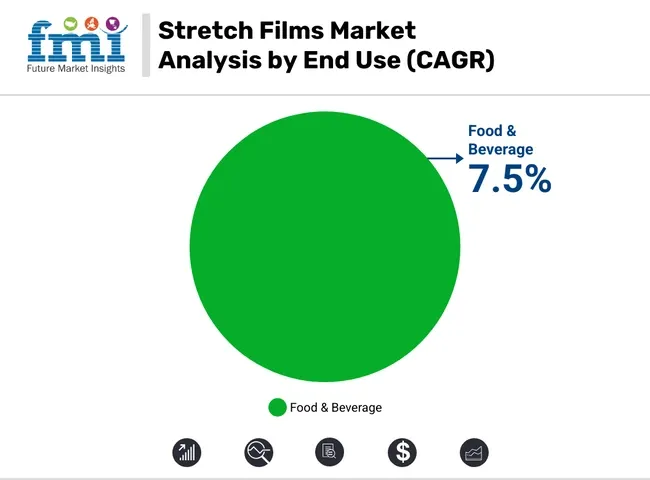
- Logistics & supply chain is projected to account for 29.6% of the end-use segment in 2026. Palletized freight raises steady use across storage and shipment operations.
- Food and beverage users require dependable film handling across retail and cold-chain movement. Industrial goods users focus on load stability during longer warehouse and transport cycles.
Stretch Films Market Drivers, Restraints and Opportunities
- Driver: Pallet wrap demand keeps resin-linked contracts active as converters balance load security with gauge reduction.
- Restraint: PE export value softness can limit price recovery for stretch film suppliers during contract negotiations.
- Opportunity: Downgauging and disciplined resin surcharges increase scope for suppliers to protect margins without losing film performance.
Stretch film demand is shaped by load containment needs and resin-linked pricing pressure. PLASTICS reported in May 2025 that first-quarter USA polyethylene export value rose only 2.7% from the previous quarter while export volume increased 11.6%. Total PE exports also exceeded 3.98 billion kilograms during the same period. This value-volume gap points to weaker average realization per kilogram across polyethylene trade. Stretch film converters feel this pressure directly since LLDPE forms the main resin base for pallet wrap and machine film. Buyers should separate resin escalators from conversion charges and freight terms during contract resets.
PE Export Unit Values Are Softening Resin Pass-Through
Stretch film pricing is facing resin-linked pressure instead of a broad decline in packaging demand. Polyethylene export data suggests converters are dealing with weaker realization per kilogram across resin trade. This enhances resistance during film price resets because buyers can compare resin cost movement against roll-level quotes. Machine film and hand film suppliers need clearer contract structures to separate resin movement from processing and freight costs. Converters with strong resin sourcing can protect volume, but margin recovery will rely on better surcharge discipline and lower-gauge film programs.
Ethane Export Pull Is Repricing Film Inputs
Upstream feedstock movement is adding another pricing layer for stretch film producers. The USA Energy Information Administration reported in March 2026 that USA NGPL exports reached 3.1 million barrels per day in 2025. EIA also reported ethane exports grew 92,000 barrels per day in 2025, equal to a 19% increase. Ethane is cracked into ethylene, which forms the core petrochemical base for plastics. This means feedstock availability does not always create easier resin pricing for LLDPE users. Stretch film buyers should track ethane export flows alongside PE offers, especially for quarterly resin-adjusted film contracts.
Competitive Landscape and Strategic Positioning
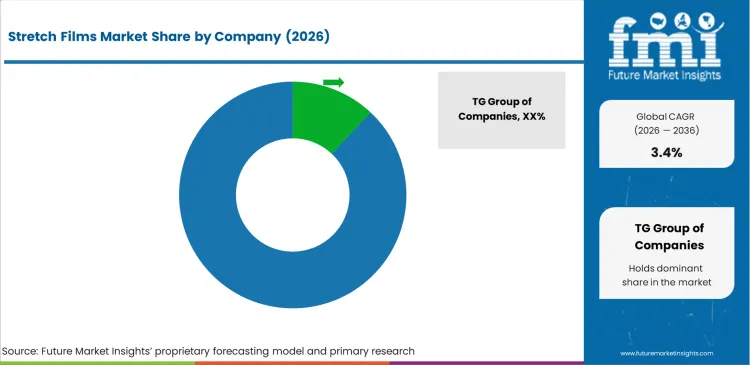
Competition in stretch films is shaped by extrusion scale and machine film performance across large packaging accounts. Recycled-content capability and distributor reach further separate global producers from regional suppliers in repeat supply contracts.
- Berry Global Group holds a leading position through broad blown stretch film coverage and recycled-content film development.
- Sigma Plastics Group and Inteplast Group compete through North American scale and strong distributor access.
- Trioworld Group and POLIFILM focus on performance films and recycled-content development across European packaging accounts.
Berry Global has strong positioning through Bontite blown stretch films and recycled-content film development. Sigma Plastics Group offers broad film output and distributor reach across North America. Trioworld Group adds high-performance stretch films across Europe and India after its Filmtec joint venture. Paragon Films competes through thin-gauge machine films and site-level film trials.
Competitive barriers include resin volatility and repeatable film performance on wrapping machines. Supplier priorities center on downgauging depth and reliable PCR film recipes across customer trials. Buyers favor suppliers offering holding force data and machine setup help during qualification. Producers best placed to win are those combining broad film menus with proven machine performance and recycled-content reliability.
Key Companies in the Stretch Films Market
Key global companies leading the stretch films market include:
- Berry Global Group, Sigma Plastics Group, and Trioworld Group have strong stretch film infrastructure for resin formulation and global service delivery.
- Inteplast Group, Intertape Polymer Group, and POLIFILM serve manufacturers through broad film portfolios and high-volume converting.
- Paragon Films, Coveris, and Scientex Berhad hold specialist positions across thin-gauge, recycled-content, and machine-grade films.
Competitive Benchmarking: Stretch Films Market
| Company | Multilayer Extrusion Depth | Machine Film Validation | Recycled-Content Film Capability | Geographic Footprint |
|---|---|---|---|---|
| Berry Global Group | High | High | High | Global footprint with strong North American stretch film capacity and broad international packaging operations |
| Sigma Plastics Group | High | High | Medium | North America-focused footprint with stretch film plants in the USA and Canada |
| Trioworld Group | High | High | High | Europe-led footprint with production in Sweden, Denmark, the Netherlands, France, the UK, Germany, Canada, and India access through Filmtec |
| Inteplast Group | High | High | Medium | North America-centered footprint with broad USA manufacturing and distribution coverage |
| Intertape Polymer Group | Medium | High | Medium | North America and India footprint with packaging product locations across Canada, USA, and Rajasthan |
| POLIFILM | High | Medium | High | Europe-centered footprint with German production depth and service access in North America |
| Coveris | High | Medium | High | Europe-focused footprint with group headquarters in Vienna and stretch film capability in the UK |
| Paragon Films | Medium | High | High | USA-centered footprint with sales coverage across North America and selected export markets |
| Scientex Berhad | High | Medium | Medium | Asia-led footprint with Malaysia base, USA and Vietnam plants, and exports to over 60 countries |
| Signode Industrial Group LLC | Medium | High | Medium | Global footprint with stretch film manufacturing in India and international packaging operations |
Source: Future Market Insights, 2026.
Key Developments in Stretch Films Market
- In December 2025, Cortec Corporation introduced a new and improved Eco Wrap® industrial-strength machine-grade stretch film made with certified compostable resin and a proprietary tackifier additive.
- In November 2025, Polyzent Trading announced a USD 1.1 million investment to establish its first manufacturing facility in Lynchburg, Virginia. The facility is scheduled to launch operations in December 2025 with a fully automated extrusion line capable of producing 40 to 50 tons of high-quality stretch film per month.
Major Global Players:
- Berry Global Group
- Sigma Plastics Group
- Trioworld Group
- Inteplast Group
- Intertape Polymer Group
- POLIFILM
- Scientex Berhad
Specialist Players:
- Paragon Films
- Coveris
- Signode Industrial Group LLC
Analysis of Stretch Films Market By Key Countries
| Country | CAGR |
|---|---|
| India | 5.3% |
| China | 3.6% |
| Brazil | 3.7% |
| USA | 2.8% |
| Germany | 2.4% |
Source: Future Market Insights, 2026.
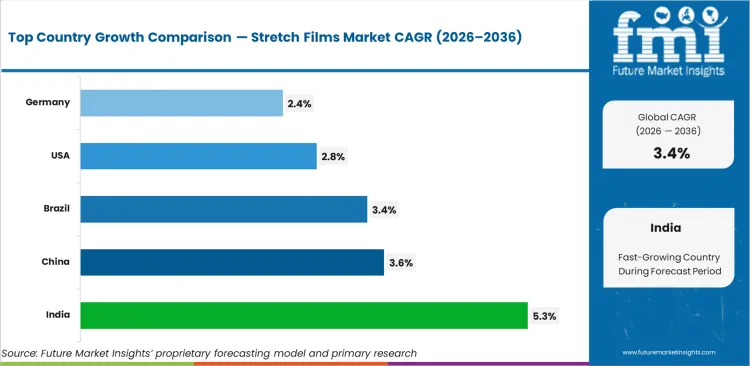
Demand for stretch films is forecast to rise at 3.7% CAGR from 2026 to 2036. Country-level analysis covers the major markets contributing to this forecast, with the key markets listed below.
Sales Analysis of Stretch Films Market in India
Leading country market · 2026 to 2036
India Market Outlook
Stretch films industry in India is predicted at USD 430.0 million in 2026 and projected to reach USD 720.7 million by 2036. The country is projected to record a 5.3% CAGR from 2026 to 2036, creating an incremental opportunity of USD 290.7 million.
Factory dispatches and organized warehousing create a broad use base for pallet wrap. Polyethylene leads material demand, and machine stretch film is expected to expand faster across larger logistics sites.
Key Growth Drivers
- Ministry of Statistics and Programme Implementation reported manufacturing output increased 4.3% in March 2026, backing pallet wrap demand across factory dispatches.
- PM Gati Shakti freight planning improves cargo coordination across industrial belts and strengthens palletized movement for packaged goods.
- Maharashtra and Gujarat manufacturing clusters enhance repeat film demand across consumer goods plants and industrial packaging lines.
- Organized warehousing near Delhi NCR and Bengaluru increases use of Machine Stretch Film for faster pallet handling.
Key Restraints
- Ministry of Statistics and Programme Implementation reported IIP increased 4.1% in March 2026, indicating softer short-term industrial packaging pull.
- Informal distribution across smaller industrial cities slows machine-grade film penetration among users with low-volume wrapping needs.
- Price-sensitive warehouse operators often choose hand wrap before machine film, limiting conversion toward automated pallet wrapping.
What makes India unique
India combines factory dispatch expansion with organized warehouse use, giving converters a broad base across hand wrap and machine wrap formats.
Key Companies
- Trioworld Group
- Filmtec LLP
- Domestic polyethylene film converters
- Regional packaging distributors
Sales & Marketing Channels
- Direct converter supply
- Packaging distributors
- Industrial supply dealers
- Warehouse equipment vendors
- E-commerce packaging suppliers
Market Taxonomy & Sub-Regions Covered
| Segment | Sub-Segments |
|---|---|
| By Material | Polyethylene · Polypropylene · Polyvinyl Chloride · Other Plastics |
| By Manufacturing Process | Cast Stretch Film · Blown Stretch Film |
| By Thickness | Below 12 Microns · 12-15 Microns · 16-20 Microns · Above 20 Microns |
| By Product Type | Hand Stretch Film · Machine Stretch Film · Pre-Stretched Stretch Film |
| By End Use | Logistics & Supply Chain · Food & Beverage · Pharmaceuticals · Construction · Other Industrials |
| Key Sub-Regions Covered | Maharashtra, Gujarat, Tamil Nadu, Karnataka, Delhi NCR, Telangana, Haryana, Uttar Pradesh |
Frequently Asked Questions
How fast is India’s stretch films market expanding?
India is the faster-expanding country in the covered set across the forecast period from 2026 to 2036.
Which segment leads stretch film demand in India?
Polyethylene leads material demand in India as LLDPE grades match pallet wrap strength and stretch recovery needs.
What is driving demand in India?
Factory dispatch activity is increasing pallet wrap use across industrial sites. Freight corridor planning and organized warehousing are adding further demand across logistics networks.
Sales Analysis of Stretch Films Market in China
High-volume warehouse and export packaging market · 2026 to 2036
China Market Outlook
Stretch films segment in China is forecast at USD 835.0 million in 2026 and projected to reach USD 1,189.3 million by 2036. The country is expected to expand at a 3.6% CAGR from 2026 to 2036, adding USD 354.3 million in incremental opportunity.
Export factories and large fulfillment networks make pallet stability a routine packaging need. Polyethylene leads material demand, and Machine Stretch Film is expected to expand faster across automated warehouse lines.
Key Growth Drivers
- China’s State Council reported postal operators processed 216.5 billion delivery items in 2025, backing warehouse handling demand.
- Guangdong export factories raise steady film demand across electronics and appliance shipment lines.
- Yangtze River Delta warehouses strengthen use of machine films across high-volume domestic fulfillment networks.
- Domestic polyethylene film converters benefit from short supply distances to manufacturing and export packaging users.
Key Restraints
- China’s State Council reported March 2026 parcel volume increased 2.7%, indicating weaker near-term packaging volume pull.
- Domestic converter price competition limits premium film margins across standard hand wrap and commodity polyethylene grades.
- Large regional supplier bases make differentiation difficult for producers selling standard pallet wrap grades.
What makes China unique
China has a large parcel and export packaging base, shortening the distance between film production and warehouse use.
Key Companies
- Domestic polyethylene film converters
- Regional flexible packaging producers
- Industrial packaging distributors
- Imported specialty film suppliers
Sales & Marketing Channels
- Direct converter contracts
- Packaging material distributors
- Online B2B platforms
- Export packaging suppliers
- Warehouse equipment vendors
Market Taxonomy & Sub-Regions Covered
| Segment | Sub-Segments |
|---|---|
| By Material | Polyethylene · Polypropylene · Polyvinyl Chloride · Other Plastics |
| By Manufacturing Process | Cast Stretch Film · Blown Stretch Film |
| By Thickness | Below 12 Microns · 12-15 Microns · 16-20 Microns · Above 20 Microns |
| By Product Type | Hand Stretch Film · Machine Stretch Film · Pre-Stretched Stretch Film |
| By End Use | Logistics & Supply Chain · Food & Beverage · Pharmaceuticals · Construction · Other Industrials |
| Key Sub-Regions Covered | Guangdong, Jiangsu, Zhejiang, Shandong, Shanghai, Beijing, Sichuan, Hubei |
Frequently Asked Questions
How fast is China’s stretch films market expanding?
China records the second-leading pace among the covered countries across the forecast period from 2026 to 2036.
Which segment leads stretch film demand in China?
Polyethylene leads material demand in China as export packaging lines need stretch recovery and puncture resistance.
What is driving demand in China?
Parcel scale, export packaging activity, and automated warehouse operations are driving stretch film use in China.
Sales Analysis of Stretch Films Market in Brazil
Agro-export and food distribution market · 2026 to 2036
Brazil Market Outlook
The stretch films sector in Brazil is estimated at USD 250.0 million in 2026 and projected to reach USD 349.3 million by 2036. The country is forecast to expand at a 3.7% CAGR from 2026 to 2036, creating USD 99.3 million in incremental opportunity.
Food distribution and agro-export movement make steady pallet wrap needs across long freight distances. Polyethylene leads material demand, and machine stretch film is expected to expand faster across larger food processing sites.
Key Growth Drivers
- IBGE reported national industrial output increased 4.3% year over year in March 2026, backing factory shipment needs.
- São Paulo food processors enhance stable film demand across domestic freight and organized retail distribution.
- Paraná exporters need stronger pallet wrap performance across port-bound food and commodity shipments.
- Agribusiness distribution corridors increase demand for polyethylene films suited to long inland freight movement.
Key Restraints
- International Trade Administration reported Brazil targets 50% plastic packaging recovery by 2040, increasing compliance pressure for packaging users.
- Long inland freight distances raise film failure risk and make low-cost wrap less suitable for export pallet loads.
- Regional warehouse fragmentation slows machine film conversion outside larger food processing and export shipment corridors.
What makes Brazil unique
Brazil links stretch film demand with food processing and agro-export logistics, making load containment important across long inland freight corridors.
Key Companies
- Domestic stretch film converters
- Flexible packaging producers
- Industrial packaging distributors
- Imported specialty film suppliers
Sales & Marketing Channels
- Direct converter supply
- Agribusiness packaging distributors
- Industrial supply dealers
- Food processing suppliers
- Port logistics service providers
Market Taxonomy & Sub-Regions Covered
| Segment | Sub-Segments |
|---|---|
| By Material | Polyethylene · Polypropylene · Polyvinyl Chloride · Other Plastics |
| By Manufacturing Process | Cast Stretch Film · Blown Stretch Film |
| By Thickness | Below 12 Microns · 12-15 Microns · 16-20 Microns · Above 20 Microns |
| By Product Type | Hand Stretch Film · Machine Stretch Film · Pre-Stretched Stretch Film |
| By End Use | Logistics & Supply Chain · Food & Beverage · Pharmaceuticals · Construction · Other Industrials |
| Key Sub-Regions Covered | São Paulo, Paraná, Rio Grande do Sul, Minas Gerais, Santa Catarina, Pernambuco, Espírito Santo, Mato Grosso do Sul |
Frequently Asked Questions
How fast is Brazil’s stretch films market expanding?
Brazil expands near the global forecast pace as food distribution and agro-export packaging sustain pallet wrap use.
Which segment leads stretch film demand in Brazil?
Polyethylene leads material demand in Brazil as pallet wrap users need stretch strength across domestic freight.
What is driving demand in Brazil?
Industrial output and plastic packaging rules are increasing stretch film use across Brazil. Food export movement adds further demand across palletized distribution and port-linked shipments.
Sales Analysis of Stretch Films Market in USA
Mature warehouse automation market · 2026 to 2036
USA Market Outlook
The USA stretch films industry is projected at USD 1,180.0 million in 2026 and projected to reach USD 1,555.3 million by 2036. The country is projected to advance at a 2.8% CAGR from 2026 to 2036, creating USD 375.3 million in incremental opportunity.
Large distribution centers make machine film performance important across warehouse networks. Polyethylene leads material demand, and machine stretch film is expected to expand quicker through automated wrapper replacement and line upgrades.
Key Growth Drivers
- USA Census Bureau reported first-quarter 2026 retail e-commerce sales of USD 326.7 billion, backing fulfillment packaging demand.
- Inland Empire distribution sites boost steady machine wrap demand across West Coast retail logistics.
- Midwest warehouse corridors drive repeat pallet wrap use across food and industrial shipments.
- Automated retail distribution centers favor films with consistent unwind and fewer stoppages on wrapping lines.
Key Restraints
- USA EPA reported PET bottle recycling at 29.1%, constraining recycled resin confidence among packaging buyers.
- Mature pallet wrap penetration limits replacement upside for standard hand film and basic machine film.
- Warehouse buyers often require on-site film trials before supplier change, slowing account conversion for new converters.
What makes USA unique
The USA market has deep machine wrapping use, making supplier selection depend on roll breaks and holding force proof.
Key Companies
- Amcor
- Sigma Plastics Group
- Paragon Films
- Inteplast Group
- Intertape Polymer Group
- Signode Industrial Group LLC
Sales & Marketing Channels
- Direct converter contracts
- Packaging distributors
- Industrial supply networks
- Warehouse automation vendors
- Retail fulfillment suppliers
Market Taxonomy & Sub-Regions Covered
| Segment | Sub-Segments |
|---|---|
| By Material | Polyethylene · Polypropylene · Polyvinyl Chloride · Other Plastics |
| By Manufacturing Process | Cast Stretch Film · Blown Stretch Film |
| By Thickness | Below 12 Microns · 12-15 Microns · 16-20 Microns · Above 20 Microns |
| By Product Type | Hand Stretch Film · Machine Stretch Film · Pre-Stretched Stretch Film |
| By End Use | Logistics & Supply Chain · Food & Beverage · Pharmaceuticals · Construction · Other Industrials |
| Key Sub-Regions Covered | California, Texas, Illinois, Ohio, Pennsylvania, Georgia, New Jersey, Florida |
Frequently Asked Questions
How fast is the USA stretch films market expanding?
The USA expands below faster developing markets as pallet wrap use already has deep warehouse penetration.
Which segment leads stretch film demand in the USA?
Polyethylene leads material demand in the USA as automated warehouses need dependable stretch recovery and puncture strength.
What is driving demand in the USA?
E-commerce fulfillment, warehouse automation, and retail distribution networks are driving machine stretch film demand in the USA.
Sales Analysis of Stretch Films Market in Germany
Compliance-sensitive industrial packaging market · 2026 to 2036
Germany Market Outlook
Stretch films industry in Germany is forecast at USD 245.0 million in 2026 and projected to reach USD 310.6 million by 2036. The country is projected to rise at a 2.4% CAGR from 2026 to 2036, creating USD 65.6 million in incremental opportunity.
Industrial packaging demand is shaped by machinery shipments and recycling discipline. Polyethylene leads material demand, and Machine Stretch Film is expected to expand quicker across automated manufacturing and retail logistics lines.
Key Growth Drivers
- German Environment Agency reported around 5.5 million tonnes of dual-system packaging waste were recycled in 2024, backing recovery-focused packaging selection.
- Baden-Württemberg machinery manufacturers create recurring pallet wrap demand across component shipments and industrial export packaging.
- North Rhine-Westphalia logistics operators need machine film consistency across retail distribution and manufacturing supply chains.
- Recyclable polyethylene films gain acceptance as industrial users align pallet wrap choices with packaging compliance systems.
Key Restraints
- German Environment Agency reported only five of eight packaging recycling targets were met, raising pressure on complex packaging formats.
- ZSVR packaging registration obligations increase data burden for suppliers placing packaged goods on the Germany segment.
- Mature warehouse systems limit volume upside and place stronger focus on film reduction programs.
What makes Germany unique
Germany links stretch film buying with recycling discipline, making recyclable polyethylene films and downgauged formats central to supplier approval.
Key Companies
- POLIFILM
- Coveris
- Trioworld Group
- DUO PLAST
- Industrial packaging distributors
Sales & Marketing Channels
- Direct converter supply
- Industrial packaging distributors
- Machinery sector suppliers
- Retail logistics suppliers
- Compliance-led packaging consultants
Market Taxonomy & Sub-Regions Covered
| Segment | Sub-Segments |
|---|---|
| By Material | Polyethylene · Polypropylene · Polyvinyl Chloride · Other Plastics |
| By Manufacturing Process | Cast Stretch Film · Blown Stretch Film |
| By Thickness | Below 12 Microns · 12-15 Microns · 16-20 Microns · Above 20 Microns |
| By Product Type | Hand Stretch Film · Machine Stretch Film · Pre-Stretched Stretch Film |
| By End Use | Logistics & Supply Chain · Food & Beverage · Pharmaceuticals · Construction · Other Industrials |
| Key Sub-Regions Covered | North Rhine-Westphalia, Baden-Württemberg, Bavaria, Lower Saxony, Hesse, Saxony, Hamburg, Bremen |
Frequently Asked Questions
How fast is Germany’s stretch films market expanding?
Germany expands at a controlled pace as mature packaging systems emphasize film reduction and recycling compliance.
Which segment leads stretch film demand in Germany?
Polyethylene leads material demand in Germany as buyers prefer recyclable mono-material films across industrial packaging.
What is driving demand in Germany?
Recycling discipline, machinery shipments, and automated wrapping lines are driving stretch film use across Germany.
Report Scope and Coverage
| Parameter | Details |
|---|---|
| Quantitative Units | USD 12.1 billion to USD 17.4 billion, at a CAGR of 3.7% |
| Market Definition | Stretch films comprise highly stretchable plastic films used for pallet stabilization and transit protection |
| Regions Covered | North America, Latin America, Europe, East Asia, South Asia and Pacific, Middle East and Africa |
| Countries Covered | USA, Germany, China, India, Brazil, and 30 plus countries |
| Key Companies Profiled | Berry Global Group, Sigma Plastics Group, Trioworld Group, Inteplast Group, Intertape Polymer Group, POLIFILM, Scientex Berhad, Paragon Films, Coveris, Signode Industrial Group LLC |
| Forecast Period | 2026 to 2036 |
| Approach | Hybrid bottom-up and top-down methodology starting with film demand and verified pallet wrapping use patterns |
Stretch Films Market Breakdown by Material, Manufacturing Process, Thickness, Product Type, End Use, and Region
Stretch Films Market Segmented by Material:
- Polyethylene
- LLDPE
- LDPE
- Polypropylene
- Polyvinyl Chloride
- Other Plastics
Stretch Films Market Segmented by Manufacturing Process:
- Cast Stretch Film
- Blown Stretch Film
Stretch Films Market Segmented by Thickness:
- Below 12 Microns
- 12-15 Microns
- 16-20 Microns
- Above 20 Microns
Stretch Films Market Segmented by Product Type:
- Hand Stretch Film
- Machine Stretch Film
- Pre-Stretched Stretch Film
Stretch Films Market Segmented by End Use:
- Construction
- Food & Beverage
- Fresh Foods
- Frozen Foods
- Bakery Items
- Beverages
- Pharmaceuticals
- Consumer Product
- Logistics & Supply Chain
- Textile
- Chemicals & Fertilizers
- Other Industrials
Stretch Films Market Segmented by Region:
- North America
- Latin America
- Western Europe
- Eastern Europe
- East Asia
- South Asia and Pacific
- Middle East & Africa
Research Sources and Bibliography
- Eurostat. (2025, October 22). Plastic packaging waste in the EU. European Commission.
- PMMI. (2024, September 26). State of the industry 2024. PMMI.
- PlasticsEurope. (2025, September). Plastics the fast facts 2025. PlasticsEurope.
- USA Census Bureau. (2026, May 18). Quarterly retail e-commerce sales: 1st quarter 2026. USA Census Bureau.
- Press Information Bureau. (2026, April 28). Quick estimates of index of industrial production and use-based index for March 2026. Government of India.
- State Council of the People’s Republic of China. (2026, January 7). China’s postal delivery volume hits 216.5 billion items in 2025.
- Umweltbundesamt. (2026, January 27). Facts against myths: Packaging waste recycling in Germany is working. German Environment Agency.
- International Trade Administration. (2026, January 5). Brazil plastics regulatory framework. USA Department of Commerce.
- Trioworld Group. (2025, June 3). Trioworld expands globally with a joint venture with Filmtec in India. Trioworld.
- Paragon Films. (2025, April 10). Paragon Films announces Mexico expansion, Windmöller & Hölscher partnership. Paragon Films.
- Amcor. (2025, February 17). Berry Global unveils next-generation Bontite Sustane Stretch Film with 30% PCR. Amcor.
This Report Answers
- What is the current and future size of the stretch films market?
- How fast is the stretch films market expected to expand between 2026 and 2036?
- Which material segment is expected to lead the market by 2026?
- Which product type is expected to account for the leading demand by 2026?
- Who are the key companies active in the stretch films market?
- How does FMI estimate and validate the market forecast?
Frequently Asked Questions
What is the global market demand for Stretch Films in 2026?
In 2026, the global market for stretch films is expected to be worth USD 12.1 billion.
How big will the market for Stretch Films be in 2036?
By 2036, the market for stretch films is expected to be worth USD 17.4 billion.
How much is demand for Stretch Films expected to expand between 2026 and 2036?
Between 2026 and 2036, demand for stretch films is expected to expand at a CAGR of 3.7%.
Which material segment is likely to be the best seller globally by 2026?
Polyethylene will contribute 81.6% of the material segment in 2026.
What is causing demand to rise in India?
The India stretch films market is projected to record 5.3% CAGR through 2036, assisted by manufacturing output and organized warehousing.
What is causing demand to rise in China?
The China stretch films market is projected to expand at 3.6% CAGR through 2036, aided by export packaging and warehouse activity.
Preview the report firsthand - request a free sample
Get SampleGet the brochure for pricing and purchase details.
Get PDFTable of Content
- Executive Summary
- Global Market Outlook
- Demand-side Trends
- Supply-side Trends
- Technology Roadmap Analysis
- Analysis and Recommendations
- Market Overview
- Market Coverage / Taxonomy
- Market Definition / Scope / Limitations
- Research Methodology
- Chapter Orientation
- Analytical Lens and Working Hypotheses
- Market Structure, Signals, and Trend Drivers
- Benchmarking and Cross-market Comparability
- Market Sizing, Forecasting, and Opportunity Mapping
- Research Design and Evidence Framework
- Desk Research Programme (Secondary Evidence)
- Company Annual and Sustainability Reports
- Peer-reviewed Journals and Academic Literature
- Corporate Websites, Product Literature, and Technical Notes
- Earnings Decks and Investor Briefings
- Statutory Filings and Regulatory Disclosures
- Technical White Papers and Standards Notes
- Trade Journals, Industry Magazines, and Analyst Briefs
- Conference Proceedings, Webinars, and Seminar Materials
- Government Statistics Portals and Public Data Releases
- Press Releases and Reputable Media Coverage
- Specialist Newsletters and Curated Briefings
- Sector Databases and Reference Repositories
- FMI Internal Proprietary Databases and Historical Market Datasets
- Subscription Datasets and Paid Sources
- Social Channels, Communities, and Digital Listening Inputs
- Additional Desk Sources
- Expert Input and Fieldwork (Primary Evidence)
- Primary Modes
- Qualitative Interviews and Expert Elicitation
- Quantitative Surveys and Structured Data Capture
- Blended Approach
- Why Primary Evidence is Used
- Field Techniques
- Interviews
- Surveys
- Focus Groups
- Observational and In-context Research
- Social and Community Interactions
- Stakeholder Universe Engaged
- C-suite Leaders
- Board Members
- Presidents and Vice Presidents
- R&D and Innovation Heads
- Technical Specialists
- Domain Subject-matter Experts
- Scientists
- Physicians and Other Healthcare Professionals
- Governance, Ethics, and Data Stewardship
- Research Ethics
- Data Integrity and Handling
- Primary Modes
- Tooling, Models, and Reference Databases
- Desk Research Programme (Secondary Evidence)
- Data Engineering and Model Build
- Data Acquisition and Ingestion
- Cleaning, Normalisation, and Verification
- Synthesis, Triangulation, and Analysis
- Quality Assurance and Audit Trail
- Market Background
- Market Dynamics
- Drivers
- Restraints
- Opportunity
- Trends
- Scenario Forecast
- Demand in Optimistic Scenario
- Demand in Likely Scenario
- Demand in Conservative Scenario
- Opportunity Map Analysis
- Product Life Cycle Analysis
- Supply Chain Analysis
- Investment Feasibility Matrix
- Value Chain Analysis
- PESTLE and Porter’s Analysis
- Regulatory Landscape
- Regional Parent Market Outlook
- Production and Consumption Statistics
- Import and Export Statistics
- Market Dynamics
- Global Market Analysis 2016 to 2025 and Forecast, 2026 to 2036
- Historical Market Size Value (USD Billion) Analysis, 2016 to 2025
- Current and Future Market Size Value (USD Billion) Projections, 2026 to 2036
- Y-o-Y Growth Trend Analysis
- Absolute $ Opportunity Analysis
- Global Market Pricing Analysis 2016 to 2025 and Forecast 2026 to 2036
- Global Market Analysis 2016 to 2025 and Forecast 2026 to 2036, By Material
- Introduction / Key Findings
- Historical Market Size Value (USD Billion) Analysis By Material, 2016 to 2025
- Current and Future Market Size Value (USD Billion) Analysis and Forecast By Material, 2026 to 2036
- Polyethylene
- LLDPE
- LDPE
- Polyethylene
- Y-o-Y Growth Trend Analysis By Material, 2016 to 2025
- Absolute $ Opportunity Analysis By Material, 2026 to 2036
- Global Market Analysis 2016 to 2025 and Forecast 2026 to 2036, By Manufacturing Process
- Introduction / Key Findings
- Historical Market Size Value (USD Billion) Analysis By Manufacturing Process, 2016 to 2025
- Current and Future Market Size Value (USD Billion) Analysis and Forecast By Manufacturing Process, 2026 to 2036
- Cast Stretch Film
- Blown Stretch Film
- Cast Stretch Film
- Y-o-Y Growth Trend Analysis By Manufacturing Process, 2016 to 2025
- Absolute $ Opportunity Analysis By Manufacturing Process, 2026 to 2036
- Global Market Analysis 2016 to 2025 and Forecast 2026 to 2036, By Thickness
- Introduction / Key Findings
- Historical Market Size Value (USD Billion) Analysis By Thickness, 2016 to 2025
- Current and Future Market Size Value (USD Billion) Analysis and Forecast By Thickness, 2026 to 2036
- 16-20 Microns
- Above 20 Microns
- 12-15 Microns
- 16-20 Microns
- Y-o-Y Growth Trend Analysis By Thickness, 2016 to 2025
- Absolute $ Opportunity Analysis By Thickness, 2026 to 2036
- Global Market Analysis 2016 to 2025 and Forecast 2026 to 2036, By Product Type
- Introduction / Key Findings
- Historical Market Size Value (USD Billion) Analysis By Product Type, 2016 to 2025
- Current and Future Market Size Value (USD Billion) Analysis and Forecast By Product Type, 2026 to 2036
- Machine Stretch Film
- Hand Stretch Film
- Pre-Stretched Stretch Film
- Machine Stretch Film
- Y-o-Y Growth Trend Analysis By Product Type, 2016 to 2025
- Absolute $ Opportunity Analysis By Product Type, 2026 to 2036
- Global Market Analysis 2016 to 2025 and Forecast 2026 to 2036, By End Use
- Introduction / Key Findings
- Historical Market Size Value (USD Billion) Analysis By End Use, 2016 to 2025
- Current and Future Market Size Value (USD Billion) Analysis and Forecast By End Use, 2026 to 2036
- Logistics & Supply Chain
- Textile
- Chemicals & Fertilizers
- Logistics & Supply Chain
- Y-o-Y Growth Trend Analysis By End Use, 2016 to 2025
- Absolute $ Opportunity Analysis By End Use, 2026 to 2036
- Global Market Analysis 2016 to 2025 and Forecast 2026 to 2036, By Region
- Introduction
- Historical Market Size Value (USD Billion) Analysis By Region, 2016 to 2025
- Current Market Size Value (USD Billion) Analysis and Forecast By Region, 2026 to 2036
- North America
- Latin America
- Western Europe
- Eastern Europe
- East Asia
- South Asia and Pacific
- Middle East & Africa
- Market Attractiveness Analysis By Region
- North America Market Analysis 2016 to 2025 and Forecast 2026 to 2036, By Country
- Historical Market Size Value (USD Billion) Trend Analysis By Market Taxonomy, 2016 to 2025
- Market Size Value (USD Billion) Forecast By Market Taxonomy, 2026 to 2036
- By Country
- USA
- Canada
- Mexico
- By Material
- By Manufacturing Process
- By Thickness
- By Product Type
- By End Use
- By Country
- Market Attractiveness Analysis
- By Country
- By Material
- By Manufacturing Process
- By Thickness
- By Product Type
- By End Use
- Key Takeaways
- Latin America Market Analysis 2016 to 2025 and Forecast 2026 to 2036, By Country
- Historical Market Size Value (USD Billion) Trend Analysis By Market Taxonomy, 2016 to 2025
- Market Size Value (USD Billion) Forecast By Market Taxonomy, 2026 to 2036
- By Country
- Brazil
- Chile
- Rest of Latin America
- By Material
- By Manufacturing Process
- By Thickness
- By Product Type
- By End Use
- By Country
- Market Attractiveness Analysis
- By Country
- By Material
- By Manufacturing Process
- By Thickness
- By Product Type
- By End Use
- Key Takeaways
- Western Europe Market Analysis 2016 to 2025 and Forecast 2026 to 2036, By Country
- Historical Market Size Value (USD Billion) Trend Analysis By Market Taxonomy, 2016 to 2025
- Market Size Value (USD Billion) Forecast By Market Taxonomy, 2026 to 2036
- By Country
- Germany
- UK
- Italy
- Spain
- France
- Nordic
- BENELUX
- Rest of Western Europe
- By Material
- By Manufacturing Process
- By Thickness
- By Product Type
- By End Use
- By Country
- Market Attractiveness Analysis
- By Country
- By Material
- By Manufacturing Process
- By Thickness
- By Product Type
- By End Use
- Key Takeaways
- Eastern Europe Market Analysis 2016 to 2025 and Forecast 2026 to 2036, By Country
- Historical Market Size Value (USD Billion) Trend Analysis By Market Taxonomy, 2016 to 2025
- Market Size Value (USD Billion) Forecast By Market Taxonomy, 2026 to 2036
- By Country
- Russia
- Poland
- Hungary
- Balkan & Baltic
- Rest of Eastern Europe
- By Material
- By Manufacturing Process
- By Thickness
- By Product Type
- By End Use
- By Country
- Market Attractiveness Analysis
- By Country
- By Material
- By Manufacturing Process
- By Thickness
- By Product Type
- By End Use
- Key Takeaways
- East Asia Market Analysis 2016 to 2025 and Forecast 2026 to 2036, By Country
- Historical Market Size Value (USD Billion) Trend Analysis By Market Taxonomy, 2016 to 2025
- Market Size Value (USD Billion) Forecast By Market Taxonomy, 2026 to 2036
- By Country
- China
- Japan
- South Korea
- By Material
- By Manufacturing Process
- By Thickness
- By Product Type
- By End Use
- By Country
- Market Attractiveness Analysis
- By Country
- By Material
- By Manufacturing Process
- By Thickness
- By Product Type
- By End Use
- Key Takeaways
- South Asia and Pacific Market Analysis 2016 to 2025 and Forecast 2026 to 2036, By Country
- Historical Market Size Value (USD Billion) Trend Analysis By Market Taxonomy, 2016 to 2025
- Market Size Value (USD Billion) Forecast By Market Taxonomy, 2026 to 2036
- By Country
- India
- ASEAN
- Australia & New Zealand
- Rest of South Asia and Pacific
- By Material
- By Manufacturing Process
- By Thickness
- By Product Type
- By End Use
- By Country
- Market Attractiveness Analysis
- By Country
- By Material
- By Manufacturing Process
- By Thickness
- By Product Type
- By End Use
- Key Takeaways
- Middle East & Africa Market Analysis 2016 to 2025 and Forecast 2026 to 2036, By Country
- Historical Market Size Value (USD Billion) Trend Analysis By Market Taxonomy, 2016 to 2025
- Market Size Value (USD Billion) Forecast By Market Taxonomy, 2026 to 2036
- By Country
- Kingdom of Saudi Arabia
- Other GCC Countries
- Turkiye
- South Africa
- Other African Union
- Rest of Middle East & Africa
- By Material
- By Manufacturing Process
- By Thickness
- By Product Type
- By End Use
- By Country
- Market Attractiveness Analysis
- By Country
- By Material
- By Manufacturing Process
- By Thickness
- By Product Type
- By End Use
- Key Takeaways
- Key Countries Market Analysis
- USA
- Pricing Analysis
- Market Share Analysis, 2025
- By Material
- By Manufacturing Process
- By Thickness
- By Product Type
- By End Use
- Canada
- Pricing Analysis
- Market Share Analysis, 2025
- By Material
- By Manufacturing Process
- By Thickness
- By Product Type
- By End Use
- Mexico
- Pricing Analysis
- Market Share Analysis, 2025
- By Material
- By Manufacturing Process
- By Thickness
- By Product Type
- By End Use
- Brazil
- Pricing Analysis
- Market Share Analysis, 2025
- By Material
- By Manufacturing Process
- By Thickness
- By Product Type
- By End Use
- Chile
- Pricing Analysis
- Market Share Analysis, 2025
- By Material
- By Manufacturing Process
- By Thickness
- By Product Type
- By End Use
- Germany
- Pricing Analysis
- Market Share Analysis, 2025
- By Material
- By Manufacturing Process
- By Thickness
- By Product Type
- By End Use
- UK
- Pricing Analysis
- Market Share Analysis, 2025
- By Material
- By Manufacturing Process
- By Thickness
- By Product Type
- By End Use
- Italy
- Pricing Analysis
- Market Share Analysis, 2025
- By Material
- By Manufacturing Process
- By Thickness
- By Product Type
- By End Use
- Spain
- Pricing Analysis
- Market Share Analysis, 2025
- By Material
- By Manufacturing Process
- By Thickness
- By Product Type
- By End Use
- France
- Pricing Analysis
- Market Share Analysis, 2025
- By Material
- By Manufacturing Process
- By Thickness
- By Product Type
- By End Use
- India
- Pricing Analysis
- Market Share Analysis, 2025
- By Material
- By Manufacturing Process
- By Thickness
- By Product Type
- By End Use
- ASEAN
- Pricing Analysis
- Market Share Analysis, 2025
- By Material
- By Manufacturing Process
- By Thickness
- By Product Type
- By End Use
- Australia & New Zealand
- Pricing Analysis
- Market Share Analysis, 2025
- By Material
- By Manufacturing Process
- By Thickness
- By Product Type
- By End Use
- China
- Pricing Analysis
- Market Share Analysis, 2025
- By Material
- By Manufacturing Process
- By Thickness
- By Product Type
- By End Use
- Japan
- Pricing Analysis
- Market Share Analysis, 2025
- By Material
- By Manufacturing Process
- By Thickness
- By Product Type
- By End Use
- South Korea
- Pricing Analysis
- Market Share Analysis, 2025
- By Material
- By Manufacturing Process
- By Thickness
- By Product Type
- By End Use
- Russia
- Pricing Analysis
- Market Share Analysis, 2025
- By Material
- By Manufacturing Process
- By Thickness
- By Product Type
- By End Use
- Poland
- Pricing Analysis
- Market Share Analysis, 2025
- By Material
- By Manufacturing Process
- By Thickness
- By Product Type
- By End Use
- Hungary
- Pricing Analysis
- Market Share Analysis, 2025
- By Material
- By Manufacturing Process
- By Thickness
- By Product Type
- By End Use
- Kingdom of Saudi Arabia
- Pricing Analysis
- Market Share Analysis, 2025
- By Material
- By Manufacturing Process
- By Thickness
- By Product Type
- By End Use
- Turkiye
- Pricing Analysis
- Market Share Analysis, 2025
- By Material
- By Manufacturing Process
- By Thickness
- By Product Type
- By End Use
- South Africa
- Pricing Analysis
- Market Share Analysis, 2025
- By Material
- By Manufacturing Process
- By Thickness
- By Product Type
- By End Use
- USA
- Market Structure Analysis
- Competition Dashboard
- Competition Benchmarking
- Market Share Analysis of Top Players
- By Region
- By Material
- By Manufacturing Process
- By Thickness
- By Product Type
- By End Use
- Competition Analysis
- Competition Deep Dive
- Berry Global Group
- Overview
- Product Portfolio
- Profitability by Market Segments (Material/Manufacturing Process/Thickness/Product Type/End Use/Region)
- Sales Footprint
- Strategy Overview
- Marketing Strategy
- Product Strategy
- Channel Strategy
- Sigma Plastics Group
- Trioworld Group
- Inteplast Group
- Intertape Polymer Group
- POLIFILM
- Scientex Berhad
- Berry Global Group
- Competition Deep Dive
- Assumptions & Acronyms Used


