

- Industry Size (2026)
- USD 312.4 Mn
- Forecast (2036)
- USD 778.2 Mn
- CAGR (2026 to 2036)
- 9.6%
Bamboo Fiber Trays Market Forecast and Outlook 2026 to 2036
In 2026, the bamboo fiber trays market is valued at USD 312.4 million and is projected to reach USD 778.2 million by 2036, reflecting a CAGR of 9.6%. The first clear breakpoint appears around 2028–2029, when the market crosses approximately USD 375 million. Up to this stage, growth is driven mainly by ready meals, retail food packaging, and takeaway formats adopting clamshell and compartment trays. Demand during this phase reflects substitution from conventional paper and plastic trays, with molded pulp thermoforming scaling steadily but still concentrated among early adopters.
A second and more decisive breakpoint emerges after 2031, as the market exceeds roughly USD 495 million and annual absolute additions widen sharply. Beyond this point, bamboo fiber trays transition into mainstream foodservice and catering supply chains, supported by higher production throughput and standardized tray formats. Compression molding and high-speed press molding gain traction, enabling volume expansion. This breakpoint marks a shift from replacement-led growth to volume-led expansion, where repeat procurement and broader application coverage drive sustained market acceleration.
Quick Stats of the Bamboo Fiber Trays Market:
- Bamboo Fiber Trays Market Value (2026): USD 312.4 million
- Bamboo Fiber Trays Market Forecast Value (2036): USD 778.2 million
- Bamboo Fiber Trays Market Forecast CAGR (2026–2036): 9.6%
- Bamboo Fiber Trays Market Leading End Use: Ready Meals & Retail (45%)
- Bamboo Fiber Trays Market Key Growth Regions: China, India, USA, Brazil, Germany, Japan
- Bamboo Fiber Trays Market Top Players: Huhtamaki, Duni, Stora Enso, UFlex, Toppan
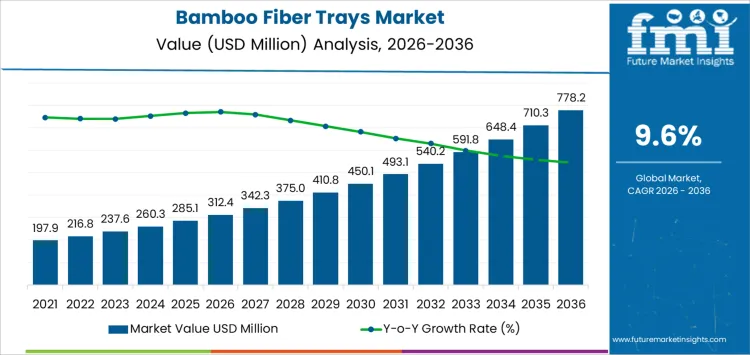
What is the Growth Forecast for the Bamboo Fiber Trays Market through 2036?
From 2026 to 2031, the bamboo fiber trays market grows from USD 312.4 million to about USD 450.8 million, reflecting a phase of structured scale-up rather than experimental uptake. Demand during this period is driven by foodservice operators, ready-meal manufacturers, and fresh produce packers transitioning tray formats within existing packaging architectures. Early growth is shaped by qualification of heat resistance, grease performance, and stacking strength across automated filling lines. YeAR-on-year gains widen as tooling compatibility improves and supply chains stabilize, allowing bamboo fiber trays to move beyond pilot programs into repeat procurement cycles across regional food packaging operations.
Between 2031 and 2036, the market expands from approximately USD 450.8 million to USD 778.2 million, indicating a steeper growth curve anchored in volume deployment. This phase reflects wider adoption across high-throughput meal kits, institutional catering, and private-label food packaging where tray standardization drives scale efficiencies. Growth accelerates as trays are specified across multiple SKUs, increasing average usage per customer. Earlier expansion relied on functional validation, while later growth is driven by portfolio-wide conversion, higher production runs, and deeper integration of bamboo fiber trays into mainstream food packaging systems.
Bamboo Fiber Trays Market Key Takeaways
| Metric | Value |
|---|---|
| Market Value (2026) | USD 312.4 million |
| Forecast Value (2036) | USD 778.2 million |
| Forecast CAGR (2026 to 2036) | 9.6% |
How Are Food Packaging Shifts and Material Sourcing Choices Shaping the Bamboo Fiber Trays Market from 2026 to 2036?
Bamboo fiber trays gained adoption as food producers and foodservice operators reconsidered rigid plastic and molded pulp formats for ready meals and fresh food packaging. Supermarkets, takeaway outlets, and catering services used bamboo fiber trays for hot and cold foods where rigidity and heat tolerance were required. Historical demand reflected availability of bamboo as a fast-growing raw material and its suitability for molded tray structures. Packaging buyers valued stack ability, grease resistance, and compatibility with sealing films. Adoption aligned with growth in prepared foods, institutional catering, and standardized tray sizes used across filling and packing lines.
From 2026 to 2036 demand is expected to grow as food brands expand fiber-based packaging across chilled, frozen, and ambient categories. Tray designs evolve to support compartmentalization, improved edge strength, and consistent sealing performance. Growth aligns with increased outsourcing of meal preparation and expansion of central kitchens serving retail and hospitality channels. Manufacturers focus on refining fiber blends and surface treatments to improve moisture tolerance. Buyers assess tray durability, supply reliability, and fit with automated filling equipment. Demand reflects packaging redesign cycles, sourcing diversification, and continued replacement of petroleum-based trays across food distribution networks.
What Is the Demand for the Bamboo Fiber Trays Market by End Use and Packaging Format from 2026 to 2036?
From 2026 to 2036, the bamboo fiber trays market grows as food packaging shifts toward molded fiber solutions with heat resistance and structural strength. Ready meals and retail account for 45% of end-use demand as supermarkets and meal kit providers rely on rigid trays for portioned, shelf-ready formats. Clamshell trays represent 50% of packaging format share because they provide integrated containment, stacking stability, and tamper visibility. Demand reflects preference for single-material fiber trays that perform across chilled, ambient, and reheated food applications without requiring plastic linings.
Why do ready meals and retail account for 45% of demand in the bamboo fiber trays market by end use from 2026 to 2036?
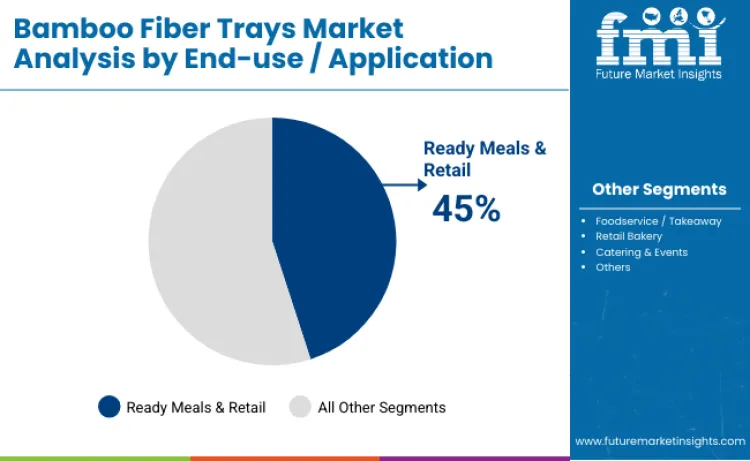
Ready meals and retail account for 45% of demand because portion-controlled meals require rigid trays that protect food integrity during transport and display. Consumption intensity remains high in refrigerated and microwave-ready meals where trays must retain shape under temperature variation. Usage stays consistent as bamboo fiber trays support sealing films and lidding systems used in retail meal packaging. Procurement decisions emphasize tray stiffness, heat tolerance, and resistance to oil and moisture migration. Buyers favor trays that maintain visual appeal on shelf while supporting automated filling and sealing lines. Price sensitivity remains moderate since trays influence product presentation and handling efficiency. Specification control focuses on fiber density, rim flatness, and dimensional consistency. Demand remains stable through 2036 as retailers expand private-label ready meals and reduce plastic tray usage across prepared food categories. Ready meal producers continue adopting bamboo fiber trays to align with material transition goals. Retailers favor these trays for uniformity across multiple SKUs. Usage patterns remain predictable due to daily replenishment cycles.
Why do clamshell trays represent 50% of demand in the bamboo fiber trays market by packaging format from 2026 to 2036?
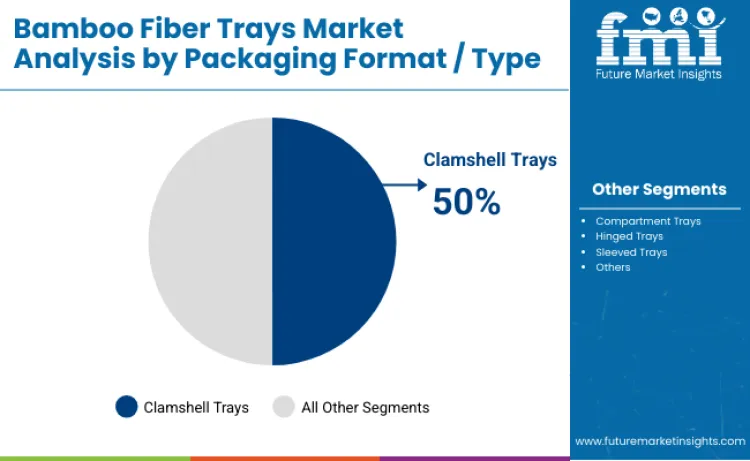
Clamshell trays represent 50% of demand because they integrate base and lid into a single rigid structure. Consumption is strong in ready meals, bakery items, and takeaway foods where protection and visibility are required. Usage remains steady as hinged designs reduce the need for separate lids and secondary packaging. Procurement favors clamshell formats that stack efficiently and resist cracking during closure. Buyers prioritize hinge durability, closure alignment, and surface smoothness for labeling. Price sensitivity stays moderate since clamshells reduce component count and packing steps. Specification control emphasizes hinge performance, compression strength, and seal compatibility. Demand persists through 2036 as clamshell trays support fast packing operations and consistent product protection. Clamshell formats also suit grab-and-go retail layouts. Their structural simplicity reinforces continued preference across food packaging applications.
What are the Key Dynamics of the Global Bamboo Fiber Trays Market?
How Are Bamboo Fiber Trays Being Used Across Food Service and Packaging Applications?
Adoption appears in settings that require rigid, stackable trays made from molded fiber materials. Quick service restaurants use bamboo fiber trays for dine in service where durability and ease of handling matter. Ready meal producers select them for chilled and frozen foods that need shape retention during transport. Catering companies apply trays for large volume meal distribution where uniform sizing supports logistics. Institutional kitchens use them for portion control in cafeterias. These uses reflect material selection based on strength, form stability, and compatibility with existing handling practices rather than decorative packaging goals.
What Functional Requirements Encourage Selection of Bamboo Fiber Trays?
Use aligns with needs for heat tolerance, grease resistance, and consistent molding quality. Food operators favor trays that withstand hot servings without warping. Packaging designers value bamboo fiber for its fine pulp structure, which supports smooth surfaces and defined edges. Automated filling lines rely on trays with predictable dimensions for efficient loading. Warehousing teams prefer trays that stack securely to reduce breakage. These requirements arise from operational efficiency, food handling performance, and material reliability within high throughput environments.
Which Practical Factors Shape Limits on Wider Use of Bamboo Fiber Trays?
Moisture sensitivity affects performance in applications with extended liquid contact. Cost considerations influence adoption in price sensitive food segments. Barrier properties may not meet requirements for long shelf life or modified atmosphere packaging. Availability varies by region depending on molding capacity and fiber sourcing. Some tray designs lack compatibility with sealing films or lids. Storage space requirements for rigid trays also affect logistics planning. These factors lead to selective use where product type, handling conditions, and supply capability align with tray performance.
What is the Demand for Bamboo Fiber Trays by Country?
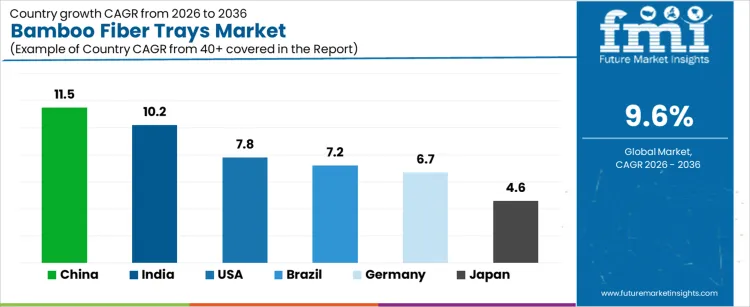
| Country | CAGR (%) |
|---|---|
| China | 11.5% |
| USA | 7.8% |
| Germany | 6.7% |
| India | 10.2% |
| Brazil | 7.2% |
| Japan | 4.6% |
The demand for bamboo fiber trays shows varied growth across countries, influenced by food service packaging volumes, material substitution trends, and manufacturing capacity. China leads with an 11.5% CAGR, supported by large scale production of molded fiber packaging and strong domestic consumption. India follows at 10.2%, driven by expanding quick service restaurants and wider use of fiber based trays in food delivery. The USA grows at 7.8%, reflecting steady adoption across food service and retail packaging. Brazil records 7.2%, supported by growth in takeaway food consumption. Germany posts 6.7%, shaped by established molded fiber usage, while Japan grows at 4.6%, reflecting mature food packaging demand and stable consumption patterns.
How Is Molded Fiber Packaging Adoption Driving Growth in China?
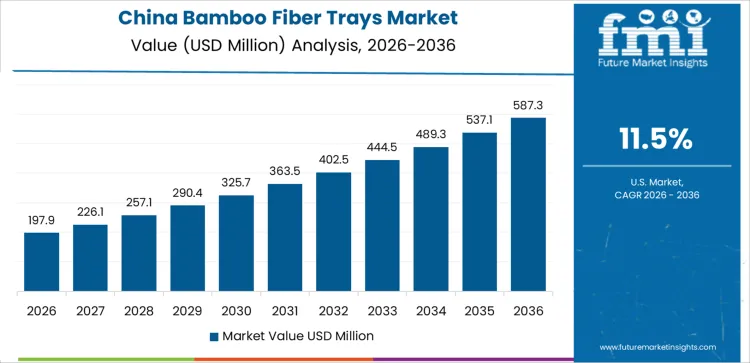
In China, revenue from the Bamboo Fiber Trays Market is expanding at a CAGR of 11.5% through 2035, driven by rapid adoption of molded fiber packaging across food service, electronics, and industrial applications. Manufacturers are using bamboo fiber trays to replace plastic and foam formats in high volume packaging lines. Demand is concentrated in ready meals, fresh produce, and protective transit packaging for consumer goods. Domestic producers benefit from established bamboo processing capacity and integrated supply chains. High output manufacturing, expanding distribution networks, and recurring packaging replacement cycles are sustaining consistent procurement across large packaging users nationwide.
- Food service and consumer goods manufacturers are replacing plastic trays with bamboo fiber alternatives in high volume applications
- Established bamboo processing infrastructure supports reliable raw material availability and cost control
- Compatibility with automated molding and packing lines enables efficient large scale production
- Recurring packaging replacement needs sustain predictable procurement volumes
How Is Retail Packaging Transition Supporting Demand in the United States?
The United States is experiencing steady growth in the Bamboo Fiber Trays Market at a CAGR of 7.8% through 2035, supported by shifts toward fiber based packaging in retail and food service channels. Brands are adopting bamboo fiber trays for fresh foods, prepared meals, and in store displays requiring rigidity and presentation quality. Demand is driven by grocery retailers, meal kit providers, and food processors. Domestic molded fiber producers supply standardized tray formats compatible with existing filling operations. Stable retail demand and recurring product turnover are sustaining measured procurement across packaging buyers nationwide.
- Grocery and meal kit providers are adopting bamboo fiber trays for fresh and prepared food packaging
- Rigid tray formats support product protection and in store presentation needs
- Domestic molded fiber suppliers ensure consistent supply and dimensional control
- Retail replenishment cycles sustain steady procurement behavior
How Do Packaging Standards Shape Market Expansion in Germany?
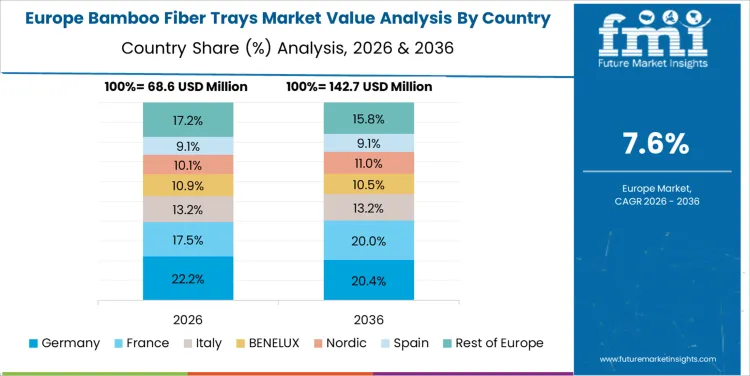
Germany continues to record measured expansion in the Bamboo Fiber Trays Market at a CAGR of 6.7% through 2035, supported by structured packaging standards and emphasis on material efficiency. Food producers and industrial packers are integrating bamboo fiber trays for portioned foods and component packaging. Demand remains focused on bakery products, ready meals, and industrial transit applications. Technical expertise in fiber molding supports consistent tray performance and stackability. Stable production volumes and compliance driven procurement practices are sustaining predictable adoption across domestic packaging operations nationwide.
- Packaging standards favor fiber based trays with consistent performance characteristics
- Bakery and ready meal packaging remain primary application segments
- Fiber molding expertise supports dimensional accuracy and stack efficiency
- Compliance oriented procurement sustains stable demand levels
How Is Organized Food Processing Driving Growth in India?
India is witnessing strong growth in the Bamboo Fiber Trays Market at a CAGR of 10.2% through 2035, driven by expansion of organized food processing and modern retail distribution. Producers are using bamboo fiber trays for packaged meals, fresh produce, and institutional food supply. Demand is rising across urban consumption centers and food service operators. Domestic tray manufacturers are expanding molded fiber capacity using locally sourced bamboo inputs. Expanding cold chain infrastructure and retail penetration are sustaining robust procurement across food packaging users nationwide.
- Organized food processing growth is increasing demand for rigid fiber tray formats
- Urban retail and food service channels support higher packaging volumes
- Local bamboo sourcing improves material availability and cost alignment
- Distribution and cold chain expansion sustain demand growth
How Are Consumer Goods Shipments Supporting Adoption in Brazil?
Brazil is seeing steady expansion in the Bamboo Fiber Trays Market at a CAGR of 7.2% through 2035, supported by growth in packaged food and consumer goods distribution. Manufacturers are using bamboo fiber trays for produce, confectionery, and protective inner packaging. Demand is concentrated in organized retail and regional distribution hubs. Imports supply some molded fiber equipment, while local producers expand tray forming capacity. Growth in packaged food availability and retail networks is sustaining recurring procurement across packaging operations nationwide.
- Packaged food and consumer goods shipments support tray adoption
- Protective tray formats improve handling during regional transport
- Local producers expand molded fiber production capacity
- Retail distribution growth sustains recurring procurement
How Does Mature Packaging Demand Influence Stability in Japan?
Japan is maintaining measured growth in the Bamboo Fiber Trays Market at a CAGR of 4.6% through 2035, supported by mature packaging demand and preference for precision molded formats. Packaging users apply bamboo fiber trays selectively for prepared foods and specialty products. Demand remains focused on consistency, cleanliness, and stacking efficiency. Domestic suppliers emphasize tight dimensional control and surface quality. Stable consumption patterns and replacement driven purchasing are sustaining predictable procurement across established packaging operations nationwide.
- Mature packaging markets favor selective adoption based on performance reliability
- Prepared food packaging drives baseline tray demand
- Domestic suppliers ensure precise molding and surface finish
- Replacement driven purchasing sustains procurement continuity
What Is Driving the Demand for Bamboo Fiber Trays and Which Packaging Groups Influence Foodservice Adoption?
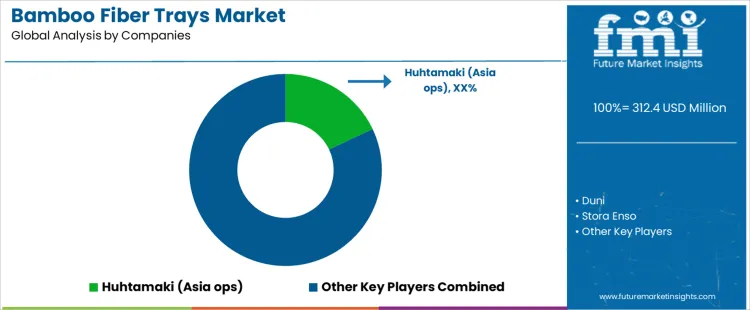
Bamboo fiber trays are gaining use as foodservice operators and packaged food brands seek molded fiber formats that offer strength, heat resistance, and rapid renewability. Quick service restaurants, ready meal producers, and airline catering rely on bamboo fiber for trays that hold hot and oily foods while maintaining structural integrity. Huhtamaki supports adoption across Asia through molded bamboo fiber trays designed for high volume foodservice and retail meals. Duni contributes through premium tableware trays used in catering and hospitality settings. Stora Enso supports material development through fiber innovation used in tray forming. UFlex participates through conversion and coating of molded trays for moisture and grease resistance. Toppan supports printed tray formats used in branded ready meals.
Tray selection is guided by rigidity, stackability, heat tolerance, and compatibility with sealing films and lidding. Buyers favor bamboo fiber for its fast growing feedstock and consistent molding quality. Usage spans takeaway meals, airline trays, chilled ready foods, and institutional dining. Demand visibility tracks expansion of molded fiber packaging, growth in takeaway consumption, and continued replacement of plastic trays across foodservice and retail supply chains.
Key Players in the Bamboo Fiber Trays Market
- Huhtamaki (Asia ops)
- Duni
- Stora Enso
- UFlex (conversion)
- Toppan
Scope of the Report
| Items | Values |
|---|---|
| Quantitative Units (2026) | USD million |
| End Use Application | Ready Meals and Retail; Foodservice and Takeaway; Retail Bakery; Catering and Events; Other Applications |
| Packaging Format Type | Clamshell Trays; Compartment Trays; Hinged Trays; Sleeved Trays; Other Formats |
| Material | Bamboo Pulp and Fiber; Bagasse Bamboo Blends; Fully Compostable Fiber; Local Bamboo Blends; Other Materials |
| Technology | Molded Pulp Thermoforming; Compression Molding; High-speed Press Molding; Wet Molding; Other Technologies |
| Regions Covered | Asia Pacific; Europe; North America; Latin America; Middle East & Africa |
| Countries Covered | China; Japan; South Korea; India; Australia & New Zealand; ASEAN; Germany; United Kingdom; France; Italy; Spain; Nordic; BENELUX; United States; Canada; Mexico; Brazil; Chile; Kingdom of Saudi Arabia; Turkey; South Africa; plus additional countries across Asia Pacific, Europe, Latin America, and Middle East & Africa |
| Key Companies Profiled | Huhtamaki; Duni; Stora Enso; UFlex; Toppan |
| Additional Attributes | Dollar by sales across end use applications and tray formats; adoption of bamboo fiber trays as substitutes for plastic and paper trays in food packaging; role of clamshell and compartment trays in ready meals and foodservice applications; importance of heat resistance, grease tolerance, and stacking strength in tray selection; integration of molded fiber trays with automated filling and sealing lines; influence of compression molding and high-speed press molding on volume scalability; considerations around moisture sensitivity, barrier performance, and regional molding capacity; use of bamboo fiber trays across retail, catering, takeaway, and institutional food packaging |
Bamboo Fiber Trays Market Segmentation
End-use / Application
- Ready Meals & Retail
- Foodservice / Takeaway
- Retail Bakery
- Catering & Events
- Others
Packaging Format / Type
- Clamshell Trays
- Compartment Trays
- Hinged Trays
- Sleeved Trays
- Others
Material
- Bamboo Pulp / Fiber
- Bagasse-Bamboo Blends
- Fully Compostable Fiber
- Local Bamboo Blends
- Others
Technology
- Molded Pulp Thermoforming
- Compression Molding
- High-speed Press Molding
- Wet Molding
- Others
Region
- Asia Pacific
- China
- Japan
- South Korea
- India
- Australia & New Zealand
- ASEAN
- Rest of Asia Pacific
- Europe
- Germany
- United Kingdom
- France
- Italy
- Spain
- Nordic
- BENELUX
- Rest of Europe
- North America
- United States
- Canada
- Mexico
- Latin America
- Brazil
- Chile
- Rest of Latin America
- Middle East & Africa
- Kingdom of Saudi Arabia
- Other GCC Countries
- Turkey
- South Africa
- Other African Union
- Rest of Middle East & Africa
Frequently Asked Questions
How big is the bamboo fiber trays market in 2026?
The global bamboo fiber trays market is estimated to be valued at USD 312.4 million in 2026.
What will be the size of bamboo fiber trays market in 2036?
The market size for the bamboo fiber trays market is projected to reach USD 778.2 million by 2036.
How much will be the bamboo fiber trays market growth between 2026 and 2036?
The bamboo fiber trays market is expected to grow at a 9.6% CAGR between 2026 and 2036.
What are the key product types in the bamboo fiber trays market?
The key product types in bamboo fiber trays market are ready meals & retail, foodservice / takeaway, retail bakery, catering & events and others.
Which packaging format / type segment to contribute significant share in the bamboo fiber trays market in 2026?
In terms of packaging format / type, clamshell trays segment to command 50.0% share in the bamboo fiber trays market in 2026.
Preview the report firsthand - request a free sample
Get SampleGet the brochure for pricing and purchase details.
Get PDFTable of Content
- Executive Summary
- Global Market Outlook
- Demand-side Trends
- Supply-side Trends
- Technology Roadmap Analysis
- Analysis and Recommendations
- Market Overview
- Market Coverage / Taxonomy
- Market Definition / Scope / Limitations
- Market Background
- Market Dynamics
- Drivers
- Restraints
- Opportunity
- Trends
- Scenario Forecast
- Demand in Optimistic Scenario
- Demand in Likely Scenario
- Demand in Conservative Scenario
- Opportunity Map Analysis
- Product Life Cycle Analysis
- Supply Chain Analysis
- Investment Feasibility Matrix
- Value Chain Analysis
- PESTLE and Porter’s Analysis
- Regulatory Landscape
- Regional Parent Market Outlook
- Production and Consumption Statistics
- Import and Export Statistics
- Market Dynamics
- Global Market Analysis 2021 to 2025 and Forecast, 2026 to 2036
- Historical Market Size Value (USD Million) Analysis, 2021 to 2025
- Current and Future Market Size Value (USD Million) Projections, 2026 to 2036
- Y-o-Y Growth Trend Analysis
- Absolute $ Opportunity Analysis
- Global Market Pricing Analysis 2021 to 2025 and Forecast 2026 to 2036
- Global Market Analysis 2021 to 2025 and Forecast 2026 to 2036, By End-use / Application
- Introduction / Key Findings
- Historical Market Size Value (USD Million) Analysis By End-use / Application , 2021 to 2025
- Current and Future Market Size Value (USD Million) Analysis and Forecast By End-use / Application , 2026 to 2036
- Ready Meals & Retail
- Foodservice / Takeaway
- Retail Bakery
- Catering & Events
- Others
- Y-o-Y Growth Trend Analysis By End-use / Application , 2021 to 2025
- Absolute $ Opportunity Analysis By End-use / Application , 2026 to 2036
- Global Market Analysis 2021 to 2025 and Forecast 2026 to 2036, By Packaging Format / Type
- Introduction / Key Findings
- Historical Market Size Value (USD Million) Analysis By Packaging Format / Type, 2021 to 2025
- Current and Future Market Size Value (USD Million) Analysis and Forecast By Packaging Format / Type, 2026 to 2036
- Clamshell Trays
- Compartment Trays
- Hinged Trays
- Sleeved Trays
- Others
- Y-o-Y Growth Trend Analysis By Packaging Format / Type, 2021 to 2025
- Absolute $ Opportunity Analysis By Packaging Format / Type, 2026 to 2036
- Global Market Analysis 2021 to 2025 and Forecast 2026 to 2036, By Material
- Introduction / Key Findings
- Historical Market Size Value (USD Million) Analysis By Material, 2021 to 2025
- Current and Future Market Size Value (USD Million) Analysis and Forecast By Material, 2026 to 2036
- Bamboo Pulp / Fiber
- Bagasse-Bamboo Blends
- Fully Compostable Fiber
- Local Bamboo Blends
- Others
- Others
- Y-o-Y Growth Trend Analysis By Material, 2021 to 2025
- Absolute $ Opportunity Analysis By Material, 2026 to 2036
- Global Market Analysis 2021 to 2025 and Forecast 2026 to 2036, By Technology
- Introduction / Key Findings
- Historical Market Size Value (USD Million) Analysis By Technology, 2021 to 2025
- Current and Future Market Size Value (USD Million) Analysis and Forecast By Technology, 2026 to 2036
- Molded Pulp Thermoforming
- Compression Molding
- High-speed Press Molding
- Wet Molding
- Others
- Y-o-Y Growth Trend Analysis By Technology, 2021 to 2025
- Absolute $ Opportunity Analysis By Technology, 2026 to 2036
- Global Market Analysis 2021 to 2025 and Forecast 2026 to 2036, By Region
- Introduction
- Historical Market Size Value (USD Million) Analysis By Region, 2021 to 2025
- Current Market Size Value (USD Million) Analysis and Forecast By Region, 2026 to 2036
- North America
- Latin America
- Western Europe
- Eastern Europe
- East Asia
- South Asia and Pacific
- Middle East & Africa
- Market Attractiveness Analysis By Region
- North America Market Analysis 2021 to 2025 and Forecast 2026 to 2036, By Country
- Historical Market Size Value (USD Million) Trend Analysis By Market Taxonomy, 2021 to 2025
- Market Size Value (USD Million) Forecast By Market Taxonomy, 2026 to 2036
- By Country
- USA
- Canada
- Mexico
- By End-use / Application
- By Packaging Format / Type
- By Material
- By Technology
- By Country
- Market Attractiveness Analysis
- By Country
- By End-use / Application
- By Packaging Format / Type
- By Material
- By Technology
- Key Takeaways
- Latin America Market Analysis 2021 to 2025 and Forecast 2026 to 2036, By Country
- Historical Market Size Value (USD Million) Trend Analysis By Market Taxonomy, 2021 to 2025
- Market Size Value (USD Million) Forecast By Market Taxonomy, 2026 to 2036
- By Country
- Brazil
- Chile
- Rest of Latin America
- By End-use / Application
- By Packaging Format / Type
- By Material
- By Technology
- By Country
- Market Attractiveness Analysis
- By Country
- By End-use / Application
- By Packaging Format / Type
- By Material
- By Technology
- Key Takeaways
- Western Europe Market Analysis 2021 to 2025 and Forecast 2026 to 2036, By Country
- Historical Market Size Value (USD Million) Trend Analysis By Market Taxonomy, 2021 to 2025
- Market Size Value (USD Million) Forecast By Market Taxonomy, 2026 to 2036
- By Country
- Germany
- UK
- Italy
- Spain
- France
- Nordic
- BENELUX
- Rest of Western Europe
- By End-use / Application
- By Packaging Format / Type
- By Material
- By Technology
- By Country
- Market Attractiveness Analysis
- By Country
- By End-use / Application
- By Packaging Format / Type
- By Material
- By Technology
- Key Takeaways
- Eastern Europe Market Analysis 2021 to 2025 and Forecast 2026 to 2036, By Country
- Historical Market Size Value (USD Million) Trend Analysis By Market Taxonomy, 2021 to 2025
- Market Size Value (USD Million) Forecast By Market Taxonomy, 2026 to 2036
- By Country
- Russia
- Poland
- Hungary
- Balkan & Baltic
- Rest of Eastern Europe
- By End-use / Application
- By Packaging Format / Type
- By Material
- By Technology
- By Country
- Market Attractiveness Analysis
- By Country
- By End-use / Application
- By Packaging Format / Type
- By Material
- By Technology
- Key Takeaways
- East Asia Market Analysis 2021 to 2025 and Forecast 2026 to 2036, By Country
- Historical Market Size Value (USD Million) Trend Analysis By Market Taxonomy, 2021 to 2025
- Market Size Value (USD Million) Forecast By Market Taxonomy, 2026 to 2036
- By Country
- China
- Japan
- South Korea
- By End-use / Application
- By Packaging Format / Type
- By Material
- By Technology
- By Country
- Market Attractiveness Analysis
- By Country
- By End-use / Application
- By Packaging Format / Type
- By Material
- By Technology
- Key Takeaways
- South Asia and Pacific Market Analysis 2021 to 2025 and Forecast 2026 to 2036, By Country
- Historical Market Size Value (USD Million) Trend Analysis By Market Taxonomy, 2021 to 2025
- Market Size Value (USD Million) Forecast By Market Taxonomy, 2026 to 2036
- By Country
- India
- ASEAN
- Australia & New Zealand
- Rest of South Asia and Pacific
- By End-use / Application
- By Packaging Format / Type
- By Material
- By Technology
- By Country
- Market Attractiveness Analysis
- By Country
- By End-use / Application
- By Packaging Format / Type
- By Material
- By Technology
- Key Takeaways
- Middle East & Africa Market Analysis 2021 to 2025 and Forecast 2026 to 2036, By Country
- Historical Market Size Value (USD Million) Trend Analysis By Market Taxonomy, 2021 to 2025
- Market Size Value (USD Million) Forecast By Market Taxonomy, 2026 to 2036
- By Country
- Kingdom of Saudi Arabia
- Other GCC Countries
- Turkiye
- South Africa
- Other African Union
- Rest of Middle East & Africa
- By End-use / Application
- By Packaging Format / Type
- By Material
- By Technology
- By Country
- Market Attractiveness Analysis
- By Country
- By End-use / Application
- By Packaging Format / Type
- By Material
- By Technology
- Key Takeaways
- Key Countries Market Analysis
- USA
- Pricing Analysis
- Market Share Analysis, 2025
- By End-use / Application
- By Packaging Format / Type
- By Material
- By Technology
- Canada
- Pricing Analysis
- Market Share Analysis, 2025
- By End-use / Application
- By Packaging Format / Type
- By Material
- By Technology
- Mexico
- Pricing Analysis
- Market Share Analysis, 2025
- By End-use / Application
- By Packaging Format / Type
- By Material
- By Technology
- Brazil
- Pricing Analysis
- Market Share Analysis, 2025
- By End-use / Application
- By Packaging Format / Type
- By Material
- By Technology
- Chile
- Pricing Analysis
- Market Share Analysis, 2025
- By End-use / Application
- By Packaging Format / Type
- By Material
- By Technology
- Germany
- Pricing Analysis
- Market Share Analysis, 2025
- By End-use / Application
- By Packaging Format / Type
- By Material
- By Technology
- UK
- Pricing Analysis
- Market Share Analysis, 2025
- By End-use / Application
- By Packaging Format / Type
- By Material
- By Technology
- Italy
- Pricing Analysis
- Market Share Analysis, 2025
- By End-use / Application
- By Packaging Format / Type
- By Material
- By Technology
- Spain
- Pricing Analysis
- Market Share Analysis, 2025
- By End-use / Application
- By Packaging Format / Type
- By Material
- By Technology
- France
- Pricing Analysis
- Market Share Analysis, 2025
- By End-use / Application
- By Packaging Format / Type
- By Material
- By Technology
- India
- Pricing Analysis
- Market Share Analysis, 2025
- By End-use / Application
- By Packaging Format / Type
- By Material
- By Technology
- ASEAN
- Pricing Analysis
- Market Share Analysis, 2025
- By End-use / Application
- By Packaging Format / Type
- By Material
- By Technology
- Australia & New Zealand
- Pricing Analysis
- Market Share Analysis, 2025
- By End-use / Application
- By Packaging Format / Type
- By Material
- By Technology
- China
- Pricing Analysis
- Market Share Analysis, 2025
- By End-use / Application
- By Packaging Format / Type
- By Material
- By Technology
- Japan
- Pricing Analysis
- Market Share Analysis, 2025
- By End-use / Application
- By Packaging Format / Type
- By Material
- By Technology
- South Korea
- Pricing Analysis
- Market Share Analysis, 2025
- By End-use / Application
- By Packaging Format / Type
- By Material
- By Technology
- Russia
- Pricing Analysis
- Market Share Analysis, 2025
- By End-use / Application
- By Packaging Format / Type
- By Material
- By Technology
- Poland
- Pricing Analysis
- Market Share Analysis, 2025
- By End-use / Application
- By Packaging Format / Type
- By Material
- By Technology
- Hungary
- Pricing Analysis
- Market Share Analysis, 2025
- By End-use / Application
- By Packaging Format / Type
- By Material
- By Technology
- Kingdom of Saudi Arabia
- Pricing Analysis
- Market Share Analysis, 2025
- By End-use / Application
- By Packaging Format / Type
- By Material
- By Technology
- Turkiye
- Pricing Analysis
- Market Share Analysis, 2025
- By End-use / Application
- By Packaging Format / Type
- By Material
- By Technology
- South Africa
- Pricing Analysis
- Market Share Analysis, 2025
- By End-use / Application
- By Packaging Format / Type
- By Material
- By Technology
- USA
- Market Structure Analysis
- Competition Dashboard
- Competition Benchmarking
- Market Share Analysis of Top Players
- By Regional
- By End-use / Application
- By Packaging Format / Type
- By Material
- By Technology
- Competition Analysis
- Competition Deep Dive
- Huhtamaki (Asia ops)
- Overview
- Product Portfolio
- Profitability by Market Segments (Product/Age /Sales Channel/Region)
- Sales Footprint
- Strategy Overview
- Marketing Strategy
- Product Strategy
- Channel Strategy
- Duni
- Stora Enso
- UFlex (conversion)
- Toppan
- Huhtamaki (Asia ops)
- Competition Deep Dive
- Assumptions & Acronyms Used
- Research Methodology


