

- Industry Size (2026)
- USD 15.5 Bn
- Forecast (2036)
- USD 28.3 Bn
- CAGR (2026 to 2036)
- 6.2%
Blood Sugar Tester Market Size, Market Forecast and Outlook By FMI
Global blood sugar tester market value reached USD 14.6 billion in 2025. The industry is projected to reach USD 15.5 billion in 2026 and USD 28.3 billion by 2036, growing at a CAGR of 6.2%. As per FMI's projection, the market is undergoing a fundamental procurement specification shift where the "unit of value" is transitioning from the volume of disposable test strips to the fidelity of longitudinal data.
Patients and insurers are increasingly prioritizing systems that integrate with pharmaceutical therapies; for instance, 26.5% of diagnosed adults with diabetes in the United States now use GLP-1 injectables, creating a new patient phenotype that requires metabolic visibility rather than just insulin dosing data [2]. This pharmaceutical intersection forces device manufacturers to upgrade legacy hardware with connectivity features that justify higher price points despite flattening strip volumes.
Summary of Blood Sugar Tester Market
- Blood Sugar Tester Market Definition
- The industry covers diagnostic devices and consumables used by patients and professionals to monitor blood glucose levels, ranging from electrochemical strips to continuous subcutaneous sensors.
- Demand Drivers in the Market
- Rising global prevalence, with 589 million adults living with diabetes in 2024, creates a rapidly expanding base of users requiring daily or weekly monitoring solutions [1].
- The integration of glucose sensor technology with smartphones drives adoption among younger demographics who demand seamless data visualization and cloud connectivity.
- Expansion of reimbursement codes for continuous monitoring in emerging markets incentivizes the transition from sporadic testing to longitudinal surveillance.
- Key Segments Analyzed in the FMI Report
- Self-Monitoring Devices hold the dominant share at 65.0%, driven by the massive volume of test strip consumption in low-to-middle-income countries.
- Home Care Settings account for 55.0% of end-use demand, reflecting the global shift toward decentralised chronic disease management.
- Geographically, the market spans high-volume manufacturing hubs in Asia Pacific and innovation-led premium markets in North America and Europe.
- Analyst Opinion at FMI
- Sabyasachi Ghosh, Principal Consultant for Healthcare, opines, "The commercial battleground is shifting from accuracy to adherence; hardware that fails to integrate with the GLP-1 lifestyle or offer pain-free application will face obsolescence. According to FMI's estimates, the real opportunity lies not in selling sensors, but in selling the metabolic intelligence that predicts hypoglycemic risks before they occur."
- Strategic Implications/Executive Takeaways
- Invest aggressively in non-invasive sensing partnerships to hedge against the eventual commoditization of filament-based CGMs.
- Prioritize regulatory approval in India and China to capture the volume wave from state-mandated screening programs.
- Develop "lite" versions of continuous monitors specifically for the pre-diabetic and weight-management cohorts to expand the total addressable market.
- Methodology
- Validated through first-hand corporate production and capacity data.
- Zero reliance on speculative third-party market research reports.
- Based on verifiable industrial benchmarks and verified sources.
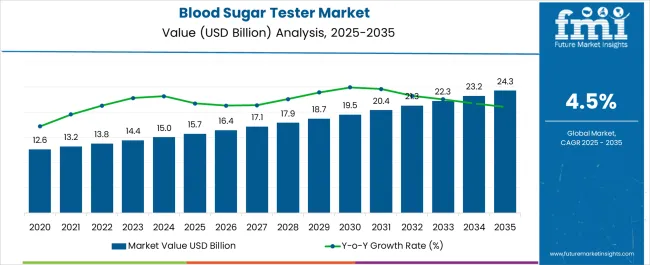
A shift toward proactive management is highlighted by industry leaders. Prof. Peter Schwarz, President of the International Diabetes Federation, noted in April 2025, "The findings underscore an urgent need for bolder national and global action to tackle diabetes. With over 4 in every 10 people with diabetes not yet diagnosed, governments must prioritise screening, early diagnosis, and education" [1]. FMI analysts opine that this directive will compel healthcare systems to subsidize mass-screening hardware, effectively expanding the addressable market from diagnosed patients to the pre-diabetic population.
China (8.5% CAGR) and India (7.8% CAGR) drive volume expansion through state-sponsored screening initiatives and rising diagnostic penetration. High-value growth is concentrated in the United States (5.5% CAGR), Germany (4.8% CAGR), and Brazil (4.5% CAGR), where demand is pivoting toward continuous and non-invasive monitoring solutions that reduce long-term therapeutic costs.
Blood Sugar Tester Market Definition
The blood sugar tester market encompasses the global engineering, production, and distribution of diagnostic hardware and consumables used to measure glycated hemoglobin or capillary glucose levels. This includes traditional electrochemical glucometers that utilize enzymatic test strips and lancets, as well as next-generation continuous glucose monitoring (CGM) systems that employ subcutaneous sensors to stream interstitial fluid data. It serves as the primary technological interface for diabetes management, enabling both patients and clinicians to titrate insulin, monitor hypoglycemic events, and adjust lifestyle interventions based on real-time metabolic feedback.
Blood Sugar Tester Market Inclusions
The report includes a comprehensive analysis of the ecosystem surrounding glucose quantification tools, covering both self-monitoring blood glucose (SMBG) devices and professional point-of-care testing kits. It specifically covers the revenue generated from durable hardware (meters, transmitters, receivers) and recurring consumables (test strips, lancets, sensors). The scope extends to emerging non-invasive monitoring technologies and hybrid systems that integrate blood glucose monitoring devices with digital health platforms for remote patient monitoring.
Blood Sugar Tester Market Exclusions
The scope excludes therapeutic delivery mechanisms such as insulin pumps or automated insulin delivery (AID) systems unless they are sold as a strictly bundled unit with the monitoring sensor. It also omits oral anti-diabetic pharmaceuticals, injectable therapies like GLP-1 receptor agonists, and general laboratory diagnostic equipment not specifically dedicated to rapid glucose testing. Devices used solely for veterinary purposes or non-medical fitness tracking without regulatory clearance for disease management are also excluded.
Blood Sugar Tester Market Research Methodology
- Primary Research: Interviews were conducted with R&D heads of medical device firms, endocrinologists, procurement officers at hospital networks, and regulatory consultants in key jurisdictions.
- Desk Research: Analysis of FDA/EMA device approval databases, patent filings for non-invasive sensors, and national health survey data on diabetes prevalence supported the baseline sizing.
- Market-Sizing and Forecasting: A hybrid top-down and bottom-up model was developed.
- Data Validation and Update Cycle: Demand was reconstructed from diabetic population epidemiology and treatment adherence rates, then validated against corporate segment revenues.
Segmental Analysis
Blood Sugar Tester Market Analysis by Product Type
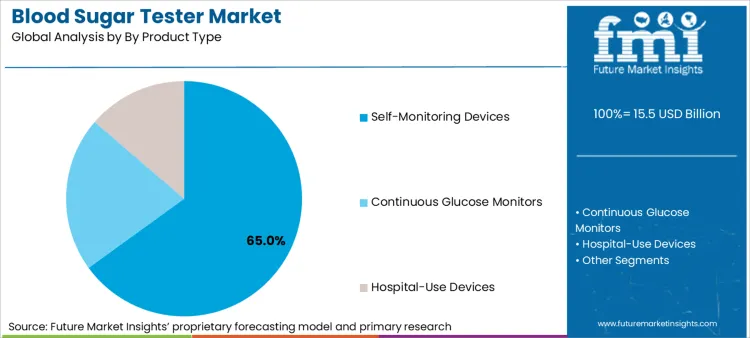
The transition from episodic finger-stick testing to continuous metabolic surveillance is reshaping the product mix, driven by the clinical superiority of longitudinal data in preventing long-term complications. While self-monitoring devices currently retain 65.0% of the market due to their affordability and reimbursement entrenchment, the growth vector is heavily skewed toward continuous glucose monitoring systems. This shift is accelerated by the saturation of legacy strip markets and the aggressive entry of tech-first disruptors challenging the oligopoly of Abbott and Dexcom. As per FMI's projection, the commoditization of electrochemical strips is forcing manufacturers to pivot toward high-margin sensor platforms that offer predictive analytics.
- Self-Monitoring Devices: Demand for traditional glucometers and strips remains robust in cost-sensitive regions, supported by the sheer scale of the 589 million global diabetic population that requires affordable daily testing [1].
- Continuous Glucose Monitors: Growth is catalyzed by the innovation of non-invasive tech, such as Liom’s recent €13.9 million funding extension to commercialize needle-free Raman spectroscopy sensors [5].
- Hospital-Use Devices: Institutional demand is stabilizing around connected point-of-care systems that integrate directly with electronic health records to manage the surge in diabetes-related admissions.
Blood Sugar Tester Market Analysis by End User
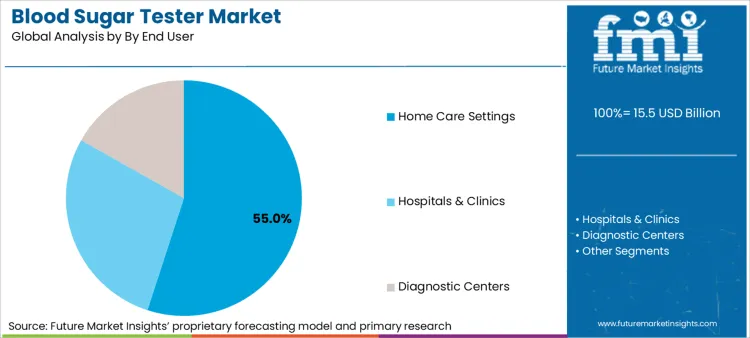
The decentralization of healthcare is positioning the home care segment as the primary engine of consumption, accounting for 55.0% of the total market value. Patients are increasingly managing complex insulin regimens and GLP-1 therapies outside clinical settings, necessitating devices that are intuitive and clinically accurate. This trend is reinforced by the digital health revolution, which allows self-monitoring devices to transmit data to care teams remotely, reducing the burden on physical infrastructure. FMI analysts opine that the home setting will continue to capture value as insurers push for preventative management to avoid costly acute hospitalizations.
- Home Care Settings: The adoption of GLP-1 injectables by 26.5% of US diabetic adults has created a new user base that monitors glucose to optimize weight loss and metabolic stability rather than just insulin dosing [2].
- Hospitals & Clinics: Clinical segments are focusing on high-throughput diagnostic accuracy to manage the comorbidities associated with diabetes, such as the 84% higher risk of heart failure in type 2 patients [1].
- Diagnostic Centers: These facilities are evolving into hubs for early detection, leveraging advanced screening tools to identify the millions of undiagnosed cases flagged by global health bodies [1].
Blood Sugar Tester Market Drivers, Restraints, and Opportunities
The primary engine of market expansion is the escalating global prevalence of diabetes, which has now reached pandemic proportions with 589 million affected adults [1]. This demographic pressure forces healthcare systems to invest in scalable monitoring solutions to prevent catastrophic long-term costs. Simultaneously, the technological convergence of consumer electronics and medical devices is expanding the market boundary. Startups like Sava Technologies are capitalizing on this by securing $19 million to develop multi-molecule sensors, creating opportunities to sell monitoring tools to the broader "metabolic health" consumer base beyond diagnosed diabetics [6].
Growth is constrained by the steep economic burden of chronic care and the high out-of-pocket costs for advanced sensors in developing nations. Global diabetes-related health expenditure surpassed USD 1 trillion in 2024, placing immense strain on public payers who may throttle reimbursement for premium devices [1]. Furthermore, the market faces a "validity barrier" where new non-invasive technologies must prove they match the accuracy of invasive gold standards. Despite this, the rise of non-invasive blood glucose monitoring devices presents a massive opportunity to capture the needle-phobic patient segment that historically demonstrated poor adherence to testing protocols [5].
- Disease Prevalence: The projection that the number of adults with diabetes will reach 853 million by 2050 guarantees a sustained, volume-driven demand baseline for testing hardware for decades [1].
- Therapeutic Integration: The fact that 33.3% of older US adults are using GLP-1s creates a new "companion diagnostic" opportunity where testers are sold as essential tools for optimizing expensive drug therapies [2].
- Non-Invasive Innovation: Investments in filament-free sensing, such as Liom's optical tech, address the pain-point restraint of traditional CGMs and open access to the pediatric and pre-diabetic markets [5].
Regional Analysis
Based on the regional analysis, the blood sugar tester market is segmented into North America, Latin America, Europe, East Asia, South Asia, Oceania and Middle East & Africa across 40+ countries. The full report also offers market attractiveness analysis based on regional trends.
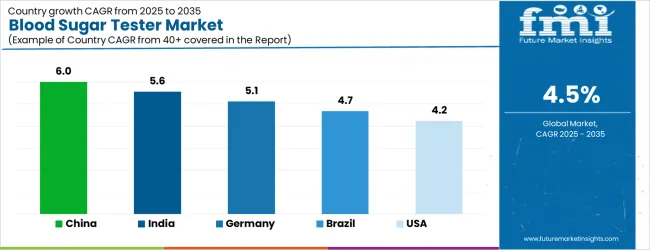
| Country | CAGR (2026 to 2036) |
|---|---|
| China | 8.5% |
| India | 7.8% |
| United States | 5.5% |
| Germany | 4.8% |
| Brazil | 4.5% |
Source: Future Market Insights (FMI) analysis, based on proprietary forecasting model and primary research
Asia Pacific Blood Sugar Tester Market Analysis
Asia Pacific is transforming from a volume-dumping ground for generic strips into the world's largest laboratory for metabolic screening. The region bears a staggering disease burden; for instance, India has seen its diabetic population swell to 101 million, with another 136 million living with prediabetes [3]. As per FMI's projection, this density is forcing a shift from reactive individual purchasing to proactive state-level procurement of screening kits. The emergence of Asian tech challengers is also reshaping the landscape, with companies like Apollon in South Korea developing AI-driven needle-free smartwatches to challenge Western incumbents [7].
- China: Growth tracks a CAGR of 8.5% as the adoption of predictive algorithms, such as the iCARE-DM model, enhances early risk detection among the elderly population [8].
- India: A CAGR of 7.8% is underpinned by the urgent need to address gestational diabetes, which now affects 22.4% of pregnancies and requires rigorous, affordable mass screening protocols [3].
FMI’s report includes a detailed analysis of growth in the Asia Pacific region, along with a country-wise assessment that includes China, India, Japan, South Korea, and Australia. Readers can also find regional trends, regulations, and market growth based on different segments and home blood testing devices in Asia Pacific.
North America Blood Sugar Tester Market Analysis
North America remains the revenue stronghold, characterized by the rapid integration of diagnostics with blockbuster pharmaceutical therapies. The market in the United States is being redefined by the "metabolic management" trend, where 26.5% of diagnosed diabetics now utilize GLP-1 injectables, necessitating sensors that track glucose stability alongside weight loss [2]. According to FMI's estimates, this therapeutic shift is insulating the market from price erosion, as payers are willing to fund premium continuous monitors that ensure adherence to expensive drug regimens.
- United States: Expansion at 5.5% CAGR is linked to the high penetration of GLP-1/insulin co-therapies, which are used by 31.3% of insulin-dependent adults to manage complex metabolic profiles [2].
FMI’s report includes a detailed analysis of growth in the North America region, along with a country-wise assessment that includes the United States, Canada, and Mexico. Readers can also find regional trends, regulations, and market growth based on otc glucose monitors and different segments in North America.
Europe Blood Sugar Tester Market Analysis
Europe serves as the global innovation hub for non-invasive technology, moving beyond the iterations of electrochemical systems. The region is seeing significant capital flows into filament-free sensor startups; Liom in Switzerland and Sava Technologies in the UK recently secured major funding rounds to commercialize pain-free monitoring solutions [5], [6]. FMI analysts opine that Europe’s stringent reimbursement frameworks for demand for glucose monitoring devices in eu drive manufacturers to prove superior clinical outcomes, fostering a market environment that rewards genuine technological breakthroughs over incremental upgrades.
- Germany: At 4.8% CAGR, the country outlook is shaped by an aging demographic where diabetes prevalence is forecast to nearly double to 16.1% by 2050, necessitating long-term monitoring infrastructure [4].
FMI’s report includes a detailed analysis of growth in the Europe region, along with a country-wise assessment that includes Germany, the UK, France, Italy, and Spain. Readers can also find regional trends, regulations, and market growth based on different segments and countries in Europe.
Latin America Blood Sugar Tester Market Analysis
Latin America represents a critical battleground for affordability and access, where high mortality rates drive the urgency for better diagnostic tools. In Brazil, premature mortality from diabetes remains a severe public health crisis, with 19.9 deaths per 100,000 inhabitants in the 30-69 age bracket recorded in recent years [9]. As per FMI's projection, growth in this region is contingent on the availability of low-cost self-monitoring devices that can be distributed through public health networks to mitigate these preventable deaths.
- Brazil: A CAGR of 4.5% reflects the government's push to reduce premature mortality rates by improving access to essential screening tools in underserved states like Ceará [9].
FMI’s report includes a detailed analysis of growth in the Latin America region, along with a country-wise assessment that includes Brazil, Mexico, and Argentina. Readers can also find regional trends, regulations, and market growth based on different segments and countries in Latin America.
Competitive Aligners for Market Players
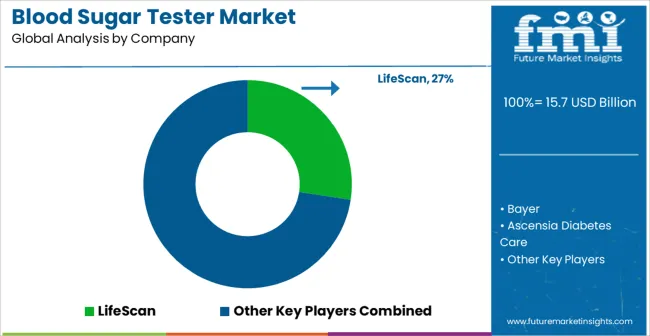
The market structure is defined by an intense oligopoly where legacy titans like Abbott and Dexcom control over 90% of the revenue in the continuous monitoring segment [10]. This high concentration forces smaller players to compete on technological disruption rather than scale. Emerging entrants are bypassing the "filament wars" entirely by developing optical or enzymatic non-invasive blood glucose monitoring devices that promise pain-free adherence, fundamentally challenging the razor-and-blade business model of current leaders.
According to FMI's estimates, intellectual property litigation has become a central strategic weapon as incumbents defend their moats. The aggressive legal maneuvers, such as patent challenges at the USPTO involving sensor connectivity and signaling, signal that the major players view regulatory exclusivity as critical as R&D speed. This litigious environment creates a high barrier to entry for new hardware manufacturers who must navigate a minefield of sensor patents while attempting to validate novel biomarkers.
Vertical integration with digital health and pharmaceutical giants is emerging as the key survival strategy for mid-tier players. Rather than operating as standalone hardware vendors, companies are positioning their devices as the "digital eyes" for GLP-1 therapies and automated insulin delivery systems. This alignment with the broader metabolic health ecosystem ensures sticky revenue streams and protects against the commoditization of bare-metal testing hardware.
Recent Developments
The report includes full coverage of key trends from competitive benchmarking. Some of the recent developments covered in the reports:
- In February 2026, Sava Technologies secured USD 19 million in Series A funding to advance its filament-free multi-molecule biosensor, aiming to disrupt the European market with pain-free monitoring technology [6].
- In December 2025, Liom extended its Series A financing by EUR 13.9 million to support clinical trials for its non-invasive, Raman spectroscopy-based wearable, validating the industry shift toward optical sensing [5].
Key Players in Blood Sugar Tester Market
- Roche Diagnostics
- Abbott
- LifeScan
- Ascensia Diabetes Care
- Dexcom
Scope of the Report
| Metric | Value |
|---|---|
| Quantitative Units | USD 15.5 billion (2026) to USD 28.3 billion (2036), at a CAGR of 6.2% |
| Market Definition | The blood sugar tester market encompasses the global engineering, production, and distribution of diagnostic hardware and consumables used to measure glycated hemoglobin or capillary glucose levels, serving as the primary technological interface for diabetes management. |
| Product Type Segmentation | Self-Monitoring Devices, Continuous Glucose Monitors, Hospital-Use Devices |
| End User Segmentation | Home Care Settings, Hospitals & Clinics, Diagnostic Centers |
| Application Coverage | Diabetes Management, Gestational Diabetes Monitoring, Pre-diabetes Screening |
| Regions Covered | North America, Latin America, Europe, East Asia, South Asia, Oceania, Middle East & Africa |
| Countries Covered | United States, Canada, Mexico, Brazil, Argentina, Chile, Germany, Italy, France, UK, Spain, Benelux, Nordics, Russia, China, India, Japan, South Korea, Indonesia, Australia, Saudi Arabia, UAE, South Africa, Turkey |
| Key Companies Profiled | Roche Diagnostics, Abbott, LifeScan, Ascensia Diabetes Care, Dexcom |
| Forecast Period | 2026 to 2036 |
| Approach | Hybrid top-down and bottom-up market modeling validated through primary interviews with R&D heads and procurement officers, supported by trade data benchmarking and clinical prevalence analysis |
Blood Sugar Tester Market Analysis by Segments
Product Type:
- Self-Monitoring Devices
- Continuous Glucose Monitors
- Hospital-Use Devices
End User:
- Home Care Settings
- Hospitals & Clinics
- Diagnostic Centers
Region:
- Asia Pacific
- India
- China
- Japan
- South Korea
- Indonesia
- Australia & New Zealand
- ASEAN
- Rest of Asia Pacific
- Europe
- Germany
- Italy
- France
- United Kingdom
- Spain
- Benelux
- Nordics
- Central & Eastern Europe
- Rest of Europe
- North America
- United States
- Canada
- Mexico
- Latin America
- Brazil
- Argentina
- Chile
- Rest of Latin America
- Middle East & Africa
- Kingdom of Saudi Arabia
- United Arab Emirates
- South Africa
- Turkey
- Rest of Middle East & Africa
Bibliography
- [1] IDF. (2025). 11th Edition IDF Diabetes Atlas Press Release and Global Statistics. International Diabetes Federation.
- [2] CDC. (2025). Use of GLP-1 Injectables Among Adults with Diagnosed Diabetes, United States 2024. NCHS Data Brief No. 537.
- [3] ICMR. (2025). Prevalence of Gestational Diabetes Mellitus in India: The ICMR-INDIAB-24 National Study. Indian Journal of Medical Research.
- [4] RKI. (2025). Diabetes Surveillance and 2050 Projections for Germany. Robert Koch Institute Journal of Health Monitoring.
- [5] Entrepreneur Loop. (2025). Liom Funding Round: Swiss Glucose Monitoring Secure €13.9 Million. Entrepreneur Loop.
- [6] AZoSensors. (2026). Biotech Start-up Sava Technologies Receives $19M in Series A Funding. AZoSensors.
- [7] KBR. (2025). Apollon Plans US/Korea Series A for Needle-Free MOGLU Smartwatch. Korea Biomedical Review.
- [8] CCDC. (2025). Validation of iCARE-DM Risk Prediction Model in Chinese Population. China CDC Weekly.
- [9] SESA. (2024). Diabetes Mellitus Mortality and Premature Death Statistics. Secretaria da Saúde do Ceará.
- [10] Entrepreneur Loop. (2024). Global CGM Market Share and Concentration Analysis. Entrepreneur Loop.
This bibliography is provided for reader reference and is not exhaustive. The full report contains the complete reference list and detailed citations.
This Report Addresses
- Market intelligence to enable structured strategic decision making across self-monitoring blood glucose (SMBG) devices, continuous glucose monitoring (CGM) systems, and connected digital diabetes management ecosystems
- Market size estimation and 10 year revenue forecasts from 2026 to 2036, supported by validated diabetes prevalence data, reimbursement coverage trends, and device penetration benchmarks
- Growth opportunity mapping across product categories including glucose meters, test strips, lancets, CGM sensors, and integrated mobile health platforms with emphasis on accuracy standards, connectivity, and patient adherence
- Segment and regional revenue forecasts covering home care users, hospitals, diagnostic laboratories, ambulatory care settings, and retail pharmacy distribution channels
- Competition strategy assessment including proprietary strip ecosystem models, subscription-based sensor programs, cost positioning strategies, and regulatory compliance benchmarking
- Product innovation tracking across non-invasive glucose monitoring technologies, AI-enabled analytics platforms, Bluetooth-enabled smart meters, and wearable integration systems
- Regulatory and reimbursement impact analysis covering medical device classification frameworks, ISO accuracy standards, FDA/CE approvals, insurance reimbursement policies, and data privacy compliance mandates
- Market report delivery in PDF, Excel, PPT, and interactive dashboard formats for executive leadership, medical device strategy teams, healthcare procurement, and operational planning use
Frequently Asked Questions
How large is the demand for Blood Sugar Testers in the global market in 2026?
Demand for Blood Sugar Testers in the global market is estimated to be valued at USD 15.5 billion in 2026.
What will be the market size of Blood Sugar Testers in the global market by 2036?
Market size for Blood Sugar Testers is projected to reach USD 28.3 billion by 2036.
What is the expected demand growth for Blood Sugar Testers in the global market between 2026 and 2036?
Demand for Blood Sugar Testers in the global market is expected to grow at a CAGR of 6.2% between 2026 and 2036.
Which Product Type is poised to lead global sales by 2026?
Self-Monitoring Devices are expected to be the dominant form, capturing approximately 65.0% of global market share in 2026 due to widespread affordability and usage.
How significant is the role of Home Care Settings in driving Blood Sugar Tester adoption in 2026?
Home Care Settings represent a critical segment, projected to hold a substantial 55.0% share of the total market in 2026 as patients manage therapy remotely.
What is driving demand in China?
Demand is driven by the deployment of predictive algorithms like iCARE-DM to manage risk in the aging population.
What compliance standards or regulations are referenced for China?
The report references validation studies published by the Chinese Center for Disease Control and Prevention.
What is the China growth outlook in this report?
China is projected to grow at a CAGR of 8.5% during 2026 to 2036.
Why is North America described as a priority region in this report?
North America is prioritized due to the high integration of monitoring devices with advanced GLP-1 pharmaceutical therapies.
What type of demand dominates in North America?
Demand is dominated by high-value continuous monitoring systems that support complex metabolic management.
What is India growth outlook in this report?
India is projected to expand at a CAGR of 7.8% during 2026 to 2036.
Does the report cover the United States in its regional analysis?
Yes, the United States is included within North America under the regional scope of analysis.
What are the sources referred to for analyzing the market in the United States?
Official statistics from the Centers for Disease Control and Prevention regarding GLP-1 usage are cited as primary reference sources.
What is the main demand theme linked to the United States in its region coverage?
North American demand is associated with the shift toward metabolic surveillance to support weight-loss and insulin therapies.
Does the report cover Germany in its regional analysis?
Yes, Germany is included within Europe under the regional coverage framework.
What is the main Germany related demand theme in its region coverage?
Demand is linked to long-term monitoring infrastructure required for an aging demographic with rising prevalence.
Which product formats or configurations are strategically important for Asia Pacific supply chains?
Cost-effective screening kits and emerging needle-free wearables are prioritized to address mass-market volumes.
What is a Blood Sugar Tester and what is it mainly used for?
A blood sugar tester is a diagnostic device used to measure glucose levels in the blood, primarily for managing diabetes mellitus.
What does Blood Sugar Tester Market mean in this report?
The market refers to the global trade of diagnostic hardware and consumables for glucose monitoring in home and clinical settings.
What is included in the scope of this Blood Sugar Tester Market report?
Scope covers self-monitoring devices, continuous glucose monitors, and hospital-use devices across various end-use sectors.
What is excluded from the scope of this report?
Therapeutic devices like insulin pumps and oral pharmaceuticals are excluded unless bundled with monitoring hardware.
What does market forecast mean on this page?
Market forecast represents a model-based projection built on defined assumptions for strategic planning purposes.
How does FMI build and validate the Blood Sugar Tester forecast?
The forecast is developed using hybrid top-down and bottom-up modeling validated through primary interviews and trade data.
What does zero reliance on speculative third party market research mean here?
Primary interviews and verifiable public datasets, such as IDF and CDC reports, are used instead of unverified estimates.
Preview the report firsthand - request a free sample
Get SampleGet the brochure for pricing and purchase details.
Get PDFTable of Content
- Global Market Outlook
- Demand-side Trends
- Supply-side Trends
- Market Overview
- Market Coverage / Taxonomy
- Market Definition / Scope / Limitations
- Research Methodology
- Chapter Orientation
- Analytical Lens and Working Hypotheses
- Market Structure, Signals, and Trend Drivers
- Benchmarking and Cross-market Comparability
- Market Sizing, Forecasting, and Opportunity Mapping
- Research Design and Evidence Framework
- Desk Research Programme (Secondary Evidence)
- Company Annual and Sustainability Reports
- Peer-reviewed Journals and Academic Literature
- Corporate Websites, Product Literature, and Technical Notes
- Earnings Decks and Investor Briefings
- Statutory Filings and Regulatory Disclosures
- Technical White Papers and Standards Notes
- Expert Input and Fieldwork (Primary Evidence)
- Primary Modes
- Qualitative Interviews and Expert Elicitation
- Quantitative Surveys and Structured Data Capture
- Blended Approach
- Why Primary Evidence is Used
- Field Techniques
- Interviews
- Surveys
- Focus Groups
- Observational and In-context Research
- Social and Community Interactions
- Stakeholder Universe Engaged
- C-suite Leaders
- Board Members
- Presidents and Vice Presidents
- R&D and Innovation Heads
- Technical Specialists
- Domain Subject-matter Experts
- Scientists
- Physicians and Other Healthcare Professionals
- Governance, Ethics, and Data Stewardship
- Research Ethics
- Data Integrity and Handling
- Primary Modes
- Tooling, Models, and Reference Databases
- Data Engineering and Model Build
- Data Acquisition and Ingestion
- Cleaning, Normalisation, and Verification
- Synthesis, Triangulation, and Analysis
- Quality Assurance and Audit Trail
- Desk Research Programme (Secondary Evidence)
- Market Background
- Market Dynamics
- Drivers
- Restraints
- Opportunity
- Trends
- Scenario Forecast
- Demand in Optimistic Scenario
- Demand in Likely Scenario
- Demand in Conservative Scenario
- Opportunity Map Analysis
- Product Life Cycle Analysis
- Supply Chain Analysis
- Investment Feasibility Matrix
- Value Chain Analysis
- PESTLE and Porter’s Analysis
- Regulatory Landscape
- Regional Parent Market Outlook
- Production and Consumption Statistics
- Import and Export Statistics
- Market Dynamics
- Global Market Analysis 2021 to 2025 and Forecast, 2026 to 2036
- Historical Market Size Value (USD Million) Analysis, 2021 to 2025
- Current and Future Market Size Value (USD Million) Projections, 2026 to 2036
- Y-o-Y Growth Trend Analysis
- Absolute $ Opportunity Analysis
- Global Market Pricing Analysis 2021 to 2025 and Forecast 2026 to 2036
- Global Market Analysis 2021 to 2025 and Forecast 2026 to 2036, By By Product Type
- Introduction / Key Findings
- Historical Market Size Value (USD Million) Analysis By By Product Type , 2021 to 2025
- Current and Future Market Size Value (USD Million) Analysis and Forecast By By Product Type , 2026 to 2036
- Self-Monitoring Devices
- Continuous Glucose Monitors
- Hospital-Use Devices
- Self-Monitoring Devices
- Y-o-Y Growth Trend Analysis By By Product Type , 2021 to 2025
- Absolute $ Opportunity Analysis By By Product Type , 2026 to 2036
- Global Market Analysis 2021 to 2025 and Forecast 2026 to 2036, By By End User
- Introduction / Key Findings
- Historical Market Size Value (USD Million) Analysis By By End User, 2021 to 2025
- Current and Future Market Size Value (USD Million) Analysis and Forecast By By End User, 2026 to 2036
- Home Care Settings
- Hospitals & Clinics
- Diagnostic Centers
- Home Care Settings
- Y-o-Y Growth Trend Analysis By By End User, 2021 to 2025
- Absolute $ Opportunity Analysis By By End User, 2026 to 2036
- Global Market Analysis 2021 to 2025 and Forecast 2026 to 2036, By Region
- Introduction
- Historical Market Size Value (USD Million) Analysis By Region, 2021 to 2025
- Current Market Size Value (USD Million) Analysis and Forecast By Region, 2026 to 2036
- North America
- Latin America
- Western Europe
- Eastern Europe
- East Asia
- South Asia and Pacific
- Middle East & Africa
- Market Attractiveness Analysis By Region
- North America Market Analysis 2021 to 2025 and Forecast 2026 to 2036, By Country
- Historical Market Size Value (USD Million) Trend Analysis By Market Taxonomy, 2021 to 2025
- Market Size Value (USD Million) Forecast By Market Taxonomy, 2026 to 2036
- By Country
- USA
- Canada
- Mexico
- By By Product Type
- By By End User
- By Country
- Market Attractiveness Analysis
- By Country
- By By Product Type
- By By End User
- Key Takeaways
- Latin America Market Analysis 2021 to 2025 and Forecast 2026 to 2036, By Country
- Historical Market Size Value (USD Million) Trend Analysis By Market Taxonomy, 2021 to 2025
- Market Size Value (USD Million) Forecast By Market Taxonomy, 2026 to 2036
- By Country
- Brazil
- Chile
- Rest of Latin America
- By By Product Type
- By By End User
- By Country
- Market Attractiveness Analysis
- By Country
- By By Product Type
- By By End User
- Key Takeaways
- Western Europe Market Analysis 2021 to 2025 and Forecast 2026 to 2036, By Country
- Historical Market Size Value (USD Million) Trend Analysis By Market Taxonomy, 2021 to 2025
- Market Size Value (USD Million) Forecast By Market Taxonomy, 2026 to 2036
- By Country
- Germany
- UK
- Italy
- Spain
- France
- Nordic
- BENELUX
- Rest of Western Europe
- By By Product Type
- By By End User
- By Country
- Market Attractiveness Analysis
- By Country
- By By Product Type
- By By End User
- Key Takeaways
- Eastern Europe Market Analysis 2021 to 2025 and Forecast 2026 to 2036, By Country
- Historical Market Size Value (USD Million) Trend Analysis By Market Taxonomy, 2021 to 2025
- Market Size Value (USD Million) Forecast By Market Taxonomy, 2026 to 2036
- By Country
- Russia
- Poland
- Hungary
- Balkan & Baltic
- Rest of Eastern Europe
- By By Product Type
- By By End User
- By Country
- Market Attractiveness Analysis
- By Country
- By By Product Type
- By By End User
- Key Takeaways
- East Asia Market Analysis 2021 to 2025 and Forecast 2026 to 2036, By Country
- Historical Market Size Value (USD Million) Trend Analysis By Market Taxonomy, 2021 to 2025
- Market Size Value (USD Million) Forecast By Market Taxonomy, 2026 to 2036
- By Country
- China
- Japan
- South Korea
- By By Product Type
- By By End User
- By Country
- Market Attractiveness Analysis
- By Country
- By By Product Type
- By By End User
- Key Takeaways
- South Asia and Pacific Market Analysis 2021 to 2025 and Forecast 2026 to 2036, By Country
- Historical Market Size Value (USD Million) Trend Analysis By Market Taxonomy, 2021 to 2025
- Market Size Value (USD Million) Forecast By Market Taxonomy, 2026 to 2036
- By Country
- India
- ASEAN
- Australia & New Zealand
- Rest of South Asia and Pacific
- By By Product Type
- By By End User
- By Country
- Market Attractiveness Analysis
- By Country
- By By Product Type
- By By End User
- Key Takeaways
- Middle East & Africa Market Analysis 2021 to 2025 and Forecast 2026 to 2036, By Country
- Historical Market Size Value (USD Million) Trend Analysis By Market Taxonomy, 2021 to 2025
- Market Size Value (USD Million) Forecast By Market Taxonomy, 2026 to 2036
- By Country
- Kingdom of Saudi Arabia
- Other GCC Countries
- Turkiye
- South Africa
- Other African Union
- Rest of Middle East & Africa
- By By Product Type
- By By End User
- By Country
- Market Attractiveness Analysis
- By Country
- By By Product Type
- By By End User
- Key Takeaways
- Key Countries Market Analysis
- USA
- Pricing Analysis
- Market Share Analysis, 2025
- By By Product Type
- By By End User
- Canada
- Pricing Analysis
- Market Share Analysis, 2025
- By By Product Type
- By By End User
- Mexico
- Pricing Analysis
- Market Share Analysis, 2025
- By By Product Type
- By By End User
- Brazil
- Pricing Analysis
- Market Share Analysis, 2025
- By By Product Type
- By By End User
- Chile
- Pricing Analysis
- Market Share Analysis, 2025
- By By Product Type
- By By End User
- Germany
- Pricing Analysis
- Market Share Analysis, 2025
- By By Product Type
- By By End User
- UK
- Pricing Analysis
- Market Share Analysis, 2025
- By By Product Type
- By By End User
- Italy
- Pricing Analysis
- Market Share Analysis, 2025
- By By Product Type
- By By End User
- Spain
- Pricing Analysis
- Market Share Analysis, 2025
- By By Product Type
- By By End User
- France
- Pricing Analysis
- Market Share Analysis, 2025
- By By Product Type
- By By End User
- India
- Pricing Analysis
- Market Share Analysis, 2025
- By By Product Type
- By By End User
- ASEAN
- Pricing Analysis
- Market Share Analysis, 2025
- By By Product Type
- By By End User
- Australia & New Zealand
- Pricing Analysis
- Market Share Analysis, 2025
- By By Product Type
- By By End User
- China
- Pricing Analysis
- Market Share Analysis, 2025
- By By Product Type
- By By End User
- Japan
- Pricing Analysis
- Market Share Analysis, 2025
- By By Product Type
- By By End User
- South Korea
- Pricing Analysis
- Market Share Analysis, 2025
- By By Product Type
- By By End User
- Russia
- Pricing Analysis
- Market Share Analysis, 2025
- By By Product Type
- By By End User
- Poland
- Pricing Analysis
- Market Share Analysis, 2025
- By By Product Type
- By By End User
- Hungary
- Pricing Analysis
- Market Share Analysis, 2025
- By By Product Type
- By By End User
- Kingdom of Saudi Arabia
- Pricing Analysis
- Market Share Analysis, 2025
- By By Product Type
- By By End User
- Turkiye
- Pricing Analysis
- Market Share Analysis, 2025
- By By Product Type
- By By End User
- South Africa
- Pricing Analysis
- Market Share Analysis, 2025
- By By Product Type
- By By End User
- USA
- Market Structure Analysis
- Competition Dashboard
- Competition Benchmarking
- Market Share Analysis of Top Players
- By Regional
- By By Product Type
- By By End User
- Competition Analysis
- Competition Deep Dive
- Roche Diagnostics
- Overview
- Product Portfolio
- Profitability by Market Segments (Product/Age /Sales Channel/Region)
- Sales Footprint
- Strategy Overview
- Marketing Strategy
- Product Strategy
- Channel Strategy
- Abbott
- LifeScan
- Ascensia Diabetes Care
- Dexcom
- Roche Diagnostics
- Competition Deep Dive
- Assumptions & Acronyms Used


