

- Market Size (2026)
- USD 2.5 Bn
- Forecast (2036)
- USD 4.2 Bn
- CAGR (2026 to 2036)
- 5.3%
Corrosion-Guard Coolants for Aluminum-Intensive Engine Designs Market
Summary of the Corrosion-Guard Coolants for Aluminum-Intensive Engine Designs Market
- Demand and Growth Drivers
- Aluminum-intensive engine designs are creating steady demand for coolants that protect blocks, heads and radiators from pitting.
- Service-fill demand gains support as workshops move toward vehicle-specific coolant recommendations.
- Longer drain intervals raise preference for OAT and hybrid coolant chemistries in newer gasoline and hybrid vehicles.
- Product and Segment View
- OAT formulations are expected to retain the leading share as OEMs prefer long-life corrosion protection for aluminum cooling systems.
- Passenger cars are likely to lead demand because of higher service frequency across compact and SUV platforms.
- OEM supply is expected to retain a clear role as factory-fill approvals influence workshop refill choices.
- Geography and Competitive Outlook
- India is likely to record faster growth as vehicle output and organized service networks expand across major automotive states.
- China is expected to remain a high-volume market due to large vehicle production and stronger thermal fluid specification needs.
- Companies with proven aluminum inhibitor chemistry and broad aftermarket access are likely to improve their positions during the forecast period.
- Analyst Opinion
- Nikhil Kaitwade, Principal Consultant, Automotive at FMI says, “The market is shifting toward approval-backed coolant chemistry. Aluminum-intensive engines need tighter corrosion control as turbocharged and hybrid systems run hotter. Suppliers that combine technical proof with clear workshop refill guidance will hold the advantage.”
- Corrosion-Guard Coolants for Aluminum-Intensive Engine Designs Market Value Analysis
- Corrosion-guard coolants reduce replacement risk by protecting aluminum engine parts from pitting and coolant system damage.
- OAT formulations support premium pricing through longer service life and stable aluminum corrosion protection.
- Passenger car service demand keeps refill volumes steady as compact and SUV platforms use aluminum-rich engine designs.
- OEM supply has a direct role as factory-fill approvals guide dealer recommendations and workshop refill choices.
- Supplier advantage depends on proven inhibitor chemistry and clear vehicle-specific coolant guidance.
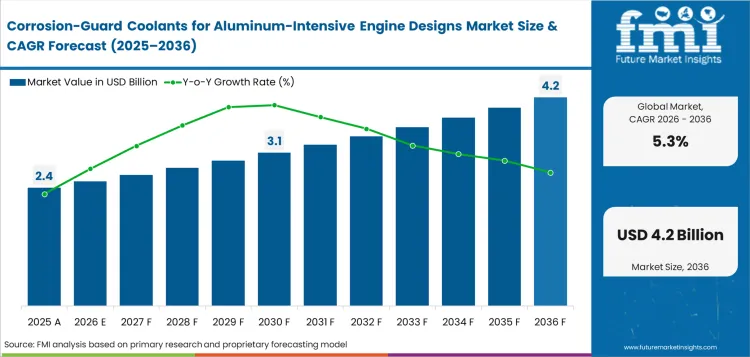
Key Takeaways, Market Size, and Forecast
- The corrosion-guard coolants for aluminum-intensive engine designs market was valued at USD 2.4 billion in 2025.
- By 2036, the corrosion-guard coolants for aluminum-intensive engine designs market is expected to be worth USD 4.2 billion.
- From 2026 to 2036, the market is projected to expand at a CAGR of 5.3%.
- Corrosion-guard coolant demand is projected to create an incremental opportunity of USD 1.7 billion between 2026 and 2036.
- In 2026, OAT is expected to account for 46.0% share, driven by long service life and aluminum corrosion protection needs.
- Passenger cars are projected to represent 52.0% share in 2026 as aluminum engine parts remain common across compact and SUV platforms.
- India (7.1% CAGR) and China (6.6% CAGR) show the strongest forecast rates during the forecast period.
Aluminum‑heavy engines make coolant chemistry a corrosion‑control decision which is different than simple freeze‑protection choice. In October 2024, ASTM D2570‑24 outlined simulated service corrosion testing methods that evaluate circulating coolants against metal specimens and cooling‑system components, an issue that is especially critical for aluminum cylinder heads and heat exchangers.
From a service standpoint, Castrol’s 2024 guidance recommends a 33% to 50% dilution of RADICOOL P‑OAT using distilled or de‑ionised water to maintain corrosion protection and coolant system stability. Suppliers that pair validated corrosion testing with clear, consistent mixing instructions are better positioned across both OEM and aftermarket channels.
Corrosion-Guard Coolants for Aluminum-Intensive Engine Designs Market Definition
Corrosion-guard coolants for aluminum-intensive engine designs market includes engine coolants made to protect aluminum blocks, cylinder heads, radiators and heater cores from corrosion. Products include OAT, HOAT, P-OAT and Si-OAT formulations used in passenger cars, commercial vehicles and off-highway equipment.
Corrosion-Guard Coolants for Aluminum-Intensive Engine Designs Market Inclusions
Market scope includes corrosion-guard coolant concentrates, premixes, OEM-approved service fills, workshop refill products, OAT formulations, HOAT formulations, P-OAT formulations, Si-OAT formulations, factory-fill contracts, distributor supply and aftermarket service channels across all regions. Participants include coolant formulators, additive suppliers, automakers, radiator manufacturers, parts distributors, dealer service networks, independent workshops and fleet maintenance operators.
Corrosion-Guard Coolants for Aluminum-Intensive Engine Designs Market Exclusions
Scope excludes battery-only dielectric coolants, HVAC brines, metalworking fluids, washer fluids, brake fluids, DEF, lubricants and untreated water used without coolant-grade corrosion inhibitors.
Corrosion-Guard Coolants for Aluminum-Intensive Engine Designs Market Research Methodology
- Primary Research: FMI analysts reviewed coolant formulation demand with automotive fluid suppliers, workshop chains and parts distributors. Discussions covered OEM approvals, refill intervals and aluminum corrosion claims.
- Desk Research: Desk work used automotive production data, aluminum use indicators and company product information. Official coolant launches and current product documents were reviewed for chemistry scope.
- Market Sizing and Forecasting: FMI's model combined vehicle production, service-fill frequency, coolant dose size and price bands by region. Segment allocation was based on chemistry preference, engine design mix and channel behavior.
- Data Validation: Forecasts were checked against vehicle output, aluminum content trends and supplier portfolio direction. Country growth rates were cross-checked with production and aftermarket service signals.
Why is the Corrosion-Guard Coolants for Aluminum-Intensive Engine Designs Market Growing?
- Aluminum engine blocks need stable inhibitor chemistry as pitting can shorten coolant system life.
- Turbocharged engines place more heat load on coolant loops and raise demand for approved formulations.
- Longer drain intervals favor OAT chemistry as workshops reduce service errors and repeat claims.
- Hybrid vehicle systems need coolant stability across engine and electric-assist thermal conditions.
- Aftermarket refill demand expands as older vehicles stay longer in service.
Engine design is changing the coolant purchase decision. An Aluminum Association report states that aluminum content per vehicle will reach 556 pounds per vehicle by 2030 to meet future hybrid and electric vehicle needs. More aluminum in blocks and cylinder heads raises the need for inhibitor packages that limit pitting and galvanic corrosion. OAT and hybrid chemistries gain value as coolant suppliers work to meet OEM approval needs and workshop refill guidance.
Market Segmentation Analysis
- OAT is projected to lead with 46.0% share in 2026 as OEMs prefer long-life aluminum protection.
- With 38.0% share, aluminum blocks are expected to remain central to coolant specification decisions for the forecast year.
- Passenger cars are forecast to account for 52.0% share as higher service-fill volumes support repeat coolant replacement.
- Factory-fill approvals are expected to shape refill behavior, with OEM supply estimated at 44.0% share.
- Corrosion guard is projected to hold 41.0% share during 2026 as pitting control stays central to aluminum engine protection.
Segmentation covers coolant chemistry, engine design, vehicle type, sales channel and function. Coolant chemistry decisions depend on OEM approvals and service interval targets. Engine design matters because aluminum blocks and heads expose coolant to higher corrosion risk. Vehicle type affects dose size and service frequency. Sales channels split between factory fill and aftermarket refill. Function-based demand is led by corrosion guard since aluminum protection is the claim most tied to coolant selection.
Insights into the OAT Coolant Chemistry Segment
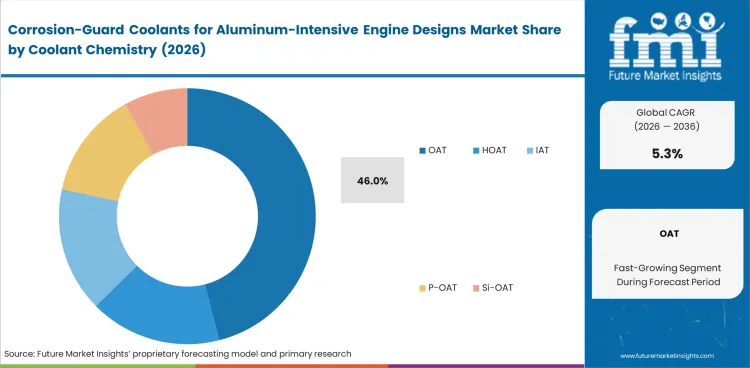
- OAT is projected to lead with 46.0% share in 2026 as long-life inhibitor systems suit aluminum blocks and mixed-metal cooling loops.
- Vehicle-specific refill programs continue to support HOAT as workshops need formulas that match OEM chemistry and protect seals.
Insights into the Aluminum Blocks Engine Design Segment
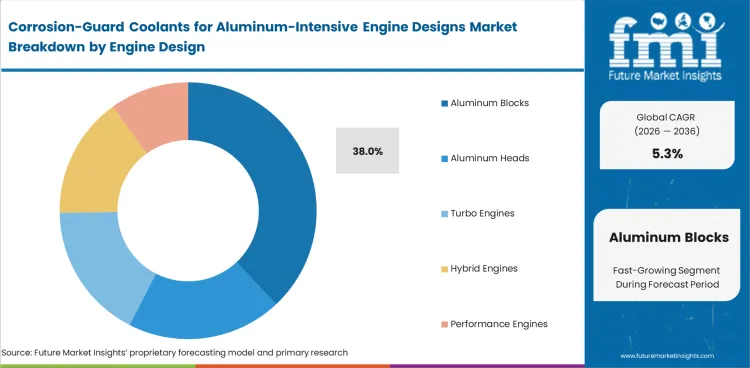
- With 38.0% share, aluminum blocks are expected to remain central to coolant selection for newer gasoline platforms in the forecast year.
- Aluminum heads create a second demand base as heat concentration around combustion areas raises the need for stable inhibitor films.
Insights into the Passenger Cars Vehicle Type Segment
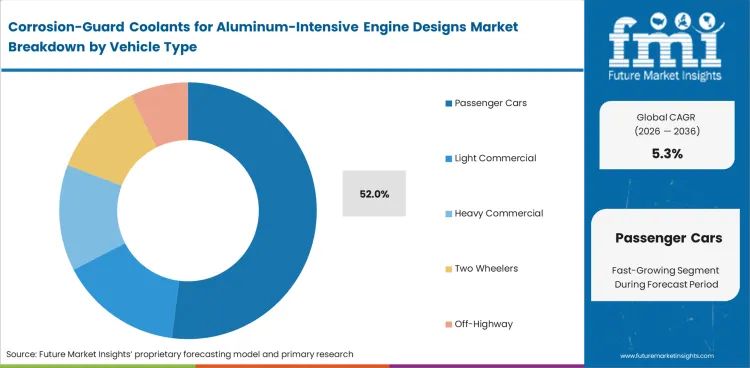
- Passenger cars are expected to represent 52.0% share as a large vehicle parc creates repeat service-fill volume during 2026.
- Light commercial vehicles use larger coolant volumes per service event and support higher value through workshop packs and fleet refill contracts.
Insights into the OEM Supply Sales Channel Segment
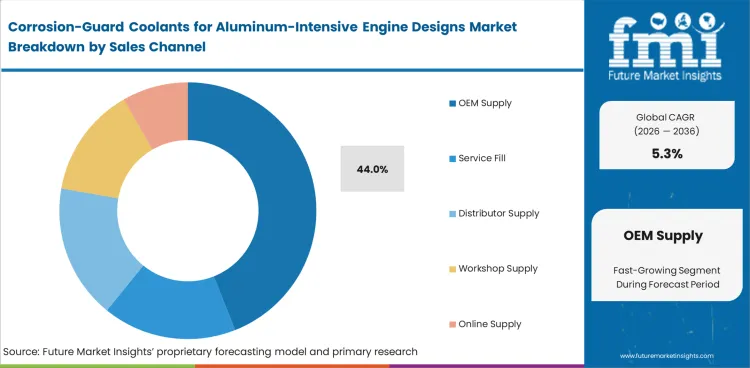
- Factory-fill approval gives coolant brands a clear technical reference, with OEM supply projected to hold 44.0% share.
- Service fill expands through dealer networks and independent garages as wrong-coolant risk pushes workshops toward vehicle-specific SKU recommendations.
Insights into the Corrosion Guard Function Segment
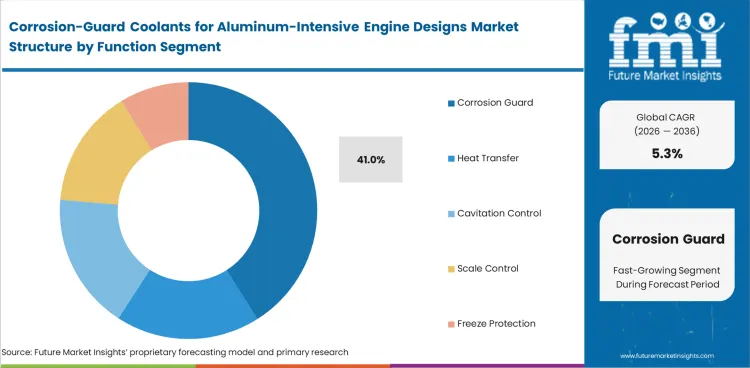
- Corrosion guard is anticipated to hold 41.0% share in 2026 as aluminum pitting prevention stays the main product claim.
- Heat transfer claims carry higher weight in turbo and hybrid applications as compact engine bays increase coolant temperature swings.
Corrosion-Guard Coolants for Aluminum-Intensive Engine Designs Market Drivers, Restraints, and Opportunities
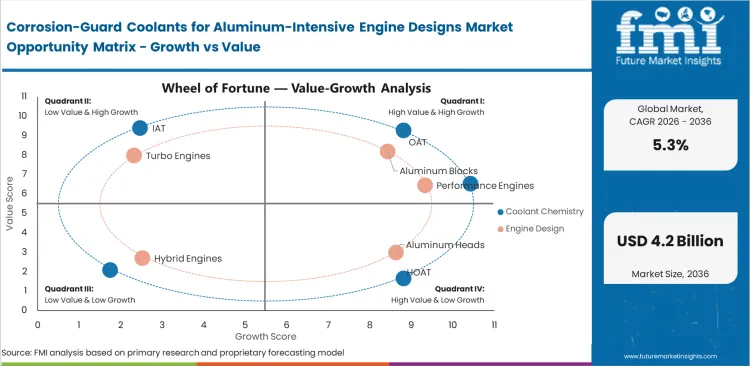
- Aluminum block usage raises demand for coolant formulas that control pitting across mixed-metal loops.
- Longer drain intervals support OAT and HOAT products as workshops prefer fewer changeout errors.
- Price-sensitive refill markets slow premium coolant adoption when vehicle-specific formulas cost more.
- Hybrid engine growth opens scope for low-conductivity and aluminum-safe coolant blends.
- Localized manufacturing in Mexico and India gives suppliers a shorter route to aftermarket distribution.
Aluminum Block Pitting Control
Aluminum-rich engines push coolant suppliers to prove corrosion control under heat and long drain intervals. PFX Group stated in its October 2025 AAPEX release that OEM by Prestone Premium Original Antifreeze + Coolant offers extended-life protection against rust, corrosion and pitting for all coolant system metals including aluminum. Vehicle-specific protection claims matter because workshops need clear guidance before stocking make-specific refill lines. Products with aluminum protection and OEM-style fitment reduce service errors. Suppliers with proof-based claims can defend premium pricing against universal low-cost coolant.
OEM Approval Pull
OEM approval creates a practical route from factory fill into aftermarket refill. BASF SE launched GLYSANTIN® ELECTRIFIED® low electrical conductivity coolants in September 2025 and said the new coolants comply with China’s GB 29743.2-2025 standard. BASF states in the same release that production started at BASF’s Pudong site in Shanghai. Electric vehicle coolant rules are separate from engine coolant rules. Engine coolant suppliers face similar pressure to prove compatibility before service use.
Analysis of Corrosion-Guard Coolants for Aluminum-Intensive Engine Designs Market by Key Countries
.webp "Top Country Growth Comparison Corrosion Guard Coolants For Aluminum Intensive Engine Designs Market Cagr (2026 2036)")
| Country | CAGR |
|---|---|
| India | 7.1% |
| China | 6.6% |
| Mexico | 6.2% |
| Brazil | 5.8% |
| United States | 5.5% |
| Germany | 4.8% |
| Japan | 4.6% |
Source: FMI analysis based on primary research and proprietary forecasting model.
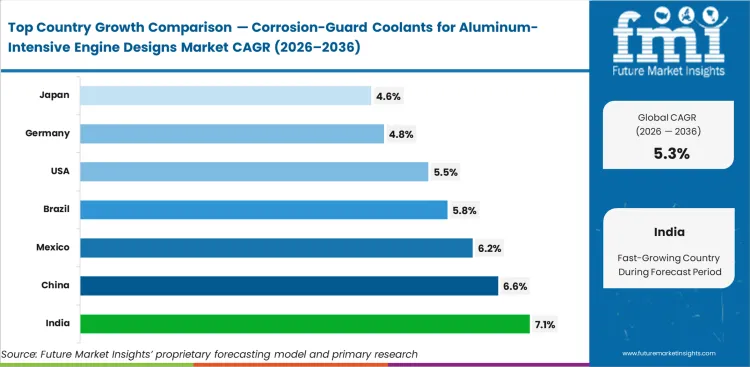
Corrosion-Guard Coolants for Aluminum-Intensive Engine Designs Market CAGR Analysis by Country
- India is projected to record a 7.1% CAGR by 2036 as vehicle sales and service networks expand across high-volume states.
- With a 6.6% CAGR in the forecast period, China is expected to expand as aluminum-intensive vehicles move through OEM and aftermarket channels.
- Mexico is forecast to grow through 2036 at 6.2% CAGR given its role in North American vehicle production and localized coolant supply.
- Brazil is expected to advance at 5.8% CAGR between 2026 and 2036 as vehicle output improves and aftermarket refill demand deepens.
- An aging vehicle parc sustains premium service-fill demand in the United States, and is projected to rise at 5.5% CAGR by 2036.
- Germany is forecast at 4.8% CAGR during the assessment period as high OEM specification discipline supports value over volume growth.
- Stable vehicle output and careful workshop adherence to OEM coolant guidance keep Japan at 4.6% CAGR through 2036.
- Global demand is projected to grow at 5.3% CAGR across the assessment period.
Demand Outlook for Corrosion-Guard Coolants for Aluminum-Intensive Engine Designs Market in India
India offers the clearest volume growth path through expanding vehicle production and wider service-fill coverage. India is projected to record a 7.1% CAGR by 2036 as OEM service programs and independent garages widen coolant use. Smaller pack sizes and mechanic training can reduce wrong-fluid use in Tier 2 cities. Suppliers with local distributor support can improve premium coolant conversion across high-volume service clusters.
- Maharashtra workshops support large refill volumes through Mumbai and Pune service clusters.
- Tamil Nadu production around Chennai strengthens OEM coolant demand for passenger cars.
- Gujarat and Haryana support distributor movement through automotive supplier belts.
Sales Analysis of Corrosion-Guard Coolants for Aluminum-Intensive Engine Designs Market in China
Coolant demand in China is shaped by high vehicle output and fast changes in thermal fluid design. With a 6.6% CAGR in the forecast period, China is expected to expand as OEM approvals and local coolant production deepen. National standards and automaker-specific requirements keep supplier qualification more disciplined. Faster low-conductivity coolant work can influence hybrid coolant specifications over time.
- Shanghai remains important as BASF produces GLYSANTIN® ELECTRIFIED® at its Pudong site.
- Guangdong service channels support refill demand through dense passenger vehicle ownership.
- Chongqing and Wuhan support OEM coolant use through inland automotive production clusters.
Demand Analysis of Corrosion-Guard Coolants for Aluminum-Intensive Engine Designs Market in Mexico
Mexico is gaining value as coolant supply becomes more local and less dependent on imports. Old World Industries’ Monterrey expansion through J&J Lubricantes strengthens regional blending and aftermarket reach. Mexico is forecast to grow through 2036 at 6.2% CAGR as vehicle exports and service networks support coolant turnover. Suppliers that pair local blending with OEM-grade formulas can compete better with imported products.
- Monterrey gains importance through J&J Lubricantes and northern aftermarket distribution.
- Bajío vehicle production supports factory-fill and service-fill pull across Guanajuato.
- Border supply corridors strengthen coolant movement for USMCA vehicle assembly networks.
Opportunity Analysis of Corrosion-Guard Coolants for Aluminum-Intensive Engine Designs Market in Brazil
Brazil is expected to advance at 5.8% CAGR between 2026 and 2036 as refill demand improves. Industry in country is shaped by a large independent service base and steady vehicle replacement needs. Flex-fuel engines and urban service networks keep coolant maintenance active across the forecast period. Suppliers need formulas suited to heat exposure and mixed vehicle ages.
- São Paulo supports a broad workshop base through its dense vehicle parc.
- Minas Gerais service demand benefits from commercial fleets serving industrial corridors.
- Paraná and Santa Catarina support distributor demand through southern automotive clusters.
Future Outlook for Corrosion-Guard Coolants for Aluminum-Intensive Engine Designs Market in the United States
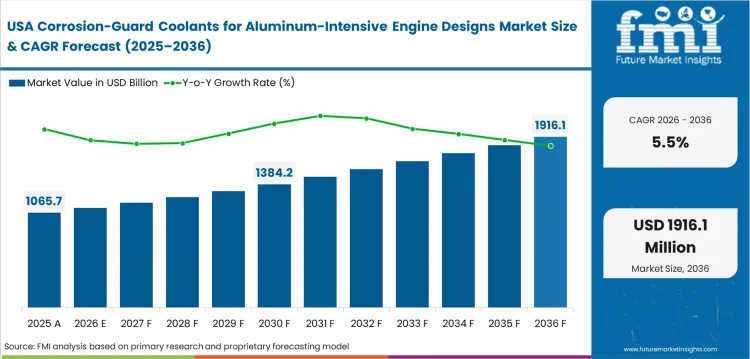
United States demand reflects aging vehicles and higher-value service-fill behavior. An older vehicle parc sustains premium refill demand, with the country projected to rise at 5.5% CAGR by 2036. Workshops use coolant recommendations more often to reduce aluminum corrosion risk. Retail shelf discipline will decide how much demand moves beyond universal products.
- Michigan remains important through OEM engineering and coolant validation activity.
- Texas supports high aftermarket refill demand through large light-truck ownership.
- California service channels favor longer-life coolant products tied to maintenance discipline.
Demand Outlook for Corrosion-Guard Coolants for Aluminum-Intensive Engine Designs Market in Germany
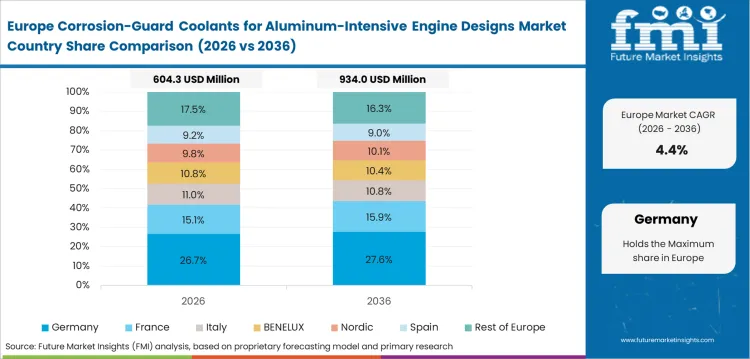
Premium OEM approvals support pricing, with Germany forecast at 4.8% CAGR during the assessment period. Germany is a specification-driven coolant market with higher value per approved product. Engine coolants still serve ICE and hybrid fleets as fluid standards become more technical across the powertrain. A small change in OEM service guidance can move more refill volume toward approved coolants.
- Bavaria supports premium coolant demand through BMW service channels.
- Baden-Württemberg carries technical weight through Mercedes-Benz and supplier engineering networks.
- Lower Saxony supports OEM-specific refill demand through Volkswagen service activity.
In-depth Analysis of Corrosion-Guard Coolants for Aluminum-Intensive Engine Designs Market in Japan
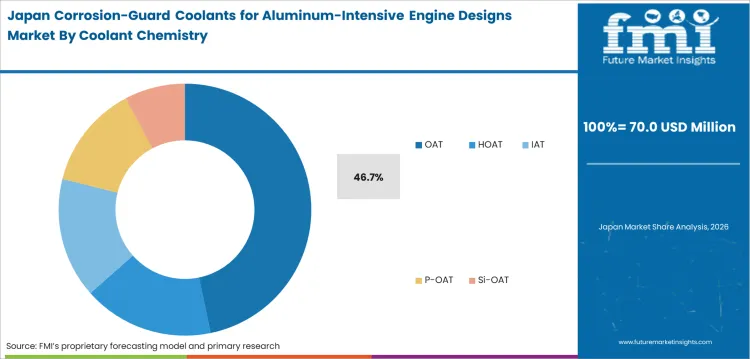
Japan shows stable demand through careful adherence to OEM coolant instructions. Workshop discipline and hybrid vehicle servicing keep Japan at 4.6% CAGR through 2036. Growth is slower than India and China as the market is more mature. Suppliers with Japanese OEM approvals gain a clearer route to premium service-fill demand.
- Aichi supports coolant demand through Toyota production and service channels.
- Shizuoka and Hiroshima strengthen demand through compact vehicle and engine supplier bases.
- Hokkaido creates seasonal demand for freeze protection in colder driving conditions.
Competitive Landscape and Strategic Positioning
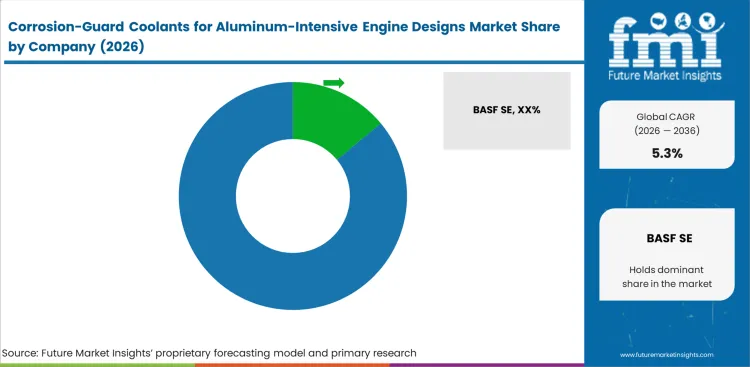
- Competition is moderately concentrated with global coolant brands leading OEM approvals and aftermarket shelf space.
- Specialist formulators compete through vehicle-specific coolants and regional workshop training.
- Entry barriers are tied to OEM approvals, corrosion testing and distribution reach.
- Private-label suppliers compete on price but lose ground in complex aluminum engine applications.
Competition depends on the ability to prove coolant performance and keep products available across service channels. Suppliers need clear corrosion claims, stable inhibitor chemistry and refill guidance that workshops can trust. Aluminum-intensive engines raise the penalty for wrong coolant use, so brands with better technical documentation gain an advantage. Local supply also matters because workshops need reliable access to vehicle-specific formulations.
Established suppliers compete through approval depth and test-backed performance claims. Aluminum cooling systems need protection across water pumps, radiators and heat exchangers. Service outlets prefer products that reduce warranty risk and simplify coolant selection. Brands that support mechanics with clear application guidance can defend premium pricing in aftermarket channels.
Key Companies in the Corrosion-Guard Coolants for Aluminum-Intensive Engine Designs Market
- Global Leaders: BASF SE, Prestone Products Corporation and Valvoline Global Operations compete through coolant chemistry depth, OEM references and wide product recognition.
- Regional Players: Old World Industries, Chevron Products Company and TotalEnergies Lubrifiants compete through branded aftermarket supply, distributor reach and mature fluid portfolios.
- Specialist Formulators: Arteco NV, Shell Lubricants and regional private-label blenders compete through formulation work and application-specific fluid chemistry.
Competitive Benchmarking: Corrosion-Guard Coolants for Aluminum-Intensive Engine Designs Market
| Company | Aluminum Inhibitor Depth | OEM Approval Reach | Service-Fill Channel Access | Geographic Footprint |
|---|---|---|---|---|
| BASF SE | High | Strong | Moderate | Global |
| Prestone Products Corporation | High | Strong | Strong | Global |
| Valvoline Global Operations | High | Strong | Strong | Global |
| Old World Industries LLC | Medium | Moderate | Strong | North America and Mexico |
| Chevron Products Company | Medium | Moderate | Strong | Global |
| Arteco NV | High | Strong | Moderate | Europe and Global |
| TotalEnergies Lubrifiants | Medium | Moderate | Strong | Global |
| Shell Lubricants | Medium | Moderate | Strong | Global |
Source: Future Market Insights competitive analysis, 2026. Ratings reflect relative positioning based on aluminum inhibitor depth, OEM approval reach and service-fill channel access.
Key Developments in Corrosion-Guard Coolants for Aluminum-Intensive Engine Designs Market
- In February 2025, Shell Rotella introduced ELC HD extended-life coolant with OAT-molybdate chemistry for stronger corrosion protection in aluminum engine cooling parts.
- In February 2024, Morris Lubricants introduced its improved Ultralife antifreeze coolant range for changing engine metallurgies and longer corrosion-control service life.
Key Players in the Corrosion-Guard Coolants for Aluminum-Intensive Engine Designs Market
Global Leaders
- BASF SE
- Prestone Products Corporation
- Valvoline Global Operations
Regional Players
- Old World Industries LLC
- Chevron Products Company
- TotalEnergies Lubrifiants
Specialist Formulators
- Arteco NV
- Shell Lubricants
- Recochem Inc.
Report Scope and Coverage
| Parameter | Details |
|---|---|
| Quantitative Units | USD 2.5 billion to USD 4.2 billion, at a CAGR of 5.3% |
| Market Definition | Coolants formulated to protect aluminum-intensive engine cooling systems from corrosion, pitting, scale and thermal stress. |
| Regions Covered | North America, Latin America, Europe, East Asia, South Asia and Pacific, Middle East and Africa |
| Countries Covered | India, China, Mexico, Brazil, United States, Germany, Japan and 30+ countries |
| Key Companies Profiled | BASF SE, Prestone Products Corporation, Valvoline Global Operations, Old World Industries LLC, Chevron Products Company, Arteco NV, TotalEnergies Lubrifiants, Shell Lubricants |
| Forecast Period | 2026 to 2036 |
| Approach | Hybrid bottom-up and top-down methodology starting with verified transaction data, projecting adoption velocity across segments and regions |
Corrosion-Guard Coolants for Aluminum-Intensive Engine Designs Market by Segments
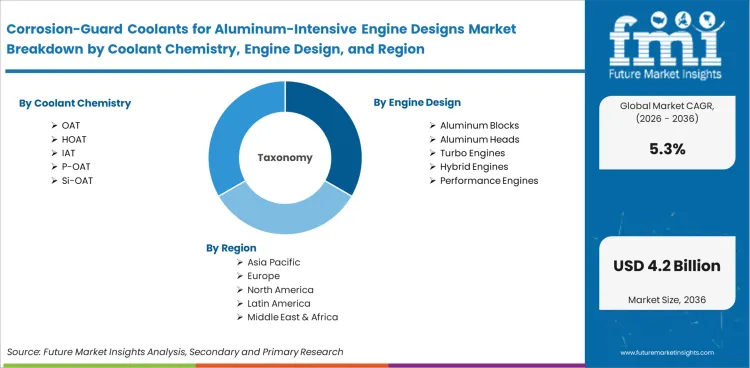
Corrosion-Guard Coolants for Aluminum-Intensive Engine Designs Market Segmented by Coolant Chemistry:
- OAT
- HOAT
- IAT
- P-OAT
- Si-OAT
Corrosion-Guard Coolants for Aluminum-Intensive Engine Designs Market Segmented by Engine Design:
- Aluminum Blocks
- Aluminum Heads
- Turbo Engines
- Hybrid Engines
- Performance Engines
Corrosion-Guard Coolants for Aluminum-Intensive Engine Designs Market Segmented by Vehicle Type:
- Passenger Cars
- Light Commercial
- Heavy Commercial
- Two Wheelers
- Off-Highway
Corrosion-Guard Coolants for Aluminum-Intensive Engine Designs Market Segmented by Sales Channel:
- OEM Supply
- Service Fill
- Distributor Supply
- Workshop Supply
- Online Supply
Corrosion-Guard Coolants for Aluminum-Intensive Engine Designs Market Segmented by Function:
- Corrosion Guard
- Heat Transfer
- Cavitation Control
- Scale Control
- Freeze Protection
Corrosion-Guard Coolants for Aluminum-Intensive Engine Designs Market by Region:
- North America
- United States
- Canada
- Mexico
- Latin America
- Brazil
- Chile
- Rest of Latin America
- Western Europe
- Germany
- UK
- Italy
- Spain
- France
- Nordic
- BENELUX
- Rest of Western Europe
- Eastern Europe
- Russia
- Poland
- Hungary
- Balkan & Baltic
- Rest of Eastern Europe
- East Asia
- China
- Japan
- South Korea
- South Asia and Pacific
- India
- ASEAN
- Australia & New Zealand
- Rest of South Asia and Pacific
- Middle East & Africa
- Kingdom of Saudi Arabia
- Other GCC Countries
- Turkiye
- South Africa
- Other African Union
- Rest of Middle East & Africa
Research Sources and Bibliography
- BASF SE. (2025, September 10). BASF unveils GLYSANTIN® ELECTRIFIED® low electrical conductivity coolants for enhanced protection of electric vehicles. BASF SE.
- Old World Industries. (2025, May 1). Old World Industries Invests in Expanding Its Business in Mexico with Acquisition of J&J Lubricantes. Old World Industries.
- PFX Group. (2025, October 29). PFX Group Unites as One Company at 2025 AAPEX, Launches “The Future Runs on Prestone” Campaign and Breakthrough New Products.
- Prestone Products Corporation. (n.d.). Prestone Cor-Guard® Technology.
- The Aluminum Association. (2024, May). Aluminum Agenda: Climate. The Aluminum Association.
- TotalEnergies Lubrifiants. (2025, February). A world first: TotalEnergies Lubrifiants integrated an immersion-cooled battery in the Renault Mégane E-Tech.
- Shell Lubricants. (2025, November 11). Shell’s Thermal Fluid successfully cools all electrical components in an entire BEV power train using a single-circuit, single-fluid design innovation. Shell Global.
Bibliography entries are provided for reader reference and include official industry bodies, company releases and primary product sources used in the article.
This Report Answers
- What is the current and future value of the corrosion-guard coolant market through 2036?
- What CAGR is forecast for corrosion-guard coolants for aluminum-intensive engine designs?
- Which coolant chemistry is projected to lead demand in 2026?
- Which vehicle type is expected to create the strongest coolant demand?
- How do aluminum blocks and heads affect coolant formulation choice?
- How do OEM approvals influence service-fill coolant sales?
- Which countries are forecast to record stronger CAGRs in this market?
- Which companies are positioned across OEM coolant and aftermarket refill channels?
- How does FMI define the corrosion-guard coolant market scope?
- What methodology supports the 2026 to 2036 forecast?
Frequently Asked Questions
What is the global market demand for corrosion-guard coolants for aluminum-intensive engine designs in 2026?
In 2026, corrosion-guard coolant demand is expected to be worth USD 2.5 billion with demand tied to aluminum engine protection.
How big will the corrosion-guard coolant market be by 2036?
By 2036, market value is forecast to reach USD 4.2 billion as OEM-approved long-life coolants gain wider use.
What CAGR is expected for the market during the assessment period?
Demand is projected to expand at 5.3% CAGR during the 2026 to 2036 assessment period.
Which coolant chemistry is projected to lead demand in 2026?
OAT is projected to lead coolant chemistry demand with 46.0% share in 2026 due to long-life aluminum protection.
Which vehicle type is expected to hold the strongest share in 2026?
Passenger cars are expected to represent 52.0% of vehicle type demand in 2026 due to high service-fill volume.
Why is India forecast to record a stronger CAGR in this market?
India is projected to record 7.1% CAGR through 2036 as vehicle output and organized workshop service expand.
What does this report include under corrosion-guard coolants?
Report scope includes OAT, HOAT and vehicle-specific coolants used to protect aluminum-rich engine cooling systems.
How does FMI estimate and validate the market forecast?
FMI uses vehicle output, coolant service intervals, pricing and channel checks to validate demand across regions.
Preview the report firsthand - request a free sample
Get SampleGet the brochure for pricing and purchase details.
Get PDFTable of Content
- Executive Summary
- Global Market Outlook
- Demand-side Trends
- Supply-side Trends
- Technology Roadmap Analysis
- Analysis and Recommendations
- Market Overview
- Market Coverage / Taxonomy
- Market Definition / Scope / Limitations
- Research Methodology
- Chapter Orientation
- Analytical Lens and Working Hypotheses
- Market Structure, Signals, and Trend Drivers
- Benchmarking and Cross-market Comparability
- Market Sizing, Forecasting, and Opportunity Mapping
- Research Design and Evidence Framework
- Desk Research Programme (Secondary Evidence)
- Company Annual and Sustainability Reports
- Peer-reviewed Journals and Academic Literature
- Corporate Websites, Product Literature, and Technical Notes
- Earnings Decks and Investor Briefings
- Statutory Filings and Regulatory Disclosures
- Technical White Papers and Standards Notes
- Trade Journals, Industry Magazines, and Analyst Briefs
- Conference Proceedings, Webinars, and Seminar Materials
- Government Statistics Portals and Public Data Releases
- Press Releases and Reputable Media Coverage
- Specialist Newsletters and Curated Briefings
- Sector Databases and Reference Repositories
- FMI Internal Proprietary Databases and Historical Market Datasets
- Subscription Datasets and Paid Sources
- Social Channels, Communities, and Digital Listening Inputs
- Additional Desk Sources
- Expert Input and Fieldwork (Primary Evidence)
- Primary Modes
- Qualitative Interviews and Expert Elicitation
- Quantitative Surveys and Structured Data Capture
- Blended Approach
- Why Primary Evidence is Used
- Field Techniques
- Interviews
- Surveys
- Focus Groups
- Observational and In-context Research
- Social and Community Interactions
- Stakeholder Universe Engaged
- C-suite Leaders
- Board Members
- Presidents and Vice Presidents
- R&D and Innovation Heads
- Technical Specialists
- Domain Subject-matter Experts
- Scientists
- Physicians and Other Healthcare Professionals
- Governance, Ethics, and Data Stewardship
- Research Ethics
- Data Integrity and Handling
- Primary Modes
- Tooling, Models, and Reference Databases
- Desk Research Programme (Secondary Evidence)
- Data Engineering and Model Build
- Data Acquisition and Ingestion
- Cleaning, Normalisation, and Verification
- Synthesis, Triangulation, and Analysis
- Quality Assurance and Audit Trail
- Market Background
- Market Dynamics
- Drivers
- Restraints
- Opportunity
- Trends
- Scenario Forecast
- Demand in Optimistic Scenario
- Demand in Likely Scenario
- Demand in Conservative Scenario
- Opportunity Map Analysis
- Product Life Cycle Analysis
- Supply Chain Analysis
- Investment Feasibility Matrix
- Value Chain Analysis
- PESTLE and Porter’s Analysis
- Regulatory Landscape
- Regional Parent Market Outlook
- Production and Consumption Statistics
- Import and Export Statistics
- Market Dynamics
- Global Market Analysis 2021 to 2025 and Forecast, 2026 to 2036
- Historical Market Size Value (USD Million) Analysis, 2021 to 2025
- Current and Future Market Size Value (USD Million) Projections, 2026 to 2036
- Y-o-Y Growth Trend Analysis
- Absolute $ Opportunity Analysis
- Global Market Pricing Analysis 2021 to 2025 and Forecast 2026 to 2036
- Global Market Analysis 2021 to 2025 and Forecast 2026 to 2036, By Coolant Chemistry
- Introduction / Key Findings
- Historical Market Size Value (USD Million) Analysis By Coolant Chemistry , 2021 to 2025
- Current and Future Market Size Value (USD Million) Analysis and Forecast By Coolant Chemistry , 2026 to 2036
- OAT
- HOAT
- IAT
- P-OAT
- Si-OAT
- OAT
- Y-o-Y Growth Trend Analysis By Coolant Chemistry , 2021 to 2025
- Absolute $ Opportunity Analysis By Coolant Chemistry , 2026 to 2036
- Global Market Analysis 2021 to 2025 and Forecast 2026 to 2036, By Engine Design
- Introduction / Key Findings
- Historical Market Size Value (USD Million) Analysis By Engine Design, 2021 to 2025
- Current and Future Market Size Value (USD Million) Analysis and Forecast By Engine Design, 2026 to 2036
- Aluminum Blocks
- Aluminum Heads
- Turbo Engines
- Hybrid Engines
- Performance Engines
- Aluminum Blocks
- Y-o-Y Growth Trend Analysis By Engine Design, 2021 to 2025
- Absolute $ Opportunity Analysis By Engine Design, 2026 to 2036
- Global Market Analysis 2021 to 2025 and Forecast 2026 to 2036, By Vehicle Type
- Introduction / Key Findings
- Historical Market Size Value (USD Million) Analysis By Vehicle Type, 2021 to 2025
- Current and Future Market Size Value (USD Million) Analysis and Forecast By Vehicle Type, 2026 to 2036
- Passenger Cars
- Light Commercial
- Heavy Commercial
- Two Wheelers
- Off-Highway
- Passenger Cars
- Y-o-Y Growth Trend Analysis By Vehicle Type, 2021 to 2025
- Absolute $ Opportunity Analysis By Vehicle Type, 2026 to 2036
- Global Market Analysis 2021 to 2025 and Forecast 2026 to 2036, By Sales Channel
- Introduction / Key Findings
- Historical Market Size Value (USD Million) Analysis By Sales Channel, 2021 to 2025
- Current and Future Market Size Value (USD Million) Analysis and Forecast By Sales Channel, 2026 to 2036
- OEM Supply
- Service Fill
- Distributor Supply
- Workshop Supply
- Online Supply
- OEM Supply
- Y-o-Y Growth Trend Analysis By Sales Channel, 2021 to 2025
- Absolute $ Opportunity Analysis By Sales Channel, 2026 to 2036
- Global Market Analysis 2021 to 2025 and Forecast 2026 to 2036, By Function
- Introduction / Key Findings
- Historical Market Size Value (USD Million) Analysis By Function, 2021 to 2025
- Current and Future Market Size Value (USD Million) Analysis and Forecast By Function, 2026 to 2036
- Corrosion Guard
- Heat Transfer
- Cavitation Control
- Scale Control
- Freeze Protection
- Corrosion Guard
- Y-o-Y Growth Trend Analysis By Function, 2021 to 2025
- Absolute $ Opportunity Analysis By Function, 2026 to 2036
- Global Market Analysis 2021 to 2025 and Forecast 2026 to 2036, By Region
- Introduction
- Historical Market Size Value (USD Million) Analysis By Region, 2021 to 2025
- Current Market Size Value (USD Million) Analysis and Forecast By Region, 2026 to 2036
- North America
- Latin America
- Western Europe
- Eastern Europe
- East Asia
- South Asia and Pacific
- Middle East & Africa
- Market Attractiveness Analysis By Region
- North America Market Analysis 2021 to 2025 and Forecast 2026 to 2036, By Country
- Historical Market Size Value (USD Million) Trend Analysis By Market Taxonomy, 2021 to 2025
- Market Size Value (USD Million) Forecast By Market Taxonomy, 2026 to 2036
- By Country
- USA
- Canada
- Mexico
- By Coolant Chemistry
- By Engine Design
- By Vehicle Type
- By Sales Channel
- By Function
- By Country
- Market Attractiveness Analysis
- By Country
- By Coolant Chemistry
- By Engine Design
- By Vehicle Type
- By Sales Channel
- By Function
- Key Takeaways
- Latin America Market Analysis 2021 to 2025 and Forecast 2026 to 2036, By Country
- Historical Market Size Value (USD Million) Trend Analysis By Market Taxonomy, 2021 to 2025
- Market Size Value (USD Million) Forecast By Market Taxonomy, 2026 to 2036
- By Country
- Brazil
- Chile
- Rest of Latin America
- By Coolant Chemistry
- By Engine Design
- By Vehicle Type
- By Sales Channel
- By Function
- By Country
- Market Attractiveness Analysis
- By Country
- By Coolant Chemistry
- By Engine Design
- By Vehicle Type
- By Sales Channel
- By Function
- Key Takeaways
- Western Europe Market Analysis 2021 to 2025 and Forecast 2026 to 2036, By Country
- Historical Market Size Value (USD Million) Trend Analysis By Market Taxonomy, 2021 to 2025
- Market Size Value (USD Million) Forecast By Market Taxonomy, 2026 to 2036
- By Country
- Germany
- UK
- Italy
- Spain
- France
- Nordic
- BENELUX
- Rest of Western Europe
- By Coolant Chemistry
- By Engine Design
- By Vehicle Type
- By Sales Channel
- By Function
- By Country
- Market Attractiveness Analysis
- By Country
- By Coolant Chemistry
- By Engine Design
- By Vehicle Type
- By Sales Channel
- By Function
- Key Takeaways
- Eastern Europe Market Analysis 2021 to 2025 and Forecast 2026 to 2036, By Country
- Historical Market Size Value (USD Million) Trend Analysis By Market Taxonomy, 2021 to 2025
- Market Size Value (USD Million) Forecast By Market Taxonomy, 2026 to 2036
- By Country
- Russia
- Poland
- Hungary
- Balkan & Baltic
- Rest of Eastern Europe
- By Coolant Chemistry
- By Engine Design
- By Vehicle Type
- By Sales Channel
- By Function
- By Country
- Market Attractiveness Analysis
- By Country
- By Coolant Chemistry
- By Engine Design
- By Vehicle Type
- By Sales Channel
- By Function
- Key Takeaways
- East Asia Market Analysis 2021 to 2025 and Forecast 2026 to 2036, By Country
- Historical Market Size Value (USD Million) Trend Analysis By Market Taxonomy, 2021 to 2025
- Market Size Value (USD Million) Forecast By Market Taxonomy, 2026 to 2036
- By Country
- China
- Japan
- South Korea
- By Coolant Chemistry
- By Engine Design
- By Vehicle Type
- By Sales Channel
- By Function
- By Country
- Market Attractiveness Analysis
- By Country
- By Coolant Chemistry
- By Engine Design
- By Vehicle Type
- By Sales Channel
- By Function
- Key Takeaways
- South Asia and Pacific Market Analysis 2021 to 2025 and Forecast 2026 to 2036, By Country
- Historical Market Size Value (USD Million) Trend Analysis By Market Taxonomy, 2021 to 2025
- Market Size Value (USD Million) Forecast By Market Taxonomy, 2026 to 2036
- By Country
- India
- ASEAN
- Australia & New Zealand
- Rest of South Asia and Pacific
- By Coolant Chemistry
- By Engine Design
- By Vehicle Type
- By Sales Channel
- By Function
- By Country
- Market Attractiveness Analysis
- By Country
- By Coolant Chemistry
- By Engine Design
- By Vehicle Type
- By Sales Channel
- By Function
- Key Takeaways
- Middle East & Africa Market Analysis 2021 to 2025 and Forecast 2026 to 2036, By Country
- Historical Market Size Value (USD Million) Trend Analysis By Market Taxonomy, 2021 to 2025
- Market Size Value (USD Million) Forecast By Market Taxonomy, 2026 to 2036
- By Country
- Kingdom of Saudi Arabia
- Other GCC Countries
- Turkiye
- South Africa
- Other African Union
- Rest of Middle East & Africa
- By Coolant Chemistry
- By Engine Design
- By Vehicle Type
- By Sales Channel
- By Function
- By Country
- Market Attractiveness Analysis
- By Country
- By Coolant Chemistry
- By Engine Design
- By Vehicle Type
- By Sales Channel
- By Function
- Key Takeaways
- Key Countries Market Analysis
- USA
- Pricing Analysis
- Market Share Analysis, 2025
- By Coolant Chemistry
- By Engine Design
- By Vehicle Type
- By Sales Channel
- By Function
- Canada
- Pricing Analysis
- Market Share Analysis, 2025
- By Coolant Chemistry
- By Engine Design
- By Vehicle Type
- By Sales Channel
- By Function
- Mexico
- Pricing Analysis
- Market Share Analysis, 2025
- By Coolant Chemistry
- By Engine Design
- By Vehicle Type
- By Sales Channel
- By Function
- Brazil
- Pricing Analysis
- Market Share Analysis, 2025
- By Coolant Chemistry
- By Engine Design
- By Vehicle Type
- By Sales Channel
- By Function
- Chile
- Pricing Analysis
- Market Share Analysis, 2025
- By Coolant Chemistry
- By Engine Design
- By Vehicle Type
- By Sales Channel
- By Function
- Germany
- Pricing Analysis
- Market Share Analysis, 2025
- By Coolant Chemistry
- By Engine Design
- By Vehicle Type
- By Sales Channel
- By Function
- UK
- Pricing Analysis
- Market Share Analysis, 2025
- By Coolant Chemistry
- By Engine Design
- By Vehicle Type
- By Sales Channel
- By Function
- Italy
- Pricing Analysis
- Market Share Analysis, 2025
- By Coolant Chemistry
- By Engine Design
- By Vehicle Type
- By Sales Channel
- By Function
- Spain
- Pricing Analysis
- Market Share Analysis, 2025
- By Coolant Chemistry
- By Engine Design
- By Vehicle Type
- By Sales Channel
- By Function
- France
- Pricing Analysis
- Market Share Analysis, 2025
- By Coolant Chemistry
- By Engine Design
- By Vehicle Type
- By Sales Channel
- By Function
- India
- Pricing Analysis
- Market Share Analysis, 2025
- By Coolant Chemistry
- By Engine Design
- By Vehicle Type
- By Sales Channel
- By Function
- ASEAN
- Pricing Analysis
- Market Share Analysis, 2025
- By Coolant Chemistry
- By Engine Design
- By Vehicle Type
- By Sales Channel
- By Function
- Australia & New Zealand
- Pricing Analysis
- Market Share Analysis, 2025
- By Coolant Chemistry
- By Engine Design
- By Vehicle Type
- By Sales Channel
- By Function
- China
- Pricing Analysis
- Market Share Analysis, 2025
- By Coolant Chemistry
- By Engine Design
- By Vehicle Type
- By Sales Channel
- By Function
- Japan
- Pricing Analysis
- Market Share Analysis, 2025
- By Coolant Chemistry
- By Engine Design
- By Vehicle Type
- By Sales Channel
- By Function
- South Korea
- Pricing Analysis
- Market Share Analysis, 2025
- By Coolant Chemistry
- By Engine Design
- By Vehicle Type
- By Sales Channel
- By Function
- Russia
- Pricing Analysis
- Market Share Analysis, 2025
- By Coolant Chemistry
- By Engine Design
- By Vehicle Type
- By Sales Channel
- By Function
- Poland
- Pricing Analysis
- Market Share Analysis, 2025
- By Coolant Chemistry
- By Engine Design
- By Vehicle Type
- By Sales Channel
- By Function
- Hungary
- Pricing Analysis
- Market Share Analysis, 2025
- By Coolant Chemistry
- By Engine Design
- By Vehicle Type
- By Sales Channel
- By Function
- Kingdom of Saudi Arabia
- Pricing Analysis
- Market Share Analysis, 2025
- By Coolant Chemistry
- By Engine Design
- By Vehicle Type
- By Sales Channel
- By Function
- Turkiye
- Pricing Analysis
- Market Share Analysis, 2025
- By Coolant Chemistry
- By Engine Design
- By Vehicle Type
- By Sales Channel
- By Function
- South Africa
- Pricing Analysis
- Market Share Analysis, 2025
- By Coolant Chemistry
- By Engine Design
- By Vehicle Type
- By Sales Channel
- By Function
- USA
- Market Structure Analysis
- Competition Dashboard
- Competition Benchmarking
- Market Share Analysis of Top Players
- By Regional
- By Coolant Chemistry
- By Engine Design
- By Vehicle Type
- By Sales Channel
- By Function
- Competition Analysis
- Competition Deep Dive
- BASF SE
- Overview
- Product Portfolio
- Profitability by Market Segments (Product/Age /Sales Channel/Region)
- Sales Footprint
- Strategy Overview
- Marketing Strategy
- Product Strategy
- Channel Strategy
- Prestone Products Corporation
- Valvoline Global Operations
- Old World Industries LLC
- Chevron Products Company
- Arteco NV
- TotalEnergies Lubrifiants
- Shell Lubricants
- BASF SE
- Competition Deep Dive
- Assumptions & Acronyms Used


