

- Industry Size (2026)
- USD 1.18 Bn
- Forecast (2036)
- USD 4.41 Bn
- CAGR (2026 to 2036)
- 14.10%
CRISPR-Integrated Gene Editing Delivery Devices Market Size, Market Forecast and Outlook By FMI
The CRISPR-integrated gene editing delivery devices market was valued at USD 1.03 billion in 2025. Sales is set to reach a CRISPR delivery market size 2026 of USD 1.18 billion at a CRISPR device market CAGR of 14.10% during the forecast period. Steady funding contributes to the growth in valuation to a CRISPR delivery devices forecast 2036 of USD 4.41 billion as clinical developers shift from research-grade transfection workflows to closed-system, clinical-scale cellular modification platforms capable of meeting commercial viability metrics.
Biopharmaceutical manufacturing directors are currently forced to decide between scaling legacy viral transduction networks or qualifying non viral CRISPR delivery market architectures. This decision dictates the commercial baseline of their autologous and allogeneic pipelines for the next decade. Relying entirely on viral vectors limits manufacturing throughput and introduces significant batch-to-batch variability. Organizations that delay the integration of high-throughput electroporation or microfluidic disruption risk yielding their commercial window to competitors operating with lower cost-of-goods and faster turnaround times. Transitioning to scalable non-viral methods removes the primary bottleneck in autologous engineered cell therapy production, shifting the CRISPR delivery device trends toward highly automated solutions.
Summary of CRISPR-Integrated Gene Editing Delivery Devices Market
- CRISPR-Integrated Gene Editing Delivery Devices Market Definition
- The market defines the specialized physical and electro-chemical instrument ecosystem required to transport nucleases and guide RNAs into target cells. It constitutes the bridge between raw genetic tools and viable therapeutic cell products.
- Demand Drivers in the Market
- Autologous therapy manufacturing bottlenecks compel CDMO facility heads to qualify continuous-flow non-viral delivery platforms.
- Ex vivo pipeline maturity requires translational research directors to standardise transfection parameters ahead of pivotal trial initiation.
- The commercial unviability of low-yield transduction pushes biopharmaceutical executives to mandate electroporation integration for allogeneic programs.
- Key Segments Analyzed in the FMI Report
- Electroporation / flow electroporation systems: Electroporation / flow electroporation systems is expected to hold 34.0% share in 2026, as it provides the only validated, scalable non-viral pathway for clinical-grade ex vivo cell engineering within the CRISPR electroporation systems market.
- CRISPR RNP delivery: CRISPR RNP delivery is projected to record a commanding share, driven by its transient expression profile which drastically limits off-target editing risks compared to plasmid alternatives.
- Ex vivo cell engineering: Ex vivo cell engineering is anticipated to grab 56.0% share in 2026, reflecting the current regulatory comfort and clinical success of extracting, modifying, and re-infusing patient cells.
- Biopharma and cell & gene therapy developers: Biopharma and cell & gene therapy developers is estimated to account for 41.0% share in 2026, representing the primary capital deployment engine for commercializing genomic medicines.
- China: 15.7% compound growth, reflecting aggressive translational capacity build-outs prioritizing non-viral infrastructure.
- Analyst Opinion at FMI
- Sabyasachi Ghosh, Principal Analyst, Healthcare, at FMI, suggests, "The general market consensus suggests that in vivo CRISPR delivery technologies market solutions will rapidly cannibalize ex vivo electroporation platforms. However, the exact condition where this breaks down is in complex, multi-edit allogeneic programs. The timeline for achieving targeted, organ-specific in vivo editing at therapeutic titers remains highly uncertain, ensuring continuous-flow ex vivo hardware will dominate clinical manufacturing capital expenditure well into the next decade."
- Strategic Implications / Executive Takeaways
- CDMO facility heads must validate closed-system continuous electroporation lines to secure manufacturing contracts for incoming Phase II/III allogeneic trials.
- Biopharmaceutical process development directors should phase out standalone batch transfection to avoid crippling cost-of-goods bottlenecks during commercial scale-up.
- Vector core managers face acute pressure to integrate microfluidic processing capabilities as non-viral payload formats become the requested standard for rare disease pipelines.
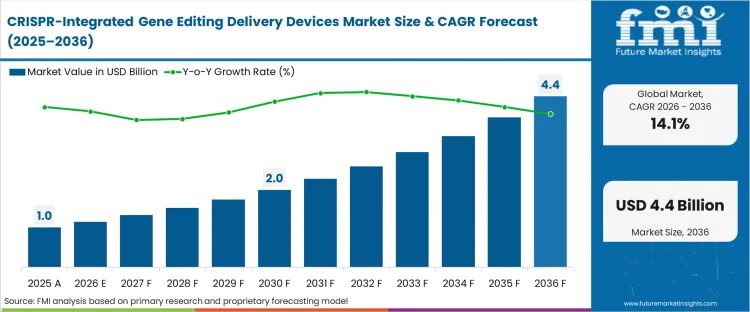
CRISPR-Integrated Gene Editing Delivery Devices Market Key Takeaways
| Metric | Details |
|---|---|
| Industry Size (2026) | USD 1.18 Billion |
| Industry Value (2036) | USD 4.41 Billion |
| CAGR (2026 -2036) | 14.10% |
Source: Future Market Insights (FMI) analysis, based on proprietary forecasting model and primary research
The validation of continuous-flow electroporation systems for clinical-stage ex vivo gene editing delivery systems serves as the primary inflection gate. This threshold is crossed when regulatory agencies approve pivotal trials utilizing entirely non-viral delivery modalities for critical hematology targets. Once integrated into commercial manufacturing protocols, the requirement for extensive viral vector facility outlays collapses, accelerating subsequent pipeline development.
China is estimated to advance at 15.7%, driven by aggressive translational capacity build-outs prioritizing non-viral infrastructure. India follows closely at 15.1%, leveraging a lower-base expansion in centralized biotechnology parks. South Korea tracks at 14.8% as domestic biopharmaceutical contract manufacturers aggressively install closed-system engineering lines. The United States is poised to expand at 13.8%, reflecting steady upgrades across a mature installed base of advanced therapy centers. The United Kingdom is projected to post a 13.2% rate, while Germany is likely to garner 12.9% growth as major CDMOs requalify their process workflows. Japan is estimated to register 12.4%. The divergence stems from the transition rate of ex vivo engineering shifting from academic discovery labs into fully standardized therapeutic supply chains.
CRISPR-Integrated Gene Editing Delivery Devices Market Definition
The CRISPR gene editing delivery devices market encompasses the specialized hardware, electroporation platforms, microfluidic disruption systems, and targeted nanoparticle injection frameworks required to physically or chemically transport CRISPR-Cas constructs across cell membranes. It represents the interface between therapeutic nucleic acid payloads and target cellular machinery, bounded strictly by the physical delivery modalities rather than the genetic constructs themselves.
CRISPR-Integrated Gene Editing Delivery Devices Market Inclusions
This sector includes clinical and research-grade electroporation instruments, nucleofection devices, continuous-flow cellular engineering systems, microfluidic shear-stress delivery apparatuses, and the hardware required for systemic lipid nanoparticles administration. The scope encapsulates all capital equipment and associated proprietary consumables explicitly designed to facilitate the intracellular transport of gene-editing components, forming the core of the CRISPR delivery platform market.
CRISPR-Integrated Gene Editing Delivery Devices Market Exclusions
The genetic payloads, including custom sgRNA sequences, standalone Cas nucleases, and base-editing enzymes, are explicitly excluded. These represent the biological cargo rather than the delivery mechanism. General-purpose laboratory incubators, standard liquid handling robotics, and upstream cell isolation centrifuges are also excluded, as they do not perform the distinct function of breaching the cell membrane to facilitate construct integration.
CRISPR-Integrated Gene Editing Delivery Devices Market Research Methodology
- Primary Research: Process development directors, vector core managers, and CDMO facility heads responsible for advanced therapy manufacturing qualification.
- Desk Research: Aggregation of clinical trial equipment registry data, facility expansion announcements, and FDA/EMA investigational new drug (IND) process filing summaries.
- Market-Sizing and Forecasting: Baseline anchored to the installed base of clinical-grade electroporation units and commercial-stage CDMO production lines actively supporting genomic medicine pipelines.
- Data Validation and Update Cycle: Forecasts triangulated against reported capacity utilization rates from leading cell therapy contract manufacturers and annual capital expenditure patterns in biopharmaceutical infrastructure.
Segmental Analysis
CRISPR-Integrated Gene Editing Delivery Devices Market Analysis by Delivery platform type
The reason electroporation systems hold 34.0% of this market comes down to a single operational reality: clinical manufacturers cannot absorb the batch failure rates associated with legacy chemical transfection at a commercial scale. This technology is not chosen solely for its biological efficiency. It is chosen because it is the only non-viral option that allows process development directors to consistently process billions of cells in a closed, GMP-compliant loop without manual intervention.
According to FMI's estimates, facilities relying on older batch methods face severe throughput constraints when pivoting from autologous to allogeneic frameworks. The integration of flow electroporation fundamentally restructures the cost-of-goods equation, enabling viable cell therapy manufacturing for larger patient populations. Organizations that attempt to scale using unvalidated experimental platforms often face forced process redesigns during late-stage clinical reviews, emphasizing the critical CRISPR delivery device market share by technology.
- Validation parameters: Electroporation systems provide documented parameter libraries for specific immune cell subsets. CDMO facility heads utilize these presets to bypass months of baseline optimization.
- Yield consistency: Continuous flow architectures eliminate the edge-effect mortality seen in cuvette-based processing. Process engineers secure reliable post-transfection viability critical for autologous dose requirements.
- Scale limitations: Throughput limits ultimately cap the utility of static nucleofection hardware. Manufacturers must transition to flow systems to meet multi-dose allogeneic production targets, especially when weighing nucleofection vs electroporation for genome editing.
CRISPR-Integrated Gene Editing Delivery Devices Market Analysis by Payload format
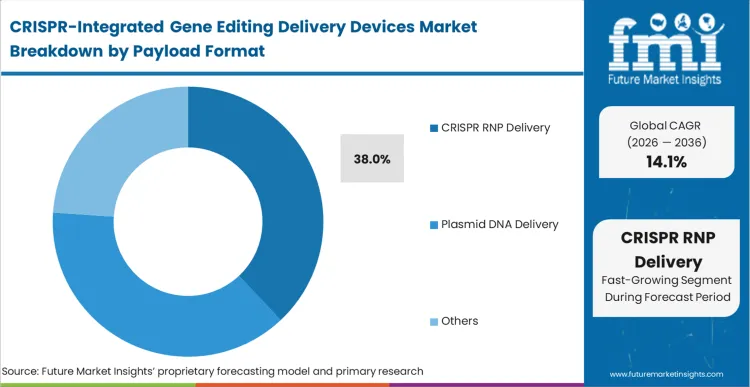
Ribonucleoprotein (RNP) complexes represent the specific payload choice facing biopharma translation directors right now, dictating an estimated 38.0% of the segment's requirements. The shift toward RNP formats forces a corresponding requirement for delivery devices capable of handling delicate protein-RNA structures without causing aggregation. FMI analysts opine that hardware configured exclusively for robust plasmid purification pipelines often fails to deliver adequate RNP integration without significant viability drops. RNP delivery ensures transient nuclease activity, sharply reducing the window for off-target chromosomal translocations compared to persistent viral or plasmid expression. Process scientists operating entirely on mRNA/sgRNA combinations eventually confront stability and translation efficiency variations. Those delaying the optimization of RNP-specific electroporation protocols encounter significant regulatory friction during long-term safety evaluations, directly impacting the CRISPR transfection systems market.
- Expression timing: RNP payloads initiate cleavage immediately upon cytoplasmic entry without requiring nuclear transcription. Process scientists capture peak editing efficiency hours earlier than mRNA-based protocols.
- Toxicity profiles: Direct protein delivery bypasses the innate immune triggers associated with foreign DNA introduction. Clinical developers reduce cellular exhaustion in sensitive primary hematopoietic stem cells.
- Assembly logistics: RNP complexes require precise pre-mixing and chilling protocols prior to device loading. Manufacturing technicians must strictly adhere to time-sensitive workflows to prevent complex degradation.
CRISPR-Integrated Gene Editing Delivery Devices Market Analysis by Editing setting
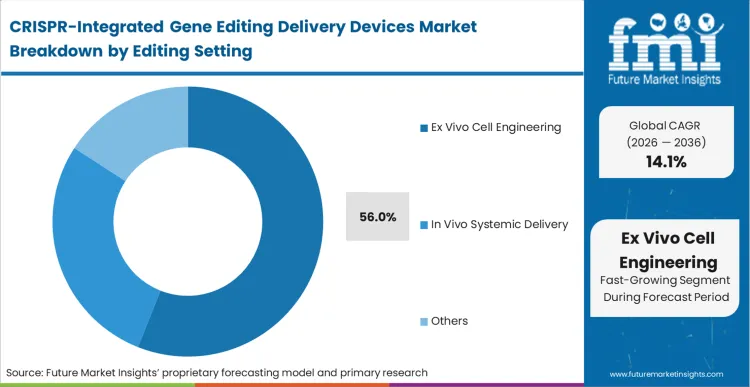
The ex vivo engineering modality holds 56.0% share because it represents the only controlled environment where massive, multiplexed genomic modifications can be verified before patient exposure. This setting necessitates highly specialized benchtop to floor-standing equipment that isolates the crispr and cas gene transfer process outside the body. As per FMI's projection, the physical separation of the editing event from the patient allows quality control managers to sequence the modified batch, ensuring off-target integrations fall below strict regulatory thresholds. This operational reality dictates that the bulk of current capital expenditure flows into closed-system isolators and continuous flow devices. Attempts to bypass ex vivo validation for complex multiplex edits using immature systemic delivery methods frequently result in clinical holds. Facilities that fail to standardize their ex vivo instrumentation face crippling bottlenecks during regulatory audits, highlighting the importance of securing the best CRISPR delivery platform for cell therapy manufacturing.
- Isolation mechanics: Closed-system consumables physically separate the patient sample from the ambient facility environment. Quality control managers eliminate cross-contamination risks during concurrent autologous processing.
- Verification windows: External manipulation allows for exhaustive karyotyping prior to final formulation. Regulatory teams confirm the absence of translocations before authorizing patient infusion.
- Translational hurdles: Moving from well-plates to closed bags introduces distinct fluid dynamic challenges. Process development engineers must systematically map shear stress impacts across the scale-up continuum.
CRISPR-Integrated Gene Editing Delivery Devices Market Analysis by End user
Biopharma and cell & gene therapy developers command 41.0% of device adoption, driven by the requirement to internalize critical manufacturing steps for their lead clinical assets. This cohort does not just purchase equipment; they define the qualification standards that filter down to the rest of the industry. Based on FMI's assessment, major developers are actively moving away from decentralised academic partnerships, opting instead to build vertically integrated hubs equipped with advanced cell and gene therapy manufacturing infrastructure. This internalization allows them to protect proprietary transfection protocols and maintain absolute control over production timelines. Relying entirely on external academic core facilities for pivotal-stage clinical supply invariably introduces schedule slippage and quality inconsistencies. Developers who underinvest in their own device infrastructure remain dangerously dependent on constrained CDMO capacity and third-party CRISPR delivery device suppliers.
- Capital deployment: Tier-1 developers aggressively procure redundant device lines to guarantee facility uptime. Operations directors secure uninterrupted clinical trial supply despite unexpected hardware failures.
- Protocol lock-in: Internal process optimization yields highly specific electrical or microfluidic parameters. Manufacturing executives transform these proprietary settings into distinct competitive moats against biosimilar competitors.
- CDMO dependency: Emerging biotechs often delay internal capital expenditure to conserve runway. These startups face severe scheduling delays when contract manufacturing queues fill during peak clinical periods.
CRISPR-Integrated Gene Editing Delivery Devices Market Analysis by Application
The clinical outcome defines the hardware requirement, and for haematology and hemoglobinopathies, that requirement translates to processing massive volumes of CD34+ hematopoietic stem cells without compromising engraftment potential. This application, representing 29.0% of the segment, acts as the proving ground for all commercial-scale delivery devices. In FMI's view, the recent validation of these gene editing tools in treating sickle cell disease has established a concrete operational baseline for CRISPR delivery for hematopoietic stem cells. Delivery platforms must gently navigate the sensitivity of primary stem cells, as aggressive electroporation permanently degrades their ability to repopulate patient bone marrow. Devices optimized for resilient immortalized cell lines frequently destroy primary CD34+ populations. Therapeutic sponsors who fail to qualify their devices specifically against delicate haematological targets suffer catastrophic engraftment failures in early clinical phases.
- Viability preservation: Gentle pulse architectures minimize membrane scarring during the poration event. Clinical researchers maintain the stemness and proliferative capacity of the manipulated CD34+ cohort.
- Editing efficiency: High-throughput processing ensures sufficient functional alleles are corrected per patient batch. Hematology directors achieve the necessary threshold of modified cells to establish long-term clinical benefit.
- Platform transition: Expanding into solid tumor applications requires drastically different cell subset handling. Process engineers must completely recalibrate baseline delivery parameters when pivoting from hematology to CRISPR delivery for CAR T cell engineering targets.
CRISPR-Integrated Gene Editing Delivery Devices Market Drivers, Restraints, and Opportunities
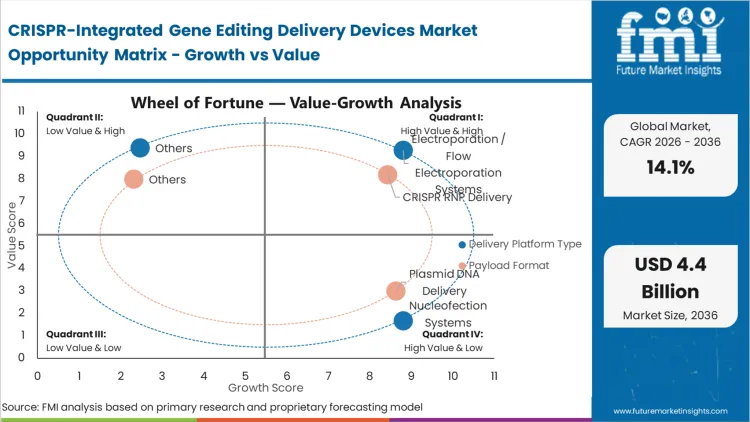
The transition from autologous to allogeneic cell therapy frameworks forces biopharmaceutical process development directors to completely redesign their delivery architectures. Producing universally compatible "off-the-shelf" therapies requires multiple simultaneous gene knockouts to prevent graft-versus-host disease, a feat that overwhelms legacy viral transduction capacities. This compels facility heads to mandate the integration of a GMP electroporation system for genome editing capable of executing multiplexed RNP delivery in a single, high-throughput pass. The commercial stakes of delaying this transition are absolute: developers relying on sequential viral editing simply cannot achieve the cost-of-goods necessary to make allogeneic therapies financially viable.
The primary operational friction slowing device integration lies in the severe optimization curve required to translate research-scale parameters into closed-system, clinical-grade workflows. Moving from a static 100-microliter cuvette to a continuous flow line is not a linear scaling exercise; it involves entirely different fluid dynamics and electrical resistance profiles. This requires process development scientists to dedicate months to empirical recalibration, significantly delaying the progression from discovery to cell and gene therapy clinical trial phases. While newer devices offer software-driven scaling models, the inherent biological variability of primary patient cells ensures this structural bottleneck persists.
Opportunities in the CRISPR-Integrated Gene Editing Delivery Devices Market
- In vivo targeted nanoparticle frameworks: The refinement of tissue-specific tropism in non-viral vectors opens the pathway for direct internal administration, fueling the lipid nanoparticle CRISPR delivery market. Biopharmaceutical translational teams capture this by qualifying next-generation microfluidic mixing devices to formulate these complex nanoparticles.
- Automated end-to-end integration: The fragmentation of current unit operations creates a massive inefficiency in facility footprint. Hardware developers who consolidate isolation, delivery, and expansion into single enclosed footprints secure exclusive procurement contracts from major CDMOs.
- Non-destructive membrane disruption: The viability penalty of standard electroporation severely limits applications in highly sensitive primary cells. Engineering firms that perfect acoustic or squeeze-based microfluidic drug delivery technology capture premium margins from developers targeting complex neurological or ophthalmic indications.
Regional Analysis
The regional breakdown indicates that the CRISPR‑Integrated Gene Editing Delivery Devices market spans over 40 countries, categorized across North America, Europe, Asia Pacific, and the rest of the world.
.webp "Top Country Growth Comparison Crispr Integrated Gene Editing Delivery Devices Market Cagr (2026 2036)")
| Country | CAGR (2026 to 2036) |
|---|---|
| China | 15.7% |
| India | 15.1% |
| South Korea | 14.8% |
| United States | 13.8% |
| United Kingdom | 13.2% |
| Germany | 12.9% |
| Japan | 12.4% |
Source: Future Market Insights (FMI) analysis, based on proprietary forecasting model and primary research
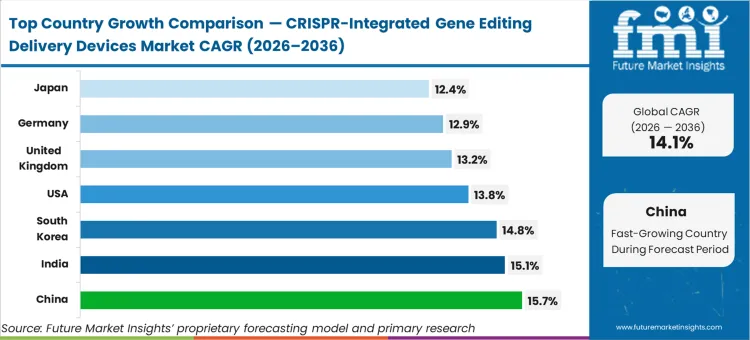
Asia Pacific CRISPR-Integrated Gene Editing Delivery Devices Market Analysis
Aggressive state-backed capitalization of regional biotechnology parks shapes the adoption pattern in Asia Pacific, accelerating the installation of advanced clinical infrastructure regardless of immediate pipeline maturity. Unlike Western markets where capital expenditure closely trails specific clinical trial approvals, this region builds capacity proactively. FMI analysts opine that this strategy pulls forward the integration of commercial-scale continuous flow systems, bypassing the interim upgrades often seen in legacy facilities. This creates an environment where contract manufacturing organizations can offer immediate, validated non-viral processing capabilities to global biopharma clients. However, the reliance on imported core hardware creates acute supply chain vulnerabilities during periods of geopolitical trade friction.
- China: Over the forecast period, the market in China is set for a CAGR of 15.7%. China's aggressive translational capacity build-out prioritizes the immediate installation of closed-system, clinical-scale non-viral infrastructure across its expanding CDMO network, actively dominating the China CRISPR delivery platform market. Facility directors in China bypass legacy batch systems entirely, structuring their entire process design around high-throughput flow prioritises electroporation to capture incoming global manufacturing contracts. This trajectory establishes the domestic manufacturing base as a primary hub for multiplexed allogeneic therapy production, structurally distancing it from regions still heavily dependent on viral vector models.
- India: FMI estimates the CRISPR-Integrated Gene Editing Delivery Devices market in India to expand at an annual growth rate of 15.1%. The lower-base expansion of specialized gene-editing infrastructure in India forces domestic translational institutes to leapfrog intermediate technologies and procure fully automated delivery platforms, boosting the India gene editing delivery devices market. Process engineers in India must rapidly validate these systems to participate in global multi-center trials for emerging microbial gene editing services. Facilities that successfully lock in these advanced workflows secure lucrative technology transfer agreements from Western developers seeking cost-effective secondary manufacturing nodes.
- South Korea: South Korea's highly concentrated biopharmaceutical contract manufacturing sector requires absolute standardization across its expansive production suites, heavily favoring established, GMP-certified continuous flow devices in the South Korea CRISPR delivery systems market. Procurement directors in South Korea evaluate hardware strictly on its ability to integrate seamlessly with existing digital batch recording and automated liquid handling architectures. The South Korea landscape is set to achieve a CAGR of 14.8%. This rigidity ensures that once a specific platform is qualified for a pivotal trial, it effectively becomes the immovable standard for that facility's future commercial output.
- Japan: Japan's stringent, specialised regulations governing regenerative medicine products enforce a highly measured, risk-averse commercialisation pace for new delivery hardware. The Japanese CRISPR-Integrated gene editing delivery devices market is likely to post a CAGR of 12.4%. Clinical researchers in Japan must provide exhaustive viability and off-target characterisation data before transitioning from established academic protocols to novel continuous-flow architectures. While this extends the procurement cycle significantly, the exhaustive qualification process yields exceptionally robust manufacturing baselines that rarely require post-approval process modification.
FMI's report includes secondary markets across Southeast Asia and Oceania. These peripheral zones are currently establishing initial regulatory definitions for advanced therapies, delaying major hardware procurement until clear localized compliance pathways are published.
North America CRISPR-Integrated Gene Editing Delivery Devices Market Analysis
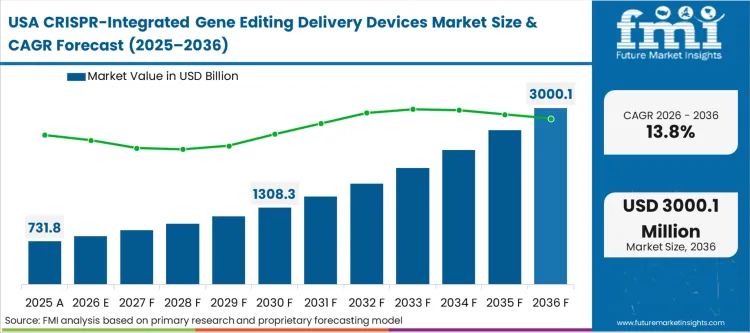
The massive, pre-existing installed base of academic and clinical research infrastructure shapes how new delivery technologies penetrate the North American landscape. This is not a market building from scratch; it is a market executing complex requalification cycles. Process development directors must justify the capital expense of novel microfluidic or advanced electroporation systems against the operational disruption of replacing functional, albeit slower, legacy hardware. According to FMI's estimates, these dynamic forces device manufacturers to compete heavily on seamless integration and software compatibility rather than base specifications. The region dictates global standards for GMP compliance, meaning hardware validated here rapidly becomes the baseline requirement for international crispr based gene editing operations.
- United States: The United States CRISPR delivery devices market operates under the foundational reality of having the broadest installed base of early-generation clinical devices, forcing current capital deployment toward strategic process upgrades rather than pure facility expansion. Advanced therapy facility heads in the United States must carefully phase in new continuous-flow platforms to avoid disrupting ongoing commercial manufacturing for legacy autologous products. The United States sector is poised to expand at a CAGR of 13.8%. This transition from batch to continuous processing eliminates the primary throughput bottleneck, directly expanding the commercial viability of multi-dose cancer gene therapy regimens.
FMI's report includes detailed assessments of the Canadian biotechnology corridor. Facilities in these hubs heavily leverage cross-border research consortiums to offset the initial capital burden of high-end clinical delivery systems.
Europe CRISPR-Integrated Gene Editing Delivery Devices Market Analysis
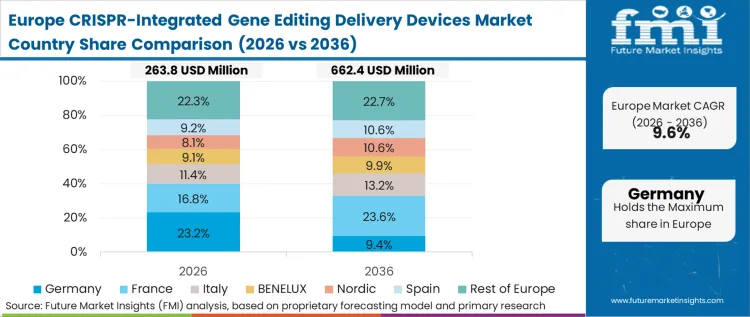
Stringent, centralized regulatory directives governing advanced therapy medicinal products (ATMPs) dictate the procurement patterns across the European manufacturing network. The European Medicines Agency's rigorous demands for process consistency and extensive characterization heavily penalize experimental or unvalidated delivery modalities. As per FMI's projection, this regulatory environment forces CDMOs to coalesce around a very narrow range of proven, closed-system electroporation devices that already possess robust master files. This risk-averse climate lengthens initial sales cycles but creates deep, unshakeable vendor lock-in once a platform is embedded into a pivotal trial protocol.
- United Kingdom: The United Kingdom's heavily integrated translational research network requires hardware that can scale seamlessly from early academic discovery directly into localized NHS-affiliated manufacturing hubs. Demand in the United Kingdom is set to grow at a CAGR of 13.2%. Vector core managers in the United Kingdom evaluate platforms based on their ability to maintain identical electrical or microfluidic parameters across drastically different processing volumes. The seamless translation of these parameters ensures rapid progression from phase I into pivotal trials, bypassing the costly recalibration delays that plague fragmented facility networks.
- Germany: Germany's major contract manufacturing organizations operate under intense margin pressure, requiring new delivery hardware to demonstrate immediate reductions in cost-of-goods and manual intervention requirements, fueling the Germany CRISPR delivery devices market. Process development engineers in Germany systematically phase out labor-intensive batch transfection in favor of automated lines capable of supporting concurrent viral vector development and non-viral cellular engineering. Over the forecast period, revenue in Germany is anticipated to increase by a CAGR of 12.9%. The execution of these automated workflows positions these CDMOs to dominate European supply contracts for the next wave of rare disease therapeutics.
Competitive Aligners for Market Players
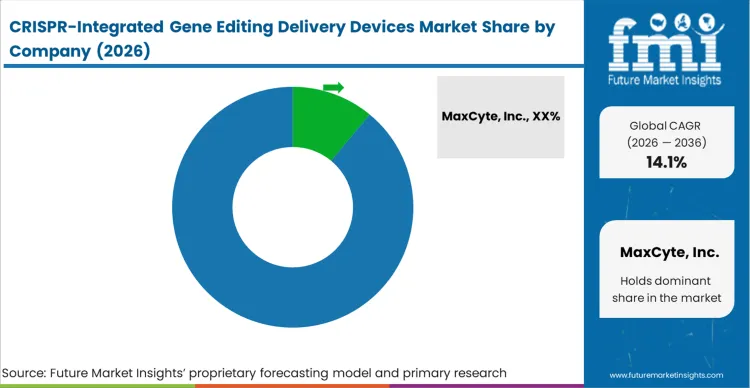
The highly concentrated nature of the clinical-grade delivery device sector stems directly from the immense regulatory friction associated with validating hardware for human therapeutics. Major biopharmaceutical companies do not select platforms based purely on peak transfection efficiency; they select based on the existence of comprehensive regulatory master files and a proven history of clinical success when looking for CRISPR delivery device suppliers. Incumbents like MaxCyte, Inc. and Lonza Group AG dominate because they provide facility directors with immediate access to these established regulatory pathways, effectively de-risking the entire manufacturing process.
The advantage held by these incumbents persists because the cost of switching devices mid-clinical trial is commercially ruinous. A challenger must build an entirely closed, GMP-compliant hardware and consumable ecosystem, and then convince a developer to risk their pivotal trial on an unproven physical delivery mechanism. To break this lock-in, emerging device manufacturers must offer a categorically distinct capability, such as high-efficiency lyophilized viral vector storage solutions integration or acoustic disruption that preserves 99% of primary cell viability,that fundamentally alters the cost-of-goods equation.
Heading toward 2036, the competitive pressure between CDMOs demanding open, flexible manufacturing suites and device vendors enforcing proprietary, closed consumable ecosystems will intensify. Large contract manufacturers actively resist being tethered to a single vendor's pricing model for critical disposable pathways, driving procurement teams to closely compare CRISPR electroporation vendors for commercial manufacturing. This dynamic will likely force a gradual unbundling, where established players are pressured to license their core electroporation or microfluidic architectures for integration into broader, automated facility-wide genomics processing lines.
Key Players in CRISPR-Integrated Gene Editing Delivery Devices Market
- MaxCyte, Inc.
- Lonza Group AG
- Thermo Fisher Scientific Inc.
- Bio-Rad Laboratories, Inc.
- Cytiva
- Takara Bio Inc.
- Miltenyi Biotec B.V. & Co. KG
Scope of the Report
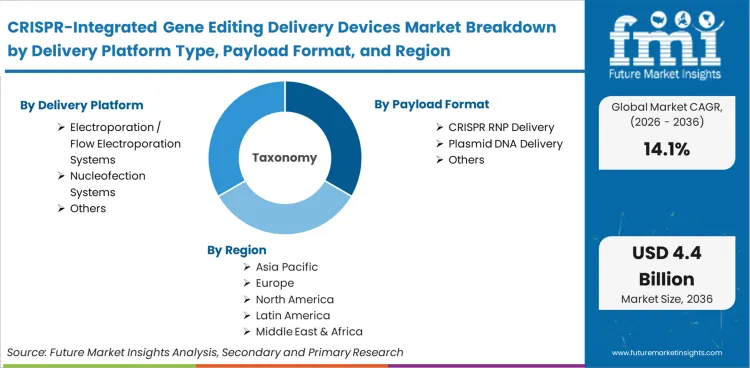
| Metric | Value |
|---|---|
| Quantitative Units | USD 1.18 Billion to USD 4.41 Billion, at a CAGR of 14.10% |
| Market Definition | The market defines the specialized physical and electro-chemical instrument ecosystem required to transport nucleases and guide RNAs into target cells. It constitutes the bridge between raw genetic tools and viable therapeutic cell products. |
| Delivery platform type Segmentation | Electroporation / flow electroporation systems, Nucleofection systems, Lipid nanoparticle delivery platforms, Viral vector-assisted delivery systems, Microfluidic / membrane-disruption delivery devices, Hybrid / exosome-enabled delivery platforms |
| Payload format Segmentation | CRISPR RNP delivery, Cas9 mRNA + sgRNA delivery, Plasmid DNA delivery, Base-editing payload delivery, Prime-editing payload delivery, Viral construct delivery |
| Editing setting Segmentation | Ex vivo cell engineering, In vivo systemic delivery, Localized / organ-targeted in vivo delivery, Research-scale screening and discovery workflows |
| End user Segmentation | Biopharma and cell & gene therapy developers, CDMOs / process development organizations, Academic and translational research institutes, Hospital-based advanced therapy centers, Biotechnology platform startups |
| Application Segmentation | Hematology and hemoglobinopathies, Oncology cell therapy engineering, Rare monogenic disease programs, Immunology / autoimmune editing programs, Ophthalmology and liver-targeted editing |
| Regions Covered | North America, Europe, Asia Pacific, Rest of the World |
| Countries Covered | United States, China, Germany, United Kingdom, Japan, South Korea, India, and 40 plus countries |
| Key Companies Profiled | MaxCyte, Inc., Lonza Group AG, Thermo Fisher Scientific Inc., Bio-Rad Laboratories, Inc., Cytiva, Takara Bio Inc., Miltenyi Biotec B.V. & Co. KG |
| Forecast Period | 2026 to 2036 |
| Approach | Primary interviews were conducted with process development directors and vector core managers to establish baseline hardware utilization. The baseline anchors to the active installed base of clinical-grade electroporation and closed-system transfection units. Forecasts were cross-validated against reported capital expenditure patterns and utilization rates from leading cell therapy contract manufacturers. |
Source: Future Market Insights (FMI) analysis, based on proprietary forecasting model and primary research
CRISPR-Integrated Gene Editing Delivery Devices Market Analysis by Segments
Delivery platform type:
- Electroporation / flow electroporation systems
- Nucleofection systems
- Lipid nanoparticle delivery platforms
- Viral vector-assisted delivery systems
- Microfluidic / membrane-disruption delivery devices
- Hybrid / exosome-enabled delivery platforms
Payload format:
- CRISPR RNP delivery
- Cas9 mRNA + sgRNA delivery
- Plasmid DNA delivery
- Base-editing payload delivery
- Prime-editing payload delivery
- Viral construct delivery
Editing setting:
- Ex vivo cell engineering
- In vivo systemic delivery
- Localized / organ-targeted in vivo delivery
- Research-scale screening and discovery workflows
End user:
- Biopharma and cell & gene therapy developers
- CDMOs / process development organizations
- Academic and translational research institutes
- Hospital-based advanced therapy centers
- Biotechnology platform startups
Application:
- Hematology and hemoglobinopathies
- Oncology cell therapy engineering
- Rare monogenic disease programs
- Immunology / autoimmune editing programs
- Ophthalmology and liver-targeted editing
Region:
- North America
- United States
- Canada
- Europe
- Germany
- United Kingdom
- France
- Italy
- Spain
- Asia Pacific
- China
- India
- South Korea
- Japan
- Singapore
- Latin America
- Brazil
- Mexico
- Argentina
- Middle East & Africa
- GCC Countries
- South Africa
Bibliography
- European Medicines Agency. (2025, January). Casgevy, INN-exagamglogene autotemcel (CD34+ cells). European Medicines Agency.
- Innovative Genomics Institute. (2024, March). CRISPR Clinical Trials: A 2024 Update. Innovative Genomics Institute.
- Bamundo, M., Bensadoun, P., & Favre, M. (2024, November). CRISPR/Cas9 ribonucleoprotein nucleofection for genome editing in primary human keratinocytes: Knockouts, deletions, and homology-directed repair mutagenesis. Current Protocols.
- Ling, S., Xie, K., Xu, Y., et al. (2025, February). Customizable virus-like particles deliver CRISPR Cas9 ribonucleoproteins for therapeutic genome editing. Nature Nanotechnology.
- Lei, T., Zhang, L., Wang, Y., et al. (2024, October). Leveraging CRISPR gene editing technology to optimize CAR T-cell therapy. Leukemia.
- American Chemical Society. (2025, January). Emerging delivery systems for enabling precision nucleic acid therapeutics. ACS Nano.
- Gwon, L. W., Kim, H., & Lee, J. (2025, February). Advances in large-scale DNA engineering with the CRISPR technology. Experimental & Molecular Medicine.
This bibliography is provided for reader reference. The full FMI report contains the complete reference list with primary source documentation.
Frequently Asked Questions
How large is the CRISPR-Integrated Gene Editing Delivery Devices Market in 2026?
The gene editing delivery devices market reaches USD 1.18 billion in 2026, anchoring a massive shift in capital expenditure as biopharmaceutical developers transition from legacy batch transfection to scalable, closed-system delivery networks.
What will it be valued at by 2036?
It is projected to hit USD 4.41 billion by 2036, signalling the complete integration of non-viral continuous-flow devices into standardized commercial manufacturing protocols.
What CAGR is projected?
The 14.10% CAGR reflects the urgency with which CDMOs are forced to upgrade their physical infrastructure to accommodate the throughput requirements of incoming multiplexed allogeneic trials.
What are CRISPR-integrated gene editing delivery devices?
CRISPR gene editing delivery devices are specialised physical and electro-chemical instruments, such as electroporators, microfluidic systems, and LNP mixers, required to transport nucleases and guide RNAs into target cells, forming the critical bridge between raw genetic tools and viable cell therapies.
Which delivery platform type segment leads?
Electroporation / flow electroporation systems lead because they currently provide the only regulatory-validated pathway for processing billions of cells without the batch failures inherent to manual cuvette methods.
Which payload format segment leads?
CRISPR RNP delivery leads because clinical researchers must strictly limit nuclease exposure time to prevent off-target translocations, an operational mandate that mRNA or plasmid vectors cannot reliably satisfy.
Which editing setting segment leads?
Ex vivo cell engineering leads because regulatory frameworks absolutely require external verification and karyotyping of modified therapeutic cells before they are cleared for patient infusion.
what is the best delivery method for CRISPR therapeutics?
The optimal method depends entirely on the clinical target: continuous-flow electroporation is the gold standard for ex vivo cellular engineering, while lipid nanoparticles are emerging as the preferred vehicle for targeted in vivo hepatic delivery.
why is delivery the bottleneck in CRISPR gene editing?
The biological variability of primary patient cells creates a severe optimization bottleneck, requiring process scientists to spend months empirically recalibrating shear stress and electrical parameters to transport large RNP complexes without destroying the target cells.
How is Casgevy delivered ex vivo?
Casgevy is a first-of-its-kind therapy that relies on the non-viral delivery of a CRISPR/Cas9 RNP complex into patient-derived CD34+ hematopoietic stem cells using clinical-scale electroporation.
Which country grows fastest?
China outpaces India by pulling its translational expansion directly into commercial-grade non-viral infrastructure, bypassing the legacy batch architectures that constrain older Western facilities.
How does the ATMP regulatory framework impact device selection?
Strict European directives penalize experimental device modifications, forcing CDMOs to universally adopt platforms that already possess robust regulatory master files to avoid crippling audit delays.
electroporation vs LNP for CRISPR: Are lipid nanoparticles replacing electroporation in gene editing?
While LNPs are rapidly capturing share for in vivo applications due to their systemic administrability, they are not replacing electroporation in complex ex vivo autologous workflows where immediate, transient RNP expression is required.
Why do developers resist vendor lock-in with closed-system consumables?
Tethering an entire commercial manufacturing pipeline to a single vendor's proprietary flow kits exposes developers to unmanageable pricing leverage and acute supply chain disruption risks during peak clinical phases.
What limits the adoption of in vivo systemic delivery devices?
The inability to consistently direct complex nanoparticle payloads to specific organ targets at therapeutic titers prevents clinical directors from shifting capital away from proven ex vivo engineering hardware.
Which end users buy CRISPR delivery devices the most?
Biopharma and cell & gene therapy developers account for the majority of the market, driven by the requirement to internalize critical manufacturing steps for their lead clinical assets.
Why are RNP formats incompatible with legacy plasmid delivery workflows?
RNP complexes require highly specialized chilling and rapid-mixing protocols to prevent protein aggregation, overwhelming standard fluidic channels designed for robust DNA stability.
What characterizes Japan's approach to adopting new delivery platforms?
A highly risk-averse regenerative medicine framework lengthens the procurement cycle, requiring exhaustive off-target characterization data before researchers can authorize the capital transition.
Why are Tier-1 biopharma developers internalizing their device infrastructure?
Relying on external academic cores for crucial transfection steps introduces schedule slippage, prompting developers to build vertically integrated hubs to maintain absolute control over pivotal trial timelines.
What operational metric dictates hardware selection for hematology programs?
Preservation of CD34+ cell stemness and engraftment potential is the absolute priority, automatically disqualifying any platform that relies on aggressive membrane permeabilization.
How does South Korea's CDMO concentration affect device procurement?
The requirement for absolute standardization across massive production suites favors established, GMP-certified devices that integrate seamlessly into existing digital batch recording systems.
What triggers the inflection point for non-viral clinical dominance?
The commercial scale-up of multiplexed therapies crosses the threshold when pivotal trials secure approval utilizing entirely non-viral delivery modalities for critical targets.
How are CDMOs in Germany maintaining their margin structure?
By phasing out labor-intensive batch transfection and installing automated lines capable of concurrent processing, German facilities drastically reduce manual intervention requirements and cost-of-goods.
Why is the United States growth rate closer to the global average?
The mature installed base of early-generation devices forces capital deployment toward strategic requalification and phased process upgrades, moderating the raw expansion rate seen in emerging Asian hubs.
Preview the report firsthand - request a free sample
Get SampleGet the brochure for pricing and purchase details.
Get PDFTable of Content
- Executive Summary
- Global Market Outlook
- Demand-side Trends
- Supply-side Trends
- Technology Roadmap Analysis
- Analysis and Recommendations
- Market Overview
- Market Coverage / Taxonomy
- Market Definition / Scope / Limitations
- Research Methodology
- Chapter Orientation
- Analytical Lens and Working Hypotheses
- Market Structure, Signals, and Trend Drivers
- Benchmarking and Cross-market Comparability
- Market Sizing, Forecasting, and Opportunity Mapping
- Research Design and Evidence Framework
- Desk Research Programme (Secondary Evidence)
- Company Annual and Sustainability Reports
- Peer-reviewed Journals and Academic Literature
- Corporate Websites, Product Literature, and Technical Notes
- Earnings Decks and Investor Briefings
- Statutory Filings and Regulatory Disclosures
- Technical White Papers and Standards Notes
- Trade Journals, Industry Magazines, and Analyst Briefs
- Conference Proceedings, Webinars, and Seminar Materials
- Government Statistics Portals and Public Data Releases
- Press Releases and Reputable Media Coverage
- Specialist Newsletters and Curated Briefings
- Sector Databases and Reference Repositories
- FMI Internal Proprietary Databases and Historical Market Datasets
- Subscription Datasets and Paid Sources
- Social Channels, Communities, and Digital Listening Inputs
- Additional Desk Sources
- Expert Input and Fieldwork (Primary Evidence)
- Primary Modes
- Qualitative Interviews and Expert Elicitation
- Quantitative Surveys and Structured Data Capture
- Blended Approach
- Why Primary Evidence is Used
- Field Techniques
- Interviews
- Surveys
- Focus Groups
- Observational and In-context Research
- Social and Community Interactions
- Stakeholder Universe Engaged
- C-suite Leaders
- Board Members
- Presidents and Vice Presidents
- R&D and Innovation Heads
- Technical Specialists
- Domain Subject-matter Experts
- Scientists
- Physicians and Other Healthcare Professionals
- Governance, Ethics, and Data Stewardship
- Research Ethics
- Data Integrity and Handling
- Primary Modes
- Tooling, Models, and Reference Databases
- Desk Research Programme (Secondary Evidence)
- Data Engineering and Model Build
- Data Acquisition and Ingestion
- Cleaning, Normalisation, and Verification
- Synthesis, Triangulation, and Analysis
- Quality Assurance and Audit Trail
- Market Background
- Market Dynamics
- Drivers
- Restraints
- Opportunity
- Trends
- Scenario Forecast
- Demand in Optimistic Scenario
- Demand in Likely Scenario
- Demand in Conservative Scenario
- Opportunity Map Analysis
- Product Life Cycle Analysis
- Supply Chain Analysis
- Investment Feasibility Matrix
- Value Chain Analysis
- PESTLE and Porter’s Analysis
- Regulatory Landscape
- Regional Parent Market Outlook
- Production and Consumption Statistics
- Import and Export Statistics
- Market Dynamics
- Global Market Analysis 2021 to 2025 and Forecast, 2026 to 2036
- Historical Market Size Value (USD Million) Analysis, 2021 to 2025
- Current and Future Market Size Value (USD Million) Projections, 2026 to 2036
- Y-o-Y Growth Trend Analysis
- Absolute $ Opportunity Analysis
- Global Market Pricing Analysis 2021 to 2025 and Forecast 2026 to 2036
- Global Market Analysis 2021 to 2025 and Forecast 2026 to 2036, By Delivery Platform Type
- Introduction / Key Findings
- Historical Market Size Value (USD Million) Analysis By Delivery Platform Type , 2021 to 2025
- Current and Future Market Size Value (USD Million) Analysis and Forecast By Delivery Platform Type , 2026 to 2036
- Electroporation / Flow Electroporation Systems
- Nucleofection Systems
- Others
- Electroporation / Flow Electroporation Systems
- Y-o-Y Growth Trend Analysis By Delivery Platform Type , 2021 to 2025
- Absolute $ Opportunity Analysis By Delivery Platform Type , 2026 to 2036
- Global Market Analysis 2021 to 2025 and Forecast 2026 to 2036, By Payload Format
- Introduction / Key Findings
- Historical Market Size Value (USD Million) Analysis By Payload Format, 2021 to 2025
- Current and Future Market Size Value (USD Million) Analysis and Forecast By Payload Format, 2026 to 2036
- CRISPR RNP Delivery
- Plasmid DNA Delivery
- Others
- CRISPR RNP Delivery
- Y-o-Y Growth Trend Analysis By Payload Format, 2021 to 2025
- Absolute $ Opportunity Analysis By Payload Format, 2026 to 2036
- Global Market Analysis 2021 to 2025 and Forecast 2026 to 2036, By Editing Setting
- Introduction / Key Findings
- Historical Market Size Value (USD Million) Analysis By Editing Setting, 2021 to 2025
- Current and Future Market Size Value (USD Million) Analysis and Forecast By Editing Setting, 2026 to 2036
- Ex Vivo Cell Engineering
- In Vivo Systemic Delivery
- Others
- Ex Vivo Cell Engineering
- Y-o-Y Growth Trend Analysis By Editing Setting, 2021 to 2025
- Absolute $ Opportunity Analysis By Editing Setting, 2026 to 2036
- Global Market Analysis 2021 to 2025 and Forecast 2026 to 2036, By End User
- Introduction / Key Findings
- Historical Market Size Value (USD Million) Analysis By End User, 2021 to 2025
- Current and Future Market Size Value (USD Million) Analysis and Forecast By End User, 2026 to 2036
- Biopharma and Cell & Gene Therapy Developers
- Biotechnology Platform Startups
- Others
- Biopharma and Cell & Gene Therapy Developers
- Y-o-Y Growth Trend Analysis By End User, 2021 to 2025
- Absolute $ Opportunity Analysis By End User, 2026 to 2036
- Global Market Analysis 2021 to 2025 and Forecast 2026 to 2036, By Region
- Introduction
- Historical Market Size Value (USD Million) Analysis By Region, 2021 to 2025
- Current Market Size Value (USD Million) Analysis and Forecast By Region, 2026 to 2036
- North America
- Latin America
- Western Europe
- Eastern Europe
- East Asia
- South Asia and Pacific
- Middle East & Africa
- Market Attractiveness Analysis By Region
- North America Market Analysis 2021 to 2025 and Forecast 2026 to 2036, By Country
- Historical Market Size Value (USD Million) Trend Analysis By Market Taxonomy, 2021 to 2025
- Market Size Value (USD Million) Forecast By Market Taxonomy, 2026 to 2036
- By Country
- USA
- Canada
- Mexico
- By Delivery Platform Type
- By Payload Format
- By Editing Setting
- By End User
- By Country
- Market Attractiveness Analysis
- By Country
- By Delivery Platform Type
- By Payload Format
- By Editing Setting
- By End User
- Key Takeaways
- Latin America Market Analysis 2021 to 2025 and Forecast 2026 to 2036, By Country
- Historical Market Size Value (USD Million) Trend Analysis By Market Taxonomy, 2021 to 2025
- Market Size Value (USD Million) Forecast By Market Taxonomy, 2026 to 2036
- By Country
- Brazil
- Chile
- Rest of Latin America
- By Delivery Platform Type
- By Payload Format
- By Editing Setting
- By End User
- By Country
- Market Attractiveness Analysis
- By Country
- By Delivery Platform Type
- By Payload Format
- By Editing Setting
- By End User
- Key Takeaways
- Western Europe Market Analysis 2021 to 2025 and Forecast 2026 to 2036, By Country
- Historical Market Size Value (USD Million) Trend Analysis By Market Taxonomy, 2021 to 2025
- Market Size Value (USD Million) Forecast By Market Taxonomy, 2026 to 2036
- By Country
- Germany
- UK
- Italy
- Spain
- France
- Nordic
- BENELUX
- Rest of Western Europe
- By Delivery Platform Type
- By Payload Format
- By Editing Setting
- By End User
- By Country
- Market Attractiveness Analysis
- By Country
- By Delivery Platform Type
- By Payload Format
- By Editing Setting
- By End User
- Key Takeaways
- Eastern Europe Market Analysis 2021 to 2025 and Forecast 2026 to 2036, By Country
- Historical Market Size Value (USD Million) Trend Analysis By Market Taxonomy, 2021 to 2025
- Market Size Value (USD Million) Forecast By Market Taxonomy, 2026 to 2036
- By Country
- Russia
- Poland
- Hungary
- Balkan & Baltic
- Rest of Eastern Europe
- By Delivery Platform Type
- By Payload Format
- By Editing Setting
- By End User
- By Country
- Market Attractiveness Analysis
- By Country
- By Delivery Platform Type
- By Payload Format
- By Editing Setting
- By End User
- Key Takeaways
- East Asia Market Analysis 2021 to 2025 and Forecast 2026 to 2036, By Country
- Historical Market Size Value (USD Million) Trend Analysis By Market Taxonomy, 2021 to 2025
- Market Size Value (USD Million) Forecast By Market Taxonomy, 2026 to 2036
- By Country
- China
- Japan
- South Korea
- By Delivery Platform Type
- By Payload Format
- By Editing Setting
- By End User
- By Country
- Market Attractiveness Analysis
- By Country
- By Delivery Platform Type
- By Payload Format
- By Editing Setting
- By End User
- Key Takeaways
- South Asia and Pacific Market Analysis 2021 to 2025 and Forecast 2026 to 2036, By Country
- Historical Market Size Value (USD Million) Trend Analysis By Market Taxonomy, 2021 to 2025
- Market Size Value (USD Million) Forecast By Market Taxonomy, 2026 to 2036
- By Country
- India
- ASEAN
- Australia & New Zealand
- Rest of South Asia and Pacific
- By Delivery Platform Type
- By Payload Format
- By Editing Setting
- By End User
- By Country
- Market Attractiveness Analysis
- By Country
- By Delivery Platform Type
- By Payload Format
- By Editing Setting
- By End User
- Key Takeaways
- Middle East & Africa Market Analysis 2021 to 2025 and Forecast 2026 to 2036, By Country
- Historical Market Size Value (USD Million) Trend Analysis By Market Taxonomy, 2021 to 2025
- Market Size Value (USD Million) Forecast By Market Taxonomy, 2026 to 2036
- By Country
- Kingdom of Saudi Arabia
- Other GCC Countries
- Turkiye
- South Africa
- Other African Union
- Rest of Middle East & Africa
- By Delivery Platform Type
- By Payload Format
- By Editing Setting
- By End User
- By Country
- Market Attractiveness Analysis
- By Country
- By Delivery Platform Type
- By Payload Format
- By Editing Setting
- By End User
- Key Takeaways
- Key Countries Market Analysis
- USA
- Pricing Analysis
- Market Share Analysis, 2025
- By Delivery Platform Type
- By Payload Format
- By Editing Setting
- By End User
- Canada
- Pricing Analysis
- Market Share Analysis, 2025
- By Delivery Platform Type
- By Payload Format
- By Editing Setting
- By End User
- Mexico
- Pricing Analysis
- Market Share Analysis, 2025
- By Delivery Platform Type
- By Payload Format
- By Editing Setting
- By End User
- Brazil
- Pricing Analysis
- Market Share Analysis, 2025
- By Delivery Platform Type
- By Payload Format
- By Editing Setting
- By End User
- Chile
- Pricing Analysis
- Market Share Analysis, 2025
- By Delivery Platform Type
- By Payload Format
- By Editing Setting
- By End User
- Germany
- Pricing Analysis
- Market Share Analysis, 2025
- By Delivery Platform Type
- By Payload Format
- By Editing Setting
- By End User
- UK
- Pricing Analysis
- Market Share Analysis, 2025
- By Delivery Platform Type
- By Payload Format
- By Editing Setting
- By End User
- Italy
- Pricing Analysis
- Market Share Analysis, 2025
- By Delivery Platform Type
- By Payload Format
- By Editing Setting
- By End User
- Spain
- Pricing Analysis
- Market Share Analysis, 2025
- By Delivery Platform Type
- By Payload Format
- By Editing Setting
- By End User
- France
- Pricing Analysis
- Market Share Analysis, 2025
- By Delivery Platform Type
- By Payload Format
- By Editing Setting
- By End User
- India
- Pricing Analysis
- Market Share Analysis, 2025
- By Delivery Platform Type
- By Payload Format
- By Editing Setting
- By End User
- ASEAN
- Pricing Analysis
- Market Share Analysis, 2025
- By Delivery Platform Type
- By Payload Format
- By Editing Setting
- By End User
- Australia & New Zealand
- Pricing Analysis
- Market Share Analysis, 2025
- By Delivery Platform Type
- By Payload Format
- By Editing Setting
- By End User
- China
- Pricing Analysis
- Market Share Analysis, 2025
- By Delivery Platform Type
- By Payload Format
- By Editing Setting
- By End User
- Japan
- Pricing Analysis
- Market Share Analysis, 2025
- By Delivery Platform Type
- By Payload Format
- By Editing Setting
- By End User
- South Korea
- Pricing Analysis
- Market Share Analysis, 2025
- By Delivery Platform Type
- By Payload Format
- By Editing Setting
- By End User
- Russia
- Pricing Analysis
- Market Share Analysis, 2025
- By Delivery Platform Type
- By Payload Format
- By Editing Setting
- By End User
- Poland
- Pricing Analysis
- Market Share Analysis, 2025
- By Delivery Platform Type
- By Payload Format
- By Editing Setting
- By End User
- Hungary
- Pricing Analysis
- Market Share Analysis, 2025
- By Delivery Platform Type
- By Payload Format
- By Editing Setting
- By End User
- Kingdom of Saudi Arabia
- Pricing Analysis
- Market Share Analysis, 2025
- By Delivery Platform Type
- By Payload Format
- By Editing Setting
- By End User
- Turkiye
- Pricing Analysis
- Market Share Analysis, 2025
- By Delivery Platform Type
- By Payload Format
- By Editing Setting
- By End User
- South Africa
- Pricing Analysis
- Market Share Analysis, 2025
- By Delivery Platform Type
- By Payload Format
- By Editing Setting
- By End User
- USA
- Market Structure Analysis
- Competition Dashboard
- Competition Benchmarking
- Market Share Analysis of Top Players
- By Regional
- By Delivery Platform Type
- By Payload Format
- By Editing Setting
- By End User
- Competition Analysis
- Competition Deep Dive
- MaxCyte, Inc.
- Overview
- Product Portfolio
- Profitability by Market Segments (Product/Age /Sales Channel/Region)
- Sales Footprint
- Strategy Overview
- Marketing Strategy
- Product Strategy
- Channel Strategy
- Lonza Group AG
- Thermo Fisher Scientific Inc.
- Bio-Rad Laboratories, Inc.
- Cytiva
- Takara Bio Inc.
- MaxCyte, Inc.
- Competition Deep Dive
- Assumptions & Acronyms Used


