

- Industry Size (2026)
- USD 10 Bn
- Forecast (2036)
- USD 22.8 Bn
- CAGR (2026 to 2036)
- 8.60%
Green Delivery Services Market Forecast and Outlook 2026 to 2036
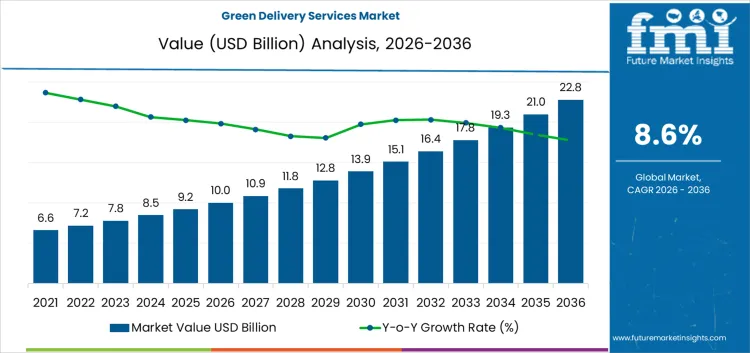
The global Green Delivery Services market is projected to grow from USD 10 billion in 2026 to USD 22.8 billion by 2036, with a robust CAGR of 8.60%. As the demand for sustainable and energy-efficient delivery options rises, procurement priorities are increasingly shaped by the need for low-emission solutions and regulatory compliance. Buyer risk aversion is influenced by concerns about operational disruptions and long-term cost effectiveness, which often leads to preference for established vendors with proven reliability.
Quick Stats for Green Delivery Services Market
- Green Delivery Services Market Value (2026): USD 10 Billion
- Green Delivery Services Market Forecast Value (2036): USD 22.8 Billion
- Green Delivery Services Market Forecast CAGR 2026 to 2036: 8.60%
- Leading Service Type in Green Delivery Services Market: Parcel & Small Package Delivery
- Key Growth Regions in Green Delivery Services Market: Asia Pacific, Europe, North America
- Top Key Players in Green Delivery Services Market: DPDgroup, DHL, UPS, FedEx, Amazon Logistics
Vendor lock-in scenarios are common, as companies tend to rely on the integration of green delivery systems into their larger logistical operations, leading to challenges in switching to new providers. The associated switching costs, both in terms of financial and operational adjustments, further reinforce the reliance on current vendors. Thus, market dynamics are driven by both the push for innovation in eco-friendly solutions and the pull of existing system dependencies that create barriers to change.
Green Delivery Services Market Key Takeaways
| Metric | Value |
|---|---|
| Industry Value (2026) | USD 10 Billion |
| Forecast Value (2036) | USD 22.8 Billion |
| Forecast CAGR 2026 to 2036 | 8.60% |
How Is the Global Green Delivery Services Market Advancing?
The global green delivery services market is witnessing significant growth, driven by increasing consumer demand for environmentally friendly and energy-efficient delivery solutions. Green delivery services involve the use of sustainable and low-emission transportation methods, such as electric vehicles (EVs), bicycles, and alternative fuels, to reduce the environmental impact of last-mile deliveries. As e-commerce continues to grow, the need for efficient, cost-effective, and eco-conscious delivery methods has become more pronounced, propelling the market forward.
A key factor driving the expansion of the green delivery services market is the rising awareness among consumers and businesses about the importance of reducing carbon footprints and minimizing environmental harm. Many consumers are now prioritizing companies that adopt sustainable practices, including green delivery options, creating a strong market demand. Government regulations and incentives aimed at reducing transportation-related emissions are encouraging businesses to invest in green delivery fleets and eco-friendly technologies.
Technological advancements and the growing adoption of electric vehicles and cargo bikes are further fueling market growth. These innovations enable businesses to optimize delivery routes, reduce energy consumption, and lower operational costs, all while improving service reliability and delivery speed. As the urbanization trend continues and cities implement stricter environmental regulations, green delivery services are expected to play a crucial role in the future of logistics, making it a rapidly expanding market poised for long-term growth.
What is the Segment-Wise Analysis for the Green Delivery Services Market?
The green delivery services market is segmented by service type and geography type. Parcel & small package delivery leads the service type segment with a 44% share, followed by grocery & quick commerce, B2B urban distribution, and other services. The demand for efficient and sustainable parcel delivery solutions is a key driver for growth in this segment. In terms of geography type, Tier-1 metro cities dominate with a 54% share, followed by Tier-2 cities and suburban rings.
Why Does Parcel & Small Package Delivery Lead the Green Delivery Services Market?
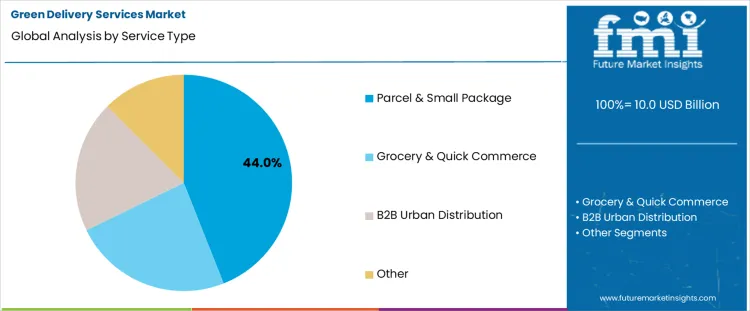
Parcel & small package delivery leads the green delivery services market with a 44% share due to the significant rise in e-commerce and the growing consumer demand for fast, reliable, and sustainable delivery options. The increasing volume of online shopping, especially for small items, has driven the need for efficient delivery services. Green delivery solutions, which focus on optimizing delivery routes, reducing emissions, and utilizing eco-friendly vehicles, are essential in meeting sustainability goals. As consumers prioritize eco-friendly practices in their purchasing decisions, the demand for green parcel delivery services continues to grow. This rising demand for sustainability has strengthened the position of parcel & small package delivery as the dominant service type in the market.
How Do Tier-1 Metro Cities Contribute to the Green Delivery Services Market?
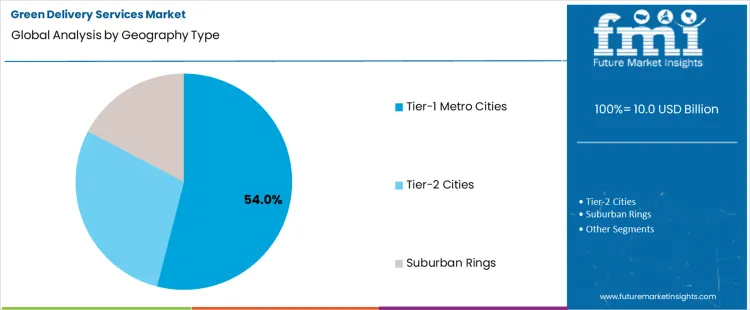
Tier-1 metro cities account for 54% of the geography type segment in the green delivery services market. These densely populated metropolitan areas are major hubs for delivery services, driven by high consumer demand and urbanization. The need for fast, reliable, and sustainable delivery solutions is amplified in these cities, and government regulations aimed at reducing carbon emissions are further accelerating the adoption of green delivery options. As urban areas continue to grow, investments in infrastructure and technology, such as electric vehicles and optimized routes, are on the rise. The growth of e-commerce and increasing focus on sustainability are also contributing to the dominance of Tier-1 metro cities in the green delivery services market.
What Are the Key Dynamics for the Green Delivery Services Market?
The green delivery services market is driven by the growing demand for environmentally sustainable and carbon-neutral logistics solutions. With rising consumer and corporate awareness about the environmental impact of traditional delivery methods, particularly in terms of carbon emissions and traffic congestion, there is a shift towards adopting green delivery services. The demand for green delivery services is also being fueled by government regulations and incentives promoting sustainability in logistics, alongside the increasing consumer preference for brands that align with their environmental values.
How Are the Key Drivers Shaping the Green Delivery Services Market?
The key drivers of the Green Delivery Services Market include the increasing emphasis on sustainability across industries, the rapid growth of e-commerce, and rising consumer demand for eco-friendly solutions. As online shopping continues to surge, there is a growing need for last-mile delivery services that are both efficient and environmentally responsible. The adoption of electric vehicles (EVs) and low-emission vehicles for delivery purposes is helping reduce emissions and improve fuel efficiency, contributing to the rise of green delivery services. Governmental regulations aimed at reducing carbon emissions in urban areas are pushing logistics providers to adopt greener technologies.
What Are the Restraints Impacting the Green Delivery Services Market?
The need for infrastructure, such as charging stations for EVs, also adds to the cost and operational complexity. While green delivery options are becoming more popular in developed markets, their adoption is slower in developing regions due to economic constraints, lack of infrastructure, and limited awareness of sustainable logistics solutions. The limited range and payload capacity of electric vehicles and drones may restrict their use in certain delivery scenarios, especially in areas with less-developed infrastructure or for larger shipments. Scaling up green delivery services can be challenging in terms of maintaining cost-effectiveness, as businesses need to balance environmental goals with profitability.
What is the Growth Outlook for the Green Delivery Services Market by Country?
| Country | CAGR (%) |
|---|---|
| China | 10.2% |
| Brazil | 9.8% |
| USA | 8.2% |
| South Korea | 7.9% |
| Japan | 6.9% |
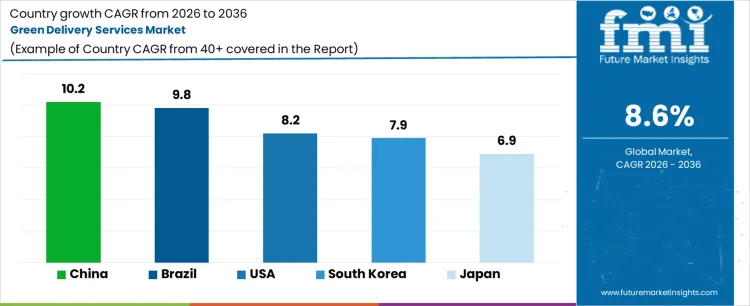
The green delivery services market is experiencing steady growth across key regions. China leads at 10.2%, driven by urbanization, e-commerce, and government initiatives promoting eco-friendly transportation. Brazil follows at 9.8%, supported by rising demand for sustainable delivery solutions and incentives for reducing carbon emissions. The USA grows at 8.2%, fueled by consumer demand for eco-friendly delivery options and increasing infrastructure for electric vehicles. South Korea’s market expands at 7.9%, driven by investments in sustainable logistics and growing e-commerce. Japan’s market, growing at 6.9%, benefits from strong environmental policies and advancements in electric vehicle infrastructure.
What is Driving the Growth of the Green Delivery Services Market in China?
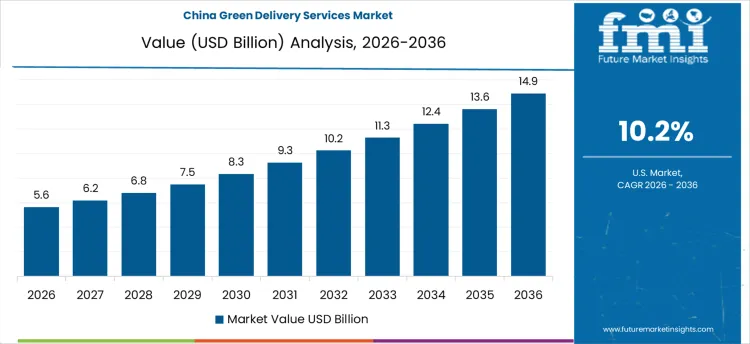
China’s green delivery services market is growing at 10.2%, driven by the country's rapid urbanization, e-commerce growth, and increasing environmental awareness. As one of the largest e-commerce markets globally, China is experiencing a rising demand for more sustainable, eco-friendly delivery solutions. The government’s push for greener, more energy-efficient transportation, including the adoption of electric vehicles (EVs) for deliveries, is further supporting this trend. The growth of logistics companies focused on reducing their carbon footprints and offering carbon-neutral delivery options is contributing to the market's expansion. As consumers demand more sustainable solutions, China's green delivery services market is expected to continue growing at a strong pace.
How is the Green Delivery Services Market Expanding in Brazil?
Brazil’s green delivery services market is growing at 9.8%, driven by the increasing demand for sustainable logistics solutions in the rapidly expanding e-commerce sector. As urbanization continues and environmental concerns rise, Brazilian consumers are seeking eco-friendlier delivery options, prompting logistics providers to adopt greener delivery methods. Brazil’s government incentives for reducing carbon emissions and promoting energy-efficient transportation further support the market. The growth of electric vehicle infrastructure and adoption of environmentally friendly packaging also contribute to this expansion. With continued advancements in sustainability practices and increasing consumer awareness, Brazil’s green delivery services market is expected to grow steadily in the coming years.
How is the Green Delivery Services Market Expanding in the USA?
The green delivery services market in the USA is growing at 8.2%, driven by the increasing demand for eco-friendly and sustainable delivery solutions in the e-commerce and retail sectors. As consumers prioritize sustainability and environmentally conscious brands, businesses are adopting green delivery methods, including electric vehicles and carbon-neutral delivery services, to reduce their environmental impact. The USA’s growing infrastructure for EVs and government incentives for green logistics are further fueling the market. Rising concerns about climate change and the push for reducing carbon footprints in the logistics industry are contributing to the growth of green delivery services. As the demand for sustainable solutions increases, the USA's green delivery services market is expected to continue expanding.
What is Driving the Growth of the Green Delivery Services Market in South Korea?
South Korea’s green delivery services market is growing at 7.9%, supported by the country’s push for environmental sustainability and digital transformation. South Korea is investing in sustainable infrastructure, including electric vehicle (EV) charging stations and green logistics networks, which is driving the adoption of eco-friendly delivery solutions. The country’s highly developed e-commerce sector, coupled with a growing awareness of environmental issues, is fueling the demand for green delivery services. The government’s initiatives to reduce carbon emissions and promote the use of electric vehicles in urban areas are contributing to the market’s expansion. As South Korea continues to prioritize green technologies, the market for green delivery services is expected to grow steadily.
How is the Green Delivery Services Market Expanding in Japan?
Japan’s green delivery services market is growing at 6.9%, driven by the increasing demand for sustainable logistics solutions and the country’s commitment to reducing environmental impact. Japan’s government has implemented policies to encourage green transportation and the use of electric vehicles in delivery services. As urbanization increases and e-commerce grows, there is rising consumer demand for eco-friendly delivery methods. Japan's logistics industry is focusing on reducing carbon footprints and improving fuel efficiency, further promoting green delivery services. With Japan’s emphasis on innovation and sustainability, coupled with advancements in electric vehicle infrastructure, the market for green delivery services is expected to continue expanding, although at a slightly slower pace compared to other regions.
How Are Companies Competing in the Green Delivery Services Market?
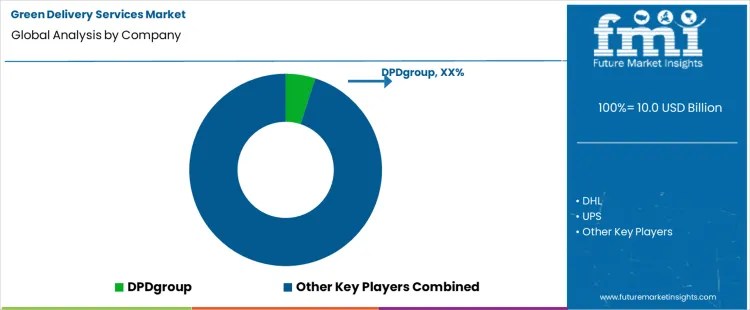
Competition in the green delivery services market centers on low-emission last-mile solutions, energy-efficient fleets, route optimization, and customer choice of eco-friendly options. DPDgroup positions its services with zero-emission delivery zones and electric van fleets, and its product materials emphasize carbon reporting and flexible delivery windows that appeal to urban shippers and retailers. DHL competes with a broad suite of eco-focused delivery services that integrate electric vehicles, cargo bikes, and optimized logistics software, marketed for reliable performance with reduced environmental impact across dense city networks. UPS and FedEx differentiate by combining fleet electrification with advanced routing algorithms that lower energy use per parcel, and their brochures highlight progress toward cleaner delivery options and digital tracking tools that help customers measure their footprint.
Global giants such as Amazon Logistics and Evri bring technology-enabled delivery platforms that allow customers to choose low-emission delivery slots, and their documentation stresses expanding electric van deployments and delivery network efficiencies. PostNL and La Poste/Colissimo offer urban micro-hubs and non-fossil vehicle corridors that enhance performance in crowded city centers, with product collateral highlighting integrated delivery solutions tailored to local regulations and consumer expectations. JD Logistics, SF Express, and other regional players compete by adopting eco-friendly vehicles and smart logistics platforms that improve energy use and delivery reliability in Asian markets. Across all vendors, materials emphasize fleet innovation, low-emission delivery options, route efficiency, and transparent performance metrics as key differentiators that help shippers and couriers meet evolving market demand for cleaner delivery choices.
Key Players in Green Delivery Services Market
- DPDgroup
- DHL
- UPS
- FedEx
- Amazon Logistics
- Evri
- PostNL
- La Poste/Colissimo
- JD Logistics
- SF Express
Scope of Report
| Attributes | Description |
|---|---|
| Quantitative Unit (2026) | USD Billion |
| Service Type | Parcel & Small Package, Grocery & Quick Commerce, B2B Urban Distribution, Other |
| Customer Segment | E-commerce Retailers, CPG & Grocery Chains, 3PLs, Other |
| Geography Type | Tier-1 Metro Cities, Tier-2 Cities, Suburban Rings |
| Regions Covered | Asia Pacific, Europe, North America, Latin America, Middle East & Africa |
| Countries Covered | China, Japan, South Korea, India, Australia & New Zealand, ASEAN, Germany, United Kingdom, France, Italy, Spain, Nordic, BENELUX, United States, Canada, Mexico, Brazil, Chile, Turkey, South Africa, Other GCC Countries |
| Key Companies Profiled | DPDgroup, DHL, UPS, FedEx, Amazon Logistics, Evri, PostNL, La Poste/Colissimo, JD Logistics, SF Express |
| Additional Attributes | Dollar sales by service type, customer segment, geography; regional CAGR and growth outlook for the green delivery services market. |
Green Delivery Services Market by Key Segments
Service Type
- Parcel & Small Package
- Grocery & Quick Commerce
- B2B Urban Distribution
- Other
Customer Segment
- E-commerce Retailers
- CPG & Grocery Chains
- 3PLs
- Other
Geography Type
- Tier-1 Metro Cities
- Tier-2 Cities
- Suburban Rings
Region
- Asia Pacific
- China
- Japan
- South Korea
- India
- Australia & New Zealand
- ASEAN
- Rest of Asia Pacific
- Europe
- Germany
- United Kingdom
- France
- Italy
- Spain
- Nordic
- BENELUX
- Rest of Europe
- North America
- United States
- Canada
- Mexico
- Latin America
- Brazil
- Chile
- Rest of Latin America
- Middle East & Africa
- Kingdom of Saudi Arabia
- Other GCC Countries
- Turkey
- South Africa
- Other African Union
- Rest of Middle East & Africa
Bibliography
- DPDgroup. (2023). DPDgroup sustainability initiatives and logistics solutions. DPDgroup.
- DHL. (2023). DHL green delivery services and carbon-neutral logistics solutions. DHL.
- FedEx. (2023). FedEx eco-friendly delivery and logistics solutions. FedEx.
- UPS. (2023). UPS green logistics: Low-emission vehicles and delivery solutions. UPS.
Frequently Asked Questions
How big is the green delivery services market in 2026?
The global green delivery services market is estimated to be valued at USD 10.0 billion in 2026.
What will be the size of green delivery services market in 2036?
The market size for the green delivery services market is projected to reach USD 22.8 billion by 2036.
How much will be the green delivery services market growth between 2026 and 2036?
The green delivery services market is expected to grow at a 8.6% CAGR between 2026 and 2036.
What are the key product types in the green delivery services market?
The key product types in green delivery services market are parcel & small package, grocery & quick commerce, b2b urban distribution and other.
Which customer segment segment to contribute significant share in the green delivery services market in 2026?
In terms of customer segment, e-commerce retailers segment to command 38.0% share in the green delivery services market in 2026.
Preview the report firsthand - request a free sample
Get SampleGet the brochure for pricing and purchase details.
Get PDFTable of Content
- Executive Summary
- Global Market Outlook
- Demand-side Trends
- Supply-side Trends
- Technology Roadmap Analysis
- Analysis and Recommendations
- Market Overview
- Market Coverage / Taxonomy
- Market Definition / Scope / Limitations
- Market Background
- Market Dynamics
- Drivers
- Restraints
- Opportunity
- Trends
- Scenario Forecast
- Demand in Optimistic Scenario
- Demand in Likely Scenario
- Demand in Conservative Scenario
- Opportunity Map Analysis
- Product Life Cycle Analysis
- Supply Chain Analysis
- Investment Feasibility Matrix
- Value Chain Analysis
- PESTLE and Porter’s Analysis
- Regulatory Landscape
- Regional Parent Market Outlook
- Production and Consumption Statistics
- Import and Export Statistics
- Market Dynamics
- Global Market Analysis 2021 to 2025 and Forecast, 2026 to 2036
- Historical Market Size Value (USD Million) Analysis, 2021 to 2025
- Current and Future Market Size Value (USD Million) Projections, 2026 to 2036
- Y-o-Y Growth Trend Analysis
- Absolute $ Opportunity Analysis
- Global Market Pricing Analysis 2021 to 2025 and Forecast 2026 to 2036
- Global Market Analysis 2021 to 2025 and Forecast 2026 to 2036, By Service Type
- Introduction / Key Findings
- Historical Market Size Value (USD Million) Analysis By Service Type , 2021 to 2025
- Current and Future Market Size Value (USD Million) Analysis and Forecast By Service Type , 2026 to 2036
- Parcel & Small Package
- Grocery & Quick Commerce
- B2B Urban Distribution
- Other
- Parcel & Small Package
- Y-o-Y Growth Trend Analysis By Service Type , 2021 to 2025
- Absolute $ Opportunity Analysis By Service Type , 2026 to 2036
- Global Market Analysis 2021 to 2025 and Forecast 2026 to 2036, By Customer Segment
- Introduction / Key Findings
- Historical Market Size Value (USD Million) Analysis By Customer Segment, 2021 to 2025
- Current and Future Market Size Value (USD Million) Analysis and Forecast By Customer Segment, 2026 to 2036
- E-commerce Retailers
- CPG & Grocery Chains
- 3PLs
- Other
- E-commerce Retailers
- Y-o-Y Growth Trend Analysis By Customer Segment, 2021 to 2025
- Absolute $ Opportunity Analysis By Customer Segment, 2026 to 2036
- Global Market Analysis 2021 to 2025 and Forecast 2026 to 2036, By Geography Type
- Introduction / Key Findings
- Historical Market Size Value (USD Million) Analysis By Geography Type, 2021 to 2025
- Current and Future Market Size Value (USD Million) Analysis and Forecast By Geography Type, 2026 to 2036
- Tier-1 Metro Cities
- Tier-2 Cities
- Suburban Rings
- Tier-1 Metro Cities
- Y-o-Y Growth Trend Analysis By Geography Type, 2021 to 2025
- Absolute $ Opportunity Analysis By Geography Type, 2026 to 2036
- Global Market Analysis 2021 to 2025 and Forecast 2026 to 2036, By Region
- Introduction
- Historical Market Size Value (USD Million) Analysis By Region, 2021 to 2025
- Current Market Size Value (USD Million) Analysis and Forecast By Region, 2026 to 2036
- North America
- Latin America
- Western Europe
- Eastern Europe
- East Asia
- South Asia and Pacific
- Middle East & Africa
- Market Attractiveness Analysis By Region
- North America Market Analysis 2021 to 2025 and Forecast 2026 to 2036, By Country
- Historical Market Size Value (USD Million) Trend Analysis By Market Taxonomy, 2021 to 2025
- Market Size Value (USD Million) Forecast By Market Taxonomy, 2026 to 2036
- By Country
- USA
- Canada
- Mexico
- By Service Type
- By Customer Segment
- By Geography Type
- By Country
- Market Attractiveness Analysis
- By Country
- By Service Type
- By Customer Segment
- By Geography Type
- Key Takeaways
- Latin America Market Analysis 2021 to 2025 and Forecast 2026 to 2036, By Country
- Historical Market Size Value (USD Million) Trend Analysis By Market Taxonomy, 2021 to 2025
- Market Size Value (USD Million) Forecast By Market Taxonomy, 2026 to 2036
- By Country
- Brazil
- Chile
- Rest of Latin America
- By Service Type
- By Customer Segment
- By Geography Type
- By Country
- Market Attractiveness Analysis
- By Country
- By Service Type
- By Customer Segment
- By Geography Type
- Key Takeaways
- Western Europe Market Analysis 2021 to 2025 and Forecast 2026 to 2036, By Country
- Historical Market Size Value (USD Million) Trend Analysis By Market Taxonomy, 2021 to 2025
- Market Size Value (USD Million) Forecast By Market Taxonomy, 2026 to 2036
- By Country
- Germany
- UK
- Italy
- Spain
- France
- Nordic
- BENELUX
- Rest of Western Europe
- By Service Type
- By Customer Segment
- By Geography Type
- By Country
- Market Attractiveness Analysis
- By Country
- By Service Type
- By Customer Segment
- By Geography Type
- Key Takeaways
- Eastern Europe Market Analysis 2021 to 2025 and Forecast 2026 to 2036, By Country
- Historical Market Size Value (USD Million) Trend Analysis By Market Taxonomy, 2021 to 2025
- Market Size Value (USD Million) Forecast By Market Taxonomy, 2026 to 2036
- By Country
- Russia
- Poland
- Hungary
- Balkan & Baltic
- Rest of Eastern Europe
- By Service Type
- By Customer Segment
- By Geography Type
- By Country
- Market Attractiveness Analysis
- By Country
- By Service Type
- By Customer Segment
- By Geography Type
- Key Takeaways
- East Asia Market Analysis 2021 to 2025 and Forecast 2026 to 2036, By Country
- Historical Market Size Value (USD Million) Trend Analysis By Market Taxonomy, 2021 to 2025
- Market Size Value (USD Million) Forecast By Market Taxonomy, 2026 to 2036
- By Country
- China
- Japan
- South Korea
- By Service Type
- By Customer Segment
- By Geography Type
- By Country
- Market Attractiveness Analysis
- By Country
- By Service Type
- By Customer Segment
- By Geography Type
- Key Takeaways
- South Asia and Pacific Market Analysis 2021 to 2025 and Forecast 2026 to 2036, By Country
- Historical Market Size Value (USD Million) Trend Analysis By Market Taxonomy, 2021 to 2025
- Market Size Value (USD Million) Forecast By Market Taxonomy, 2026 to 2036
- By Country
- India
- ASEAN
- Australia & New Zealand
- Rest of South Asia and Pacific
- By Service Type
- By Customer Segment
- By Geography Type
- By Country
- Market Attractiveness Analysis
- By Country
- By Service Type
- By Customer Segment
- By Geography Type
- Key Takeaways
- Middle East & Africa Market Analysis 2021 to 2025 and Forecast 2026 to 2036, By Country
- Historical Market Size Value (USD Million) Trend Analysis By Market Taxonomy, 2021 to 2025
- Market Size Value (USD Million) Forecast By Market Taxonomy, 2026 to 2036
- By Country
- Kingdom of Saudi Arabia
- Other GCC Countries
- Turkiye
- South Africa
- Other African Union
- Rest of Middle East & Africa
- By Service Type
- By Customer Segment
- By Geography Type
- By Country
- Market Attractiveness Analysis
- By Country
- By Service Type
- By Customer Segment
- By Geography Type
- Key Takeaways
- Key Countries Market Analysis
- USA
- Pricing Analysis
- Market Share Analysis, 2025
- By Service Type
- By Customer Segment
- By Geography Type
- Canada
- Pricing Analysis
- Market Share Analysis, 2025
- By Service Type
- By Customer Segment
- By Geography Type
- Mexico
- Pricing Analysis
- Market Share Analysis, 2025
- By Service Type
- By Customer Segment
- By Geography Type
- Brazil
- Pricing Analysis
- Market Share Analysis, 2025
- By Service Type
- By Customer Segment
- By Geography Type
- Chile
- Pricing Analysis
- Market Share Analysis, 2025
- By Service Type
- By Customer Segment
- By Geography Type
- Germany
- Pricing Analysis
- Market Share Analysis, 2025
- By Service Type
- By Customer Segment
- By Geography Type
- UK
- Pricing Analysis
- Market Share Analysis, 2025
- By Service Type
- By Customer Segment
- By Geography Type
- Italy
- Pricing Analysis
- Market Share Analysis, 2025
- By Service Type
- By Customer Segment
- By Geography Type
- Spain
- Pricing Analysis
- Market Share Analysis, 2025
- By Service Type
- By Customer Segment
- By Geography Type
- France
- Pricing Analysis
- Market Share Analysis, 2025
- By Service Type
- By Customer Segment
- By Geography Type
- India
- Pricing Analysis
- Market Share Analysis, 2025
- By Service Type
- By Customer Segment
- By Geography Type
- ASEAN
- Pricing Analysis
- Market Share Analysis, 2025
- By Service Type
- By Customer Segment
- By Geography Type
- Australia & New Zealand
- Pricing Analysis
- Market Share Analysis, 2025
- By Service Type
- By Customer Segment
- By Geography Type
- China
- Pricing Analysis
- Market Share Analysis, 2025
- By Service Type
- By Customer Segment
- By Geography Type
- Japan
- Pricing Analysis
- Market Share Analysis, 2025
- By Service Type
- By Customer Segment
- By Geography Type
- South Korea
- Pricing Analysis
- Market Share Analysis, 2025
- By Service Type
- By Customer Segment
- By Geography Type
- Russia
- Pricing Analysis
- Market Share Analysis, 2025
- By Service Type
- By Customer Segment
- By Geography Type
- Poland
- Pricing Analysis
- Market Share Analysis, 2025
- By Service Type
- By Customer Segment
- By Geography Type
- Hungary
- Pricing Analysis
- Market Share Analysis, 2025
- By Service Type
- By Customer Segment
- By Geography Type
- Kingdom of Saudi Arabia
- Pricing Analysis
- Market Share Analysis, 2025
- By Service Type
- By Customer Segment
- By Geography Type
- Turkiye
- Pricing Analysis
- Market Share Analysis, 2025
- By Service Type
- By Customer Segment
- By Geography Type
- South Africa
- Pricing Analysis
- Market Share Analysis, 2025
- By Service Type
- By Customer Segment
- By Geography Type
- USA
- Market Structure Analysis
- Competition Dashboard
- Competition Benchmarking
- Market Share Analysis of Top Players
- By Regional
- By Service Type
- By Customer Segment
- By Geography Type
- Competition Analysis
- Competition Deep Dive
- DPDgroup
- Overview
- Product Portfolio
- Profitability by Market Segments (Product/Age /Sales Channel/Region)
- Sales Footprint
- Strategy Overview
- Marketing Strategy
- Product Strategy
- Channel Strategy
- DHL
- UPS
- FedEx
- Amazon Logistics
- Evri
- PostNL
- La Poste/Colissimo
- JD Logistics
- SF Express
- DPDgroup
- Competition Deep Dive
- Assumptions & Acronyms Used
- Research Methodology


