

- Industry Size (2026)
- USD 29.58 Mn
- Forecast (2036)
- USD 38.61 Mn
- CAGR (2026 to 2036)
- 2.7%
Scrambled Egg Mix in Japan Market Size, Market Forecast and Outlook By FMI
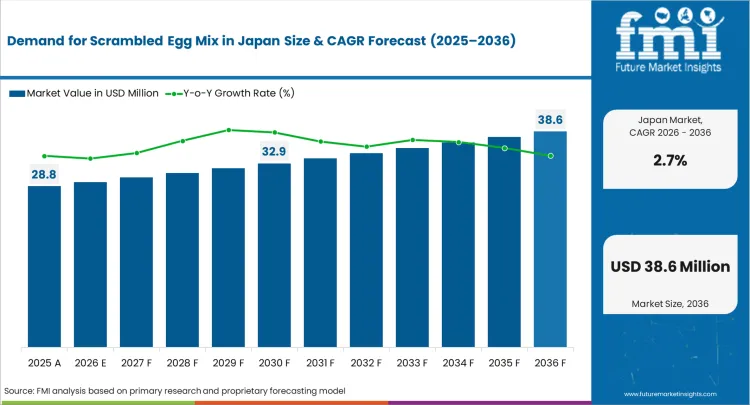
The scrambled egg mix in japan market was valued at USD 28.80 million in 2025, projected to reach USD 29.58 million in 2026, and is forecast to expand to USD 38.61 million by 2036 at a 2.7% CAGR. Sustained Japanese food service demand for convenient, shelf-stable egg preparation products and expanding convenience store breakfast menu offerings are maintaining steady growth in the Japan scrambled egg mix market. Food service operators and institutional kitchens rely on powdered egg mixes to deliver consistent egg dishes with reduced preparation time and simplified cold chain management.
Summary of Scrambled Egg Mix in Japan Market
- Market Snapshot
- The market is valued at USD 28.80 million in 2025 and is projected to reach USD 38.61 million by 2036.
- The industry is expected to grow at a 2.7% CAGR from 2026 to 2036, creating an incremental opportunity of USD 9.0 million.
- The market is a shelf-stable food service ingredient category where powder reconstitution quality, labor-saving convenience, and institutional procurement fit define competitive positioning.
- Demand and Growth Drivers
- Japanese food service labor shortage pressures are driving adoption of convenient reconstitutable egg products.
- Convenience store breakfast menu expansion creates new demand channels for standardized egg mix products.
- Institutional catering demand from schools, hospitals, and corporate cafeterias sustains bulk procurement volumes.
- Among key regions, Kyushu & Okinawa is at 3.4% CAGR, Kanto is at 3.1% CAGR, Kinki is at 2.7% CAGR, Chubu is at 2.4% CAGR, Tohoku is at 2.1% CAGR, Rest of Japan is at 2% CAGR.
- Product and Segment View
- The market covers powdered and liquid scrambled egg mix products for food service, retail, and institutional applications.
- Distribution spans supermarkets/hypermarkets (55% share), convenience stores, food service distributors, and online retail.
- Powder leads the Form segment with 70% share in 2026.
- Supermarket/Hypermarket leads the Sales Channel segment with 55% share in 2026.
- Geography and Competitive Outlook
- Kyushu & Okinawa leads growth at 3.4% CAGR, while Rest of Japan tracks at 2%.
- Kyushu and Okinawa lead growth through food service expansion, while Kanto anchors the largest metropolitan demand volume.
- Competition is shaped by Augason Farms, Sonstegard Foods Company, National Food Group, GCF Corporation, Nutriom OvaEasy.
Scrambled Egg Mix in Japan Market Key Takeaways
| Metric | Details |
|---|---|
| Industry Size (2026) | USD 29.58 million |
| Industry Value (2036) | USD 38.61 million |
| CAGR (2026 to 2036) | 2.7% |
Source: Future Market Insights, 2026
The Japan scrambled egg mix market is regulated by food safety standards under the Food Sanitation Act administered by MHLW and labelling requirements under the Food Labelling Act. Powder formats at 70% share dominate because they offer the longest shelf life and simplest storage for Japanese food service operations. FMI is of the opinion that the structural demand driver is the convergence of Japan's labor shortage in food service operations, the expansion of prepared breakfast offerings in convenience store chains, and institutional demand from schools, hospitals, and corporate cafeterias where egg preparation at scale requires standardized, pasteurized inputs. Supermarket/hypermarket distribution at 55% of sales reflects both consumer home-use and small food service procurement through retail channels.
All major regions reflect differentiated growth trajectories through 2036. Kyushu & Okinawa is projected at a 3.4% CAGR, Kanto is projected at a 3.1% CAGR, Kinki is projected at a 2.7% CAGR, Chubu is projected at a 2.4% CAGR, Tohoku is projected at a 2.1% CAGR, Rest of Japan is projected at a 2% CAGR. Kyushu and Okinawa lead at 3.4% CAGR, driven by regional food service expansion. Rest of Japan tracks at 2.0%, reflecting a mature market where growth derives from convenience-driven format adoption.
Scrambled Egg Mix in Japan Market Definition
The scrambled egg mix market in Japan encompasses processed egg products in powder and liquid concentrate formats designed for reconstitution into scrambled eggs. Products serve food service operations, convenience store prepared food programs, institutional kitchens, and retail consumers across Japanese regional markets.
Scrambled Egg Mix in Japan Market Inclusions
Market scope includes powdered and liquid scrambled egg mix products across all packaging formats with Japan-level and regional sizing for 2026 to 2036.
Scrambled Egg Mix in Japan Market Exclusions
The scope excludes fresh shell eggs, liquid pasteurized whole eggs not formulated as scrambled mix, and frozen pre-cooked tamagoyaki products.
Scrambled Egg Mix in Japan Market Research Methodology
- Primary Research: Analysts engaged with procurement directors, production managers, and supply chain leads across relevant companies to map purchasing specifications and volume trends.
- Desk Research: Data collection aggregated regulatory filings, trade association publications, statistical agency databases, and company annual reports to establish baseline parameters.
- Market-Sizing and Forecasting: Baseline values derive from a bottom-up aggregation of production volumes and trade flow data, applying region-specific consumption curves to project adoption velocity through 2036.
- Data Validation and Update Cycle: Projections are tested against publicly reported industry data and verified through cross-referencing with official statistical databases.
Why is the Demand for Scrambled Egg Mix in Japan Growing?
The demand for scrambled egg mix in Japan is growing as consumers and food-service operators increasingly look for convenient, high-protein, ready-to-use egg products. Busy urban lifestyles and hectic morning routines have spurred a shift toward instant breakfast and snack options, making scrambled egg mixes a practical choice that reduces preparation time while still delivering nutrition. In food-service and institutional kitchens such as hotels, cafes, and catering businesses the ability to prepare consistent quality scrambled eggs quickly furthers adoption of these mixes.
Evolving dietary patterns are also supporting growth. Japanese consumers are embracing diverse meal formats beyond traditional breakfasts, and scrambled egg mix fits well within fusion breakfasts, Western-style menus, and catering applications. As demand for flexible, ingredient-ready solutions rises, the appeal of egg mixes broadens across retail and food-service channels. Simultaneously, manufacturers are enhancing product formulations to provide improved taste, clean-label ingredients, and better shelf performance to align with health-conscious preferences.
Product innovation and improved supply-chain logistics play a role too. Reformulations with fewer additives, enriched nutrition profiles, and packaging that supports home kitchens and commercial use alike are making scrambled egg mixes more attractive. Food-service operators benefit from portion control and labor savings, while retailers cater to on-the-go consumers and small households. As these trends persist, the demand for scrambled egg mixes in Japan is expected to grow steadily through 2036.
What is the Segment-Wise Analysis of Demand for Scrambled Egg Mix in Japan?
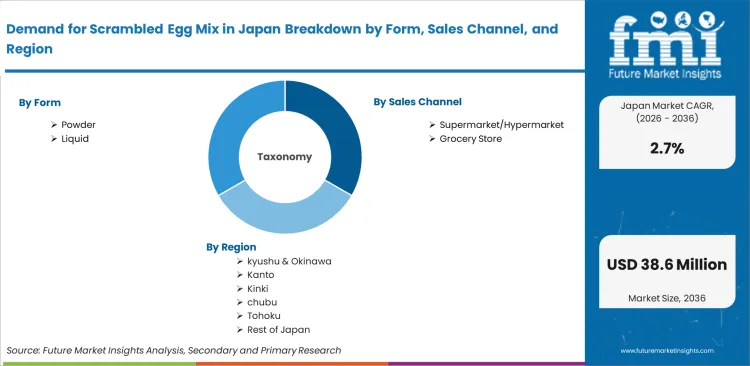
Demand for scrambled egg mix in Japan is segmented by form and sales channel. By form, demand is divided into powder and liquid, with powder holding the largest share. The demand is also segmented by sales channel, including supermarket/hypermarket, online retail, and grocery store. Regionally, demand is divided into Kanto, Kinki, Chubu, Kyushu & Okinawa, Tohoku, and the Rest of Japan.
Why Does Powder Hold the Largest Share in the Demand for Scrambled Egg Mix?
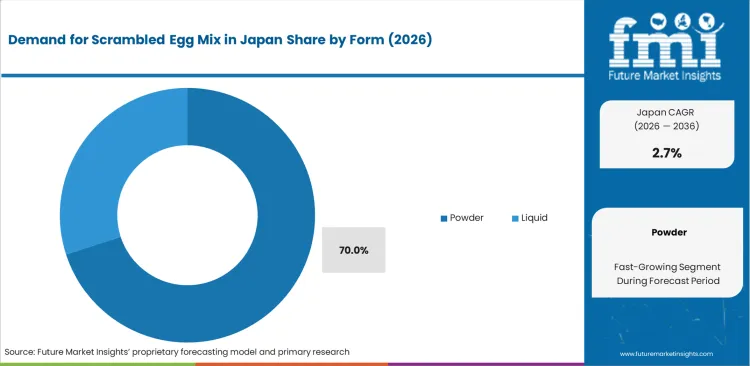
Powdered scrambled egg mix accounts for 70% of the demand in Japan. The preference for powder over liquid is driven by its longer shelf life, ease of storage, and convenience for consumers. Powdered mixes are also lighter and more cost-effective to transport, making them a popular choice for both manufacturers and consumers. Powdered mixes often offer better control over consistency and texture, which is important for consumers seeking the right quality when preparing scrambled eggs.
The demand for powdered scrambled egg mix is also influenced by its versatility in usage. It can be easily reconstituted and adjusted to meet different taste preferences, making it suitable for a wide range of culinary applications. As the demand for quick and easy meal solutions continues to rise, the popularity of powdered scrambled egg mix in Japan is expected to remain strong.
How Do Supermarkets/Hypermarkets Dominate the Sales Channel?
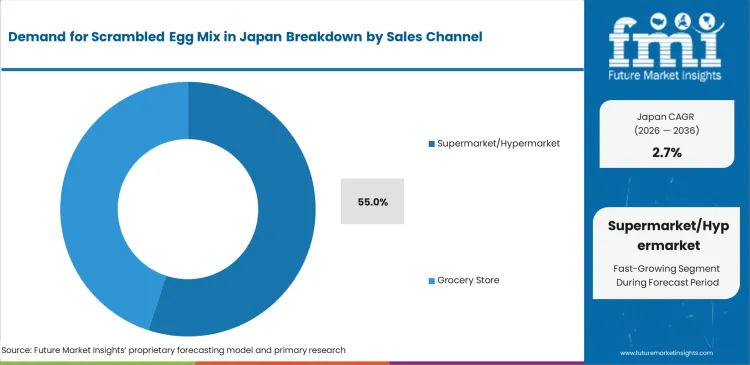
Supermarkets and hypermarkets account for 55% of the demand for scrambled egg mix in Japan. These large retail outlets offer convenience for consumers, with easy access to a wide variety of products, including scrambled egg mixes. The layout of supermarkets and hypermarkets allows consumers to quickly find and purchase scrambled egg mixes along with other breakfast or meal ingredients, making them a go-to shopping destination.
The dominance of supermarkets and hypermarkets is driven by their ability to stock large quantities of products and cater to a wide range of customers. These retailers often offer promotions and discounts, further encouraging consumer purchases. Many Japanese consumers prefer the tactile experience of shopping in physical stores, where they can inspect products before purchasing. As these retail formats continue to expand and offer convenience, they will maintain their leading position in the sales channel for scrambled egg mix.
What are the Key Trends, Drivers and Restraints in the Demand for Scrambled-Egg Mix in Japan?
Scrambled-egg mixes offer ready-to-cook or quick-prepare egg-based meals for breakfast, lunch or snack occasions. Key drivers include increasing uptake of Western-style breakfasts, growth of single-person households, and growing interest in high-protein foods and ready-meal convenience. A focus on health puts pressure on formulations to include natural ingredients, lower additives and improved nutrition. Restraints include strong competition from fresh eggs (which remain culturally central in Japan), consumer perception that mixes are less fresh or premium, and price sensitivity in certain segments.
Why is Demand for Scrambled Egg Mix Growing in Japan?
In Japan, demand for scrambled-egg mix is growing due to the increasing preference for convenient, time-saving meal solutions, particularly in urban areas where busy households and small kitchens prevail. The rise in single-person and smaller households, coupled with diversified breakfast habits, has led consumers to seek packaged mixes that offer quick and easy preparation. Western breakfast trends, combined with a growing focus on protein-rich diets, further support this demand. Foodservice channels, such as cafés and convenience stores, are adopting ready-to-use egg mixes to streamline operations, providing broader exposure and accessibility to consumers. The mix’s ability to deliver a quick, nutritious meal with minimal effort aligns with the fast-paced lifestyles of modern Japanese consumers, contributing to its growing popularity across retail and foodservice sectors.
How are Technological Innovations Driving Growth of Scrambled Egg Mix in Japan?
Technological innovations are driving growth in the scrambled-egg mix industry in Japan by improving both the formulation and packaging to meet local consumer preferences. Advances include the development of shelf-stable formats such as powdered or liquid mixes, which are convenient and easy to store. These mixes are being enhanced to better replicate the flavour and texture of fresh eggs, increasing their appeal. Health-conscious formulations, including lower sodium content, added protein, and clean-label ingredients, are gaining traction among consumers who prioritize wellness. Packaging innovations, such as single-serve pouches and resealable cartons, cater to convenience and portability. Enhanced distribution networks, including e-commerce platforms, are further expanding the availability of these mixes in both traditional retail stores and online, making them more accessible to Japanese consumers looking for quick, healthy meal options.
What are the Key Challenges Limiting Adoption of Scrambled Egg Mix in Japan?
Despite its growth, the adoption of scrambled-egg mixes in Japan faces several challenges. A significant hurdle is the strong preference for fresh eggs, with many Japanese consumers still believing that fresh eggs offer superior taste, quality, and freshness compared to mixes. This perception makes it difficult for packaged mixes to justify their premium prices. Fresh eggs and other convenience food options, such as instant noodles, pose stiff competition in terms of price and convenience. Regulatory and labeling requirements related to food additives and clean-label demands also add complexity and costs to production. Many households still favor traditional cooking methods, such as cracking eggs and cooking them fresh, limiting the broader uptake of pre-prepared mixes, especially in more conservative segments. These factors contribute to slower adoption, despite growing demand.
What is the Regional Demand Outlook for Scrambled Egg Mix in Japan?
.webp "Top Country Growth Comparison Demand For Scrambled Egg Mix In Japan Cagr (2026 2036)")
| Region | CAGR (%) |
|---|---|
| Kyushu & Okinawa | 3.4% |
| Kanto | 3.1% |
| Kinki | 2.7% |
| Chubu | 2.4% |
| Tohoku | 2.1% |
| Rest of Japan | 2.0% |
Source: FMI analysis based on primary research and proprietary forecasting model
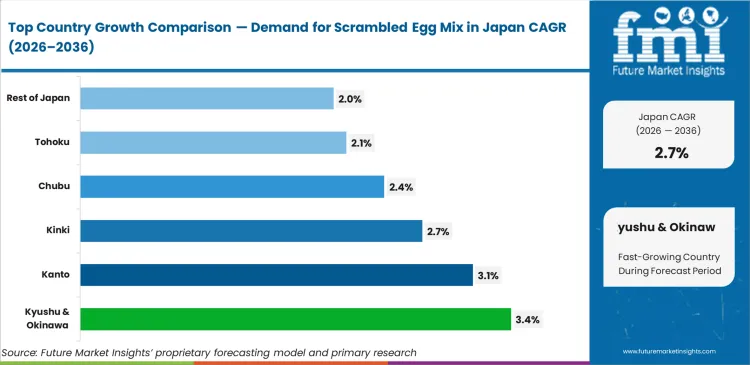
The demand for scrambled egg mix in Japan is growing steadily across all regions, with Kyushu & Okinawa leading at a 3.4% CAGR. This growth is driven by the increasing demand for convenient, ready-to-use food products. The Kanto region follows with a 3.1% CAGR, fueled by urbanization and a focus on convenience food. The Kinki region shows a 2.7% CAGR, influenced by its strong food manufacturing and distribution sector. Chubu experiences a 2.4% CAGR, supported by the demand for ready-to-eat food products. Tohoku and the Rest of Japan experience more moderate growth at 2.1% and 2.0%, respectively, due to a rising preference for easy-to-prepare meals and a growing trend of convenience foods.
Why is Growth Strongest in Kyushu & Okinawa for Scrambled Egg Mix?
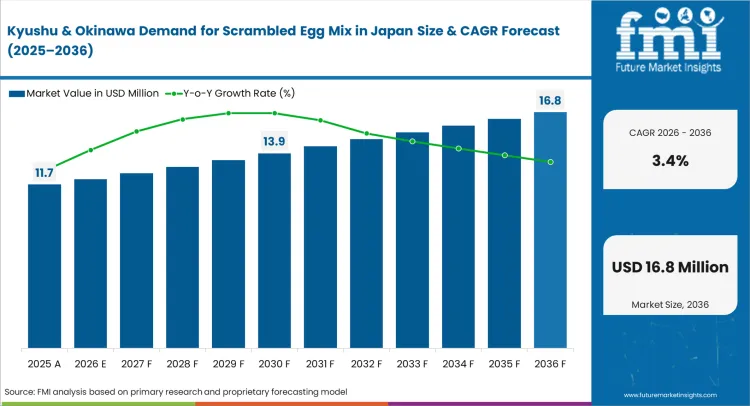
Kyushu & Okinawa is experiencing the highest demand for scrambled egg mix in Japan, with a 3.4% CAGR. This growth is driven by the region’s increasing focus on food convenience and innovation. In cities like Fukuoka, there is a rising preference for quick, easy-to-prepare meals, particularly among busy households and the elderly population. Scrambled egg mixes are a popular option for those seeking nutritious and quick meal solutions.
In Okinawa, where the aging population is growing, prepared food products such as scrambled egg mixes are becoming more popular due to their convenience and ease of preparation. As local food manufacturers focus on providing products that meet the needs of time-starved consumers, scrambled egg mixes are becoming an essential part of daily life. The region’s strong culinary culture, coupled with a growing interest in easy meal solutions, is expected to withstand the demand for scrambled egg mix, making it the leading region for growth in Japan.
How is Growth in Kanto Influenced for Scrambled Egg Mix?
Kanto is experiencing strong demand growth for scrambled egg mix, with a 3.1% CAGR. The region, home to Tokyo and Yokohama, has a large urban population with fast-paced lifestyles, driving the demand for convenient meal solutions. In densely populated cities, many consumers prefer easy-to-prepare products like scrambled egg mix due to their ability to save time without sacrificing nutrition.
The rise in dual-income households and the increasing number of working professionals in Kanto have further fueled this trend. Scrambled egg mix provides an ideal solution for busy individuals who need a quick and nutritious breakfast or meal. The region’s strong retail infrastructure, including supermarkets and convenience stores, ensures that these products are widely available. With the ongoing focus on convenience, health, and efficiency in food preparation, the demand for scrambled egg mixes in Kanto will continue to rise steadily, making it one of the most important regions for growth.
What is Driving Growth in Kinki for Scrambled Egg Mix?
Kinki, which includes Osaka and Kyoto, is seeing steady demand growth for scrambled egg mix, with a 2.7% CAGR. The region’s growing preference for convenience food products, particularly in urban areas, is one of the primary factors driving this demand. In cities like Osaka, where fast-paced lifestyles are common, there is a rising need for quick and easy meal solutions, making scrambled egg mix a popular choice.
The region’s strong food manufacturing base contributes to the increased availability of scrambled egg mixes, particularly in supermarkets and convenience stores. As consumer preferences shift towards more practical and ready-to-prepare food options, scrambled egg mixes are becoming a staple in many households. The region’s focus on providing healthy yet convenient food choices for busy consumers ensures that the demand for scrambled egg mixes will continue to grow in the coming years. With a growing awareness of the need for balanced, easy meals, Kinki is expected to see steady growth in the category.
How is Growth in Chubu Being Influenced for Scrambled Egg Mix?
Chubu is experiencing moderate growth in demand for scrambled egg mix, with a 2.4% CAGR. The region’s food industry, particularly in cities like Nagoya, is increasingly adopting convenience food products due to changing consumer habits. As more consumers seek easy and time-saving meal solutions, scrambled egg mix has become an appealing option for busy families, professionals, and the elderly population.
Chubu’s strong agricultural sector, which produces fresh eggs, is also contributing to the demand for high-quality scrambled egg mixes. As local food manufacturers emphasize the use of fresh, locally sourced ingredients, scrambled egg mixes are gaining popularity in households and food service establishments alike. With the ongoing shift toward faster meal preparation and the growing demand for nutritious, convenient options, Chubu is expected to see continued growth in the scrambled egg mix segment. The region’s focus on improving food convenience and catering to consumer needs will further support this demand.
What is Driving Growth in Tohoku for Scrambled Egg Mix?
Tohoku is seeing moderate growth in demand for scrambled egg mix, with a 2.1% CAGR. This growth is largely influenced by the region’s shift toward convenience foods, particularly as busy lifestyles and an aging population increase the need for easy-to-prepare meals. As rural areas modernize their food industries, scrambled egg mixes are becoming more popular as an easy, nutritious option for consumers looking for quick meal solutions.
Tohoku’s expanding retail sector, along with the growing number of food outlets offering ready-to-prepare products, supports the increasing availability and adoption of scrambled egg mixes. The region’s focus on food convenience and improving access to modern food products is driving steady growth in the category. As consumer preferences evolve and the demand for quick, ready-to-eat meals increases, Tohoku is expected to see continued demand for scrambled egg mix. This trend will be constant as local manufacturers innovate to meet the needs of time-conscious consumers.
How is Growth in the Rest of Japan Being Supported for Scrambled Egg Mix?
The Rest of Japan is experiencing moderate growth in demand for scrambled egg mix, with a 2.0% CAGR. This growth is mainly driven by the increasing demand for convenience foods in smaller towns and rural areas, where busy lifestyles are becoming more common, particularly among the elderly. Scrambled egg mix offers a quick, nutritious meal option for households looking for easy food solutions.
Although the adoption of scrambled egg mix is slower in these areas compared to urban centers, the growing availability of such products in local supermarkets and convenience stores is supporting steady demand. As the population ages and the demand for ready-to-cook meal options increases, products like scrambled egg mix are becoming more popular. The Rest of Japan’s focus on modernizing food access and providing easier meal preparation options will continue to support steady growth in the scrambled egg mix category, albeit at a slower pace compared to more urbanized regions.
What is the Competitive Landscape of Japan Scrambled Egg Mix Demand?
Demand for scrambled egg mix in Japan is steadily growing as consumers increasingly prioritize convenience, nutrition, and speed in meal preparation. With busier lifestyles and a rising number of single-person households, ready-to-use breakfast options like scrambled egg mixes appeal to both individual consumers and foodservice providers. These mixes often available in powdered or liquid formats cater to quick cooking, consistent texture, and high protein content, aligning with Japan’s food culture that values efficiency and quality.
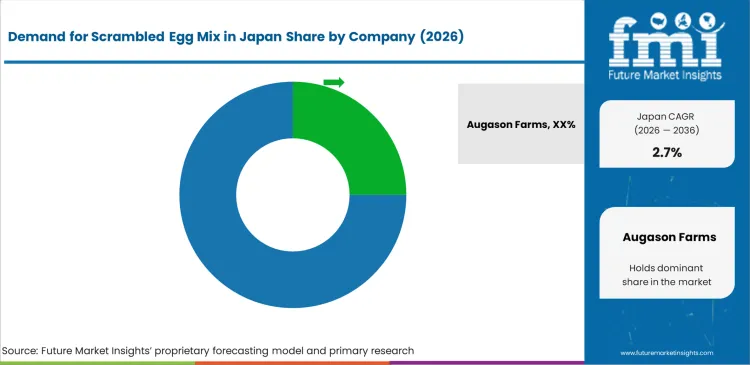
In the Japanese landscape, Augason-Farms holds an estimated 25.0% share, highlighting its strong footprint in supplying shelf-stable scrambled egg mix products. Other key suppliers include Sonstegard-Foods-Company, National-Food-Group, GCF-Corporation, and Nutriom-(OvaEasy), each offering variations in format, packaging, and nutritional profiles tailored for Japanese households, food-service menus, and prepared-meal solutions.
Key drivers of demand include the increasing penetration of western-style breakfast habits, growth in quick-service restaurants and convenience stores offering ready-to-eat meals, and the rising interest in high-protein diets and functional food solutions. Innovation in food processing technology such as freeze-dried mixes and advanced packaging supports the adoption of scrambled egg mixes. While challenges like taste expectations and premium pricing compared to fresh eggs remain, the overall outlook for scrambled egg mix demand in Japan remains favorable as convenience and nutrition continue to shape breakfast trends.
Key Players in Japan Scrambled Egg Mix Demand
- Augason Farms
- Sonstegard Foods Company
- National Food Group
- GCF Corporation
- Nutriom OvaEasy
Scope of the Report
| Metric | Value |
|---|---|
| Quantitative Units | USD 29.58 million to USD 38.61 million, at a CAGR of 2.7% |
| Market Definition | The scrambled egg mix market in Japan encompasses processed egg products in powder and liquid concentrate formats designed for reconstitution into scrambled eggs. Products serve food service operation... |
| Segmentation | Form: Powder, Liquid; Sales Channel: Supermarket/Hypermarket, Grocery Store |
| Regions Covered | Japan (Kanto, Kinki, Chubu, Kyushu & Okinawa, Tohoku) |
| Areas Covered | Kyushu & Okinawa, Kanto, Kinki, Chubu, Tohoku, Rest of Japan |
| Key Companies Profiled | Augason Farms, Sonstegard Foods Company, National Food Group, GCF Corporation, Nutriom OvaEasy |
| Forecast Period | 2026 to 2036 |
| Approach | Hybrid bottom-up modeling using production volume data, trade flow analysis, and primary research validation |
Japan Scrambled Egg Mix Demand by Key Segments
Form
- Powder
- Liquid
Sales Channel
- Supermarket/Hypermarket
- Grocery Store
Region
- Kyushu & Okinawa
- Kanto
- Kinki
- Chubu
- Tohoku
- Rest of Japan
Bibliography
- 1. Ministry of Health, Labour and Welfare, Japan. (2024). Food Sanitation Act: Standards for processed egg products. MHLW.
- 2. Consumer Affairs Agency, Japan. (2024). Food Labelling Act: Implementation guidelines. CAA.
- 3. Ministry of Agriculture, Forestry and Fisheries, Japan. (2025). Egg production and processing statistics. MAFF.
- 4. Japan External Trade Organization. (2024). Processed food market trends. JETRO.
- 5. Food and Agriculture Organization of the United Nations. (2024). Global egg production and processing statistics. FAO.
This bibliography is provided for reader reference. The full Future Market Insights report contains the complete reference list with primary research documentation.
Frequently Asked Questions
How large is the demand for Scrambled Egg Mix in Japan in the market in 2026?
Demand for scrambled egg mix in japan is estimated to be valued at USD 29.58 million in 2026.
What will be the market size of Scrambled Egg Mix in Japan by 2036?
Market size for scrambled egg mix in japan is projected to reach USD 38.61 million by 2036.
What is the expected demand growth for Scrambled Egg Mix in Japan between 2026 and 2036?
Demand for scrambled egg mix in japan is expected to grow at a CAGR of 2.7% between 2026 and 2036.
Which Form is poised to lead sales by 2026?
Powder accounts for 70% share in 2026.
How is Supermarket/Hypermarket positioned in scrambled egg mix in japan adoption in 2026?
Supermarket/Hypermarket holds 55% of the Sales Channel segment share in 2026.
Which region is the fastest-growing market?
Kyushu & Okinawa is projected to grow at a CAGR of 3.4% during 2026 to 2036.
What is this market mainly used for?
The scrambled egg mix market in Japan encompasses processed egg products in powder and liquid concentrate formats designed for reconstitution into scrambled eggs. Products serve food service operations, convenience store prepared food programs, institutional kitchens, and retail consumers across Japanese regional markets.
How does FMI build and validate this forecast?
Forecasting models apply a bottom-up methodology starting with production volume data and cross-validate projections against publicly reported industry statistics and primary research inputs.
Preview the report firsthand - request a free sample
Get SampleGet the brochure for pricing and purchase details.
Get PDFTable of Content
- Global Market Outlook
- Demand-side Trends
- Supply-side Trends
- Analysis and Recommendations
- Market Overview
- Market Coverage / Taxonomy
- Market Definition / Scope / Limitations
- Research Methodology
- Chapter Orientation
- Analytical Lens and Working Hypotheses
- Market Structure, Signals, and Trend Drivers
- Market Sizing, Forecasting, and Opportunity Mapping
- Research Design and Evidence Framework
- Desk Research Programme (Secondary Evidence)
- Company Annual and Sustainability Reports
- Peer-reviewed Journals and Academic Literature
- Corporate Websites, Product Literature, and Technical Notes
- Earnings Decks and Investor Briefings
- Statutory Filings and Regulatory Disclosures
- Technical White Papers and Standards Notes
- Trade Journals, Industry Magazines, and Analyst Briefs
- Conference Proceedings, Webinars, and Seminar Materials
- Government Statistics Portals and Public Data Releases
- Press Releases and Reputable Media Coverage
- Specialist Newsletters and Curated Briefings
- Sector Databases and Reference Repositories
- FMI Internal Proprietary Databases and Historical Market Datasets
- Subscription Datasets and Paid Sources
- Social Channels, Communities, and Digital Listening Inputs
- Additional Desk Sources
- Expert Input and Fieldwork (Primary Evidence)
- Primary Modes
- Qualitative Interviews and Expert Elicitation
- Quantitative Surveys and Structured Data Capture
- Blended Approach
- Why Primary Evidence is Used
- Field Techniques
- Interviews
- Surveys
- Focus Groups
- Observational and In-context Research
- Social and Community Interactions
- Stakeholder Universe Engaged
- C-suite Leaders
- Board Members
- Presidents and Vice Presidents
- R&D and Innovation Heads
- Technical Specialists
- Domain Subject-matter Experts
- Scientists
- Physicians and Other Healthcare Professionals
- Governance, Ethics, and Data Stewardship
- Research Ethics
- Data Integrity and Handling
- Primary Modes
- Tooling, Models, and Reference Databases
- Desk Research Programme (Secondary Evidence)
- Data Engineering and Model Build
- Data Acquisition and Ingestion
- Cleaning, Normalisation, and Verification
- Synthesis, Triangulation, and Analysis
- Quality Assurance and Audit Trail
- Market Background
- Market Dynamics
- Drivers
- Restraints
- Opportunity
- Trends
- Scenario Forecast
- Demand in Optimistic Scenario
- Demand in Likely Scenario
- Demand in Conservative Scenario
- Opportunity Map Analysis
- Product Life Cycle Analysis
- Supply Chain Analysis
- Investment Feasibility Matrix
- Value Chain Analysis
- PESTLE and Porter’s Analysis
- Regulatory Landscape
- Regional Parent Market Outlook
- Production and Consumption Statistics
- Import and Export Statistics
- Market Dynamics
- Global Market Analysis 2021 to 2025 and Forecast, 2026 to 2036
- Historical Market Size Value (USD Million) Analysis, 2021 to 2025
- Current and Future Market Size Value (USD Million) Projections, 2026 to 2036
- Y-o-Y Growth Trend Analysis
- Absolute $ Opportunity Analysis
- Global Market Pricing Analysis 2021 to 2025 and Forecast 2026 to 2036
- Global Market Analysis 2021 to 2025 and Forecast 2026 to 2036, By Form
- Introduction / Key Findings
- Historical Market Size Value (USD Million) Analysis By Form , 2021 to 2025
- Current and Future Market Size Value (USD Million) Analysis and Forecast By Form , 2026 to 2036
- Powder
- Liquid
- Powder
- Y-o-Y Growth Trend Analysis By Form , 2021 to 2025
- Absolute $ Opportunity Analysis By Form , 2026 to 2036
- Global Market Analysis 2021 to 2025 and Forecast 2026 to 2036, By Sales Channel
- Introduction / Key Findings
- Historical Market Size Value (USD Million) Analysis By Sales Channel, 2021 to 2025
- Current and Future Market Size Value (USD Million) Analysis and Forecast By Sales Channel, 2026 to 2036
- Supermarket/Hypermarket
- Grocery Store
- Supermarket/Hypermarket
- Y-o-Y Growth Trend Analysis By Sales Channel, 2021 to 2025
- Absolute $ Opportunity Analysis By Sales Channel, 2026 to 2036
- Global Market Analysis 2021 to 2025 and Forecast 2026 to 2036, By Region
- Introduction
- Historical Market Size Value (USD Million) Analysis By Region, 2021 to 2025
- Current Market Size Value (USD Million) Analysis and Forecast By Region, 2026 to 2036
- North America
- Latin America
- Western Europe
- Eastern Europe
- East Asia
- South Asia and Pacific
- Middle East & Africa
- Market Attractiveness Analysis By Region
- North America Market Analysis 2021 to 2025 and Forecast 2026 to 2036, By Country
- Historical Market Size Value (USD Million) Trend Analysis By Market Taxonomy, 2021 to 2025
- Market Size Value (USD Million) Forecast By Market Taxonomy, 2026 to 2036
- By Country
- USA
- Canada
- Mexico
- By Form
- By Sales Channel
- By Country
- Market Attractiveness Analysis
- By Country
- By Form
- By Sales Channel
- Key Takeaways
- Latin America Market Analysis 2021 to 2025 and Forecast 2026 to 2036, By Country
- Historical Market Size Value (USD Million) Trend Analysis By Market Taxonomy, 2021 to 2025
- Market Size Value (USD Million) Forecast By Market Taxonomy, 2026 to 2036
- By Country
- Brazil
- Chile
- Rest of Latin America
- By Form
- By Sales Channel
- By Country
- Market Attractiveness Analysis
- By Country
- By Form
- By Sales Channel
- Key Takeaways
- Western Europe Market Analysis 2021 to 2025 and Forecast 2026 to 2036, By Country
- Historical Market Size Value (USD Million) Trend Analysis By Market Taxonomy, 2021 to 2025
- Market Size Value (USD Million) Forecast By Market Taxonomy, 2026 to 2036
- By Country
- Germany
- UK
- Italy
- Spain
- France
- Nordic
- BENELUX
- Rest of Western Europe
- By Form
- By Sales Channel
- By Country
- Market Attractiveness Analysis
- By Country
- By Form
- By Sales Channel
- Key Takeaways
- Eastern Europe Market Analysis 2021 to 2025 and Forecast 2026 to 2036, By Country
- Historical Market Size Value (USD Million) Trend Analysis By Market Taxonomy, 2021 to 2025
- Market Size Value (USD Million) Forecast By Market Taxonomy, 2026 to 2036
- By Country
- Russia
- Poland
- Hungary
- Balkan & Baltic
- Rest of Eastern Europe
- By Form
- By Sales Channel
- By Country
- Market Attractiveness Analysis
- By Country
- By Form
- By Sales Channel
- Key Takeaways
- East Asia Market Analysis 2021 to 2025 and Forecast 2026 to 2036, By Country
- Historical Market Size Value (USD Million) Trend Analysis By Market Taxonomy, 2021 to 2025
- Market Size Value (USD Million) Forecast By Market Taxonomy, 2026 to 2036
- By Country
- China
- Japan
- South Korea
- By Form
- By Sales Channel
- By Country
- Market Attractiveness Analysis
- By Country
- By Form
- By Sales Channel
- Key Takeaways
- South Asia and Pacific Market Analysis 2021 to 2025 and Forecast 2026 to 2036, By Country
- Historical Market Size Value (USD Million) Trend Analysis By Market Taxonomy, 2021 to 2025
- Market Size Value (USD Million) Forecast By Market Taxonomy, 2026 to 2036
- By Country
- India
- ASEAN
- Australia & New Zealand
- Rest of South Asia and Pacific
- By Form
- By Sales Channel
- By Country
- Market Attractiveness Analysis
- By Country
- By Form
- By Sales Channel
- Key Takeaways
- Middle East & Africa Market Analysis 2021 to 2025 and Forecast 2026 to 2036, By Country
- Historical Market Size Value (USD Million) Trend Analysis By Market Taxonomy, 2021 to 2025
- Market Size Value (USD Million) Forecast By Market Taxonomy, 2026 to 2036
- By Country
- Kingdom of Saudi Arabia
- Other GCC Countries
- Turkiye
- South Africa
- Other African Union
- Rest of Middle East & Africa
- By Form
- By Sales Channel
- By Country
- Market Attractiveness Analysis
- By Country
- By Form
- By Sales Channel
- Key Takeaways
- Key Countries Market Analysis
- USA
- Pricing Analysis
- Market Share Analysis, 2025
- By Form
- By Sales Channel
- Canada
- Pricing Analysis
- Market Share Analysis, 2025
- By Form
- By Sales Channel
- Mexico
- Pricing Analysis
- Market Share Analysis, 2025
- By Form
- By Sales Channel
- Brazil
- Pricing Analysis
- Market Share Analysis, 2025
- By Form
- By Sales Channel
- Chile
- Pricing Analysis
- Market Share Analysis, 2025
- By Form
- By Sales Channel
- Germany
- Pricing Analysis
- Market Share Analysis, 2025
- By Form
- By Sales Channel
- UK
- Pricing Analysis
- Market Share Analysis, 2025
- By Form
- By Sales Channel
- Italy
- Pricing Analysis
- Market Share Analysis, 2025
- By Form
- By Sales Channel
- Spain
- Pricing Analysis
- Market Share Analysis, 2025
- By Form
- By Sales Channel
- France
- Pricing Analysis
- Market Share Analysis, 2025
- By Form
- By Sales Channel
- India
- Pricing Analysis
- Market Share Analysis, 2025
- By Form
- By Sales Channel
- ASEAN
- Pricing Analysis
- Market Share Analysis, 2025
- By Form
- By Sales Channel
- Australia & New Zealand
- Pricing Analysis
- Market Share Analysis, 2025
- By Form
- By Sales Channel
- China
- Pricing Analysis
- Market Share Analysis, 2025
- By Form
- By Sales Channel
- Japan
- Pricing Analysis
- Market Share Analysis, 2025
- By Form
- By Sales Channel
- South Korea
- Pricing Analysis
- Market Share Analysis, 2025
- By Form
- By Sales Channel
- Russia
- Pricing Analysis
- Market Share Analysis, 2025
- By Form
- By Sales Channel
- Poland
- Pricing Analysis
- Market Share Analysis, 2025
- By Form
- By Sales Channel
- Hungary
- Pricing Analysis
- Market Share Analysis, 2025
- By Form
- By Sales Channel
- Kingdom of Saudi Arabia
- Pricing Analysis
- Market Share Analysis, 2025
- By Form
- By Sales Channel
- Turkiye
- Pricing Analysis
- Market Share Analysis, 2025
- By Form
- By Sales Channel
- South Africa
- Pricing Analysis
- Market Share Analysis, 2025
- By Form
- By Sales Channel
- USA
- Market Structure Analysis
- Competition Dashboard
- Competition Benchmarking
- Market Share Analysis of Top Players
- By Regional
- By Form
- By Sales Channel
- Competition Analysis
- Competition Deep Dive
- Augason Farms
- Overview
- Product Portfolio
- Profitability by Market Segments (Product/Age /Sales Channel/Region)
- Sales Footprint
- Strategy Overview
- Marketing Strategy
- Product Strategy
- Channel Strategy
- Sonstegard Foods Company
- National Food Group
- GCF Corporation
- Nutriom OvaEasy
- Augason Farms
- Competition Deep Dive
- Assumptions & Acronyms Used


