

- Industry Size (2026)
- USD 6.3 Bn
- Forecast (2036)
- USD 14.5 Bn
- CAGR (2026 to 2036)
- 8.70%
Long-Haul Sustainable Composite Wings Market Forecast and Outlook 2026 to 2036
The long-haul sustainable composite wings market is likely to be valued at USD 6.3 billion in 2026 and is projected to reach USD 14.5 billion by 2036, reflecting a CAGR of 8.7%. Cost structures are driven by specialized materials, precision manufacturing, and rigorous quality assurance. Suppliers capable of delivering certified, high-performance wings maintain strong pricing authority. Margin concentration is highest among firms that combine engineering, testing, and certification services, capturing value from validated performance rather than sheer output. Smaller producers face constraints in entering high-volume programs due to investment intensity and compliance requirements.
Revenue is influenced by alignment with major long-haul aircraft programs and fleet replacement cycles. Regional adoption depends on airline procurement strategies, aircraft platform compatibility, and regulatory compliance. Operators providing proprietary composite technologies with multi-aircraft certification and proven operational reliability achieve higher margins. Fragmentation persists among smaller or regional suppliers, while leading firms secure concentrated value through production control, integration with OEM programs, and verified performance rather than volume alone.
Quick Stats of the Long-Haul Sustainable Composite Wings Market
- Long-Haul Sustainable Composite Wings Market Value (2026): USD 6.3 billion
- Long-Haul Sustainable Composite Wings Forecast Value (2036): USD 14.5 billion
- Long-Haul Sustainable Composite Wings Forecast CAGR 2026 to 2036: 8.7%
- Leading Material Type in Long-Haul Sustainable Composite Wings Market: Carbon Fiber Reinforced Polymer (CFRP) (62 % share)
- Key Growth Regions in Long-Haul Sustainable Composite Wings Market: China, USA, France, Germany, Japa
- Top Players in Long-Haul Sustainable Composite Wings Market: The Boeing Company (Composite Wings Unit), Airbus S.A.S., GKN Aerospace, Toray Industries, Inc., Hexcel Corporation
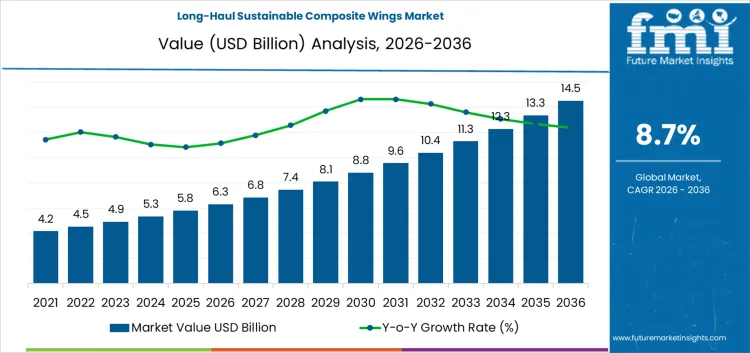
What is the Growth Forecast for Long-Haul Sustainable Composite Wings Market through 2036?
Between 2026 and 2031, the long-haul sustainable composite wings market is projected to grow from USD 6.3 billion to USD 8.7 billion, generating an absolute increase of USD 2.4 billion and reflecting a CAGR of 8.7%. Growth is driven by adoption of carbon fiber reinforced polymers (CFRP), thermoplastic composites, and hybrid fiber composites in wide-body, narrow-body extended range, and freighter aircraft. Commercial aircraft OEMs, MRO services, and Tier-1 suppliers are primary end users. Innovation in lightweight and high-strength materials supports performance, fuel efficiency, and reduced emissions, while value capture favors suppliers delivering certified, durable composites.
From 2031 to 2036, the market is expected to expand from USD 8.7 billion to USD 14.5 billion, adding USD 6 billion. Growth is supported by fleet expansion, retrofit programs, and broader adoption of advanced sustainable matrix composites. Market drivers include rising demand for fuel-efficient, lightweight long-haul aircraft, and regulatory focus on emissions reduction. Competitive advantage favors suppliers with validated composite technologies, OEM collaboration, and scalable production capabilities. Leading companies include The Boeing Company (Composite Wings Unit), Airbus S.A.S., GKN Aerospace, Toray Industries, Inc., and Hexcel Corporation.
Long Haul Sustainable Composite Wings Market Key Takeaways
| Metric | Value |
|---|---|
| Market Value (2026) | USD 6.3 billion |
| Forecast Value (2036) | USD 14.5 billion |
| Forecast CAGR 2026 to 2036 | 8.70% |
What Is Driving Demand for Long-Haul Composite Wings?
Long-haul composite wings are increasingly adopted to reduce aircraft weight, improve fuel efficiency, and lower carbon emissions in commercial aviation. Historically, wings were constructed primarily from aluminum alloys, which limited design flexibility and weight reduction potential. Modern composite wings use carbon fiber reinforced polymers, hybrid composites, and advanced resin systems to achieve high strength-to-weight ratios, corrosion resistance, and structural durability. Aircraft OEMs, airlines, and maintenance providers prioritize aerodynamic performance, manufacturability, and compliance with aviation safety regulations. Early adoption focused on long-range and high-capacity aircraft, while current demand spans next-generation wide-body fleets, driven by fuel cost reduction, efficiency goals, and environmental compliance. Material integrity, assembly precision, and lifecycle performance influence supplier and design choices.
Rising fuel costs, emission reduction mandates, and demand for operational efficiency are shaping market growth for composite wings. Compared with traditional metallic wings, modern composites offer weight savings, fatigue resistance, and the ability to integrate complex aerodynamic features. Cost considerations include raw material sourcing, fabrication technology, and quality assurance, concentrating margins among suppliers capable of delivering high-performance, certified wing structures. Airlines and aircraft manufacturers adopt composite wings to enhance range, reduce operational costs, and meet environmental standards. By 2036, long-haul composite wings are expected to become standard in commercial aviation, supporting fuel efficiency, carbon reduction, and advanced aircraft performance.
What Factors Are Shaping the Demand for Long-Haul Sustainable Composite Wings in Terms of Material Type and Aircraft Type?
The demand for long-haul sustainable composite wings is segmented by material type and aircraft type. Material types include carbon fiber reinforced polymer (CFRP), thermoplastic composites, hybrid fiber composites, and other sustainable matrix composites. Aircraft types cover wide-body long-haul jets, narrow-body extended range aircraft, freighters, and long-range business jets. Adoption is influenced by weight reduction, fuel efficiency, and structural performance. Uptake is driven by environmental regulations, operational efficiency, and lifecycle cost reduction. Material type and aircraft selection depend on performance requirements, aerodynamics, and maintenance schedules, ensuring durable, lightweight, and efficient wing structures for long-haul aviation.
Why Is Carbon Fiber Reinforced Polymer (CFRP) Leading the Material Type Segment in Long-Haul Composite Wings?
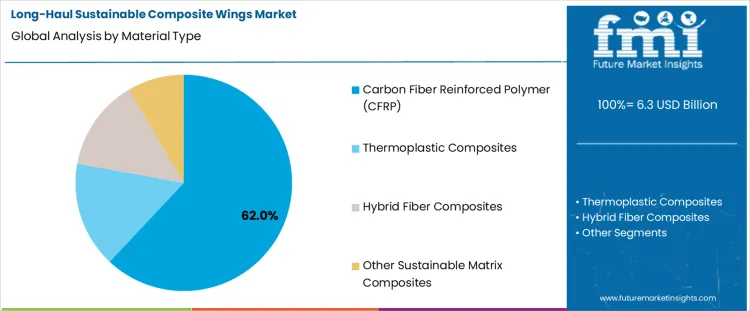
Carbon fiber reinforced polymer (CFRP) accounts for approximately 62% of total material type demand, making it the leading category. CFRP provides high strength-to-weight ratio, fatigue resistance, and dimensional stability under operational loads. Adoption is reinforced by widespread use in wide-body long-haul jets to reduce structural weight, improve fuel efficiency, and meet environmental targets. Manufacturers integrate CFRP in spars, ribs, and skin panels to optimize aerodynamic performance while maintaining structural integrity. Operational monitoring includes inspecting delamination, surface wear, and bonding quality to ensure safety. The segment leads because CFRP combines operational reliability, structural performance, and efficiency in long-haul aircraft wings.
Operational factors further support adoption. CFRP must maintain stiffness, resist environmental degradation, and tolerate cyclic loading without loss of performance. Integration with metallic components, fasteners, and composite repair protocols ensures durability and safety. The segment leads because CFRP provides predictable mechanical behavior, reduced operational weight, and long-term reliability in high-performance wing structures.
Why Are Wide-Body Long-Haul Jets Representing the Largest Aircraft Type Segment in Composite Wings?
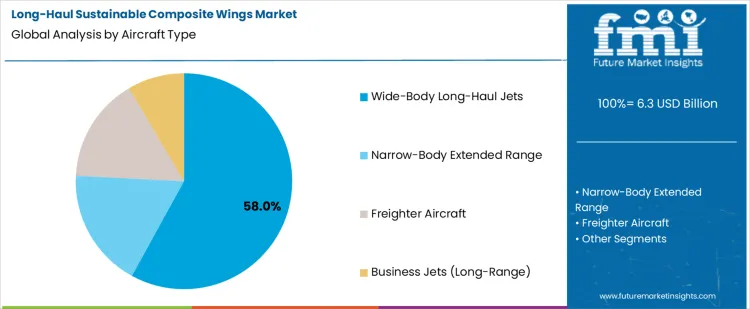
Wide-body long-haul jets account for approximately 58% of total aircraft type demand, making them the largest category. Adoption is driven by high operational range, payload capacity, and fuel consumption considerations. Composite wings in wide-body aircraft reduce overall weight, improve aerodynamic efficiency, and enable compliance with emissions standards. Manufacturers select CFRP and hybrid composites for spars, skins, and control surfaces to achieve structural performance and operational efficiency. Maintenance routines include inspecting delamination, structural integrity, and surface condition to ensure continuous airworthiness.
Functional and operational factors influence adoption. Wings must tolerate aerodynamic loads, temperature variation, and fatigue over extended flight cycles. Proper integration with fuselage, control surfaces, and repair procedures ensures consistent performance. Wide-body jets lead because they represent the largest long-haul aircraft segment, requiring composite wings that deliver measurable fuel savings, structural efficiency, and operational reliability across global commercial aviation networks.
How Are Sustainable Composite Wings Transforming Long-Haul Aircraft Performance?
Sustainable composite wings are increasingly adopted in commercial long-haul aircraft to reduce weight, improve fuel efficiency, and enhance structural durability. Adoption is strongest in regions with high aviation traffic, strict emission standards, and airlines investing in fleet modernization. Materials are selected for strength-to-weight ratio, fatigue resistance, and corrosion tolerance. Growth is driven by regulatory mandates for emission reduction, operational cost savings, and aerodynamic efficiency. Investment focuses on advanced composites, manufacturing precision, and integration with existing airframes. Airlines and OEMs prioritize wings that maintain structural integrity, extend service life, and meet regional environmental and safety standards.
Why Are Regional Aviation Emission Policies and Fuel Efficiency Targets Driving Adoption?
Demand is influenced by local and international regulations aiming to reduce CO2 emissions and improve fuel economy for long-haul flights. Aircraft manufacturers adopt composite wings to comply with environmental standards while reducing operational costs. Materials providing high durability, resistance to environmental stress, and long-term performance gain preference. Adoption is concentrated in regions with strict emission targets and high airline activity. Regulatory compliance, operational efficiency, and reduced fuel consumption drive procurement rather than cost. OEMs implementing validated, high-performance wings gain competitive advantage in both domestic and international markets.
What Challenges Limit Broader Deployment of Sustainable Composite Wings?
High material and manufacturing costs, complex fabrication processes, and structural validation requirements restrict adoption. Performance can be affected by environmental exposure, thermal expansion, and load variations. Certification and testing processes extend development and deployment timelines. Smaller aircraft programs or regions with limited technical infrastructure adopt composite wings more slowly. These factors concentrate early use among major commercial aircraft manufacturers, leading airlines, and regions with advanced aerospace capabilities.
How Are Technological Advances and Collaboration Shaping Market Growth?
Recent developments include high-strength fiber-reinforced composites, optimized resin systems, and automated manufacturing techniques for precise wing structures. Collaboration between material suppliers, aircraft OEMs, and research institutions ensures performance validation, certification, and integration efficiency. Pilot programs assess fatigue resistance, aerodynamic performance, and durability before large-scale production. Quality monitoring, traceability, and process standardization maintain consistency. Focus is on structural reliability, fuel efficiency, and regulatory compliance rather than cost or throughput. Collaborative initiatives enable broader adoption of sustainable composite wings in long-haul aviation, supporting emission reduction and operational efficiency goals.
What is the Demand for Long-Haul Sustainable Composite Wings by Country?
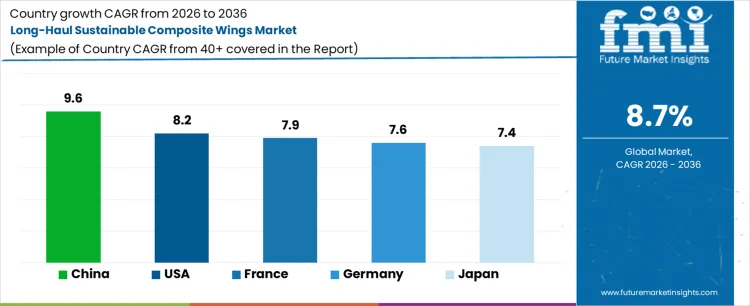
| Country | CAGR (%) |
|---|---|
| USA | 8.2 |
| China | 9.6 |
| France | 7.9 |
| Germany | 7.6 |
| Japan | 7.4 |
Demand for long-haul sustainable composite wings is rising as aircraft manufacturers focus on fuel efficiency, weight reduction, and environmental compliance. China leads with a 9.6% CAGR, driven by rapid expansion of commercial aviation fleets and adoption of advanced composite materials. The USA follows at 8.2%, supported by fleet modernization programs, retrofitting, and integration in new aircraft programs. France records 7.9% growth, shaped by aircraft manufacturing and MRO activities. Germany grows at 7.6%, driven by adoption in commercial and defense aircraft projects. Japan shows 7.4% CAGR, reflecting steady integration of sustainable composite materials in aircraft production and maintenance operations.
How Is the United States Experiencing Growth in the Long-Haul Sustainable Composite Wings Market?
United States is experiencing growth at a CAGR of 8.2%, supported by adoption of composite wings in long-haul aircraft to reduce weight, improve fuel efficiency, and enhance operational performance. Aerospace manufacturers and suppliers are producing wings optimized for high strength-to-weight ratio, corrosion resistance, and fatigue durability. Demand is concentrated in major aerospace manufacturing hubs, aircraft assembly lines, and maintenance facilities. Investments focus on material innovation, structural testing, and regulatory compliance rather than fleet-scale expansion. Growth reflects increasing airline demand for fuel-efficient aircraft, industrial adoption of advanced composites, and government support for next-generation aviation technologies.
- Fuel efficiency initiatives drive adoption.
- Composite wings provide high strength-to-weight ratio and durability.
- Aerospace hubs and assembly lines concentrate demand.
- Material innovation and regulatory compliance guide investment.
How Is China Witnessing Rapid Growth with Commercial Aircraft Expansion?
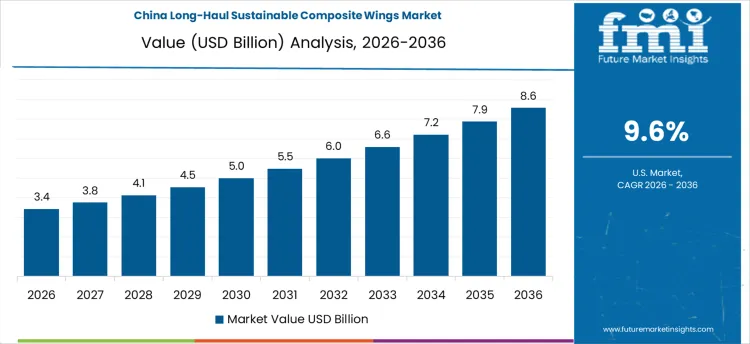
China is witnessing growth at a CAGR of 9.6%, fueled by adoption of composite wings in long-haul aircraft to enhance fuel efficiency, reduce weight, and extend operational lifespan. Manufacturers and suppliers are deploying wings optimized for corrosion resistance, structural strength, and fatigue performance. Demand is concentrated in aerospace manufacturing hubs, aircraft assembly plants, and maintenance centers. Investments focus on material performance, structural testing, and compliance with aviation safety standards rather than fleet expansion. Growth reflects rapid commercial aircraft production, adoption of advanced materials, and government support for aerospace sector modernization.
- Commercial aircraft expansion drives adoption.
- Composite wings optimize fuel efficiency and durability.
- Aerospace hubs and assembly plants concentrate demand.
- Material performance and safety compliance guide investment.
How Is France Experiencing Steady Growth with Aviation Efficiency Programs?
France is experiencing growth at a CAGR of 7.9%, supported by adoption of composite wings in long-haul aircraft to improve fuel efficiency and reduce operational costs. Aerospace manufacturers and suppliers are producing wings optimized for fatigue resistance, lightweight construction, and long-term durability. Demand is concentrated in aerospace manufacturing hubs, aircraft assembly facilities, and maintenance centers. Investments prioritize material innovation, structural reliability, and regulatory compliance rather than large-scale fleet deployment. Growth reflects industrial focus on advanced composites, airline demand for efficient aircraft, and adoption of next-generation aviation materials.
- Aviation efficiency programs drive adoption.
- Composite wings provide fatigue resistance and lightweight construction.
- Aerospace hubs and assembly facilities concentrate demand.
- Material innovation and regulatory compliance guide investment.
How Is Germany Witnessing Growth with Advanced Aerospace Manufacturing?
Germany is witnessing growth at a CAGR of 7.6%, fueled by adoption of composite wings in long-haul aircraft to enhance fuel efficiency, reduce weight, and improve operational performance. Aerospace manufacturers and suppliers are implementing wings optimized for high strength, corrosion resistance, and fatigue durability. Demand is concentrated in aerospace manufacturing hubs, aircraft assembly lines, and maintenance centers. Investments focus on material performance, structural testing, and aviation safety compliance rather than fleet-scale expansion. Growth reflects industrial expertise in advanced composites, airline demand for fuel-efficient aircraft, and government support for aerospace innovation.
- Advanced aerospace manufacturing drives adoption.
- Composite wings enhance strength, corrosion resistance, and durability.
- Aerospace hubs and assembly lines concentrate demand.
- Material performance and aviation safety compliance guide investment.
How Is Japan Experiencing Moderate Growth with Fuel-Efficient Aircraft Initiatives?
Japan is experiencing growth at a CAGR of 7.4%, supported by adoption of composite wings in long-haul aircraft to reduce weight, improve fuel efficiency, and extend structural lifespan. Aerospace manufacturers and suppliers are producing wings optimized for corrosion resistance, fatigue performance, and lightweight construction. Demand is concentrated in aerospace production hubs, aircraft assembly facilities, and maintenance centers. Investments prioritize material performance, structural reliability, and regulatory compliance rather than fleet expansion. Growth reflects increasing airline demand for fuel-efficient aircraft, adoption of advanced composite technologies, and industrial focus on next-generation aviation materials.
- Fuel-efficient aircraft initiatives drive adoption.
- Composite wings ensure lightweight construction and durability.
- Aerospace hubs and assembly facilities concentrate demand.
- Material performance and regulatory compliance guide investment.
Who Competes in the Long-Haul Sustainable Composite Wings Market and What Defines Their Capabilities?
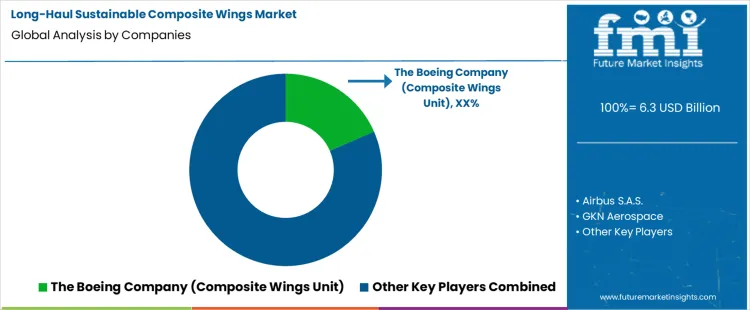
Competition in the long-haul sustainable composite wings market is defined by composite material expertise, structural performance, and integration with large aircraft platforms. The Boeing Company (Composite Wings Unit) supplies composite wings engineered for weight reduction, aerodynamic efficiency, and fatigue resistance, optimized for long-haul aircraft designs. Airbus S.A.S. develops full composite wing assemblies focused on fuel efficiency, manufacturability, and compliance with stringent airworthiness standards. GKN Aerospace provides structural composite components and assemblies tailored for high-load and large-span applications. Toray Industries, Inc. supplies carbon fiber and prepreg systems engineered for high strength-to-weight ratios and thermal stability. Hexcel Corporation delivers engineered composite laminates and honeycomb materials designed to enhance structural integrity, impact resistance, and fatigue performance. Other participants include specialized materials suppliers and regional aerospace component manufacturers providing tailored composite solutions. Competitive differences arise from material performance, integration with wing design, manufacturability, and ability to meet certification and durability requirements for commercial long-haul aircraft operations.
Material selection and engineering precision differentiate competitors in the sustainable composite wings segment. The Boeing Company (Composite Wings Unit) focuses on advanced composite layups, aerodynamic shaping, and load management across extended wingspans. Airbus S.A.S. integrates composite designs with digital manufacturing processes to reduce production cycle times and ensure structural compliance. GKN Aerospace develops wing box and control surface assemblies emphasizing fatigue resistance and structural rigidity. Toray Industries, Inc. delivers high-performance carbon fibers with optimized tensile strength and thermal behavior for large-scale wing production. Hexcel Corporation supplies laminates engineered for impact resistance and stiffness control in long-span wings. Other suppliers offer tailored prepregs, resins, and honeycomb cores for integration with OEM manufacturing processes. Competitive differentiation arises from fiber and resin quality, structural design support, certification readiness, and integration capability with high-performance long-haul aircraft wing programs.
Key Players in the Long-Haul Sustainable Composite Wings Market
- The Boeing Company (Composite Wings Unit)
- Airbus S.A.S.
- GKN Aerospace
- Toray Industries, Inc.
- Hexcel Corporation
Scope of the Report
| Items | Values |
|---|---|
| Quantitative Units (2026) | USD billion |
| Material Type | Carbon Fiber Reinforced Polymer (CFRP), Thermoplastic Composites, Hybrid Fiber Composites, Other Sustainable Matrix Composites |
| Aircraft Type | Wide-Body Long-Haul Jets, Narrow-Body Extended Range, Freighter Aircraft, Business Jets (Long-Range) |
| End User | Commercial Aircraft OEMs, MRO & Retrofit Services, Tier-1 Composite Suppliers, Research & Flight Development Centers |
| Region | Asia Pacific, Europe, North America, Latin America, Middle East & Africa |
| Key Countries Covered | China, Japan, South Korea, India, Australia & New Zealand, Germany, United Kingdom, France, Italy, Spain, Nordic, BENELUX, United States, Canada, Mexico, Brazil, Chile, Kingdom of Saudi Arabia, Other GCC Countries, Turkey, South Africa, Other African Union |
| Key Companies Profiled | The Boeing Company (Composite Wings Unit), Airbus S.A.S., GKN Aerospace, Toray Industries, Inc., Hexcel Corporation |
| Additional Attributes | Dollar sales by material type, aircraft type, and end user; regional CAGR, volume and value growth projections; adoption across wide-body, narrow-body, freighter, and long-range business aircraft; integration with OEM programs, MRO services, and Tier-1 suppliers; certification compliance, structural performance, and operational reliability; multi-aircraft platform validation and fleet adoption |
Long-Haul Sustainable Composite Wings Market Segmentation
Material Type:
- Carbon Fiber Reinforced Polymer (CFRP)
- Thermoplastic Composites
- Hybrid Fiber Composites
- Other Sustainable Matrix Composites
Aircraft Type:
- Wide-Body Long-Haul Jets
- Narrow-Body Extended Range
- Freighter Aircraft
- Business Jets (Long-Range)
End User:
- Commercial Aircraft OEMs
- MRO & Retrofit Services
- Tier-1 Composite Suppliers
- Research & Flight Development Centers
Region
- Asia Pacific
- China
- Japan
- South Korea
- India
- Australia & New Zealand
- ASEAN
- Rest of Asia Pacific
- Europe
- Germany
- United Kingdom
- France
- Italy
- Spain
- Nordic
- BENELUX
- Rest of Europe
- North America
- United States
- Canada
- Mexico
- Latin America
- Brazil
- Chile
- Rest of Latin America
- Middle East & Africa
- Kingdom of Saudi Arabia
- Other GCC Countries
- Turkey
- South Africa
- Other African Union
- Rest of Middle East & Africa
Bibliography
International Civil Aviation Organization. (2025). ICAO Environmental Report 2025. ICAO.
Krueger, R. (2024). Advances in thermoplastic composites over three decades: A literature review (NASA Technical Memorandum NASA/TM–20240005376). National Aeronautics and Space Administration.
Federal Aviation Administration. (2010). Advisory Circular 20-107B (with Change 1): Composite Aircraft Structure. U.S. Department of Transportation, Federal Aviation Administration.
European Union Aviation Safety Agency. (2023, December 19). Certification Specifications and Acceptable Means of Compliance for Large Aeroplanes (CS-25), Amendment 28. EASA.
Frequently Asked Questions
How big is the long-haul sustainable composite wings market in 2026?
The global long-haul sustainable composite wings market is estimated to be valued at USD 6.3 billion in 2026.
What will be the size of long-haul sustainable composite wings market in 2036?
The market size for the long-haul sustainable composite wings market is projected to reach USD 14.5 billion by 2036.
How much will be the long-haul sustainable composite wings market growth between 2026 and 2036?
The long-haul sustainable composite wings market is expected to grow at a 8.7% CAGR between 2026 and 2036.
What are the key product types in the long-haul sustainable composite wings market?
The key product types in long-haul sustainable composite wings market are carbon fiber reinforced polymer (cfrp), thermoplastic composites, hybrid fiber composites and other sustainable matrix composites.
Which aircraft type segment to contribute significant share in the long-haul sustainable composite wings market in 2026?
In terms of aircraft type, wide-body long-haul jets segment to command 58.0% share in the long-haul sustainable composite wings market in 2026.
Preview the report firsthand - request a free sample
Get SampleGet the brochure for pricing and purchase details.
Get PDFTable of Content
- Executive Summary
- Global Market Outlook
- Demand-side Trends
- Supply-side Trends
- Technology Roadmap Analysis
- Analysis and Recommendations
- Market Overview
- Market Coverage / Taxonomy
- Market Definition / Scope / Limitations
- Market Background
- Market Dynamics
- Drivers
- Restraints
- Opportunity
- Trends
- Scenario Forecast
- Demand in Optimistic Scenario
- Demand in Likely Scenario
- Demand in Conservative Scenario
- Opportunity Map Analysis
- Product Life Cycle Analysis
- Supply Chain Analysis
- Investment Feasibility Matrix
- Value Chain Analysis
- PESTLE and Porter’s Analysis
- Regulatory Landscape
- Regional Parent Market Outlook
- Production and Consumption Statistics
- Import and Export Statistics
- Market Dynamics
- Global Market Analysis 2021 to 2025 and Forecast, 2026 to 2036
- Historical Market Size Value (USD Million) Analysis, 2021 to 2025
- Current and Future Market Size Value (USD Million) Projections, 2026 to 2036
- Y-o-Y Growth Trend Analysis
- Absolute $ Opportunity Analysis
- Global Market Pricing Analysis 2021 to 2025 and Forecast 2026 to 2036
- Global Market Analysis 2021 to 2025 and Forecast 2026 to 2036, By Material Type
- Introduction / Key Findings
- Historical Market Size Value (USD Million) Analysis By Material Type , 2021 to 2025
- Current and Future Market Size Value (USD Million) Analysis and Forecast By Material Type , 2026 to 2036
- Carbon Fiber Reinforced Polymer (CFRP)
- Thermoplastic Composites
- Hybrid Fiber Composites
- Other Sustainable Matrix Composites
- Carbon Fiber Reinforced Polymer (CFRP)
- Y-o-Y Growth Trend Analysis By Material Type , 2021 to 2025
- Absolute $ Opportunity Analysis By Material Type , 2026 to 2036
- Global Market Analysis 2021 to 2025 and Forecast 2026 to 2036, By Aircraft Type
- Introduction / Key Findings
- Historical Market Size Value (USD Million) Analysis By Aircraft Type, 2021 to 2025
- Current and Future Market Size Value (USD Million) Analysis and Forecast By Aircraft Type, 2026 to 2036
- Wide-Body Long-Haul Jets
- Narrow-Body Extended Range
- Freighter Aircraft
- Business Jets (Long-Range)
- Wide-Body Long-Haul Jets
- Y-o-Y Growth Trend Analysis By Aircraft Type, 2021 to 2025
- Absolute $ Opportunity Analysis By Aircraft Type, 2026 to 2036
- Global Market Analysis 2021 to 2025 and Forecast 2026 to 2036, By End User
- Introduction / Key Findings
- Historical Market Size Value (USD Million) Analysis By End User, 2021 to 2025
- Current and Future Market Size Value (USD Million) Analysis and Forecast By End User, 2026 to 2036
- Commercial Aircraft OEMs
- MRO & Retrofit Services
- Tier-1 Composite Suppliers
- Research & Flight Development Centers
- Commercial Aircraft OEMs
- Y-o-Y Growth Trend Analysis By End User, 2021 to 2025
- Absolute $ Opportunity Analysis By End User, 2026 to 2036
- Global Market Analysis 2021 to 2025 and Forecast 2026 to 2036, By Region
- Introduction
- Historical Market Size Value (USD Million) Analysis By Region, 2021 to 2025
- Current Market Size Value (USD Million) Analysis and Forecast By Region, 2026 to 2036
- North America
- Latin America
- Western Europe
- Eastern Europe
- East Asia
- South Asia and Pacific
- Middle East & Africa
- Market Attractiveness Analysis By Region
- North America Market Analysis 2021 to 2025 and Forecast 2026 to 2036, By Country
- Historical Market Size Value (USD Million) Trend Analysis By Market Taxonomy, 2021 to 2025
- Market Size Value (USD Million) Forecast By Market Taxonomy, 2026 to 2036
- By Country
- USA
- Canada
- Mexico
- By Material Type
- By Aircraft Type
- By End User
- By Country
- Market Attractiveness Analysis
- By Country
- By Material Type
- By Aircraft Type
- By End User
- Key Takeaways
- Latin America Market Analysis 2021 to 2025 and Forecast 2026 to 2036, By Country
- Historical Market Size Value (USD Million) Trend Analysis By Market Taxonomy, 2021 to 2025
- Market Size Value (USD Million) Forecast By Market Taxonomy, 2026 to 2036
- By Country
- Brazil
- Chile
- Rest of Latin America
- By Material Type
- By Aircraft Type
- By End User
- By Country
- Market Attractiveness Analysis
- By Country
- By Material Type
- By Aircraft Type
- By End User
- Key Takeaways
- Western Europe Market Analysis 2021 to 2025 and Forecast 2026 to 2036, By Country
- Historical Market Size Value (USD Million) Trend Analysis By Market Taxonomy, 2021 to 2025
- Market Size Value (USD Million) Forecast By Market Taxonomy, 2026 to 2036
- By Country
- Germany
- UK
- Italy
- Spain
- France
- Nordic
- BENELUX
- Rest of Western Europe
- By Material Type
- By Aircraft Type
- By End User
- By Country
- Market Attractiveness Analysis
- By Country
- By Material Type
- By Aircraft Type
- By End User
- Key Takeaways
- Eastern Europe Market Analysis 2021 to 2025 and Forecast 2026 to 2036, By Country
- Historical Market Size Value (USD Million) Trend Analysis By Market Taxonomy, 2021 to 2025
- Market Size Value (USD Million) Forecast By Market Taxonomy, 2026 to 2036
- By Country
- Russia
- Poland
- Hungary
- Balkan & Baltic
- Rest of Eastern Europe
- By Material Type
- By Aircraft Type
- By End User
- By Country
- Market Attractiveness Analysis
- By Country
- By Material Type
- By Aircraft Type
- By End User
- Key Takeaways
- East Asia Market Analysis 2021 to 2025 and Forecast 2026 to 2036, By Country
- Historical Market Size Value (USD Million) Trend Analysis By Market Taxonomy, 2021 to 2025
- Market Size Value (USD Million) Forecast By Market Taxonomy, 2026 to 2036
- By Country
- China
- Japan
- South Korea
- By Material Type
- By Aircraft Type
- By End User
- By Country
- Market Attractiveness Analysis
- By Country
- By Material Type
- By Aircraft Type
- By End User
- Key Takeaways
- South Asia and Pacific Market Analysis 2021 to 2025 and Forecast 2026 to 2036, By Country
- Historical Market Size Value (USD Million) Trend Analysis By Market Taxonomy, 2021 to 2025
- Market Size Value (USD Million) Forecast By Market Taxonomy, 2026 to 2036
- By Country
- India
- ASEAN
- Australia & New Zealand
- Rest of South Asia and Pacific
- By Material Type
- By Aircraft Type
- By End User
- By Country
- Market Attractiveness Analysis
- By Country
- By Material Type
- By Aircraft Type
- By End User
- Key Takeaways
- Middle East & Africa Market Analysis 2021 to 2025 and Forecast 2026 to 2036, By Country
- Historical Market Size Value (USD Million) Trend Analysis By Market Taxonomy, 2021 to 2025
- Market Size Value (USD Million) Forecast By Market Taxonomy, 2026 to 2036
- By Country
- Kingdom of Saudi Arabia
- Other GCC Countries
- Turkiye
- South Africa
- Other African Union
- Rest of Middle East & Africa
- By Material Type
- By Aircraft Type
- By End User
- By Country
- Market Attractiveness Analysis
- By Country
- By Material Type
- By Aircraft Type
- By End User
- Key Takeaways
- Key Countries Market Analysis
- USA
- Pricing Analysis
- Market Share Analysis, 2025
- By Material Type
- By Aircraft Type
- By End User
- Canada
- Pricing Analysis
- Market Share Analysis, 2025
- By Material Type
- By Aircraft Type
- By End User
- Mexico
- Pricing Analysis
- Market Share Analysis, 2025
- By Material Type
- By Aircraft Type
- By End User
- Brazil
- Pricing Analysis
- Market Share Analysis, 2025
- By Material Type
- By Aircraft Type
- By End User
- Chile
- Pricing Analysis
- Market Share Analysis, 2025
- By Material Type
- By Aircraft Type
- By End User
- Germany
- Pricing Analysis
- Market Share Analysis, 2025
- By Material Type
- By Aircraft Type
- By End User
- UK
- Pricing Analysis
- Market Share Analysis, 2025
- By Material Type
- By Aircraft Type
- By End User
- Italy
- Pricing Analysis
- Market Share Analysis, 2025
- By Material Type
- By Aircraft Type
- By End User
- Spain
- Pricing Analysis
- Market Share Analysis, 2025
- By Material Type
- By Aircraft Type
- By End User
- France
- Pricing Analysis
- Market Share Analysis, 2025
- By Material Type
- By Aircraft Type
- By End User
- India
- Pricing Analysis
- Market Share Analysis, 2025
- By Material Type
- By Aircraft Type
- By End User
- ASEAN
- Pricing Analysis
- Market Share Analysis, 2025
- By Material Type
- By Aircraft Type
- By End User
- Australia & New Zealand
- Pricing Analysis
- Market Share Analysis, 2025
- By Material Type
- By Aircraft Type
- By End User
- China
- Pricing Analysis
- Market Share Analysis, 2025
- By Material Type
- By Aircraft Type
- By End User
- Japan
- Pricing Analysis
- Market Share Analysis, 2025
- By Material Type
- By Aircraft Type
- By End User
- South Korea
- Pricing Analysis
- Market Share Analysis, 2025
- By Material Type
- By Aircraft Type
- By End User
- Russia
- Pricing Analysis
- Market Share Analysis, 2025
- By Material Type
- By Aircraft Type
- By End User
- Poland
- Pricing Analysis
- Market Share Analysis, 2025
- By Material Type
- By Aircraft Type
- By End User
- Hungary
- Pricing Analysis
- Market Share Analysis, 2025
- By Material Type
- By Aircraft Type
- By End User
- Kingdom of Saudi Arabia
- Pricing Analysis
- Market Share Analysis, 2025
- By Material Type
- By Aircraft Type
- By End User
- Turkiye
- Pricing Analysis
- Market Share Analysis, 2025
- By Material Type
- By Aircraft Type
- By End User
- South Africa
- Pricing Analysis
- Market Share Analysis, 2025
- By Material Type
- By Aircraft Type
- By End User
- USA
- Market Structure Analysis
- Competition Dashboard
- Competition Benchmarking
- Market Share Analysis of Top Players
- By Regional
- By Material Type
- By Aircraft Type
- By End User
- Competition Analysis
- Competition Deep Dive
- The Boeing Company (Composite Wings Value (USD Million))
- Overview
- Product Portfolio
- Profitability by Market Segments (Product/Age /Sales Channel/Region)
- Sales Footprint
- Strategy Overview
- Marketing Strategy
- Product Strategy
- Channel Strategy
- Airbus S.A.S.
- GKN Aerospace
- Toray Industries, Inc.
- Hexcel Corporation
- The Boeing Company (Composite Wings Value (USD Million))
- Competition Deep Dive
- Assumptions & Acronyms Used
- Research Methodology


