

- Industry Size (2026)
- USD 0.5 Bn
- Forecast (2036)
- USD 1.1 Bn
- CAGR (2026 to 2036)
- 48.5%
Low-Odor Inkjet Inks for On-Line Food Coding in Aseptic Filling Market Size, Market Forecast and Outlook By FMI
The low-odor inkjet inks for on-line food coding in aseptic filling market was valued at USD 0.4 billion in 2025. Revenue is expected to cross USD 0.5 billion in 2026 at a CAGR of 8.6% during forecast periods. Cumulative valuation is estimated to be USD 1.1 billion through 2036 as EU food-contact migration limits force packaging lines to eliminate traditional high-VOC formulations completely, validating the robust low odor inkjet ink demand forecast.
Quality assurance directors currently face strict European Food Safety Authority limits on chemical transfer through thin-wall PET, fundamentally shaping modern food packaging ink compliance standards. Selecting compliant low migration inks requires balancing cure speed with adhesion integrity. Failing to implement approved food coding inkjet inks risks batch rejection during retailer audits globally. Formulators must redesign traditional mixtures without sacrificing line speeds exceeding eighty thousand units hourly, directly answering why use low VOC inks in food packaging today.
Validation of aseptic filling coding inks by Tier-1 dairy processors triggers broader industry conversion. Upgraded fluid systems eliminate prolonged solvent evaporation phases rapidly, accelerating MEK-free inkjet inks demand. High-speed carton lines subsequently adopt these advanced printing inks for aseptic packaging smoothly following successful dairy trials
Summary of Low-Odor Inkjet Inks for On-Line Food Coding in Aseptic Filling Market
- Low-Odor Inkjet Inks for On-Line Food Coding in Aseptic Filling Market Definition
- Specialized fluid chemistry formulated to print lot codes on sterile containers without transferring volatile compounds, reflecting modern eco friendly printing inks food packaging.
- Demand Drivers in the Market
- Stringent migration limits compel packaging directors to eliminate high-VOC fluids entirely, boosting VOC free printing inks benefits.
- High-speed dairy production pushes plant managers to source faster-drying MEK-free alternatives, seeking optimal inkjet coding solutions for dairy.
- Retailer compliance audits force quality assurance heads to standardize chemical safety profiles.
- Key Segments Analyzed in the FMI Report
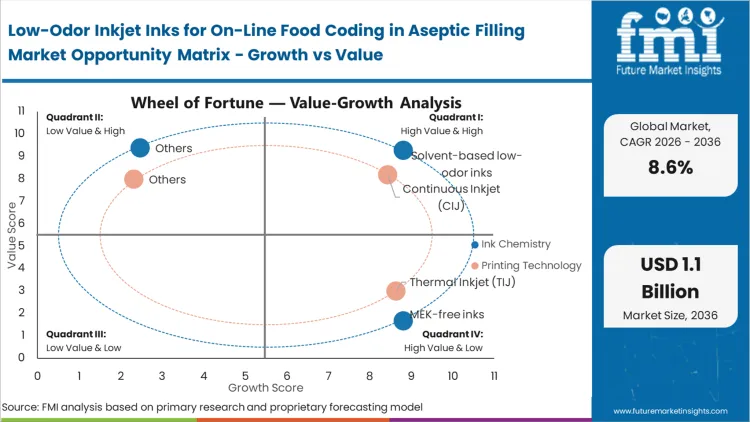
- Solvent-based low-odor inks: The segment is poised to hold 48.5% share in 2026, satisfying immediate high-speed adhesion requirements.
- Continuous Inkjet (CIJ): The segment is anticipated to garner 62.0% share in 2026 through vast installed base legacy dominance.
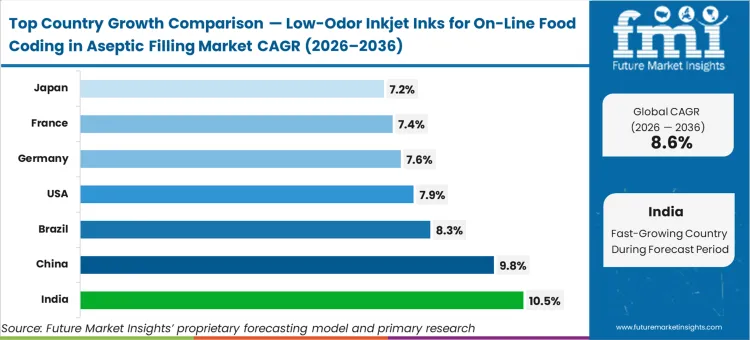
- India: India is expected to register CAGR of around 10.5%, reflecting aggressive modernization of regional dairy processing hubs.
- Analyst Opinion at FMI
- Ismail Sutaria, Principal Analyst, Packaging, at FMI, remarks, "Procurement managers assume securing certified fluids ensures compliance. Real operational risk emerges during high-speed line changeovers where legacy solvent residue contaminates new low-odor batches. Eliminating volatile chemicals requires total fluid pathway redesigns rather than simple cartridge swaps."
- Strategic Implications / Executive Takeaways
- Operations managers must coordinate fluid transitions during scheduled preventative maintenance cycles.
- Quality directors face immediate mandate to validate new chemical profiles across diverse substrate portfolios, assessing true food coding ink durability.
- Procurement heads risk prolonged line downtime without securing dedicated supply agreements for compliant thermal inkjet inks.
- Methodology
- Primary Research: Quality assurance directors and aseptic packaging engineers
- Desk Research: European Food Safety Authority migration certification registries
- Market-Sizing and Forecasting: Installed global sterile filling line unit counts
- Data Validation and Update Cycle: Independent packaging fluid trade volume flows
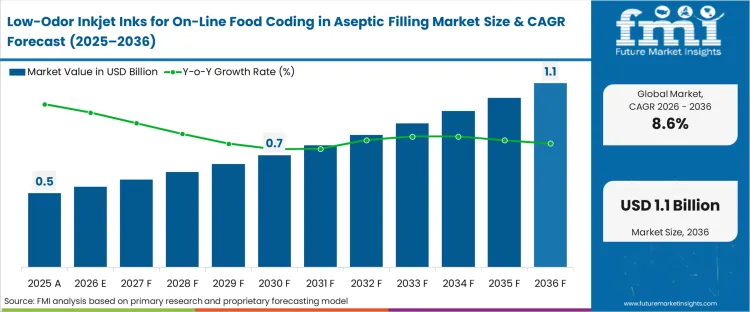
| Metric | Details |
|---|---|
| Industry Size (2026) | USD 0.5 billion |
| Industry Value (2036) | USD 1.1 billion |
| CAGR (2026 to 2036) | 8.6% |
Source: Future Market Insights (FMI) analysis, based on proprietary forecasting model and primary research
India leads at 10.5% compound growth through rapid expansion of dairy processing infrastructure, while China tracks at 9.8% on modern beverage sector upgrades reflecting broader aseptic beverage packaging trends. Brazil advances at 8.3% as packaging facilities replace obsolete continuous flow printers. United States facilities grow at 7.9% driven by strict packaging ink safety regulations USA. Germany expands at 7.6% and France registers 7.4% on proactive safety compliance measures. Japan advances at 7.2% prioritizing stringent chemical exposure frameworks.
Low-Odor Inkjet Inks for On-Line Food Coding in Aseptic Filling Market Definition
The low-odor inkjet inks for on-line food coding in aseptic filling market represents specialized fluid chemistry formulated to print readable lot codes on sterile containers without transferring volatile compounds into consumable contents. Formulations cure rapidly in high-humidity environments, demonstrating key low odor inks advantages in the food industry. Fluids maintain strict adherence on non-porous surfaces, clarifying exactly what are low odor inks for industrial buyers.
Low-Odor Inkjet Inks for On-Line Food Coding in Aseptic Filling Market Inclusions
Scope covers fluids engineered for continuous inkjet ink dispensing heads on sterile packaging lines, encompassing specific CIJ low odor inks. Coverage spans solvent-based fluids with reduced vapor pressure alongside water-based and UV-curable chemistries suitable as inkjet inks for PET bottles. Hardware components remain strictly separate from chemical consumables.
Low-Odor Inkjet Inks for On-Line Food Coding in Aseptic Filling Market Exclusions
Analysis omits secondary packaging fluids utilized on exterior corrugated cases. Standard commercial printing fluids lack food-contact certification entirely, falling outside sterile packaging ink requirements. Laser coding systems operate without chemical consumables, creating distinct boundaries when evaluating inkjet inks vs laser coding.
Low-Odor Inkjet Inks for On-Line Food Coding in Aseptic Filling Market Research Methodology
- Primary Research: Quality assurance directors and aseptic packaging engineers evaluating food safe ink certification requirements
- Desk Research: European Food Safety Authority migration certification registries
- Market-Sizing and Forecasting: Installed global sterile filling line unit counts determining average inkjet ink consumption per line
- Data Validation and Update Cycle: Independent packaging fluid trade volume flows tracking established industrial inkjet inks suppliers
Segmental Analysis
Low-Odor Inkjet Inks for On-Line Food Coding in Aseptic Filling Market Analysis by Ink Chemistry
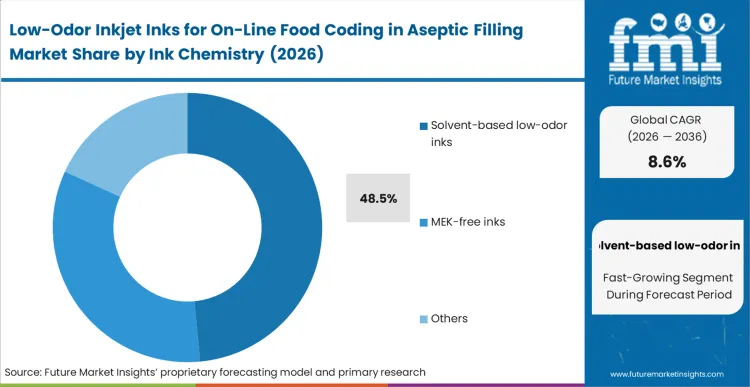
High-speed filling lines dictate chemical selection priorities. Solvent-based formulations segment holds 48.5% share in 2026 because operators require immediate dry times on cold PET surfaces. FMI's analysis indicates production managers prioritize this specific chemistry preventing code smearing during rapid downstream case packing, heavily influencing overall coding and marking inks size dynamics. Replacing pure MEK with alternative fast-evaporating esters allows facilities to pass atmospheric VOC audits without sacrificing throughput, shifting the balance of low VOC inks vs solvent inks. Formulators understand true constraints lie within printhead nozzle drying rates. Standard fluids clog micro-valves during brief line stoppages. Advanced low-odor variants integrate specific retardants maintaining fluid state at micro-nozzles while accelerating substrate curing. What procurement teams frequently miss is that transitioning toward these specific inkjet coders requires replacing complete fluid delivery manifolds. Delaying manifold upgrades guarantees cross-contamination between legacy and compliant formulas.
- Initial specification: Validation teams prioritize rapid adhesion profiles on condensation-heavy plastic surfaces. Quality assurance heads avoid formulas demonstrating prolonged tackiness disrupting conveyor movement.
- Line integration: Maintenance supervisors discover legacy pumps degrade when exposed to newer ester blends. Plant engineers must install chemical-resistant elastomer seals simultaneously preventing leaks.
- Long-term performance: Procurement directors realize continuous operation consumes slightly higher fluid volumes. Securing bulk supply agreements prevents unexpected chemical shortages during peak seasonal production, requiring strict evaluation of industrial inkjet inks pricing.
Low-Odor Inkjet Inks for On-Line Food Coding in Aseptic Filling Market Analysis by Printing Technology
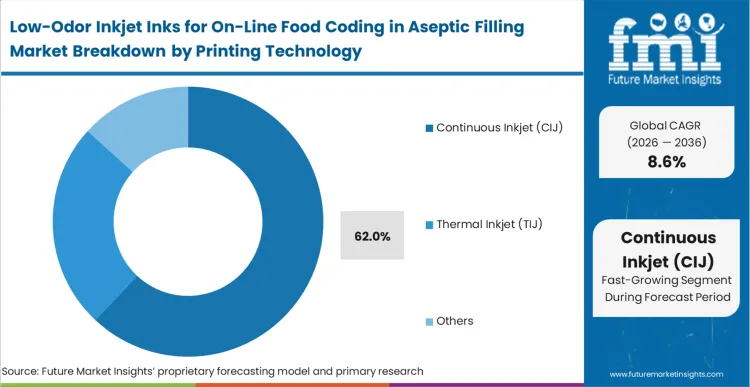
Legacy hardware limits rapid chemical transitions across global manufacturing networks. FMI analysts estimate that engineering teams hesitate replacing functional hardware exceeding twenty thousand dollars per lane, impacting the broader aseptic packaging printing technology landscape. Modifying existing marking and coding equipment provides immediate compliance at lower capital expenditure. Continuous Inkjet (CIJ) segment commands 62.0% share in 2026 simply through massive historical installation footprints. Fluid mechanics dictate that droplet generation requires precise viscosity control matching legacy profiles perfectly, effectively answering how do CIJ inks work in food coding practically. Operators recognize replacing drop generators requires extensive recalibration protocols. What equipment vendors rarely advertise is that running newer low-emission fluids through older umbilical cords accelerates tube degradation significantly. Operations directors attempting forced chemical compatibility face sudden catastrophic leaks causing massive unplanned downtime.
- Capital preservation: Operations directors avoid replacing entire printing units by sourcing backwards-compatible fluid cartridges. Finance departments appreciate extending existing asset lifecycles significantly preserving capital.
- Maintenance friction: Technicians spend additional hours flushing systems during formula changeovers. Maintenance managers must schedule longer cleaning intervals between production batches preventing fluid mixing, carefully observing CIJ ink formulation trends.
- Total cost: Purchasing managers calculate higher consumable costs against zero capital equipment expenditures. Financial planners validate this trade-off for lines nearing natural retirement phases globally, often weighing thermal inkjet vs CIJ inks.
Low-Odor Inkjet Inks for On-Line Food Coding in Aseptic Filling Market Analysis by Application
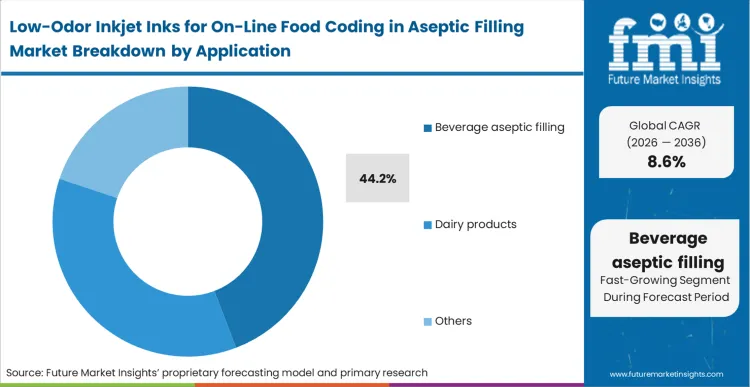
Complete sterility dictates every component entering cleanroom environments. According to FMI estimates, packaging managers face extreme pressure maintaining sterile zones while printing variable data constantly. Moisture condensation on cold liquid containers creates hostile printing conditions. Specially formulated fluids must displace water molecules instantly upon contact preventing blurred alphanumeric characters, defining the best inks for beverage labeling. Failure results in unreadable expiration dates triggering complete pallet rejections instantly. Beverage aseptic filling segment holds 44.2% share driven by massive volume requirements across global bottling operations, fueling sustained demand for beverage packaging coding inks. Plant supervisors know missing traceability codes destroys retailer confidence immediately. What sustainability officers overlook is that recycling facilities struggle separating highly cured advanced polymer flexographic ink from PET flakes. Beverage producers failing to balance durability with easy recyclability face future environmental penalties.
- Moisture displacement: Formulations must penetrate thin condensation layers surrounding chilled beverage bottles. Packaging engineers require specific contact angles ensuring precise dot placement despite moisture, utilizing robust beverage bottling coding inks.
- Sterilization resistance: Printed codes must survive subsequent hydrogen peroxide vapor treatments intact. Quality inspectors reject batches displaying faded characters post-sterilization disrupting supply chains, establishing a critical baseline for inkjet inks for sterile pharma packaging.
- Traceability mandates: Supply chain directors demand flawless alphanumeric legibility for track-and-trace software integration. Scanning failures force expensive manual product sorting lines increasing labor costs, necessitating reliable aseptic dairy packaging coding.
Low-Odor Inkjet Inks for On-Line Food Coding in Aseptic Filling Market Analysis by Substrate Type
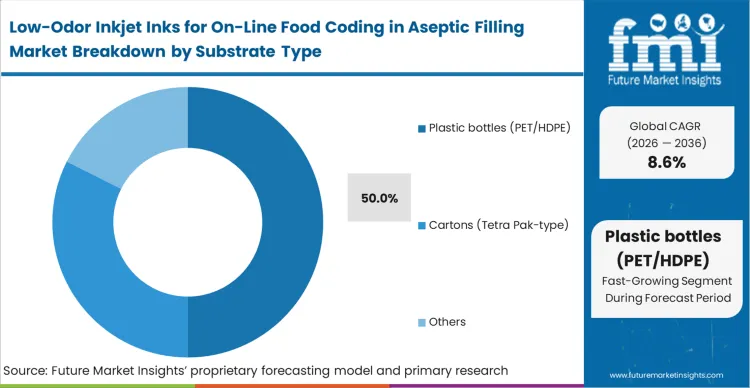
Environmental mandates conflict directly with permanent adhesion requirements. Based on FMI's assessment, sustainability initiatives reduce container wall thickness drastically increasing chemical migration risks exponentially, spotlighting critical ink migration limits packaging inks. Fluids applied to exterior surfaces must not penetrate polymer matrices contaminating consumable liquids. Regulatory bodies monitor extractable compounds rigorously demanding absolute zero transfer rates. Chemists struggle designing fluids combining aggressive surface bite with zero subsurface penetration profiles, driving essential food packaging ink innovation trends. What polymer scientists observe evaluating low migration ink share analysis is that recycled PET contains varying surface energies across different supplier batches. Plastic bottles segment accounts for 39.6% share as light-weighting trends dominate packaging design decisions. Operations managers failing to implement adaptive curing protocols experience random adhesion failures across identical bottle shapes.
- Surface energy: Plastic surfaces present low surface energy profiles resisting liquid spread natively. Ink technicians must incorporate specific surfactants promoting uniform droplet wetting accurately, vital for inkjet inks for flexible packaging.
- Migration barrier: Chemical engineers formulate large-molecule colorants incapable of passing through thin-wall HDPE. Toxicology teams verify absolute zero chemical transfer rates protecting consumer safety, directly addressing how to choose food safe inks.
- Recyclability impact: Sustainability directors require inks washing off easily during hot caustic recycling baths. Balancing permanent consumer adherence with easy recycling removal proves exceedingly difficult, representing a key challenge for coding inks for glass bottles and plastics alike.
Low-Odor Inkjet Inks for On-Line Food Coding in Aseptic Filling Market Drivers, Restraints, and Opportunities
Strict migration limits force quality assurance directors to completely overhaul chemical inventory lists, heavily influenced by incoming VOC emission regulations inks. Selecting non-compliant fluids risks catastrophic product recalls across global retail networks. Regulatory bodies demand absolute proof that trace compounds remain outside consumable products globally. Plant managers must transition facilities immediately despite zero budget allocation for hardware replacement, integrating modernized aseptic filling line coding systems. Integrating low migration ink solvents eliminates atmospheric volatile compound buildup inside enclosed sterile environments completely. Operations heads push suppliers for solutions matching legacy speeds avoiding production delays.
Prolonged curing times slow down high-velocity production lines significantly. Maintenance supervisors struggle optimizing printheads for newer viscous chemical blends requiring exact drop frequencies. Formulations lacking aggressive solvents require specialized heated air blowers for complete substrate drying. Installing external drying equipment disrupts tightly spaced conveyor architectures dramatically. Plant engineers cannot afford modifying floor layouts solely for code printing stations, complicating the deployment of aseptic carton coding solutions. Emerging specialized infrared curing modules offer partial solutions but consume excessive electrical power.
Opportunities in the Low-Odor Inkjet Inks for On-Line Food Coding in Aseptic Filling Market
- UV-LED integration: Converting traditional continuous flows toward piezoelectric systems eliminates solvent evaporation entirely. Production managers achieve zero atmospheric emissions meeting strict occupational safety mandates, exploring distinct CIJ inks vs TIJ inks benefits.
- Edible tracing: Developing completely ingestible digital fabrication inkjet inks bypasses external migration concerns entirely. Regulatory officers approve these digital printing inks for food formulas rapidly speeding commercial deployment significantly.
- Colorant innovation: Engineering synthetic pigments resisting hydrogen peroxide sterilization opens new dairy applications. Packaging designers utilize multiple colors for distinct batch identification preventing sorting errors, driving rapid industrial inkjet ink innovations.
Regional Analysis
.webp "Top Country Growth Comparison Low Odor Inkjet Inks For On Line Food Coding In Aseptic Filling Market Cagr (2026 2036)")
Based on regional analysis, Low-Odor Inkjet Inks for On-Line Food Coding in Aseptic Filling is segmented into North America, Europe, Asia Pacific, and Rest of World across 40 plus countries.
| Country | CAGR (2026 to 2036) |
|---|---|
| India | 10.5% |
| China | 9.8% |
| Brazil | 8.3% |
| United States | 7.9% |
| Germany | 7.6% |
| France | 7.4% |
| Japan | 7.2% |
Source: Future Market Insights (FMI) analysis, based on proprietary forecasting model and primary research
Asia Pacific Low-Odor Inkjet Inks for On-Line Food Coding in Aseptic Filling Market Analysis
Rapid modernization of dairy processing hubs dictates fluid chemistry upgrades across massive production volumes, reflecting strong industrial inkjet inks CAGR Asia projections. Facilities pivot from obsolete stamp coders directly toward advanced digital spraying mechanisms. FMI observes that regional operations managers prioritize extreme machine uptime over subtle environmental metrics consistently. Equipment operating within high-humidity tropical zones requires highly stable fluid formulations preventing premature nozzle clogging. Supply chain directors source localized chemical blending partners minimizing import logistics costs.
- India: Massive capacity expansions within regional dairy cooperatives drive demand for faster printing hardware. Operations heads install modern continuous inkjet printers requiring compatible low-emission fluids, accelerating 10.5% compound growth and increasing regional searches for low odor inks suppliers India. Securing dedicated domestic chemical suppliers ensures uninterrupted facility operation without shipping delays.
- China: Export-focused beverage bottlers implement strict international safety standards proactively. Quality directors specify low-migration chemistries preventing shipment rejections using advanced thermal inkjet printer systems, tracking at 9.8% compound growth. Standardizing global compliance protocols positions domestic brands favorably against international competitors, heavily shaping the inkjet coding inks Asia landscape.
- Japan: Stringent domestic chemical exposure limits force immediate transitions away from standard MEK formulas. Packaging engineers review continuous inkjet printers share analysis prioritizing worker safety inside enclosed sterile cleanrooms, yielding 7.2% compound growth. Adopting ethanol-based alternatives improves ambient factory air quality significantly.
Europe Low-Odor Inkjet Inks for On-Line Food Coding in Aseptic Filling Market Analysis
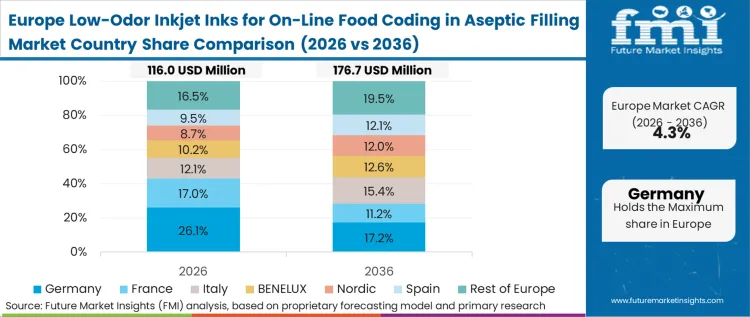
Proactive compliance frameworks eliminate hazardous volatile compounds from industrial manufacturing environments completely, defining low odor inks Europe regulation. Regulatory enforcement shifts from voluntary guidelines toward mandatory unannounced factory audits. FMI analysts note that plant supervisors face immediate production halts upon failing atmospheric safety checks. European facilities replace entire hardware fleets ensuring absolute chemical compliance, consulting specialized industrial coding inks suppliers Europe.
- Germany: Strict occupational safety mandates compel factory managers to eliminate all hazardous chemical fumes. Production directors evaluating marking and coding equipment share analysis invest heavily in zero-emission hardware, advancing at 7.6% compound growth. This proactive transition prevents unexpected regulatory fines protecting margins while tracking overall inkjet inks regulatory compliance EU.
- France: Aggressive sustainability targets force packaging engineers to evaluate holistic material lifecycles. Operations heads reviewing inkjet printers share analysis prioritize water-based formulations supporting broader corporate environmental goals, registering 7.4% compound growth. Balancing these metrics improves brand perception among eco-conscious retail partners monitoring food packaging printing technology trends.
North America Low-Odor Inkjet Inks for On-Line Food Coding in Aseptic Filling Market Analysis
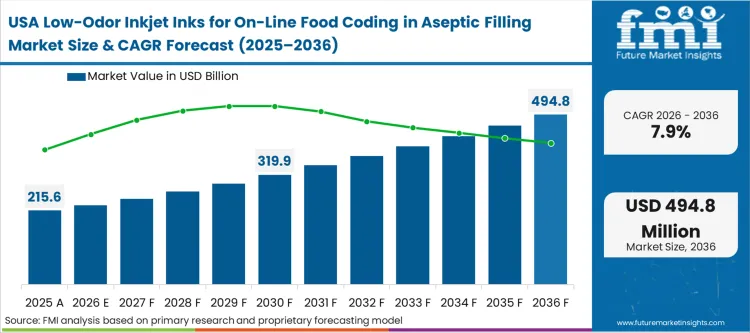
Massive high-speed bottling networks require highly consistent fluid performance across diverse climate zones. Facilities spanning multiple latitudes demand chemical formulas resisting viscosity changes during extreme temperature fluctuations. Based on FMI's assessment, procurement directors centralize purchasing contracts ensuring uniform fluid quality across all continental production sites, relying heavily on established inkjet inks suppliers USA.
- United States: Strict state-level volatile compound regulations force national brands to standardize clean chemistries. Procurement heads mandate high durability direct print and coding inks across all domestic facilities, tracking at 7.9% compound growth. Utilizing unified formulas prevents complex regional inventory management logistics failures.
FMI's report includes Canada, Mexico, Italy, Spain, and South Korea. Tracking localized direct thermal inks and coating share analysis helps suppliers optimize regional chemical distribution networks effectively.
Competitive Aligners for Market Players
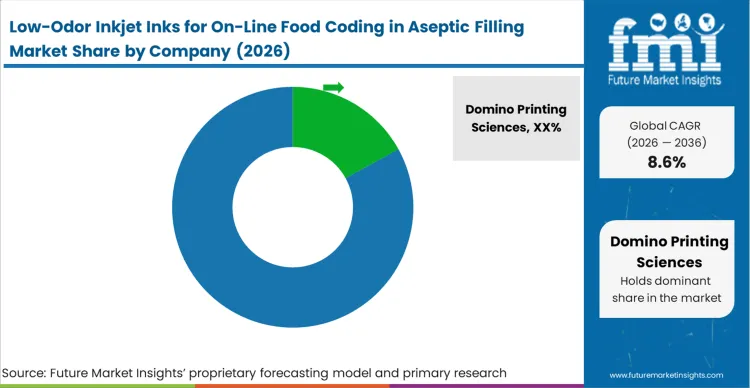
Suppliers competing within sterile coding environments face unique chemical validation hurdles preventing rapid market entry. Formulating fluids that adhere perfectly yet emit zero prohibited compounds requires massive research investments to become recognized among the best food safe inkjet inks. Domino Printing Sciences and Markem-Imaje maintain significant advantage simply through maintaining exhaustive libraries of pre-approved low migration eb curable food contact flexo inks. Engineering teams rely exclusively on established inkjet coding inks manufacturers holding verified toxicology dossiers avoiding independent testing costs.
Incumbent chemical formulators possess deep integration knowledge regarding specific printer fluid dynamics. Viscosity profiles must match precise drop-generation frequencies flawlessly inside modern functional printing arrays. Videojet Technologies utilizes proprietary hardware-fluid ecosystems preventing third-party consumable substitution entirely, solidifying its rank among the best CIJ ink brands. FMI points out that challengers attempting chemical reverse-engineering routinely fail long-term printhead stability trials causing unverified fluid mixtures to clog microscopic nozzles. Manufacturing facilities cannot risk catastrophic printhead failures delaying entire production schedules.
Massive global beverage processors consolidate purchasing volumes deliberately leveraging scale against chemical suppliers. Procurement directors demand guaranteed supply chain resilience alongside localized blending capabilities from leading beverage packaging ink suppliers global. Operating massive networks requires vendors providing rapid technical support globally without interruption. Transitioning toward specific inkjet printers requires suppliers demonstrating absolute chemical consistency across separate continental manufacturing hubs. Centralized purchasing removes regional variation empowering massive brands to command priority chemical allocations from top global inkjet inks CAGR forecast contributors.
Key Players in Low-Odor Inkjet Inks for On-Line Food Coding in Aseptic Filling Market
- Domino Printing Sciences
- Markem-Imaje
- Videojet Technologies
- Hitachi Industrial Equipment Systems
- LEIBINGER Group
- Kao Collins
- Control Print Ltd
Scope of the Report
| Metric | Value |
|---|---|
| Quantitative Units | USD 0.4 billion to USD 1.1 billion, at a CAGR of 8.6% |
| Market Definition | Specialized fluid chemistry formulated to print readable lot codes on sterile containers without transferring volatile compounds into consumable contents. |
| Segmentation | Ink Chemistry, Printing Technology, Application, Substrate Type |
| Regions Covered | North America, Europe, Asia Pacific, Rest of World |
| Countries Covered | United States, Germany, France, China, India, Japan, Brazil |
| Key Companies Profiled | Domino Printing Sciences, Markem-Imaje, Videojet Technologies, Hitachi Industrial Equipment Systems, LEIBINGER Group, Kao Collins, Control Print Ltd |
| Forecast Period | 2026 to 2036 |
| Approach | Bottom-up (volume × price) approach anchored on global aseptic filling line installations and pricing data. |
Source: Future Market Insights (FMI) analysis, based on proprietary forecasting model and primary research
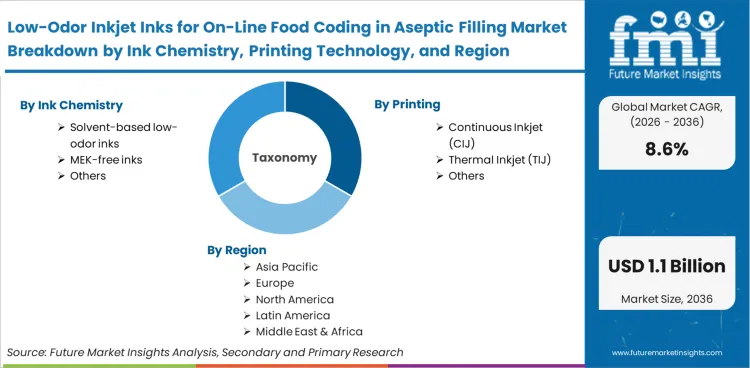
Low-Odor Inkjet Inks for On-Line Food Coding in Aseptic Filling Market Analysis by Segments
Ink Chemistry
- Solvent-based low-odor inks
- MEK-free inks
- Ethanol-based inks
- Water-based inks
- UV-curable low-odor inks
Printing Technology
- Continuous Inkjet (CIJ)
- Thermal Inkjet (TIJ)
- Piezoelectric Inkjet
- Drop-on-demand systems
Application
- Beverage aseptic filling
- Dairy products
- Liquid foods (soups, sauces)
- Pharmaceuticals (sterile liquids)
- Nutraceutical liquids
Substrate Type
- Plastic bottles (PET/HDPE)
- Cartons (Tetra Pak-type)
- Glass bottles
- Flexible packaging films
Region
- North America
- United States
- Canada
- Europe
- Germany
- United Kingdom
- France
- Italy
- Spain
- Asia Pacific
- China
- Japan
- South Korea
- Taiwan
- Singapore
- Latin America
- Brazil
- Mexico
- Argentina
- Middle East & Africa
- GCC Countries
- South Africa
- Israel
- Rest of Middle East & Africa
Bibliography
- Tian, X., Zhang, Y., & Liu, H. (2024, April). Recent advancements in synthesis and modification of water-based acrylic emulsions for ink applications. Progress in Organic Coatings.
- Assis, R., et al. (2025, October). New developments and inkjet applications of UV-LED curable inks for packaging. Results in Engineering.
- INX International Ink Co. (2025, June). Driving circular packaging: Sustainable inks and coatings for food applications.
- Packaging World Insights. (2026, March). Low-migration ink technologies supporting safer food and pharmaceutical packaging.
- European Commission. (2026, February). Food contact materials: Regulation and safety assessment framework for packaging substances.
This bibliography is provided for reader reference. The full FMI report contains the complete reference list with primary source documentation.
This Report Addresses
- How strict migration limits force quality assurance directors to eliminate high-VOC fluids entirely.
- Why solvent-based formulations hold leading share despite severe environmental regulatory pressure globally.
- What drives massive hardware replacement cycles across European dairy processing facilities currently.
- How condensation on cold PET bottles complicates precise chemical dot placement accuracy.
- Which specific proprietary fluid ecosystems protect incumbent suppliers from rapid reverse-engineering efforts.
- Where specialized infrared curing modules offer partial solutions for heavy viscous fluid blends.
- How regional cooperative expansions propel extreme compound growth rates throughout Indian markets.
- Why transitioning continuous fluid flows toward piezoelectric systems eliminates solvent evaporation completely.
Frequently Asked Questions
What value represents total industry size for 2026?
Revenue estimates place overall valuation near USD 0.5 billion during 2026. This figure signals extreme urgency among processing facilities forced to upgrade legacy hardware immediately. Delaying compliance limits exposes massive corporate brands to catastrophic retail audit failures globally.
How large will overall valuation become through 2036?
Sustained investment pushes total valuation toward USD 1.1 billion approaching 2036. Strict chemical exposure regulations mandate absolute removal of traditional volatile compounds from sterile environments. Facilities invest heavily securing certified alternative fluid supplies ensuring uninterrupted manufacturing uptime.
Which chemistry sub-segment leads current deployment rates?
Solvent-based formulas hold 48.5% share currently. Operations directors require extremely fast drying profiles preventing code smearing during rapid downstream packaging stages. Advanced ester blends maintain necessary speed while passing modern atmospheric safety inspections easily.
Why does continuous hardware dominate printing technology?
Massive historical installation footprints secure 62.0% share for continuous architecture. Replacing functional fluid delivery systems costs facilities millions in capital expenditure. Operations managers prefer sourcing modified backwards-compatible chemical cartridges extending existing asset lifecycles significantly.
What drives high adoption across beverage applications?
Massive global bottling volume pushes beverage applications toward 44.2% share. Plant managers face extreme pressure maintaining sterile zones while printing variable data onto condensation-heavy plastic surfaces. Specialized fluids must penetrate moisture layers instantly ensuring flawless alphanumeric legibility.
How does substrate light-weighting impact chemical selection?
Plastic bottles capture 39.6% share amid aggressive corporate sustainability initiatives. Thinner polymer walls increase chemical migration risks exponentially. Chemists struggle designing aggressive surface adhesives failing to penetrate thin HDPE matrices completely.
Why does India expand faster than alternative regions?
Massive capacity expansions within regional dairy cooperatives drive 10.5% compound growth across India. Operations heads install modern marking hardware requiring compatible low-emission fluids. Securing dedicated domestic chemical suppliers ensures uninterrupted facility operation without import delays.
What structural difference separates Germany and France adoption?
Germany advances at 7.6% driven by strict occupational safety mandates compelling factory managers to eliminate hazardous chemical fumes. France registers 7.4% as operations heads prioritize water-based formulations supporting broader corporate sustainability targets affecting brand perception among retailers.
What friction slows immediate fluid transition efforts?
Prolonged curing times slow down high-velocity production lines significantly. Formulations lacking aggressive solvents require specialized heated air blowers for complete drying. Installing external drying equipment disrupts tightly spaced conveyor architectures dramatically.
How do incumbent suppliers block challenger entry?
Deep integration knowledge regarding specific printer fluid dynamics protects incumbent vendors. Viscosity profiles must match precise drop-generation frequencies flawlessly. Facilities cannot risk catastrophic printhead failures caused by unverified fluid mixtures lacking extensive long-term stability trials.
What role do UV-LED systems play concerning future expansion?
Converting traditional continuous flows toward piezoelectric systems eliminates solvent evaporation entirely. Production managers achieve zero atmospheric emissions utilizing specialized ultraviolet curing modules. This architecture bypasses strict regulatory constraints while maintaining necessary production throughput.
Why do massive beverage processors consolidate purchasing volumes?
Procurement directors centralize global purchasing contracts ensuring uniform fluid quality across diverse continental production sites. Operating massive networks requires vendors providing rapid technical support. Transitioning toward compliant liquids requires demonstrating absolute consistency preventing regional inventory management logistics failures.
What happens when facilities run new fluids through legacy umbilical cords?
Older plastic tubes degrade rapidly when exposed to newer alternative ester blends. Operations directors face sudden catastrophic leaks attempting forced chemical compatibility. Transitioning effectively requires replacing complete fluid delivery manifolds preventing cross-contamination between legacy formulas.
How does recycling impact chemical design parameters?
Sustainability directors require inks capable of washing off easily during hot caustic recycling baths. Balancing permanent consumer adherence with easy recycling removal proves exceedingly difficult. Beverage producers failing this balance face future environmental penalties targeting unrecyclable packaging materials.
Why do plant engineers struggle with fluid viscosity changes?
Facilities spanning multiple latitudes demand formulas resisting viscosity shifts during extreme temperature fluctuations. Cold environments thicken standard fluids causing micro-valve clogging. Specially formulated variants integrate retardants maintaining liquid state at nozzles while accelerating substrate curing.
What specific risk do quality inspectors target post-sterilization?
Printed codes must survive subsequent hydrogen peroxide vapor treatments intact. Quality teams reject batches displaying faded characters post-sterilization. Engineering synthetic pigments resisting aggressive oxidation opens new dairy application possibilities requiring extreme durability.
How does traceability software influence code legibility requirements?
Supply chain directors demand flawless alphanumeric precision ensuring seamless digital software integration. Scanning failures force expensive manual product sorting lines. Precise dot placement remains critical avoiding massive downstream logistics delays caused by unreadable expiration dates.
What operational consequence follows failed atmospheric audits?
Regulatory enforcement shifts toward mandatory unannounced factory safety inspections. Plant supervisors face immediate production halts upon failing ambient air quality checks. European facilities replace entire hardware fleets ensuring absolute worker safety compliance preventing massive regulatory fines.
How do suppliers validate new chemical mixtures?
Engineering teams rely exclusively on vendors holding established toxicology dossiers pre-approved by regulatory bodies. Generating novel food-contact chemical profiles requires massive research investments. Challengers attempting rapid entry fail long-term printhead stability trials consistently.
Why do cold PET bottles create hostile printing environments?
Moisture condensation builds rapidly across chilled container surfaces. Specialized fluids must displace water molecules instantly ensuring perfect adhesion. Packaging engineers specify exact contact angles maintaining precise dot structure preventing blurred characters during rapid conveyor movement.
What makes carton lines easier targets for early adoption?
High-speed carton environments provide highly porous paperboard surfaces absorbing fluids rapidly. Validation of MEK-free formulas proves simpler lacking plastic condensation issues. Plant engineers transition these specific lanes first ensuring rapid corporate compliance wins without risking adhesion failures.
How does localized blending improve regional supply chains?
Supply chain directors source domestic chemical partners minimizing volatile fluid import logistics costs. Asian manufacturing hubs require extreme machine uptime without import delays. Dedicated local mixing facilities ensure uninterrupted material availability during peak seasonal production periods.
Preview the report firsthand - request a free sample
Get SampleGet the brochure for pricing and purchase details.
Get PDFTable of Content
- Executive Summary
- Global Market Outlook
- Demand-side Trends
- Supply-side Trends
- Technology Roadmap Analysis
- Analysis and Recommendations
- Market Overview
- Market Coverage / Taxonomy
- Market Definition / Scope / Limitations
- Research Methodology
- Chapter Orientation
- Analytical Lens and Working Hypotheses
- Market Structure, Signals, and Trend Drivers
- Benchmarking and Cross-market Comparability
- Market Sizing, Forecasting, and Opportunity Mapping
- Research Design and Evidence Framework
- Desk Research Programme (Secondary Evidence)
- Company Annual and Sustainability Reports
- Peer-reviewed Journals and Academic Literature
- Corporate Websites, Product Literature, and Technical Notes
- Earnings Decks and Investor Briefings
- Statutory Filings and Regulatory Disclosures
- Technical White Papers and Standards Notes
- Trade Journals, Industry Magazines, and Analyst Briefs
- Conference Proceedings, Webinars, and Seminar Materials
- Government Statistics Portals and Public Data Releases
- Press Releases and Reputable Media Coverage
- Specialist Newsletters and Curated Briefings
- Sector Databases and Reference Repositories
- FMI Internal Proprietary Databases and Historical Market Datasets
- Subscription Datasets and Paid Sources
- Social Channels, Communities, and Digital Listening Inputs
- Additional Desk Sources
- Expert Input and Fieldwork (Primary Evidence)
- Primary Modes
- Qualitative Interviews and Expert Elicitation
- Quantitative Surveys and Structured Data Capture
- Blended Approach
- Why Primary Evidence is Used
- Observational and In-context Research
- Social and Community Interactions
- Primary Modes
- Stakeholder Universe Engaged
- C-suite Leaders
- Board Members
- Presidents and Vice Presidents
- R&D and Innovation Heads
- Technical Specialists
- Domain Subject-matter Experts
- Scientists
- Physicians and Other Healthcare Professionals
- Governance, Ethics, and Data Stewardship
- Research Ethics
- Data Integrity and Handling
- Desk Research Programme (Secondary Evidence)
- Tooling, Models, and Reference Databases
- Data Engineering and Model Build
- Data Acquisition and Ingestion
- Cleaning, Normalisation, and Verification
- Synthesis, Triangulation, and Analysis
- Quality Assurance and Audit Trail
- Market Background
- Market Dynamics
- Drivers
- Restraints
- Opportunity
- Trends
- Scenario Forecast
- Demand in Optimistic Scenario
- Demand in Likely Scenario
- Demand in Conservative Scenario
- Opportunity Map Analysis
- Product Life Cycle Analysis
- Supply Chain Analysis
- Investment Feasibility Matrix
- Value Chain Analysis
- PESTLE and Porter’s Analysis
- Regulatory Landscape
- Regional Parent Market Outlook
- Production and Consumption Statistics
- Import and Export Statistics
- Market Dynamics
- Global Market Analysis 2021 to 2025 and Forecast, 2026 to 2036
- Historical Market Size Value (USD Million) Analysis, 2021 to 2025
- Current and Future Market Size Value (USD Million) Projections, 2026 to 2036
- Y-o-Y Growth Trend Analysis
- Absolute $ Opportunity Analysis
- Global Market Pricing Analysis 2021 to 2025 and Forecast 2026 to 2036
- Global Market Analysis 2021 to 2025 and Forecast 2026 to 2036, By Ink Chemistry
- Introduction / Key Findings
- Historical Market Size Value (USD Million) Analysis By Ink Chemistry , 2021 to 2025
- Current and Future Market Size Value (USD Million) Analysis and Forecast By Ink Chemistry , 2026 to 2036
- Solvent-based low-odor inks
- MEK-free inks
- Others
- Solvent-based low-odor inks
- Y-o-Y Growth Trend Analysis By Ink Chemistry , 2021 to 2025
- Absolute $ Opportunity Analysis By Ink Chemistry , 2026 to 2036
- Global Market Analysis 2021 to 2025 and Forecast 2026 to 2036, By Printing Technology
- Introduction / Key Findings
- Historical Market Size Value (USD Million) Analysis By Printing Technology, 2021 to 2025
- Current and Future Market Size Value (USD Million) Analysis and Forecast By Printing Technology, 2026 to 2036
- Continuous Inkjet (CIJ)
- Thermal Inkjet (TIJ)
- Others
- Continuous Inkjet (CIJ)
- Y-o-Y Growth Trend Analysis By Printing Technology, 2021 to 2025
- Absolute $ Opportunity Analysis By Printing Technology, 2026 to 2036
- Global Market Analysis 2021 to 2025 and Forecast 2026 to 2036, By Application
- Introduction / Key Findings
- Historical Market Size Value (USD Million) Analysis By Application, 2021 to 2025
- Current and Future Market Size Value (USD Million) Analysis and Forecast By Application, 2026 to 2036
- Beverage aseptic filling
- Dairy products
- Others
- Beverage aseptic filling
- Y-o-Y Growth Trend Analysis By Application, 2021 to 2025
- Absolute $ Opportunity Analysis By Application, 2026 to 2036
- Global Market Analysis 2021 to 2025 and Forecast 2026 to 2036, By Substrate Type
- Introduction / Key Findings
- Historical Market Size Value (USD Million) Analysis By Substrate Type, 2021 to 2025
- Current and Future Market Size Value (USD Million) Analysis and Forecast By Substrate Type, 2026 to 2036
- Plastic bottles (PET/HDPE)
- Cartons (Tetra Pak-type)
- Others
- Plastic bottles (PET/HDPE)
- Y-o-Y Growth Trend Analysis By Substrate Type, 2021 to 2025
- Absolute $ Opportunity Analysis By Substrate Type, 2026 to 2036
- Global Market Analysis 2021 to 2025 and Forecast 2026 to 2036, By Region
- Introduction
- Historical Market Size Value (USD Million) Analysis By Region, 2021 to 2025
- Current Market Size Value (USD Million) Analysis and Forecast By Region, 2026 to 2036
- North America
- Latin America
- Western Europe
- Eastern Europe
- East Asia
- South Asia and Pacific
- Middle East & Africa
- Market Attractiveness Analysis By Region
- North America Market Analysis 2021 to 2025 and Forecast 2026 to 2036, By Country
- Historical Market Size Value (USD Million) Trend Analysis By Market Taxonomy, 2021 to 2025
- Market Size Value (USD Million) Forecast By Market Taxonomy, 2026 to 2036
- By Country
- USA
- Canada
- Mexico
- By Ink Chemistry
- By Printing Technology
- By Application
- By Substrate Type
- By Country
- Market Attractiveness Analysis
- By Country
- By Ink Chemistry
- By Printing Technology
- By Application
- By Substrate Type
- Key Takeaways
- Latin America Market Analysis 2021 to 2025 and Forecast 2026 to 2036, By Country
- Historical Market Size Value (USD Million) Trend Analysis By Market Taxonomy, 2021 to 2025
- Market Size Value (USD Million) Forecast By Market Taxonomy, 2026 to 2036
- By Country
- Brazil
- Chile
- Rest of Latin America
- By Ink Chemistry
- By Printing Technology
- By Application
- By Substrate Type
- By Country
- Market Attractiveness Analysis
- By Country
- By Ink Chemistry
- By Printing Technology
- By Application
- By Substrate Type
- Key Takeaways
- Western Europe Market Analysis 2021 to 2025 and Forecast 2026 to 2036, By Country
- Historical Market Size Value (USD Million) Trend Analysis By Market Taxonomy, 2021 to 2025
- Market Size Value (USD Million) Forecast By Market Taxonomy, 2026 to 2036
- By Country
- Germany
- UK
- Italy
- Spain
- France
- Nordic
- BENELUX
- Rest of Western Europe
- By Ink Chemistry
- By Printing Technology
- By Application
- By Substrate Type
- By Country
- Market Attractiveness Analysis
- By Country
- By Ink Chemistry
- By Printing Technology
- By Application
- By Substrate Type
- Key Takeaways
- Eastern Europe Market Analysis 2021 to 2025 and Forecast 2026 to 2036, By Country
- Historical Market Size Value (USD Million) Trend Analysis By Market Taxonomy, 2021 to 2025
- Market Size Value (USD Million) Forecast By Market Taxonomy, 2026 to 2036
- By Country
- Russia
- Poland
- Hungary
- Balkan & Baltic
- Rest of Eastern Europe
- By Ink Chemistry
- By Printing Technology
- By Application
- By Substrate Type
- By Country
- Market Attractiveness Analysis
- By Country
- By Ink Chemistry
- By Printing Technology
- By Application
- By Substrate Type
- Key Takeaways
- East Asia Market Analysis 2021 to 2025 and Forecast 2026 to 2036, By Country
- Historical Market Size Value (USD Million) Trend Analysis By Market Taxonomy, 2021 to 2025
- Market Size Value (USD Million) Forecast By Market Taxonomy, 2026 to 2036
- By Country
- China
- Japan
- South Korea
- By Ink Chemistry
- By Printing Technology
- By Application
- By Substrate Type
- By Country
- Market Attractiveness Analysis
- By Country
- By Ink Chemistry
- By Printing Technology
- By Application
- By Substrate Type
- Key Takeaways
- South Asia and Pacific Market Analysis 2021 to 2025 and Forecast 2026 to 2036, By Country
- Historical Market Size Value (USD Million) Trend Analysis By Market Taxonomy, 2021 to 2025
- Market Size Value (USD Million) Forecast By Market Taxonomy, 2026 to 2036
- By Country
- India
- ASEAN
- Australia & New Zealand
- Rest of South Asia and Pacific
- By Ink Chemistry
- By Printing Technology
- By Application
- By Substrate Type
- By Country
- Market Attractiveness Analysis
- By Country
- By Ink Chemistry
- By Printing Technology
- By Application
- By Substrate Type
- Key Takeaways
- Middle East & Africa Market Analysis 2021 to 2025 and Forecast 2026 to 2036, By Country
- Historical Market Size Value (USD Million) Trend Analysis By Market Taxonomy, 2021 to 2025
- Market Size Value (USD Million) Forecast By Market Taxonomy, 2026 to 2036
- By Country
- Kingdom of Saudi Arabia
- Other GCC Countries
- Turkiye
- South Africa
- Other African Union
- Rest of Middle East & Africa
- By Ink Chemistry
- By Printing Technology
- By Application
- By Substrate Type
- By Country
- Market Attractiveness Analysis
- By Country
- By Ink Chemistry
- By Printing Technology
- By Application
- By Substrate Type
- Key Takeaways
- Key Countries Market Analysis
- USA
- Pricing Analysis
- Market Share Analysis, 2025
- By Ink Chemistry
- By Printing Technology
- By Application
- By Substrate Type
- Canada
- Pricing Analysis
- Market Share Analysis, 2025
- By Ink Chemistry
- By Printing Technology
- By Application
- By Substrate Type
- Mexico
- Pricing Analysis
- Market Share Analysis, 2025
- By Ink Chemistry
- By Printing Technology
- By Application
- By Substrate Type
- Brazil
- Pricing Analysis
- Market Share Analysis, 2025
- By Ink Chemistry
- By Printing Technology
- By Application
- By Substrate Type
- Chile
- Pricing Analysis
- Market Share Analysis, 2025
- By Ink Chemistry
- By Printing Technology
- By Application
- By Substrate Type
- Germany
- Pricing Analysis
- Market Share Analysis, 2025
- By Ink Chemistry
- By Printing Technology
- By Application
- By Substrate Type
- UK
- Pricing Analysis
- Market Share Analysis, 2025
- By Ink Chemistry
- By Printing Technology
- By Application
- By Substrate Type
- Italy
- Pricing Analysis
- Market Share Analysis, 2025
- By Ink Chemistry
- By Printing Technology
- By Application
- By Substrate Type
- Spain
- Pricing Analysis
- Market Share Analysis, 2025
- By Ink Chemistry
- By Printing Technology
- By Application
- By Substrate Type
- France
- Pricing Analysis
- Market Share Analysis, 2025
- By Ink Chemistry
- By Printing Technology
- By Application
- By Substrate Type
- India
- Pricing Analysis
- Market Share Analysis, 2025
- By Ink Chemistry
- By Printing Technology
- By Application
- By Substrate Type
- ASEAN
- Pricing Analysis
- Market Share Analysis, 2025
- By Ink Chemistry
- By Printing Technology
- By Application
- By Substrate Type
- Australia & New Zealand
- Pricing Analysis
- Market Share Analysis, 2025
- By Ink Chemistry
- By Printing Technology
- By Application
- By Substrate Type
- China
- Pricing Analysis
- Market Share Analysis, 2025
- By Ink Chemistry
- By Printing Technology
- By Application
- By Substrate Type
- Japan
- Pricing Analysis
- Market Share Analysis, 2025
- By Ink Chemistry
- By Printing Technology
- By Application
- By Substrate Type
- South Korea
- Pricing Analysis
- Market Share Analysis, 2025
- By Ink Chemistry
- By Printing Technology
- By Application
- By Substrate Type
- Russia
- Pricing Analysis
- Market Share Analysis, 2025
- By Ink Chemistry
- By Printing Technology
- By Application
- By Substrate Type
- Poland
- Pricing Analysis
- Market Share Analysis, 2025
- By Ink Chemistry
- By Printing Technology
- By Application
- By Substrate Type
- Hungary
- Pricing Analysis
- Market Share Analysis, 2025
- By Ink Chemistry
- By Printing Technology
- By Application
- By Substrate Type
- Kingdom of Saudi Arabia
- Pricing Analysis
- Market Share Analysis, 2025
- By Ink Chemistry
- By Printing Technology
- By Application
- By Substrate Type
- Turkiye
- Pricing Analysis
- Market Share Analysis, 2025
- By Ink Chemistry
- By Printing Technology
- By Application
- By Substrate Type
- South Africa
- Pricing Analysis
- Market Share Analysis, 2025
- By Ink Chemistry
- By Printing Technology
- By Application
- By Substrate Type
- USA
- Market Structure Analysis
- Competition Dashboard
- Competition Benchmarking
- Market Share Analysis of Top Players
- By Regional
- By Ink Chemistry
- By Printing Technology
- By Application
- By Substrate Type
- Competition Analysis
- Competition Deep Dive
- Domino Printing Sciences
- Overview
- Product Portfolio
- Profitability by Market Segments (Product/Age /Sales Channel/Region)
- Sales Footprint
- Strategy Overview
- Marketing Strategy
- Product Strategy
- Channel Strategy
- Markem-Imaje
- Videojet Technologies
- Hitachi Industrial Equipment Systems
- LEIBINGER Group
- Kao Collins
- Control Print Ltd
- Domino Printing Sciences
- Competition Deep Dive
- Assumptions & Acronyms Used


