

- Industry Size (2026)
- USD 5.3 Bn
- Forecast (2036)
- USD 14.9 Bn
- CAGR (2026 to 2036)
- 11.0%
Mental Health-Sleep Overlap Market Forecast and Outlook 2026 to 2036
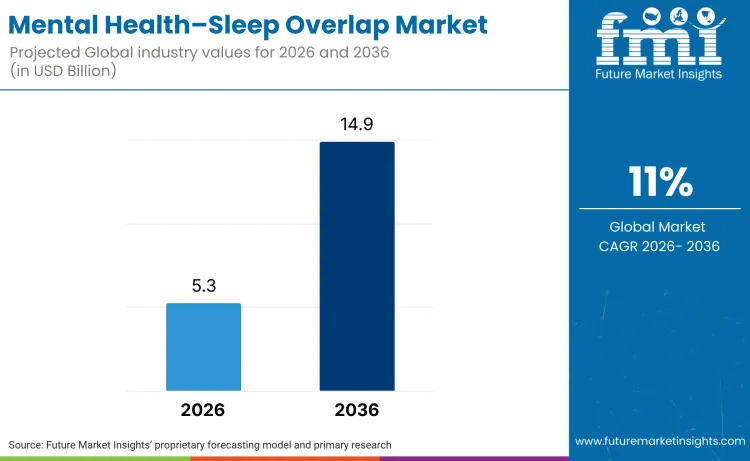
Future Market Insights anticipates the global mental health-sleep overlap market to nearly triple its incremental opportunity over the next decade, expanding from roughly USD 5.3 billion in 2026 to more than USD 14.9 billion by 2036 at a sustained 11.0% CAGR. This acceleration is driven by the transition from sequential treatment paradigms to simultaneous interventions that recognize sleep disturbances as both symptoms and modifiable risk factors for psychiatric disorders, according to FMI's analysis.
FMI highlights digital health infrastructure expansion as a defining transformation. Telehealth platforms and digital therapeutics are enabling scalable delivery of specialized CBT-I and psychiatric therapy combinations across geographic barriers, with 42% of mental health telehealth visits in the United States now including concomitant sleep health counseling according to provider reports. The market reflects growing preference for treatment portfolios that balance clinical efficacy with accessibility, particularly in Asia-Pacific markets where mental health service shortages drive demand for technology-enabled solutions. Regulatory approvals for digital therapeutics targeting mental health-sleep comorbidity and expanded reimbursement frameworks are further shaping procurement strategies and innovation pipelines.
Future Market Insights highlights that leading pharmaceutical and digital health companies are aligning innovation roadmaps with the rising complexity of mental health-sleep comorbidity management, particularly for depression, anxiety disorders, and PTSD. Strategic investments in evidence-based digital therapeutics, pharmacological agents with dual psychiatric and sleep benefits, and integrated care delivery platforms are increasingly shaping competitive differentiation. In October 2026, Lyra Health launched first clinical-grade AI experience for mental health care.
“We’ve seen how devastating the outcomes can be when people turn to AI that lacks clinical safeguards - the bottom line is that there is no replacement for true human connection,” said Alethea Varra, Chief Clinical Officer. “We also recognize that shame, or simply not wanting to talk to a provider, can prevent people from taking that important first step. AI built with proper clinical training and guardrails opens up a new path to care and extends the efforts of our amazing provider network as they deliver high-quality mental health support.”
Summary of Mental Health-Sleep Overlap Market
What Is Growth Outlook on Mental Health-Sleep Overlap Market as per Future Market Insights Projection?
Future Market Insights projects the Mental Health-Sleep Overlap industry to expand at a CAGR of 11.0% from 2026 to 2036, increasing from USD 5.3 Billion in 2026 to USD 14.9 Billion by 2036.
FMI Research Approach: Historical prevalence data for comorbid psychiatric-sleep disorders, treatment utilization rates, digital health adoption curves, and pharmacotherapy prescription patterns to model demand scenarios through 2036 with sensitivity to reimbursement policy shifts and telehealth therapy services regulatory frameworks.
How Do FMI Analysts Perceive Mental Health-Sleep Overlap Market to Evolve?
Future Market Insights analysts note that mental health-sleep overlap demand is increasingly driven by preventive intervention models, where early treatment of insomnia in at-risk populations reduces subsequent psychiatric disorder incidence by 58% according to longitudinal research published in The Lancet Psychiatry.
FMI Research Approach: Analyze the influence of updated clinical practice guidelines including American Psychiatric Association recommendations and National Institute of Mental Health research priorities on treatment protocol adoption, reimbursement decisions, and integration of sleep interventions into standard psychiatric care pathways across major healthcare markets.
Which Country Holds Largest Share in Global Mental Health-Sleep Overlap Market?
Future Market Insights notes that the United States mental health-sleep overlap market is growing due to federal mental health funding expansion, established telehealth infrastructure, and insurance coverage improvements for integrated behavioral health services, with the 2022 Bipartisan Safer Communities Act's USD 1.5 billion allocation supporting mental health crisis response programs that incorporate sleep health screening.
FMI Research Approach: Gathered country-level data on psychiatric disorder prevalence, sleep disturbance epidemiology, mental health service utilization, digital therapeutic adoption, telehealth penetration rates, reimbursement frameworks for integrated care, and regulatory approval timelines for novel treatment modalities.
How Large Will Mental Health-Sleep Overlap Market Be by 2036?
The global mental health-sleep overlap market is projected to reach USD 14.9 Billion by 2036.
FMI Research Approach: Calculated treatment service demand in the largest clinical pathway (depression with insomnia management) by modeling patient volumes across outpatient clinics, telehealth platforms, and employer programs with weighted treatment cost factors and intervention frequency assumptions.
How Are Clinical Evidence Tailwinds Fueling Mental Health-Sleep Integration?
According to Future Market Insights analysts, accumulating clinical evidence demonstrating superior outcomes for integrated treatment approaches, including JAMA Psychiatry research showing 68% remission rates for combined CBT-I and CBT versus 51% for psychiatric treatment alone, is accelerating demand for mental health-sleep interventions that address bidirectional causality rather than sequential symptom management.
FMI Research Approach: Incorporated emerging trends including wearable-enabled sleep monitoring, AI-driven personalized treatment optimization, preventive intervention models in educational and workplace settings, and expansion of digital therapeutics with FDA authorization into econometric models to refine demand forecasts for integrated mental health-sleep services through 2036.
Mental Health-Sleep Overlap Market Key Takeaways
| Metric | Details |
|---|---|
| Industry Size (2026) | USD 5.3 Billion |
| Industry Value (2036) | USD 14.9 Billion |
| CAGR (2026-2036) | 11.0% |
Source: Future Market Insights (FMI) analysis, based on proprietary forecasting model and primary research
Why is the Demand for Mental Health-Sleep Overlap Services Growing?
Future Market Insights analysts perceive the mental health-sleep overlap market evolving toward evidence-based, digitally-enabled, and preventively-oriented treatment ecosystems. Analysts highlight transitions from traditional sequential treatment approaches to integrated interventions that simultaneously address psychiatric symptoms and sleep pathology through combined CBT-I and disorder-specific therapy, pharmacological agents with dual benefits, and digital monitoring platforms that track both mental health and sleep metrics.
Examples include FDA-authorized digital therapeutics specifically validated for comorbid depression-insomnia and PTSD-nightmare presentations, pharmacotherapy utilizing orexin receptor antagonists that improve sleep without dependency risk while demonstrating mood benefits, and wearable-enabled interventions that provide real-time sleep data to inform psychiatric treatment adjustments. Demand for integrated treatment programs combining multiple modalities is rising faster than single-modality approaches, while AI-driven treatment optimization algorithms are being incorporated into clinical decision support systems to personalize intervention selection based on individual comorbidity profiles and treatment response patterns.
How is the Mental Health-Sleep Overlap Market Segmented?
The market for Mental Health-Sleep Overlap is segmented into Treatment & Service Mix (psychiatric pharmacotherapy with sleep impact, CBT-I + CBT integrated programs, tele-psychiatry / therapy services, digital monitoring & relapse prevention tools, and adjunct devices), Overlap Pathways (depression + insomnia management, anxiety disorders + sleep disturbance, PTSD + nightmares / sleep disruption, bipolar disorder sleep stabilization, and substance use recovery + sleep support), and End User / Channel (outpatient mental health clinics, telehealth platforms, hospitals / behavioral health centers, employer / payer programs, and others).
How Does Psychiatric Pharmacotherapy with Sleep Impact Secure Market Leadership?
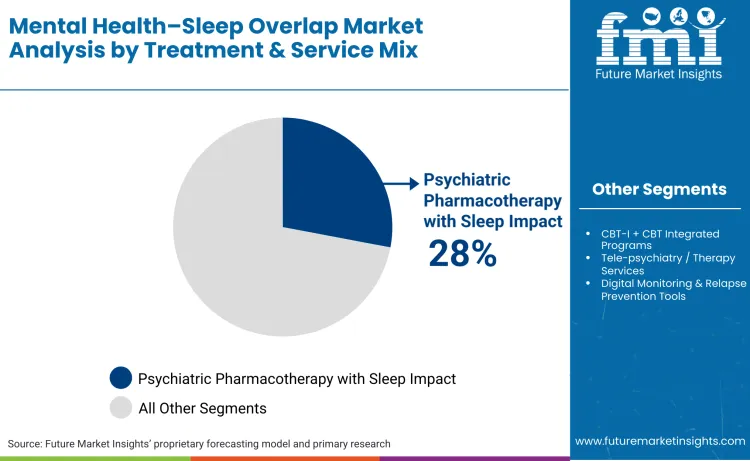
According to Future Market Insights, psychiatric pharmacotherapy with favorable sleep profiles leads the global mental health-sleep overlap market due to widespread clinical adoption across multiple psychiatric disorder categories. With an estimated 28% share of industry revenue, medications including sedating antidepressants (mirtazapine, trazodone), atypical antipsychotics with hypnotic properties, and orexin receptor antagonists (lemborexant) are prescribed for their dual benefits addressing both psychiatric symptoms and comorbid sleep disturbances. Their regulatory approval status, established safety profiles, and compatibility with existing psychiatric treatment protocols make them preferred first-line interventions worldwide. Pharmacotherapy's dominance is further reinforced by prescriber familiarity and patient acceptance, particularly among individuals who struggle with behavioral intervention adherence. However, concerns about metabolic side effects, dependency potential with certain agent classes, and growing evidence for non-pharmacological intervention efficacy are driving incremental shifts toward multimodal treatment approaches that combine pharmacotherapy with targeted behavioral interventions.
How Does Depression with Insomnia Management Lead Clinical Pathway Demand?
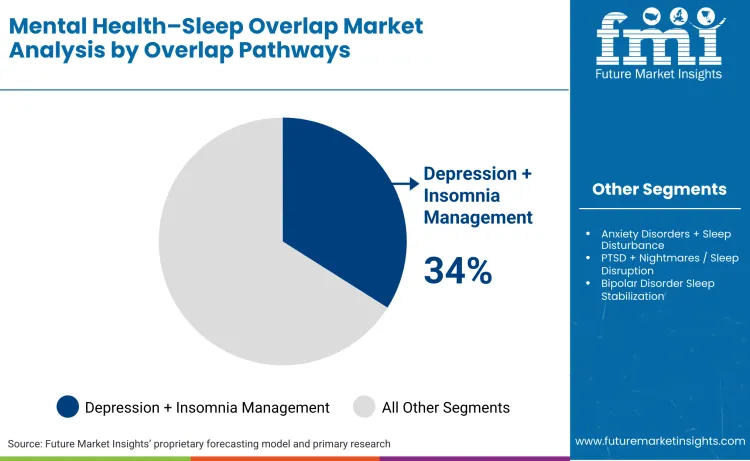
Future Market Insights identifies depression with insomnia management as the largest clinical pathway segment, accounting for 34% of market activity. This segment's leadership is fueled by the bidirectional relationship where insomnia both predicts depression onset and perpetuates depressive episodes when left untreated, creating clinical rationale for simultaneous intervention. Integrated treatment programs combining antidepressant therapy with CBT-I are increasingly adopted in outpatient psychiatry settings, while digital therapeutics targeting this specific comorbidity profile have received FDA authorization and expanding reimbursement coverage. As per the WHO, An estimated 4% of the population experience depression, including 5.7% of adults.
How Are Clinical Guidelines Influencing Integrated Treatment Adoption?
Industry evolution is being shaped by a shift beyond conventional sequential treatment approaches toward integrated care models with superior clinical outcomes. The American Psychiatric Association's 2023 Practice Guideline for Treatment of Patients with Major Depressive Disorder includes CBT-I as a Grade A recommendation for depression with comorbid insomnia, representing the first formal integration of sleep-specific interventions into mainstream psychiatric treatment algorithms. This guideline change is driving adoption of combined treatment approaches across outpatient mental health settings, with measurement-based care protocols now incorporating sleep metrics alongside traditional psychiatric symptom scales. Insurance reimbursement policies are adapting to cover integrated interventions, while healthcare systems are developing specialized training programs to expand clinician capability in delivering both psychiatric and sleep-specific treatments within unified care episodes.
Why Is Digital Health Infrastructure Reshaping Service Delivery Models?
The expansion of telehealth platforms and digital therapeutics is fundamentally altering access to specialized mental health-sleep interventions. Traditional care models required patients to access separate providers for psychiatric and sleep treatment, creating fragmentation and reducing treatment adherence. Digital platforms enable integrated screening, assessment, and intervention delivery through unified interfaces, with automated CBT-I modules embedded within broader mental health treatment programs. FDA authorization of digital therapeutics including Sleepio for insomnia and Daylight for anxiety creates reimbursable treatment options deliverable at scale without geographic constraints. Wearable devices provide continuous sleep and circadian rhythm data that inform psychiatric treatment decisions, enabling personalized intervention adjustments based on objective metrics rather than subjective patient recall during periodic clinical encounters.
How Are Preventive Intervention Models Creating New Market Segments?
Emerging evidence that sleep interventions prevent psychiatric disorder onset is creating opportunities for upstream intervention in at-risk populations. Research published in The Lancet Psychiatry demonstrated that college students with subclinical insomnia who received preventive CBT-I had 58% lower incidence of major depression over two-year follow-up compared to matched controls. This finding supports population-level screening and early intervention programs in educational settings, workplaces, and primary care practices, representing significantly larger addressable markets than treatment of established comorbid conditions. Employers and health plans show increasing interest in preventive mental health programs that reduce long-term healthcare utilization and disability costs, with several large corporations implementing sleep optimization programs as core components of mental wellness initiatives.
How Will Mental Health-Sleep Overlap Market Expansion Unfold Across Key Global Regions?
Future Market Insights identifies China (CAGR ~15.0%), India (~13.5%), United States (~12.0%), Germany (~10.5%), France (~7.5%), and United Kingdom (~6.0%) as the six core demand drivers. China leads through rapid mental health infrastructure expansion and digital health platform adoption. India's growth is driven by increasing diagnosis rates and telemedicine service expansion. The US benefits from federal funding, established telehealth systems, and comprehensive insurance coverage. Germany's demand reflects integration of digital therapeutics into statutory insurance benefits. France is transitioning from benzodiazepine-dependent insomnia treatment toward evidence-based behavioral interventions. The UK's growth is constrained by NHS resource limitations but supported by digital therapeutic adoption in IAPT programs. FMI emphasizes that each country combines clinical need recognition with evolving treatment infrastructure, creating structurally resilient demand through 2036.
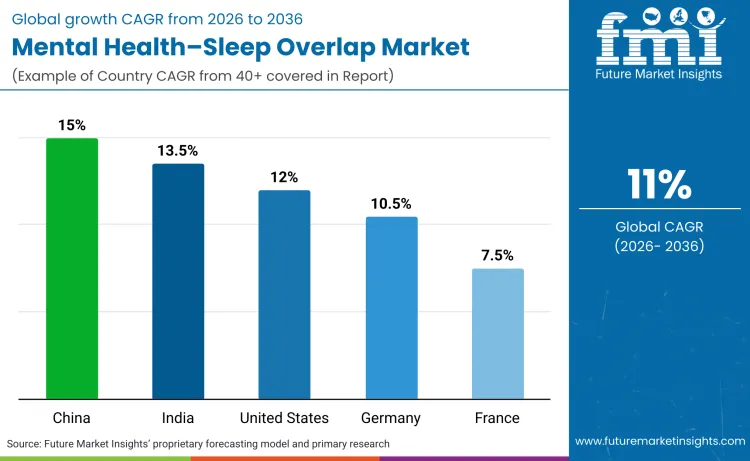
| Country | CAGR (2026-2036) |
|---|---|
| China | 15.0% |
| India | 13.5% |
| United States | 12.0% |
| Germany | 10.5% |
| France | 7.5% |
Source: Future Market Insights (FMI) analysis, based on proprietary forecasting model and primary research
Is National Mental Health Policy Driving Integrated Care Adoption in China?
Future Market Insights analysts note that China's mental health-sleep overlap market is expected to grow at a 15.0% CAGR. Demand for mental health services in China is rising as fast paced urban lifestyles and work intensity place sustained pressure on emotional wellbeing. Long working hours, performance driven cultures, and employment uncertainty in technology and manufacturing hubs have heightened stress, burnout, and sleep disorders among younger cohorts. Academic competition and family expectations add strain on adolescents and university students, increasing help seeking for anxiety and mood concerns.
Public discourse around wellbeing has expanded through workplace programs and community clinics, reducing stigma and normalizing professional support. Digital health platforms and hospital based telepsychiatry have widened access beyond major cities, supporting early engagement and follow up care. Population aging is increasing prevalence of cognitive decline and caregiver burden, driving demand for counseling and community mental health services. Internal migration has weakened traditional support networks for many workers, elevating reliance on formal care pathways and employer sponsored mental wellness programs.
How Is Telemedicine Expansion Accelerating Mental Health-Sleep Integration in India?
According to Future Market Insights, India's mental health-sleep overlap market is projected to expand at a 13.5% CAGR. Demand for mental health services in India is rising as social and economic pressures intensify across urban and semi urban populations. Rapid urbanization, longer working hours, job insecurity, and competitive academic environments have increased stress and anxiety among young adults and working professionals. Growing awareness through public health campaigns and school level programs has improved recognition of depression, anxiety, and substance use concerns, leading more people to seek care rather than rely on informal coping.
The expansion of digital platforms and teleconsultations has lowered access barriers, especially for first time users who prefer privacy and flexible scheduling. Post pandemic lifestyle shifts have deepened feelings of isolation among students, migrants, and elderly populations, while financial strain has compounded emotional distress in households. Family structures are changing, with reduced traditional support systems in cities, increasing reliance on professional care. Employer led wellness initiatives and insurance coverage for mental health have improved affordability, translating awareness into real service utilization.
Why Are Federal Funding and Integrated Care Models Driving USA Market Growth?
Future Market Insights identifies the United States as demonstrating sustained 12.0% CAGR growth. Demand for mental health services in the United States is rising as social stressors, economic uncertainty, and changing lifestyles shape daily wellbeing. Work intensity, job volatility, and cost of living pressures have increased anxiety and burnout across working age populations. Youth mental health needs have grown amid academic pressure, social media exposure, and disrupted routines, leading families to seek earlier clinical support. Public conversations around wellbeing and routine screening in primary care have reduced stigma and improved help seeking behavior.
Expanded telehealth adoption has widened access across rural and underserved communities, supporting continuity of care and follow up. Insurance parity policies and employer sponsored benefits have improved affordability for therapy and psychiatric consultations. Aging populations face loneliness and cognitive concerns, increasing demand for counseling and community based services. Substance use and co occurring mood conditions continue to drive utilization of integrated mental health care models across care settings.
Does Germany's Digital Therapeutic Reimbursement Framework Support Market Expansion?
FMI analysts project Germany's mental health-sleep overlap market to grow at a 10.5% CAGR. Demand for mental health services in Germany is increasing as workplace strain, demographic shifts, and changing social structures shape population wellbeing. High expectations around productivity and work life balance challenges contribute to stress, burnout, and anxiety among employees, driving higher use of counseling and psychotherapy. Public awareness campaigns and routine screening within primary care have improved recognition of common mental health conditions, encouraging earlier engagement with services.
Migration and integration pressures create added psychosocial needs within diverse communities, raising demand for culturally responsive care. Digital health tools and teletherapy options are expanding reach beyond major cities, easing access for first time users and follow up care. Population aging is linked with higher prevalence of loneliness, depression, and cognitive concerns, increasing demand for community based support. Coverage under statutory health insurance supports access to therapy, translating awareness into sustained utilization of professional mental health services.
How Is France Transitioning from Benzodiazepine Dependence to Integrated Care?
According to Future Market Insights, France's market will grow at a 7.5% CAGR. Work related stress, job insecurity, and commuting burdens contribute to anxiety and burnout among employed populations, increasing uptake of counseling and psychotherapy. Youth mental health needs are rising amid academic pressure, digital exposure, and social isolation, prompting families and schools to seek earlier support.
Public awareness efforts and integration of mental health screening within primary care have improved recognition of mood and stress related conditions. Expansion of teleconsultations has widened access for people in smaller towns and those seeking discreet entry into care. Population aging is associated with loneliness and cognitive concerns, increasing reliance on community support and outpatient services. Insurance coverage and reimbursement reforms support affordability, translating awareness into sustained utilization of formal mental health care services.
What Strategic Moves Are Defining Competitive Landscape?
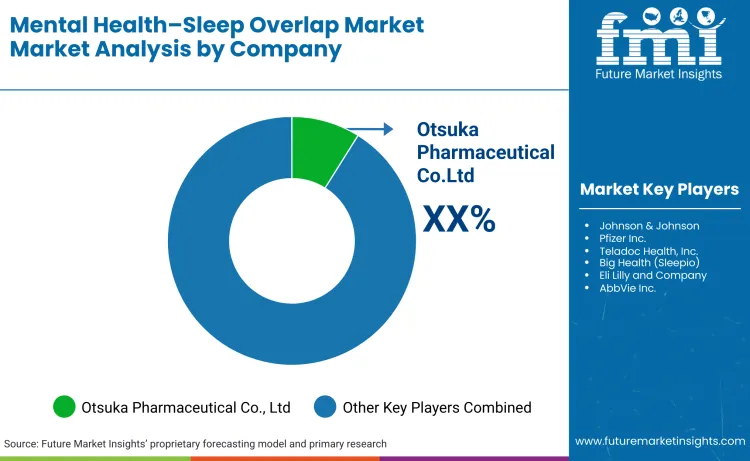
Future Market Insights analysts observe that competition in the mental health-sleep overlap market is increasingly defined by clinical evidence generation, regulatory approval achievement, and integrated platform development, rather than traditional pharmaceutical marketing approaches. Leading digital therapeutic companies are investing in pragmatic randomized controlled trials that demonstrate real-world effectiveness and cost-effectiveness outcomes required for reimbursement decisions, with publication in high-impact journals including JAMA Psychiatry and The Lancet Psychiatry establishing clinical credibility that drives provider adoption and payer coverage.
Another defining move is the development of integrated platforms that combine multiple intervention modalities within unified digital experiences. Companies including Teladoc Health are positioning themselves not just as telehealth providers but as comprehensive mental health-sleep solution platforms, offering virtual psychiatric consultations with embedded CBT-I modules, continuous symptom monitoring through patient-reported outcomes and wearable integrations, and measurement-based care dashboards that enable clinicians to track treatment response across both psychiatric and sleep domains simultaneously. This strategy creates switching costs through workflow integration and care continuity that extend beyond individual treatment episodes.
FMI also highlights strategic partnerships between pharmaceutical companies developing psychiatric medications with favorable sleep profiles and digital health companies offering behavioral interventions. These collaborations position complementary treatment modalities as integrated care pathways rather than competing alternatives, with prescribers receiving decision support tools that recommend optimal combinations based on patient characteristics. Regulatory strategies targeting FDA Digital Therapeutic authorization and European CE marking under Medical Device Regulation are further reshaping the landscape, with companies that achieve regulatory recognition gaining credibility advantages and reimbursement access. Collectively, these moves are shifting competition toward evidence-based, clinically-integrated solutions, favoring companies with robust clinical development capabilities and healthcare system partnerships through 2036.
Recent Developments:
- In January 2025, Johnson & Johnson announced to acquire Intra-Cellular Therapies, Inc. to broaden its offerings.
- In January 2025, Abbvie acquired Nimble Therapeutics to expand its immunology pipeline and customer base.
Key Players in Mental Health-Sleep Overlap Market
- Otsuka Pharmaceutical Co., Ltd.
- Johnson & Johnson
- Pfizer Inc.
- Teladoc Health, Inc.
- Big Health (Sleepio)
- Eli Lilly and Company
- AbbVie Inc.
- Teva Pharmaceutical Industries
- Lyra Health
- Spring Health
Market Definition
The mental health-sleep overlap market refers to the global industry involved in the delivery, provision, and consumption of treatment services, therapeutic agents, digital platforms, and clinical programs addressing the bidirectional relationship between psychiatric disorders and sleep disturbances. This market encompasses interventions that simultaneously or coordinately target both mental health symptoms and comorbid sleep pathology, recognizing that sleep disturbances are both symptoms and causal factors in psychiatric disorder development and persistence. Key treatment modalities included within the market are psychiatric pharmacotherapy with favorable sleep profiles (including sedating antidepressants, atypical antipsychotics, and orexin receptor antagonists), cognitive behavioral therapy for insomnia (CBT-I) integrated with disorder-specific psychiatric therapy, tele-psychiatry and teletherapy services delivering combined mental health-sleep interventions, digital therapeutics authorized for comorbid conditions, wearable-enabled monitoring and intervention platforms, and adjunct devices including light therapy systems targeting both mood and circadian regulation.
The market excludes general psychiatric treatments without specific sleep-targeting components, standalone sleep medicine services not addressing mental health comorbidity, consumer wellness applications lacking clinical validation or regulatory authorization for therapeutic claims, medications or devices used exclusively for primary sleep disorders without psychiatric comorbidity, and research-stage interventions not yet available in clinical practice settings. The market definition emphasizes evidence-based approaches validated through clinical trials and supported by clinical practice guidelines, distinguishing therapeutic interventions from general wellness or lifestyle products.
Scope of Report
| Items | Values |
|---|---|
| Quantitative Units (2026) | USD 5.3 Billion |
| Treatment & Service Mix | Psychiatric Pharmacotherapy with Sleep Impact, CBT-I + CBT Integrated Programs, Tele-psychiatry / Therapy Services, Digital Monitoring & Relapse Prevention Tools, and Adjunct Devices |
| Overlap Pathways | Depression + Insomnia Management, Anxiety Disorders + Sleep Disturbance, PTSD + Nightmares / Sleep Disruption, Bipolar Disorder Sleep Stabilization, and Substance Use Recovery + Sleep Support |
| End User / Channel | Outpatient Mental Health Clinics, Telehealth Platforms, Hospitals / Behavioral Health Centers, Employer / Payer Programs, and Others |
| Regions Covered | North America, Europe, East Asia, South Asia, Latin America, Middle East & Africa |
| Countries Covered | USA, China, India, Germany, France, United Kingdom, Japan, South Korea, and 30+ countries |
| Key Companies Profiled | Otsuka Pharmaceutical Co., Ltd., Johnson & Johnson, Pfizer Inc., Teladoc Health, Inc., Big Health (Sleepio), Eli Lilly and Company, AbbVie Inc., Teva Pharmaceutical Industries, Lyra Health, and Spring Health |
| Additional Attributes | Revenue analysis by treatment modality, clinical pathway, end user channel, regulatory landscape assessment, competitive positioning analysis, and clinical evidence evaluation |
Mental Health-Sleep Overlap Market by Segments
By Treatment & Service Mix:
- Psychiatric Pharmacotherapy with Sleep Impact
- CBT-I + CBT Integrated Programs
- Tele-psychiatry / Therapy Services
- Digital Monitoring & Relapse Prevention Tools
- Adjunct Devices (Light Therapy, Wearables)
By Overlap Pathways:
- Depression + Insomnia Management
- Anxiety Disorders + Sleep Disturbance
- PTSD + Nightmares / Sleep Disruption
- Bipolar Disorder Sleep Stabilization
- Substance Use Recovery + Sleep Support
By End User / Channel:
- Outpatient Mental Health Clinics
- Telehealth Platforms
- Hospitals / Behavioral Health Centers
- Employer / Payer Programs
- Others
By Region:
- North America
- Europe
- East Asia
- South Asia
- Latin America
- Middle East & Africa
Bibliography
- Apple Inc. (2024). Form 10-K Annual Report for Fiscal Year Ended September 28, 2024. USA Securities and Exchange Commission.
- USA Food and Drug Administration. (2024). Artificial Intelligence and Machine Learning in Software as a Medical Device. Digital Health Center of Excellence.
- ResMed Inc. (2024). Financial Results and Investor Information. Retrieved from https://investor.resmed.com/financial-information/financial-results
Frequently Asked Questions
What is the current global market size for Mental Health-Sleep Overlap?
The global market is valued at USD 5.3 Billion in 2026, driven by growing clinical recognition of bidirectional causality between psychiatric disorders and sleep disturbances.
What is the projected CAGR for the market over the next 10 years?
The market is projected to grow at 11.0% CAGR from 2026 to 2036.
Which regions are experiencing the fastest expansion?
China leads with 15.0% growth, followed closely by India at 13.5% due to National Mental Health Policy implementation incorporating sleep health into community-based programs and telemedicine expansion.
What are the primary market drivers?
Updated clinical practice guidelines mandating sleep assessment in psychiatric care, digital health infrastructure expansion enabling integrated telehealth delivery, accumulating evidence for superior outcomes with combined interventions, and preventive intervention models targeting at-risk populations collectively drive market demand.
Who are the leading companies in the industry?
Otsuka Pharmaceutical, Johnson & Johnson, Pfizer, Teladoc Health, and Big Health (Sleepio) are key players, differentiating through clinical evidence generation, regulatory approvals for integrated indications, and platform development combining multiple intervention modalities.
Preview the report firsthand - request a free sample
Get SampleGet the brochure for pricing and purchase details.
Get PDFTable of Content
- Mental Health-Sleep Overlap Market Size and Share Forecast Outlook (2026 to 2036)
- Mental Health-Sleep Overlap Market Forecast and Outlook (2026-2036)
- Mental Health-Sleep Overlap Market Key Takeaways
- Key Shifts in the Mental Health-Sleep Overlap Market from 2026 to 2036
- Mental Health-Sleep Overlap Market Segmentation Analysis
- By Treatment & Service Mix
- Psychiatric Pharmacotherapy with Sleep Impact
- CBT-I + CBT Integrated Programs
- Tele-psychiatry / Therapy Services
- Digital Monitoring & Relapse Prevention Tools
- Adjunct Devices (Light Therapy, Wearables)
- By Overlap Pathways
- Depression + Insomnia Management
- Anxiety Disorders + Sleep Disturbance
- PTSD + Nightmares / Sleep Disruption
- Bipolar Disorder Sleep Stabilization
- Substance Use Recovery + Sleep Support
- By End User / Channel
- Outpatient Mental Health Clinics
- Telehealth Platforms
- Hospitals / Behavioral Health Centers
- Employer / Payer Programs
- Others
- By Region
- By Treatment & Service Mix
- Market Dynamics and Growth Analysis
- Growth Drivers
- Market Restraints
- Strategic Trends
- Mental Health-Sleep Overlap Market Global Analysis
- East Asia
- South Asia
- North America
- Europe
- Latin America
- Middle East & Africa
- Competitive Landscape Analysis
- Key Players in the Mental Health-Sleep Overlap Market
- Market Definition, Inclusion, and Exclusion Criteria
- Scope of the Mental Health-Sleep Overlap Market Report
- Mental Health-Sleep Overlap Market by Segment
- Bibliography
- Frequently Asked Questions (FAQs)


