

- Industry Size (2026)
- USD 160.4 Mn
- Forecast (2036)
- USD 424.4 Mn
- CAGR (2026 to 2036)
- 10.60%
Pre-Filled Syringe Cell Therapy Delivery Systems Market Size, Market Forecast and Outlook By FMI
The Pre-Filled Syringe Cell Therapy Delivery Systems Market was valued at USD 145.0 million in 2025. The sector is expected to cross USD 160.4 million in 2026 at a CAGR of 10.60% during the forecast period. With steady investment, the market is projected to reach USD 424.4 million by 2036 as developers are moving away from traditional vial‑and‑transfer workflows in hospitals and adopting simpler, point‑of‑care delivery methods that help maintain healthier cells.
Biopharmaceutical procurement directors are being forced to qualify living-cell-specific enclosures rather than repurposing standard prefilled syringes drug molecules containers. The stakes for delaying this transition involve severe batch rejection rates at the clinical site, as traditional materials compromise sensitive cellular payloads through subtle chemical interactions. A critical vulnerability remains in standard silicone lubrication, which induces protein aggregation and cell death over extended storage. Facilities that integrate specialized polymer based prefilled syringe formats secure a vital workflow advantage by eliminating the final sterile transfer step entirely, ensuring maximum therapeutic dosage reaches the patient.
Summary of Pre-Filled Syringe Cell Therapy Delivery Systems Market
- Pre-Filled Syringe Cell Therapy Delivery Systems Market Definition
- This market provides the critical containment infrastructure required to deliver living cellular therapies from manufacturing suites directly to patient veins. It replaces legacy vial-based transfer methods with inert, cryogenically stable syringes that eliminate bedside handling errors and protect delicate cellular viability.
- Demand Drivers in the Market:
- The transition toward point-of-care administration forces clinical operations directors to eliminate intermediate sterile transfer steps entirely.
- Stringent regulatory scrutiny regarding particulate contamination obligates packaging engineers to specify completely silicone-free primary enclosures.
- Scaling commercial cellular manufacturing pushes facility managers to adopt nested, ready-to-use formats compatible with high-speed automated isolator lines.
- Key Segments Analyzed in the FMI Report:
- COP/COC polymer syringes: COP/COC polymer syringes are expected to hold 58.0% share in 2026, driven by their inherent shatter resistance at cryogenic temperatures and absence of ion-extractable profiles.
- Ready-to-use (RTU) nested systems: Ready-to-use (RTU) nested systems are estimated to record 49.0% in 2026, as they eliminate the need for bio-manufacturers to operate complex onsite washing and depyrogenation equipment.
- Staked needle systems: Staked needle systems hold 38.0% share in 2026, reducing dead-volume waste of extremely high-value therapeutic payloads.
- Deep-cold / cryogenic-compatible systems: Deep-cold / cryogenic-compatible systems capture 41.0% in 2026, aligning directly with the baseline storage requirements of unmodified live-cell suspensions.
- India: 12.4% compound growth, reflecting aggressive national investments in localized, decentralized cell therapy manufacturing hubs that require standardized delivery infrastructure.
- Analyst Opinion at FMI:
- Sabyasachi Ghosh, Principal Analyst, Healthcare, at FMI, suggests, "What the standard viability metrics capture accurately is the cell count at the point of fill, but they miss entirely the sheer degradation that occurs during the final hospital transfer step. When clinical developers optimize solely for production-scale yields without controlling the terminal administration vessel, they haemorrhage therapeutic efficacy at the bedside. Packaging engineering must be treated as an extension of the therapeutic formulation itself, not a separate downstream procurement category."
- Strategic Implications / Executive Takeaways:
- Primary packaging suppliers must validate closure integrity down to -196°C to secure long-term master supply agreements with emerging CAR-T developers.
- Fill-finish CMOs should transition exclusively to isolator-compatible nested tub formats to avoid falling behind the throughput requirements of commercial-stage therapeutics.
- Therapeutic developers face acute material qualification timelines that require engaging packaging partners during Phase I rather than waiting for late-stage clinical trials.
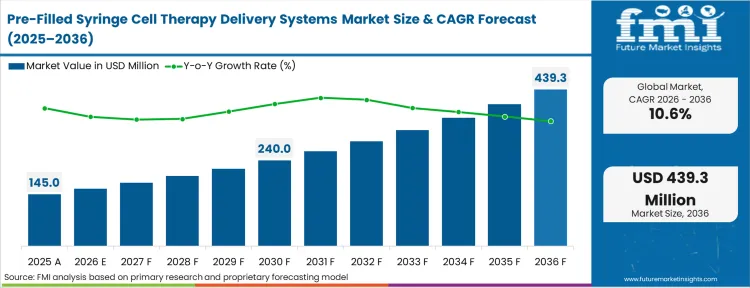
Before growth becomes self-reinforcing, the validation of cryogenic freezing directly within the primary delivery vehicle must be achieved universally. Primary packaging manufacturers trigger this inflection by developing closure integrities that withstand -196°C environments without compromising the sterile barrier upon thawing. Once this gate is passed, the operational friction of onsite thawing and re-drawing is removed entirely.
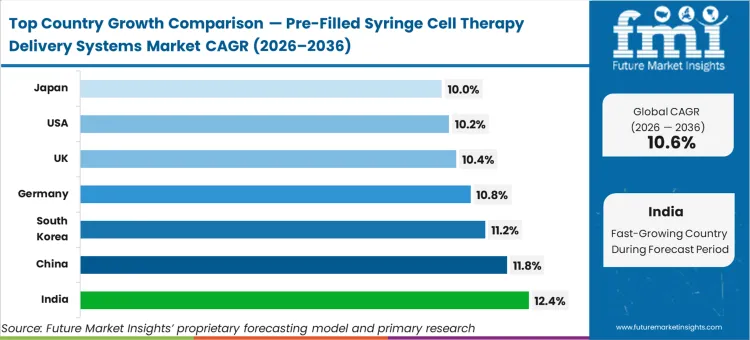
India is expected to advance at 12.4%, followed by China expanding at 11.8%, and South Korea at 11.2%. Germany is poised to record 10.8%, while the United Kingdom tracks at 10.4%, the United States grows at 10.2%, and Japan registers a 10.0% trajectory. The divergence across this range reflects the varying speeds at which decentralized cellular manufacturing hubs mandate error-proof, integrated delivery systems for their rapidly expanding domestic clinic networks.
Pre-Filled Syringe Cell Therapy Delivery Systems Market Key Takeaways
| Metric | Details |
|---|---|
| Industry Size (2026) | USD 160.4 million |
| Industry Value (2036) | USD 424.4 million |
| CAGR (2026-2036) | 10.60% |
Source: Future Market Insights (FMI) analysis, based on proprietary forecasting model and primary research
Pre-Filled Syringe Cell Therapy Delivery Systems Market Definition
The Pre-Filled Syringe Cell Therapy Delivery Systems Market encompasses primary packaging components specifically engineered to store, transport, and administer live-cell therapeutics without compromising cellular viability. Unlike traditional biologics containers, these systems are fundamentally defined by their inert material properties, advanced closure integrity under extreme cryogenic conditions, and complete elimination of silicone oils or heavy metal extractables that are toxic to living cellular suspensions.
Pre-Filled Syringe Cell Therapy Delivery Systems Market Inclusions
Scope incorporates highly specialized delivery architectures designed explicitly for cellular payloads, including cyclic olefin polymers cop polymer syringes, silicone-free specialty glass formats, and cryogenically stable elastomer closures. The market covers all integrated components that maintain direct contact with the therapeutic agent from the point of final fill-finish through bedside administration, including specialized tip caps, integrated needle mechanisms, and nested ready-to-use tub configurations required by automated aseptic filling lines.
Pre-Filled Syringe Cell Therapy Delivery Systems Market Exclusions
Standard borosilicate glass containers designed for traditional small-molecule or non-cellular biologic applications are explicitly excluded, as their tungsten residuals and required silicone lubrication render them lethal to live cell therapies. Secondary packaging, thermal shipping shippers, and standalone administration sets not integrated into the primary syringe body are also excluded, as they do not address the primary material contact challenge defining this sector.
Pre-Filled Syringe Cell Therapy Delivery Systems Market Research Methodology
- Primary Research: Procurement directors at biopharmaceutical manufacturing facilities and lead packaging engineers at specialized contract manufacturing organizations (CMOs) are interviewed to map material qualification timelines.
- Desk Research: Aggregation of regulatory master file submissions for novel primary packaging materials and supplier validation protocols for cryogenic storage components.
- Market-Sizing and Forecasting: The baseline anchors to the documented clinical pipeline volume of CAR-T, stem cell, and engineered cell therapies progressing through phase II and phase III trials.
- Data Validation and Update Cycle: Forecasts are cross-validated against capacity expansion announcements from tier-1 sterile fill-finish equipment manufacturers specializing in isolator-based robotic filling.
Segmental Analysis
Pre-Filled Syringe Cell Therapy Delivery Systems Market Analysis by Material Type
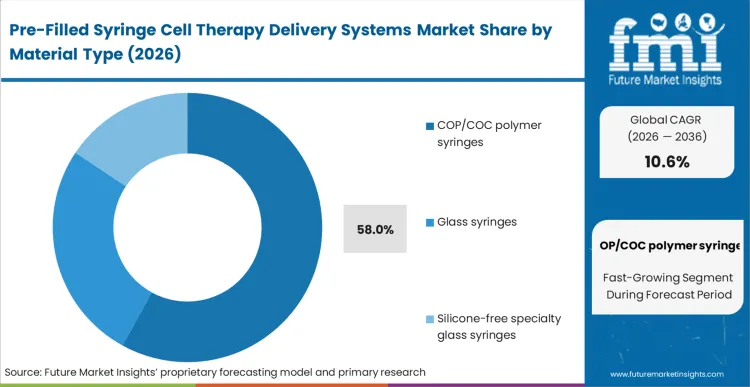
Legacy glass architectures fail to deliver the resilience required when subjecting primary containers to liquid nitrogen freezing protocols. The reason COP/COC polymer syringes command 58.0% share in 2026 stems from this operational reality: biopharmaceutical developers cannot accept the risk of catastrophic container breakage at the clinical site.
According to FMI's estimates, the inherent inertness of cyclic olefin polymers eliminates the tungsten residuals and pH shifts historically associated with glass forming processes. This material transition allows formulation scientists to stabilize sensitive cellular payloads without overcompensating for container-induced degradation. A buyer who delays migrating away from legacy bfs syringes or standard glass alternatives faces unacceptable clinical trial variances caused directly by packaging interference.
- Initial assessment: Procurement teams evaluate cyclic olefin materials based on their documented shatter resistance at deep cryogenic thresholds.
- Qualification validation: Extractable and leachable profiles validate the material's safety, confirming zero toxic interference with living cellular suspensions over extended holds.
- Renewal imperative: The operational success of eliminating breakage and silicone-induced aggregation compels therapeutic developers to standardize these platforms across their entire clinical portfolio.
Pre-Filled Syringe Cell Therapy Delivery Systems Market Analysis by Sterility / Supply Format
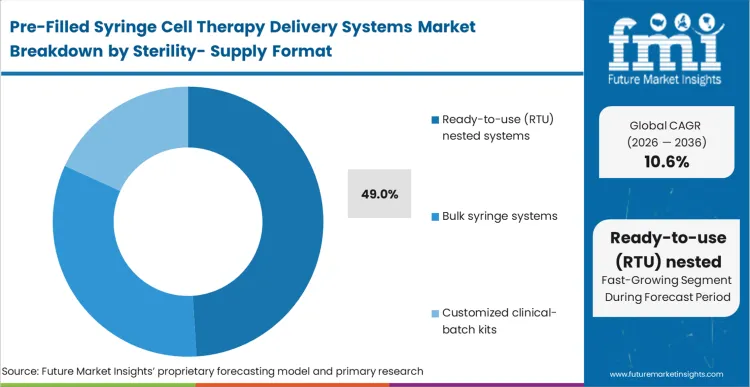
Facility managers are currently being forced to decide whether to maintain expensive, footprint-heavy washing and depyrogenation lines or outsource that burden entirely to component suppliers. Capturing a dominant 49.0% share, Ready-to-use (RTU) nested systems represent the outcome of this decision matrix. By receiving syringes and injectable drugs packaging pre-sterilized and arrayed in standard tubs, manufacturing suites can feed components directly into aseptic isolators.
As per FMI's projection, this removes the contamination risk burden upstream and allows commercial facilities to maximize their core therapeutic processing footprint. Operations directors who fail to integrate RTU systems throttle their own fill-finish throughput, permanently capping their commercial output regardless of their upstream bioreactor capacity.
- Capital avoidance: Standardizing on pre-sterilized nested tubs eliminates the need for massive capital expenditures on onsite WFI (water for injection) washing systems.
- Hidden throughput: The removal of prep-cycles uncovers hidden capacity, allowing isolator lines to run continuous fill operations.
- Total evaluation: Lifecycle analysis reveals that the premium unit cost of RTU components is entirely offset by the reduction in facility utility consumption and batch release delays.
Pre-Filled Syringe Cell Therapy Delivery Systems Market Analysis by Needle / Tip Format
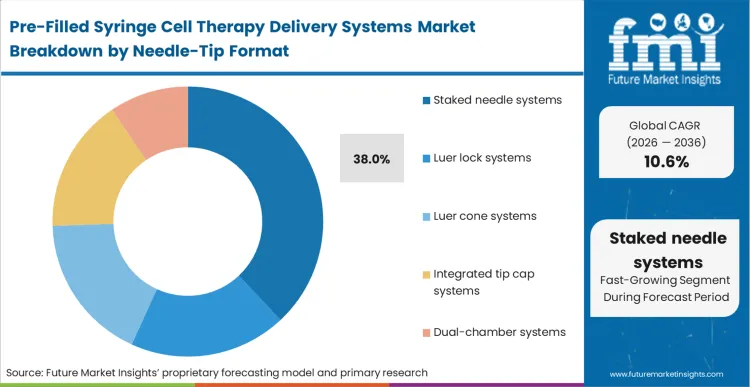
When clinicians must manually attach needles to highly concentrated, extremely expensive cell therapy doses, the risk of dead-volume waste and accidental contamination spikes dramatically. Staked needle systems resolve this critical vulnerability, explaining their 38.0% position in the market structure.
FMI analysts opine that integrating the cannula directly into the syringe body during manufacturing eliminates the luer hub, a notoriously problematic zone where living cells can sheer or aggregate during injection. This architectural choice directly preserves the functional cell count delivered into the patient's bloodstream. Therapeutic brands that overlook this dynamic and specify modular biopharmaceuticals packaging inadvertently reduce their delivered therapeutic dose, risking compromised clinical outcomes at the bedside.
- Sheer prevention: The integrated fluid path prevents turbulent flow zones, protecting delicate cellular membranes from mechanical damage during expression.
- Residual vulnerability: Despite precise engineering, improper thawing protocols at the clinical site can still induce clumping before the dose ever reaches the needle.
- Operational protocol: Clinical staff must be trained to utilize the specific expression speeds dictated by the staked needle gauge to ensure maximum viable cell delivery.
Pre-Filled Syringe Cell Therapy Delivery Systems Market Analysis by Temperature / Stability Profile
The entire logistical framework of cellular medicine relies on extreme temperature control to halt cellular metabolism during transit. Holding a 41.0% share, deep-cold and cryogenic-compatible systems align precisely with the baseline supply chain requirements of unmodified cell suspensions.
Based on FMI's assessment, primary packaging suppliers who master this segment dominate the commercial contracts because they solve the most severe engineering constraint in the entire workflow. The ability to maintain complete closure integrity down to -196°C without compromising the elastomer plunger seal determines the viability of global distribution. Procurement leaders relying on standard refrigerated injectable drug delivery components for advanced cell lines face inevitable clinical failures when temperature excursions breach the container's structural limits.
- Primary engineering: Suppliers capable of compounding specialized low-temperature elastomers secure an unshakeable position in early-stage clinical trial master files.
- Distribution constraints: Buyers must orchestrate complex liquid nitrogen supply chains that precisely match the dimensional profiles of the qualified cryogenic syringes.
- End-state landscape: Toward 2036, the supplier landscape will consolidate around the few manufacturers capable of providing automated, high-throughput cryogenic fill-finish data packages.
Pre-Filled Syringe Cell Therapy Delivery Systems Market Drivers, Restraints, and Opportunities
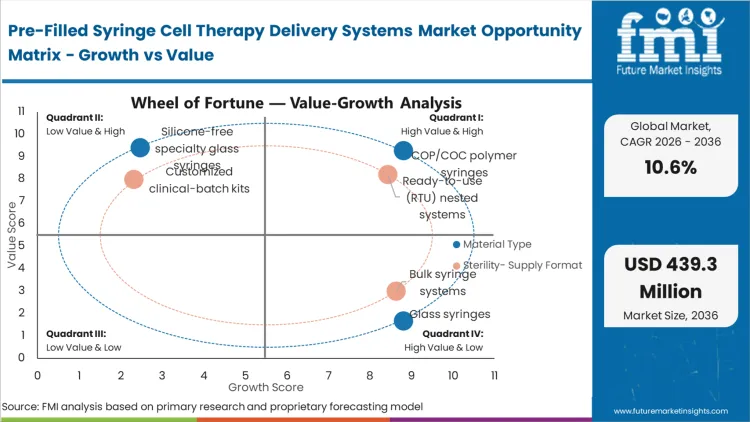
The absolute necessity to guarantee vein-to-vein cellular viability compels clinical supply chain directors to adopt specialized delivery systems. Traditional vial-to-syringe transfer protocols introduce catastrophic risks of particulate contamination, cell shearing, and dosing inaccuracies that compromise multimillion-dollar therapeutic regimens. By specifying pre-filled architectures, procurement heads eliminate the bedside handling variables entirely, securing the integrity of the dose. This moves the responsibility of final preparation from stressed hospital pharmacies directly into the highly controlled environments of GMP manufacturing suites.
The primary operational friction slowing mass adoption involves the protracted and complex material qualification cycles required by regulatory bodies. Living cell therapies exhibit profound sensitivities to subtle leachable compounds that small-molecule drugs easily tolerate, meaning every new packaging format must undergo rigorous compatibility testing that often stretches for years. This creates an immense switching cost. While advanced drug delivery technology providers offer accelerated predictive modeling data, therapeutic developers remain fundamentally constrained by the timeline required to generate real-time stability data before regulatory submission.
Opportunities in the Pre-Filled Syringe Cell Therapy Delivery Systems Market
- Automation integration: High-speed robotic fill-finish lines require standardized component geometries. Fill-finish CMOs capture immense volume by aligning their isolator tooling specifically with proprietary nested tub systems.
- Silicone elimination: Zero-silicone plunger glide requirements unlock premium pricing tiers. Material science firms seize this by developing advanced fluoropolymer coatings that ensure consistent break-loose forces without fluid lubrication.
- Cryogenic documentation: Regulatory bodies demand exhaustive proof of closure integrity during thawing. Component drug delivery solutions manufacturers who provide pre-validated cryogenic data packages radically shorten their clients' time-to-market.
Regional Analysis
The regional assessment divides the Pre-Filled Syringe Cell Therapy Delivery Systems Market into North America, Europe, Asia Pacific, and additional key regions spanning more than 40 countries.
.webp "Top Country Growth Comparison Pre Filled Syringe Cell Therapy Delivery Systems Market Cagr (2026 2036)")
| Country | CAGR (2026 to 2036) |
|---|---|
| India | 12.4% |
| China | 11.8% |
| South Korea | 11.2% |
| Germany | 10.8% |
| United Kingdom | 10.4% |
| United States | 10.2% |
| Japan | 10.0% |
Source: Future Market Insights (FMI) analysis, based on proprietary forecasting model and primary research
North America Pre-Filled Syringe Cell Therapy Delivery Systems Market Analysis
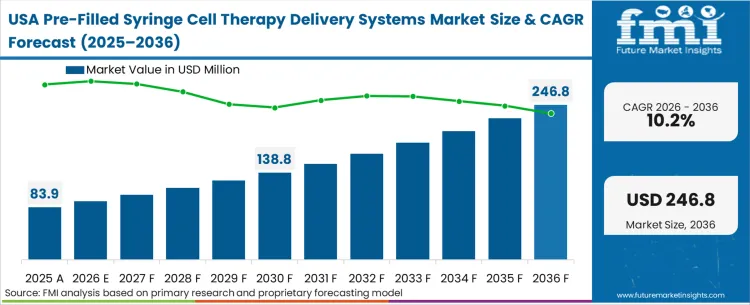
The intense concentration of advanced clinical stage cell therapy pipelines in this region dictates a procurement environment strictly focused on rapid scalability and risk mitigation. In FMI's view, North American therapeutic developers prioritize engaging packaging partners during Phase I trials to lock down material compatibility early, effectively shutting out component suppliers who attempt to enter during late-stage commercialization. This dynamic forces packaging manufacturers to invest heavily in early-phase engineering support rather than competing purely on commercial scale pricing.
- United States: Over the forecast period, the United States market is set for a CAGR of 10.2%. The massive influx of venture capital into localized autologous cell therapy manufacturing hubs requires rapid standardization of fill-finish components. Procurement directors in the United States must secure guaranteed supply allocations of COP/COC connected drug delivery devices to prevent clinical trial delays. Companies that validate their cryogenic systems early capture absolute lock-in, as FDA master file dependencies make vendor switching commercially unviable post-approval.
Europe Pre-Filled Syringe Cell Therapy Delivery Systems Market Analysis
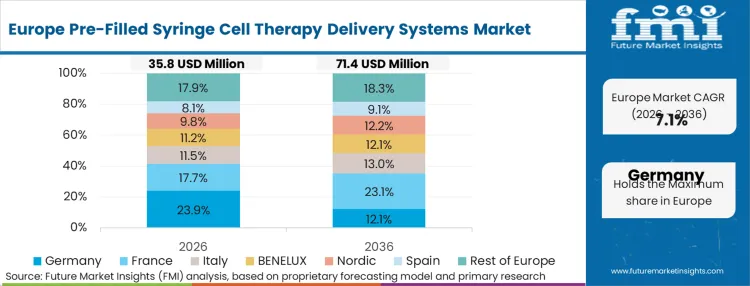
Stringent regulatory frameworks governing particulate contamination and extractable profiles shape adoption patterns fundamentally differently across this region. European medicine agencies heavily penalize any variations in therapeutic efficacy linked to primary packaging interactions, driving an aggressive switch from standard borosilicate platforms. According to FMI's estimates, this policy-led environment forces local contract manufacturing organizations to overhaul their filling architectures to accommodate specialized, silicone-free polymer systems well ahead of global mandates.
- Germany: Germany's dense concentration of specialized pharmaceutical glass and polymer engineering firms provides domestic biomanufacturers with direct, early access to next-generation cryogenic enclosures. This proximity allows German procurement teams to collaborate directly on custom tooling for automated isolator lines. FMI estimates the Pre-Filled Syringe Cell Therapy Delivery Systems market in Germany to expand at an annual growth rate of 10.8%. This advantage positions German CMOs as preferred global partners for complex cellular fill-finish operations.
- United Kingdom: The United Kingdom's expanding network of decentralized cell therapy treatment centers necessitates delivery systems that completely eliminate complex bedside preparation. The United Kingdom is poised for a compound annual growth rate of 10.4%. Clinical directors demand integrated, staked-needle formats that reduce the specialized training burden on nursing staff. Transitioning to fully ready-to-use formats streamlines the clinical workflow, clearing a major bottleneck in patient throughput at specialized oncology wards.
Asia Pacific Pre-Filled Syringe Cell Therapy Delivery Systems Market Analysis
Economic cost considerations combined with significant state-driven capital infusion in biomanufacturing infrastructure drive decisions throughout this highly dynamic geography. Asian therapeutic developers are rapidly scaling allogeneic (off-the-shelf) cell therapies, which demand massive volumes of standardized, highly reliable primary packaging. As per FMI's projection, the sheer scale of production planned across the region forces a transition from custom clinical batches to fully automated, high-throughput nested syringe formats to maintain unit economics.
- China: Massive state funding directed toward overtaking Western advanced therapy manufacturing capacities dictates a rapid absorption of global best-in-class packaging technologies. Chinese biomanufacturers are bypassing legacy development steps and moving directly to isolator-compatible RTU systems. The Chinese sector is poised to expand at an 11.8% CAGR. Following this aggressive capacity build-out, the domestic market will inevitably transition toward developing its own proprietary, export-grade polymer closure systems.
- South Korea: South Korea's industry is expected to demonstrate a CAGR of 11.2%. The highly concentrated contract manufacturing sector aggressively pursues global cell therapy contracts by offering state-of-the-art sterile fill-finish capabilities. Facility operators here must integrate universally accepted subcutaneous drug delivery devices components to satisfy the compliance demands of their Western client base. Securing early master supply agreements with top-tier polymer syringe providers allows these CMOs to capture highly lucrative international commercial manufacturing contracts.
- Japan: Stringent domestic qualification standards regarding extractables and leachables force Japanese therapeutic developers into incredibly prolonged material validation cycles. The Japanese market for Pre-Filled Syringe Cell Therapy Delivery Systems is forecast to register a CAGR of 10.0%. While this cautious approach suppresses immediate volume growth compared to regional neighbours, it virtually guarantees zero product recalls related to container-induced cellular degradation, reflecting a practitioner reality focused entirely on absolute patient safety over speed to market.
- India: India's rapid expansion of affordable, decentralized cellular therapy treatment hubs requires robust, highly standardized delivery infrastructure capable of withstanding varied logistical conditions. Procurement leaders in India face the complex challenge of balancing extreme cost sensitivity with the absolute requirement for cryogenic integrity. Demand in India is set to grow at 12.4%. By establishing domestic manufacturing partnerships for critical polymer components, the country sets a trajectory to fundamentally disrupt global pricing paradigms for cellular therapeutics.
FMI's report includes extensive coverage of additional countries not detailed in these bullets. Across these broader emerging markets, a clear pattern emerges where the lack of established legacy biological manufacturing infrastructure accelerates the adoption of advanced, integrated polymer systems, bypassing glass entirely.
Competitive Aligners for Market Players
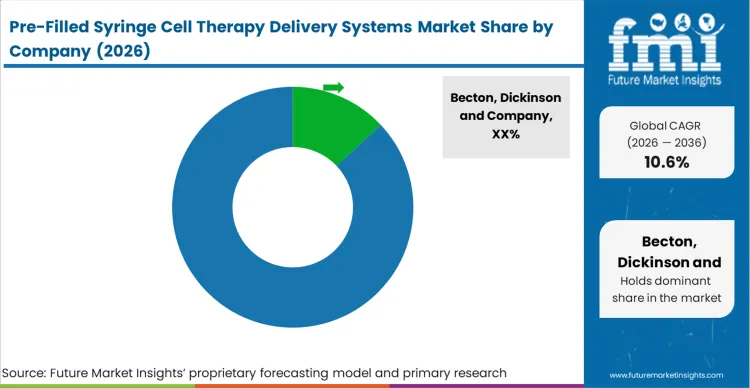
The competitive landscape for cell therapy delivery systems is intensely concentrated because the validation barrier to enter this space requires years of specialized material science development. Leading packaging manufacturers like Becton, Dickinson and Company, SCHOTT Pharma, and Gerresheimer hold commanding positions precisely because they own the proprietary compounding formulas for cryogenically stable polymers and silicone-free elastomer coatings. Biopharmaceutical buyers do not select vendors based on unit pricing; they filter exclusively on the availability of robust, pre-compiled Drug Master Files (DMFs) and proven extractable/leachable data that can survive regulatory scrutiny.
Incumbents like Stevanato Group and West Pharmaceutical Services possess a distinct advantage rooted in their deep integration with the world's leading fill-finish equipment manufacturers. This alignment ensures their nested tub formats run flawlessly on high-speed robotic isolators. Challengers attempting to disrupt this space must build comprehensive analytical testing capabilities to prove their novel materials do not alter cellular phenotypes under deep cold. Creating a technically superior auto injectors component is insufficient; vendors must provide the exhaustive scientific documentation proving the container's absolute biological inertness.
As commercial cell therapy volumes scale toward 2036, the tension between buyer preferences for dual-sourcing and the reality of vendor lock-in will define procurement strategies. Large therapeutic developers desperately want to qualify multiple suppliers to mitigate supply chain risks, but the immense cost of validating a second primary packaging system often makes this impossible. Consequently, the market is poised to become even more concentrated, with top-tier vendors absorbing smaller specialized elastomer and polymer firms to offer complete, fully integrated containment ecosystems that lock buyers in from Phase I through commercialization.
Key Players in Pre-Filled Syringe Cell Therapy Delivery Systems Market
- Becton, Dickinson and Company
- SCHOTT Pharma AG & Co. KGaA
- Gerresheimer AG
- Stevanato Group S.p.A.
- West Pharmaceutical Services, Inc.
- Terumo Corporation
- Nipro Corporation
Scope of the Report
| Metric | Value |
|---|---|
| Quantitative Units | USD 160.4 million to USD 424.4 million, at a CAGR of 10.60% |
| Market Definition | The Pre-Filled Syringe Cell Therapy Delivery Systems Market encompasses primary packaging components specifically engineered to store, transport, and administer live-cell therapeutics without compromising cellular viability at cryogenic temperatures. |
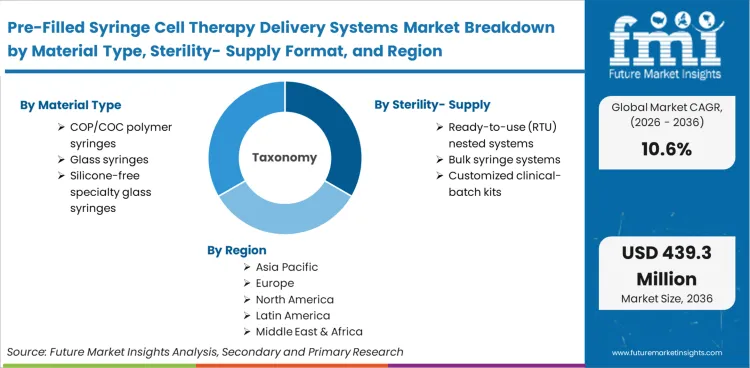
| Material Type Segmentation | COP/COC polymer syringes, Glass syringes, Silicone-free specialty glass syringes |
| Sterility / Supply Format Segmentation | Ready-to-use (RTU) nested systems, Bulk syringe systems, Customized clinical-batch kits |
| Needle / Tip Format Segmentation | Staked needle systems, Luer lock systems, Luer cone systems, Integrated tip cap systems, Dual-chamber systems |
| Temperature / Stability Profile Segmentation | Deep-cold / cryogenic-compatible systems, Refrigerated systems, Ambient / short-hold systems |
| Regions Covered | North America, Europe, Asia Pacific |
| Countries Covered | United States, Germany, United Kingdom, China, Japan, South Korea, India, and 40 plus countries |
| Key Companies Profiled | Becton, Dickinson and Company, SCHOTT Pharma AG & Co. KGaA, Gerresheimer AG, Stevanato Group S.p.A., West Pharmaceutical Services, Inc., Terumo Corporation, Nipro Corporation |
| Forecast Period | 2026 to 2036 |
| Approach | Procurement directors and packaging engineers were interviewed to establish material qualification timelines. The data baseline anchors to commercialized cell therapy doses and active clinical trial pipelines. Forecasts were cross-validated against capacity expansion metrics from sterile fill-finish equipment manufacturers. |
Source: Future Market Insights (FMI) analysis, based on proprietary forecasting model and primary research
Pre-Filled Syringe Cell Therapy Delivery Systems Market Analysis by Segments
Material Type:
- COP/COC polymer syringes
- Glass syringes
- Silicone-free specialty glass syringes
Sterility / Supply Format:
- Ready-to-use (RTU) nested systems
- Bulk syringe systems
- Customized clinical-batch kits
Needle / Tip Format:
- Staked needle systems
- Luer lock systems
- Luer cone systems
- Integrated tip cap systems
- Dual-chamber systems
Temperature / Stability Profile:
- Deep-cold / cryogenic-compatible systems
- Refrigerated systems
- Ambient / short-hold systems
Region:
- North America
- United States
- Europe
- Germany
- United Kingdom
- Asia Pacific
- China
- Japan
- South Korea
- India
Frequently Asked Questions
How large is the Pre-Filled Syringe Cell Therapy Delivery Systems Market in 2026?
The market is valued at USD 160.4 million in 2026. This figure reflects the immediate capital being deployed by clinical developers to transition away from legacy hospital-based transfer protocols toward highly controlled, point-of-care delivery systems.
What will it be valued at by 2036?
The sector is projected to reach USD 424.4 million by 2036. This expansion signals the universal integration of specialized living-cell enclosures as commercial cell therapy pipelines mature and demand high-throughput, automated fill-finish architectures.
What CAGR is projected?
A compound annual growth rate of 10.60% is forecast from 2026 to 2036. This steady pace tracks the rigorous, multi-year material qualification cycles required by regulatory bodies to validate new primary packaging, rather than a rapid consumer-style adoption curve.
Which Material Type segment leads?
COP/COC polymer syringes hold a dominant 58.0% share. Biopharmaceutical buyers select these materials because they eliminate the catastrophic breakage risks associated with glass at cryogenic temperatures and remove tungsten residuals that threaten delicate cellular suspensions.
Which Sterility / Supply Format segment leads?
Ready-to-use (RTU) nested systems capture a 49.0% share. Facility managers prioritize these formats because they arrive pre-sterilized, allowing commercial manufacturing suites to bypass expensive onsite washing equipment and feed directly into automated robotic isolators.
Which Needle / Tip Format segment leads?
Staked needle systems represent 38.0% of the market. Integrating the cannula directly into the syringe body prevents the mechanical sheer forces and dead-volume waste typically seen at modular luer hubs, thereby maximizing the viable cell dose delivered to the patient.
What drives rapid growth?
The absolute necessity to guarantee vein-to-vein cellular viability forces clinical operations to adopt these pre-filled systems. By eliminating the manual bedside transfer steps that introduce particulate contamination and dosing errors, therapeutic developers secure the integrity of multimillion-dollar treatments.
What is the primary restraint?
The absolute necessity to guarantee vein-to-vein cellular viability forces clinical operations to adopt these pre-filled systems. By eliminating the manual bedside transfer steps that introduce particulate contamination and dosing errors, therapeutic developers secure the integrity of multimillion-dollar treatments.
What is the primary restraint?
The intense regulatory burden of extractable and leachable testing creates massive friction. Packaging engineers must generate years of real-time stability data to prove novel materials do not alter cellular phenotypes under deep cold, severely delaying the commercial implementation of new formats.
Which country grows fastest?
India advances at a leading 12.4% CAGR, outpacing China's 11.8%. While China focuses on massive state-backed scale, India's trajectory is driven by the rapid decentralization of its clinical networks, requiring highly standardized, error-proof delivery systems that can function across varied domestic logistical conditions.
How do European extractable regulations impact vendor selection?
European medicine agencies maintain zero-tolerance policies for container-induced cellular degradation. This forces regional CMOs to bypass legacy glass platforms entirely and mandate fully silicone-free polymer systems well ahead of global compliance deadlines.
Why is silicone lubrication being eliminated from these systems?
Standard silicone oil, used to ensure smooth plunger glide, actively induces protein aggregation and subsequent cell death over extended storage holds. Eliminating it forces material science firms to develop advanced fluoropolymer coatings that maintain functionality without toxic fluid interference.
What role do Drug Master Files (DMFs) play in competitive dynamics?
Buyers filter out inexperienced vendors explicitly based on the lack of comprehensive DMFs. A supplier that provides robust, pre-compiled analytical testing data for cryogenic conditions radically shortens the therapeutic developer's time-to-market, locking in long-term master supply agreements.
Why do buyers struggle to dual-source in this market?
Therapeutic developers desire multiple suppliers to mitigate supply chain risks, but the immense financial and chronological cost of running full stability validation on a second primary packaging format effectively binds them to their initial Phase I vendor selection.
How does cryogenic storage (-196°C) alter component engineering?
Standard rubber plungers shatter and lose closure integrity when exposed to liquid nitrogen environments. Suppliers must formulate specialized low-temperature elastomers that contract predictably with the polymer barrel, ensuring the sterile barrier remains uncompromised upon rapid bedside thawing.
Why are RTU nested formats critical for commercial scalability?
As cell therapies move from bespoke clinical batches to commercial volumes, manual filling becomes impossible. RTU tubs are dimensionally standardized to interface flawlessly with automated isolator tooling, removing the filling bottleneck at the contract manufacturing level.
How does the United States market dictate procurement timing?
The intense venture-backed competition in the United States cell therapy sector means clinical trial delays are financially ruinous. Consequently, United States procurement directors must lock down guaranteed supply allocations of validated polymer enclosures during Phase I, preventing late-entry suppliers from capturing share.
What is the operational consequence of using legacy vial-and-transfer methods?
Hospitals attempting to extract cellular suspensions from standard vials into administration syringes routinely document up to a 20% loss in viable cell count due to mechanical sheer and container dead-volume, directly degrading the patient's therapeutic outcome.
How do staked needles protect delicate cellular membranes?
By eliminating the internal ridges and turbulent flow zones inherent in modular attachable hubs, staked architectures maintain a smooth, continuous fluid path. This prevents cells from aggregating or bursting as they are expressed from the syringe barrel into the administration line.
What advantage do incumbents have over new entrants?
Established packaging giants have spent decades integrating their dimensional specifications with the world's leading sterile filling equipment manufacturers. A new entrant cannot simply produce a viable syringe; they must prove it will run without jamming on the exact robotic lines utilized by global CMOs.
Why does Japan exhibit a slower 10.0% CAGR compared to its neighbors?
Japanese regulatory authorities require incredibly prolonged, localized material validation cycles before approving novel primary packaging. This cautious framework suppresses immediate volume spikes but ensures long-term operational stability free from container-related clinical trial failures.
How does the shift to allogeneic (off-the-shelf) therapies change the packaging demand?
Autologous therapies require single-batch, bespoke handling, whereas allogeneic treatments are manufactured in large, centralized runs for broad distribution. This change mandates the adoption of high-throughput, automated fill-finish injectable drugs market infrastructure, drastically accelerating the consumption of standardized nested syringe tubs.
What is the stakes for a biomanufacturer failing to secure cryogenic closure data?
Without exhaustive proof that the sterile barrier holds during both freezing and thawing cycles, regulatory agencies will refuse to approve the investigational new drug (IND) application. The biomanufacturer is then forced to restart multi-year stability trials, potentially losing their commercial viability entirely.
Preview the report firsthand - request a free sample
Get SampleGet the brochure for pricing and purchase details.
Get PDFTable of Content
- Executive Summary
- Global Market Outlook
- Demand-side Trends
- Supply-side Trends
- Technology Roadmap Analysis
- Analysis and Recommendations
- Market Overview
- Market Coverage / Taxonomy
- Market Definition / Scope / Limitations
- Research Methodology
- Chapter Orientation
- Analytical Lens and Working Hypotheses
- Market Structure, Signals, and Trend Drivers
- Benchmarking and Cross-market Comparability
- Market Sizing, Forecasting, and Opportunity Mapping
- Research Design and Evidence Framework
- Desk Research Programme (Secondary Evidence)
- Company Annual and Sustainability Reports
- Peer-reviewed Journals and Academic Literature
- Corporate Websites, Product Literature, and Technical Notes
- Earnings Decks and Investor Briefings
- Statutory Filings and Regulatory Disclosures
- Technical White Papers and Standards Notes
- Trade Journals, Industry Magazines, and Analyst Briefs
- Conference Proceedings, Webinars, and Seminar Materials
- Government Statistics Portals and Public Data Releases
- Press Releases and Reputable Media Coverage
- Specialist Newsletters and Curated Briefings
- Sector Databases and Reference Repositories
- FMI Internal Proprietary Databases and Historical Market Datasets
- Subscription Datasets and Paid Sources
- Social Channels, Communities, and Digital Listening Inputs
- Additional Desk Sources
- Expert Input and Fieldwork (Primary Evidence)
- Primary Modes
- Qualitative Interviews and Expert Elicitation
- Quantitative Surveys and Structured Data Capture
- Blended Approach
- Why Primary Evidence is Used
- Field Techniques
- Interviews
- Surveys
- Focus Groups
- Observational and In-context Research
- Social and Community Interactions
- Stakeholder Universe Engaged
- C-suite Leaders
- Board Members
- Presidents and Vice Presidents
- R&D and Innovation Heads
- Technical Specialists
- Domain Subject-matter Experts
- Scientists
- Physicians and Other Healthcare Professionals
- Governance, Ethics, and Data Stewardship
- Research Ethics
- Data Integrity and Handling
- Primary Modes
- Tooling, Models, and Reference Databases
- Desk Research Programme (Secondary Evidence)
- Data Engineering and Model Build
- Data Acquisition and Ingestion
- Cleaning, Normalisation, and Verification
- Synthesis, Triangulation, and Analysis
- Quality Assurance and Audit Trail
- Market Background
- Market Dynamics
- Drivers
- Restraints
- Opportunity
- Trends
- Scenario Forecast
- Demand in Optimistic Scenario
- Demand in Likely Scenario
- Demand in Conservative Scenario
- Opportunity Map Analysis
- Product Life Cycle Analysis
- Supply Chain Analysis
- Investment Feasibility Matrix
- Value Chain Analysis
- PESTLE and Porter’s Analysis
- Regulatory Landscape
- Regional Parent Market Outlook
- Production and Consumption Statistics
- Import and Export Statistics
- Market Dynamics
- Global Market Analysis 2021 to 2025 and Forecast, 2026 to 2036
- Historical Market Size Value (USD Million) Analysis, 2021 to 2025
- Current and Future Market Size Value (USD Million) Projections, 2026 to 2036
- Y-o-Y Growth Trend Analysis
- Absolute $ Opportunity Analysis
- Global Market Pricing Analysis 2021 to 2025 and Forecast 2026 to 2036
- Global Market Analysis 2021 to 2025 and Forecast 2026 to 2036, By Material Type
- Introduction / Key Findings
- Historical Market Size Value (USD Million) Analysis By Material Type , 2021 to 2025
- Current and Future Market Size Value (USD Million) Analysis and Forecast By Material Type , 2026 to 2036
- COP/COC polymer syringes
- Glass syringes
- Silicone-free specialty glass syringes
- COP/COC polymer syringes
- Y-o-Y Growth Trend Analysis By Material Type , 2021 to 2025
- Absolute $ Opportunity Analysis By Material Type , 2026 to 2036
- Global Market Analysis 2021 to 2025 and Forecast 2026 to 2036, By Sterility / Supply Format
- Introduction / Key Findings
- Historical Market Size Value (USD Million) Analysis By Sterility / Supply Format, 2021 to 2025
- Current and Future Market Size Value (USD Million) Analysis and Forecast By Sterility / Supply Format, 2026 to 2036
- Ready-to-use (RTU) nested systems
- Bulk syringe systems
- Customized clinical-batch kits
- Ready-to-use (RTU) nested systems
- Y-o-Y Growth Trend Analysis By Sterility / Supply Format, 2021 to 2025
- Absolute $ Opportunity Analysis By Sterility / Supply Format, 2026 to 2036
- Global Market Analysis 2021 to 2025 and Forecast 2026 to 2036, By Needle / Tip Format
- Introduction / Key Findings
- Historical Market Size Value (USD Million) Analysis By Needle / Tip Format, 2021 to 2025
- Current and Future Market Size Value (USD Million) Analysis and Forecast By Needle / Tip Format, 2026 to 2036
- Staked needle systems
- Luer lock systems
- Luer cone systems
- Integrated tip cap systems
- Dual-chamber systems
- Staked needle systems
- Y-o-Y Growth Trend Analysis By Needle / Tip Format, 2021 to 2025
- Absolute $ Opportunity Analysis By Needle / Tip Format, 2026 to 2036
- Global Market Analysis 2021 to 2025 and Forecast 2026 to 2036, By Region
- Introduction
- Historical Market Size Value (USD Million) Analysis By Region, 2021 to 2025
- Current Market Size Value (USD Million) Analysis and Forecast By Region, 2026 to 2036
- North America
- Latin America
- Western Europe
- Eastern Europe
- East Asia
- South Asia and Pacific
- Middle East & Africa
- Market Attractiveness Analysis By Region
- North America Market Analysis 2021 to 2025 and Forecast 2026 to 2036, By Country
- Historical Market Size Value (USD Million) Trend Analysis By Market Taxonomy, 2021 to 2025
- Market Size Value (USD Million) Forecast By Market Taxonomy, 2026 to 2036
- By Country
- USA
- Canada
- Mexico
- By Material Type
- By Sterility / Supply Format
- By Needle / Tip Format
- By Country
- Market Attractiveness Analysis
- By Country
- By Material Type
- By Sterility / Supply Format
- By Needle / Tip Format
- Key Takeaways
- Latin America Market Analysis 2021 to 2025 and Forecast 2026 to 2036, By Country
- Historical Market Size Value (USD Million) Trend Analysis By Market Taxonomy, 2021 to 2025
- Market Size Value (USD Million) Forecast By Market Taxonomy, 2026 to 2036
- By Country
- Brazil
- Chile
- Rest of Latin America
- By Material Type
- By Sterility / Supply Format
- By Needle / Tip Format
- By Country
- Market Attractiveness Analysis
- By Country
- By Material Type
- By Sterility / Supply Format
- By Needle / Tip Format
- Key Takeaways
- Western Europe Market Analysis 2021 to 2025 and Forecast 2026 to 2036, By Country
- Historical Market Size Value (USD Million) Trend Analysis By Market Taxonomy, 2021 to 2025
- Market Size Value (USD Million) Forecast By Market Taxonomy, 2026 to 2036
- By Country
- Germany
- UK
- Italy
- Spain
- France
- Nordic
- BENELUX
- Rest of Western Europe
- By Material Type
- By Sterility / Supply Format
- By Needle / Tip Format
- By Country
- Market Attractiveness Analysis
- By Country
- By Material Type
- By Sterility / Supply Format
- By Needle / Tip Format
- Key Takeaways
- Eastern Europe Market Analysis 2021 to 2025 and Forecast 2026 to 2036, By Country
- Historical Market Size Value (USD Million) Trend Analysis By Market Taxonomy, 2021 to 2025
- Market Size Value (USD Million) Forecast By Market Taxonomy, 2026 to 2036
- By Country
- Russia
- Poland
- Hungary
- Balkan & Baltic
- Rest of Eastern Europe
- By Material Type
- By Sterility / Supply Format
- By Needle / Tip Format
- By Country
- Market Attractiveness Analysis
- By Country
- By Material Type
- By Sterility / Supply Format
- By Needle / Tip Format
- Key Takeaways
- East Asia Market Analysis 2021 to 2025 and Forecast 2026 to 2036, By Country
- Historical Market Size Value (USD Million) Trend Analysis By Market Taxonomy, 2021 to 2025
- Market Size Value (USD Million) Forecast By Market Taxonomy, 2026 to 2036
- By Country
- China
- Japan
- South Korea
- By Material Type
- By Sterility / Supply Format
- By Needle / Tip Format
- By Country
- Market Attractiveness Analysis
- By Country
- By Material Type
- By Sterility / Supply Format
- By Needle / Tip Format
- Key Takeaways
- South Asia and Pacific Market Analysis 2021 to 2025 and Forecast 2026 to 2036, By Country
- Historical Market Size Value (USD Million) Trend Analysis By Market Taxonomy, 2021 to 2025
- Market Size Value (USD Million) Forecast By Market Taxonomy, 2026 to 2036
- By Country
- India
- ASEAN
- Australia & New Zealand
- Rest of South Asia and Pacific
- By Material Type
- By Sterility / Supply Format
- By Needle / Tip Format
- By Country
- Market Attractiveness Analysis
- By Country
- By Material Type
- By Sterility / Supply Format
- By Needle / Tip Format
- Key Takeaways
- Middle East & Africa Market Analysis 2021 to 2025 and Forecast 2026 to 2036, By Country
- Historical Market Size Value (USD Million) Trend Analysis By Market Taxonomy, 2021 to 2025
- Market Size Value (USD Million) Forecast By Market Taxonomy, 2026 to 2036
- By Country
- Kingdom of Saudi Arabia
- Other GCC Countries
- Turkiye
- South Africa
- Other African Union
- Rest of Middle East & Africa
- By Material Type
- By Sterility / Supply Format
- By Needle / Tip Format
- By Country
- Market Attractiveness Analysis
- By Country
- By Material Type
- By Sterility / Supply Format
- By Needle / Tip Format
- Key Takeaways
- Key Countries Market Analysis
- USA
- Pricing Analysis
- Market Share Analysis, 2025
- By Material Type
- By Sterility / Supply Format
- By Needle / Tip Format
- Canada
- Pricing Analysis
- Market Share Analysis, 2025
- By Material Type
- By Sterility / Supply Format
- By Needle / Tip Format
- Mexico
- Pricing Analysis
- Market Share Analysis, 2025
- By Material Type
- By Sterility / Supply Format
- By Needle / Tip Format
- Brazil
- Pricing Analysis
- Market Share Analysis, 2025
- By Material Type
- By Sterility / Supply Format
- By Needle / Tip Format
- Chile
- Pricing Analysis
- Market Share Analysis, 2025
- By Material Type
- By Sterility / Supply Format
- By Needle / Tip Format
- Germany
- Pricing Analysis
- Market Share Analysis, 2025
- By Material Type
- By Sterility / Supply Format
- By Needle / Tip Format
- UK
- Pricing Analysis
- Market Share Analysis, 2025
- By Material Type
- By Sterility / Supply Format
- By Needle / Tip Format
- Italy
- Pricing Analysis
- Market Share Analysis, 2025
- By Material Type
- By Sterility / Supply Format
- By Needle / Tip Format
- Spain
- Pricing Analysis
- Market Share Analysis, 2025
- By Material Type
- By Sterility / Supply Format
- By Needle / Tip Format
- France
- Pricing Analysis
- Market Share Analysis, 2025
- By Material Type
- By Sterility / Supply Format
- By Needle / Tip Format
- India
- Pricing Analysis
- Market Share Analysis, 2025
- By Material Type
- By Sterility / Supply Format
- By Needle / Tip Format
- ASEAN
- Pricing Analysis
- Market Share Analysis, 2025
- By Material Type
- By Sterility / Supply Format
- By Needle / Tip Format
- Australia & New Zealand
- Pricing Analysis
- Market Share Analysis, 2025
- By Material Type
- By Sterility / Supply Format
- By Needle / Tip Format
- China
- Pricing Analysis
- Market Share Analysis, 2025
- By Material Type
- By Sterility / Supply Format
- By Needle / Tip Format
- Japan
- Pricing Analysis
- Market Share Analysis, 2025
- By Material Type
- By Sterility / Supply Format
- By Needle / Tip Format
- South Korea
- Pricing Analysis
- Market Share Analysis, 2025
- By Material Type
- By Sterility / Supply Format
- By Needle / Tip Format
- Russia
- Pricing Analysis
- Market Share Analysis, 2025
- By Material Type
- By Sterility / Supply Format
- By Needle / Tip Format
- Poland
- Pricing Analysis
- Market Share Analysis, 2025
- By Material Type
- By Sterility / Supply Format
- By Needle / Tip Format
- Hungary
- Pricing Analysis
- Market Share Analysis, 2025
- By Material Type
- By Sterility / Supply Format
- By Needle / Tip Format
- Kingdom of Saudi Arabia
- Pricing Analysis
- Market Share Analysis, 2025
- By Material Type
- By Sterility / Supply Format
- By Needle / Tip Format
- Turkiye
- Pricing Analysis
- Market Share Analysis, 2025
- By Material Type
- By Sterility / Supply Format
- By Needle / Tip Format
- South Africa
- Pricing Analysis
- Market Share Analysis, 2025
- By Material Type
- By Sterility / Supply Format
- By Needle / Tip Format
- USA
- Market Structure Analysis
- Competition Dashboard
- Competition Benchmarking
- Market Share Analysis of Top Players
- By Regional
- By Material Type
- By Sterility / Supply Format
- By Needle / Tip Format
- Competition Analysis
- Competition Deep Dive
- Becton, Dickinson and Company
- Overview
- Product Portfolio
- Profitability by Market Segments (Product/Age /Sales Channel/Region)
- Sales Footprint
- Strategy Overview
- Marketing Strategy
- Product Strategy
- Channel Strategy
- SCHOTT Pharma AG & Co. KGaA
- Gerresheimer AG
- Stevanato Group S.p.A.
- West Pharmaceutical Services, Inc.
- Terumo Corporation
- Nipro Corporation
- Becton, Dickinson and Company
- Competition Deep Dive
- Assumptions & Acronyms Used


