

- Industry Size (2026)
- USD 77.0 Mn
- Forecast (2036)
- USD 247.8 Mn
- CAGR (2026 to 2036)
- 12.4%
Transdermal Peptide Hormone Replacement Patches Market Size, Market Forecast and Outlook By FMI
The transdermal peptide hormone replacement patches market was valued at USD 68.5 million in 2025. The hormone microneedle patch adoption is expected to cross USD 77.0 million in 2026 at a CAGR of 12.4% during the forecast period. Steady investment advances the peptide hormone transdermal patch market size to USD 247.8 million through 2036 as the necessity to circumvent gastrointestinal degradation of large-molecule therapies permanently drives developers away from oral reformulations.
Clinical sponsors shaping the non-injectable peptide hormone delivery market are actively transitioning away from traditional subcutaneous injection pens, forced to prioritize patient adherence in chronic endocrine management. This requires substituting familiar liquid vial infrastructure with solid-state microneedle drug delivery systems. Clinical programs that delay integrating transdermal pathways face severe commercial friction, as patients increasingly reject daily injectable regimens. The transition fundamentally redefines the administration lifecycle, moving the burden of compliance from patient behaviour to device design.
Summary of Transdermal Peptide Hormone Replacement Patches Market
- Transdermal Peptide Hormone Replacement Patches Market Definition:
- The market consists of specialized transdermal delivery architectures, primarily microneedle systems, designed to transport large-molecule peptide hormones systemically. It bridges the gap between patient resistance to chronic injections and the biological impossibility of oral peptide delivery.
- Demand Drivers in the Market:
- Chronic adherence failure forces clinical sponsors to redesign delivery mechanics for osteoporosis regimens.
- Cold-chain logistical constraints compel formulation architects to pursue solid-state, room-temperature stable peptide formats.
- Rising preference for home-administered therapies pushes healthcare providers to specify formats requiring zero sharps-disposal infrastructure.
- Key Segments Analyzed in the FMI Report:
- Parathyroid hormone analogs (abaloparatide, teriparatide, PTH 1-34): Parathyroid hormone analogues are poised to grab 46.0% share in 2026, driven by intense clinical focus on bone-anabolic replacement therapies.
- Coated solid microneedle / solid microstructured transdermal systems: Coated solid microneedle / solid microstructured transdermal systems is projected to record 41.0% share in 2026, as the technology offers the most direct regulatory path from existing injectable data.
- Osteoporosis and bone-anabolic replacement: Osteoporosis and bone-anabolic replacement is expected to account for 58.0% share in 2026, reflecting the urgent commercial need to address high dropout rates in daily injectable treatments.
- Specialty endocrinology / osteoporosis clinics: Specialty endocrinology / osteoporosis clinics is estimated to hold 48.0% share in 2026, acting as the primary qualification gatekeepers for novel delivery systems.
- Sponsor-led clinical programs and trial supply: Sponsor-led clinical programs and trial supply is likely to hold 39.0% share in 2026, representing the pre-commercial reality of this specific technology niche.
- China: 14.2% compound growth, driven by rapid scaling of domestic microarray manufacturing capabilities and a massive addressable osteoporosis patient base.
- Analyst Opinion at FMI:
- Sabyasachi Ghosh, Principal Analyst, Healthcare, at FMI, opines, "The generalist assumption in the endocrinology drug delivery market is that microneedle adoption follows simple patient preference for needle-free options. However, the actual regulatory reality is much harsher. When evaluating the abaloparatide patch vs abaloparatide injection, developers learned that failing a non-inferiority margin for bone mineral density immediately stalls the program, regardless of patient preference. The clinical burden of proving bioequivalence with legacy hormone replacement therapy is the true gatekeeper of commercialization."
- Strategic Implications / Executive Takeaways:
- CDMOs must standardize automated coating processes to capture platform licensing agreements before pivotal trials conclude.
- Clinical sponsors should integrate transdermal arms early in Phase II to avoid the massive cost of retrofitting delivery systems post-approval.
- Specialty pharmacies face imminent changes requiring distinct distribution protocols for room-temperature solid-state hormone patches.
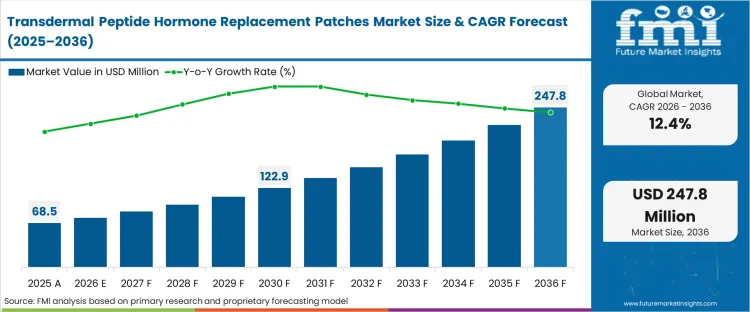
The threshold condition unlocking the transdermal peptide patch forecast is the standardization of coating technologies that preserve peptide stability at room temperature. Once contract manufacturers demonstrate scalable, automated coating of high-density microarray structures without degrading the active hormone, the peptide replacement therapy patch industry rapidly unblocks. Formulation stability ceases to be the primary gating factor, allowing subsequent trial phases to move with accelerated velocity.
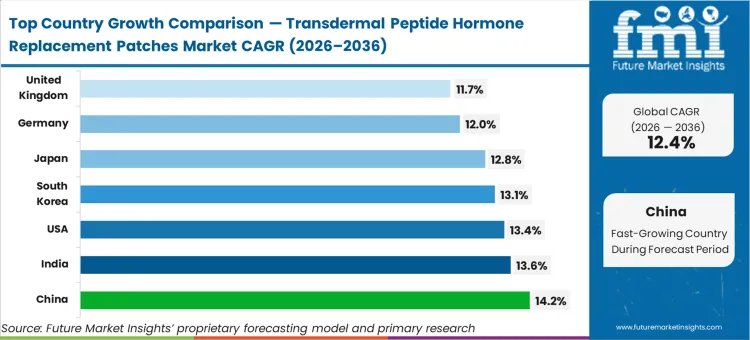
China leads the growth trajectory at a 14.2% compound rate, followed by India at 13.6% and the United States at 13.4%, where deep osteoporosis patient pools intersect with strong patch innovation ecosystems. South Korea tracks at 13.1%, while Japan is estimated to advance at 12.8%. Germany is expected to expand at 12.0%, and the United Kingdom follows at 11.7%. The divergence across this peptide hormone patch CAGR reflects varying technology-assessment thresholds, where markets demanding extensive pivotal success evidence scale more deliberately than those prioritising earlier pilot uptake.
Transdermal Peptide Hormone Replacement Patches Market Key Takeaways
| Metric | Details |
|---|---|
| Industry Size (2026) | USD 77.0 million |
| Industry Value (2036) | USD 247.8 million |
| CAGR (2026-2036) | 12.4% |
Source: Future Market Insights (FMI) analysis, based on proprietary forecasting model and primary research
Transdermal Peptide Hormone Replacement Patches Market Definition
Answering what are transdermal peptide hormone replacement patches, this sector encompasses microstructured systems engineered to deliver large-molecule endocrine therapies across the stratum corneum. It differs from conventional passive patches by using active mechanical action to deliver peptides into the body. Excluded from this definition are passive estrogen patches and non-therapeutic continuous hormone monitoring devices.
Transdermal Peptide Hormone Replacement Patches Market Inclusions
Scope includes solid coated microneedles, dissolving microneedles, and hydrogel-forming systems carrying parathyroid hormone analogs, calcitonin, or growth hormones. Platforms actively in clinical trial phases or specialised commercial supply for endocrine replacement fall within this boundary. The integration of a specialized microarray patch containing proprietary hormone formulations represents the core commercial unit evaluated.
Transdermal Peptide Hormone Replacement Patches Market Exclusions
Passive transdermal patches for estrogen or testosterone replacement are explicitly excluded, as small-molecule diffusion relies on entirely different formulation architectures. Similarly, microneedle systems designed for vaccine delivery or continuous glucose monitoring are outside scope. These exclusions maintain analytical focus on the specific manufacturing and stability challenges inherent to peptide hormone delivery.
Transdermal Peptide Hormone Replacement Patches Market Research Methodology
- Primary Research: Clinical trial directors, specialised endocrinologists, and formulation lead at CDMOs managing solid-state peptide delivery systems.
- Desk Research: Clinical trial registry data, regulatory technology assessment filings, and microarray manufacturing patent grants.
- Market-Sizing and Forecasting: Baseline anchored to active clinical program funding, CDMO licensing milestones, and pilot commercialization supply contracts.
- Data Validation and Update Cycle: Forecasts triangulated against reported patient adherence dropout rates for legacy subcutaneous injectables in chronic osteoporosis cohorts.
Segmental Analysis
Transdermal Peptide Hormone Replacement Patches Market Analysis by Hormone type
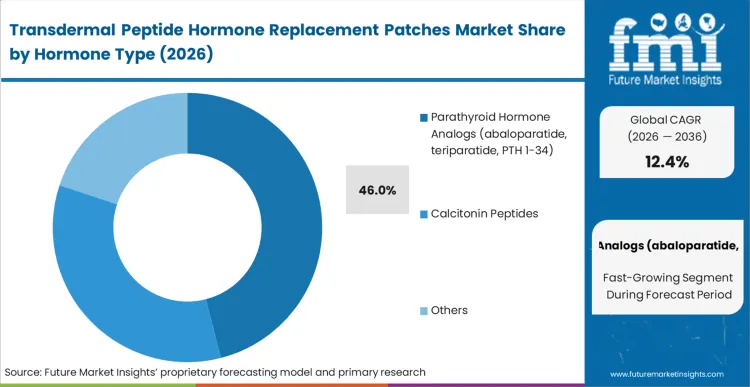
The reason parathyroid hormone analogs (abaloparatide, teriparatide, PTH 1-34) dominate this space is their narrow therapeutic window requiring precise, pulsatile delivery that oral routes cannot achieve and patients resist via injection. Holding a 46.0% share, this sub-segment acts as the proving ground for the osteoporosis drug delivery. Programs operating in the abaloparatide transdermal system and the teriparatide microneedle patch market focus here because the commercial penalty for adherence failure in osteoporosis is immediate. By switching to a solid format, developers eliminate needle anxiety.
FMI's assessment notes that sponsors delaying their low dose hormone alternatives face a hostile reimbursement environment that increasingly penalizes low real-world adherence. Following closely, the emerging salmon calcitonin microneedle patch market demonstrates how alternate bone-health peptides are adopting similar clinical pathways.
- Dosing precision: Solid microstructures ensure exact pharmacokinetic profiles. Sponsors utilizing this capture superior bioequivalence data during early trials.
- Therapeutic window: Pulsatile delivery mirrors natural endocrine function. Formulators achieve target serum concentrations without the peak-and-trough risks of high-dose injectables.
- Patient persistence: Needle-free formats remove the primary psychological barrier. Clinics utilizing these formats report significantly extended treatment durations.
Transdermal Peptide Hormone Replacement Patches Market Analysis by Patch technology
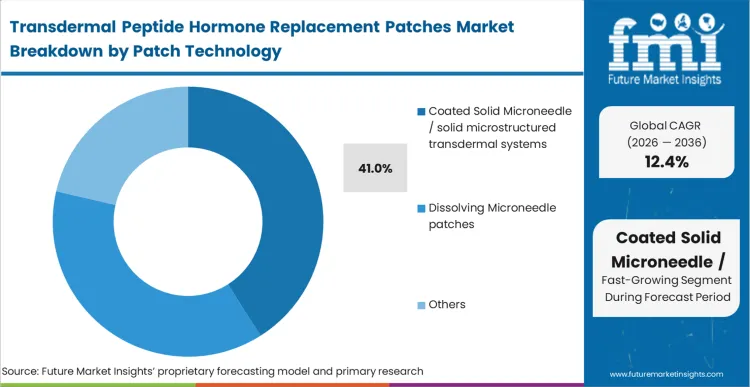
The coated solid microneedle / solid microstructured transdermal systems captures a leading 41.0% share because it decouples the peptide formulation chemistry from the mechanical strength of the needle itself. Unlike the dissolving microneedle hormone patch market where the drug must support the array, coated systems allow developers to utilize proven titanium or polymer bases.
FMI analysts opine that this architectural separation provides the fastest regulatory bridge for existing molecules. The buyer, the clinical trial sponsor, validates the choice by demonstrating that the active pharmaceutical ingredient remains unchanged during the coating process. CDMOs failing to master uniform coating techniques on solid arrays face immediate exclusion from tier-1 dissolving microneedles and coated-array clinical supply contracts.
- Base material: Titanium or rigid polymers ensure consistent stratum corneum penetration. Sponsors secure reliable systemic delivery regardless of patient skin variations.
- Coating uniformity: Automated deposition technology ensures precise dosing per array. Manufacturers mastering this capture the bulk of late-stage clinical trial supply agreements.
- Dissolution rate: The active layer separates from the solid base rapidly upon interstitial fluid contact. Patients achieve immediate peptide absorption comparable to subcutaneous injection.
Transdermal Peptide Hormone Replacement Patches Market Analysis by Application
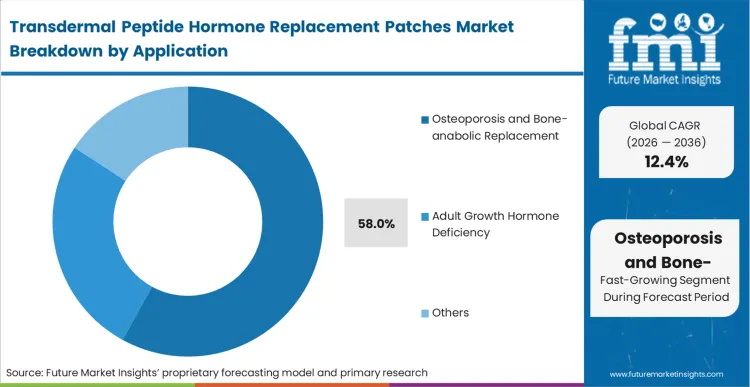
The demand for osteoporosis treatment patches commands a 58.0% share by representing the most urgent intersection of chronic treatment duration and high molecular complexity. The choice facing strategists in the osteoporosis peptide patch therapy market is whether to continue fighting attrition rates of daily injectables or fundamentally change the user experience.
According to FMI's estimates, while human growth hormone treatment and drugs and growth hormone deficiency patch therapy offer longer-term pediatric potential, bone-anabolic therapies provide the immediate volume required to justify microarray manufacturing scale-up. Formulators also leverage niche hypoparathyroidism patch delivery applications to justify premium patch development costs, leaving legacy injectable sponsors disadvantaged.
- Fracture risk: Immediate biological consequences follow treatment abandonment. Providers prescribe transdermal options to definitively close the adherence gap.
- Regimen fatigue: Daily interventions wear down chronic patient cohorts. Clinics moving to patch formats recover significant portions of their lapsed patient populations.
- Systemic absorption: Bone-anabolic peptides require precise, rapid uptake. Formulators rely on microstructured patches to bypass the gastrointestinal destruction entirely.
Transdermal Peptide Hormone Replacement Patches Market Analysis by End use
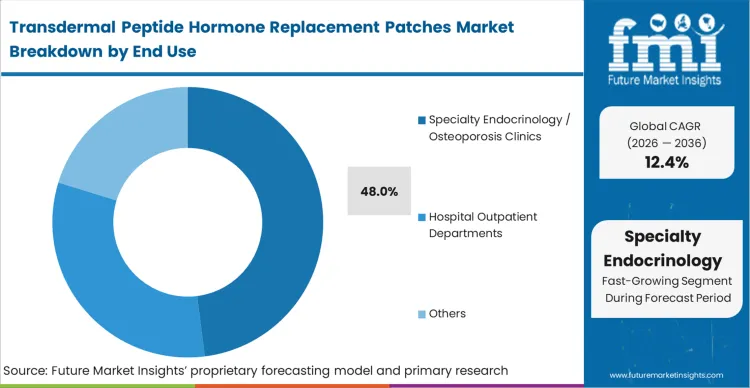
Specialty endocrinology clinics operate as the critical qualification gatekeepers for the endocrine microneedle patch market, commanding a 48.0% share of current trial and pilot volume. These facilities establish the real-world training protocols that determine whether peptide patch self-administration is viable for broader anti osteoporosis therapy and fracture healing. As per FMI's projection, the decision centers on workflow efficiency—specifically, whether teaching peptide endocrine therapy self-administration requires less nursing time than injection training. When the transdermal format proves it reduces clinical overhead, adoption accelerates. Manufacturers who assume general practitioners will drive early adoption misread the market.
- Training overhead: Patch formats reduce initial patient instruction time. Clinics integrating these systems significantly increase their daily patient throughput.
- Monitoring protocols: Early-stage adoption requires strict adherence tracking. Specialty endocrinologists provide the controlled environment necessary to validate commercial viability.
- Prescription authority: Key opinion leaders dictate the switch from injectables. Manufacturers actively target these specialists to establish foundational prescribing habits.
Transdermal Peptide Hormone Replacement Patches Market Analysis by Commercialization model
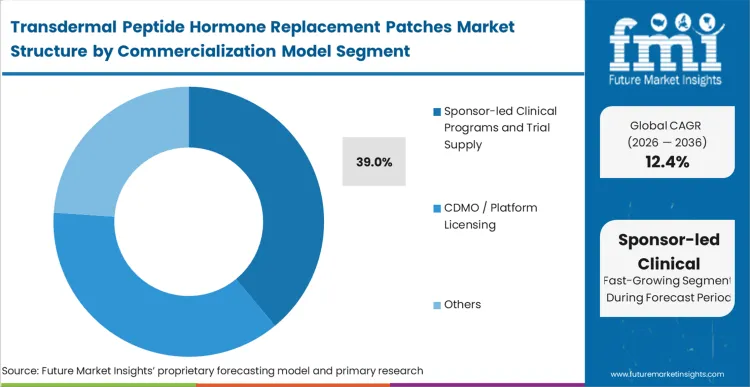
The peptide hormone patch clinical pipeline currently dictates the ecosystem, with sponsor-led trial supply holding 39.0% share because fully scaled commercialization remains gated by pivotal trial completions. This sub-segment reflects a market in active transition, where postmenopausal osteoporosis treatment developers must fund customised manufacturing lines to secure phase III material. In FMI's view, the decision to internalise supply versus partnering with a peptide microneedle patch CDMO defines the company's risk profile. Internalizing ensures IP control but risks profound delays if coating automation fails, directly impacting the broader microneedle patch contract manufacturing for peptides sector.
- Capital deployment: Early phases require massive, customized manufacturing investment. Sponsors secure platform licensing agreements to defer capital expenditure until approval.
- Scale-up friction: Moving from pilot to pivotal supply breaks manual processes. CDMOs providing automated continuous coating capture the most lucrative contracts.
- Regulatory alignment: Trial supply must perfectly mirror intended commercial formats. Developers relying on bridging studies later in the cycle face severe regulatory pushback.
Transdermal Peptide Hormone Replacement Patches Market Drivers, Restraints, and Opportunities
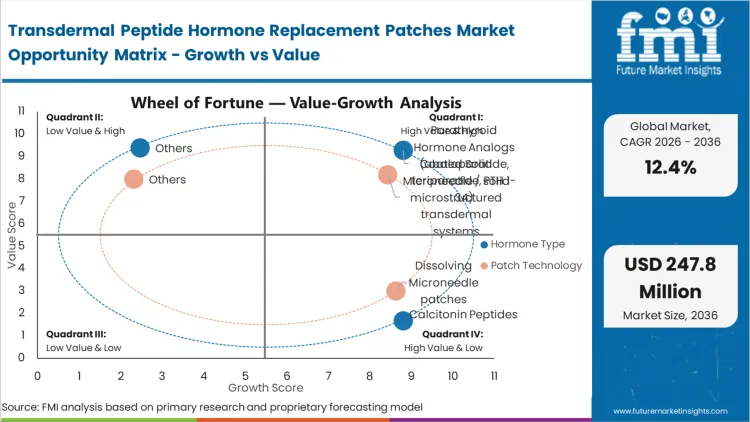
Explaining why are peptide hormones difficult to deliver through the skin, formulation architects face the absolute failure of oral formulations to protect large peptide molecules from gastrointestinal degradation. This compels the pursuit of mechanical transdermal solutions. Clinical sponsors developing next-generation osteoporosis therapies confront the reality that an effective drug is useless if patients refuse daily injections. This pressure makes the transition to solid-state microarray formats an operational necessity, removing capital away from traditional subcutaneous drug delivery devices.
Assessing what are the main adoption barriers for peptide hormone transdermal patches, the primary friction is the severe complexity of automated microarray coating at scale. While pilot-scale manual coating yields highly precise dosing, moving to continuous roll-to-roll or high-throughput batch processing frequently results in unacceptable active pharmaceutical ingredient variance across the patch surface. This scale-up bottleneck forces sponsors into extended manufacturing validation cycles, delaying clinical timelines until CDMOs can prove batch-to-batch uniformity that satisfies stringent regulatory requirements.
Opportunities in the Transdermal Peptide Hormone Replacement Patches Market
- Peptide therapeutics delivery platforms: Proprietary microarray architectures can be adapted for multiple peptide therapies. Specialized CDMOs capture recurring revenue streams by licensing their validated base technology to various pharmaceutical sponsors.
- Room-temperature stability: Solid-state coating eliminates the requirement for refrigerated liquid storage. Distribution managers capture significant logistical savings by removing complex cold-chain requirements for connected drug delivery devices.
- Pediatric endocrinology: Needle phobia heavily restricts adherence in juvenile treatments. Formulators targeting this demographic capture an immediate competitive advantage by removing the psychological barrier of daily injections.
Regional Analysis
Based on the regional analysis, the Transdermal Peptide Hormone Replacement Patches Market is segmented into North America, East Asia, and Europe across 40 plus countries.
.webp "Top Country Growth Comparison Transdermal Peptide Hormone Replacement Patches Market Cagr (2026 2036)")
| Country | CAGR (2026 to 2036) |
|---|---|
| China | 14.2% |
| India | 13.6% |
| United States | 13.4% |
| South Korea | 13.1% |
| Japan | 12.8% |
| Germany | 12.0% |
| United Kingdom | 11.7% |
Source: Future Market Insights (FMI) analysis, based on proprietary forecasting model and primary research
East Asia Transdermal Peptide Hormone Replacement Patches Market Analysis
Infrastructure maturity shapes the rapid advancement across the East Asian ecosystem, where established high-precision manufacturing bases readily adapt to microarray production requirements. Rather than building novel supply chains, developers leverage existing advanced materials engineering hubs. In FMI's view, this infrastructure advantage allows rapid iteration of patch designs, compressing the time between pilot formulation and clinical trial readiness. The region's dense aging populations provide the necessary volume to justify these specialized investments, driving the hormone replacement therapy market delivery trends.
- India: Sales in India are projected to rise at a CAGR of 13.6%. India's rapidly maturing contract manufacturing sector forces global sponsors to evaluate the subcontinent for secondary supply chain resilience. Procurement heads leverage the India peptide hormone patch market to aggressively negotiate down the unit costs of raw microarray bases. The integration of these manufacturing streams accelerates the timeline for achieving price parity with legacy subcutaneous pens.
- China: China's aggressive scale-up of advanced biomanufacturing parks enables a rapid transition from laboratory-scale microarray design to automated commercial production lines. The China hormone microneedle patch industry and broader china anti osteoporosis fracture healing landscape are set to achieve a CAGR of 14.2%. Sponsors acting swiftly secure dominating positions in a domestic market characterized by an escalating osteoporosis burden.
- Japan: Stringent regulatory requirements surrounding novel delivery systems force early collaboration between device engineers and regulatory bodies. Procurement directors managing the Japan transdermal osteoporosis peptide patch demand must account for extended evidence-gathering phases. FMI estimates the japan anti osteoporosis fracture healing sector to expand at an annual growth rate of 12.8%. The resulting validated platforms emerge with clinical robustness that fundamentally de-risks global commercialization.
- South Korea: The South Korea microneedle hormone patch industry is expected to demonstrate a CAGR of 13.1%. A high concentration of advanced cosmetic microneedle manufacturing provides a crucial technological foundation that medical formulators are upgrading to pharmaceutical standards. This positions the country as a primary export hub for specialized patch bases to global pharmaceutical sponsors.
FMI's report includes extensive analysis of emerging biomanufacturing centers across the broader Asia-Pacific rim, functioning primarily as specialized testing grounds.
North America Transdermal Peptide Hormone Replacement Patches Market Analysis
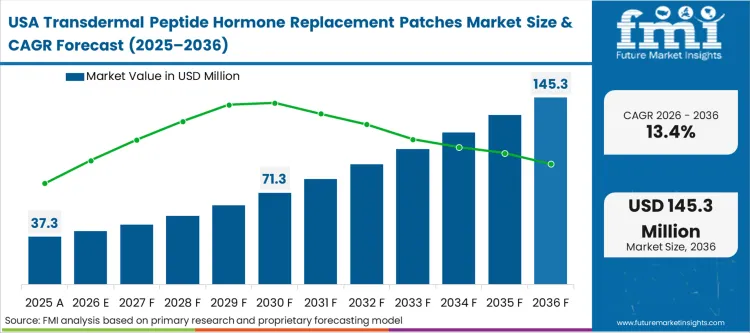
Policy-led dynamics, specifically the rigorous FDA requirements for combination product approvals, dictate the development cadence across North American markets. Developers must simultaneously prove the efficacy of the peptide and the flawless mechanical reliability of the device, effectively doubling the regulatory burden compared to traditional formulations. According to FMI's estimates, this environment forces extreme consolidation in the endocrine drug-device combination market, as only well-capitalized clinical sponsors possess the resources to navigate the dual-track approval process.
- United States: The United States transdermal peptide hormone patch sector requires clinical sponsors to prioritize delivery formats that eliminate user error. Trial directors actively specify patch formats to definitively bypass the high dropout rates associated with chronic injections. Demand in the united states anti osteoporosis fracture healing sector is estimated to expand at a CAGR of 13.4%. Organizations successfully navigating the complex combination-product regulatory pathway fundamentally redefine baseline expectations for all future endocrine replacement therapies.
FMI's report includes analysis of the Canadian clinical ecosystem, where facilities increasingly serve as critical specialized overflow sites for North American pivotal trials.
Europe Transdermal Peptide Hormone Replacement Patches Market Analysis
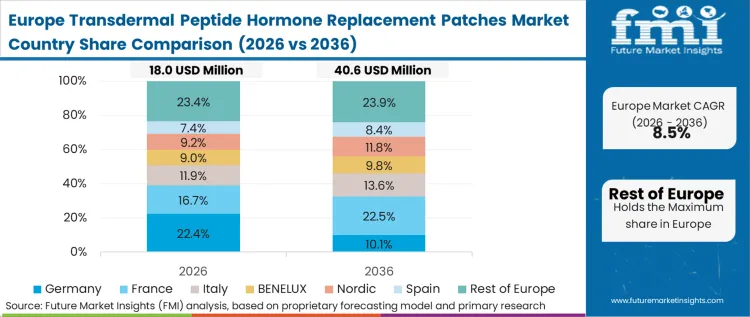
Economics-led pressures define the European trajectory, where nationalized healthcare systems strictly evaluate the cost-per-outcome of transitioning from inexpensive legacy injectables to premium transdermal patches. Clinical sponsors must demonstrate that the upfront cost of the microarray technology is entirely offset by reduced downstream fracture interventions resulting from improved patient adherence. As per FMI's projection, this dynamic forces formulators in the biologics transdermal delivery market to prioritize data that directly correlates delivery mechanics with long-term systemic health savings.
- Germany: Germany's rigorous health technology assessment frameworks require definitive proof that transdermal formats deliver superior pharmacokinetic profiles before granting favourable reimbursement tiers. The germany anti osteoporosis fracture healing market is forecast to register a CAGR of 12.0%. Pricing strategists in the Germany peptide patch delivery market must structure clinical endpoints to capture precise economic savings. Success here establishes the pricing floor for the broader European commercial rollout.
- United Kingdom: Centralized procurement evaluation panels demand extensive pilot data proving that patch application significantly reduces specialized nursing time. Operations heads within the NHS use these metrics to assess the United Kingdom hormone patch innovation market. The UK drug delivery solutions space is poised to expand at a CAGR of 11.7%. Formulators failing to provide clear operational efficiency data face absolute exclusion from national formularies.
FMI's report includes extensive analysis of the Nordic and Western European healthcare networks, which serve as early indicators for how rigid reimbursement models will ultimately value the operational efficiencies of anti osteoporosis fracture healing.
Competitive Aligners for Market Players
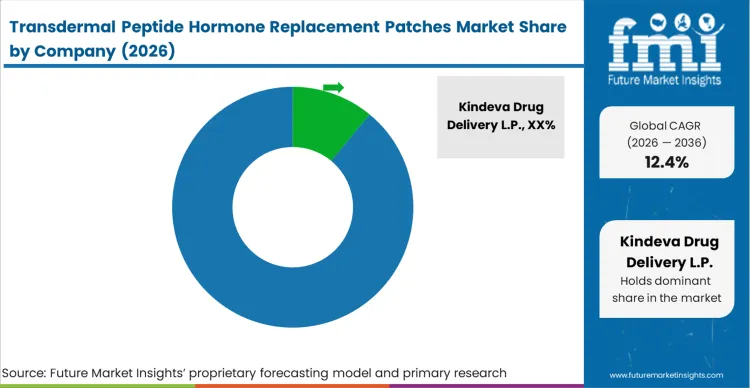
The specialized nature of solid-state peptide delivery creates a highly concentrated competitive situation dominated by peptide hormone patch manufacturers and dedicated delivery platform developers rather than traditional pharmaceutical giants. Companies like Kindeva Drug Delivery L.P. and LTS Lohmann Therapie-Systeme AG hold outsized influence because they possess the rare combination of polymer engineering expertise and pharmaceutical drug delivery coating capabilities. Finding a reliable hormone patch development partner or transdermal peptide patch supplier capable of manufacturing reproducible, high-density microarrays at a commercial scale is the absolute dividing line between qualified programs and theoretical research.
Incumbents in this space maintain their advantage through heavily guarded trade secrets related to active pharmaceutical ingredient stabilisation during the automated coating process. Entities like Corium, LLC and Raphas Co., Ltd. have spent years optimising the specific fluid dynamics required to deposit peptides onto microscopic tips without degrading the molecule. Challengers attempting to replicate this must build entirely novel manufacturing lines, as standard transdermal or sterile fill-finish equipment for controlled release drug delivery technology cannot be retrofitted for microarray production.
The trajectory through 2036 points toward increasing integration, as large pharmaceutical sponsors seek to internalize these delivery capabilities to protect their next-generation biological pipelines. The tension lies between developers wanting broad peptide patch technology licensing and pharmaceutical buyers demanding exclusive rights to specific microarray architectures. Answering which companies are developing hormone microneedle patches, these dynamic forces have specialised patch manufacturers to carefully maintain their early clinical partnerships in the drug delivery technology sector to avoid inadvertently locking themselves out of broader therapeutic categories.
Key Players in Transdermal Peptide Hormone Replacement Patches Market
- Kindeva Drug Delivery L.P.
- LTS Lohmann Therapie-Systeme AG
- Corium, LLC
- Hisamitsu Pharmaceutical Co., Inc.
- Raphas Co., Ltd.
- Micron Biomedical, Inc.
- PharmaTher Holdings Ltd.
Scope of the Report
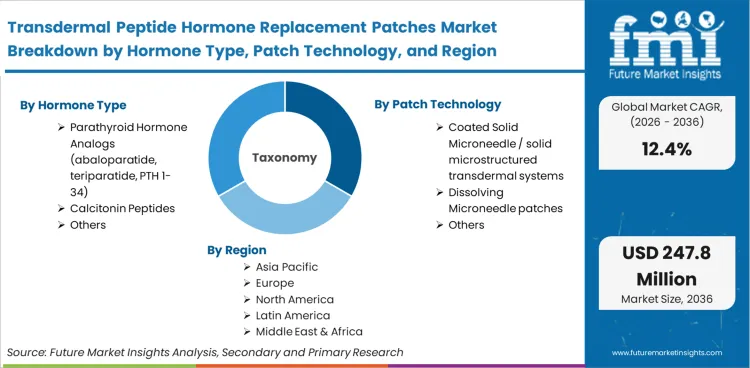
| Metric | Value |
|---|---|
| Quantitative Units | USD 77.0 million to USD 247.8 million, at a CAGR of 12.4% |
| Market Definition | The sector encompasses microarray and solid microstructured systems engineered specifically to deliver large-molecule endocrine therapies across the stratum corneum, requiring active mechanical disruption to transport peptides systemically. |
| Hormone type Segmentation | Parathyroid hormone analogs (abaloparatide, teriparatide, PTH 1-34), Calcitonin peptides, Growth hormone patches, Other peptide endocrine hormones |
| Patch technology Segmentation | Coated solid microneedle / solid microstructured transdermal systems, Dissolving microneedle patches, Hydrogel-forming microneedle patches, Reservoir / osmotic wearable microneedle patches, Other microarray patch formats |
| Application Segmentation | Osteoporosis and bone-anabolic replacement, Adult growth hormone deficiency, Hypoparathyroidism / calcium-bone disorders, Other endocrine replacement uses |
| End use Segmentation | Specialty endocrinology / osteoporosis clinics, Hospital outpatient departments, Home-care self-administration, Clinical research centers |
| Commercialization model Segmentation | Sponsor-led clinical programs and trial supply, CDMO / platform licensing, Specialty pharmacy commercialization, Hospital pharmacy commercialization |
| Regions Covered | North America, East Asia, Europe |
| Countries Covered | United States, China, India, Japan, South Korea, Germany, United Kingdom, and 40 plus countries |
| Key Companies Profiled | Kindeva Drug Delivery L.P., LTS Lohmann Therapie-Systeme AG, Corium, LLC, Hisamitsu Pharmaceutical Co., Inc., Raphas Co., Ltd., Micron Biomedical, Inc., PharmaTher Holdings Ltd. |
| Forecast Period | 2026 to 2036 |
| Approach | Primary interviews targeted clinical trial directors and formulation leads managing solid-state delivery. Baselines were anchored to active clinical program funding and CDMO licensing milestones. Forecasts were cross validated against reported patient adherence dropout rates for legacy subcutaneous injectables. |
Source: Future Market Insights (FMI) analysis, based on proprietary forecasting model and primary research
Transdermal Peptide Hormone Replacement Patches Market Analysis by Segments
Hormone type:
- Parathyroid hormone analogs (abaloparatide, teriparatide, PTH 1-34)
- Calcitonin peptides
- Growth hormone patches
- Other peptide endocrine hormones
Patch technology:
- Coated solid microneedle / solid microstructured transdermal systems
- Dissolving microneedle patches
- Hydrogel-forming microneedle patches
- Reservoir / osmotic wearable microneedle patches
- Other microarray patch formats
Application:
- Osteoporosis and bone-anabolic replacement
- Adult growth hormone deficiency
- Hypoparathyroidism / calcium-bone disorders
- Other endocrine replacement uses
End use:
- Specialty endocrinology / osteoporosis clinics
- Hospital outpatient departments
- Home-care self-administration
- Clinical Clinical research centers
Commercialization model:
- Sponsor-led clinical programs and trial supply
- CDMO / platform licensing
- Specialty pharmacy commercialization
- Hospital pharmacy commercialization
Region:
- North America
- United States
- Canada
- Europe
- Germany
- United Kingdom
- France
- Italy
- Spain
- Asia Pacific
- China
- Japan
- South Korea
- Taiwan
- Singapore
- Latin America
- Brazil
- Mexico
- Argentina
- Middle East & Africa
- GCC Countries
- South Africa
Bibliography
- International Osteoporosis Foundation. (2025). Asia-Pacific audit 2025.
- Pandya, A. K., Vora, L. K., Moreno-Castellanos, N., et al. (2025). A trilayer microneedle patch for transdermal delivery of the peptide salmon calcitonin for osteoporosis therapy. Journal of Controlled Release, 386, 114146.
- PDA. (2025, April 29). Microneedle array patches for vaccine delivery.
- U.S. Food and Drug Administration. (2024, May 13). Osteoporosis.
- U.S. Preventive Services Task Force. (2025). Screening for osteoporosis to prevent fractures: US Preventive Services Task Force recommendation statement. JAMA.
- Xu, F., Wang, Y., Zhu, X., et al. (2024). The safety and efficacy of abaloparatide on postmenopausal osteoporosis: A systematic review and meta-analysis. Clinical Therapeutics.
- Xiao, W., Zhang, W., Chen, M., et al. (2025). Advance in peptide-based drug development: delivery strategies and therapeutic applications. Signal Transduction and Targeted Therapy.
- Zafar, S., Rana, S. J., Hamza, M., Hussain, A., Abbas, N., Ghori, M. U., & Arshad, M. S. (2025). Advancements in transdermal drug delivery using microneedles: technological and material perspective. Discover Pharmaceutical Sciences, 1, Article 5.
- Zhao, S., et al. (2024). A wearable osmotic microneedle patch provides high-capacity sustained drug delivery in animal models. Science Translational Medicine, 16(775).
This bibliography is provided for reader reference. The full FMI report contains the complete reference list with primary source documentation.
This Report Addresses
- Market intelligence to support strategic decision making across parathyroid hormone analogs and calcitonin peptide delivery categories
- Market size estimation and 10-year revenue forecasts from 2026 to 2036, supported by clinical trial registry and CDMO milestone data
- Growth opportunity mapping across dissolving and coated patch technologies with emphasis on the standardization of room-temperature peptide coating
- Segment and regional revenue forecasts covering specialty endocrinology adoption across the United States and stringent European reimbursement environments
- Competition strategy assessment including scale-up bottlenecks, automated coating capabilities, and intellectual property licensing control in the endocrine drug-device combination market
- Technology development tracking including titanium and rigid polymer microarray base materials discussed in this article, reflecting osteoporosis therapeutics innovation
- Market access analysis covering combination-product regulatory pathways and national health technology assessment frameworks for women’s bone health delivery technologies
- Market report delivery in PDF, Excel, PPT, and interactive dashboard formats for executive strategy, specialty pharma peptide delivery planning, and operational benchmarking use
Frequently Asked Questions
What are transdermal peptide hormone replacement patches?
The industry represents USD 77.0 million in 2026, comprising microstructured systems engineered to actively transport large-molecule endocrine therapies across the stratum corneum. These patches utilise solid-coated or dissolving arrays to bypass the gastrointestinal tract without requiring traditional needles.
Build a forecast for peptide hormone replacement patch demand by 2036.
Ongoing investment fuels the valuation to USD 247.8 million through 2036. The expansion signals the anticipated transition from restricted clinical phase manufacturing to scaled commercial distribution as room-temperature stable peptide formats clear rigid combination-product regulatory hurdles.
What is the growth outlook for peptide hormone patches?
The industry is expected to grow at a CAGR of 12.4% during the forecast period. This rate is strictly constrained by the extended timelines of combination-product regulatory reviews, preventing the immediate spike in revenue that simpler oral drug reformulations typically experience.
Which hormone therapies are most suitable for microneedle patches?
Parathyroid hormone analogues secure the dominant position primarily because they target the severe adherence failures present in osteoporosis treatment. Clinical sponsors prioritize this chemistry because the commercial and biological penalties for patients abandoning legacy daily injections are immediate and catastrophic.
Explain the market potential for transdermal peptide hormone patches.
Coated solid microstructured transdermal systems capture the majority share by decoupling the active peptide from the mechanical needle. This architecture holds massive potential because it allows developers to utilize proven rigid materials for stratum corneum penetration while maintaining formulation stability.
Why is osteoporosis the leading application for peptide hormone patches?
Osteoporosis and bone-anabolic replacement drives the highest volume demand due to massive patient cohorts suffering from injection fatigue. Providers prescribe long-acting hormone microneedle patch options to definitively close the adherence gap and prevent subsequent severe fractures associated with regimen abandonment.
Why are peptide hormones difficult to deliver through the skin?
The absolute failure of passive formulations to transport large peptide molecules across the intact stratum corneum forces the shift to mechanical microarrays. When formulators successfully stabilise a peptide on a solid microstructure, they eliminate refrigerated distribution, altering unit economics for the sponsor.
What are the main adoption barriers for peptide hormone transdermal patches?
The severe complexity of automated microarray coating at scale creates a massive scale-up bottleneck. Moving from manual pilot batches to continuous high-throughput processing frequently results in unacceptable active pharmaceutical ingredient variance, extending manufacturing validation cycles by years.
Which countries will adopt hormone microneedle patches fastest?
China expands at a 14.2% compound rate, outpacing India's 13.6% trajectory due to its rapid scaling of domestic biomanufacturing hubs. Formulation architects in China leverage this specialized infrastructure to compress the time between laboratory design and automated commercial production lines faster than competing regions.
Are any peptide hormone patches approved yet?
While multiple programs are in late-stage clinical trials, full commercial approval remains evidence-gated by stringent FDA requirements. Sponsors must simultaneously prove peptide bioequivalence and mechanical device reliability, which heavily consolidates the vendor pool to highly capitalized entities capable of funding extended safety bridging studies.
How do microneedle hormone patches work?
Removing the necessity for refrigerated clinical supply chains drastically reduces distribution costs and logistical failures. Microarrays physically disrupt the top skin layer just enough to deposit the peptide into the interstitial fluid, where it is rapidly absorbed systemically without triggering pain receptors.
Which companies are developing hormone microneedle patches?
Engineering-heavy CDMOs like Kindeva Drug Delivery and LTS Lohmann possess heavily guarded trade secrets related to fluid dynamics and automated peptide deposition. Challengers attempting to replicate these precise coating techniques must build entirely novel manufacturing lines from scratch, securing the incumbents' position as gatekeepers.
Compare peptide hormone patches with injectable hormone therapies.
Transitioning to microarray patches significantly reduces the nursing time previously dedicated to patient injection training. Clinics that integrate these solid-state formats increase their daily patient throughput, altering the baseline efficiency metrics used by healthcare administrators compared to legacy vials and pens.
What are non-injectable hormone delivery alternatives?
Beyond traditional nasal sprays which suffer from highly variable absorption, the industry focuses heavily on microarrays for consistent dosing. Peptide hormones are large molecules that require the active mechanical disruption provided by microneedles to achieve systemic absorption comparable to subcutaneous injections.
When evaluating a dissolving microneedle patch vs coated microneedle patch, how do they differ?
Peptides that cannot maintain integrity when integrated directly into dissolving polymer matrices are pushed toward coated solid arrays. This decoupling ensures the delicate hormone is deposited only on the outer layer, avoiding the thermal or chemical stresses of the base manufacturing process.
Analyzing the hormone microneedle patch vs injection, what drives the transition?
Patient resistance to chronic daily injections creates unsustainable adherence dropout rates, rendering highly effective peptides useless in real-world applications. Sponsors are forced to prioritise patch formats because the commercial penalty for adherence failure in diseases like osteoporosis is too severe to ignore.
Looking at the abaloparatide patch vs abaloparatide injection, what did recent trials reveal?
Recent phase 3 data showed that an investigational abaloparatide transdermal system failed to meet the non-inferiority margin for bone mineral density increases compared to subcutaneous injection. This forced the sponsor to halt the program after regulatory feedback indicated another pivotal trial was required, underscoring the severe clinical barriers in this space.
Comparing the teriparatide patch vs teriparatide injection, why is delivery transition difficult?
Unlike traditional liquid vials, solid-state hormone patches demand specific handling to prevent physical damage to the microarray prior to application. Pharmacies must validate new dispensing workflows that account for combination-product tracking and specialized packaging integrity, extending the commercialization timeline.
How does a peptide patch vs wearable injector compete in pediatric settings?
Needle phobia heavily restricts adherence in juvenile treatments like chronic endocrine replacement patch therapies. While wearable injectors hide the needle, they still cause puncture anxiety; dissolving microneedle patches leave zero sharp residue post-application, offering a distinct competitive advantage in pediatric endocrinology.
How does a peptide patch vs wearable injector compete in pediatric settings?
Needle phobia heavily restricts adherence in juvenile treatments like chronic endocrine replacement patch therapies. While wearable injectors hide the needle, they still cause puncture anxiety; dissolving microneedle patches leave zero sharp residue post-application, offering a distinct competitive advantage in pediatric endocrinology.
Preview the report firsthand - request a free sample
Get SampleGet the brochure for pricing and purchase details.
Get PDFTable of Content
- Executive Summary
- Global Market Outlook
- Demand-side Trends
- Supply-side Trends
- Technology Roadmap Analysis
- Analysis and Recommendations
- Market Overview
- Market Coverage / Taxonomy
- Market Definition / Scope / Limitations
- Research Methodology
- Chapter Orientation
- Analytical Lens and Working Hypotheses
- Market Structure, Signals, and Trend Drivers
- Benchmarking and Cross-market Comparability
- Market Sizing, Forecasting, and Opportunity Mapping
- Research Design and Evidence Framework
- Desk Research Programme (Secondary Evidence)
- Company Annual and Sustainability Reports
- Peer-reviewed Journals and Academic Literature
- Corporate Websites, Product Literature, and Technical Notes
- Earnings Decks and Investor Briefings
- Statutory Filings and Regulatory Disclosures
- Technical White Papers and Standards Notes
- Trade Journals, Industry Magazines, and Analyst Briefs
- Conference Proceedings, Webinars, and Seminar Materials
- Government Statistics Portals and Public Data Releases
- Press Releases and Reputable Media Coverage
- Specialist Newsletters and Curated Briefings
- Sector Databases and Reference Repositories
- FMI Internal Proprietary Databases and Historical Market Datasets
- Subscription Datasets and Paid Sources
- Social Channels, Communities, and Digital Listening Inputs
- Additional Desk Sources
- Expert Input and Fieldwork (Primary Evidence)
- Primary Modes
- Qualitative Interviews and Expert Elicitation
- Quantitative Surveys and Structured Data Capture
- Blended Approach
- Why Primary Evidence is Used
- Field Techniques
- Interviews
- Surveys
- Focus Groups
- Observational and In-context Research
- Social and Community Interactions
- Stakeholder Universe Engaged
- C-suite Leaders
- Board Members
- Presidents and Vice Presidents
- R&D and Innovation Heads
- Technical Specialists
- Domain Subject-matter Experts
- Scientists
- Physicians and Other Healthcare Professionals
- Governance, Ethics, and Data Stewardship
- Research Ethics
- Data Integrity and Handling
- Primary Modes
- Tooling, Models, and Reference Databases
- Desk Research Programme (Secondary Evidence)
- Data Engineering and Model Build
- Data Acquisition and Ingestion
- Cleaning, Normalisation, and Verification
- Synthesis, Triangulation, and Analysis
- Quality Assurance and Audit Trail
- Market Background
- Market Dynamics
- Drivers
- Restraints
- Opportunity
- Trends
- Scenario Forecast
- Demand in Optimistic Scenario
- Demand in Likely Scenario
- Demand in Conservative Scenario
- Opportunity Map Analysis
- Product Life Cycle Analysis
- Supply Chain Analysis
- Investment Feasibility Matrix
- Value Chain Analysis
- PESTLE and Porter’s Analysis
- Regulatory Landscape
- Regional Parent Market Outlook
- Production and Consumption Statistics
- Import and Export Statistics
- Market Dynamics
- Global Market Analysis 2021 to 2025 and Forecast, 2026 to 2036
- Historical Market Size Value (USD Million) Analysis, 2021 to 2025
- Current and Future Market Size Value (USD Million) Projections, 2026 to 2036
- Y-o-Y Growth Trend Analysis
- Absolute $ Opportunity Analysis
- Global Market Pricing Analysis 2021 to 2025 and Forecast 2026 to 2036
- Global Market Analysis 2021 to 2025 and Forecast 2026 to 2036, By Hormone Type
- Introduction / Key Findings
- Historical Market Size Value (USD Million) Analysis By Hormone Type , 2021 to 2025
- Current and Future Market Size Value (USD Million) Analysis and Forecast By Hormone Type , 2026 to 2036
- Parathyroid Hormone Analogs (abaloparatide, teriparatide, PTH 1-34)
- Calcitonin Peptides
- Others
- Parathyroid Hormone Analogs (abaloparatide, teriparatide, PTH 1-34)
- Y-o-Y Growth Trend Analysis By Hormone Type , 2021 to 2025
- Absolute $ Opportunity Analysis By Hormone Type , 2026 to 2036
- Global Market Analysis 2021 to 2025 and Forecast 2026 to 2036, By Patch Technology
- Introduction / Key Findings
- Historical Market Size Value (USD Million) Analysis By Patch Technology, 2021 to 2025
- Current and Future Market Size Value (USD Million) Analysis and Forecast By Patch Technology, 2026 to 2036
- Coated Solid Microneedle / solid microstructured transdermal systems
- Dissolving Microneedle patches
- Others
- Coated Solid Microneedle / solid microstructured transdermal systems
- Y-o-Y Growth Trend Analysis By Patch Technology, 2021 to 2025
- Absolute $ Opportunity Analysis By Patch Technology, 2026 to 2036
- Global Market Analysis 2021 to 2025 and Forecast 2026 to 2036, By Application
- Introduction / Key Findings
- Historical Market Size Value (USD Million) Analysis By Application, 2021 to 2025
- Current and Future Market Size Value (USD Million) Analysis and Forecast By Application, 2026 to 2036
- Osteoporosis and Bone-anabolic Replacement
- Adult Growth Hormone Deficiency
- Others
- Osteoporosis and Bone-anabolic Replacement
- Y-o-Y Growth Trend Analysis By Application, 2021 to 2025
- Absolute $ Opportunity Analysis By Application, 2026 to 2036
- Global Market Analysis 2021 to 2025 and Forecast 2026 to 2036, By End Use
- Introduction / Key Findings
- Historical Market Size Value (USD Million) Analysis By End Use, 2021 to 2025
- Current and Future Market Size Value (USD Million) Analysis and Forecast By End Use, 2026 to 2036
- Specialty Endocrinology / Osteoporosis Clinics
- Hospital Outpatient Departments
- Others
- Specialty Endocrinology / Osteoporosis Clinics
- Y-o-Y Growth Trend Analysis By End Use, 2021 to 2025
- Absolute $ Opportunity Analysis By End Use, 2026 to 2036
- Global Market Analysis 2021 to 2025 and Forecast 2026 to 2036, By Commercialization Model
- Introduction / Key Findings
- Historical Market Size Value (USD Million) Analysis By Commercialization Model, 2021 to 2025
- Current and Future Market Size Value (USD Million) Analysis and Forecast By Commercialization Model, 2026 to 2036
- Sponsor-led Clinical Programs and Trial Supply
- CDMO / Platform Licensing
- Others
- Sponsor-led Clinical Programs and Trial Supply
- Y-o-Y Growth Trend Analysis By Commercialization Model, 2021 to 2025
- Absolute $ Opportunity Analysis By Commercialization Model, 2026 to 2036
- Global Market Analysis 2021 to 2025 and Forecast 2026 to 2036, By Region
- Introduction
- Historical Market Size Value (USD Million) Analysis By Region, 2021 to 2025
- Current Market Size Value (USD Million) Analysis and Forecast By Region, 2026 to 2036
- North America
- Latin America
- Western Europe
- Eastern Europe
- East Asia
- South Asia and Pacific
- Middle East & Africa
- Market Attractiveness Analysis By Region
- North America Market Analysis 2021 to 2025 and Forecast 2026 to 2036, By Country
- Historical Market Size Value (USD Million) Trend Analysis By Market Taxonomy, 2021 to 2025
- Market Size Value (USD Million) Forecast By Market Taxonomy, 2026 to 2036
- By Country
- USA
- Canada
- Mexico
- By Hormone Type
- By Patch Technology
- By Application
- By End Use
- By Commercialization Model
- By Country
- Market Attractiveness Analysis
- By Country
- By Hormone Type
- By Patch Technology
- By Application
- By End Use
- By Commercialization Model
- Key Takeaways
- Latin America Market Analysis 2021 to 2025 and Forecast 2026 to 2036, By Country
- Historical Market Size Value (USD Million) Trend Analysis By Market Taxonomy, 2021 to 2025
- Market Size Value (USD Million) Forecast By Market Taxonomy, 2026 to 2036
- By Country
- Brazil
- Chile
- Rest of Latin America
- By Hormone Type
- By Patch Technology
- By Application
- By End Use
- By Commercialization Model
- By Country
- Market Attractiveness Analysis
- By Country
- By Hormone Type
- By Patch Technology
- By Application
- By End Use
- By Commercialization Model
- Key Takeaways
- Western Europe Market Analysis 2021 to 2025 and Forecast 2026 to 2036, By Country
- Historical Market Size Value (USD Million) Trend Analysis By Market Taxonomy, 2021 to 2025
- Market Size Value (USD Million) Forecast By Market Taxonomy, 2026 to 2036
- By Country
- Germany
- UK
- Italy
- Spain
- France
- Nordic
- BENELUX
- Rest of Western Europe
- By Hormone Type
- By Patch Technology
- By Application
- By End Use
- By Commercialization Model
- By Country
- Market Attractiveness Analysis
- By Country
- By Hormone Type
- By Patch Technology
- By Application
- By End Use
- By Commercialization Model
- Key Takeaways
- Eastern Europe Market Analysis 2021 to 2025 and Forecast 2026 to 2036, By Country
- Historical Market Size Value (USD Million) Trend Analysis By Market Taxonomy, 2021 to 2025
- Market Size Value (USD Million) Forecast By Market Taxonomy, 2026 to 2036
- By Country
- Russia
- Poland
- Hungary
- Balkan & Baltic
- Rest of Eastern Europe
- By Hormone Type
- By Patch Technology
- By Application
- By End Use
- By Commercialization Model
- By Country
- Market Attractiveness Analysis
- By Country
- By Hormone Type
- By Patch Technology
- By Application
- By End Use
- By Commercialization Model
- Key Takeaways
- East Asia Market Analysis 2021 to 2025 and Forecast 2026 to 2036, By Country
- Historical Market Size Value (USD Million) Trend Analysis By Market Taxonomy, 2021 to 2025
- Market Size Value (USD Million) Forecast By Market Taxonomy, 2026 to 2036
- By Country
- China
- Japan
- South Korea
- By Hormone Type
- By Patch Technology
- By Application
- By End Use
- By Commercialization Model
- By Country
- Market Attractiveness Analysis
- By Country
- By Hormone Type
- By Patch Technology
- By Application
- By End Use
- By Commercialization Model
- Key Takeaways
- South Asia and Pacific Market Analysis 2021 to 2025 and Forecast 2026 to 2036, By Country
- Historical Market Size Value (USD Million) Trend Analysis By Market Taxonomy, 2021 to 2025
- Market Size Value (USD Million) Forecast By Market Taxonomy, 2026 to 2036
- By Country
- India
- ASEAN
- Australia & New Zealand
- Rest of South Asia and Pacific
- By Hormone Type
- By Patch Technology
- By Application
- By End Use
- By Commercialization Model
- By Country
- Market Attractiveness Analysis
- By Country
- By Hormone Type
- By Patch Technology
- By Application
- By End Use
- By Commercialization Model
- Key Takeaways
- Middle East & Africa Market Analysis 2021 to 2025 and Forecast 2026 to 2036, By Country
- Historical Market Size Value (USD Million) Trend Analysis By Market Taxonomy, 2021 to 2025
- Market Size Value (USD Million) Forecast By Market Taxonomy, 2026 to 2036
- By Country
- Kingdom of Saudi Arabia
- Other GCC Countries
- Turkiye
- South Africa
- Other African Union
- Rest of Middle East & Africa
- By Hormone Type
- By Patch Technology
- By Application
- By End Use
- By Commercialization Model
- By Country
- Market Attractiveness Analysis
- By Country
- By Hormone Type
- By Patch Technology
- By Application
- By End Use
- By Commercialization Model
- Key Takeaways
- Key Countries Market Analysis
- USA
- Pricing Analysis
- Market Share Analysis, 2025
- By Hormone Type
- By Patch Technology
- By Application
- By End Use
- By Commercialization Model
- Canada
- Pricing Analysis
- Market Share Analysis, 2025
- By Hormone Type
- By Patch Technology
- By Application
- By End Use
- By Commercialization Model
- Mexico
- Pricing Analysis
- Market Share Analysis, 2025
- By Hormone Type
- By Patch Technology
- By Application
- By End Use
- By Commercialization Model
- Brazil
- Pricing Analysis
- Market Share Analysis, 2025
- By Hormone Type
- By Patch Technology
- By Application
- By End Use
- By Commercialization Model
- Chile
- Pricing Analysis
- Market Share Analysis, 2025
- By Hormone Type
- By Patch Technology
- By Application
- By End Use
- By Commercialization Model
- Germany
- Pricing Analysis
- Market Share Analysis, 2025
- By Hormone Type
- By Patch Technology
- By Application
- By End Use
- By Commercialization Model
- UK
- Pricing Analysis
- Market Share Analysis, 2025
- By Hormone Type
- By Patch Technology
- By Application
- By End Use
- By Commercialization Model
- Italy
- Pricing Analysis
- Market Share Analysis, 2025
- By Hormone Type
- By Patch Technology
- By Application
- By End Use
- By Commercialization Model
- Spain
- Pricing Analysis
- Market Share Analysis, 2025
- By Hormone Type
- By Patch Technology
- By Application
- By End Use
- By Commercialization Model
- France
- Pricing Analysis
- Market Share Analysis, 2025
- By Hormone Type
- By Patch Technology
- By Application
- By End Use
- By Commercialization Model
- India
- Pricing Analysis
- Market Share Analysis, 2025
- By Hormone Type
- By Patch Technology
- By Application
- By End Use
- By Commercialization Model
- ASEAN
- Pricing Analysis
- Market Share Analysis, 2025
- By Hormone Type
- By Patch Technology
- By Application
- By End Use
- By Commercialization Model
- Australia & New Zealand
- Pricing Analysis
- Market Share Analysis, 2025
- By Hormone Type
- By Patch Technology
- By Application
- By End Use
- By Commercialization Model
- China
- Pricing Analysis
- Market Share Analysis, 2025
- By Hormone Type
- By Patch Technology
- By Application
- By End Use
- By Commercialization Model
- Japan
- Pricing Analysis
- Market Share Analysis, 2025
- By Hormone Type
- By Patch Technology
- By Application
- By End Use
- By Commercialization Model
- South Korea
- Pricing Analysis
- Market Share Analysis, 2025
- By Hormone Type
- By Patch Technology
- By Application
- By End Use
- By Commercialization Model
- Russia
- Pricing Analysis
- Market Share Analysis, 2025
- By Hormone Type
- By Patch Technology
- By Application
- By End Use
- By Commercialization Model
- Poland
- Pricing Analysis
- Market Share Analysis, 2025
- By Hormone Type
- By Patch Technology
- By Application
- By End Use
- By Commercialization Model
- Hungary
- Pricing Analysis
- Market Share Analysis, 2025
- By Hormone Type
- By Patch Technology
- By Application
- By End Use
- By Commercialization Model
- Kingdom of Saudi Arabia
- Pricing Analysis
- Market Share Analysis, 2025
- By Hormone Type
- By Patch Technology
- By Application
- By End Use
- By Commercialization Model
- Turkiye
- Pricing Analysis
- Market Share Analysis, 2025
- By Hormone Type
- By Patch Technology
- By Application
- By End Use
- By Commercialization Model
- South Africa
- Pricing Analysis
- Market Share Analysis, 2025
- By Hormone Type
- By Patch Technology
- By Application
- By End Use
- By Commercialization Model
- USA
- Market Structure Analysis
- Competition Dashboard
- Competition Benchmarking
- Market Share Analysis of Top Players
- By Regional
- By Hormone Type
- By Patch Technology
- By Application
- By End Use
- By Commercialization Model
- Competition Analysis
- Competition Deep Dive
- Kindeva Drug Delivery L.P.
- Overview
- Product Portfolio
- Profitability by Market Segments (Product/Age /Sales Channel/Region)
- Sales Footprint
- Strategy Overview
- Marketing Strategy
- Product Strategy
- Channel Strategy
- LTS Lohmann Therapie-Systeme AG
- Corium, LLC
- Hisamitsu Pharmaceutical Co., Inc.
- Raphas Co., Ltd.
- Micron Biomedical, Inc.
- PharmaTher Holdings Ltd.
- Kindeva Drug Delivery L.P.
- Competition Deep Dive
- Assumptions & Acronyms Used


