

- Industry Size (2025)
- USD 4.1 Bn
- Forecast (2035)
- USD 26.1 Bn
- CAGR (2025 to 2035)
- 20.2%
Demand for Biodegradable Polymers in USA Forecast and Outlook 2025 to 2035
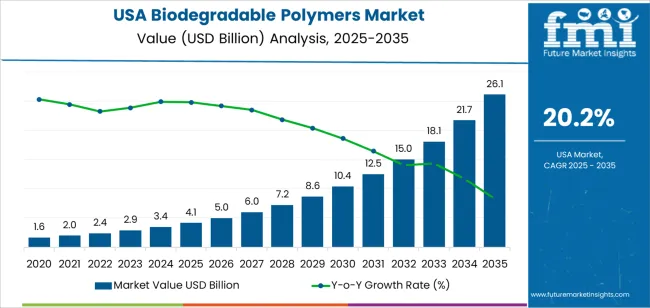
The demand for biodegradable polymers in the USA is projected to grow from USD 4.1 billion in 2025 to USD 26.1 billion by 2035, reflecting a compound annual growth rate (CAGR) of 20.2%. This significant growth is driven by increasing consumer demand for sustainable alternatives to traditional plastic materials, as well as regulatory pressures aimed at reducing plastic waste and environmental impact. Biodegradable polymers, which are used in packaging, agriculture, textiles, and various other sectors, offer an eco-friendlier option compared to conventional plastics, contributing to their rising adoption across industries.
The year-over-year (Y-o-Y) growth is substantial, starting at USD 4.1 billion in 2025 and reaching USD 5.0 billion in 2026, followed by USD 6.0 billion in 2027. Over the next several years, the market is projected to continue expanding rapidly, reaching USD 7.2 billion by 2028 and USD 8.6 billion by 2029. By 2035, the market for biodegradable polymers is forecasted to reach USD 26.1 billion, showing a steep upward trajectory driven by growing environmental concerns, regulatory incentives, and the increasing adoption of biodegradable materials across a wide range of industries.
Quick Stats of the Demand for Biodegradable Polymers in the USA
- Demand for Biodegradable Polymers in the USA Value (2025): USD 4.1 billion
- Demand for Biodegradable Polymers in the USA Forecast Value (2035): USD 26.1 billion
- Demand for Biodegradable Polymers in the USA Forecast CAGR (2025-2035): 20.2%
- Demand for Biodegradable Polymers in the USA Key Growth Regions: West, South, Northeast, Midwest
- Demand for Biodegradable Polymers in the USA End-use Industry: 55% Packaging
- Demand for Biodegradable Polymers in the USA Key Players: Dow Chemical Company, NatureWorks LLC, Total Corbion PLA, Braskem
What is the Growth Forecast for the Biodegradable Polymers Industry in USA through 2035?
The biodegradable polymers industry in the USA is expected to grow at an accelerated pace over the next decade. From USD 4.1 billion in 2025, the market is forecasted to increase steadily, reaching USD 5.0 billion in 2026 and USD 6.0 billion in 2027. By 2028, the market will expand to USD 7.2 billion, and by 2029, it is projected to reach USD 8.6 billion. Over the following years, the demand will continue to rise sharply, with the market reaching USD 10.4 billion by 2030, USD 12.5 billion by 2031, and USD 15.0 billion by 2032. By 2035, the market will hit USD 26.1 billion, underscoring the rapid growth of the sector.
The market growth curve for biodegradable polymers shows an exponential increase, reflecting the rapid adoption of these materials as businesses and consumers increasingly prioritize sustainability. Early-stage growth from 2025 to 2029 is followed by a steeper ascent after 2030, which is indicative of a shift towards large-scale adoption driven by favorable regulations and advancements in biodegradable polymer technologies. This growth curve highlights the sector’s transition from niche to mainstream as demand for sustainable products accelerates.
USA Biodegradable Polymers Industry Key Takeaways
| Metric | Value |
|---|---|
| Industry Sales Value (2025) | USD 4.1 billion |
| Industry Forecast Value (2035) | USD 26.1 billion |
| Industry Forecast CAGR (2025-2035) | 20.2% |
Why is the Demand for Biodegradable Polymers in USA Growing?
The demand for biodegradable polymers in the USA is growing in response to rising environmental awareness among consumers, increasing regulatory pressure on conventional plastics, and broader shifts toward sustainable materials. Many companies and consumers now prefer polymers derived from renewable resources like plant starches, which degrade more readily than conventional petroleum based plastics. In packaging applications — especially for food, consumer goods, and single use items — biodegradable polymers such as polylactic acid (PLA), starch based blends, polybutylene succinate (PBS) and polyhydroxyalkanoates (PHA) are increasingly used. These materials reduce reliance on fossil derived plastics and offer compostability under appropriate conditions. The growth of composting infrastructure and municipal efforts to reduce plastic waste encourage adoption of compostable plastics for packaging, waste bags, and disposable items. Biodegradable plastics offer advantage in applications where disposability and environmental footprint matter, which supports their use widely in retail packaging, food service, and consumer products. As recycling alone remains insufficient to handle plastic waste, biodegradable polymers provide an alternative aligned with sustainability trends.
Beyond packaging, demand for biodegradable polymers is rising in sectors such as agriculture, medical and healthcare, textiles, and consumer goods. In agriculture, biodegradable films and mulch sheets are replacing conventional plastic films to reduce soil pollution and improve end of life disposal. In medical and healthcare, bioplastics are used for disposable medical supplies, hygiene products, and compostable medical packaging. Textiles, non woven hygiene products, and certain consumer goods components also increasingly adopt biodegradable polymer based materials. Some automotive and transportation applications now explore bio derived polymers for interior components to reduce carbon footprint. Advances in biopolymer technology continue to improve mechanical properties, thermal stability and processability, which helps overcome past performance limitations compared to conventional plastics. As materials science evolves and regulatory scrutiny of plastic waste increases, the shift toward eco friendly, biodegradable polymer solutions in multiple industries is strengthening.
What Is the Current State of the Demand for Biodegradable Polymers in the USA in Terms of Type and End-Use Industry?
The demand for biodegradable polymers in the USA is primarily driven by type and end-use industry. The leading type is starch-based polymers, accounting for 38% of the market share, while packaging is the dominant end-use industry, capturing 55% of the demand. Biodegradable polymers are gaining popularity as sustainable alternatives to traditional plastics, especially in industries looking to reduce their environmental footprint. The growing demand for eco-friendly materials across various sectors continues to fuel the market for biodegradable polymers in the USA.
How Are Starch-Based Polymers Leading the Demand for Biodegradable Polymers in the USA?
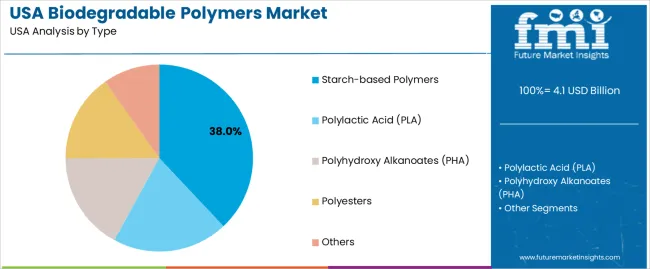
Starch-based polymers lead the demand for biodegradable polymers in the USA, holding 38% of the market share. These polymers are derived from renewable sources such as corn and potatoes, making them an attractive alternative to petroleum-based plastics. Starch-based polymers are widely used in packaging, agriculture, and disposable products, thanks to their biodegradability and ability to break down naturally in the environment.
The demand for starch-based polymers is driven by their low cost, renewable sourcing, and environmental benefits. These polymers are often used in applications such as food packaging, agricultural films, and disposable items, where sustainability is a growing concern. As consumer preferences shift toward environmentally friendly products and governments impose stricter regulations on plastic waste, starch-based polymers offer an effective solution. Their versatility and biodegradability make them a dominant choice in the biodegradable polymer market in the USA, with continued growth expected as industries move towards more sustainable practices.
How Is Packaging Leading the End-Use Industry Demand for Biodegradable Polymers in the USA?
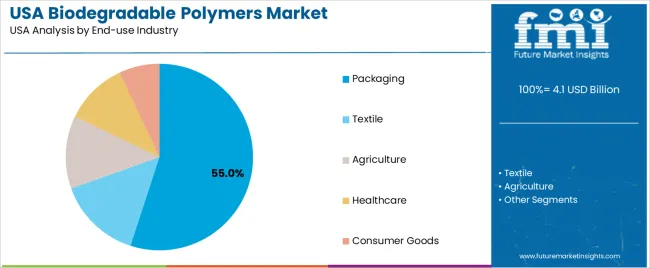
Packaging is the leading end-use industry for biodegradable polymers in the USA, capturing 55% of the market share. The packaging industry is the largest consumer of biodegradable polymers due to increasing demand for sustainable, environmentally friendly materials. Biodegradable polymers are used extensively in food packaging, single-use items, and protective packaging, where the need for biodegradable alternatives to traditional plastics is growing.
The demand for biodegradable polymers in packaging is driven by rising concerns about plastic waste and environmental pollution. As companies face increased pressure to adopt sustainable practices and comply with regulations regarding plastic waste, the demand for biodegradable packaging solutions is rising. Biodegradable polymers, particularly starch-based and PLA-based polymers, are gaining popularity in food packaging, consumer goods, and retail packaging, where they provide both performance and environmental benefits. With ongoing consumer demand for eco-friendly products and growing environmental awareness, packaging remains the dominant end-use sector for biodegradable polymers in the USA.
What is the Summary of Demand for Biodegradable Polymers in USA?
The demand for biodegradable polymers in the USA has risen steadily in recent years. Recent data estimates the USA biodegradable plastics (a major subset of biodegradable polymers) market value at about USD 2.34 billion in 2025. Demand is expected to grow substantially over the coming years, driven by increasing use in packaging, consumer goods, agriculture, medical and healthcare, textile, and other sectors. The shift in applications from traditional plastics to biodegradable alternatives reflects rising regulatory pressure on single use plastics, growing interest in compostable and renewable content materials, and improved availability of biodegradable polymer types such as starch based polymers, polylactic acid (PLA), polyhydroxyalkanoates (PHA), and other bio derived polymers. As newer feedstocks and polymer types gain traction, demand across multiple industries in the USA is projected to expand.
What are the Drivers of Demand for Biodegradable Polymers in USA?
Several factors are driving demand for biodegradable polymers in the USA. First, packaging demand — including food packaging, retail carry bags, disposable containers, and compostable packaging — is a major driver. As conventional plastic packaging comes under regulatory and public scrutiny, many firms adopt biodegradable polymer based alternatives. Second, growth in sectors such as agriculture (mulch films, horticulture films), medical and healthcare (biocompatible polymers for medical devices, disposable items), textile and non woven applications have expanded demand. Third, improvements in polymer production and processing technologies have lowered costs and improved material performance, making biodegradable polymers more competitive with conventional plastics. Fourth, rising regulatory pressure and corporate policies aimed at reducing plastic waste and controlling environmental impact have incentivised adoption of biodegradable polymers. Fifth, growing consumer demand for products with renewable or bio based content supports uptake of bioplastics across consumer goods, packaging, and disposable segments. These drivers combine to broaden end use applications and encourage wider industrial adoption across the USA.
What are the Restraints on Demand for Biodegradable Polymers in USA?
Despite growth drivers, some factors restrain demand for biodegradable polymers in the USA. One restraint arises from higher production costs and material costs compared to conventional plastics. These cost differences can make biodegradable alternatives less economically attractive for price sensitive applications or large volume uses. Another restraint involves performance limitations: certain biodegradable polymers may have lower strength, reduced thermal resistance or shorter shelf life compared with conventional plastics; this limits their suitability for some applications. Supply chain and feedstock volatility may also constrain production volume or raise costs. Additionally, adoption can be slowed by limited recycling or composting infrastructure suited to biodegradable polymers — without adequate end of life processing, environmental gains may be undermined. Finally, inertia in industries accustomed to conventional plastics, combined with regulatory and certification uncertainties for some biopolymers, may delay broader adoption in certain sectors.
What are the Key Trends Influencing Demand for Biodegradable Polymers in USA?
Several key trends are shaping the evolving demand for biodegradable polymers in the USA. A prominent trend is expansion of applications beyond packaging: biodegradable polymers are increasingly used in agriculture, medical and healthcare items, disposable consumer goods, textiles, and non woven materials. Another trend is diversification of polymer types: starch based blends, PLA, PHA, cellulose derived polymers and other bio based polymers are gaining share as feedstocks and processing methods evolve. Further, advances in production technology and manufacturing processes are improving mechanical and thermal properties of biodegradable polymers, reducing cost differentials with conventional plastics and widening industrial use. Corporate and regulatory pressure to reduce plastic waste and improve life cycle performance of materials is encouraging firms to integrate biodegradable polymers into product lines. Finally, increasing consumer awareness about plastic waste and demand for renewable content or compostable products is supporting growth across packaging, consumer goods and disposable product segments.
What is the Regional Demand Outlook for Biodegradable Polymers in the USA?
The demand for biodegradable polymers in the USA shows significant growth across regions, with the West leading at a CAGR of 23.3%. The South follows with a CAGR of 20.8%, driven by growing industrial applications in sectors like agriculture, packaging, and consumer goods. The Northeast shows strong growth at 18.6%, supported by its established manufacturing and environmental sustainability initiatives. The Midwest has the lowest growth rate at 16.2%, reflecting a slower adoption in certain industries. These regional differences are influenced by factors such as industrial concentration, consumer demand for sustainable products, and regulatory initiatives aimed at reducing plastic waste.
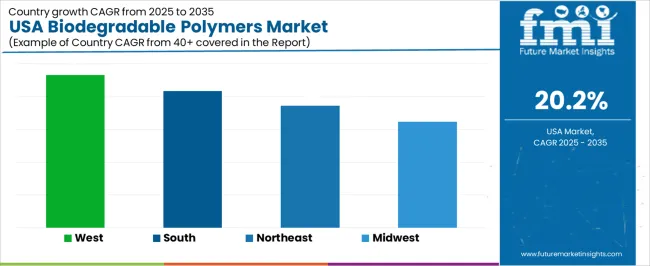
| Region | CAGR (%) |
|---|---|
| West | 23.3 |
| South | 20.8 |
| Northeast | 18.6 |
| Midwest | 16.2 |
What factors are driving the demand for biodegradable polymers in the West?
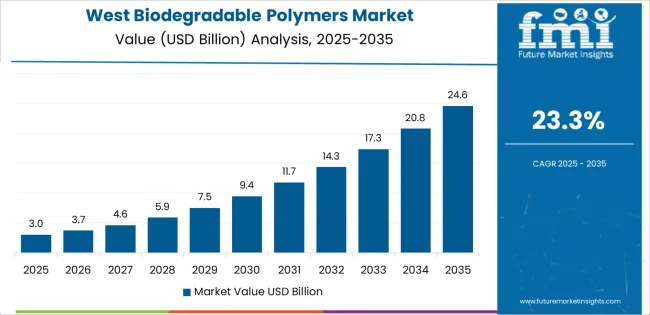
The demand for biodegradable polymers in the West is projected to grow at a remarkable CAGR of 23.3%, driven by several key factors. The West has a strong emphasis on environmental sustainability, with states like California leading the charge in adopting green technologies and promoting the use of biodegradable materials. As the demand for eco-friendly alternatives to traditional plastics rises, industries in packaging, agriculture, and consumer goods are increasingly turning to biodegradable polymers. Additionally, the West’s robust innovation ecosystem, including its concentration of startups and research institutions, is driving the development of advanced biodegradable polymer solutions. Regulatory pressures and consumer preferences for sustainable, biodegradable products further fuel market growth. The West’s commitment to reducing plastic waste and its focus on green technologies ensure that biodegradable polymers will continue to see significant demand.
Why is the demand for biodegradable polymers increasing in the South?
In the South, the demand for biodegradable polymers is expected to grow at a CAGR of 20.8%, supported by the region’s expanding manufacturing and agricultural sectors. The South is home to a large number of industries, particularly in the packaging, agriculture, and food processing sectors, where biodegradable polymers are gaining popularity as an alternative to traditional plastic materials. The agricultural industry, in particular, is increasingly adopting biodegradable polymers for use in mulch films, seed coatings, and other agricultural applications that help reduce environmental impact. As the region continues to expand its industrial base and prioritize sustainability in production processes, the demand for biodegradable polymers is expected to increase. The South’s growing awareness of environmental concerns and the push for more sustainable practices are key drivers of demand for these materials.
What influences the demand for biodegradable polymers in the Northeast?
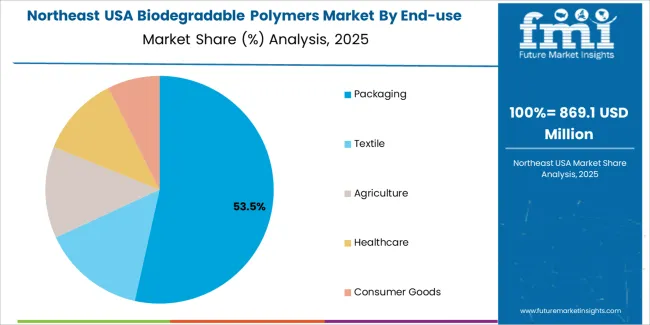
In the Northeast, the demand for biodegradable polymers is projected to grow at a CAGR of 18.6%, supported by the region’s strong manufacturing base and growing focus on environmental sustainability. The Northeast is home to a large number of industries, including packaging, automotive, and consumer goods, all of which are increasingly turning to biodegradable polymers to meet the demand for sustainable products. Additionally, the region’s emphasis on innovation and green technology, coupled with stringent environmental regulations, is driving the adoption of biodegradable polymers. The Northeast’s focus on sustainability, both in terms of consumer behavior and industrial practices, ensures steady growth in the demand for biodegradable polymers. As both businesses and consumers seek more eco-friendly options, the market for biodegradable polymers is expected to expand significantly.
How is the demand for biodegradable polymers growing in the Midwest?
The demand for biodegradable polymers in the Midwest is expected to grow at a CAGR of 16.2%, reflecting a more gradual but steady adoption compared to other regions. The Midwest has a strong industrial base, particularly in the automotive, packaging, and agricultural sectors, all of which are increasingly looking for sustainable alternatives to traditional plastics. However, the growth rate in the Midwest is slower, likely due to the region's more traditional manufacturing practices and slower pace of adopting new materials in some industries. Nonetheless, the growing focus on sustainability and the rising consumer demand for eco-friendly products are pushing manufacturers to explore biodegradable polymers as viable alternatives. As industries in the Midwest continue to modernize and environmental concerns gain prominence, the demand for biodegradable polymers is expected to continue growing, albeit at a more measured pace compared to the West and South.
How Are Companies Competing in the Biodegradable Polymers Industry in the USA?
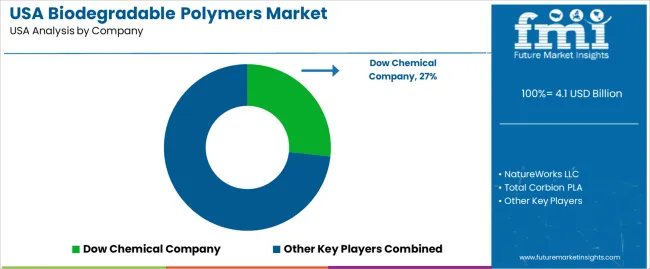
Demand for biodegradable polymers in the United States is growing as manufacturers and consumers increasingly seek sustainable and environmentally friendly alternatives to conventional plastics. Key companies in this market include Dow Chemical Company (holding about 26.7% of the market among major producers), NatureWorks LLC, Total Corbion PLA, and Braskem. Demand comes from sectors such as packaging, disposable foodservice items, agricultural films, and some consumer goods where biodegradable or compostable properties align with regulatory pressures and consumer preferences.
Competition in this industry centers on polymer performance, cost competitiveness, and application versatility. Suppliers offer a variety of biodegradable polymers — including polylactic acid (PLA), bio based poly esters, and other compostable blends — designed to match or approximate the mechanical and thermal properties of traditional plastics while offering improved environmental disposal options. Another competitive axis is the ability to scale production and supply reliably, especially for large-volume packaging customers. Producers also invest in demonstrating compliance with biodegradability and compostability standards relevant in the USA and providing technical support to convertors and brand owners. Marketing materials typically highlight polymer strength, biodegradation profile (e.g. compostable under industrial conditions), processability in standard plastic processing equipment, and sustainability credentials. By aligning materials properties and supply logistics with growing demand for sustainable plastics, these firms aim to expand their presence in the USA biodegradable polymers market.
Key Players of the Biodegradable Polymers Industry in USA
- Dow Chemical Company
- NatureWorks LLC
- Total Corbion PLA
- Braskem
Scope of the Report
| Items | Details |
|---|---|
| Quantitative Units | USD Billion |
| Regions Covered | USA |
| Type | Starch-based Polymers, Polylactic Acid (PLA), Polyhydroxy Alkanoates (PHA), Polyesters, Others |
| End-use Industry | Packaging, Textile, Agriculture, Healthcare, Consumer Goods |
| Key Companies Profiled | Dow Chemical Company, NatureWorks LLC, Total Corbion PLA, Braskem |
| Additional Attributes | The market analysis includes dollar sales by type, end-use industry, and company categories. It also covers regional demand trends in the USA, driven by the increasing adoption of biodegradable polymers in packaging, textiles, and consumer goods. The competitive landscape highlights key manufacturers focusing on innovations in biodegradable polymer production, particularly in sustainable packaging solutions. Trends in the growing demand for eco-friendly alternatives in agriculture, healthcare, and textile applications are explored, along with advancements in polymer biodegradability and regulatory factors. |
Key Segments of the Demand for Biodegradable Polymers in USA
Type:
- Starch-based Polymers
- Polylactic Acid (PLA)
- Polyhydroxy Alkanoates (PHA)
- Polyesters
- Others
End-use Industry:
- Packaging
- Textile
- Agriculture
- Healthcare
- Consumer Goods
Region:
- Northeast USA
- West USA
- Midwest USA
- South USA
Frequently Asked Questions
How big is the demand for biodegradable polymers in USA in 2025?
The demand for biodegradable polymers in USA is estimated to be valued at USD 4.1 billion in 2025.
What will be the size of biodegradable polymers in USA in 2035?
The market size for the biodegradable polymers in USA is projected to reach USD 26.1 billion by 2035.
How much will be the demand for biodegradable polymers in USA growth between 2025 and 2035?
The demand for biodegradable polymers in USA is expected to grow at a 20.2% CAGR between 2025 and 2035.
What are the key product types in the biodegradable polymers in USA?
The key product types in biodegradable polymers in USA are starch-based polymers, polylactic acid (pla), polyhydroxy alkanoates (pha), polyesters and others.
Which end-use industry segment is expected to contribute significant share in the biodegradable polymers in USA in 2025?
In terms of end-use industry, packaging segment is expected to command 55.0% share in the biodegradable polymers in USA in 2025.
Preview the report firsthand - request a free sample
Get SampleGet the brochure for pricing and purchase details.
Get PDFTable of Content
- Executive Summary
- USA Market Outlook
- Demand-side Trends
- Supply-side Trends
- Technology Roadmap Analysis
- Analysis and Recommendations
- Market Overview
- Market Coverage / Taxonomy
- Market Definition / Scope / Limitations
- Market Background
- Market Dynamics
- Drivers
- Restraints
- Opportunity
- Trends
- Scenario Forecast
- Demand in Optimistic Scenario
- Demand in Likely Scenario
- Demand in Conservative Scenario
- Opportunity Map Analysis
- Product Life Cycle Analysis
- Supply Chain Analysis
- Investment Feasibility Matrix
- Value Chain Analysis
- PESTLE and Porter’s Analysis
- Regulatory Landscape
- Regional Parent Market Outlook
- Production and Consumption Statistics
- Import and Export Statistics
- Market Dynamics
- USA Market Analysis 2020 to 2024 and Forecast, 2025 to 2035
- Historical Market Size Value (USD Million) Analysis, 2020 to 2024
- Current and Future Market Size Value (USD Million) Projections, 2025 to 2035
- Y-o-Y Growth Trend Analysis
- Absolute $ Opportunity Analysis
- USA Market Pricing Analysis 2020 to 2024 and Forecast 2025 to 2035
- USA Market Analysis 2020 to 2024 and Forecast 2025 to 2035, By Type
- Introduction / Key Findings
- Historical Market Size Value (USD Million) Analysis By Type , 2020 to 2024
- Current and Future Market Size Value (USD Million) Analysis and Forecast By Type , 2025 to 2035
- Starch-based Polymers
- Polylactic Acid (PLA)
- Polyhydroxy Alkanoates (PHA)
- Polyesters
- Others
- Y-o-Y Growth Trend Analysis By Type , 2020 to 2024
- Absolute $ Opportunity Analysis By Type , 2025 to 2035
- USA Market Analysis 2020 to 2024 and Forecast 2025 to 2035, By End-use Industry
- Introduction / Key Findings
- Historical Market Size Value (USD Million) Analysis By End-use Industry, 2020 to 2024
- Current and Future Market Size Value (USD Million) Analysis and Forecast By End-use Industry, 2025 to 2035
- Packaging
- Textile
- Agriculture
- Healthcare
- Consumer Goods
- Y-o-Y Growth Trend Analysis By End-use Industry, 2020 to 2024
- Absolute $ Opportunity Analysis By End-use Industry, 2025 to 2035
- Market Structure Analysis
- Competition Dashboard
- Competition Benchmarking
- Market Share Analysis of Top Players
- By Regional
- By Type
- By End-use Industry
- Competition Analysis
- Competition Deep Dive
- Dow Chemical Company
- Overview
- Product Portfolio
- Profitability by Market Segments (Product/Age /Sales Channel/Region)
- Sales Footprint
- Strategy Overview
- Marketing Strategy
- Product Strategy
- Channel Strategy
- NatureWorks LLC
- Total Corbion PLA
- Braskem
- Dow Chemical Company
- Competition Deep Dive
- Assumptions & Acronyms Used
- Research Methodology


