

- Industry Size (2025)
- USD 3.5 Bn
- Forecast (2035)
- USD 5.7 Bn
- CAGR (2025 to 2035)
- 4.8%
Demand for Chemotherapy-Induced Myelosuppression Treatment in USA Forecast and Outlook 2025 to 2035
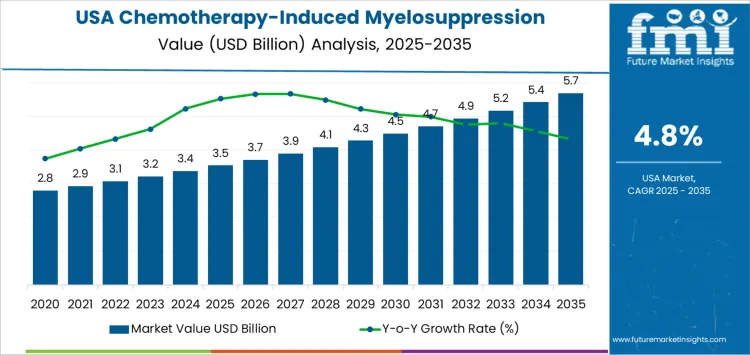
Demand for chemotherapy-induced myelosuppression treatment in the USA is expected to grow from USD 3.5 billion in 2025 to USD 5.7 billion by 2035, reflecting a compound annual growth rate (CAGR) of 4.8%. Growth is driven by the increasing number of cancer patients undergoing chemotherapy, a growing awareness of myelosuppression as a side effect of chemotherapy, and advancements in the development of targeted therapies. Chemotherapy-induced myelosuppression, which can lead to neutropenia, anemia, and thrombocytopenia, significantly impacts patient outcomes, creating a rising demand for effective treatments. Demand is expected to expand as newer treatments become available, improving patient outcomes and reducing the risks associated with chemotherapy.
Demand is further supported by increasing healthcare investment in cancer treatment and supportive care, as well as the ongoing development of biologic and small-molecule therapies aimed at addressing chemotherapy-induced myelosuppression. With an aging population and advancements in cancer treatment regimens, the demand for myelosuppression treatments is anticipated to grow steadily over the next decade.
Quick Stats of the Demand for Chemotherapy-Induced Myelosuppression Treatment in USA
- Demand for Chemotherapy-Induced Myelosuppression Treatment in USA Value (2025): USD 3.5 billion
- Demand for Chemotherapy-Induced Myelosuppression Treatment in USA Forecast Value (2035): USD 5.7 billion
- Demand for Chemotherapy-Induced Myelosuppression Treatment in USA Forecast CAGR (2025-2035): 4.8%
- Demand for Chemotherapy-Induced Myelosuppression Treatment in USA Leading Indication: Neutropenia (55%)
- Demand for Chemotherapy-Induced Myelosuppression Treatment in USA Key Growth Regions: West USA, South USA, Northeast USA, Midwest USA
- Demand for Chemotherapy-Induced Myelosuppression Treatment in USA Key Players: Amgen Inc., Novartis AG, Pfizer Inc., Teva Pharmaceutical Industries Ltd., Myelo Therapeutics GmbH
What is the Growth Forecast for the Chemotherapy-Induced Myelosuppression Treatment Market through 2035?
The inflection point mapping of the chemotherapy-induced myelosuppression treatment market in the USA shows a steady growth trajectory with key moments of acceleration. Starting at USD 3.5 billion in 2025, the market gradually increases to USD 3.7 billion in 2026 and USD 3.9 billion in 2027, reflecting moderate growth as awareness of myelosuppression treatment increases and more healthcare providers adopt these therapies.
In 2028, the market reaches USD 4.1 billion, marking the first significant inflection point, where growth begins to accelerate. This acceleration is driven by advancements in treatment options, including the emergence of targeted biologics that offer improved efficacy and safety profiles. By 2029, the market reaches USD 4.3 billion, and further growth continues with the market reaching USD 4.5 billion in 2030 and USD 4.7 billion in 2031, reflecting increased uptake of these newer therapies and expanding patient populations.
By 2032, the market continues to grow at a steady pace, reaching USD 4.9 billion, and USD 5.2 billion in 2033. The final inflection point is seen in 2034, as the market reaches USD 5.4 billion, before stabilizing at USD 5.7 billion by 2035. This final phase reflects the maturation of the market as myelosuppression treatments become more established and widely adopted in clinical practice, contributing to sustained demand and overall market stability.
USA Chemotherapy-Induced Myelosuppression Treatment Industry Key Takeaways
| Metric | Value |
|---|---|
| Industry Sales Value (2025) | USD 3.5 billion |
| Industry Forecast Value (2035) | USD 5.7 billion |
| Industry Forecast CAGR (2025-2035) | 4.8% |
Why is the Demand for Treatment of Chemotherapy-Induced Myelosuppression Growing in the USA?
Demand for treatments addressing chemotherapy-induced myelosuppression (CIM) in the USA is rising because cancer remains a major health burden and chemotherapy continues to be a cornerstone of cancer care. Every year, a substantial number of Americans receive chemotherapy, and many of those patients develop myelosuppression-a condition in which bone marrow activity is suppressed, leading to reduced production of blood cells. Because CIM can lead to neutropenia, anemia, and thrombocytopenia, it can cause serious complications such as increased risk of infection, fatigue, bleeding, and treatment delays or dose reductions, which affect patient outcomes. This high clinical burden drives demand for effective therapies and supportive care options to manage or mitigate these side effects and enable safer, uninterrupted chemotherapy.
At the same time, advances in supportive care therapies and evolving clinical practices fuel growth in demand. Innovations such as growth factors, erythropoiesis-stimulating agents, thrombopoietic agents, and newer myeloprotective drugs are improving the ability to prevent or treat neutropenia, anemia, and thrombocytopenia associated with chemotherapy. As more effective and safer therapies become available, oncologists and treatment centers increasingly adopt them to reduce complications, improve quality of life, and support optimal chemotherapy dosing. In addition, growing awareness of the importance of supportive care, regulatory approvals of novel agents, and increasing investments in oncology infrastructure in the USA support higher uptake of these treatments. Therefore, as cancer incidence remains elevated and chemotherapy remains widely used, demand for myelosuppression-treatment solutions is expected to continue growing significantly in the USA.
What Are the Key Segments in Chemotherapy-Induced Myelosuppression Treatment Market in the USA?
The chemotherapy-induced myelosuppression treatment market in the USA is segmented by indication and drug class. Neutropenia is the leading indication, accounting for 55% of the market share. In terms of drug class, growth factors dominate, holding 48% of the market. The increasing prevalence of chemotherapy-induced myelosuppression and the need for effective treatments to manage side effects like neutropenia, anemia, and thrombocytopenia are driving the demand for treatments in the USA.
Which Indication Drives Chemotherapy-Induced Myelosuppression Treatment Demand in the USA?
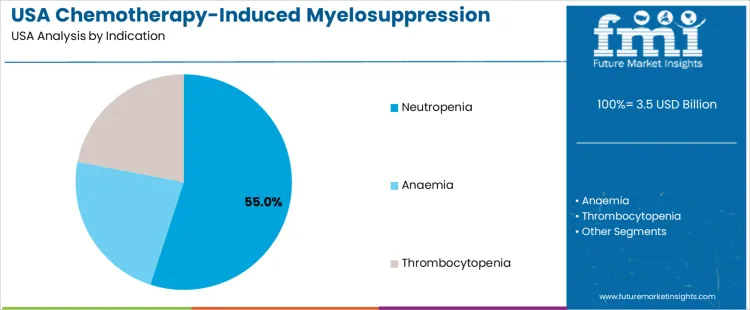
Neutropenia is the largest indication for chemotherapy-induced myelosuppression treatment, representing 55% of the market share. Neutropenia, a condition characterized by a low neutrophil count, is one of the most common side effects of chemotherapy, which can leave patients vulnerable to infections. The demand for treatments targeting neutropenia is driven by the need to prevent infections and reduce the duration of chemotherapy treatment delays. Growth factors, such as granulocyte colony-stimulating factors (G-CSF), are commonly used to stimulate neutrophil production and reduce the risk of infection. While anemia and thrombocytopenia also represent significant portions of the market, neutropenia remains the largest driver due to its widespread occurrence in chemotherapy patients and the critical need for intervention.
Which Drug Class Drives Chemotherapy-Induced Myelosuppression Treatment Demand in the USA?
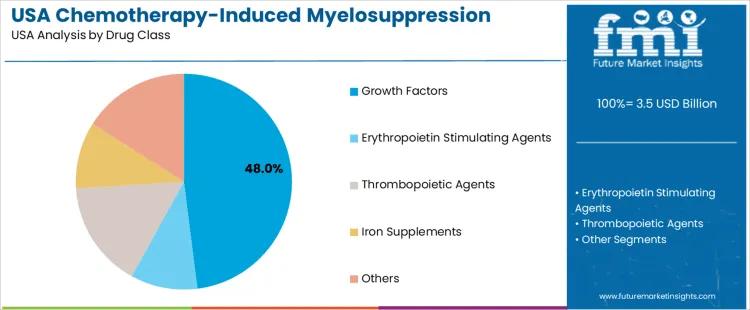
Growth factors lead the drug class segment for chemotherapy-induced myelosuppression treatment, accounting for 48% of the market share. These drugs, including granulocyte colony-stimulating factors (G-CSF) and granulocyte-macrophage colony-stimulating factors (GM-CSF), are used to stimulate the production of neutrophils and prevent neutropenia in chemotherapy patients. Growth factors are crucial for reducing the risk of infection and improving patient outcomes by shortening the duration of chemotherapy-induced neutropenia. Erythropoietin stimulating agents and thrombopoietic agents also play important roles in treating chemotherapy-induced anemia and thrombocytopenia, respectively. Iron supplements are commonly used to manage anemia, though growth factors remain the most widely used and effective treatment for managing myelosuppression induced by chemotherapy.
What is the Demand for Chemotherapy-Induced Myelosuppression Treatment in USA?
The demand for chemotherapy-induced myelosuppression treatment in the USA is increasing as cancer therapies become more effective and patients live longer. Chemotherapy-induced myelosuppression, a condition where chemotherapy damages the bone marrow and reduces blood cell production, is a common side effect of cancer treatment. As the number of cancer cases rises and treatment options advance, the need for effective treatments to manage this condition is growing. These treatments, which include medications that stimulate blood cell production and reduce the risk of infection, are essential for improving patient outcomes during cancer therapy.
What are the Drivers of Demand for Chemotherapy-Induced Myelosuppression Treatment in USA?
Several factors are driving the demand for chemotherapy-induced myelosuppression treatment in the USA. First, the increasing incidence of cancer, particularly as the population ages, is driving the need for effective treatments to manage the side effects of chemotherapy. Second, advancements in chemotherapy and other cancer treatments have led to longer survival rates, making it more important to address the side effects, such as myelosuppression, that can affect patients' quality of life. Third, the development of targeted therapies and biologics has improved the effectiveness of treatments, resulting in higher survival rates but also requiring more advanced management of myelosuppression. Additionally, the growing awareness of the importance of managing chemotherapy side effects to improve patient outcomes is contributing to the rising demand for these treatments.
What are the Restraints on Demand for Chemotherapy-Induced Myelosuppression Treatment in USA?
Despite the increasing demand, several factors may limit the adoption of chemotherapy-induced myelosuppression treatments in the USA. One major restraint is the high cost of some treatments, particularly newer biologics and medications that stimulate blood cell production, which can be a barrier for some patients and healthcare providers. Additionally, the availability and access to these treatments may be limited in certain regions or healthcare settings, especially in underfunded or smaller hospitals. Another challenge is the variability in patient response to treatments, as not all patients experience the same level of benefit from myelosuppression therapies. Finally, the side effects of some treatments, such as bone pain or risk of infection, may discourage their use or limit their effectiveness in certain patient populations.
What are the Key Trends Influencing Demand for Chemotherapy-Induced Myelosuppression Treatment in USA?
Several key trends are shaping the demand for chemotherapy-induced myelosuppression treatment in the USA. One important trend is the increasing focus on personalized medicine, where treatments are tailored to the specific needs of individual patients, improving the effectiveness of myelosuppression therapies. Another trend is the growing use of biosimilars and generic medications, which are helping to make treatments more affordable and accessible to a wider range of patients. There is also a rising interest in supportive care treatments, which help manage the side effects of chemotherapy, including myelosuppression, to improve patients' overall well-being during cancer treatment. Additionally, advancements in the development of more targeted therapies and biologics are contributing to the increasing availability of treatments for chemotherapy-induced myelosuppression, which is expected to drive demand further.
What is the Regional Demand Outlook for the Chemotherapy-Induced Myelosuppression Treatment Market in the USA?
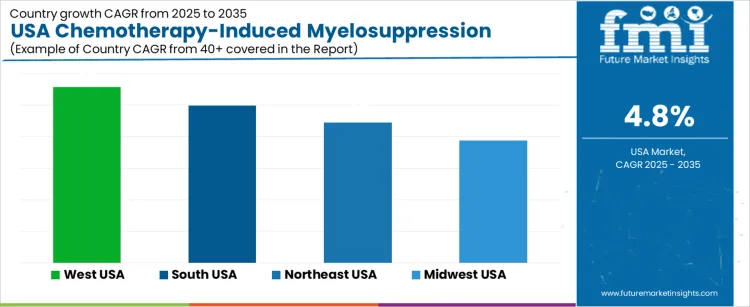
The Chemotherapy-Induced Myelosuppression (CIM) Treatment market in the USA is expected to grow steadily, with the West USA leading the way at a projected CAGR of 5.6%. South USA follows closely with a growth rate of 5.0%, while the Northeast USA is expected to grow at 4.5%. The Midwest USA shows more moderate growth with a CAGR of 3.9%. CIM is a common side effect of chemotherapy, which involves a decrease in the bone marrow's ability to produce blood cells. As cancer treatments continue to improve, the demand for treatments addressing CIM is expected to rise across the United States.
| Region | CAGR (2025-2035) |
|---|---|
| West USA | 5.6% |
| South USA | 5.0% |
| Northeast USA | 4.5% |
| Midwest USA | 3.9% |
What is Driving the Growth of Chemotherapy-Induced Myelosuppression Treatment in the West USA?
The West USA is projected to experience the highest growth in the Chemotherapy-Induced Myelosuppression Treatment market, with a projected CAGR of 5.6%. The region’s strong healthcare infrastructure, combined with a high prevalence of cancer patients and ongoing advancements in cancer treatment, is driving the demand for CIM treatments. States like California, Washington, and Oregon are at the forefront of cancer research and treatment, and healthcare providers in these states are increasingly offering treatments to address chemotherapy-induced side effects, including myelosuppression. The region’s focus on innovative cancer therapies, patient care, and research into improving chemotherapy outcomes is fueling the growth of CIM treatments. Additionally, the West's large healthcare market, with a growing number of cancer patients, ensures a strong demand for supportive treatments like those addressing chemotherapy-related blood cell deficiencies.
Why is the Chemotherapy-Induced Myelosuppression Treatment Market Expanding in South USA?
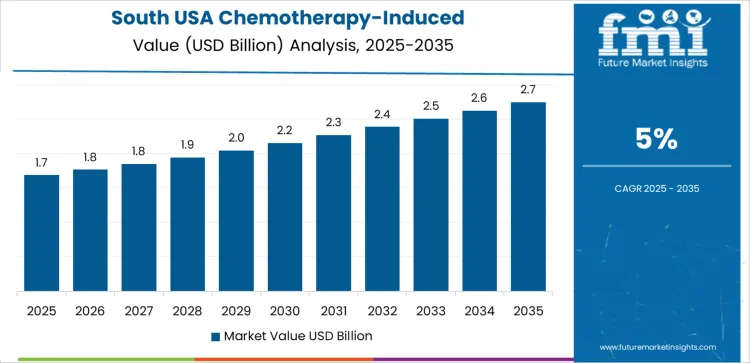
In South USA, the demand for Chemotherapy-Induced Myelosuppression Treatment is projected to grow at a CAGR of 5.0%. The region’s rapidly growing healthcare sector, particularly in states like Texas, Florida, and Georgia, is a major driver of this growth. As cancer rates continue to rise, especially with an aging population in the South, healthcare providers are increasingly focusing on managing chemotherapy side effects, including myelosuppression. With a larger patient population and higher incidence of cancers such as breast, lung, and prostate, the demand for effective treatments for CIM is growing. Furthermore, the South’s expanding cancer care facilities and access to cutting-edge therapies are contributing to the market’s expansion. The region’s increasing emphasis on improving patient outcomes and reducing chemotherapy side effects further drives the demand for treatments addressing chemotherapy-induced myelosuppression.
How is the Chemotherapy-Induced Myelosuppression Treatment Market Growing in Northeast USA?
In Northeast USA, the Chemotherapy-Induced Myelosuppression Treatment market is projected to grow at a CAGR of 4.5%. The region’s well-established healthcare infrastructure, particularly in cities like New York, Boston, and Philadelphia, is driving the adoption of treatments for chemotherapy-induced myelosuppression. The Northeast has a high concentration of cancer treatment centers, research institutions, and academic hospitals focused on providing comprehensive cancer care, including managing side effects like myelosuppression. As cancer treatment regimens become more aggressive, the need for effective therapies to manage side effects, particularly blood cell deficiencies, is rising. With increasing awareness about chemotherapy-related risks and side effects, healthcare providers in the Northeast are adopting newer and more effective treatment options for CIM. This growing focus on improving quality of life for cancer patients is contributing to the steady growth of the market in the Northeast USA.
What is Contributing to the Growth of Chemotherapy-Induced Myelosuppression Treatment in Midwest USA?
In Midwest USA, the Chemotherapy-Induced Myelosuppression Treatment market is expected to grow at a more moderate rate of 3.9%. While the Midwest has a strong healthcare system and a large number of cancer patients, the adoption of treatments for chemotherapy-induced side effects is growing at a slower pace compared to other regions. States like Illinois, Michigan, and Ohio are focusing on improving cancer care facilities, with a growing number of patients requiring treatments to address myelosuppression. As chemotherapy regimens continue to evolve and become more aggressive, there is an increasing need for treatments that help manage the resulting blood cell deficiencies. The Midwest’s focus on expanding access to cancer therapies and improving the overall quality of life for cancer patients is expected to drive steady demand for CIM treatments in the region. While the growth rate in the Midwest is slower than in other regions, the ongoing focus on cancer care and patient well-being is expected to support the gradual expansion of the market.
What is the Competitive Landscape for Demand for Chemotherapy Induced Myelosuppression Treatment in the USA?
Demand for therapies to manage chemotherapy induced myelosuppression (reduction in bone marrow output of blood cells) in the USA remains high. Many cancer patients receiving chemotherapy experience reduced white blood cells, red blood cells or platelets-leading to neutropenia, anemia, or thrombocytopenia. This risk forces clinicians to delay or reduce chemotherapy doses and increases the need for supportive care to maintain treatment continuity and patient safety. As overall cancer incidence grows and chemotherapy use remains common, demand for effective myelosuppression treatment options continues to expand.
On the supply side, several major pharmaceutical companies compete to supply therapies and supportive agents for myelosuppression management. Among the leading firms are Amgen Inc., along with Novartis AG, Pfizer Inc., Teva Pharmaceutical Industries Ltd., and Myelo Therapeutics GmbH. These companies provide growth factors, hematopoietic agents, and other supportive care therapies designed to stimulate blood cell production or protect bone marrow during chemotherapy. Competition among suppliers centers on efficacy in reducing neutropenia, anemia or thrombocytopenia, safety profile, regulatory approvals, cost, dosing convenience, and ability to support different patient sub groups and chemotherapy regimens.
Firms investing in biologics, long acting growth factors, myeloprotective agents, and comprehensive supportive care protocols-especially those with strong R&D capabilities, established regulatory compliance, and robust distribution networks-are best positioned to capture growth. With ongoing innovations and increasing emphasis on patient quality of life and continuity of cancer therapy, demand is forecast to rise steadily in the USA market.
Key Players of the Chemotherapy-Induced Myelosuppression Treatment Industry in USA
- Amgen Inc.
- Novartis AG
- Pfizer Inc.
- Teva Pharmaceutical Industries Ltd.
- Myelo Therapeutics GmbH
Scope of the Report
| Items | Details |
|---|---|
| Quantitative Units | USD Billion |
| Regions Covered | USA |
| Indication | Neutropenia, Anaemia, Thrombocytopenia |
| Drug Class | Growth Factors, Erythropoietin Stimulating Agents, Thrombopoietic Agents, Iron Supplements, Others |
| Route of Administration | Oral (for oral supportive supplements/agents), Injectable (for biologics, growth factors) |
| Distribution Channel | Hospital Pharmacies, Retail Pharmacies, Online Pharmacies, Drug Stores |
| Key Companies Profiled | Amgen Inc.; Novartis AG; Pfizer Inc.; Teva Pharmaceutical Industries Ltd.; Myelo Therapeutics GmbH |
| Additional Attributes | Dollar sales by indication and drug class show majority demand for neutropenia treatments (growth factors) and anemia management (ESA, iron supplements). Injectable growth factors dominate due to effectiveness; oral and supplement based therapies also contribute. Rising cancer incidence and chemotherapy use increase demand. |
Key Segments in the Demand for Chemotherapy Induced Myelosuppression Treatment in USA
Indication
- Neutropenia
- Anaemia
- Thrombocytopenia
Drug Class
- Growth Factors
- Erythropoietin Stimulating Agents
- Thrombopoietic Agents
- Iron Supplements
- Others
Route of Administration
- Oral Chemotherapy Induced Myelosuppression Treatment
- Injectable Chemotherapy Induced Myelosuppression Treatment
Distribution Channel
- Hospital Pharmacies
- Retail Pharmacies
- Online Pharmacies
- Drug Stores
Region
- Northeast USA
- West USA
- Midwest USA
- South USA
Frequently Asked Questions
How big is the demand for chemotherapy-induced myelosuppression treatment in USA in 2025?
The demand for chemotherapy-induced myelosuppression treatment in USA is estimated to be valued at USD 3.5 billion in 2025.
What will be the size of chemotherapy-induced myelosuppression treatment in USA in 2035?
The market size for the chemotherapy-induced myelosuppression treatment in USA is projected to reach USD 5.7 billion by 2035.
How much will be the demand for chemotherapy-induced myelosuppression treatment in USA growth between 2025 and 2035?
The demand for chemotherapy-induced myelosuppression treatment in USA is expected to grow at a 4.8% CAGR between 2025 and 2035.
What are the key product types in the chemotherapy-induced myelosuppression treatment in USA?
The key product types in chemotherapy-induced myelosuppression treatment in USA are neutropenia, anaemia and thrombocytopenia.
Which drug class segment is expected to contribute significant share in the chemotherapy-induced myelosuppression treatment in USA in 2025?
In terms of drug class, growth factors segment is expected to command 48.0% share in the chemotherapy-induced myelosuppression treatment in USA in 2025.
Preview the report firsthand - request a free sample
Get SampleGet the brochure for pricing and purchase details.
Get PDFTable of Content
- Executive Summary
- USA Market Outlook
- Demand-side Trends
- Supply-side Trends
- Technology Roadmap Analysis
- Analysis and Recommendations
- Market Overview
- Market Coverage / Taxonomy
- Market Definition / Scope / Limitations
- Market Background
- Market Dynamics
- Drivers
- Restraints
- Opportunity
- Trends
- Scenario Forecast
- Demand in Optimistic Scenario
- Demand in Likely Scenario
- Demand in Conservative Scenario
- Opportunity Map Analysis
- Product Life Cycle Analysis
- Supply Chain Analysis
- Investment Feasibility Matrix
- Value Chain Analysis
- PESTLE and Porter’s Analysis
- Regulatory Landscape
- Regional Parent Market Outlook
- Production and Consumption Statistics
- Import and Export Statistics
- Market Dynamics
- USA Market Analysis 2020 to 2024 and Forecast, 2025 to 2035
- Historical Market Size Value (USD Million) Analysis, 2020 to 2024
- Current and Future Market Size Value (USD Million) Projections, 2025 to 2035
- Y-o-Y Growth Trend Analysis
- Absolute $ Opportunity Analysis
- USA Market Pricing Analysis 2020 to 2024 and Forecast 2025 to 2035
- USA Market Analysis 2020 to 2024 and Forecast 2025 to 2035, By Indication
- Introduction / Key Findings
- Historical Market Size Value (USD Million) Analysis By Indication , 2020 to 2024
- Current and Future Market Size Value (USD Million) Analysis and Forecast By Indication , 2025 to 2035
- Neutropenia
- Anaemia
- Thrombocytopenia
- Y-o-Y Growth Trend Analysis By Indication , 2020 to 2024
- Absolute $ Opportunity Analysis By Indication , 2025 to 2035
- USA Market Analysis 2020 to 2024 and Forecast 2025 to 2035, By Drug Class
- Introduction / Key Findings
- Historical Market Size Value (USD Million) Analysis By Drug Class, 2020 to 2024
- Current and Future Market Size Value (USD Million) Analysis and Forecast By Drug Class, 2025 to 2035
- Growth Factors
- Erythropoietin Stimulating Agents
- Thrombopoietic Agents
- Iron Supplements
- Others
- Y-o-Y Growth Trend Analysis By Drug Class, 2020 to 2024
- Absolute $ Opportunity Analysis By Drug Class, 2025 to 2035
- USA Market Analysis 2020 to 2024 and Forecast 2025 to 2035, By Route of Administration
- Introduction / Key Findings
- Historical Market Size Value (USD Million) Analysis By Route of Administration, 2020 to 2024
- Current and Future Market Size Value (USD Million) Analysis and Forecast By Route of Administration, 2025 to 2035
- Oral Chemotherapy-Induced Myelosuppression Treatment
- Injectable Chemotherapy-Induced Myelosuppression Treatment
- Y-o-Y Growth Trend Analysis By Route of Administration, 2020 to 2024
- Absolute $ Opportunity Analysis By Route of Administration, 2025 to 2035
- USA Market Analysis 2020 to 2024 and Forecast 2025 to 2035, By Distribution Channel
- Introduction / Key Findings
- Historical Market Size Value (USD Million) Analysis By Distribution Channel, 2020 to 2024
- Current and Future Market Size Value (USD Million) Analysis and Forecast By Distribution Channel, 2025 to 2035
- Hospitals Pharmacies
- Retail Pharmacies
- Online Pharmacies
- Drug Stores
- Y-o-Y Growth Trend Analysis By Distribution Channel, 2020 to 2024
- Absolute $ Opportunity Analysis By Distribution Channel, 2025 to 2035
- Market Structure Analysis
- Competition Dashboard
- Competition Benchmarking
- Market Share Analysis of Top Players
- By Regional
- By Indication
- By Drug Class
- By Route of Administration
- By Distribution Channel
- Competition Analysis
- Competition Deep Dive
- Amgen Inc.
- Overview
- Product Portfolio
- Profitability by Market Segments (Product/Age /Sales Channel/Region)
- Sales Footprint
- Strategy Overview
- Marketing Strategy
- Product Strategy
- Channel Strategy
- Novartis AG
- Pfizer Inc.
- Teva Pharmaceutical Industries Ltd.
- Myelo Therapeutics GmbH
- Amgen Inc.
- Competition Deep Dive
- Assumptions & Acronyms Used
- Research Methodology


