

- Market Size (2026)
- USD 2.1 Bn
- Forecast (2036)
- USD 4.0 Bn
- CAGR (2026 to 2036)
- 6.7%
Antimicrobial Interior Surface Coating Systems Market Size, Forecast, and Outlook By FMI
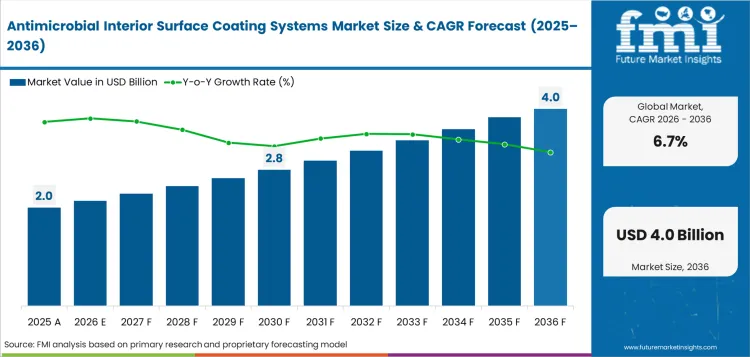
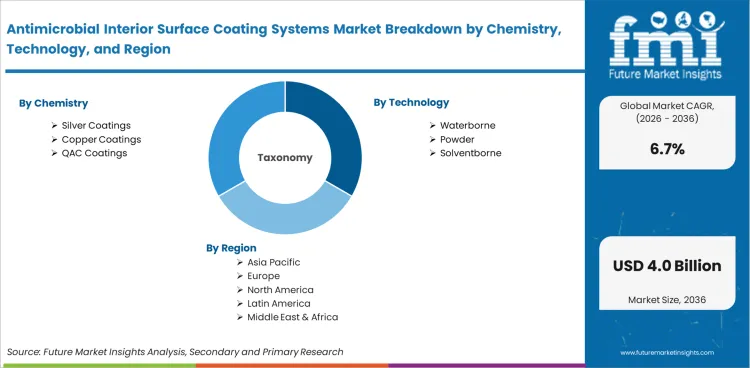
Antimicrobial interior surface coating systems were valued at USD 2.0 billion in 2025. Demand is expected to reach USD 2.1 billion by 2026-end and expand at a CAGR of 6.7% between 2026 and 2036 to reach USD 4.0 billion by 2036.
Summary of the Antimicrobial Interior Surface Coating Systems Market
- Demand and Growth Drivers
- Facility hygiene specifications are moving beyond cleaning schedules, with passive antimicrobial coatings added between disinfection rounds.
- Residual efficacy rules raise the proof bar for coated surfaces before hospitals and transit operators approve use.
- Frequent contact on handles and rails keeps coating demand concentrated around hardware with visible wear risk.
- Product and Segment View
- Waterborne coatings are projected to account for 42.0% of the technology segment in 2026 as low-odor application suits occupied buildings.
- Silver coatings are estimated at 34.0% share within chemistry use for 2026, helped by familiar active-agent documentation during facility review.
- Metal substrates carry higher surface value across handles and rails since buyers need stronger wear resistance on frequent-contact hardware.
- Geography and Competitive Outlook
- India is expected to record a CAGR of 7.4% through 2036 as new healthcare assets specify active surfaces.
- China is projected to expand at 7.1% CAGR by 2036 as transit and commercial interiors create use cases.
- Companies combining coating chemistry depth with claims evidence are strengthening market position during the forecast period.
- Analyst Opinion
- Nikhil Kaitwade, Principal Consultant for the Chemicals and Materials at FMI, says, “Interior antimicrobial coatings are becoming passive protection between cleaning cycles. Hospitals and transport assets lead to repeated hand contact. Facility teams compare coating life with repainting cost. Public health claims need test evidence while bleach resistance reduces failure risk.”
- Antimicrobial Interior Surface Coating Systems Market Value Analysis
- Antimicrobial interior surface coating systems are moving from hygiene messaging into verified surface performance across high-touch interiors.
- Infection-control evidence needs are increasing use across hospitals and other high-traffic indoor assets.
- Deeper use of protective antimicrobial coatings for high-touch surfaces strengthens institutional surface protection planning.
- Coating systems built to withstand routine cleaning chemicals and scheduled recoat cycles are strengthening demand.
Key Takeaways, Market Size, and Forecast
- The antimicrobial interior surface coating systems market was valued at USD 2.0 billion in 2025.
- By 2036, the antimicrobial interior surface coating systems market is poised to be worth USD 4.0 billion.
- From 2026 to 2036, the market is projected to expand at a CAGR of 6.7%.
- The market is projected to create an incremental opportunity of USD 1.9 billion between 2026 and 2036.
- In 2026, waterborne coatings are expected to account for 42.0% of technology demand.
- India is projected to record 7.4% CAGR, and China is estimated to expand at 7.1% CAGR through 2036.
Institutional buyers are asking a simple question before approving antimicrobial interior coatings: can the coating claim be proven and used safely in real buildings. EPA’s September 2025 guidance places coatings and paints within the residual antimicrobial claim pathway, so evidence quality now affects approval speed. EPA’s December 2024 Label Review Manual also makes claim wording important, as paints making protection claims beyond the dried paint film require FIFRA registration. This raises the value of suppliers with strong label control and test records. Metal hardware is another practical entry point. AkzoNobel’s Interpon 100 AM data sheet cites ISO 22196:2011 testing with 95% to 99.99% reduction against E. coli and MRSA. This evidence helps door handle and rail suppliers defend factory-applied antimicrobial finishes. Interior wall coatings create a separate value case. PPG Copper Armor states 99.9% kill performance and activity for up to 5 years. Facility owners can use those claims to compare coating cost with cleaning pressure and repaint cycles.
Antimicrobial Interior Surface Coating Systems Market Definition
Antimicrobial interior surface coating systems include permanent architectural and hardware coatings used on frequent-contact indoor surfaces. These systems use active agents such as silver ions and quaternary compounds to reduce microbial load on coated surfaces. Included surfaces cover handles and rails across built environments with repeated hand contact. Routine disinfectant liquids and untreated decorative paints are outside the scope.
Antimicrobial Interior Surface Coating Systems Market Inclusions
Market scope includes commercially traded antimicrobial interior surface coating systems used on high-contact indoor surfaces across institutional and commercial facilities. Coverage is assessed by chemistry and technology, with active coating formats reviewed against indoor application needs. Substrate coverage includes metal, plastic, glass, wood, and composite surfaces used in door hardware, handrails, touch panels, countertops, and furniture. End-use coverage spans healthcare, public transport, commercial buildings, education, and hospitality facilities from 2026 to 2036. Key stakeholders include coating manufacturers, active-agent suppliers, resin producers, contractors, facility owners, healthcare systems, transport operators, distributors, and regulatory bodies.
Antimicrobial Interior Surface Coating Systems Market Exclusions
Scope does not include routine surface disinfectants, disposable wipes, hand sanitizers, exterior façade coatings, medical device coatings, or paints without antimicrobial performance claims.
Antimicrobial Interior Surface Coating Systems Market Research Methodology
- Primary Research: Interviews conducted with the coating formulators, facility managers, hospital hygiene teams, and contractor channel participants in important markets.
- Desk Research: Combined data from regulatory guidance, company coating portfolios, and active-agent performance requirements.
- Market sizing and forecasting: Added surface area use across technology groups and end-use clusters from the bottom up.
- Data validation: Cross-checked every three months against coating claims rules and company product coverage.
Why is the Antimicrobial Interior Surface Coating Systems Market Growing?
- Facilities are using passive coatings to reduce microbial risk between planned cleaning rounds.
- Hospitals are adding surface-performance checks before repainting or replacing high-touch fixtures.
- Transit operators need durable coatings for hand-contact points across passenger interiors.
Healthcare facilities are treating surface controls as part of daily infection-prevention planning in high-contact areas. CDC’s January 2026 HAI progress update reported an 11% decrease in hospital-onset C. difficile infections, a 7% decrease in hospital-onset MRSA bacteremia, and a 4% decrease in colon surgery SSIs across acute care hospitals in 2024 compared with 2023. These figures keep infection prevention visible in facility planning and product review. Antimicrobial coatings gain attention as passive protection for door hardware and touch panels between manual cleaning cycles. Facility teams review abrasion life and cleaning compatibility before approving coatings for broader interior use.
Regulatory claim discipline is pushing suppliers toward stronger product evidence across interior surface programs. EPA guidance for residual efficacy claims covers coatings and fixed surfaces used on high-touch areas. Earlier, EPA residual efficacy material set a defined performance benchmark for antimicrobial activity on treated surfaces under controlled test conditions. Testing evidence becomes central for product selection and contract approval. Coating brands with robust claim files can reduce approval delays for hospitals and transport assets.
Market Segmentation Analysis
- Silver coatings are estimated at 34.0% of chemistry use in 2026, reflecting their role in familiar active-surface formulations.
- Waterborne coatings are projected to hold 42.0% share within technology as occupied interiors need low-odor application.
- Metal substrates are expected to represent 37.0% of substrate use in 2026 through door hardware and handrail applications.
- Door hardware is forecast to capture 28.0% of application share as handles carry repeated contact across public interiors.
- Healthcare is expected to contribute 36.0% of end-use share in 2026 through stronger need for hygiene related finishes.
The market for antimicrobial interior surface coating systems is divided into groups based on chemistry, technology, substrate, application, end use, and region. There are silver coatings, copper coatings, QAC coatings, photocatalytic coatings, and hybrid coatings under chemistry. By technology, the market includes waterborne, powder, solventborne, UV-curable, and sol-gel coating systems. By substrate, the market covers metal, plastic, glass, wood, and composite surfaces used across indoor assets. Based on application, it includes door hardware, handrails, touch panels, countertops, and furniture. By end use, the market includes healthcare, public transport, commercial buildings, education, and hospitality facilities.
Insights into Antimicrobial Interior Surface Coating Systems Market by Chemistry
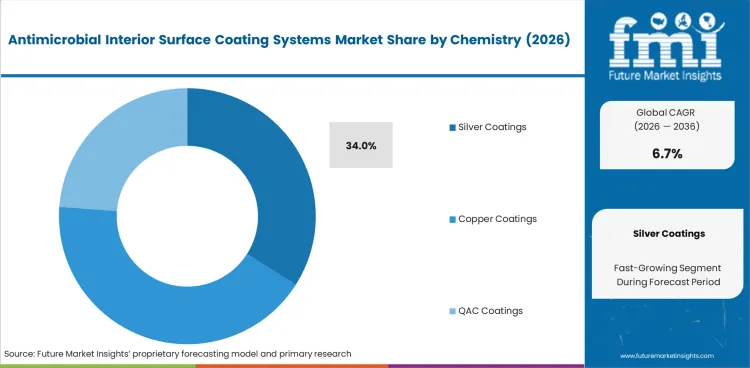
- In 2026, silver coatings are expected to make up 34.0% of the chemistry segment. Silver-based systems support institutional specifications requiring familiar active-agent documentation and easier coating review.
- Copper and QAC coatings address selected surface programs with different performance needs. Their value improves in projects requiring visible antimicrobial identity or lower-cost active chemistry.
Insights into Antimicrobial Interior Surface Coating Systems Market by Technology
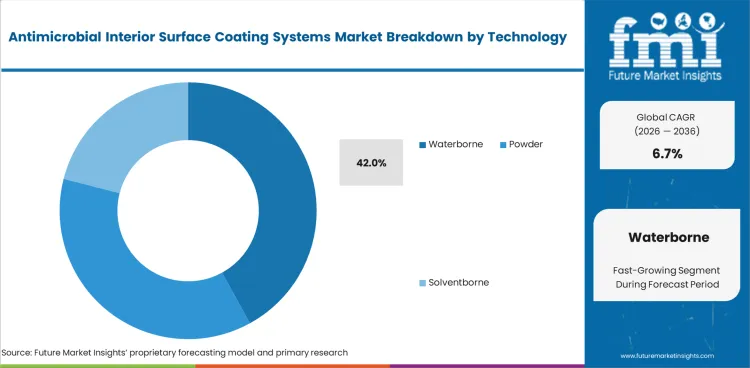
- Waterborne coatings are projected to account for 42.0% of the technology segment in 2026. Low-odor application makes these systems suitable for hospitals and offices with limited maintenance windows.
- Powder and solventborne formats serve selected factory-applied or heavy-use surfaces. Their role improves in hardware programs requiring stronger film build or tougher finish performance.
Insights into Antimicrobial Interior Surface Coating Systems Market by Substrate
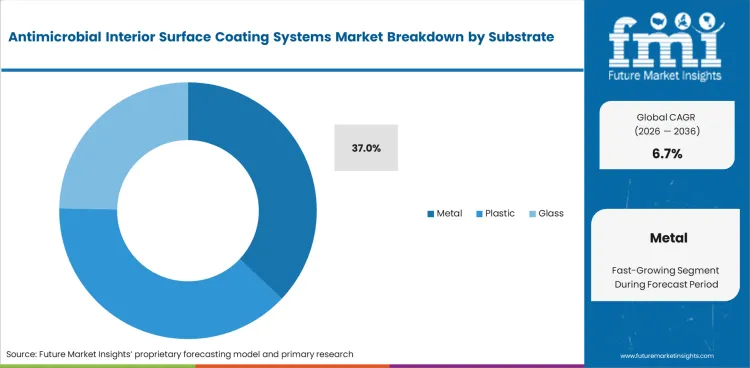
- Metal substrates are estimated to hold 37.0% share of the substrate segment in 2026. Door handles and push plates raise steady coating demand through repeated hand contact.
- Plastic and glass surfaces address selected interior applications with different adhesion needs. Their use improves in touch panels and furniture components requiring smoother finish control.
Insights into Antimicrobial Interior Surface Coating Systems Market by Application
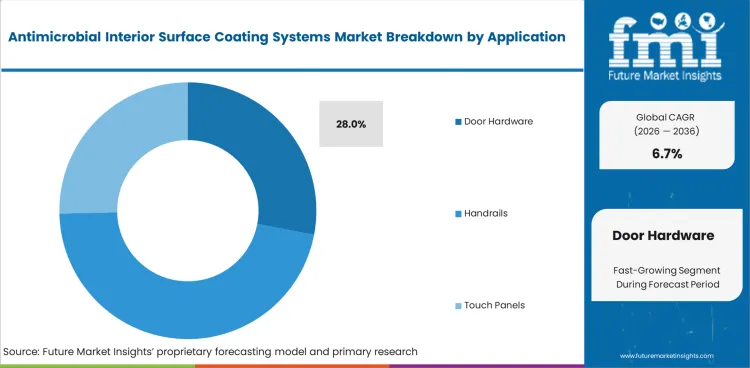
- Door hardware is projected to account for 28.0% of the application segment in 2026. Handles concentrate contact in small surface areas and make coating wear easier to inspect.
- Handrails and touch panels support broader use across hospitals and public buildings. Their value improves in facilities requiring surface protection across repeated daily contact points.
Insights into Antimicrobial Interior Surface Coating Systems Market by End Use
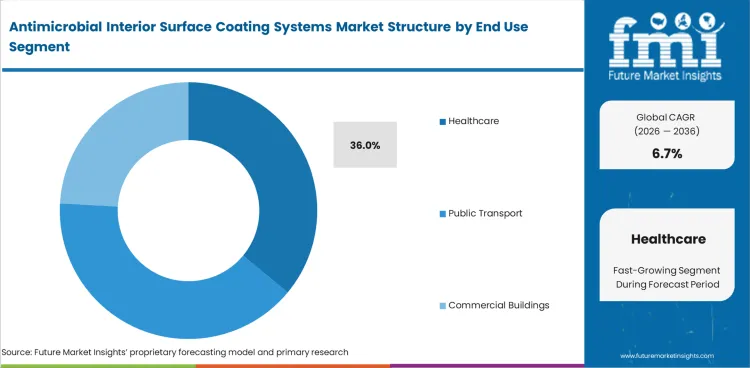
- Healthcare is expected to contribute 36.0% share of the end-use segment in 2026. Hospitals require coating evidence aligned with infection-control programs before approving premium finishes.
- Public transport and commercial buildings address selected high-traffic interior needs. Adoption improves with coatings offering durable finish quality and compatibility with routine cleaning.
Antimicrobial Interior Surface Coating Systems Market Drivers, Restraints, and Opportunities
- Residual efficacy claim requirements are creating structured demand for validated interior coatings across high-touch programs.
- Advanced testing and field durability records increase pricing pressure for smaller coating providers.
- Waterborne and powder technologies improve the service opportunity through low-odor retrofits and factory-applied hardware.
Antimicrobial interior surface coating systems expand as facilities need stronger proof for long-life surface claims. EPA’s September 2025 residual efficacy guidance explains testing approaches for products adding residual antimicrobial claims. This guidance helps facility teams compare coatings with a common evidence base. Suppliers with testing depth can reduce gaps between laboratory data and buyer expectations.
Silver-ion Active Costs Are Lifting Premium System Quotes
Silver ion antimicrobial interior surface coating systems carry a stronger raw material risk instead of carrying the standard decorative interior coatings, as the active package cannot be treated as a minor additive. Certification and efficacy claims, as well as durability positioning, rely heavily on this active package. In April 2025, the Silver Institute reported that silver industrial demand rose 4% in 2024 to a record 680.5 Moz, while global silver demand exceeded supply by 148.9 Moz; it noted that the average silver price jumped 21% in 2024. For coating formulators, this shifts price movement toward surcharge clauses, reducing flexibility in pricing strategies. It results in narrower quote validity periods and increased reformulation work on loading efficiency. Facility buyers comparing antimicrobial wall or touch-surface coatings should separate base-coat pricing from silver-active premiums before negotiating multi-site supply.
Copper-active Formulas Face Metal Volatility Pass-through
Copper-based antimicrobial interior coating systems face reduced pricing flexibility as the specifications require copper oxide or copper alloy activity. These requirements emphasize copper containing surface activity instead of allowing generic hygienic paint claims in competitive projects. A January 2025 USA Geological Survey report stated, COMEX copper reached a record high in May 2024 and was projected to average $4.20 per pound for full-year 2024, 9% in comparison to 2023; it also reported USA mined copper output declined 3% in 2024. This combination makes copper actives more exposed to pass-through as compared to the commodity latex interiors. Suppliers with recycled-copper sourcing or multi-metal antimicrobial platforms can defend margins better, and buyers should request metal-adjustment formulas instead of accepting broad annual price increases.
Analysis of Antimicrobial Interior Surface Coating Systems Market By Key Countries
.webp "Top Country Growth Comparison Antimicrobial Interior Surface Coating Systems Market Cagr (2026 2036)")
| Country | CAGR |
|---|---|
| India | 7.4% |
| China | 7.1% |
| Saudi Arabia | 6.9% |
| United Arab Emirates | 6.7% |
| USA | 5.8% |
| Germany | 5.4% |
| Japan | 5.1% |
Source: Future Market Insights, 2026.
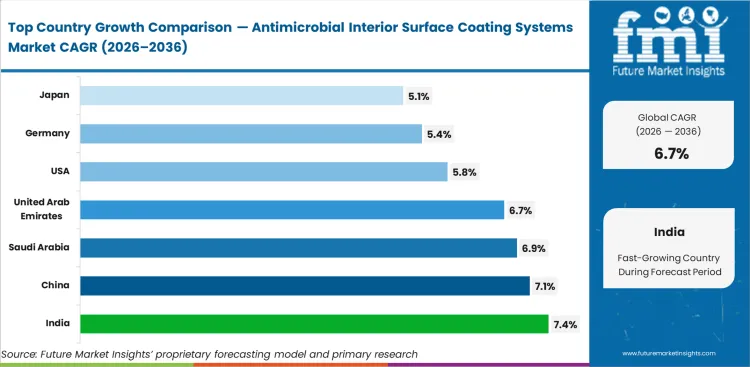
Antimicrobial Interior Surface Coating Systems Market CAGR Analysis By Country
- India is projected to record 7.4% CAGR during 2026 to 2036, helped by healthcare construction and expanding transit infrastructure.
- China’s 7.1% CAGR reflects high passenger movement and commercial facility upgrades over the assessment period.
- Saudi Arabia is forecast to expand at 6.9% CAGR as medical city projects and hospitality interiors add coating demand.
- Premium building upgrades and hygiene-focused public spaces place the United Arab Emirates at 6.7% CAGR by 2036.
- The USA is expected to grow at 5.8% CAGR across the forecast period as institutional buyers follow stricter claim review practices.
- Germany’s 5.4% CAGR is shaped by careful active-agent review under environmental and biocidal product rules.
- Japan is forecast at 5.1% CAGR, with eldercare and healthcare interiors moving through longer approval cycles.
Demand for antimicrobial interior surface coating systems is forecast to rise at 6.7% CAGR from 2026 to 2036. Country-level analysis covers the major markets contributing to this forecast, with the key markets listed below.
Demand Outlook for Antimicrobial Interior Surface Coating Systems Market in India
India’s antimicrobial interior surface coating systems industry is projected to record a CAGR of 7.4% through 2036. As of 31 March 2023, India had 169,615 sub-centres and 31,882 primary health centres. This healthcare base enhances demand for India antimicrobial interior surface coating systems across new and upgraded public facilities. Local coating formulators can gain from projects needing practical finishes for high-contact rooms.
- Public health building depth backs demand for waterborne coatings in active facilities.
- Hospital door hardware and counters need coatings able to tolerate frequent cleaning cycles.
- Domestic coating producers need field records before facility networks approve broad rollouts.
Sales Analysis of Antimicrobial Interior Surface Coating Systems Market in China
The antimicrobial interior surface coating systems sector in China is expected to expand at a CAGR of 7.1% during the assessment period. China handled 32.24 billion urban rail passenger trips in 2024 across 325 urban rail lines. This transit base improves demand for China antimicrobial interior surface coating systems across handrails and panels. Coating suppliers gain from products with strong abrasion life on high-contact transport surfaces.
- Urban rail depth creates steady demand for coated handrails and touch panels.
- Transit interiors need powder and waterborne systems with high wear resistance.
- Public transport operators favor coatings with proof under repeated passenger contact.
Demand Outlook for Antimicrobial Interior Surface Coating Systems Market in Saudi Arabia
Saudi Arabia antimicrobial interior surface coating systems industry is forecast to grow at a CAGR of 6.9% by 2036. The Kingdom had 516 hospitals in 2024 and 23.4 hospital beds per 10,000 people. This medical infrastructure base improves demand for Saudi Arabia antimicrobial interior surface coating systems across hospitals and clinics. Premium project owners need coatings preserving surface appearance under heavy cleaning.
- Hospital expansion creates demand for active finishes in patient-facing interiors.
- Medical city projects favor coatings with verified durability and controlled appearance.
- Suppliers need substrate-specific systems for metal hardware and coated furniture.
Opportunity Analysis of Antimicrobial Interior Surface Coating Systems Market in the United Arab Emirates
The antimicrobial interior surface coating systems segment in the United Arab Emirates is expected to advance at 6.7% CAGR over the forecast years. UAE Ministry of Health and Prevention’s latest achievements update points to strong preventive health activity across public healthcare programs. Preventive health activity strengthens demand for UAE antimicrobial interior surface coating systems in clinics and public buildings. Hospitality projects add another demand base for visually stable coatings.
- Clinic networks can use active coatings on counters and contact hardware.
- Hospitality interiors need antimicrobial finishes without visible yellowing or texture change.
- Premium buildings favor waterborne coatings with low odor during renovation work.
Future Outlook for Antimicrobial Interior Surface Coating Systems Market in the United States
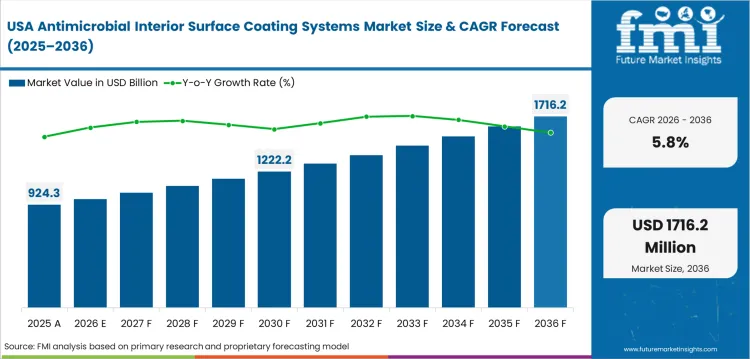
The USA antimicrobial interior surface coating systems industry is expected to post 5.8% CAGR through 2036. USA construction spending reached USD 2,185.5 billion at a seasonally adjusted annual rate in March 2026. This construction base backs demand for USA antimicrobial interior surface coating systems in hospitals and public buildings. Suppliers with EPA-aligned claim evidence can reduce approval friction for institutional buyers.
- EPA claim review makes up a high proof bar for public-health coating claims.
- Healthcare facilities compare active coatings with infection prevention programs before purchase approval.
- Large retrofit programs need products compatible with standard cleaning and short shutdown periods.
Opportunity Analysis of Antimicrobial Interior Surface Coating Systems Market in Germany
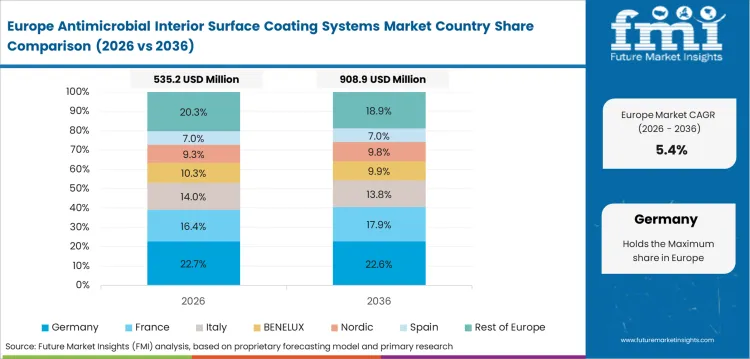
Germany’s antimicrobial interior surface coating systems segment is poised to advance at 5.4% CAGR over the forecast years. Germany’s hospital table from Destatis lists medical facilities and hospital beds as core indicators for national care infrastructure. Such care network sustains demand for Germany antimicrobial interior surface coating systems across clinical interiors. Environmental review pressure keeps adoption focused on stable chemistries and reliable resin systems.
- Biocidal review discipline shapes active-agent choice across institutional coating work.
- Metal hardware and handrails need tested adhesion under disinfectant cleaning.
- Suppliers with antimicrobial powder coating depth can serve factory-applied hardware programs.
Future Outlook for Antimicrobial Interior Surface Coating Systems Market in Japan
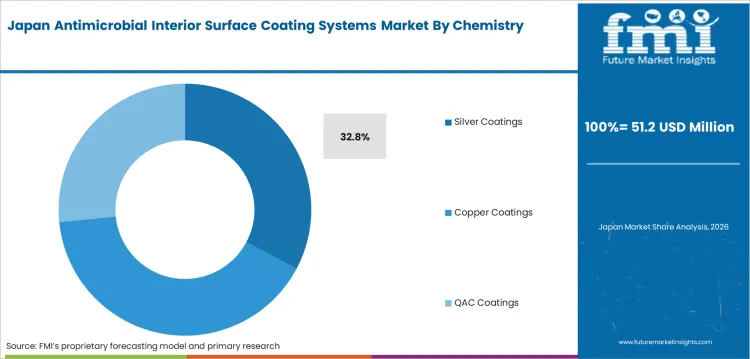
Japan antimicrobial interior surface coating systems sector is expected to post 5.1% CAGR through 2036. OECD’s 2025 Japan health profile lists 12.5 hospital beds per 1,000 people. This care intensity raises a steady base for Japan antimicrobial interior surface coating systems in healthcare and eldercare interiors. Adoption is slower as buyers need long service-life evidence before replacing approved finishes.
- Eldercare interiors boost demand for coatings with low odor and stable finish quality.
- Hospital facility teams value long cleaning-cycle proof before approving product changes.
- Antimicrobial nanocoatings can influence premium applications needing thin active layers.
Competitive Landscape and Strategic Positioning
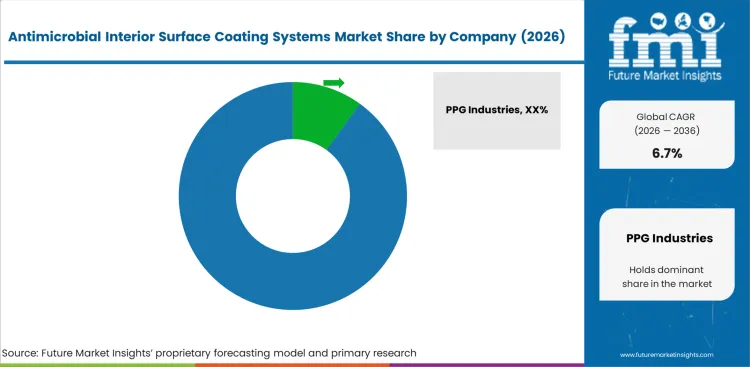
- PPG Industries competes with a broad antimicrobial coating base and access to institutional specification channels across major projects.
- Sherwin-Williams and AkzoNobel draw strength from architectural coating portfolios and contractor networks serving commercial repainting programs.
- Specialist additive providers compete by helping formulators build antimicrobial performance into approved interior coating systems.
Competitive intensity is defined by proof depth and the ability to serve several interior surface programs. PPG Industries benefits from broad architectural coating reach and direct access to institutional specification work. Sherwin-Williams brings contractor network strength across commercial repainting and facility upgrade programs. AkzoNobel and Axalta Coating Systems leverage resin strength and powder coating capability for high-contact hardware. Microban International adds additive expertise for coating brands seeking antimicrobial performance without major formulation changes.
Public-health claims create a high approval barrier for smaller participants entering institutional interiors. Testing expense and long service-cycle validation make performance evidence central to supplier selection. Manufacturers prefer coating systems with proven cleaning tolerance and stable finish quality across repeated use. Companies with verified antimicrobial claims and flexible application formats are best placed to secure recurring project specifications.
Key Companies in the Antimicrobial Interior Surface Coating Systems Market
Key global companies leading the antimicrobial interior surface coating systems market include:
- PPG Industries, Sherwin-Williams, and AkzoNobel have strong coating infrastructure for institutional specification and global service delivery.
- BioCote® serves coating and surface-product manufacturers through antimicrobial additive depth and partner integration support.
- Microban International holds specialist positions across antimicrobial additives and active-agent integration services.
Competitive Benchmarking: Antimicrobial Interior Surface Coating Systems Market
| Company | Active-Agent Evidence Depth | Multi-Substrate Coating Breadth | Institutional Channel Reach | Geographic Footprint |
|---|---|---|---|---|
| PPG Industries | High | High | Strong | North America, Europe, Middle East, Africa, and Asia Pacific |
| Sherwin-Williams | High | High | Strong | United States, Canada, Caribbean, Latin America, and operations across over 120 countries |
| AkzoNobel | High | High | Strong | Europe, Asia Pacific, Americas, Middle East, and activity across over 150 countries |
| BioCote® | High | Medium | Moderate | Europe, North America, Asia Pacific, Australia, and New Zealand |
| Microban International | High | Medium | Moderate | North America, Europe, Asia Pacific, Canada, China, and United Kingdom |
Source: Future Market Insights, 2026.
Key Developments in Antimicrobial Interior Surface Coating Systems Market
- In March, 2025, Microban International launched AkoTech, an advanced multifunctional coating technology platform for surfaces such as flooring, countertops, furniture, touchscreens, and finish systems. The platform includes water-based and solvent-based formulations and can use heavy metal-free antimicrobial technologies to inhibit bacterial growth and mold or mildew growth, making it highly relevant for antimicrobial interior surface coating programs.
- In April, 2025, Climate Surfaces partnered with BioCote® to integrate antimicrobial technology into Climateline wall panels and Ecotile ceiling tiles. The development is highly relevant because these are pre-finished wall and ceiling solutions designed for high-traffic commercial interiors, including healthcare, education, and food preparation spaces.
Key Players in the Antimicrobial Interior Surface Coating Systems Market
Major Global Players:
- PPG Industries
- Sherwin-Williams
- AkzoNobel
- BioCote®
Specialist Players:
- Microban International
Report Scope and Coverage
| Parameter | Details |
|---|---|
| Quantitative Units | USD 2.1 billion to USD 4.0 billion, at a CAGR of 6.7% |
| Market Definition | Permanent interior coatings formulated with active agents for frequent-contact building surfaces |
| Regions Covered | North America, Latin America, Europe, East Asia, South Asia and Pacific, Middle East and Africa |
| Countries Covered | USA, Germany, China, India, Saudi Arabia, UAE, Japan, and 30 plus countries |
| Key Companies Profiled | PPG Industries, Sherwin-Williams, AkzoNobel, BioCote®, Microban International |
| Forecast Period | 2026 to 2036 |
| Approach | Hybrid bottom-up and top-down methodology starting with coated surface demand and verified use patterns |
Antimicrobial Interior Surface Coating Systems Market by Segments
Antimicrobial Interior Surface Coating Systems Market Segmented by Chemistry:
- Silver Coatings
- Copper Coatings
- QAC Coatings
- Photocatalytic Coatings
- Hybrid Coatings
Antimicrobial Interior Surface Coating Systems Market Segmented by Technology:
- Waterborne
- Powder
- Solventborne
- UV-curable
- Sol-gel
Antimicrobial Interior Surface Coating Systems Market Segmented by Substrate:
- Metal
- Plastic
- Glass
- Wood
- Composite
Antimicrobial Interior Surface Coating Systems Market Segmented by Application:
- Door Hardware
- Handrails
- Touch Panels
- Countertops
- Furniture
Antimicrobial Interior Surface Coating Systems Market Segmented by End Use:
- Healthcare
- Public Transport
- Commercial Buildings
- Education
- Hospitality
Research Sources and Bibliography
- AkzoNobel Powder Coatings. (2024, May 24). Interpon 100 AM technical data sheet.
- Microban International. (2024). The Microban 2024 year in review. https://www.microban.com/news/2024-year-in-review
- PPG Paints. (n.d.). Copper Armor™ antiviral and antibacterial interior paint.
- United States Environmental Protection Agency. (2024, December 12). Label Review Manual.
- United States Environmental Protection Agency. (2025, September 11). Guidance for products adding residual efficacy claims.
- USA Geological Survey. (2025, January). Mineral Commodity Summaries 2025.
- Silver Institute. (2025, April 16). Silver industrial demand reached a record 680.5 Moz in 2024.
- BioCote. (2025, April 9). Climate Surfaces: Powder coated panels with integrated antimicrobial technology by BioCote®.
- Microban International. (2025, March 18). Microban introduces AkoTech: Advanced multifunctional coating platform.
- Centers for Disease Control and Prevention. (2026, January 29). Current HAI progress report.
- Government of India, Press Information Bureau. (2024, September 9). Health Ministry releases Health Dynamics of India report.
- Ministry of Transport of China. (2025, January 30). China’s urban rail transit trips up 9.5% in 2024.
- Saudi General Authority for Statistics. (2025). Healthcare Establishments and Workforce Statistics Publication 2024.
- United States Census Bureau. (2026, May 7). Monthly construction spending, March 2026.
- United Arab Emirates Ministry of Health and Prevention. (2026, January 6). MoHAP publishes landmark national health survey showing population health progress and guiding stronger preventive care.
- Sherwin-Williams. (n.d.). Paint Shield microbicidal paint.
- German Federal Statistical Office. (2026). Medical facilities, hospital beds and patient movement.
- OECD. (2025, November 13). Health at a Glance 2025: Japan.
This Report Answers
- What is the current and future size of the antimicrobial interior surface coating systems market?
- How fast is the antimicrobial interior surface coating systems market expected to expand between 2026 and 2036?
- Which technology segment is expected to lead the market by 2026?
- Which application segment is expected to account for the leading demand by 2026?
- What factors are driving demand for antimicrobial interior surface coating systems globally?
- How are residual efficacy claims influencing adoption of active surface coatings?
- Why are healthcare facilities the main demand base for coated interior surfaces?
- How are high-touch assets creating demand for verified coating systems?
- Which countries are projected to record faster expansion through 2036?
- What is driving market expansion in India and China?
- Who are the key companies active in the antimicrobial interior surface coating systems market?
- How does FMI estimate and validate the market forecast?
Frequently Asked Questions
What is the global market demand for Antimicrobial Interior Surface Coating Systems in 2026?
In 2026, the global market for antimicrobial interior surface coating systems is expected to be worth USD 2.1 billion.
How big will the market for Antimicrobial Interior Surface Coating Systems be in 2036?
By 2036, the market for antimicrobial interior surface coating systems is expected to be worth USD 4.0 billion.
How much is demand for Antimicrobial Interior Surface Coating Systems expected to expand between 2026 and 2036?
Between 2026 and 2036, demand for antimicrobial interior surface coating systems is expected to expand at a CAGR of 6.7%.
Which technology segment is expected to be the best seller globally by 2026?
Waterborne coatings are expected to make up 42.0% of the technology segment in 2026.
What is causing demand to rise in India?
India antimicrobial interior surface coating systems are projected to record 7.4% CAGR through 2036 across healthcare infrastructure and transit projects.
What is causing demand to rise in China?
China antimicrobial interior surface coating systems are projected to expand at 7.1% CAGR through 2036 across urban rail and commercial interiors.
Preview the report firsthand - request a free sample
Get SampleGet the brochure for pricing and purchase details.
Get PDFTable of Content
- Key Takeaways
- Market Size and CAGR
- Top Growth Driver
- Fastest Growing Segment
- Leading Region
- Key Companies
- Emerging Opportunities
- Executive Summary
- Global Market Outlook
- Demand-side Trends
- Supply-side Trends
- Technology Roadmap Analysis
- Analysis and Recommendations
- Analyst Perspective (What is happening? Why now? What should investors know?)
- Key Questions Answered
- How large is the market?
- What is the CAGR?
- What are key trends?
- Which region dominates?
- Who are the leaders?
- Market Overview
- Market Coverage / Taxonomy
- Market Definition / Scope / Limitations
- Research Methodology
- Chapter Orientation
- Analytical Lens and Working Hypotheses
- Market Structure, Signals, and Trend Drivers
- Benchmarking and Cross-market Comparability
- Market Sizing, Forecasting, and Opportunity Mapping
- Research Design and Evidence Framework
- Desk Research Programme (Secondary Evidence)
- Expert Input and Fieldwork (Primary Evidence)
- Tooling, Models, and Reference Databases
- Data Engineering and Model Build
- Quality Assurance and Audit Trail
- Market Background
- Market Dynamics (Drivers, Restraints, Opportunity, Trends)
- Scenario Forecast (Optimistic, Likely, Conservative)
- Impact Analysis
- AI Impact
- Sustainability Impact
- Regulatory Impact
- Technology Impact
- Consumer / Buyer Analysis
- Purchase Drivers
- Adoption Barriers
- Buyer Journey
- Opportunity Map Analysis
- Product Life Cycle Analysis
- Supply Chain Analysis
- Investment Feasibility Matrix
- Value Chain Analysis
- PESTLE and Porter's Analysis
- Regulatory Landscape
- Regional Parent Market Outlook
- Production and Consumption Statistics
- Import and Export Statistics
- Global Market Analysis and Forecast, 2021 to 2036
- Historical Market Size Value (USD Billion) & Volume (Unit) Analysis, 2021 to 2025
- Current and Future Market Size Value (USD Billion) & Volume (Unit) Projections, 2026 to 2036
- Y-o-Y Growth Trend Analysis
- Absolute $ Opportunity Analysis
- Global Market Pricing Analysis, 2021 to 2036
- Global Market Analysis and Forecast, By Chemistry, 2021 to 2036
- Introduction / Key Findings
- Historical Market Size Value (USD Billion) & Volume (Unit) Analysis By Chemistry, 2021 to 2025
- Current and Future Market Size Value (USD Billion) & Volume (Unit) Analysis and Forecast By Chemistry, 2026 to 2036
- Silver Coatings
- Copper Coatings
- QAC Coatings
- Photocatalytic Coatings
- Hybrid Coatings
- Silver Coatings
- Y-o-Y Growth Trend Analysis By Chemistry, 2021 to 2025
- Absolute $ Opportunity Analysis By Chemistry, 2026 to 2036
- Global Market Analysis and Forecast, By Technology, 2021 to 2036
- Introduction / Key Findings
- Historical Market Size Value (USD Billion) & Volume (Unit) Analysis By Technology, 2021 to 2025
- Current and Future Market Size Value (USD Billion) & Volume (Unit) Analysis and Forecast By Technology, 2026 to 2036
- Waterborne
- Powder
- Solventborne
- UV-curable
- Sol-gel
- Waterborne
- Y-o-Y Growth Trend Analysis By Technology, 2021 to 2025
- Absolute $ Opportunity Analysis By Technology, 2026 to 2036
- Global Market Analysis and Forecast, By Substrate, 2021 to 2036
- Introduction / Key Findings
- Historical Market Size Value (USD Billion) & Volume (Unit) Analysis By Substrate, 2021 to 2025
- Current and Future Market Size Value (USD Billion) & Volume (Unit) Analysis and Forecast By Substrate, 2026 to 2036
- Metal
- Plastic
- Glass
- Wood
- Composite
- Metal
- Y-o-Y Growth Trend Analysis By Substrate, 2021 to 2025
- Absolute $ Opportunity Analysis By Substrate, 2026 to 2036
- Global Market Analysis and Forecast, By Application, 2021 to 2036
- Introduction / Key Findings
- Historical Market Size Value (USD Billion) & Volume (Unit) Analysis By Application, 2021 to 2025
- Current and Future Market Size Value (USD Billion) & Volume (Unit) Analysis and Forecast By Application, 2026 to 2036
- Door Hardware
- Handrails
- Touch Panels
- Countertops
- Furniture
- Door Hardware
- Y-o-Y Growth Trend Analysis By Application, 2021 to 2025
- Absolute $ Opportunity Analysis By Application, 2026 to 2036
- Global Market Analysis and Forecast, By End Use, 2021 to 2036
- Introduction / Key Findings
- Historical Market Size Value (USD Billion) & Volume (Unit) Analysis By End Use, 2021 to 2025
- Current and Future Market Size Value (USD Billion) & Volume (Unit) Analysis and Forecast By End Use, 2026 to 2036
- Healthcare
- Public Transport
- Commercial Buildings
- Education
- Hospitality
- Healthcare
- Y-o-Y Growth Trend Analysis By End Use, 2021 to 2025
- Absolute $ Opportunity Analysis By End Use, 2026 to 2036
- Global Market Analysis and Forecast, By Region, 2021 to 2036
- Introduction
- Historical Market Size Value (USD Billion) & Volume (Unit) Analysis By Region, 2021 to 2025
- Current Market Size Value (USD Billion) & Volume (Unit) Analysis and Forecast By Region, 2026 to 2036
- North America
- Latin America
- Western Europe
- Eastern Europe
- East Asia
- South Asia and Pacific
- Middle East & Africa
- Market Attractiveness Analysis By Region
- North America Market Analysis and Forecast, By Country, 2021 to 2036
- Historical Market Size Value (USD Billion) & Volume (Unit) Trend Analysis By Market Taxonomy, 2021 to 2025
- Market Size Value (USD Billion) & Volume (Unit) Forecast By Market Taxonomy, 2026 to 2036
- By Country
- USA
- Canada
- Mexico
- By Chemistry
- By Technology
- By Substrate
- By Application
- By End Use
- By Country
- Market Attractiveness Analysis
- By Country
- By Chemistry
- By Technology
- By Substrate
- By Application
- By End Use
- Key Takeaways
- Latin America Market Analysis and Forecast, By Country
- Historical Market Size Value (USD Billion) & Volume (Unit) Trend Analysis By Market Taxonomy, 2021 to 2025
- Market Size Value (USD Billion) & Volume (Unit) Forecast By Market Taxonomy, 2026 to 2036
- By Country
- Brazil
- Chile
- Rest of Latin America
- By Chemistry
- By Technology
- By Substrate
- By Application
- By End Use
- By Country
- Market Attractiveness Analysis
- By Country
- By Chemistry
- By Technology
- By Substrate
- By Application
- By End Use
- Key Takeaways
- Western Europe Market Analysis and Forecast, By Country
- Historical Market Size Value (USD Billion) & Volume (Unit) Trend Analysis By Market Taxonomy, 2021 to 2025
- Market Size Value (USD Billion) & Volume (Unit) Forecast By Market Taxonomy, 2026 to 2036
- By Country
- Germany
- UK
- Italy
- Spain
- France
- Nordic
- BENELUX
- Rest of Western Europe
- By Chemistry
- By Technology
- By Substrate
- By Application
- By End Use
- By Country
- Market Attractiveness Analysis
- By Country
- By Chemistry
- By Technology
- By Substrate
- By Application
- By End Use
- Key Takeaways
- Eastern Europe Market Analysis and Forecast, By Country
- Historical Market Size Value (USD Billion) & Volume (Unit) Trend Analysis By Market Taxonomy, 2021 to 2025
- Market Size Value (USD Billion) & Volume (Unit) Forecast By Market Taxonomy, 2026 to 2036
- By Country
- Russia
- Poland
- Hungary
- Balkan & Baltic
- Rest of Eastern Europe
- By Chemistry
- By Technology
- By Substrate
- By Application
- By End Use
- By Country
- Market Attractiveness Analysis
- By Country
- By Chemistry
- By Technology
- By Substrate
- By Application
- By End Use
- Key Takeaways
- East Asia Market Analysis and Forecast, By Country
- Historical Market Size Value (USD Billion) & Volume (Unit) Trend Analysis By Market Taxonomy, 2021 to 2025
- Market Size Value (USD Billion) & Volume (Unit) Forecast By Market Taxonomy, 2026 to 2036
- By Country
- China
- Japan
- South Korea
- By Chemistry
- By Technology
- By Substrate
- By Application
- By End Use
- By Country
- Market Attractiveness Analysis
- By Country
- By Chemistry
- By Technology
- By Substrate
- By Application
- By End Use
- Key Takeaways
- South Asia and Pacific Market Analysis and Forecast, By Country
- Historical Market Size Value (USD Billion) & Volume (Unit) Trend Analysis By Market Taxonomy, 2021 to 2025
- Market Size Value (USD Billion) & Volume (Unit) Forecast By Market Taxonomy, 2026 to 2036
- By Country
- India
- ASEAN
- Australia & New Zealand
- Rest of South Asia and Pacific
- By Chemistry
- By Technology
- By Substrate
- By Application
- By End Use
- By Country
- Market Attractiveness Analysis
- By Country
- By Chemistry
- By Technology
- By Substrate
- By Application
- By End Use
- Key Takeaways
- Middle East & Africa Market Analysis and Forecast, By Country
- Historical Market Size Value (USD Billion) & Volume (Unit) Trend Analysis By Market Taxonomy, 2021 to 2025
- Market Size Value (USD Billion) & Volume (Unit) Forecast By Market Taxonomy, 2026 to 2036
- By Country
- Kingdom of Saudi Arabia
- Other GCC Countries
- Türkiye
- South Africa
- Other African Union
- Rest of Middle East & Africa
- By Chemistry
- By Technology
- By Substrate
- By Application
- By End Use
- By Country
- Market Attractiveness Analysis
- By Country
- By Chemistry
- By Technology
- By Substrate
- By Application
- By End Use
- Key Takeaways
- Key Countries Market Analysis
- USA
- Pricing Analysis
- Market Share Analysis, 2025
- By Chemistry
- By Technology
- By Substrate
- By Application
- By End Use
- Canada
- Pricing Analysis
- Market Share Analysis, 2025
- By Chemistry
- By Technology
- By Substrate
- By Application
- By End Use
- Mexico
- Pricing Analysis
- Market Share Analysis, 2025
- By Chemistry
- By Technology
- By Substrate
- By Application
- By End Use
- Brazil
- Pricing Analysis
- Market Share Analysis, 2025
- By Chemistry
- By Technology
- By Substrate
- By Application
- By End Use
- Chile
- Pricing Analysis
- Market Share Analysis, 2025
- By Chemistry
- By Technology
- By Substrate
- By Application
- By End Use
- Germany
- Pricing Analysis
- Market Share Analysis, 2025
- By Chemistry
- By Technology
- By Substrate
- By Application
- By End Use
- UK
- Pricing Analysis
- Market Share Analysis, 2025
- By Chemistry
- By Technology
- By Substrate
- By Application
- By End Use
- Italy
- Pricing Analysis
- Market Share Analysis, 2025
- By Chemistry
- By Technology
- By Substrate
- By Application
- By End Use
- Spain
- Pricing Analysis
- Market Share Analysis, 2025
- By Chemistry
- By Technology
- By Substrate
- By Application
- By End Use
- France
- Pricing Analysis
- Market Share Analysis, 2025
- By Chemistry
- By Technology
- By Substrate
- By Application
- By End Use
- India
- Pricing Analysis
- Market Share Analysis, 2025
- By Chemistry
- By Technology
- By Substrate
- By Application
- By End Use
- ASEAN
- Pricing Analysis
- Market Share Analysis, 2025
- By Chemistry
- By Technology
- By Substrate
- By Application
- By End Use
- Australia & New Zealand
- Pricing Analysis
- Market Share Analysis, 2025
- By Chemistry
- By Technology
- By Substrate
- By Application
- By End Use
- China
- Pricing Analysis
- Market Share Analysis, 2025
- By Chemistry
- By Technology
- By Substrate
- By Application
- By End Use
- Japan
- Pricing Analysis
- Market Share Analysis, 2025
- By Chemistry
- By Technology
- By Substrate
- By Application
- By End Use
- South Korea
- Pricing Analysis
- Market Share Analysis, 2025
- By Chemistry
- By Technology
- By Substrate
- By Application
- By End Use
- Russia
- Pricing Analysis
- Market Share Analysis, 2025
- By Chemistry
- By Technology
- By Substrate
- By Application
- By End Use
- Poland
- Pricing Analysis
- Market Share Analysis, 2025
- By Chemistry
- By Technology
- By Substrate
- By Application
- By End Use
- Hungary
- Pricing Analysis
- Market Share Analysis, 2025
- By Chemistry
- By Technology
- By Substrate
- By Application
- By End Use
- Kingdom of Saudi Arabia
- Pricing Analysis
- Market Share Analysis, 2025
- By Chemistry
- By Technology
- By Substrate
- By Application
- By End Use
- Türkiye
- Pricing Analysis
- Market Share Analysis, 2025
- By Chemistry
- By Technology
- By Substrate
- By Application
- By End Use
- South Africa
- Pricing Analysis
- Market Share Analysis, 2025
- By Chemistry
- By Technology
- By Substrate
- By Application
- By End Use
- USA
- Market Structure Analysis
- Competition Dashboard
- Competition Benchmarking
- Market Share Analysis of Top Players
- By Regional
- By Chemistry
- By Technology
- By Substrate
- By Application
- By End Use
- Emerging Startups
- Innovation Benchmarking
- Competition Analysis
- Competition Deep Dive
- PPG Industries
- Overview
- Product Portfolio
- Profitability by Market Segments (Product/Region/Sales Channel)
- Sales Footprint
- Strategy Overview
- Marketing Strategy
- Product Strategy
- Channel Strategy
- Sherwin-Williams
- AkzoNobel
- BioCote®
- Microban International
- PPG Industries
- Case Studies
- Success Stories
- Recent Developments
- Competition Deep Dive
- Assumptions & Acronyms Used


