

- Market Size (2026)
- USD 943.8 Mn
- Forecast (2036)
- USD 1706.2 Mn
- CAGR (2026 to 2036)
- 6.1%
Multi-Surface Disinfection Booster Systems with Low QAC Load Market Size, Forecast, and Outlook By FMI
Summary of the Multi-Surface Disinfection Booster Systems with Low QAC Load Market
- Demand and Growth Drivers
- Hospitals and foodservice sites are raising use of low QAC booster systems to reduce residue during routine surface disinfection through 2036.
- Surfactant synergists improve wetting performance and help disinfectant makers lower active load without weakening daily cleaning claims.
- Transport hubs and commercial kitchens are using measured dilution systems to control residue levels across hard nonporous surfaces.
- Product and Segment View
- Low QAC systems are estimated to hold 46.0% share of disinfectant compatibility demand in 2026 due to label familiarity in routine disinfection.
- Liquid concentrates are anticipated to represent 41.0% share of formulation mode demand in 2026 led by refill programs sustaining controlled dilution.
- Hard nonporous is expected to lead surface coverage demand with 49.5% share in 2026 propelled by counters and equipment receiving repeated wiping.
- Geography and Competitive Outlook
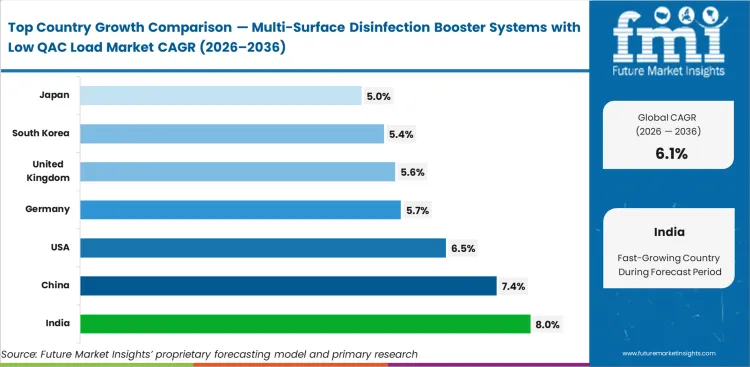
- India is projected to record 8.0% CAGR through 2036 due to private hospital cleaning checks and organized foodservice use.
- China is expected to expand at 7.4% CAGR through 2036 as transport hubs and factories maintain larger surface cleaning programs.
- Ecolab and Diversey hold the clearest institutional positions through healthcare cleaning portfolios and dosing support.
- Analyst Opinion
- Sabyasachi Ghosh, Principal Analyst for Healthcare at FMI, observes, "I view low QAC booster systems as a residue control business. Healthcare teams need systems compatible with carts and counters across many shifts. Cost pressure comes from active chemistry and dilution mistakes. Suppliers protect accounts through dosing guidance and clean-surface proof. Clients should watch EPA residue methods and cleanroom product launches through 2036. These signals reflect which suppliers can keep efficacy claims intact with lower QAC load."
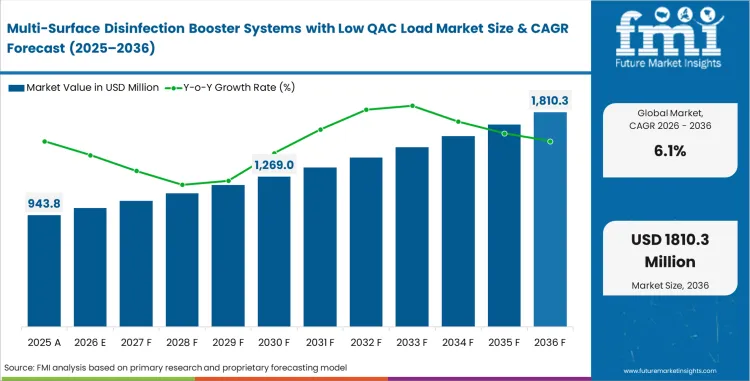
Key Takeaways, Market Size, and Forecast
- The multi-surface disinfection booster systems with low QAC load market value stood at USD 889.5 million in 2025.
- Industry value is projected to reach USD 1,706.2 million by 2036 led by routine high-touch cleaning sustaining a steady adoption of boosters.
- The sector is expected to expand at 6.1% CAGR from 2026 to 2036 across commercial and institutional cleaning programs.
- The sector is projected to create an incremental opportunity of USD 762.4 million between 2026 and 2036.
- Hard nonporous is expected to account for 49.5% share in 2026 due to durable surfaces receiving the highest cleaning frequency.
- India at 8.0% CAGR and China at 7.4% CAGR are expected to record the fastest rise through 2036.
Multi-Surface Disinfection Booster Systems with Low QAC Load Market Value Analysis
- The multi-surface disinfection booster systems with low QAC load market is moving into a clearer hygiene-support product category.
- Adoption reflects hospitals and commercial facilities seeking effective disinfection with lower residue on treated surfaces.
- Industry is benefiting from formulation systems that improve wetting and contact performance at reduced active load.
- Demand is supported by stricter cleaning expectations across healthcare facilities and institutional kitchens through 2036.
Multi-Surface Disinfection Booster Systems with Low QAC Load Market Definition
The sector covers booster systems added to multi-surface disinfectants to improve wetting and kill performance with lower QAC load. Included systems support hard nonporous surfaces and selected food contact zones after correct label use. The scope includes booster concentrates and dosing formats sold for institutional and household cleaning systems. Finished standalone cleaners without booster claims and medical device sterilants remain outside this study.
Multi-Surface Disinfection Booster Systems with Low QAC Load Market Inclusions
The study includes surfactant synergists, oxidizer boosters, acid boosters, enzyme boosters, chelant boosters, low QAC compatibility systems, formulation modes, surface coverage, end uses, channels, and global geography.
Multi-Surface Disinfection Booster Systems with Low QAC Load Market Exclusions
The study excludes hand antiseptics, skin sanitizers, medical device sterilants, laundry disinfectants, air sanitizers, pesticide-only concentrates, and surface coatings sold without disinfectant booster use.
Multi-Surface Disinfection Booster Systems with Low QAC Load Market Research Methodology
- Primary Research: FMI analysts reviewed disinfectant formulators and institutional cleaning teams using concentrates and refill systems. Interviews focused on residue control and dilution discipline in daily cleaning programs.
- Desk Research: The desk review used EPA residue method updates and CDC environmental cleaning guidance. Company product launches and professional cleaning products pages were checked for active use cases.
- Market Sizing and Forecasting: The forecast aligned the FMI booster base with parent cleaning chemical demand and known QAC compatibility claims. The six parent segment leaders were checked against buyer use patterns.
- Data Validation: Segment shares and country growth were compared with residue control signals and company product activity. Final shares were checked so each parent segment has one leading value only.
Why is the Multi-Surface Disinfection Booster Systems with Low QAC Load Market Growing?
- Hard surface cleaning keeps the largest use base as hard nonporous is expected to account for 49.5% share in 2026.
- Low-residue claims gain attention after EPA finalized hard surface residue methods for quaternary ammonium compounds in June 2024.
- Healthcare and foodservice sites use boosters to limit streaking and rinse burden during frequent cleaning shifts.
- Concentrate formats support measured dilution as low-VOC cleaning chemicals attract buyers toward cleaner air and residue claims.
Residue control is moving into the product choice step for multi-surface disinfectants. EPA released finalized test methods in June 2024 to measure disinfectant residue after a potable water rinse on hard surfaces. The agency stated QAC compounds are expected to leave the most residues among common disinfectant classes after this rinse. This directs formulators toward boosters capable of keeping surface kill claims with less active load. Suppliers able to show lower residue and stable efficacy can gain repeat use in schools and offices.
Institutional cleaning teams are using more measured formats as labor pressure raises interest in simpler daily cleaning. CDC environmental guidance notes low-level disinfectants include QAC compounds and selected phenolics for noncritical surface care. This supports continued QAC use in routine settings although residue and surface feel now receive more attention. Boosters help formulators reduce streaking or over-application without asking cleaners to change every step. This keeps the forecast positive through 2036 for systems compatible with existing labels.
Market Segmentation Analysis
- Surfactant synergists are projected to account for 34.0% share of booster type demand in 2026, improving wetting while requiring lower active load.
- Low QAC systems lead disinfectant compatibility demand with 46.0% share in 2026 led by current labels favoring QAC adoption.
- Liquid concentrates lead formulation mode demand with 41.0% share in 2026 driven by refill stations requiring measured dosing.
- Hard nonporous leads surface coverage demand with 49.5% share in 2026 given counters and floors receive repeat cleaning.
The multi-surface disinfection booster systems with low QAC load market is segmented by booster type, covering surfactant synergists and enzyme boosters alongside chelating boosters and residue-control additives with surfactant synergists leading due to better surface wetting at lower active load. It is further segmented by disinfectant compatibility, covering low QAC systems and peroxide systems alongside alcohol systems and chlorine-free systems with low QAC systems expected to stay dominant. By formulation mode and surface coverage, the market comprises liquid concentrates and ready-to-use blends alongside wipes and hard nonporous surfaces supported by repeat cleaning in hospitals and foodservice sites. The industry is segmented by end use and sales channel, spanning healthcare facilities and commercial kitchens alongside institutional supply and distributor-led access.
Multi-Surface Disinfection Booster Systems with Low QAC Load Market Analysis by Booster Type
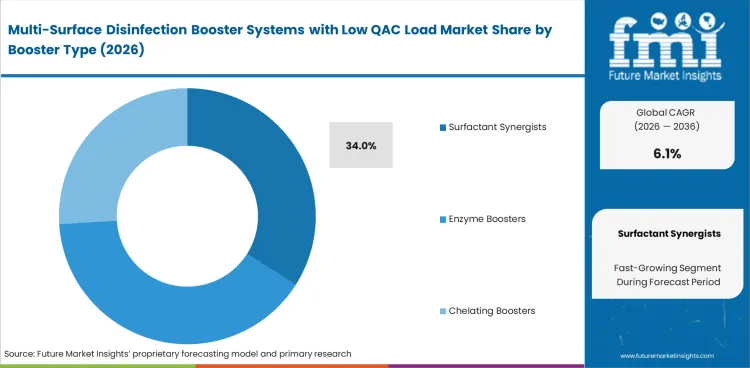
- Improved wetting efficiency with reduced active load positions surfactant synergists at a projected 34.0% share of booster type demand in 2026.
- Enzyme boosters support soil removal in cleaning programs require pre-disinfection surface preparation before the final sanitizing step.
Insights into the Residue-Control Additives Segment
- Residue-control additives gain from high-touch surface programs needing cleaner wipe finish after frequent disinfection cycles.
- Chelating boosters help formulas work better in hard-water areas by reducing mineral interference during dilution and use.
Multi-Surface Disinfection Booster Systems with Low QAC Load Market Analysis by Disinfectant Compatibility
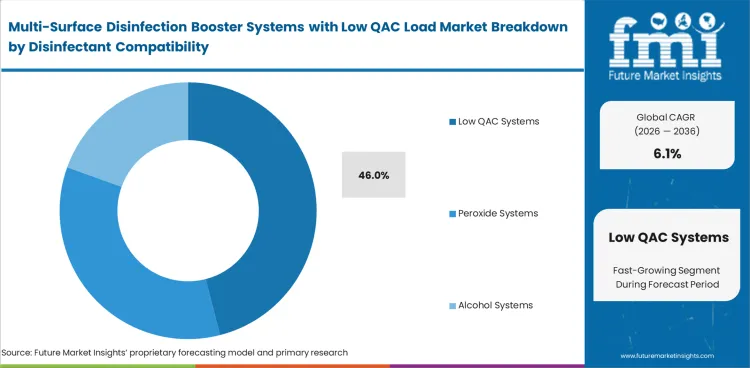
- Low QAC systems are expected to hold a 46.0% share in 2026, because buyers prefer for familiar quaternary chemistry with reduced residue concerns.
- Peroxide-compatible systems serve sites seeking lower odor profiles and residue control across counters and equipment surfaces.
Insights into the Chlorine-Free Systems Segment
- Chlorine-free systems gain from foodservice and care facilities seeking less odor during frequent cleaning shifts.
- Alcohol-compatible systems stay useful for fast-dry surface programs depending on quicker turnover after wiping.
Multi-Surface Disinfection Booster Systems with Low QAC Load Market Analysis by Formulation Mode
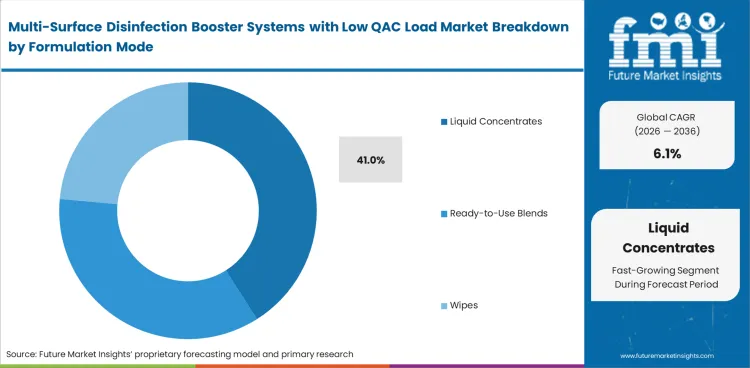
- Liquid concentrates are estimated to hold 41.0% share in 2026 led by institutional users preferring controlled dilution and lower pack cost per use.
- Ready-to-use blends promote small facilities involving simple handling without staff-managed dilution steps.
Insights into the Wipes Segment
- Wipes use booster blends suited to pre-dosed sheets for high-touch areas needing controlled wet contact.
- Foam formats serve smaller use cases as large facilities usually prefer sprays and concentrates for wider surface coverage.
Multi-Surface Disinfection Booster Systems with Low QAC Load Market Analysis by Surface Coverage
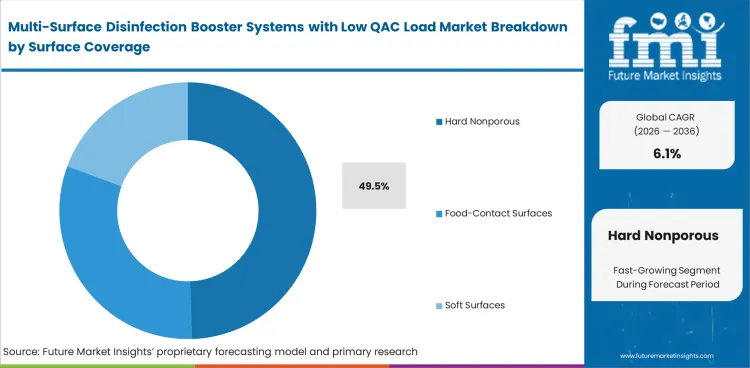
- Frequent disinfection of counters and equipment positions hard, nonporous surfaces at a projected 49.5% share in 2026.
- Food-contact surfaces require booster systems supporting cleaning feature without leaving heavy film after wiping.
Insights into the Soft Surface Segment
- Soft surface applications remain selective as fabric and upholstery implementation needs stain control and material safety checks.
- Electronics-adjacent surfaces require lower residue systems as touchscreens and panels can show film after repeated cleaning.
Multi-Surface Disinfection Booster Systems with Low QAC Load Market Analysis by End Use
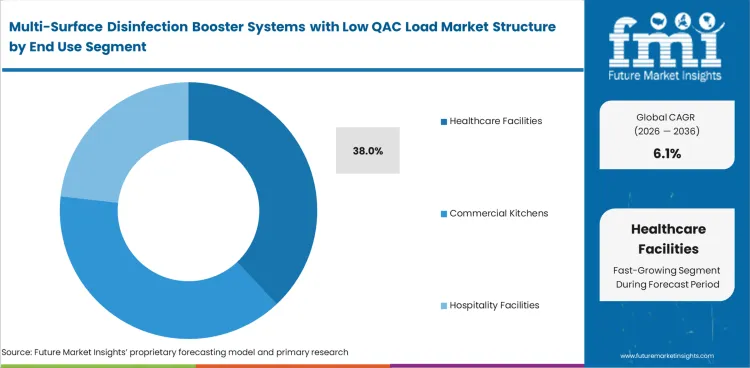
- Healthcare facilities are projected to account for 38.0% share in 2026 due to patient-care areas needing routine surface disinfection with residue control.
- Commercial kitchens use low QAC booster systems to support hygiene checks across prep tables and shared equipment.
Insights into the Institutional Cleaning Segment
- Institutional cleaning suppliers use booster systems to serve schools and offices needing simple wipe-down programs.
- Transport facilities need formulas able to handle repeated touchpoint cleaning across seats and railings during daily service.
Multi-Surface Disinfection Booster Systems with Low QAC Load Market Analysis by Sales Channel
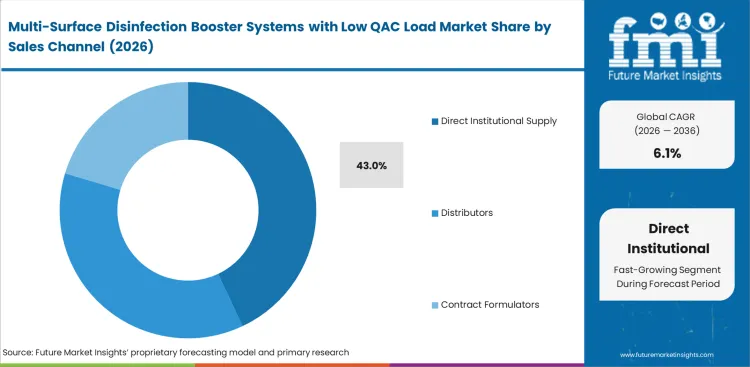
- Direct institutional supply is expected to lead with 43.0% share in 2026 influenced by large users requiring dilution guidance and product support.
- Distributors serve smaller buyers that need faster access to approved surface-cleaning products in regional markets.
Insights into the Contract Formulators Segment
- Contract formulators buy booster systems for private-label cleaners needing fast changes after customer specification shifts.
- Online B2B supply supports small cleaning firms buying standard formats without long account approval steps.
Multi-Surface Disinfection Booster Systems with Low QAC Load Market Drivers, Restraints, and Opportunities
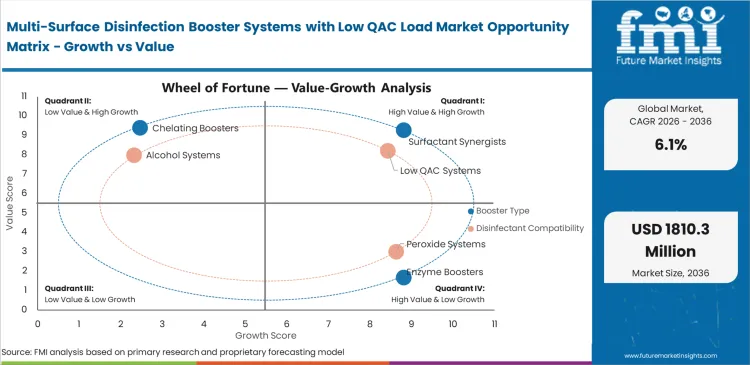
- Residue testing is expected to support low-load formulas as EPA methods create a clearer way to measure QAC residues on hard surfaces.
- Dilution errors may slow premium booster adoption led by incorrect mixing weakening contact time and reducing user trust in label performance.
- Foodservice and shared-facility accounts are expected to create demand for concentrates designed for high-touch counters and other hard surfaces.
- Electronics cleaning is anticipated to add a new use case as shared screens and payment terminals need gentler sanitizing formats.
Residue methods reshape formulas
Residue proof is expected to become a clearer buying screen for surface disinfectant systems through 2036. EPA released finalized hard-surface residue methods in June 2024 for quaternary ammonium compounds and phenolic compounds after potable water rinse. EPA stated QACs are expected to leave the most residue after rinse among common disinfectant classes. This reflects a clearer growth path for low QAC boosters improving spread and contact without heavier residue. Suppliers with residue data are able defend premium pricing in healthcare and shared-facility accounts.
Dosing errors limit premium use
Dilution control will remain a practical barrier for concentrate-based booster systems. Low-load QAC products require accurate mixing to protect contact time and surface performance. Smaller sites may lack dosing equipment or shift-level cleaning instructions. This can attract demand toward ready-to-use boosters and cartridge systems even at higher unit cost. Producers serving airports and transport hubs will need clearer labels and dispenser support to reduce field errors.
Screens create surface demand
Shared electronics are expected to create a separate surface-care need inside offices and schools. CloroxPro launched Screen+ Sanitizing Wipes in September 2025 for touchscreens, laptops, tablets, keyboards, and sensitive electronics. The company said the wipes clean and sanitize without drips or screen damage when used as directed. The launch indicates demand growth beyond counters and floors into device-safe sanitizing. Booster suppliers can use this demand to develop lower-residue systems for electronics-adjacent cleaning routines.
Regional Analysis
.webp "Top Country Growth Comparison Multi Surface Disinfection Booster Systems With Low Qac Load Market Cagr (2026 2036)")
| Country | CAGR 2026 to 2036 |
|---|---|
| India | 8.0% |
| China | 7.4% |
| United States | 6.5% |
| South Korea | 5.4% |
| Germany | 5.7% |
| United Kingdom | 5.6% |
| Japan | 5.0% |
Source: Future Market Insights analysis based on country demand narratives and public source checks in 2026.
Analysis of Multi-Surface Disinfection Booster Systems with Low QAC Load Market by Key Countries
- India is expected to post the fastest pace at 8.0% CAGR by 2036 as private hospitals and organized foodservice operators increase use of lower-residue disinfection systems.
- China is projected to follow at 7.4% CAGR by 2036 due to factory canteens and transport facilities adopting surface cleaners with better dilution control.
- United States demand is projected at 6.5% CAGR by 2036, led by EPA residue methods and healthcare cleaning checks influencing lower QAC formulation choices.
- The United Kingdom is expected to advance at 5.8% CAGR by 2036, driven by care homes and public facilities seeking surface cleaners with clearer safety records.
- Germany at 5.6% CAGR, South Korea at 5.4% CAGR and Japan at 5.0% CAGR expand by 2036 as mature hygiene systems and steady demand for controlled-residue cleaning formats.
Country growth differs with healthcare cleaning standards and foodservice hygiene spending. India leads as private care facilities and large kitchens add more frequent disinfection checks. China follows through high-traffic public spaces and industrial foodservice cleaning. United States demand advances through residue testing and healthcare compliance needs. The United Kingdom and Germany grow through stricter product safety review. South Korea and Japan maintain steadier adoption as mature cleaning programs improve surface finish and user safety.
Demand Outlook for Multi-Surface Disinfection Booster Systems with Low QAC Load in India
Demand for multi-surface disinfection booster systems with low QAC load in India is projected to rise at 8.0% CAGR by 2036 as private hospitals and chain foodservice outlets increase use of lower-residue cleaning products. Healthcare sites need formulas that support frequent wiping across bedsides and shared equipment. India leads the country outlook due to faster service-sector expansion and stricter cleaning checks across organized facilities.
- Private hospitals support repeat booster use as patient-care areas require surface cleaners with lower residue after frequent wipe cycles.
- Chain restaurants raise demand for concentrates that can clean counters and shared equipment without heavy film after drying.
- Local cleaning product makers gain more room to supply lower QAC blends with simple dilution guidance for facility staff.
Demand Outlook for Multi-Surface Disinfection Booster Systems with Low QAC Load in China
The sector in China is expected to expand at 7.4% CAGR by 2036 led by transport hubs and industrial kitchens using more controlled surface cleaning routines. Local cleaning chemical makers need booster systems that support hard nonporous surfaces in high-use facilities. China’s sector growth follows India due to large commercial building activity and higher hygiene spending across shared spaces.
- Factory canteens support low QAC booster demand due to food preparation areas requiring regular cleaning with fewer residue concerns.
- Transport facilities use disinfection boosters for high-touch areas such as railings and counters facing repeated daily cleaning.
- Domestic formulators benefit from large-volume facility cleaning demand favoring liquid concentrates with measured dilution systems.
Demand Outlook for Multi-Surface Disinfection Booster Systems with Low QAC Load in the United States
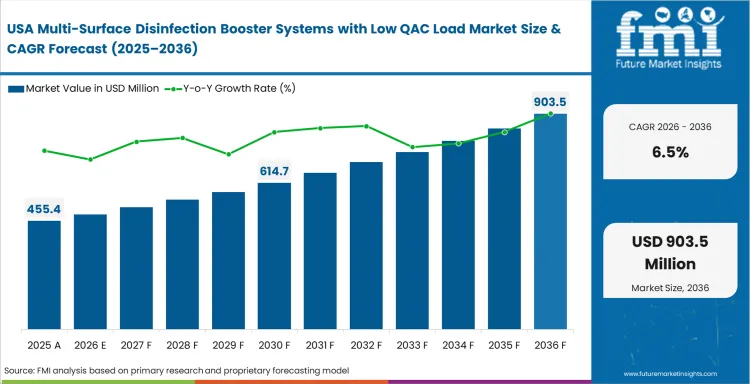
Sales of multi-surface disinfection booster systems with low QAC load in the United States are projected to increase at 6.5% CAGR by 2036 influenced by residue testing and healthcare cleaning needs. EPA residue methods give buyers a clearer way to compare hard-surface claims. The United States maintains steady growth as hospitals and building service providers seek lower-film products.
- Healthcare facilities support low QAC booster adoption led by patient rooms and shared equipment needing repeated disinfection with residue control.
- Office cleaning programs create demand for formulas reducing surface film on desks and shared touchpoints after daily wiping.
- Disinfectant brands need residue data and product support to protect label claims across hard nonporous surfaces.
Demand Outlook for Multi-Surface Disinfection Booster Systems with Low QAC Load in the United Kingdom
Industry in the United Kingdom is expected to record 5.8% CAGR by 2036 as care homes and public facilities increase attention on safer surface-cleaning products. Buyers need low-residue disinfection systems promoting routine cleaning without sharp odor. United Kingdom demand stays steady influenced by institutional cleaning programs placing more weight on safety documents and user handling.
- Care homes support demand for lower-residue disinfectant boosters as resident areas need frequent surface cleaning across shared rooms.
- Public facilities need cleaner wipe finishes on counters and hand-contact surfaces after repeated disinfection cycles.
- Cleaning service providers prefer products with clear use instructions and safety records that help staff apply formulas correctly.
Demand Outlook for Multi-Surface Disinfection Booster Systems with Low QAC Load in Germany
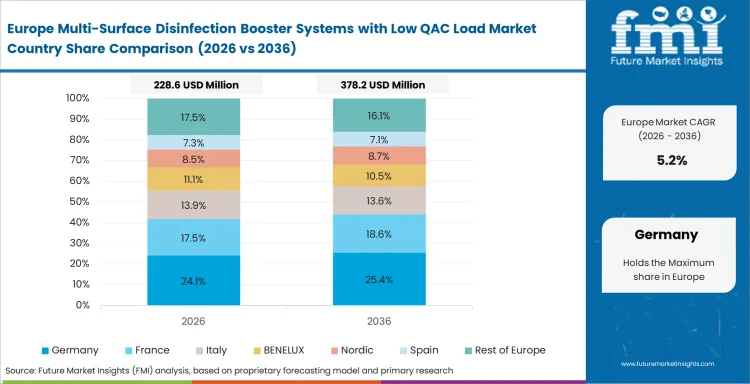
Multi-surface disinfection booster system demand in Germany is projected to advance at 5.6% CAGR by 2036 as healthcare hygiene practice and careful ingredient review. German buyers focus on product safety data and controlled surface performance. Germany grows at a measured pace influenced by mature facility cleaning systems and stricter review of chemical claims.
- Hospitals and clinics need booster systems implementing reliable disinfection on hard surfaces without leaving heavy film.
- Foodservice operators use lower-residue cleaners to protect preparation surfaces that receive frequent cleaning during service hours.
- Local formulators favor additive suppliers that can provide repeatable quality and documentation for finished disinfection products.
Demand Outlook for Multi-Surface Disinfection Booster Systems with Low QAC Load in South Korea
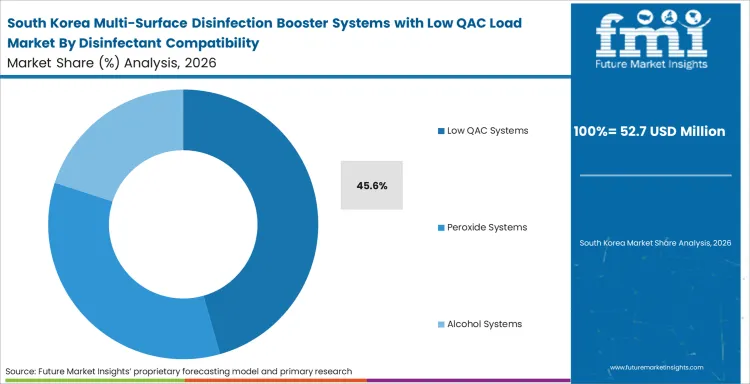
Demand for the sector in South Korea is expected to post 5.4% CAGR by 2036 due to dense urban facilities and frequent cleaning in shared spaces. Local brands need booster packages that support lower-residue wiping across counters and electronics-adjacent surfaces. South Korea records steady adoption as public-facing facilities refine cleaning routines rather than expand basic product use.
- Dense commercial buildings support repeat use of lower-residue disinfectants across elevators and shared reception areas.
- Foodservice cleaning programs need concentrates ensuring steady contact performance after dilution by facility staff.
- Product differentiation centers on lower film and easier wiping across hard surfaces used many times each day.
Demand Outlook for Multi-Surface Disinfection Booster Systems with Low QAC Load in Japan
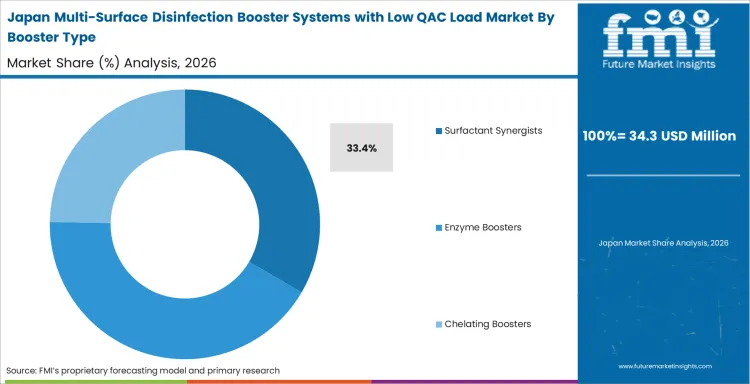
The sector in Japan is expected to grow at 5.0% CAGR by 2036 influenced by mature hygiene programs sustaining steady adoption across healthcare and public facilities. Cleaning product makers focus on low odor and surface compatibility for repeated use. Japan records the slowest rate among listed countries due to an established cleaning base and slower volume expansion.
- Healthcare sites support steady demand for low QAC boosters used across shared equipment and patient-contact surfaces.
- Public facilities require gentler disinfection formats for counters and hand-contact areas cleaned several times each day.
- Surface care brands use residue-control boosters to improve wipe finish without making cleaners feel harsh during routine use.
Competitive Positioning and Strategic Supplier Strength
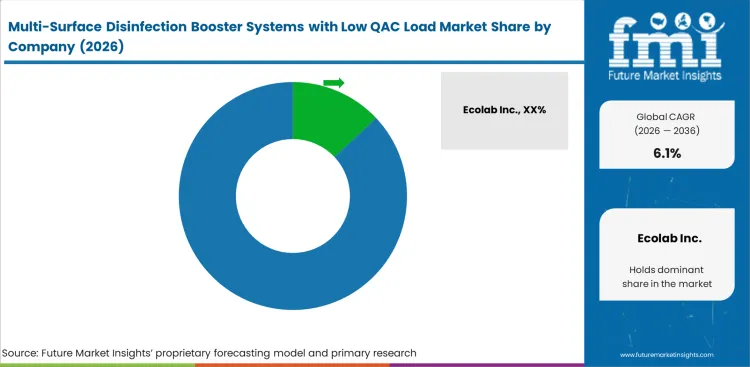
- Competition is centered on established professional cleaning suppliers and specialty chemical producers with disinfectant formulation depth and institutional account access.
- Ecolab holds a defined cleanroom position through Klercide disinfectants and low-residue quat concentrate formats used in controlled environments.
- Diversey and CloroxPro compete through surface-care portfolios and facility support across healthcare and high-traffic institutional spaces.
Competition centers on residue proof and system support after the first sale. Buyers approve suppliers only after product use matches surface finish needs and label claims. Dosing support can influence account retention as poor mixing can reduce performance and raise complaint risk. Ecolab and Diversey hold broader positions through professional cleaning access and application support. CloroxPro and Reckitt carry strength in brands familiar to schools and offices. Specialty chemical suppliers such as BASF and Stepan support the upstream booster base through surfactants and active chemistry knowledge.
Key Companies in the Multi-Surface Disinfection Booster Systems with Low QAC Load Market
Competition spans hygiene system providers and consumer disinfectant brands. Formulation input suppliers support active chemistry needs.
- Hygiene system providers: Ecolab and Diversey compete through professional cleaning portfolios and account training across healthcare and hospitality sites.
- Consumer and professional brands: CloroxPro and Reckitt compete through recognized disinfectant brands and retail access across schools and offices.
- Input suppliers: BASF and Dow support boosters through surfactants. Nouryon and Stepan support active chemistry inputs.
Competitive Benchmarking: Multi-Surface Disinfection Booster Systems with Low QAC Load Market
| Company | Residue Control Proof | Dosing Support | Surface Range | Footprint |
|---|---|---|---|---|
| Ecolab | High | Strong | Strong | Global |
| Diversey | Strong | Strong | Strong | Global |
| CloroxPro | Strong | Moderate | Strong | North America |
| Reckitt | Moderate | Moderate | Strong | Global |
| BASF | Strong | Moderate | Moderate | Global |
| Stepan Company | Strong | Moderate | Moderate | Global |
| Nouryon | Moderate | Moderate | Moderate | Global |
Source: Future Market Insights competitive analysis based on company updates and covered country narratives in 2026.
Key Developments in the Multi-Surface Disinfection Booster Systems with Low QAC Load Market
- In May 2025, CloroxPro announced a Vizient agreement to supply cleaning and disinfecting products including Clorox Healthcare and Clorox EcoClean.
- In September 2025, CloroxPro launched Screen+ Sanitizing Wipes for touchscreens and shared electronics.
- In October 2025, Ecolab Life Sciences launched Klercide Rapid Sporicide for cleanroom applications with low-residue performance claims.
Key Players in the Multi-Surface Disinfection Booster Systems with Low QAC Load Market
Major Global Players
- Ecolab Inc.
- Diversey Holdings Ltd.
- The Clorox Company
- Reckitt Benckiser Group plc
Specialty Ingredient Suppliers
- BASF SE
- Stepan Company
- Nouryon Chemicals Holding B.V.
Report Scope and Coverage
| Item | Value |
|---|---|
| Market value in 2025 | USD 889.5 million |
| Market value in 2026 | USD 943.8 million |
| Market value in 2036 | USD 1,706.2 million |
| CAGR from 2026 to 2036 | 6.1% |
| Quantitative units | USD million |
| Market definition | Booster systems used with multi-surface disinfectants to improve wetting and surface performance with low QAC load |
| By booster type | Surfactant Synergists, Oxidizer Boosters, Acid Boosters, Enzyme Boosters, Chelant Boosters |
| By disinfectant compatibility | Low QAC Systems, Peroxide Systems, Organic Acid Systems, Alcohol Assisted Systems, Chlorine Free Systems |
| By formulation mode | Liquid Concentrates, Ready Boosters, Dosing Cartridges, Tablet Packs, Pump Systems |
| By surface coverage | Hard Nonporous, Food Contact, Soft Surface, Floor Care, Equipment Surface |
| By end use | Healthcare Facilities, Hospitality Sites, Foodservice Sites, Schools, Household Care, Offices |
| By sales channel | Direct Supply, Distributors, Retail Stores, Online Stores, Contract Cleaners |
| Regions covered | North America, Latin America, Europe, East Asia, South Asia and Pacific, Middle East and Africa |
| Countries covered | United States, Canada, Germany, United Kingdom, Japan, China, India |
| Key companies profiled | Ecolab, Diversey, BASF, Dow, Nouryon, Stepan Company, Reckitt, Clorox |
| Forecast period | 2026 to 2036 |
| Approach | FMI public demand model aligned with product use and country narratives and company updates |
Source: Future Market Insights analysis, 2026.
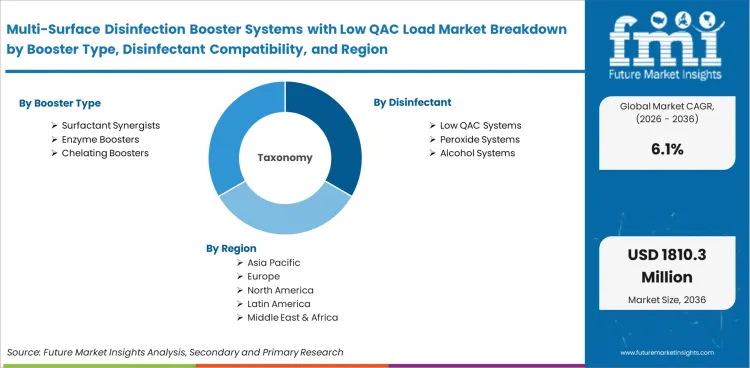
Multi-Surface Disinfection Booster Systems with Low QAC Load Breakdown by Booster Type, Disinfectant Compatibility, Formulation Mode, Surface Coverage, End Use, Sales Channel, and Region
Multi-Surface Disinfection Booster Systems with Low QAC Load Segmented by Booster Type
- Surfactant Synergists
- Enzyme Boosters
- Chelating Boosters
- Residue-Control Additives
- Wetting Boosters
- Contact-Time Boosters
Multi-Surface Disinfection Booster Systems with Low QAC Load Segmented by Disinfectant Compatibility
- Low QAC Systems
- Peroxide Systems
- Alcohol Systems
- Chlorine-Free Systems
- Acid-Based Systems
- Hybrid Systems
Multi-Surface Disinfection Booster Systems with Low QAC Load Segmented by Formulation Mode
- Liquid Concentrates
- Ready-to-Use Blends
- Wipes
- Foam Formats
- Cartridge Systems
- Dilution Packs
Multi-Surface Disinfection Booster Systems with Low QAC Load Segmented by Surface Coverage
- Hard Nonporous
- Food-Contact Surfaces
- Soft Surfaces
- Electronics-Adjacent Surfaces
- Floor Surfaces
- Bathroom Surfaces
Multi-Surface Disinfection Booster Systems with Low QAC Load Segmented by End Use
- Healthcare Facilities
- Commercial Kitchens
- Hospitality Facilities
- Transport Facilities
- Offices
- Schools
Multi-Surface Disinfection Booster Systems with Low QAC Load Segmented by Sales Channel
- Direct Institutional Supply
- Distributors
- Contract Formulators
- Online B2B Supply
- Cleaning Service Suppliers
- Private-Label Supply
Multi-Surface Disinfection Booster Systems with Low QAC Load by Region
- North America
- United States
- Canada
- Mexico
- Latin America
- Brazil
- Chile
- Rest of Latin America
- Europe
- Germany
- United Kingdom
- France
- Italy
- Spain
- East Asia
- China
- Japan
- South Korea
- South Asia and Pacific
- India
- ASEAN
- Australia and New Zealand
- Middle East and Africa
- Saudi Arabia
- Other GCC Countries
- South Africa
Research Sources and Bibliography
- Centers for Disease Control and Prevention. (2024, January 8). Environmental services.
- Centers for Disease Control and Prevention. (2024, March 19). Environmental cleaning procedures.
- USA Environmental Protection Agency. (2024, June 13). EPA releases finalized test methods for measuring disinfectant residue levels on hard surfaces.
- The Clorox Company. (2025, May 8). CloroxPro announces new agreement with Vizient to supply range of cleaning and disinfecting products.
- The Clorox Company. (2025, September 3). CloroxPro unveils new Screen+ Sanitizing Wipes, designed to safely clean and sanitize sensitive electronics.
- Ecolab. (2025, October 29). Ecolab Life Sciences introduces Klercide Rapid Sporicide for cleanroom applications.
- Solenis. (2025, May 20). New TASKI Jontec Care range enhances appearance, reduces maintenance costs for hard flooring.
The bibliography is provided for reader reference and direct source checking
This Report Answers
- How large the multi-surface disinfection booster systems with low QAC load sector is in 2026 and how far it can rise by 2036?
- Which booster type, disinfectant compatibility and formulation mode hold the leading projected share positions in 2026?
- Why surfactant synergists hold the clearest lead in the current booster structure?
- Why low QAC systems remain the main compatibility base for institutional disinfection formulations?
- Why India and China lead the country forecast set through 2036?
- How direct institutional supply supports buyers needing dilution guidance and surface performance checks?
- Which supplier capabilities help companies defend position in residue control, dosing support and low-film surface disinfection?
Frequently Asked Questions
How big is the multi-surface disinfection booster systems with low QAC load market in 2026?
The sector is projected at USD 943.8 million in 2026 with routine high-touch cleaning supporting recurring booster use.
What is the forecast value of the multi-surface disinfection booster systems with low QAC load market by 2036?
The sector is forecast to reach USD 1,706.2 million by 2036 as low-residue systems gain wider facility use.
What is the CAGR of the multi-surface disinfection booster systems with low QAC load market?
The sector is expected to expand at 6.1% CAGR from 2026 to 2036 across institutional and household cleaning channels.
Which segment leads the multi-surface disinfection booster systems with low QAC load market?
Hard nonporous is expected to lead with 49.5% share in 2026 as counters and equipment receive frequent cleaning.
Which country grows fastest in the multi-surface disinfection booster systems with low QAC load market?
India is projected to record 8.0% CAGR through 2036 as private healthcare and foodservice cleaning programs expand.
Preview the report firsthand - request a free sample
Get SampleGet the brochure for pricing and purchase details.
Get PDFTable of Content
- Executive Summary
- Global Market Outlook
- Demand-side Trends
- Supply-side Trends
- Technology Roadmap Analysis
- Analysis and Recommendations
- Market Overview
- Market Coverage / Taxonomy
- Market Definition / Scope / Limitations
- Research Methodology
- Chapter Orientation
- Analytical Lens and Working Hypotheses
- Market Structure, Signals, and Trend Drivers
- Benchmarking and Cross-market Comparability
- Market Sizing, Forecasting, and Opportunity Mapping
- Research Design and Evidence Framework
- Desk Research Programme (Secondary Evidence)
- Company Annual and Sustainability Reports
- Peer-reviewed Journals and Academic Literature
- Corporate Websites, Product Literature, and Technical Notes
- Earnings Decks and Investor Briefings
- Statutory Filings and Regulatory Disclosures
- Technical White Papers and Standards Notes
- Trade Journals, Industry Magazines, and Analyst Briefs
- Conference Proceedings, Webinars, and Seminar Materials
- Government Statistics Portals and Public Data Releases
- Press Releases and Reputable Media Coverage
- Specialist Newsletters and Curated Briefings
- Sector Databases and Reference Repositories
- FMI Internal Proprietary Databases and Historical Market Datasets
- Subscription Datasets and Paid Sources
- Social Channels, Communities, and Digital Listening Inputs
- Additional Desk Sources
- Expert Input and Fieldwork (Primary Evidence)
- Primary Modes
- Qualitative Interviews and Expert Elicitation
- Quantitative Surveys and Structured Data Capture
- Blended Approach
- Why Primary Evidence is Used
- Field Techniques
- Interviews
- Surveys
- Focus Groups
- Observational and In-context Research
- Social and Community Interactions
- Stakeholder Universe Engaged
- C-suite Leaders
- Board Members
- Presidents and Vice Presidents
- R&D and Innovation Heads
- Technical Specialists
- Domain Subject-matter Experts
- Scientists
- Physicians and Other Healthcare Professionals
- Governance, Ethics, and Data Stewardship
- Research Ethics
- Data Integrity and Handling
- Primary Modes
- Tooling, Models, and Reference Databases
- Desk Research Programme (Secondary Evidence)
- Data Engineering and Model Build
- Data Acquisition and Ingestion
- Cleaning, Normalisation, and Verification
- Synthesis, Triangulation, and Analysis
- Quality Assurance and Audit Trail
- Market Background
- Market Dynamics
- Drivers
- Restraints
- Opportunity
- Trends
- Scenario Forecast
- Demand in Optimistic Scenario
- Demand in Likely Scenario
- Demand in Conservative Scenario
- Opportunity Map Analysis
- Product Life Cycle Analysis
- Supply Chain Analysis
- Investment Feasibility Matrix
- Value Chain Analysis
- PESTLE and Porter’s Analysis
- Regulatory Landscape
- Regional Parent Market Outlook
- Production and Consumption Statistics
- Import and Export Statistics
- Market Dynamics
- Global Market Analysis 2021 to 2025 and Forecast, 2026 to 2036
- Historical Market Size Value (USD Million) Analysis, 2021 to 2025
- Current and Future Market Size Value (USD Million) Projections, 2026 to 2036
- Y-o-Y Growth Trend Analysis
- Absolute $ Opportunity Analysis
- Global Market Pricing Analysis 2021 to 2025 and Forecast 2026 to 2036
- Global Market Analysis 2021 to 2025 and Forecast 2026 to 2036, By Booster Type
- Introduction / Key Findings
- Historical Market Size Value (USD Million) Analysis By Booster Type , 2021 to 2025
- Current and Future Market Size Value (USD Million) Analysis and Forecast By Booster Type , 2026 to 2036
- Surfactant Synergists
- Enzyme Boosters
- Chelating Boosters
- Surfactant Synergists
- Y-o-Y Growth Trend Analysis By Booster Type , 2021 to 2025
- Absolute $ Opportunity Analysis By Booster Type , 2026 to 2036
- Global Market Analysis 2021 to 2025 and Forecast 2026 to 2036, By Disinfectant Compatibility
- Introduction / Key Findings
- Historical Market Size Value (USD Million) Analysis By Disinfectant Compatibility, 2021 to 2025
- Current and Future Market Size Value (USD Million) Analysis and Forecast By Disinfectant Compatibility, 2026 to 2036
- Low QAC Systems
- Peroxide Systems
- Alcohol Systems
- Low QAC Systems
- Y-o-Y Growth Trend Analysis By Disinfectant Compatibility, 2021 to 2025
- Absolute $ Opportunity Analysis By Disinfectant Compatibility, 2026 to 2036
- Global Market Analysis 2021 to 2025 and Forecast 2026 to 2036, By Formulation Mode
- Introduction / Key Findings
- Historical Market Size Value (USD Million) Analysis By Formulation Mode, 2021 to 2025
- Current and Future Market Size Value (USD Million) Analysis and Forecast By Formulation Mode, 2026 to 2036
- Liquid Concentrates
- Ready-to-Use Blends
- Wipes
- Liquid Concentrates
- Y-o-Y Growth Trend Analysis By Formulation Mode, 2021 to 2025
- Absolute $ Opportunity Analysis By Formulation Mode, 2026 to 2036
- Global Market Analysis 2021 to 2025 and Forecast 2026 to 2036, By Surface Coverage
- Introduction / Key Findings
- Historical Market Size Value (USD Million) Analysis By Surface Coverage, 2021 to 2025
- Current and Future Market Size Value (USD Million) Analysis and Forecast By Surface Coverage, 2026 to 2036
- Hard Nonporous
- Food-Contact Surfaces
- Soft Surfaces
- Hard Nonporous
- Y-o-Y Growth Trend Analysis By Surface Coverage, 2021 to 2025
- Absolute $ Opportunity Analysis By Surface Coverage, 2026 to 2036
- Global Market Analysis 2021 to 2025 and Forecast 2026 to 2036, By End Use
- Introduction / Key Findings
- Historical Market Size Value (USD Million) Analysis By End Use, 2021 to 2025
- Current and Future Market Size Value (USD Million) Analysis and Forecast By End Use, 2026 to 2036
- Healthcare Facilities
- Commercial Kitchens
- Hospitality Facilities
- Healthcare Facilities
- Y-o-Y Growth Trend Analysis By End Use, 2021 to 2025
- Absolute $ Opportunity Analysis By End Use, 2026 to 2036
- Global Market Analysis 2021 to 2025 and Forecast 2026 to 2036, By Sales Channel
- Introduction / Key Findings
- Historical Market Size Value (USD Million) Analysis By Sales Channel, 2021 to 2025
- Current and Future Market Size Value (USD Million) Analysis and Forecast By Sales Channel, 2026 to 2036
- Direct Institutional Supply
- Distributors
- Contract Formulators
- Direct Institutional Supply
- Y-o-Y Growth Trend Analysis By Sales Channel, 2021 to 2025
- Absolute $ Opportunity Analysis By Sales Channel, 2026 to 2036
- Global Market Analysis 2021 to 2025 and Forecast 2026 to 2036, By Region
- Introduction
- Historical Market Size Value (USD Million) Analysis By Region, 2021 to 2025
- Current Market Size Value (USD Million) Analysis and Forecast By Region, 2026 to 2036
- North America
- Latin America
- Western Europe
- Eastern Europe
- East Asia
- South Asia and Pacific
- Middle East & Africa
- Market Attractiveness Analysis By Region
- North America Market Analysis 2021 to 2025 and Forecast 2026 to 2036, By Country
- Historical Market Size Value (USD Million) Trend Analysis By Market Taxonomy, 2021 to 2025
- Market Size Value (USD Million) Forecast By Market Taxonomy, 2026 to 2036
- By Country
- USA
- Canada
- Mexico
- By Booster Type
- By Disinfectant Compatibility
- By Formulation Mode
- By Surface Coverage
- By End Use
- By Sales Channel
- By Country
- Market Attractiveness Analysis
- By Country
- By Booster Type
- By Disinfectant Compatibility
- By Formulation Mode
- By Surface Coverage
- By End Use
- By Sales Channel
- Key Takeaways
- Latin America Market Analysis 2021 to 2025 and Forecast 2026 to 2036, By Country
- Historical Market Size Value (USD Million) Trend Analysis By Market Taxonomy, 2021 to 2025
- Market Size Value (USD Million) Forecast By Market Taxonomy, 2026 to 2036
- By Country
- Brazil
- Chile
- Rest of Latin America
- By Booster Type
- By Disinfectant Compatibility
- By Formulation Mode
- By Surface Coverage
- By End Use
- By Sales Channel
- By Country
- Market Attractiveness Analysis
- By Country
- By Booster Type
- By Disinfectant Compatibility
- By Formulation Mode
- By Surface Coverage
- By End Use
- By Sales Channel
- Key Takeaways
- Western Europe Market Analysis 2021 to 2025 and Forecast 2026 to 2036, By Country
- Historical Market Size Value (USD Million) Trend Analysis By Market Taxonomy, 2021 to 2025
- Market Size Value (USD Million) Forecast By Market Taxonomy, 2026 to 2036
- By Country
- Germany
- UK
- Italy
- Spain
- France
- Nordic
- BENELUX
- Rest of Western Europe
- By Booster Type
- By Disinfectant Compatibility
- By Formulation Mode
- By Surface Coverage
- By End Use
- By Sales Channel
- By Country
- Market Attractiveness Analysis
- By Country
- By Booster Type
- By Disinfectant Compatibility
- By Formulation Mode
- By Surface Coverage
- By End Use
- By Sales Channel
- Key Takeaways
- Eastern Europe Market Analysis 2021 to 2025 and Forecast 2026 to 2036, By Country
- Historical Market Size Value (USD Million) Trend Analysis By Market Taxonomy, 2021 to 2025
- Market Size Value (USD Million) Forecast By Market Taxonomy, 2026 to 2036
- By Country
- Russia
- Poland
- Hungary
- Balkan & Baltic
- Rest of Eastern Europe
- By Booster Type
- By Disinfectant Compatibility
- By Formulation Mode
- By Surface Coverage
- By End Use
- By Sales Channel
- By Country
- Market Attractiveness Analysis
- By Country
- By Booster Type
- By Disinfectant Compatibility
- By Formulation Mode
- By Surface Coverage
- By End Use
- By Sales Channel
- Key Takeaways
- East Asia Market Analysis 2021 to 2025 and Forecast 2026 to 2036, By Country
- Historical Market Size Value (USD Million) Trend Analysis By Market Taxonomy, 2021 to 2025
- Market Size Value (USD Million) Forecast By Market Taxonomy, 2026 to 2036
- By Country
- China
- Japan
- South Korea
- By Booster Type
- By Disinfectant Compatibility
- By Formulation Mode
- By Surface Coverage
- By End Use
- By Sales Channel
- By Country
- Market Attractiveness Analysis
- By Country
- By Booster Type
- By Disinfectant Compatibility
- By Formulation Mode
- By Surface Coverage
- By End Use
- By Sales Channel
- Key Takeaways
- South Asia and Pacific Market Analysis 2021 to 2025 and Forecast 2026 to 2036, By Country
- Historical Market Size Value (USD Million) Trend Analysis By Market Taxonomy, 2021 to 2025
- Market Size Value (USD Million) Forecast By Market Taxonomy, 2026 to 2036
- By Country
- India
- ASEAN
- Australia & New Zealand
- Rest of South Asia and Pacific
- By Booster Type
- By Disinfectant Compatibility
- By Formulation Mode
- By Surface Coverage
- By End Use
- By Sales Channel
- By Country
- Market Attractiveness Analysis
- By Country
- By Booster Type
- By Disinfectant Compatibility
- By Formulation Mode
- By Surface Coverage
- By End Use
- By Sales Channel
- Key Takeaways
- Middle East & Africa Market Analysis 2021 to 2025 and Forecast 2026 to 2036, By Country
- Historical Market Size Value (USD Million) Trend Analysis By Market Taxonomy, 2021 to 2025
- Market Size Value (USD Million) Forecast By Market Taxonomy, 2026 to 2036
- By Country
- Kingdom of Saudi Arabia
- Other GCC Countries
- Turkiye
- South Africa
- Other African Union
- Rest of Middle East & Africa
- By Booster Type
- By Disinfectant Compatibility
- By Formulation Mode
- By Surface Coverage
- By End Use
- By Sales Channel
- By Country
- Market Attractiveness Analysis
- By Country
- By Booster Type
- By Disinfectant Compatibility
- By Formulation Mode
- By Surface Coverage
- By End Use
- By Sales Channel
- Key Takeaways
- Key Countries Market Analysis
- USA
- Pricing Analysis
- Market Share Analysis, 2025
- By Booster Type
- By Disinfectant Compatibility
- By Formulation Mode
- By Surface Coverage
- By End Use
- By Sales Channel
- Canada
- Pricing Analysis
- Market Share Analysis, 2025
- By Booster Type
- By Disinfectant Compatibility
- By Formulation Mode
- By Surface Coverage
- By End Use
- By Sales Channel
- Mexico
- Pricing Analysis
- Market Share Analysis, 2025
- By Booster Type
- By Disinfectant Compatibility
- By Formulation Mode
- By Surface Coverage
- By End Use
- By Sales Channel
- Brazil
- Pricing Analysis
- Market Share Analysis, 2025
- By Booster Type
- By Disinfectant Compatibility
- By Formulation Mode
- By Surface Coverage
- By End Use
- By Sales Channel
- Chile
- Pricing Analysis
- Market Share Analysis, 2025
- By Booster Type
- By Disinfectant Compatibility
- By Formulation Mode
- By Surface Coverage
- By End Use
- By Sales Channel
- Germany
- Pricing Analysis
- Market Share Analysis, 2025
- By Booster Type
- By Disinfectant Compatibility
- By Formulation Mode
- By Surface Coverage
- By End Use
- By Sales Channel
- UK
- Pricing Analysis
- Market Share Analysis, 2025
- By Booster Type
- By Disinfectant Compatibility
- By Formulation Mode
- By Surface Coverage
- By End Use
- By Sales Channel
- Italy
- Pricing Analysis
- Market Share Analysis, 2025
- By Booster Type
- By Disinfectant Compatibility
- By Formulation Mode
- By Surface Coverage
- By End Use
- By Sales Channel
- Spain
- Pricing Analysis
- Market Share Analysis, 2025
- By Booster Type
- By Disinfectant Compatibility
- By Formulation Mode
- By Surface Coverage
- By End Use
- By Sales Channel
- France
- Pricing Analysis
- Market Share Analysis, 2025
- By Booster Type
- By Disinfectant Compatibility
- By Formulation Mode
- By Surface Coverage
- By End Use
- By Sales Channel
- India
- Pricing Analysis
- Market Share Analysis, 2025
- By Booster Type
- By Disinfectant Compatibility
- By Formulation Mode
- By Surface Coverage
- By End Use
- By Sales Channel
- ASEAN
- Pricing Analysis
- Market Share Analysis, 2025
- By Booster Type
- By Disinfectant Compatibility
- By Formulation Mode
- By Surface Coverage
- By End Use
- By Sales Channel
- Australia & New Zealand
- Pricing Analysis
- Market Share Analysis, 2025
- By Booster Type
- By Disinfectant Compatibility
- By Formulation Mode
- By Surface Coverage
- By End Use
- By Sales Channel
- China
- Pricing Analysis
- Market Share Analysis, 2025
- By Booster Type
- By Disinfectant Compatibility
- By Formulation Mode
- By Surface Coverage
- By End Use
- By Sales Channel
- Japan
- Pricing Analysis
- Market Share Analysis, 2025
- By Booster Type
- By Disinfectant Compatibility
- By Formulation Mode
- By Surface Coverage
- By End Use
- By Sales Channel
- South Korea
- Pricing Analysis
- Market Share Analysis, 2025
- By Booster Type
- By Disinfectant Compatibility
- By Formulation Mode
- By Surface Coverage
- By End Use
- By Sales Channel
- Russia
- Pricing Analysis
- Market Share Analysis, 2025
- By Booster Type
- By Disinfectant Compatibility
- By Formulation Mode
- By Surface Coverage
- By End Use
- By Sales Channel
- Poland
- Pricing Analysis
- Market Share Analysis, 2025
- By Booster Type
- By Disinfectant Compatibility
- By Formulation Mode
- By Surface Coverage
- By End Use
- By Sales Channel
- Hungary
- Pricing Analysis
- Market Share Analysis, 2025
- By Booster Type
- By Disinfectant Compatibility
- By Formulation Mode
- By Surface Coverage
- By End Use
- By Sales Channel
- Kingdom of Saudi Arabia
- Pricing Analysis
- Market Share Analysis, 2025
- By Booster Type
- By Disinfectant Compatibility
- By Formulation Mode
- By Surface Coverage
- By End Use
- By Sales Channel
- Turkiye
- Pricing Analysis
- Market Share Analysis, 2025
- By Booster Type
- By Disinfectant Compatibility
- By Formulation Mode
- By Surface Coverage
- By End Use
- By Sales Channel
- South Africa
- Pricing Analysis
- Market Share Analysis, 2025
- By Booster Type
- By Disinfectant Compatibility
- By Formulation Mode
- By Surface Coverage
- By End Use
- By Sales Channel
- USA
- Market Structure Analysis
- Competition Dashboard
- Competition Benchmarking
- Market Share Analysis of Top Players
- By Regional
- By Booster Type
- By Disinfectant Compatibility
- By Formulation Mode
- By Surface Coverage
- By End Use
- By Sales Channel
- Competition Analysis
- Competition Deep Dive
- Ecolab Inc.
- Overview
- Product Portfolio
- Profitability by Market Segments (Product/Age /Sales Channel/Region)
- Sales Footprint
- Strategy Overview
- Marketing Strategy
- Product Strategy
- Channel Strategy
- Diversey Holdings Ltd.
- The Clorox Company
- Reckitt Benckiser Group plc
- BASF SE
- Ecolab Inc.
- Competition Deep Dive
- Assumptions & Acronyms Used


