

- Industry Size (2026)
- USD 1.3 Bn
- Forecast (2036)
- USD 6.5 Bn
- CAGR (2026 to 2036)
- 17.9%
Surface Energy-Optimized Coatings for Insect Impact Drag Mitigation Market Forecast and Outlook 2026 to 2036
The surface energy-optimized coatings for insect impact drag mitigation market is valued at USD 1.3 billion in 2026 and is projected to reach USD 6.5 billion by 2036, reflecting a CAGR of 17.9%. Demand rises as aircraft operators seek aerodynamic efficiency improvements and fuel-burn reductions by minimizing insect residue accumulation on leading edges. Adoption aligns with airline sustainability targets and next-generation airframe performance requirements.
Hydrophobic surface-energy coatings lead coating-type usage because low-energy surfaces reduce insect adhesion, enabling smoother airflow and limiting boundary-layer disruption. Advanced polymer matrices, nano-textured surfaces, and fluorine-free hydrophobic chemistries enhance durability and maintain repellency under UV, abrasion, and weather exposure. Compatibility with composite and metallic substrates supports use across commercial and regional fleets.
China, India, USA, and Japan act as key growth regions driven by expanding aircraft utilization, fleet modernization, and increased emphasis on operational efficiency. PPG Aerospace, AkzoNobel, 3M, Mankiewicz, and BASF guide competitive activity through high-performance hydrophobic coatings, multifunctional aerodynamic surface treatments, and engineered chemistries designed to mitigate drag penalties from insect impacts across varied flight environments.
Quick Stats for Surface Energy-Optimized Coatings for Insect Impact Drag Mitigation Market
- Market Value (2026): USD 1.3 billion
- Market Forecast Value (2036): USD 6.5 billion
- Market Forecast CAGR (2026 to 2036): 17.9%
- Leading Coating Type in Global Demand: Hydrophobic surface-energy coatings
- Key Growth Regions in Global Demand: China, India, USA, Japan
- Top Players in Global Demand: PPG Aerospace, AkzoNobel, 3M, Mankiewicz, BASF
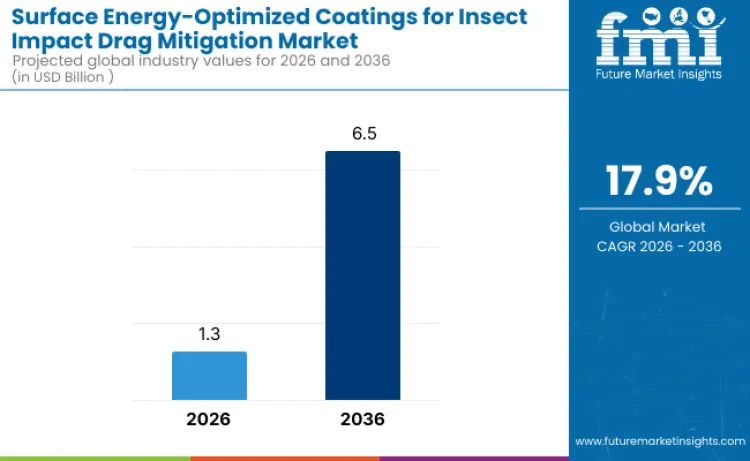
Surface Energy-Optimized Coatings for Insect Impact Drag Mitigation Market Key Takeaways
| Metric | Value |
|---|---|
| Market Value (2026) | USD 1.3 billion |
| Market Forecast Value (2036) | USD 6.5 billion |
| Forecast CAGR (2026 to 2036) | 17.9% |
How Are the Segments Classified in the Surface Energy-Optimized Coatings for Insect Impact Drag Mitigation Market?
Demand for surface-energy-optimized coatings is shaped by aerodynamic efficiency requirements, increased insect-impact accumulation on high-speed surfaces, and interest in micro- and nano-engineered coatings that reduce drag losses. Buyers evaluate hydrophobicity, oleophobic resistance, microtexture durability, and self-cleaning capability across aerospace, automotive, rail, and wind-energy applications. Adoption patterns reflect operational efficiency targets, decarbonization initiatives, and the need for coatings that maintain clean leading edges during sustained high-velocity exposure.
Which Coating Type Accounts for the Largest Share of Global Demand?
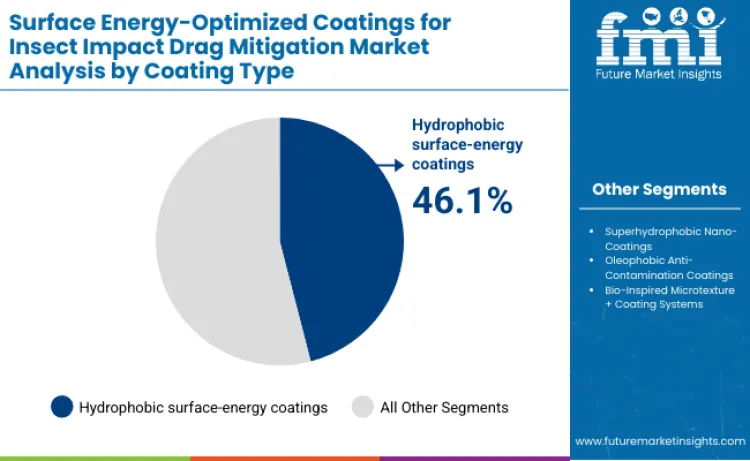
Hydrophobic surface-energy coatings hold 46.1%, making them the leading coating-type segment globally. These coatings reduce adhesion forces, limit insect residue accumulation, and improve surface cleanliness during moderate-speed operation. Superhydrophobic nano-coatings support extreme repellency using micro–nano hierarchical textures. Oleophobic anti-contamination coatings prevent adhesion of lipid-rich insect debris, improving drag stability. Bio-inspired microtexture plus coating systems combine engineered surface patterns with functional chemistries to replicate natural anti-adhesion strategies. Coating-type distribution reflects broad applicability and durability advantages of hydrophobic coatings.
Key Points:
- Hydrophobic coatings reduce residue adhesion during flight or motion.
- Superhydrophobic nano-coatings provide extreme repellency.
- Oleophobic coatings target lipid-based contamination.
- Bio-inspired systems combine texture and chemistry for enhanced mitigation.
Which Application Area Represents the Largest Share of Global Demand?
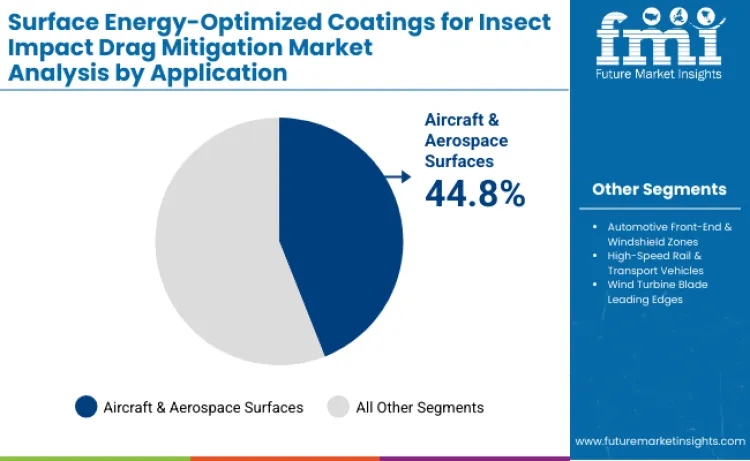
Aircraft and aerospace surfaces hold 44.8%, making them the largest application-area segment. Insect-impact drag penalties are significant during takeoff, climb, and cruise phases, driving adoption of surface-energy coatings for leading edges, nose cones, and wing structures. Automotive front-end and windshield zones adopt coatings to improve clarity and airflow consistency. High-speed rail vehicles require durable drag-reduction coatings for sustained operation across exposed leading surfaces. Wind turbine blade leading edges adopt coatings to limit contamination-induced erosion and maintain power efficiency. Application distribution reflects the high aerodynamic sensitivity of aerospace surfaces.
Key Points:
- Aerospace surfaces face substantial drag penalties from insect buildup.
- Automotive zones rely on coatings for clarity and airflow quality.
- Rail applications require durable leading-edge protection.
- Wind turbines benefit from reduced contamination and erosion.
Which Performance Class Accounts for the Largest Share of Global Demand?
Low surface-energy drag-reduction coatings hold 43.9%, making them the leading performance-class segment. These coatings reduce adhesion forces sufficiently to prevent early-stage buildup while maintaining durability across environmental exposure. Ultra-low surface-energy coatings target extreme repellency for high-performance environments. Self-cleaning or anti-fouling coatings remove residues through hydrodynamic effects or environmental exposure mechanisms. Multi-functional drag and contamination-control coatings combine hydrophobicity, oleophobicity, and abrasion resistance for integrated performance. Performance-class distribution reflects operational need for dependable drag-reduction with robust field durability.
Key Points:
- Low surface-energy coatings balance repellency and durability.
- Ultra-low coatings serve extreme aerodynamic environments.
- Self-cleaning films mitigate accumulation through passive removal.
- Multi-functional coatings integrate drag reduction with contamination control.
What are the Key Dynamics in the Surface Energy-Optimized Coatings for Insect Impact Drag Mitigation Market?
Global demand rises as aerospace, automotive, and wind energy sectors evaluate coatings engineered to reduce insect residue accumulation that increases surface drag. Surface energy-optimized coatings support smoother airflow, improved fuel efficiency, and reduced cleaning frequency. Developers assess hydrophobic and oleophobic formulations that prevent residue adhesion at operational speeds. Testing expands across turbine blades, aircraft leading edges, and vehicle surfaces where drag penalties and maintenance cycles influence long-term performance outcomes.
How are aerodynamic efficiency goals and surface contamination challenges shaping coating development?
Aerospace and wind turbine operators observe measurable drag increases caused by insect residue on leading edges, creating interest in coatings that minimize adhesion. Researchers develop low-surface-energy chemistries using tailored polymer matrices that reduce protein and chitin bonding. Test programs evaluate durability under UV exposure, rain erosion, and particulate impact. Aircraft manufacturers study coatings compatible with composite and aluminium substrates to preserve aerodynamic profiles. Wind energy firms assess performance during seasonal insect swarms that lower turbine output. Automotive engineers explore coatings on front-facing components to stabilize airflow in high-speed conditions. Industry partnerships expand testing to validate long-term performance under real flight and turbine operating environments.
How do durability requirements, application constraints, and qualification processes influence scalability?
Coatings must withstand abrasion, weathering, and repeated operational cleaning, creating durability challenges for low-surface-energy formulations. Aircraft and turbine manufacturers require compatibility with existing paints, primers, and structural materials. Application methods such as spray deposition or film layering demand controlled curing and adhesion reliability. Certification and qualification processes extend timelines due to stringent aerospace and energy-sector safety standards. Wind farms operating in harsh climates face variability in coating lifespan. Maintenance teams require predictable reapplication cycles, influencing cost calculations. Regional regulatory frameworks governing coating chemistry and environmental impact shape adoption decisions across high-performance engineering markets.
How is Demand for Surface Energy-Optimized Coatings for Insect Impact Drag Mitigation Market Evolving Across Key Countries?
Demand for the surface energy-optimized coatings for insect impact drag mitigation market is rising due to increased focus on aerodynamic efficiency, higher fuel-reduction targets, and broader adoption of advanced surface-engineering technologies. China records a CAGR of 19.2% supported by strong aerospace and high-speed mobility programs. India shows an 18.5% CAGR driven by expanding aviation and transport sectors. USA posts a 17.1% CAGR supported by R&D investment in drag-reduction materials. Japan holds a 16.0% CAGR linked with precision coating technologies. UK records a 15.4% CAGR supported by efficiency-focused aerospace initiatives.
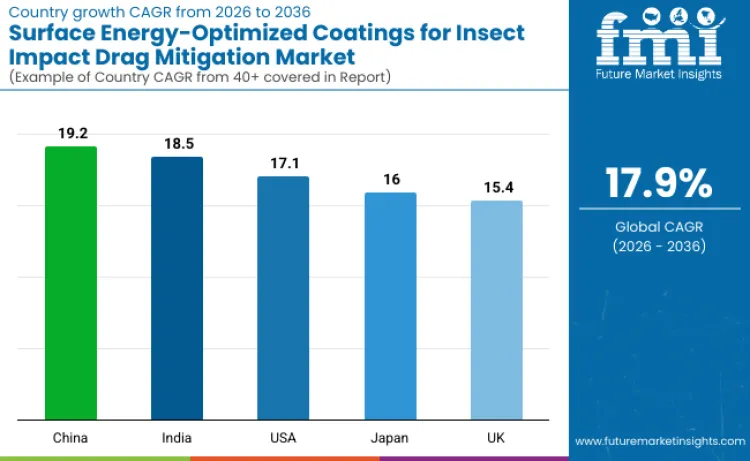
| Country | CAGR (%) |
|---|---|
| China | 19.2% |
| India | 18.5% |
| USA | 17.1% |
| Japan | 16.0% |
| UK | 15.4% |
How is China driving demand for Surface Energy-Optimized Coatings for Insect Impact Drag Mitigation?
China drives demand due to rapid expansion of aerospace, high-speed rail, and next-generation mobility systems requiring improved aerodynamic performance. The country’s CAGR of 19.2% reflects strong adoption of engineered coatings that reduce insect residue adhesion and maintain laminar flow. Research institutes and aerospace manufacturers develop advanced surface-energy formulations optimizing repellence and durability. High-speed vehicle programs integrate these coatings to counter drag accumulation in humid and high-insect-density regions. Government investment in aviation efficiency accelerates testing and deployment across commercial and defense platforms.
- Expansion of aerospace and high-speed mobility programs
- Development of advanced surface-energy formulations
- Use of coatings to maintain laminar flow in high-insect zones
- Government investment supporting aerodynamic-efficiency R&D
How is India driving demand for Surface Energy-Optimized Coatings for Insect Impact Drag Mitigation?
India supports rising demand due to rapid aviation-sector growth, increased adoption of high-speed mobility systems, and interest in fuel-efficiency improvements. The country’s CAGR of 18.5% reflects broader use of surface-engineered coatings reducing insect adhesion across aircraft and transport vehicles. Research organizations evaluate hydrophobic and low-surface-energy chemistries suited for varied climatic conditions. Airlines and fleet operators consider coatings to reduce cleaning cycles and improve aerodynamic stability. Development of regional aerospace-manufacturing clusters strengthens adoption of performance-oriented coatings.
- Aviation-sector growth raising efficiency needs
- Evaluation of low-surface-energy coating chemistries
- Interest in reduced cleaning cycles and improved stability
- Emerging aerospace clusters supporting technology deployment
How is the USA driving demand for Surface Energy-Optimized Coatings for Insect Impact Drag Mitigation?
USA drives demand through strong aerospace R&D activity, high interest in aerodynamic optimization, and adoption of advanced materials across commercial and defense applications. The country’s CAGR of 17.1% reflects deployment of surface-energy-optimized coatings designed to minimize insect residue buildup during takeoff and low-altitude flight. Research partnerships develop coatings improving repellence, wear resistance, and environmental durability. Airlines evaluate drag-mitigation coatings to improve fuel efficiency metrics. Defense and high-speed mobility programs integrate advanced surface-engineering systems during fleet modernization.
- Strong aerospace R&D investment
- Development of coatings improving repellence and durability
- Airline interest in fuel-efficiency optimization
- Integration of coatings into defense and high-speed platforms
How is Japan driving demand for Surface Energy-Optimized Coatings for Insect Impact Drag Mitigation?
Japan drives demand due to precise engineering standards, strong aerospace-manufacturing capability, and interest in surface technologies supporting aerodynamic consistency. The country’s CAGR of 16.0% reflects controlled adoption of coatings that reduce insect adhesion while preserving surface smoothness. Research institutions refine low-energy polymer coatings ensuring durability under variable humidity. Aerospace and mobility manufacturers use these coatings to maintain laminar performance on leading edges. National focus on energy efficiency strengthens pursuit of drag-reduction technologies.
- Precision engineering supporting surface-optimized coatings
- Development of humidity-resistant low-energy formulations
- Use of coatings to maintain laminar flow on leading edges
- Energy-efficiency focus driving adoption
How is the UK driving demand for Surface Energy-Optimized Coatings for Insect Impact Drag Mitigation?
UK supports demand through aerospace-efficiency initiatives, interest in next-generation materials, and strong participation in collaborative aerodynamics research. The country’s CAGR of 15.4% reflects testing and deployment of coatings designed to reduce insect residue buildup in varying climatic conditions. Aerospace firms evaluate surface-engineered solutions to meet efficiency and emissions-reduction goals. Research organizations assess performance of hydrophobic and ultra-low-surface-energy coatings. National sustainability targets reinforce adoption of drag-mitigation technologies across aviation and advanced mobility sectors.
- Aerospace-efficiency and emissions-reduction commitments
- Evaluation of hydrophobic and low-surface-energy coatings
- Collaborative aerodynamics research programs
- National sustainability targets supporting advanced coating deployment
What is the competitive landscape of demand for surface energy-optimized coatings for insect impact drag mitigation globally?
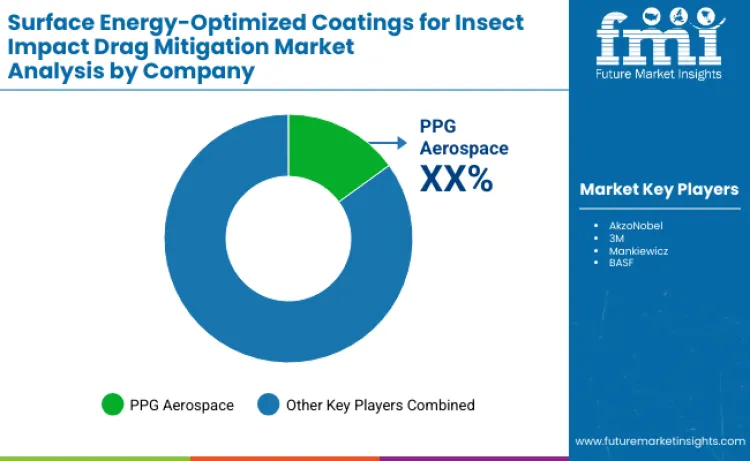
Demand for surface energy-optimized coatings for insect impact drag mitigation grows as aerospace manufacturers and airlines pursue lower fuel consumption and reduced aerodynamic losses. Requirements center on durable low-surface-energy chemistries, resistance to erosion, adhesion stability, and compatibility with aircraft exterior substrates. Buyers evaluate coating thickness uniformity, hydrophobic performance, ease of application, and behavior under high-velocity particulate impact. Procurement teams prioritize certification readiness, environmental compliance, and maintenance cycle predictability supporting commercial and defense fleets. Trend in the global market reflects stronger interest in drag-reduction technologies linked to sustainability objectives and operational cost targets.
PPG Aerospace leads through advanced exterior coatings engineered for erosion resistance and optimized surface energy suited for insect adhesion reduction. AkzoNobel participates with aerospace-qualified coatings designed for aerodynamic performance and long-term durability. 3M contributes surface films and engineered hydrophobic technologies used in aerodynamic optimization programs. Mankiewicz maintains visibility with aviation exterior coatings offering controlled surface energy and predictable weathering behavior. BASF supports demand with functional polymer systems and specialty surface modifiers incorporated into aviation coating formulations. Competitive positioning globally reflects coating durability, surface-energy management capability, certification track record, and integration with airline maintenance programs.
Key Players in the Surface Energy-Optimized Coatings for Insect Impact Drag Mitigation Market
- PPG Aerospace
- AkzoNobel
- 3M
- Mankiewicz
- BASF
Scope of the Report
| Items | Values |
|---|---|
| Quantitative Units | USD billion |
| Coating Type | Hydrophobic Surface-Energy Coatings, Superhydrophobic Nano-Coatings, Oleophobic Anti-Contamination Coatings, Bio-Inspired Microtexture + Coating Systems |
| Application Area | Aircraft & Aerospace Surfaces, Automotive Front-End & Windshield Zones, High-Speed Rail & Transport Vehicles, Wind Turbine Blade Leading Edges |
| Performance Class | Low Surface-Energy Drag-Reduction Coatings, Ultra-Low Surface-Energy Coatings, Self-Cleaning / Anti-Fouling Coatings, Multi-Functional Drag & Contamination Control Coatings |
| End-User | Aerospace & Aviation OEMs, Automotive OEMs, Renewable Energy (Wind Turbine Operators), Specialty Coating & Material Manufacturers |
| Regions Covered | Asia Pacific, Europe, North America, Latin America, Middle East & Africa |
| Countries Covered | India, China, USA, Germany, South Korea, Japan, Italy, and 40+ countries |
| Key Companies Profiled | PPG Aerospace, AkzoNobel, 3M, Mankiewicz, BASF |
| Additional Attributes | Dollar sales by coating type, application area, and performance class; adoption patterns across aerospace, automotive, and renewable energy sectors; coating durability under high-velocity insect impact; nano-texture-enabled drag reduction; compatibility with leading-edge erosion protection systems; regulatory and performance testing standards for aerodynamic efficiency improvements. |
Surface Energy-Optimized Coatings for Insect Impact Drag Mitigation Market by Segment
By Coating Type:
- Hydrophobic Surface-Energy Coatings
- Superhydrophobic Nano-Coatings
- Oleophobic Anti-Contamination Coatings
- Bio-Inspired Microtexture + Coating Systems
By Application Area:
- Aircraft & Aerospace Surfaces
- Automotive Front-End & Windshield Zones
- High-Speed Rail & Transport Vehicles
- Wind Turbine Blade Leading Edges
By Performance Class:
- Low Surface-Energy Drag-Reduction Coatings
- Ultra-Low Surface-Energy Coatings
- Self-Cleaning / Anti-Fouling Coatings
- Multi-Functional Drag & Contamination Control Coatings
By End-User:
- Aerospace & Aviation OEMs
- Automotive OEMs
- Renewable Energy (Wind Turbine Operators)
- Specialty Coating & Material Manufacturers
By Region:
- Asia Pacific
- China
- Japan
- South Korea
- India
- Australia & New Zealand
- ASEAN
- Rest of Asia Pacific
- Europe
- Germany
- United Kingdom
- France
- Italy
- Spain
- Nordic
- BENELUX
- Rest of Europe
- North America
- United States
- Canada
- Mexico
- Latin America
- Brazil
- Chile
- Rest of Latin America
- Middle East & Africa
- Kingdom of Saudi Arabia
- Other GCC Countries
- Turkey
- South Africa
- Other African Union
- Rest of Middle East & Africa
Frequently Asked Questions
What is the size of the surface energy-optimized coatings for insect impact drag mitigation market in 2026?
The market is valued at USD 1.3 billion in 2026 due to rising deployment of coatings designed to minimize insect residue buildup on transport surfaces.
What will be the industry size by 2036?
Industry value will reach USD 6.5 billion by 2036 as aerospace, automotive, and mobility sectors adopt advanced drag-reduction surface treatments.
What is the CAGR for 2026 to 2036?
The surface energy-optimized coatings for insect impact drag mitigation market expands at a 17.9% CAGR during the forecast period.
Which coating-type segment leads in 2026?
Hydrophobic surface-energy coatings hold 46.1% share due to their effectiveness in reducing insect adhesion and maintaining aerodynamic efficiency.
Which application-area segment holds the highest share?
Aircraft and aerospace surfaces lead with 44.8% share, supported by strong demand for fuel-efficiency improvements and cleaner wing and fuselage surfaces.
Preview the report firsthand - request a free sample
Get SampleGet the brochure for pricing and purchase details.
Get PDFTable of Content
- Executive Summary
- Surface Energy-Optimized Coatings for Insect Impact Drag Mitigation Market Overview
- Global Market Size and Value Analysis, 2020 to 2026
- Global Market Forecast and Growth Outlook, 2026 to 2036
- Aerodynamic Drag Loss Mechanisms from Insect Impact
- Role of Surface Energy Optimization in Drag Mitigation
- Market Dynamics and Industry Fundamentals
- Key Market Drivers
- Durability and Environmental Exposure Constraints
- Opportunities in Fuel Efficiency and Emissions Reduction
- Regulatory and Aerospace Qualification Landscape
- Market Segmentation Analysis by Coating Type
- Hydrophobic Surface-Energy Coatings
- Superhydrophobic Nano-Coatings
- Oleophobic Anti-Contamination Coatings
- Bio-Inspired Microtexture Plus Coating Systems
- Market Segmentation Analysis by Application Area
- Aircraft and Aerospace Surfaces
- Automotive Front-End and Windshield Zones
- High-Speed Rail and Transport Vehicles
- Wind Turbine Blade Leading Edges
- Market Segmentation Analysis by Performance Class
- Low Surface-Energy Drag-Reduction Coatings
- Ultra-Low Surface-Energy Coatings
- Self-Cleaning and Anti-Fouling Coatings
- Multi-Functional Drag and Contamination Control Coatings
- Regional Market Analysis
- North America Market Analysis
- Latin America Market Analysis
- Western Europe Market Analysis
- Eastern Europe Market Analysis
- South Asia and Pacific Market Analysis
- East Asia Market Analysis
- Middle East and Africa Market Analysis
- Country-Level Market Analysis
- United States
- Canada
- Mexico
- Brazil
- Argentina
- Germany
- France
- United Kingdom
- Italy
- Spain
- Netherlands
- China
- India
- Japan
- South Korea
- ANZ
- GCC Countries
- South Africa
- Competitive Landscape Analysis
- Global Competitive Structure
- Market Share Analysis of Surface-Engineering Suppliers
- Coating Chemistry and Nano-Texture Differentiation
- Certification, Qualification, and OEM Integration Strategies
- Company Profiles
- Scope of the Report
- Research Methodology
- Assumptions and Acronyms


