

- Industry Size (2026)
- USD 2120.0 Mn
- Forecast (2036)
- USD 3870.0 Mn
- CAGR (2026 to 2036)
- 7.2%
Chicory Root Inulin (Orafti HSI) Market Size, Market Forecast and Outlook
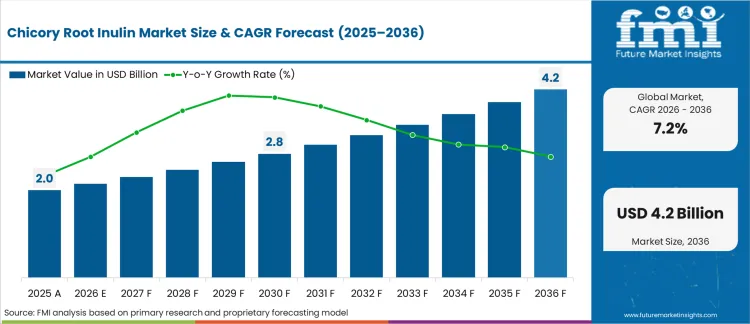
In 2025, the Chicory Root Inulin (Orafti HSI) Market surpassed a value of USD 1,990.0 Million. Projections indicate an advance to USD 2,120.0 Million in 2026 and USD 3,870.0 Million by 2036, implying a 7.2% CAGR as procurement teams mandate functional carbohydrates to bridge severe diet quality gaps. As per FMI's projection, compliance thresholds and public health mandates reset minimum nutritional profiles across major packaged food categories.
Formulators respond directly to widespread dietary deficiencies by integrating soluble bulking agents into core manufacturing runs. Analytical reviews of consumer habits reveal that approximately 90% of individuals consume too few vegetables and 80% do not ingest enough fruit [1]. Factory-level interventions substitute pure sucrose with clinically validated prebiotic ingredient derivatives to navigate tightening regional nutrient profiling models. Buyers prioritize raw materials that seamlessly replace sugar functionality without inflicting sensory penalties on finished goods.
Summary of Chicory Root Inulin (Orafti HSI) Market
- Chicory Root Inulin (Orafti HSI) Market Definition:
- Commercial supply of soluble prebiotic fructans extracted from specialized root crops utilized primarily for sugar reduction and texturizing.
- Demand Drivers in the Market:
- Surging metabolic disease prevalence forces mandated calorie reduction initiatives globally.
- Front-of-pack warning labels compel rapid corporate recipe adjustments.
- Consumer awareness regarding gut microbiome optimization accelerates functional purchasing behaviors.
- Key Segments Analyzed in the FMI Report:
- Product Type: Dominant powder formats (77% share in 2026) versus limited liquid variants, driven by ambient stability and bulk logistics efficiency.
- Application: Food & Beverage (62% of total volume) versus cosmetics and other specialty uses, reflecting large-scale sugar reduction and fibre fortification mandates.
- Geography: High-growth Asia-Pacific (India 9.1%, China 8.0%) versus regulatory-driven mature North American and European markets.
- Analyst Opinion at FMI:
- Nandini Roy Choudhury, Principal Consultant for Food & Beverage at Future Market Insights, opines, “In our latest evaluation of the Chicory Root Inulin (Orafti HSI) Market, my team and I have observed a decisive shift from fiber enrichment to microbiome strategy. Food manufacturers are no longer adding inulin solely for label claims; they are engineering entire product platforms around digestive resilience and glycemic moderation. High-solubility chicory inulin grades are increasingly central to plant-based dairy, functional confectionery, and low-sugar beverages. Companies that integrate agronomic sourcing stability with clinical evidence will command stronger negotiating power in premium wellness-driven portfolios.”
- Strategic Implications/Executive Takeaways:
- Prioritize extensive clinical documentation to support premium retail physiological claims.
- Expand regional cultivation networks to mitigate severe weather impacts on crop yields.
- Formulate drop-in solutions minimizing factory-level equipment modifications.
- Methodology:
- Validated through first-hand corporate production and capacity data.
- Zero reliance on speculative third-party market research reports.
- Based on verifiable industrial benchmarks and verified sources.
Caroline Bustandi, Head of Regulatory Affairs Asia Pacific at BENEO, stated: “We are pleased that BENEO’s chicory root fibre inulin is the first and only prebiotic to be recognized by the Thai FDA following a stringent scientific evaluation. This means that food and drink manufacturers in Thailand can formulate appealing products with BENEO’s prebiotic Orafti® Inulin and credibly communicate their health benefits on pack. This makes it easier for consumers to make informed choices to support their digestive health, a growing consumer demand in the Asia Pacific region.” [2]
Demand spans North America, Europe, Asia Pacific and Latin America with highly varied adoption rates. Country dispersion skews toward stringent regulatory environments penalizing high-sugar formulations, prompting rapid formulation pivots in major urban centers. Global health authorities recognize the escalating metabolic burden, estimating that over one billion people lived with obesity in 2022 [3]. Procurement clusters around vendors capable of providing localized technical support and verifiable agricultural supply chains.
Chicory Root Inulin (Orafti HSI) Market Definition
Chicory Root Inulin (Orafti HSI) Market encompasses commercial transactions of soluble fructans extracted specifically from targeted agricultural root crops using hot water extraction methodologies. Applications span food, beverage, and cosmetic formulations requiring clean-label bulking agents or functional texturizers.
Chicory Root Inulin (Orafti HSI) Market Inclusions
Scope captures pure powdered and liquid formats directly derived from contracted botanical cultivation networks. Analysis tracks revenue generated from ingredient sales executing into retail channels, commercial food processing facilities, and dedicated cosmetic manufacturing hubs worldwide.
Chicory Root Inulin (Orafti HSI) Market Exclusions
Assessments omit synthetic short-chain fructooligosaccharides produced via enzymatic synthesis from sucrose. Fructans sourced from Jerusalem artichoke, agave, or garlic fall entirely outside measured boundaries unless explicitly blended into dominant commercial root-extract products.
Chicory Root Inulin (Orafti HSI) Market Research Methodology
- Primary Research: Interviews validate baseline processing volumes with leading extraction facility operators and agronomists managing cooperative farming networks.
- Desk Research: Custom databases track ingredient trade codes, public health intervention metrics, and corporate capacity expansion announcements across primary growing regions.
- Market-Sizing and Forecasting: Demand models correlate national disease prevalence metrics against packaged food reformulation schedules to project exact volumetric requirements.
- Data Validation and Update Cycle: Analyst teams audit capacity utilization rates annually against reported manufacturer earnings and published agricultural facility investments.
Segmental Analysis
Chicory Root Inulin (Orafti HSI) Market Analysis by Source
Representing 74% of total volume in 2026, chicory root secures its position as the dominant botanical origin for commercial extraction. Processors favor dedicated farming programs to ensure stable yields against continuous climate volatility. FMI analysts opine that producers sign long-term grower partnerships to future-proof harvest volumes and actively reduce carbon footprints. Industry leaders recently publicized extensive agricultural partnerships focused specifically on ensuring sustainable crop generation and reducing ecological footprints [4].
- Sourcing shifts toward vertically integrated suppliers capable of absorbing sudden agricultural pricing shocks. Long-term contracts shield food brands from sudden raw material shortages spanning multiple harvest cycles, securing dependable inulin availability for continuous production lines.
- Authorities increasingly demand rigorous documentation verifying botanical origins before approving functional label claims. Processors invest heavily in agricultural data tracking platforms to ensure absolute compliance, allowing verified supply chains to clear customs checkpoints significantly faster.
- Manufacturers specify established botanical extracts possessing extensive clinical dossiers. Proven safety records accelerate novel product launches across highly conservative regulatory jurisdictions, prompting risk-averse brands to select ingredients backed by decades of human consumption data.
Chicory Root Inulin (Orafti HSI) Market Analysis by Product Type
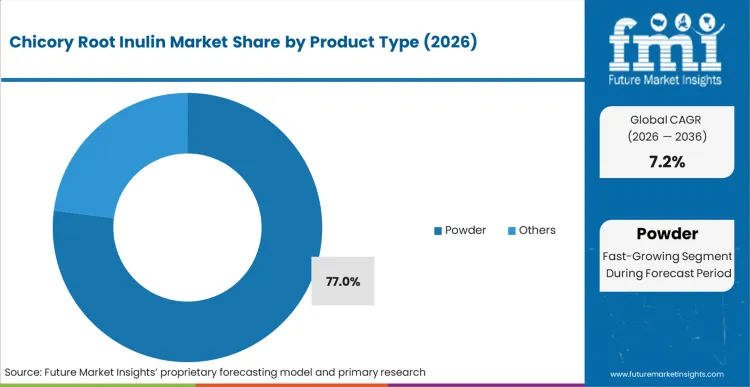
Industrial procurement heavily favors powder formats, capturing 77% of market valuation in 2026 due to extended ambient stability. Logistics efficiency and minimal moisture migration drive bulk adoption among multinational food conglomerates. Formulators utilize dried formats to control structural integrity in baked goods and dry beverage mixes..
- Facility upgrades prioritize advanced spray-drying capabilities to meet surging demand for concentrated prebiotics. Capital injections directly fund energy-efficient powder processing lines, accommodating massive bulk orders from global chicory products manufacturers seeking distinct scale economics.
- Advanced agglomeration techniques yield highly soluble particles perfectly suited for instant beverage applications. Instantized versions entirely prevent clumping during rapid factory-level mixing procedures, satisfying factory managers who prefer ingredients requiring minimal specialized handling equipment.
- Freight optimization compels buyers to select moisture-free formats to dramatically lower transportation expenditures. Extended ambient stability minimizes expensive climate-controlled warehousing requirements, empowering buyers to consolidate orders into larger international shipments.
Chicory Root Inulin (Orafti HSI) Market Analysis by Application
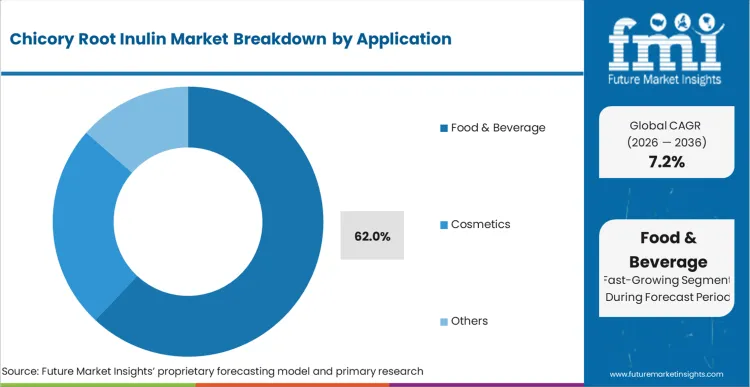
Anchoring global consumption with a 62% share in 2026, food and beverage manufacturing drives mass-market calorie reduction initiatives. Obesity prevalence pushes category-wide sugar elimination campaigns. As per FMI's projection, mass-market brands leverage root derivatives to maintain crucial mouthfeel while eliminating caloric bulk. Public health guidelines structurally reinforce this shift, recommending a minimum daily dietary fiber intake of at least 25 grams per day for individuals over ten years old [6].
- Health ministries actively track rising national body mass indexes to execute targeted interventions. Brand managers reformulate core legacy portfolios to completely avoid punitive taxation schemes, shifting procurement toward functional alternatives.
- Research teams seek seamless drop-in replacements for traditional sweeteners mimicking exact sucrose performance. Sensory parity remains absolutely critical for broad consumer acceptance, ensuring brands executing nutritional upgrades retain highly loyal customer bases.
- Synergy testing identifies optimal ratios between high-intensity sweeteners and texturizing bulking agents. Combined ingredient systems mask bitter off-notes effectively during scheduled packaging refresh cycles, guaranteeing finished goods maintain structural integrity throughout extended distribution channels.
Chicory Root Inulin (Orafti HSI) Market Analysis by Distribution Channel
Food and grocery retail channels process 42% of sales volume in 2026, reflecting widespread mainstream democratization of gut-health products. Shoppers prioritize clear gut-friendly labels during routine supermarket trips. Mainstream availability democratizes consumer access to clinically supported prebiotic fiber formulations. Companies seek absolute commercial exclusivity to capture shelf space; a leading manufacturer recently secured exclusive Thai FDA prebiotic claim approvals to dominate local retail positioning [7].
- Supermarket category buyers allocate prime shelf space strictly to proven gut-health oriented items. Retailers demand distinct on-pack claims to justify premium pricing architectures, ensuring brands possessing certified health claims survive periodic retail assortment reviews.
- Agencies formally approve specific physiological statements for rigorously validated ingredients. Exclusive authorizations permit manufacturers to print targeted digestive health messaging directly on retail packaging, shielding companies from expensive false advertising litigation.
- Ingredient producers sponsor independent clinical trials to generate retail-ready marketing claims. Scientific dossiers support downstream consumer marketing campaigns exceptionally well, while co-branded packaging initiatives build recognizable trust marks differentiating premium offerings from generic competitors.
Chicory Root Inulin (Orafti HSI) Market Drivers, Restraints, and Opportunities
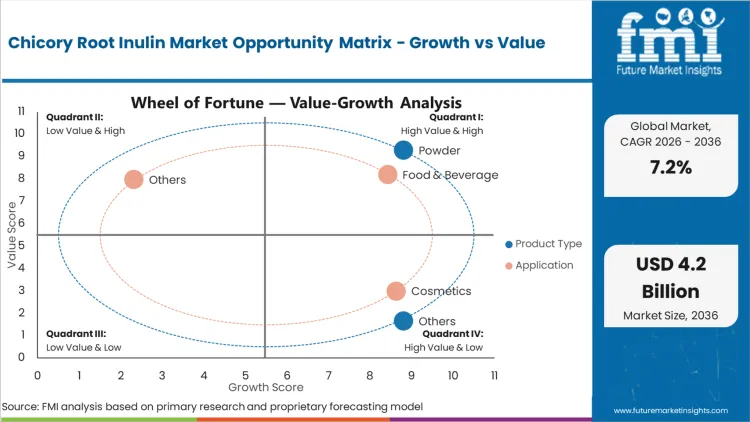
Structural obesity burdens compel widespread dietary interventions across major global economies. Policymakers utilize aggressive taxation and mandatory front-of-pack labeling to aggressively discourage sugar consumption. FMI analysts opine that food conglomerates reformulate legacy portfolios to maintain highly favorable retail positioning against new legislative benchmarks. Soluble fibers provide critical bulking properties entirely lost when removing sucrose from established recipes. Manufacturers rely on food dietary fibers to flawlessly recreate familiar textures in baked goods and dairy formulations. A prominent supplier recently highlighted this shift by divesting its juice business to sharpen corporate focus strictly on specialized fiber and plant ingredients [8].
Agricultural supply constraints severely limit unhindered industrial output expansion. Unpredictable weather patterns routinely decimate European harvest yields, causing immense supply chain friction. Processors encounter significant raw material cost volatility during poor growing seasons, compressing operational margins. Manufacturers mitigate exposure by actively expanding regional cultivation footprints far outside traditional European strongholds. Long-term grower partnerships aim to stabilize pricing mechanisms and secure reliable biomass volumes. Brands utilizing agave inulin or other alternative sources attempt to diversify procurement risks, preventing catastrophic production halts during severe regional droughts.
- Opportunity for Partnerships: Formal alliances between ingredient suppliers and global health bodies significantly strengthen advocacy efforts. European inulin producers recently joined the International Probiotics Association to advance regulatory harmonization [9].
- Opportunity for Formulation: Brands integrating specialized prebiotic benefits into everyday staples capture massive health-conscious consumer segments. Evolving clinical guidance supports robust daily digestive health maintenance, prompting manufacturers to launch enriched bakery lines targeting broad demographics.
- Opportunity for Capacity: Strategic facility investments unlock higher manufacturing throughput for specialized powder formats. Upgraded extraction plants easily accommodate surging bulk orders from multinational partners, stabilizing long-term corporate supply chains.
Regional Analysis
Based on the regional analysis, Chicory Root Inulin (Orafti HSI) Market is segmented into North America, Latin America, Europe, East Asia, South Asia, Oceania and Middle East & Africa across 40+ countries. The full report also offers market attractiveness analysis based on regional trends.
.webp "Top Country Growth Comparison Chicory Root Inulin Market Cagr (2026 2036)")
| Country | CAGR (2026 to 2036) |
|---|---|
| United States | 7.2% |
| United Kingdom | 6.9% |
| Germany | 6.5% |
| China | 8.0% |
| India | 9.1% |
| Brazil | 7.4% |
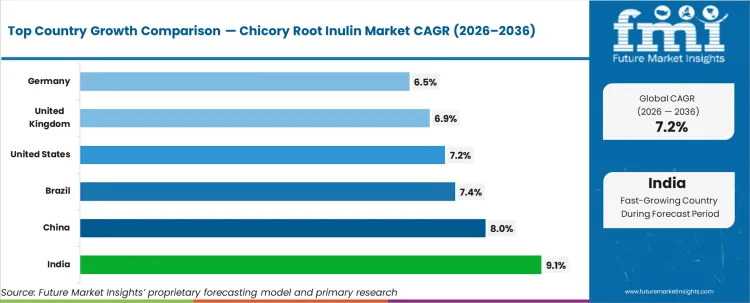
Source: Future Market Insights (FMI) analysis, based on proprietary forecasting model and primary research
North America Chicory Root Inulin (Orafti HSI) Market Analysis
North America is showing strong demand for functional foods that support metabolic health in practical, everyday formats. Consumers are looking for products that are convenient but still deliver clear nutritional value, which is pushing brands to focus on ingredients with measurable digestive and metabolic benefits. Public health indicators across the region continue to reinforce the need for dietary reformulation. According to FMI's estimates, brands that incorporate insoluble dietary fiber and targeted soluble prebiotics are gaining a stronger competitive position in retail channels.
- United States: In the United States, demand for short chain fructooligosaccharides is projected to grow at 7.2% CAGR through 2036, supported by persistent dietary gaps that continue to influence procurement priorities and product budgeting cycles. Measured adult obesity prevalence recently reached 40.3%, which is sustaining a steady pipeline of better-for-you product launches [10]. As a result, formulators are increasingly prioritizing ingredients that can support both sugar reduction and digestive health while meeting stricter internal procurement requirements.
FMI’s report includes detailed assessments covering the broader North American territory. Canada is emerging as a meaningful opportunity for specialized functional beverage platforms. Ingredient suppliers are also promoting prebiotic fibers for weight-management formulations at major regional trade events [11].
Europe Chicory Root Inulin (Orafti HSI) Market Analysis
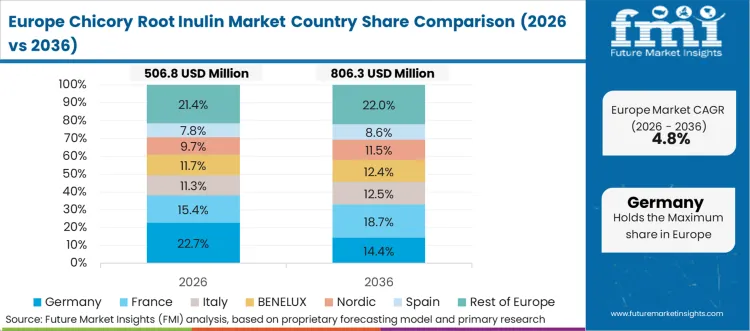
Europe remains a tightly regulated market for functional ingredients, with claim approvals tied closely to scientific substantiation. This creates a high-barrier environment where evidence quality directly affects commercialization potential. The region’s aging demographic profile is also increasing demand for products positioned around digestive and broader healthy-aging support. At the same time, buyers are placing greater weight on supplier sustainability credentials and compliance standards.
- United Kingdom: The United Kingdom market is forecast to expand at 6.9% CAGR from 2026 to 2036, as retail assortment resets continue to strengthen the role of fiber-based claims in mainstream food and beverage categories. Adult overweight and obesity prevalence recently reached 64.5%, keeping pressure high on policymakers and sustaining regulatory scrutiny around junk food advertising [12]. In response, brands are using soluble bulking agents to support reformulation strategies that can better navigate nutrient profiling restrictions.
- Germany: Germany is expected to grow at 6.5% CAGR during 2026 to 2036, supported by stable demand for premium nutrition products and continued investment in product quality and processing upgrades. Adult obesity prevalence increased to 19.7% over the past two decades, reinforcing metabolic health as an important consumer focus area [13]. Procurement teams are also giving more preference to suppliers with certified sustainable agriculture programs as ESG requirements become more embedded in sourcing decisions.
FMI’s report includes extensive evaluations across the Europe fructo oligosaccharides landscape. France and Italy continue to offer attractive opportunities for premium functional dairy applications. Processors are also pursuing B Corp and related certifications to better align with corporate sustainability expectations [14].
East Asia Chicory Root Inulin (Orafti HSI) Market Analysis
East Asia continues to benefit from rapid urbanization, changing dietary habits, and rising disposable incomes, all of which are accelerating demand for functional nutrition products. Governments across the region are also taking a more active role in addressing chronic disease trends, which is improving the long-term outlook for preventive nutrition ingredients. In this environment, manufacturers are increasingly using internationally recognized ingredients to strengthen brand credibility and premium positioning.
- China: China is projected to post 8.0% CAGR in demand from 2026 to 2036, with growth supported by the combined effect of policy attention, chronic disease pressure, and scaling consumer adoption. National survey summaries indicate that more than 50% of adults are overweight or obese, which has prompted stronger nationwide health initiatives [15]. Domestic brands are responding by incorporating recognized fructooligosaccharides into product formulations to meet growing middle-class demand for gut-health-oriented nutrition.
FMI’s report includes highly granular data covering the East Asian territory. South Korea and Japan remain advanced markets for specialized functional foods. Exclusive marketing and distribution agreements continue to play a major role in securing domestic access for premium imported prebiotic ingredients [16].
South Asia Chicory Root Inulin (Orafti HSI) Market Analysis
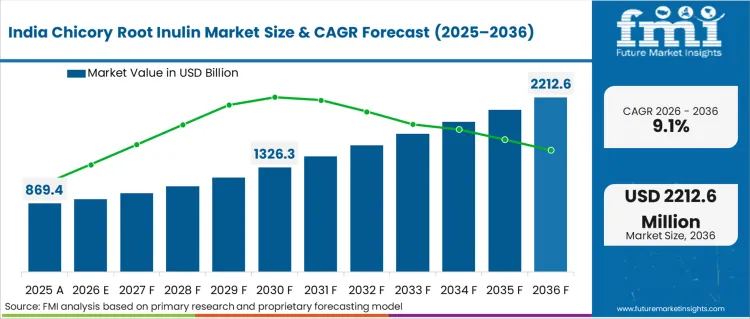
South Asia presents a large-volume growth opportunity, driven by expanding middle-class populations and increasing awareness of nutrition-linked health outcomes. Price accessibility remains central to formulation strategy, especially in mass-market FMCG categories, where affordability directly influences adoption. Regional health burdens are also creating stronger demand for scalable nutritional interventions. Over the long term, local manufacturing and distribution capabilities will be critical to market penetration.
- India: India is expected to record 9.1% CAGR through 2036, with demand growth supported by fast value-to-volume scaling and rising allocation toward functional food and nutrition products. Global data showing 589 million adults living with diabetes highlights the urgency of dietary intervention in highly populated markets, including India [17]. In response, brands are increasingly fortifying everyday staples such as biscuits and affordable dairy powders to deliver functional benefits at accessible price points.
FMI’s report includes comprehensive metrics for the broader South Asian bloc. Bangladesh and Sri Lanka are emerging as secondary target markets for affordable fortified staples. Suppliers that establish local warehousing networks are improving lead times and strengthening share capture using ingredients that are among the few internationally recognized prebiotics [18].
Latin America Chicory Root Inulin (Orafti HSI) Market Analysis
Latin America is being shaped by stricter front-of-pack labeling rules, which are pushing manufacturers to reformulate products with ingredients that support sugar reduction and cleaner nutritional profiles. Governments across the region are actively discouraging high sugar and sodium intake, and beverage companies are under pressure to maintain taste and texture while adapting formulations. In this setting, cost-in-use remains a major factor in ingredient selection decisions.
- Brazil: Brazil is forecast to grow at 7.4% CAGR over the forecast period, supported by wider use of functional fibers in beverages and stronger alignment between product positioning and local health-driven buying behavior. Overweight and obesity prevalence is reported at 63.0%, which is accelerating interest in preventive nutrition and reformulated food and beverage products [19]. Formulators are increasingly using highly soluble premium powders to make cost-effective recipe adjustments without compromising texture or consumer acceptance.
FMI’s report includes deep analytical coverage of the Latin American market. Mexico and Argentina are also enforcing similar nutrition labeling rules, which is expanding the regional need for reformulation-ready ingredients. At recent industry expos, manufacturers showcased prototype formulations focused on increasing fiber while reducing sugar in the same product system [20].
Competitive Aligners for Market Players
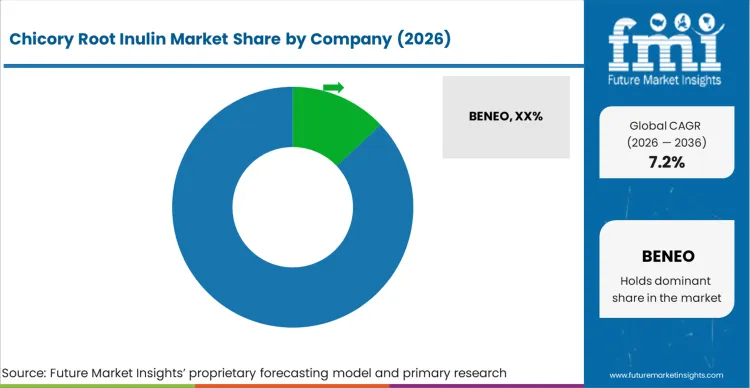
Market fragmentation necessitates incredibly distinct strategic positioning among leading functional ingredient producers. Regulatory approvals serve as critical commercial differentiators. Securing exclusive physiological claims allows premium suppliers to confidently charge higher prices. Such authorizations create exceptionally high entry barriers for generic competitors completely lacking robust, peer-reviewed clinical dossiers.
Capital allocation strictly dictates future processing capacity constraints. Producers must perfectly balance immediate supply demands with long-term environmental targets. Sustainable processing capabilities attract multinational food conglomerates committed deeply to Scope 3 emission reductions. Energy-efficient operations buffer manufacturers against incredibly volatile utility expenses, ensuring stable pricing models for downstream fructo oligosaccharides share analysis participants.
Corporate restructuring rapidly reshapes broader functional ingredient availability. Conglomerates divest non-core corporate assets to focus exclusively on high-margin texturants. As per FMI's projection, combined portfolios allow integrated formulation approaches bridging sweetening, mouthfeel, and critical fortification. Procurement teams increasingly favor massive one-stop suppliers entirely capable of solving incredibly complex multi-ingredient challenges efficiently.
Recent Developments:
The report includes full coverage of key trends from competitive benchmarking.
Some of the recent developments covered in the reports:
- In September 2025, BENEO secured exclusive prebiotic claim approvals from the Thai FDA for its Orafti Inulin, supporting on-pack digestive health positioning. [2]
- In June 2025, COSUCRA raised 45 million Euros to fund energy transitions and increase chicory plant capacity as part of a massive long-term growth plan. [5]
Key Players in Chicory Root Inulin (Orafti HSI) Market
- BENEO
- Sensus
- COSUCRA
- Tate & Lyle
- CP Kelco
- ITOCHU
- Royal Cosun
- SVZ
Scope of the Report
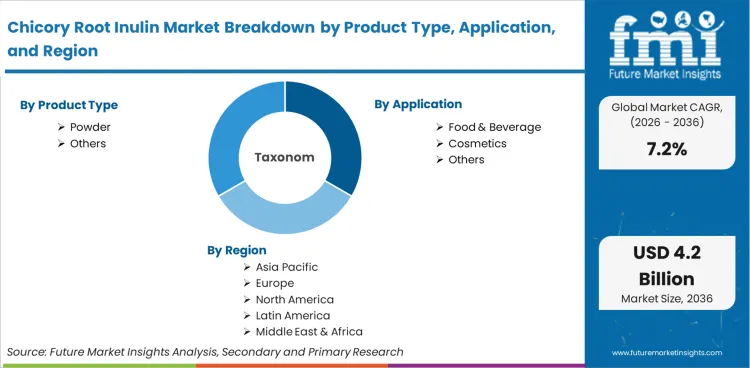
| Metric | Value |
|---|---|
| Quantitative Units | USD 2,120.0 Million (2026) to USD 3,870.0 Million (2036), at a CAGR of 7.2% |
| Market Definition | Chicory Root Inulin (Orafti HSI) Market encompasses commercial transactions of soluble fructans extracted specifically from targeted agricultural root crops using hot water extraction methodologies. |
| Source Segmentation | Chicory Root |
| Product Type Segmentation | Powder |
| Application Segmentation | Food & Beverage, Cosmetics & Other Uses |
| Distribution Channel Segmentation | Food & Grocery Retail |
| Regions Covered | North America, Latin America, Europe, East Asia, South Asia, Oceania, Middle East and Africa |
| Countries Covered | United States, Canada, Mexico, Brazil, Argentina, Germany, France, United Kingdom, Italy, Spain, China, India, Japan, South Korea, Indonesia, Australia and 40 plus countries |
| Key Companies Profiled | BENEO, Sensus, COSUCRA, Tate & Lyle, CP Kelco, ITOCHU, Royal Cosun, SVZ |
| Forecast Period | 2026 to 2036 |
| Approach | Hybrid top down and bottom up market modeling validated through primary interviews with resin producers and panel manufacturers, supported by trade data benchmarking and plant level capacity verification |
Chicory Root Inulin (Orafti HSI) Market Analysis by Segments
Source:
- Chicory Root
Product Type:
- Powder
Application:
- Food & Beverage
- Cosmetics & Other Uses
Distribution Channel:
- Food & Grocery Retail
Region:
- Asia Pacific
- India
- China
- Japan
- South Korea
- Indonesia
- Australia & New Zealand
- ASEAN
- Rest of Asia Pacific
- Europe
- Germany
- Italy
- France
- United Kingdom
- Spain
- Benelux
- Nordics
- Central & Eastern Europe
- Rest of Europe
- North America
- United States
- Canada
- Mexico
- Latin America
- Brazil
- Argentina
- Chile
- Rest of Latin America
- Middle East & Africa
- Kingdom of Saudi Arabia
- United Arab Emirates
- South Africa
- Turkey
- Rest of Middle East & Africa
Bibliography
- [1] Economic Research Service, USDA, "Satisfying fruit and vegetable recommendations," 9 Sep 2024.
- [2] BENEO. (2025, September 18). Exclusive prebiotic claim in Thailand.
- [3] Pan American Health Organization, "One in eight people are now living with obesity," 1 Mar 2024.
- [4] Sensus, "Partnership for future-proof chicory farming," 5 Sep 2024.
- [5] COSUCRA, "COSUCRA raises 45m to support its ambitious transformation," Press Release, 15 Jun 2023.
- [6] World Health Organization, "Healthy diet Fact Sheet," 26 Jan 2026.
- [7] BENEO, "Exclusive prebiotic claim in Thailand," Press Release, 18 Sep 2025.
- [8] Cosun, "Royal Cosun sells SVZ for more focus in portfolio," 20 Jul 2023.
- [9] NutraIngredients, "European inulin producers join the International Probiotics Association," 7 Oct 2025.
- [10] CDC, "NCHS Data Brief No. 508: US adult obesity prevalence," 24 Sep 2024.
- [11] BENEO, "BENEO at IFT FIRST 2024," 15 Jul 2024.
- [12] GOV.UK, "Obesity profile short statistical commentary: May 2025 update," 7 May 2025.
- [13] RKI GBE, "Adipositas Erwachsene Deutschland 2003-2023," Mar 2025.
- [14] Cosucra, "New investments to expand Cosucra's production capacity," 18 Nov 2024.
- [15] China CDC Weekly, "Adults overweight/obese national surveys summary," 20 Dec 2024.
- [16] ITOCHU, "Agreement for exclusive domestic marketing of Sensus inulin," Press Release, 16 Jun 2025.
- [17] Diabetes Atlas, "Adults living with diabetes," 2025 Atlas data.
- [18] BENEO, "Exclusive prebiotic claim in Thailand," Press Release, 18 Sep 2025.
- [19] Health in the Americas, "Overweight + obesity prevalence," 13 Oct 2024.
- [20] BENEO, "BENEO at FiE 2025," 2 Dec 2025.
This bibliography is provided for reader reference and is not exhaustive. The full report contains the complete reference list and detailed citations.
This Report Addresses
- Market intelligence to enable structured strategic decision making across mature and emerging prebiotic economies
- Market size estimation and 10 year revenue forecasts from 2026 to 2036, supported by validated capacity and trade benchmarks
- Growth opportunity mapping across powder formats with emphasis on clean-label sugar reduction grade transitions
- Segment and regional revenue forecasts covering food, beverage, cosmetics, and retail applications
- Competition strategy assessment including integration models, cost survivability positioning, and compliance capability benchmarking
- Product reformulation and emission compliance tracking including FDA, EFSA, and localized health ministry aligned grades
- Regulatory impact analysis covering sugar taxation mandates, front-of-pack warning thresholds, and export driven specification upgrades
- Market report delivery in PDF, Excel, PPT, and interactive dashboard formats for executive and operational use
Frequently Asked Questions
How large is the demand for Chicory Root Inulin (Orafti HSI) Market in the global market in 2026?
Demand for Chicory Root Inulin (Orafti HSI) Market is estimated to be valued at USD 2,120.0 Million in 2026.
What will be the market size of Chicory Root Inulin (Orafti HSI) Market in the global market by 2036?
Market size for Chicory Root Inulin (Orafti HSI) Market is projected to reach USD 3,870.0 Million by 2036.
What is the expected demand growth for Chicory Root Inulin (Orafti HSI) Market in the global market between 2026 and 2036?
Demand for Chicory Root Inulin (Orafti HSI) Market in the global market is expected to grow at a CAGR of 7.2% between 2026 and 2036.
Which Source is poised to lead global sales by 2026?
Chicory Root captures approximately 74% of global share in 2026 due to robust processing infrastructure and validated health claims.
How significant is the role of Food & Beverage in driving Chicory Root Inulin (Orafti HSI) Market adoption in 2026?
Food & Beverage represents a critical segment, projected to hold a substantial 62% share in 2026 as manufacturers prioritize sugar reduction without compromising texture.
What is driving demand in India?
High regional diabetes prevalence and an expanding middle class adopting fortified staples drive volume growth.
What compliance standards or regulations are referenced for India?
The Diabetes Atlas benchmarks are referenced as key public health indicators driving preventative formulation.
What is the India growth outlook in this report?
India is projected to grow at a CAGR of 9.1% during 2026 to 2036.
Why is Europe described as a priority region in this report?
Growth is sustained by an aging demographic seeking preventative nutrition and strict regulatory environments rewarding clinically proven ingredients.
What type of demand dominates in Europe?
Premium nutrition positioning and clean-label reformulation demand dominate regional consumption.
What is China growth outlook in this report?
China is projected to expand at a CAGR of 8.0% during 2026 to 2036.
Does the report cover Brazil in its regional analysis?
Yes, Brazil is included within Latin America under the regional scope of analysis.
What are the sources referred to for analyzing Brazil?
Official health statistics published by Health in the Americas detailing regional overweight prevalence are cited as primary reference sources.
What is the main demand theme linked to Brazil in its region coverage?
Mainstreaming of functional fibres in beverages to bypass stringent front-of-pack warning labels is emphasized.
Does the report cover United States in its regional analysis?
Yes, United States is included within North America under the regional coverage framework.
What is the main United States related demand theme in its region coverage?
High persistent dietary gaps and obesity rates push mass-market fibre fortification into daily staples.
Which product formats or configurations are strategically important for North America supply chains?
Powder formats are prioritized due to lower moisture migration risk and extended ambient stability.
What is Chicory Root Inulin (Orafti HSI) Market and what is it mainly used for?
It is a commercially extracted prebiotic carbohydrate primarily used as a functional bulking agent and sugar replacer in food formulations.
What does Chicory Root Inulin (Orafti HSI) Market mean in this report?
It refers to global production, trade, and industrial consumption of functional fructans specifically extracted from chicory roots.
What is included in the scope of this Chicory Root Inulin (Orafti HSI) Market report?
Scope covers powdered variants, key applications such as food and cosmetics, and specific retail distribution channels.
What is excluded from the scope of this report?
Synthetic fructooligosaccharides and fructans extracted from agave or Jerusalem artichoke are excluded unless explicitly blended.
What does market forecast mean on this page?
Market forecast represents a model-based projection built on defined dietary trends and capacity assumptions for strategic planning purposes.
How does FMI build and validate the Chicory Root Inulin (Orafti HSI) Market forecast?
Forecast is developed using hybrid top-down and bottom-up modeling validated through trade data, capacity checks, and industry review.
What does zero reliance on speculative third party market research mean here?
Primary interviews and verifiable public datasets are used instead of unverified syndicated market estimates.
Preview the report firsthand - request a free sample
Get SampleGet the brochure for pricing and purchase details.
Get PDFTable of Content
- Executive Summary
- Global Market Outlook
- Demand-side Trends
- Supply-side Trends
- Technology Roadmap Analysis
- Analysis and Recommendations
- Market Overview
- Market Coverage / Taxonomy
- Market Definition / Scope / Limitations
- Research Methodology
- Chapter Orientation
- Analytical Lens and Working Hypotheses
- Market Structure, Signals, and Trend Drivers
- Benchmarking and Cross-market Comparability
- Market Sizing, Forecasting, and Opportunity Mapping
- Research Design and Evidence Framework
- Desk Research Programme (Secondary Evidence)
- Company Annual and Sustainability Reports
- Peer-reviewed Journals and Academic Literature
- Corporate Websites, Product Literature, and Technical Notes
- Earnings Decks and Investor Briefings
- Statutory Filings and Regulatory Disclosures
- Technical White Papers and Standards Notes
- Trade Journals, Industry Magazines, and Analyst Briefs
- Conference Proceedings, Webinars, and Seminar Materials
- Government Statistics Portals and Public Data Releases
- Press Releases and Reputable Media Coverage
- Specialist Newsletters and Curated Briefings
- Sector Databases and Reference Repositories
- FMI Internal Proprietary Databases and Historical Market Datasets
- Subscription Datasets and Paid Sources
- Social Channels, Communities, and Digital Listening Inputs
- Additional Desk Sources
- Expert Input and Fieldwork (Primary Evidence)
- Primary Modes
- Qualitative Interviews and Expert Elicitation
- Quantitative Surveys and Structured Data Capture
- Blended Approach
- Why Primary Evidence is Used
- Field Techniques
- Interviews
- Surveys
- Focus Groups
- Observational and In-context Research
- Social and Community Interactions
- Stakeholder Universe Engaged
- C-suite Leaders
- Board Members
- Presidents and Vice Presidents
- R&D and Innovation Heads
- Technical Specialists
- Domain Subject-matter Experts
- Scientists
- Physicians and Other Healthcare Professionals
- Governance, Ethics, and Data Stewardship
- Research Ethics
- Data Integrity and Handling
- Primary Modes
- Tooling, Models, and Reference Databases
- Desk Research Programme (Secondary Evidence)
- Data Engineering and Model Build
- Data Acquisition and Ingestion
- Cleaning, Normalisation, and Verification
- Synthesis, Triangulation, and Analysis
- Quality Assurance and Audit Trail
- Market Background
- Market Dynamics
- Drivers
- Restraints
- Opportunity
- Trends
- Scenario Forecast
- Demand in Optimistic Scenario
- Demand in Likely Scenario
- Demand in Conservative Scenario
- Opportunity Map Analysis
- Product Life Cycle Analysis
- Supply Chain Analysis
- Investment Feasibility Matrix
- Value Chain Analysis
- PESTLE and Porter’s Analysis
- Regulatory Landscape
- Regional Parent Market Outlook
- Production and Consumption Statistics
- Import and Export Statistics
- Market Dynamics
- Global Market Analysis 2021 to 2025 and Forecast, 2026 to 2036
- Historical Market Size Value (USD Million) Analysis, 2021 to 2025
- Current and Future Market Size Value (USD Million) Projections, 2026 to 2036
- Y-o-Y Growth Trend Analysis
- Absolute $ Opportunity Analysis
- Global Market Pricing Analysis 2021 to 2025 and Forecast 2026 to 2036
- Global Market Analysis 2021 to 2025 and Forecast 2026 to 2036, By Product Type
- Introduction / Key Findings
- Historical Market Size Value (USD Million) Analysis By Product Type , 2021 to 2025
- Current and Future Market Size Value (USD Million) Analysis and Forecast By Product Type , 2026 to 2036
- Powder
- Others
- Powder
- Y-o-Y Growth Trend Analysis By Product Type , 2021 to 2025
- Absolute $ Opportunity Analysis By Product Type , 2026 to 2036
- Global Market Analysis 2021 to 2025 and Forecast 2026 to 2036, By Application
- Introduction / Key Findings
- Historical Market Size Value (USD Million) Analysis By Application, 2021 to 2025
- Current and Future Market Size Value (USD Million) Analysis and Forecast By Application, 2026 to 2036
- Food & Beverage
- Cosmetics
- Others
- Food & Beverage
- Y-o-Y Growth Trend Analysis By Application, 2021 to 2025
- Absolute $ Opportunity Analysis By Application, 2026 to 2036
- Global Market Analysis 2021 to 2025 and Forecast 2026 to 2036, By Region
- Introduction
- Historical Market Size Value (USD Million) Analysis By Region, 2021 to 2025
- Current Market Size Value (USD Million) Analysis and Forecast By Region, 2026 to 2036
- North America
- Latin America
- Western Europe
- Eastern Europe
- East Asia
- South Asia and Pacific
- Middle East & Africa
- Market Attractiveness Analysis By Region
- North America Market Analysis 2021 to 2025 and Forecast 2026 to 2036, By Country
- Historical Market Size Value (USD Million) Trend Analysis By Market Taxonomy, 2021 to 2025
- Market Size Value (USD Million) Forecast By Market Taxonomy, 2026 to 2036
- By Country
- USA
- Canada
- Mexico
- By Product Type
- By Application
- By Country
- Market Attractiveness Analysis
- By Country
- By Product Type
- By Application
- Key Takeaways
- Latin America Market Analysis 2021 to 2025 and Forecast 2026 to 2036, By Country
- Historical Market Size Value (USD Million) Trend Analysis By Market Taxonomy, 2021 to 2025
- Market Size Value (USD Million) Forecast By Market Taxonomy, 2026 to 2036
- By Country
- Brazil
- Chile
- Rest of Latin America
- By Product Type
- By Application
- By Country
- Market Attractiveness Analysis
- By Country
- By Product Type
- By Application
- Key Takeaways
- Western Europe Market Analysis 2021 to 2025 and Forecast 2026 to 2036, By Country
- Historical Market Size Value (USD Million) Trend Analysis By Market Taxonomy, 2021 to 2025
- Market Size Value (USD Million) Forecast By Market Taxonomy, 2026 to 2036
- By Country
- Germany
- UK
- Italy
- Spain
- France
- Nordic
- BENELUX
- Rest of Western Europe
- By Product Type
- By Application
- By Country
- Market Attractiveness Analysis
- By Country
- By Product Type
- By Application
- Key Takeaways
- Eastern Europe Market Analysis 2021 to 2025 and Forecast 2026 to 2036, By Country
- Historical Market Size Value (USD Million) Trend Analysis By Market Taxonomy, 2021 to 2025
- Market Size Value (USD Million) Forecast By Market Taxonomy, 2026 to 2036
- By Country
- Russia
- Poland
- Hungary
- Balkan & Baltic
- Rest of Eastern Europe
- By Product Type
- By Application
- By Country
- Market Attractiveness Analysis
- By Country
- By Product Type
- By Application
- Key Takeaways
- East Asia Market Analysis 2021 to 2025 and Forecast 2026 to 2036, By Country
- Historical Market Size Value (USD Million) Trend Analysis By Market Taxonomy, 2021 to 2025
- Market Size Value (USD Million) Forecast By Market Taxonomy, 2026 to 2036
- By Country
- China
- Japan
- South Korea
- By Product Type
- By Application
- By Country
- Market Attractiveness Analysis
- By Country
- By Product Type
- By Application
- Key Takeaways
- South Asia and Pacific Market Analysis 2021 to 2025 and Forecast 2026 to 2036, By Country
- Historical Market Size Value (USD Million) Trend Analysis By Market Taxonomy, 2021 to 2025
- Market Size Value (USD Million) Forecast By Market Taxonomy, 2026 to 2036
- By Country
- India
- ASEAN
- Australia & New Zealand
- Rest of South Asia and Pacific
- By Product Type
- By Application
- By Country
- Market Attractiveness Analysis
- By Country
- By Product Type
- By Application
- Key Takeaways
- Middle East & Africa Market Analysis 2021 to 2025 and Forecast 2026 to 2036, By Country
- Historical Market Size Value (USD Million) Trend Analysis By Market Taxonomy, 2021 to 2025
- Market Size Value (USD Million) Forecast By Market Taxonomy, 2026 to 2036
- By Country
- Kingdom of Saudi Arabia
- Other GCC Countries
- Turkiye
- South Africa
- Other African Union
- Rest of Middle East & Africa
- By Product Type
- By Application
- By Country
- Market Attractiveness Analysis
- By Country
- By Product Type
- By Application
- Key Takeaways
- Key Countries Market Analysis
- USA
- Pricing Analysis
- Market Share Analysis, 2025
- By Product Type
- By Application
- Canada
- Pricing Analysis
- Market Share Analysis, 2025
- By Product Type
- By Application
- Mexico
- Pricing Analysis
- Market Share Analysis, 2025
- By Product Type
- By Application
- Brazil
- Pricing Analysis
- Market Share Analysis, 2025
- By Product Type
- By Application
- Chile
- Pricing Analysis
- Market Share Analysis, 2025
- By Product Type
- By Application
- Germany
- Pricing Analysis
- Market Share Analysis, 2025
- By Product Type
- By Application
- UK
- Pricing Analysis
- Market Share Analysis, 2025
- By Product Type
- By Application
- Italy
- Pricing Analysis
- Market Share Analysis, 2025
- By Product Type
- By Application
- Spain
- Pricing Analysis
- Market Share Analysis, 2025
- By Product Type
- By Application
- France
- Pricing Analysis
- Market Share Analysis, 2025
- By Product Type
- By Application
- India
- Pricing Analysis
- Market Share Analysis, 2025
- By Product Type
- By Application
- ASEAN
- Pricing Analysis
- Market Share Analysis, 2025
- By Product Type
- By Application
- Australia & New Zealand
- Pricing Analysis
- Market Share Analysis, 2025
- By Product Type
- By Application
- China
- Pricing Analysis
- Market Share Analysis, 2025
- By Product Type
- By Application
- Japan
- Pricing Analysis
- Market Share Analysis, 2025
- By Product Type
- By Application
- South Korea
- Pricing Analysis
- Market Share Analysis, 2025
- By Product Type
- By Application
- Russia
- Pricing Analysis
- Market Share Analysis, 2025
- By Product Type
- By Application
- Poland
- Pricing Analysis
- Market Share Analysis, 2025
- By Product Type
- By Application
- Hungary
- Pricing Analysis
- Market Share Analysis, 2025
- By Product Type
- By Application
- Kingdom of Saudi Arabia
- Pricing Analysis
- Market Share Analysis, 2025
- By Product Type
- By Application
- Turkiye
- Pricing Analysis
- Market Share Analysis, 2025
- By Product Type
- By Application
- South Africa
- Pricing Analysis
- Market Share Analysis, 2025
- By Product Type
- By Application
- USA
- Market Structure Analysis
- Competition Dashboard
- Competition Benchmarking
- Market Share Analysis of Top Players
- By Regional
- By Product Type
- By Application
- Competition Analysis
- Competition Deep Dive
- BENEO
- Overview
- Product Portfolio
- Profitability by Market Segments (Product/Age /Sales Channel/Region)
- Sales Footprint
- Strategy Overview
- Marketing Strategy
- Product Strategy
- Channel Strategy
- Sensus
- COSUCRA
- Tate & Lyle
- CP Kelco
- ITOCHU
- BENEO
- Competition Deep Dive
- Assumptions & Acronyms Used


