

- Industry Size (2026)
- USD 560.0 Mn
- Forecast (2036)
- USD 904.0 Mn
- CAGR (2026 to 2036)
- 4.9%
Enterprise IT Peripheral Packaging Market Forecast and Outlook 2026 to 2036
Enterprise IT peripheral packaging market revenue is likely to total USD 560.0 million in 2026, rising further to USD 904.0 million by 2036, at a CAGR of 4.9%. Future Market Insights analysis indicates this market is evolving from providing generic boxes to delivering certified, system-integrated packaging protocols. This transformation is driven in 2026 by the global expansion of data center infrastructure, the procurement rigor of large-scale enterprise IT refreshes, and the critical need to protect sensitive hardware during multi-modal shipping.
Growth is anchored by the specific procurement standards of global technology providers. Cisco’s 2024 Global Packaging Standard mandates that all packaging for networking hardware shipped to enterprise clients must be 100% curbside recyclable and utilize a minimum of 50% post-consumer recycled content. This standard, fully enforced across its supply chain by 2026, compels packaging suppliers to secure certified material streams and redesign protective formats to eliminate non-recyclable foams.
The economic imperative for damage prevention is quantified in enterprise logistics. A 2025 report from the Association for Supply Chain Management (ASCM) found that damage in transit for enterprise IT hardware incurs not just replacement cost, but an average of 12 times the product value in associated downtime and IT labor costs. This risk calculus justifies investment in premium, engineered protective packaging solutions.
Technical innovation is focused on smart, reusable systems for internal logistics. NEFAB’s 2025 launch of its "Insight" platform combines returnable plastic containers with IoT sensors. These containers, used for transporting servers and storage devices between a manufacturer’s global repair depots, provide real-time data on location, shock, and humidity, transforming packaging into a supply chain visibility tool.
The market’s strategic direction is underscored by Pregis’s 2025 corporate investment announcement, detailing a USD 150 million allocation over three years to expand production of its engineered foam and paper-based protective solutions, explicitly targeting the high-growth data center and enterprise IT infrastructure sector.
According to the Association for Supply Chain Management (ASCM), resilience planning across enterprise technology supply chains is centered on risk mitigation, asset protection, and lifecycle cost control rather than cosmetic or marketing considerations. In its recent supply-chain resilience publications and executive briefings, ASCM has consistently emphasized that damage to high-value equipment during storage, handling, or deployment introduces disproportionate downstream costs, including delayed system commissioning, contractual penalties, and elevated replacement logistics. This shift is reinforcing demand for engineered, compliance-aligned packaging solutions that prioritize shock resistance, material traceability, and sustainability credentials, particularly for mission-critical IT hardware.
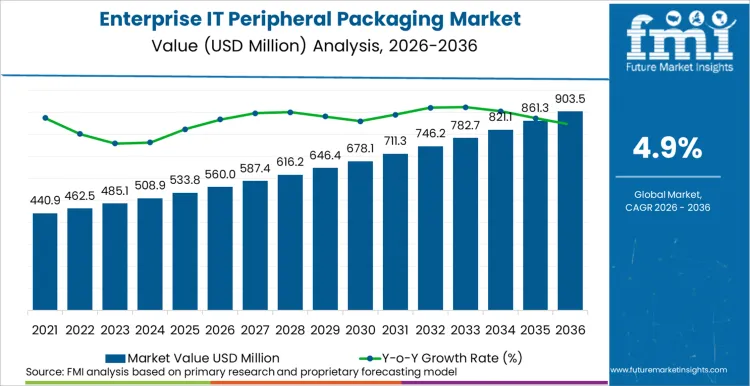
Summary of Enterprise IT Peripheral Packaging Market
What is the Long-Term Growth Outlook for the Enterprise IT Peripheral Packaging Market?
FMI projects the global enterprise IT peripheral packaging market to expand from USD 560.0 million in 2026 to USD 904.0 million by 2036, registering a 4.9% CAGR. This growth is anchored in the continuous global investment in digital infrastructure, including data center expansion and enterprise hardware refreshes. Packaging in this segment is a critical component of the supply chain, designed to meet stringent technical specifications for protection, electrostatic discharge safety, and compliance with corporate environmental goals.
FMI Research Approach: This projection is derived from FMI's proprietary model analyzing data center capital expenditure forecasts, enterprise IT procurement cycles, global trade logistics data, and the adoption timelines of sustainable packaging mandates by major technology OEMs.
How do FMI Analysts Expect the Enterprise IT Peripheral Packaging Market to Evolve Structurally?
FMI analysts anticipate a market shift toward certified, performance-guaranteed packaging systems over commoditized materials. Demand will grow for solutions that are pre-validated to meet ISTA and ASTM testing standards for specific shipment modes. The integration of tracking and condition-monitoring technology into reusable packaging assets will become more common, aligning packaging with broader supply chain digitalization efforts.
FMI Research Approach: Insights are informed by analysis of OEM supplier qualification requirements, requests for proposals from system integrators, innovation in smart packaging patents, and sustainability reporting from leading enterprise hardware providers.
Which Geographies Command the Largest Share of the Enterprise IT Peripheral Packaging Market?
North America leads the global market with a 34.0% share in 2026, driven by its concentration of data center operators, technology OEMs, and large enterprise headquarters. Asia-Pacific follows closely with a 30.0% share, supported by its manufacturing base and rapidly expanding digital infrastructure. Europe holds a 26.0% share, characterized by strong regulatory pressure for sustainable packaging in industrial sectors.
FMI Research Approach: Regional market sizing is based on data center infrastructure investment, enterprise IT spending patterns, manufacturing output of enterprise-grade hardware, and the regulatory landscape for industrial packaging waste.
What Will Be the Market Size of Enterprise IT Peripheral Packaging by 2036?
By 2036, the enterprise IT peripheral packaging market is expected to reach USD 904.0 million. Sustained growth will be fueled by the proliferation of edge computing facilities requiring robust logistics, the cyclical nature of enterprise hardware upgrades, and the irreversible integration of packaging performance criteria into corporate supplier scorecards.
FMI Research Approach: The long-term outlook incorporates forecasts for hyperscale and edge data center construction, analysis of enterprise technology refresh cycles, and projected corporate adoption of science-based targets for reducing supply chain waste.
What are some Globally Distinct Trends Shaping the Enterprise IT Peripheral Packaging Market?
Globally, the market is shaped by the critical need for electrostatic discharge protection, the rise of reusable packaging pools for closed-loop logistics, and stringent documentation requirements for sustainability. ESD-safe packaging is non-negotiable for sensitive components. Reusable systems are gaining traction for moves, adds, and changes within enterprise campuses. Regulations and corporate policies require detailed life-cycle assessments and material health disclosures for packaging.
FMI Research Approach: Trend identification involves monitoring ESD Association standards updates, growth in packaging pooling service providers, and analysis of corporate environmental, social, and governance reports detailing Scope 3 waste reduction strategies.
Enterprise IT Peripheral Packaging Market Key Takeaways
| Metrics | Values |
|---|---|
| Expected Value (2026E) | USD 560.0 million |
| Projected Value (2036F) | USD 904.0 million |
| CAGR (2026-2036) | 4.9% |
Source: Future Market Insights (FMI) analysis, based on proprietary forecasting model and primary research
Why is the Enterprise IT Peripheral Packaging Market Growing?
The global construction boom in hyperscale and edge data centers is a primary demand driver. Each new facility requires thousands of individual hardware components from network switches to server racks that must be delivered flawlessly. The Uptime Institute’s 2025 Annual Outage Analysis reports that a significant percentage of hardware failures can be traced to physical damage during logistics, making investment in superior packaging a direct operational resilience strategy for data center operators.
Corporate net-zero commitments are extending beyond direct operations to encompass supply chain logistics packaging. Enterprises with ambitious sustainability goals are mandating that their IT procurement partners eliminate plastic foam and reduce virgin material use in shipping. This creates a top-down demand signal for packaging suppliers to innovate with alternative, high-performance recycled and recyclable materials that meet the protective standards of enterprise freight.
The complexity of global supply chains for IT hardware necessitates packaging that can withstand multiple handling nodes and transportation modes. A single enterprise server may be manufactured in Asia, configured in Europe, and deployed in North America. Packaging must be certified for parcel, less-than-truckload, and international air freight scenarios, driving demand for solutions that are tested and validated against a broad spectrum of ISTA and ASTM standards.
How is Enterprise IT Peripheral Packaging Market Segmented?
The enterprise IT peripheral packaging segment landscape is defined by the imperative for maximum protection, compliance with technical standards, and logistical efficiency. Heavy-duty corrugated solutions form the backbone for most shipments, while palletized freight represents the dominant and most demanding shipment mode. Large enterprises set the procurement standards for the entire market.
How is the Demand for Maximum Protection Sustaining Corrugated Dominance?
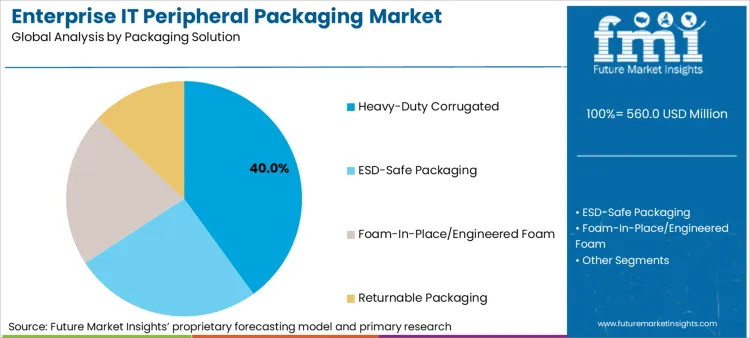
Heavy-duty corrugated packaging accounts for a 40.0% share of the packaging solution segment. Its continued dominance is due to its unbeatable combination of high stacking strength, cushioning properties, and recyclability, which aligns with both protective and corporate sustainability needs. Hewlett Packard Enterprise’s 2025 Sustainable Impact report stated its commitment to transition all enterprise product packaging to molded fiber and high-performance corrugated solutions, eliminating expanded polyethylene foam. This shift validates corrugated as the material of choice for protecting high-mass items like workstations and monitors in transit.
The segment’s innovation is evidenced by International Paper’s development of ShieldForce+ corrugated, launched in 2025. This material uses a proprietary fiber blend and flute structure to achieve a 50% higher edge crush test rating than standard double-wall board, allowing for lighter weight constructions that still meet the demanding drop-test requirements of enterprise logistics contracts.
Which Shipment Mode Dictates the Most Stringent Packaging Requirements?
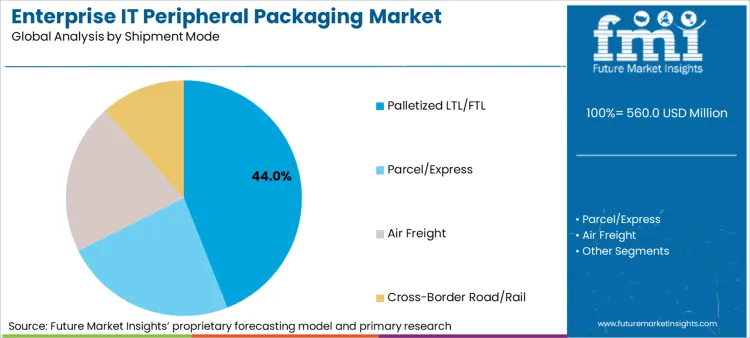
Palletized LTL/FTL shipments command a 44.0% share of the shipment mode segment. This mode involves the highest weights and most severe handling environments, as pallets are moved by forklifts and subjected to significant compression forces in truck trailers. Packaging for this mode must be engineered for unit load stability. The 2025 update to the National Motor Freight Classification (NMFC) rules placed greater emphasis on proper package blocking and bracing to prevent load shift, directly influencing packaging design to include integrated corner posts and strapping reinforcements.
The requirements of this mode are highlighted by Amazon Web Services’ (AWS) 2026 packaging specifications for hardware delivered to its data centers. These specs mandate that all palletized shipments use stretch wrap with a minimum of 30% recycled content and that corrugated boxes feature interlocking stack patterns to prevent columnar collapse, creating a de facto industry standard for bulk enterprise IT shipments.
What Role do Large Enterprises Play in Defining Technical Specifications?
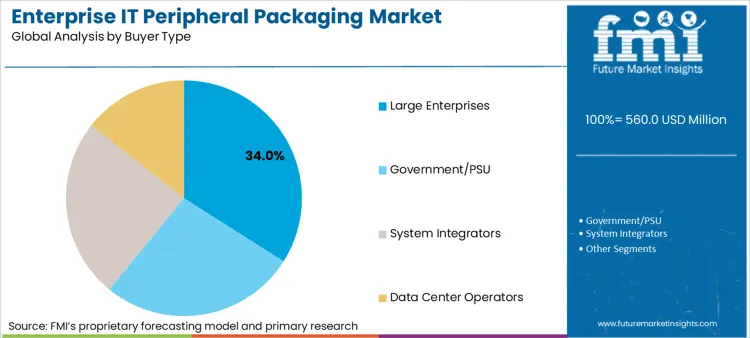
Large enterprises represent the largest buyer type segment with a 34.0% share. Their centralized procurement and asset management teams issue detailed technical packaging specifications that suppliers must meet to qualify for vendor lists. Microsoft’s 2026 supplier code of conduct includes a specific annex on packaging, requiring all packaging for Surface Hub and other enterprise devices to be ESD-safe, contain no added fluorinated chemicals, and be sourced from suppliers with a documented chain of custody for recycled fibers.
The influence of this segment is clear in the widespread adoption of specific performance testing. Most large enterprise RFPs now require packaging solutions to be pre-certified to ISTA 3A or 6-FEDEX standards, which simulate parcel and LTL shipping hazards. This requirement raises barriers to entry, favoring established packaging suppliers with in-house testing laboratories and certification capabilities.
What Drivers, Restraints, Opportunities, and Trends Prevail in the Enterprise IT Peripheral Packaging Market?
Market expansion is strongly driven by the enterprise shift to as-a-service hardware models. Under leasing and Hardware-as-a-Service arrangements, the OEM or lessor retains ownership of the asset and is responsible for its condition throughout the lifecycle, including during multiple transport cycles for deployment, refresh, and end-of-lease return. This financial model makes superior, often reusable, packaging a direct tool for asset preservation and cost control.
A significant restraint is the complexity and cost of compliance with disparate regional regulations. The EU’s Packaging and Packaging Waste Regulation (PPWR), California’s SB 54, and Canada’s Single-Use Plastics Prohibition each have different timelines and material restrictions. For global IT hardware suppliers, this creates a complex patchwork of packaging requirements, increasing design costs and necessitating regionalized packaging variants, which challenges economies of scale.
A major opportunity lies in providing circular logistics through returnable packaging pools. System integrators and data center operators conducting frequent hardware upgrades within a region are prime candidates for reusable container systems. Packaging suppliers that can offer a managed service—providing, tracking, cleaning, and repairing containers—create a recurring revenue stream while helping clients achieve waste reduction targets, as seen in DHL’s "Reusable Packaging" program tailored for the IT sector.
A defining technical trend is the integration of anti-tamper and authentication features. For high-value networking gear and storage arrays shipped to sensitive locations, packaging is being designed with tamper-evident seals, serialized labels, and even blockchain-linked QR codes that provide an immutable record of the chain of custody, addressing security concerns in enterprise logistics.
Sustainability is driving the replacement of plastic-based cushioning with advanced paper alternatives. Engineered paper honeycomb and molded pulp solutions are achieving protective performance comparable to expanded foams for sensitive electronics. A 2025 lifecycle assessment published in the Journal of Cleaner Production found that switch from virgin EPS foam to recycled content molded pulp for server packaging reduced the carbon footprint of the packaging by over 60%, providing a compelling data point for corporate sustainability officers.
Analysis of Enterprise IT Peripheral Packaging Market by Key Countries
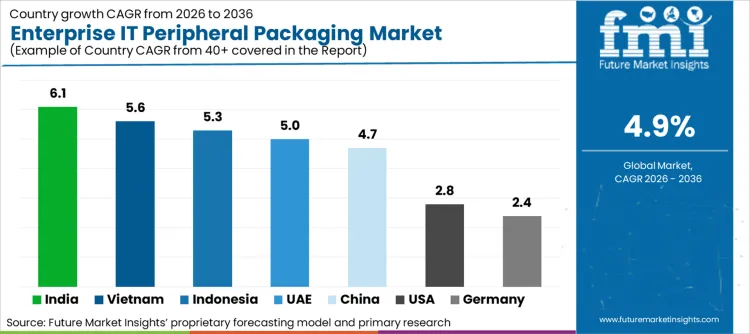
| Country | CAGR (2026-2036) |
|---|---|
| India | 6.1% |
| Vietnam | 5.6% |
| Indonesia | 5.3% |
| China | 4.7% |
| UAE | 5.0% |
| USA | 2.8% |
| Germany | 2.4% |
| Japan | 2.0% |
Source: Future Market Insights (FMI) analysis, based on proprietary forecasting model and primary research
How is Domestic Data Sovereignty and IT Manufacturing Driving the Indian Market?
India is projected to expand at a 6.1% CAGR through 2036, propelled by its data localization policies and the "Make in India" initiative for IT hardware. Government mandates requiring certain classes of data to be stored domestically have spurred massive investment in local data center construction by firms like AdaniConnex and Yotta Infrastructure. This construction wave generates direct demand for heavy-duty, often climate-controlled packaging to transport servers and networking equipment to these new facilities, often located in emerging industrial corridors.
The 2026 revision of India’s Public Procurement (Preference to Make in India) Order mandates higher local content thresholds for government IT purchases. This policy extends to packaging, encouraging the growth of domestic suppliers capable of producing sophisticated, ESD-safe corrugated and molded pulp solutions that meet the technical specifications of global OEMs now manufacturing in India.
Which Export of High-Value Sub-Assemblies is shaping the Market in Vietnam?
Vietnam’s market, growing at a 5.6% CAGR, is increasingly focused on exporting high-value sub-assemblies and finished enterprise gear, such as switches and routers, for global brands. These high-cost items necessitate premium protective packaging. To reduce maritime freight costs and damage claims, manufacturers are adopting lighter, high-strength corrugated designs and engineered paper foams that meet the protective standard of traditional plastics but at a lower weight and with better sustainability profiles.
The EU’s Carbon Border Adjustment Mechanism, affecting imports from 2026, is also a factor. Vietnamese exporters are beginning to request packaging suppliers provide verified carbon footprint data for their solutions to calculate and potentially reduce the CBAM liability of their shipments, pushing local converters toward lower-emission materials and processes.
What Role does Growing Domestic Cloud Infrastructure Play in Indonesia?
Indonesia’s market is forecasted at a 5.3% CAGR, closely linked to the aggressive expansion of domestic cloud and data center providers like Telkom Indonesia’s IndiHome and Alibaba Cloud. The geographical challenge of distributing IT hardware across the Indonesian archipelago requires packaging that can withstand high humidity and inter-island maritime transport. This has led to specific demand for moisture-resistant corrugated coatings and desiccant-integrated packaging solutions.
Furthermore, Jakarta’s 2025 regulations limiting commercial waste to landfill are incentivizing data center operators to seek packaging that is either reusable or easily separable into pure material streams for high-value recycling. This is creating early-stage opportunities for suppliers of returnable rack-and-stack containers for server deployments.
How are Green Data Center Standards Influencing Packaging in China?
China’s market leads regional growth with a 4.7% CAGR, heavily influenced by its national green data center standards. These standards, which mandate strict power usage effectiveness targets, also encourage sustainable practices in facility construction and supply chain. Major hyperscale operators like Tencent and Alibaba Cloud are requiring suppliers to use packaging with high recycled content and to participate in take-back programs for wooden pallets and plastic dunnage.
Concurrently, China’s dominance in manufacturing enterprise hardware for global markets means its packaging suppliers must master compliance with a dual set of standards: domestic sustainability rules and the international protective testing standards (e.g., ISTA) required by global clients. This dual-compliance expertise is becoming a key competitive differentiator for Chinese packaging firms.
How is the UAE's Hub Strategy Creating Specialized Demand?
The UAE’s market, expanding at a 5.0% CAGR, is driven by its strategic position as a logistics and data center hub for the Middle East, Africa, and South Asia region. The extreme heat and dust prevalent in the region pose unique challenges. Packaging for IT gear destined for or transiting through the UAE often requires specifications for higher maximum storage temperatures and seals designed to keep out fine particulate matter.
The UAE’s Circular Economy Policy 2031 is also shaping procurement. Government and large enterprise tenders for IT equipment increasingly include scoring criteria for circular packaging solutions. This is fostering demand for reusable packaging systems for the frequent technology upgrades in the region’s commercial hubs, moving beyond single-use consumption models.
Which Federal Procurement Standards are Defining the US Market?
The United States market, with a 2.8% CAGR, is significantly shaped by federal procurement policies. The 2025 Buy Clean Initiative for Federal Procurement requires the government to prioritize products, including IT hardware, with lower embodied carbon. This has led the General Services Administration to include packaging life-cycle assessment data as an evaluation factor in IT hardware contracts, pushing OEMs and their packaging partners to provide detailed carbon accounting.
Furthermore, the high rate of technology refresh in corporate America generates constant volume. However, the shift toward remote and hybrid work has decentralized deployment points from corporate IT hubs to employee homes, increasing reliance on parcel shipping. This demands packaging that is robust enough for parcel logistics yet sized correctly to avoid dimensional weight penalties, driving innovation in right-sized, high-performance protective solutions.
How do German Take-Back Laws Impact Enterprise Packaging Logistics?
Germany’s market, growing at a 2.4% CAGR, is heavily influenced by the German Electrical and Electronic Equipment Act and its enforcement of strict producer responsibility. Enterprises decommissioning old IT equipment must ensure it is recycled properly. Packaging for new equipment is increasingly designed to be reused as the return vessel for the old equipment it replaces, creating a closed loop. This "packaging take-back" requirement is becoming a common clause in enterprise IT procurement contracts.
The German Act on Corporate Due Diligence Obligations in Supply Chains also compels large companies to ensure environmental standards are met by their suppliers. This leads to rigorous audits of packaging suppliers’ material sourcing and labor practices, favoring larger, well-documented providers over smaller, less formal operations.
How does Precision and Automation Dictate Japanese Market Requirements?
Japan’s market, with a 2.0% CAGR, is defined by an extreme emphasis on precision, automation, and space utilization in its logistics and data centers. Packaging is often custom-designed to fit precisely into automated storage and retrieval systems within enterprise distribution centers. Tolerances are tight, and packaging must have perfectly consistent dimensions and high slip properties for robotic handling.
The high cost of waste disposal in Japan makes lightweight, compact packaging designs a financial imperative. There is a strong preference for packaging that can be easily flattened to a near-2D state after use, minimizing volume for costly industrial waste collection. This drives the use of clever, fold-flat engineered paperboard solutions over bulky foams or rigid plastics.
What is the Competition Outlook for Enterprise IT Peripheral Packaging?
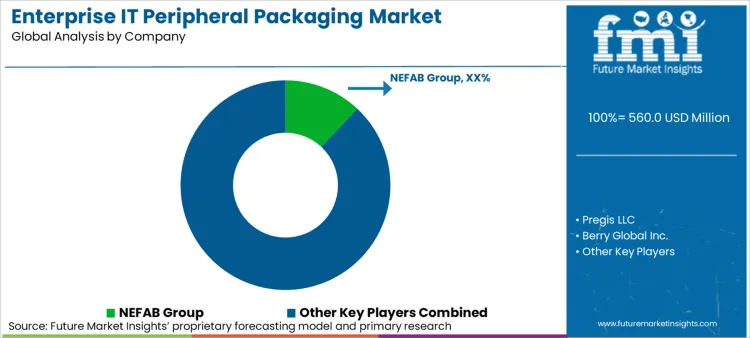
Competitive intensity in this market is defined by the ability to provide certified, performance-guaranteed solutions and act as a compliance partner for global OEMs and enterprises. Leaders are those who combine material science expertise with a deep understanding of logistics testing standards and global environmental regulations. The market favors established players with robust R&D, in-house testing facilities, and the ability to execute complex, customized programs on a global scale.
The competitive landscape is further shaped by the trend toward integrated supply chain services. Leading packaging providers are not just selling boxes; they are offering design services, testing validation, managed inventory of packaging at client sites, and reverse logistics for reusable systems. This service-layer integration creates stickier client relationships and higher barriers to entry.
Strategic Evolution and Observable Direction pre-2024
Prior to 2024, competition was largely based on regional manufacturing scale and the ability to produce standard protective materials like ESD bags and foam inserts. Relationships were often transactional, focused on meeting the basic protective requirements specified in purchase orders. The market was fragmented with many regional players serving local manufacturing clusters.
Observable Strategic Direction for 2026 and Beyond
A clear strategic direction is specialization in sustainable, high-performance material alternatives. Berry Global’s Advanced Materials division announced a significant R&D achievement in 2025: a new line of post-consumer recycled plastic-based cushioning foams that match the protective and anti-static properties of virgin polymer foams, specifically developed for enterprise IT and medical device logistics.
Strategic partnerships between packaging engineers and logistics firms are also key. In 2025, a collaboration between a major packaging supplier and a global logistics leader was formed to develop a standardized, reusable container system for the global deployment of edge computing hardware. The system includes built-in tracking and is designed to be collapsible for efficient return logistics, addressing a key pain point in distributed IT deployments.
Recent Developments
- In October 2025, Ranpak launched its FillPak® Mini, a compact, environmentally sustainable powered paper void-fill converter designed to fit tight pack-station footprints while delivering reliable, scalable protective packaging. This innovation addresses space-constrained fulfillment operations shipping electronics and other fragile goods, reinforcing Ranpak’s broader sustainable packaging automation offerings for e-commerce and industrial logistics.
- Pregis published its 2024 Sustainability Report, highlighting that it scaled its sustainable packaging lineup, including expanded EverTec® curbside recyclable mailing solutions and AirSpeed® Renew™ PCR inflatable cushions. These product advances support reduced reliance on virgin plastics while maintaining protection for shipped goods, relevant for enterprise peripherals moving through global supply chains.
- In April 2025, Avery Dennison opened its first RFID production facility in Pune, expanding its global footprint in digital identification and tracking technologies. While focused on RFID materials, this capability underpins enhanced supply-chain visibility and tracking, a key trend in packaging for high-value enterprise IT peripherals, enabling improved inventory tracking and automated package identification.
Key Players Profiled
- NEFAB Group
- Pregis LLC
- Berry Global Inc.
- Avery Dennison Corporation
- Ranpak Holdings Corp.
- Smurfit Kappa Group
- WestRock Company
- International Paper Company
- Mondi Group
- Amcor plc
Market Definition
The enterprise IT peripheral packaging market comprises revenue generated from the design, manufacture, and supply of protective packaging solutions specifically engineered for the business-to-business logistics of information technology peripherals and hardware. This includes but is not limited to: network switches, routers, servers, storage devices, professional workstations, and associated high-value accessories. Solutions are characterized by high durability, compliance with electrostatic discharge safety standards, and alignment with corporate sustainability and procurement protocols.
The market scope includes both disposable and reusable packaging systems, along with associated design, testing, and logistics management services. It covers primary protective packaging, inner packaging, and outer shipping containers optimized for palletized and parcel freight. The market excludes packaging for consumer electronics, retail-ready packaging, and generic shipping supplies not tailored to the technical requirements of enterprise IT equipment.
Scope of Report
| Items | Values |
|---|---|
| Quantitative Units | USD 560.0 Million |
| Packaging Solution | Heavy-Duty Corrugated, ESD-Safe Packaging, Foam-In-Place/Engineered Foam, Returnable Packaging, Other |
| Buyer Type | Large Enterprises, Government/PSU, System Integrators, Data Center Operators, Other |
| Shipment Mode | Palletized LTL/FTL, Parcel/Express, Air Freight, Cross-Border Road/Rail, Other |
| Regions Covered | North America, Europe, Asia-Pacific, Latin America, Middle East & Africa |
| Countries | USA, Germany, China, India, Vietnam, Indonesia, UAE, Japan and 40+ countries |
| Key Companies | NEFAB, Pregis, Berry Global, Avery Dennison, Ranpak, Smurfit Kappa, WestRock, International Paper, Mondi, Amcor |
Source: Future Market Insights (FMI) analysis, based on proprietary forecasting model and primary research
Enterprise IT Peripheral Packaging Market Key Segments
Packaging Solution
- Heavy-Duty Corrugated
- ESD-Safe Packaging
- Foam-In-Place/Engineered Foam
- Returnable Packaging
- Others
Buyer Type
- Large Enterprises
- Government/PSU
- System Integrators
- Data Center Operators
- Others
Shipment Mode
- Palletized LTL/FTL
- Parcel/Express
- Air Freight
- Cross-Border Road/Rail
- Others
Region
- North America
- Europe
- Asia-Pacific
- Latin America
- Middle East & Africa
Bibliography
- Association for Supply Chain Management (ASCM). (2025). Supply Chain Resilience: Mitigating Risk in Hardware Logistics.
- Cisco Systems. (2024). Global Packaging Standard for Hardware Products.
- Hewlett Packard Enterprise. (2025). Sustainable Impact Report.
- Journal of Cleaner Production. (2025). Life cycle assessment of protective packaging for data center servers.
- Uptime Institute. (2025). Annual Outage Analysis Report.
Frequently Asked Questions
How big is the enterprise it peripheral packaging market in 2026?
The global enterprise it peripheral packaging market is estimated to be valued at USD 560.0 million in 2026.
What will be the size of enterprise it peripheral packaging market in 2036?
The market size for the enterprise it peripheral packaging market is projected to reach USD 903.5 million by 2036.
How much will be the enterprise it peripheral packaging market growth between 2026 and 2036?
The enterprise it peripheral packaging market is expected to grow at a 4.9% CAGR between 2026 and 2036.
What are the key product types in the enterprise it peripheral packaging market?
The key product types in enterprise it peripheral packaging market are heavy-duty corrugated, esd-safe packaging, foam-in-place/engineered foam and returnable packaging.
Which shipment mode segment to contribute significant share in the enterprise it peripheral packaging market in 2026?
In terms of shipment mode, palletized ltl/ftl segment to command 44.0% share in the enterprise it peripheral packaging market in 2026.
Preview the report firsthand - request a free sample
Get SampleGet the brochure for pricing and purchase details.
Get PDFTable of Content
- Executive Summary
- Global Market Outlook
- Demand-side Trends
- Supply-side Trends
- Technology Roadmap Analysis
- Analysis and Recommendations
- Market Overview
- Market Coverage / Taxonomy
- Market Definition / Scope / Limitations
- Research Methodology
- Chapter Orientation
- Analytical Lens and Working Hypotheses
- Market Structure, Signals, and Trend Drivers
- Benchmarking and Cross-market Comparability
- Market Sizing, Forecasting, and Opportunity Mapping
- Research Design and Evidence Framework
- Desk Research Programme (Secondary Evidence)
- Company Annual and Sustainability Reports
- Peer-reviewed Journals and Academic Literature
- Corporate Websites, Product Literature, and Technical Notes
- Earnings Decks and Investor Briefings
- Statutory Filings and Regulatory Disclosures
- Technical White Papers and Standards Notes
- Trade Journals, Industry Magazines, and Analyst Briefs
- Conference Proceedings, Webinars, and Seminar Materials
- Government Statistics Portals and Public Data Releases
- Press Releases and Reputable Media Coverage
- Social Channels, Communities, and Digital Listening Inputs
- Additional Desk Sources
- Expert Input and Fieldwork (Primary Evidence)
- Primary Modes
- Qualitative Interviews and Expert Elicitation
- Quantitative Surveys and Structured Data Capture
- Blended Approach
- Why Primary Evidence is Used
- Field Techniques
- Interviews
- Surveys
- Focus Groups
- Observational and In-context Research
- Social and Community Interactions
- Stakeholder Universe Engaged
- C-suite Leaders
- Board Members
- Presidents and Vice Presidents
- R&D and Innovation Heads
- Technical Specialists
- Domain Subject-matter Experts
- Scientists
- Physicians and Other Healthcare Professionals
- Governance, Ethics, and Data Stewardship
- Research Ethics
- Data Integrity and Handling
- Primary Modes
- Tooling, Models, and Reference Databases
- Desk Research Programme (Secondary Evidence)
- Data Engineering and Model Build
- Data Acquisition and Ingestion
- Cleaning, Normalisation, and Verification
- Synthesis, Triangulation, and Analysis
- Quality Assurance and Audit Trail
- Market Background
- Market Dynamics
- Drivers
- Restraints
- Opportunity
- Trends
- Scenario Forecast
- Demand in Optimistic Scenario
- Demand in Likely Scenario
- Demand in Conservative Scenario
- Opportunity Map Analysis
- Product Life Cycle Analysis
- Supply Chain Analysis
- Investment Feasibility Matrix
- Value Chain Analysis
- PESTLE and Porter’s Analysis
- Regulatory Landscape
- Regional Parent Market Outlook
- Production and Consumption Statistics
- Import and Export Statistics
- Market Dynamics
- Global Market Analysis 2021 to 2025 and Forecast, 2026 to 2036
- Historical Market Size Value (USD Million) Analysis, 2021 to 2025
- Current and Future Market Size Value (USD Million) Projections, 2026 to 2036
- Y-o-Y Growth Trend Analysis
- Absolute $ Opportunity Analysis
- Global Market Pricing Analysis 2021 to 2025 and Forecast 2026 to 2036
- Global Market Analysis 2021 to 2025 and Forecast 2026 to 2036, By Packaging Solution
- Introduction / Key Findings
- Historical Market Size Value (USD Million) Analysis By Packaging Solution , 2021 to 2025
- Current and Future Market Size Value (USD Million) Analysis and Forecast By Packaging Solution , 2026 to 2036
- Heavy-Duty Corrugated
- ESD-Safe Packaging
- Foam-In-Place/Engineered Foam
- Returnable Packaging
- Heavy-Duty Corrugated
- Y-o-Y Growth Trend Analysis By Packaging Solution , 2021 to 2025
- Absolute $ Opportunity Analysis By Packaging Solution , 2026 to 2036
- Global Market Analysis 2021 to 2025 and Forecast 2026 to 2036, By Shipment Mode
- Introduction / Key Findings
- Historical Market Size Value (USD Million) Analysis By Shipment Mode, 2021 to 2025
- Current and Future Market Size Value (USD Million) Analysis and Forecast By Shipment Mode, 2026 to 2036
- Palletized LTL/FTL
- Parcel/Express
- Air Freight
- Cross-Border Road/Rail
- Palletized LTL/FTL
- Y-o-Y Growth Trend Analysis By Shipment Mode, 2021 to 2025
- Absolute $ Opportunity Analysis By Shipment Mode, 2026 to 2036
- Global Market Analysis 2021 to 2025 and Forecast 2026 to 2036, By Buyer Type
- Introduction / Key Findings
- Historical Market Size Value (USD Million) Analysis By Buyer Type, 2021 to 2025
- Current and Future Market Size Value (USD Million) Analysis and Forecast By Buyer Type, 2026 to 2036
- Large Enterprises
- Government/PSU
- System Integrators
- Data Center Operators
- Large Enterprises
- Y-o-Y Growth Trend Analysis By Buyer Type, 2021 to 2025
- Absolute $ Opportunity Analysis By Buyer Type, 2026 to 2036
- Global Market Analysis 2021 to 2025 and Forecast 2026 to 2036, By Region
- Introduction
- Historical Market Size Value (USD Million) Analysis By Region, 2021 to 2025
- Current Market Size Value (USD Million) Analysis and Forecast By Region, 2026 to 2036
- North America
- Latin America
- Western Europe
- Eastern Europe
- East Asia
- South Asia and Pacific
- Middle East & Africa
- Market Attractiveness Analysis By Region
- North America Market Analysis 2021 to 2025 and Forecast 2026 to 2036, By Country
- Historical Market Size Value (USD Million) Trend Analysis By Market Taxonomy, 2021 to 2025
- Market Size Value (USD Million) Forecast By Market Taxonomy, 2026 to 2036
- By Country
- USA
- Canada
- Mexico
- By Packaging Solution
- By Shipment Mode
- By Buyer Type
- By Country
- Market Attractiveness Analysis
- By Country
- By Packaging Solution
- By Shipment Mode
- By Buyer Type
- Key Takeaways
- Latin America Market Analysis 2021 to 2025 and Forecast 2026 to 2036, By Country
- Historical Market Size Value (USD Million) Trend Analysis By Market Taxonomy, 2021 to 2025
- Market Size Value (USD Million) Forecast By Market Taxonomy, 2026 to 2036
- By Country
- Brazil
- Chile
- Rest of Latin America
- By Packaging Solution
- By Shipment Mode
- By Buyer Type
- By Country
- Market Attractiveness Analysis
- By Country
- By Packaging Solution
- By Shipment Mode
- By Buyer Type
- Key Takeaways
- Western Europe Market Analysis 2021 to 2025 and Forecast 2026 to 2036, By Country
- Historical Market Size Value (USD Million) Trend Analysis By Market Taxonomy, 2021 to 2025
- Market Size Value (USD Million) Forecast By Market Taxonomy, 2026 to 2036
- By Country
- Germany
- UK
- Italy
- Spain
- France
- Nordic
- BENELUX
- Rest of Western Europe
- By Packaging Solution
- By Shipment Mode
- By Buyer Type
- By Country
- Market Attractiveness Analysis
- By Country
- By Packaging Solution
- By Shipment Mode
- By Buyer Type
- Key Takeaways
- Eastern Europe Market Analysis 2021 to 2025 and Forecast 2026 to 2036, By Country
- Historical Market Size Value (USD Million) Trend Analysis By Market Taxonomy, 2021 to 2025
- Market Size Value (USD Million) Forecast By Market Taxonomy, 2026 to 2036
- By Country
- Russia
- Poland
- Hungary
- Balkan & Baltic
- Rest of Eastern Europe
- By Packaging Solution
- By Shipment Mode
- By Buyer Type
- By Country
- Market Attractiveness Analysis
- By Country
- By Packaging Solution
- By Shipment Mode
- By Buyer Type
- Key Takeaways
- East Asia Market Analysis 2021 to 2025 and Forecast 2026 to 2036, By Country
- Historical Market Size Value (USD Million) Trend Analysis By Market Taxonomy, 2021 to 2025
- Market Size Value (USD Million) Forecast By Market Taxonomy, 2026 to 2036
- By Country
- China
- Japan
- South Korea
- By Packaging Solution
- By Shipment Mode
- By Buyer Type
- By Country
- Market Attractiveness Analysis
- By Country
- By Packaging Solution
- By Shipment Mode
- By Buyer Type
- Key Takeaways
- South Asia and Pacific Market Analysis 2021 to 2025 and Forecast 2026 to 2036, By Country
- Historical Market Size Value (USD Million) Trend Analysis By Market Taxonomy, 2021 to 2025
- Market Size Value (USD Million) Forecast By Market Taxonomy, 2026 to 2036
- By Country
- India
- ASEAN
- Australia & New Zealand
- Rest of South Asia and Pacific
- By Packaging Solution
- By Shipment Mode
- By Buyer Type
- By Country
- Market Attractiveness Analysis
- By Country
- By Packaging Solution
- By Shipment Mode
- By Buyer Type
- Key Takeaways
- Middle East & Africa Market Analysis 2021 to 2025 and Forecast 2026 to 2036, By Country
- Historical Market Size Value (USD Million) Trend Analysis By Market Taxonomy, 2021 to 2025
- Market Size Value (USD Million) Forecast By Market Taxonomy, 2026 to 2036
- By Country
- Kingdom of Saudi Arabia
- Other GCC Countries
- Turkiye
- South Africa
- Other African Union
- Rest of Middle East & Africa
- By Packaging Solution
- By Shipment Mode
- By Buyer Type
- By Country
- Market Attractiveness Analysis
- By Country
- By Packaging Solution
- By Shipment Mode
- By Buyer Type
- Key Takeaways
- Key Countries Market Analysis
- USA
- Pricing Analysis
- Market Share Analysis, 2025
- By Packaging Solution
- By Shipment Mode
- By Buyer Type
- Canada
- Pricing Analysis
- Market Share Analysis, 2025
- By Packaging Solution
- By Shipment Mode
- By Buyer Type
- Mexico
- Pricing Analysis
- Market Share Analysis, 2025
- By Packaging Solution
- By Shipment Mode
- By Buyer Type
- Brazil
- Pricing Analysis
- Market Share Analysis, 2025
- By Packaging Solution
- By Shipment Mode
- By Buyer Type
- Chile
- Pricing Analysis
- Market Share Analysis, 2025
- By Packaging Solution
- By Shipment Mode
- By Buyer Type
- Germany
- Pricing Analysis
- Market Share Analysis, 2025
- By Packaging Solution
- By Shipment Mode
- By Buyer Type
- UK
- Pricing Analysis
- Market Share Analysis, 2025
- By Packaging Solution
- By Shipment Mode
- By Buyer Type
- Italy
- Pricing Analysis
- Market Share Analysis, 2025
- By Packaging Solution
- By Shipment Mode
- By Buyer Type
- Spain
- Pricing Analysis
- Market Share Analysis, 2025
- By Packaging Solution
- By Shipment Mode
- By Buyer Type
- France
- Pricing Analysis
- Market Share Analysis, 2025
- By Packaging Solution
- By Shipment Mode
- By Buyer Type
- India
- Pricing Analysis
- Market Share Analysis, 2025
- By Packaging Solution
- By Shipment Mode
- By Buyer Type
- ASEAN
- Pricing Analysis
- Market Share Analysis, 2025
- By Packaging Solution
- By Shipment Mode
- By Buyer Type
- Australia & New Zealand
- Pricing Analysis
- Market Share Analysis, 2025
- By Packaging Solution
- By Shipment Mode
- By Buyer Type
- China
- Pricing Analysis
- Market Share Analysis, 2025
- By Packaging Solution
- By Shipment Mode
- By Buyer Type
- Japan
- Pricing Analysis
- Market Share Analysis, 2025
- By Packaging Solution
- By Shipment Mode
- By Buyer Type
- South Korea
- Pricing Analysis
- Market Share Analysis, 2025
- By Packaging Solution
- By Shipment Mode
- By Buyer Type
- Russia
- Pricing Analysis
- Market Share Analysis, 2025
- By Packaging Solution
- By Shipment Mode
- By Buyer Type
- Poland
- Pricing Analysis
- Market Share Analysis, 2025
- By Packaging Solution
- By Shipment Mode
- By Buyer Type
- Hungary
- Pricing Analysis
- Market Share Analysis, 2025
- By Packaging Solution
- By Shipment Mode
- By Buyer Type
- Kingdom of Saudi Arabia
- Pricing Analysis
- Market Share Analysis, 2025
- By Packaging Solution
- By Shipment Mode
- By Buyer Type
- Turkiye
- Pricing Analysis
- Market Share Analysis, 2025
- By Packaging Solution
- By Shipment Mode
- By Buyer Type
- South Africa
- Pricing Analysis
- Market Share Analysis, 2025
- By Packaging Solution
- By Shipment Mode
- By Buyer Type
- USA
- Market Structure Analysis
- Competition Dashboard
- Competition Benchmarking
- Market Share Analysis of Top Players
- By Regional
- By Packaging Solution
- By Shipment Mode
- By Buyer Type
- Competition Analysis
- Competition Deep Dive
- NEFAB Group
- Overview
- Product Portfolio
- Profitability by Market Segments (Product/Age /Sales Channel/Region)
- Sales Footprint
- Strategy Overview
- Marketing Strategy
- Product Strategy
- Channel Strategy
- Pregis LLC
- Berry Global Inc.
- Avery Dennison Corporation
- Ranpak Holdings Corp.
- Smurfit Kappa Group
- WestRock Company
- NEFAB Group
- Competition Deep Dive
- Assumptions & Acronyms Used


