

- Industry Size (2026)
- USD 510.0 Mn
- Forecast (2036)
- USD 863.0 Mn
- CAGR (2026 to 2036)
- 5.4%
White-Label Computer Peripheral Packaging Market Forecast and Outlook 2026 to 2036
White-label computer peripheral packaging market revenue is likely to total USD 510.0 million in 2026, rising further to USD 863.0 million by 2036, at a CAGR of 5.4%. As per Future Market Insights' analysis, the market is undergoing a strategic transformation, characterized by a shift from standardized brown-box shipping to the delivery of customized, brand-forward unboxing experiences. As of 2026, this evolution is supported by the explosive growth of direct-to-consumer peripheral sales and the technical requirements of global omnichannel retail logistics.
Major retailers and OEMs internalizing their branded packaging supply chains anchor growth. In February 2026, Amazon announced the expansion of its “Day 1 Ready” packaging initiative to include all private-label electronic accessories sold in the EU and North America. The program mandates the use of 100% curbside-recyclable, right-sized packaging that eliminates plastic void fill, driving demand for engineered paperboard solutions from certified white-label suppliers.
Walmart updated its supplier sustainability scorecard in May 2025, explicitly linking packaging attributes like recycled content and weight reduction to preferential shelf placement and procurement terms for its "onn." brand peripherals. This policy is projected to force a consolidation among packaging partners that can meet stringent material tracking and design-for-recycling criteria by 2026.
Technical innovation is moving toward digital integration and asset-light design. Avery Dennison advanced its Smart Packaging platform in January 2026, embedding NFC tags directly into the structure of folding cartons for high-end gaming peripherals. This enables brand authentication, interactive setup guides, and direct re-ordering from the unboxing moment, transforming packaging into a connected commerce channel.
Mondi’s 2025 annual report highlights a strategic capital allocation shift, with over EUR 300 million directed toward expanding its recycled fiber and barrier-coated paperboard capacity in Europe. This investment explicitly targets the growth in e-commerce and white-label electronics packaging, reducing reliance on virgin plastics.
Sealed Air Corporation restructured its product portfolio in late 2025, divesting certain industrial segments to focus resources on high-growth e-commerce protective packaging, including its branded Mailer solutions designed for small electronics and peripheral fulfillment. “The evolution of white-label packaging is being driven by a dual mandate: to act as a robust logistical shield in a global e-commerce supply chain and to serve as a silent brand ambassador at the unboxing moment. The next phase of innovation will be governed by regulatory frameworks for circularity, pushing design beyond aesthetics into the realms of material science and lifecycle management.” Institute of Packaging Professionals (IoPP), 2025 Sustainable Packaging for E-Commerce Report, published December 2025.
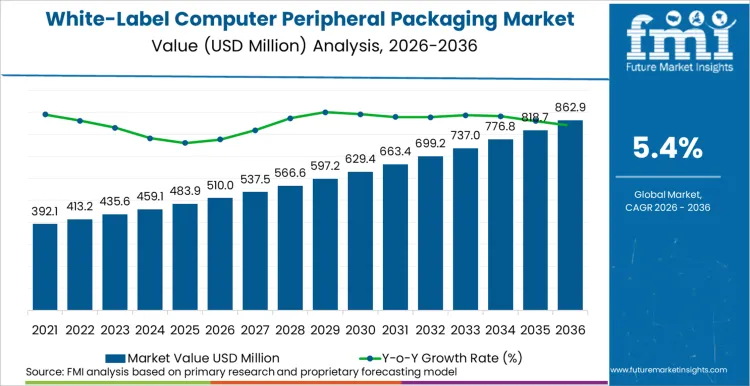
Summary of White-Label Computer Peripheral Packaging Market
What is the Long-Term Growth Outlook for the White-Label Computer Peripheral Packaging Market?
FMI projects the global white-label computer peripheral packaging market to expand from USD 510.0 million in 2026 to USD 863.0 million by 2036, registering a 5.4% CAGR over the forecast period. Market expansion reflects a structural shift in retail and logistics, where packaging is evolving from a generic protective container into an integrated, brand-critical component central to e-commerce fulfillment, retail merchandising, and sustainability compliance.
FMI Research Approach: This projection is derived from FMI's proprietary forecasting framework integrating analysis of e-commerce growth metrics, regulatory timelines for packaging sustainability, capital expenditure disclosures from global packaging manufacturers, and production forecasts for consumer electronics across key regions.
How do FMI Analysts Expect the White-Label Computer Peripheral Packaging Market to Evolve Structurally?
FMI analysts anticipate the market transitioning from standardized, cost-focused solutions toward integrated, brand-enabling, and circular packaging systems. This evolution is driven by stringent sustainability mandates, the rise of retailer media networks, and the need for packaging that supports both logistics efficiency and direct-to-consumer brand experiences.
FMI Research Approach: Insights are informed by analysis of packaging supplier roadmaps, patent filings related to sustainable and connected packaging technologies, retailer disclosures on private-label strategy, and regulatory adoption curves for extended producer responsibility schemes.
Which Geographies Command the Largest Share of the White-Label Computer Peripheral Packaging Market?
Asia-Pacific leads the global market, accounting for a 42.0% share in 2026, supported by its dominance in electronics manufacturing and the fastest-growing e-commerce consumer bases. North America follows with a 26.0% share, underpinned by high private-label penetration and advanced regulatory pressures for sustainable packaging. Europe holds a 24.0% share, characterized by its leadership in enacting and enforcing circular economy legislation for packaging materials.
FMI Research Approach: Regional forecasts are built using policy analysis, regional trade flow data, retail market growth tracking, and packaging waste management programs, supplemented by primary interviews with regional converters and brand owners.
What Will Be the Market Size of White-Label Computer Peripheral Packaging by 2036?
By 2036, the white-label computer peripheral packaging market is expected to reach USD 863.0 million. This growth is supported by sustained expansion in global electronics accessory sales, the proliferation of retailer and OEM private-label programs, and the universal electrification of commerce, which requires brand-differentiated, logistics-optimized, and sustainably compliant packaging solutions.
FMI Research Approach: Long-term market sizing incorporates electronics production forecasts, e-commerce penetration scenarios, private-label adoption trends, and technology adoption curves for smart and sustainable packaging formats.
What are some Globally Distinct Trends Shaping the White-Label Computer Peripheral Packaging Market?
Globally, the market is being shaped by the convergence of regulatory pressure for circularity, e-commerce logistics optimization, and digital integration. Regulations like the EU PPWR are accelerating demand for recyclable, mono-material fiber-based solutions, while e-commerce return rates are forcing designs that are durable for multiple journeys. Concurrently, packaging is increasingly serving as a digital interface, incorporating QR codes or NFC tags for authentication, engagement, and compliance with emerging digital product passport requirements.
FMI Research Approach: Trend analysis is informed by regulatory tracking across major economies, sustainability reports from global brands, technology validation data from pilot programs, and lifecycle assessment studies of packaging formats in the electronics value chain.
White-Label Computer Peripheral Packaging Market Key Takeaways
| Metrics | Values |
|---|---|
| Expected Value (2026E) | USD 510.0 million |
| Projected Value (2036F) | USD 863.0 million |
| CAGR (2026-2036) | 5.4% |
Source: Future Market Insights (FMI) analysis, based on proprietary forecasting model and primary research
Why is the White-Label Computer Peripheral Packaging Market Growing?
The structural growth of D2C and omnichannel retail is necessitating a fundamental redesign of packaging logistics. The National Retail Federation's 2026 Consumer Returns report estimates that returns for electronics and accessories purchased online reached USD 45 billion in 2025. This high return rate mandates packaging that is durable enough for multiple journeys, easily re-sealable, and brand-consistent to preserve product value, creating a premium market for high-performance white-label solutions.
Simultaneously, global sustainability regulations are moving from voluntary goals to enforceable mandates. The EU Packaging and Packaging Waste Regulation (PPWR), formally adopted in 2024, sets legally binding targets for packaging waste reduction and recycled content. By 2026, all packaging placed on the EU market must meet strict design for recycling criteria. This forces global brands and their white-label packaging suppliers to redesign portfolios, eliminating complex multi-material laminates in favor of monomaterial paperboard or clearly separable hybrid structures.
The rise of retailer media networks is turning packaging into a performance marketing channel. Walmart Connect reported in its 2026 outlook that sales influenced by its in-store and online media assets, which include packaging visuals, grew by over 30% year-over-year. This trend incentivizes retailers to invest in higher-quality, photogenic packaging for their private-label peripherals to drive higher engagement and conversion rates on their owned platforms.
How is White-Label Computer Peripheral Packaging Market Segmented?
The white-label computer peripheral packaging segment landscape is defined by clear preferences for cost-effective, brandable, and protective formats. Folding cartons dominate as the structural and graphical workhorse, while paperboard remains the material of choice for its balance of performance, sustainability, and printability. OEM private labels serve as the high-volume anchor, setting technical and quality benchmarks that cascade to other customer types.
How is Format Dominance Sustained in Brand-Centric Applications?
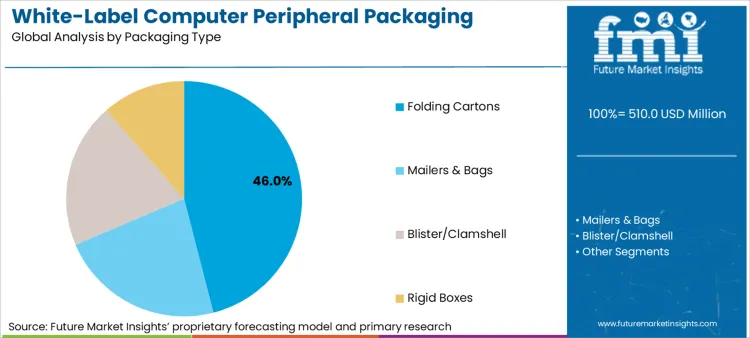
Folding cartons account for a 46.0% share of the packaging type segment. This dominance is rooted in their unparalleled versatility for high-quality graphics, structural rigidity for shelf display, and efficient flat storage. Apple’s 2025 Environmental Progress Report cited its continued shift to fiber-based packaging for all accessories, specifying the use of custom-designed folding cartons made from 100% recycled or responsibly sourced paper. This technical preference by a market leader validates the format’s suitability for premium brand presentation and sustainability goals.
The format’s necessity is highlighted by Logitech’s 2026 packaging redesign for its "Logi" sub-brand peripherals, which utilizes patented, glue-free folding carton constructions to achieve a 100% plastic-free and fully recyclable package, meeting both EU PPWR and California’s SB 343 requirements ahead of schedule.
Which Material Factors are Preserving the Dominance of Fiber-Based Solutions?
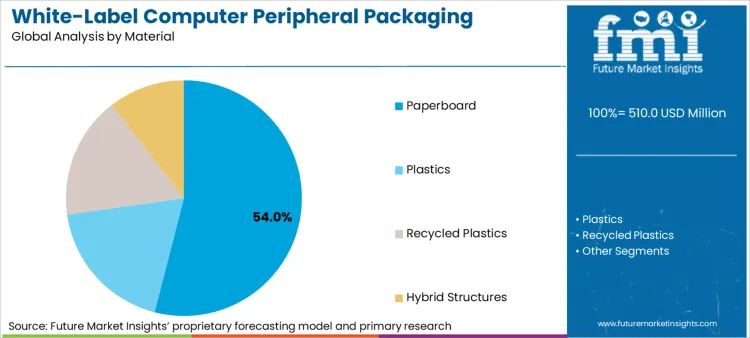
Paperboard commands a 54.0% share of the material segment. Its status is non-negotiable in an era prioritizing circularity and carbon footprint reduction. The USA Environmental Protection Agency’s 2026 "Draft National Strategy to Prevent Plastic Pollution" explicitly promotes the substitution of single-use plastics with recyclable paper alternatives where feasible, providing a regulatory tailwind for paperboard adoption.
The material’s technical evolution is evidenced by WestRock’s 2026 launch of its "EverGrow" coated recycled paperboard grade, engineered specifically for e-commerce. It offers moisture resistance and high-impact durability comparable to plastic laminate, enabling it to replace traditional plastic mailers for peripheral shipping without compromising product safety.
What Role does the OEM Private Label Segment Play in defining Global Volume?
OEM Private Label represents the largest customer-type segment with a 42.0% market share. This segment acts as the primary incubator for packaging innovation due to its scale and direct control over brand standards. Dell Technologies’ 2026 sustainability update confirmed that 85% of its packaging for monitors and peripherals is now sourced from sustainable materials, with a goal of 100% by 2030. Its white-label suppliers are required to provide detailed life-cycle assessments, pushing the entire supply chain toward advanced paper-based and recycled content solutions.
Current momentum is fueled by Samsung’s Galaxy Ecosystem accessory line expansion in 2026. The company mandates that all packaging for its white-label peripherals, such as chargers and cases, utilizes standardized, compact folding carton designs to optimize pallet density for global logistics, setting a de facto industry standard for volumetric efficiency.
What Drivers, Restraints, Opportunities, and Trends Prevail in the White-Label Computer Peripheral Packaging Market?
Market expansion is supported by extended producer responsibility schemes shifting financial burdens. The UK’s EPR for packaging, fully enacted in 2026, requires brands and importers to cover the full net cost of managing household packaging waste. This creates a direct and significant financial incentive for companies to minimize packaging weight and complexity, favoring white-label suppliers that offer lightweight, mono-material paper solutions that lower EPR fee liabilities.
While demand grows, manufacturers face intense margin pressure from volatile input costs. The World Bank’s Commodity Markets Outlook for April 2026 projects continued price instability for key packaging materials like pulp and recycled plastics. This volatility compels packaging converters to aggressively pursue operational efficiencies and invest in automation to maintain profitability on fixed-price contracts with large retailers.
Digital product passports are reshaping the regulatory landscape. The EU’s Digital Product Passport initiative, part of the Ecodesign for Sustainable Products Regulation (ESPR), will require certain product categories to carry a digital ID by 2027. In anticipation, white-label packaging for peripherals is being designed to incorporate unique QR codes or RFID tags that link to information on recyclability, recycled content, and disassembly instructions, adding a new layer of required functionality.
Technical innovation is defined by the integration of augmented reality. In early 2026, Microsoft’s packaging for its "Surface" branded accessories began incorporating AR triggers on the box. Scanning the code with a smartphone launches an interactive 3D product demo and setup tutorial. This trend elevates packaging from a container to an immersive brand engagement tool, demanding higher-quality print surfaces and integrated digital design from suppliers.
Sustainability is driving a definitive move toward plastic-free, paper-based sealing solutions. Industry leaders like Ranpak and Mondi have pivoted their 2026 development roadmaps toward water-activated paper tapes and paper-based cushioning that replace plastic tape and bubble wrap. These designs ensure the entire package is curbside recyclable, directly addressing new "plastic tax" regulations in jurisdictions like the UK and Italy.
Analysis of White-Label Computer Peripheral Packaging Market by Key Countries
The following analysis examines the strategic evolution of the market in high-growth economies: India (7.0% CAGR), Vietnam (6.5% CAGR), Indonesia (6.1% CAGR), and China (5.4% CAGR). These countries represent the primary manufacturing and consumption growth corridors through 2036, each shaped by distinct export dynamics, domestic market growth, and evolving environmental regulations.
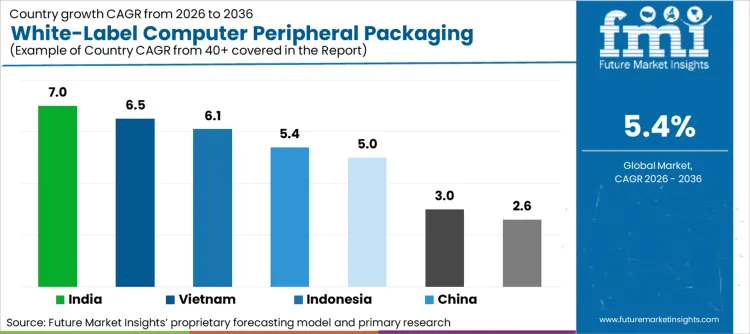
| Country | CAGR (2026-2036) |
|---|---|
| India | 7.0% |
| Vietnam | 6.5% |
| Indonesia | 6.1% |
| China | 5.4% |
| Mexico | 5.0% |
| USA | 3.0% |
| Germany | 2.6% |
| Japan | 2.1% |
Source: Future Market Insights (FMI) analysis, based on proprietary forecasting model and primary research
How is Domestic Manufacturing and E-commerce Scaling the Indian Market?
India is projected to expand at a 7.0% CAGR through 2036. This growth is primarily driven by the "Make in India" initiative’s success in electronics manufacturing and the parallel explosion of e-commerce. The Ministry of Electronics and IT reported in January 2026 that production of electronic accessories, including peripherals, grew by 22% year-over-year. This domestic manufacturing boom creates immediate, localized demand for compliant packaging from white-label suppliers based within special economic zones to service export and domestic channels.
This growth is further intensified by the 2026 amendment to India’s Plastic Waste Management Rules, which imposes a phased ban on specific single-use plastics in packaging. This policy is forcing a rapid transition toward paper-based alternatives for blister cards, clamshells, and protective mailers used for computer mice, keyboards, and headsets, creating a surge in demand for compliant paperboard solutions.
Which Export-Led Dynamics are Facilitating Market Sophistication in Vietnam?
Vietnam’s market is set for a 6.5% CAGR, fueled by its entrenched role as a global hub for electronics assembly and export. Major OEMs like Samsung and LG have mandated that all packaging for peripherals exported from Vietnam to the EU and US must meet the destination markets’ sustainability regulations by Q1 2026. This mandate elevates requirements for local white-label packaging suppliers, who must now master the production of EU PPWR-compliant paperboard cartons and provide verified documentation on recycled content.
Simultaneously, Vietnam’s own Directive 08/2025/ND-CP on extended producer responsibility, effective 2026, requires electronics producers to organize the recycling of their product packaging. This dual pressure from export and domestic regulations is catalyzing investment in advanced paperboard converting and recycling infrastructure within the country, moving the market beyond simple assembly to integrated material sourcing.
What Role does Rising Domestic Consumption Play in the Indonesian Market?
Indonesia’s battery busbar market is forecasted at a 6.1% CAGR, largely influenced by the explosive growth of its digital economy and middle-class consumption. The Indonesian E-commerce Association (idEA) projected in its 2026 report that sales of electronics and communication devices would grow by 28% annually. This domestic consumption wave is creating a robust market for retailer private-label peripherals, which rely on distinctive, branded packaging to compete against international brands on local platforms like Tokopedia and Shopee.
The regulatory landscape is being shaped by the 2026 implementation guidelines for Indonesia’s Roadmap for Waste Reduction. The guidelines prioritize reducing plastic packaging waste through fiscal incentives for using recycled content and penalties for non-recyclable designs. This compels local brands and their packaging partners to adopt paper-based folding cartons with certified recycled fiber content to avoid taxes and appeal to environmentally conscious consumers.
How is Market Maturity and Regulatory Leadership Defining the Chinese Market?
China leads the regional market with a 5.4% CAGR, underpinned by its dual role as the world’s largest manufacturer and an increasingly sophisticated consumer market. The "China Standards 2035" plan includes specific, stringent national standards for green packaging, officially taking effect in phases from 2026. These standards set mandatory limits on packaging void space, mandate the use of certain percentages of recycled material, and ban certain hard-to-recycle laminates for electronic products.
Complementing these rules is the enhanced enforcement of China’s E-commerce Law, which holds online platforms jointly liable for counterfeit goods. In response, major platforms like Alibaba and JD.com require white-label peripheral sellers to use standardized, tamper-evident packaging with integrated security features, such as unique QR codes for authentication. This digital tracking requirement is driving the adoption of smart packaging solutions from suppliers that can merge advanced printing with digital identity technologies.
How is Nearshoring and Trade Policy Reshaping White-Label Computer Peripheral Packaging Demand in Mexico?
Mexico is projected to expand at a 5.0% CAGR through 2036, primarily driven by its strategic position in nearshoring for the North American market. The USMCA trade agreement’s regional value content rules incentivize packaging sourcing within the bloc. In 2026, the Mexican Ministry of Economy reported a 15% year-over-year increase in registered investments for electronics and automotive component manufacturing, directly correlating with localized demand for protective and retail-ready packaging from on-site suppliers.
This growth is specifically shaped by alignment with USA sustainability standards. Mexican export-oriented manufacturing hubs, particularly in states like Chihuahua and Nuevo León, are requiring white-label packaging suppliers to provide solutions that comply with both California’s SB 343 recyclability labeling laws and the USA Federal Trade Commission’s Green Guides. This dual compliance necessitates investment in advanced material testing and labeling infrastructure within Mexico, moving the market beyond basic production.
Which Domestic Legislative Pressures are defining USA’s Landscape?
USA is forecasted at a 3.0% CAGR, reflecting its mature but dynamically regulated environment. Growth is underpinned by disparate state-level regulations that create a complex compliance landscape. The 2026 update to New York’s Extended Producer Responsibility for Packaging law requires brand owners, including retailers with private-label goods, to fund the collection and recycling of their packaging material. This directly increases the cost of non-recyclable packaging, making compliant paperboard folding cartons and mailers a financially pragmatic choice for white-label peripheral brands selling nationally.
The right-to-repair movement is influencing packaging design. Legislation passed in Minnesota and California in 2025 mandates that manufacturers provide tools and parts for electronics repair. In response, packaging for peripherals like keyboards and mice is being designed with reusable or resealable features, allowing consumers to repurpose the box for storage of spare parts or facilitate easier returns, adding a new functional dimension to white-label packaging.
What Role does EU Regulatory Leadership Play in the German Market?
Germany’s market, growing at a 2.6% CAGR, is a bellwether for EU-wide packaging compliance. The full enactment of the EU Packaging and Packaging Waste Regulation (PPWR) in 2026 is the dominant market shaper. Germany’s stringent interpretation and early implementation of the regulation’s recycled content targets force suppliers to secure verified streams of post-consumer recycled fiber. The German Environment Agency (UBA) issued binding technical guidelines in Q1 2026 on the "design for recycling" criteria for paper-based composites, effectively standardizing which glue types and coatings are permissible in folding cartons sold on the German market.
The regulatory landscape is further refined by the national implementation of the EU’s Digital Product Passport. Germany’s VerpackG (Packaging Act) has been amended to require that by 2027, all packaging must be registered in the LUCID database with a unique identifier. White-label packaging for electronics must therefore be designed to incorporate a machine-readable data carrier, linking it to compliance information and end-of-life instructions, integrating digital and physical design.
How is Market Saturation and Premiumization Influencing the Japanese Market?
Japan’s market, expanding at a 2.1% CAGR, is characterized by extreme demand for quality and precision in a saturated retail environment. Growth is driven by the premiumization of private-label goods in response to demographic shifts. Japan’s Ministry of Economy, Trade and Industry (METI) 2026 white paper on retail trends highlighted a consumer preference for high-quality, minimalist packaging that conveys value and reduces perceived waste. This drives white-label suppliers to invest in advanced printing techniques and structural design for compact, yet luxurious, unboxing experiences for peripherals sold in chains like Bic Camera and Yodobashi.
Simultaneously, Japan’s unique recycling law, the Packaging Recycling Law, mandates strict material separation. The law’s 2025 revision placed greater responsibility on businesses to use easily separable materials. For white-label peripheral packaging, this has accelerated the shift away from plastic blister packs toward mono-material paperboard sleeves and tuck-box designs that consumers can easily flatten and sort, making compliance a primary design parameter.
What is the Competition Outlook for White-Label Computer Peripheral Packaging?
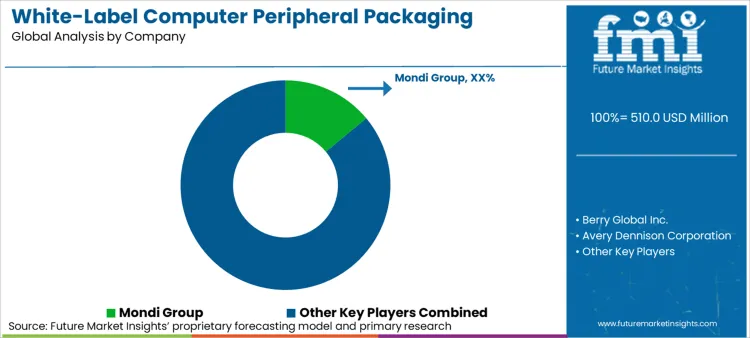
Competitive intensity reflects the packaging industry's transition from a commodity service to a strategic partnership for brand and sustainability compliance. This environment is characterized by consolidation, where large, integrated players secure long-term contracts by offering end-to-end services from design and material sourcing to lifecycle analysis and EPR reporting. Barriers to entry have risen, favoring firms with vertical integration into paper mills or advanced recycling streams to guarantee material security and cost control.
Macro-level policies are dictating corporate strategies through localization mandates. "Local-for-local" production is becoming a necessity rather than an option, as tariffs, carbon border adjustments, and supply chain resilience plans encourage regional manufacturing clusters. Packaging suppliers are establishing converting facilities close to major electronics manufacturing hubs in Asia, Eastern Europe, and Mexico to reduce lead times and carbon footprints for their global clients.
Strategic Evolution and Observable Direction pre-2024
Competition pre-2024 was defined by scaling generic capacity and geographic expansion through acquisition. A landmark example was WestRock's acquisition of KapStone Paper and Packaging in 2018, which expanded its containerboard capacity and geographic reach to serve a broader packaging customer base.
Suppliers focused on offering a wide array of standard packaging formats to serve the then-fragmented white-label market. This era established the baseline for global supply, with companies like International Paper and Smurfit Kappa building extensive networks to serve multinational OEMs and retailers.
Observable Strategic Direction for 2026 and Beyond
A primary strategic direction for 2026 is the vertical integration into fiber-based and recycled material production. In February 2026, Mondi announced the final investment decision to build a new recycled containerboard machine in Central Europe, specifically citing demand from the e-commerce and consumer electronics sectors as a key driver. This move secures its access to a critical raw material in a tightening market.
Strategic leadership is shifting toward firms that provide circularity-as-a-service. Smurfit Kappa, as of early 2026, has launched a dedicated consulting division that helps electronics clients design packaging to meet specific EPR fee structures in different countries, optimize palletization to reduce transportation emissions, and validate recyclability claims. This service layer deepens client integration and moves competition beyond product price.
Recent Developments
- Mondi Group expanded its sustainable packaging portfolio in August 2025 with the rollout and ramp-up of FunctionalBarrier Paper Ultimate, a high-performance, recyclable paper-based barrier material offering very low oxygen and water vapor transmission rates as a sustainable alternative to multi-layer plastic or aluminum packaging.
- Berry Global Inc. in February 2025, collaborated with Mars to transition the pantry jars for M&M’S®, SKITTLES® and STARBURST® brands to 100% PCR packaging excluding lids, eliminating over 1,300 metric tons of virgin plastic annually and advancing circular packaging efforts.
- International Paper Company continued its strategic emphasis on sustainable, recyclable packaging offerings through ongoing production and market focus on fibre-based corrugated and containerboard solutions that support e-commerce and industrial packaging segments, aligning with industry-wide sustainability and circularity trends documented in 2025-2026 industry reports.
Key Players Profiled
- Mondi Group
- Berry Global Inc.
- Avery Dennison Corporation
- Ranpak Holdings Corp.
- NEFAB Group
- Smurfit Kappa Group
- WestRock Company
- International Paper Company
- Amcor plc
- Sealed Air Corporation
Market Definition
The white-label computer peripheral packaging market comprises revenue generated from the design, manufacture, and supply of unbranded or co-branded packaging solutions used for the retail, e-commerce, and logistics distribution of computer peripherals. These peripherals include keyboards, mice, headsets, webcams, chargers, cables, and docking stations. The market includes packaging formats such as folding cartons, mailers, blister packs, and rigid boxes, supplied to OEMs, retailers, and third-party logistics companies for their private-label product lines.
The market scope covers packaging supplied as a standalone product or as part of a bundled service including design, prototyping, and fulfillment. Revenue includes value-added features such as high-fidelity printing, structural design for protection, integrated smart labels, and sustainability certification.
The market excludes packaging for branded, first-party peripherals sold under the manufacturer's own primary brand, packaging for core computing units like laptops and desktops, and generic shipping supplies not specifically designed for computer peripherals.
Scope of Report
| Items | Values |
|---|---|
| Quantitative Units | USD 510 Million |
| Packaging Type | Folding Cartons, Mailers & Bags, Blister/Clamshell, Rigid Boxes, Other |
| Brand/Customer Type | OEM Private Label, Retailer Private Label, 3PL Fulfillment Brands, Other |
| Material | Paperboard, Plastics, Recycled Plastics, Hybrid Structures, Other |
| Regions Covered | North America, Europe, Asia-Pacific, Latin America, Middle East & Africa |
| Countries | USA, Germany, China, India, Vietnam, Indonesia, Mexico, Japan and 40+ countries |
| Key Companies | Mondi, Berry Global, Avery Dennison, Ranpak, NEFAB, Smurfit Kappa, WestRock, International Paper, Amcor, Sealed Air |
Source: Future Market Insights (FMI) analysis, based on proprietary forecasting model and primary research
White-Label Computer Peripheral Packaging Market Key Segments
Packaging Type
- Folding Cartons
- Mailers & Bags
- Blister/Clamshell
- Rigid Boxes
- Others
Brand/Customer Type
- OEM Private Label
- Retailer Private Label
- 3PL Fulfillment Brands
- Others
Material
- Paperboard
- Plastics
- Recycled Plastics
- Hybrid Structures
- Others
Region
- Asia-Pacific
- North America
- Europe
- Latin America
- Middle East & Africa
Bibliography
- International Trade Administration, USA Department of Commerce. (2026). 2025 Top markets report: Packaging.
- Ministry of Electronics and Information Technology, Government of India. (2026). Year end review 2025.
- National Retail Federation. (2026). Consumer returns in the retail industry 2025.
- Smurfit Kappa Group. (2026). Sustainable packaging report 2025-2026.
- USA Environmental Protection Agency. (2026). Draft national strategy to prevent plastic pollution.
- World Bank Group. (2026, April). Commodity markets outlook.
- idEA (Indonesian E-commerce Association). (2026). Indonesia digital economy outlook 2026.
Frequently Asked Questions
How big is the white-label computer peripheral packaging market in 2026?
The global white-label computer peripheral packaging market is estimated to be valued at USD 510.0 million in 2026.
What will be the size of white-label computer peripheral packaging market in 2036?
The market size for the white-label computer peripheral packaging market is projected to reach USD 862.9 million by 2036.
How much will be the white-label computer peripheral packaging market growth between 2026 and 2036?
The white-label computer peripheral packaging market is expected to grow at a 5.4% CAGR between 2026 and 2036.
What are the key product types in the white-label computer peripheral packaging market?
The key product types in white-label computer peripheral packaging market are folding cartons, mailers & bags, blister/clamshell and rigid boxes.
Which material segment to contribute significant share in the white-label computer peripheral packaging market in 2026?
In terms of material, paperboard segment to command 54.0% share in the white-label computer peripheral packaging market in 2026.
Preview the report firsthand - request a free sample
Get SampleGet the brochure for pricing and purchase details.
Get PDFTable of Content
- Executive Summary
- Global Market Outlook
- Demand-side Trends
- Supply-side Trends
- Technology Roadmap Analysis
- Analysis and Recommendations
- Market Overview
- Market Coverage / Taxonomy
- Market Definition / Scope / Limitations
- Research Methodology
- Chapter Orientation
- Analytical Lens and Working Hypotheses
- Market Structure, Signals, and Trend Drivers
- Benchmarking and Cross-market Comparability
- Market Sizing, Forecasting, and Opportunity Mapping
- Research Design and Evidence Framework
- Desk Research Programme (Secondary Evidence)
- Company Annual and Sustainability Reports
- Peer-reviewed Journals and Academic Literature
- Corporate Websites, Product Literature, and Technical Notes
- Earnings Decks and Investor Briefings
- Statutory Filings and Regulatory Disclosures
- Technical White Papers and Standards Notes
- Trade Journals, Industry Magazines, and Analyst Briefs
- Conference Proceedings, Webinars, and Seminar Materials
- Government Statistics Portals and Public Data Releases
- Press Releases and Reputable Media Coverage
- Specialist Newsletters and Curated Briefings
- Sector Databases and Reference Repositories
- FMI Internal Proprietary Databases and Historical Market Datasets
- Subscription Datasets and Paid Sources
- Social Channels, Communities, and Digital Listening Inputs
- Additional Desk Sources
- Expert Input and Fieldwork (Primary Evidence)
- Primary Modes
- Qualitative Interviews and Expert Elicitation
- Quantitative Surveys and Structured Data Capture
- Blended Approach
- Why Primary Evidence is Used
- Field Techniques
- Interviews
- Surveys
- Focus Groups
- Observational and In-context Research
- Social and Community Interactions
- Stakeholder Universe Engaged
- C-suite Leaders
- Board Members
- Presidents and Vice Presidents
- R&D and Innovation Heads
- Technical Specialists
- Domain Subject-matter Experts
- Scientists
- Physicians and Other Healthcare Professionals
- Governance, Ethics, and Data Stewardship
- Research Ethics
- Data Integrity and Handling
- Primary Modes
- Tooling, Models, and Reference Databases
- Desk Research Programme (Secondary Evidence)
- Data Engineering and Model Build
- Data Acquisition and Ingestion
- Cleaning, Normalisation, and Verification
- Synthesis, Triangulation, and Analysis
- Quality Assurance and Audit Trail
- Market Background
- Market Dynamics
- Drivers
- Restraints
- Opportunity
- Trends
- Scenario Forecast
- Demand in Optimistic Scenario
- Demand in Likely Scenario
- Demand in Conservative Scenario
- Opportunity Map Analysis
- Product Life Cycle Analysis
- Supply Chain Analysis
- Investment Feasibility Matrix
- Value Chain Analysis
- PESTLE and Porter’s Analysis
- Regulatory Landscape
- Regional Parent Market Outlook
- Production and Consumption Statistics
- Import and Export Statistics
- Market Dynamics
- Global Market Analysis 2021 to 2025 and Forecast, 2026 to 2036
- Historical Market Size Value (USD Million) Analysis, 2021 to 2025
- Current and Future Market Size Value (USD Million) Projections, 2026 to 2036
- Y-o-Y Growth Trend Analysis
- Absolute $ Opportunity Analysis
- Global Market Pricing Analysis 2021 to 2025 and Forecast 2026 to 2036
- Global Market Analysis 2021 to 2025 and Forecast 2026 to 2036, By Packaging Type
- Introduction / Key Findings
- Historical Market Size Value (USD Million) Analysis By Packaging Type , 2021 to 2025
- Current and Future Market Size Value (USD Million) Analysis and Forecast By Packaging Type , 2026 to 2036
- Folding Cartons
- Mailers & Bags
- Blister/Clamshell
- Rigid Boxes
- Folding Cartons
- Y-o-Y Growth Trend Analysis By Packaging Type , 2021 to 2025
- Absolute $ Opportunity Analysis By Packaging Type , 2026 to 2036
- Global Market Analysis 2021 to 2025 and Forecast 2026 to 2036, By Material
- Introduction / Key Findings
- Historical Market Size Value (USD Million) Analysis By Material, 2021 to 2025
- Current and Future Market Size Value (USD Million) Analysis and Forecast By Material, 2026 to 2036
- Paperboard
- Plastics
- Recycled Plastics
- Hybrid Structures
- Paperboard
- Y-o-Y Growth Trend Analysis By Material, 2021 to 2025
- Absolute $ Opportunity Analysis By Material, 2026 to 2036
- Global Market Analysis 2021 to 2025 and Forecast 2026 to 2036, By Region
- Introduction
- Historical Market Size Value (USD Million) Analysis By Region, 2021 to 2025
- Current Market Size Value (USD Million) Analysis and Forecast By Region, 2026 to 2036
- North America
- Latin America
- Western Europe
- Eastern Europe
- East Asia
- South Asia and Pacific
- Middle East & Africa
- Market Attractiveness Analysis By Region
- North America Market Analysis 2021 to 2025 and Forecast 2026 to 2036, By Country
- Historical Market Size Value (USD Million) Trend Analysis By Market Taxonomy, 2021 to 2025
- Market Size Value (USD Million) Forecast By Market Taxonomy, 2026 to 2036
- By Country
- USA
- Canada
- Mexico
- By Packaging Type
- By Material
- By Country
- Market Attractiveness Analysis
- By Country
- By Packaging Type
- By Material
- Key Takeaways
- Latin America Market Analysis 2021 to 2025 and Forecast 2026 to 2036, By Country
- Historical Market Size Value (USD Million) Trend Analysis By Market Taxonomy, 2021 to 2025
- Market Size Value (USD Million) Forecast By Market Taxonomy, 2026 to 2036
- By Country
- Brazil
- Chile
- Rest of Latin America
- By Packaging Type
- By Material
- By Country
- Market Attractiveness Analysis
- By Country
- By Packaging Type
- By Material
- Key Takeaways
- Western Europe Market Analysis 2021 to 2025 and Forecast 2026 to 2036, By Country
- Historical Market Size Value (USD Million) Trend Analysis By Market Taxonomy, 2021 to 2025
- Market Size Value (USD Million) Forecast By Market Taxonomy, 2026 to 2036
- By Country
- Germany
- UK
- Italy
- Spain
- France
- Nordic
- BENELUX
- Rest of Western Europe
- By Packaging Type
- By Material
- By Country
- Market Attractiveness Analysis
- By Country
- By Packaging Type
- By Material
- Key Takeaways
- Eastern Europe Market Analysis 2021 to 2025 and Forecast 2026 to 2036, By Country
- Historical Market Size Value (USD Million) Trend Analysis By Market Taxonomy, 2021 to 2025
- Market Size Value (USD Million) Forecast By Market Taxonomy, 2026 to 2036
- By Country
- Russia
- Poland
- Hungary
- Balkan & Baltic
- Rest of Eastern Europe
- By Packaging Type
- By Material
- By Country
- Market Attractiveness Analysis
- By Country
- By Packaging Type
- By Material
- Key Takeaways
- East Asia Market Analysis 2021 to 2025 and Forecast 2026 to 2036, By Country
- Historical Market Size Value (USD Million) Trend Analysis By Market Taxonomy, 2021 to 2025
- Market Size Value (USD Million) Forecast By Market Taxonomy, 2026 to 2036
- By Country
- China
- Japan
- South Korea
- By Packaging Type
- By Material
- By Country
- Market Attractiveness Analysis
- By Country
- By Packaging Type
- By Material
- Key Takeaways
- South Asia and Pacific Market Analysis 2021 to 2025 and Forecast 2026 to 2036, By Country
- Historical Market Size Value (USD Million) Trend Analysis By Market Taxonomy, 2021 to 2025
- Market Size Value (USD Million) Forecast By Market Taxonomy, 2026 to 2036
- By Country
- India
- ASEAN
- Australia & New Zealand
- Rest of South Asia and Pacific
- By Packaging Type
- By Material
- By Country
- Market Attractiveness Analysis
- By Country
- By Packaging Type
- By Material
- Key Takeaways
- Middle East & Africa Market Analysis 2021 to 2025 and Forecast 2026 to 2036, By Country
- Historical Market Size Value (USD Million) Trend Analysis By Market Taxonomy, 2021 to 2025
- Market Size Value (USD Million) Forecast By Market Taxonomy, 2026 to 2036
- By Country
- Kingdom of Saudi Arabia
- Other GCC Countries
- Turkiye
- South Africa
- Other African Union
- Rest of Middle East & Africa
- By Packaging Type
- By Material
- By Country
- Market Attractiveness Analysis
- By Country
- By Packaging Type
- By Material
- Key Takeaways
- Key Countries Market Analysis
- USA
- Pricing Analysis
- Market Share Analysis, 2025
- By Packaging Type
- By Material
- Canada
- Pricing Analysis
- Market Share Analysis, 2025
- By Packaging Type
- By Material
- Mexico
- Pricing Analysis
- Market Share Analysis, 2025
- By Packaging Type
- By Material
- Brazil
- Pricing Analysis
- Market Share Analysis, 2025
- By Packaging Type
- By Material
- Chile
- Pricing Analysis
- Market Share Analysis, 2025
- By Packaging Type
- By Material
- Germany
- Pricing Analysis
- Market Share Analysis, 2025
- By Packaging Type
- By Material
- UK
- Pricing Analysis
- Market Share Analysis, 2025
- By Packaging Type
- By Material
- Italy
- Pricing Analysis
- Market Share Analysis, 2025
- By Packaging Type
- By Material
- Spain
- Pricing Analysis
- Market Share Analysis, 2025
- By Packaging Type
- By Material
- France
- Pricing Analysis
- Market Share Analysis, 2025
- By Packaging Type
- By Material
- India
- Pricing Analysis
- Market Share Analysis, 2025
- By Packaging Type
- By Material
- ASEAN
- Pricing Analysis
- Market Share Analysis, 2025
- By Packaging Type
- By Material
- Australia & New Zealand
- Pricing Analysis
- Market Share Analysis, 2025
- By Packaging Type
- By Material
- China
- Pricing Analysis
- Market Share Analysis, 2025
- By Packaging Type
- By Material
- Japan
- Pricing Analysis
- Market Share Analysis, 2025
- By Packaging Type
- By Material
- South Korea
- Pricing Analysis
- Market Share Analysis, 2025
- By Packaging Type
- By Material
- Russia
- Pricing Analysis
- Market Share Analysis, 2025
- By Packaging Type
- By Material
- Poland
- Pricing Analysis
- Market Share Analysis, 2025
- By Packaging Type
- By Material
- Hungary
- Pricing Analysis
- Market Share Analysis, 2025
- By Packaging Type
- By Material
- Kingdom of Saudi Arabia
- Pricing Analysis
- Market Share Analysis, 2025
- By Packaging Type
- By Material
- Turkiye
- Pricing Analysis
- Market Share Analysis, 2025
- By Packaging Type
- By Material
- South Africa
- Pricing Analysis
- Market Share Analysis, 2025
- By Packaging Type
- By Material
- USA
- Market Structure Analysis
- Competition Dashboard
- Competition Benchmarking
- Market Share Analysis of Top Players
- By Regional
- By Packaging Type
- By Material
- Competition Analysis
- Competition Deep Dive
- Mondi Group
- Overview
- Product Portfolio
- Profitability by Market Segments (Product/Age /Sales Channel/Region)
- Sales Footprint
- Strategy Overview
- Marketing Strategy
- Product Strategy
- Channel Strategy
- Berry Global Inc.
- Avery Dennison Corporation
- Ranpak Holdings Corp.
- NEFAB Group
- Smurfit Kappa Group
- WestRock Company
- International Paper Company
- Mondi Group
- Competition Deep Dive
- Assumptions & Acronyms Used


