

- Industry Size (2026)
- USD 390.0 Mn
- Forecast (2036)
- USD 698.0 Mn
- CAGR (2026 to 2036)
- 6.0%
Bundled Peripheral Packaging Market Forecast and Outlook 2026 to 2036
Bundled peripheral packaging market revenue is likely to total USD 390.0 million in 2026, rising further to USD 698.0 million by 2036, at a CAGR of 6.0%. Future Market Insights identifies a strategic pivot from packaging single items to architecting systems that elevate bundled product propositions. This evolution, evident in 2026, is fueled by the economics of basket-size growth in e-commerce, the premiumization of gaming and home office setups, and the logistical complexity of shipping multiple items as one stock-keeping unit.
Growth is linked to retail strategies aimed at increasing average order value. Best Buy’s 2026 vendor compliance manual introduced new, stricter requirements for bundled packaging. Bundles containing items like webcams, headsets, and keyboards must now ship in a single, retail-ready package that can transition directly to the sales floor without repackaging, eliminating labor and reducing in-store waste.
The economic logic behind bundles was quantified in Adobe’s 2026 Digital Economy Index, which reported that online electronics orders containing product bundles had a 35% higher average value and a 15% lower return rate compared to single-item purchases. This data is compelling retailers to invest in packaging that effectively markets the bundle concept itself.
Design innovation focuses on unboxing sequencing and component security. Ranpak’s 2026 launch of its "GeoShell Hybrid" system exemplifies this trend. The solution combines molded fiber cushions with paper-based wrap to create custom compartments within a standard carton, securing irregularly shaped items like game controllers and charging docks together in an environmentally neutral format.
A significant industry realignment was noted in Smurfit Kappa’s 2025 annual report, which highlighted a 22% year-over-year revenue increase in its North American consumer packaging division. This growth was attributed directly to demand for complex, die-cut retail cartons for computer accessory bundles.
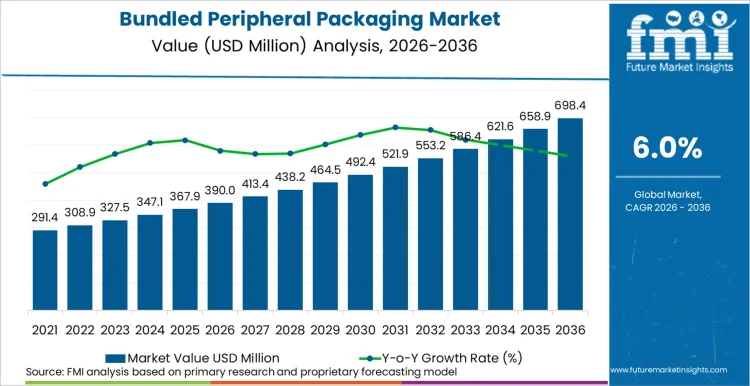
Summary of Bundled Peripheral Packaging Market
What is the Long-Term Growth Outlook for the Bundled Peripheral Packaging Market?
FMI projects the global bundled peripheral packaging market to expand from USD 390.0 million in 2026 to USD 698.0 million by 2036, registering a 6.0% CAGR. This growth reflects the increasing strategic use of product bundling by retailers and brands to drive sales, enhance customer loyalty, and streamline logistics. Packaging is no longer an afterthought but a core component of the bundle’s value proposition, requiring designs that deliver organized presentation, damage protection for multiple items, and a premium unboxing journey.
FMI Research Approach: This projection utilizes a proprietary model analyzing e-commerce bundle adoption rates, retail point-of-sale data for accessory kits, corporate sustainability goals affecting presentation packaging, and investments in retail-ready packaging automation.
How do FMI Analysts Expect the Bundled Peripheral Packaging Market to Evolve Structurally?
FMI analysts anticipate a shift from generic oversized boxes to custom-engineered, space-efficient packaging systems that are specific to bundle typologies. The market will see greater adoption of multi-compartment designs using sustainable molded fibers and clever die-cut carton engineering. Packaging will increasingly incorporate instructional graphics and digital integration, such as QR codes linking to bundle setup tutorials, transforming the container into an interactive guide.
FMI Research Approach: Insights are derived from analyzing product launches from leading electronics brands, packaging supplier innovation portfolios, consumer unboxing trend reports, and brand owner surveys on packaging performance metrics.
Which Geographies Command the Largest Share of the Bundled Peripheral Packaging Market?
Asia-Pacific leads the global market with a 38.0% share in 2026, driven by high-volume electronics manufacturing and the rapid growth of e-commerce platforms offering bundled deals. North America follows with a 30.0% share, supported by strong retail promotions and the premium gaming segment. Europe holds a 24.0% share, where sustainability mandates are pushing for innovative, plastic-free bundle packaging solutions.
FMI Research Approach: Regional market sizing is based on manufacturing output of peripheral bundles, e-commerce platform penetration, retail trade data, and the stringency of regional packaging waste regulations.
What Will Be the Market Size of Bundled Peripheral Packaging by 2036?
By 2036, the bundled peripheral packaging market is expected to reach USD 698.0 million. This expansion will be sustained by the continued proliferation of product-as-a-service models, the growth of curated tech ecosystems, and the need for packaging that reduces fulfillment complexity by turning multiple SKUs into one shippable unit.
FMI Research Approach: The long-term outlook incorporates forecasts for the gaming and remote work industries, analysis of retail merchandising strategies, and projected adoption curves for sustainable packaging materials in the consumer electronics sector.
What are some Globally Distinct Trends Shaping the Bundled Peripheral Packaging Market?
Globally, the market is being shaped by the rise of curated commerce, sustainability pressures on presentation packaging, and supply chain digitization. Brands are leveraging bundles to offer complete solutions, which demands packaging that tells a cohesive product story. Regulations are targeting plastic blister packs and non-recyclable composites used in multi-item packs, favoring paper-based compartmentalization. Digital integration allows packaging to serve as a gateway to registration, setup, and loyalty programs.
FMI Research Approach: Trend identification involves monitoring retail subscription box models, regulatory changes for plastic and fiber-based packaging, and the integration of smart technology like NFC tags into premium bundle packaging.
Bundled Peripheral Packaging Market Key Takeaways
| Metrics | Values |
|---|---|
| Expected Value (2026E) | USD 390.0 million |
| Projected Value (2036F) | USD 698.0 million |
| CAGR (2026-2036) | 6.0% |
Source: Future Market Insights (FMI) analysis, based on proprietary forecasting model and primary research
Why is the Bundled Peripheral Packaging Market Growing?
The strategic shift toward subscription and ecosystem sales models in the technology sector is a primary growth vector. Companies like Microsoft with its Xbox ecosystem and Apple with its accessory lines are deliberately designing products to work seamlessly together. The packaging for these bundles must physically and thematically unite the products, creating a market for high-design, custom carton engineering that reflects the brand's premium positioning and simplifies the out-of-box experience for the consumer.
E-commerce profitability metrics are fundamentally altering packaging requirements. The cost of picking, packing, and shipping individual items erodes margins. By consolidating multiple peripherals into a single, pre-configured bundle with one SKU, retailers significantly reduce fulfillment center handling costs and packaging material usage. This operational efficiency drives demand for durable, all-in-one packaging that protects the higher collective value of the bundle throughout the logistics chain.
Sustainability regulations are specifically targeting plastic-heavy multipacks. The UK’s Plastic Packaging Tax and similar initiatives in the EU create direct financial disincentives for using virgin plastic in secondary packaging like bundle wraps or blisters. This regulatory pressure is accelerating the development and adoption of paper-based overwraps, cardboard sleeves, and molded pulp trays that can secure multiple items together in a fully recyclable unit.
How is Bundled Peripheral Packaging Market Segmented?
The bundled peripheral packaging segment landscape is defined by the need for organization, presentation, and damage prevention for diverse product combinations. Multi-compartment cartons have emerged as the dominant structural solution, while accessory kits represent the most common and voluminous bundle type. The e-commerce channel dictates the paramount need for durability and customer experience.
How is Structural Versatility Sustaining the Dominance of Compartmentalized Cartons?
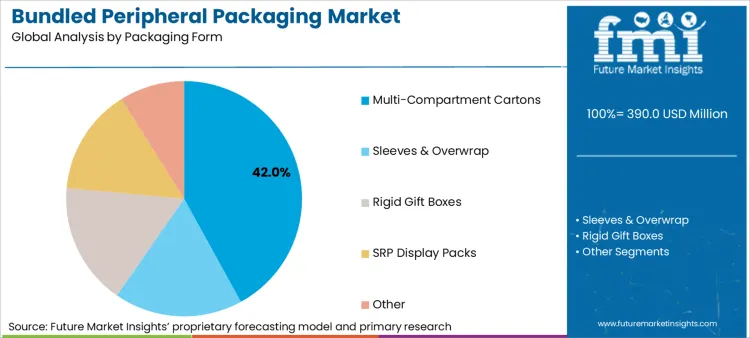
Multi-compartment cartons account for a 42.0% share of the packaging form segment. Their dominance is rooted in their ability to provide a custom-fitted space for each bundle component, preventing in-transit damage caused by items colliding. This design also presents products in an organized, premium manner upon opening.
The strategic value was demonstrated by HP’s 2026 redesign of its OfficeJet Pro printer-plus-ink bundles, which shifted from a large box with loose items to a fitted carton with dedicated slots for the printer, ink cartridges, and cables, reducing package volume by 30% and customer setup complaints by half.
The format’s evolution is highlighted by Graphic Packaging’s 2026 CradleCarton technology. This innovation uses interlocking, die-cut paperboard forms to create suspended cradles within a master carton, securing delicate items like headphones and webcams without plastic clamshells, meeting both protective and stringent retail sustainability scorecards.
Which Bundle Category acts as the High-Volume Anchor for Packaging Innovation?
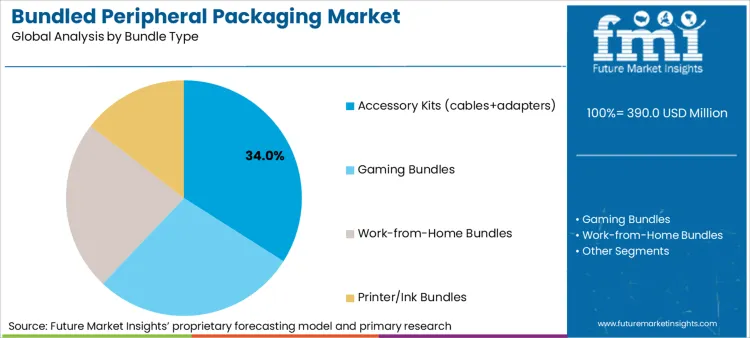
Accessory kits, comprising cables and adapters, represent the largest bundle type segment with a 34.0% share. The packaging challenge here centers on organizing numerous small, tangled-prone items into a user-friendly and retail-presentable format. The market is moving away from loose items in a bag toward card-backed blister packs or clear-top cartons that allow visual inventory and theft deterrence. The 2026 update to the Consumer Technology Association’s accessory packaging guidelines explicitly recommends such organized formats to improve customer satisfaction.
This segment’s demands are met by innovations like Amcor’s 2026 launch of a recyclable paper-based blister alternative. The "EcoBlister" uses a formed paper pulp tray with a clear cellulose film window, allowing cables and adapters to be securely mounted and visible, creating a shelf-ready bundle that is fully curbside recyclable.
What Role does the E-commerce Channel Play in Defining Performance Requirements?
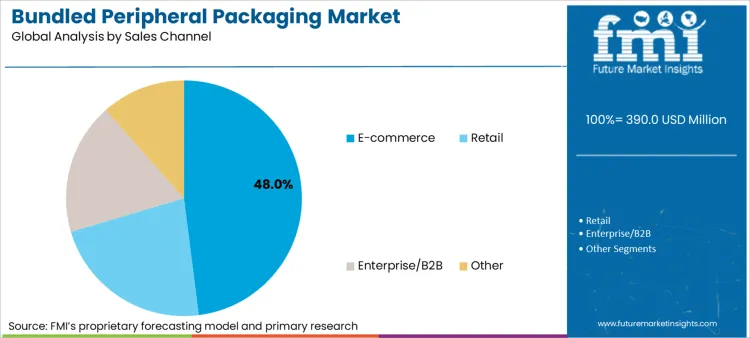
The e-commerce channel commands a 48.0% share of the sales channel segment. It sets the most rigorous performance standards, as bundles must survive the parcel distribution system without damage while delivering a branded experience at home. Amazon’s "Frustration-Free Packaging" certification standards, updated in 2026, now offer a specific tier for multi-item bundles. Certification requires that bundles are shipped in a single container without plastic bindings, have easy-open features, and require no additional prep for returns, directly shaping packaging design priorities for suppliers.
The channel’s influence is clear in Sonoco’s 2025 collaboration with a major logistics provider to develop the "eCubed" mailer box. This design incorporates three internally padded compartments within a single corrugated mailer, engineered specifically for shipping small peripheral bundles like mouse-and-keyboard combos directly to consumers with minimal void fill and maximum protective performance.
What Drivers, Restraints, Opportunities, and Trends Prevail in the Bundled Peripheral Packaging Market?
Expansion of bundled peripheral packaging solutions is supported by the economics of customer acquisition and retention. Bundling increases customer loyalty by integrating users into a product ecosystem. The packaging serves as the tangible touchpoint of this strategy. Research from the 2026 LoyaltyLion State of Customer Loyalty report indicated that purchasers of electronic bundles showed a 40% higher likelihood of repeat purchase from the same brand, justifying increased investment in high-quality, memorable bundle packaging.
Material cost volatility presents a significant restraint. The 2026 Fastmarkets RISI Price Forecast indicates ongoing fluctuations in the cost of both virgin and recycled paperboard, the primary input for quality cartons. This volatility challenges packaging converters to maintain margins on fixed-price contracts, forcing investment in design efficiencies that use less material without compromising protection or aesthetics.
The regulatory landscape presents a clear opportunity through extended producer responsibility for packaging. As EPR schemes roll out in North America, brands are financially responsible for the recycling of their packaging. Lightweight, mono-material paperboard bundle packaging with high recycled content will result in lower EPR fees compared to complex, multi-material packs, creating a direct financial incentive for sustainable design.
Technical innovation is defined by smart packaging that enhances the bundled experience. In early 2026, Samsung began piloting NFC-tagged packaging for its Galaxy Buds and Watch bundles. Tapping a phone to the package initiates a customized setup flow for all devices simultaneously and adds the entire bundle to the user’s warranty and account page, adding digital convenience to physical packaging.
The trend toward retail-ready packaging is reducing store labor. Major big-box retailers have implemented scan-based trading for electronics. This system requires bundles to arrive in packaging that can be placed directly on the shelf with a visible barcode, without store staff needing to unpack or label individual items. This drives demand for bundle packaging that is structurally robust for shipping yet aesthetically polished for direct retail display.
Analysis of Bundled Peripheral Packaging Market by Key Countries
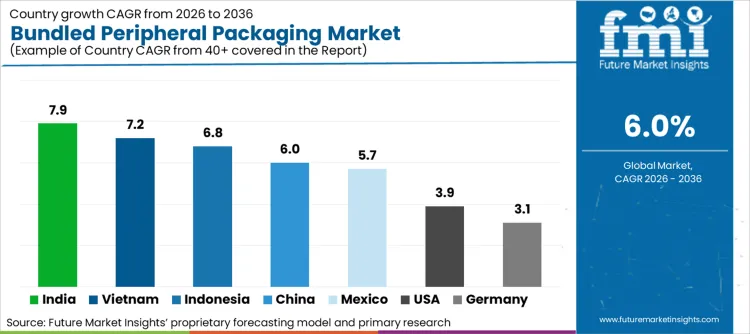
| Country | CAGR (2026-2036) |
|---|---|
| India | 7.9% |
| Vietnam | 7.2% |
| Indonesia | 6.8% |
| China | 6.0% |
| Mexico | 5.7% |
| USA | 3.9% |
| Germany | 3.1% |
| Japan | 2.6% |
Source: Future Market Insights (FMI) analysis, based on proprietary forecasting model and primary research
How is Premiumization and Gifting Culture Driving the Bundled Peripheral Packaging Landscape in India?
India is projected to expand at a 7.9% CAGR through 2036. This high growth is propelled by the premiumization of technology purchases and a strong cultural emphasis on gifting, especially during festivals. Bundled peripherals, such as keyboard-mouse-headset combos, are popular gifts, necessitating packaging that conveys premium value. The India Centre for Retail Research’s 2026 festival sales analysis noted a 50% year-on-year increase in sales of packaged electronic accessory bundles, with consumers explicitly favoring products in presentation-grade "gift box" styles over plain packaging.
This demand is intersecting with regulatory change. The 2026 enforcement of India’s updated Plastic Waste Management Rules is banning certain plastic films and laminates. Packaging suppliers are responding by developing rigid paperboard gift boxes with fabric ribbons and magnetic closures for high-end bundles, replacing traditional plastic-coated or laminated presentation boxes to comply with new regulations.
Which Export-Oriented Manufacturing is Catalyzing Sophistication in Vietnam?
Vietnam’s market, growing at a 7.2% CAGR, is driven by its role as a manufacturing hub for global gaming peripheral brands like Razer and Corsair. These brands require bundle packaging that matches the high-end aesthetics of their products for global markets. In 2026, several major contract manufacturers in Vietnam mandated that local packaging suppliers achieve ISO 15378 certification for primary packaging materials, ensuring pharmaceutical-grade quality control for the clean and precise production of high-gloss, intricate cartons used for gaming bundles.
Simultaneously, Vietnam’s own domestic retail scene is evolving. The rise of e-commerce platforms like Shopee and Tiki is encouraging local electronics assemblers to create their own branded peripheral bundles. These companies require cost-effective but visually appealing packaging solutions that can be produced in lower volumes with quick turnaround, fostering a niche for agile, digital-print capable packaging converters within Vietnam.
What Role does the Rise of Local Brands Play in Indonesia’s Bundled Peripheral Packaging Market?
Bundled peripheral packaging demand in Indonesia is forecasted at a 6.8% CAGR, fueled by the emergence of strong local digital brands and a booming middle class. Local companies are creating bundled starter kits for content creators, streamers, and remote workers. These bundles often include locally sourced peripherals and require packaging that resonates with domestic cultural aesthetics and values.
A 2026 report from the Indonesian E-commerce Association (idEA) highlighted that bundles with packaging featuring local language instructions and culturally relevant color schemes saw 30% higher engagement on social media platforms.
The regulatory environment also shapes demand. Indonesia’s 2025 roadmap for reducing packaging waste includes fiscal incentives for using recycled paper content. Bundle packaging manufacturers are partnering with local waste collection cooperatives to source post-consumer fiber, creating a market for bundle boxes that boast high percentages of locally recycled material, appealing to both brand owners and environmentally conscious consumers.
How is Ecosystem Branding and Sustainability Shaping the Chinese Market?
China leads the regional growth with a 6.0% CAGR, driven by the ecosystem strategies of domestic tech giants like Xiaomi and Huawei. These companies sell bundles of interconnected devices under their proprietary ecosystems. The packaging for these bundles is designed to visually and physically unite the products, often using minimalist designs with shared color coding and unified opening mechanisms that emphasize the seamless integration of the devices.
Complementing the ecosystem trend is the enforcement of China’s Information Security Technology — Personal Information Security Specification (GB/T 35273-202X) and related data sovereignty policies. For bundled smart peripherals that connect to a central device or app, packaging must facilitate secure and compliant user onboarding. This has led to the integration of unique, scannable setup codes on bundle packaging that link directly to verified, China-hosted app stores and registration portals, ensuring data flows remain within national borders as required by regulation.
The Made in China 2025 initiative's focus on domestic value-add influences bundle composition and, by extension, its packaging. Bundles promoted under state-backed consumer voucher schemes in 2026 often require a minimum percentage of domestic brand components. Packaging for these qualifying bundles is being used as a platform to highlight and visually champion the included Chinese-branded items, using distinct graphic design elements and logos that adhere to government promotional guidelines, thereby turning the package into a tool for industrial policy communication.
How is Cross-Border E-commerce Influencing Mexican Market Demands?
Mexico, expanding at a 5.7% CAGR, is significantly influenced by cross-border e-commerce with the United States. Mexican consumers frequently purchase bundled electronics from US retailers. The packaging for these bundles must be exceptionally durable to survive longer international logistics chains and customs handling. It must also be designed for easy customs inspection, often requiring tear-strip openings rather than glued seals, and include documentation in both Spanish and English.
Domestic retail consolidation is another factor. The expansion of major retailers like Liverpool and Elektra has centralized procurement. These retailers now issue standardized packaging guidelines for all bundled peripherals sold in their stores, demanding features like integrated carry handles for larger bundles and specific barcode placements. This standardization is creating volume opportunities for packaging suppliers that can efficiently produce to these exacting chain-specific specifications.
Which Subscription Box Model is Refining Expectations for Bundled Peripheral Packaging in USA?
USA, with a 3.9% CAGR, is being refined by the maturation of the subscription box model applied to technology. Services offering monthly deliveries of curated gaming gear or office accessories have elevated consumer expectations for unboxing experiences.
The packaging for these subscription bundles requires a reveal element, such as layered compartments or a book-style opening, that extends the customer engagement time. Data from the 2026 Subscription Trade Association (SUBTA) report shows that subscriber retention rates are 25% higher for boxes with "high-quality, experiential packaging."
Regulatory pressure at the state level is also a factor. California’s SB 343, effective 2026, restricts the use of the chasing arrows symbol to only truly recyclable materials. This forces brands to meticulously verify and often redesign their bundle packaging to avoid misleading labeling, favoring simple, mono-material paperboard constructions over complex composites.
How do Digital Product Passports Impact Bundled Peripheral Packaging Trends in Germany?
Germany’s market, growing at a 3.1% CAGR, is at the forefront of implementing the EU’s Digital Product Passport. By 2027, each item within a bundle may require its own digital identity. Packaging for bundles sold in Germany is being designed to accommodate a single master QR code or RFID tag on the outer box that can digitally link to the individual DPPs of all contained products. This adds a layer of technical requirement, pushing packaging suppliers to integrate durable, scannable data carriers into their designs and collaborate with software providers.
The German market is also characterized by a high value placed on waste separation. The Grüner Punkt dual system imposes fees based on packaging recyclability. Bundle packaging that is easily separable into pure paper, clear labeling, and any minimal plastic components for sorting commands lower license fees, making design-for-disassembly a critical cost-saving and compliance metric for suppliers.
How does Space Efficiency Influence Japan’s Bundle Packaging Designs?
Japan’s market, with a 2.6% CAGR, is dominated by the extreme premium on space efficiency in both logistics and retail. Bundle packaging is engineered to have an absolute minimum footprint. A common solution is the sleeve and tray system, where products are placed in a fitted, minimalist paperboard tray and covered with a thin printed sleeve. This uses far less material than a full carton while still providing protection and branding. The Japan Packaging Institute’s 2026 awards highlighted several such designs for electronics bundles that achieved over 50% material reduction versus prior solutions.
The retail environment also demands versatility. Bundles in Japanese electronics stores like Yodobashi Camera must often be displayed in two ways: as a sealed unit and as an open display showing the contents. Packaging is therefore designed to be opened and reclosed seamlessly without damage, requiring innovative closure systems like magnetic flaps or origami-style folds that maintain structural integrity through multiple openings.
What is the Competition Outlook for Bundled Peripheral Packaging?
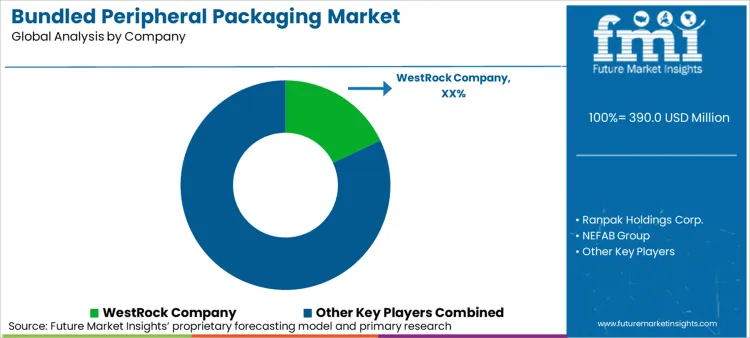
Competitive intensity centers on the ability to provide integrated design-and-fulfillment solutions. Winning suppliers are those who can collaborate with brands from the bundle concept phase, engineer packaging that meets marketing, logistical, and sustainability goals, and reliably execute production. The landscape favors firms with strong structural design capabilities, access to sustainable material innovations, and flexible manufacturing to handle the mid-volume, high-variety runs typical of bundled products.
Regionalization of supply chains is a key strategic determinant. To meet the quick-turnaround demands of promotional bundling and reduce shipping costs of often-bulky empty packaging, leading suppliers are establishing regional design and production centers close to major electronics manufacturing and fulfillment hubs in Asia, Eastern Europe, and North America.
Strategic Evolution and Observable Direction pre-2024
Prior to 2024, competition was often based on generic capacity for producing standard cartons and the ability to manually assemble complex bundles. Suppliers competed on labor costs for hand-inserting partitions and assembling multi-piece boxes. The focus was on fulfilling orders for seasonal retail promotions with standardized, if sometimes over-engineered, packaging solutions.
Observable Strategic Direction for 2026 and Beyond
A dominant strategic direction is the adoption of digital printing and automated packaging systems tailored for bundle assembly. WestRock invested significantly in 2025 in its "Digital Packaging" division, deploying high-speed digital presses that allow for cost-effective short runs of fully customized, graphically rich bundle boxes. This allows brands to create limited-edition or region-specific bundles without the cost and waste of large minimum print orders.
Strategic partnerships between packaging converters and material science firms are accelerating. In early 2026, NEFAB announced a collaboration with a biopolymer startup to develop a home-compostable, transparent film for use as windows in bundle cartons. This directly addresses the demand for plastic-free yet product-revealing packaging, creating a distinct competitive advantage in sustainability-focused market segments.
Recent Developments
- DS Smith collaborated with Raymarine in January 2026 to replace single-use plastic elements in packaging with fiber-based corrugated solutions engineered for fragile electronics, using protective design features including shock-absorbing structures and reporting a >60% CO₂ reduction plus 75% fewer pallets used in logistics.
- Ranpak introduced the FillPak Mini on October 21, 2025, a compact paper void-fill converter designed for space-constrained packing areas; reporting indicates it is launching in North America in 2026 as part of Ranpak’s automated paper-based protective packaging portfolio-relevant for accessory and peripheral shipments that need cushioning without plastic void fill.
- Mondi launched an expanded corrugated + solid board portfolio on November 18, 202) that explicitly includes Retail Ready Packaging (RRP) and point-of-sale display solutions, plus digital printing capabilities linked to its Schumacher Packaging acquisition. This is directly applicable to club-store / retail-ready electronics bundles where shelf-ready cartons and high-quality printed communication panels matter.
Key Players Profiled
- WestRock Company
- Ranpak Holdings Corp.
- NEFAB Group
- Smurfit Kappa Group
- International Paper Company
- Mondi Group
- Amcor plc
- Sealed Air Corporation
- Sonoco Products Company
- Huhtamaki Oyj
Market Definition
The bundled peripheral packaging market comprises revenue generated from the design, manufacture, and supply of primary and secondary packaging solutions used to group and sell multiple computer peripherals together as a single retail unit or kit. This includes packaging forms such as multi-compartment cartons, sleeves, rigid boxes, and display packs specifically engineered to house, protect, and present a curated set of accessories like cables, adapters, input devices, or audio gear.
The market scope covers packaging that is integral to the bundled product's sale, including all value-added features such as custom structural design, high-fidelity graphics, instructional content, and sustainable material specifications. The market excludes generic shipping boxes used to send pre-packaged bundles to consumers and packaging for single, standalone peripheral products.
Scope of Report
| Items | Values |
|---|---|
| Quantitative Units | USD Million for revenue |
| Bundle Type | Accessory Kits, Gaming Bundles, Work-from-Home Bundles, Printer/Ink Bundles, Other |
| Packaging Form | Multi-Compartment Cartons, Sleeves & Overwrap, Rigid Gift Boxes, SRP Display Packs, Other |
| Sales Channel | E-commerce, Retail, Enterprise/B2B, Other |
| Regions Covered | Asia-Pacific, North America, Europe, Latin America, Middle East & Africa |
| Countries | U.S., Germany, China, India, Vietnam, Indonesia, Mexico, Japan and 40+ countries |
| Key Companies | WestRock, Ranpak, NEFAB, Smurfit Kappa, International Paper, Mondi, Amcor, Sealed Air, Sonoco, Huhtamaki |
Source: Future Market Insights (FMI) analysis, based on proprietary forecasting model and primary research
Bundled Peripheral Packaging Market Key Segments
Bundle Type
- Accessory Kits (cables+adapters)
- Gaming Bundles
- Work-from-Home Bundles
- Printer/Ink Bundles
- Other
Packaging Form
- Multi-Compartment Cartons
- Sleeves & Overwrap
- Rigid Gift Boxes
- SRP Display Packs
- Other
Sales Channel
- E-commerce
- Retail
- Enterprise/B2B
- Other
Region
- Asia-Pacific
- North America
- Europe
- Latin America
- Middle East & Africa
Bibliography
- Adobe Analytics. (2026). Digital Economy Index: Electronics and Bundle Sales Analysis.Consumer Technology Association (CTA). (2026). Guidelines for Accessory and Bundle Packaging.
- India Centre for Retail Research. (2026). Festival Season Sales Analysis & Consumer Preferences Report.
- Institute of Packaging Professionals (IoPP). (2025). Sustainable Packaging Summit session transcript.
- Japan Packaging Institute. (2026). Annual Packaging Design Awards and Technical Review.
- LoyaltyLion. (2026). The State of Customer Loyalty in Retail & E-commerce.
- Subscription Trade Association (SUBTA). (2026). Annual Member Benchmarking Report.
Frequently Asked Questions
How big is the bundled peripheral packaging market in 2026?
The global bundled peripheral packaging market is estimated to be valued at USD 390.0 million in 2026.
What will be the size of bundled peripheral packaging market in 2036?
The market size for the bundled peripheral packaging market is projected to reach USD 698.4 million by 2036.
How much will be the bundled peripheral packaging market growth between 2026 and 2036?
The bundled peripheral packaging market is expected to grow at a 6.0% CAGR between 2026 and 2036.
What are the key product types in the bundled peripheral packaging market?
The key product types in bundled peripheral packaging market are multi-compartment cartons, sleeves & overwrap, rigid gift boxes, srp display packs and other.
Which bundle type segment to contribute significant share in the bundled peripheral packaging market in 2026?
In terms of bundle type, accessory kits (cables+adapters) segment to command 34.0% share in the bundled peripheral packaging market in 2026.
Preview the report firsthand - request a free sample
Get SampleGet the brochure for pricing and purchase details.
Get PDFTable of Content
- Executive Summary
- Global Market Outlook
- Demand-side Trends
- Supply-side Trends
- Technology Roadmap Analysis
- Analysis and Recommendations
- Market Overview
- Market Coverage / Taxonomy
- Market Definition / Scope / Limitations
- Research Methodology
- Chapter Orientation
- Analytical Lens and Working Hypotheses
- Market Structure, Signals, and Trend Drivers
- Benchmarking and Cross-market Comparability
- Market Sizing, Forecasting, and Opportunity Mapping
- Research Design and Evidence Framework
- Desk Research Programme (Secondary Evidence)
- Company Annual and Sustainability Reports
- Peer-reviewed Journals and Academic Literature
- Corporate Websites, Product Literature, and Technical Notes
- Earnings Decks and Investor Briefings
- Statutory Filings and Regulatory Disclosures
- Technical White Papers and Standards Notes
- Trade Journals, Industry Magazines, and Analyst Briefs
- Conference Proceedings, Webinars, and Seminar Materials
- Government Statistics Portals and Public Data Releases
- Press Releases and Reputable Media Coverage
- Specialist Newsletters and Curated Briefings
- Sector Databases and Reference Repositories
- FMI Internal Proprietary Databases and Historical Market Datasets
- Subscription Datasets and Paid Sources
- Social Channels, Communities, and Digital Listening Inputs
- Additional Desk Sources
- Expert Input and Fieldwork (Primary Evidence)
- Primary Modes
- Qualitative Interviews and Expert Elicitation
- Quantitative Surveys and Structured Data Capture
- Blended Approach
- Why Primary Evidence is Used
- Field Techniques
- Interviews
- Surveys
- Focus Groups
- Observational and In-context Research
- Social and Community Interactions
- Stakeholder Universe Engaged
- C-suite Leaders
- Board Members
- Presidents and Vice Presidents
- R&D and Innovation Heads
- Technical Specialists
- Domain Subject-matter Experts
- Scientists
- Physicians and Other Healthcare Professionals
- Governance, Ethics, and Data Stewardship
- Research Ethics
- Data Integrity and Handling
- Primary Modes
- Tooling, Models, and Reference Databases
- Desk Research Programme (Secondary Evidence)
- Data Engineering and Model Build
- Data Acquisition and Ingestion
- Cleaning, Normalisation, and Verification
- Synthesis, Triangulation, and Analysis
- Quality Assurance and Audit Trail
- Market Background
- Market Dynamics
- Drivers
- Restraints
- Opportunity
- Trends
- Scenario Forecast
- Demand in Optimistic Scenario
- Demand in Likely Scenario
- Demand in Conservative Scenario
- Opportunity Map Analysis
- Product Life Cycle Analysis
- Supply Chain Analysis
- Investment Feasibility Matrix
- Value Chain Analysis
- PESTLE and Porter’s Analysis
- Regulatory Landscape
- Regional Parent Market Outlook
- Production and Consumption Statistics
- Import and Export Statistics
- Market Dynamics
- Global Market Analysis 2021 to 2025 and Forecast, 2026 to 2036
- Historical Market Size Value (USD Million) Analysis, 2021 to 2025
- Current and Future Market Size Value (USD Million) Projections, 2026 to 2036
- Y-o-Y Growth Trend Analysis
- Absolute $ Opportunity Analysis
- Global Market Pricing Analysis 2021 to 2025 and Forecast 2026 to 2036
- Global Market Analysis 2021 to 2025 and Forecast 2026 to 2036, By Packaging Form
- Introduction / Key Findings
- Historical Market Size Value (USD Million) Analysis By Packaging Form , 2021 to 2025
- Current and Future Market Size Value (USD Million) Analysis and Forecast By Packaging Form , 2026 to 2036
- Multi-Compartment Cartons
- Sleeves & Overwrap
- Rigid Gift Boxes
- SRP Display Packs
- Other
- Multi-Compartment Cartons
- Y-o-Y Growth Trend Analysis By Packaging Form , 2021 to 2025
- Absolute $ Opportunity Analysis By Packaging Form , 2026 to 2036
- Global Market Analysis 2021 to 2025 and Forecast 2026 to 2036, By Bundle Type
- Introduction / Key Findings
- Historical Market Size Value (USD Million) Analysis By Bundle Type, 2021 to 2025
- Current and Future Market Size Value (USD Million) Analysis and Forecast By Bundle Type, 2026 to 2036
- Accessory Kits (cables+adapters)
- Gaming Bundles
- Work-from-Home Bundles
- Printer/Ink Bundles
- Accessory Kits (cables+adapters)
- Y-o-Y Growth Trend Analysis By Bundle Type, 2021 to 2025
- Absolute $ Opportunity Analysis By Bundle Type, 2026 to 2036
- Global Market Analysis 2021 to 2025 and Forecast 2026 to 2036, By Sales Channel
- Introduction / Key Findings
- Historical Market Size Value (USD Million) Analysis By Sales Channel, 2021 to 2025
- Current and Future Market Size Value (USD Million) Analysis and Forecast By Sales Channel, 2026 to 2036
- E-commerce
- Retail
- Enterprise/B2B
- Other
- E-commerce
- Y-o-Y Growth Trend Analysis By Sales Channel, 2021 to 2025
- Absolute $ Opportunity Analysis By Sales Channel, 2026 to 2036
- Global Market Analysis 2021 to 2025 and Forecast 2026 to 2036, By Region
- Introduction
- Historical Market Size Value (USD Million) Analysis By Region, 2021 to 2025
- Current Market Size Value (USD Million) Analysis and Forecast By Region, 2026 to 2036
- North America
- Latin America
- Western Europe
- Eastern Europe
- East Asia
- South Asia and Pacific
- Middle East & Africa
- Market Attractiveness Analysis By Region
- North America Market Analysis 2021 to 2025 and Forecast 2026 to 2036, By Country
- Historical Market Size Value (USD Million) Trend Analysis By Market Taxonomy, 2021 to 2025
- Market Size Value (USD Million) Forecast By Market Taxonomy, 2026 to 2036
- By Country
- USA
- Canada
- Mexico
- By Packaging Form
- By Bundle Type
- By Sales Channel
- By Country
- Market Attractiveness Analysis
- By Country
- By Packaging Form
- By Bundle Type
- By Sales Channel
- Key Takeaways
- Latin America Market Analysis 2021 to 2025 and Forecast 2026 to 2036, By Country
- Historical Market Size Value (USD Million) Trend Analysis By Market Taxonomy, 2021 to 2025
- Market Size Value (USD Million) Forecast By Market Taxonomy, 2026 to 2036
- By Country
- Brazil
- Chile
- Rest of Latin America
- By Packaging Form
- By Bundle Type
- By Sales Channel
- By Country
- Market Attractiveness Analysis
- By Country
- By Packaging Form
- By Bundle Type
- By Sales Channel
- Key Takeaways
- Western Europe Market Analysis 2021 to 2025 and Forecast 2026 to 2036, By Country
- Historical Market Size Value (USD Million) Trend Analysis By Market Taxonomy, 2021 to 2025
- Market Size Value (USD Million) Forecast By Market Taxonomy, 2026 to 2036
- By Country
- Germany
- UK
- Italy
- Spain
- France
- Nordic
- BENELUX
- Rest of Western Europe
- By Packaging Form
- By Bundle Type
- By Sales Channel
- By Country
- Market Attractiveness Analysis
- By Country
- By Packaging Form
- By Bundle Type
- By Sales Channel
- Key Takeaways
- Eastern Europe Market Analysis 2021 to 2025 and Forecast 2026 to 2036, By Country
- Historical Market Size Value (USD Million) Trend Analysis By Market Taxonomy, 2021 to 2025
- Market Size Value (USD Million) Forecast By Market Taxonomy, 2026 to 2036
- By Country
- Russia
- Poland
- Hungary
- Balkan & Baltic
- Rest of Eastern Europe
- By Packaging Form
- By Bundle Type
- By Sales Channel
- By Country
- Market Attractiveness Analysis
- By Country
- By Packaging Form
- By Bundle Type
- By Sales Channel
- Key Takeaways
- East Asia Market Analysis 2021 to 2025 and Forecast 2026 to 2036, By Country
- Historical Market Size Value (USD Million) Trend Analysis By Market Taxonomy, 2021 to 2025
- Market Size Value (USD Million) Forecast By Market Taxonomy, 2026 to 2036
- By Country
- China
- Japan
- South Korea
- By Packaging Form
- By Bundle Type
- By Sales Channel
- By Country
- Market Attractiveness Analysis
- By Country
- By Packaging Form
- By Bundle Type
- By Sales Channel
- Key Takeaways
- South Asia and Pacific Market Analysis 2021 to 2025 and Forecast 2026 to 2036, By Country
- Historical Market Size Value (USD Million) Trend Analysis By Market Taxonomy, 2021 to 2025
- Market Size Value (USD Million) Forecast By Market Taxonomy, 2026 to 2036
- By Country
- India
- ASEAN
- Australia & New Zealand
- Rest of South Asia and Pacific
- By Packaging Form
- By Bundle Type
- By Sales Channel
- By Country
- Market Attractiveness Analysis
- By Country
- By Packaging Form
- By Bundle Type
- By Sales Channel
- Key Takeaways
- Middle East & Africa Market Analysis 2021 to 2025 and Forecast 2026 to 2036, By Country
- Historical Market Size Value (USD Million) Trend Analysis By Market Taxonomy, 2021 to 2025
- Market Size Value (USD Million) Forecast By Market Taxonomy, 2026 to 2036
- By Country
- Kingdom of Saudi Arabia
- Other GCC Countries
- Turkiye
- South Africa
- Other African Union
- Rest of Middle East & Africa
- By Packaging Form
- By Bundle Type
- By Sales Channel
- By Country
- Market Attractiveness Analysis
- By Country
- By Packaging Form
- By Bundle Type
- By Sales Channel
- Key Takeaways
- Key Countries Market Analysis
- USA
- Pricing Analysis
- Market Share Analysis, 2025
- By Packaging Form
- By Bundle Type
- By Sales Channel
- Canada
- Pricing Analysis
- Market Share Analysis, 2025
- By Packaging Form
- By Bundle Type
- By Sales Channel
- Mexico
- Pricing Analysis
- Market Share Analysis, 2025
- By Packaging Form
- By Bundle Type
- By Sales Channel
- Brazil
- Pricing Analysis
- Market Share Analysis, 2025
- By Packaging Form
- By Bundle Type
- By Sales Channel
- Chile
- Pricing Analysis
- Market Share Analysis, 2025
- By Packaging Form
- By Bundle Type
- By Sales Channel
- Germany
- Pricing Analysis
- Market Share Analysis, 2025
- By Packaging Form
- By Bundle Type
- By Sales Channel
- UK
- Pricing Analysis
- Market Share Analysis, 2025
- By Packaging Form
- By Bundle Type
- By Sales Channel
- Italy
- Pricing Analysis
- Market Share Analysis, 2025
- By Packaging Form
- By Bundle Type
- By Sales Channel
- Spain
- Pricing Analysis
- Market Share Analysis, 2025
- By Packaging Form
- By Bundle Type
- By Sales Channel
- France
- Pricing Analysis
- Market Share Analysis, 2025
- By Packaging Form
- By Bundle Type
- By Sales Channel
- India
- Pricing Analysis
- Market Share Analysis, 2025
- By Packaging Form
- By Bundle Type
- By Sales Channel
- ASEAN
- Pricing Analysis
- Market Share Analysis, 2025
- By Packaging Form
- By Bundle Type
- By Sales Channel
- Australia & New Zealand
- Pricing Analysis
- Market Share Analysis, 2025
- By Packaging Form
- By Bundle Type
- By Sales Channel
- China
- Pricing Analysis
- Market Share Analysis, 2025
- By Packaging Form
- By Bundle Type
- By Sales Channel
- Japan
- Pricing Analysis
- Market Share Analysis, 2025
- By Packaging Form
- By Bundle Type
- By Sales Channel
- South Korea
- Pricing Analysis
- Market Share Analysis, 2025
- By Packaging Form
- By Bundle Type
- By Sales Channel
- Russia
- Pricing Analysis
- Market Share Analysis, 2025
- By Packaging Form
- By Bundle Type
- By Sales Channel
- Poland
- Pricing Analysis
- Market Share Analysis, 2025
- By Packaging Form
- By Bundle Type
- By Sales Channel
- Hungary
- Pricing Analysis
- Market Share Analysis, 2025
- By Packaging Form
- By Bundle Type
- By Sales Channel
- Kingdom of Saudi Arabia
- Pricing Analysis
- Market Share Analysis, 2025
- By Packaging Form
- By Bundle Type
- By Sales Channel
- Turkiye
- Pricing Analysis
- Market Share Analysis, 2025
- By Packaging Form
- By Bundle Type
- By Sales Channel
- South Africa
- Pricing Analysis
- Market Share Analysis, 2025
- By Packaging Form
- By Bundle Type
- By Sales Channel
- USA
- Market Structure Analysis
- Competition Dashboard
- Competition Benchmarking
- Market Share Analysis of Top Players
- By Regional
- By Packaging Form
- By Bundle Type
- By Sales Channel
- Competition Analysis
- Competition Deep Dive
- WestRock Company
- Overview
- Product Portfolio
- Profitability by Market Segments (Product/Age /Sales Channel/Region)
- Sales Footprint
- Strategy Overview
- Marketing Strategy
- Product Strategy
- Channel Strategy
- Ranpak Holdings Corp.
- NEFAB Group
- Smurfit Kappa Group
- International Paper Company
- Mondi Group
- WestRock Company
- Competition Deep Dive
- Assumptions & Acronyms Used


