

- Market Size (2026)
- USD 1.60 Bn
- Forecast (2036)
- USD 5.58 Bn
- CAGR (2026 to 2036)
- 13.3%
In-Cabin Lighting-Climate-Audio Synchronized Experience Systems Market Size, Forecast, and Outlook By FMI
Summary of the In-Cabin Lighting-Climate-Audio Synchronized Experience Systems Market
- Demand and Growth Drivers
- Use of connected cockpit electronics is prompting higher adoption of synchronized comfort and entertainment controls.
- Demand for full cabin sync continues due to its role in combining lighting and sound presets.
- Premium EV cabins need synchronized systems as quiet interiors make airflow noise and audio imbalance easier to notice.
- Passenger cars drive volume demand as higher trims adopt automotive interior features once limited to luxury vehicles.
- Product and Segment View
- Full cabin sync is projected to account for 38.0% of system type demand in 2026 due to unified cabin presets.
- In vehicle class, passenger cars are expected to record 54.0% share in 2026 as premium trims scale faster.
- OEM fitment is projected to capture 76.0% of integration level demand in 2026, supported by factory validation needs.
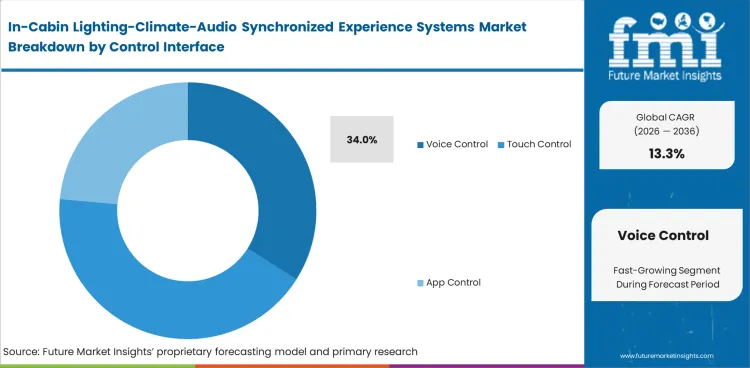
- Voice control is expected to contribute 34.0% of control interface demand in 2026 through hands-free cabin use.
- Geography and Competitive Outlook
- China is projected to record 15.8% CAGR during the forecast period, supported by EV output and smart cockpit content.
- The United States is expected to advance at 13.9% CAGR by 2036 through premium SUV and connected cockpit demand.
- HARMAN and FORVIA hold stronger positions through audio capability and OEM program access.
- Continental and Valeo rely on electronics portfolios and automotive human-machine interface capabilities.
- Analyst Opinion
- Nikhil Kaitwade, Principal Consultant at FMI states: “The in-cabin lighting-climate-audio synchronized experience systems are preferred in premium EVs because quiet cabins make lighting transitions and sound balance easier to notice. OEMs are using synchronized presets to convert scattered comfort functions into one cabin experience. Sustained demand is expected to originate from factory‑integrated systems validated for lighting behavior and audio calibration. End users need simple controls that reduce screen fatigue and improve cabin comfort. Competitive advantage can be obtained from software control and climate interface access instead of broad cockpit feature claims.”
- In-Cabin Lighting-Climate-Audio Synchronized Experience Systems Market Value Analysis
- Full cabin sync now serves premium cockpit programs needing lighting and audio response through one profile.
- Passenger cars create the largest demand base as premium trim content spreads across mainstream vehicle platforms.
- OEM Fitment supports recurring supplier access as automakers approve synchronized systems during vehicle development.
- Wider adoption relies on supplier ability to combine automotive electronics with simple user controls.
- Price pressure is highest in mid-range vehicles since extra software and sensors affect trim package approval.
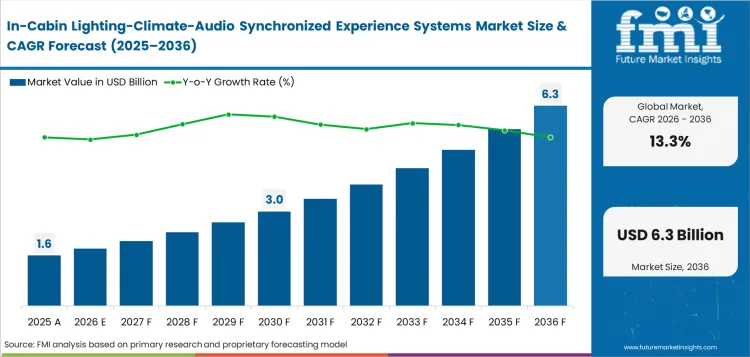
Key Takeaways, Market Size, and Forecast
- In-cabin lighting-climate-audio synchronized experience systems market valuation was USD 1.42 billion in 2025.
- Revenue is expected to reach USD 5.58 billion by 2036 through wider cockpit software use.
- Sales expansion is forecast at 13.3% CAGR across 2026 to 2036.
- Incremental opportunity across 2026 to 2036 is USD 3.98 billion.
- Full Cabin Sync is expected to lead system type demand with 38.0% share in 2026.
- China is projected to record 15.8% CAGR in synchronized in-cabin experience systems through 2036.
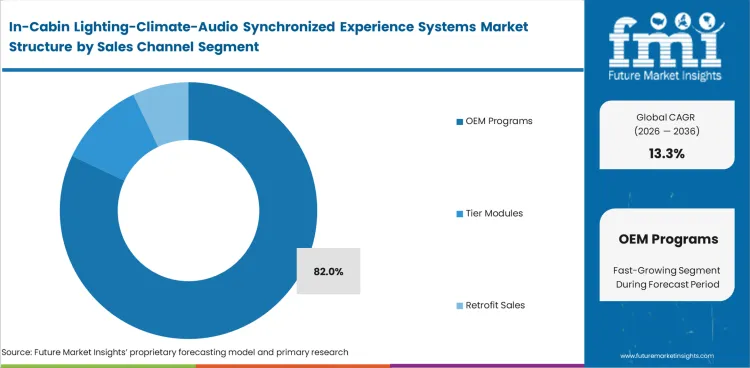
- OEM Programs are projected to account for 82.0% share in 2026.
In-Cabin Lighting-Climate-Audio Synchronized Experience Systems Market Definition
In-cabin lighting-climate-audio synchronized experience systems include integrated vehicle systems that coordinate ambient lighting and audio settings. Scope includes factory-installed software and modules used to create driving modes and passenger comfort presets. Products serve passenger cars and shared mobility vehicles with connected cockpit features. Standalone speakers and non-connected infotainment units are outside scope.
In-Cabin Lighting-Climate-Audio Synchronized Experience Systems Market Inclusions
The market scope includes all commercially traded in-cabin lighting-climate-audio synchronized experience systems classified by system type, covering Lighting Sync, Climate Sync, Audio Sync, and Full Cabin Sync packages. Coverage spans vehicle classes such as passenger cars, premium EVs, luxury SUVs, and shared mobility vehicles, along with integration levels across OEM fitment, software upgrades, and aftermarket kits. Control interfaces include voice control, touch control, app control, and sensor control systems. Revenue analysis covers the period from 2026 to 2036.
Key stakeholders across the value chain include cockpit system suppliers, ambient lighting, audio, climate control, sensor, and software providers, automotive OEMs, tier-one module integrators, infotainment platform companies, interior electronics suppliers, EV manufacturers, luxury vehicle brands, shared mobility operators, retrofit channel partners, testing laboratories, and automotive safety and software regulatory authorities.
Scope includes lighting sync systems and climate sync systems. Audio sync and full cabin sync packages are included. OEM fitment and software upgrades are covered. App control and sensor control are within scope. Retrofit supply is included only for systems that coordinate at least two cabin functions.
In-Cabin Lighting-Climate-Audio Synchronized Experience Systems Market Exclusions
Scope excludes standalone car speakers and single-color decorative lighting. Manual HVAC controls and basic infotainment units are outside scope. Seat massage systems without cabin synchronization are excluded. Home audio and non-automotive entertainment products are outside market scope.
In-Cabin Lighting-Climate-Audio Synchronized Experience Systems Market Research Methodology
- Primary Research: FMI analysts reviewed automotive cockpit suppliers and tier-one electronics companies. OEM interior teams and audio integration specialists were reviewed separately. The research focused on cabin software control and platform approval cycles. It reviewed pricing sensitivity and comfort feature packaging.
- Desk Research: Desk research covered vehicle production statistics and electric vehicle sales data. Official automotive trade body data and supplier releases helped define demand exposure. Company product information defined cockpit software and automotive infotainment SoCs relevance. Interior lighting and connected cockpit systems were reviewed separately.
- Market Sizing and Forecasting: The sizing model combined passenger vehicle output and premium trim fitment. Cabin electronics content and synchronized system attachment rates were considered after segment review. Forecasts were cross-checked with EV adoption and smart cockpit programs. Country production and supplier presence were reviewed as separate checks.
- Data Validation: Validation compared company portfolios and public automotive production signals. End-use demand and cockpit technology patterns were checked separately. Forecasts were adjusted for OEM fitment rates and regional vehicle platform shifts.
Factors Supporting In-Cabin Lighting-Climate-Audio Synchronized Experience Systems Demand
- EV cabins require richer comfort settings since low drivetrain noise makes sound and airflow quality easier to detect.
- Software-defined vehicle platforms support cabin presets through updates after vehicle delivery and trim-level upgrades.
- Premium passenger cars create first demand pockets as companies accept higher cost for richer cockpit personalization.
- OEMs standardize cabin control validation to reduce program risk across lighting and audio modules.
- Voice control reinforce wider use as drivers reduce manual input across screen-heavy cockpit designs.
Electric vehicle cabins are a larger demand source for synchronized systems as comfort cues shift from engine sound to interior feel. Global electric car sales topped 17 million worldwide in 2024 and represented more than 20.0% of new cars sold. Such wider EV base improves revenue potential from lighting and sound packages. Synchronized cabin systems enter these vehicles through cockpit software and connected electronics. OEMs need systems able to create visible difference without adding complex user steps. Suppliers must support validation for acoustic response and thermal control. Preference is moving toward systems with proven cabin behavior.
Vehicle output creates another high-value sales opportunity since automakers can spread cockpit software across multiple models. Global vehicle production rose from 92.7 million units in 2024 to 96.4 million units in 2025. Wider production base supports small attachment-rate increases across OEM cockpit programs. In-cabin synchronized systems benefit from automotive display expansion and connected interior controls. Companies need faster qualification as cockpit software changes can delay complete vehicle programs. Smart cabin programs concentrate value in suppliers able to combine all components and user experience testing.
Market Segmentation Analysis
- Full Cabin Sync segment is estimated to account for 38.0% share in 2026 due to unified lighting and comfort control.
- In 2026, passenger cars are expected to hold 54.0% share due to higher premium trim scale.
- OEM Fitment is anticipated to capture 76.0% of integration demand in 2026, driven by factory approval needs.
- Voice Control is expected to represent 34.0% of interface demand in 2026 through reduced screen dependence.
- In 2026, OEM Programs are expected to contribute 82.0% as synchronized systems need platform-level integration.
The market is divided into system type, vehicle class, integration level, control interface, sales channel, and region. System type covers Lighting Sync and Climate Sync. Audio Sync and Full Cabin Sync are included as well. Vehicle class covers passenger cars and premium EVs. Luxury SUVs and shared mobility vehicles are covered. Integration level includes OEM Fitment and Software Upgrade. Aftermarket Kits are included. Control Interface includes Voice Control and Touch Control. App Control and Sensor Control are covered as separate demand uses.
Insights into the Full Cabin Sync System Type Segment
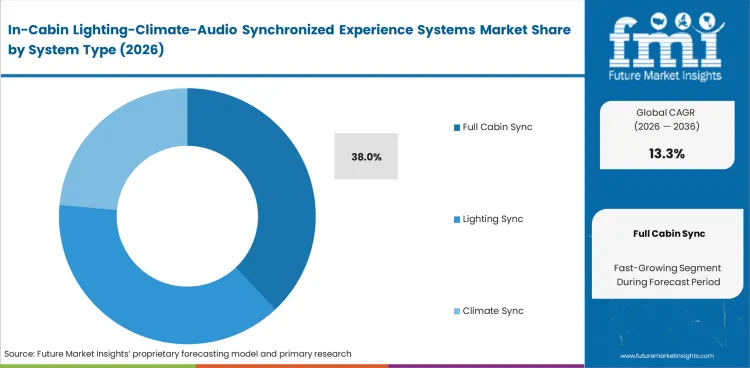
In-Cabin Lighting-Climate-Audio Synchronized Experience Systems Market Analysis By System Type
- In 2026, Full Cabin Sync is projected to account for 38.0% of system type demand as one preset controls multiple cabin responses.
- Lighting Sync enters more mid-trim cars, while Full Cabin Sync is stronger in EVs using richer automotive interior ambient lighting systems.
Insights into the Passenger Cars Vehicle Class Segment
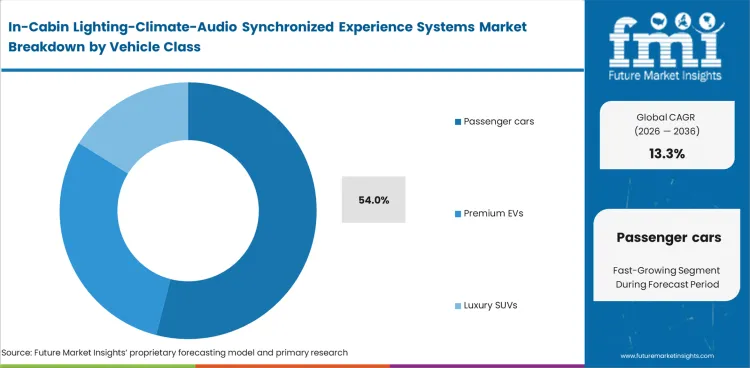
In-Cabin Lighting-Climate-Audio Synchronized Experience Systems Market Analysis By Vehicle Class
- Passenger cars are expected to represent 54.0% of vehicle class demand in 2026 due to wider platform volumes.
- Premium EV demand is rising as quiet cabin design increases need for sound tuning and smooth airflow response.
Insights into the OEM Fitment Integration Level Segment
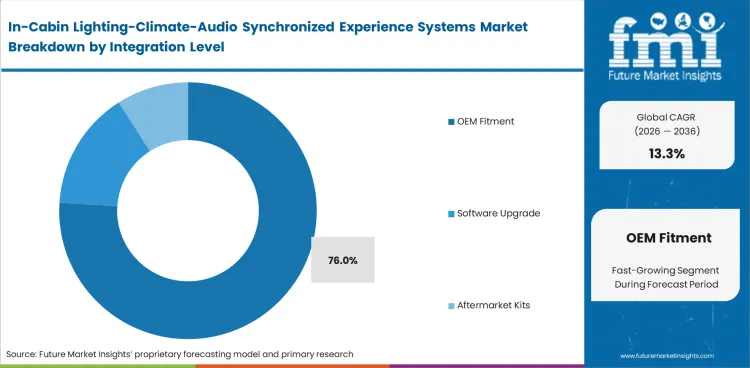
In-Cabin Lighting-Climate-Audio Synchronized Experience Systems Market Analysis By Integration Level
- OEM Fitment is anticipated to represent 76.0% of integration level demand in 2026 through factory wiring and software approval.
- Software Upgrade follows OEM Fitment as automakers use connected platforms to refresh cabin presets after vehicle sale.
Insights into the Voice Control Interface Segment
In-Cabin Lighting-Climate-Audio Synchronized Experience Systems Market Analysis By Control Interface
- Voice Control is projected to account for 34.0% of interface demand in 2026 as drivers avoid repeated screen inputs.
- Sensor Control gains attention in premium vehicles since occupant detection can adjust lighting and airflow automatically.
Insights into the OEM Programs Sales Channel Segment
In-Cabin Lighting-Climate-Audio Synchronized Experience Systems Market Analysis By Sales Channel
- OEM programs are expected to hold 82.0% share in 2026, driven by platform validation and cockpit software access.
- Retrofit sales are lower since full climate coordination needs vehicle software permission and approved control interfaces.
In-Cabin Lighting-Climate-Audio Synchronized Experience Systems Market Drivers, Restraints, and Opportunities
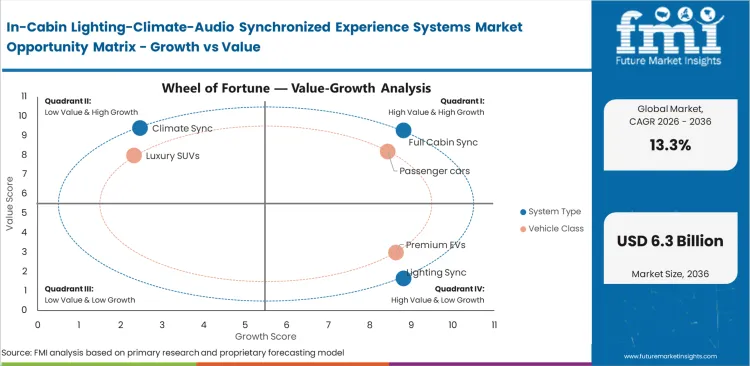
- EV cabin quietness drives demand for systems able to match sound and light behavior.
- Larger cockpit displays support synchronized presets as vehicle interiors shift toward digital control surfaces.
- Software validation is a restraint since multi-function systems must pass OEM comfort and reliability checks.
- Shared mobility creates opportunity for resettable cabin profiles across different passengers and usage patterns.
- Premium vehicle trims enable early adoption as comfort features help defend higher price points.
Software Preset Validation
Software control creates another defined demand base as cabins become more connected and personalized. HARMAN introduced enhanced Ready portfolio features at CES 2025 for intelligent in-cabin experiences. The release points to stronger supplier interest in context-aware cabin behavior and software-driven user experience. Synchronized systems benefit when automotive communication technology supports faster data movement across cabin modules. Vehicle makers need suppliers able to manage updates without disrupting safety or comfort functions. The shift makes qualification centered on tested cabin response instead of broad feature lists.
Driver Distraction Is Tightening Interface Proof
For the In-cabin lighting-climate-audio synchronized experience systems market, regulatory compliance is becoming a safety validation issue because these systems alter cabin lighting and driver attention at the same time. NHTSA states that distracted driving claimed 3,208 lives in 2024 and injured 315,167 people in 2024. It also defines distracted driving as any activity that diverts attention from driving. This matters for synchronized cabin systems because OEM buyers expect proof that lighting changes and display logic do not create visual or cognitive distraction risk. Suppliers should prioritize human factors testing and clear driver override design.
Shared Cabin Use Cases
Shared mobility and family vehicles create new openings for personal cabin profiles. Drivers can use one command to restore preferred light level and sound balance. That use case supports automotive multimodal interaction development as cabins accept voice and app-based controls. Resettable profiles are useful when vehicles serve different users during the same day. Suppliers can retain edge by reducing adjustment time and improving passenger comfort. Connected vehicles with cloud‑linked user accounts present the strongest opportunity.
Analysis of In-Cabin Lighting-Climate-Audio Synchronized Experience Systems Market By Key Countries
.webp "Top Country Growth Comparison In Cabin Lighting Climate Audio Synchronized Experience Systems Market Cagr (2026 2036)")
| Country | CAGR |
|---|---|
| China | 15.8% |
| United States | 13.9% |
| South Korea | 13.5% |
| Germany | 12.8% |
| Japan | 12.1% |
| India | 11.7% |
| United Kingdom | 10.9% |
Source: FMI analysis based on primary research and proprietary forecasting model.
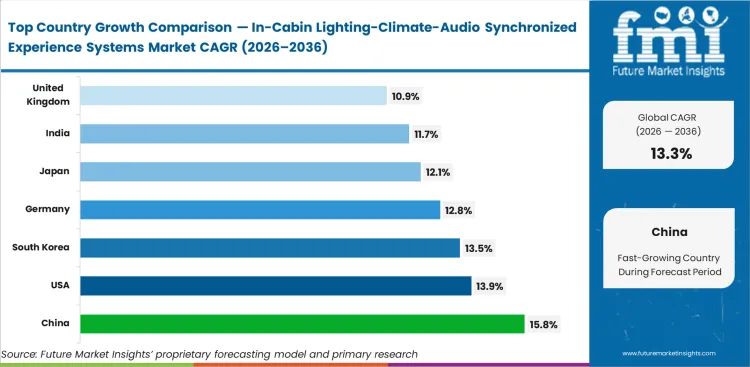
In-Cabin Lighting-Climate-Audio Synchronized Experience Systems CAGR Analysis By Country
- China is projected to progress at a CAGR of 15.8% by 2036, driven by EV output and smart cockpit adoption.
- The United States is projected to record a CAGR of 13.9% through 2036, with expansion linked to premium SUVs.
- South Korea is forecast to garner a CAGR of 13.5% during the assessment period, supported by export vehicle programs.
- Germany is anticipated to expand at a CAGR of 12.8% over the forecast period, helped by premium cockpit requirements.
- Japan is projected to post a CAGR of 12.1% by 2036, with demand tied to quiet cabin engineering.
- India is expected to advance at a CAGR of 11.7% through 2036, as premium passenger vehicles add connected features.
- The United Kingdom is expected to register a CAGR of 10.9% during the forecast period, with support from luxury vehicle programs.
Demand Outlook for In-Cabin Lighting-Climate-Audio Synchronized Experience Systems in China
China’s position is shaped by EV production capability and local cockpit electronics supply. Both areas support faster approval for synchronized cabin systems. China produced over 30.0 million vehicles in 2025 through industry reporting and remained the largest vehicle production base. Local EV platforms require higher specification systems for smart cockpit and passenger experience functions. China is projected at 15.8% CAGR by 2036 with EV and electronics supply facilitating cabin synchronization. Local suppliers obtain orders if validation speed and lower service cost match automaker needs.
- Shanghai EV programs support synchronized cabin demand across smart cockpit and digital interface supply chains.
- Guangdong electronics clusters aid module sourcing for lighting controls and cabin software systems.
- Chongqing and Hubei auto plants drive repeat demand for qualified cockpit suppliers near vehicle production.
Sales Analysis of In-Cabin Lighting-Climate-Audio Synchronized Experience Systems in the United States
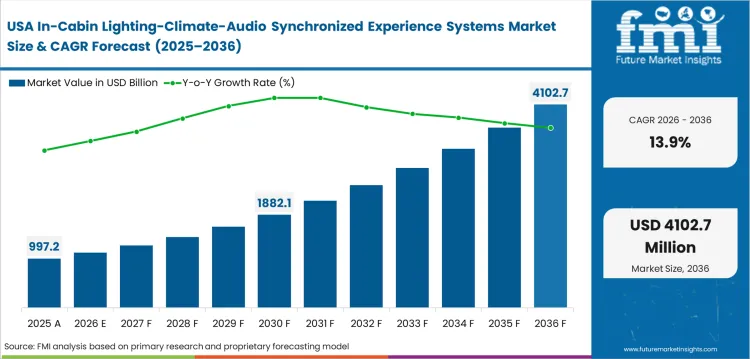
The United States has mature demand from premium SUVs and connected vehicle programs. Large cabins create stronger use cases for branded sound and multi-zone comfort settings. Electric car sales were up 35.0% year-on-year in the first three months of 2025 across major markets. Growing demand favors cabin systems that unify audio performance with occupant comfort features. The United States is forecast to grow at 13.9% rate during the study period, driven by SUV and EV programs. Premium demand rises due to richer cockpit controls. Suppliers with software-tested systems can defend price premiums.
- Michigan engineering centers support cockpit validation for Detroit automaker interior programs.
- California EV programs aid synchronized cabin use across premium electric models and connected services.
- Texas pickup and SUV demand drive larger cabin packages with branded audio and comfort-focused features.
Demand Analysis of In-Cabin Lighting-Climate-Audio Synchronized Experience Systems in South Korea
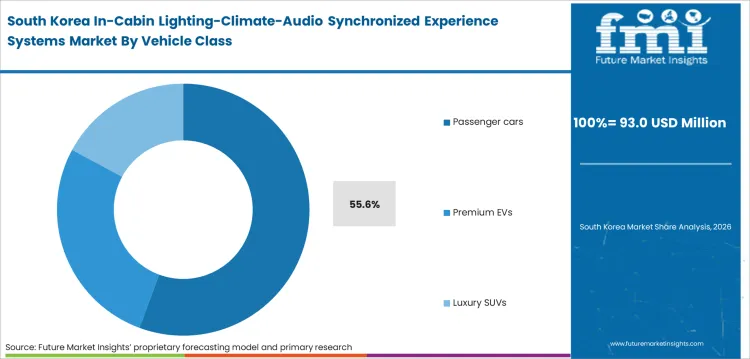
South Korea’s demand is shaped by export-focused automakers and advanced cabin electronics. Hyundai and Kia platforms create demand for digital cockpit functions across global vehicle lines. OICA listed South Korea among major vehicle producers in 2025 industry reporting. That production position supports synchronized cabin qualification for Europe and North America. South Korea is forecast to expand at 13.5% CAGR during the forecast period through export vehicle programs. Cabin experience systems serve these models through comfort and software coordination. Suppliers need clean integration data and reliable module behavior to pass purchase checks.
- Ulsan supports Hyundai output and cockpit supplier activity across global vehicle programs.
- Gyeonggi Province aids electronics and display suppliers serving cabin technology development.
- Busan logistics access helps export vehicle supply chains needing stable cockpit module delivery schedules.
Opportunity Analysis of In-Cabin Lighting-Climate-Audio Synchronized Experience Systems in Germany
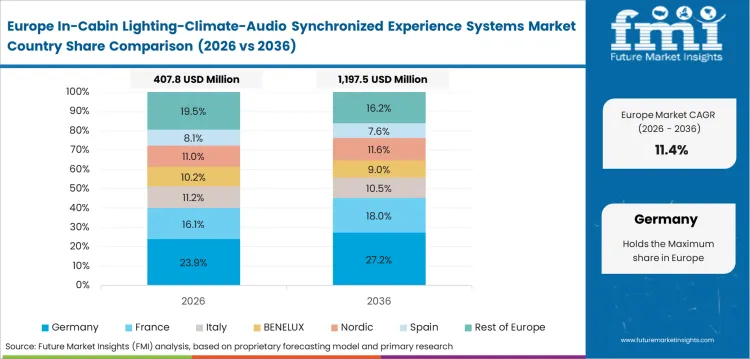
Germany is expected to advance at 12.8% CAGR over the forecast period through premium OEM cockpit demand. Germany’s role is highest in luxury vehicles and high-specification cabin systems. Premium automakers focus on acoustic comfort and display-linked interior controls, sustaining qualification activity for synchronized systems despite pressure on total vehicle output. Germany-based OEMs focus on cabin quality and long-term software reliability. Electronic control units in automotive systems reinforce demand for stable control across cabin functions.
- Bavaria supports premium vehicle programs through BMW and related interior electronics supplier networks.
- Baden-Württemberg strengthens Mercedes-Benz and Porsche programs needing high cabin refinement.
- Lower Saxony reinforces Volkswagen platforms with broad scale across premium and mass-premium vehicles.
Future Outlook for In-Cabin Lighting-Climate-Audio Synchronized Experience Systems in Japan
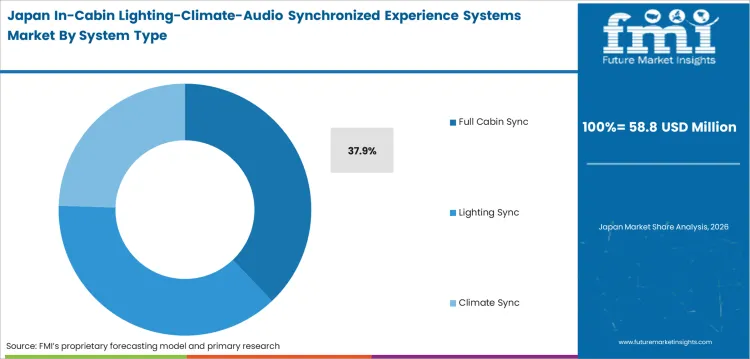
Japan’s market reflects careful vehicle qualification and compact cabin design. Local automakers often prefer proven systems and quiet operation over visually complex interiors. Global EV sales exceeded 17 million units in 2024, strengthening the case for quieter cabin comfort systems. Demand is high for low‑noise airflow and subtle lighting control. Japan-based brands adopt synchronized systems in premium trims and advanced comfort packages. Japan is projected to rise at 12.1% CAGR through 2036 as precision cabin engineering supports selective fitment. Suppliers must prove repeatable behavior across sound and lighting tests.
- Aichi automotive clusters support synchronized systems across Toyota-linked vehicle programs.
- Kanagawa enables Nissan engineering and supplier collaboration for cockpit display systems.
- Shizuoka and Tokyo design networks aid compact cabin comfort testing and interface development.
Demand Outlook for In-Cabin Lighting-Climate-Audio Synchronized Experience Systems in India
India’s demand base is shaped by passenger vehicle upgrades and premium SUV sales. SIAM reported passenger vehicle sales of around 45.0 lakh units during 2025 through industry data. Such factor reflects direct opportunity for ambient lighting and comfort-linked cabin features. Electric cars and premium SUVs create early demand for synchronized in-cabin systems. Individual buyers often require a balance between software functionality and cost limits. India is forecast at 11.7% CAGR through 2036 as higher trims add connected cockpit packages. Manufacturer opportunity improves if local support matches automaker timelines.
- Haryana automotive clusters aid cockpit program demand through Maruti Suzuki and supplier networks.
- Tamil Nadu EV and automotive plants aid cabin electronics demand near Chennai and Hosur production belts.
- Maharashtra premium vehicle sales strengthen synchronized cabin adoption across Mumbai and Pune dealer markets.
In-depth Analysis of In-Cabin Lighting-Climate-Audio Synchronized Experience Systems in the United Kingdom
The United Kingdom combines luxury vehicle production with specialist automotive engineering sites. Premium brands and design teams create demand for high-value cockpit features. Lower production scale increases attention on content value per vehicle program. Synchronized systems serve luxury cars and export-oriented premium models. Engineering sites create demand through cockpit testing and supplier qualification. The United Kingdom is expected to record 10.9% CAGR by 2036 as premium programs and specialist engineering support synchronized cabin use.
- West Midlands serves luxury vehicle engineering through Jaguar Land Rover supplier links.
- Sunderland reinforces EV-linked assembly and supplier activity for cockpit electronics systems.
- Oxford aids premium car production and specialist testing networks for advanced cabin functions.
Competitive Landscape and Strategic Positioning
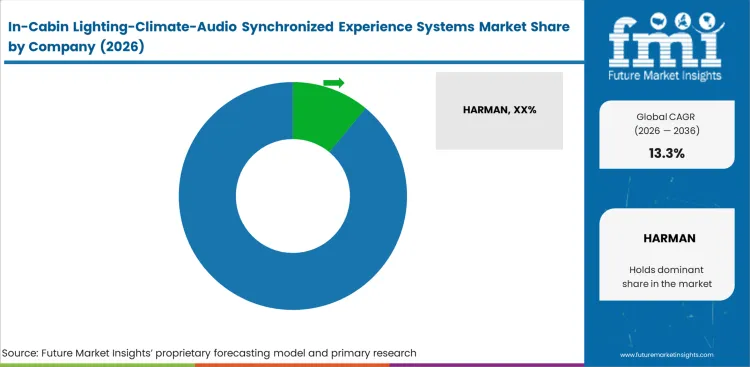
- The market is moderately concentrated with global cockpit suppliers controlling large OEM software and electronics programs.
- Smaller suppliers strengthen position through lighting modules and sensor software for cabin testing.
- Barriers to entry include software validation and climate interface access. OEM trust raises the entry threshold.
- Regional suppliers can win local vehicle programs if technical support and module quality meet automaker needs.
Competitive strength begins with proof of system behavior across lighting and audio functions. Automakers test cabin response before approving suppliers. Acoustic tuning and software stability decide final qualification. HARMAN’s January 2025 Ready portfolio update points to stronger demand for intelligent in-cabin experiences. The development indicates approved suppliers can secure repeat work after technical qualification. In premium cars and electric vehicles, weak cabin synchronization can create user frustration and warranty exposure. Suppliers with validation expertise and automotive touch screen control systems experience hold deeper positions in long-cycle accounts.
Established companies benefit from product breadth across cockpit electronics and cabin modules. FORVIA serves interior systems through smart surfaces and integrated cockpit content. Continental competes through electronics architecture and software-defined vehicle capability. Valeo offers multisensory interior experience through sound and light work with Sennheiser. These companies can cater to purchasers from module design through final vehicle integration. That service range reduces switching risk for automakers using automotive microcontrollers across connected cabin functions.
Specialist companies win orders through focused audio and user experience capabilities. Local support helps automakers reduce development delays. HARMAN has a high position in branded audio and cockpit software. LG Electronics make infotainment and connected vehicle electronics. Panasonic Automotive competes through display and cabin technology experience. Partnership activity may increase as larger vendors seek more cabin experience capability.
Entry is difficult as synchronized systems must work inside existing vehicle approval systems. Compatibility with HVAC software and safety controls creates a technical hurdle for new entrants. A supplier can build an ambient lighting system but fail purchase checks on thermal response. Premium and EV customers need durability data across software updates and cabin use cycles. Automotive sector buyers need knowledge for cockpit design and user testing. The strongest suppliers combine software reliability with application support during specification.
Key Companies in the In-Cabin Lighting-Climate-Audio Synchronized Experience Systems Market
In-cabin synchronized system competition includes global cockpit suppliers and experience software companies.
- Global cockpit suppliers: HARMAN and FORVIA strengthen positioning through cockpit technology expertise and OEM program access. HARMAN manufactures audio-led cabin experience through branded sound and software platforms. FORVIA serves cockpit users through interior modules and smart surface capability. Continental produces automotive headliner and control integration using unified electronics architecture.
- Cabin module specialists: Valeo and Marelli maintain advantage through lighting systems and cockpit module expertise. Valeo offers immersive sound and light experience through ImagIn development. Marelli makes lighting and electronic systems across global vehicle platforms. Their advantage is highest in programs needing proven lighting control and module packaging.
- Experience software companies: Hyundai Mobis and LG Electronics are focusing on connected cockpit and infotainment capability. Hyundai Mobis makes OEM cabin electronics through integrated module supply. LG Electronics increases cockpit software strength through infotainment and display electronics. These companies are better positioned if automakers need cabin functions connected with Asia Pacific in-car entertainment systems.
Competitive Benchmarking: In-Cabin Lighting-Climate-Audio Synchronized Experience Systems Market
| Company | Cabin Software Depth | Audio-Light Calibration | Climate Interface Access | Geographic Footprint |
|---|---|---|---|---|
| HARMAN | High | High | Medium | Global |
| FORVIA | High | Medium | High | Global |
| Continental | High | Medium | Medium | Global |
| Valeo | Medium | High | Medium | Global |
| Bosch | High | Medium | Medium | Global |
| Marelli | Medium | High | Medium | Asia and Europe |
| Hyundai Mobis | Medium | Medium | High | Asia and Global |
| LG Electronics | High | High | Medium | Asia and Global |
Source: Future Market Insights competitive analysis, 2026. Ratings reflect relative positioning based on Cabin Software Depth, Audio-Light Calibration, and Climate Interface Access.
Key Developments in In-Cabin Lighting-Climate-Audio Synchronized Experience Systems Market
- In January 2024, Valeo and Sennheiser presented ImagIn at CES 2024, enabling immersive sound and light experience inside vehicles.
- In December 2025, HARMAN announced an agreement to acquire ZF’s ADAS business, strengthening centralized electronics capability for software-defined vehicles.
Key Players in the In-Cabin Lighting-Climate-Audio Synchronized Experience Systems Market
Global Cockpit Suppliers
- HARMAN
- FORVIA
- Continental
- Bosch
Cabin Module Specialists
- Valeo
- Marelli
- Hyundai Mobis
Experience Software Companies
- LG Electronics
- Panasonic Automotive
- Aptiv
Report Scope and Coverage
| Parameter | Details |
|---|---|
| Quantitative Units | USD 1.60 billion in 2026 to USD 5.58 billion by 2036, at 13.3% CAGR |
| Market Definition | Integrated vehicle cabin systems coordinating lighting, climate response, and audio settings through one control layer |
| Regions Covered | North America, Latin America, Europe, East Asia, South Asia and Pacific, Middle East and Africa |
| Countries Covered | China, United States, South Korea, Germany, Japan, India, United Kingdom and 30+ countries |
| Key Companies Profiled | HARMAN, FORVIA, Continental, Valeo, Bosch, Marelli, Hyundai Mobis and LG Electronics |
| Forecast Period | 2026 to 2036 |
| Approach | Hybrid bottom-up and top-down method using vehicle production, EV penetration, cockpit content value and country demand checks |
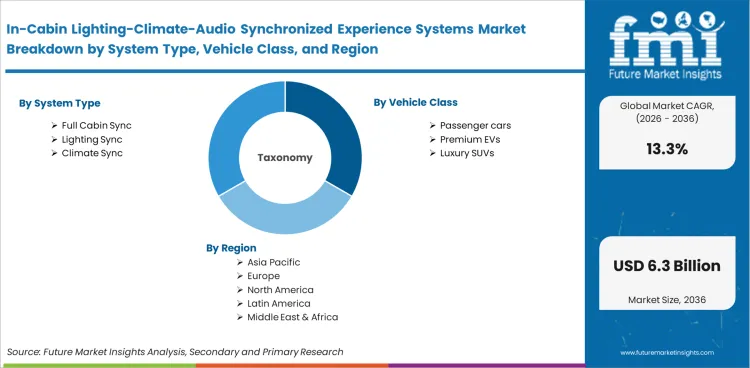
In-Cabin Lighting-Climate-Audio Synchronized Experience Systems Market Breakdown By System Type, Vehicle Class, Integration Level, Control Interface, Sales Channel and Region
In-Cabin Lighting-Climate-Audio Synchronized Experience Systems Market Segmented by System Type:
- Lighting Sync
- Climate Sync
- Audio Sync
- Full Cabin Sync
In-Cabin Lighting-Climate-Audio Synchronized Experience Systems Market Segmented by Vehicle Class:
- Passenger Cars
- Premium EVs
- Luxury SUVs
- Shared Mobility
In-Cabin Lighting-Climate-Audio Synchronized Experience Systems Market Segmented by Integration Level:
- OEM Fitment
- Software Upgrade
- Aftermarket Kits
In-Cabin Lighting-Climate-Audio Synchronized Experience Systems Market Segmented by Control Interface:
- Voice Control
- Touch Control
- App Control
- Sensor Control
In-Cabin Lighting-Climate-Audio Synchronized Experience Systems Market Segmented by Sales Channel:
- OEM Programs
- Tier Modules
- Retrofit Sales
In-Cabin Lighting-Climate-Audio Synchronized Experience Systems Market by Region:
- North America
- United States
- Canada
- Mexico
- Latin America
- Brazil
- Chile
- Rest of Latin America
- Western Europe
- Germany
- UK
- Italy
- Spain
- France
- Nordic
- BENELUX
- Rest of Western Europe
- Eastern Europe
- Russia
- Poland
- Hungary
- Balkan and Baltic
- Rest of Eastern Europe
- East Asia
- China
- Japan
- South Korea
- South Asia and Pacific
- India
- ASEAN
- Australia and New Zealand
- Rest of South Asia and Pacific
- Middle East and Africa
- Kingdom of Saudi Arabia
- Other GCC Countries
- Turkiye
- South Africa
- Other African Union
- Rest of Middle East and Africa
Research Sources and Bibliography
- National Highway Traffic Safety Administration. (n.d.). Distracted Driving Dangers and Statistics | NHTSA.
- International Energy Agency. (2025, May 14). Executive summary - Global EV Outlook 2025. IEA.
- International Organization of Motor Vehicle Manufacturers. (2026, April 23). Auto industry growth shifted east in 2025 amid global repositioning. OICA
- Society of Indian Automobile Manufacturers. (2026, January). Auto Industry Performance of December 2025 and Q3 October-December 2025. SIAM.
- European Automobile Manufacturers’ Association. (2025, January 29). Vehicles on European roads 2025. ACEA.
- HARMAN. (2025, January 6). HARMAN redefines in-cabin experiences, turning cars into intelligent, empathetic companions. HARMAN Newsroom.
- Valeo. (2024, January 4). At CES 2024, Valeo and Sennheiser present ImagIn: An immersive sound and light experience in your car. Valeo.
- HARMAN. (2025, May 12). HARMAN becomes one of the first to open-source complete connected services platform with Eclipse Foundation. HARMAN Newsroom.
- HARMAN. (2025, December 23). HARMAN to acquire ZF’s ADAS business. HARMAN Newsroom.
The bibliography is provided for reader reference and uses trade body data, official company sources and verified FMI reference pages.
This Report Answers
- What is the projected size of in-cabin lighting-climate-audio synchronized experience systems in 2026 and 2036?
- Which CAGR is forecast for synchronized cabin experience system demand between 2026 and 2036?
- Which system type is projected to lead in-cabin synchronized experience system demand in 2026?
- Which vehicle class is expected to account for the highest share in 2026?
- Which countries are forecast to record faster synchronized cabin system expansion through 2036?
- Which companies hold deeper positions in cockpit software and cabin electronics systems?
- Which system types are included and excluded from this synchronized cabin experience scope?
- Which interface types shape cabin comfort control and factory program demand?
- Which methodology supports FMI’s market size and country-level forecast view?
Frequently Asked Questions
What is the global demand for in-cabin lighting-climate-audio synchronized experience systems in 2026?
For 2026, the global market is expected to be worth USD 1.60 billion through wider OEM cockpit use.
What is the projected value of the market by 2036?
By 2036, valuation is projected to reach USD 5.58 billion as synchronized cabin system use expands.
What CAGR is expected for the market between 2026 and 2036?
The market is forecast to expand at 13.3% CAGR between 2026 and 2036 across automotive applications.
Which system type is projected to lead in 2026?
Full Cabin Sync is projected to account for 38.0% share in 2026 through unified cabin preset use.
Which sales channel is expected to lead in 2026?
OEM Programs are expected to represent 82.0% share in 2026 due to factory-level system validation.
Which country is forecast to expand fastest through 2036?
China is projected to record 15.8% CAGR through 2036 as EV output supports smart cockpit demand.
What is included in this market?
The scope includes integrated systems coordinating ambient lighting and audio settings inside vehicle cabins.
What method supports the forecast?
FMI used vehicle production and cockpit content value and country demand checks to validate the forecast.
Preview the report firsthand - request a free sample
Get SampleGet the brochure for pricing and purchase details.
Get PDFTable of Content
- Executive Summary
- Global Market Outlook
- Demand-side Trends
- Supply-side Trends
- Technology Roadmap Analysis
- Analysis and Recommendations
- Market Overview
- Market Coverage / Taxonomy
- Market Definition / Scope / Limitations
- Research Methodology
- Chapter Orientation
- Analytical Lens and Working Hypotheses
- Market Structure, Signals, and Trend Drivers
- Benchmarking and Cross-market Comparability
- Market Sizing, Forecasting, and Opportunity Mapping
- Research Design and Evidence Framework
- Desk Research Programme (Secondary Evidence)
- Company Annual and Sustainability Reports
- Peer-reviewed Journals and Academic Literature
- Corporate Websites, Product Literature, and Technical Notes
- Earnings Decks and Investor Briefings
- Statutory Filings and Regulatory Disclosures
- Technical White Papers and Standards Notes
- Trade Journals, Industry Magazines, and Analyst Briefs
- Conference Proceedings, Webinars, and Seminar Materials
- Government Statistics Portals and Public Data Releases
- Press Releases and Reputable Media Coverage
- Specialist Newsletters and Curated Briefings
- Sector Databases and Reference Repositories
- FMI Internal Proprietary Databases and Historical Market Datasets
- Subscription Datasets and Paid Sources
- Social Channels, Communities, and Digital Listening Inputs
- Additional Desk Sources
- Expert Input and Fieldwork (Primary Evidence)
- Primary Modes
- Qualitative Interviews and Expert Elicitation
- Quantitative Surveys and Structured Data Capture
- Blended Approach
- Why Primary Evidence is Used
- Field Techniques
- Interviews
- Surveys
- Focus Groups
- Observational and In-context Research
- Social and Community Interactions
- Stakeholder Universe Engaged
- C-suite Leaders
- Board Members
- Presidents and Vice Presidents
- R&D and Innovation Heads
- Technical Specialists
- Domain Subject-matter Experts
- Scientists
- Physicians and Other Healthcare Professionals
- Governance, Ethics, and Data Stewardship
- Research Ethics
- Data Integrity and Handling
- Primary Modes
- Tooling, Models, and Reference Databases
- Desk Research Programme (Secondary Evidence)
- Data Engineering and Model Build
- Data Acquisition and Ingestion
- Cleaning, Normalisation, and Verification
- Synthesis, Triangulation, and Analysis
- Quality Assurance and Audit Trail
- Market Background
- Market Dynamics
- Drivers
- Restraints
- Opportunity
- Trends
- Scenario Forecast
- Demand in Optimistic Scenario
- Demand in Likely Scenario
- Demand in Conservative Scenario
- Opportunity Map Analysis
- Product Life Cycle Analysis
- Supply Chain Analysis
- Investment Feasibility Matrix
- Value Chain Analysis
- PESTLE and Porter’s Analysis
- Regulatory Landscape
- Regional Parent Market Outlook
- Production and Consumption Statistics
- Import and Export Statistics
- Market Dynamics
- Global Market Analysis 2021 to 2025 and Forecast, 2026 to 2036
- Historical Market Size Value (USD Million) Analysis, 2021 to 2025
- Current and Future Market Size Value (USD Million) Projections, 2026 to 2036
- Y-o-Y Growth Trend Analysis
- Absolute $ Opportunity Analysis
- Global Market Pricing Analysis 2021 to 2025 and Forecast 2026 to 2036
- Global Market Analysis 2021 to 2025 and Forecast 2026 to 2036, By System Type
- Introduction / Key Findings
- Historical Market Size Value (USD Million) Analysis By System Type , 2021 to 2025
- Current and Future Market Size Value (USD Million) Analysis and Forecast By System Type , 2026 to 2036
- Full Cabin Sync
- Lighting Sync
- Climate Sync
- Full Cabin Sync
- Y-o-Y Growth Trend Analysis By System Type , 2021 to 2025
- Absolute $ Opportunity Analysis By System Type , 2026 to 2036
- Global Market Analysis 2021 to 2025 and Forecast 2026 to 2036, By Vehicle Class
- Introduction / Key Findings
- Historical Market Size Value (USD Million) Analysis By Vehicle Class, 2021 to 2025
- Current and Future Market Size Value (USD Million) Analysis and Forecast By Vehicle Class, 2026 to 2036
- Passenger cars
- Premium EVs
- Luxury SUVs
- Passenger cars
- Y-o-Y Growth Trend Analysis By Vehicle Class, 2021 to 2025
- Absolute $ Opportunity Analysis By Vehicle Class, 2026 to 2036
- Global Market Analysis 2021 to 2025 and Forecast 2026 to 2036, By Integration Level
- Introduction / Key Findings
- Historical Market Size Value (USD Million) Analysis By Integration Level, 2021 to 2025
- Current and Future Market Size Value (USD Million) Analysis and Forecast By Integration Level, 2026 to 2036
- OEM Fitment
- Software Upgrade
- Aftermarket Kits
- OEM Fitment
- Y-o-Y Growth Trend Analysis By Integration Level, 2021 to 2025
- Absolute $ Opportunity Analysis By Integration Level, 2026 to 2036
- Global Market Analysis 2021 to 2025 and Forecast 2026 to 2036, By Control Interface
- Introduction / Key Findings
- Historical Market Size Value (USD Million) Analysis By Control Interface, 2021 to 2025
- Current and Future Market Size Value (USD Million) Analysis and Forecast By Control Interface, 2026 to 2036
- Voice Control
- Touch Control
- App Control
- Voice Control
- Y-o-Y Growth Trend Analysis By Control Interface, 2021 to 2025
- Absolute $ Opportunity Analysis By Control Interface, 2026 to 2036
- Global Market Analysis 2021 to 2025 and Forecast 2026 to 2036, By Sales Channel
- Introduction / Key Findings
- Historical Market Size Value (USD Million) Analysis By Sales Channel, 2021 to 2025
- Current and Future Market Size Value (USD Million) Analysis and Forecast By Sales Channel, 2026 to 2036
- OEM Programs
- Tier Modules
- Retrofit Sales
- OEM Programs
- Y-o-Y Growth Trend Analysis By Sales Channel, 2021 to 2025
- Absolute $ Opportunity Analysis By Sales Channel, 2026 to 2036
- Global Market Analysis 2021 to 2025 and Forecast 2026 to 2036, By Region
- Introduction
- Historical Market Size Value (USD Million) Analysis By Region, 2021 to 2025
- Current Market Size Value (USD Million) Analysis and Forecast By Region, 2026 to 2036
- North America
- Latin America
- Western Europe
- Eastern Europe
- East Asia
- South Asia and Pacific
- Middle East & Africa
- Market Attractiveness Analysis By Region
- North America Market Analysis 2021 to 2025 and Forecast 2026 to 2036, By Country
- Historical Market Size Value (USD Million) Trend Analysis By Market Taxonomy, 2021 to 2025
- Market Size Value (USD Million) Forecast By Market Taxonomy, 2026 to 2036
- By Country
- USA
- Canada
- Mexico
- By System Type
- By Vehicle Class
- By Integration Level
- By Control Interface
- By Sales Channel
- By Country
- Market Attractiveness Analysis
- By Country
- By System Type
- By Vehicle Class
- By Integration Level
- By Control Interface
- By Sales Channel
- Key Takeaways
- Latin America Market Analysis 2021 to 2025 and Forecast 2026 to 2036, By Country
- Historical Market Size Value (USD Million) Trend Analysis By Market Taxonomy, 2021 to 2025
- Market Size Value (USD Million) Forecast By Market Taxonomy, 2026 to 2036
- By Country
- Brazil
- Chile
- Rest of Latin America
- By System Type
- By Vehicle Class
- By Integration Level
- By Control Interface
- By Sales Channel
- By Country
- Market Attractiveness Analysis
- By Country
- By System Type
- By Vehicle Class
- By Integration Level
- By Control Interface
- By Sales Channel
- Key Takeaways
- Western Europe Market Analysis 2021 to 2025 and Forecast 2026 to 2036, By Country
- Historical Market Size Value (USD Million) Trend Analysis By Market Taxonomy, 2021 to 2025
- Market Size Value (USD Million) Forecast By Market Taxonomy, 2026 to 2036
- By Country
- Germany
- UK
- Italy
- Spain
- France
- Nordic
- BENELUX
- Rest of Western Europe
- By System Type
- By Vehicle Class
- By Integration Level
- By Control Interface
- By Sales Channel
- By Country
- Market Attractiveness Analysis
- By Country
- By System Type
- By Vehicle Class
- By Integration Level
- By Control Interface
- By Sales Channel
- Key Takeaways
- Eastern Europe Market Analysis 2021 to 2025 and Forecast 2026 to 2036, By Country
- Historical Market Size Value (USD Million) Trend Analysis By Market Taxonomy, 2021 to 2025
- Market Size Value (USD Million) Forecast By Market Taxonomy, 2026 to 2036
- By Country
- Russia
- Poland
- Hungary
- Balkan & Baltic
- Rest of Eastern Europe
- By System Type
- By Vehicle Class
- By Integration Level
- By Control Interface
- By Sales Channel
- By Country
- Market Attractiveness Analysis
- By Country
- By System Type
- By Vehicle Class
- By Integration Level
- By Control Interface
- By Sales Channel
- Key Takeaways
- East Asia Market Analysis 2021 to 2025 and Forecast 2026 to 2036, By Country
- Historical Market Size Value (USD Million) Trend Analysis By Market Taxonomy, 2021 to 2025
- Market Size Value (USD Million) Forecast By Market Taxonomy, 2026 to 2036
- By Country
- China
- Japan
- South Korea
- By System Type
- By Vehicle Class
- By Integration Level
- By Control Interface
- By Sales Channel
- By Country
- Market Attractiveness Analysis
- By Country
- By System Type
- By Vehicle Class
- By Integration Level
- By Control Interface
- By Sales Channel
- Key Takeaways
- South Asia and Pacific Market Analysis 2021 to 2025 and Forecast 2026 to 2036, By Country
- Historical Market Size Value (USD Million) Trend Analysis By Market Taxonomy, 2021 to 2025
- Market Size Value (USD Million) Forecast By Market Taxonomy, 2026 to 2036
- By Country
- India
- ASEAN
- Australia & New Zealand
- Rest of South Asia and Pacific
- By System Type
- By Vehicle Class
- By Integration Level
- By Control Interface
- By Sales Channel
- By Country
- Market Attractiveness Analysis
- By Country
- By System Type
- By Vehicle Class
- By Integration Level
- By Control Interface
- By Sales Channel
- Key Takeaways
- Middle East & Africa Market Analysis 2021 to 2025 and Forecast 2026 to 2036, By Country
- Historical Market Size Value (USD Million) Trend Analysis By Market Taxonomy, 2021 to 2025
- Market Size Value (USD Million) Forecast By Market Taxonomy, 2026 to 2036
- By Country
- Kingdom of Saudi Arabia
- Other GCC Countries
- Turkiye
- South Africa
- Other African Union
- Rest of Middle East & Africa
- By System Type
- By Vehicle Class
- By Integration Level
- By Control Interface
- By Sales Channel
- By Country
- Market Attractiveness Analysis
- By Country
- By System Type
- By Vehicle Class
- By Integration Level
- By Control Interface
- By Sales Channel
- Key Takeaways
- Key Countries Market Analysis
- USA
- Pricing Analysis
- Market Share Analysis, 2025
- By System Type
- By Vehicle Class
- By Integration Level
- By Control Interface
- By Sales Channel
- Canada
- Pricing Analysis
- Market Share Analysis, 2025
- By System Type
- By Vehicle Class
- By Integration Level
- By Control Interface
- By Sales Channel
- Mexico
- Pricing Analysis
- Market Share Analysis, 2025
- By System Type
- By Vehicle Class
- By Integration Level
- By Control Interface
- By Sales Channel
- Brazil
- Pricing Analysis
- Market Share Analysis, 2025
- By System Type
- By Vehicle Class
- By Integration Level
- By Control Interface
- By Sales Channel
- Chile
- Pricing Analysis
- Market Share Analysis, 2025
- By System Type
- By Vehicle Class
- By Integration Level
- By Control Interface
- By Sales Channel
- Germany
- Pricing Analysis
- Market Share Analysis, 2025
- By System Type
- By Vehicle Class
- By Integration Level
- By Control Interface
- By Sales Channel
- UK
- Pricing Analysis
- Market Share Analysis, 2025
- By System Type
- By Vehicle Class
- By Integration Level
- By Control Interface
- By Sales Channel
- Italy
- Pricing Analysis
- Market Share Analysis, 2025
- By System Type
- By Vehicle Class
- By Integration Level
- By Control Interface
- By Sales Channel
- Spain
- Pricing Analysis
- Market Share Analysis, 2025
- By System Type
- By Vehicle Class
- By Integration Level
- By Control Interface
- By Sales Channel
- France
- Pricing Analysis
- Market Share Analysis, 2025
- By System Type
- By Vehicle Class
- By Integration Level
- By Control Interface
- By Sales Channel
- India
- Pricing Analysis
- Market Share Analysis, 2025
- By System Type
- By Vehicle Class
- By Integration Level
- By Control Interface
- By Sales Channel
- ASEAN
- Pricing Analysis
- Market Share Analysis, 2025
- By System Type
- By Vehicle Class
- By Integration Level
- By Control Interface
- By Sales Channel
- Australia & New Zealand
- Pricing Analysis
- Market Share Analysis, 2025
- By System Type
- By Vehicle Class
- By Integration Level
- By Control Interface
- By Sales Channel
- China
- Pricing Analysis
- Market Share Analysis, 2025
- By System Type
- By Vehicle Class
- By Integration Level
- By Control Interface
- By Sales Channel
- Japan
- Pricing Analysis
- Market Share Analysis, 2025
- By System Type
- By Vehicle Class
- By Integration Level
- By Control Interface
- By Sales Channel
- South Korea
- Pricing Analysis
- Market Share Analysis, 2025
- By System Type
- By Vehicle Class
- By Integration Level
- By Control Interface
- By Sales Channel
- Russia
- Pricing Analysis
- Market Share Analysis, 2025
- By System Type
- By Vehicle Class
- By Integration Level
- By Control Interface
- By Sales Channel
- Poland
- Pricing Analysis
- Market Share Analysis, 2025
- By System Type
- By Vehicle Class
- By Integration Level
- By Control Interface
- By Sales Channel
- Hungary
- Pricing Analysis
- Market Share Analysis, 2025
- By System Type
- By Vehicle Class
- By Integration Level
- By Control Interface
- By Sales Channel
- Kingdom of Saudi Arabia
- Pricing Analysis
- Market Share Analysis, 2025
- By System Type
- By Vehicle Class
- By Integration Level
- By Control Interface
- By Sales Channel
- Turkiye
- Pricing Analysis
- Market Share Analysis, 2025
- By System Type
- By Vehicle Class
- By Integration Level
- By Control Interface
- By Sales Channel
- South Africa
- Pricing Analysis
- Market Share Analysis, 2025
- By System Type
- By Vehicle Class
- By Integration Level
- By Control Interface
- By Sales Channel
- USA
- Market Structure Analysis
- Competition Dashboard
- Competition Benchmarking
- Market Share Analysis of Top Players
- By Regional
- By System Type
- By Vehicle Class
- By Integration Level
- By Control Interface
- By Sales Channel
- Competition Analysis
- Competition Deep Dive
- HARMAN
- Overview
- Product Portfolio
- Profitability by Market Segments (Product/Age /Sales Channel/Region)
- Sales Footprint
- Strategy Overview
- Marketing Strategy
- Product Strategy
- Channel Strategy
- FORVIA
- Continental
- Bosch
- Valeo
- Marelli
- HARMAN
- Competition Deep Dive
- Assumptions & Acronyms Used


