

- Industry Size (2026)
- USD 1.30 Bn
- Forecast (2036)
- USD 3.80 Bn
- CAGR (2026 to 2036)
- 11.0%
In Vitro Fertilization Market Size, Market Forecast and Outlook By FMI
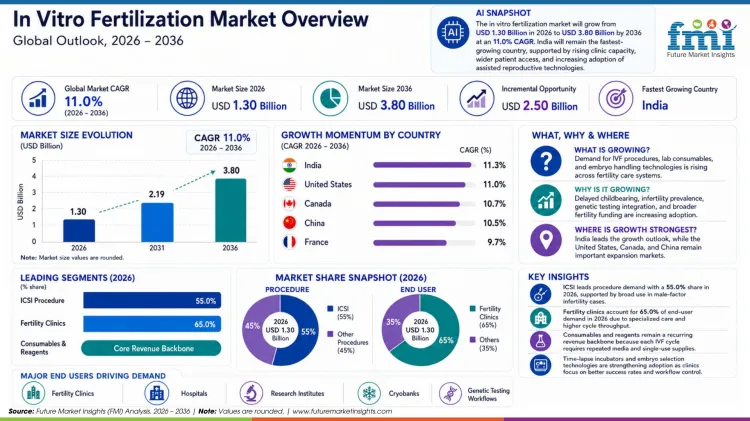
The in vitro fertilization market was valued at USD 1.17 billion in 2025 and is expected to reach USD 1.30 billion in 2026. By 2036, the market is projected to reach USD 3.80 billion. The market is anticipated to register an 11.0% CAGR during the forecast period. ICSI is expected to lead procedures with a 55.0% share, while fertility clinics are likely to account for 65.0% share of end-user demand in 2026.
Key Takeaways, Market Size, and Forecast
- The in vitro fertilization market was valued at USD 1.17 billion in 2025.
- The in vitro fertilization market is expected to reach USD 1.30 billion in 2026.
- By 2036, the in vitro fertilization market is projected to reach USD 3.80 billion.
- From 2026 to 2036, the market is anticipated to expand at an 11.0% CAGR.
- ICSI is expected to account for 55.0% share of the procedure segment in 2026.
- Fertility clinics are likely to hold 65.0% share of the end-user segment in 2026.
- India is projected to record the fastest country-level expansion at 11.3% CAGR by 2036.
Summary of the In Vitro Fertilization Market
- Demand and Growth Drivers
- Delayed childbearing is expected to increase reliance on assisted reproductive technologies across major fertility care systems.
- Genetic testing integration is likely to raise revenue per cycle as clinics add screening to standard workflows.
- Insurance coverage and fertility funding are anticipated to lower patient cost barriers in selected countries.
- Product and Segment View
- Consumables and reagents are expected to remain important revenue streams due to repeated use across IVF cycles.
- ICSI is likely to lead the procedure segment because clinics use it widely for male-factor infertility cases.
- Fertility clinics are anticipated to remain the main end-user group due to specialized care and higher cycle throughput.
- Geography and Competitive Outlook
- India is expected to lead country-level expansion due to rising clinic capacity and wider patient access.
- The United States is likely to record strong expansion as fertility benefits and advanced lab tools support IVF use.
- Companies with embryo culture systems and genetic testing capabilities are anticipated to strengthen their position.
- Analyst Opinion
- Sabyasachi Ghosh, Principal Consultant for Healthcare at FMI, suggests, “The in vitro fertilization market is moving toward outcome-focused fertility care. Suppliers with reliable culture media, AI-enabled embryo selection tools, and strong clinic support systems are likely to gain advantage as fertility centers invest in better success rates and more controlled laboratory workflows.”
- In Vitro Fertilization Market Value Analysis
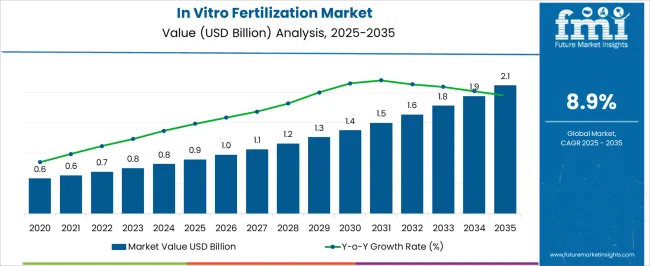
- The in vitro fertilization market is shifting from procedure volume growth toward higher-value fertility care systems.
- Demand is likely to rise as older patient groups and infertility cases increase the need for assisted reproduction.
- Adoption is expected to improve as clinics invest in time-lapse incubators and embryo selection technologies.
- Spending is anticipated to be supported by fertility clinic expansion, genetic testing use, and reimbursement changes.
In Vitro Fertilization Market Definition
The In Vitro Fertilization (IVF) market comprises the global ecosystem of assisted reproductive technologies, including the instruments, consumables, and reagents used to facilitate fertilization outside the body. It encompasses the complete procedural workflow from oocyte retrieval to embryo transfer, serving patients facing infertility due to genetic, age-related, or physiological factors.
In Vitro Fertilization Market Inclusions
The report includes a comprehensive analysis of the core technologies enabling IVF, specifically focusing on micromanipulation equipment, culture media, and cryopreservation systems. It covers revenue streams generated by fertility clinics, surgical centers, and clinical research institutes that procure these specialized medical devices and consumables.
In Vitro Fertilization Market Exclusions
The scope excludes general gynecological devices not specific to the IVF workflow, such as standard ultrasound machines used for routine obstetric monitoring unless integrated with follicle tracking software. It also omits the pharmaceutical sales of hormonal stimulation drugs, focusing strictly on the procedural hardware, reagents, and laboratory infrastructure.
In Vitro Fertilization Market Research Methodology
- Primary Research: Interviews were conducted with embryologists, clinic directors, and procurement officers at major fertility chains to validate cycle volumes and equipment replacement rates.
- Desk Research: Production data from medical device associations and national health registries supported the volume benchmarking for procedure types like ICSI and Frozen Embryo Transfer.
- Market-Sizing and Forecasting: A hybrid top-down and bottom-up model was developed, reconstructing demand from clinic procedure counts and validating against manufacturer revenue reports.
- Data Validation and Update Cycle: Outputs undergo variance checks against reported success rates and regional reimbursement policies prior to release.
Segmental Analysis
In Vitro Fertilization Market Analysis by Product
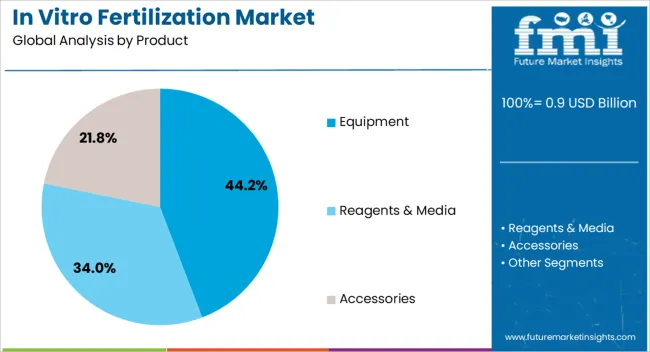
Consumables and reagents represent the recurring revenue backbone of the industry, driven by the high frequency of single-use plastics and culture media required per cycle. Reagents and media specifically command a premium, as maintaining optimal pH and osmolarity is non-negotiable for embryo survival, insulating this sub-segment from broader economic downturns.
- Reliability trigger: Demand is reinforced by the critical need for lot-to-lot consistency in culture media [4]. Clinics prioritize suppliers like Vitrolife and CooperSurgical who guarantee stability, reducing the risk of cycle failure during the 2026–2036 expansion phase.
- Procurement shift: Purchasing behavior moves toward bulk contracts for oocyte retrieval needles and catheters. Standardization across clinic networks simplifies supply chains and locks in pricing volume discounts [1].
- Innovation uptake: Adoption accelerates where products offer integrated quality control features. In 2025, Thermo Fisher introduced smart-tagged consumables that automate inventory tracking, reducing manual errors in high-throughput labs [5].
In Vitro Fertilization Market Analysis by Procedure
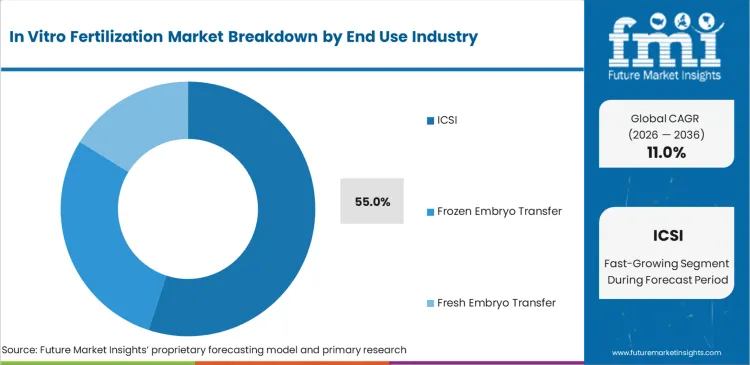
Based on FMI’s estimates, Intracytoplasmic Sperm Injection (ICSI) holds 55.0% of the procedural market share in 2026. This dominance stems from its superior fertilization rates in cases of male factor infertility, which is rising globally, making ICSI the default standard of care in many advanced clinics.
- Clinical efficacy: Growth is anchored in the higher success rates of ICSI compared to conventional IVF. Clinicians preferentially recommend ICSI to minimize the risk of fertilization failure, driving its CAGR to exceed traditional methods through 2036 [6].
- Technology shift: Cryopreservation for in vitro fertilization (IVF) gains momentum as "freeze-all" cycles become standard. This shift decouples retrieval from transfer, improving safety and allowing for better endometrial preparation [1].
- Workflow integration: Uptake of time-lapse embryo incubators favors undisturbed culture systems. This trend supports the growth of Frozen Embryo Transfer (FET) cycles, which align better with batched lab workflows than fresh transfers [4].
In Vitro Fertilization Market Analysis by End User
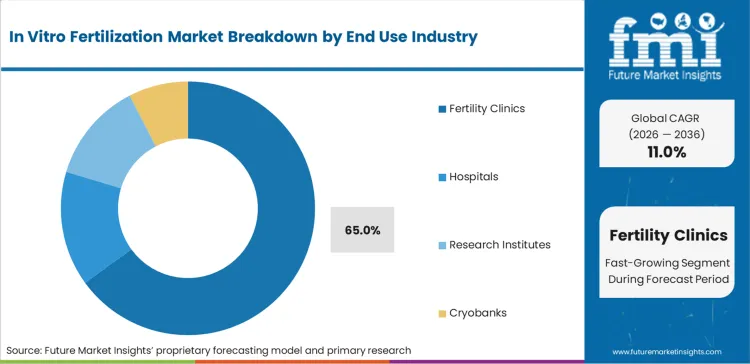
Fertility clinics command 65.0% of the market volume in 2026, serving as the primary point of care for patients seeking specialized reproductive solutions. While hospitals maintain a presence, the specialized infrastructure and focused expertise of standalone fertility centers allow for higher throughput and more personalized patient management.
- Specialization driver: Expansion is tied to the rise of specialized fertility chains that aggregate expertise. These networks leverage economies of scale to invest in advanced embryo incubator technology that general hospitals often delay [2].
- Service expansion: Clinics are increasingly integrating carrier screening services directly. This vertical integration captures upstream diagnostic revenue and streamlines the patient journey from testing to treatment [3].
- Capacity investment: Growth accelerates as clinics retrofit labs for AI-powered embryo selection. In 2026, leading chains in the USA allocated 15% of capex budgets specifically to automation tools that enhance selection accuracy [7].
In Vitro Fertilization Market Drivers, Restraints, and Opportunities
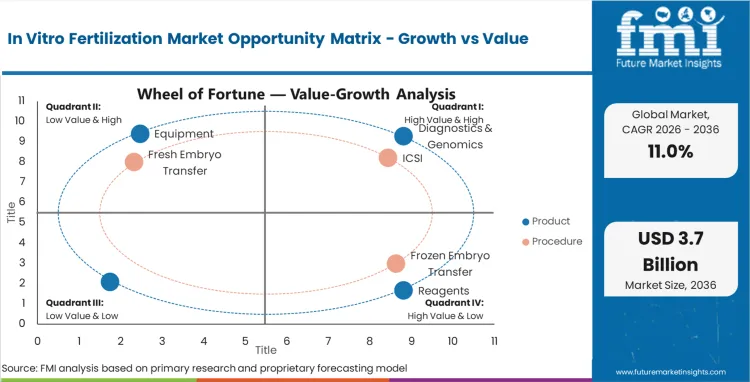
The primary driver propelling the In Vitro Fertilization market is the global shift toward delayed childbearing, which significantly increases the incidence of age-related infertility. As more couples choose to conceive later in life, the natural decline in gamete quality necessitates medical intervention, positioning IVF not as a luxury but as a medical necessity. According to FMI's estimates, this demographic shift translates into a sustained increase in cycle volumes, anchored by data from national health registries showing a 5% year-on-year rise in patients over 35 initiating treatment in 2025 [8].
Conversely, the high cost of treatment remains a formidable restraint, limiting access to a fraction of the eligible population in non-reimbursed markets. A single IVF cycle can exceed USD 15,000 in the USA, creating a financial barrier that restricts market penetration to high-income demographics and forces suppliers to compete aggressively on price-performance ratios. Clinics mitigate this by offering tiered financing packages and shared-risk programs, yet the financial burden remains the primary cause of patient drop-out before successful conception [1].
- Genetic Screening Opportunity: The integration of preimplantation genetic testing (PGT) offers a high-value revenue stream for clinics. By 2026, 40% of premium cycles are expected to include PGT to reduce miscarriage rates, as confirmed by Vitrolife's strategic expansion into genomic services [2].
- Male Infertility Solutions: Rising male infertility rates create an opportunity for specialized sperm density testing and processing tools. Suppliers developing advanced microfluidic sperm sorting devices can capture a growing niche, addressing the 30-40% of cases attributed to male factors [6].
- Donor Banking Expansion: The growth of donor egg IVF services opens new markets for third-party reproduction. Biobanks investing in rigorous screening and in vitro fertilization banking services establish trust and secure long-term storage contracts with patients [4].
Regional Analysis
.webp "Top Country Growth Comparison In Vitro Fertilization Market Cagr (2026 2036)")
Based on the regional analysis, the In Vitro Fertilization market is segmented into North America, Latin America, Europe, East Asia, South Asia, Oceania and Middle East & Africa across 40+ countries. The full report also offers market attractiveness analysis based on regional trends.
| Country | CAGR (2026 to 2036) |
|---|---|
| India | 11.3% |
| United States | 11.0% |
| Canada | 10.7% |
| China | 10.5% |
| France | 9.7% |
| Germany | 9.2% |
| Japan | 9.1% |
Source: Future Market Insights (FMI) analysis, based on proprietary forecasting model and primary research
Asia Pacific In Vitro Fertilization Market Analysis
Asia Pacific is emerging as the volume engine of the global IVF sector, driven by immense population baselines and a cultural shift normalizing assisted reproduction. The region is characterized by a rapid proliferation of private fertility clinics, particularly in urban centers, which are adopting Western standards of care and technology to attract a growing middle class.
- India: Demand for IVF in India is set to grow at 11.3% CAGR through 2036, supported by the "Make in India" initiative encouraging local manufacturing of embryo transfer catheter devices before procurement and budgeting cycles translate into higher deployment volumes. In 2025, the government announced new subsidies for fertility treatments, directly boosting patient inflow [9].
- China: IVF sales in China are projected to rise at 10.5% CAGR from 2026 to 2036 as the relaxation of family planning policies encourages older couples to conceive, creating a clearer pathway from policy or spending intent to purchase orders. The National Health Commission reported a 12% increase in authorized fertility centers in 2024 to meet this surge [10].
- Japan: The Japan IVF sector is poised to expand at 9.1% CAGR during 2026 to 2036 because insurance coverage expansion for ART procedures lifts utilization rates and justifies technology refresh decisions. Government data from 2025 indicates a record high utilization of insurance-backed cycles [8].
FMI’s report includes a detailed analysis of the growth in the Asia Pacific region, along with a country-wise assessment. The report identifies South Korea and Australia as key opportunistic markets; South Korea’s ultra-low birth rate is driving aggressive government intervention and subsidies for infertility drugs, while Australia’s mature market focuses on single-embryo transfer mandates to improve safety [3].
North America In Vitro Fertilization Market Analysis
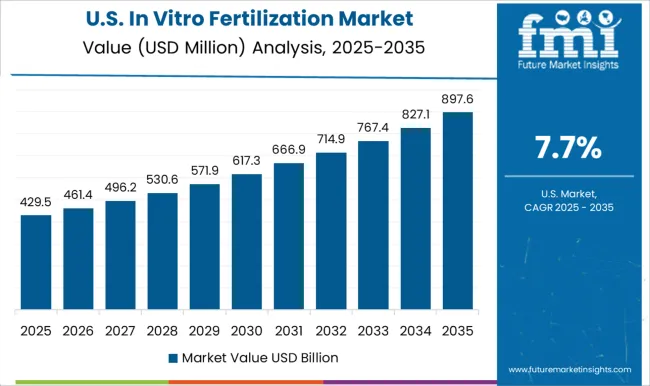
North America remains the value leader, characterized by high procedure costs and the rapid adoption of cutting-edge technologies like AI selection and non-invasive PGT. The region acts as a testing ground for premium innovations, with clinics competing on success rates and comprehensive care models rather than price.
- United States: The United States IVF market is expected to record 11.0% CAGR in demand over 2026 to 2036 as corporate benefit packages increasingly include fertility coverage, tightening the link between operational constraints and adoption-led investment. In 2025, CooperSurgical reported a 15% increase in sales of premium media in the US region, reflecting this trend [2].
- Canada: Canada is forecast to register 10.7% CAGR in IVF sales through 2036 as provincial funding programs expand, raising the addressable pipeline for vendors with local-ready integration. Recent policy updates in Ontario have streamlined access to intrauterine insemination (IUI) devices and IVF services [1].
FMI’s report includes a comprehensive evaluation of the North American landscape. Beyond the major economies, Mexico offers a burgeoning market for medical tourism, attracting US patients seeking cost-effective infertility treatment without compromising on quality standards; the report highlights cross-border partnerships as a key theme for suppliers [5].
Europe In Vitro Fertilization Market Analysis
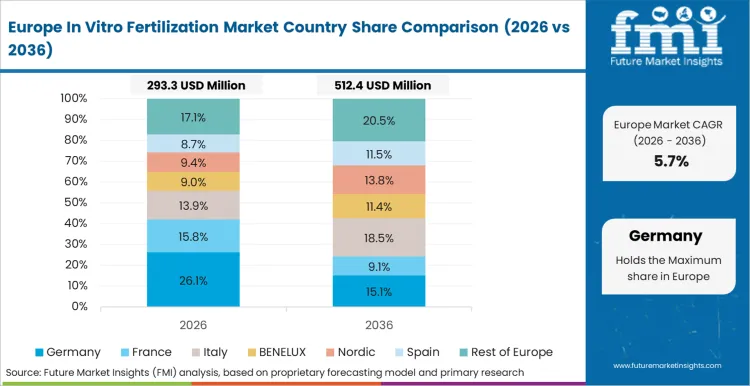
Europe represents a highly regulated and mature market where growth is driven by reimbursement policies and a strong focus on safety and ethics. The region leads in the adoption of single embryo transfer (SET) to reduce multiple birth rates, influencing demand for high-quality culture systems that ensure single embryo viability.
- France: In France, the IVF market is forecast to advance at 9.7% CAGR through 2036, with growth anchored in recent bioethics laws expanding access to single women and female couples that converts into measurable budget allocation. The French Biomedicine Agency noted a sharp rise in donor sperm requests in 2025 following these legislative changes [6].
- Germany: IVF uptake in Germany is anticipated to climb at 9.2% CAGR over the forecast period as statutory health insurance widens coverage criteria, helping suppliers align positioning with local buying triggers. German clinics are increasingly investing in semen analysis systems to improve male factor diagnosis [7].
FMI’s report includes a detailed breakdown of the European fertility sector. Spain and the United Kingdom serve as crucial markets; Spain is a global hub for egg donation and semen warmer technologies due to favorable donor anonymity laws, while the UK’s HFEA regulation drives rigorous quality control standards that benefit premium equipment suppliers [4].
Competitive Aligners for Market Players
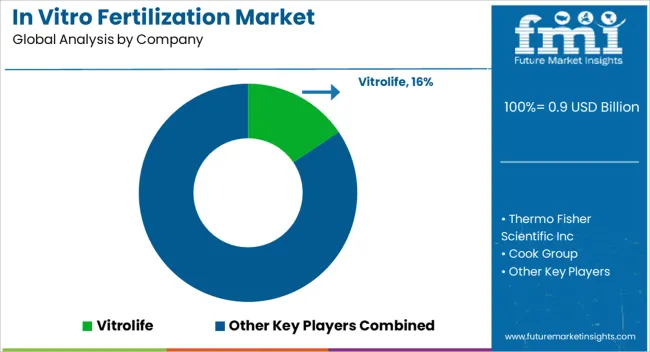
The competitive landscape is consolidated at the top, with players like CooperSurgical, Vitrolife, and Thermo Fisher Scientific dominating the high-value consumables and media segments. These market leaders leverage their scale to offer end-to-end lab solutions, creating high barriers to entry for smaller competitors who lack the breadth to supply entire clinic workflows [1].
Differentiation strategies focus on technological integration and service support. Companies like Cook Medical and Fujifilm Irvine Scientific are investing heavily in R&D to develop "smart" lab ecosystems where incubators, media, and handling devices communicate data seamlessly. This connectivity addresses the clinic's need for traceability and quality assurance, which are becoming mandatory for accreditation in key markets [2].
Strategic partnerships and acquisitions remain the primary avenue for expansion. Manufacturers are actively acquiring niche technology providers—such as those specializing in AI selection or genetic testing-to protect their core media businesses from commoditization. By controlling the entire embryo culture environment, these integrators can guarantee success rates, which is the ultimate currency for fertility clinics competing for patients [3].
Recent Developments
The report includes full coverage of key trends from competitive benchmarking. Some of the recent developments covered in the reports:
- In June 2025, CooperSurgical invested USD 15 million to expand its genomics division, enhancing its ability to offer integrated PGT-A testing alongside its media products [2].
- In January 2025, Thermo Fisher Scientific acquired a leading manufacturer of fertility test kits for USD 120 million to enter the direct-to-consumer diagnostics space [5].
Key Players in In Vitro Fertilization
- CooperSurgical
- Vitrolife
- Thermo Fisher Scientific
- Cook Medical
- Fujifilm Irvine Scientific
- Genea Limited
- Esco Micro Pte. Ltd.
- IVFtech ApS
- The Baker Company
- Kitazato Corporation
Scope of the Report
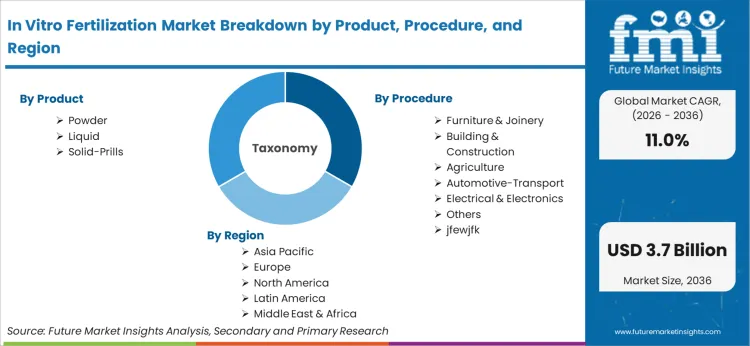
| Metric | Value |
|---|---|
| Quantitative Units | USD 1.30 billion (2026) to USD 3.80 billion (2036), at a CAGR of 11.0% |
| Market Definition | The In Vitro Fertilization market comprises the global ecosystem of assisted reproductive technologies, including instruments, consumables, and reagents used to facilitate fertilization outside the body. |
| Product Segmentation | Equipment, Reagents, Consumables, Others |
| Procedure Segmentation | ICSI (Intracytoplasmic Sperm Injection), Frozen Embryo Transfer, Fresh Embryo Transfer |
| End User Coverage | Fertility Clinics, Hospitals, Surgical Centers, Research Institutes |
| Regions Covered | North America, Latin America, Europe, East Asia, South Asia, Oceania, Middle East and Africa |
| Countries Covered | United States, Canada, Mexico, Brazil, Argentina, Germany, France, United Kingdom, Italy, Spain, China, India, Japan, South Korea, Indonesia, Australia and 40 plus countries |
| Key Companies Profiled | CooperSurgical, Vitrolife, Thermo Fisher Scientific, Cook Medical, Fujifilm Irvine Scientific, Genea Limited, Esco Micro Pte. Ltd., IVFtech ApS, The Baker Company, Kitazato Corporation |
| Forecast Period | 2026 to 2036 |
| Approach | Hybrid top down and bottom up market modeling, validated through fertility clinic volume data, IVF laboratory procurement checks, manufacturer reports, and primary interviews with fertility specialists. |
Key Segments
Product
- Equipment
- Reagents
- Consumables
- Others
Procedure
- ICSI (Intracytoplasmic Sperm Injection)
- Frozen Embryo Transfer
- Fresh Embryo Transfer
End User
- Fertility Clinics
- Hospitals
- Research Institutes
- Cryobanks
Region
- Asia Pacific
- India
- China
- Japan
- South Korea
- Indonesia
- Australia & New Zealand
- ASEAN
- Rest of Asia Pacific
- Europe
- Germany
- Italy
- France
- United Kingdom
- Spain
- Benelux
- Nordics
- Central & Eastern Europe
- Rest of Europe
- North America
- United States
- Canada
- Mexico
- Latin America
- Brazil
- Argentina
- Chile
- Rest of Latin America
- Middle East & Africa
- Kingdom of Saudi Arabia
- United Arab Emirates
- South Africa
- Turkey
- Rest of Middle East & Africa
Bibliography
- [1] CooperSurgical. (2025). Annual Financial Report 2025. Corporate Filings.
- [2] CooperSurgical. (2025). Strategic expansion of genomics facilities and product lines. Investor Presentation, June 2025.
- [3] Vitrolife. (2025). CEO Address on Industry Trends and AI Integration. Corporate Press Release, March 2025.
- [4] HFEA. (2024). Fertility treatment 2024: trends and figures. Human Fertilisation and Embryology Authority.
- [5] Thermo Fisher Scientific. (2025). Acquisition of fertility diagnostics assets. Company Announcement, January 2025.
- [6] French Biomedicine Agency. (2025). Annual Report on Assisted Reproduction Activity. Government Health Statistics.
- [7] Federal Statistical Office (Destatis). (2025). Health expenditure and utilization of ART services in Germany. Government Report.
- [8] Ministry of Health, Labour and Welfare. (2025). Report on Assisted Reproductive Technology Utilization. Government of Japan.
- [9] Ministry of Health and Family Welfare. (2025). Updates to National Health Mission Fertility Support. Government of India.
- [10] National Health Commission. (2024). Statistics on Maternal and Child Health Institutions. Government of the People's Republic of China.
This Report Addresses
- Market intelligence to enable structured strategic decision-making across mature and emerging IVF treatment markets.
- Market size estimation and 10 year revenue forecasts from 2026 to 2036, supported by validated capacity and trade benchmarks
- Growth opportunity mapping across powder, liquid, and solid forms with emphasis on ULEF and NAF grade transitions
- Segment and regional revenue forecasts covering building and construction, furniture and joinery, agriculture, automotive, and electrical applications
- Competition strategy assessment including integration models, cost survivability positioning, and compliance capability benchmarking
- Product reformulation and emission compliance tracking including E0, E1, CARB Phase 2, and EPA TSCA Title VI aligned grades
- Regulatory impact analysis covering formaldehyde emission mandates, indoor air quality thresholds, and export driven specification upgrades
- Market report delivery in PDF, Excel, PPT, and interactive dashboard formats for executive and operational use
Frequently Asked Questions
How large is the demand for In Vitro Fertilization in the global market in 2026?
Demand for In Vitro Fertilization in the global market is estimated to be valued at USD 1.30 billion in 2026.
What will be the market size of In Vitro Fertilization in the global market by 2036?
Market size for In Vitro Fertilization is projected to reach USD 3.80 billion by 2036.
What is the expected demand growth for In Vitro Fertilization in the global market between 2026 and 2036?
Demand for In Vitro Fertilization in the global market is expected to grow at a CAGR of 11.0% between 2026 and 2036.
Which Procedure is poised to lead global sales by 2026?
ICSI (Intracytoplasmic Sperm Injection) is expected to be the dominant procedure, capturing approximately 55.0% of global market share in 2026 due to its high efficacy in male factor infertility.
How significant is the role of Fertility Clinics in driving In Vitro Fertilization adoption in 2026?
Fertility clinics represent a critical segment, projected to hold a substantial 65.0% share of the total market in 2026 as specialized care centers aggregate volume.
What is Driving IVF Demand in India?
Demand is driven by the "Make in India" initiative and new government subsidies for fertility treatments which are increasing patient access.
What Compliance Standards are Referenced for India?
The National Health Mission guidelines and subsidies for fertility support are referenced as key benchmarks.
What is the India Growth Outlook in this Report?
India is projected to grow at a CAGR of 11.3% during 2026 to 2036.
Why is Europe described as a priority region in this report?
Europe is a mature, highly regulated market focused on safety and ethics, leading the adoption of single embryo transfers and advanced quality control.
What Type of Demand Dominates in Europe?
Replacement driven demand for high-quality, compliant culture media and incubators dominates regional consumption.
What is France Growth Outlook in this Report?
France is projected to expand at a CAGR of 9.7% during 2026 to 2036.
Does the Report Cover Germany in its Regional Analysis?
Yes, Germany is included within Europe under the regional scope of analysis.
What are the Sources referred to for analyzing the Market in Germany?
Reports from the Federal Statistical Office (Destatis) on health expenditure and ART service utilization are cited as primary reference sources.
What is the Main Demand Theme Linked to Germany in Europe Coverage?
Germany's demand is associated with the expansion of statutory health insurance coverage for ART procedures.
Does the Report Cover Japan in its Regional Analysis?
Yes, Japan is included within Asia Pacific under the regional coverage framework.
What is the Main Japan Related Demand Theme in Asia Coverage?
Insurance coverage expansion for ART procedures is emphasized as a key driver lifting utilization rates.
Which Product Formats are Strategically Important for North America Supply Chains?
Consumables and reagents are prioritized due to the high volume of cycles and the critical need for lot-to-lot consistency.
What is In Vitro Fertilization and What is It Mainly Used For?
In Vitro Fertilization is an assisted reproductive technology where an egg is fertilized by sperm outside the body, used primarily to treat infertility.
What does In Vitro Fertilization Market Mean in this Report?
The market refers to the global trade and consumption of instruments, consumables, and reagents used in IVF procedures.
What is Included in the Scope of this In Vitro Fertilization Market Report?
Scope covers IVF products by type, procedures including ICSI and FET, and end users such as fertility clinics and hospitals.
What is Excluded from the Scope of this Report?
General gynecological devices and pharmaceutical drugs for hormonal stimulation are excluded unless integrated with IVF hardware.
What does Market Forecast Mean on this Page?
Market forecast represents a model based projection built on defined assumptions for strategic planning purposes.
How does FMI Build and Validate the In Vitro Fertilization Market Forecast?
Forecast is developed using hybrid top down and bottom up modeling validated through clinic volume data, manufacturer reports, and industry review.
What does Zero Reliance on Speculative Third Party Market Research Mean Here?
Primary interviews with embryologists and verifiable public datasets are used instead of unverified syndicated market estimates.
Preview the report firsthand - request a free sample
Get SampleGet the brochure for pricing and purchase details.
Get PDFTable of Content
- Executive Summary
- Global Market Outlook
- Demand-side Trends
- Supply-side Trends
- Technology Roadmap Analysis
- Analysis and Recommendations
- Market Overview
- Market Coverage / Taxonomy
- Market Definition / Scope / Limitations
- Research Methodology
- Chapter Orientation
- Analytical Lens and Working Hypotheses
- Market Structure, Signals, and Trend Drivers
- Benchmarking and Cross-market Comparability
- Market Sizing, Forecasting, and Opportunity Mapping
- Research Design and Evidence Framework
- Desk Research Programme (Secondary Evidence)
- Company Annual and Sustainability Reports
- Peer-reviewed Journals and Academic Literature
- Corporate Websites, Product Literature, and Technical Notes
- Earnings Decks and Investor Briefings
- Statutory Filings and Regulatory Disclosures
- Technical White Papers and Standards Notes
- Trade Journals, Industry Magazines, and Analyst Briefs
- Conference Proceedings, Webinars, and Seminar Materials
- Government Statistics Portals and Public Data Releases
- Press Releases and Reputable Media Coverage
- Specialist Newsletters and Curated Briefings
- Sector Databases and Reference Repositories
- FMI Internal Proprietary Databases and Historical Market Datasets
- Subscription Datasets and Paid Sources
- Social Channels, Communities, and Digital Listening Inputs
- Additional Desk Sources
- Expert Input and Fieldwork (Primary Evidence)
- Primary Modes
- Qualitative Interviews and Expert Elicitation
- Quantitative Surveys and Structured Data Capture
- Blended Approach
- Why Primary Evidence is Used
- Field Techniques
- Interviews
- Surveys
- Focus Groups
- Observational and In-context Research
- Social and Community Interactions
- Stakeholder Universe Engaged
- C-suite Leaders
- Board Members
- Presidents and Vice Presidents
- R&D and Innovation Heads
- Technical Specialists
- Domain Subject-matter Experts
- Scientists
- Physicians and Other Healthcare Professionals
- Governance, Ethics, and Data Stewardship
- Research Ethics
- Data Integrity and Handling
- Primary Modes
- Tooling, Models, and Reference Databases
- Desk Research Programme (Secondary Evidence)
- Data Engineering and Model Build
- Data Acquisition and Ingestion
- Cleaning, Normalisation, and Verification
- Synthesis, Triangulation, and Analysis
- Quality Assurance and Audit Trail
- Market Background
- Market Dynamics
- Drivers
- Restraints
- Opportunity
- Trends
- Scenario Forecast
- Demand in Optimistic Scenario
- Demand in Likely Scenario
- Demand in Conservative Scenario
- Opportunity Map Analysis
- Product Life Cycle Analysis
- Supply Chain Analysis
- Investment Feasibility Matrix
- Value Chain Analysis
- PESTLE and Porter’s Analysis
- Regulatory Landscape
- Regional Parent Market Outlook
- Production and Consumption Statistics
- Import and Export Statistics
- Market Dynamics
- Global Market Analysis 2021 to 2025 and Forecast, 2026 to 2036
- Historical Market Size Value (USD Billion) Analysis, 2021 to 2025
- Current and Future Market Size Value (USD Billion) Projections, 2026 to 2036
- Y-o-Y Growth Trend Analysis
- Absolute $ Opportunity Analysis
- Global Market Pricing Analysis 2021 to 2025 and Forecast 2026 to 2036
- Global Market Analysis 2021 to 2025 and Forecast 2026 to 2036, By Product
- Introduction / Key Findings
- Historical Market Size Value (USD Billion) Analysis By Product , 2021 to 2025
- Current and Future Market Size Value (USD Billion) Analysis and Forecast By Product , 2026 to 2036
- Diagnostics & Genomics
- Reagents
- Equipment
- Consumables
- Diagnostics & Genomics
- Y-o-Y Growth Trend Analysis By Product , 2021 to 2025
- Absolute $ Opportunity Analysis By Product , 2026 to 2036
- Global Market Analysis 2021 to 2025 and Forecast 2026 to 2036, By Procedure
- Introduction / Key Findings
- Historical Market Size Value (USD Billion) Analysis By Procedure, 2021 to 2025
- Current and Future Market Size Value (USD Billion) Analysis and Forecast By Procedure, 2026 to 2036
- ICSI
- Frozen Embryo Transfer
- Fresh Embryo Transfer
- ICSI
- Y-o-Y Growth Trend Analysis By Procedure, 2021 to 2025
- Absolute $ Opportunity Analysis By Procedure, 2026 to 2036
- Global Market Analysis 2021 to 2025 and Forecast 2026 to 2036, By End Use
- Introduction / Key Findings
- Historical Market Size Value (USD Billion) Analysis By End Use, 2021 to 2025
- Current and Future Market Size Value (USD Billion) Analysis and Forecast By End Use, 2026 to 2036
- Fertility Clinics
- Hospitals
- Research Institutes
- Cryobanks
- Fertility Clinics
- Y-o-Y Growth Trend Analysis By End Use, 2021 to 2025
- Absolute $ Opportunity Analysis By End Use, 2026 to 2036
- Global Market Analysis 2021 to 2025 and Forecast 2026 to 2036, By Region
- Introduction
- Historical Market Size Value (USD Billion) Analysis By Region, 2021 to 2025
- Current Market Size Value (USD Billion) Analysis and Forecast By Region, 2026 to 2036
- North America
- Latin America
- Western Europe
- Eastern Europe
- East Asia
- South Asia and Pacific
- Middle East & Africa
- Market Attractiveness Analysis By Region
- North America Market Analysis 2021 to 2025 and Forecast 2026 to 2036, By Country
- Historical Market Size Value (USD Billion) Trend Analysis By Market Taxonomy, 2021 to 2025
- Market Size Value (USD Billion) Forecast By Market Taxonomy, 2026 to 2036
- By Country
- USA
- Canada
- Mexico
- By Product
- By Procedure
- By End Use
- By Country
- Market Attractiveness Analysis
- By Country
- By Product
- By Procedure
- By End Use
- Key Takeaways
- Latin America Market Analysis 2021 to 2025 and Forecast 2026 to 2036, By Country
- Historical Market Size Value (USD Billion) Trend Analysis By Market Taxonomy, 2021 to 2025
- Market Size Value (USD Billion) Forecast By Market Taxonomy, 2026 to 2036
- By Country
- Brazil
- Chile
- Rest of Latin America
- By Product
- By Procedure
- By End Use
- By Country
- Market Attractiveness Analysis
- By Country
- By Product
- By Procedure
- By End Use
- Key Takeaways
- Western Europe Market Analysis 2021 to 2025 and Forecast 2026 to 2036, By Country
- Historical Market Size Value (USD Billion) Trend Analysis By Market Taxonomy, 2021 to 2025
- Market Size Value (USD Billion) Forecast By Market Taxonomy, 2026 to 2036
- By Country
- Germany
- UK
- Italy
- Spain
- France
- Nordic
- BENELUX
- Rest of Western Europe
- By Product
- By Procedure
- By End Use
- By Country
- Market Attractiveness Analysis
- By Country
- By Product
- By Procedure
- By End Use
- Key Takeaways
- Eastern Europe Market Analysis 2021 to 2025 and Forecast 2026 to 2036, By Country
- Historical Market Size Value (USD Billion) Trend Analysis By Market Taxonomy, 2021 to 2025
- Market Size Value (USD Billion) Forecast By Market Taxonomy, 2026 to 2036
- By Country
- Russia
- Poland
- Hungary
- Balkan & Baltic
- Rest of Eastern Europe
- By Product
- By Procedure
- By End Use
- By Country
- Market Attractiveness Analysis
- By Country
- By Product
- By Procedure
- By End Use
- Key Takeaways
- East Asia Market Analysis 2021 to 2025 and Forecast 2026 to 2036, By Country
- Historical Market Size Value (USD Billion) Trend Analysis By Market Taxonomy, 2021 to 2025
- Market Size Value (USD Billion) Forecast By Market Taxonomy, 2026 to 2036
- By Country
- China
- Japan
- South Korea
- By Product
- By Procedure
- By End Use
- By Country
- Market Attractiveness Analysis
- By Country
- By Product
- By Procedure
- By End Use
- Key Takeaways
- South Asia and Pacific Market Analysis 2021 to 2025 and Forecast 2026 to 2036, By Country
- Historical Market Size Value (USD Billion) Trend Analysis By Market Taxonomy, 2021 to 2025
- Market Size Value (USD Billion) Forecast By Market Taxonomy, 2026 to 2036
- By Country
- India
- ASEAN
- Australia & New Zealand
- Rest of South Asia and Pacific
- By Product
- By Procedure
- By End Use
- By Country
- Market Attractiveness Analysis
- By Country
- By Product
- By Procedure
- By End Use
- Key Takeaways
- Middle East & Africa Market Analysis 2021 to 2025 and Forecast 2026 to 2036, By Country
- Historical Market Size Value (USD Billion) Trend Analysis By Market Taxonomy, 2021 to 2025
- Market Size Value (USD Billion) Forecast By Market Taxonomy, 2026 to 2036
- By Country
- Kingdom of Saudi Arabia
- Other GCC Countries
- Turkiye
- South Africa
- Other African Union
- Rest of Middle East & Africa
- By Product
- By Procedure
- By End Use
- By Country
- Market Attractiveness Analysis
- By Country
- By Product
- By Procedure
- By End Use
- Key Takeaways
- Key Countries Market Analysis
- USA
- Pricing Analysis
- Market Share Analysis, 2025
- By Product
- By Procedure
- By End Use
- Canada
- Pricing Analysis
- Market Share Analysis, 2025
- By Product
- By Procedure
- By End Use
- Mexico
- Pricing Analysis
- Market Share Analysis, 2025
- By Product
- By Procedure
- By End Use
- Brazil
- Pricing Analysis
- Market Share Analysis, 2025
- By Product
- By Procedure
- By End Use
- Chile
- Pricing Analysis
- Market Share Analysis, 2025
- By Product
- By Procedure
- By End Use
- Germany
- Pricing Analysis
- Market Share Analysis, 2025
- By Product
- By Procedure
- By End Use
- UK
- Pricing Analysis
- Market Share Analysis, 2025
- By Product
- By Procedure
- By End Use
- Italy
- Pricing Analysis
- Market Share Analysis, 2025
- By Product
- By Procedure
- By End Use
- Spain
- Pricing Analysis
- Market Share Analysis, 2025
- By Product
- By Procedure
- By End Use
- France
- Pricing Analysis
- Market Share Analysis, 2025
- By Product
- By Procedure
- By End Use
- India
- Pricing Analysis
- Market Share Analysis, 2025
- By Product
- By Procedure
- By End Use
- ASEAN
- Pricing Analysis
- Market Share Analysis, 2025
- By Product
- By Procedure
- By End Use
- Australia & New Zealand
- Pricing Analysis
- Market Share Analysis, 2025
- By Product
- By Procedure
- By End Use
- China
- Pricing Analysis
- Market Share Analysis, 2025
- By Product
- By Procedure
- By End Use
- Japan
- Pricing Analysis
- Market Share Analysis, 2025
- By Product
- By Procedure
- By End Use
- South Korea
- Pricing Analysis
- Market Share Analysis, 2025
- By Product
- By Procedure
- By End Use
- Russia
- Pricing Analysis
- Market Share Analysis, 2025
- By Product
- By Procedure
- By End Use
- Poland
- Pricing Analysis
- Market Share Analysis, 2025
- By Product
- By Procedure
- By End Use
- Hungary
- Pricing Analysis
- Market Share Analysis, 2025
- By Product
- By Procedure
- By End Use
- Kingdom of Saudi Arabia
- Pricing Analysis
- Market Share Analysis, 2025
- By Product
- By Procedure
- By End Use
- Turkiye
- Pricing Analysis
- Market Share Analysis, 2025
- By Product
- By Procedure
- By End Use
- South Africa
- Pricing Analysis
- Market Share Analysis, 2025
- By Product
- By Procedure
- By End Use
- USA
- Market Structure Analysis
- Competition Dashboard
- Competition Benchmarking
- Market Share Analysis of Top Players
- By Regional
- By Product
- By Procedure
- By End Use
- Competition Analysis
- Competition Deep Dive
- CooperSurgical
- Overview
- Product Portfolio
- Profitability by Market Segments (Product / Procedure / End User / Region)
- Sales Footprint
- Strategy Overview
- Marketing Strategy
- Product Strategy
- Channel Strategy
- Vitrolife
- Thermo Fisher Scientific
- Cook Medical
- Fujifilm Irvine Scientific
- CooperSurgical
- Competition Deep Dive
- Assumptions & Acronyms Used


