

- Industry Size (2026)
- USD 9.9 Bn
- Forecast (2036)
- USD 15.2 Bn
- CAGR (2026 to 2036)
- 4.4%
Residential Furnace Market Forecast and Outlook 2026 to 2036
The residential furnace market is projected to grow from USD 9.9 billion in 2026 to USD 15.2 billion by 2036 at a CAGR of 4.4%. This growth is driven by increasing demand for reliable heating solutions in both new housing construction and the replacement of aging heating systems. Homebuilders specify furnaces that deliver consistent thermal output, meet energy efficiency standards, and operate quietly, while homeowners prioritize systems with improved fuel efficiency. Utilities promote high-efficiency combustion-based units to reduce peak electrical grid demand during colder seasons. Manufacturers are responding with models that feature advanced airflow management, enhanced heat exchangers, and compatibility with modern thermostatic systems. Regulatory frameworks governing energy efficiency and government incentive programs further support the market's expansion by encouraging the replacement of older, less efficient systems.
Global demand for residential furnaces is influenced by rising energy efficiency mandates, increasing heating costs, and evolving consumer expectations for comfort. The market is shifting toward more energy-efficient models, such as two-stage and modulating furnaces, which optimize energy use while maintaining comfort. Natural gas remains the dominant fuel type due to its cost-effectiveness and widespread availability, though electric and oil-based furnaces also see increased adoption in regions with varying infrastructure. Adoption is supported by government incentives and a growing preference for smart home integration, as homeowners seek precise temperature control and lower operational costs. However, market scalability faces challenges such as installation complexity, upfront costs, and ongoing maintenance needs for high-efficiency systems.
Quick Stats for Residential Furnace Market
- Residential Furnace Market Value (2026): USD 9.9 billion
- Residential Furnace Market Forecast Value (2036): USD 15.2 billion
- Residential Furnace Market Forecast CAGR 2026 to 2036: 4.4%
- Leading Fuel Type by Demand Share: Natural Gas
- Fastest-Growing Countries: India, China, USA, Canada, Germany
- Top Players in Global Demand: Carrier, Trane, Lennox, Daikin, Rheem
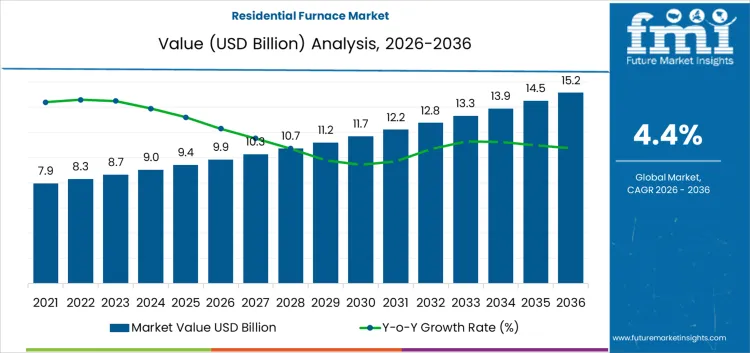
Residential Furnace Market Key Takeaways
| Metric | Value |
|---|---|
| Market Value (2026) | USD 9.9 billion |
| Market Forecast Value (2036) | USD 15.2 billion |
| Forecast CAGR 2026 to 2036 | 4.4% |
Why is the Demand for Residential Furnace Market Growing?
Demand for residential furnaces is rising as housing construction in emerging and developed regions continues to expand, creating need for reliable heating solutions in climates with cold seasons. Homebuilders specify furnaces that deliver consistent thermal output and meet performance expectations in varied building envelopes. Replacement of aging heating systems in existing homes supports demand because homeowners prioritize systems with improved fuel efficiency ratings and quieter operation. Utilities and energy planners advocate equipment that helps reduce peak demand on electrical grids by shifting space heating to high efficiency combustion based units where gas infrastructure exists. Appliance manufacturers offer models with enhanced airflow management and improved heat exchangers to achieve higher annual fuel utilization efficiency, supporting homeowner interest in lower operational costs.
Energy codes and building performance standards influence selection of residential furnaces because adherence to minimum efficiency requirements affects permitting and compliance workflows. HVAC contractors recommend furnaces that integrate with zoning controls and thermostatic systems to improve occupant comfort. Supplier networks expand availability of advanced controls and variable speed blower options that support more precise temperature regulation. Financing and incentive programs from government and utility entities support upgrades to high efficiency products. Training programs for technicians emphasize proper sizing and commissioning to optimize system longevity and safety.
How Are the Segments Classified in the Residential Furnace Market?
Demand for residential furnaces is shaped by minimum heating performance requirements, energy efficiency standards, and replacement needs within existing housing stock. Adoption reflects necessity for reliable space heating in cold climates and compliance with residential building codes. Segment classification aligns with fuel availability, furnace operating characteristics, and installation context rather than discretionary preference. Differentiation by fuel type, furnace configuration, and installation mode reflects variation in infrastructure, efficiency thresholds, and replacement timing.
Which fuel type represents the largest share of demand?
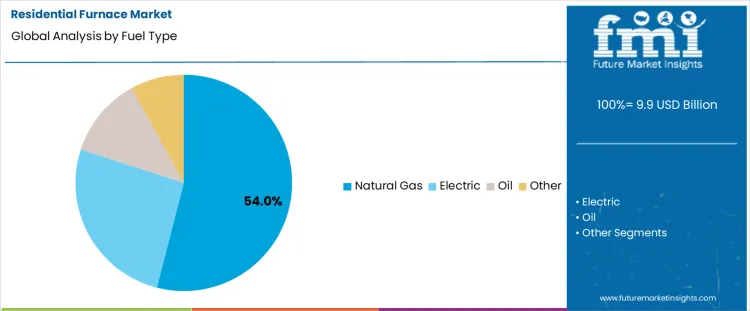
Natural gas leads fuel type demand, holding a 54.0% share due to its cost-effectiveness and widespread availability in residential areas. Gas furnaces provide high efficiency, fast heating response, and lower operational costs compared to electric or oil alternatives. Well-established infrastructure and relatively low installation costs reinforce natural gas preference for residential heating systems. The efficiency of modern gas furnaces further enhances appeal amid rising energy concerns.
Key Points:
- Cost-effective and energy-efficient heating solution
- Supported by extensive distribution infrastructure
- Provides fast and consistent heating performance
Which furnace type accounts for the highest share of demand?
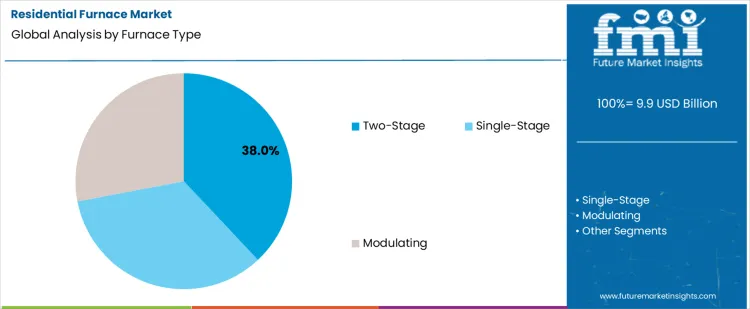
Two-stage furnaces represent the leading furnace type, capturing a 38.0% share due to their ability to optimize efficiency and comfort. These furnaces offer two heating outputs: one for mild temperatures and one for extreme cold. This feature minimizes energy use while maintaining consistent home comfort. The improved temperature control and quieter operation compared to single-stage systems contribute to their growing adoption.
Key Points:
- Provides energy efficiency with two output stages
- Enhances comfort with more consistent temperature control
- Quieter operation compared to single-stage systems
Which installation type holds the highest share of demand?
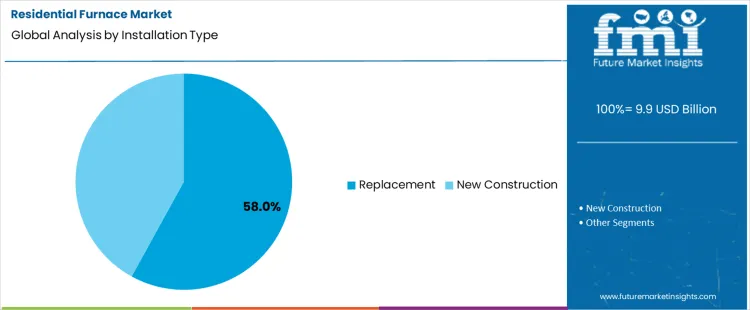
Replacement installations lead the market with a 58.0% share, driven by aging furnace systems and the need for more efficient models. As older systems reach the end of their lifespan, homeowners prioritize replacing them with newer, more energy-efficient units to reduce operational costs and improve performance. Additionally, government incentives for energy-efficient upgrades further support demand for replacement installations.
Key Points:
- Driven by the need to replace outdated, inefficient systems
- Supports energy savings and improved comfort in homes
- Frequently aligned with government energy efficiency incentives
What are the Key Dynamics in the residential furnace market?
Demand dynamics in the residential furnace market reflect heating performance requirements, efficiency thresholds, and cost considerations within residential buildings. Activity centers on replacement of end-of-life systems and installation of compliant equipment in new housing. Value formation depends on fuel type availability, thermal efficiency ratings, and installation cost. Purchasing decisions align with system reliability, operating expense predictability, and compatibility with existing home infrastructure.
How Do Efficiency Standards and Fuel Availability Shape Adoption?
Adoption increases as stricter energy efficiency standards and carbon emissions targets drive consumer preference for high-efficiency models. Demand strengthens where homeowners seek to lower utility costs and reduce environmental impact through improved heating system performance. Gas, oil, and electric furnace options cater to regional fuel availability and cost competitiveness. Heat pump integration and hybrid systems enhance energy flexibility, appealing to consumers in regions with fluctuating energy prices. Incentives, rebates, and government regulations supporting energy-efficient appliances reinforce adoption in both new builds and retrofits. The rise of smart thermostats and IoT technology drives interest in systems that offer precise temperature control and remote management capabilities.
How do installation complexity and maintenance costs influence market scalability?
Market scalability faces constraints from installation complexity and ongoing maintenance requirements for high-efficiency systems. Demand encounters resistance where upfront capital costs and installation labor for advanced systems exceed budget expectations. Retrofitting older homes with newer, more complex furnace technologies presents logistical challenges in terms of space, system compatibility, and electrical infrastructure. Annual maintenance costs increase for high-efficiency units requiring specialized service and part replacement. Component wear, including heat exchangers and burners, raises operational concerns over longer product lifecycles. The durability of certain furnace types and their associated warranties directly impacts consumer trust and repeat purchasing behavior.
How Is Demand for Residential Furnaces Evolving Globally?
Demand for residential furnaces is expanding globally due to climate-driven heating needs, housing stock growth, and replacement of aging heating systems. Adoption aligns with colder regions, urban housing development, and energy efficiency compliance rather than discretionary comfort upgrades. Fuel availability, grid reliability, and emission standards shape technology selection across markets. Retrofit activity contributes where older units fail efficiency thresholds or reliability expectations. Growth rates in India at 6.2%, China at 5.6%, USA at 4.1%, Canada at 3.9%, and Germany at 3.6% indicate measured expansion driven by heating penetration, regulatory compliance, and replacement cycles rather than rapid residential construction growth.
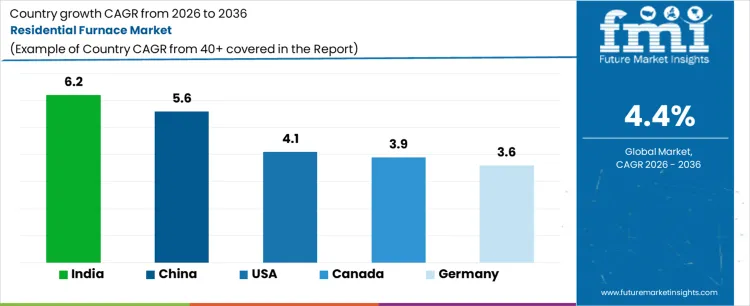
| Country | CAGR (%) |
|---|---|
| India | 6.2% |
| China | 5.6% |
| USA | 4.1% |
| Canada | 3.9% |
| Germany | 3.6% |
What Is Driving Expansion of Residential Furnace Demand in India?
Demand for residential furnaces in India is growing at a CAGR of 6.2%, supported by rising adoption in colder northern regions and hill states. Urban housing developments incorporate space heating as living standards evolve. Electric and gas-based systems gain traction where grid access and piped gas infrastructure improve. Seasonal temperature variability increases need for reliable heating solutions. Replacement of inefficient legacy heaters contributes incremental demand. Growth reflects regional climate requirements and gradual heating penetration rather than nationwide dependence on central heating.
- Heating adoption in northern and high-altitude regions
- Urban housing quality improvement
- Expansion of gas and electricity access
- Replacement of inefficient room heating systems
Why Is China Seeing Continued Growth in Residential Furnace Adoption?
Residential furnace demand in China is expanding at a CAGR of 5.6%, driven by heating upgrades and policy-led efficiency improvements. Northern regions require space heating for extended winter periods. Transition away from coal-based heating increases adoption of gas and electric furnaces. Government programs encourage replacement of older systems with cleaner alternatives. Urban apartment retrofits sustain steady installation activity. Growth reflects policy-driven heating modernization and replacement rather than expansion of residential floor space.
- Long heating seasons in northern regions
- Transition from coal to cleaner heating systems
- Policy-driven efficiency and emission upgrades
- Retrofit demand in urban housing stock
How Is the United States Supporting Demand for Residential Furnaces?
Sales of residential furnaces in United States are growing at a CAGR of 4.1%, supported by replacement cycles and climate variability. Large installed base of gas furnaces requires periodic upgrades. Efficiency standards influence purchasing toward higher AFUE-rated units. Extreme weather events increase focus on heating reliability. New housing construction contributes limited incremental volume. Growth reflects replacement-led demand and regulatory alignment rather than expansion of heating penetration.
- Large installed base requiring periodic replacement
- Efficiency standards shaping upgrade decisions
- Weather-driven reliability considerations
- Limited contribution from new housing construction
What Factors Are Sustaining Residential Furnace Demand in Canada?
Residential furnace demand in Canada is expanding at a CAGR of 3.9%, shaped by prolonged heating seasons and replacement requirements. Cold climate necessitates dependable central heating across most households. Energy efficiency incentives encourage upgrades to high-efficiency gas furnaces. Aging housing stock sustains steady replacement demand. Electrification trends remain gradual due to climate constraints. Growth reflects climate necessity and efficiency-driven replacement rather than increase in residential construction.
- Extended heating seasons across regions
- Incentives for high-efficiency furnace upgrades
- Aging housing stock replacement demand
- Gradual pace of electrification adoption
Why Is Germany Experiencing Measured Growth in Residential Furnace Demand?
Residential furnace demand in Germany is growing at a CAGR of 3.6%, supported by heating system replacement and regulatory compliance. Energy transition policies influence replacement of older oil and gas units. Efficiency and emission standards drive selective upgrades. Apartment retrofits contribute incremental installations. Shift toward alternative heating moderates furnace growth pace. Expansion remains measured, reflecting regulatory-driven replacement and mixed-technology transition rather than expansion of furnace-based heating reliance.
- Replacement of legacy oil and gas heating systems
- Stringent efficiency and emission regulations
- Retrofit activity in multi-family housing
- Gradual transition toward alternative heating technologies
What is the competitive landscape of demand for the residential furnace market globally?
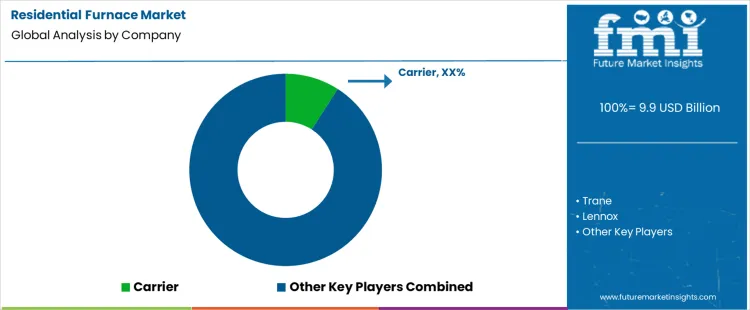
Demand for residential furnaces is driven by energy efficiency regulations, heating cost concerns, and the growth of smart home technologies. Buyers evaluate heating capacity, energy consumption, installation complexity, reliability, and smart control integration. Procurement behavior prioritizes manufacturers with proven product quality, efficient customer service networks, and warranty support. Purchasing decisions emphasize long-term energy savings, upfront cost, adaptability to existing home systems, and serviceability. Trend in the residential furnace market reflects increasing adoption of energy-efficient models, smart thermostat integration, and preference for heating systems meeting efficiency and emissions requirements as part of applicable residential energy performance standards.
Carrier leads competitive positioning through a comprehensive product range, focus on energy-efficient solutions, and widespread service networks. Trane competes with advanced performance features, industry reputation for durability, and extensive distribution channels. Lennox supports demand by offering high-performance units, energy-saving innovations, and integration with home automation systems. Daikin maintains relevance through technology leadership, reliability in diverse climates, and strong brand presence in international markets. Rheem participates by providing innovative heating solutions that balance cost efficiency, product quality, and system integration capabilities. Competitive differentiation centers on energy efficiency, technological integration, and market-specific product offerings.
Key Players in the Residential Furnace Market
- Carrier
- Trane
- Lennox
- Daikin
- Rheem
Scope of the Report
| Items | Values |
|---|---|
| Quantitative Units | USD billion |
| Fuel Type | Natural Gas; Electric; Oil; Other |
| Furnace Type | Two-Stage; Single-Stage; Modulating |
| Installation Type | Replacement; New Construction |
| Regions Covered | Asia Pacific, Europe, North America, Latin America, Middle East & Africa |
| Countries Covered | India, China, USA, Canada, Germany, and 40+ countries |
| Key Companies Profiled | Carrier; Trane; Lennox; Daikin; Rheem |
| Additional Attributes | Dollar sales by fuel type, furnace type, installation type, and sales channel; energy efficiency ratings and seasonal performance factors across gas, electric, and oil furnaces; comfort control technologies and modulation capabilities in two-stage and modulating systems; installation cost structures and service contract availability for replacement versus new construction projects; market dynamics shaped by regulatory incentives, energy price fluctuations, and long-term maintenance needs. |
Residential Furnace Market by Segment
By Fuel Type:
- Natural Gas
- Electric
- Oil
- Other
By Furnace Type:
- Two-Stage
- Single-Stage
- Modulating
By Installation Type:
- Replacement
- New Construction
By Region:
- Asia Pacific
- China
- Japan
- South Korea
- India
- Australia & New Zealand
- ASEAN
- Rest of Asia Pacific
- Europe
- Germany
- United Kingdom
- France
- Italy
- Spain
- Nordic
- BENELUX
- Rest of Europe
- North America
- United States
- Canada
- Mexico
- Latin America
- Brazil
- Chile
- Rest of Latin America
- Middle East & Africa
- Kingdom of Saudi Arabia
- Other GCC Countries
- Turkey
- South Africa
- Other African Union
- Rest of Middle East & Africa
Bibliography
- U.S. Department of Energy. (2023). Residential furnaces and boilers: Energy efficiency standards and test procedures. Office of Energy Efficiency and Renewable Energy.
- International Energy Agency. (2023). Energy efficiency 2023: Heating and cooling systems in the residential sector. International Energy Agency.
- Natural Resources Canada. (2023). Residential energy efficiency standards for space and water heating equipment. Government of Canada.
Frequently Asked Questions
How big is the residential furnace market in 2026?
The global residential furnace market is estimated to be valued at USD 9.9 billion in 2026.
What will be the size of residential furnace market in 2036?
The market size for the residential furnace market is projected to reach USD 15.2 billion by 2036.
How much will be the residential furnace market growth between 2026 and 2036?
The residential furnace market is expected to grow at a 4.4% CAGR between 2026 and 2036.
What are the key product types in the residential furnace market?
The key product types in residential furnace market are natural gas, electric, oil and other.
Which furnace type segment to contribute significant share in the residential furnace market in 2026?
In terms of furnace type, two-stage segment to command 38.0% share in the residential furnace market in 2026.
Preview the report firsthand - request a free sample
Get SampleGet the brochure for pricing and purchase details.
Get PDFTable of Content
- Executive Summary
- Global Market Outlook
- Demand-side Trends
- Supply-side Trends
- Technology Roadmap Analysis
- Analysis and Recommendations
- Market Overview
- Market Coverage / Taxonomy
- Market Definition / Scope / Limitations
- Market Background
- Market Dynamics
- Drivers
- Restraints
- Opportunity
- Trends
- Scenario Forecast
- Demand in Optimistic Scenario
- Demand in Likely Scenario
- Demand in Conservative Scenario
- Opportunity Map Analysis
- Product Life Cycle Analysis
- Supply Chain Analysis
- Investment Feasibility Matrix
- Value Chain Analysis
- PESTLE and Porter’s Analysis
- Regulatory Landscape
- Regional Parent Market Outlook
- Production and Consumption Statistics
- Import and Export Statistics
- Market Dynamics
- Global Market Analysis 2021 to 2025 and Forecast, 2026 to 2036
- Historical Market Size Value (USD Million) Analysis, 2021 to 2025
- Current and Future Market Size Value (USD Million) Projections, 2026 to 2036
- Y-o-Y Growth Trend Analysis
- Absolute $ Opportunity Analysis
- Global Market Pricing Analysis 2021 to 2025 and Forecast 2026 to 2036
- Global Market Analysis 2021 to 2025 and Forecast 2026 to 2036, By Fuel Type
- Introduction / Key Findings
- Historical Market Size Value (USD Million) Analysis By Fuel Type, 2021 to 2025
- Current and Future Market Size Value (USD Million) Analysis and Forecast By Fuel Type, 2026 to 2036
- Natural Gas
- Electric
- Oil
- Other
- Natural Gas
- Y-o-Y Growth Trend Analysis By Fuel Type, 2021 to 2025
- Absolute $ Opportunity Analysis By Fuel Type, 2026 to 2036
- Global Market Analysis 2021 to 2025 and Forecast 2026 to 2036, By Furnace Type
- Introduction / Key Findings
- Historical Market Size Value (USD Million) Analysis By Furnace Type, 2021 to 2025
- Current and Future Market Size Value (USD Million) Analysis and Forecast By Furnace Type, 2026 to 2036
- Two-Stage
- Single-Stage
- Modulating
- Two-Stage
- Y-o-Y Growth Trend Analysis By Furnace Type, 2021 to 2025
- Absolute $ Opportunity Analysis By Furnace Type, 2026 to 2036
- Global Market Analysis 2021 to 2025 and Forecast 2026 to 2036, By Installation Type
- Introduction / Key Findings
- Historical Market Size Value (USD Million) Analysis By Installation Type, 2021 to 2025
- Current and Future Market Size Value (USD Million) Analysis and Forecast By Installation Type, 2026 to 2036
- Replacement
- New Construction
- Replacement
- Y-o-Y Growth Trend Analysis By Installation Type, 2021 to 2025
- Absolute $ Opportunity Analysis By Installation Type, 2026 to 2036
- Global Market Analysis 2021 to 2025 and Forecast 2026 to 2036, By Region
- Introduction
- Historical Market Size Value (USD Million) Analysis By Region, 2021 to 2025
- Current Market Size Value (USD Million) Analysis and Forecast By Region, 2026 to 2036
- North America
- Latin America
- Western Europe
- Eastern Europe
- East Asia
- South Asia and Pacific
- Middle East & Africa
- Market Attractiveness Analysis By Region
- North America Market Analysis 2021 to 2025 and Forecast 2026 to 2036, By Country
- Historical Market Size Value (USD Million) Trend Analysis By Market Taxonomy, 2021 to 2025
- Market Size Value (USD Million) Forecast By Market Taxonomy, 2026 to 2036
- By Country
- USA
- Canada
- Mexico
- By Fuel Type
- By Furnace Type
- By Installation Type
- By Country
- Market Attractiveness Analysis
- By Country
- By Fuel Type
- By Furnace Type
- By Installation Type
- Key Takeaways
- Latin America Market Analysis 2021 to 2025 and Forecast 2026 to 2036, By Country
- Historical Market Size Value (USD Million) Trend Analysis By Market Taxonomy, 2021 to 2025
- Market Size Value (USD Million) Forecast By Market Taxonomy, 2026 to 2036
- By Country
- Brazil
- Chile
- Rest of Latin America
- By Fuel Type
- By Furnace Type
- By Installation Type
- By Country
- Market Attractiveness Analysis
- By Country
- By Fuel Type
- By Furnace Type
- By Installation Type
- Key Takeaways
- Western Europe Market Analysis 2021 to 2025 and Forecast 2026 to 2036, By Country
- Historical Market Size Value (USD Million) Trend Analysis By Market Taxonomy, 2021 to 2025
- Market Size Value (USD Million) Forecast By Market Taxonomy, 2026 to 2036
- By Country
- Germany
- UK
- Italy
- Spain
- France
- Nordic
- BENELUX
- Rest of Western Europe
- By Fuel Type
- By Furnace Type
- By Installation Type
- By Country
- Market Attractiveness Analysis
- By Country
- By Fuel Type
- By Furnace Type
- By Installation Type
- Key Takeaways
- Eastern Europe Market Analysis 2021 to 2025 and Forecast 2026 to 2036, By Country
- Historical Market Size Value (USD Million) Trend Analysis By Market Taxonomy, 2021 to 2025
- Market Size Value (USD Million) Forecast By Market Taxonomy, 2026 to 2036
- By Country
- Russia
- Poland
- Hungary
- Balkan & Baltic
- Rest of Eastern Europe
- By Fuel Type
- By Furnace Type
- By Installation Type
- By Country
- Market Attractiveness Analysis
- By Country
- By Fuel Type
- By Furnace Type
- By Installation Type
- Key Takeaways
- East Asia Market Analysis 2021 to 2025 and Forecast 2026 to 2036, By Country
- Historical Market Size Value (USD Million) Trend Analysis By Market Taxonomy, 2021 to 2025
- Market Size Value (USD Million) Forecast By Market Taxonomy, 2026 to 2036
- By Country
- China
- Japan
- South Korea
- By Fuel Type
- By Furnace Type
- By Installation Type
- By Country
- Market Attractiveness Analysis
- By Country
- By Fuel Type
- By Furnace Type
- By Installation Type
- Key Takeaways
- South Asia and Pacific Market Analysis 2021 to 2025 and Forecast 2026 to 2036, By Country
- Historical Market Size Value (USD Million) Trend Analysis By Market Taxonomy, 2021 to 2025
- Market Size Value (USD Million) Forecast By Market Taxonomy, 2026 to 2036
- By Country
- India
- ASEAN
- Australia & New Zealand
- Rest of South Asia and Pacific
- By Fuel Type
- By Furnace Type
- By Installation Type
- By Country
- Market Attractiveness Analysis
- By Country
- By Fuel Type
- By Furnace Type
- By Installation Type
- Key Takeaways
- Middle East & Africa Market Analysis 2021 to 2025 and Forecast 2026 to 2036, By Country
- Historical Market Size Value (USD Million) Trend Analysis By Market Taxonomy, 2021 to 2025
- Market Size Value (USD Million) Forecast By Market Taxonomy, 2026 to 2036
- By Country
- Kingdom of Saudi Arabia
- Other GCC Countries
- Turkiye
- South Africa
- Other African Union
- Rest of Middle East & Africa
- By Fuel Type
- By Furnace Type
- By Installation Type
- By Country
- Market Attractiveness Analysis
- By Country
- By Fuel Type
- By Furnace Type
- By Installation Type
- Key Takeaways
- Key Countries Market Analysis
- USA
- Pricing Analysis
- Market Share Analysis, 2025
- By Fuel Type
- By Furnace Type
- By Installation Type
- Canada
- Pricing Analysis
- Market Share Analysis, 2025
- By Fuel Type
- By Furnace Type
- By Installation Type
- Mexico
- Pricing Analysis
- Market Share Analysis, 2025
- By Fuel Type
- By Furnace Type
- By Installation Type
- Brazil
- Pricing Analysis
- Market Share Analysis, 2025
- By Fuel Type
- By Furnace Type
- By Installation Type
- Chile
- Pricing Analysis
- Market Share Analysis, 2025
- By Fuel Type
- By Furnace Type
- By Installation Type
- Germany
- Pricing Analysis
- Market Share Analysis, 2025
- By Fuel Type
- By Furnace Type
- By Installation Type
- UK
- Pricing Analysis
- Market Share Analysis, 2025
- By Fuel Type
- By Furnace Type
- By Installation Type
- Italy
- Pricing Analysis
- Market Share Analysis, 2025
- By Fuel Type
- By Furnace Type
- By Installation Type
- Spain
- Pricing Analysis
- Market Share Analysis, 2025
- By Fuel Type
- By Furnace Type
- By Installation Type
- France
- Pricing Analysis
- Market Share Analysis, 2025
- By Fuel Type
- By Furnace Type
- By Installation Type
- India
- Pricing Analysis
- Market Share Analysis, 2025
- By Fuel Type
- By Furnace Type
- By Installation Type
- ASEAN
- Pricing Analysis
- Market Share Analysis, 2025
- By Fuel Type
- By Furnace Type
- By Installation Type
- Australia & New Zealand
- Pricing Analysis
- Market Share Analysis, 2025
- By Fuel Type
- By Furnace Type
- By Installation Type
- China
- Pricing Analysis
- Market Share Analysis, 2025
- By Fuel Type
- By Furnace Type
- By Installation Type
- Japan
- Pricing Analysis
- Market Share Analysis, 2025
- By Fuel Type
- By Furnace Type
- By Installation Type
- South Korea
- Pricing Analysis
- Market Share Analysis, 2025
- By Fuel Type
- By Furnace Type
- By Installation Type
- Russia
- Pricing Analysis
- Market Share Analysis, 2025
- By Fuel Type
- By Furnace Type
- By Installation Type
- Poland
- Pricing Analysis
- Market Share Analysis, 2025
- By Fuel Type
- By Furnace Type
- By Installation Type
- Hungary
- Pricing Analysis
- Market Share Analysis, 2025
- By Fuel Type
- By Furnace Type
- By Installation Type
- Kingdom of Saudi Arabia
- Pricing Analysis
- Market Share Analysis, 2025
- By Fuel Type
- By Furnace Type
- By Installation Type
- Turkiye
- Pricing Analysis
- Market Share Analysis, 2025
- By Fuel Type
- By Furnace Type
- By Installation Type
- South Africa
- Pricing Analysis
- Market Share Analysis, 2025
- By Fuel Type
- By Furnace Type
- By Installation Type
- USA
- Market Structure Analysis
- Competition Dashboard
- Competition Benchmarking
- Market Share Analysis of Top Players
- By Regional
- By Fuel Type
- By Furnace Type
- By Installation Type
- Competition Analysis
- Competition Deep Dive
- Carrier
- Overview
- Product Portfolio
- Profitability by Market Segments (Product/Age /Sales Channel/Region)
- Sales Footprint
- Strategy Overview
- Marketing Strategy
- Product Strategy
- Channel Strategy
- Trane
- Lennox
- Daikin
- Rheem
- Carrier
- Competition Deep Dive
- Assumptions & Acronyms Used
- Research Methodology


