

- Industry Size (2026)
- USD 47.1 Mn
- Forecast (2036)
- USD 84.3 Mn
- CAGR (2026 to 2036)
- 6.0%
Demand for INR Test Meter in South Korea Forecast and Outlook 2026 to 2036
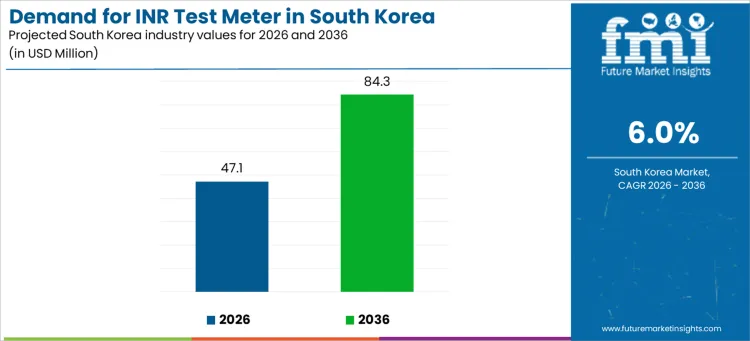
Sales of INR test meter units in South Korea are projected to be valued at USD 47.1 million in 2026. The sector is poised to reach a total revenue of USD 84.3 million by 2036, advancing at a compound annual growth rate of 6.0%. South Korea is witnessing a significant demographic shift characterized by a rapidly aging population, which directly correlates with a higher prevalence of cardiovascular conditions such as atrial fibrillation and deep vein thrombosis. Medical professionals are increasingly prescribing oral anticoagulants to manage these risks, creating a sustained necessity for regular blood clotting monitoring. This clinical requirement is driving the adoption of precise monitoring tools across both institutional and home-care settings to ensure therapeutic efficacy and patient safety.
Government initiatives aimed at enhancing chronic disease management are playing a pivotal role in the expansion of this industry. South Korean healthcare system is progressively integrating reimbursement models that support patient self-testing, acknowledging the long-term cost benefits of preventing stroke and bleeding complications. Hospitals and specialized cardiac centers are upgrading their diagnostic inventories to handle high patient throughput, favoring advanced point-of-care devices that deliver immediate results. Public awareness campaigns regarding heart health are empowering patients to take an active role in their treatment plans. This shift towards patient-centric care is reducing the dependency on frequent hospital visits for routine checks, thereby fostering a conducive environment for portable monitoring solutions.
Quick Stats for Demand for INR Test Meter in South Korea
- Demand for INR Test Meter in South Korea Value (2026): USD 47.1 million
- Demand for INR Test Meter in South Korea Forecast Value (2036): USD 84.3 million
- Demand for INR Test Meter in South Korea Forecast CAGR: 6.0%
- Leading Product Segment for INR Test Meter Industry in South Korea: Device (37.0%)
- Leading End User Segment for INR Test Meter Industry in South Korea: Hospitals (48.5%)
- Key Growth Regions for INR Test Meter Industry in South Korea: Jeju, South Gyeongsang, South Jeolla, North Jeolla
- INR Test Meter Industry in South Korea Key Players: F. Hoffmann-La Roche Ltd, Lepu Medical Technology(Beijing)Co., Ltd, ACON Laboratories, Inc., CoaguSense Inc., Abbott
Technological innovation is rapidly transforming the landscape of coagulation monitoring, with manufacturers focusing on connectivity and ease of use. New product launches often feature Bluetooth capabilities that allow seamless data transfer to hemostasis testing systems used by clinicians, enabling remote patient monitoring. This integration aligns with the broader trend of digital healthcare adoption in the country. There is also a rising interest in point of care diagnostics that minimize user error through intuitive interfaces and automated calibration. Such advancements are crucial for elderly patients who may struggle with complex operating procedures, ensuring that self-testing remains a viable and accurate option for long-term anticoagulation therapy management.
Demand for INR Test Meter in South Korea Key Takeaways
| Metric | Value |
|---|---|
| Industry Size (2026) | USD 47.1 million |
| Industry Value (2036) | USD 84.3 million |
| CAGR (2026 to 2036) | 6.0% |
What Factors Are Fueling INR Test Meter Adoption?
The increasing prescription rate of Vitamin K Antagonists (VKAs) like warfarin remains a foundational driver for the blood coagulation testing and analyzers sector. Despite the emergence of newer drugs, VKAs require frequent monitoring to maintain the International Normalized Ratio (INR) within a therapeutic range, sustaining the need for test meters. The expansion of special specialty coagulation tests in outpatient settings is also contributing to growth. Physicians are prioritizing rapid turnaround times to adjust dosages immediately, which is best achieved through point-of-care devices rather than central lab testing. Rising healthcare expenditure and high insurance coverage rates in South Korea further enable patients to access these critical diagnostic tools without significant financial burden.
How is the Sector Structured Across Key Segments?
The industry is segmented by product components and end-user facilities, reflecting the operational flow of anticoagulation therapy. The product category splits into the main metering devices and the recurring consumables like lancets and test strips. End-user classification identifies where the testing primarily occurs, distinguishing between professional medical settings and the growing home-care niche. This structural division highlights the recurring revenue model inherent in the sector, where the initial sale of a device leads to a continuous demand for consumables over the patient's treatment lifespan.
Why Does the Device Segment Dominate?
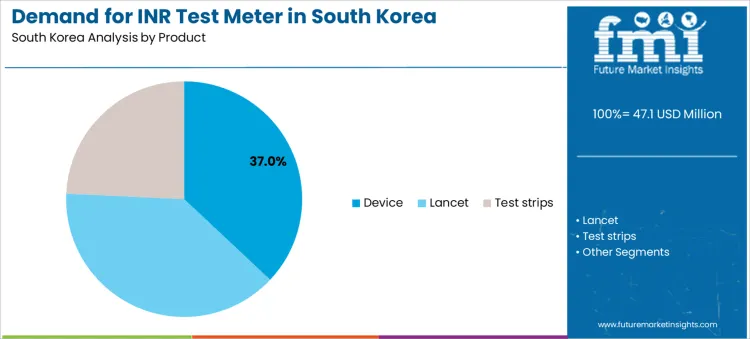
The Device segment commands a 37.0% share of the industry. This leadership position is attributed to the relatively high unit cost of the meters compared to disposable accessories. Hospitals and clinics invest heavily in durable, high-throughput coagulation analyzers and handheld meters to equip their departments. The ongoing replacement cycle for older models, driven by technological upgrades such as improved battery life and data storage, sustains revenue generation. Manufacturers continuously introduce enhanced versions that claim higher accuracy and lower interference from other medications, compelling facilities to upgrade their hardware inventory to maintain the standard of care.
Is the Consumable Demand Significant?
While devices hold the top share by value in initial purchases, the combined volume of lancets (30%) and test strips (29%) represents a critical recurring revenue stream. Every test requires a fresh strip and lancet, creating a steady demand that mirrors patient compliance rates. The proprietary nature of these consumables often locks users into a specific brand's ecosystem. Supply chains for these items are robust, ensuring availability across pharmacies and hospital supply rooms. As the user base for direct oral anticoagulants grows, some of which still require periodic renal or adherence checks, the ancillary demand for precise blood sampling tools remains stable.
Why Do Hospitals Lead Consumption?
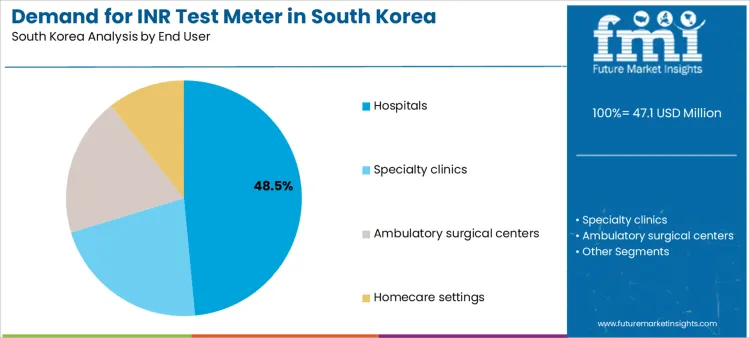
Hospitals account for 48.5% of the usage share. Complex cardiovascular surgeries and acute care episodes typically originate in hospital settings, where immediate coagulation status is vital for patient safety. Large medical centers in Seoul and other metropolitan hubs utilize hemostasis analyzers for comprehensive profiling but rely on handheld INR meters for bedside monitoring. The trust placed in hospital-grade diagnostics ensures that these institutions remain the primary purchasers. Furthermore, the initiation of anticoagulation therapy almost always occurs under strict medical supervision in a hospital, establishing the facility as the gatekeeper for device selection and patient training.
Will Homecare Settings Expand?
Homecare settings are currently capturing 14.7% of the share, but this figure is poised for expansion. The convenience of self-testing appeals to the active elderly demographic and working professionals who find frequent clinic visits disruptive. Studies validating the safety of patient self-testing (PST) are encouraging regulatory bodies to view home monitoring favorably. The availability of non hospital based point of care diagnostic products empowers patients to manage their conditions with greater autonomy. Manufacturers are designing user-friendly devices with large displays and voice guidance specifically to target this growing segment, aiming to replicate the success seen in the blood glucose monitoring sector.
Does Drug Competition Impact Meter Sales?
The rising popularity of Non-Vitamin K Antagonist Oral Anticoagulants (NOACs) poses a challenge, as these drugs typically do not require routine INR monitoring. However, specific patient groups, such as those with mechanical heart valves or severe renal impairment, must remain on warfarin, preserving a core user base for INR meters. Additionally, interactions between NOACs and other medications can necessitate sporadic checks using coagulation markers to ensure safety. The industry is adapting by positioning INR meters as essential tools for the high-risk segments that cannot transition to NOACs, ensuring stability despite the pharmaceutical shift.
How is Connectivity Influencing Design?
Digital health integration is becoming a standard expectation rather than a luxury feature. Modern INR meters are increasingly equipped with Bluetooth or NFC to transmit results directly to electronic health records or physician portals. This connectivity supports the "Smart Hospital" initiatives prevalent in South Korea. It allows for real-time dosage adjustments by healthcare providers without a physical consultation. The trend overlaps with point of care molecular diagnostics, where data interoperability is key. Devices that fail to offer seamless data sharing capabilities risk obsolescence as the healthcare ecosystem becomes more interconnected and data-driven.
How is the Landscape Evolving Across South Korea's Regions?
Regional demand is shaped by the distribution of the aging population and the concentration of specialized medical facilities. While the capital region holds the highest absolute volume due to population density, provincial areas are witnessing faster adoption rates relative to their size. This is driven by efforts to improve healthcare accessibility in remote regions where travel to major hospitals is difficult. Local governments in these provinces are subsidizing medical devices for the elderly, boosting the regional penetration of home-use diagnostic tools.
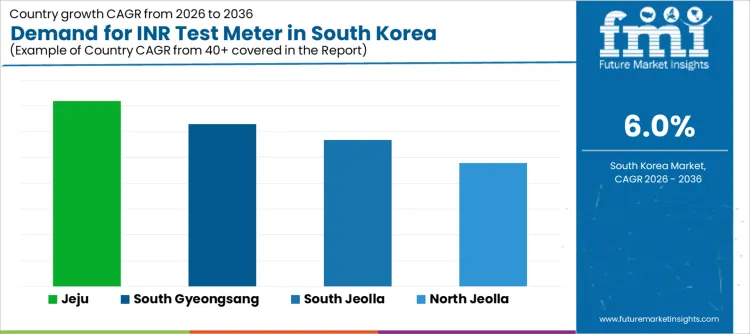
| Region | CAGR (2026 to 2036) |
|---|---|
| Jeju | 7.2% |
| South Gyeongsang | 6.3% |
| South Jeolla | 5.7% |
| North Jeolla | 4.8% |
Why is Jeju Seeing High Growth?
Adoption of INR test meters in Jeju is projected to expand at a CAGR of 7.2%. As a premier destination for retirees and medical tourism, the island has a unique demographic profile that supports high demand for chronic disease management tools. The local healthcare infrastructure is expanding to cater to long-term residents who require continuous cardiac care. The need for thromboprophylactic drugs monitoring is elevated among the retired population residing here. Additionally, the island's isolation from the mainland encourages the adoption of telemedicine-compatible devices, allowing residents to stay connected with specialists in Seoul without frequent travel.
How is Industrial Health Shaping South Gyeongsang?
Sales of coagulation monitoring devices in South Gyeongsang are likely to reach a CAGR of 6.3%. This region hosts significant heavy industries, including shipbuilding and automotive manufacturing, which employ a large workforce now aging into retirement. Corporate health programs and regional hospitals are focusing on cardiovascular health to manage the risks associated with this demographic. The prevalence of lifestyle-related conditions among former industrial workers drives the need for prothrombin complex concentrate therapies and associated monitoring. Investment in regional trauma centers and cardiac units further bolsters the procurement of professional-grade INR meters.
What Drives Demand in South Jeolla?
The sector in South Jeolla is anticipated to rise at a CAGR of 5.7%. This province has the highest percentage of elderly citizens in South Korea, making it a critical market for geriatric care products. The dispersed nature of rural communities here makes frequent hospital visits challenging, thereby incentivizing the shift towards home monitoring and local clinic visits. Public health centers are increasingly stocking finger blood calibration free glucose meter types and INR meters to serve these remote populations efficiently. The focus is on reducing stroke incidence through consistent anticoagulation management in the community setting.
How is North Jeolla Modernizing?
Deployment of diagnostic devices in North Jeolla is expected to increase at a CAGR of 4.8%. The region is undergoing a gradual modernization of its healthcare facilities, moving away from manual testing methods to automated point-of-care solutions. University hospitals in the area are serving as catalysts for this change, adopting the latest in vitro diagnostics devices and influencing smaller clinics to follow suit. While growth is steady, it is supported by consistent government funding aimed at equalizing healthcare standards between rural provinces and the capital, ensuring that residents have access to reliable diagnostic technologies.
What Strategies Define Leadership?
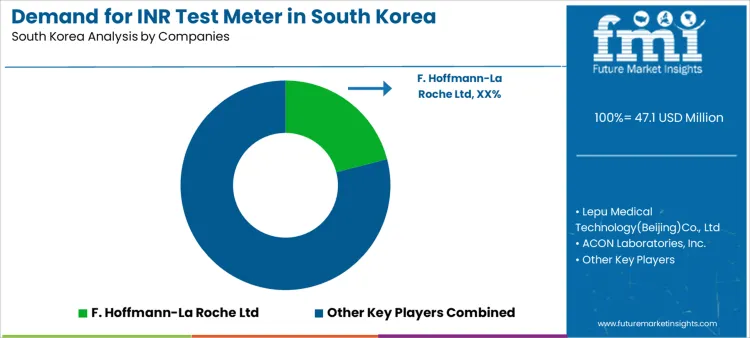
F. Hoffmann-La Roche Ltd leads the sector with a 21.0% share, capitalizing on the strong brand equity of its CoaguChek system. Their strategy revolves around maintaining deep relationships with key opinion leaders and securing large-scale tenders with hospital networks. They invest heavily in clinical education, training nurses and patients on the importance of accurate INR monitoring. Competitors are challenging this dominance by offering lower-cost alternatives without compromising precision. Abbott and other global players are introducing devices with enhanced data management features to appeal to tech-savvy users and integrated healthcare systems.
How Are Asian Competitors Gaining Ground?
Companies like Lepu Medical Technology and ACON Laboratories are aggressively targeting the cost-conscious segments of the market. By manufacturing devices that are affordable yet reliable, they are penetrating smaller specialty clinics and the private home-care sector. Their strategy often involves partnering with local distributors to navigate the regulatory landscape effectively. These firms are also quick to adapt to local preferences, offering devices with Korean language interfaces and simplified user guides. The presence of these agile competitors forces established players to innovate continuously and reconsider pricing structures to maintain their market hold.
Key Companies
- F. Hoffmann-La Roche Ltd
- Lepu Medical Technology(Beijing)Co., Ltd
- ACON Laboratories, Inc.
- CoaguSense Inc.
- Abbott
Scope of Report
| Items | Values |
|---|---|
| Quantitative Units | USD Million |
| Product | Device, Lancet, Test strips |
| End User | Hospitals, Specialty clinics, Ambulatory surgical centers, Homecare settings |
| Regions Covered | Jeju, South Gyeongsang, South Jeolla, North Jeolla |
| Key Companies Profiled | F. Hoffmann-La Roche Ltd, Lepu Medical, ACON Laboratories, CoaguSense, Abbott |
Demand for INR Test Meter in South Korea by Segments
By Product
- Device
- Lancet
- Test strips
By End User
- Hospitals
- Specialty clinics
- Ambulatory surgical centers
- Homecare settings
Bibliography
- Statistics Korea. (2024, September 26). 2024 statistics on the aged. Statistics Korea, Republic of Korea.
- Ministry of Health and Welfare. (2025). Partial revision notice for detailed matters regarding standards and methods of medical care benefits (effective dates include 2025). Ministry of Health and Welfare, Republic of Korea.
- Korea Health Industry Development Institute. (2024, August 5). Health industry brief Vol. 410: First survey on the medical device industry and analysis of 2023 market trends. Korea Health Industry Development Institute, Republic of Korea.
- Health Insurance Review and Assessment Service. (2024). Medical expense statistical indicators (dashboard and releases). Health Insurance Review and Assessment Service, Republic of Korea.
Frequently Asked Questions
How big is the demand for INR Test Meter in South Korea in 2026?
The demand for INR Test Meter in South Korea is estimated to be valued at USD 47.1 million in 2026.
What will be the size of INR Test Meter in South Korea in 2036?
The industry size for the INR Test Meter in South Korea is projected to reach USD 84.3 million by 2036.
How much will be the demand for INR Test Meter in South Korea growth between 2026 and 2036?
The demand for INR Test Meter in South Korea is expected to grow at a 6.0% CAGR between 2026 and 2036.
What are the key product types in the INR Test Meter in South Korea?
The key product types in INR Test Meter in South Korea are Device, Lancet, and Test strips.
Which end user segment is expected to contribute significant share in the INR Test Meter in South Korea in 2026?
By end user, Hospitals segment is expected to command 48.5% share in the INR Test Meter in South Korea in 2026.
Preview the report firsthand - request a free sample
Get SampleGet the brochure for pricing and purchase details.
Get PDFTable of Content
- Executive Summary
- South Korea Market Outlook
- Demand-side Trends
- Supply-side Trends
- Technology Roadmap Analysis
- Analysis and Recommendations
- Market Overview
- Market Coverage / Taxonomy
- Market Definition / Scope / Limitations
- Market Background
- Market Dynamics
- Drivers
- Restraints
- Opportunity
- Trends
- Scenario Forecast
- Demand in Optimistic Scenario
- Demand in Likely Scenario
- Demand in Conservative Scenario
- Opportunity Map Analysis
- Product Life Cycle Analysis
- Supply Chain Analysis
- Investment Feasibility Matrix
- Value Chain Analysis
- PESTLE and Porter’s Analysis
- Regulatory Landscape
- Regional Parent Market Outlook
- Production and Consumption Statistics
- Import and Export Statistics
- Market Dynamics
- South Korea Market Analysis 2021 to 2025 and Forecast, 2026 to 2036
- Historical Market Size Value (USD Million) Analysis, 2021 to 2025
- Current and Future Market Size Value (USD Million) Projections, 2026 to 2036
- Y-o-Y Growth Trend Analysis
- Absolute $ Opportunity Analysis
- South Korea Market Pricing Analysis 2021 to 2025 and Forecast 2026 to 2036
- South Korea Market Analysis 2021 to 2025 and Forecast 2026 to 2036, By Product
- Introduction / Key Findings
- Historical Market Size Value (USD Million) Analysis By Product , 2021 to 2025
- Current and Future Market Size Value (USD Million) Analysis and Forecast By Product , 2026 to 2036
- Device
- Lancet
- Test strips
- Device
- Y-o-Y Growth Trend Analysis By Product , 2021 to 2025
- Absolute $ Opportunity Analysis By Product , 2026 to 2036
- South Korea Market Analysis 2021 to 2025 and Forecast 2026 to 2036, By End User
- Introduction / Key Findings
- Historical Market Size Value (USD Million) Analysis By End User, 2021 to 2025
- Current and Future Market Size Value (USD Million) Analysis and Forecast By End User, 2026 to 2036
- Hospitals
- Specialty clinics
- Ambulatory surgical centers
- Homecare settings
- Hospitals
- Y-o-Y Growth Trend Analysis By End User, 2021 to 2025
- Absolute $ Opportunity Analysis By End User, 2026 to 2036
- Market Structure Analysis
- Competition Dashboard
- Competition Benchmarking
- Market Share Analysis of Top Players
- By Regional
- By Product
- By End User
- Competition Analysis
- Competition Deep Dive
- F. Hoffmann-La Roche Ltd
- Overview
- Product Portfolio
- Profitability by Market Segments (Product/Age /Sales Channel/Region)
- Sales Footprint
- Strategy Overview
- Marketing Strategy
- Product Strategy
- Channel Strategy
- Lepu Medical Technology(Beijing)Co., Ltd
- ACON Laboratories, Inc.
- CoaguSense Inc.
- Abbott
- F. Hoffmann-La Roche Ltd
- Competition Deep Dive
- Assumptions & Acronyms Used
- Research Methodology


